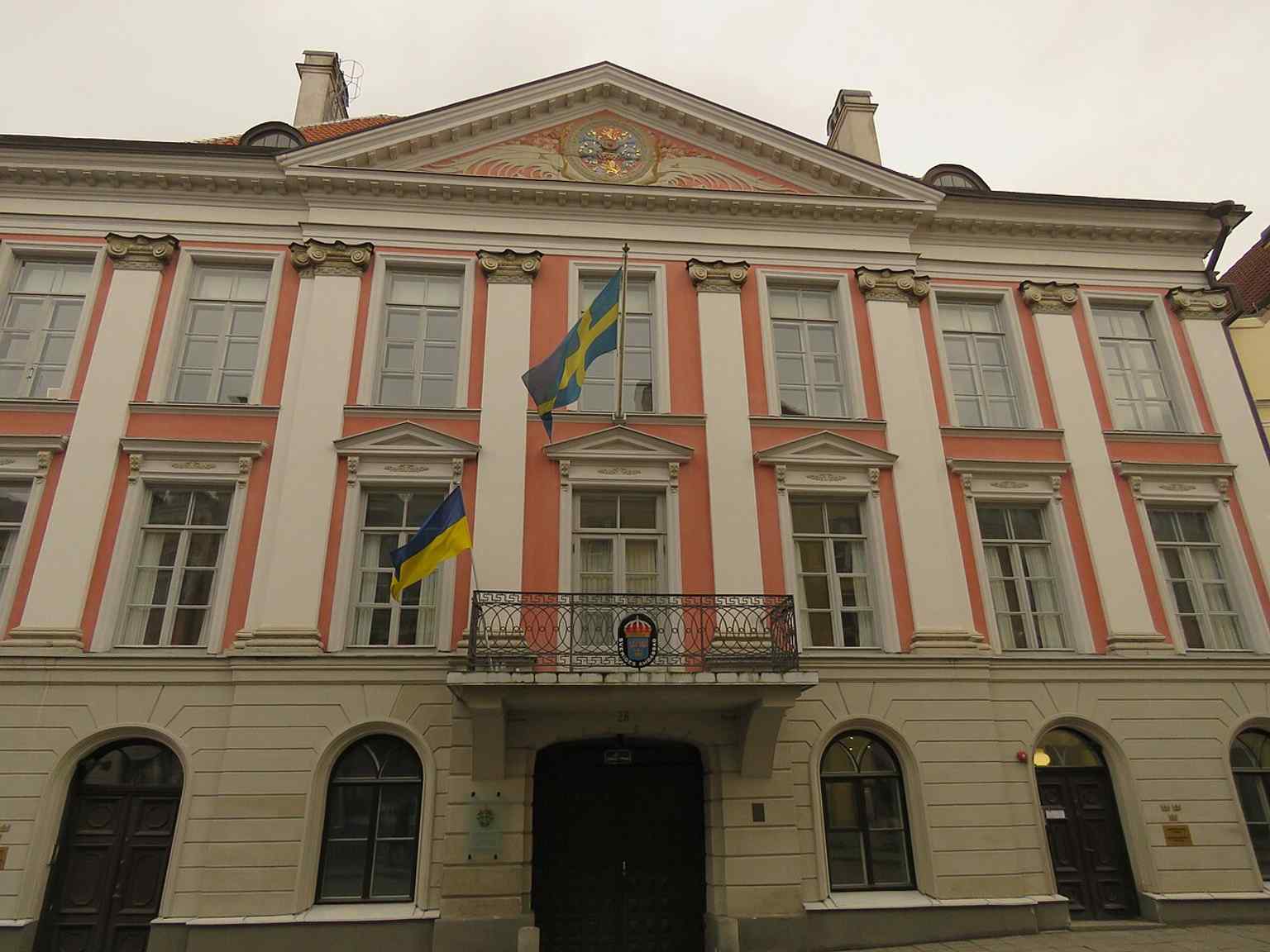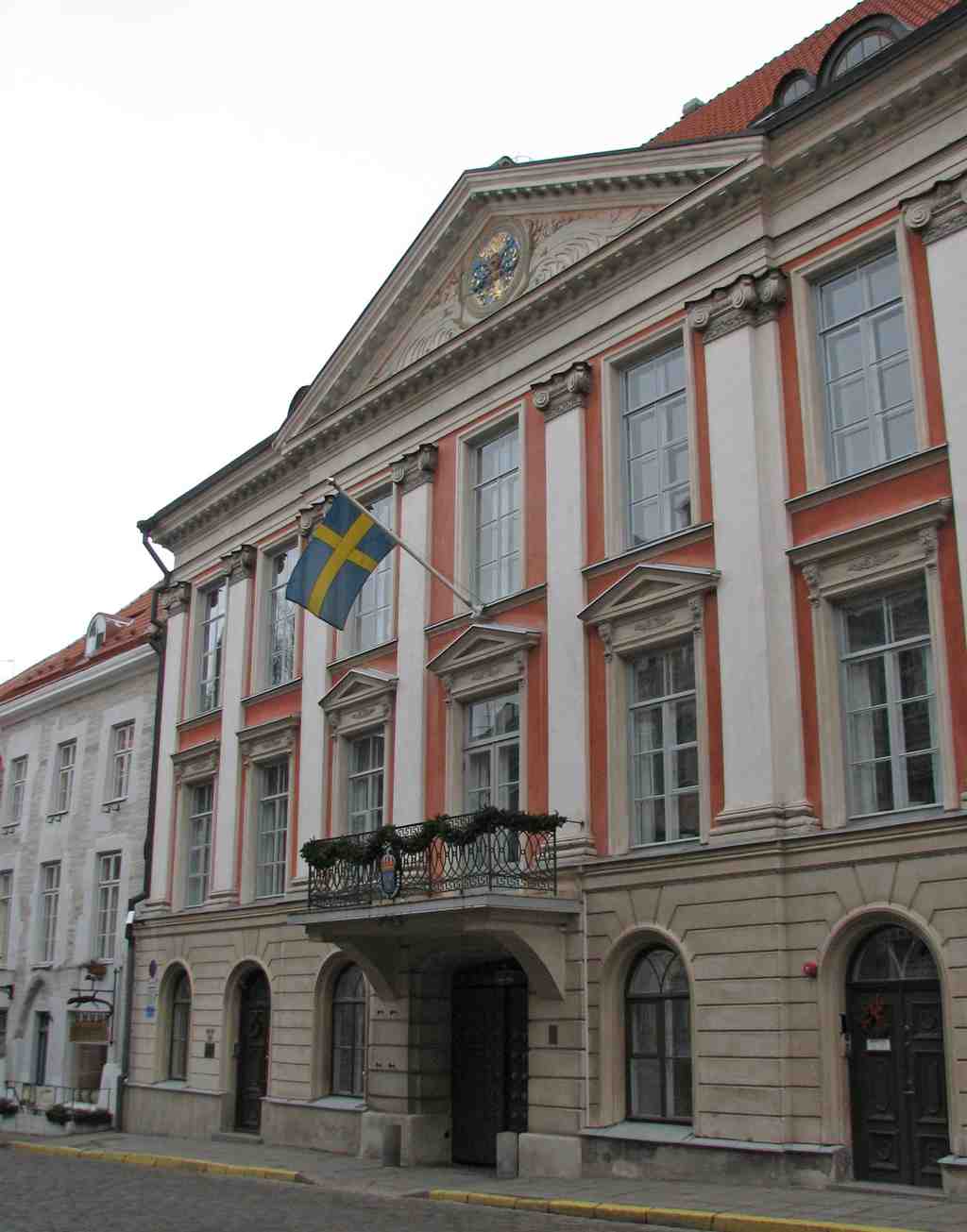
On your right, look for a pale stone façade arranged in a strict, symmetrical block, with arched ground-floor windows and a triangular gable carrying the Rosen family coat of arms.
This is Rosen Palace, and it announces a change in Tallinn’s social language. The merchant brotherhoods nearby displayed wealth through halls and guild houses; here, under Swedish rule, Aksel von Rosen’s baroque ambition spoke in a different accent altogether. He was a high-ranking nobleman, deputy chairman of the court in Tartu, and between the sixteen seventies and sixteen seventy-four he cleared away two half-ruined houses on this plot and raised one of the grandest aristocratic residences in the city.
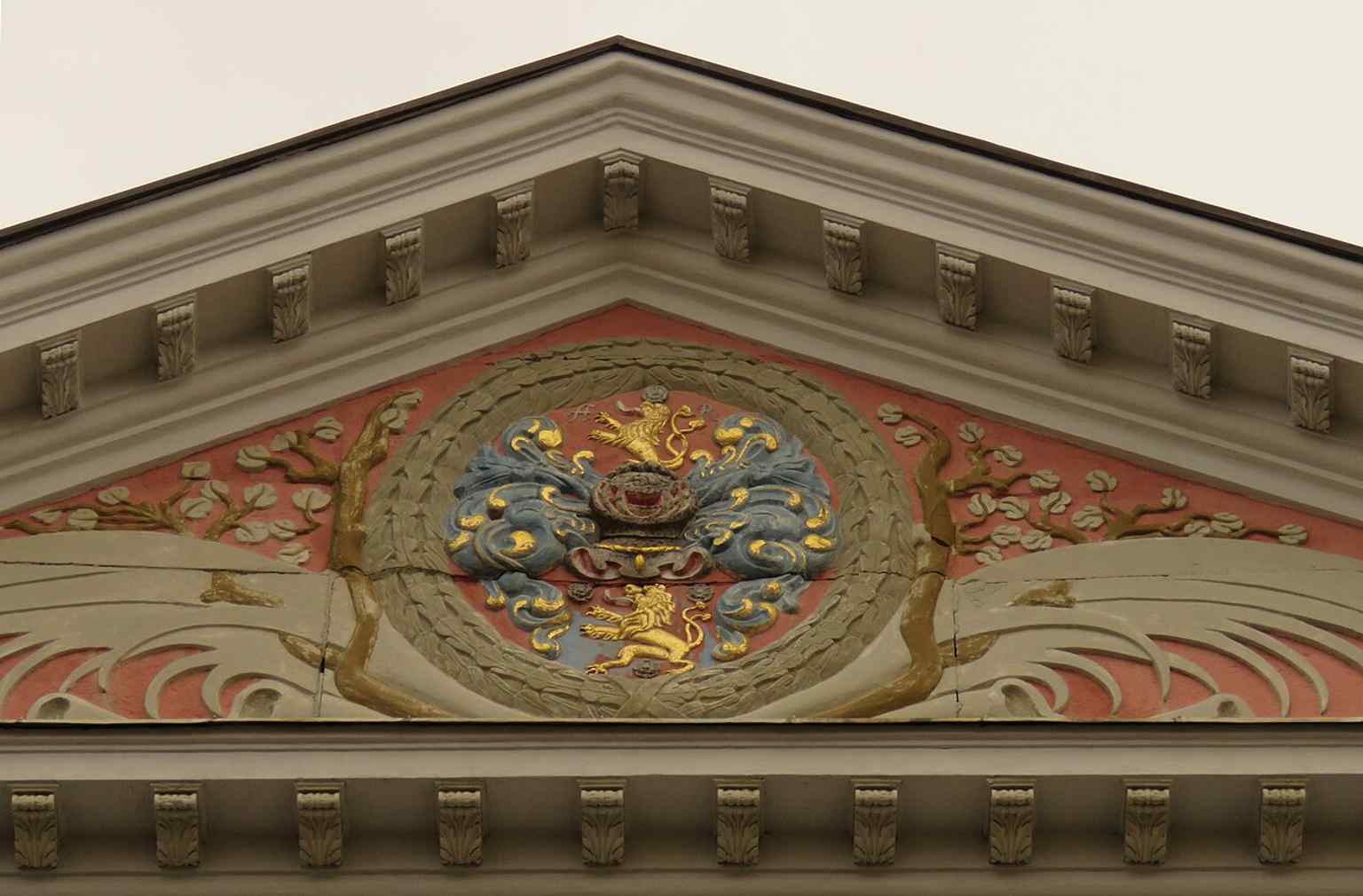
If you study the front, you can still feel that ambition. The façade is balanced and formal, divided by pilasters, those shallow flat columns attached to the wall, with Ionic capitals at the top. The lower windows are arched. Above the main cornice, that projecting ledge near the roofline, sits the triangular pediment with the Rosen arms, carved in stone and once meant to leave no doubt at all about whose house this was. If you want a closer look at the layers of the façade, glance at the detail on your screen.
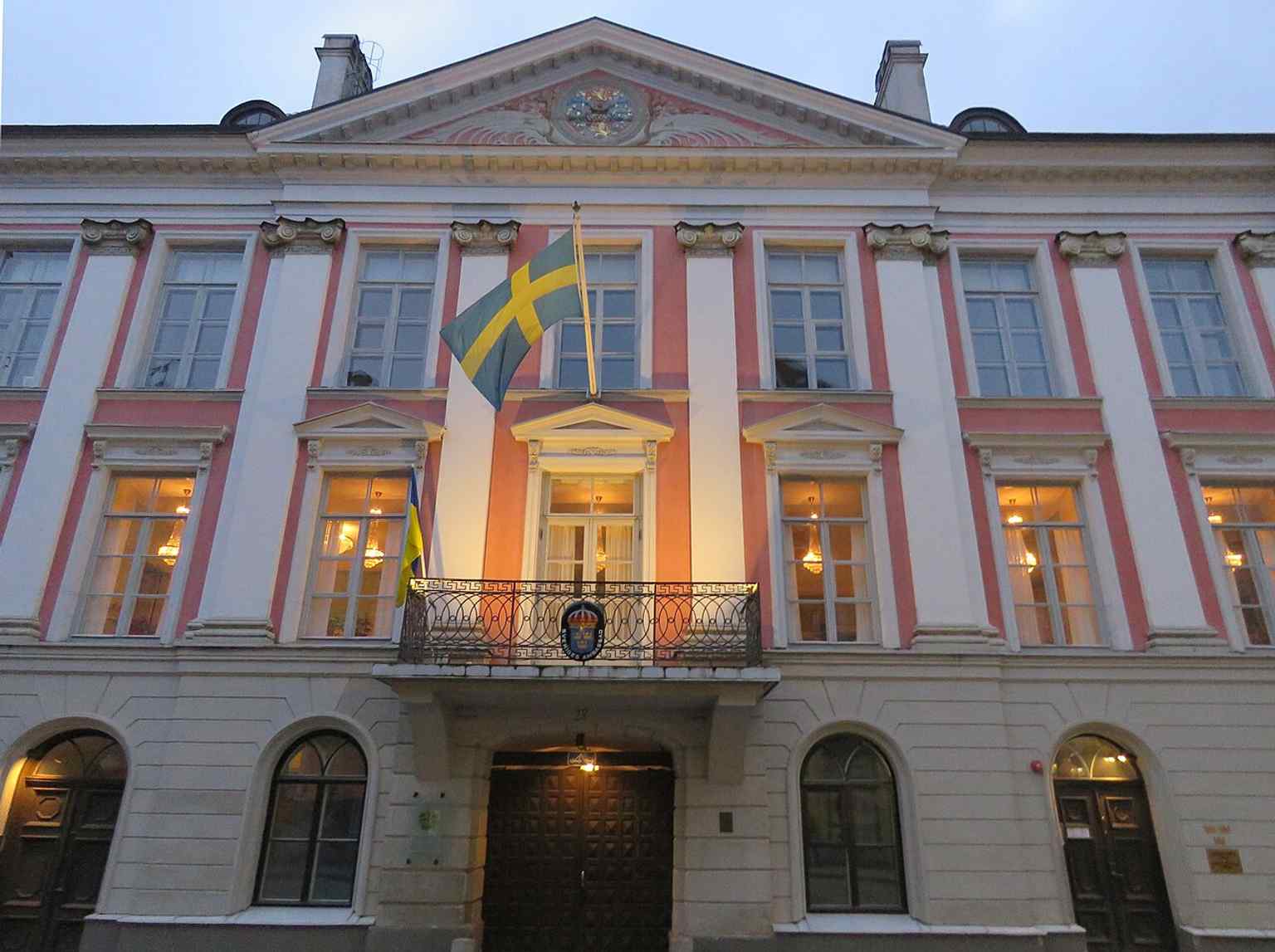
And yet, there is a small sadness built into the story. Aksel did not enjoy his palace for long. He died in sixteen seventy-nine and was buried in Saint Olaf’s Church. The house passed to his younger son, Bengt Gustav, and then to Bengt Gustav’s daughter. So this great declaration of family permanence slipped out of the direct line rather quickly. That is often the way with grand houses: they promise dynasties and deliver only a few brief seasons of ownership.
The palace itself refused to stay still. In the late eighteenth century Admiral Andrei Polyansky took possession, and for nearly a century the house served as the admiralty of the Russian Baltic fleet. Later Count Moritz Nieroth altered it again. Wilhelm von der Borg replaced a wooden balcony with a metal one in the early twentieth century and reshaped openings and stairs. By then, the original baroque appearance had been so thoroughly reworked that what you see now is not a sealed seventeenth-century relic, but a conversation between centuries.
That makes the building more interesting, not less. During restoration in the nineteen nineties, workers removed a temporary wall on the third floor and uncovered traces of an older baroque layout, including what was probably a lofty banquet hall. It was as though the house, after all its disguises, suddenly remembered one of its earliest selves. If you look at the image in the app, you can see how it still holds its place in this powerful stretch of Pikk Street, shoulder to shoulder with other houses of status.
Today, the palace serves as the Embassy of Sweden. After being an aristocratic residence, an admiralty, a credit society property, even a Soviet railway training school, it has returned to a representative role. Quite elegant, really: power changed hands, changed language, changed costume, but this address kept receiving it.
In a moment, we’ll leave noble display behind and head toward a church where influence moved through worship, language, and civic life from within. The Church of the Holy Spirit is about a two-minute walk from here.