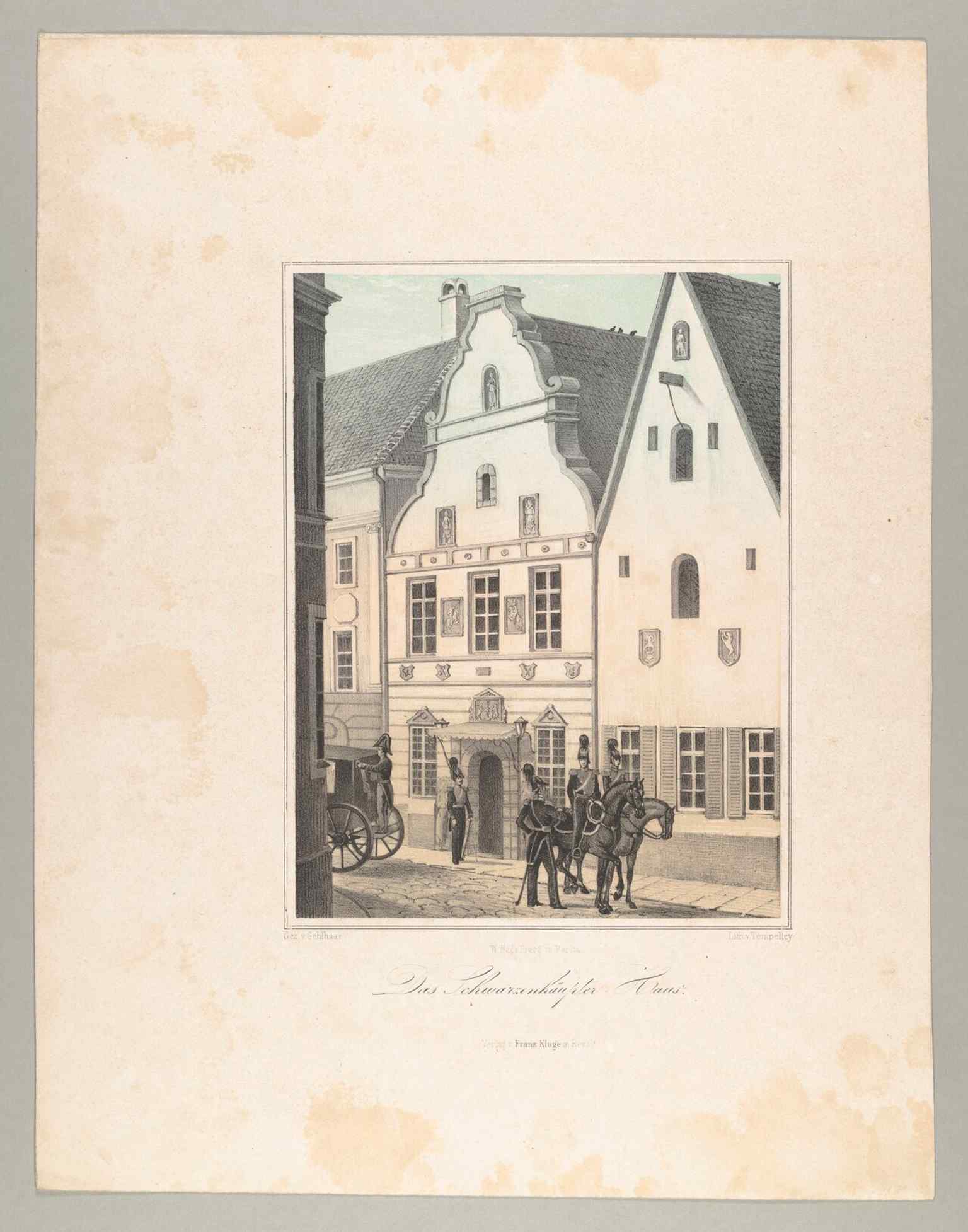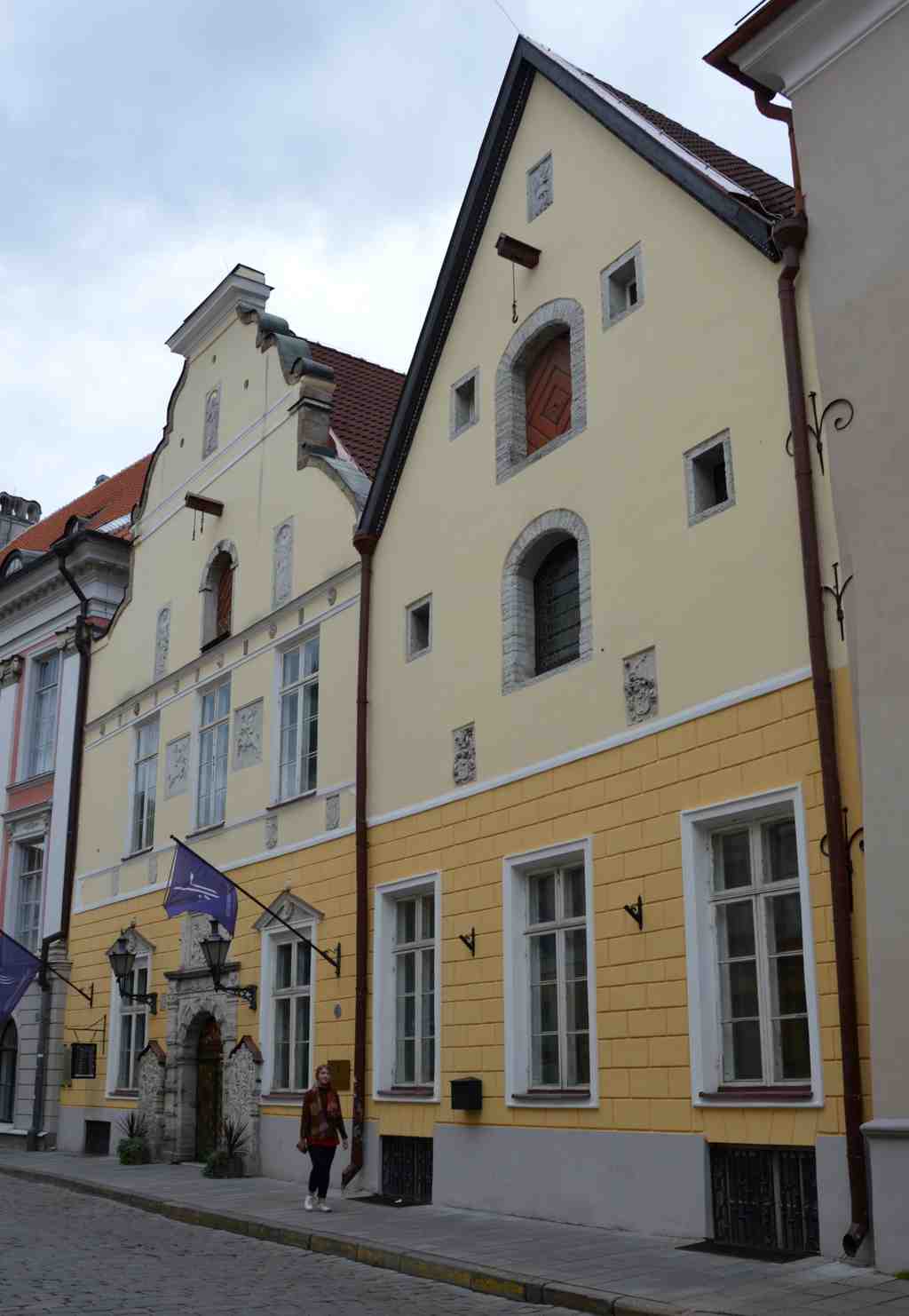
On your right, look for a tall, narrow stone façade that rises into a steep stepped gable, with a dark carved portal below and a parade of sculpted figures and coats of arms above.
This is the House of the Blackheads, and it belongs to one of Tallinn’s most fascinating social inventions: a brotherhood of wealthy, unmarried merchants and shipowners, formed around the year thirteen ninety-nine. They were bachelors, yes, but hardly carefree ones. Their rulebook, written down by fourteen oh seven, set out behaviour, duties, and fines for misconduct, payable in money or even in wax for church candles. So this was never merely a drinking club for ambitious young traders. It mixed business, youth, ritual, and status with almost monastic discipline.
The brotherhood rented this house in fifteen seventeen and bought it in fifteen thirty-one from the councillor J. Fiant. Inside, they created something unusually grand for a merchant property: not rows of storage rooms, but a ceremonial hall. In the early fifteen thirties they added a great new room at the back, supported by a striking octagonal pillar and load-bearing arches, with columns dividing the space into two long aisles, rather like a church interior adapted for feasting, meetings, and display. Commerce here dressed itself in ceremony.
And yet the most revealing act tied to this house happened not in public, but in secret. Most people admire the façade and never suspect that in fifteen twenty-four, when Reformation unrest threatened religious images and treasures, the Blackheads quietly removed and hid church valuables before iconoclasts could reach them. Among the rescued objects was a splendid altar from Bruges, commissioned decades earlier. Silver, paintings, sacred vessels, even model ships passed through their care. In this city, memory did not always wait for an official guardian; sometimes a private brotherhood moved first.
Now let your eyes travel upward. The façade you see owes much to Arent Passer, the master builder who reshaped it in fifteen ninety-seven. He kept the building’s Gothic height and gave it new Netherlandish Renaissance ornament. Above, Christ appears as the saviour of the world, with Justice holding scales and Peace carrying a palm branch. Around them sit the heraldic signatures of the Blackheads’ trading world: Bruges, Novgorod with its key, London, and Bergen with its crowned herring. If you open the image on your phone, the portal detail shows just how confidently this house announced itself.
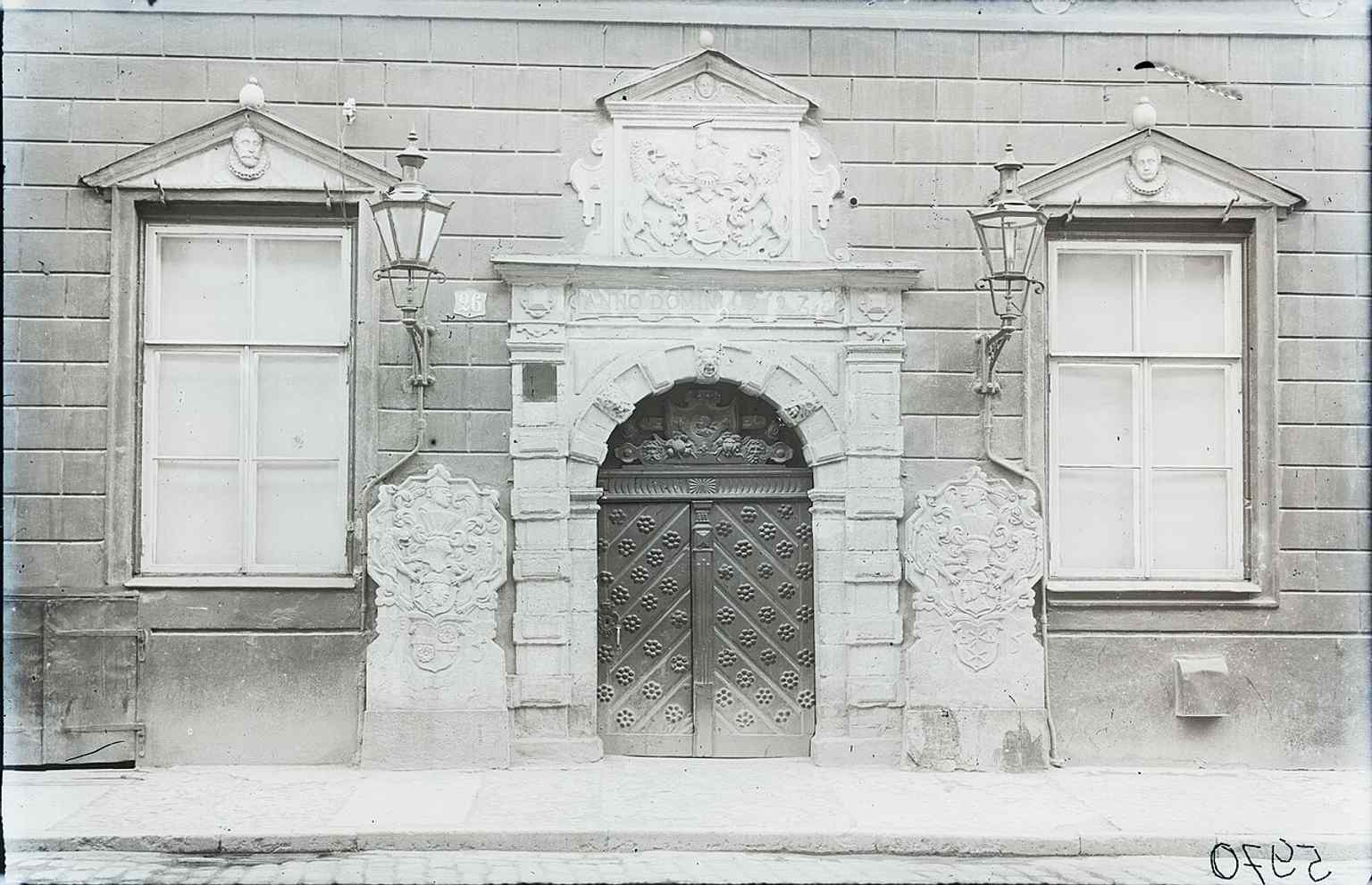
There is another delicious touch. The ground-floor window pediments carry portrait sculptures of King Sigismund the Third Vasa and his wife Anna of Austria, carved for a royal visit that never happened. Even an absent guest could serve the performance of prestige. The carved shield over the portal, added in sixteen oh four by Berent Geistman, completes the effect: a merchant brotherhood presenting itself almost like a court.
That performance kept changing. In eighteen ninety-five the brotherhood became a more modern club. In the Soviet years, the house served youth culture and a library. Now music fills it again; the White Hall inside has returned entertainment to a building that was designed for it.
And that is the tension to carry forward: splendid display on the outside, swift defensive instinct within. Just ahead, Rosen Palace declares status in a different accent altogether. If you want to come back inside here another time, it generally opens Monday to Friday from nine to five, and stays closed on Saturdays and Sundays.