AudaTours logoAudaTours

Stop 12 of 16

St. Nicholas' Church & Museum

headphones 04:59 Buy tour to unlock all 18 tracks
St. Nicholas' Church & Museum
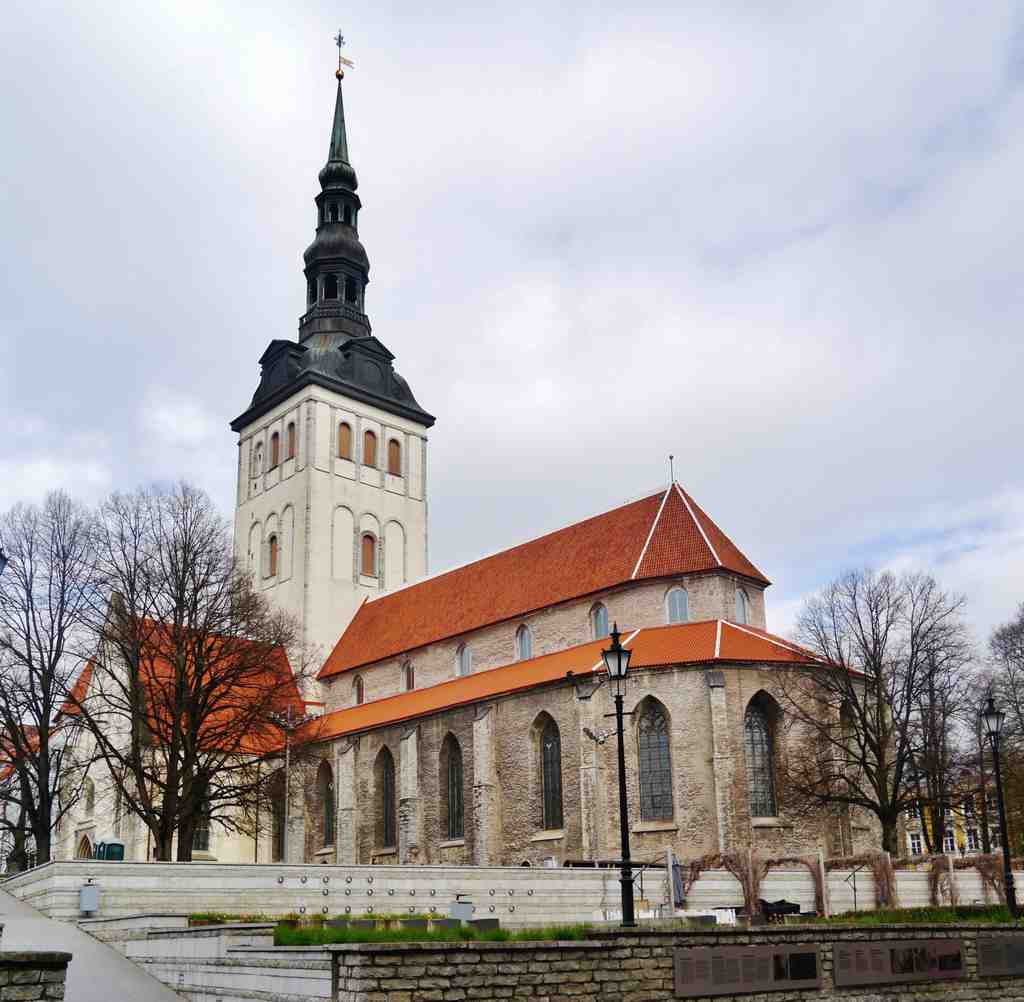
Church of St. Nicholas
Church of St. NicholasPhoto: Zairon, Wikimedia Commons, CC BY-SA 4.0. Cropped & resized.

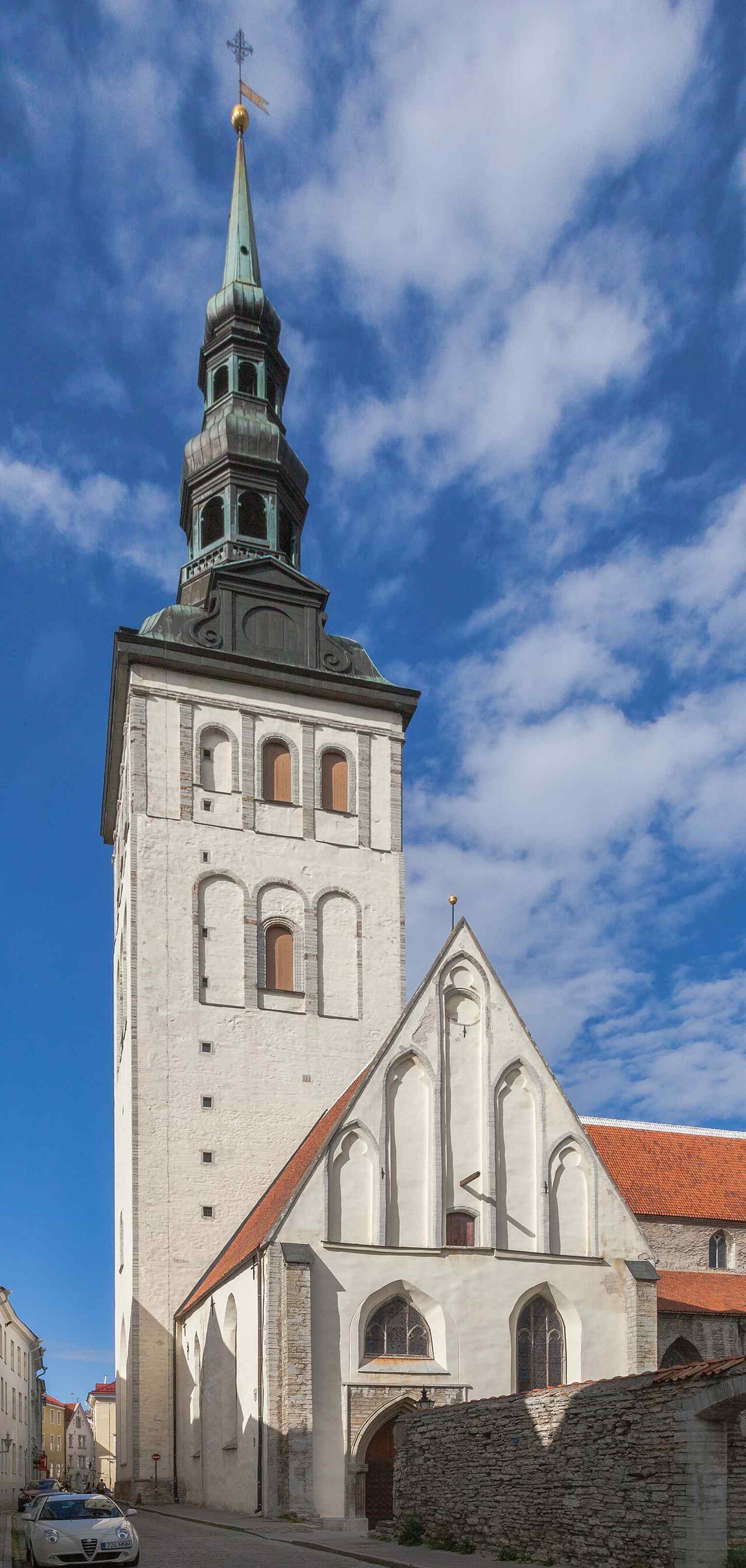
On your right rises a pale stone church with a long, steep-roofed Gothic body and a towering dark spire, its broad, fortress-like mass making Niguliste easy to recognise.

This is the Church of St. Nicholas, founded in the middle of the thirteenth century by merchants from Gotland, men of Westphalian origin who settled here in the Lower Town and dedicated their church to the patron saint of sailors. And that already tells you something essential: this was never only a place of prayer. Niguliste belonged to the merchant world as much as to the sacred one. It served as a parish church, certainly, and one of the richest in Tallinn, but it also stored goods. Business could be done here. Around the Baltic, travelling traders often built fortified churches that could protect both worshippers and wares, and Niguliste was one of the clearest examples.

By the end of the thirteenth century, the builders had given it three aisles, a large square altar end, and a thick western tower shaped for defence. Later generations kept enlarging it. Chapels clustered around it from the fourteenth century onward. In the early fifteenth century, they raised the central hall above the side aisles so light could enter through high windows, and between fourteen oh five and fourteen twenty they created much of the building before you now. Then the master builder Andreas Mor crowned the tower with a Gothic spire by fifteen fifteen; seventeenth-century builders later added a baroque upper finish, bringing it to its present height of one hundred and five metres.

Take a moment and really study the bulk of it. The walls do not simply invite devotion; they seem to guard something. That is the secret of this place.

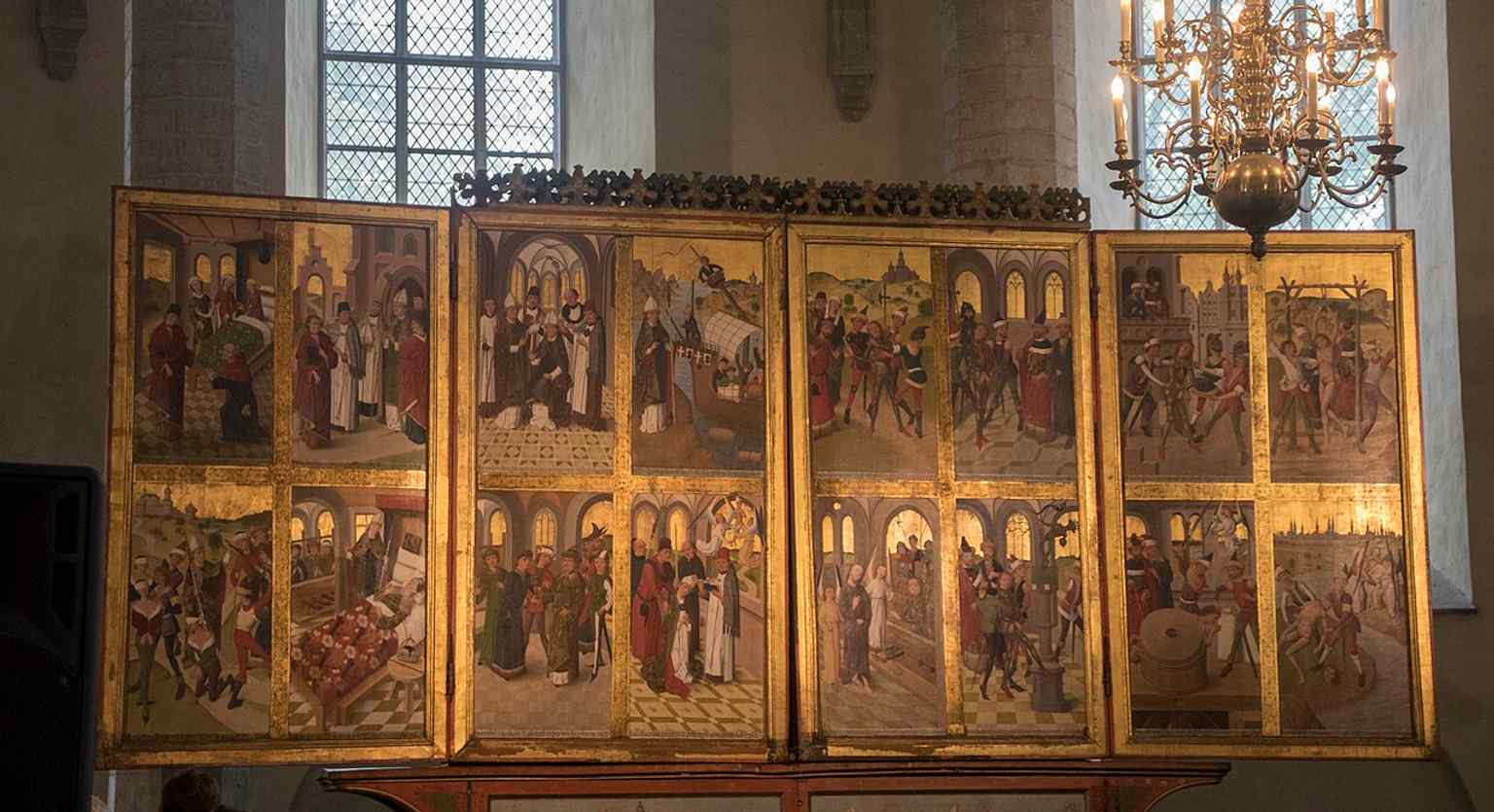
If you glance at your screen, one of the great artworks inside shows St. Nicholas saving a Baltic trading ship from disaster. It is almost a manifesto in paint: commerce and salvation bound together in one image.
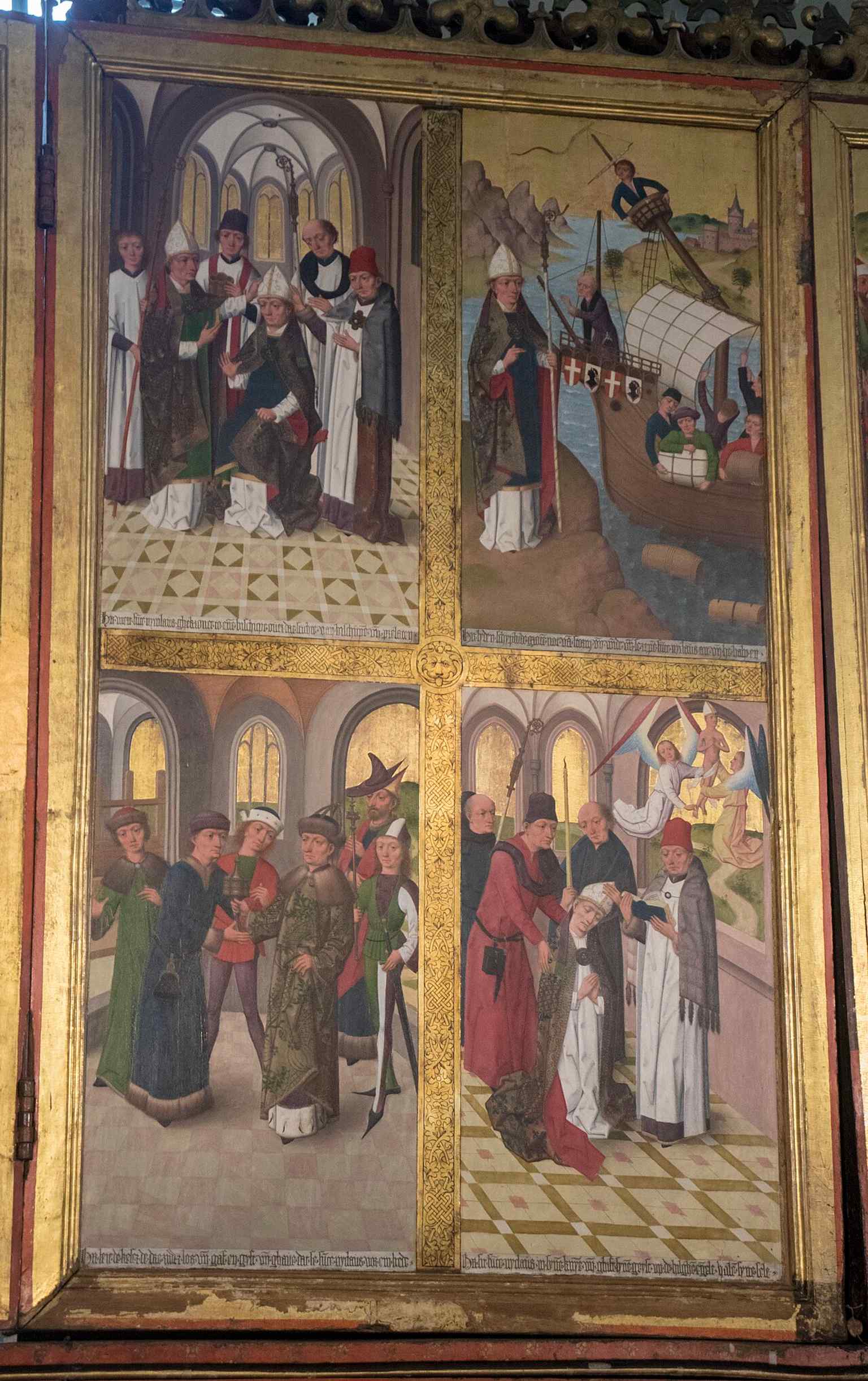
Another altarpiece detail showing St. Nicholas saving a shipwrecked Hanseatic vessel, linking the church to Tallinn’s merchant history.
Another altarpiece detail showing St. Nicholas saving a shipwrecked Hanseatic vessel, linking the church to Tallinn’s merchant history.Photo: WanderingTrad, Wikimedia Commons, CC BY-SA 4.0. Cropped & resized.

When the Reformation turned violent, Niguliste revealed just how precarious that world could be. On the night of the fourteenth of September, fifteen twenty-four, crowds smashed their way through other churches in the Lower Town. Local legend says Niguliste survived because someone sealed its door locks with molten lead. Whether that tale is literally true or not, the result mattered: this became one of the few Lower Town churches whose interior escaped that wave of destruction. The church turned Lutheran, but its treasures remained.

You may remember the Brotherhood of the Blackheads. Their great altarpiece of the Virgin Mary, paid for together with the Great Guild before fourteen ninety-three, was carried out and hidden in the House of the Blackheads during that anti-image violence, and it stayed there until nineteen forty-three. In Tallinn, belief, status, trade, and fear were never far apart.

Then came the Soviet air raid of the ninth of March, nineteen forty-four. Fire tore through the church. A carved sixteenth-century pulpit vanished, and much of the art still inside perished. For Estonia, Niguliste became a wound in stone. Restorers began in nineteen fifty-three and worked for nearly thirty years. The spire rose again in the nineteen seventies, collapsed again after a fire in nineteen eighty-two, and rose once more. Since nineteen eighty-four, the building has lived yet another life as a museum and concert hall. Inside, it shelters medieval art from across Estonia, including the surviving fragment of Bernt Notke’s Dance of Death. And through the organist Andres Uibo, who has served here since nineteen eighty-one, it also became a living musical space, not merely a rescued shell.

So Niguliste refuses simple labels. It is sanctuary, warehouse, stronghold, ruin, museum, and concert hall all at once, which makes it one of the most honest buildings in the Lower Town.

In about three minutes, we leave this great survivor for the Tallinn Museum of Orders of Knighthood, where a much smaller museum preserves surprisingly global stories about honour, status, and who gets to claim legitimacy. If you want to return inside Niguliste later, it is generally open every day from ten in the morning until six in the evening.
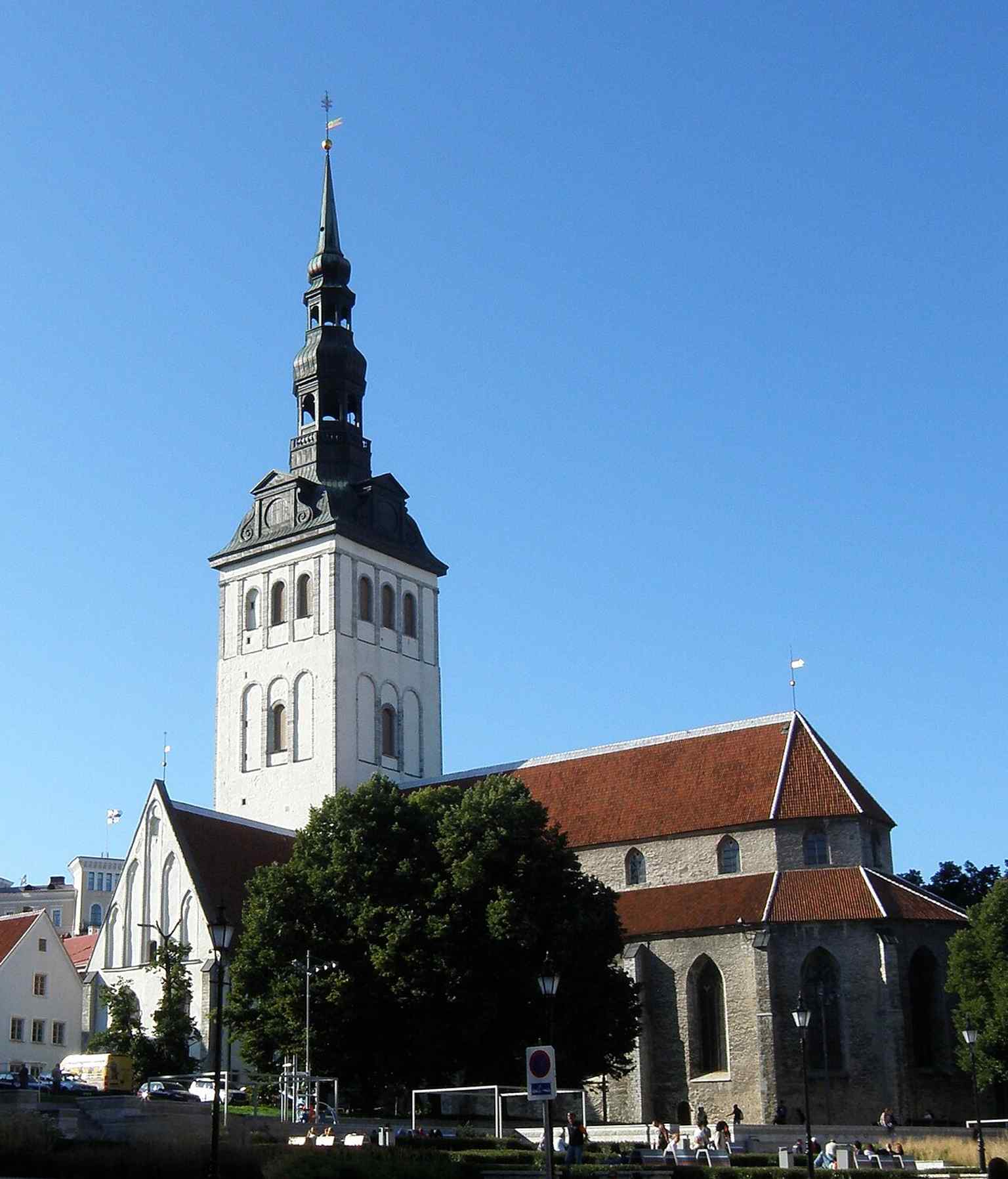
A clear view of Niguliste Church in Tallinn, the medieval landmark that once dominated the western skyline of the Old Town.
A clear view of Niguliste Church in Tallinn, the medieval landmark that once dominated the western skyline of the Old Town.Photo: Epp, Wikimedia Commons, CC BY-SA 3.0. Cropped & resized.
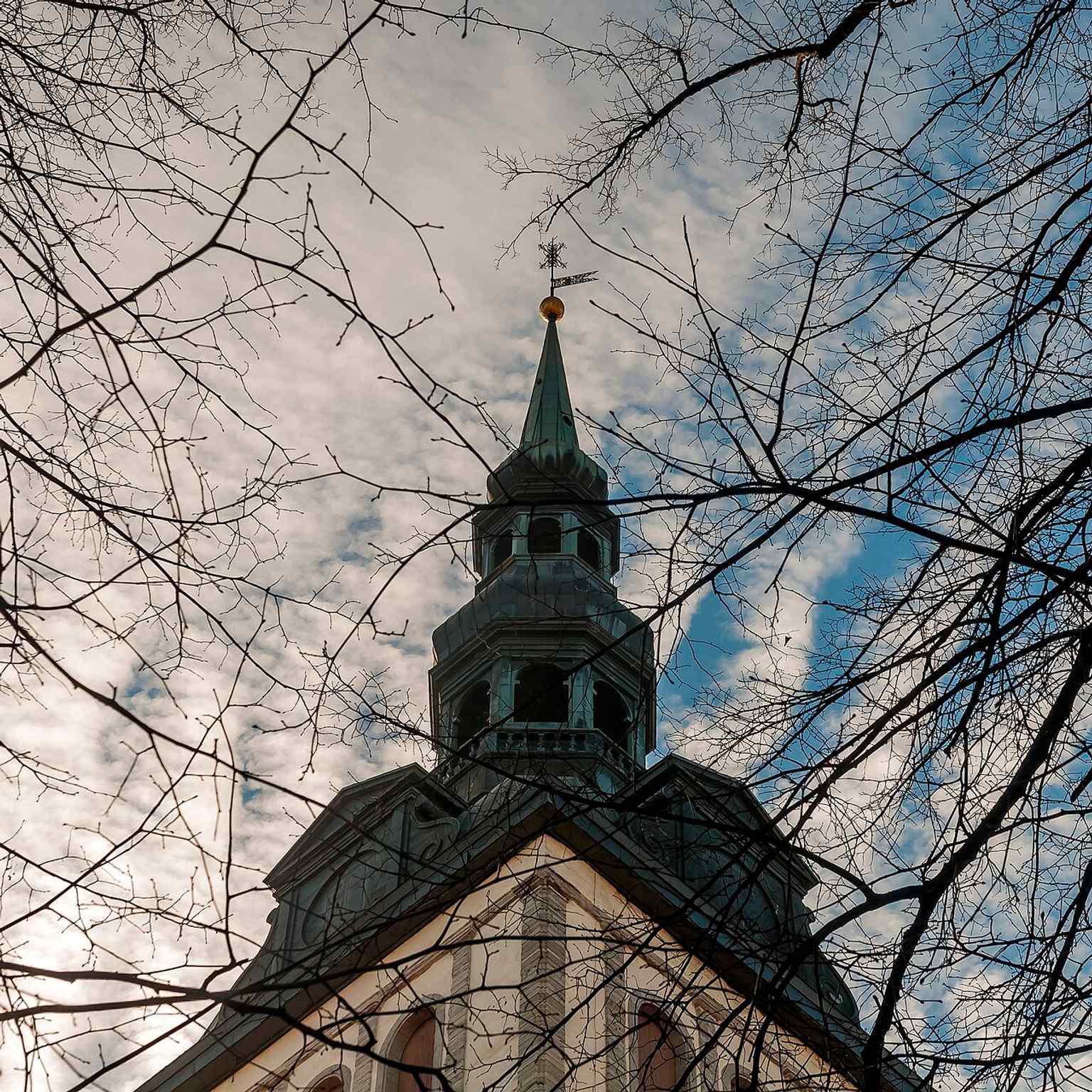
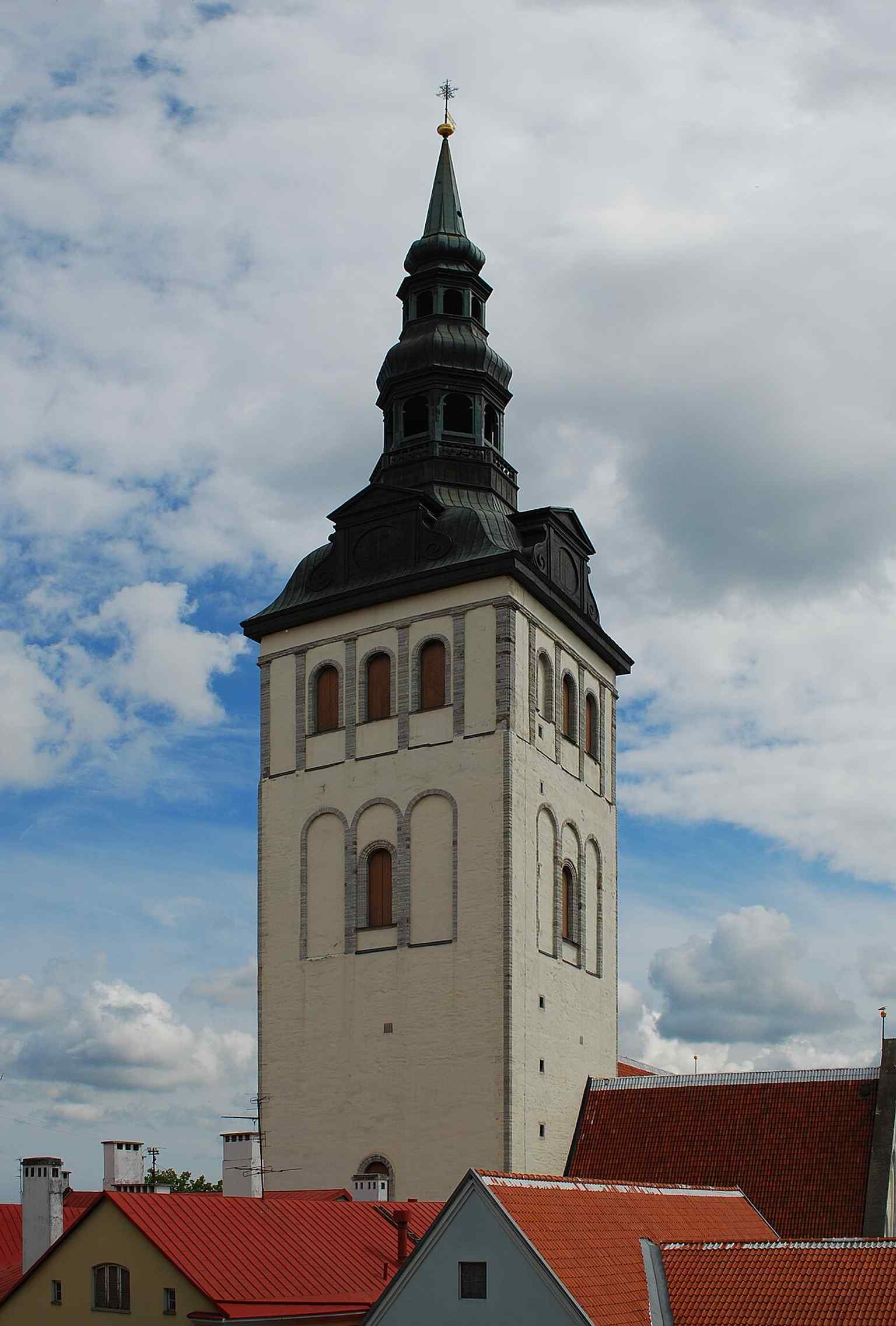
The soaring tower and spire — the church’s most recognizable feature, rebuilt after wartime damage and later fire.
The soaring tower and spire — the church’s most recognizable feature, rebuilt after wartime damage and later fire.Photo: Andrei Stroe, Wikimedia Commons, CC BY-SA 3.0 ee. Cropped & resized.
A close exterior view that helps show the church’s Gothic massing and tall brick tower above the old city streets.
A close exterior view that helps show the church’s Gothic massing and tall brick tower above the old city streets.Photo: Diego Delso, Wikimedia Commons, CC BY-SA 3.0. Cropped & resized.
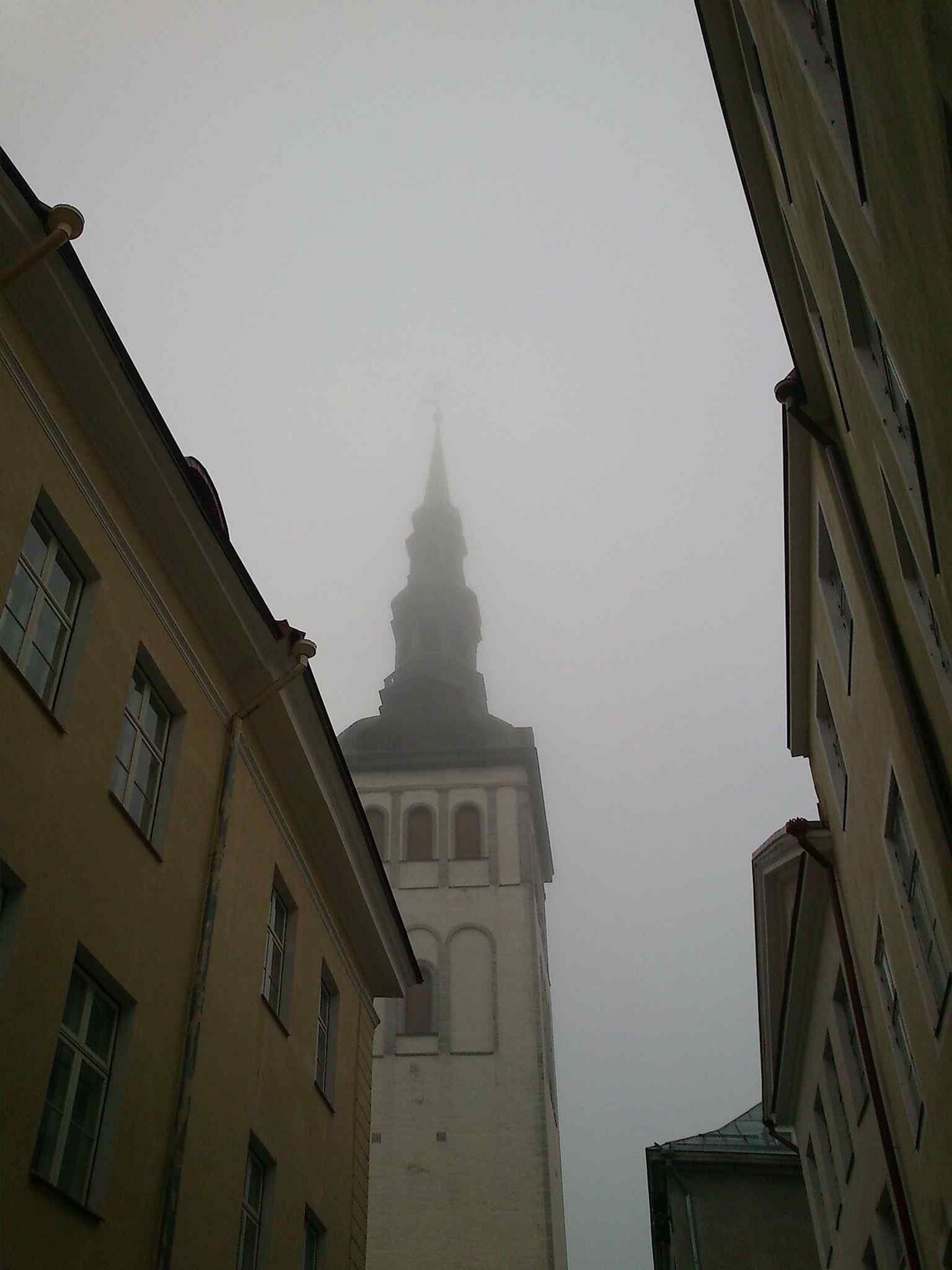
Niguliste shrouded in mist in 2013, a moody reminder of the long restoration history after wartime destruction.
Niguliste shrouded in mist in 2013, a moody reminder of the long restoration history after wartime destruction.Photo: Monika Reppo, Wikimedia Commons, CC BY-SA 3.0 ee. Cropped & resized.
A frontal view of the church on Niguliste street, useful for showing its presence as a major monument in the Lower Town.
A frontal view of the church on Niguliste street, useful for showing its presence as a major monument in the Lower Town.Photo: Aleksandr Abrosimov, Wikimedia Commons, CC BY-SA 4.0. Cropped & resized.
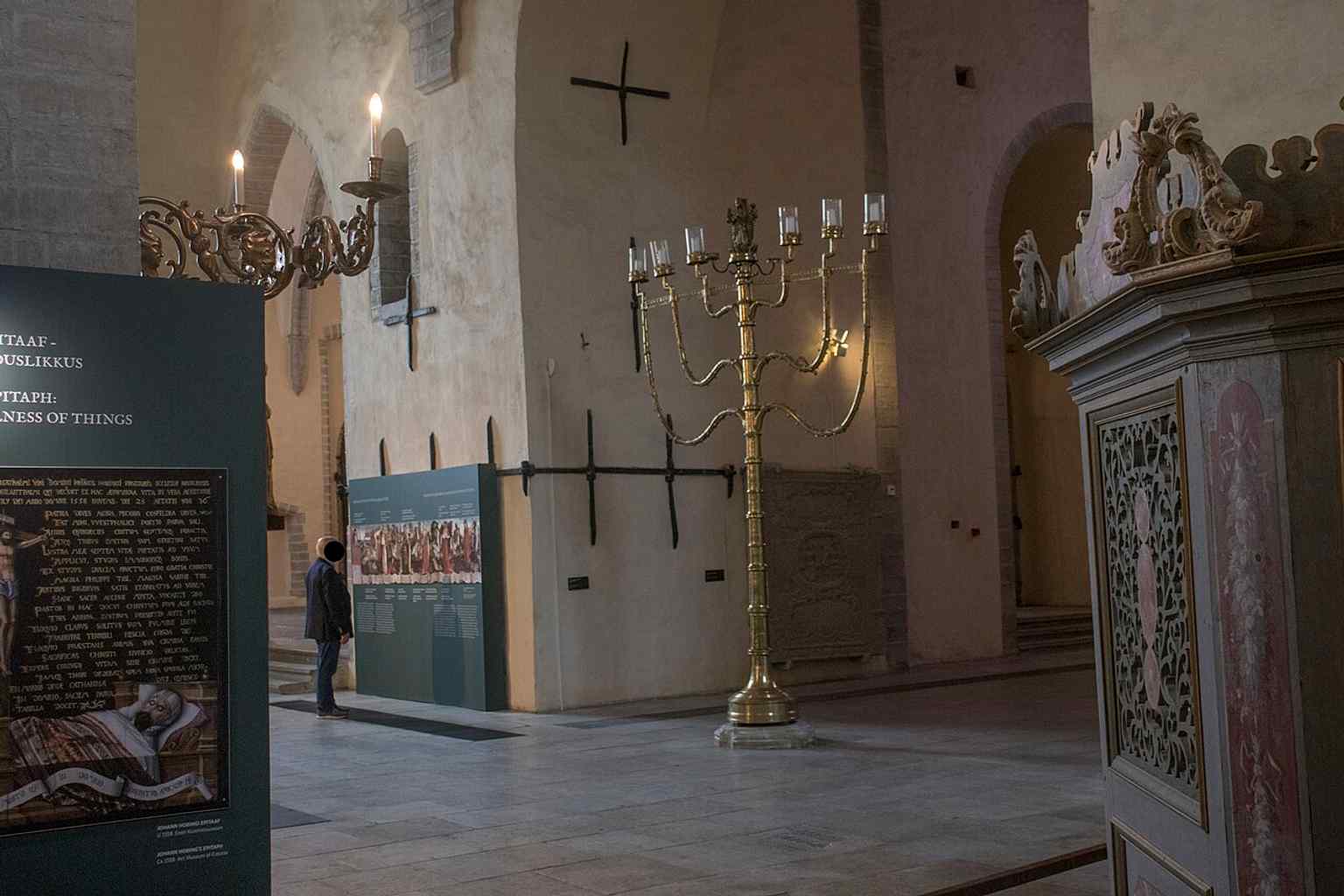
A church candelabrum inside Niguliste, part of the museum setting that replaced the old parish function.
A church candelabrum inside Niguliste, part of the museum setting that replaced the old parish function.Photo: WanderingTrad, Wikimedia Commons, CC BY-SA 4.0. Cropped & resized.
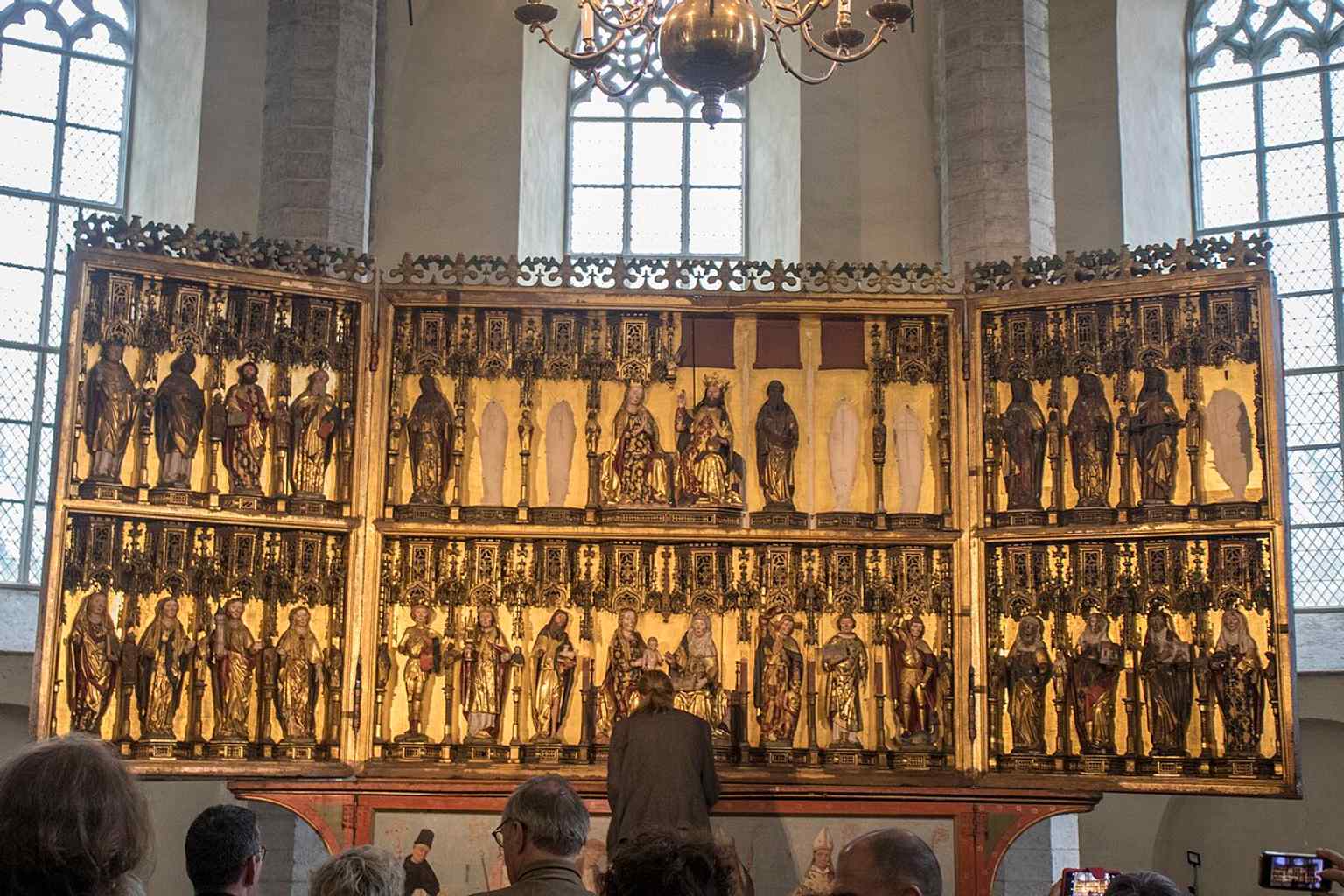
The famous Hermen Rode high altarpiece, one of the museum’s greatest treasures and a key surviving work of medieval art.
The famous Hermen Rode high altarpiece, one of the museum’s greatest treasures and a key surviving work of medieval art.Photo: WanderingTrad, Wikimedia Commons, CC BY-SA 4.0. Cropped & resized.
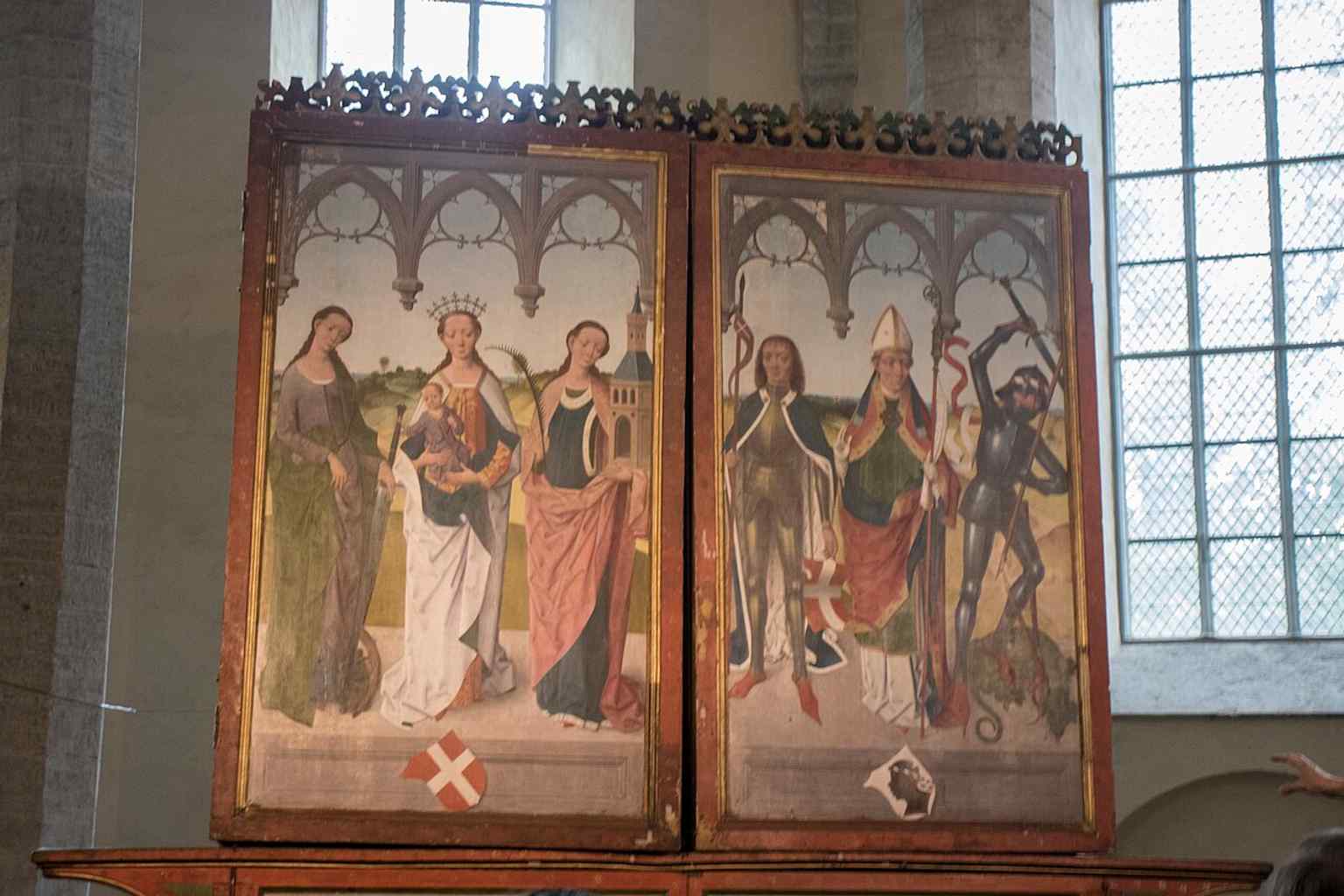
The closed altarpiece view, useful for showing how the museum preserves and presents this medieval masterpiece.
The closed altarpiece view, useful for showing how the museum preserves and presents this medieval masterpiece.Photo: WanderingTrad, Wikimedia Commons, CC BY-SA 4.0. Cropped & resized.
The open altarpiece view, revealing the full painted and carved ensemble that visitors see during special displays.
The open altarpiece view, revealing the full painted and carved ensemble that visitors see during special displays.Photo: WanderingTrad, Wikimedia Commons, CC BY-SA 4.0. Cropped & resized.
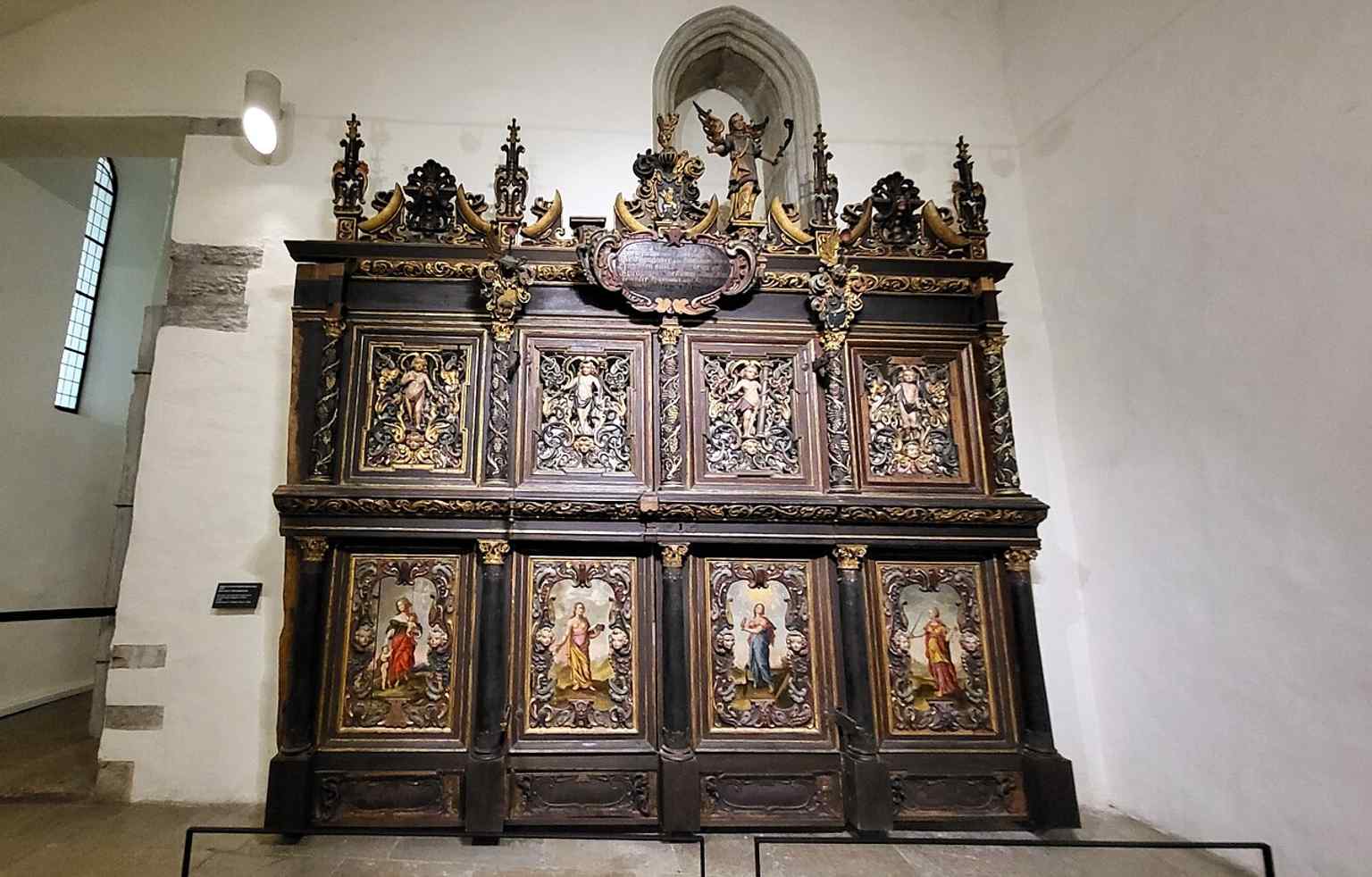
The decorative screen of the Bogislaus von Rosen chapel, part of the richly preserved interior now used as a museum and concert hall.
The decorative screen of the Bogislaus von Rosen chapel, part of the richly preserved interior now used as a museum and concert hall.Photo: Hei1972, Wikimedia Commons, CC BY-SA 4.0. Cropped & resized.
arrow_back Back to Tallinn Audio Tour: Hidden Stories of Guilds, Monks, and Medieval Marvels
Loved by travellers

Thousands of tours started.
Plenty of opinions.

4.8 across the App Store and Google Play. Here's a few we keep coming back to.

starstarstarstarstar
This was a solid way to get to know Brighton without feeling like a tourist. The narration had depth and context, but didn't overdo it.
Christoph
Christoph
Brighton Tour
starstarstarstarstar
Started this tour with a croissant in one hand and zero expectations. The app just vibes with you, no pressure, just you, your headphones, and some cool stories.
download Get the app

Pop your headphones in.
Step outside.

Free to download. Tours in every city. Start in 60 seconds — no account, no card.

Download on the App StoreGet it on Google Play
starstarstarstarstar_half
4.8
AudaTours app icon
headphones
~ 4 min until your first tour starts
public
1,000+ cities worldwide
all_inclusive
AudaTours
Unlimited

Every tour. Every city. One subscription.

3101 tours2271 cities138 countries50+ languages