AudaTours logoAudaTours

Stop 9 of 16

Old Estonia Restaurant

headphones 04:16 Buy tour to unlock all 18 tracks
Old Estonia Restaurant
Old Town
Old TownPhoto: aerofotod.ee, Wikimedia Commons, CC BY-SA 4.0. Cropped & resized.

On your right, look for a dense cluster of pale limestone walls and red-tiled gabled roofs, marked by sharp church spires and the heavy line of medieval towers.

This is the oldest part of Tallinn, but it is not simply an old quarter. It is a complete urban machine, preserved with astonishing clarity. In the nineteen nineties, Estonia added the Old Town to its register of cultural monuments, and UNESCO recognised it as one of the best-preserved historic centres of a northern European trading city.

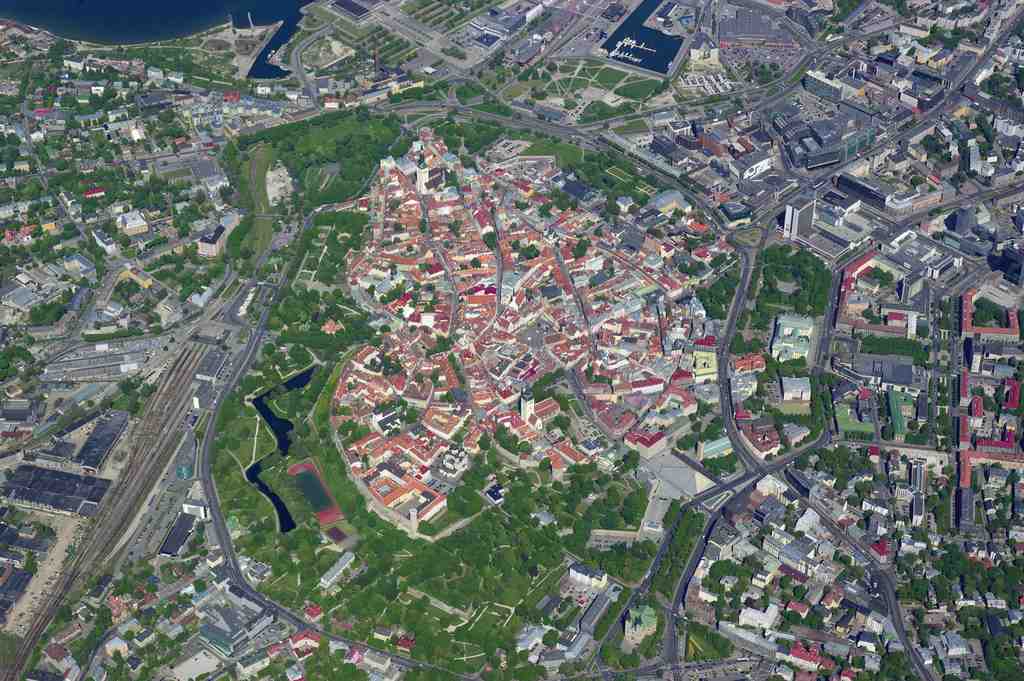
The secret of making sense of Tallinn begins here: this city has three parts. There is Toompea, the Upper Town on the hill; the Lower Town, enclosed by medieval walls; and around them, the later earth ramparts and moat, redesigned in the late nineteenth century as a green belt around the old heart. If you glance at the aerial image in the app, the whole structure reveals itself at once.
Wide aerial view of Tallinn’s Old Town, the UNESCO-listed historic center preserved since 1997.
Wide aerial view of Tallinn’s Old Town, the UNESCO-listed historic center preserved since 1997.Photo: Klevhs, Wikimedia Commons, CC BY-SA 4.0. Cropped & resized.

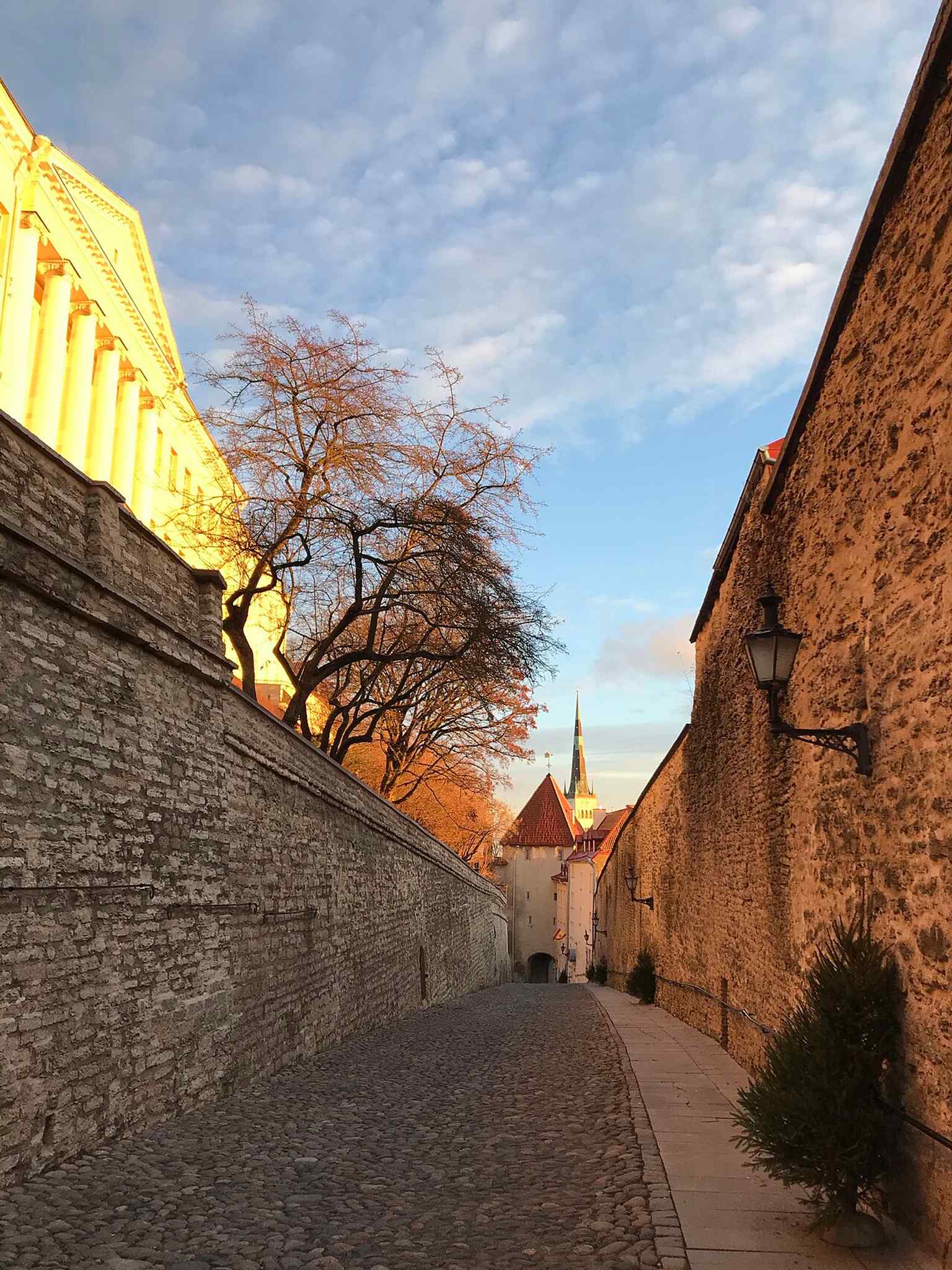
And with that structure came rivalry. Upper Town versus Lower Town was not a poetic contrast but a hard political fact. Toompea housed rulers, nobles, and authority; the Lower Town belonged to merchants, guilds, and trade. Their relations grew so tense that heavy gates between them were locked at night. Tallinn even earned a joking nickname, “the limping city,” because its two main links uphill, Pikk Jalg, or Long Leg, and Lühike Jalg, or Short Leg, differ so much in length and steepness that the city seems to walk with a limp. You can see that awkward climb beautifully in the app’s image of Pikk Jalg.
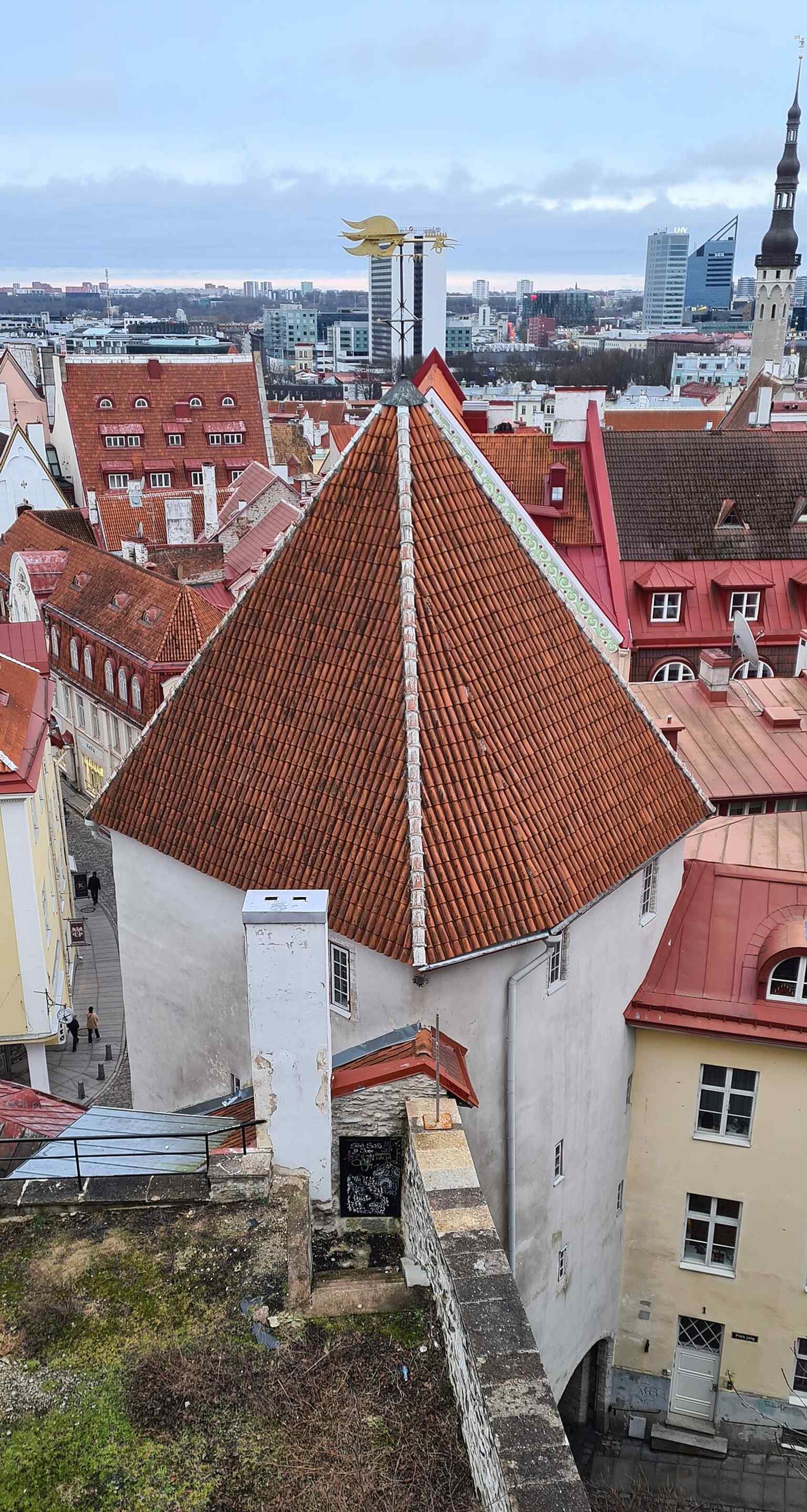
Pikk Jalg gate tower, one of the steep routes linking Upper and Lower Town in the city’s famous “limping” layout.
Pikk Jalg gate tower, one of the steep routes linking Upper and Lower Town in the city’s famous “limping” layout.Photo: BeshevI, Wikimedia Commons, CC BY-SA 4.0. Cropped & resized.

Pause for a moment and notice how the streets around you compress, bend, and then climb. You can feel the logic of the place in your body: commerce spread and negotiated below; power withdrew and watched from above.

That, I think, is the twist in Tallinn. What appears at first to be a charming medieval scene is really a record of conflict, adaptation, and survival. Much of the street plan still follows the thirteenth-century layout. Many buildings along those lines date from the fourteenth to the sixteenth centuries. The walls still keep close to their historic scale, in places rising more than fifteen metres, and an extraordinary stretch survives: one point eight five kilometres, with twenty-six towers still standing.

Yet this place never froze into a museum. People still live here, trade here, worship here. Foreign rulers renamed it Reval after the Danish conquest in twelve nineteen. Toompea later became a castle, then a palace, and now houses Estonia’s parliament. After the catastrophic fire of sixteen eighty-four, the Upper Town rebuilt itself in stone. After the bombing of the ninth of March, nineteen forty-four, Harju Street lay in ruins for decades before the city inserted a green open space into the old fabric. Tallinn keeps changing costume, but it refuses to leave the stage.

A visitor named Alexander Bestuzhev-Marlinsky captured that sensation in eighteen twenty-one, writing that the streets “spin, intertwine, and emerge from one another.” He had understood the place exactly: this is not disorder, but memory arranged as a city.

And among all these voices, one building speaks most confidently for the Lower Town: the Town Hall, where merchant government announced itself in stone. We are only about a minute away from it now. If you linger here later, the Old Town remains open and lively every day from ten in the morning until late, usually eleven at night, and until midnight on Fridays and Saturdays.
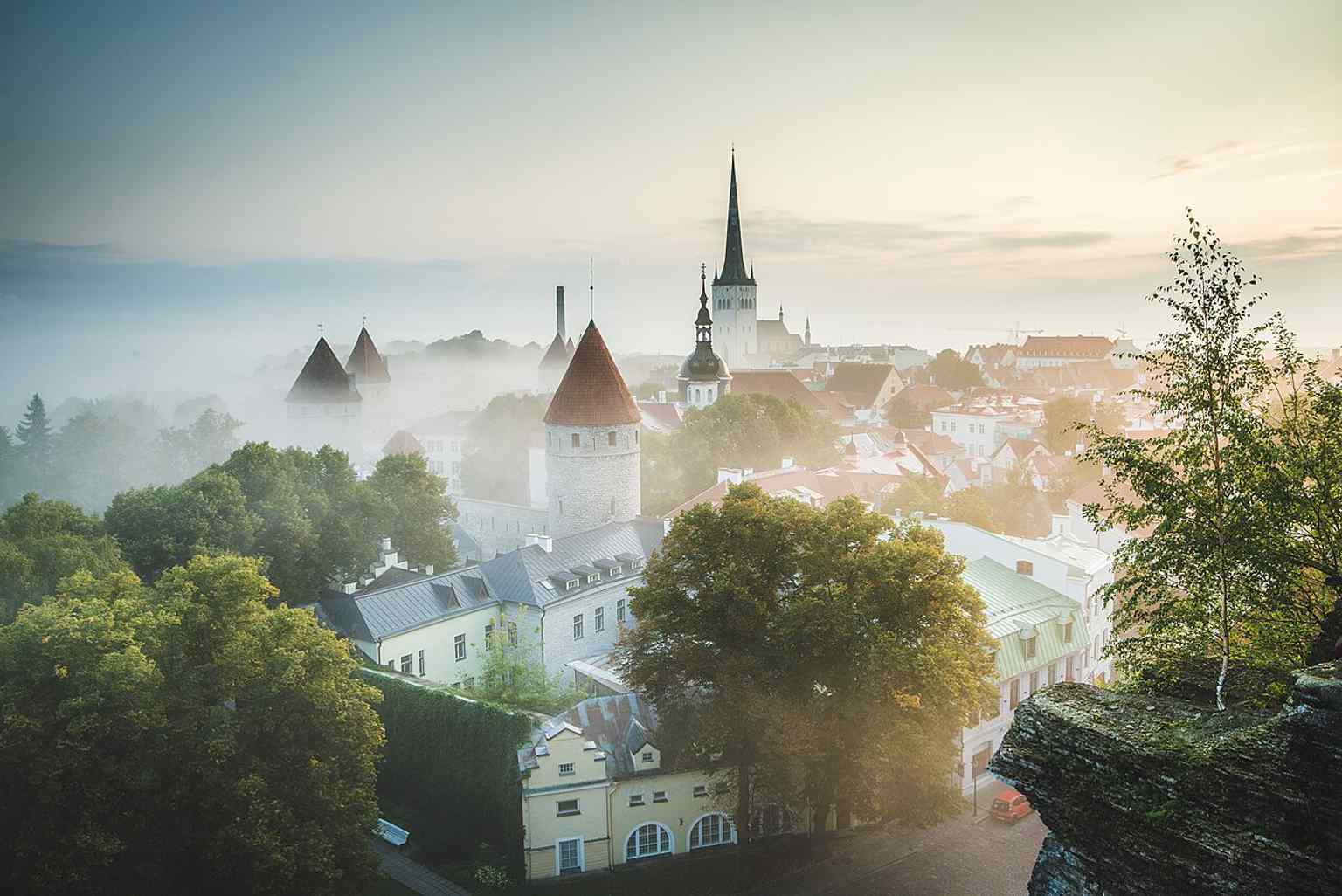
Sunrise over the Old Town from Patkul viewing platform, showing the dense medieval roofscape and tower skyline.
Sunrise over the Old Town from Patkul viewing platform, showing the dense medieval roofscape and tower skyline.Photo: Hendrik Mändla, Wikimedia Commons, CC BY-SA 4.0. Cropped & resized.
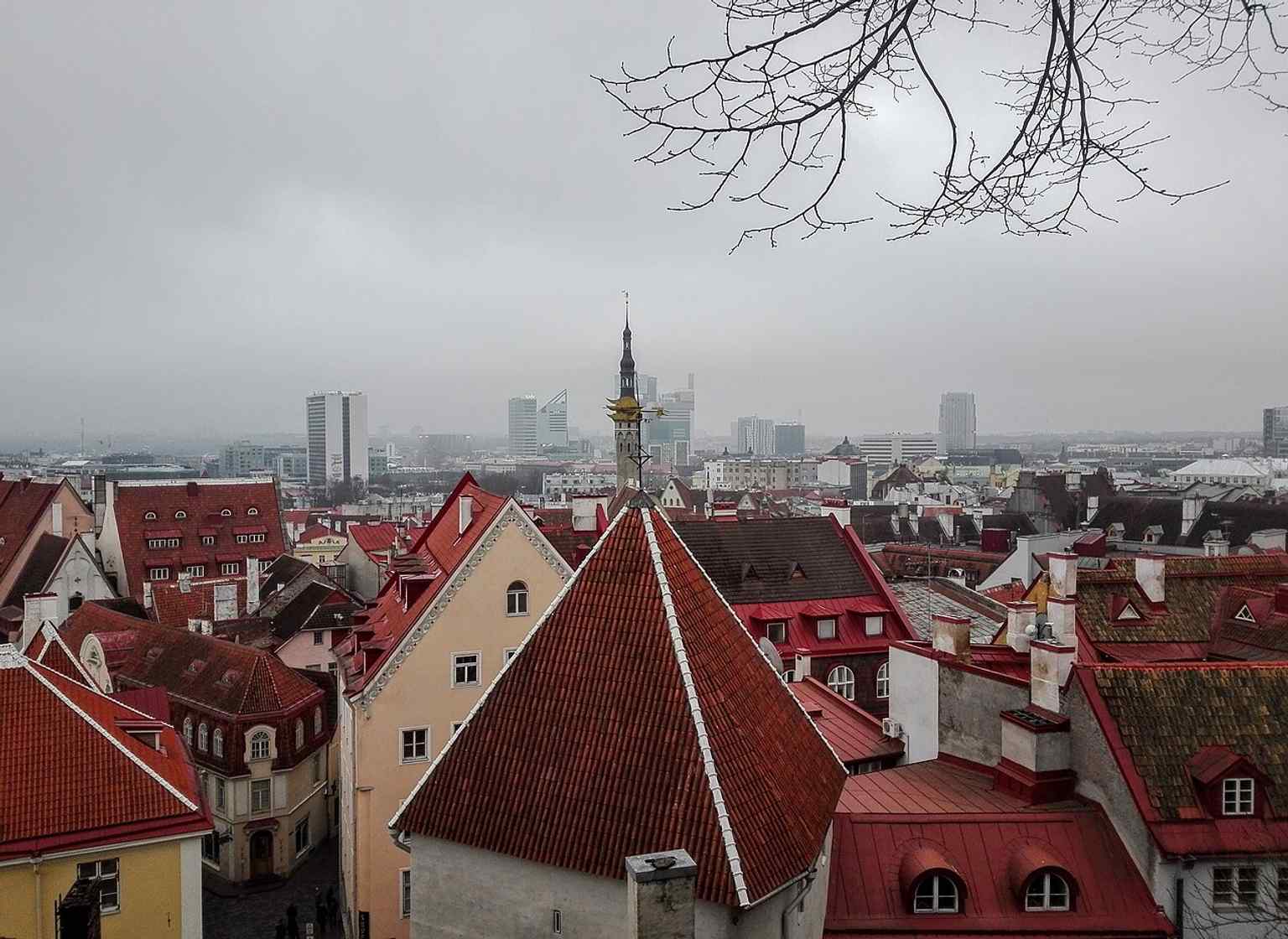
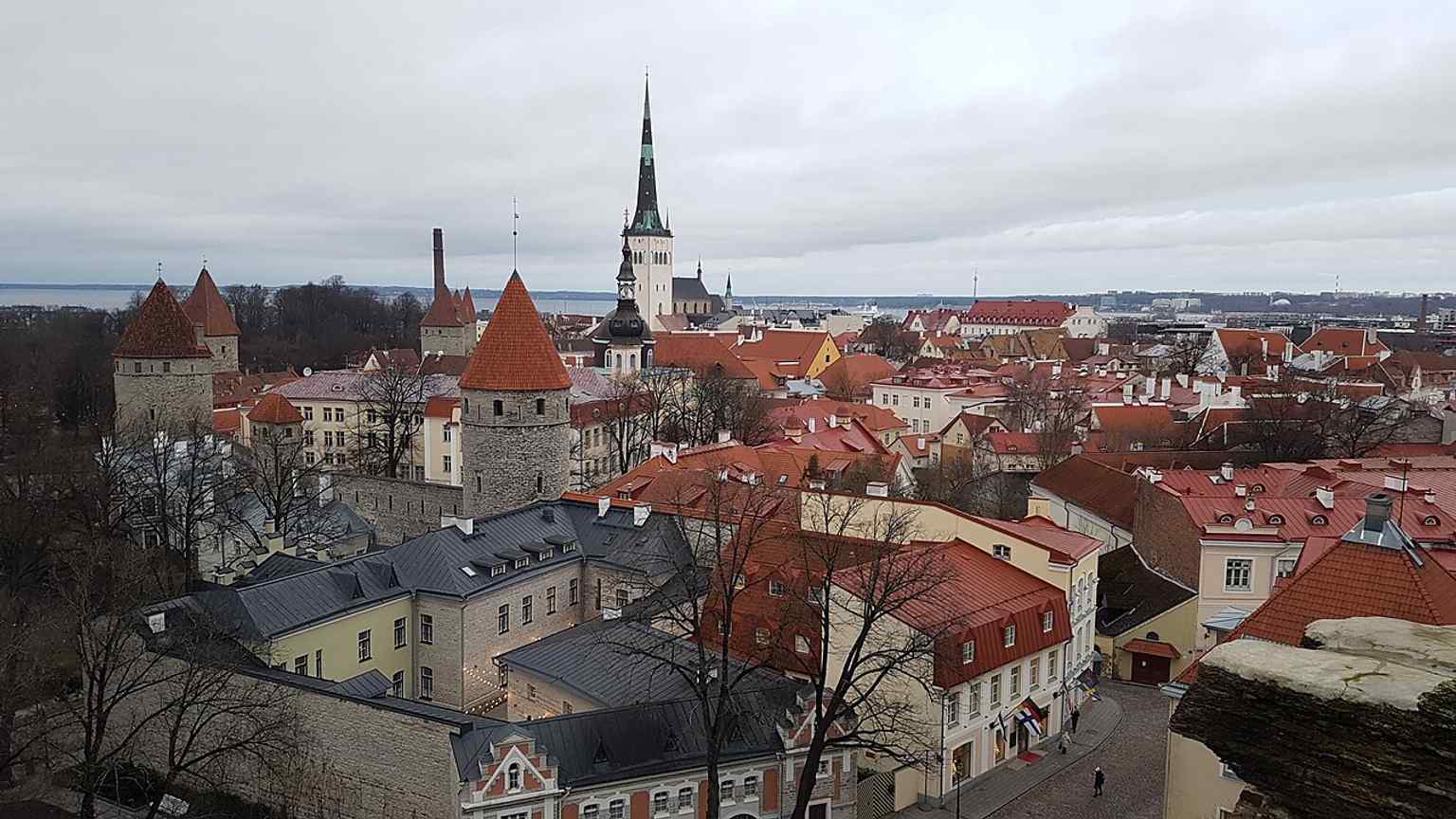
A broad elevated panorama over the medieval core, useful for showing how the Old Town sits within the modern city.
A broad elevated panorama over the medieval core, useful for showing how the Old Town sits within the modern city.Photo: BeshevI, Wikimedia Commons, CC BY-SA 4.0. Cropped & resized.
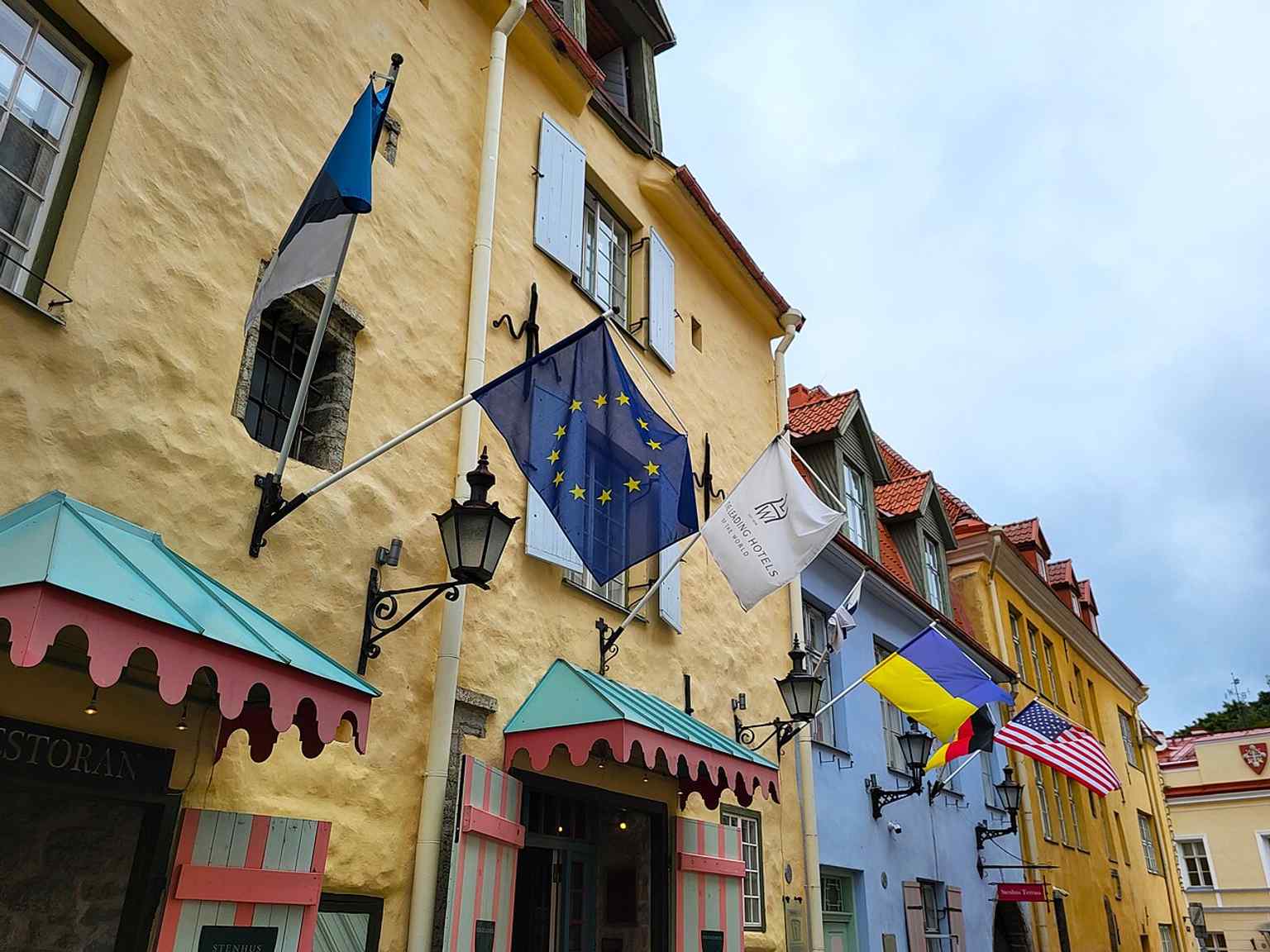
Pikk Jalg street in autumn, evoking the steep climb between Toompea and the Lower Town.
Pikk Jalg street in autumn, evoking the steep climb between Toompea and the Lower Town.Photo: Roman Rozbroj, Wikimedia Commons, CC BY-SA 4.0. Cropped & resized.
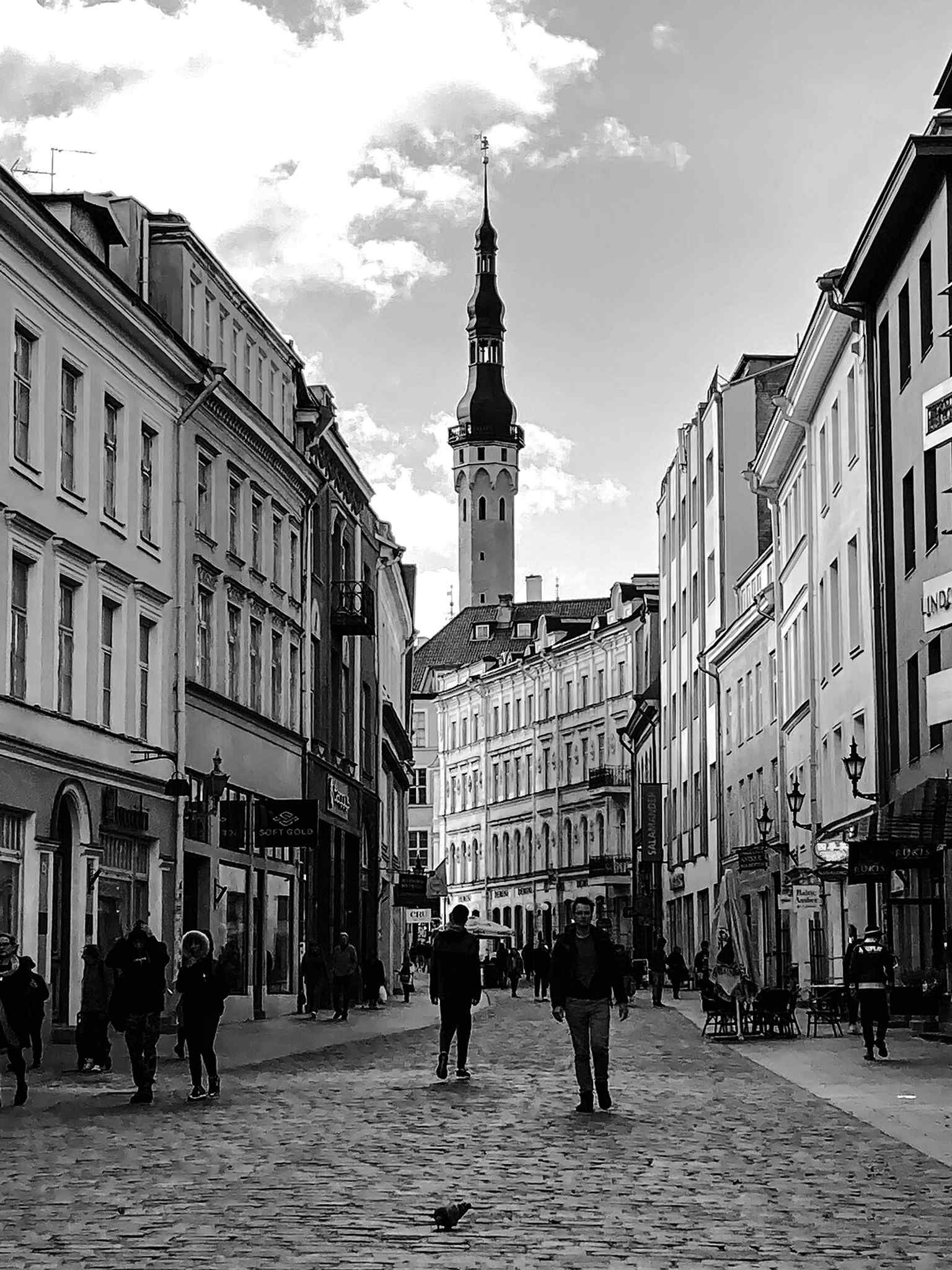
Viru Street looking toward the Town Hall, a lively Lower Town street still shaped by the medieval street plan.
Viru Street looking toward the Town Hall, a lively Lower Town street still shaped by the medieval street plan.Photo: Kakskeelnetuvi, Wikimedia Commons, CC BY-SA 4.0. Cropped & resized.
Vanaturu Kael in the heart of Old Town, a compact medieval street lined with the preserved UNESCO city fabric.
Vanaturu Kael in the heart of Old Town, a compact medieval street lined with the preserved UNESCO city fabric.Photo: Hei1972, Wikimedia Commons, CC BY-SA 4.0. Cropped & resized.
A classic view of Tallinn Old Town framed by its surviving walls, highlighting the intact 13th-century layout.
A classic view of Tallinn Old Town framed by its surviving walls, highlighting the intact 13th-century layout.Photo: Hei1972, Wikimedia Commons, CC BY-SA 4.0. Cropped & resized.
Pühavaimu Street, where narrow lanes and historic façades capture the layered medieval character of the Lower Town.
Pühavaimu Street, where narrow lanes and historic façades capture the layered medieval character of the Lower Town.Photo: Hei1972, Wikimedia Commons, CC BY-SA 4.0. Cropped & resized.
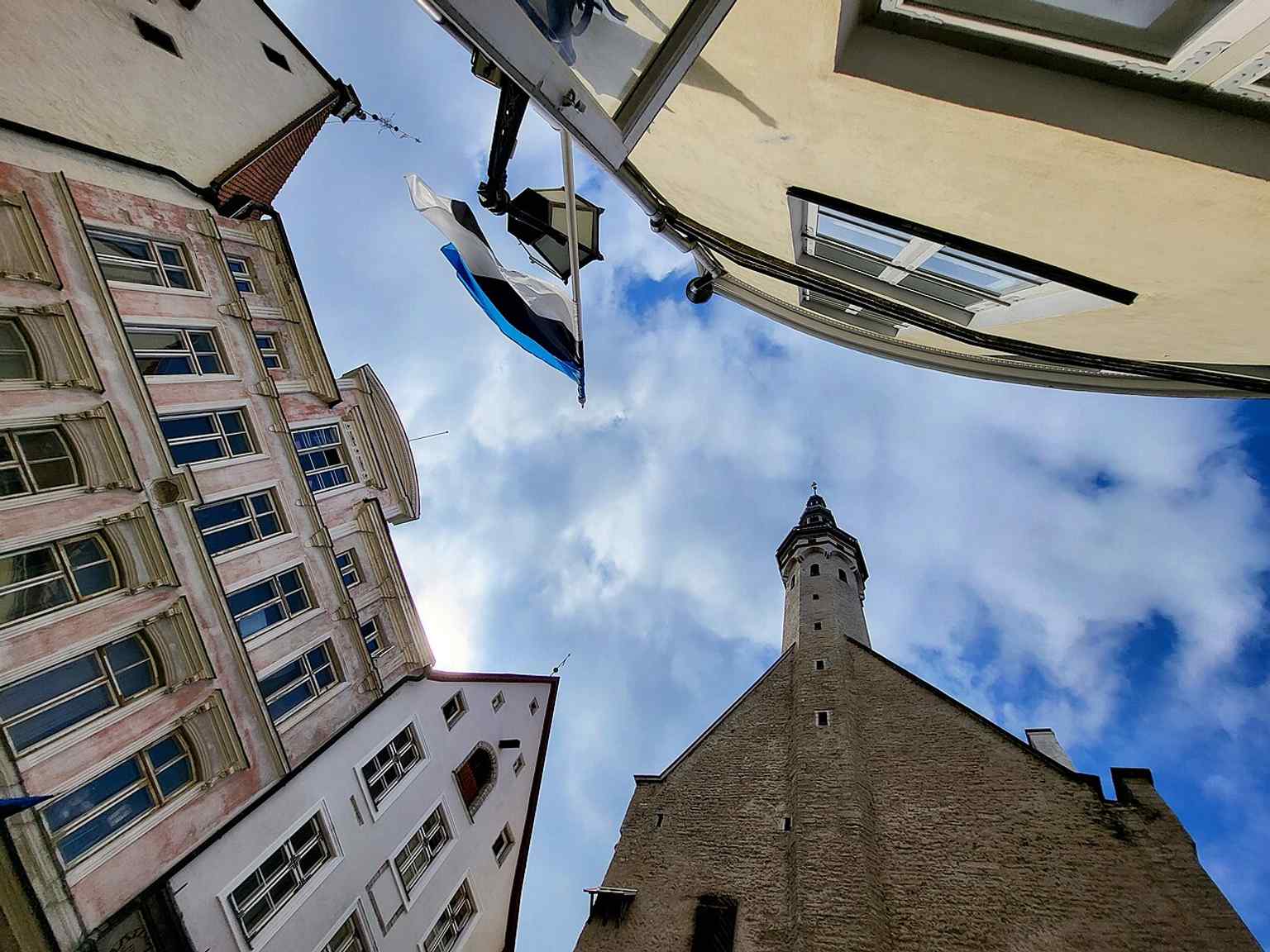
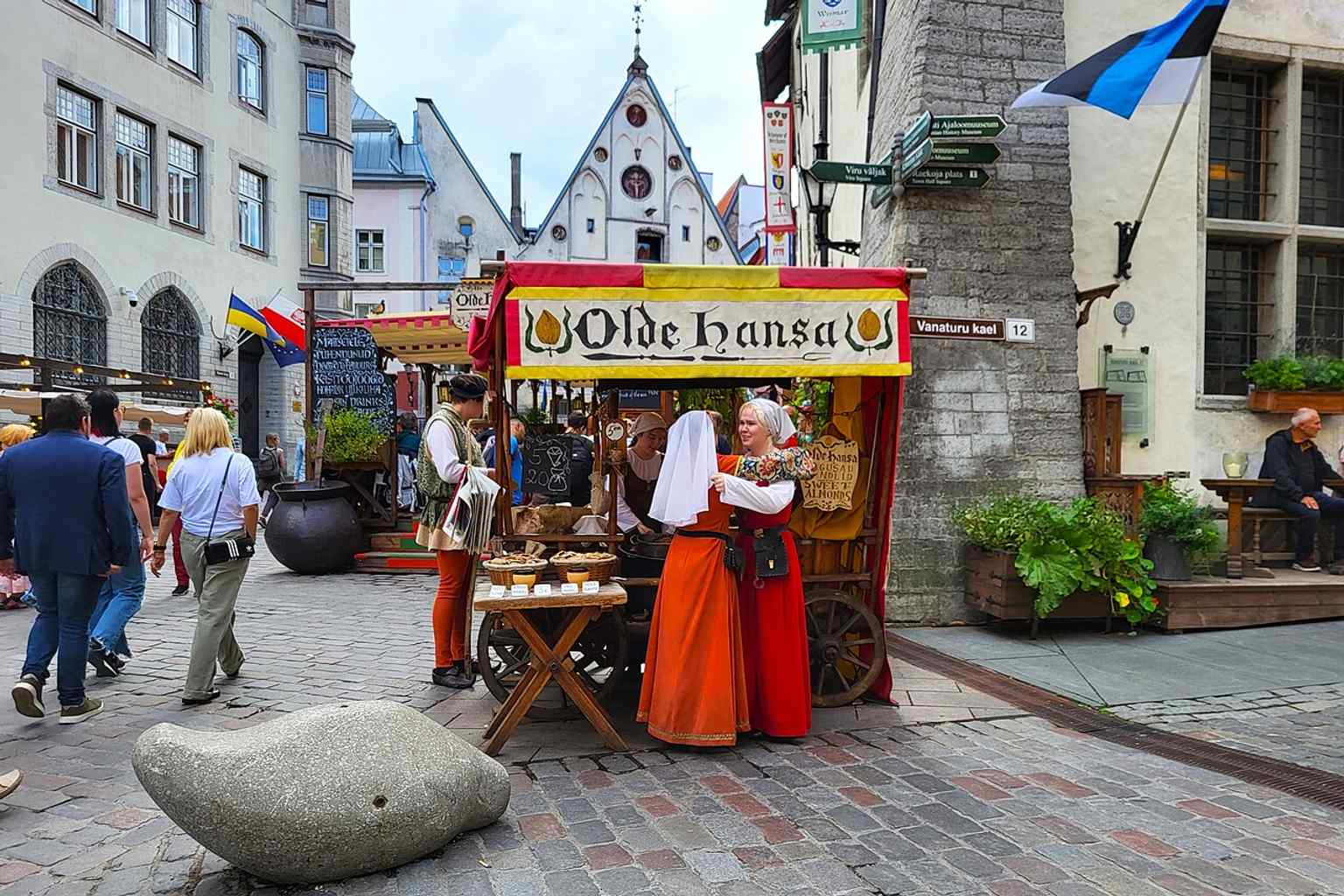
A medieval-looking corner near Olde Hansa and Vana Turg, echoing the Old Town’s role as a living market district.
A medieval-looking corner near Olde Hansa and Vana Turg, echoing the Old Town’s role as a living market district.Photo: Hei1972, Wikimedia Commons, CC BY-SA 4.0. Cropped & resized.
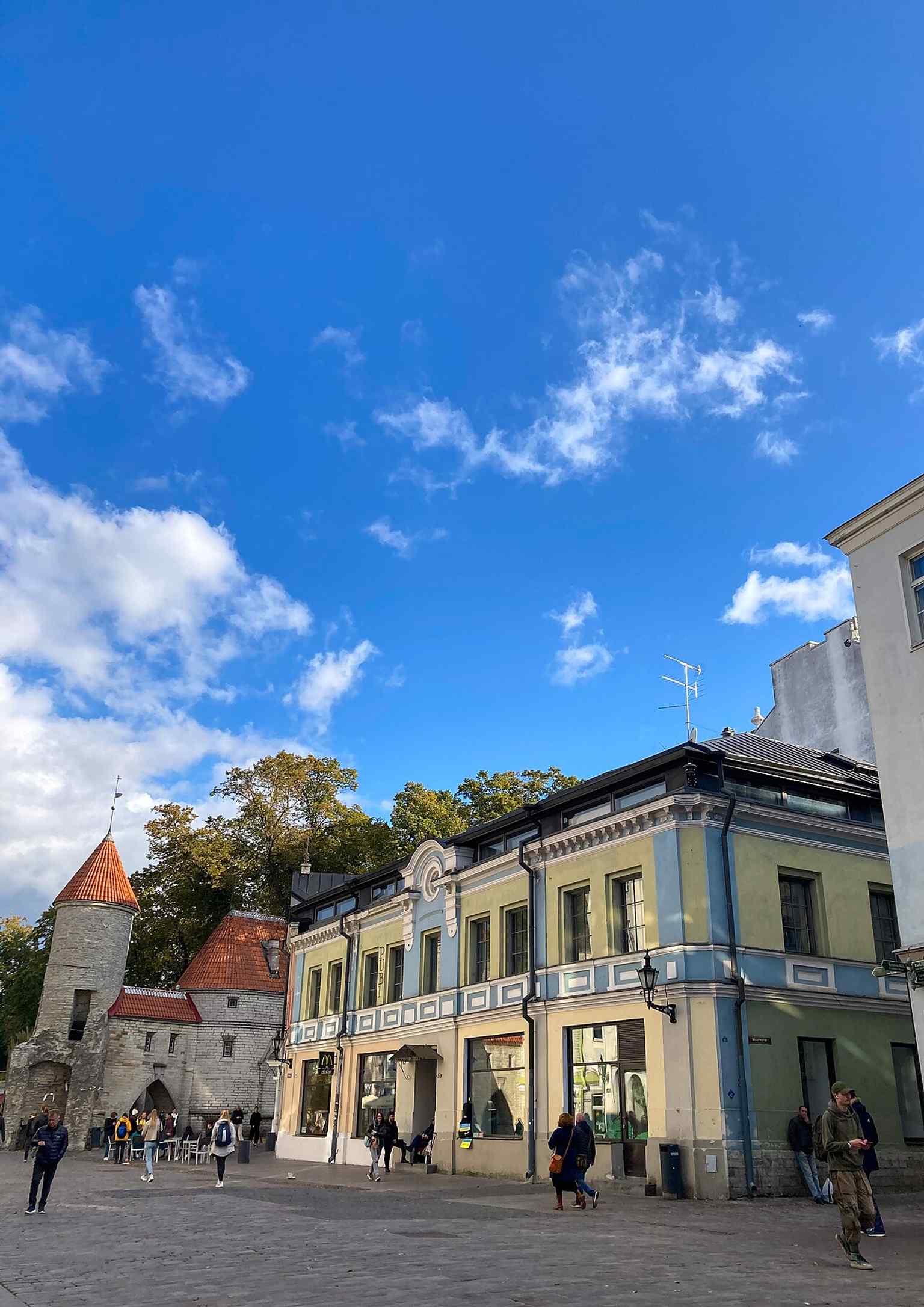
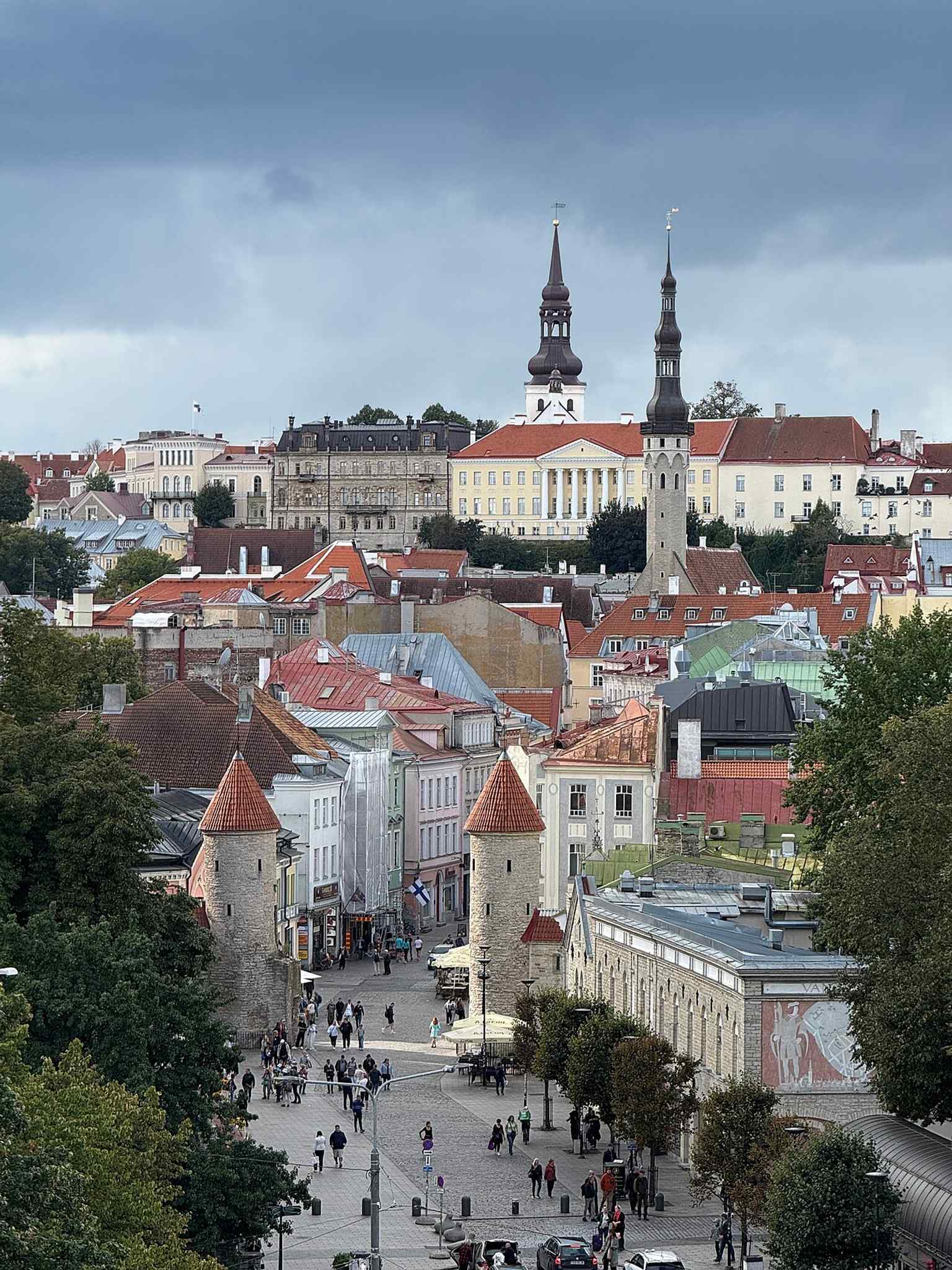
Viru Street with the Viru Gate in the background, a reminder of Tallinn’s defensive walls and old entry points.
Viru Street with the Viru Gate in the background, a reminder of Tallinn’s defensive walls and old entry points.Photo: Kakskeelnetuvi, Wikimedia Commons, CC BY-SA 4.0. Cropped & resized.
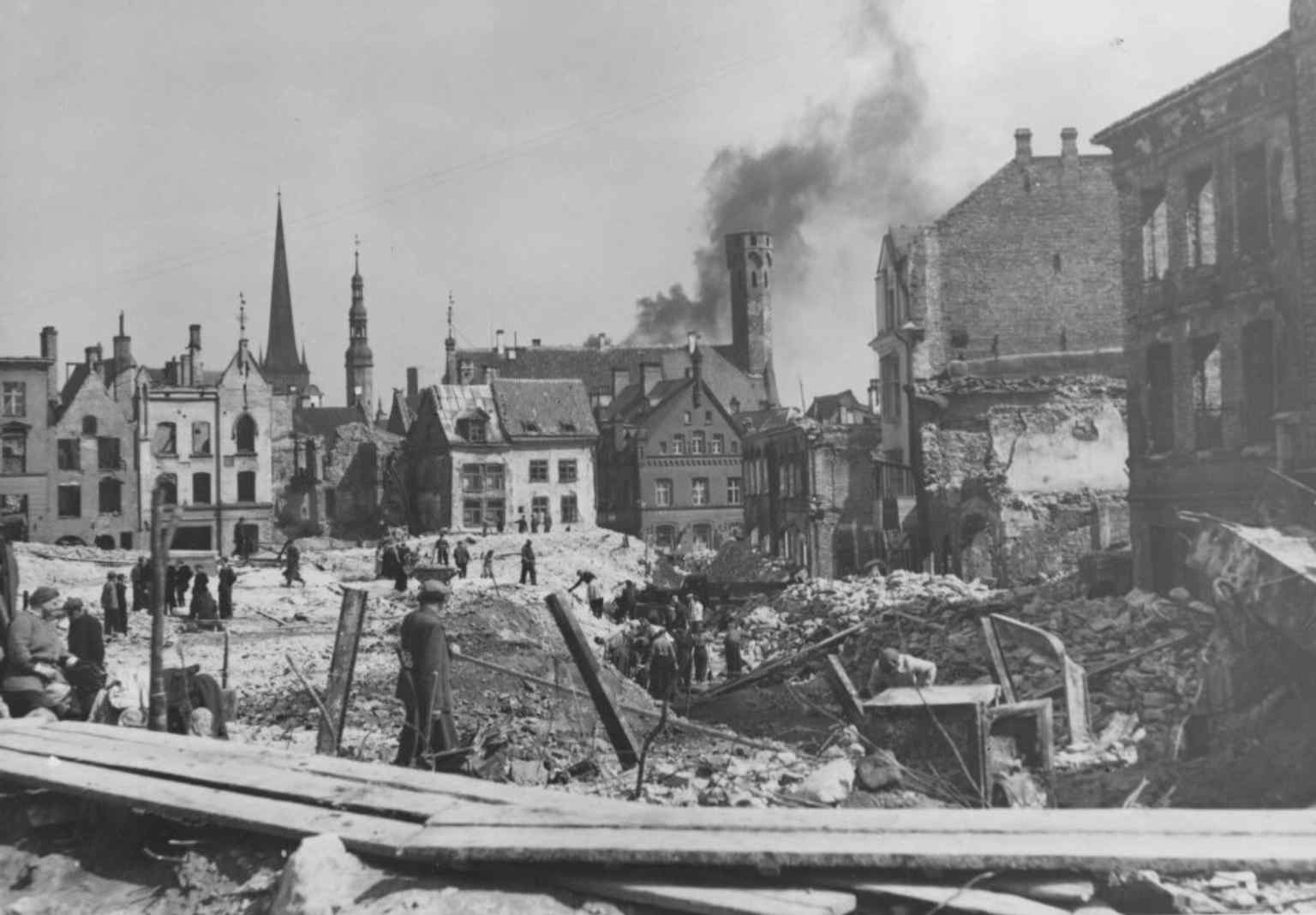
The Old Town after the 1944 Soviet bombing, showing the wartime damage that scarred the historic center.
The Old Town after the 1944 Soviet bombing, showing the wartime damage that scarred the historic center.Photo: Unknown authorUnknown author, Wikimedia Commons, Public domain. Cropped & resized.
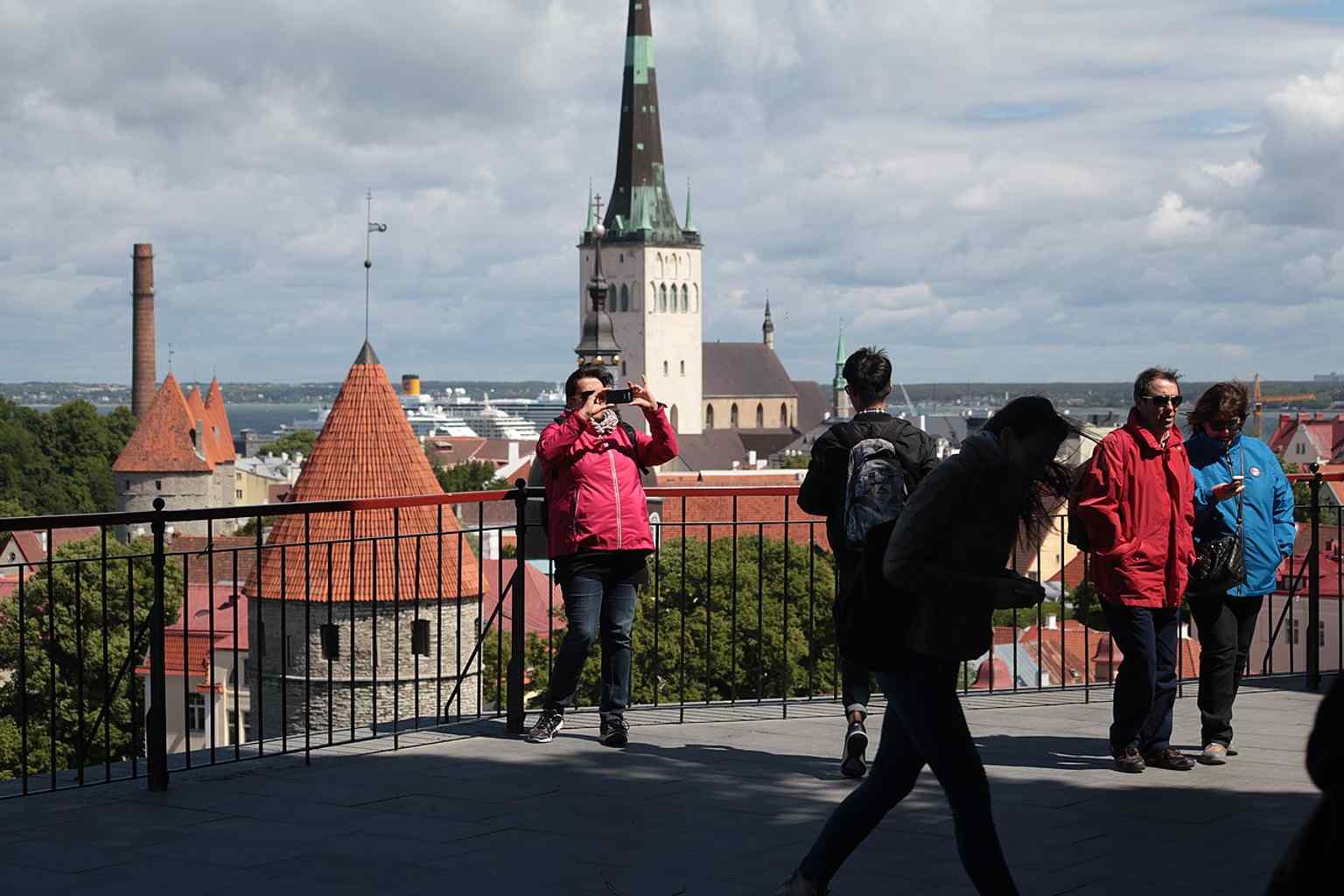
A busy tourist viewpoint over Old Town, reflecting its modern life as a popular heritage district as well as a neighborhood.
A busy tourist viewpoint over Old Town, reflecting its modern life as a popular heritage district as well as a neighborhood.Photo: Sillerkiil, Wikimedia Commons, CC BY-SA 4.0. Cropped & resized.
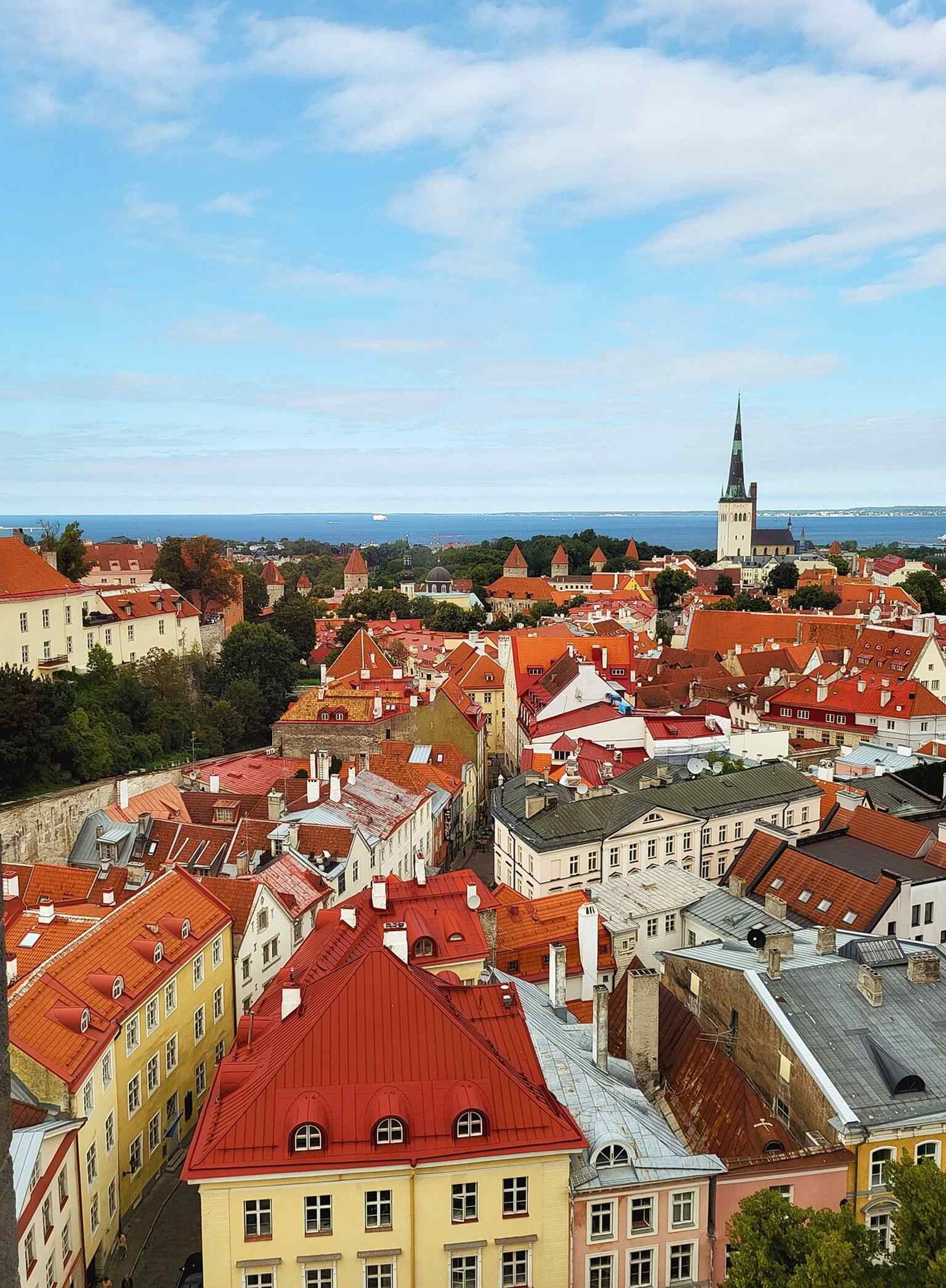
Another broad view over Tallinn’s Old City, suitable for introducing the UNESCO-protected historic core.
Another broad view over Tallinn’s Old City, suitable for introducing the UNESCO-protected historic core.Photo: CedarGlen86, Wikimedia Commons, CC BY 4.0. Cropped & resized.
arrow_back Back to Tallinn Audio Tour: Hidden Stories of Guilds, Monks, and Medieval Marvels
Loved by travellers

Thousands of tours started.
Plenty of opinions.

4.8 across the App Store and Google Play. Here's a few we keep coming back to.

starstarstarstarstar
This was a solid way to get to know Brighton without feeling like a tourist. The narration had depth and context, but didn't overdo it.
Christoph
Christoph
Brighton Tour
starstarstarstarstar
Started this tour with a croissant in one hand and zero expectations. The app just vibes with you, no pressure, just you, your headphones, and some cool stories.
download Get the app

Pop your headphones in.
Step outside.

Free to download. Tours in every city. Start in 60 seconds — no account, no card.

Download on the App StoreGet it on Google Play
starstarstarstarstar_half
4.8
AudaTours app icon
headphones
~ 4 min until your first tour starts
public
1,000+ cities worldwide
all_inclusive
AudaTours
Unlimited

Every tour. Every city. One subscription.

3101 tours2271 cities138 countries50+ languages