
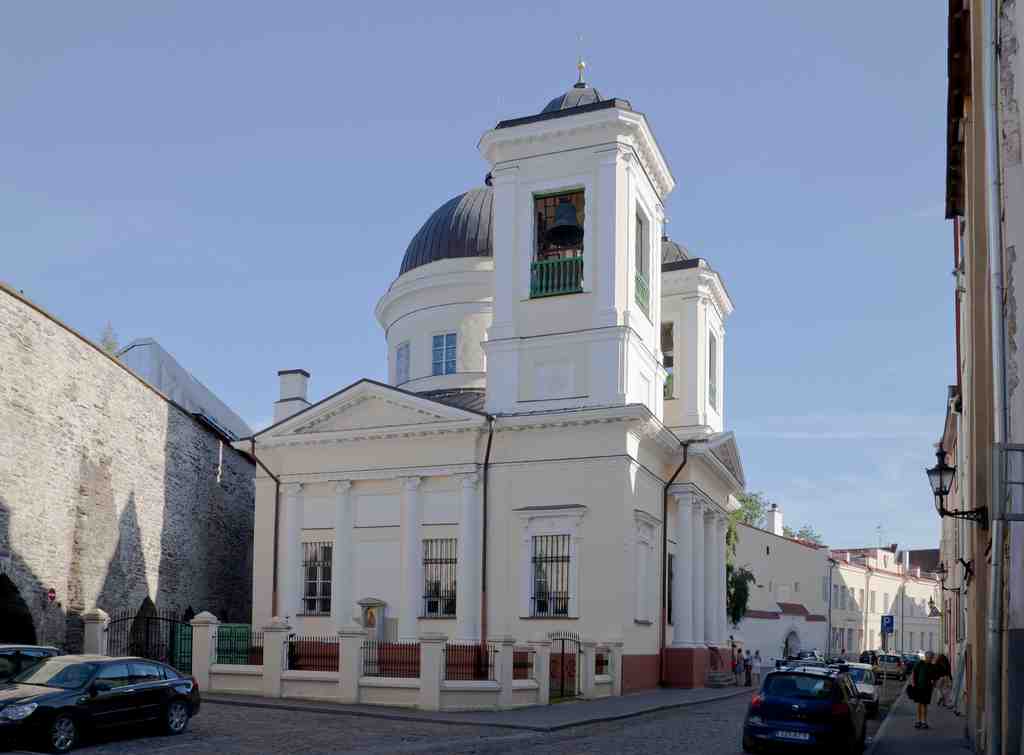
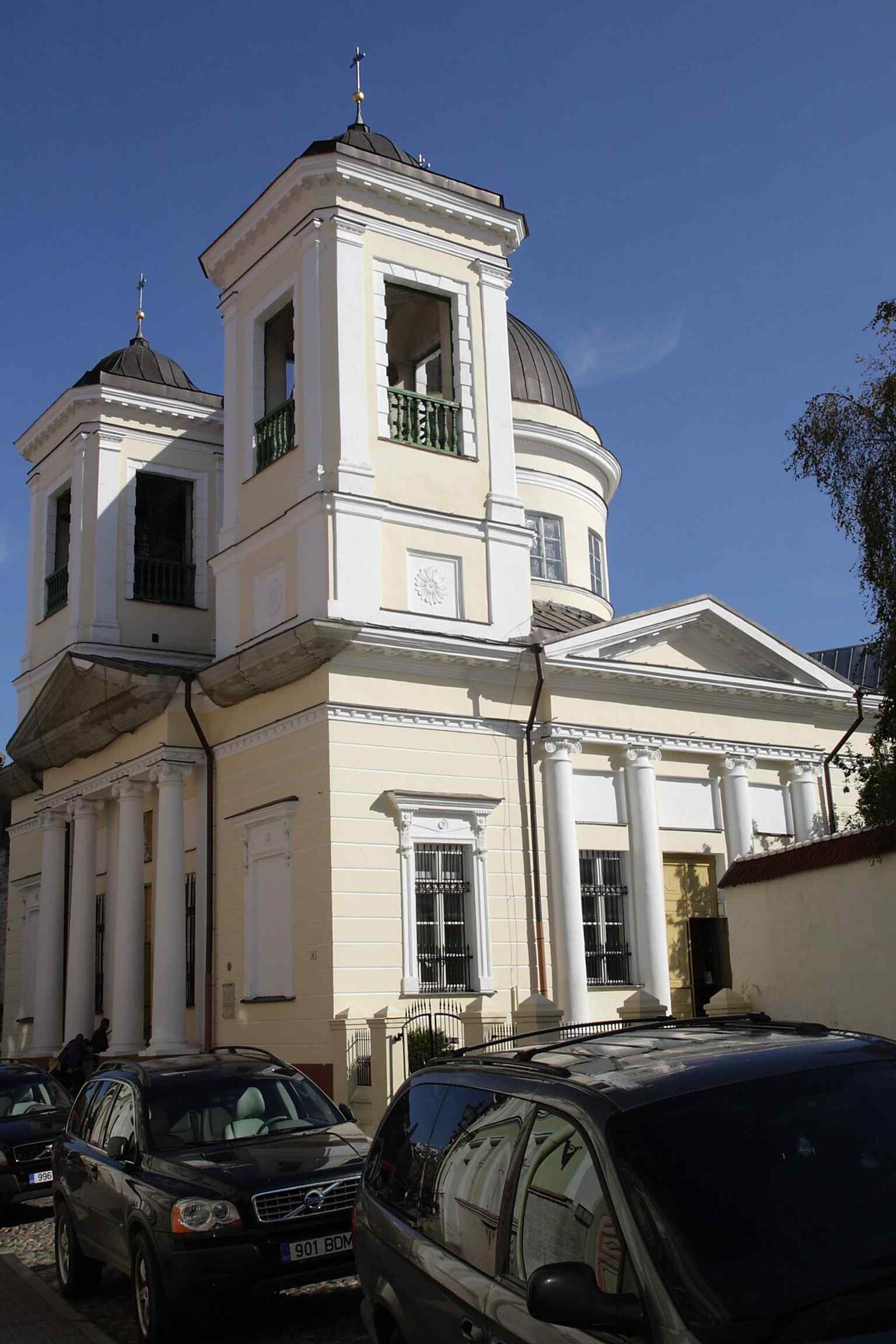
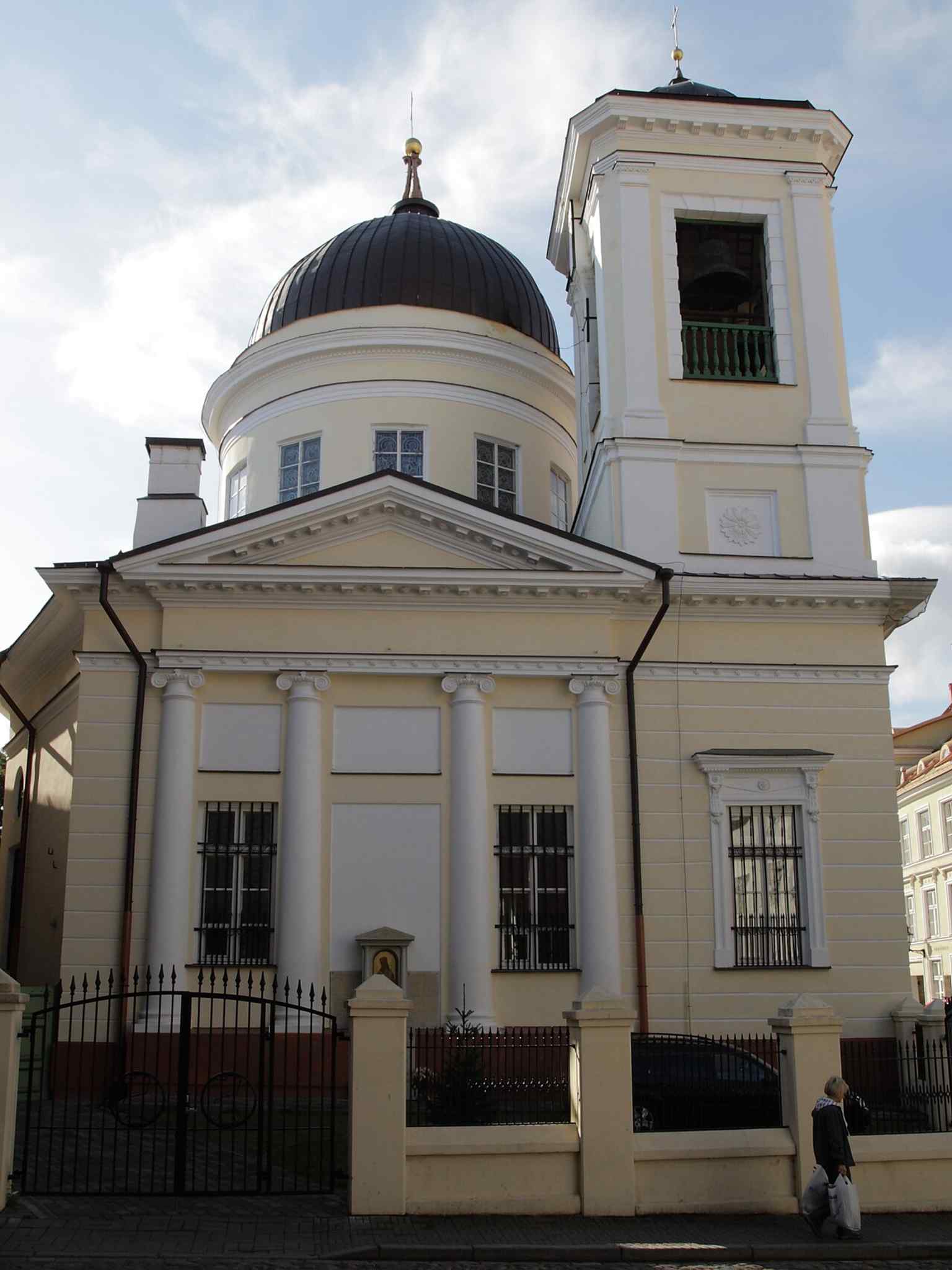
On your right, look for a pale stone church with a rounded central dome, two square corner towers, and an Orthodox cross rising above its neoclassical front.
This is the Orthodox St. Nicholas Church on Vene Street, and it closes our walk with a gentle correction to any simple idea of Tallinn. The old town never belonged to one language, one rite, or one keeper of memory. Here, the city kept room for an Orthodox parish tied to the old Russian trading yard, a community whose beginnings fade back into the age of merchants from Novgorod and Pskov, and into older traditions beyond written memory.
The parish stood on this street by the fourteen twenties. In fact, the street itself later took the name Vene, meaning Russian, because the trading yard and this church marked the quarter so strongly. Yet belonging here never meant security. During the Reformation, looters likely stripped the church as they did other religious houses. In the year fifteen forty-two, the city turned it into a lazaret, a hospital for the sick. During the Livonian War it closed again. Later, in troubled years when Russian merchants were absent, the keys did not stay with a resident congregation at all; the town hall kept them. Imagine that: a church waiting in silence until trade reopened its doors.
And still it endured. Boris Godunov sent a great silver candlestick in the year fifteen ninety-nine; part of that royal gift survives, remade as a hanging lamp. The church also guarded something rarer still: an iconostasis, the tall screen of sacred images before the altar, described as the oldest surviving one in Estonia. Pskov craftsmen and masters from the Moscow Armoury made it for the young tsars Ivan and Peter. Even when buildings failed, art and devotion found ways to remain.
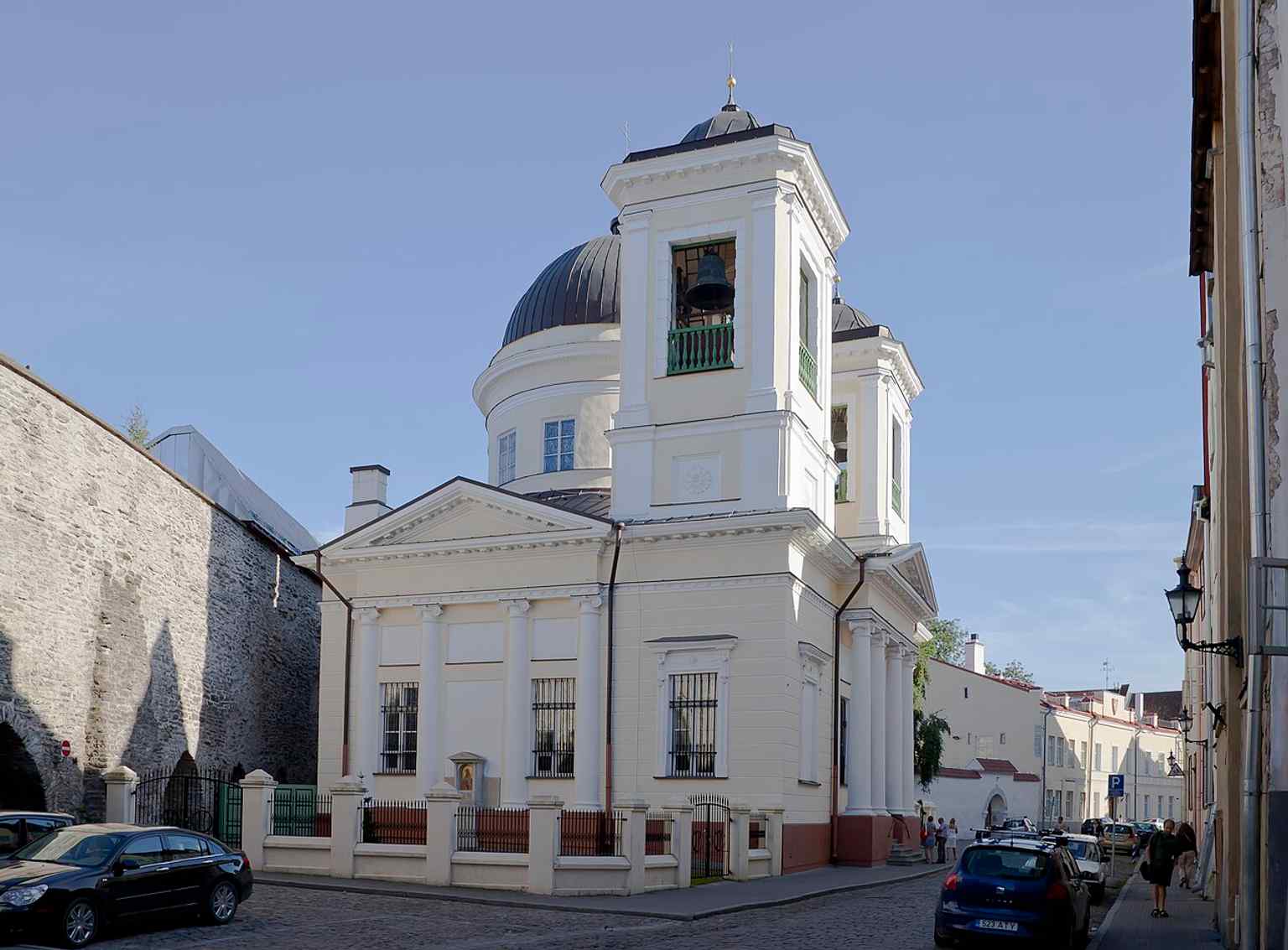
If you glance at the image on your screen, the frontal view makes the church’s classical balance beautifully clear. That balance came late. By the early nineteenth century, the old structure had become dangerous. Architect Luigi Rusca drew an ambitious new design in the year eighteen oh four, but money would not come. Then a young priest, Father Ioann Nedeshev, did something more useful than dreaming grandly: he found a practical plan people could actually build. Work began in the eighteen twenties, and in the year eighteen twenty-seven this new church was consecrated, the first domed church in Tallinn and a striking Orthodox presence in a city of many confessions.
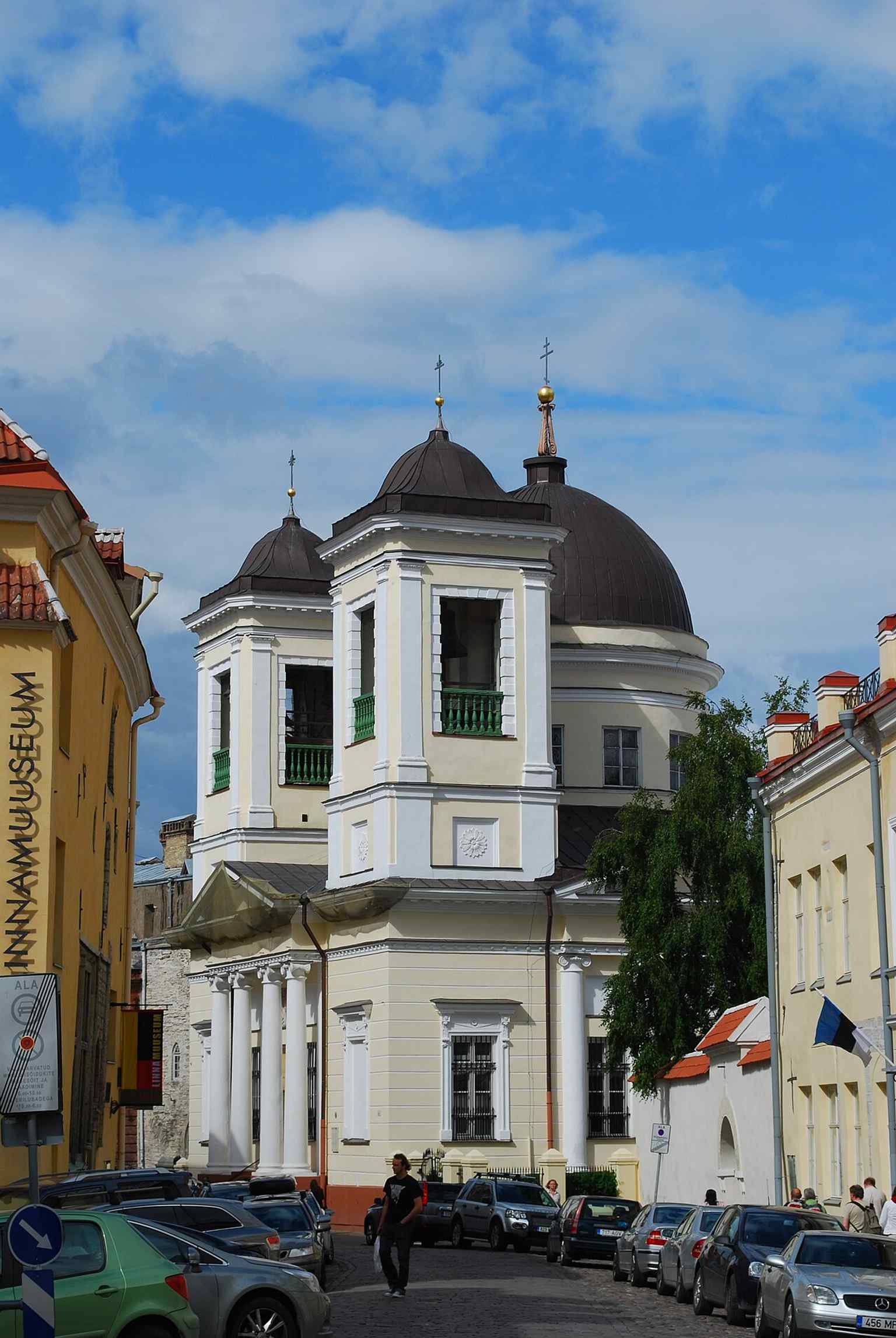
One man gives the place its deepest hush. Arseny Matsievich, a metropolitan who defied Empress Catherine the Second over church lands, arrived here as a political exile under the false name Andrei Vral. The authorities locked him in the Harju Gate tower. He died in captivity in the year seventeen seventy-two, and the church buried him here. In the year two thousand, the Orthodox Church canonised him as a holy martyr. His grave turned this parish into more than a merchants’ church; it became a house of witness.
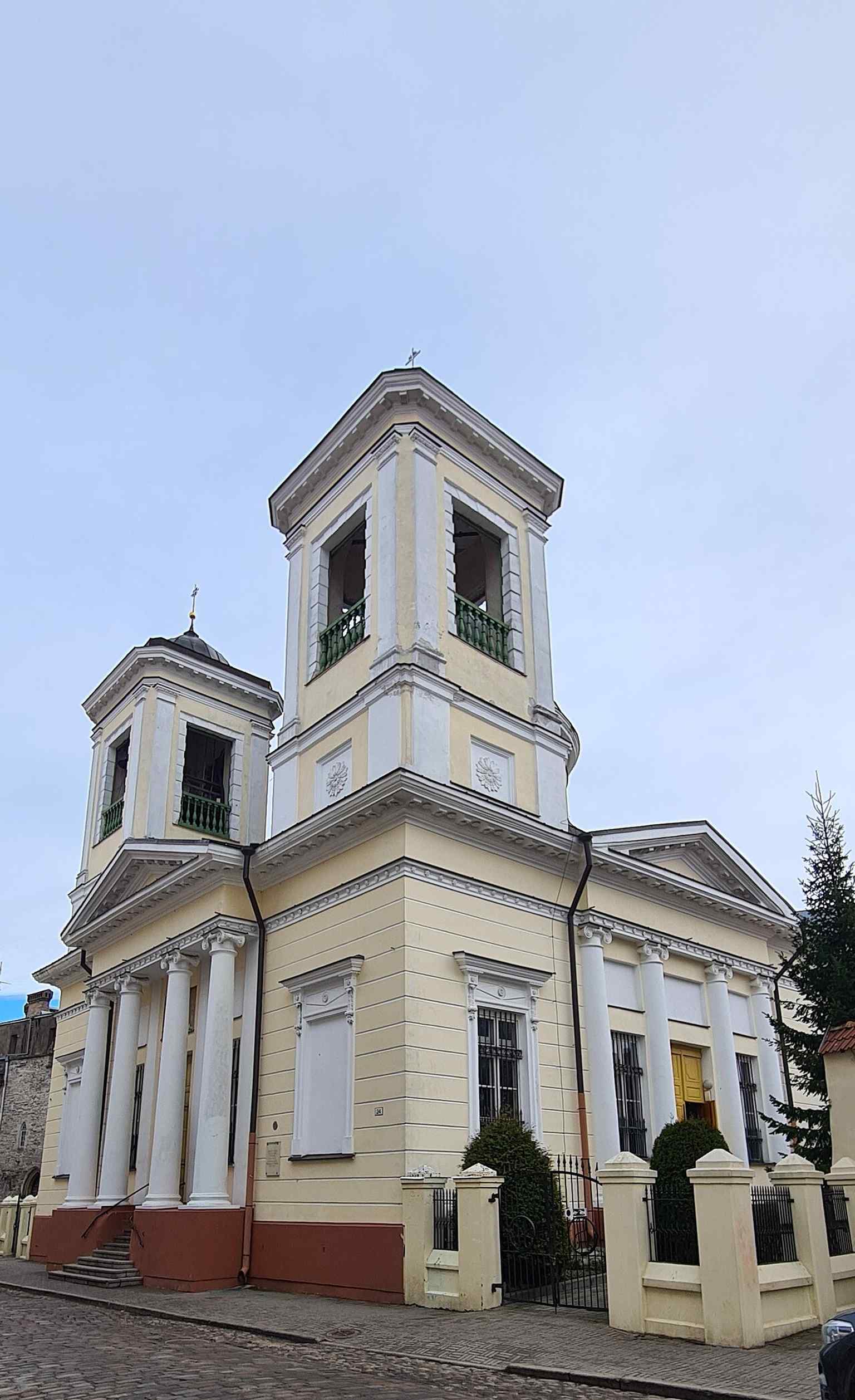
If you look at the tower detail in the app, you are seeing a reminder that generations kept adding their own layer of care. Merchant widow Pelageya Basargina gave the church its great nineteenth-century bell and later funded the gilded neo-Russian iconostasis that still stands inside.
And that, perhaps, is Tallinn’s truest shape: not a single story told by a single voice, but a city preserved by overlap, argument, prayer, repair, and many faithful hands. If you’d like to go inside, the church is generally open daily from ten in the morning until six in the evening.






.jpg)
.jpg)