AudaTours logoAudaTours

Stop 3 of 16

Estonian History Museum - Great Guild Hall

headphones 04:06
Estonian History Museum - Great Guild Hall
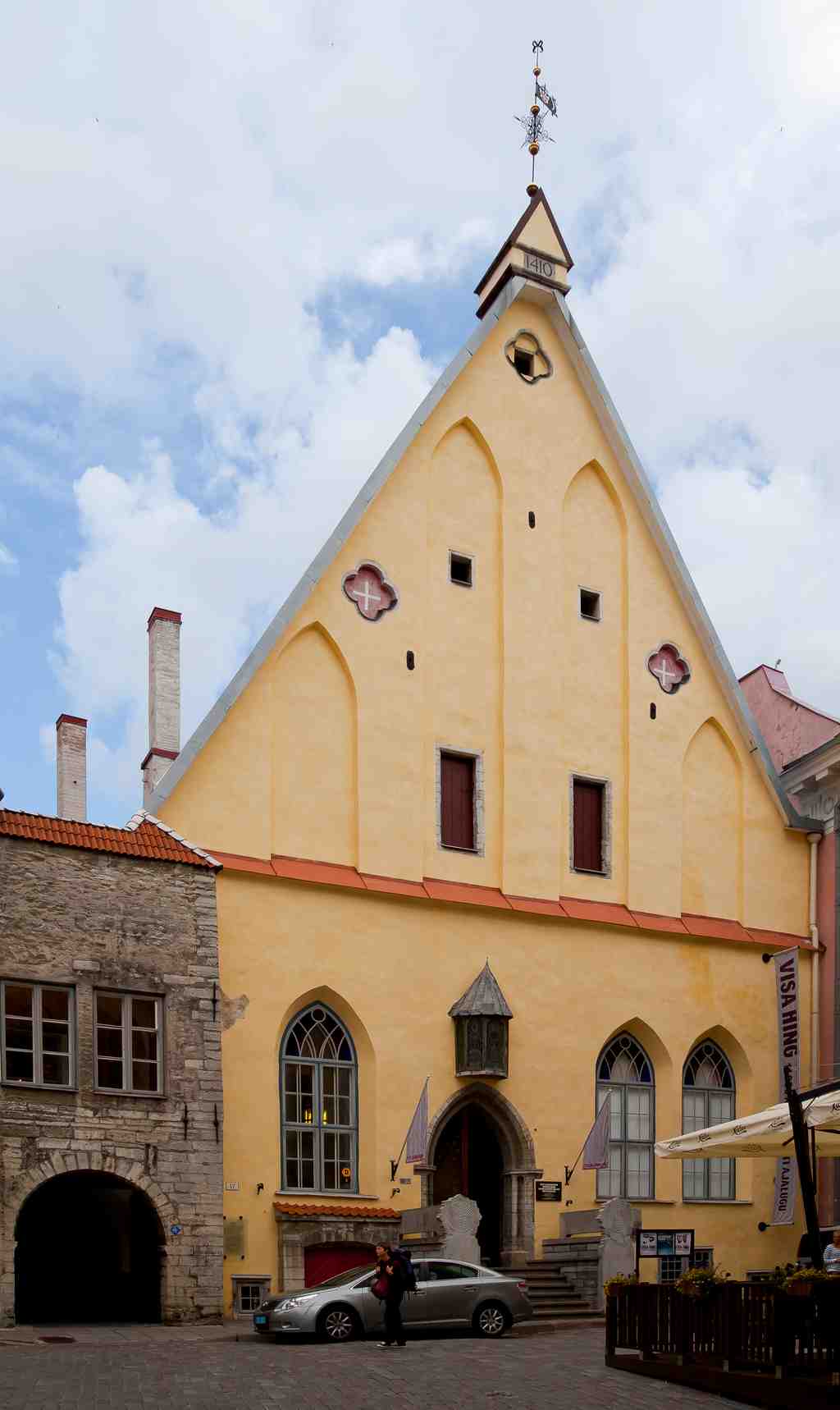
Great Guild Building
Great Guild BuildingPhoto: Diego Delso, Wikimedia Commons, CC BY-SA 3.0. Cropped & resized.

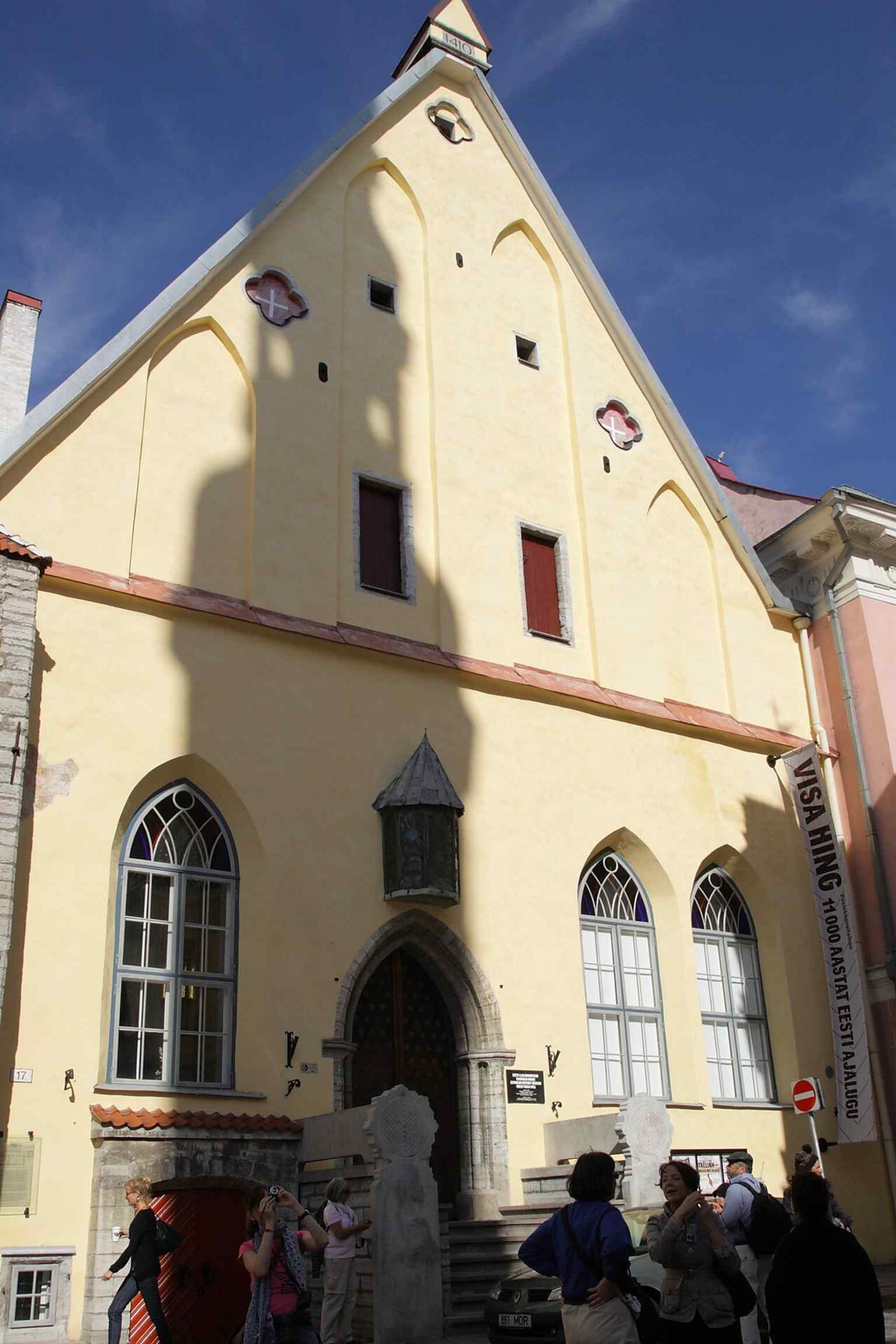
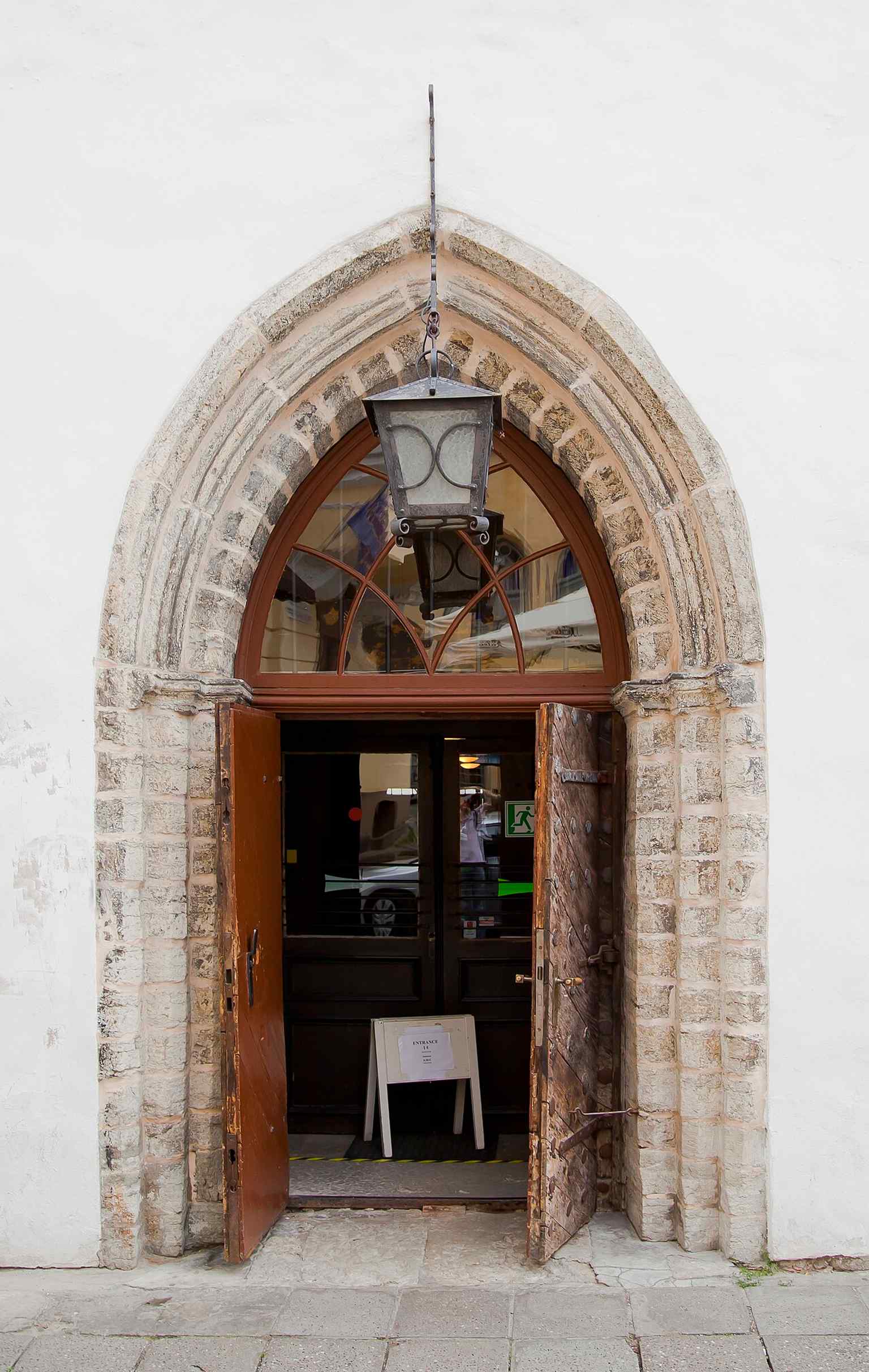
On your left stands a pale limestone hall with a steep triangular gable and a pointed-arch portal, its heavy oak door marked by bronze lion-head knockers.

This is the Great Guild Building, Gothic in style, and it tells you something essential about Tallinn very early on: a grand façade here rarely has only one life. Since nineteen fifty-two, this has housed the Estonian History Museum. Before that, it served the richest merchant brotherhood in medieval Reval, the old name for Tallinn.

A guild, in plain terms, was a powerful association of people in the same trade. The Great Guild gathered the city’s wealthiest merchants, shipowners, and jewellers. In time, it became so dominant that only its members could rise to the city council and become burgomasters, the city’s mayors. They controlled trade in furs, salt, cloth, metals, and the crucial routes to Novgorod and Pskov.

These men were not only traders. They acted as early guardians of memory, shaping how the city wished to see itself. Long before museums collected objects in glass cases, merchant elites staged prestige in stone, ceremony, and public ritual. They preserved the city’s official dignity by deciding who belonged at the centre of its story.

And they built accordingly. In fourteen oh six, the guild bought the former house of burgomaster Goschalk Schotelmund here on Pikk Street, then cleared it and raised this larger limestone hall by fourteen ten. Notice the gable, the triangular face of the roof above the façade. Even more deliciously, the builders set the new hall half a metre back from the official street line, quietly breaking the rule so the building could be seen more majestically.

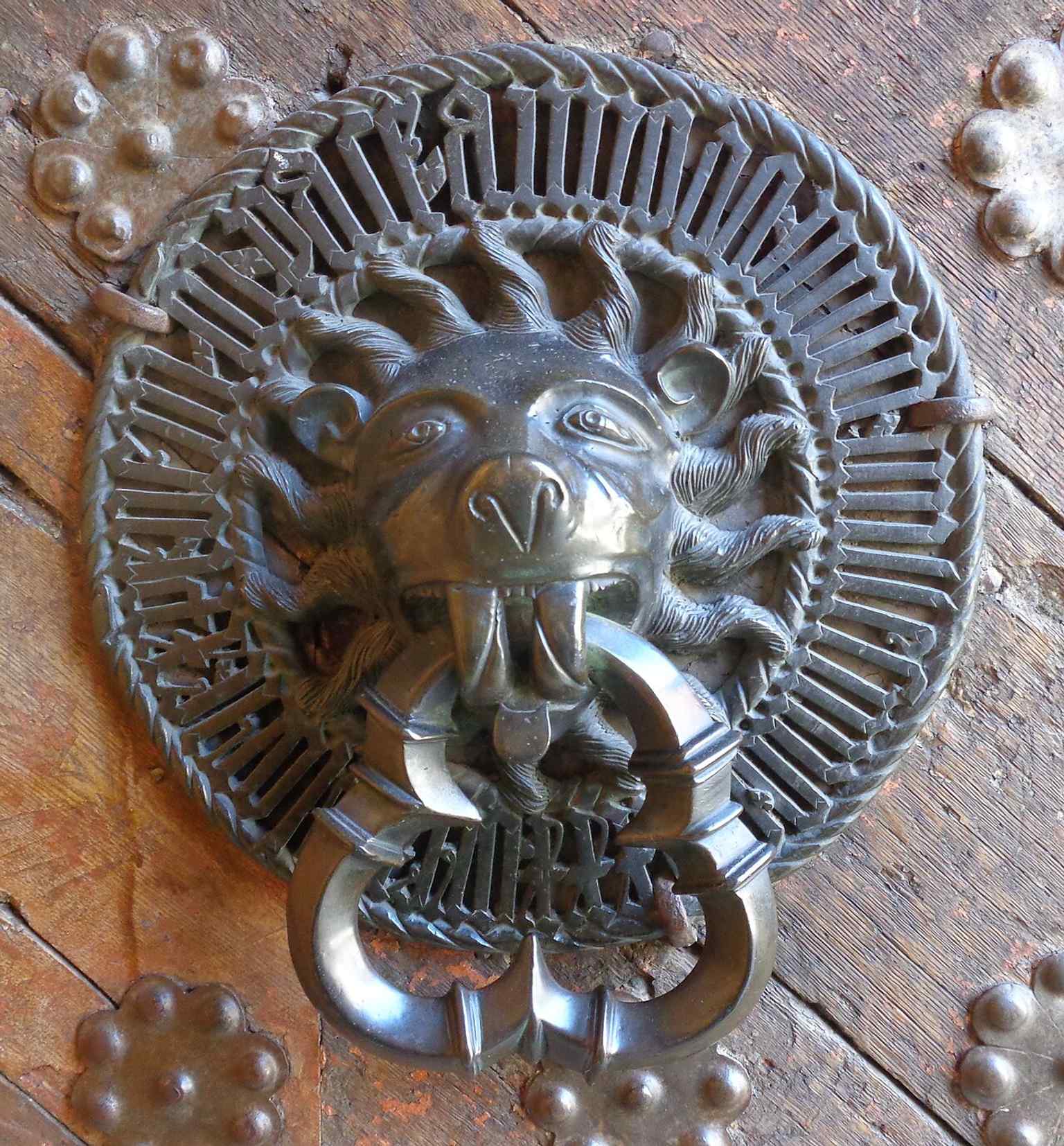
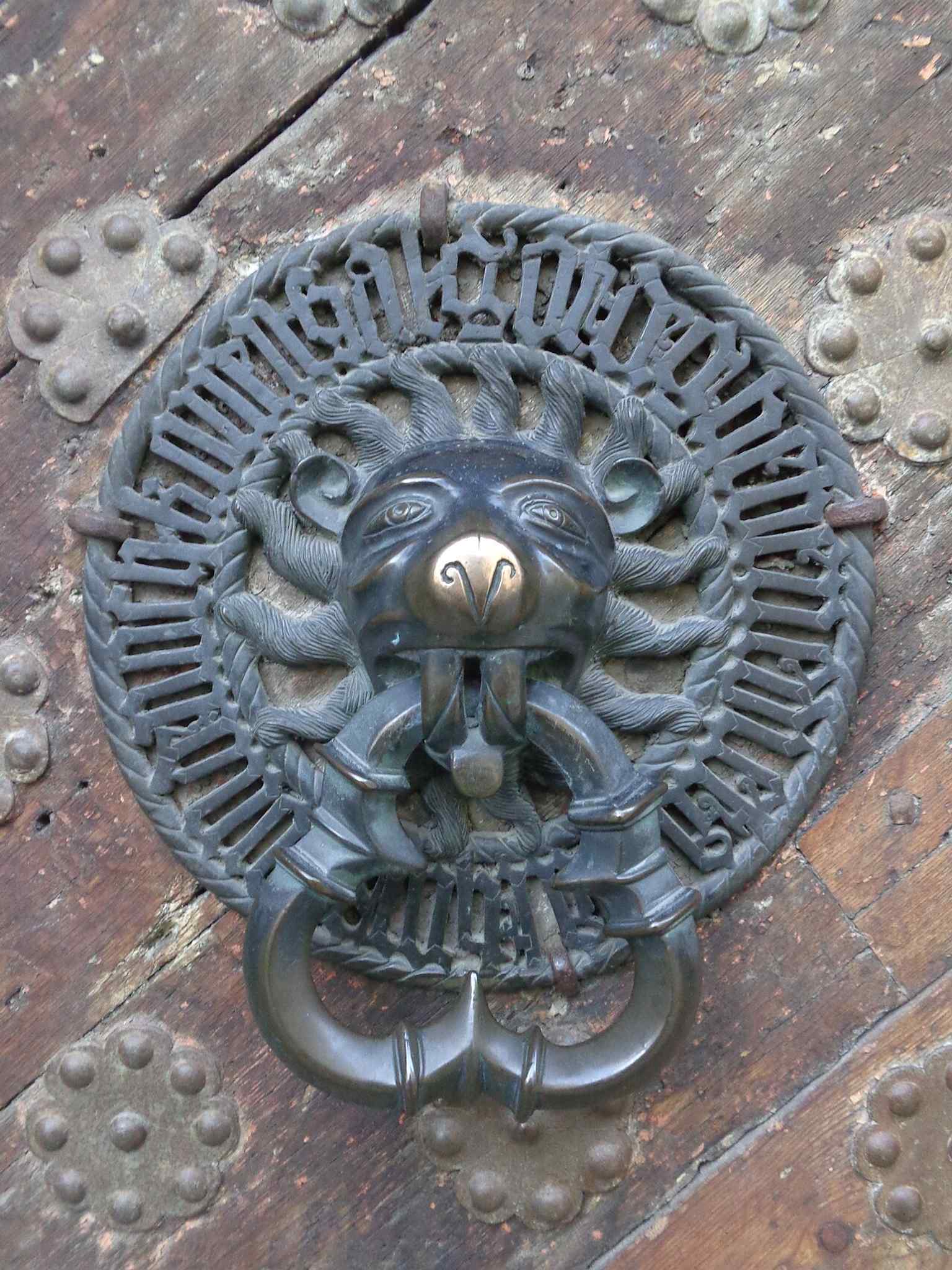
If you glance at the detail on your screen, you can admire one of the bronze knockers cast in fourteen thirty by master Merten Seifert. A lion grips the ring in its jaws, and one inscription blesses all who are in this house and all who will come here. Even the door announced power with ceremony.
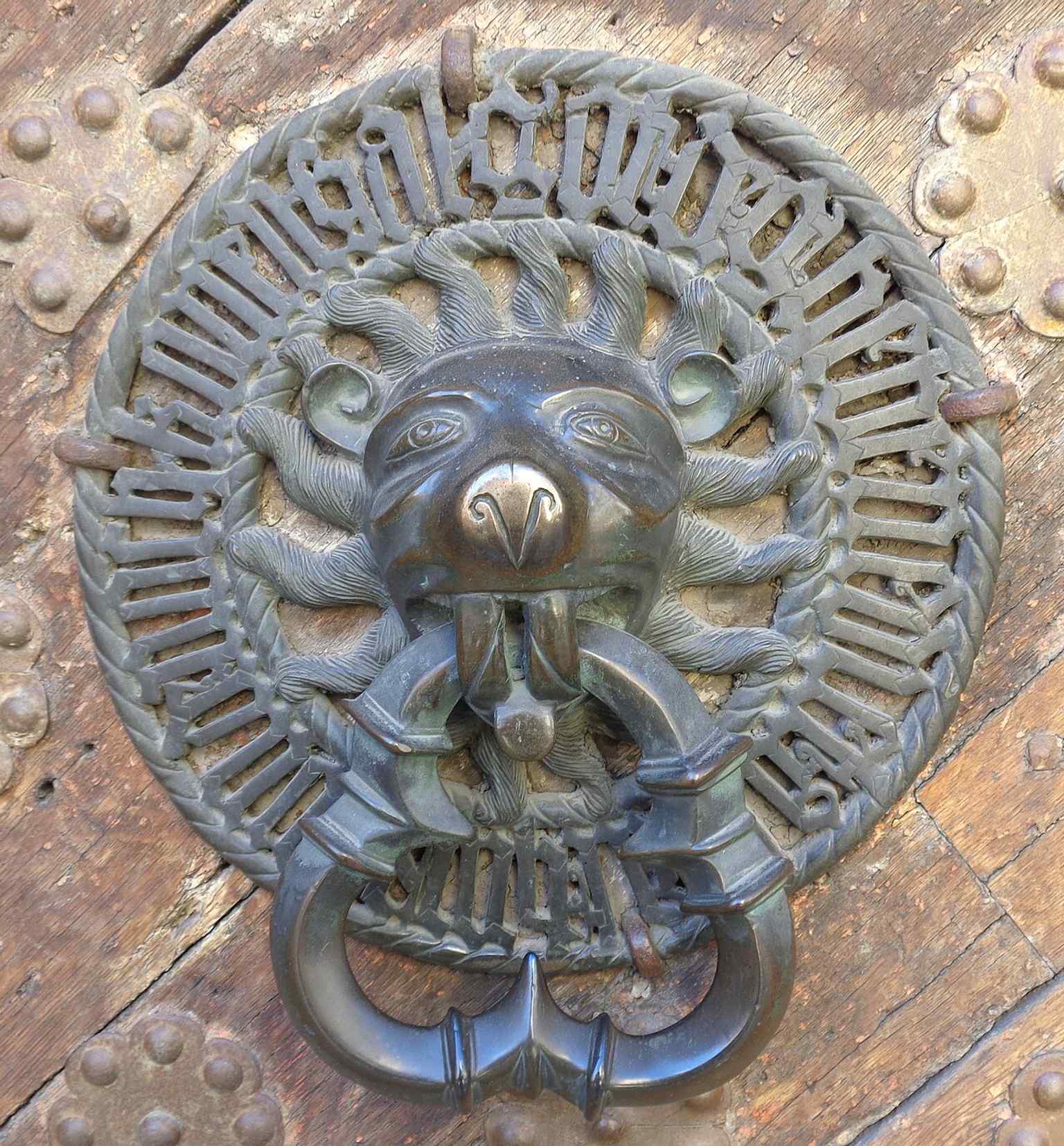
The left-hand door hammer from the main portal — a medieval bronze fitting that turned the entrance into a display of status and sacred wording.
The left-hand door hammer from the main portal — a medieval bronze fitting that turned the entrance into a display of status and sacred wording.Photo: Borodun, Wikimedia Commons, CC BY-SA 4.0. Cropped & resized.

The guild’s most theatrical tradition was the May Count festival. Each spring, young merchants and townsmen competed in archery and horse races beyond the walls. The winner became the May Count and chose a May Countess. Then came the splendid entry into town through Viru Gate, ending in a feast here at the hall. One surviving account records seven barrels of beer consumed.

And here is the detail locals quietly relish: during that ceremonial entry, the freshly crowned May Count supposedly had the right to pardon one prisoner he encountered at the gate. Just like that, a pageant turned into justice. If a city teaches people to accept authority through spectacle, is that merely entertainment, or a remarkably elegant way of making power feel rightful?

Inside, the main hall still rises under Gothic vaults, the stone ribs crossing overhead like an ordered canopy; you can see it on your screen here. Those vaults later heard church services after the fire at St. Olaf’s, hosted theatre performances, and even welcomed Tallinn’s first film screening in eighteen ninety-six. The costume changed; the stage remained.
The Great Hall of the Estonian History Museum, still soaring under Gothic vaults where merchants once dined, negotiated, and later even held church services after the 1820 fire at St. Olaf’s.
The Great Hall of the Estonian History Museum, still soaring under Gothic vaults where merchants once dined, negotiated, and later even held church services after the 1820 fire at St. Olaf’s.Photo: Diego Delso, Wikimedia Commons, CC BY-SA 3.0. Cropped & resized.

But merchant memory never held Tallinn alone. Very soon, other communities will begin assembling their own version of this city, and the Museum of the Peoples of Tallinn is only about two minutes away. If you want to come back inside here later, the museum is open Tuesday to Sunday from ten until six, and closed on Monday.
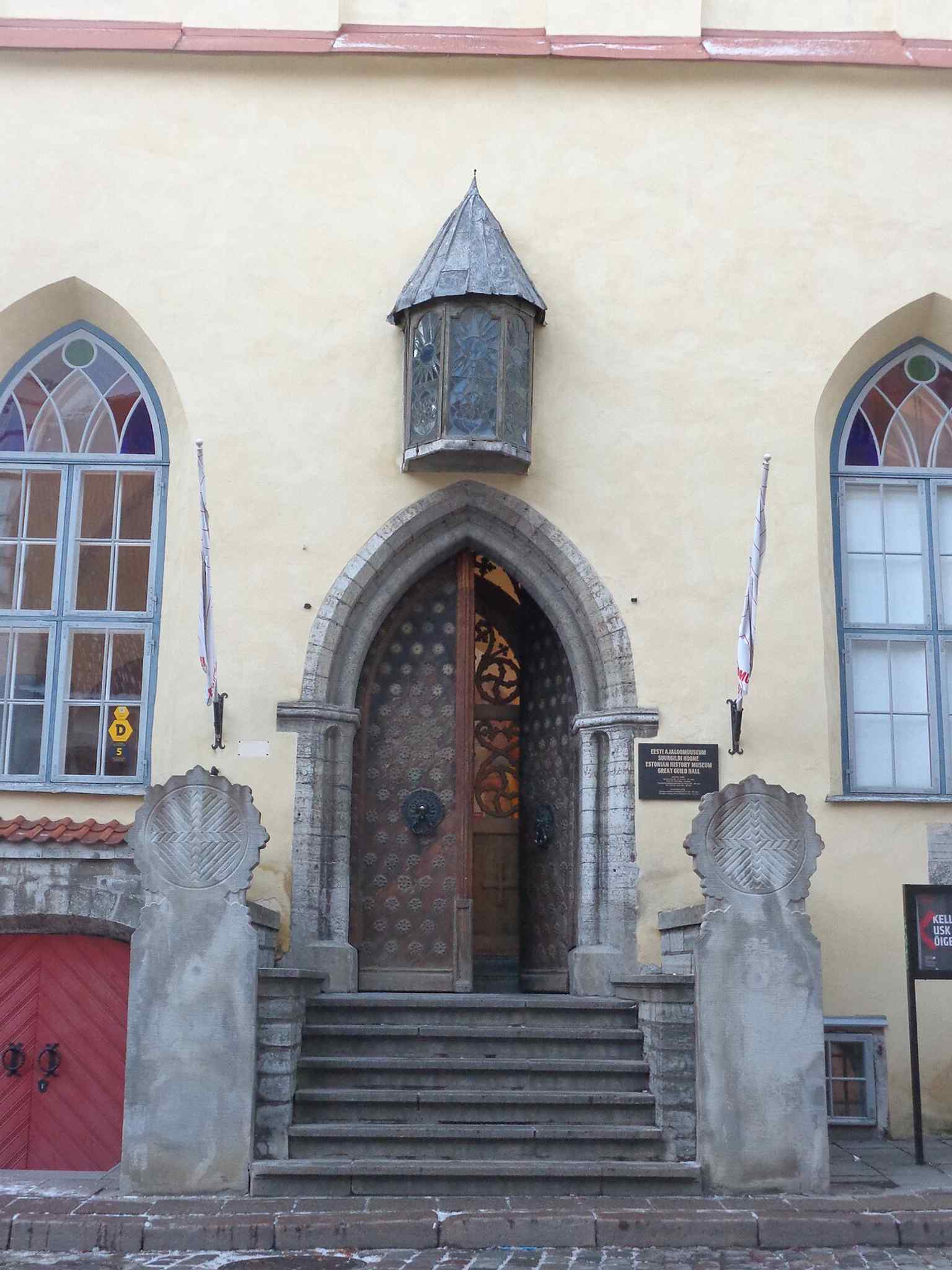
The main portal on Pikk Street, with its pointed arch and heavy oak door, is the building’s ceremonial entrance and one of the best-preserved medieval gateways in Tallinn.
The main portal on Pikk Street, with its pointed arch and heavy oak door, is the building’s ceremonial entrance and one of the best-preserved medieval gateways in Tallinn.Photo: Borodun, Wikimedia Commons, CC BY-SA 4.0. Cropped & resized.
One of the bronze door hammers on the main door — a 15th-century detail that links the guild’s wealth and craftsmanship to the entrance itself.
One of the bronze door hammers on the main door — a 15th-century detail that links the guild’s wealth and craftsmanship to the entrance itself.Photo: Borodun, Wikimedia Commons, CC BY-SA 4.0. Cropped & resized.
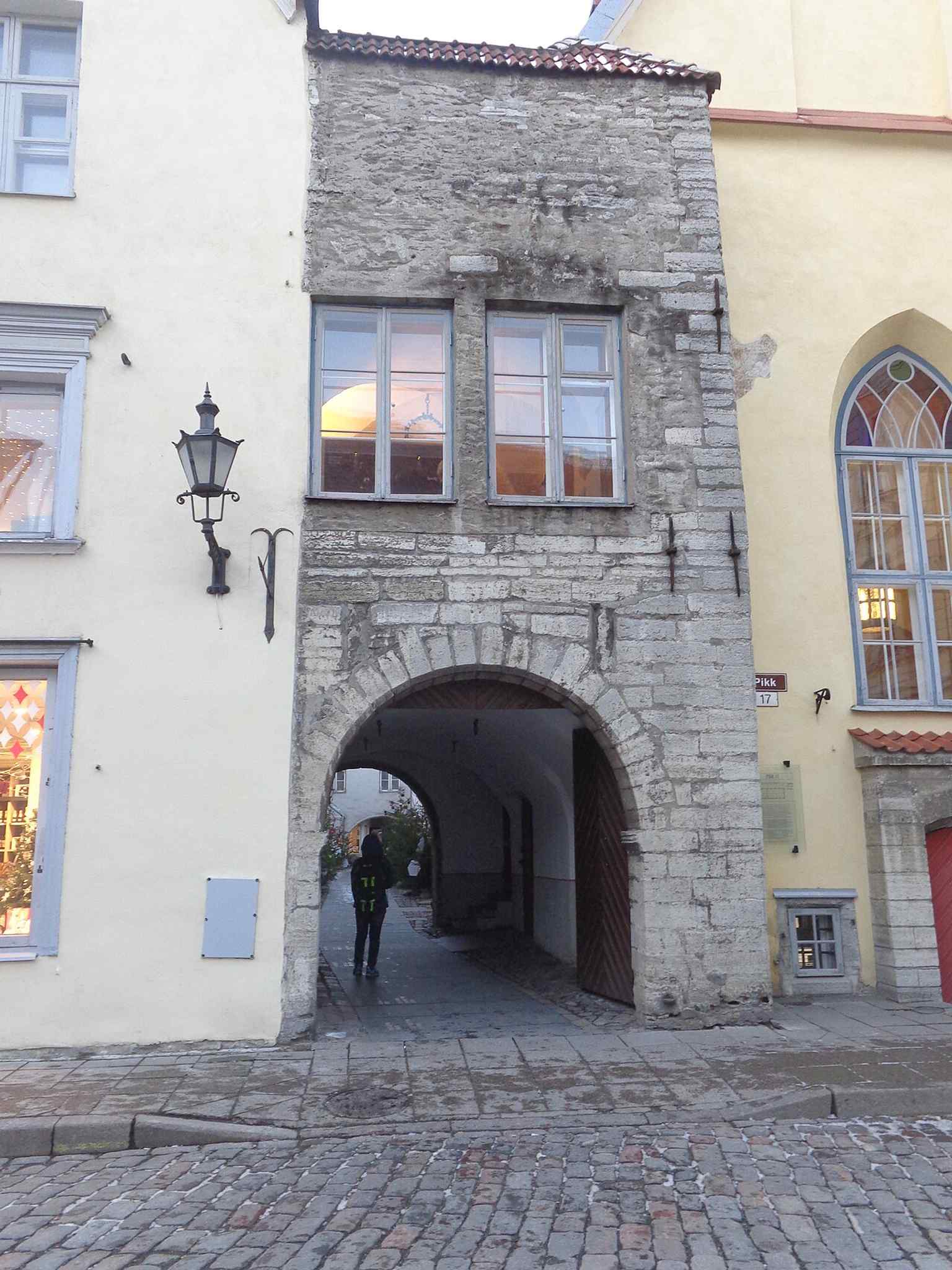
The entrance to Börsi käik from Pikk Street, the passage that once served the guild’s practical side and is now known as the “Path of History.”
The entrance to Börsi käik from Pikk Street, the passage that once served the guild’s practical side and is now known as the “Path of History.”Photo: Borodun, Wikimedia Commons, CC BY-SA 4.0. Cropped & resized.
The Lai Street entrance to Börsi käik shows how the guild complex opens toward the rear side of the block, beyond the main Pikk Street façade.
The Lai Street entrance to Börsi käik shows how the guild complex opens toward the rear side of the block, beyond the main Pikk Street façade.Photo: Borodun, Wikimedia Commons, CC BY-SA 4.0. Cropped & resized.
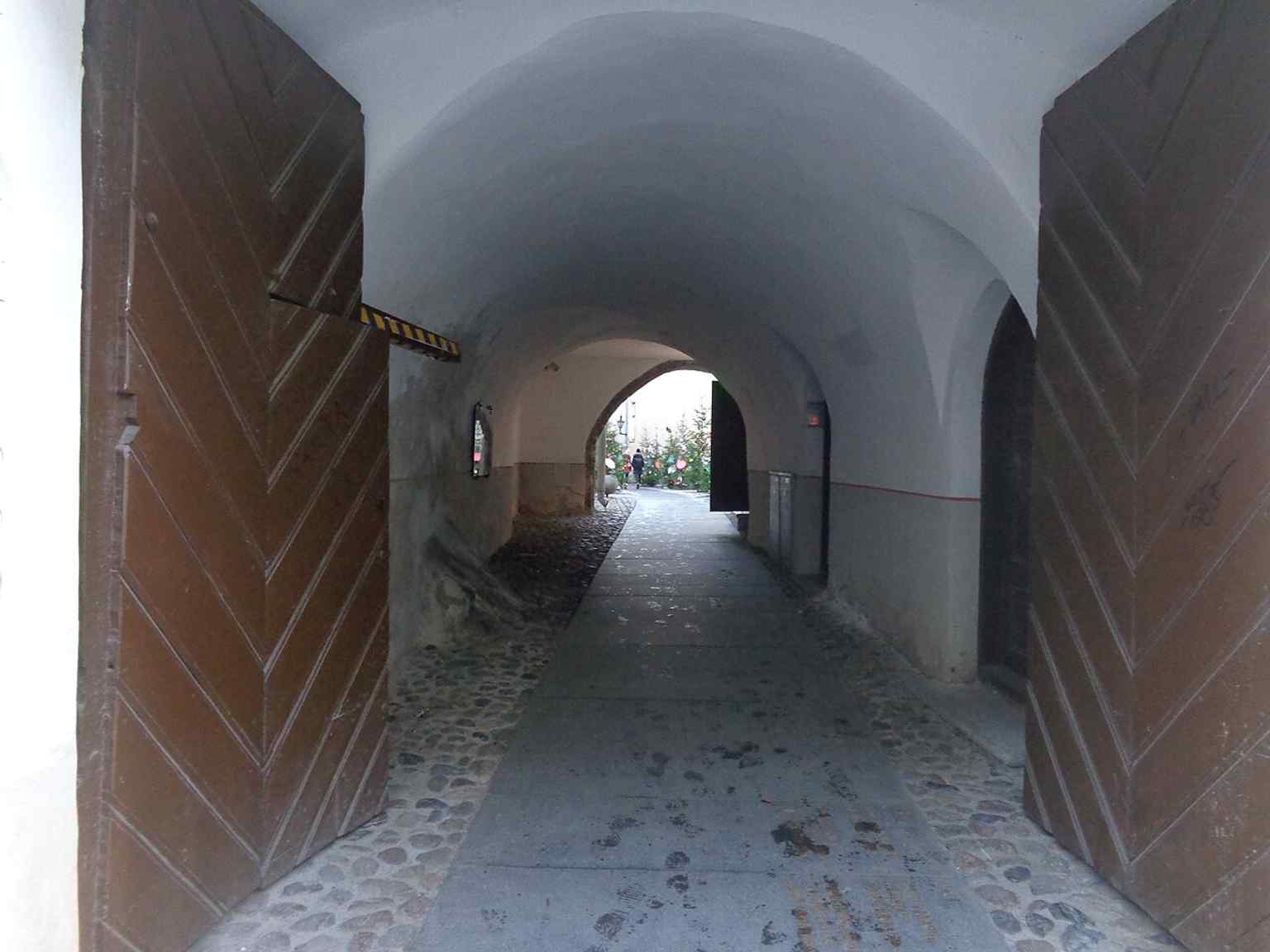
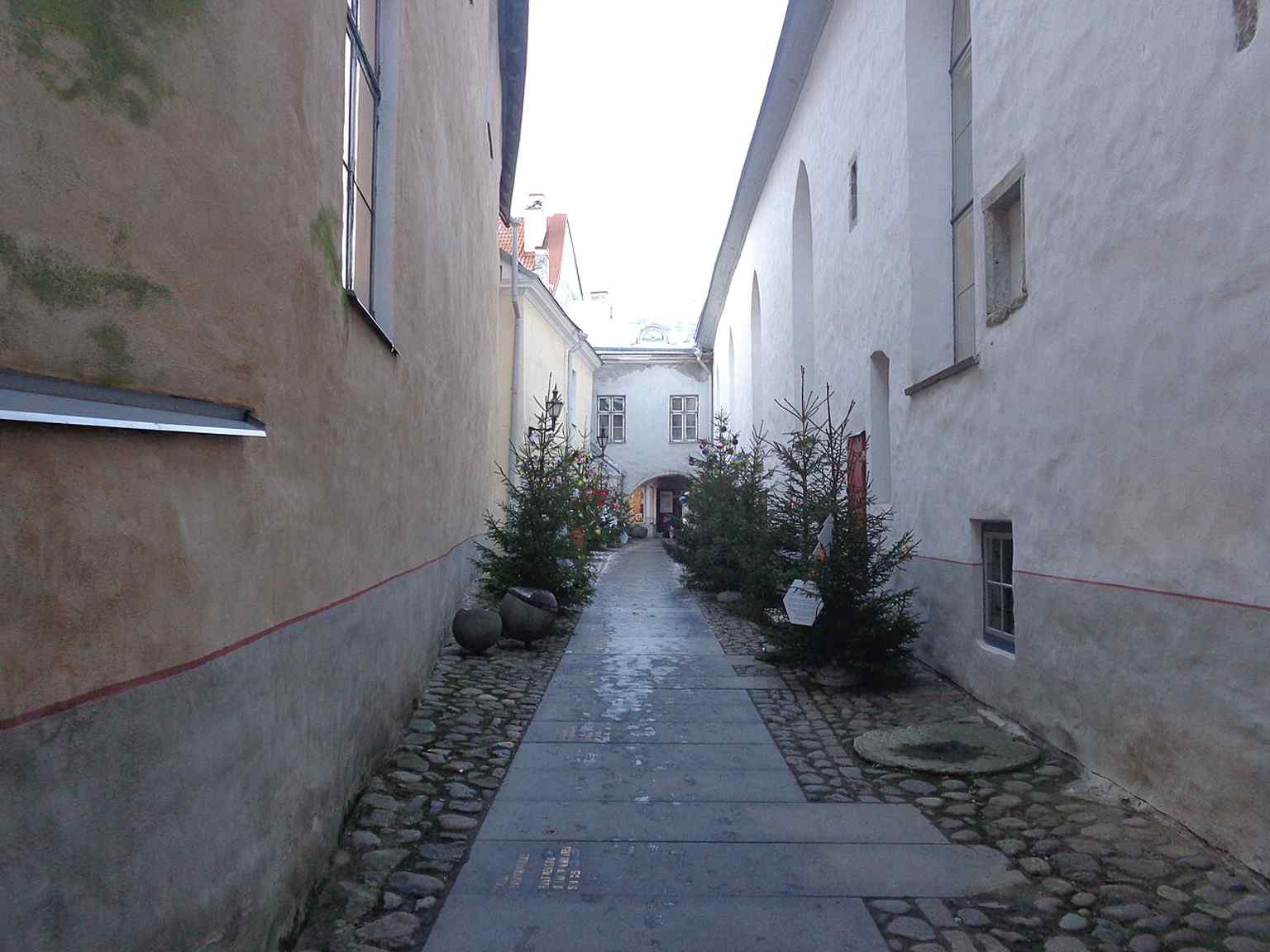
Börsi käik, the narrow passage beside the guild, where the old customs and tax-sorting yard has become a walk through Estonian history.
Börsi käik, the narrow passage beside the guild, where the old customs and tax-sorting yard has become a walk through Estonian history.Photo: Borodun, Wikimedia Commons, CC BY-SA 4.0. Cropped & resized.
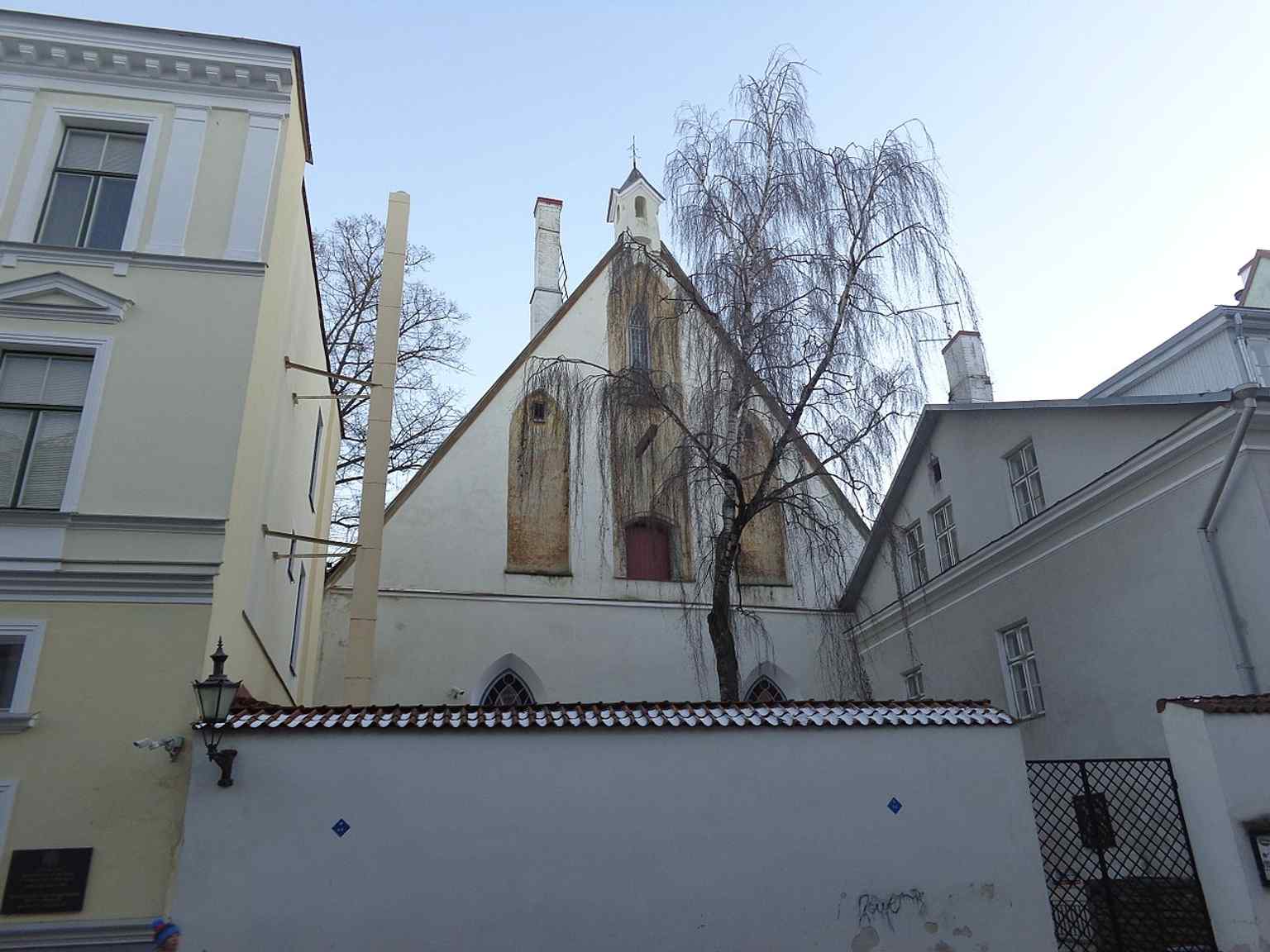
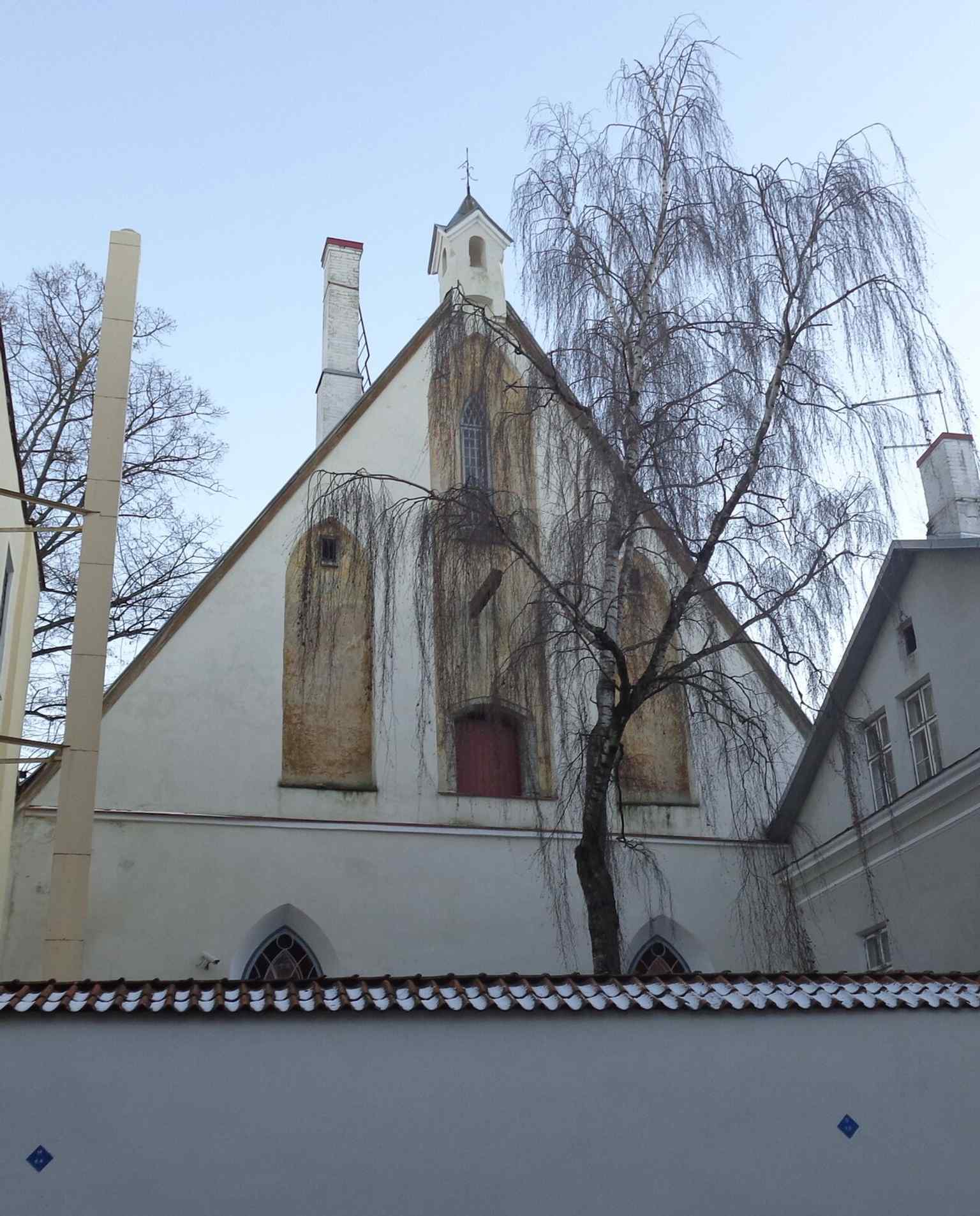
The back façade from Lai Street, reflecting the building’s layered history and its later rebuilding after 19th-century deterioration.
The back façade from Lai Street, reflecting the building’s layered history and its later rebuilding after 19th-century deterioration.Photo: Borodun, Wikimedia Commons, CC BY-SA 4.0. Cropped & resized.
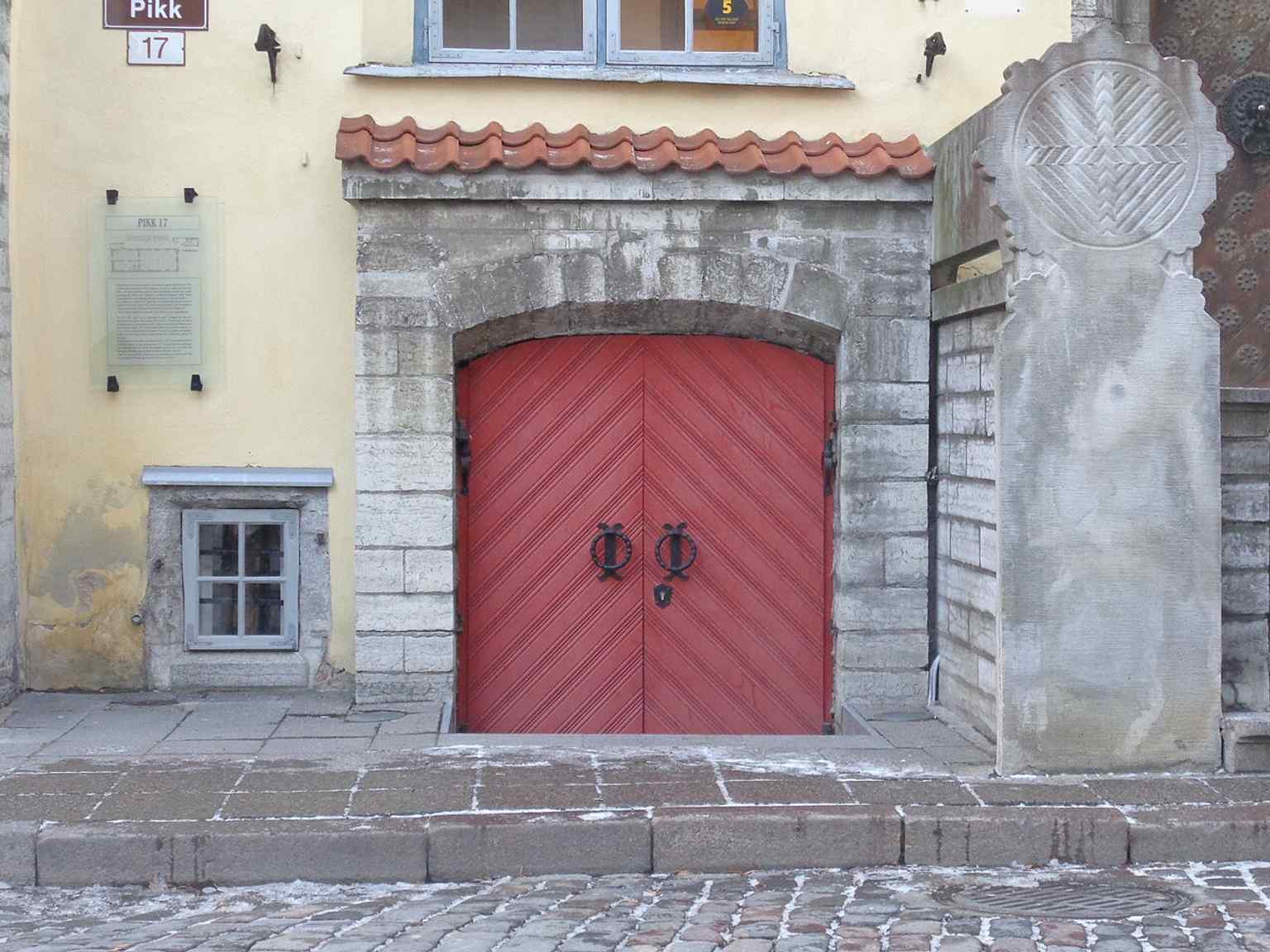
The cellar entrance, a reminder that the building’s lower levels stored wine and goods — and once even held a dungeon for disciplined guild members.
The cellar entrance, a reminder that the building’s lower levels stored wine and goods — and once even held a dungeon for disciplined guild members.Photo: Borodun, Wikimedia Commons, CC BY-SA 4.0. Cropped & resized.
A tighter view of the rear façade on Lai Street, useful for showing the building’s less ceremonial side and its reconstructed back wall.
A tighter view of the rear façade on Lai Street, useful for showing the building’s less ceremonial side and its reconstructed back wall.Photo: Borodun, Wikimedia Commons, CC BY-SA 4.0. Cropped & resized.
The right-hand door hammer on the main portal, one of the building’s finest surviving details from the 1430s.
The right-hand door hammer on the main portal, one of the building’s finest surviving details from the 1430s.Photo: Borodun, Wikimedia Commons, CC BY-SA 4.0. Cropped & resized.
This historical view of the Great Guild Hall and Börsi käik helps show how the complex evolved between the 15th and 19th centuries.
This historical view of the Great Guild Hall and Börsi käik helps show how the complex evolved between the 15th and 19th centuries.Photo: Vamps, Wikimedia Commons, CC BY-SA 3.0 ee. Cropped & resized.
arrow_back Back to Tallinn Audio Tour: Hidden Stories of Guilds, Monks, and Medieval Marvels
Loved by travellers

Thousands of tours started.
Plenty of opinions.

4.8 across the App Store and Google Play. Here's a few we keep coming back to.

starstarstarstarstar
This was a solid way to get to know Brighton without feeling like a tourist. The narration had depth and context, but didn't overdo it.
Christoph
Christoph
Brighton Tour
starstarstarstarstar
Started this tour with a croissant in one hand and zero expectations. The app just vibes with you, no pressure, just you, your headphones, and some cool stories.
download Get the app

Pop your headphones in.
Step outside.

Free to download. Tours in every city. Start in 60 seconds — no account, no card.

Download on the App StoreGet it on Google Play
starstarstarstarstar_half
4.8
AudaTours app icon
headphones
~ 4 min until your first tour starts
public
1,000+ cities worldwide
all_inclusive
AudaTours
Unlimited

Every tour. Every city. One subscription.

3101 tours2271 cities138 countries50+ languages