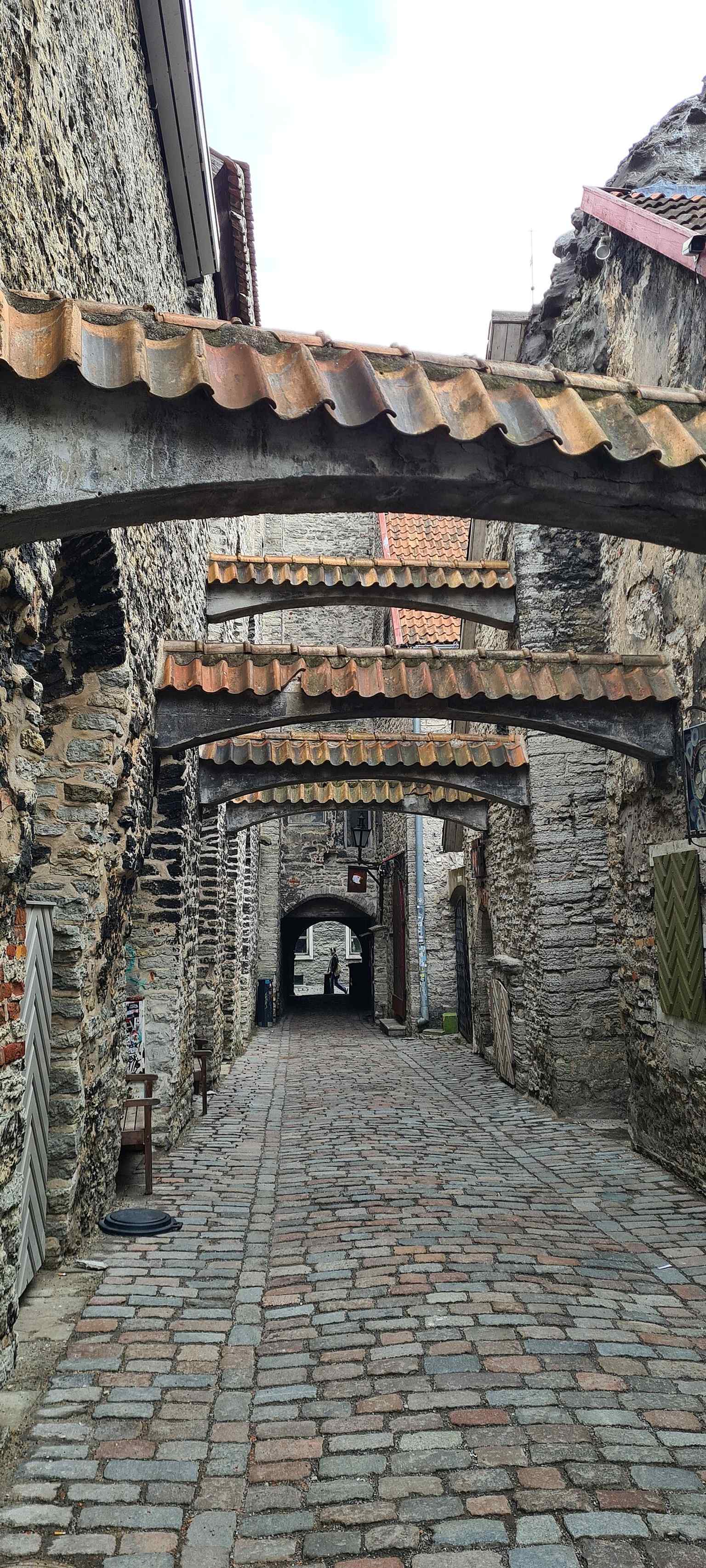
On your right, look for pale limestone walls, broken Gothic arches, and the surviving west portals of Saint Catherine’s Church, a medieval fragment tucked into the fabric of the street.
This is the Dominican Monastery of Saint Catherine, the oldest Catholic monastery in Estonia, and one of those places where Tallinn keeps its oldest heartbeat under stone. The Dominicans first arrived in Reval in the early thirteenth century, not here but up on Toompea. Quarrels between Danish and German knights made that first home impossible, so the brothers withdrew, returned, and by the year twelve sixty settled down here in the Lower Town, where merchants, craftsmen, and daily city life pressed close around them.
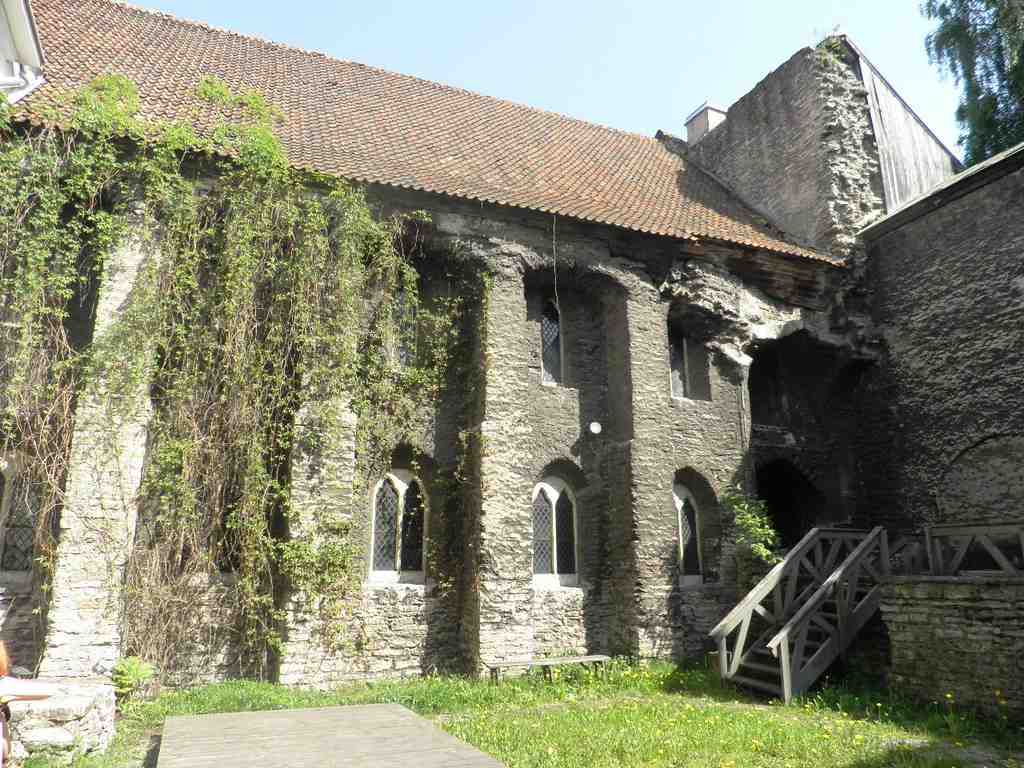
What they built was not only a church, but a whole enclosed world. The main rooms formed a neat rectangle around an inner court, with a covered walk running round it: church to the south, dining hall to the north, sleeping quarters to the west, chapter room to the east, where the brothers gathered to govern their life together. If you glance at the image on your screen, you can see that inward-looking shape still lingering in the courtyard. Even in ruin, it keeps the discipline of a mind arranged for prayer, study, and silence.
And yet the Dominicans were never meant to hide from the city entirely. They preached, taught, learned Estonian, and gradually drew local men into the order. Their school became so important that it sparked a real dispute with the cathedral over who held the right to teach, a quarrel settled only when the pope himself intervened. They traded fish as well, and ran a brewery with four kinds of beer. Monks, certainly; but also practical men with one foot in the marketplace.
There is an old emblem most visitors miss, and it is the tiny key to the whole place: the Dominican dog with a torch. Legend says Saint Dominic’s mother dreamed of a dog running out with a flaming torch in its mouth, setting the world alight. That image lingered in Dominican memory as a sign of preaching light into darkness. Once you know it, these ruins feel different. They are not simply broken walls; they are the husk of a house built for carrying thought, learning, and faith through a difficult city.
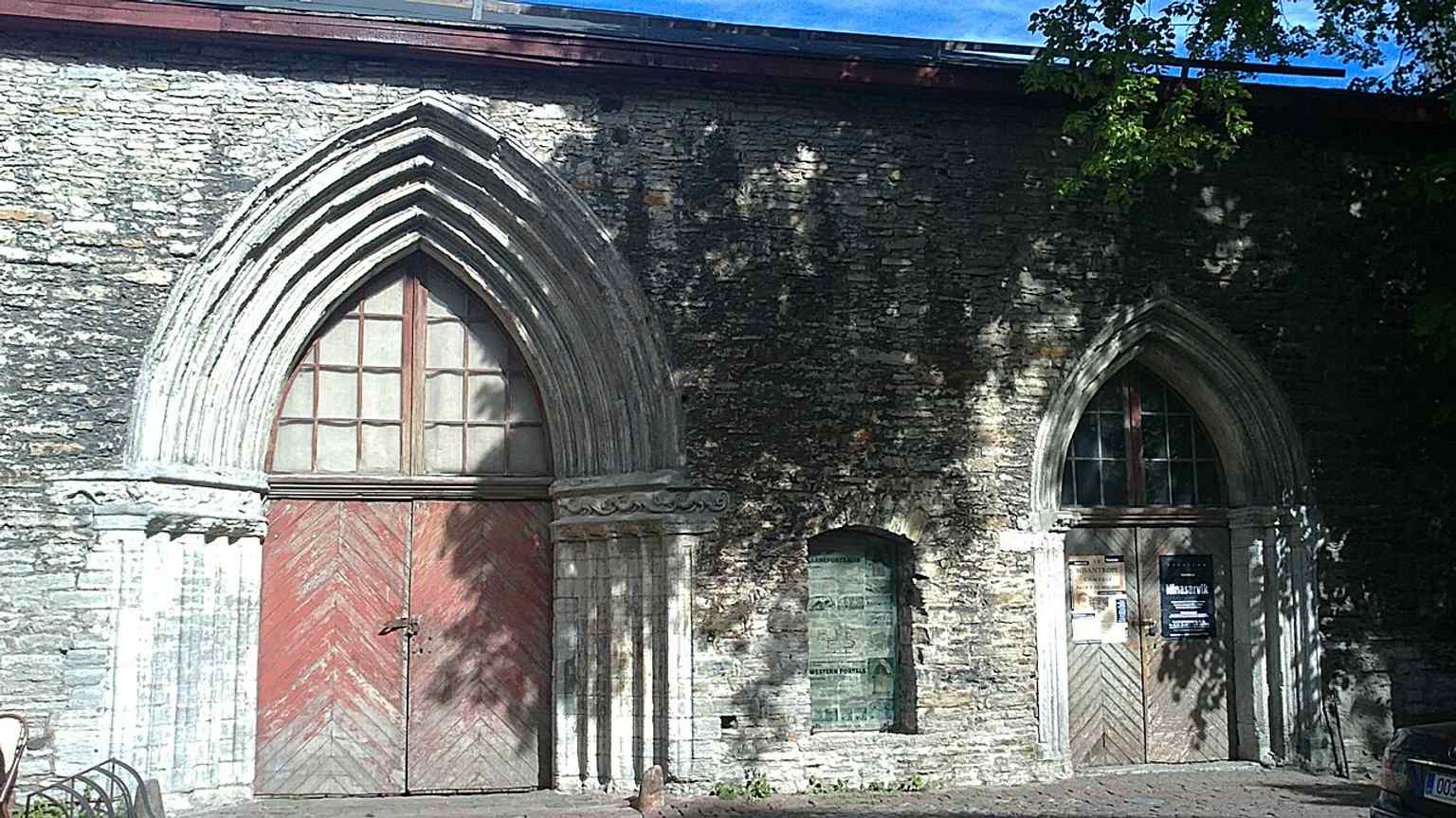
The difficulty came. The Reformation drove the Dominicans out in the fifteen twenties. Then the fire of fifteen thirty-one gutted Saint Catherine’s Church and damaged much of the monastery. If you look at the portal image in the app, those surviving stone doorways are among the pieces that endured. After that, the place changed roles again and again: school, quarters for Polish soldiers, almshouse. Later, Reval’s Polish Catholics returned to the former refectory for worship, and the ruins briefly became a church once more in an unexpected form.
One of the most human returns came much later, with Lembit Peterson. He found only a small room here at first, while an old granary stood in Soviet hands. Gradually, with the Hereditas foundation, he helped reclaim these battered buildings for study, rehearsal, and performance. So the old monastery, once enclosed, opened again as part of the Latin Quarter: prayer, then ruin, then culture, still speaking.
Tallinn never kept just one sacred language; as you head on to our final church, notice how different communities left their own chapels, altars, and loyalties across the same small streets. If you want to come back inside later, the site generally opens daily from ten in the morning until four in the afternoon.