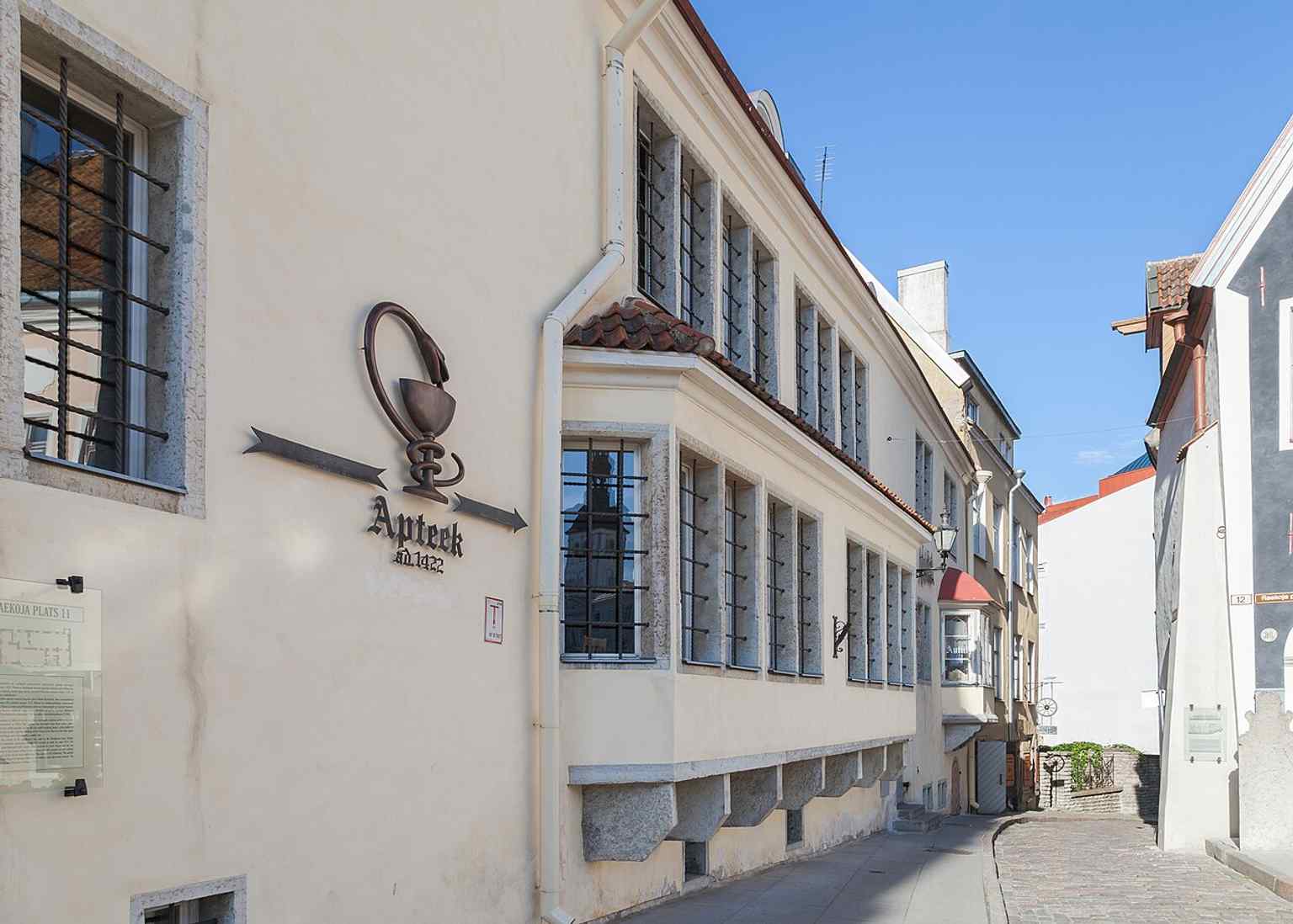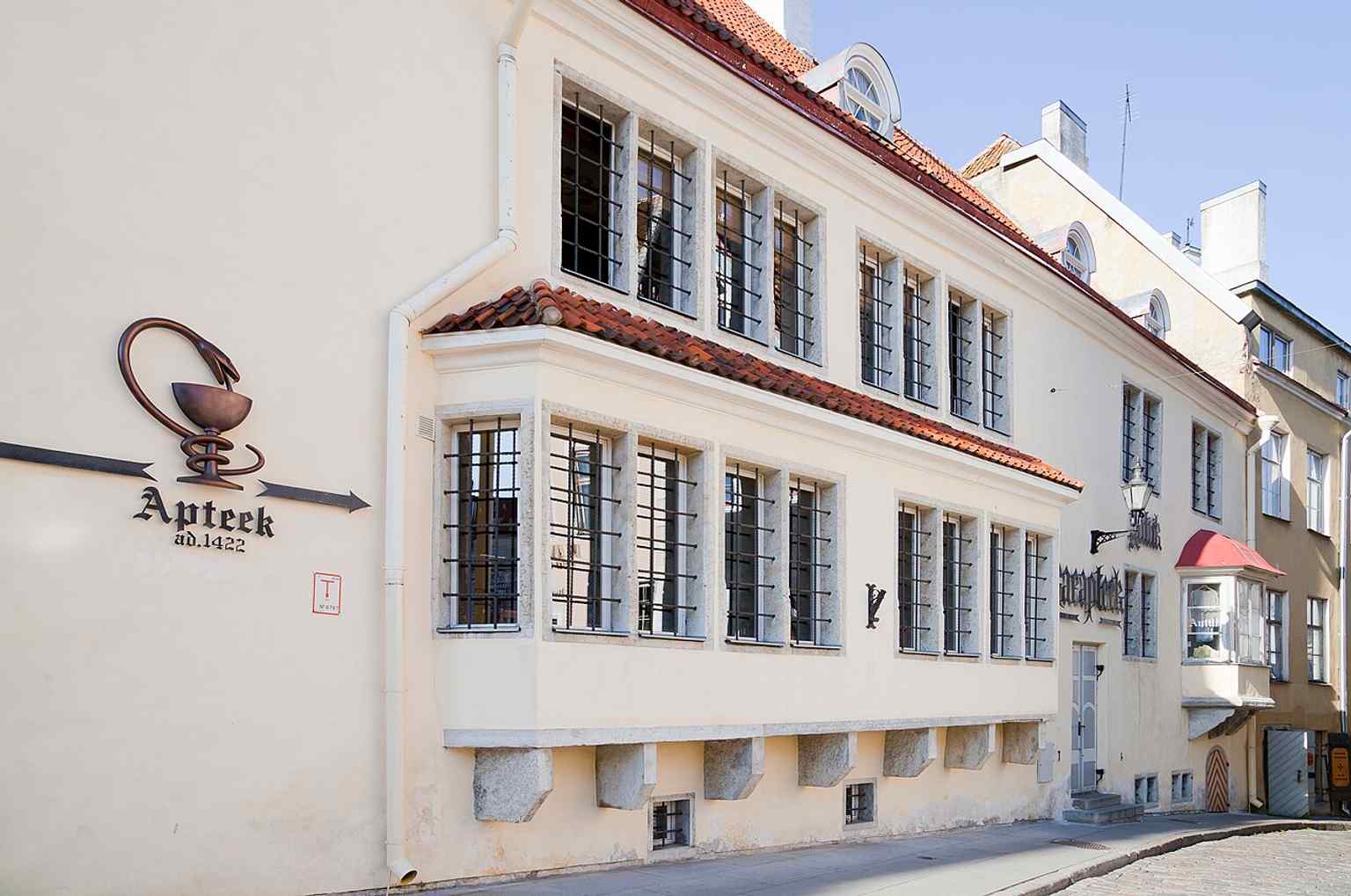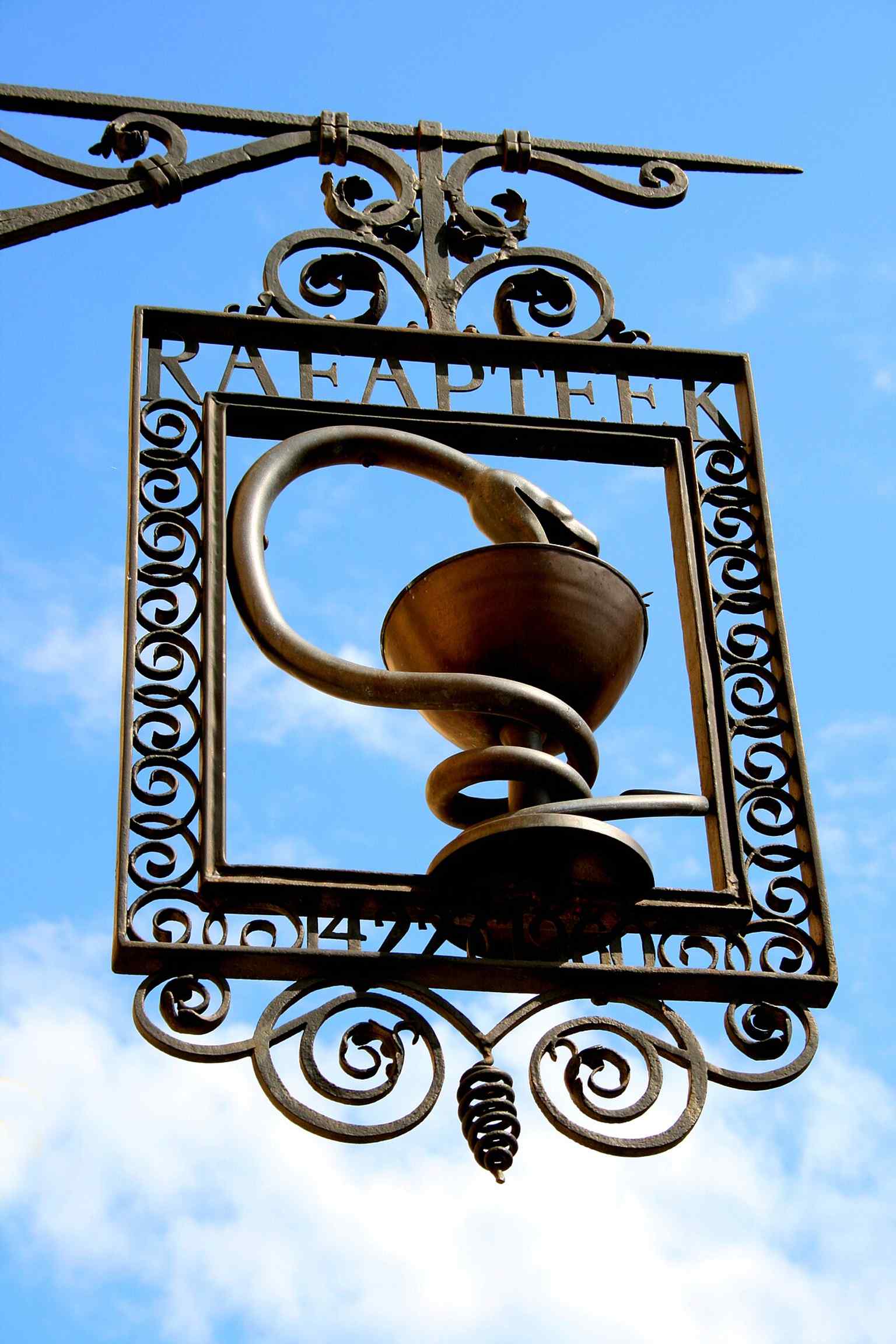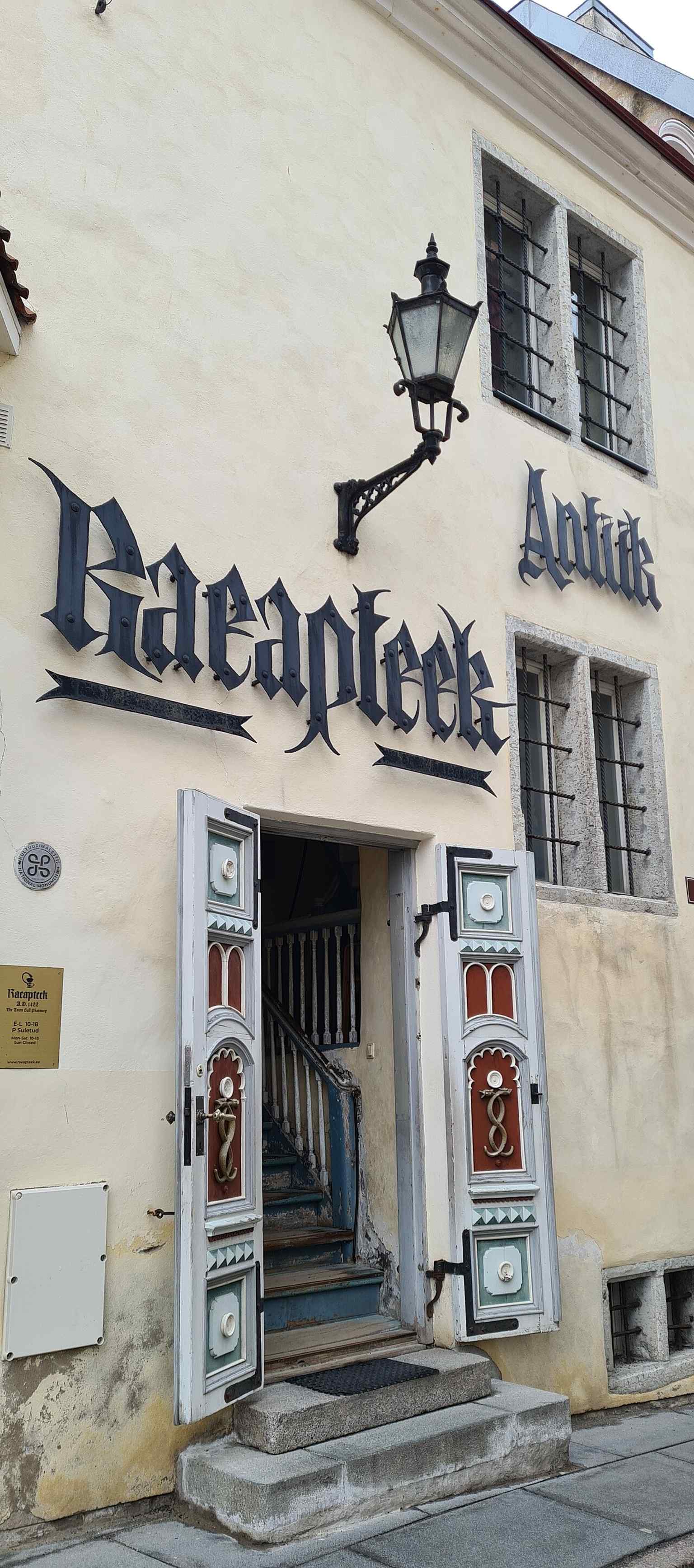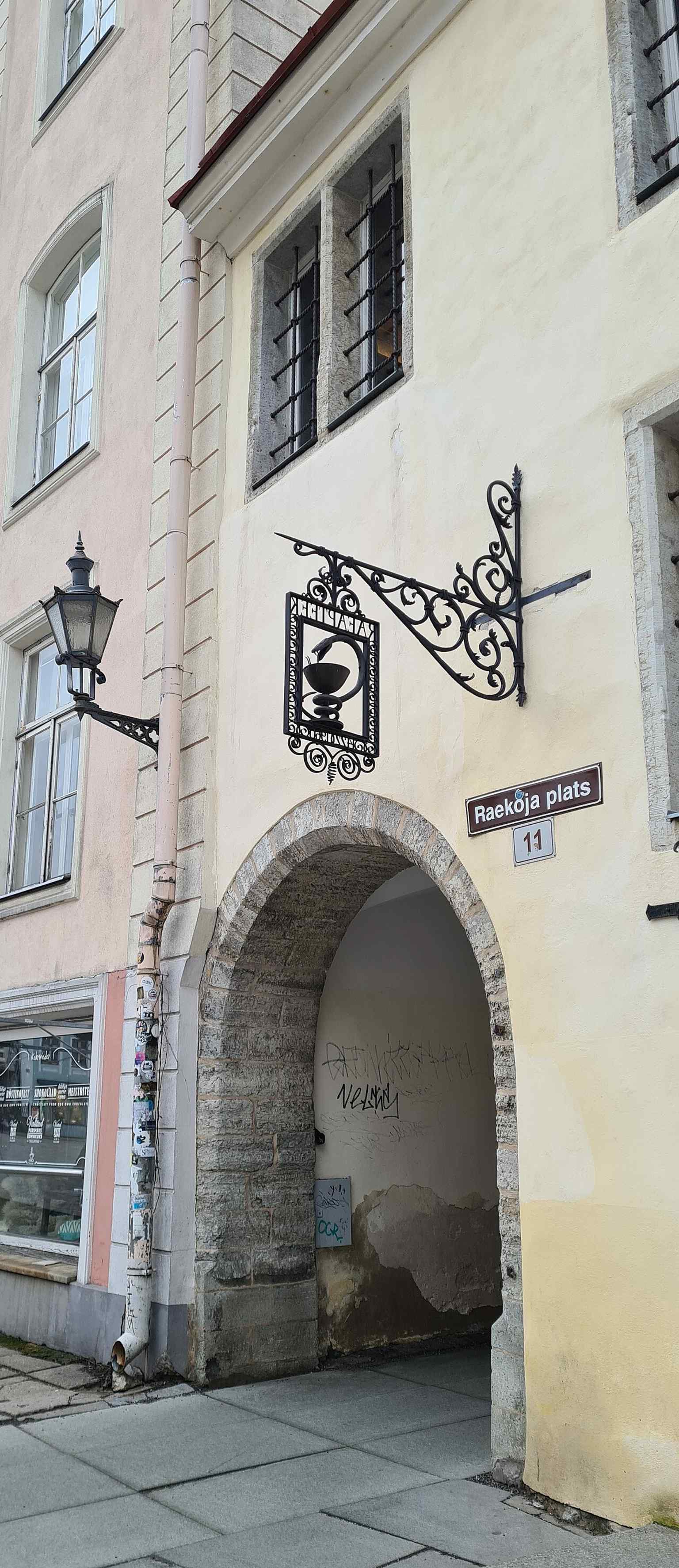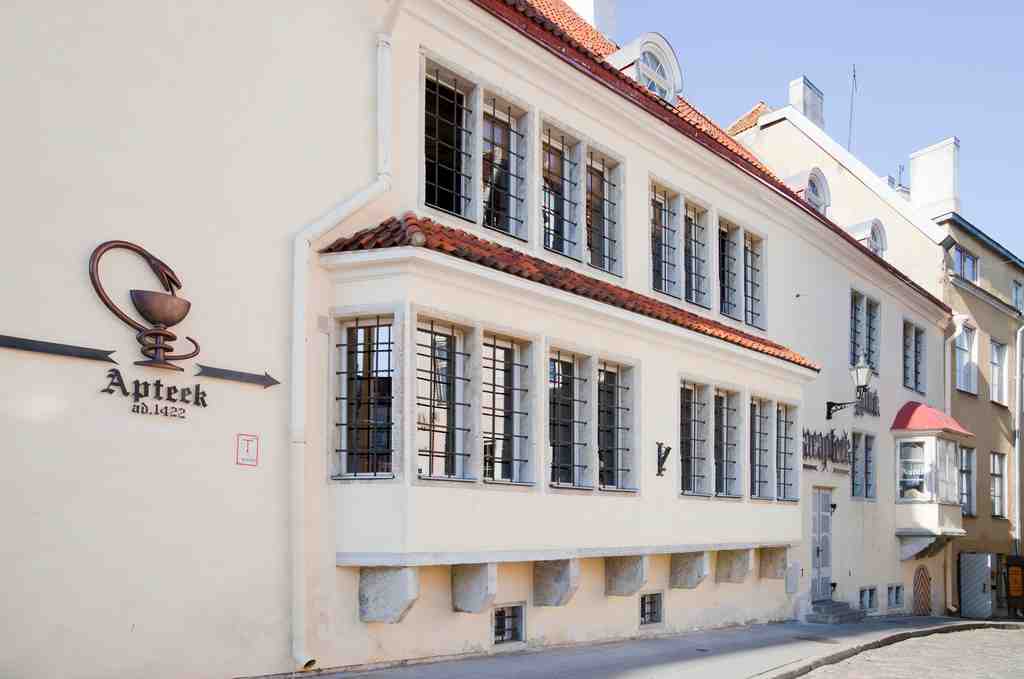
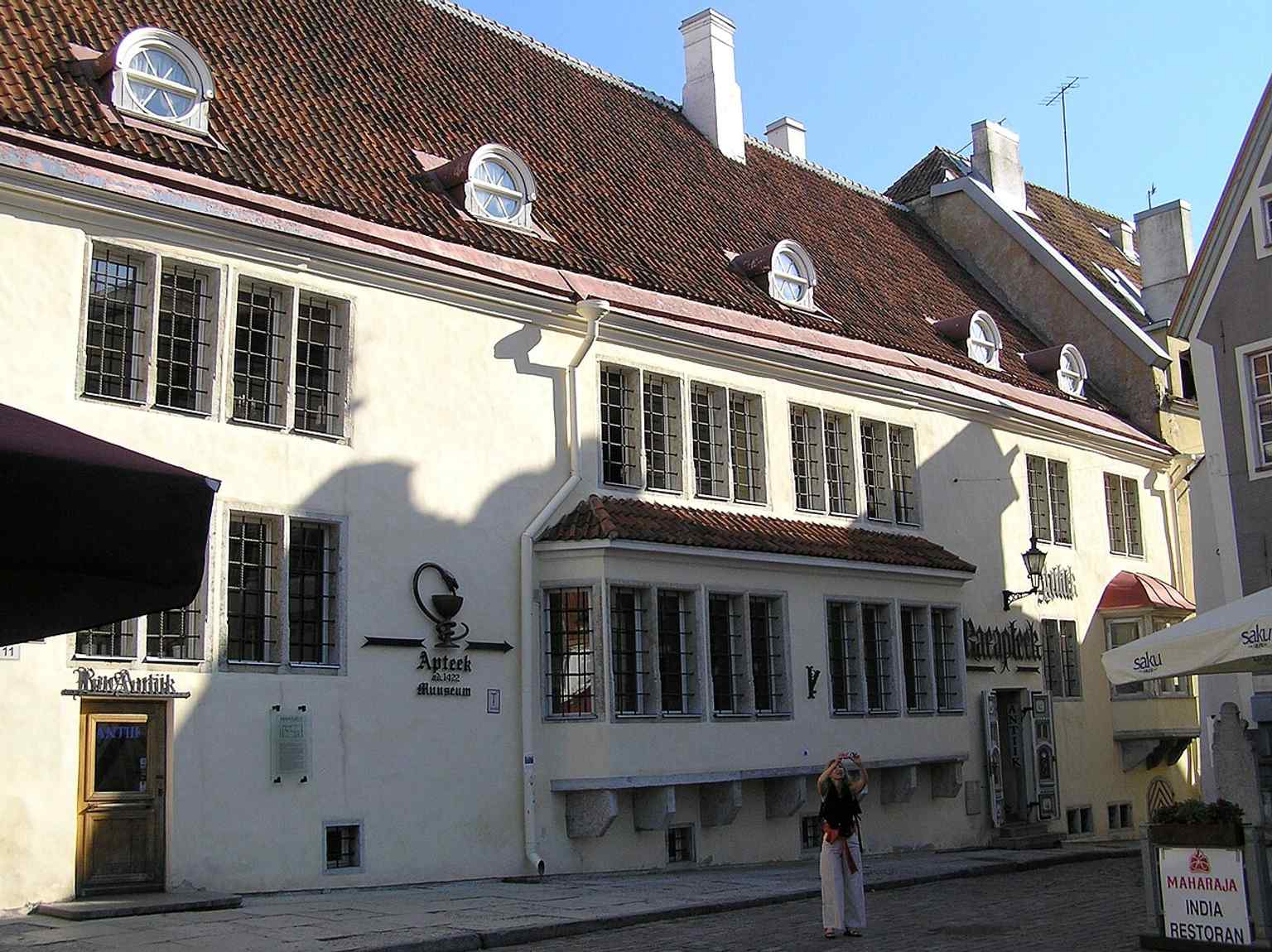
Look for the pale plaster-and-stone gabled house with its narrow pointed roofline and the old apothecary sign fixed to the façade facing the square.
This is Raeapteek, the Town Hall Pharmacy, and it holds one of Tallinn’s most stubborn little miracles: it has served the city from this very building since the early fifteenth century. Regimes changed, tastes changed, even the square changed its manners, yet people kept coming to this doorway for remedies.
The records grow hazy at the beginning, which only adds to the charm. Historians know the pharmacy already had its third owner by the year fourteen twenty-two, and some place its founding around fourteen fifteen. That makes it one of the oldest continuously operating pharmacies in Europe, and one of the oldest working commercial businesses in Tallinn. Not a museum pretending to be alive, but a real place that simply never quite stopped.
And what a place it was. Medieval customers did not come here only for medicine. They bought paper, ink, wax, spices, candles, gunpowder, even shotgun pellets. When tobacco first reached Estonia, this was the first place that sold it. The pharmacy also poured claret, a spiced wine, so the city’s magistrates often slipped across from the Town Hall to warm themselves, exchange gossip, and settle business. In other words, civic life did not only happen behind council doors. Quite a lot of it happened here, beside the jars.
If you glance at the image on your screen, you can see how the building still holds that layered identity: shop, memory box, and survivor all at once.
The most famous family here were the Burkharts, who ran the pharmacy for more than three centuries, across ten generations. One of them, Johann Burkhart the Fifth, gives the place its human face. In seventeen ten, when plague tore through Reval, as Tallinn was then known, many doctors fled or died. Johann was only twenty-seven, but he stayed. He treated the sick as the city panicked around him, then went on to serve as city physician and doctor to the garrison and naval hospital. That is the sort of bravery that turns a business into an institution.
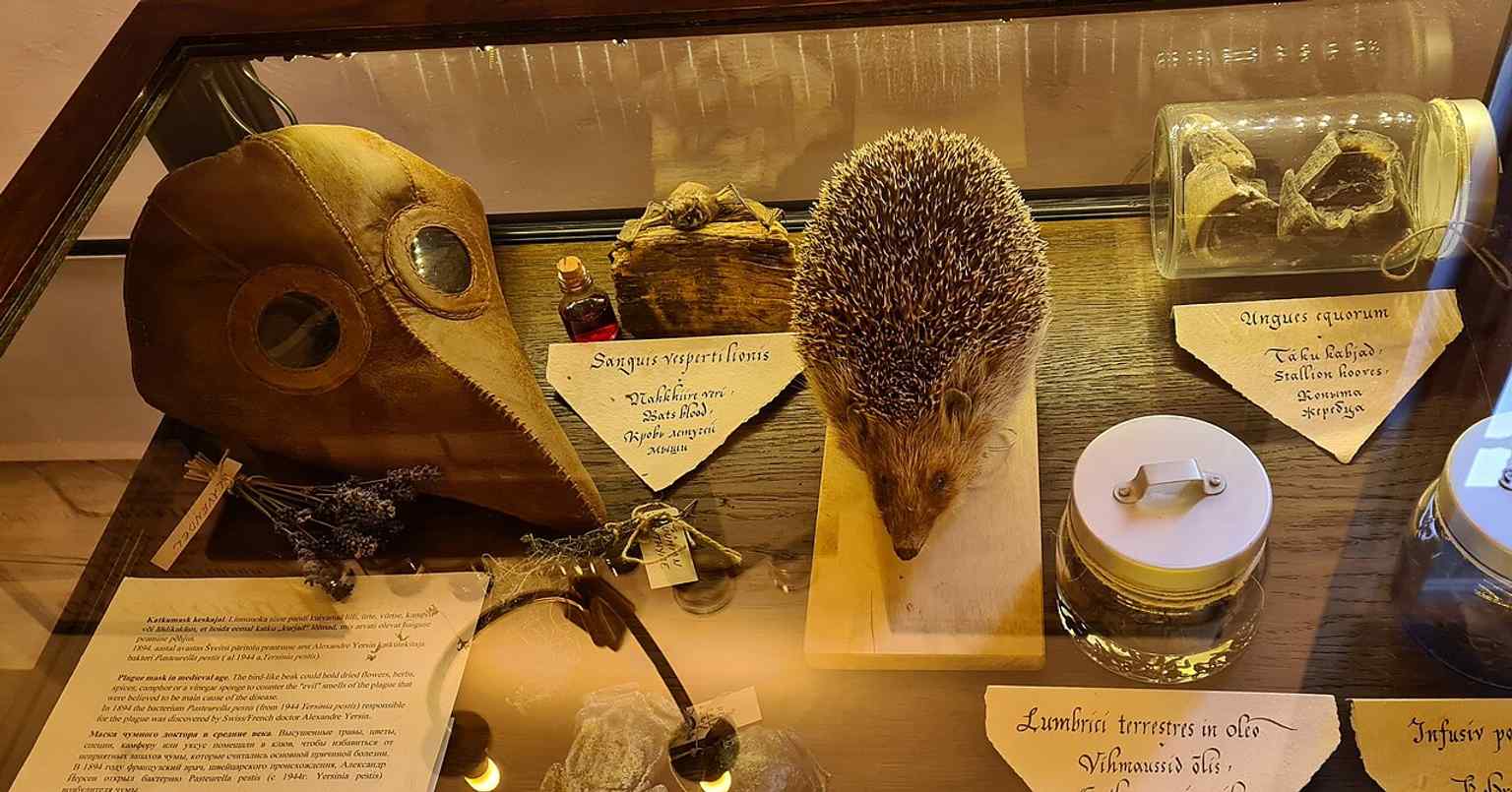
Yet old medicine had its stranger side. The official price list from sixteen ninety-five survives, and it reads like a cabinet of nightmares: fifty-four kinds of medicinal water, twenty-five fats, one hundred and twenty-eight oils, plus remedies made from bleached dog dung, wolf intestines, human fat, and earthworms in oil. Alongside all that, there was marzipan. According to tradition, an apprentice named Mart mixed a sweet medicinal paste here in fourteen forty-one, and Tallinn later cherished it as “March bread,” prescribed for headaches and even lovesickness.
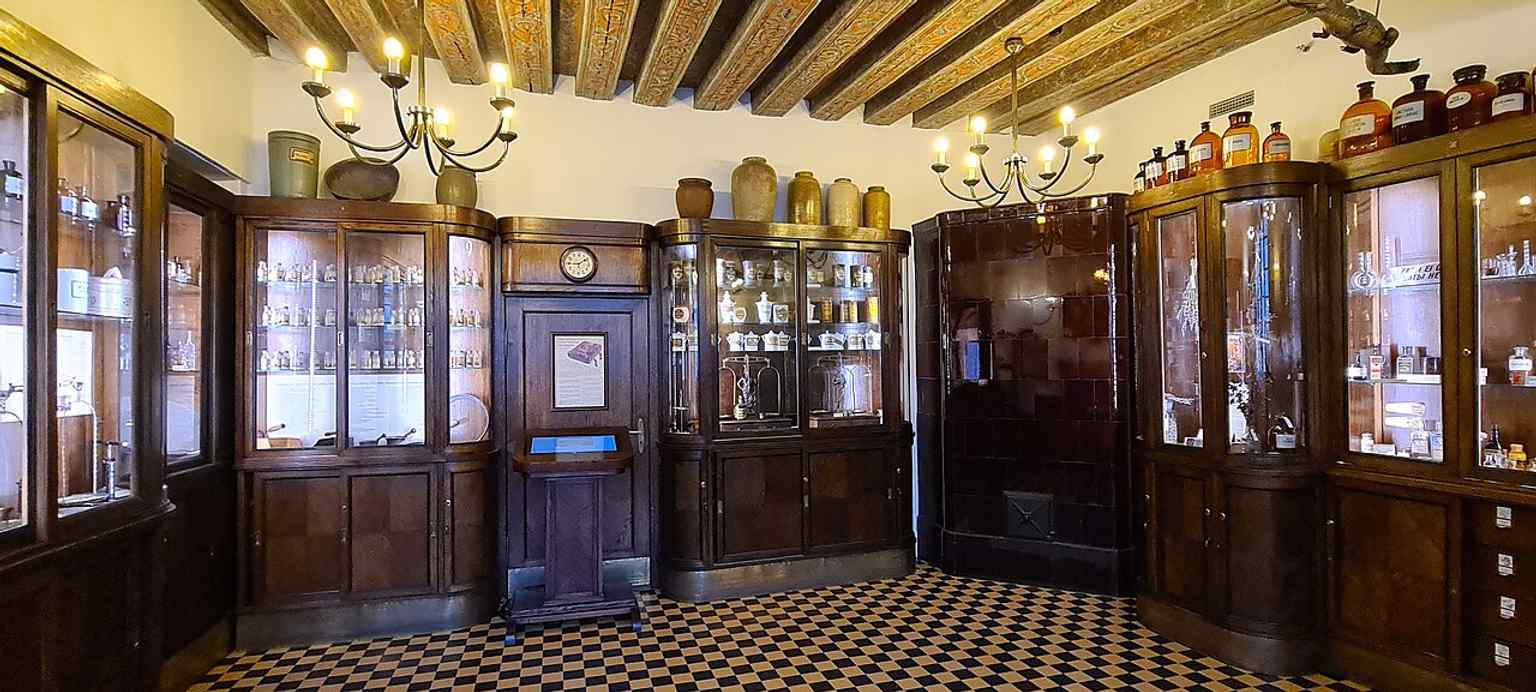
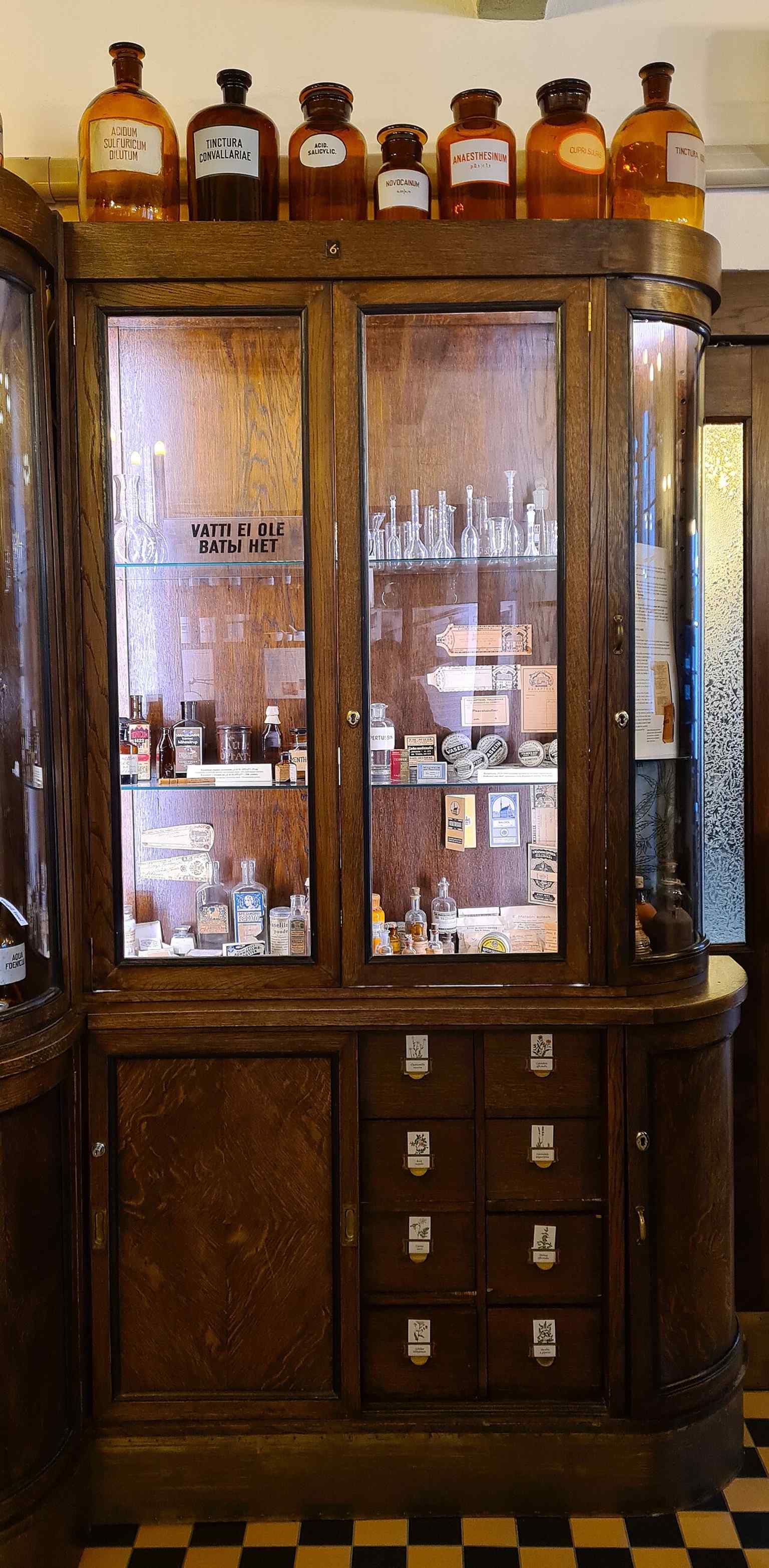
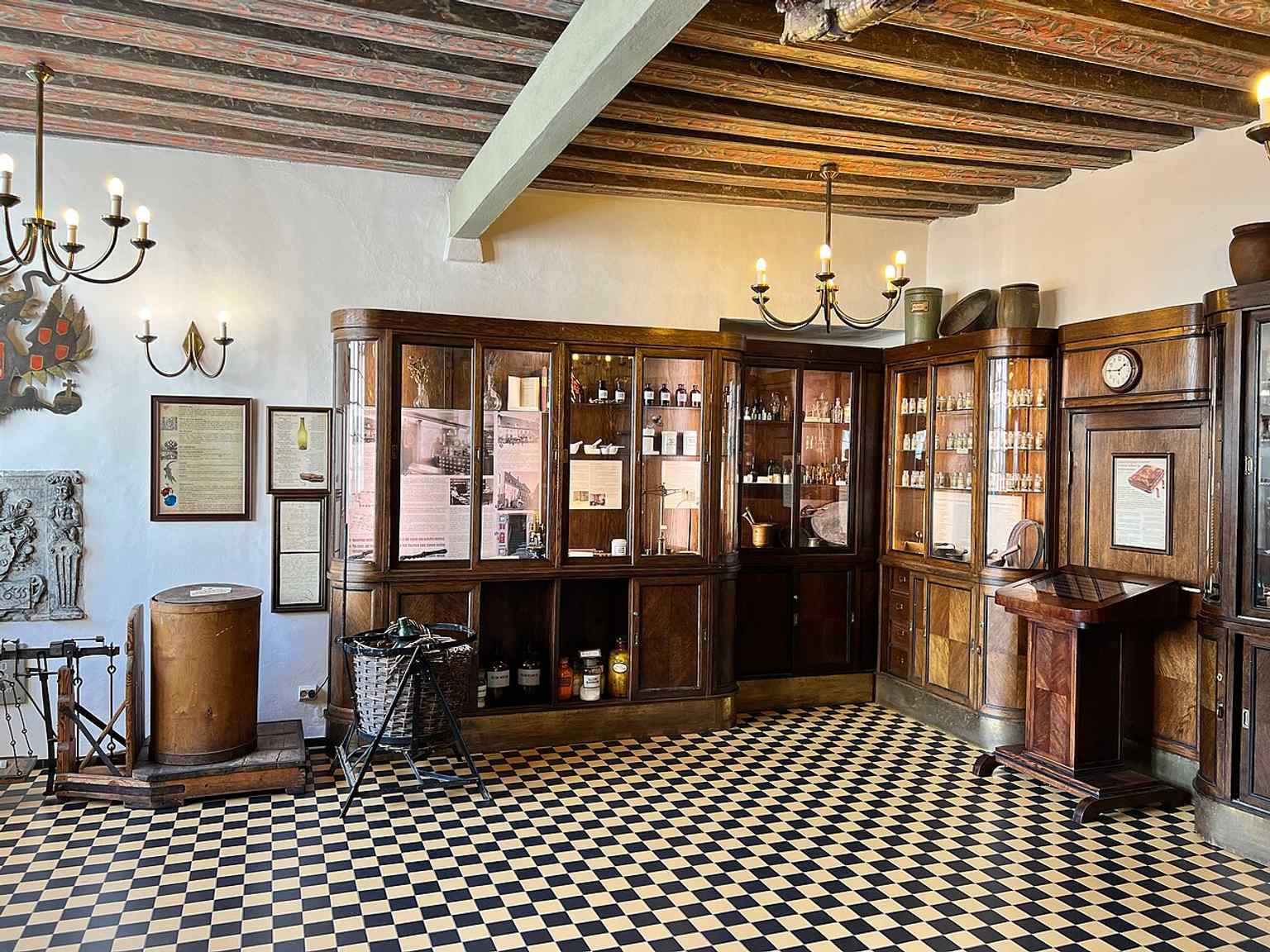
If you fancy a peek inside, the app’s interior photo shows the preserved woodwork, old vessels, and the atmosphere restored after the long renovation that ended in two thousand and three. Practicality, here, became inheritance.
That may be the quiet wonder of this address. Other places in the old city changed purpose with each new authority. This one kept doing the same essential thing: easing pain, trading knowledge, and serving the life of the square.
Now let your eyes move beyond this façade to the larger body that kept all these institutions breathing together: the Old Town itself, just one minute away. And if you plan to step inside later, the pharmacy is generally open from Monday to Saturday, from ten in the morning until six in the evening, and closed on Sunday.