
Look for the solid pale stone facade, the tall rectangular mass of the building, and the glass bridge that links the historic parts of the complex.
Think of this city as a stage. In Tallinn’s Old Town, buildings rarely keep a single part for long: a noble hall becomes a theatre, a theatre becomes a museum, and every new role leaves a trace in the wings. That is why this is such a perfect beginning, because this address has been performing for more than two centuries.
The theatrical life here started in eighteen oh nine, when Tallinn’s first professional theatre opened on this very site, then known as Reval Theatre. It was a wooden building, lively and ambitious, and rather doomed. Fire damaged it badly in eighteen fifty-five, and in nineteen oh two flames finished the job completely. What you see now rose from that loss between nineteen oh four and nineteen oh seven, when architect Nikolai Tamm designed this stone building for the Reval Noble Society. Even when nobles took over the script, the place never quite forgot its original lines.
Then, in nineteen fifty-two, theatre returned in a different costume. The State Puppet Theatre of Soviet Estonia moved the art of puppetry into Tallinn’s cultural heart, and in two thousand ten the Puppet Theatre Museum opened here as part of the same living institution, now called Estonia’s Youth Theatre. The building itself is protected as a historic monument, which feels fitting: memory here does not sit quietly in a cabinet. It performs.
One man shaped that spirit more than anyone else: Ferdinand Veike, the founder and first artistic leader. He liked to say, “A puppet is no trinket.” It is a marvellous motto for Tallinn, really. Playfulness here is never shallow; behind the painted face, there is always something serious being said.
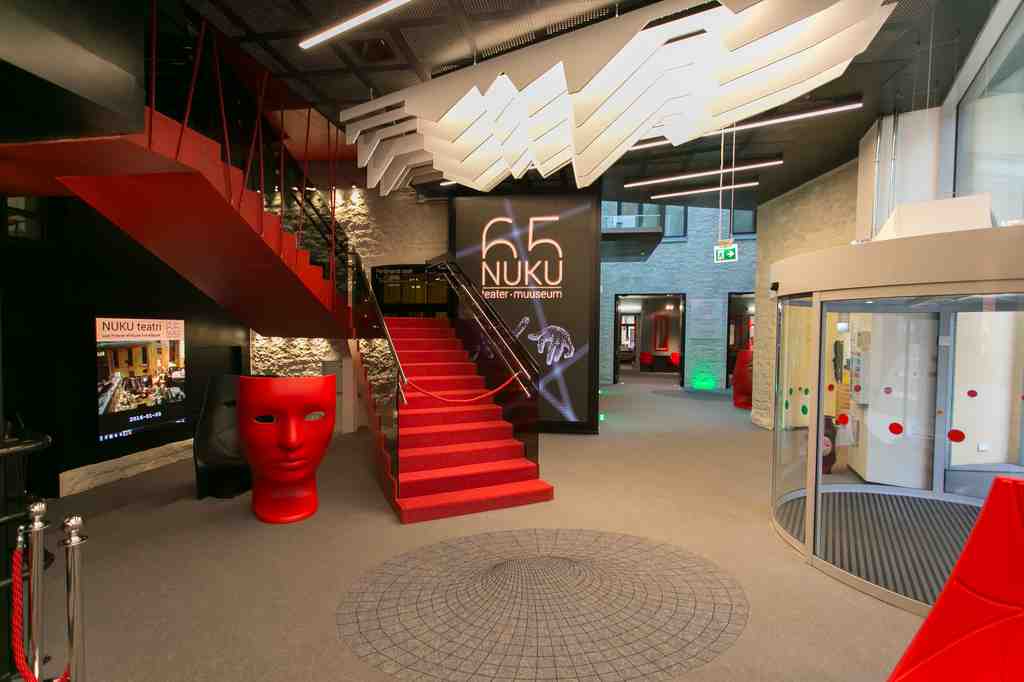
Inside, the museum keeps more than eight hundred puppets, masks, costumes, props, photographs and working sketches, not only from Estonia but from places such as India and China. One of its treasures is the original Buratino puppet from nineteen fifty-four. An artist in Riga, Paul Schoenhof, made it for The Adventures of Buratino, but Soviet censors rejected it because they thought it looked too influenced by Disney’s Pinocchio, too suspiciously Western, too “capitalist.” Schoenhof gave the forbidden puppet to Veike. The theatre built larger copies for the stage, but that first little exile survived, and now it stands as a relic of how art slips past official labels.
Labels matter here. In two thousand twenty, the theatre dropped its familiar Nuku name and rebranded as Estonia’s Youth Theatre, hoping to shake off the idea that puppets belong only to children. Many people still use the old name. The museum kept it, almost like a quiet refusal to let one costume erase another.
And there is one lovely detail hidden in the complex: a glass bridge connecting the older buildings, allowing visitors to glimpse the workshops where new figures are still made. So even now, this place is not merely storing the past. It is rehearsing the future.
From here, we step toward a grander kind of performance: the Great Guild Building, a two minute walk away, where merchants learned how ceremony could look very much like authority. If you want to come back later, the museum is usually open Tuesday through Sunday from ten to six, and closed on Monday.




