

New York Audio Tour: Manhattan Icons
Beneath the manicured lawns of Central Park and the gilded halls of Fifth Avenue lie buried secrets of forgotten rebellions and high society scandals. Manhattan is a stage where millions walk daily without ever sensing the ghosts of empires or the echoes of political coups hiding in plain sight. This self guided audio tour pulls back the curtain on the city. Unlock hidden narratives and obscure corners that vanish from the average tourist map. Why did a legendary art institution become the site of a clandestine political standoff? What dark secret is etched into the stone of the museum facade? Which eccentric billionaire hid a fortune inside a park sculpture? Traverse this urban landscape as the history breathes through the pavement. Experience the thrill of unearthing buried truths while the city skyline shifts around you. Press play and begin your transformation from visitor to witness.
Tour preview
About this tour
- scheduleDuration 80–100 minsGo at your own pace
- straighten3.0 km walking routeFollow the guided path
- location_onLocationManhattan, United States
- wifi_offWorks offlineDownload once, use anywhere
- all_inclusiveLifetime accessReplay anytime, forever
- location_onStarts at City Congregation for Humanistic Judaism
Stops on this tour
lock_open 3 free previews · 11 unlock with purchase
Look for a long parade of pale stone and red brick apartment houses facing the park, rising in setbacks and towers, with the Dakota’s steep gables serving as one of the avenue’s…Read moreShow less
Open dedicated page →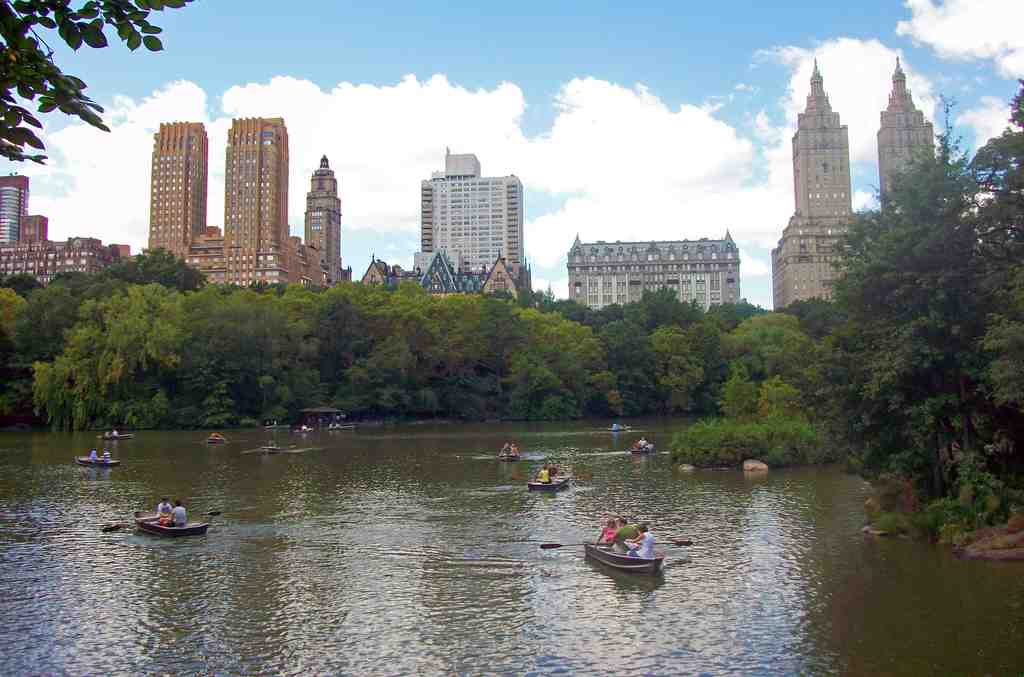
Central Park West Historic DistrictPhoto: Daniel Case, Wikimedia Commons, CC BY-SA 3.0. Cropped & resized. Look for a long parade of pale stone and red brick apartment houses facing the park, rising in setbacks and towers, with the Dakota’s steep gables serving as one of the avenue’s unmistakable markers.
Central Park West is not one building so much as a carefully staged performance. From sixty-first to ninety-seventh Streets, this edge of the park became one of New York’s grandest residential corridors, packed with buildings from the late nineteenth century through the early nineteen-forties. Most wear Renaissance dress-up - meaning they borrow the look of old Italian palaces - while others lean into Art Deco geometry, Beaux-Arts grandeur, Gothic flourishes, or the occasional Romanesque heaviness. New York, never very good at modesty, lined them up where everyone could see.
That is the trick here: private ambition turned into public scenery. Developers built these apartment houses for wealthy residents who wanted comfort, status, and views, but the result became a civic backdrop for the whole city. The skyline along the park stopped being just real estate and became part of New York’s self-portrait. If you glance at the image on your screen, you can see that lineup clearly - the Dakota, Langham, Majestic, and San Remo reading almost like a cast list.
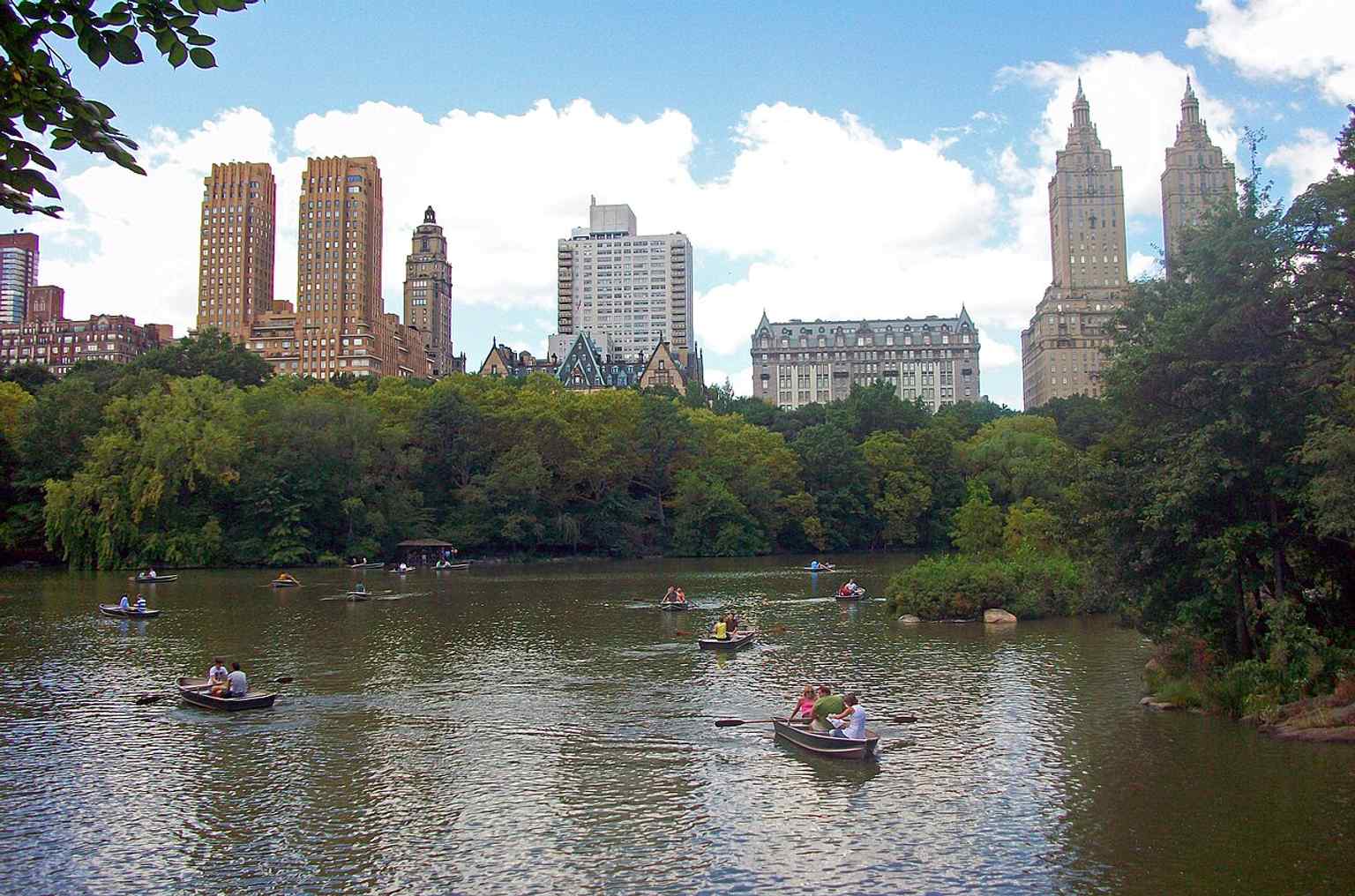
From across the Lake in Central Park, the Dakota, Langham, Majestic, and San Remo line up as part of the district’s famous skyline of luxury apartment houses.Photo: Daniel Case, Wikimedia Commons, CC BY-SA 3.0. Cropped & resized. This park edge also worked as a social stage. To live here meant you faced the city’s most famous landscape, and the city faced you right back. Address, façade, tower, entrance canopy - all of it announced who belonged in the front row. By the mid-nineteen-thirties, this stretch had also become a destination for Jewish upward mobility; more than half the residents between Seventy-second and Ninety-sixth Streets were Jewish, and many family heads had been born in Europe. So the avenue’s glamour was never just old money polishing its cuff links. It was also newcomers writing themselves into Manhattan.
No architect embodies that better than Emery Roth. He arrived alone from Hungary as a teenager, worked his way into architecture in Chicago and New York, lost sight in one eye and nearly died in the influenza pandemic of nineteen eighteen... and then helped define Central Park West with buildings like the San Remo, the Beresford, the Alden, and the Ardsley. His career reads like the avenue itself: immigrant grit dressed in limestone elegance.
Locals will tell you something most passersby miss about the Dakota. People remember the tragedy first: John Lennon and Yoko Ono lived there, and Lennon was shot and killed outside the entrance in nineteen eighty; Ono remained in the apartment until twenty twenty-three. But the building began as a bold experiment in elite apartment living. Henry Hardenbergh gave all sixty-five apartments different plans, wrapped them around a central courtyard, and tucked servant circulation underground so staff could move without crossing residents’ paths. In other words, privacy, convenience, and spectacle - New York’s favorite trio.
Protection came later. The city first designated part of this area in nineteen seventy-three, and the federal government added the broader historic district to the National Register of Historic Places in nineteen eighty-two. That official recognition mattered, but honestly, the avenue had been declaring its own importance for decades. Even popular culture joined in: fifty-five Central Park West got recast as “Spook Central” in Ghostbusters, because of course even the skyline wanted a screen credit.
And yet all this architecture exists because of the open space beside it. These towers needed a stage, and Central Park gave them one. Our next stop leaves the row of façades and heads into the landscape that made this whole performance possible.
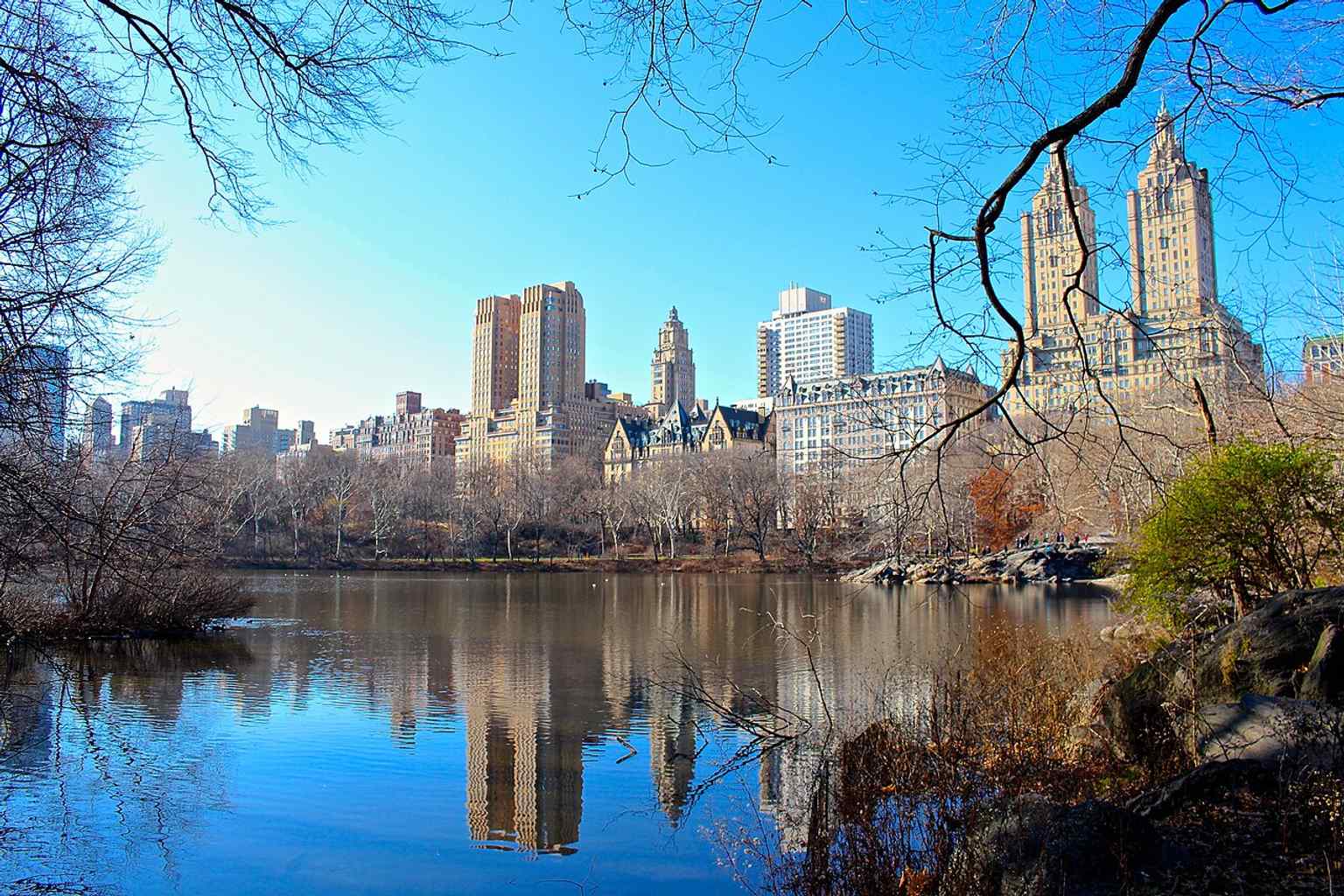
A reflective view of Central Park West that shows how the avenue’s grand apartment blocks form a cohesive historic streetscape.Photo: Mikin24seven, Wikimedia Commons, CC BY-SA 4.0. Cropped & resized. 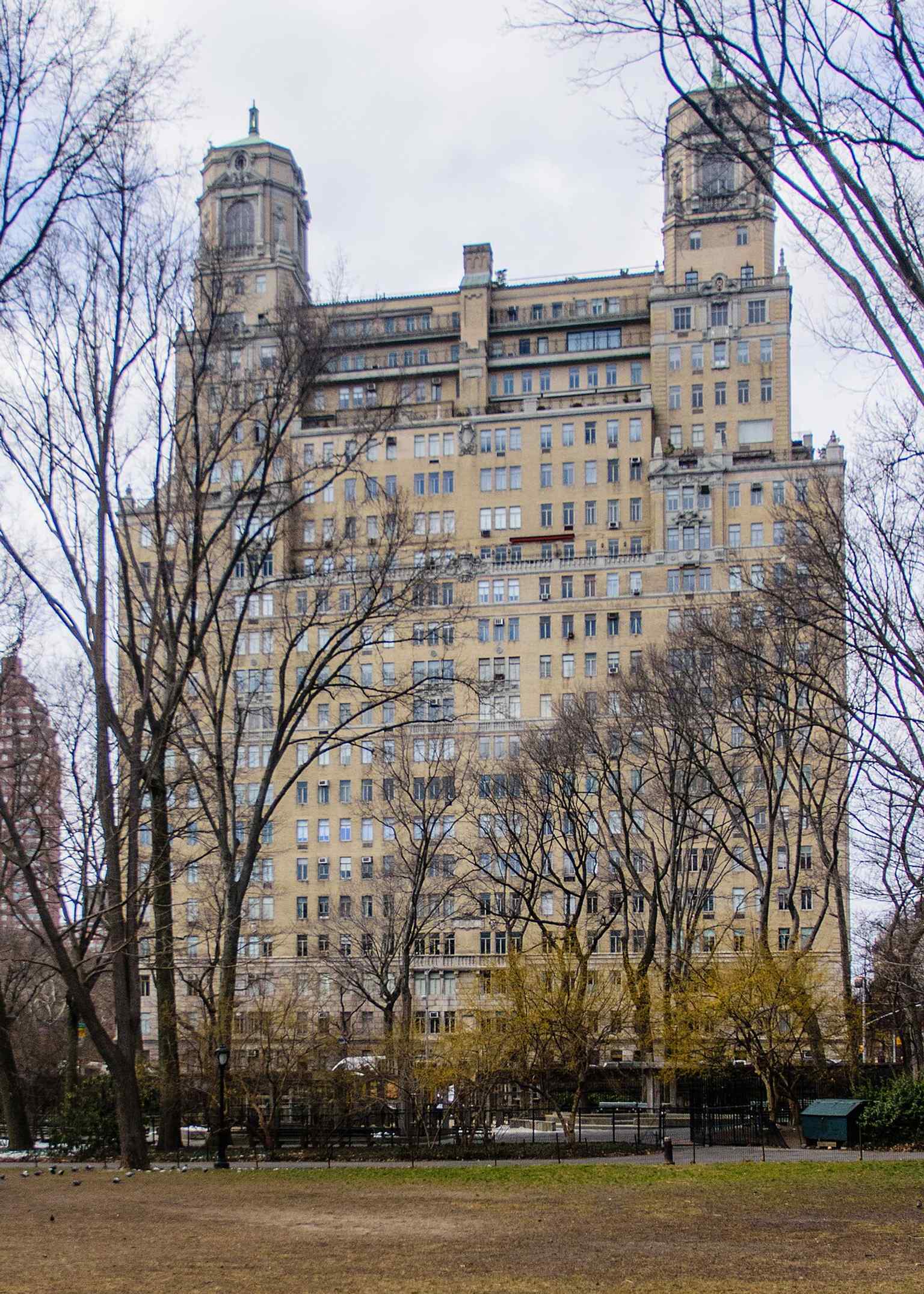
The Beresford is one of Central Park West’s classic luxury apartment towers, part of the district’s early-20th-century residential boom.Photo: Micki L. Katz, Wikimedia Commons, CC BY-SA 4.0. Cropped & resized. 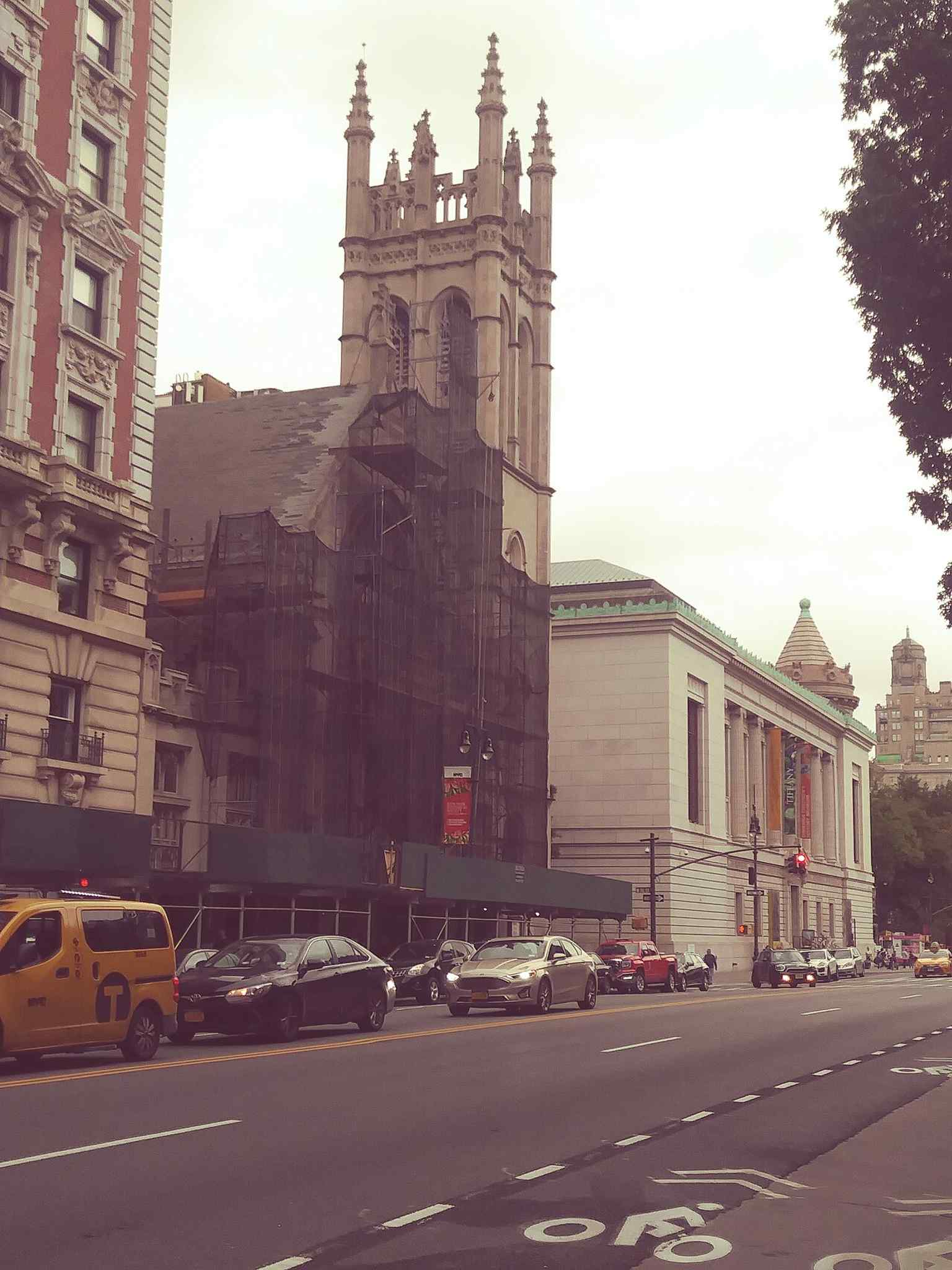
A strong streetscape of Central Park West landmarks: the Fourth Universalist Society, New-York Historical Society, and the American Museum of Natural History anchor the district’s civic edge.Photo: Jay Dobkin, Wikimedia Commons, CC BY-SA 4.0. Cropped & resized. 
Looking west across the Reservoir, the twin towers of the Eldorado capture the district’s dramatic skyline and Art Deco luxury.Photo: Jay Dobkin, Wikimedia Commons, CC BY-SA 4.0. Cropped & resized. 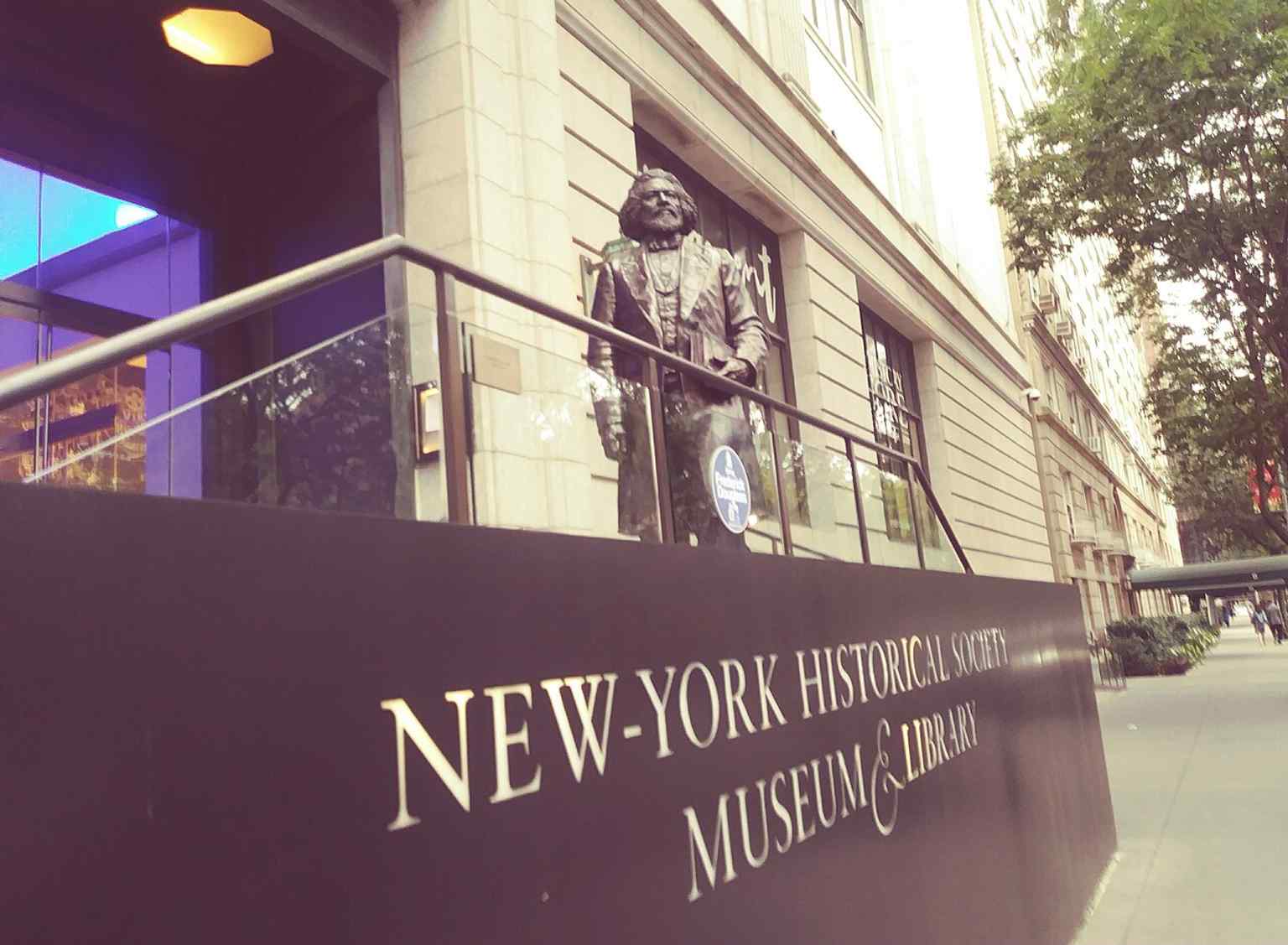
Frederick Douglass stands at the New-York Historical Society, one of the district’s key institutional landmarks beside Central Park West.Photo: Jay Dobkin, Wikimedia Commons, CC BY-SA 4.0. Cropped & resized. 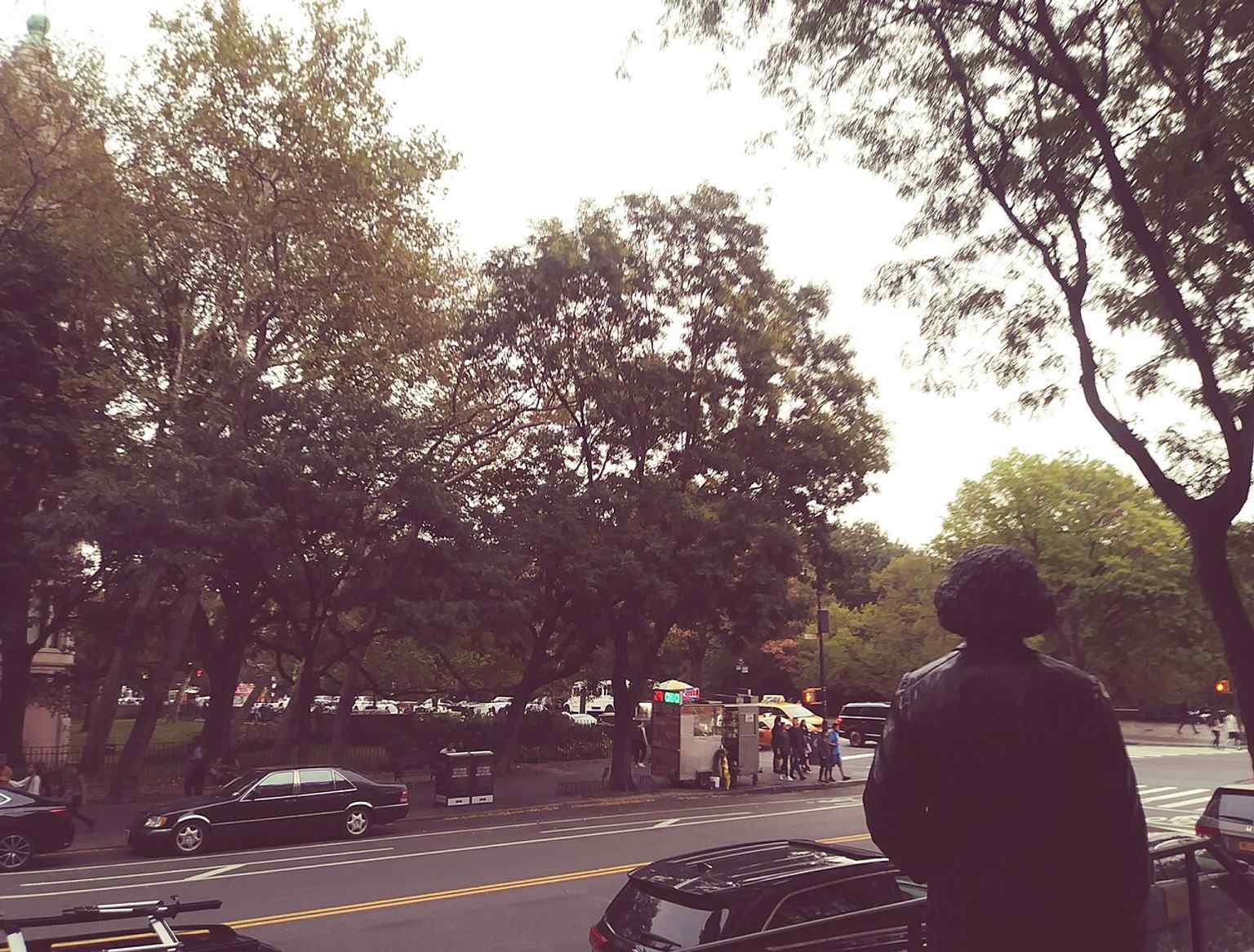
Another view of Frederick Douglass at the New-York Historical Society, linking the historic district to the avenue’s major cultural institutions.Photo: Jay Dobkin, Wikimedia Commons, CC BY-SA 4.0. Cropped & resized. 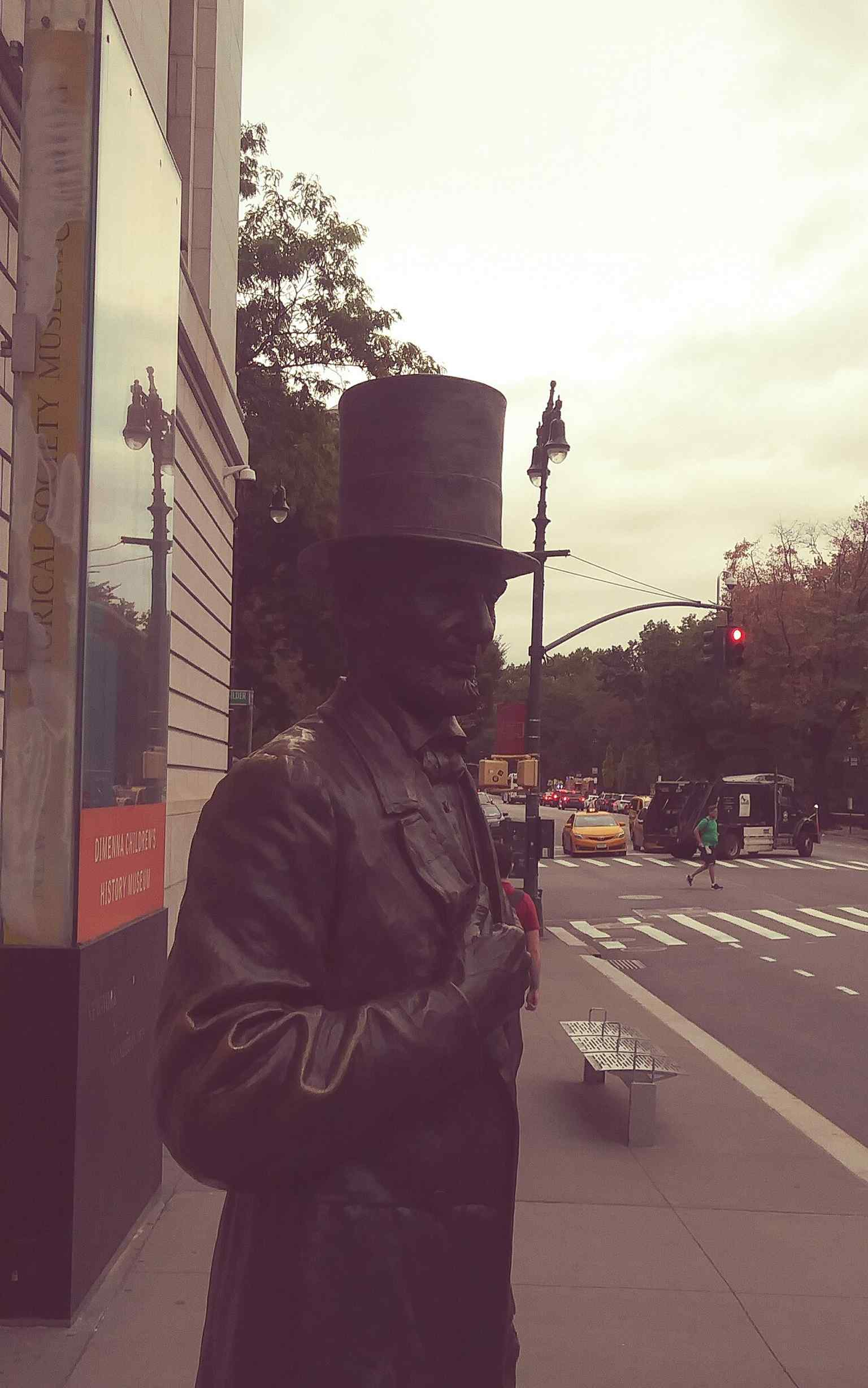
Abraham Lincoln’s statue marks the New-York Historical Society entrance, highlighting the district’s concentration of major civic landmarks.Photo: Jay Dobkin, Wikimedia Commons, CC BY-SA 4.0. Cropped & resized. 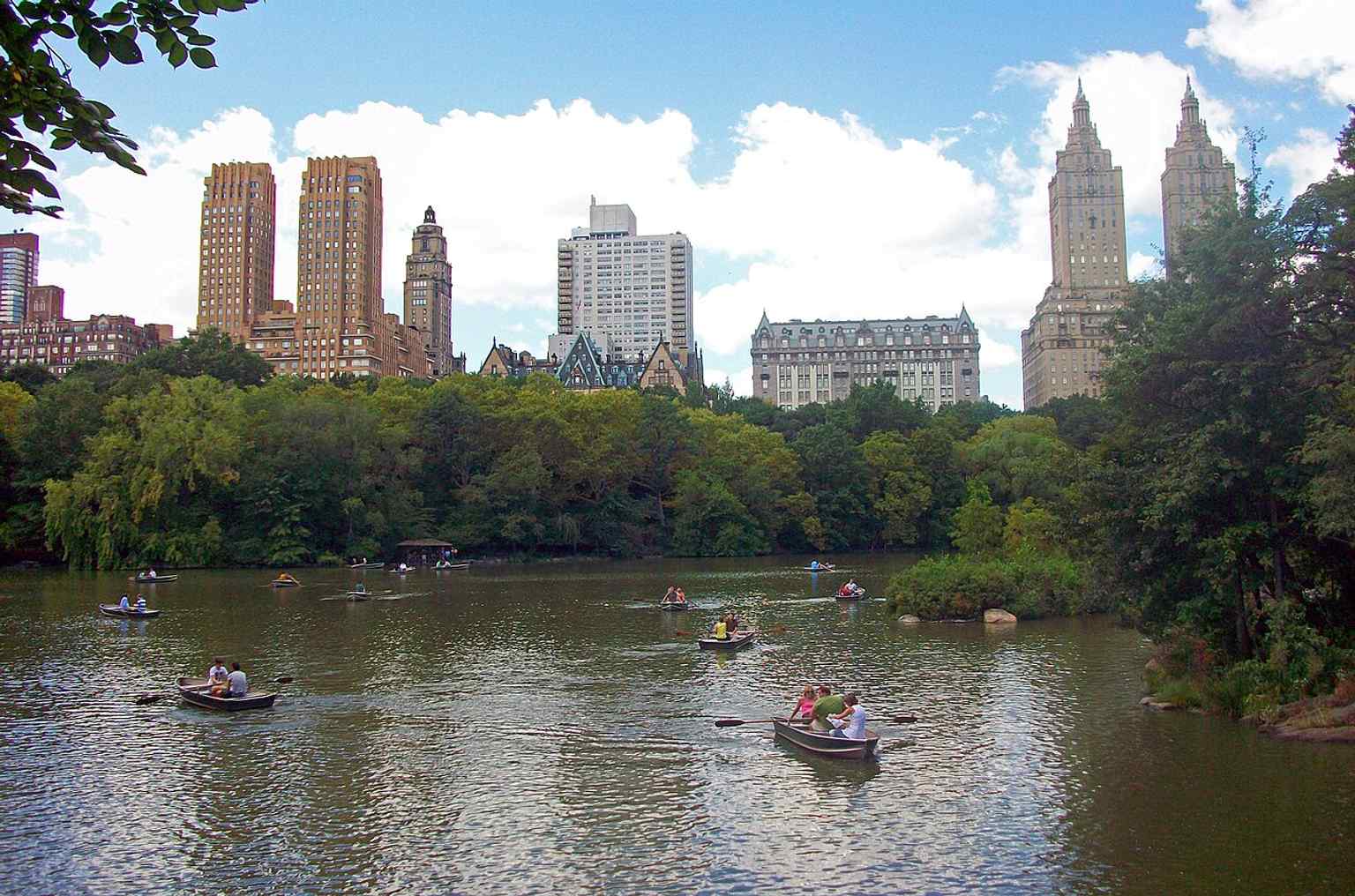
From Central Park, the Dakota, Langham, Majestic, and San Remo reveal the district’s signature mix of grand prewar apartment buildings.Photo: Daniel Case, Wikimedia Commons, CC BY-SA 3.0. Cropped & resized. 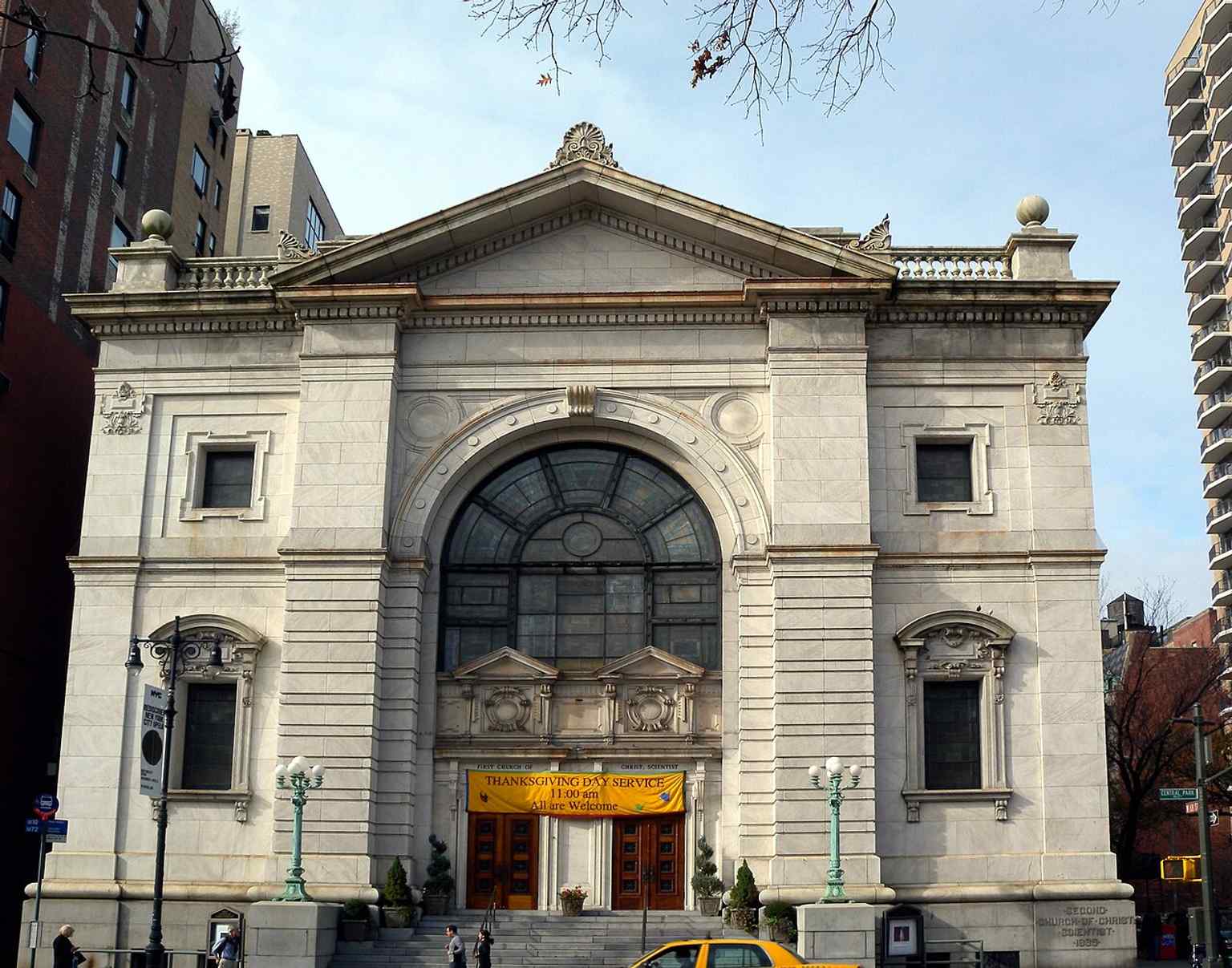
The Church of Christ, Scientist adds one of the district’s churches to the mix of residential towers and civic architecture along Central Park West.Photo: Jim.henderson, Wikimedia Commons, CC0. Cropped & resized. 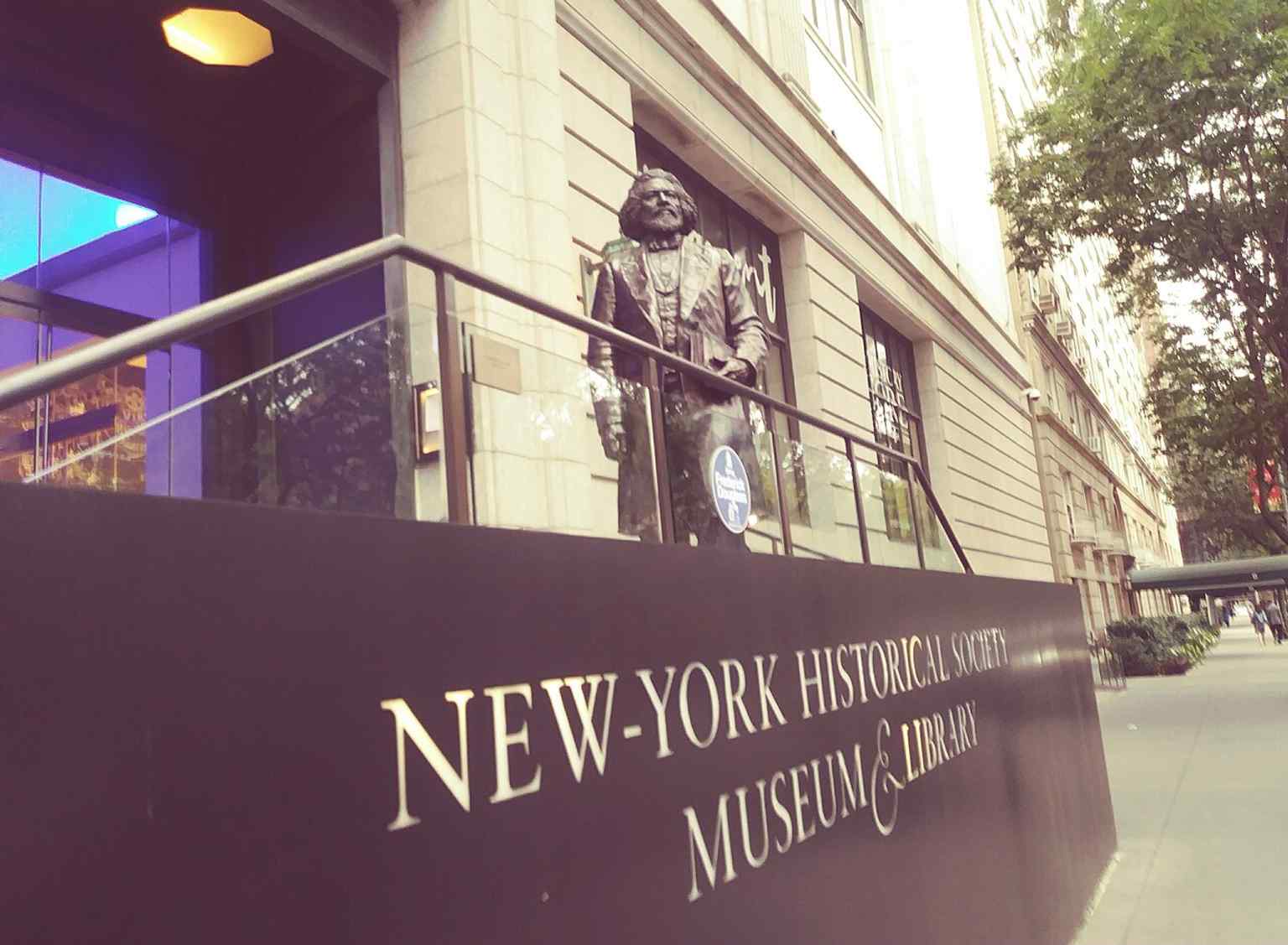
Frederick Douglass stands at the New-York Historical Society, one of the district’s key institutional landmarks beside Central Park West.Photo: Jay Dobkin, Wikimedia Commons, CC BY-SA 4.0. Cropped & resized. 
Looking west across the Reservoir, the twin towers of the Eldorado capture the district’s dramatic skyline and Art Deco luxury.Photo: Jay Dobkin, Wikimedia Commons, CC BY-SA 4.0. Cropped & resized. Look for the low gray stone wall, broad openings into curving paths, and the deep ribbon of trees that makes Central Park read like a carefully planted wilderness inside the…Read moreShow less
Open dedicated page →Look for the low gray stone wall, broad openings into curving paths, and the deep ribbon of trees that makes Central Park read like a carefully planted wilderness inside the street grid.
Central Park likes to pretend it simply happened... as if Manhattan got tired and accidentally grew a forest. It did not. This is one of the most controlled, ambitious acts of public design in American history.
The Greensward vision for Central Park took shape in eighteen fifty-eight, when Frederick Law Olmsted and Calvert Vaux won the park design competition. Their idea was radical: build one of the country's boldest landscaped public parks as a democratic common ground, open to everyone, but shape it so carefully that the city’s noise, traffic, and class tensions would seem to dissolve inside it. They even sank the cross-town roads below the landscape, so movement could continue without ruining the illusion of escape. If you want to see how deliberate that plan was, take a quick look at the old map in the app.
But the dream came with force behind it. Before this became parkland, the city used eminent domain, meaning the government’s power to seize private land for public use, and cleared existing communities here, including Seneca Village, a majority-Black settlement. About one thousand six hundred residents were pushed out. So even at birth, this landscape was both generous and ruthless... a public ideal built through private loss.
And then came the engineering. Workers blasted rock, drained swampy ground, moved around five million cubic feet of soil and stone, and imported fertile topsoil from Long Island and New Jersey because the original earth would not support the plan. More than twenty thousand laborers helped shape these eight hundred forty-three acres. Even the “natural” lakes and ponds were largely artificial. Nature here is real, yes, but it arrives with blueprints.
Take a second and really study the edges in front of you: the framed openings, the winding paths, the way views are revealed and hidden. Once you notice that choreography, the park stops looking accidental and starts looking brilliantly staged.
That staging shaped the whole corridor around it. In the nineteenth century, property values near the park shot upward, in some places by as much as seven hundred percent. The rich lined up along Fifth Avenue and Central Park West because this green void gave their buildings prestige, light, and a front-row seat to civic life. Inside the park, movement was managed too: separate drives, bridle paths, walks, mounted keepers, even rules against picking flowers or giving speeches. Democratic, yes... but democracy with house rules.
Over time the park declined, then got rescued. Robert Moses pushed a harsh cleanup in the nineteen thirties. The Central Park Conservancy, founded in nineteen eighty and managing the park since nineteen ninety-eight with the city, helped restore the place from the nineteen eighties onward. That stewardship matters when roughly forty-two million visits happen here each year.
If you want a quick visual of how this designed landscape matured, check the before-and-after image of Bethesda Terrace in the app.
And now we leave the giant civic experiment for a single man cast into it: Alexander Hamilton, where family memory and public history meet in bronze. The park is generally open from six in the morning until one in the morning.
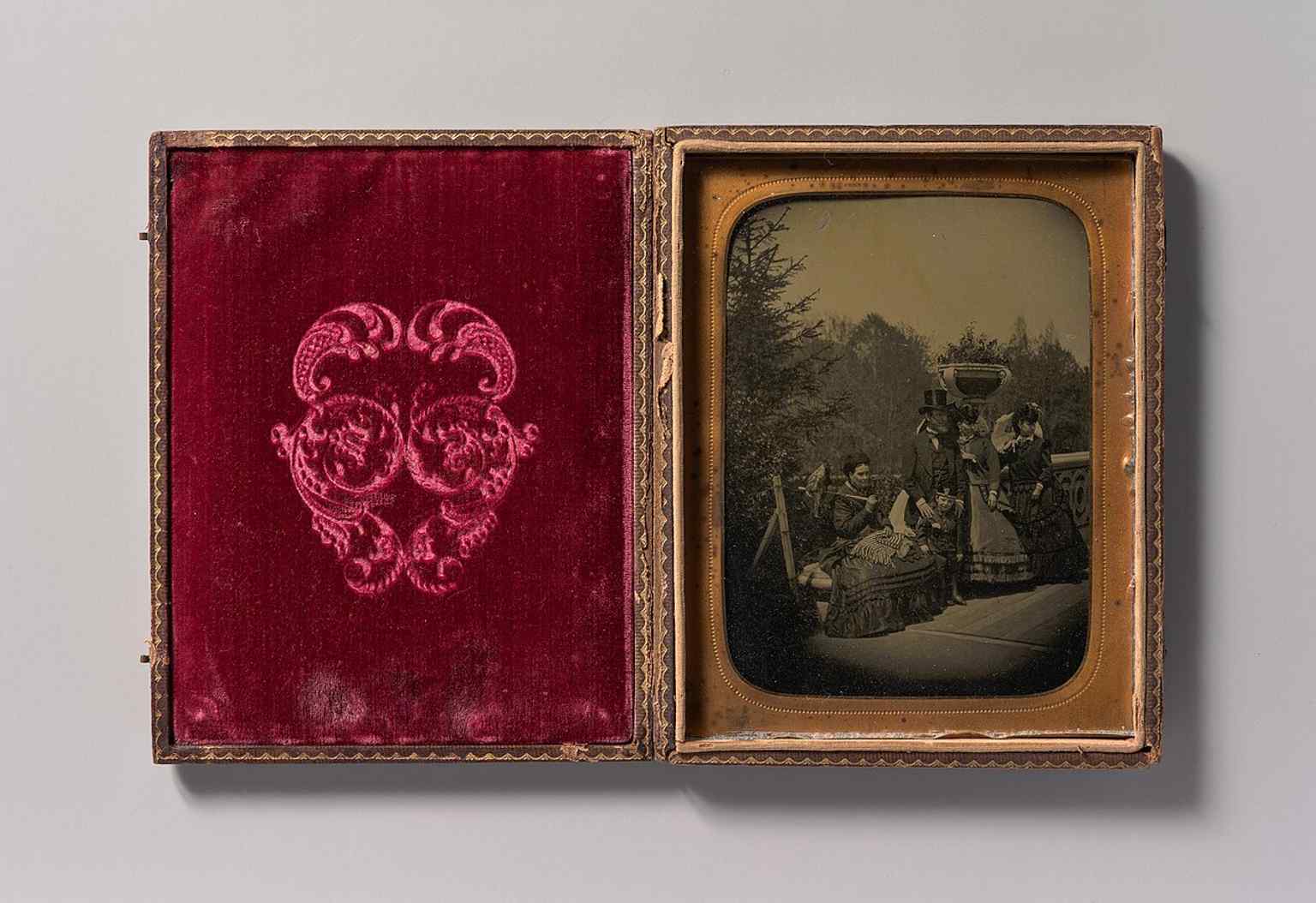
A 1865 tintype view of Bow Bridge with visitors, capturing Central Park as a popular promenade in its early decades.Photo: Unknown authorUnknown author, Wikimedia Commons, CC0. Cropped & resized. 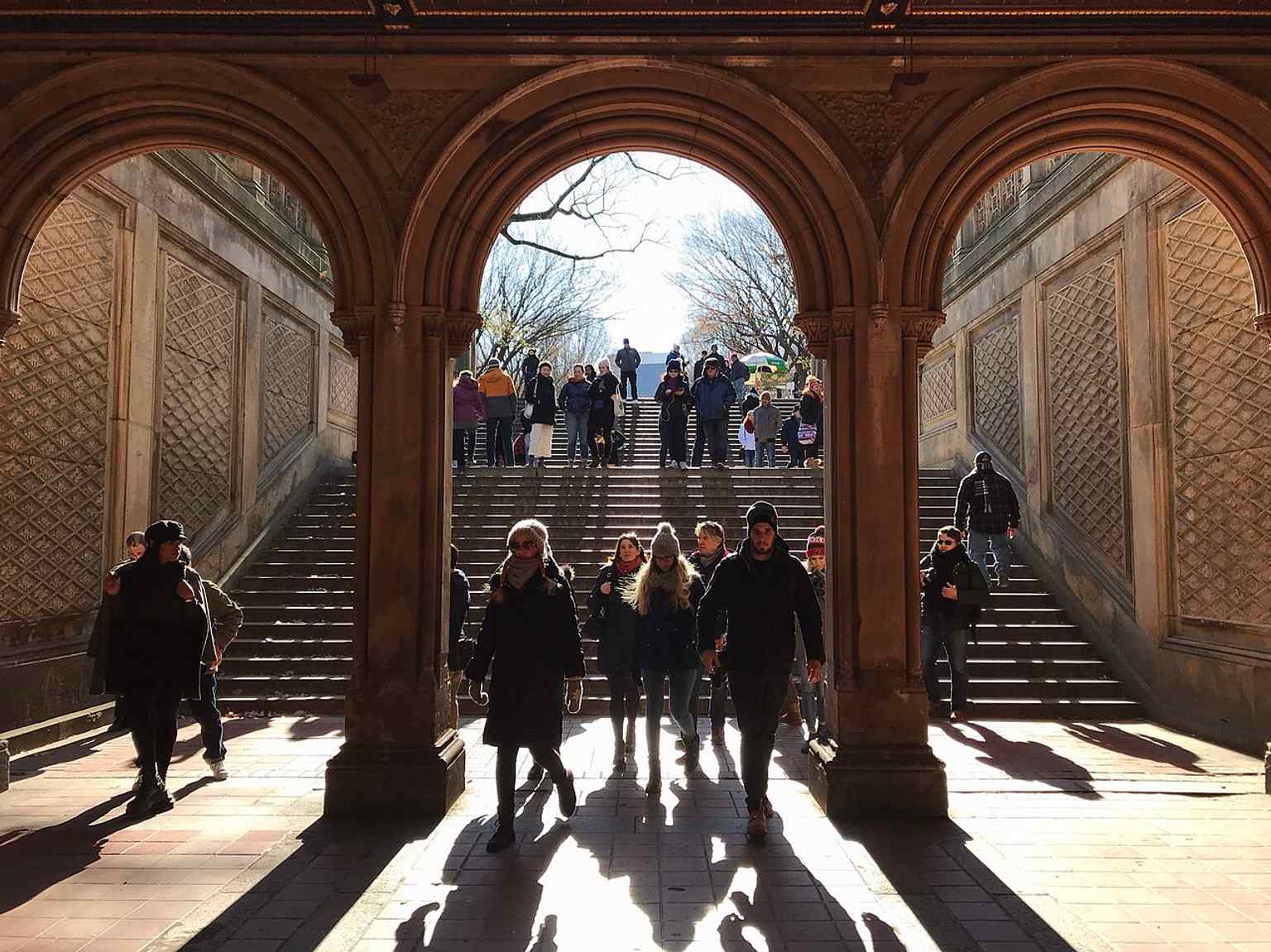
Bethesda Terrace in 2019, the iconic formal centerpiece linked to the Mall and the park’s original Victorian design.Photo: Zachary V. Sunderman, Wikimedia Commons, CC BY-SA 4.0. Cropped & resized. 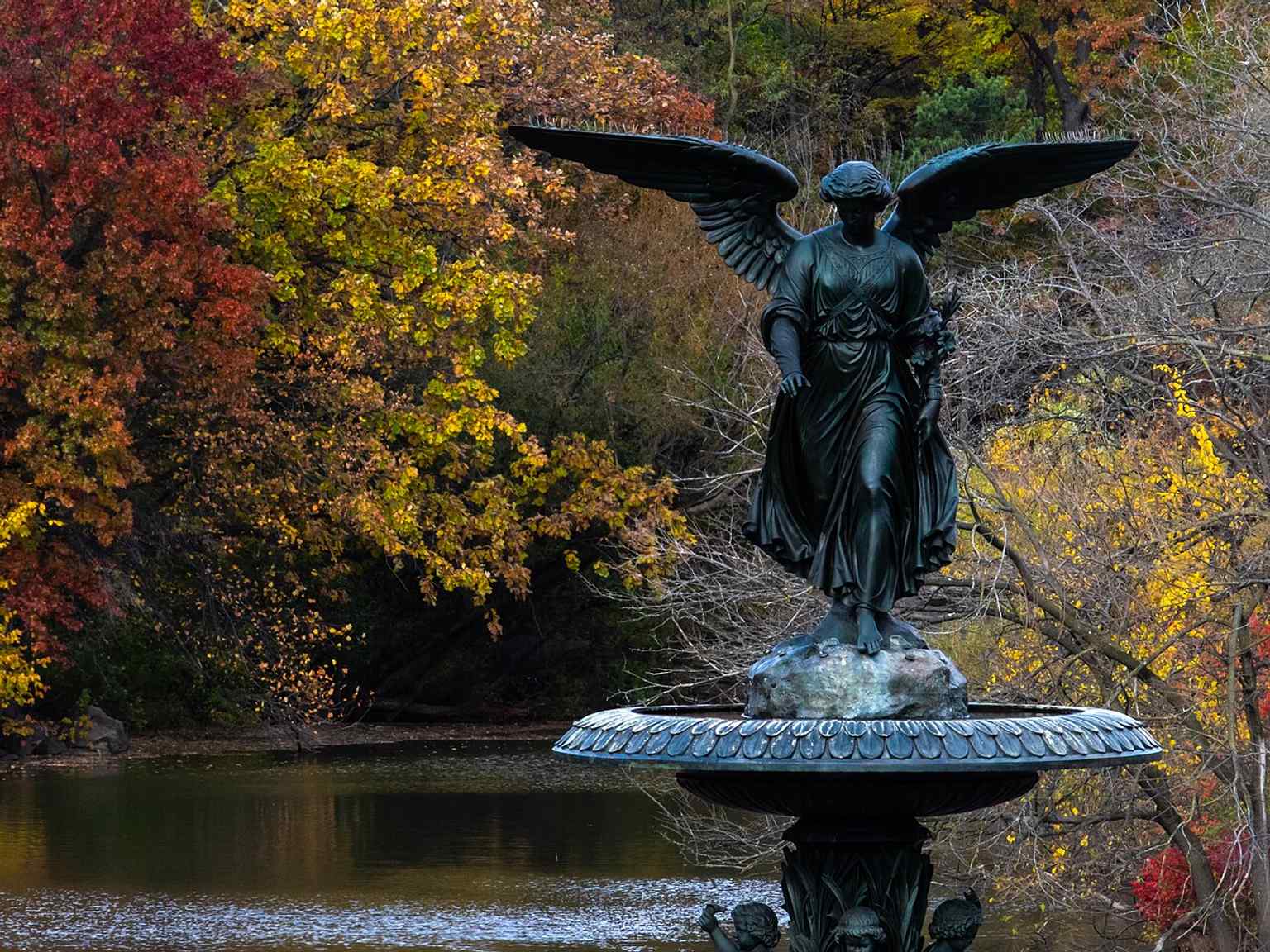
Bethesda Fountain and the Angel of the Waters, the park’s signature sculpture and the only artwork in the original plan.Photo: Julian Lupyan, Wikimedia Commons, CC0. Cropped & resized.
Show 11 more stopsShow fewer stopsexpand_moreexpand_less
On your left, look for a tall pale gray granite figure in colonial dress, standing beside a stone column with a rolled document in hand, all set on a solid pedestal ringed with…Read moreShow less
Open dedicated page →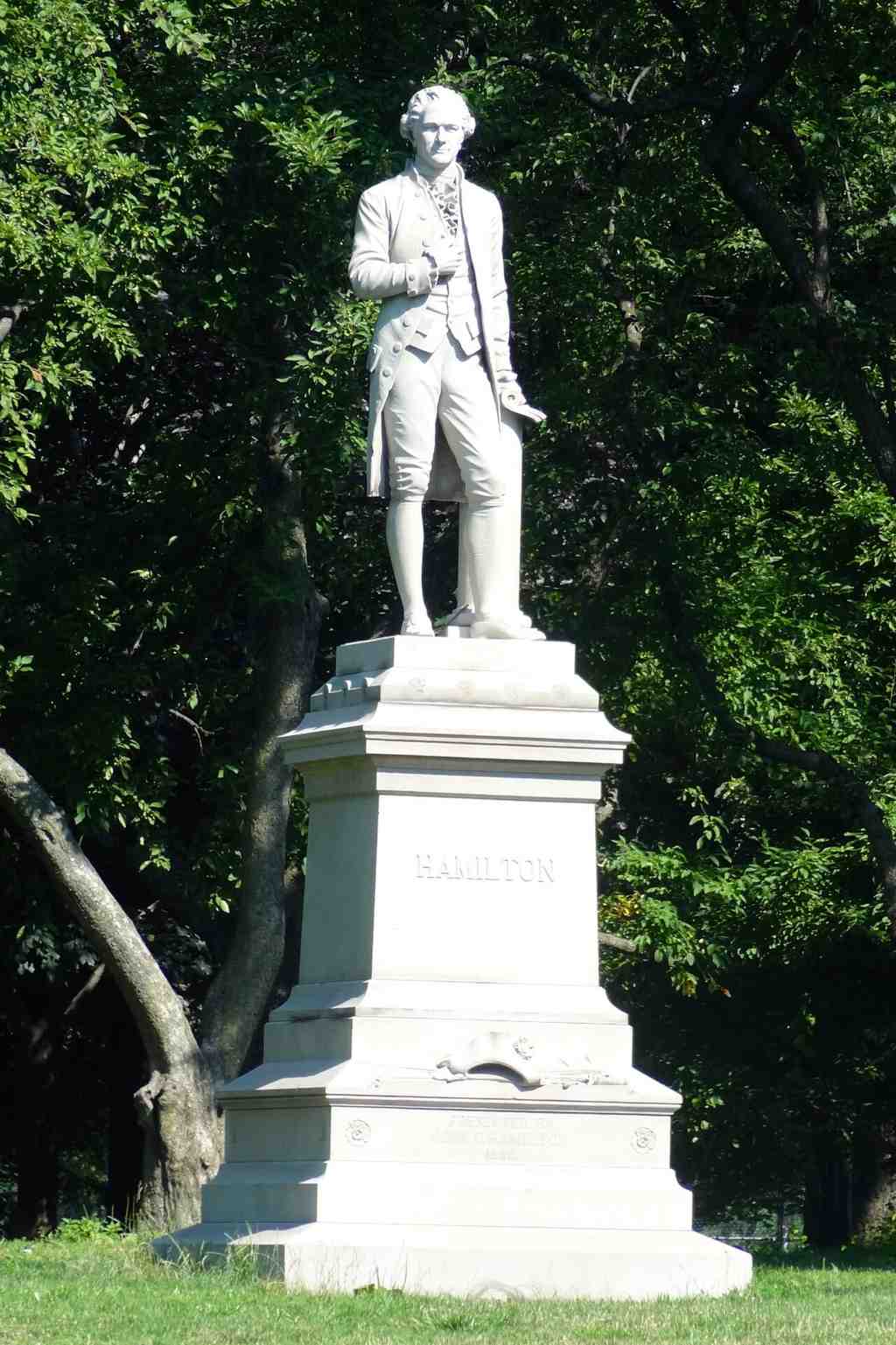
Statue of Alexander HamiltonPhoto: Zeete, Wikimedia Commons, Public domain. Cropped & resized. On your left, look for a tall pale gray granite figure in colonial dress, standing beside a stone column with a rolled document in hand, all set on a solid pedestal ringed with thirteen stars.
At first glance, this seems like a straightforward tribute to Alexander Hamilton... powdered wig, ruffled collar, buckle shoes, the full founding-father package. New York does enjoy dressing its legends properly. But the real author of this monument was not Hamilton. It was his son, John Church Hamilton.
John Church Hamilton was a lawyer, a historian, and, in practical terms, his father’s posthumous public relations department. He spent years editing and publishing Alexander Hamilton’s papers and writing a seven-volume biography. Then, in eighteen eighty, he commissioned this statue from sculptor Carl Conrads and gave it to the city. That matters, because this is not just remembrance. It is reputation repair through stone, scholarship, and placement. First you edit the papers, then you write the biography, then you plant the monument in Central Park so the city keeps repeating the story you want remembered.
And here’s the detail locals love because it changes the whole mood of the thing: John Church Hamilton was the last surviving child who had stood at his father’s deathbed after the Burr duel in eighteen oh four. Once you know that, this statue stops feeling like generic patriotism. It starts to feel like delayed family testimony... a son, late in life, still trying to steady the record.
If you look at the image on your screen, the pose makes that effort legible. Hamilton’s right hand rests against his chest; his left holds that rolled document against a column, as if he is forever half statesman, half argument. Near the base, most people miss the sword, scabbard, and military hat, little reminders that his son did not want one version of Hamilton to win over the others. Soldier, financier, statesman... all of them stay in the frame.
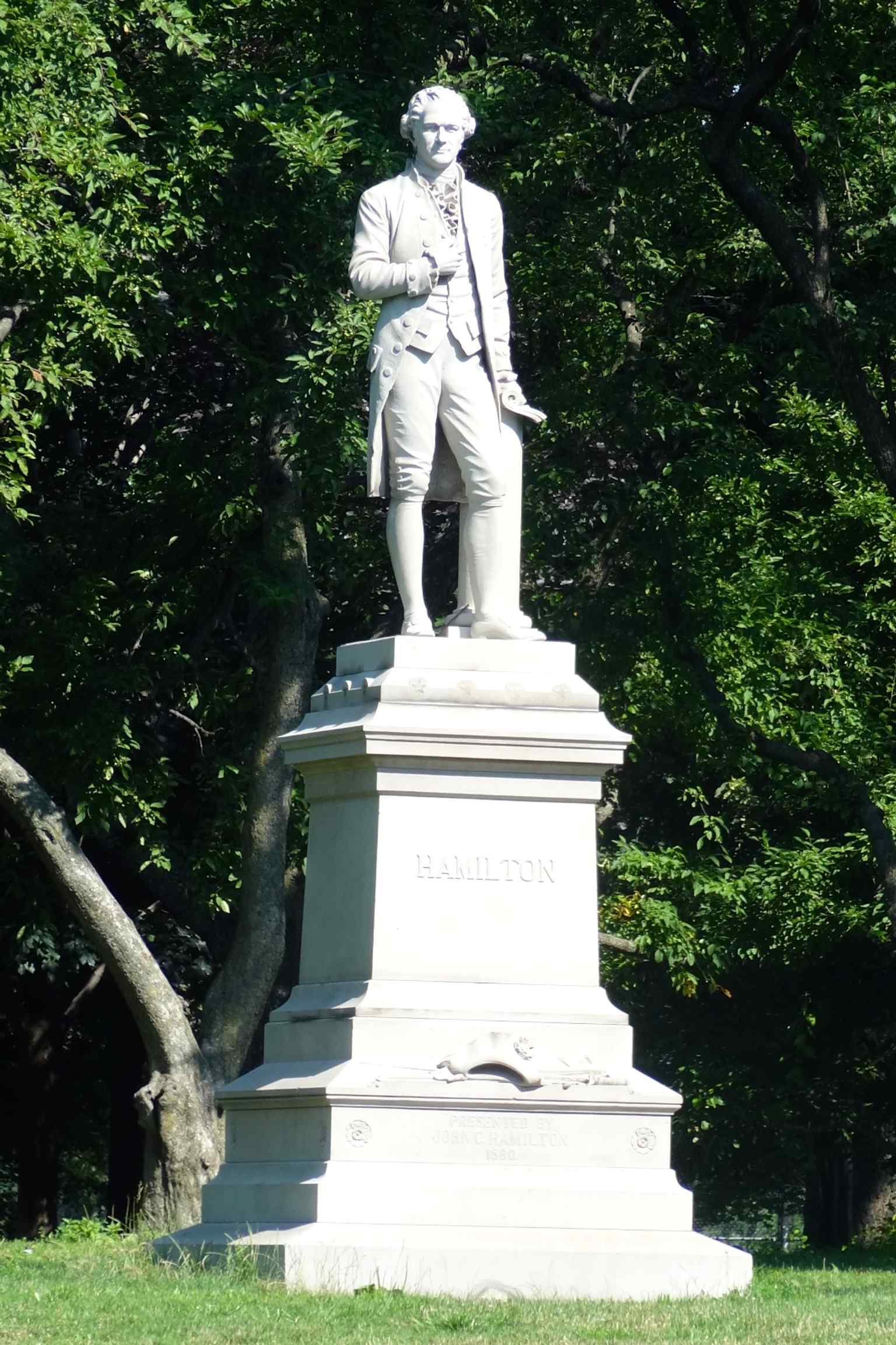
A closer angle on Hamilton’s colonial dress and the pedestal, echoing the monument’s commemorative design with the rolled document and formal stance.Photo: Zeete, Wikimedia Commons, Public domain. Cropped & resized. Carl Conrads carved the monument from Westerly granite, chosen for beauty and brute durability. He based Hamilton’s head on an earlier bust by Giuseppe Ceracchi, a sculptor whose own life ended under Napoleon’s guillotine. Even memory has a backstory.
The unveiling drew hundreds, but the ceremony itself had to move into the Metropolitan Museum of Art, where speakers praised Hamilton as a model for the city’s ambitions. So yes, this statue honors a founder. It also shows how families, institutions, and cities collaborate to polish a legacy until it looks inevitable.
Take one more glance, maybe at the full view in the app. Monuments look permanent, but they are often deeply personal interventions. Keep that in mind as you head toward the Sackler Wing, where names on walls become their own kind of contest.
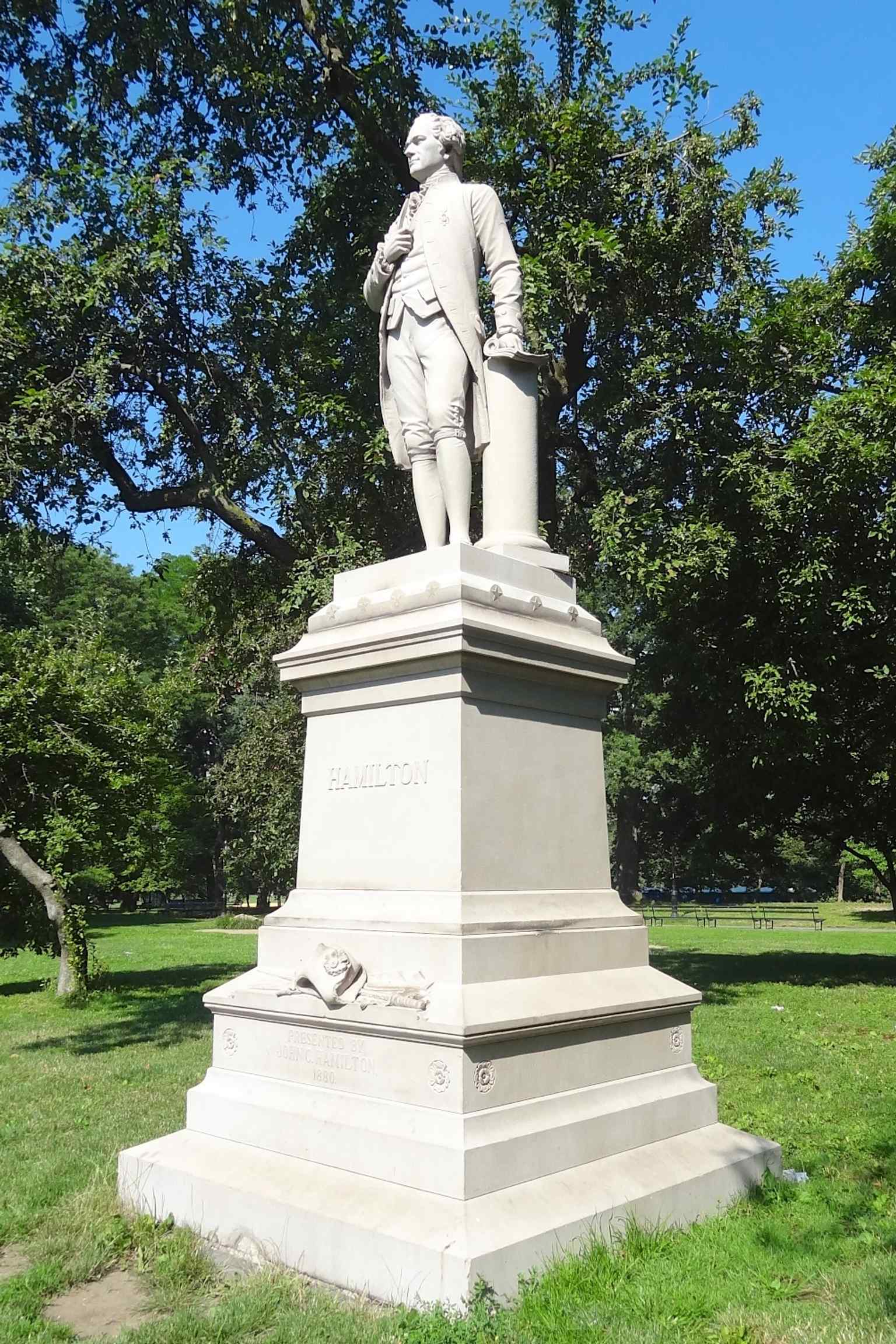
A clear view of Carl Conrads’s granite statue of Alexander Hamilton in Central Park, the memorial commissioned by Hamilton’s son and dedicated in 1880.Photo: Zeete, Wikimedia Commons, Public domain. Cropped & resized. 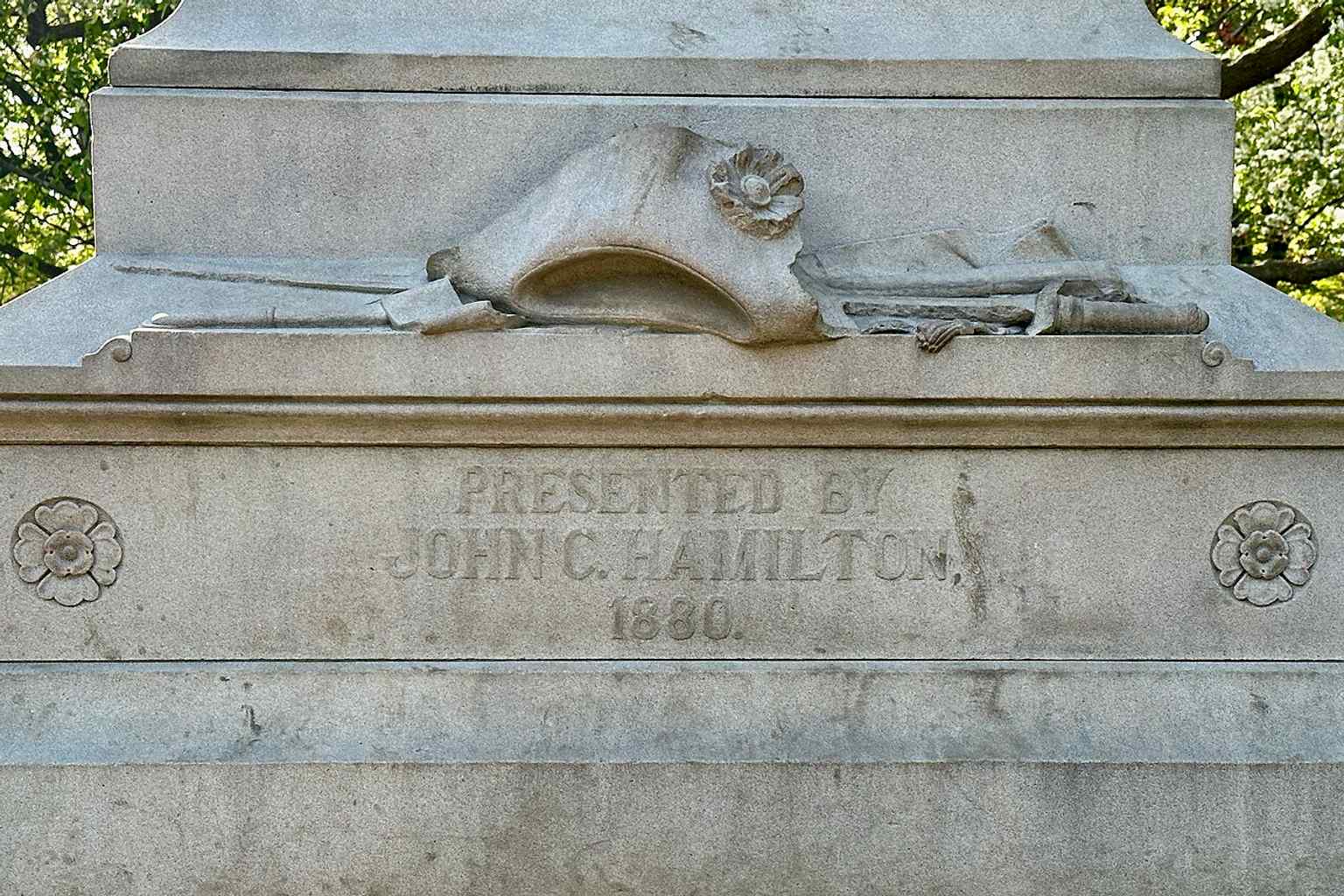
A wider modern photograph of the Hamilton statue in Central Park, showing the full outdoor monument that honors the founding father in granite.Photo: Zeete, Wikimedia Commons, Public domain. Cropped & resized. On your right, look for the pale stone addition with clean rectangular lines and a broad glass wall tucked against the Met’s older, heavier masonry. From out here, the wing looks…Read moreShow less
Open dedicated page →On your right, look for the pale stone addition with clean rectangular lines and a broad glass wall tucked against the Met’s older, heavier masonry.
From out here, the wing looks calm, even diplomatic... which is exactly the point. Kevin Roche designed it in nineteen seventy-eight as a restrained container for something far older and far more fragile inside: the Temple of Dendur, an Egyptian monument that Egypt gifted to the U-S in nineteen sixty-five. The Met received it in nineteen sixty-seven, but its home did not yet exist. So the temple spent years in limbo, its stone blocks stored in the museum’s south parking lot under huge inflated canvas-and-vinyl shelters until nineteen seventy-four. Not quite the glamorous afterlife people imagine for an ancient temple.
Thomas Hoving, the Met’s ambitious director, wanted a sweeping renovation of the museum, and to make this particular piece happen he estimated the project would need several million dollars. Arthur Sackler stepped forward in nineteen sixty-seven and offered the money. In the negotiations that followed, the museum attached the Sackler name to multiple galleries and to this wing, with Arthur, Mortimer, and Raymond Sackler each identified on the signage as medical doctors. The agreement said the money would come personally from the brothers... but it would be paid over twenty years, and New York City still ended up covering one point four million dollars of the cost.
That tells you something useful about cultural grandeur: the noble public face often depends on a messy braid of private ambition, civic money, and institutional need.
If you check the image on your screen, you can see the interior Roche created for the temple: a reflecting pool, a sloping back wall, and a stippled glass roof and north wall that frame the monument without shouting over it. It is elegant architecture behaving itself, which is rarer than architects like to admit.
The opening in nineteen seventy-eight leaned into spectacle anyway. The Met paired the new wing with a blockbuster Tutankhamun exhibition, and Martha Graham created a dance piece called Frescoes for the debut, with costumes by Halston. Ancient Egypt, modern dance, donor prestige... everyone got a starring role.
And yet the name above the room never sat comfortably. Even in nineteen seventy-eight, critics were asking whether the museum had traded honors and access too freely; one writer uncovered a kind of Sackler enclave at the Met, where Sackler-owned art sat rent-free. Decades later, the question became much harsher. The Sackler family’s ties to Purdue Pharma and OxyContin turned donor recognition into a moral liability. In twenty eighteen, artist Nan Goldin and fellow activists from P-A-I-N threw fake pill bottles into the reflecting pool inside and staged a die-in before the temple. In twenty nineteen, the Met said it would reject further Sackler money. In twenty twenty-one, it removed the name from this wing and other spaces. No replacement name arrived. If you look at the older interior image in the app, you can catch the now-vanished label like a ghost in the gallery.
So this building does two jobs at once: it shelters rescued antiquity, and it exposes how museums decide whose names get wrapped around history. Next, we’ll head toward the New York Kouros, where another ancient object will show how cultures borrow, imitate, and quietly reinvent one another. If you plan to go inside later, the Met is open every day from ten AM to four thirty PM.
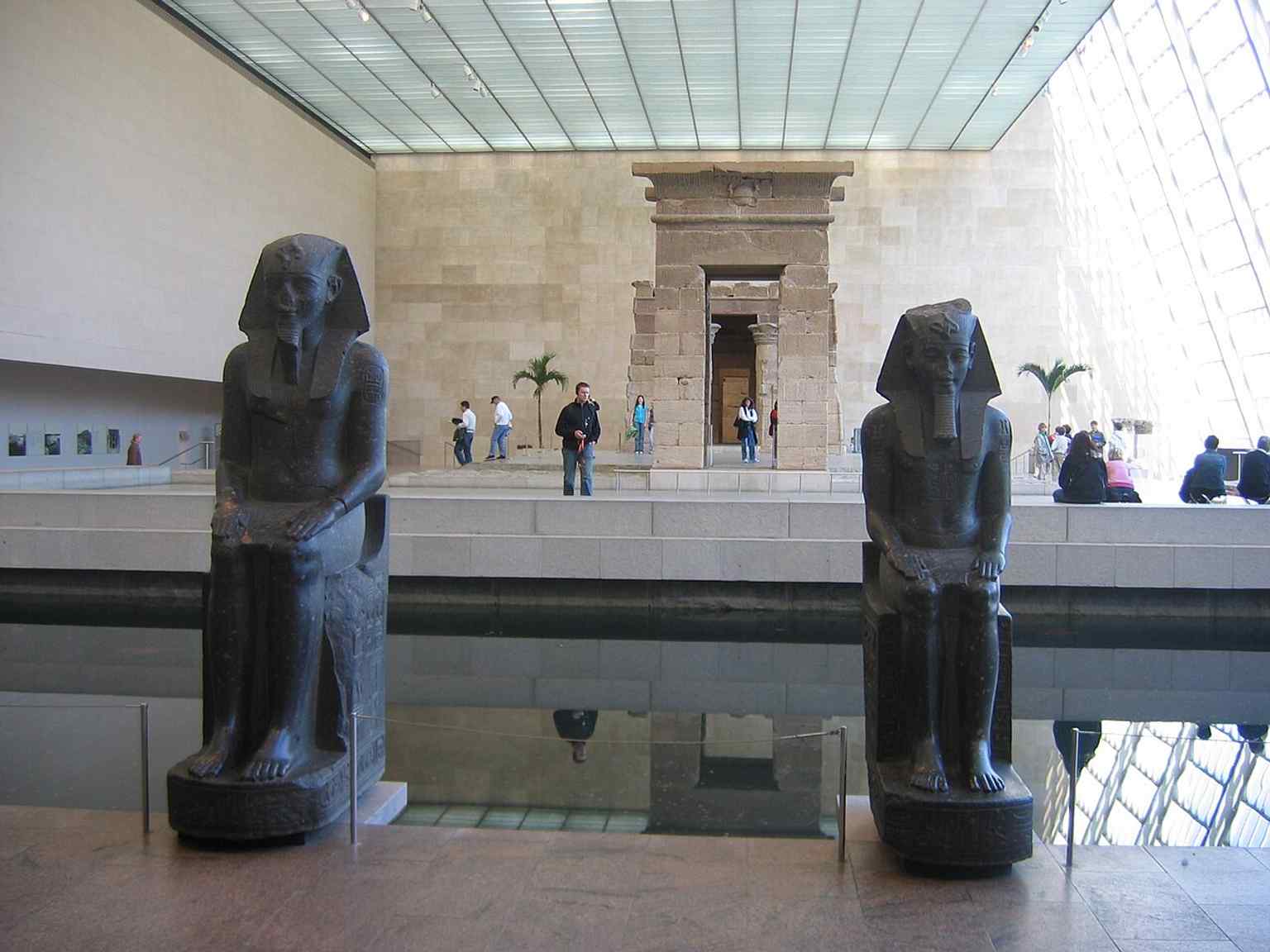
The Temple of Dendur in Gallery 131, the centerpiece the Sackler Wing was built to house after Egypt gifted it to the United States.Photo: Urban at French Wikipedia, Wikimedia Commons, CC BY-SA 3.0. Cropped & resized. 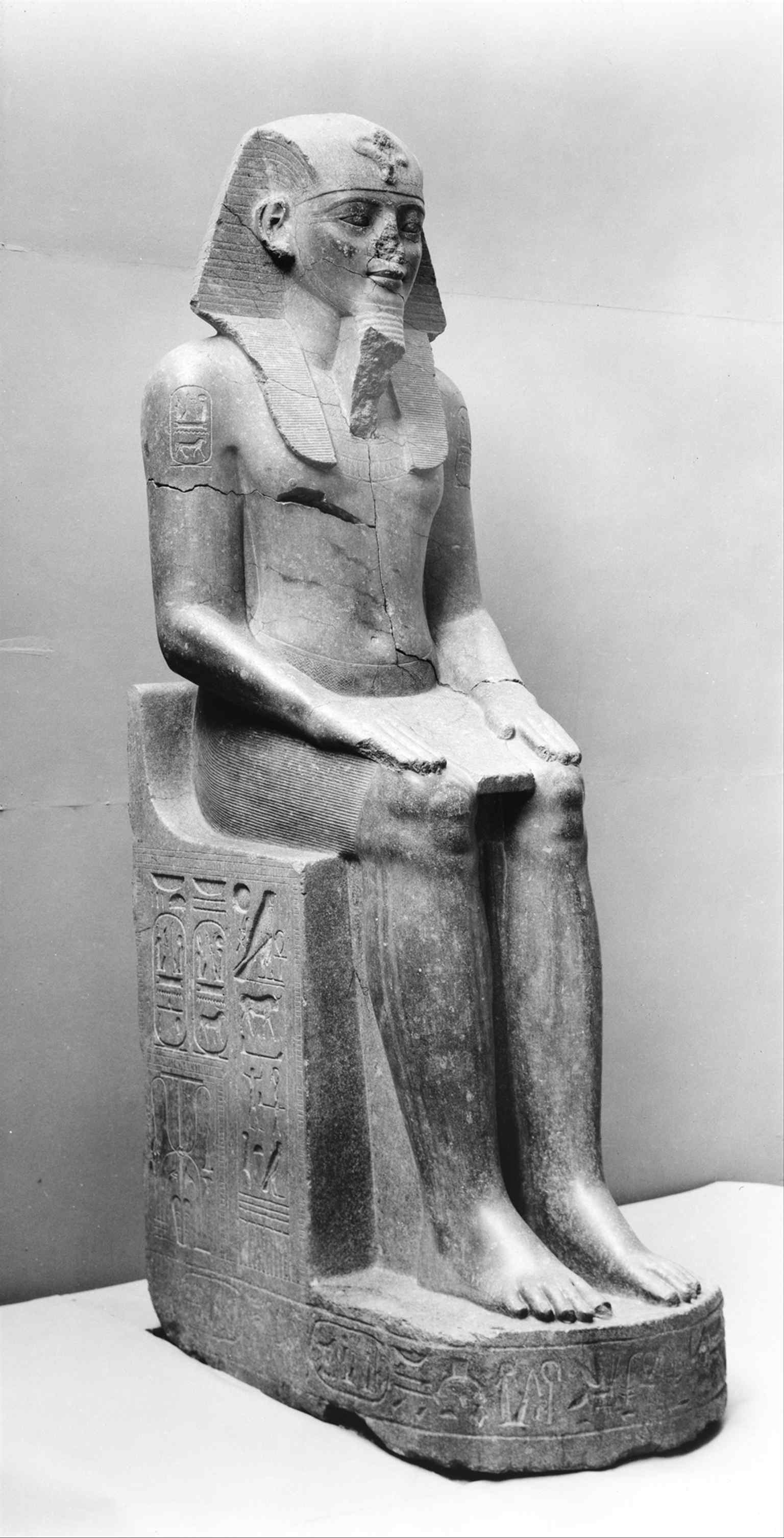
One of the colossal statues of Amenhotep III in the Egyptian galleries nearby, echoing the wing’s broader context of monumental ancient art.Photo: Unknown, Wikimedia Commons, CC0. Cropped & resized. 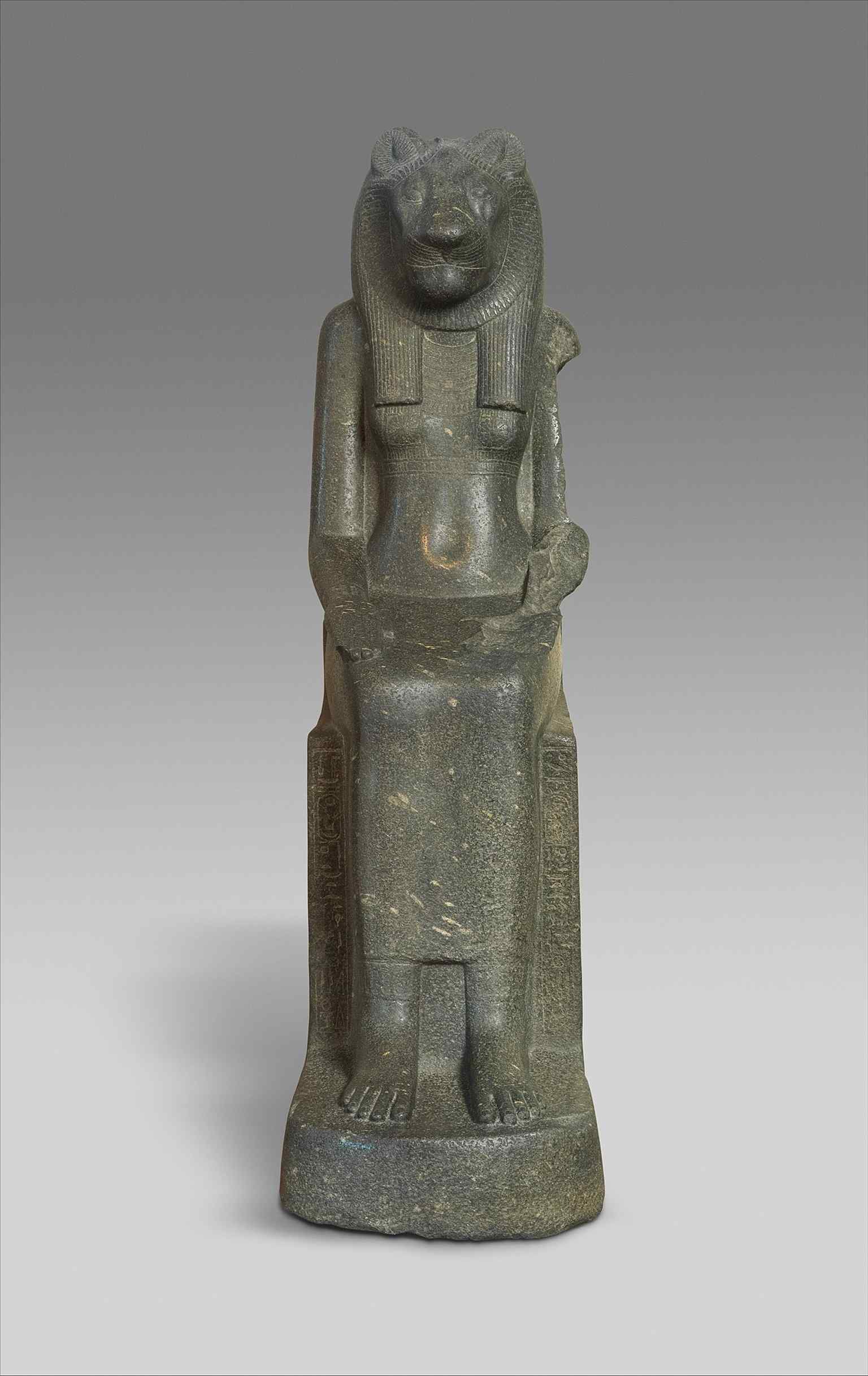
Statue of the goddess Sakhmet, another Egyptian masterpiece displayed in the wing’s gallery area alongside the Temple of Dendur.Photo: Unknown, Wikimedia Commons, CC0. Cropped & resized. 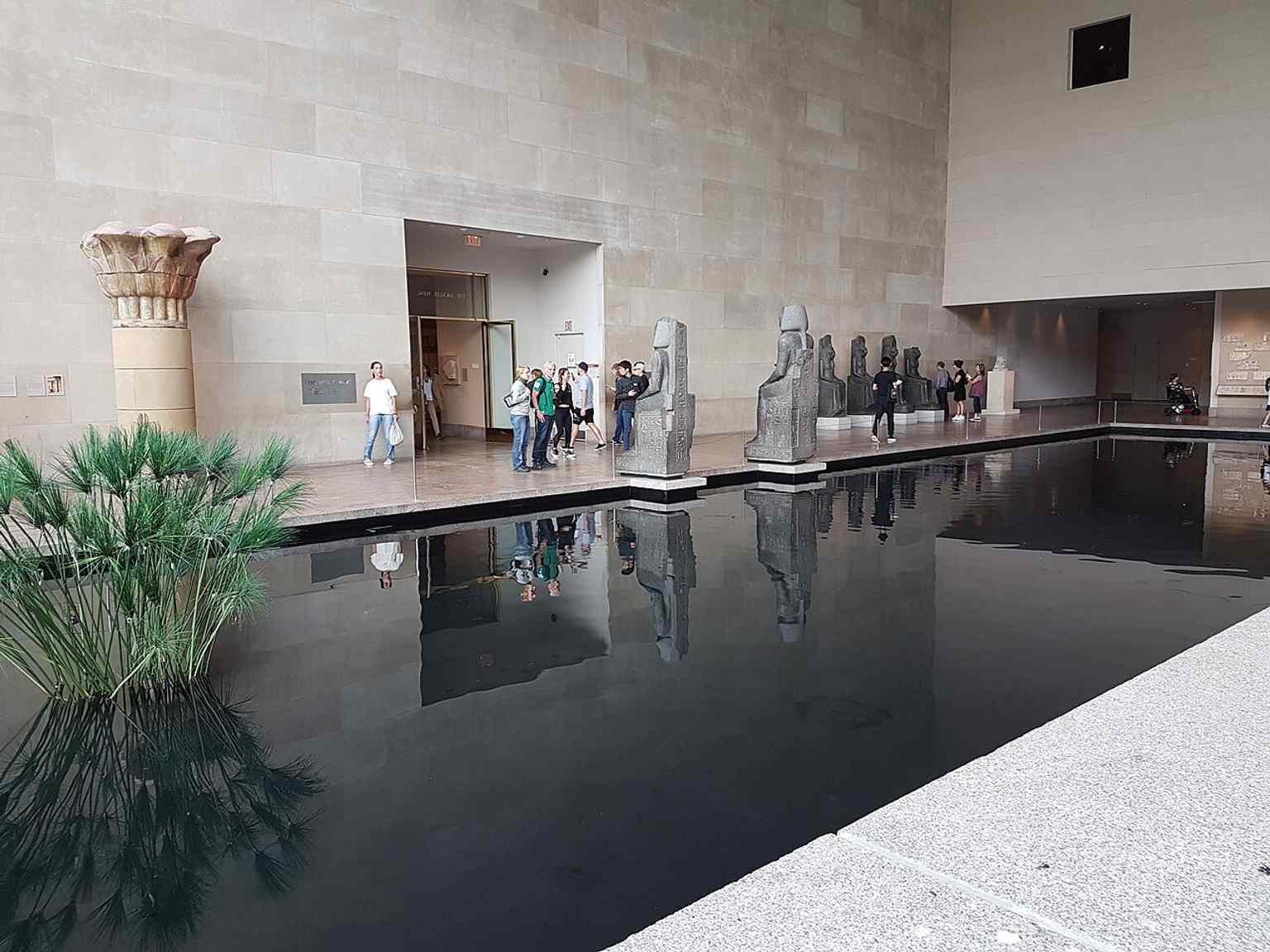
The calm reflecting pool and stone setting that turned the wing into a carefully staged interior landscape for the temple.Photo: Christelle marfaing, Wikimedia Commons, CC BY-SA 4.0. Cropped & resized. 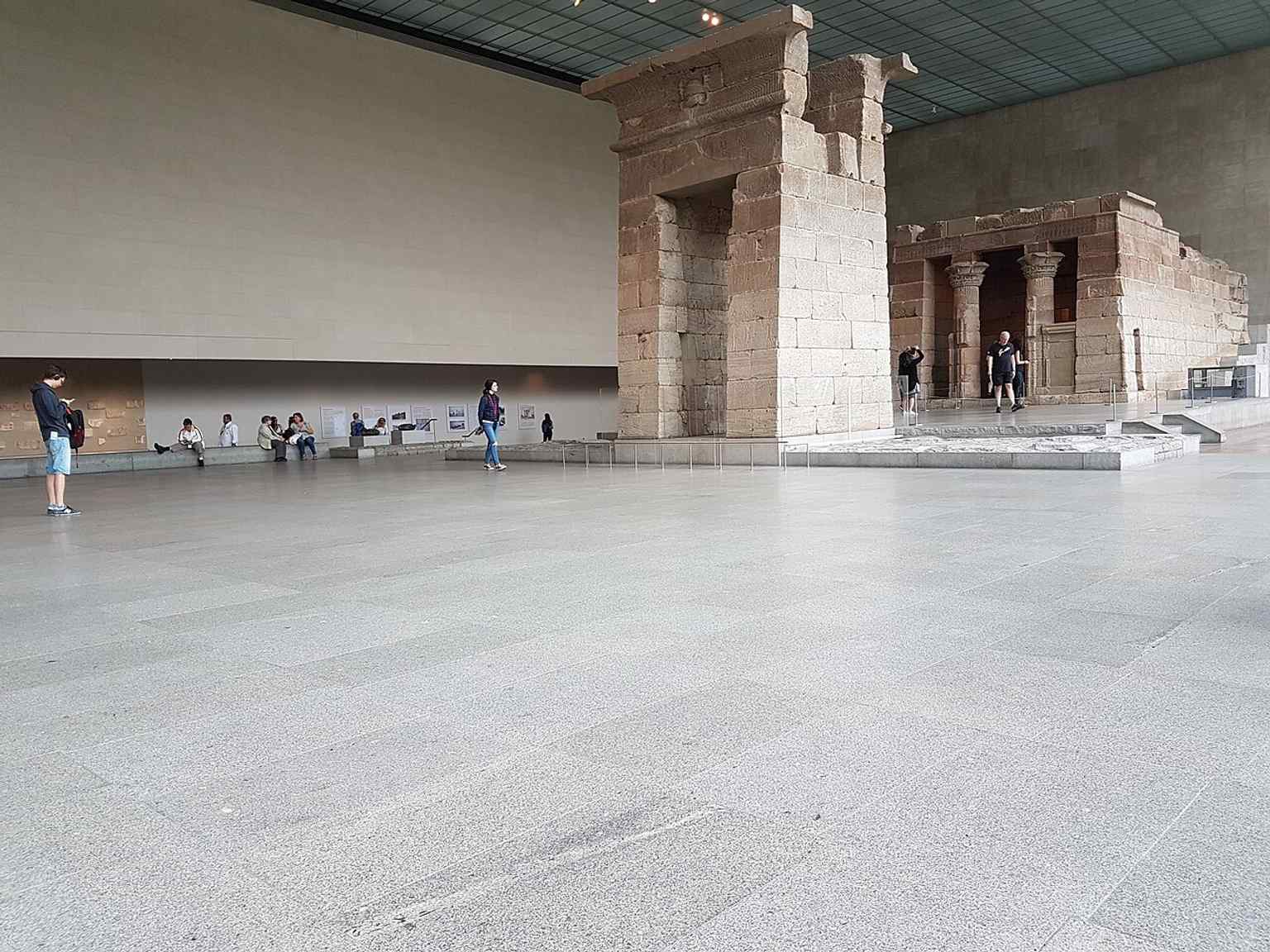
A doorway view into the Egyptian temple gallery, useful for showing the wing’s architecture and circulation around Gallery 131.Photo: Christelle marfaing, Wikimedia Commons, CC BY-SA 4.0. Cropped & resized. 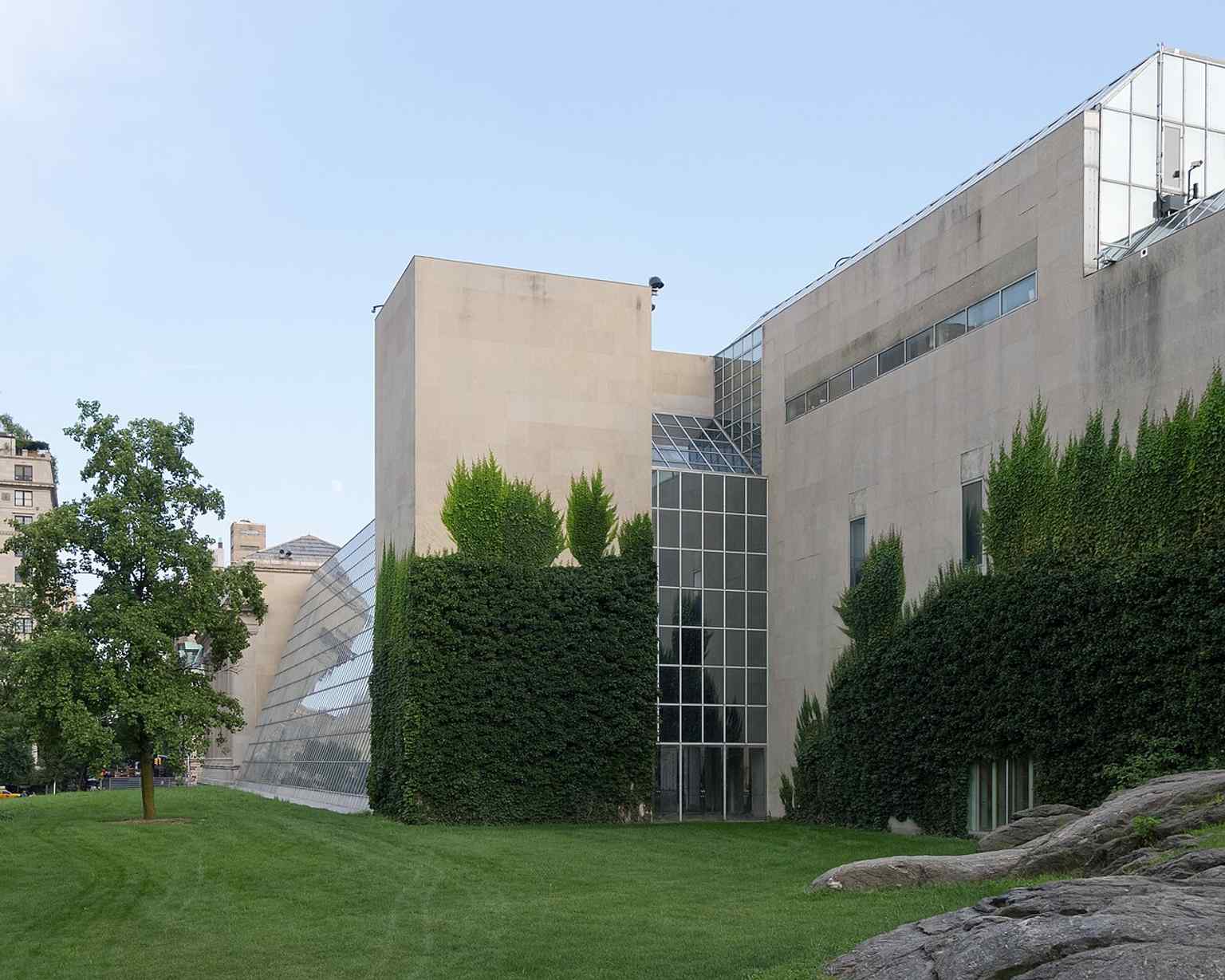
The rear side of the Metropolitan Museum on the north edge of the building, where the Sackler Wing was added in the 1970s.Photo: King of Hearts, Wikimedia Commons, CC BY-SA 4.0. Cropped & resized. 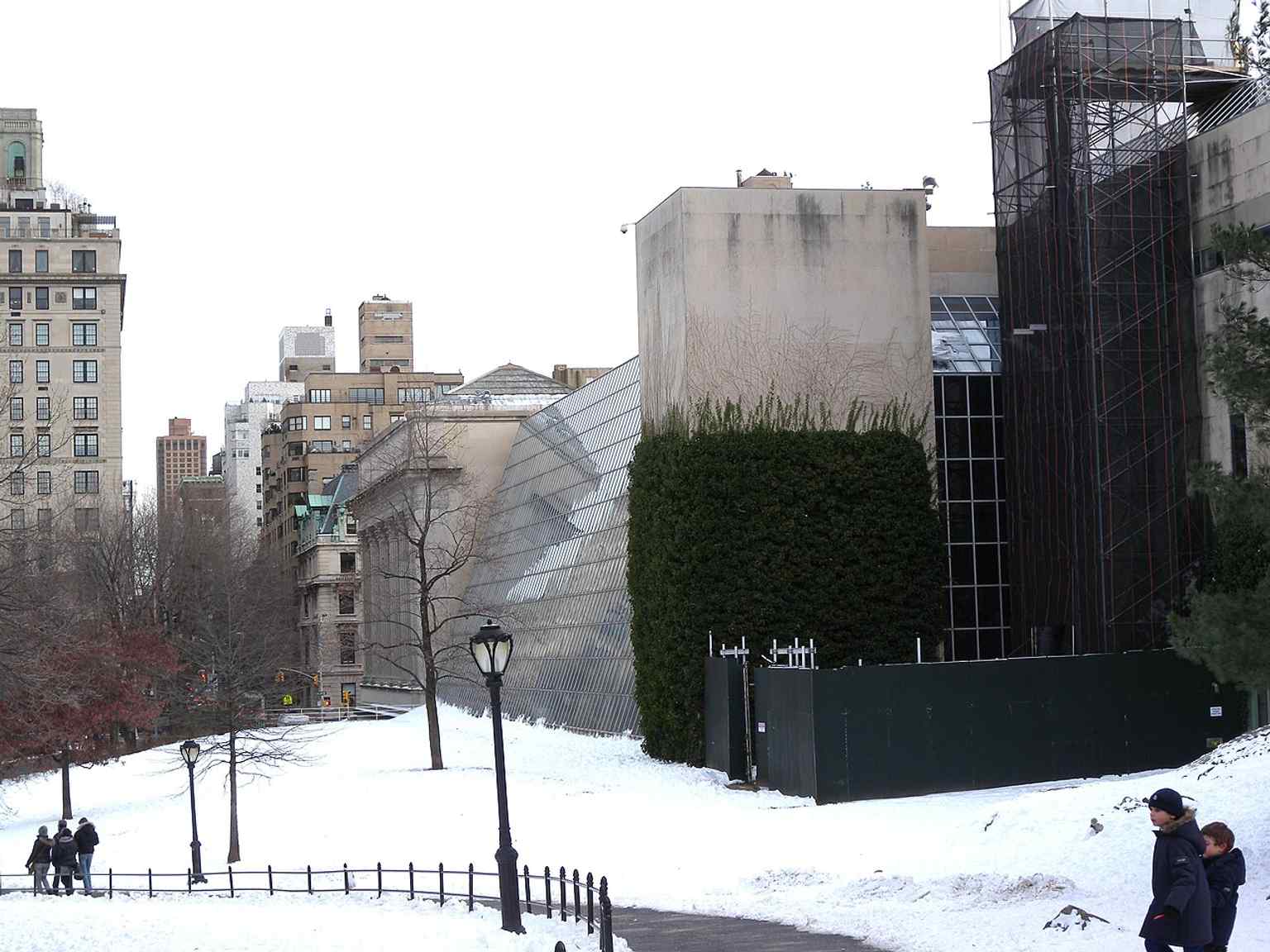
The museum’s north side in winter, giving a sense of the wing’s placement beside the original Met building.Photo: Jim.henderson, Wikimedia Commons, CC0. Cropped & resized. 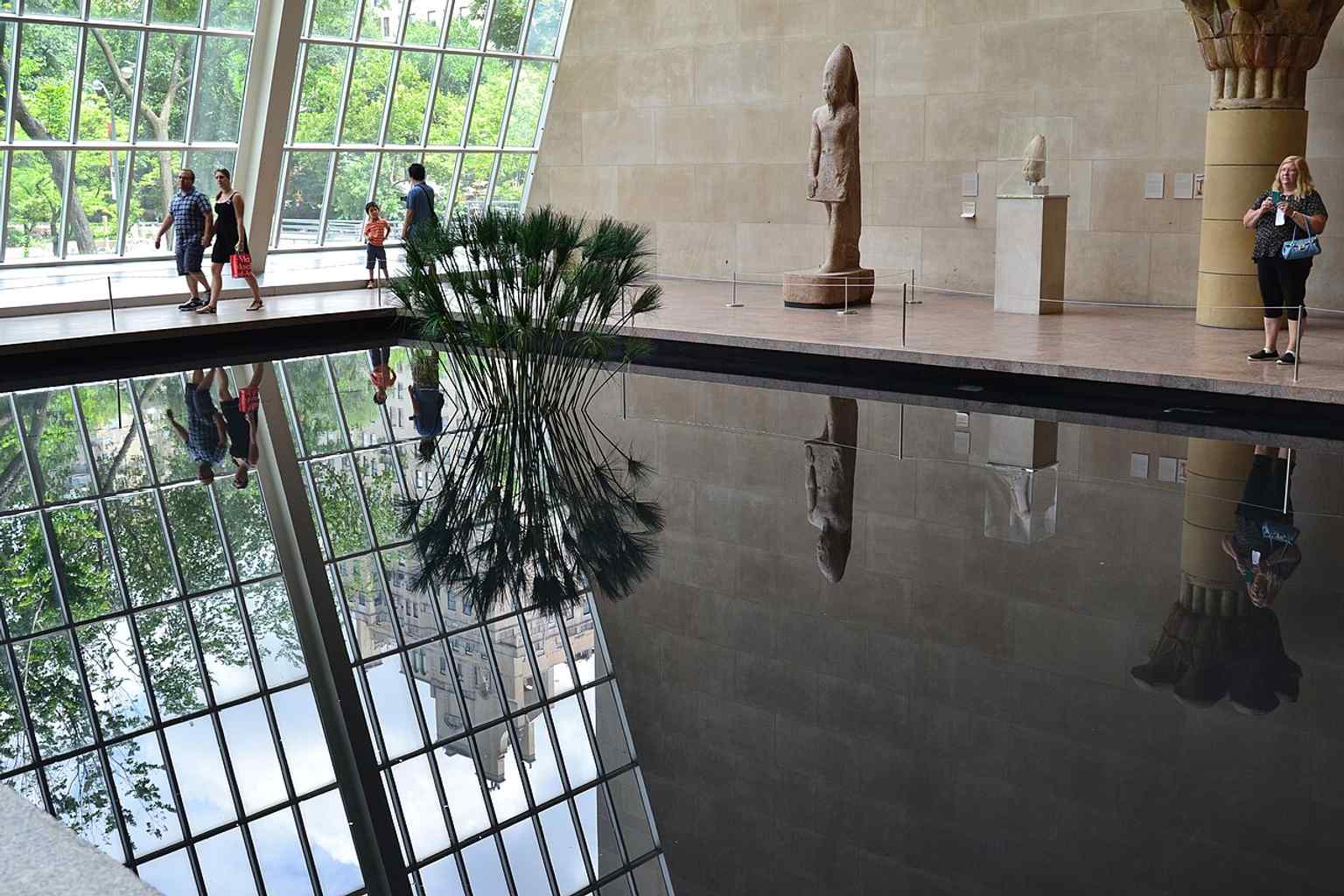
A wide 2013 view from the Egyptian galleries, showing the museum setting around the temple rather than the temple alone.Photo: Beatriz Ribeiro Barbosa dos Santos, Wikimedia Commons, CC BY-SA 4.0. Cropped & resized. 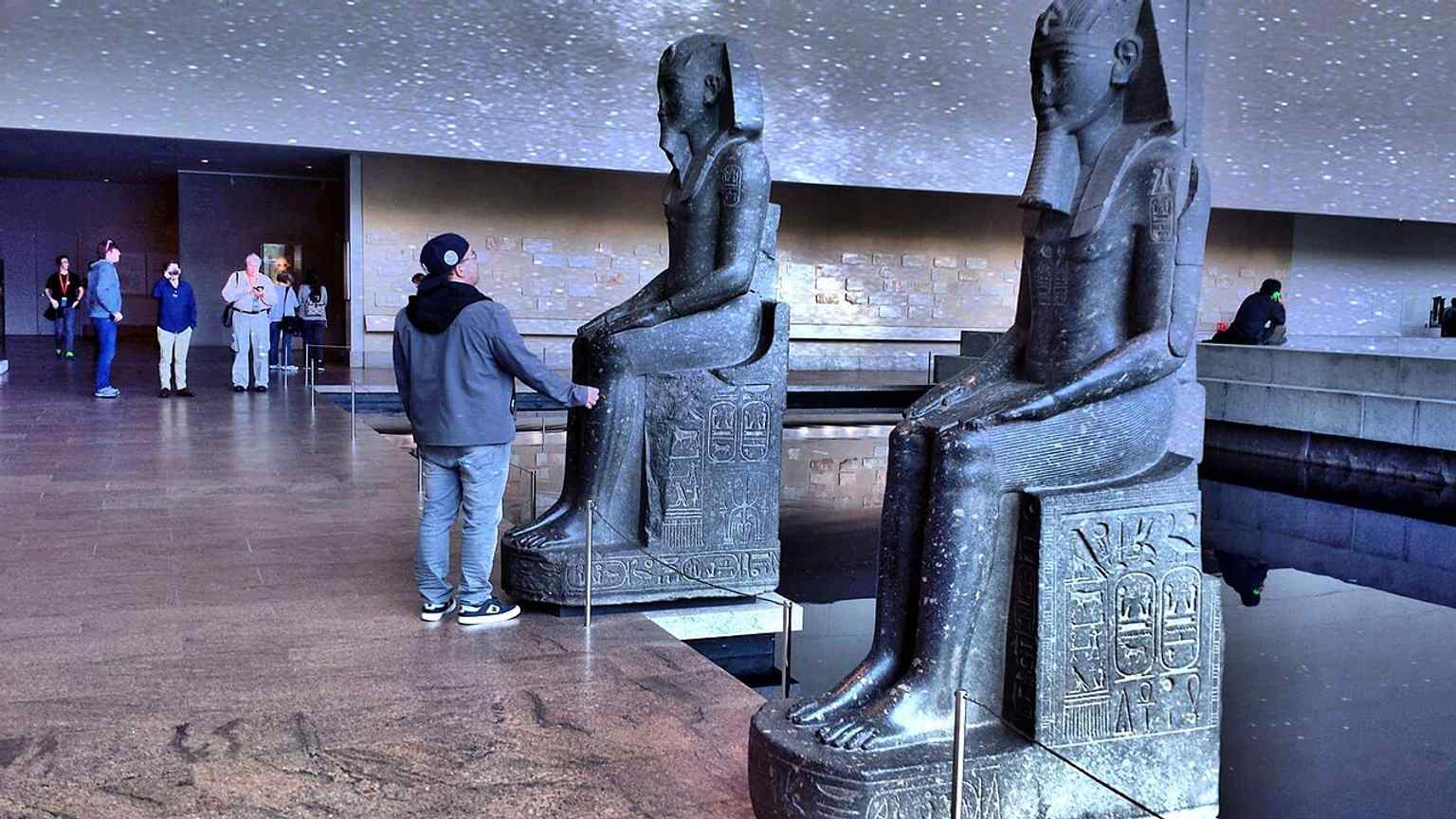
The statues of Amenhotep III at the Met, part of the Egyptian display world that surrounds the Temple of Dendur in this wing.Photo: Jenny Leticia Cuervo, Wikimedia Commons, CC BY-SA 4.0. Cropped & resized. On your right is the New York Kouros... a young man in marble, carved around five hundred ninety to five hundred eighty B-C, and already doing something quietly radical. This is…Read moreShow less
Open dedicated page →On your right is the New York Kouros... a young man in marble, carved around five hundred ninety to five hundred eighty B-C, and already doing something quietly radical. This is one of the earliest life-sized statues from Greece. It looks simple at first glance: a nude youth, front-facing, arms straight at his sides, left foot stepping forward. But this figure is really a record of ideas in transit. Art here works like cultural translation: the pose comes straight out of Egypt, while the marble itself came from Naxos, an island far from Attica, where the statue was carved for an Athenian grave.
If you want a quick look, open the full figure in the app. The stance is rigid enough to make a parade soldier seem relaxed. And that stiffness matters.
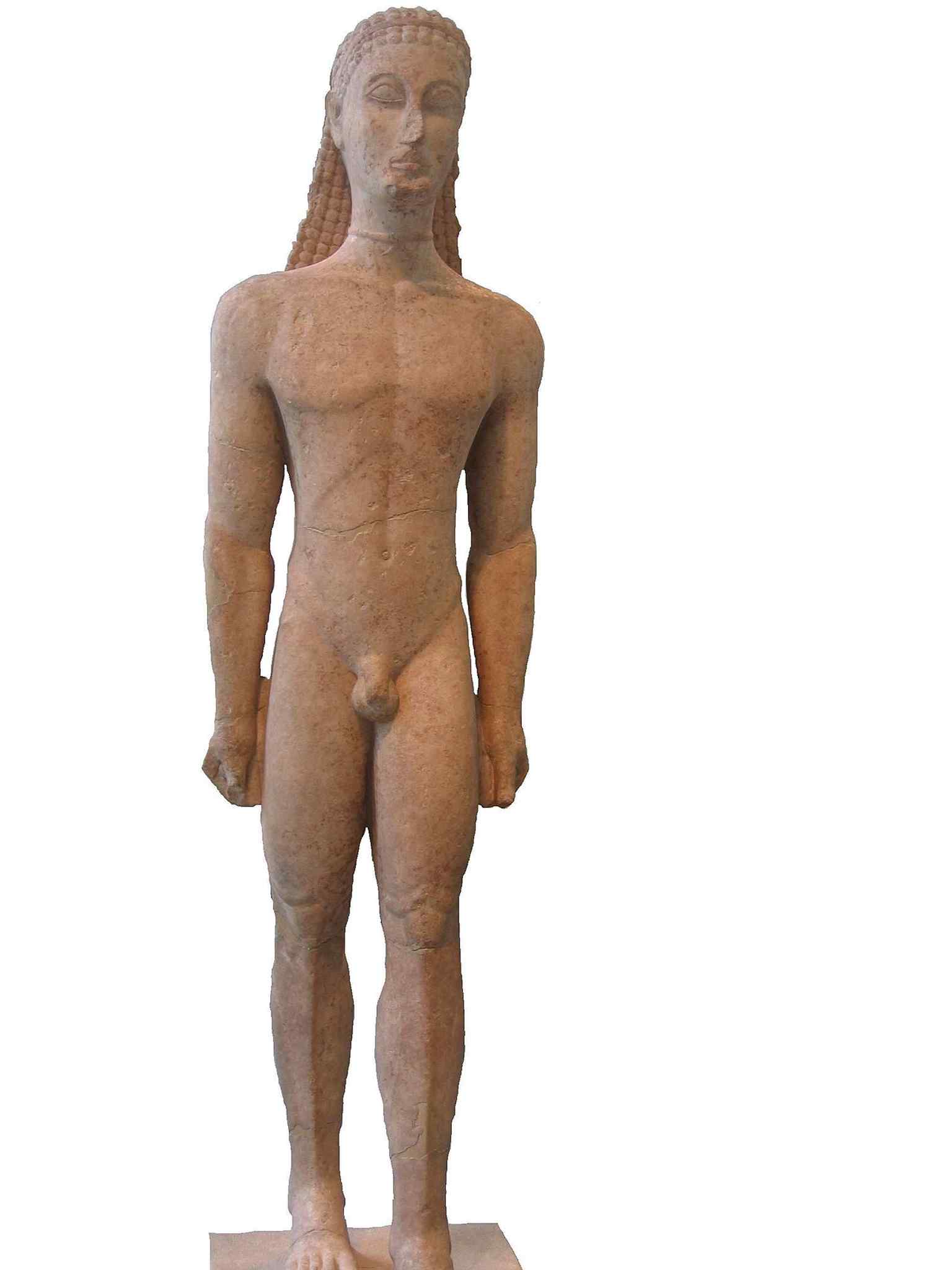
The full marble kouros at The Met, showing the rigid forward-facing stance and left foot advanced that echo Egyptian statuary.Photo: Talmoryair, Wikimedia Commons, Public domain. Cropped & resized. Greek artists in the archaic period were studying older, powerful models from abroad, especially Egyptian stone figures. They borrowed the left leg forward, the upright posture, even the grid system that helped map out the body. But they did not copy everything. Egyptian statues usually kept stone supports between the limbs and a slab at the back. Greek sculptors stripped those away, freed the body from the block, and made the figure nude. Same basic formula... different ambition.
Take a beat with the body here. Notice how geometric it is: the chest, knees, and muscles feel organized more like a design than a living person. The face and eyes are stylized too, not observed from life. Yet the left foot nudges forward, as if motion is trying to enter the stone. That little step is fascinating. It is not walking, exactly. It is the idea of walking, just beginning.
A second image in the app shows that carving more clearly. You can see how the limbs are detached from the block and how idealized the whole body is. This was not a portrait. The Met identifies it as a grave marker for a young Athenian aristocrat. In other words, a wealthy family paid for an expensive public statement above a grave: youth, strength, honor, permanence. Subtle was not really the point.
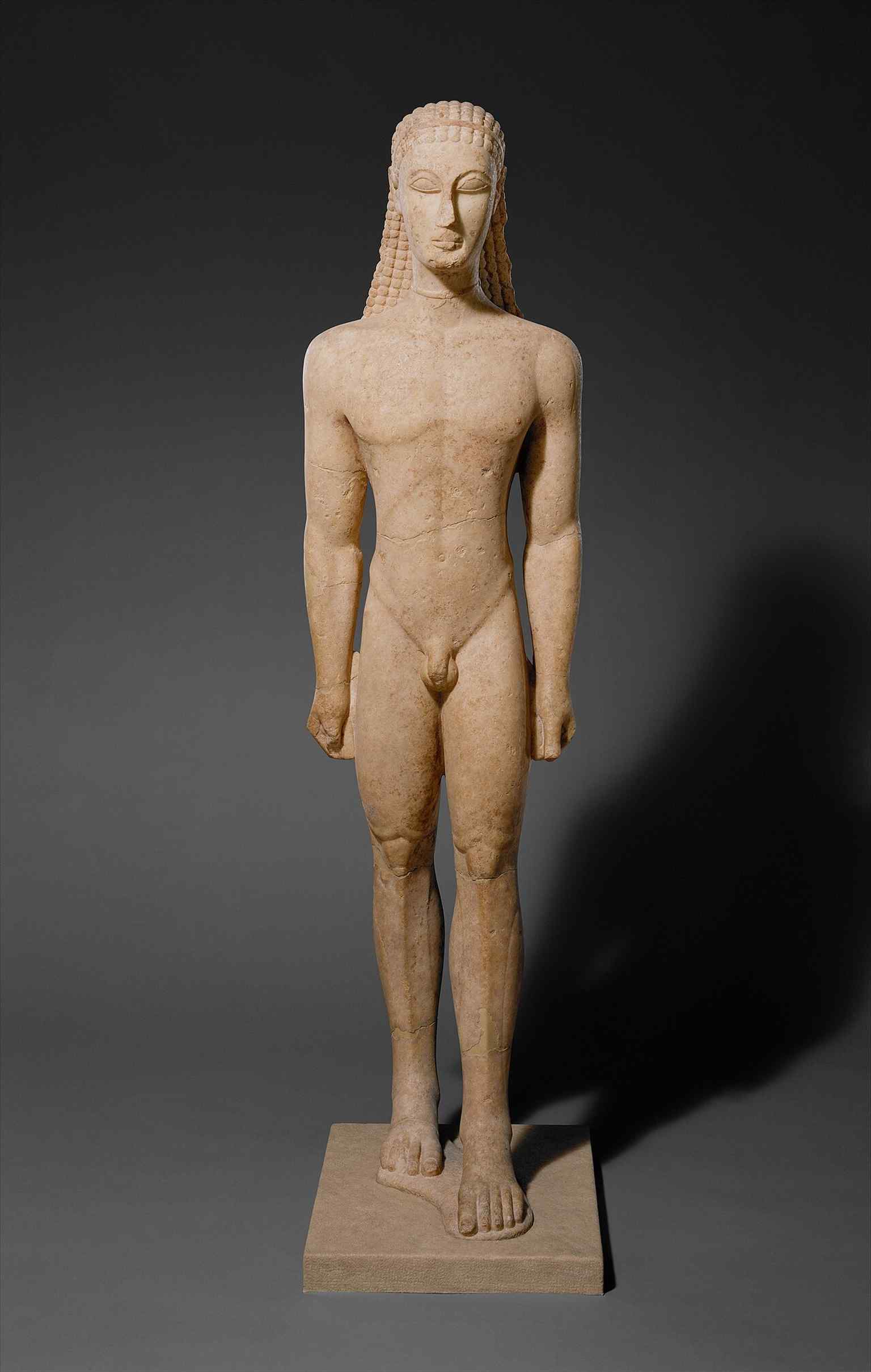
A clear museum view of the youth statue that helps show its idealized, geometric body and the detached limbs carved from one block of Naxian marble.Photo: Unknown authorUnknown author, Wikimedia Commons, CC0. Cropped & resized. There is a small mystery attached to it too. Some scholars think this kouros and the later Anavysos Kouros may once have stood in the same grave plot at Phoinikia in Attica. Looters tore up that site in the early nineteen hundreds, so the evidence went with them. Annoying, but very human.
Even the marble had a long detective story. Scholars suspected for years that it came from Naxos, and scientific tests in two thousand fourteen confirmed it. That matters because it ties this statue to a wider trade network across the Cyclades and raises the possibility that Naxian sculptors themselves traveled to mainland Greece to carve monuments for local elites.
So this young man is not just an ancient body. He is proof that Greek art grew by looking outward, borrowing boldly, and then changing what it borrowed into something new. And that is part of what this museum does so well: it gathers objects that began in one world and took on new meaning in another. In about one minute, we’ll arrive at the Metropolitan Museum of Art itself... the great container for journeys exactly like this one.
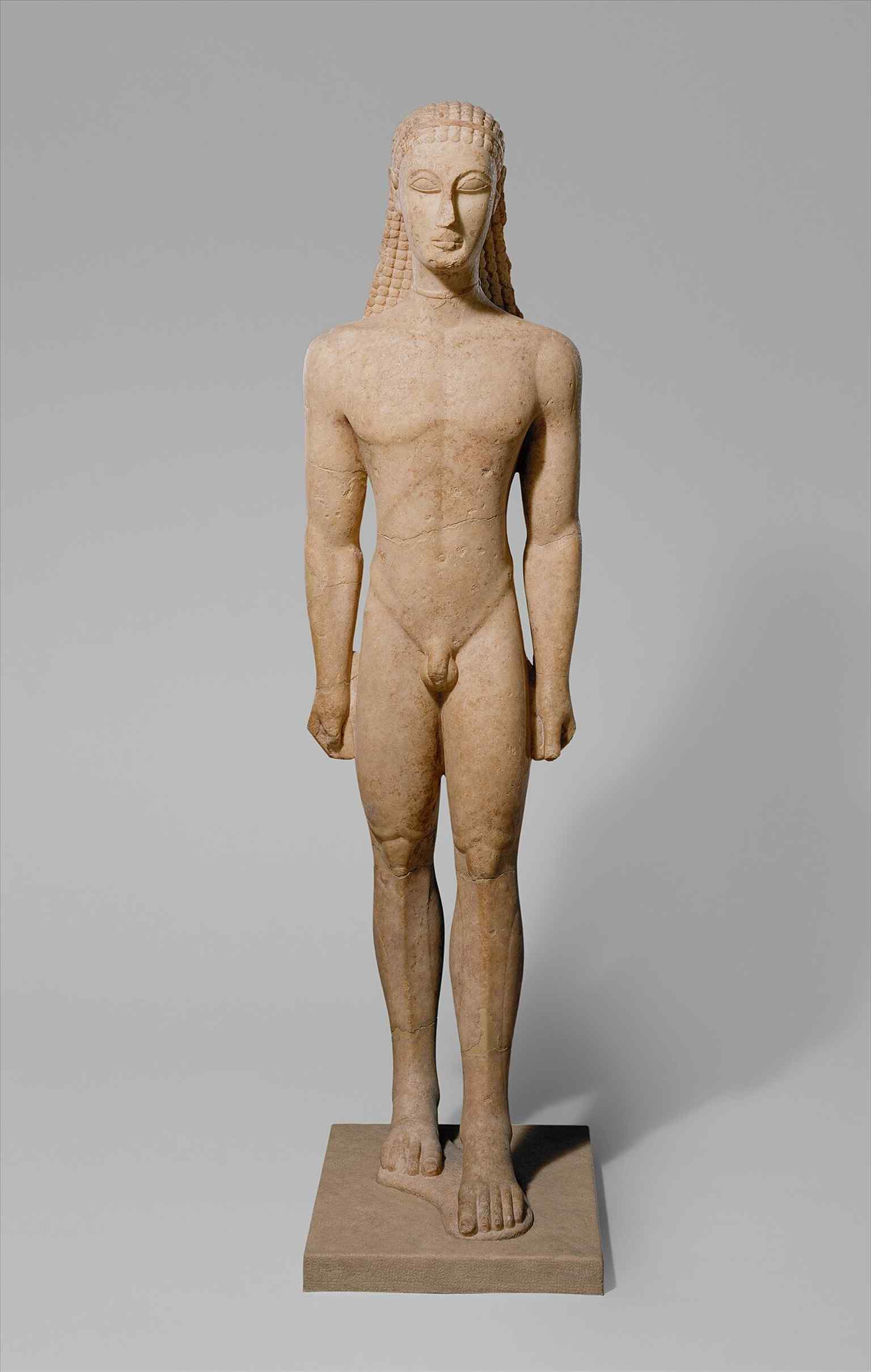
Another full-height view of the New York Kouros, useful for seeing how the figure served as an elite grave marker rather than a realistic portrait.Photo: Unknown, Wikimedia Commons, CC0. Cropped & resized. 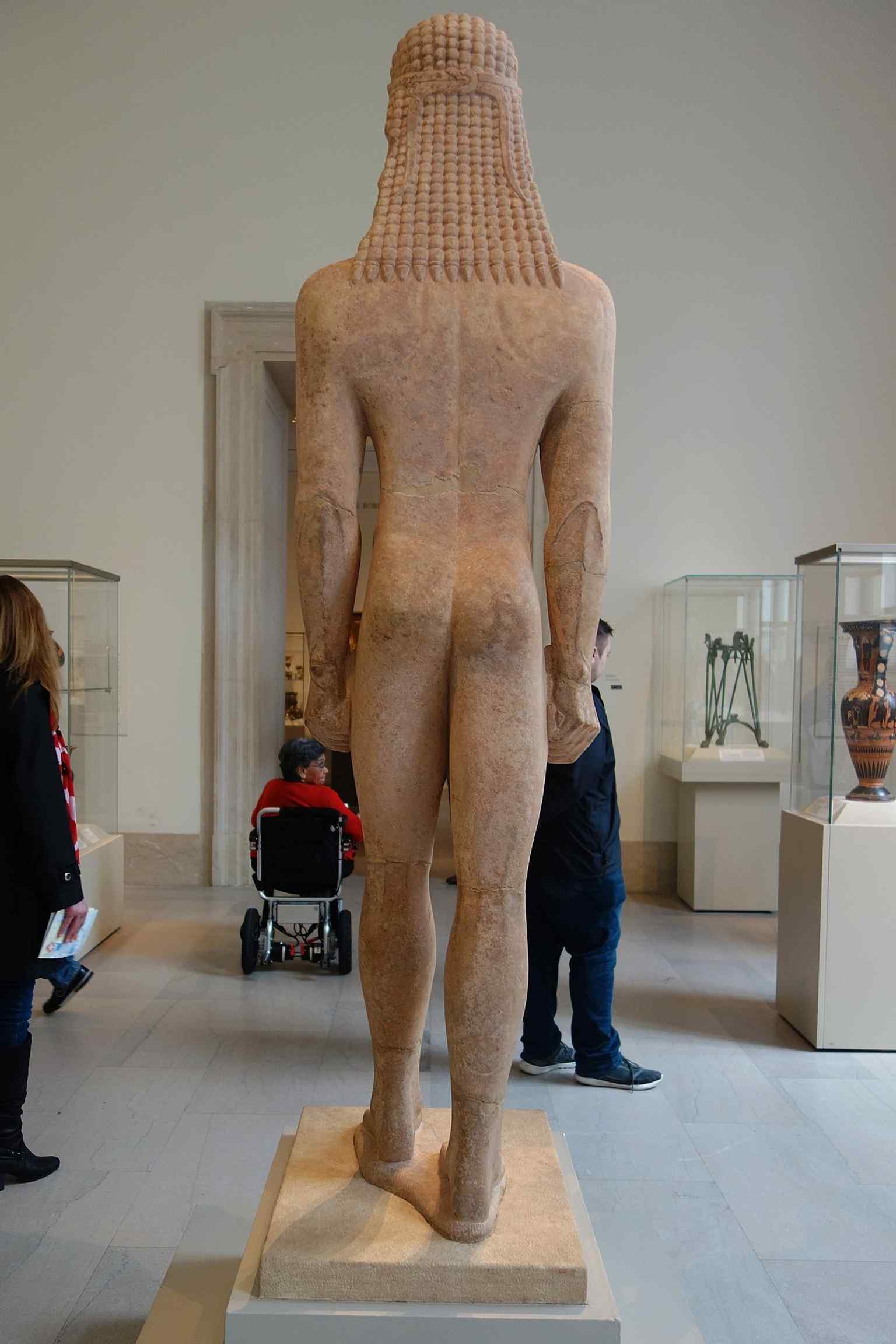
A modern high-resolution photograph of the kouros at The Met Fifth Avenue, where the c. 590–580 BCE sculpture is now displayed in gallery context.Photo: Zde, Wikimedia Commons, Public domain. Cropped & resized. In front of you rises a broad limestone Beaux-Arts façade, layered like a palace with arched windows and a central pediment, all anchored by the museum’s famously wide stone…Read moreShow less
Open dedicated page →In front of you rises a broad limestone Beaux-Arts façade, layered like a palace with arched windows and a central pediment, all anchored by the museum’s famously wide stone stair.
This is the Metropolitan Museum of Art... and it is less a single building than a national ambition with walls. Founded in eighteen seventy by financiers, artists, and reformers, including Theodore Roosevelt Senior, the Met set out to do something enormous: gather the art of the world, study it, preserve it, and hand it to the public as a shared inheritance. Not bad for an institution whose first accession was a Roman sarcophagus.
What you see here took shape in layers. The first museum building on this site opened in eighteen eighty. Then Richard Morris Hunt and his son gave it this grand Fifth Avenue front and the great stair, while McKim, Mead and White completed the flanking wings in nineteen ten. Behind that stately face sprawls a giant: nearly a quarter mile long, more than two million square feet, and really an accretion - a buildup - of more than twenty structures stitched together over time. It is the largest art museum in the Americas, which feels about right for a city that rarely does modesty.
The Met calls itself encyclopedic. That means it tries to hold nearly every chapter of human making under one roof: ancient Egypt, Greek and Roman sculpture, Islamic manuscripts, armor, textiles, musical instruments, European painting, modern art, photographs, whole historic rooms. Inside are about one point five million works organized by seventeen curatorial departments. An Egyptian temple even stands indoors, reassembled block by block after Egypt gave it to the United States in the nineteen sixties.
If you want a neat little jump cut, check the before-and-after image in the app: horse-drawn traffic once passed Cleopatra’s Needle outside this same façade, and the building still plays the dignified constant while New York races around it.
But the Met is not just a treasure house. It is also a machine for deciding what belongs in the grand story of civilization. When the Michael C. Rockefeller Wing opened in nineteen eighty-two, works from Africa, Oceania, and the Americas entered the museum’s permanent narrative as art, not merely as ethnographic material - that is, not just objects used to explain other peoples. That shift mattered. So did the fact that private collectors helped drive it.
And there’s the rub. Private ambition built this public authority. The museum sits on city land, but a private corporation runs the institution and owns the collection. Donors shaped departments, wings, and taste. The museum has also had to return objects it once proudly displayed: the golden coffin of Nedjemankh went back to Egypt after investigators found it had been looted and sold with forged papers; Khmer sculptures have gone back to Cambodia and Thailand; a bronze griffin head is returning to Greece. So the Met preserves memory, yes... but it also keeps revising who had the right to own that memory in the first place.
If you glance at the gallery image on your screen, you can see how the museum turns sheer quantity into order, almost like an indoor map of the world.
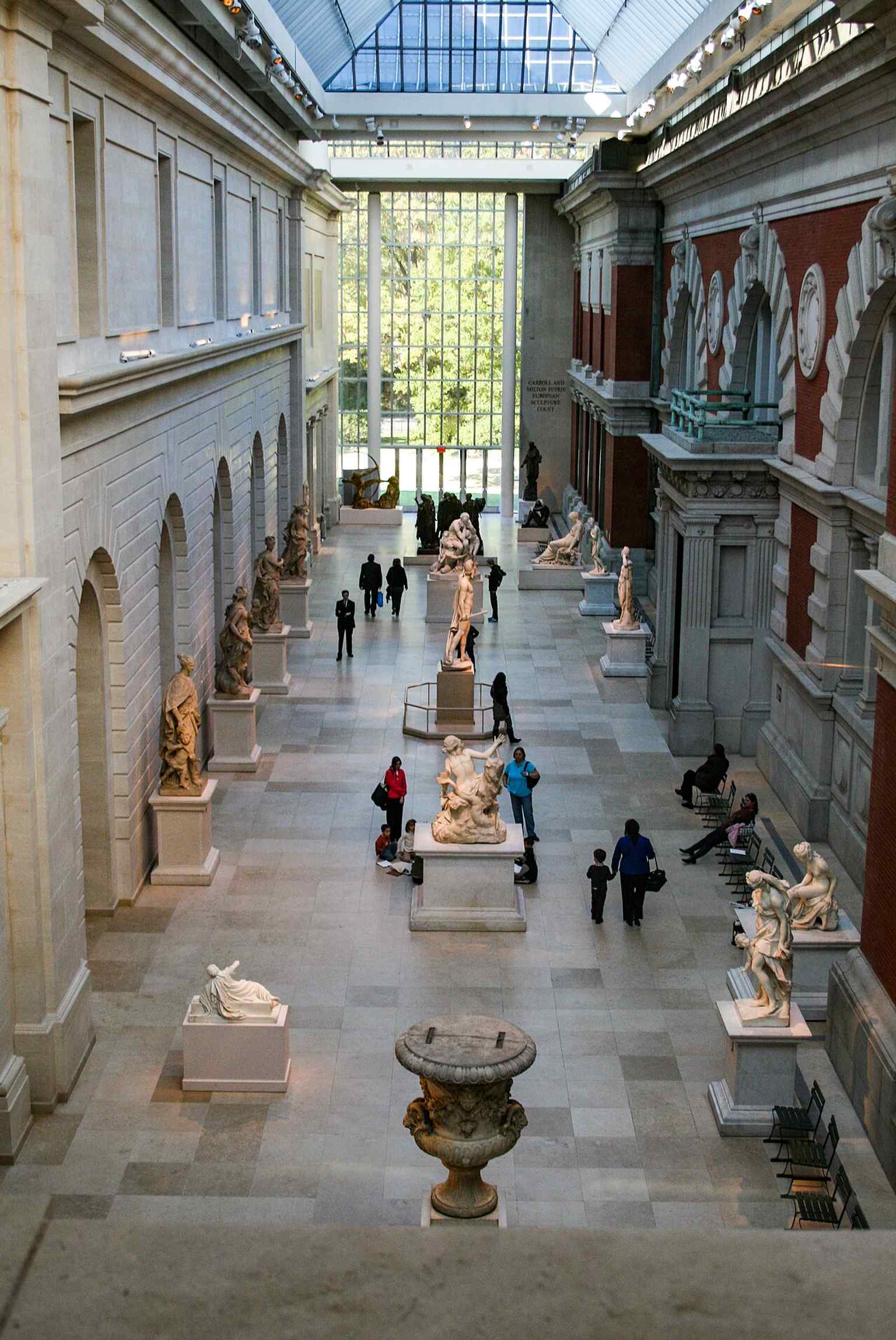
An interior view of the museum’s galleries, reflecting the Met’s encyclopedic range under one roof.Photo: Szilas, Wikimedia Commons, CC BY-SA 4.0. Cropped & resized. Now bring your eyes back to Fifth Avenue. Across from this public palace stood, and still stand, the homes of the families who financed New York’s cultural empire; our next stop, the Benjamin N. Duke House, is about a one-minute walk away. If you plan to come back inside, the Met is open from ten to five most days, closed Wednesday, and open until nine on Friday and Saturday.
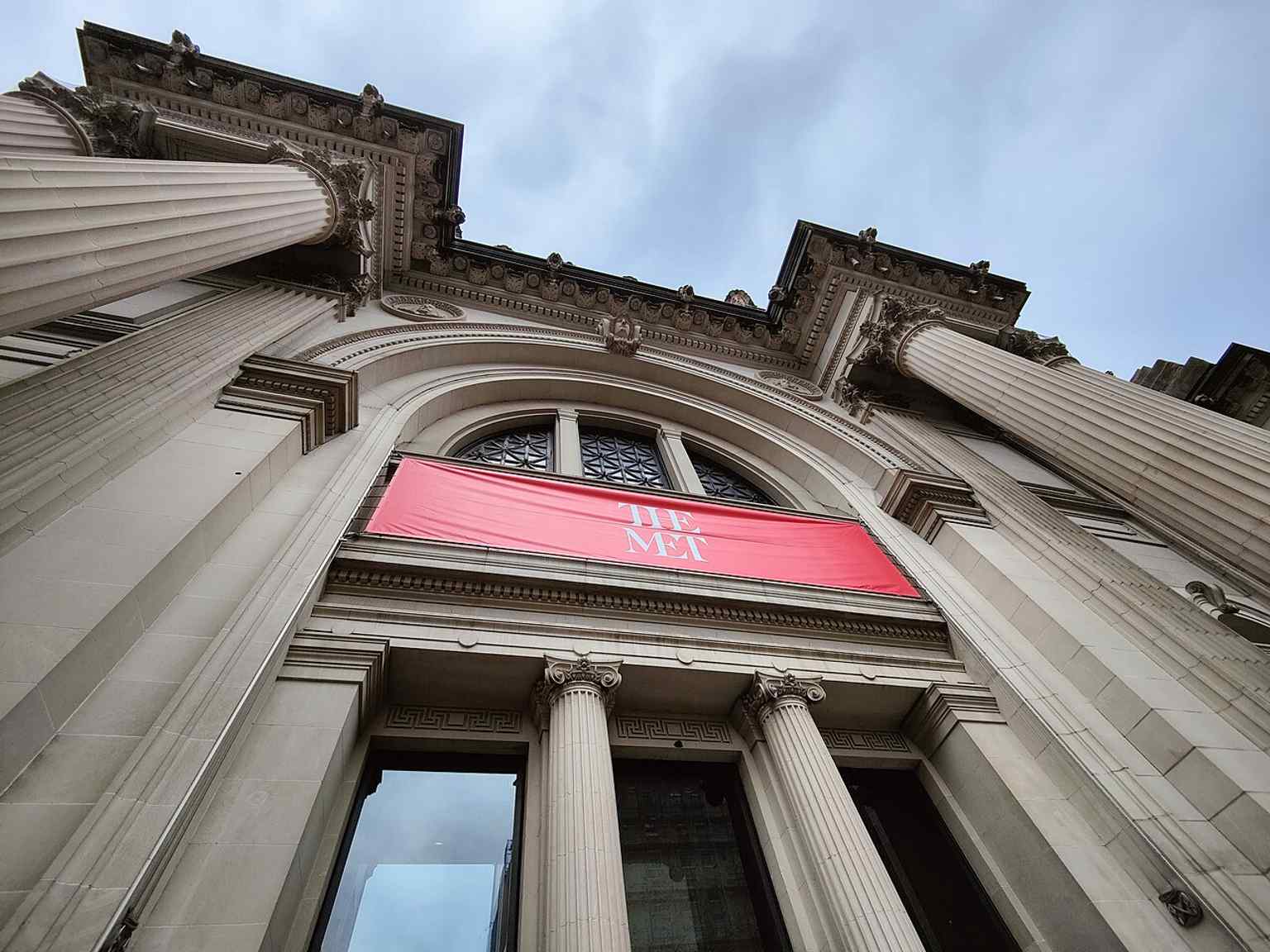
The Fifth Avenue entrance that welcomes millions of visitors each year, set beside the museum’s iconic steps and plaza.Photo: PerpetualTraveler, Wikimedia Commons, CC BY-SA 4.0. Cropped & resized. 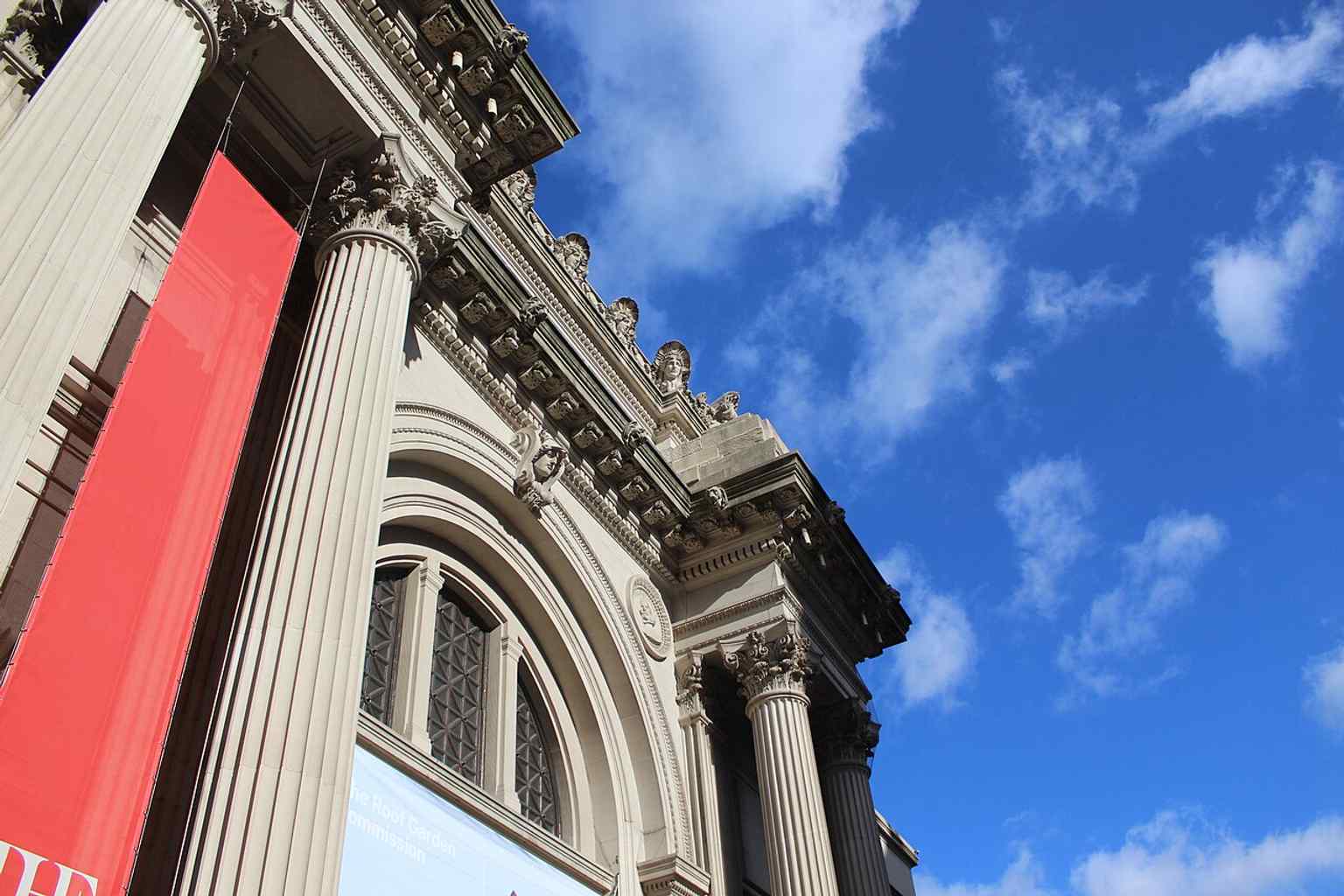
A close look at the Met’s historic Beaux-Arts façade, part of the vast main building that grew from the original 1880 structure.Photo: Rodrigo Alomía Díaz, Wikimedia Commons, CC BY-SA 4.0. Cropped & resized. 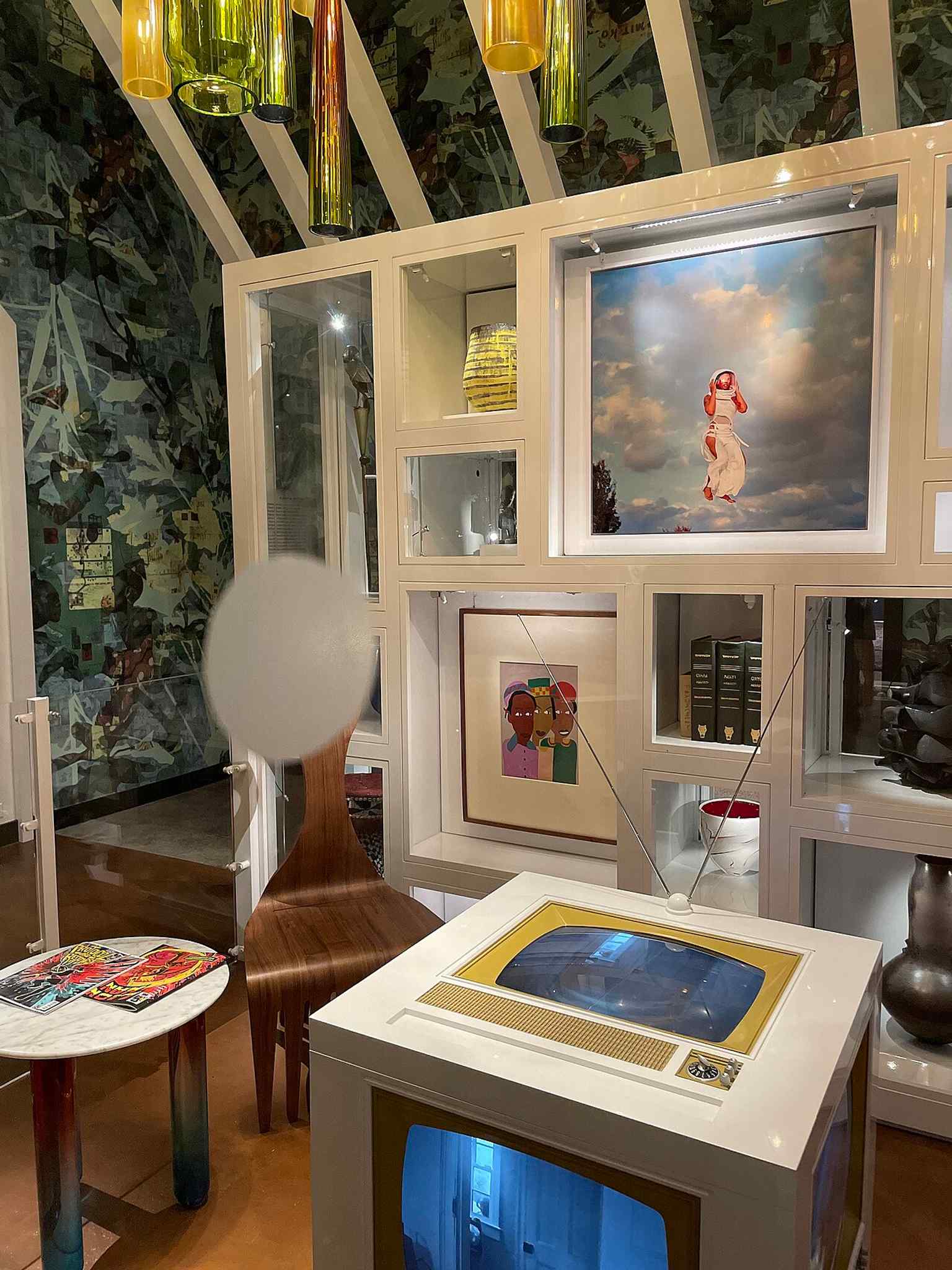
An Afrofuturist period room from the Met’s newer exhibitions, showing how the museum expands beyond traditional historical displays.Photo: Cl3phact0, Wikimedia Commons, CC BY-SA 4.0. Cropped & resized. 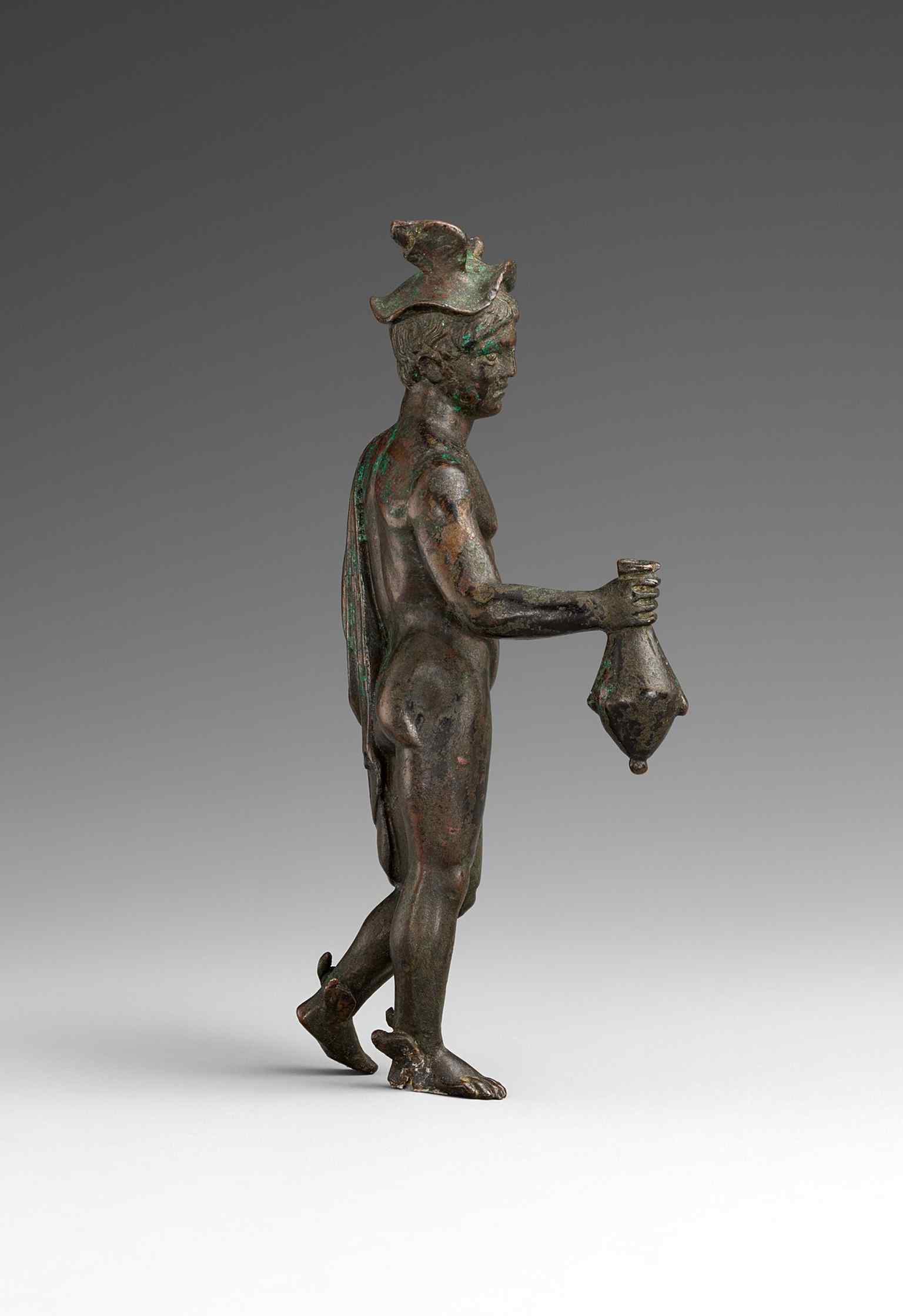
A Roman Mercury bronze from the Greek and Roman galleries, showing the Met’s rich holdings of ancient small sculpture.Photo: Unknown authorUnknown author, Wikimedia Commons, CC0. Cropped & resized. 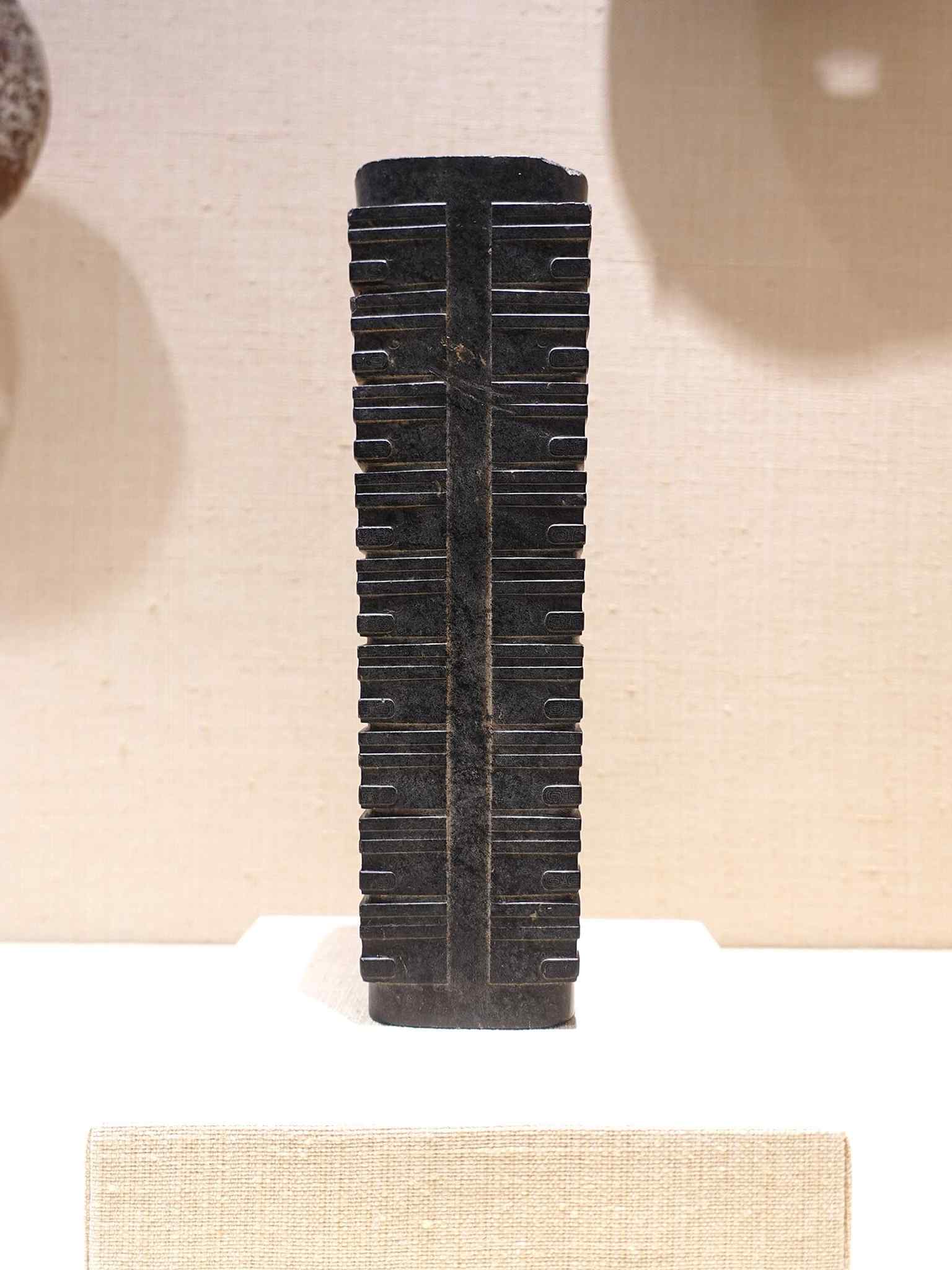
A Chinese jade cong, illustrating the Met’s encyclopedic Asian collection and its depth in ancient decorative arts.Photo: 颐园居, Wikimedia Commons, CC BY-SA 4.0. Cropped & resized. 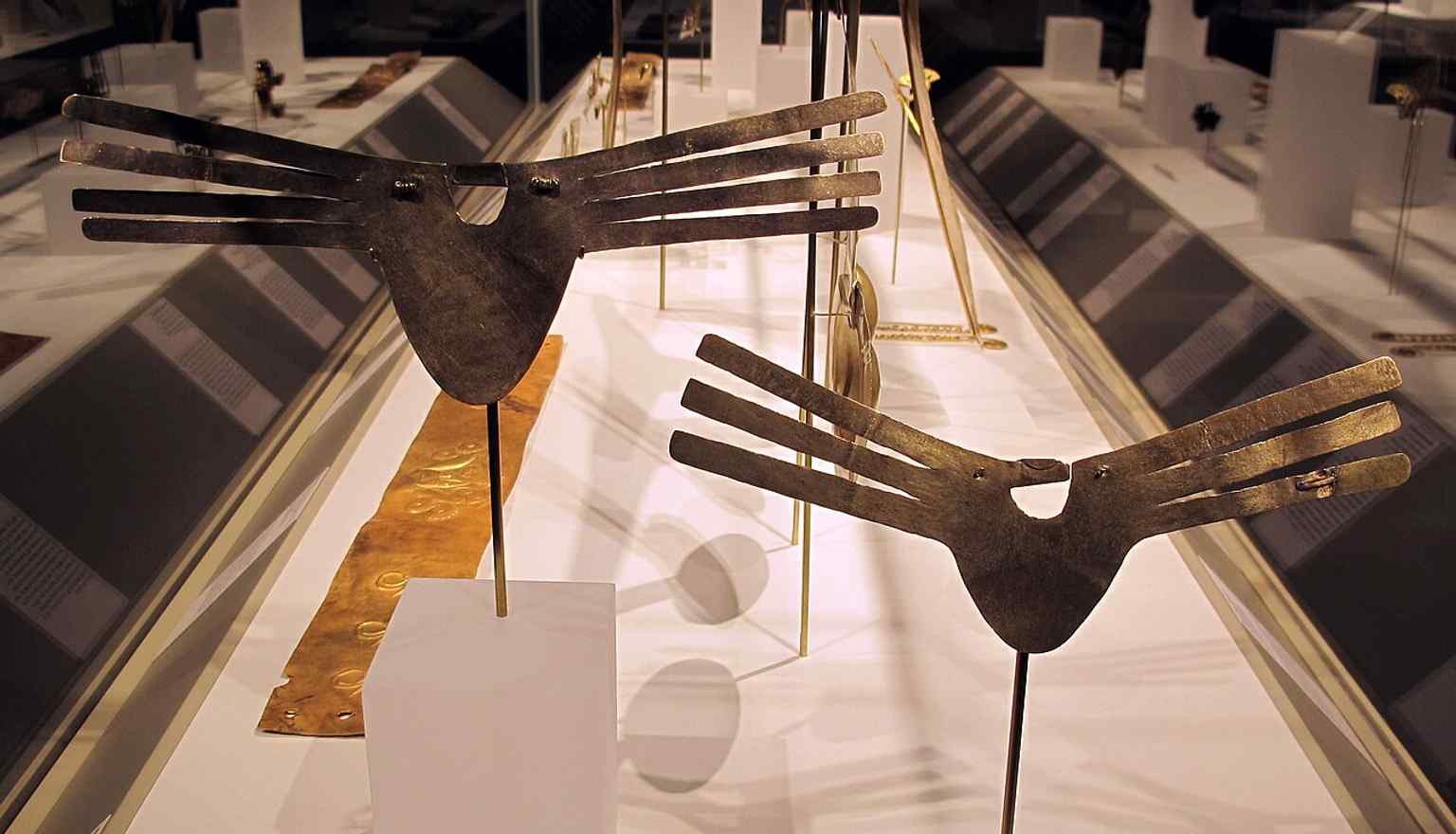
Pre-Columbian nose ornaments from Colombia, a reminder of the Met’s wide-ranging collections from the ancient Americas.Photo: Sailko, Wikimedia Commons, CC BY-SA 3.0. Cropped & resized. 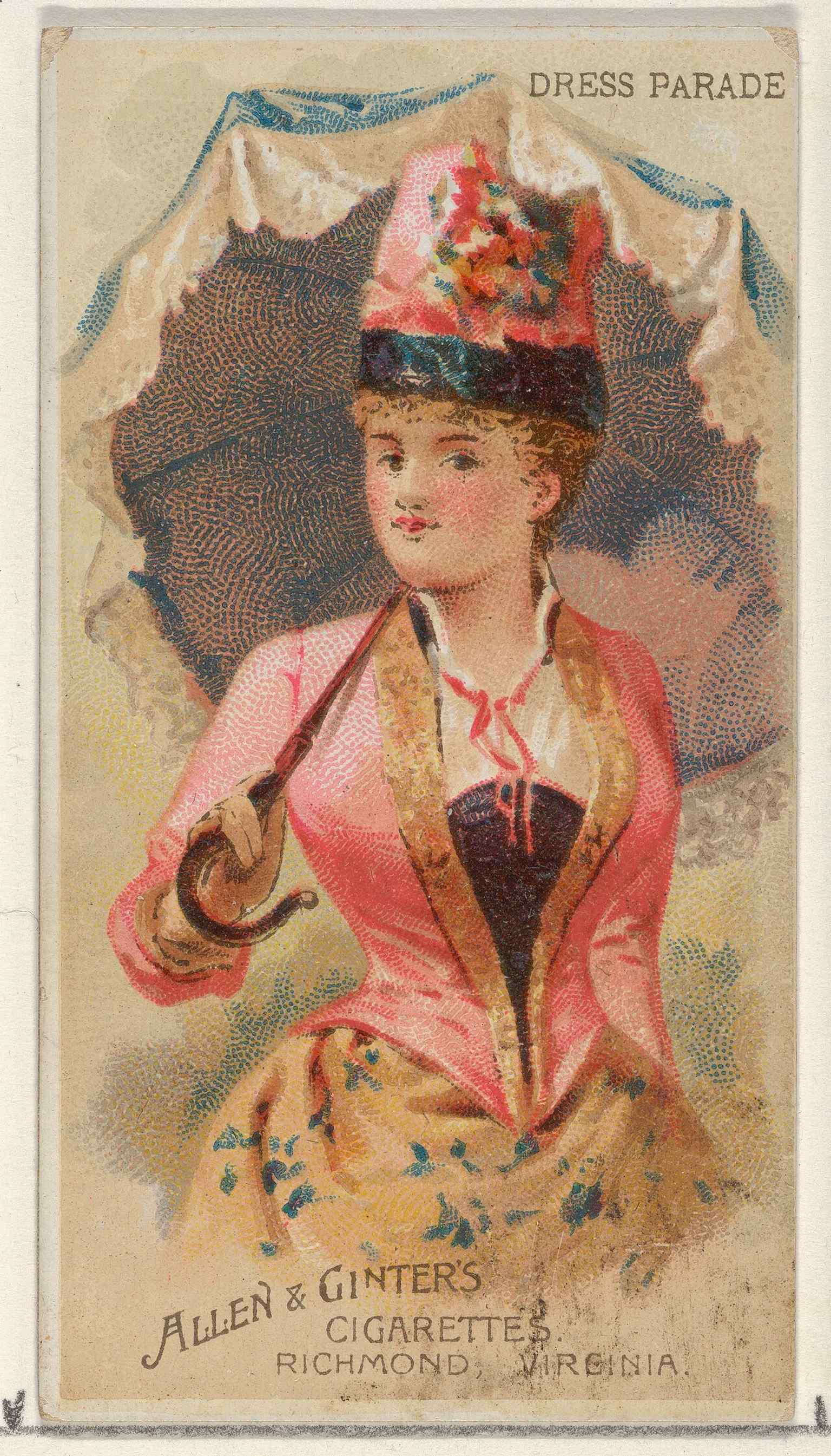
A 19th-century cigarette-card print about dress and fashion, echoing the Met’s interest in costume and design history.Photo: Allen & Ginter / Schumacher & Ettlinger, Wikimedia Commons, CC0. Cropped & resized. On your right, look for a red-brick and limestone corner mansion with a copper mansard roof and rounded bay windows that bulge toward Fifth Avenue. This house is what happens…Read moreShow less
Open dedicated page →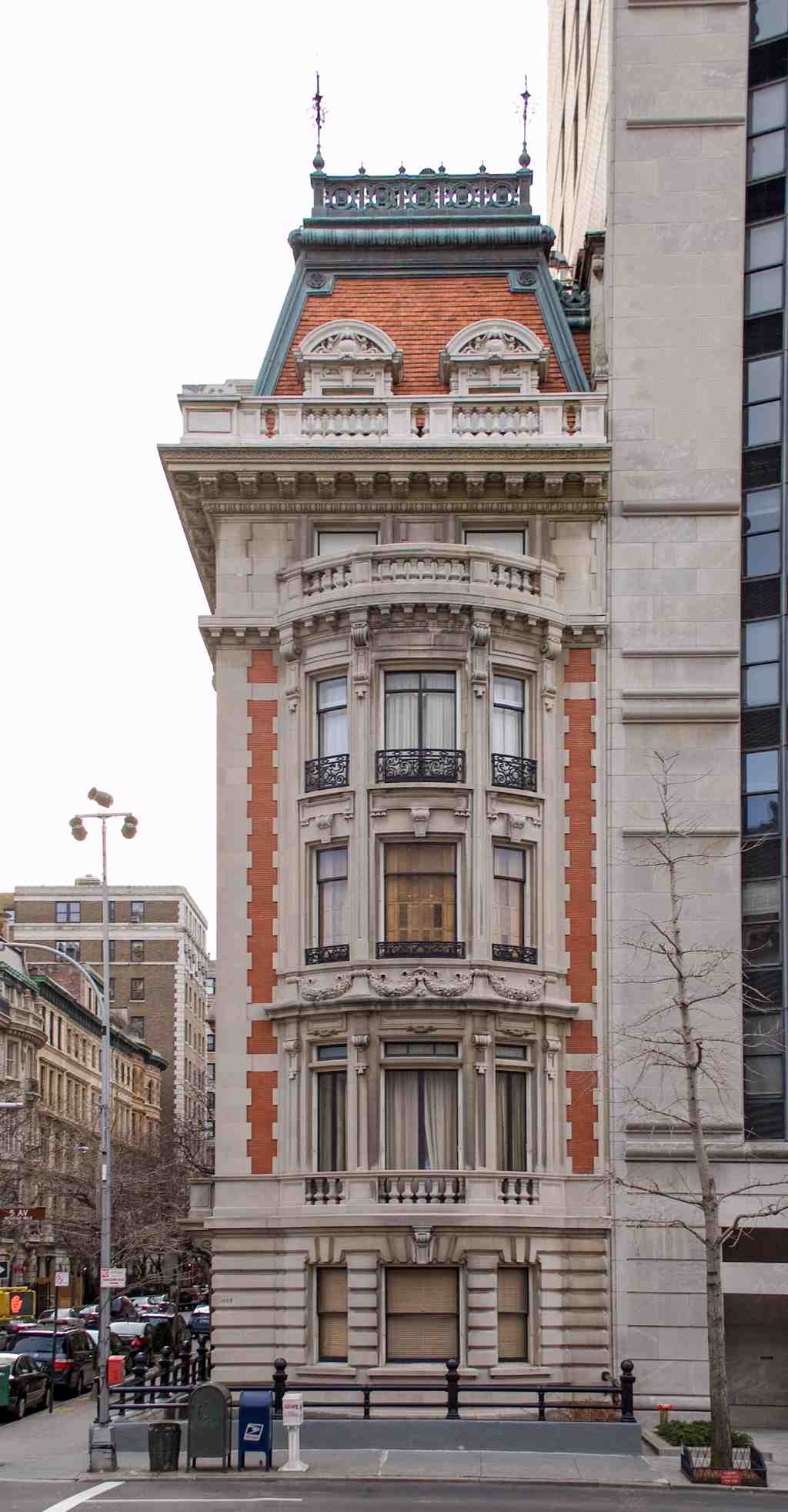
Benjamin N. Duke HousePhoto: A. Balet, Wikimedia Commons, CC BY 3.0. Cropped & resized. On your right, look for a red-brick and limestone corner mansion with a copper mansard roof and rounded bay windows that bulge toward Fifth Avenue.
This house is what happens when industrial wealth decides it would rather look ancestral. Tobacco heir Benjamin N. Duke made this mansion his own in the early nineteen hundreds, and the building announced exactly the right message: not “I made a fortune,” but “surely my family has always lived like this.” New money often likes an old accent.
Developers William and Thomas Hall understood that game perfectly. Between eighteen ninety-nine and nineteen oh-one, they put up four mansions on this block as speculative projects - meaning they built first and went shopping for millionaires second. Their trick was wonderfully shameless: they sometimes moved into their own new houses, furnished them lavishly, and entertained inside them so buyers could see the lifestyle on display. Real estate, dressed as theater.
The architects, Welch, Smith and Provot, gave this place the full Beaux-Arts treatment. That style borrowed heavily from French grand architecture and loved symmetry, ornament, and a certain noble swagger. Down at street level you can see the rusticated limestone - stone cut in big blocks to look strong and expensive. Above that, red brick, limestone trim, iron window guards, and then the mansard roof, the steep French-style roofline that instantly says, “We are not a townhouse... we are a statement.”
If you glance at your screen, the corner view makes the strategy obvious: the house is angled like a performer catching the light, directly across from the Metropolitan Museum. That was not an accident. This stretch of Fifth Avenue used to be Millionaires’ Row, where private houses faced public prestige. You lived here not just to be comfortable, but to be seen in the right conversation with art, culture, and power.
The family story got suitably dramatic. James B. Duke, Benjamin’s brother, later lived here, and in nineteen oh-eight he gave antitrust testimony from his bedroom because inflammatory rheumatism left him stuck in bed. Federal lawyers came to him. Imagine defending a tobacco empire under your own silk coverlet. Manhattan does love efficiency.
Then the house took on another role. Mary Lillian Duke Biddle, a trained opera singer, filled the second-floor music room with professional-level concerts. Her daughter Mary Semans remembered her mother’s singing carrying through the central stair hall. So this place, for all its private grandeur, also performed culture from the inside out.
That mattered when the block began to vanish. The neighboring mansions were demolished in the nineteen seventies, but Mary Semans refused to sell this one to developers, even after offers of more than one million dollars - many millions in today’s money. She fought for landmark protection and won. In the nineteen eighties, restorers stripped off layers of gray paint to reveal the original red brick again, and the grandson of the original metalworker helped recreate the corroded roof details. Even preservation on Fifth Avenue comes with a family pedigree.
If you want a closer look at the ornament, the detail image in the app shows the iron guards, limestone trim, and those sculpted window surrounds doing their best impression of inherited elegance.
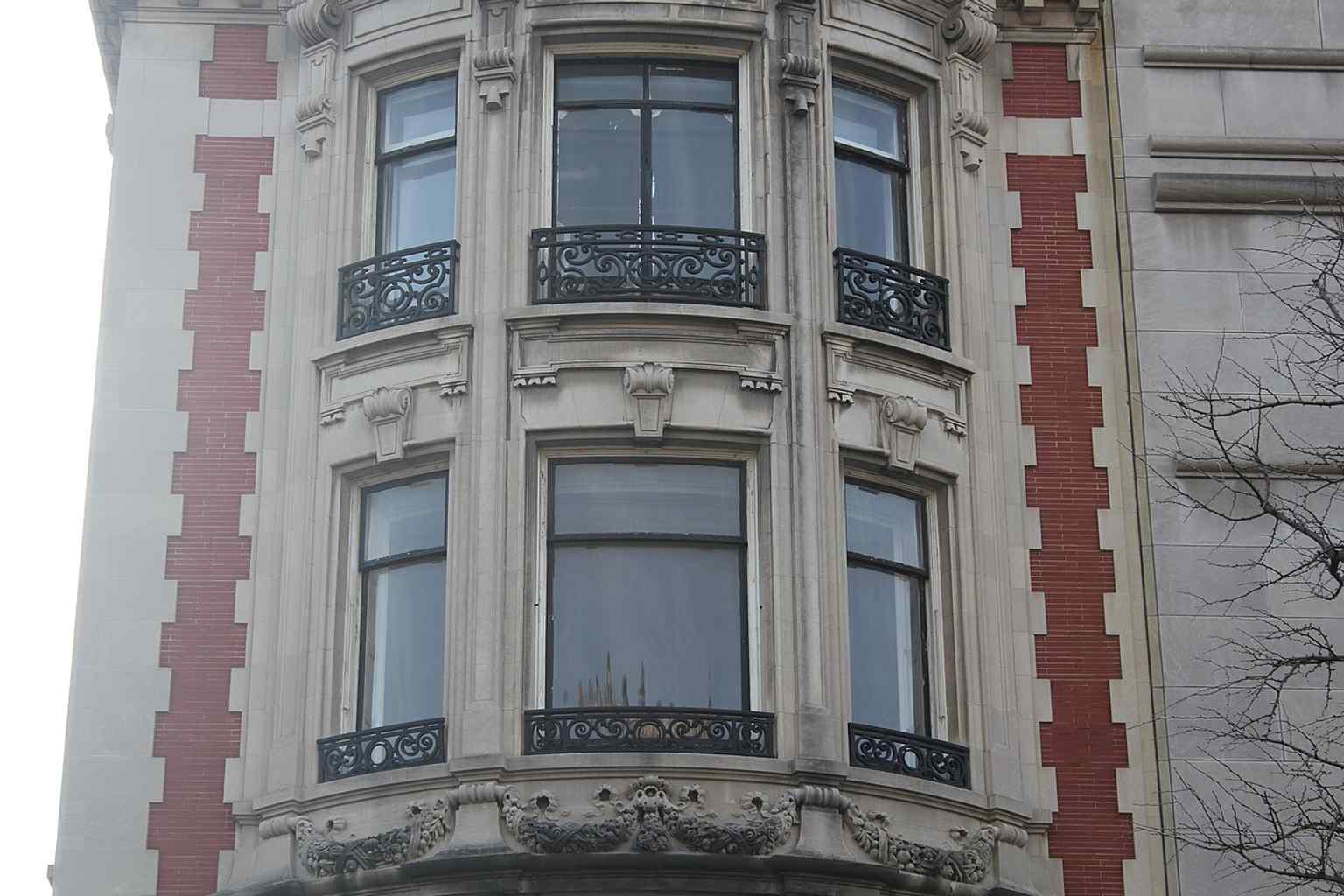
A closer look at the upper façade and windows, matching the house’s decorative Beaux-Arts details such as iron guards, limestone trim, and brick upper stories.Photo: Epicgenius, Wikimedia Commons, CC BY-SA 4.0. Cropped & resized. Ahead, we’ll meet a museum shaped by exile, friendship, and one very personal mission to save a world of art before it disappeared. The Neue Galerie is about a five-minute walk from here.
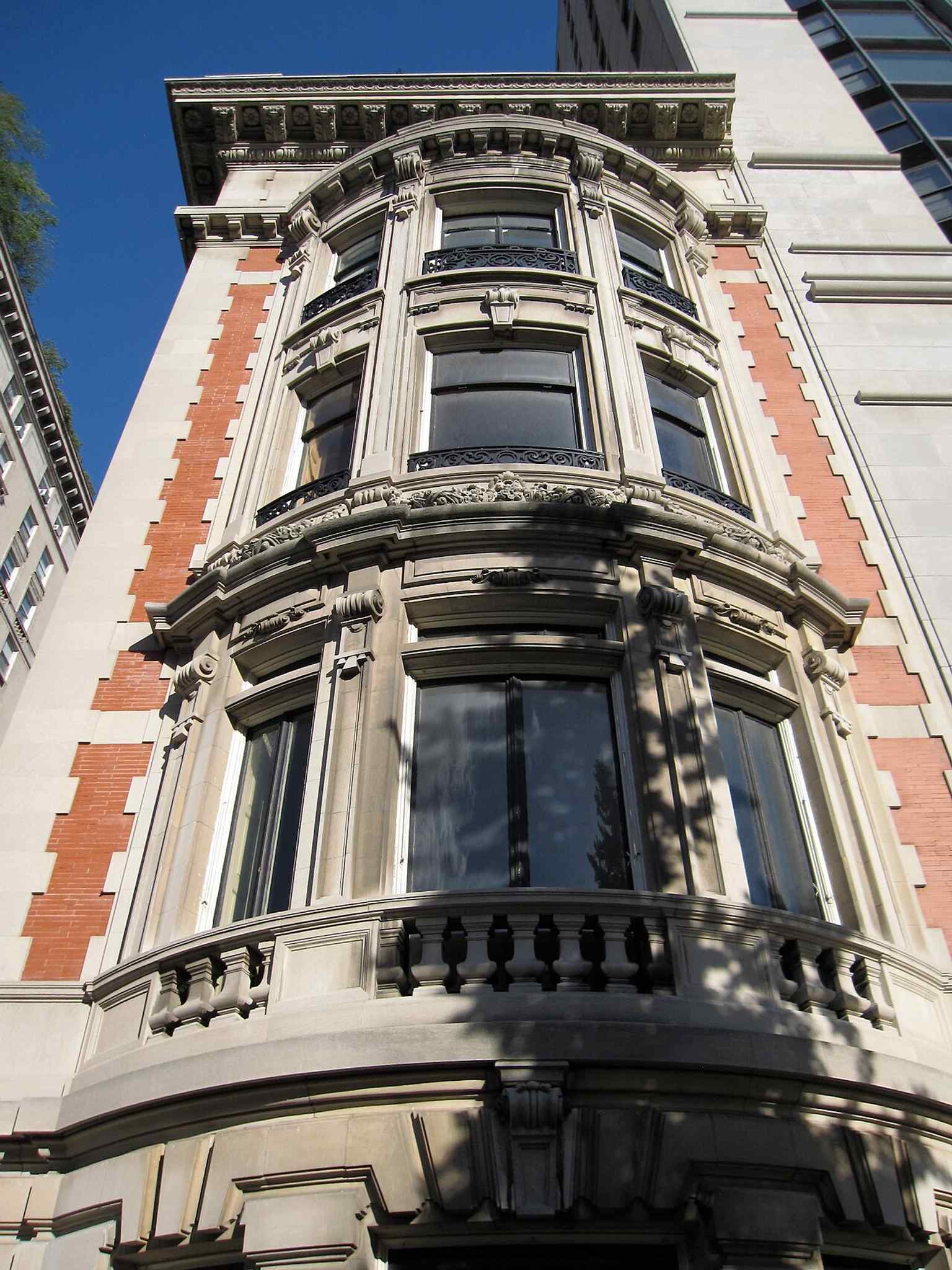
The mansion’s corner façade in 2010, showing the Beaux-Arts massing and mansard roof that made 1009 Fifth Avenue a rare surviving Gilded Age townhouse.Photo: Gryffindor, Wikimedia Commons, CC BY-SA 3.0. Cropped & resized. 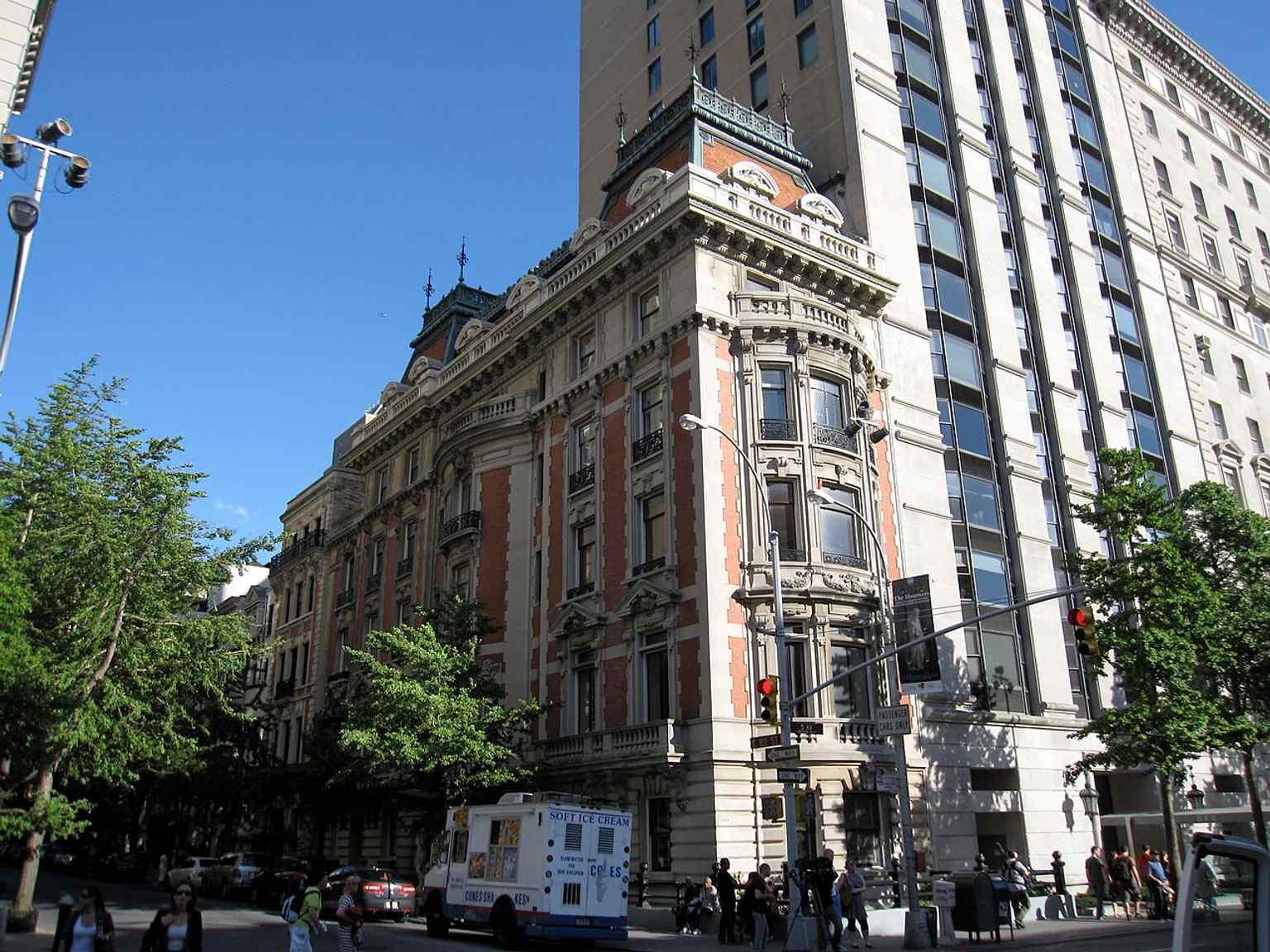
A wider side view that highlights the 82nd Street frontage and the curved corner treatment described in the building’s original Beaux-Arts design.Photo: Gryffindor, Wikimedia Commons, CC BY-SA 3.0. Cropped & resized. 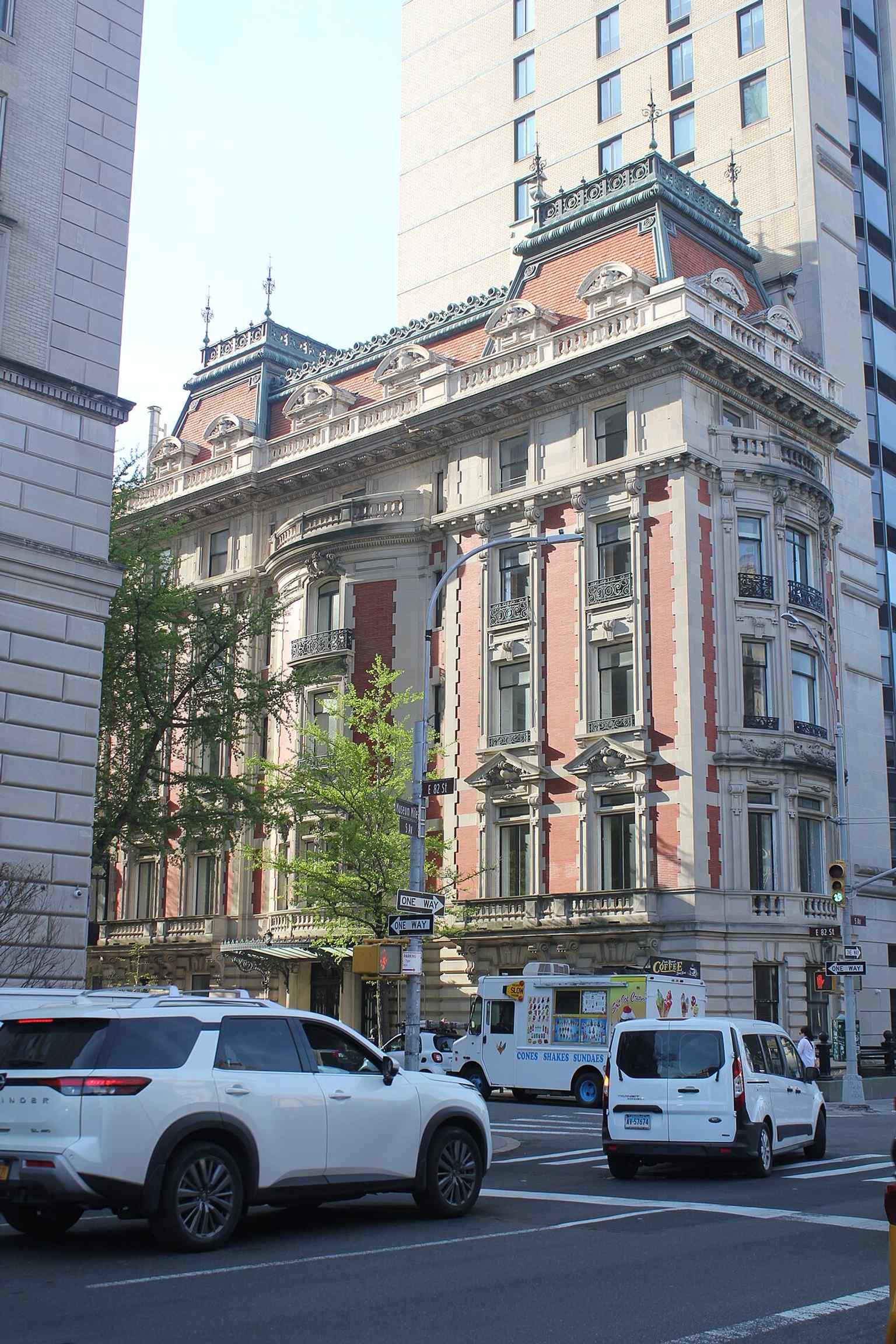
A crisp 2023 street view of the Benjamin N. Duke House, useful for showing how the landmark still anchors the corner of Fifth Avenue and 82nd Street.Photo: Epicgenius, Wikimedia Commons, CC BY-SA 4.0. Cropped & resized. 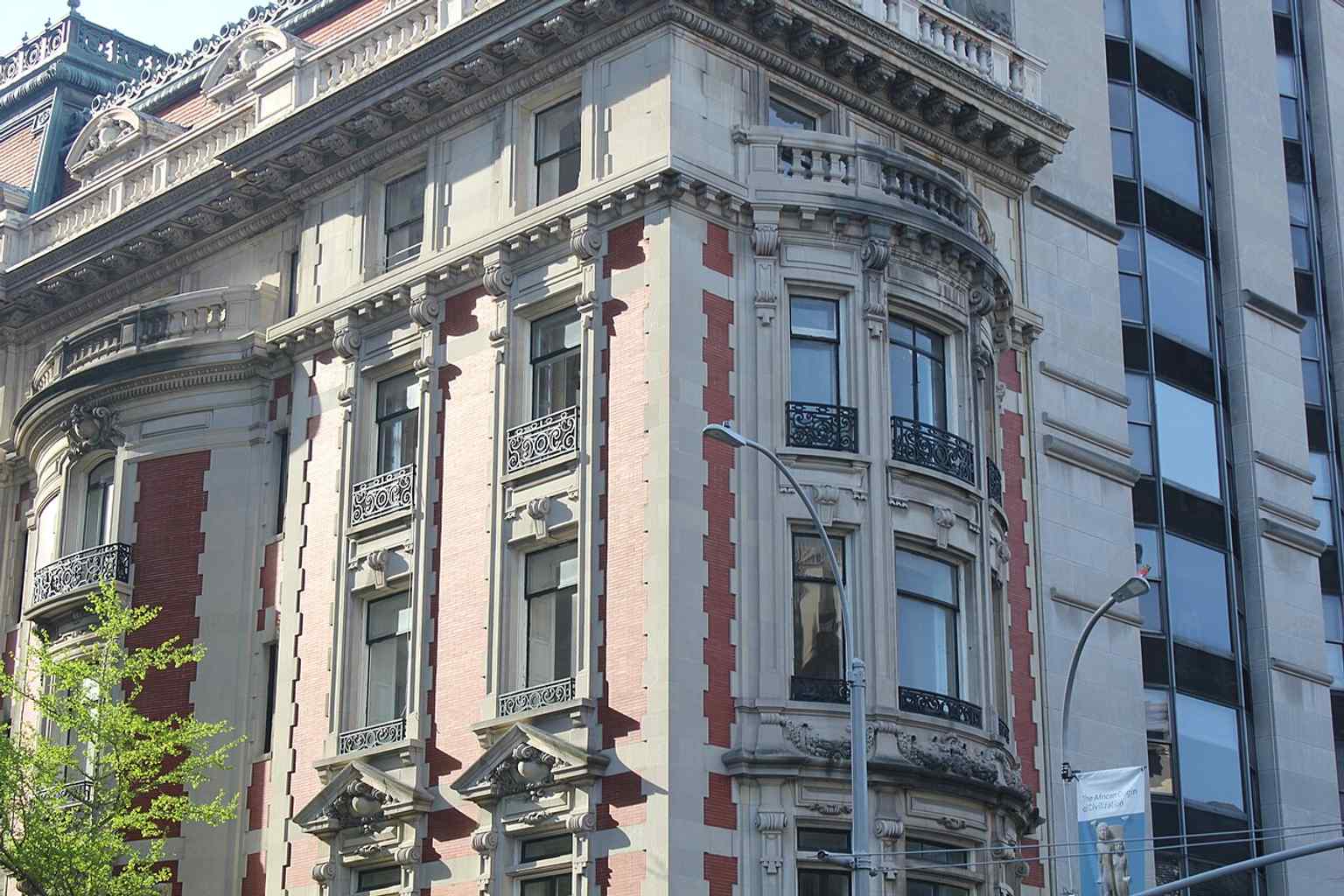
A detail view emphasizing the curved bays and ornate window treatment, part of the mansion’s highly articulated Fifth Avenue elevation.Photo: Epicgenius, Wikimedia Commons, CC BY-SA 4.0. Cropped & resized. On your right, look for a pale limestone mansion with a steep slate mansard roof and ornate ironwork at the entrance, a Fifth Avenue townhouse dressed with unmistakably European…Read moreShow less
Open dedicated page →
Neue Galerie New YorkPhoto: Neue Galerie New York, Wikimedia Commons, Public domain. Cropped & resized. On your right, look for a pale limestone mansion with a steep slate mansard roof and ornate ironwork at the entrance, a Fifth Avenue townhouse dressed with unmistakably European manners.
This is the Neue Galerie, but the building started life in nineteen fourteen as the William Starr Miller House, a grand Louis the Thirteenth and Beaux-Arts mansion. In plain English: French-inspired aristocratic flair, polished for New York money. What makes it interesting is not just taste, but translation. A very New York mansion now carries the art of Vienna and Berlin... and a good deal of exile, memory, and stubborn affection.
The museum grew out of a friendship between Serge Sabarsky and Ronald Lauder. Sabarsky was born in Vienna, fled Europe, and at one point even worked in a circus troupe before becoming one of New York’s great dealers in Austrian and German Expressionism. Expressionism, if that term feels slippery, means art that bends color, line, and form to show emotion rather than calm reality. Lauder met him in nineteen sixty-seven and kept returning to his Madison Avenue gallery, treating it as his real education.
Most people looking at this polished institution do not realize how personal it began. Lauder started collecting Austrian Expressionist art with his bar mitzvah money in nineteen fifty-seven, buying an Egon Schiele drawing. That small, almost private beginning eventually helped create this museum. Not bad for a teenage purchase.
When Sabarsky died in nineteen ninety-six, he never saw the museum they had imagined together. Lauder carried on anyway, opening the Neue Galerie in two thousand one as a tribute to his friend. He kept the whole project unusually secret during the build-out, which is either elegant efficiency or collector-level control, depending on how charitable you feel.
Inside, the second floor leans Austrian: Gustav Klimt, Oskar Kokoschka, Egon Schiele, and decorative arts from the Wiener Werkstätte, a Vienna design workshop that tried to make everyday objects as refined as fine art. The third floor turns German, with Kandinsky, Paul Klee, Kirchner, Otto Dix, George Grosz, and movements like Der Blaue Reiter and the Bauhaus. One of the museum’s magnetic centers is Klimt’s Portrait of Adele Bloch-Bauer the First, bought in two thousand six after its restitution from Maria Altmann. It had been looted by the Nazis, and its reported price of one hundred thirty-five million dollars made headlines; its moral weight mattered more.
There is one more lovely layer here: before the museum moved in, later occupants had covered much of the old oak paneling instead of tearing it out, so the restoration could uncover pieces of the house that might have vanished. Preservation by accident... New York specializes in that.
From here, we head toward a very different answer to Fifth Avenue grandeur: the Guggenheim, a museum that once looked so strange on this avenue it practically picked a fight with the block. The Neue Galerie is generally open Wednesday through Monday from ten to six, closed Tuesday, and yes, it sits firmly in the expensive camp.
Look for the ivory concrete spiral, stacked like a widening ribbon, with a glass entrance tucked beneath a projecting bridge that carries the museum’s name. If you know only two…Read moreShow less
Open dedicated page →Look for the ivory concrete spiral, stacked like a widening ribbon, with a glass entrance tucked beneath a projecting bridge that carries the museum’s name.
If you know only two names here, Solomon Guggenheim and Frank Lloyd Wright, you are missing a crucial accomplice. Hilla von Rebay, the museum’s first director, persuaded Guggenheim in nineteen twenty-six to stop buying old masters and start collecting abstract, or “non-objective,” art... painting that did not try to depict the visible world at all.
That was not a small tweak. It was a wholesale rewiring of taste. Guggenheim, heir to mining money, began showing this new collection in his Plaza Hotel apartment, then turned a private obsession into a public foundation in nineteen thirty-seven. The first museum opened in Midtown in nineteen thirty-nine as the Museum of Non-Objective Painting. Rebay wanted more than wall space. She wanted a place that would teach people how to see differently.
So in nineteen forty-three, she and Guggenheim wrote to Frank Lloyd Wright and asked for what she called a temple of spirit. Rebay at first thought the seventy-six-year-old Wright might already be dead... awkward first assumption. He was very much alive, and delighted. Wright said he had never seen a museum that was “properly designed,” which sounds arrogant until you look at this building and realize he fully intended to prove it.
He spent fifteen years, more than seven hundred sketches, and six sets of working drawings doing exactly that. Costs rose from one million dollars, roughly eleven million today, to two million, about twenty-two million today. War shortages slowed construction. New York code officials objected. Later, director James Johnson Sweeney fought Wright over lighting, storage, and how art should hang. And still Wright pushed on with this six-story rotunda, its continuous spiral ramp curling under a great skylight.
If you want, take a quick look at the before-and-after image in the app; it neatly shows this place going from risky construction site to Fifth Avenue icon.
When the museum opened in nineteen fifty-nine, six months after Wright died, critics and artists pounced. Some called it a giant corkscrew, a washing machine, even a huge garage. Twenty-one artists protested the slanted walls and curved bays, worrying their work would be upstaged by the architecture. Fair complaint, honestly. Wright had not designed a neutral container. He designed a machine for changing the ritual of museum-going: take the elevator up, then descend in a slow spiral, with art and people visible across the open void.
If you glance at the interior image on your screen, you can see that rotunda in action beneath the skylight.
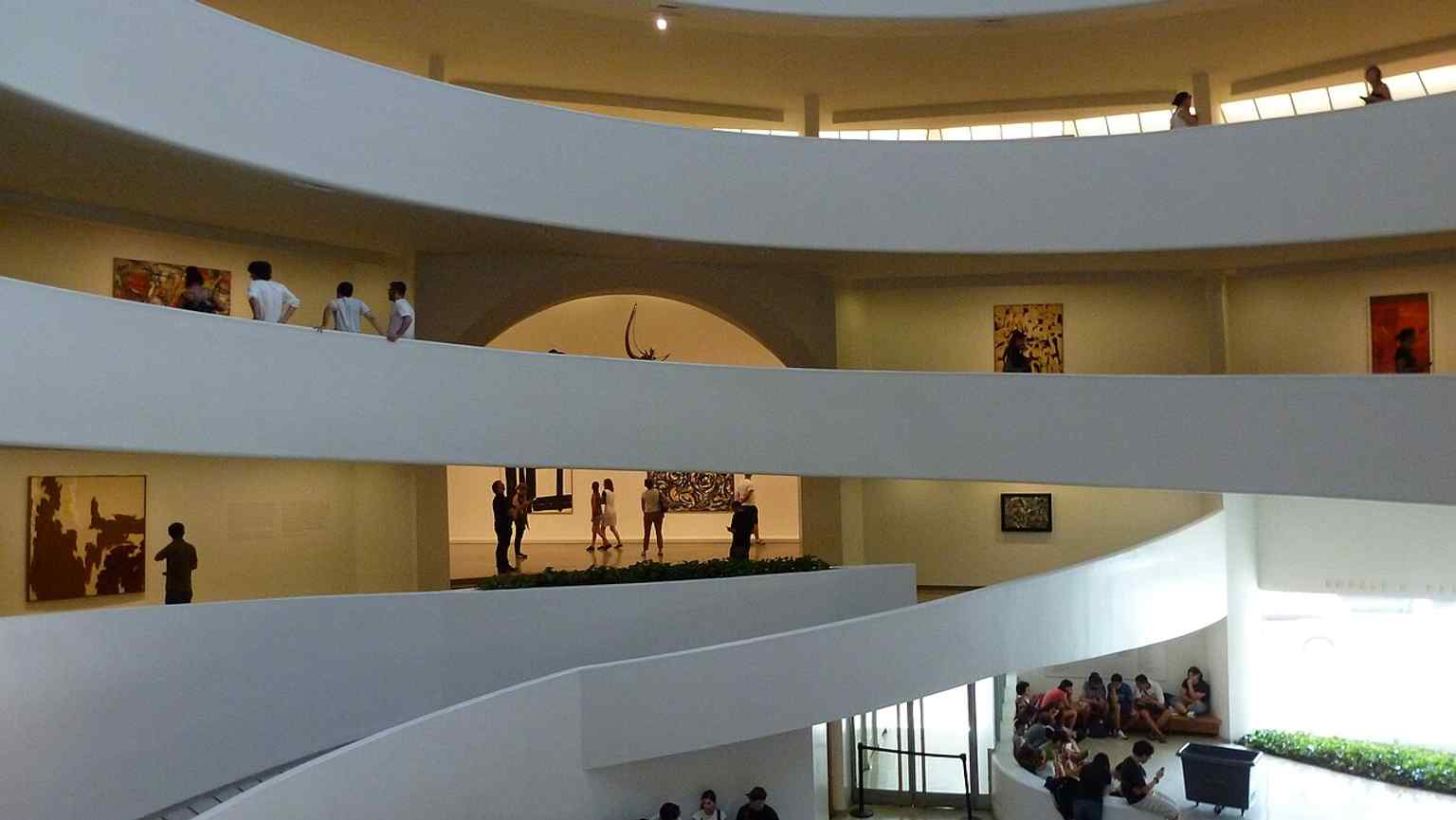
The rotunda and skylight from inside the museum, where visitors descend the helical ramp through Wright’s open central atrium.Photo: Stevenuccia, Wikimedia Commons, CC BY-SA 3.0. Cropped & resized. And that argument never really ended. This foundation now holds around eight thousand works, from Kandinsky and Klee to later contemporary art, but the building still steals a little attention for itself. So whose monument is it? Guggenheim paid for the dream, Wright cast it in concrete, but Rebay redirected the collection and the mission before either name became legend.
Take a moment and compare those curves to the stricter boxes along Fifth Avenue. Does this feel like a museum, a monument, or a building that simply refused to behave?
Ahead, the avenue changes register again, from modern art’s holy spiral to a church shaped by remembrance. Church of the Heavenly Rest is about a two-minute walk away. If you plan to return, the museum is open every day from ten thirty to five thirty.
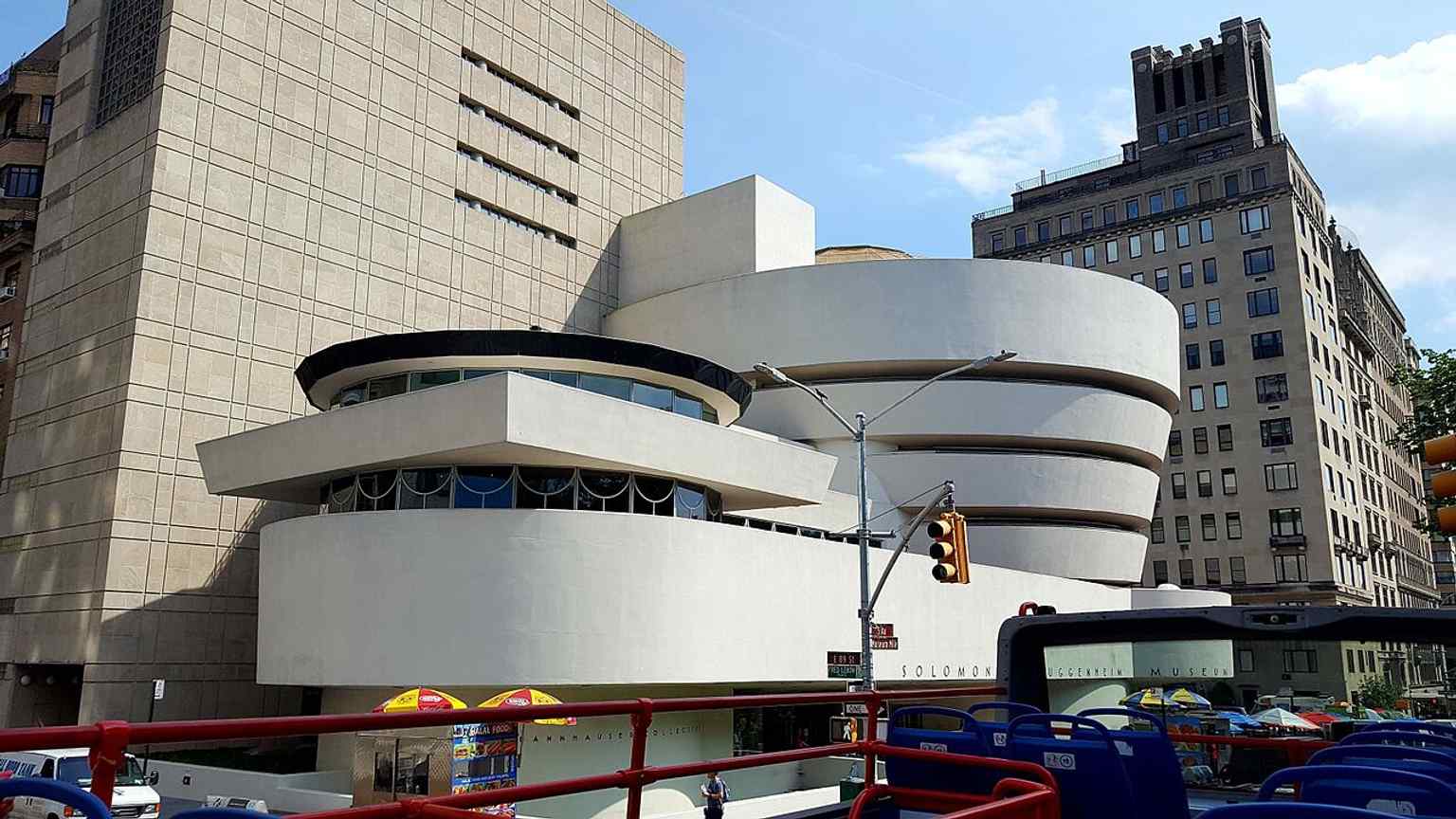
A wider street view of the Guggenheim on the Upper East Side, showing how its curved form contrasts with the straight grid of Manhattan.Photo: Upstateherd, Wikimedia Commons, CC BY-SA 4.0. Cropped & resized. 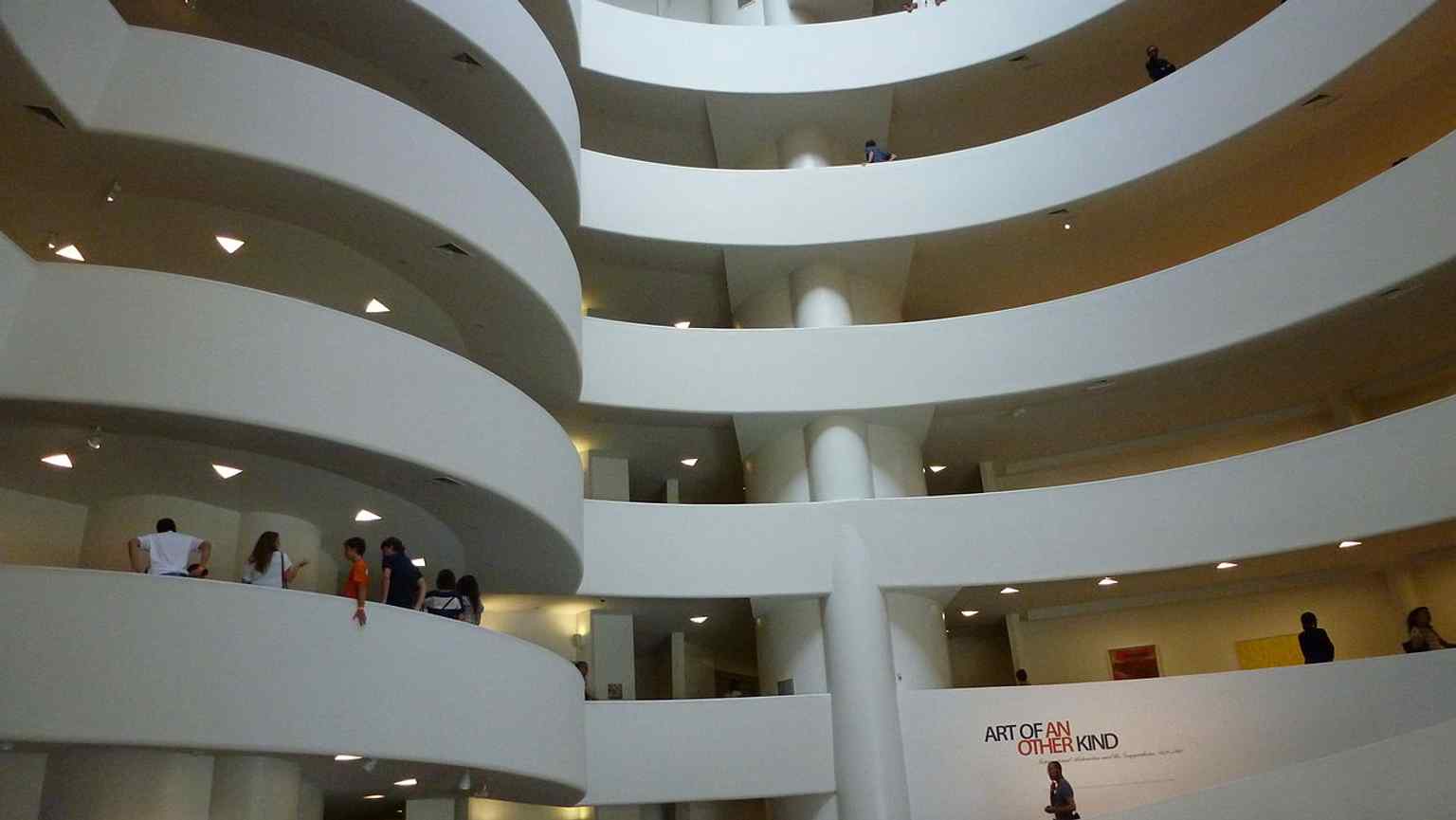
The curving ramp gallery shows the building’s unusual display spaces, which once sparked controversy but later became celebrated.Photo: Stevenuccia, Wikimedia Commons, CC BY-SA 3.0. Cropped & resized. 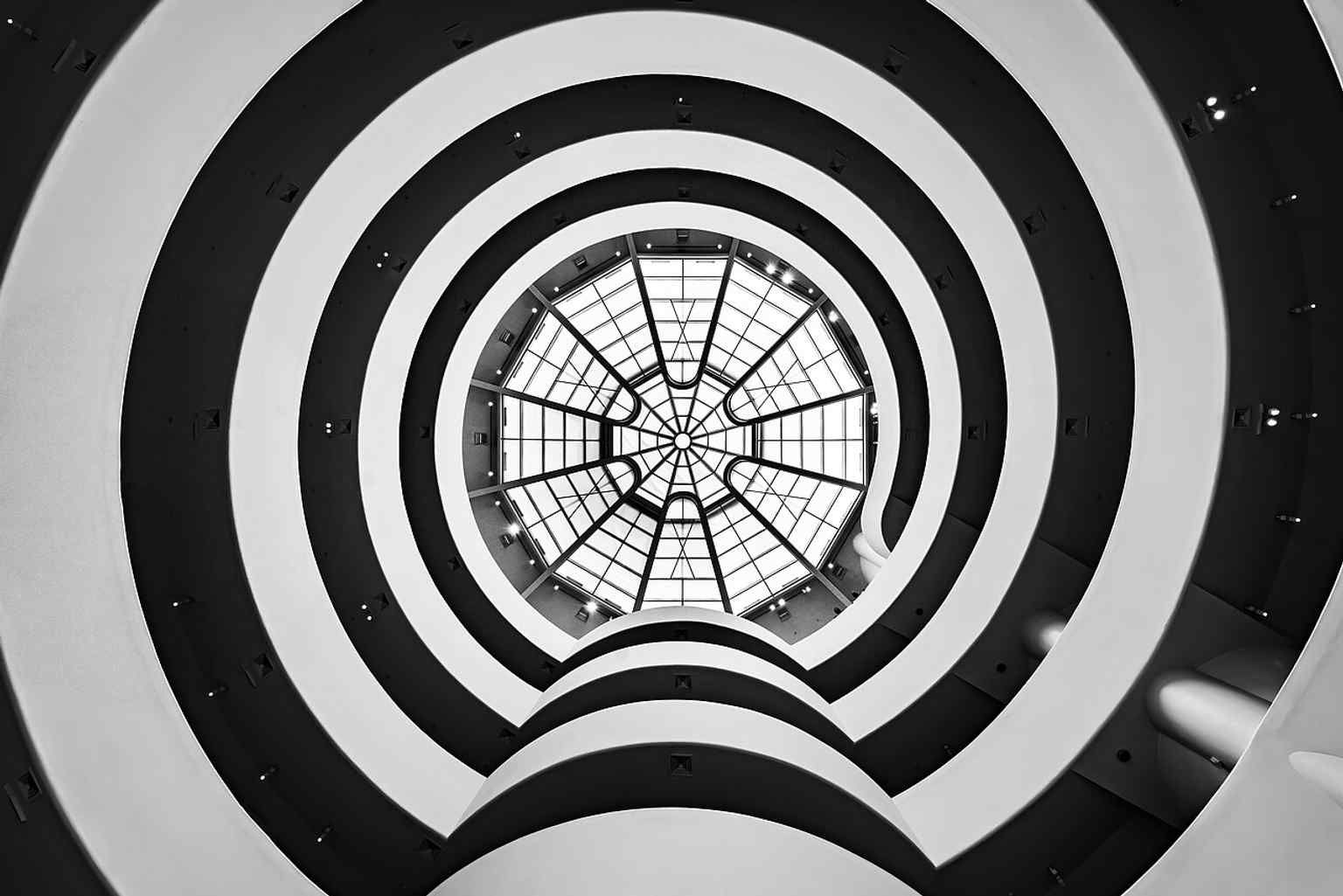
The great skylight over the rotunda — a key part of Wright’s plan to flood the museum with light from above.Photo: T meltzer, Wikimedia Commons, CC BY-SA 4.0. Cropped & resized. 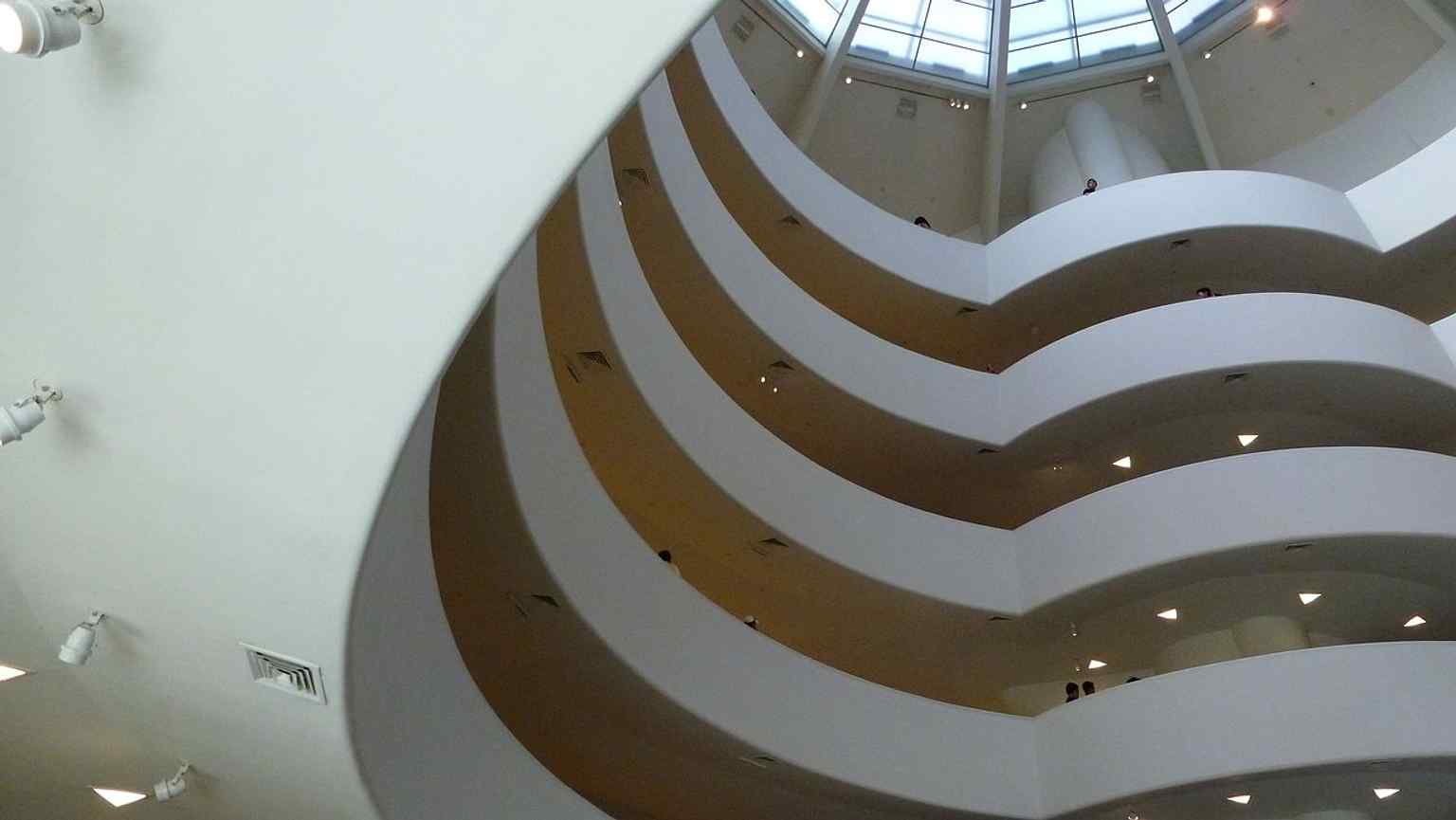
The terrazzo floor with circular inlays reflects Wright’s repeated use of circles and spirals throughout the museum.Photo: Stevenuccia, Wikimedia Commons, CC BY-SA 3.0. Cropped & resized. 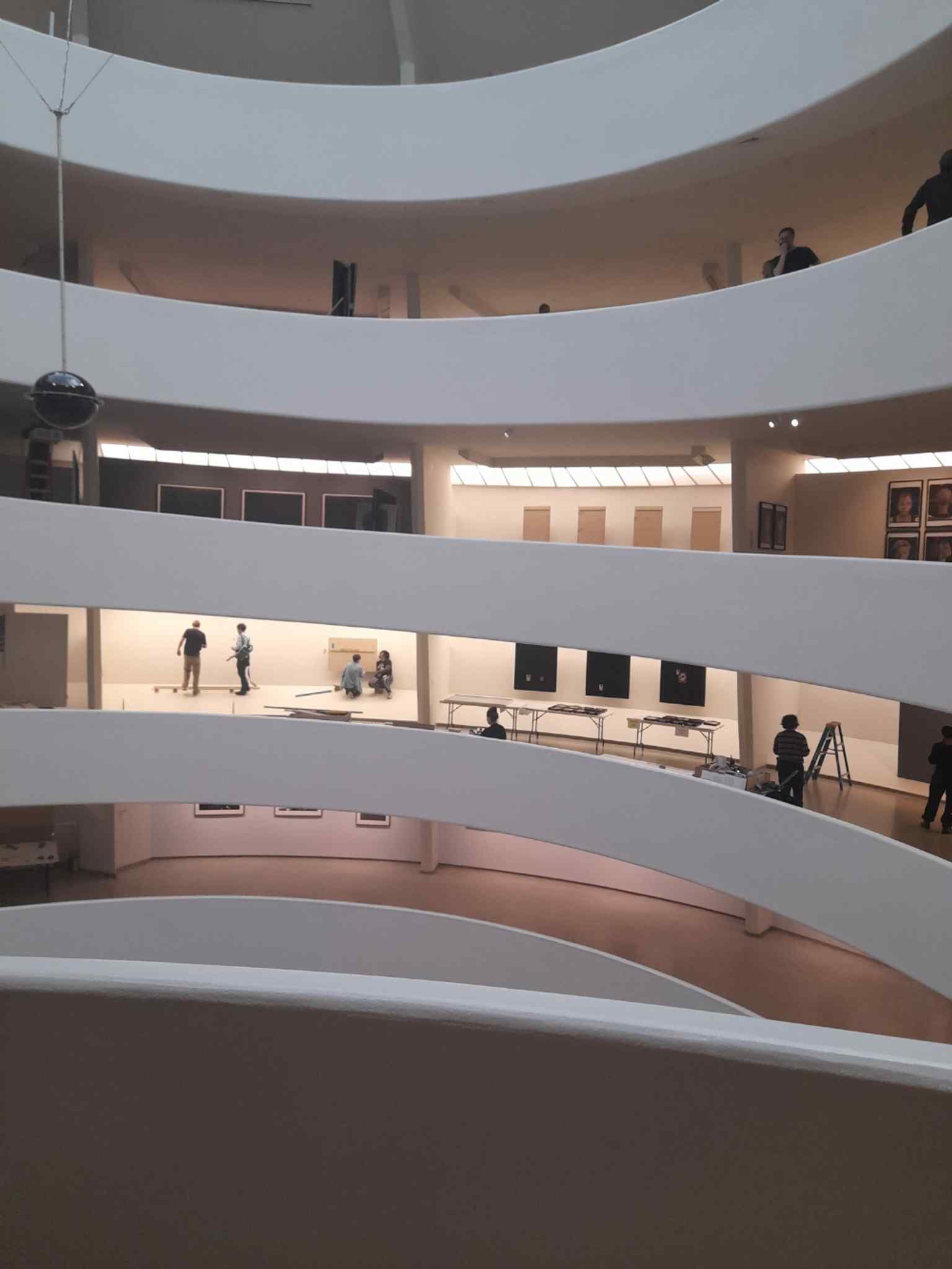
A recent interior view of the museum during reorganization in 2023, showing how the Guggenheim still adapts its galleries for changing exhibitions.Photo: Matpti, Wikimedia Commons, CC0. Cropped & resized. On your right, look for a broad French-limestone mansion with a heavily rusticated base of deep-cut stone blocks, tall arched openings, and a recessed carriage entrance tucked…Read moreShow less
Open dedicated page →On your right, look for a broad French-limestone mansion with a heavily rusticated base of deep-cut stone blocks, tall arched openings, and a recessed carriage entrance tucked into the Ninety-first Street side.
This house is Fifth Avenue doing costume drama with a very serious budget. Otto Hermann Kahn, the financier and philanthropist, completed it in nineteen eighteen as his family’s town residence, and he did not aim for modesty. He and his architects, J. Armstrong Stenhouse and C. P. H. Gilbert, modeled the place on the Palazzo della Cancelleria in Rome, so the message was clear: old-world authority, imported to Manhattan, no waiting.
That message mattered. Andrew Carnegie had bought this corner back in eighteen ninety-eight partly to protect the value of his own mansion nearby. He sold only to what he considered congenial neighbors... which is a polite Gilded Age way of saying he wanted control over the block. When Kahn bought this plot in nineteen thirteen for around six hundred seventy-five thousand dollars, roughly more than twenty million today, he wasn’t just buying land. He was being admitted into a carefully staged piece of New York society.
And Kahn understood staging. If you glance at the app image, the Fifth Avenue front shows the trick beautifully: a Roman palace translated into pale stone, with that strong cornice and balustrade at the top acting like a crown. The first and second floors are rusticated to resemble a Renaissance palazzo, and above them the facade smooths out, as if the house gets more aristocratic the higher it rises.
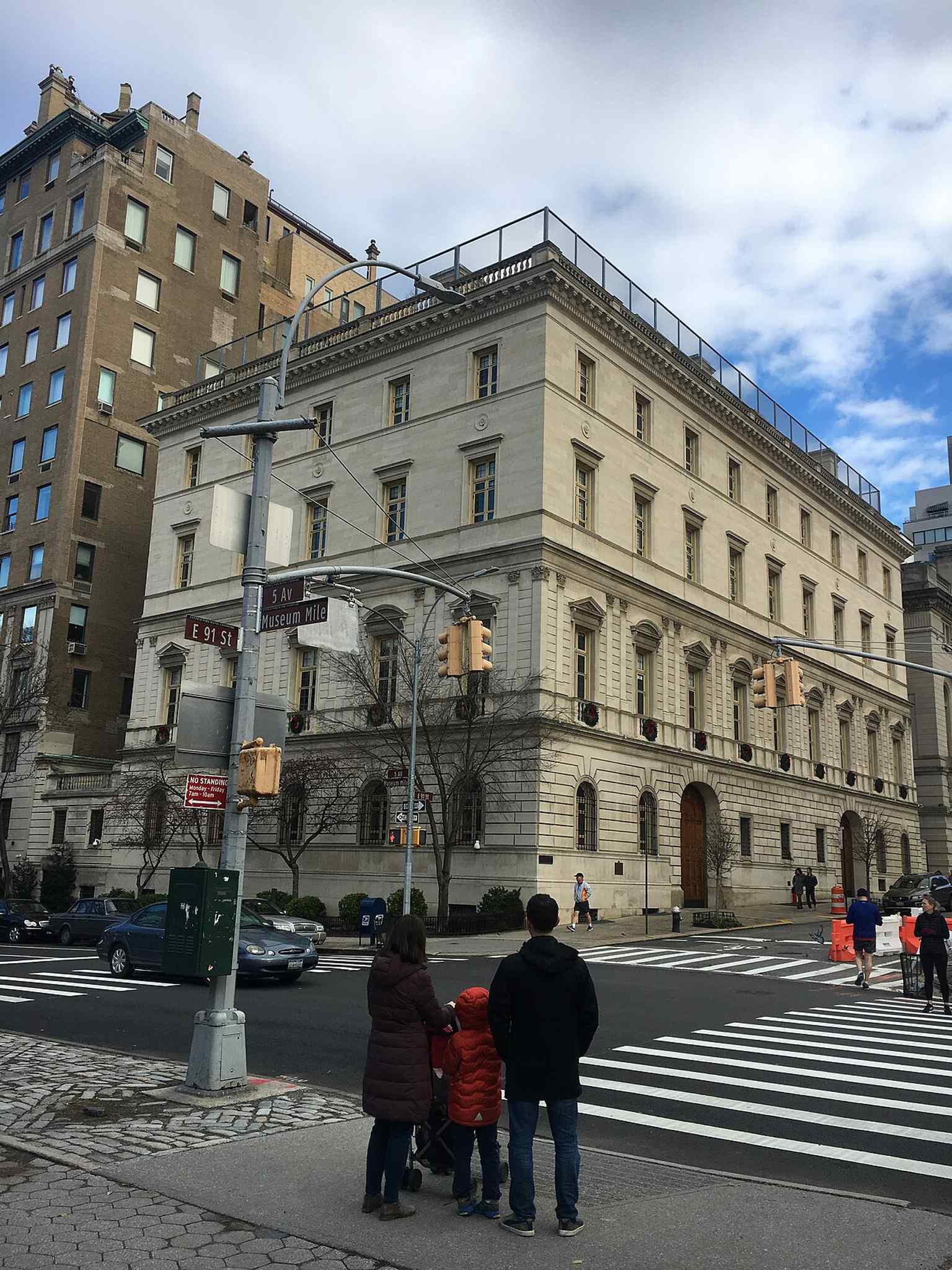
Front view from Fifth Avenue, showing the French-limestone mansion that Otto Kahn modeled on an Italian Renaissance palazzo.Photo: Deansfa, Wikimedia Commons, CC BY-SA 4.0. Cropped & resized. Kahn had reasons to build identity into stone. He was a Jewish immigrant from Germany, a senior partner at Kuhn, Loeb and Company, and despite immense wealth he faced the antisemitism of New York high society often enough to move repeatedly. So this mansion reads as taste, yes... but also as argument. He could claim the avenue in flawless Italian. New York has always respected a convincing accent, especially in limestone.
The social theater inside was just as carefully directed. The covered carriage passage on Ninety-first Street - a porte-cochere, meaning a sheltered drive-in entrance for carriages - delivered guests into an oval hall. There, visitors dropped calling cards into a bowl, while Kahn could discreetly watch arrivals from a concealed window in a stone tower. Efficient, elegant, and just a touch imperial. The grand second floor, the piano nobile or main ceremonial level, held the dining room, salon, library, theater, ballroom, and art gallery under ceilings nearly twenty feet high.
If you check the second image, you can read that carriage entrance more clearly, tucked behind those arches like a private stage door for society.
This was a home, but it also functioned as a salon, concert venue, and occasional art market. The Kahns hosted musicales, a debutante ball, a Persian art show and sale, and even rehearsals for their son Roger’s jazz orchestra. Meanwhile Otto Kahn, in one of New York’s better little contradictions, often took the subway downtown to work.
By the early nineteen thirties, the mansion’s private era was ending. After Kahn died in nineteen thirty-four, the Convent of the Sacred Heart bought the house and converted it into classrooms, offices, and a chapel. In Manhattan, permanence often survives by becoming useful.
That matters for what comes next. One block north, another mansion gathers many of the same threads - wealth, Jewish identity, art, philanthropy, and the strange afterlife of private grandeur. Head on to the Felix M. Warburg House.
Look for the pale limestone mansion with a steep slate mansard roof, Gothic-trimmed windows, and a projecting arched entrance on East Ninety-second Street. This house ties a lot…Read moreShow less
Open dedicated page →Look for the pale limestone mansion with a steep slate mansard roof, Gothic-trimmed windows, and a projecting arched entrance on East Ninety-second Street.
This house ties a lot of Fifth Avenue’s loose threads into one very expensive bow. Felix M. Warburg came to the United States in eighteen ninety-five from Germany to marry Frieda Schiff, daughter of the banker Jacob Schiff, then joined Kuhn, Loeb and Company and rose fast in New York finance. By nineteen oh seven, the family had four children, soon five, and they wanted room not just to live, but to announce themselves. So Frieda bought this corner lot, and architect Gilbert gave them a Châteauesque mansion... meaning a house modeled on a French castle, with just enough Gothic drama to make plain old wealth seem almost modest.
The mansion went up in nineteen oh seven and nineteen oh eight. It originally used only part of its Fifth Avenue frontage; the rest was lawn. Inside, this was more than a family home. Felix displayed etchings and woodcuts in dedicated rooms on the first floor. Upstairs, there was a music room with a pipe organ and grand piano, a formal dining room, a conservatory, children’s rooms with toy train tracks in the hall, even a squash court higher up. In the nineteen ten census, the household included the Warburgs, their five children, and thirteen servants. That is not a house; that is an ecosystem.
And yet the private world here kept leaning outward. The family hosted a wedding for nine hundred guests, charity events, war relief fundraisers, and meetings tied to Jewish communal life. Felix also helped assemble collections for the Jewish Theological Seminary of America, so in a strange way, the future museum had already begun forming while this was still a residence.
Then the story turned. Felix died here in nineteen thirty-seven. Frieda later sold the house to developers who wanted to replace it with an eighteen-story apartment building, but the plan collapsed, ownership returned to the family, and in nineteen forty-four she donated the mansion to the Jewish Theological Seminary in memory of Felix, her father, and her brother. In nineteen forty-seven, the Jewish Museum opened here. A house built to display one family’s taste became a place where a much larger history could speak.
If you want, check the before-and-after image in the app; the mansion stays remarkably steady while the avenue around it keeps changing its mind.
That struggle kept going. In the early nineteen eighties, supporters fought off a proposal for a tall tower that would have loomed over the mansion. More than a thousand people signed a petition to protect it, and landmark status finally stuck. Later, in nineteen ninety-three, Kevin Roche added an annex in Gilbert’s style, using stone from the same quarry as the original building, which is either respectful continuity or very high-end mimicry... depending on your mood.
Today, this is still the Jewish Museum, one of the oldest Jewish museums in the United States. That matters. This house proves that legacy is never just inherited. It is arranged, argued over, donated, preserved, and reopened. All along Fifth Avenue, power first built private doors. Then, slowly and selectively, memory turned some of them into public ones.
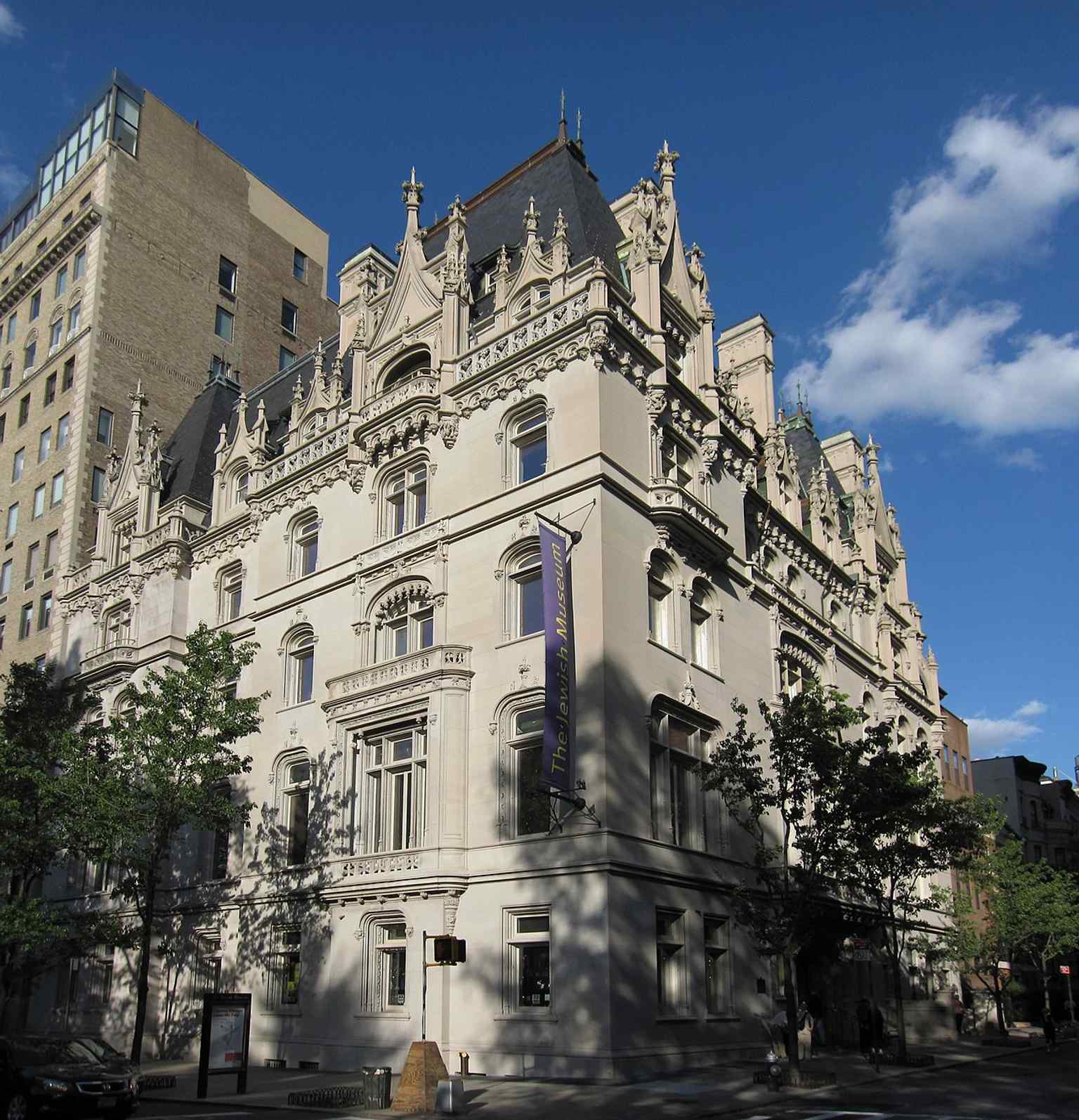
The mansion’s stone facade shows the Châteauesque style that C.P.H. Gilbert gave the Warburg family in 1908.Photo: Gryffindor derivative work: Fpo (talk), Wikimedia Commons, CC BY-SA 3.0. Cropped & resized.

Frequently asked questions
How do I start the tour?
After purchase, download the AudaTours app and enter your redemption code. The tour will be ready to start immediately - just tap play and follow the GPS-guided route.
Do I need internet during the tour?
No! Download the tour before you start and enjoy it fully offline. Only the chat feature requires internet. We recommend downloading on WiFi to save mobile data.
Is this a guided group tour?
No - this is a self-guided audio tour. You explore independently at your own pace, with audio narration playing through your phone. No tour guide, no group, no schedule.
How long does the tour take?
Most tours take 60–90 minutes to complete, but you control the pace entirely. Pause, skip stops, or take breaks whenever you want.
What if I can't finish the tour today?
No problem! Tours have lifetime access. Pause and resume whenever you like - tomorrow, next week, or next year. Your progress is saved.
What languages are available?
All tours are available in 50+ languages. Select your preferred language when redeeming your code. Note: language cannot be changed after tour generation.
Where do I access the tour after purchase?
Download the free AudaTours app from the App Store or Google Play. Enter your redemption code (sent via email) and the tour will appear in your library, ready to download and start.
If you don't enjoy the tour, we'll refund your purchase. Contact us at [email protected]
Checkout securely with 






.jpg)


%20MET%20DT263.jpg)
%20MET%20DT247656.jpg)


.jpg)


%2C%20ornamenti%20per%20il%20naso%2C%20XIII-XVI%20sec%2C%20lega%20d'oro%20a%20sbalzo.JPG)
%20for%20Allen%20%26%20Ginter%20Cigarettes%20Brands%20MET%20DP834976.jpg)


