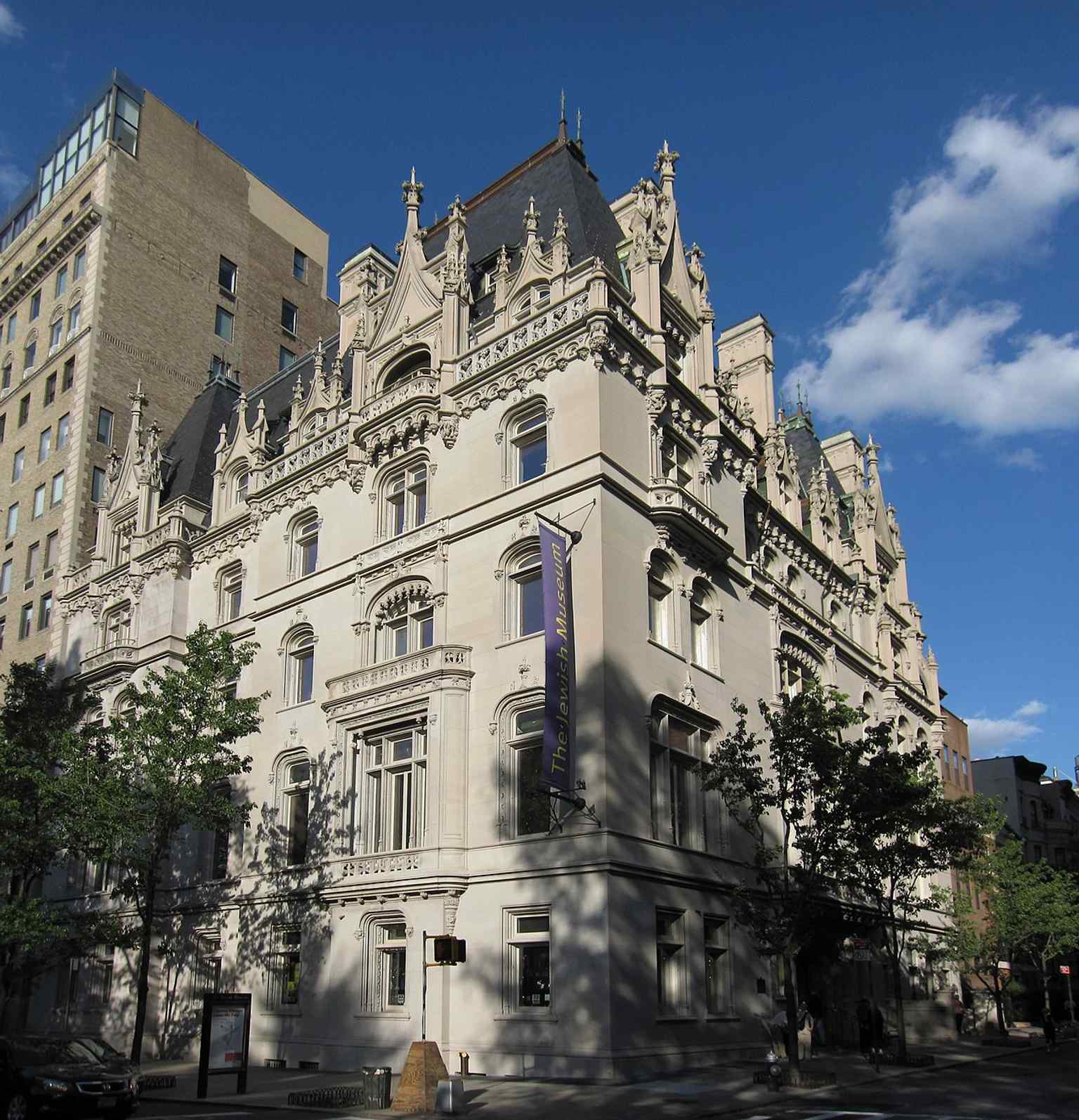
Look for the pale limestone mansion with a steep slate mansard roof, Gothic-trimmed windows, and a projecting arched entrance on East Ninety-second Street.
This house ties a lot of Fifth Avenue’s loose threads into one very expensive bow. Felix M. Warburg came to the United States in eighteen ninety-five from Germany to marry Frieda Schiff, daughter of the banker Jacob Schiff, then joined Kuhn, Loeb and Company and rose fast in New York finance. By nineteen oh seven, the family had four children, soon five, and they wanted room not just to live, but to announce themselves. So Frieda bought this corner lot, and architect Gilbert gave them a Châteauesque mansion... meaning a house modeled on a French castle, with just enough Gothic drama to make plain old wealth seem almost modest.
The mansion went up in nineteen oh seven and nineteen oh eight. It originally used only part of its Fifth Avenue frontage; the rest was lawn. Inside, this was more than a family home. Felix displayed etchings and woodcuts in dedicated rooms on the first floor. Upstairs, there was a music room with a pipe organ and grand piano, a formal dining room, a conservatory, children’s rooms with toy train tracks in the hall, even a squash court higher up. In the nineteen ten census, the household included the Warburgs, their five children, and thirteen servants. That is not a house; that is an ecosystem.
And yet the private world here kept leaning outward. The family hosted a wedding for nine hundred guests, charity events, war relief fundraisers, and meetings tied to Jewish communal life. Felix also helped assemble collections for the Jewish Theological Seminary of America, so in a strange way, the future museum had already begun forming while this was still a residence.
Then the story turned. Felix died here in nineteen thirty-seven. Frieda later sold the house to developers who wanted to replace it with an eighteen-story apartment building, but the plan collapsed, ownership returned to the family, and in nineteen forty-four she donated the mansion to the Jewish Theological Seminary in memory of Felix, her father, and her brother. In nineteen forty-seven, the Jewish Museum opened here. A house built to display one family’s taste became a place where a much larger history could speak.
If you want, check the before-and-after image in the app; the mansion stays remarkably steady while the avenue around it keeps changing its mind.
That struggle kept going. In the early nineteen eighties, supporters fought off a proposal for a tall tower that would have loomed over the mansion. More than a thousand people signed a petition to protect it, and landmark status finally stuck. Later, in nineteen ninety-three, Kevin Roche added an annex in Gilbert’s style, using stone from the same quarry as the original building, which is either respectful continuity or very high-end mimicry... depending on your mood.
Today, this is still the Jewish Museum, one of the oldest Jewish museums in the United States. That matters. This house proves that legacy is never just inherited. It is arranged, argued over, donated, preserved, and reopened. All along Fifth Avenue, power first built private doors. Then, slowly and selectively, memory turned some of them into public ones.