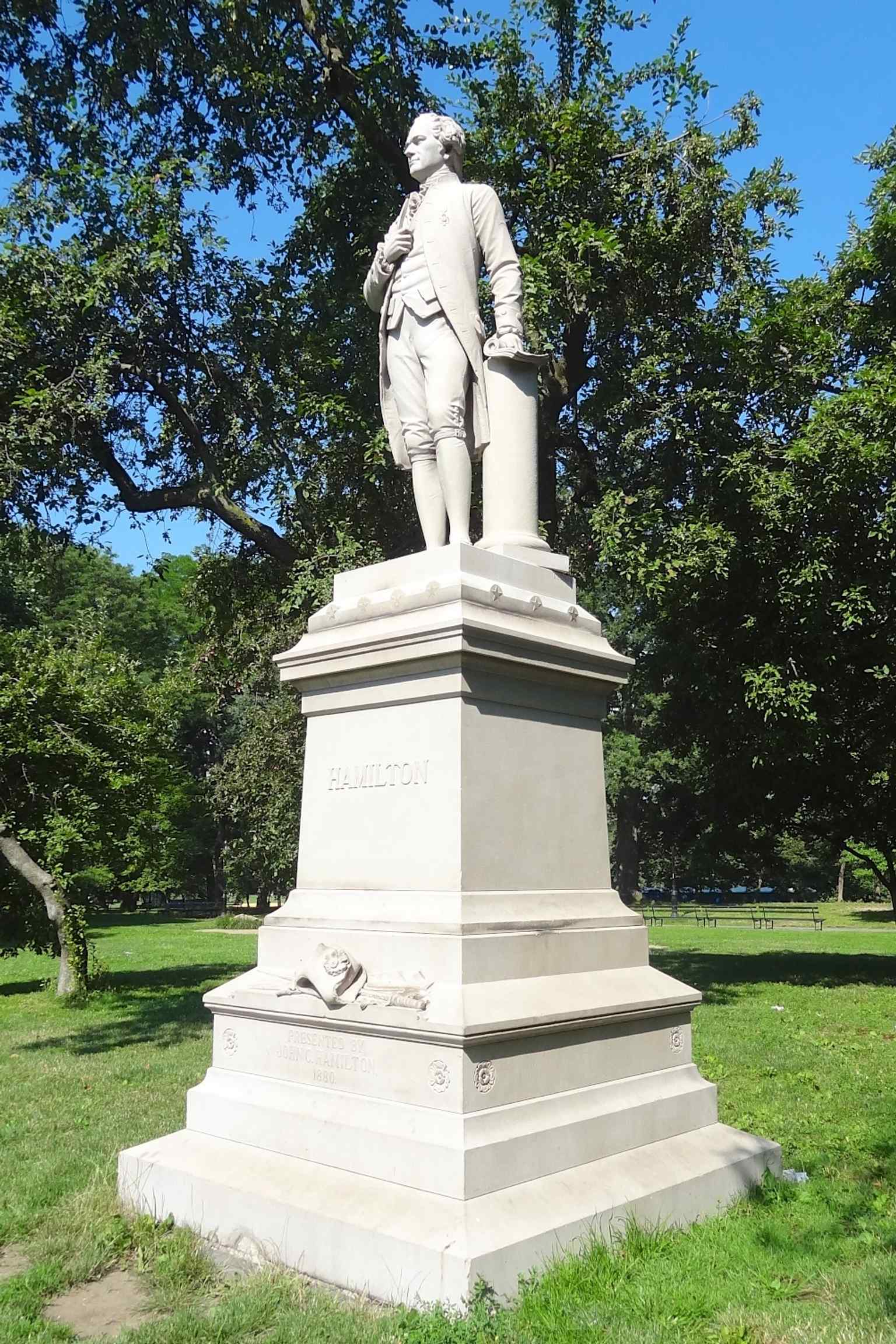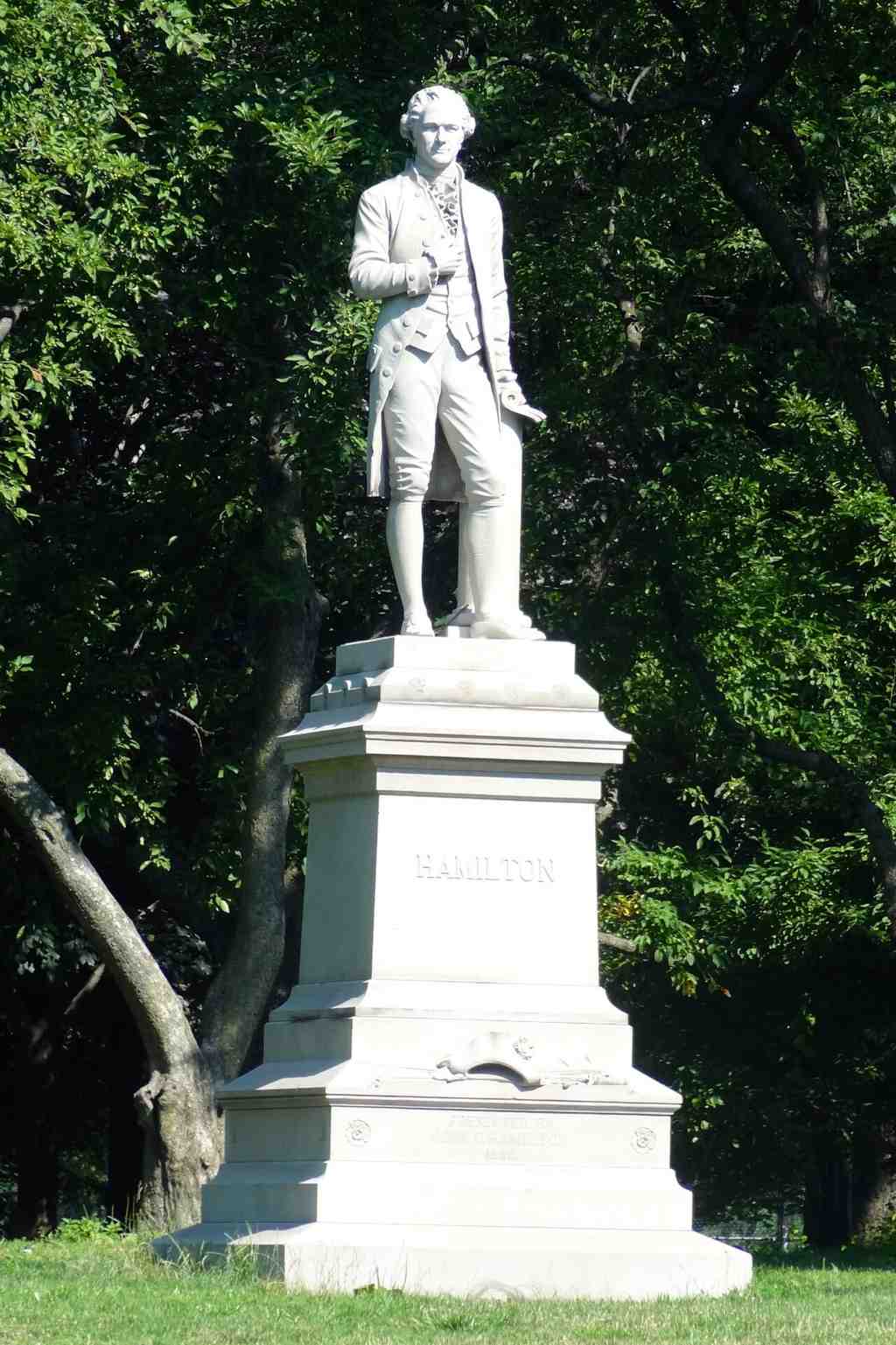
On your left, look for a tall pale gray granite figure in colonial dress, standing beside a stone column with a rolled document in hand, all set on a solid pedestal ringed with thirteen stars.
At first glance, this seems like a straightforward tribute to Alexander Hamilton... powdered wig, ruffled collar, buckle shoes, the full founding-father package. New York does enjoy dressing its legends properly. But the real author of this monument was not Hamilton. It was his son, John Church Hamilton.
John Church Hamilton was a lawyer, a historian, and, in practical terms, his father’s posthumous public relations department. He spent years editing and publishing Alexander Hamilton’s papers and writing a seven-volume biography. Then, in eighteen eighty, he commissioned this statue from sculptor Carl Conrads and gave it to the city. That matters, because this is not just remembrance. It is reputation repair through stone, scholarship, and placement. First you edit the papers, then you write the biography, then you plant the monument in Central Park so the city keeps repeating the story you want remembered.
And here’s the detail locals love because it changes the whole mood of the thing: John Church Hamilton was the last surviving child who had stood at his father’s deathbed after the Burr duel in eighteen oh four. Once you know that, this statue stops feeling like generic patriotism. It starts to feel like delayed family testimony... a son, late in life, still trying to steady the record.
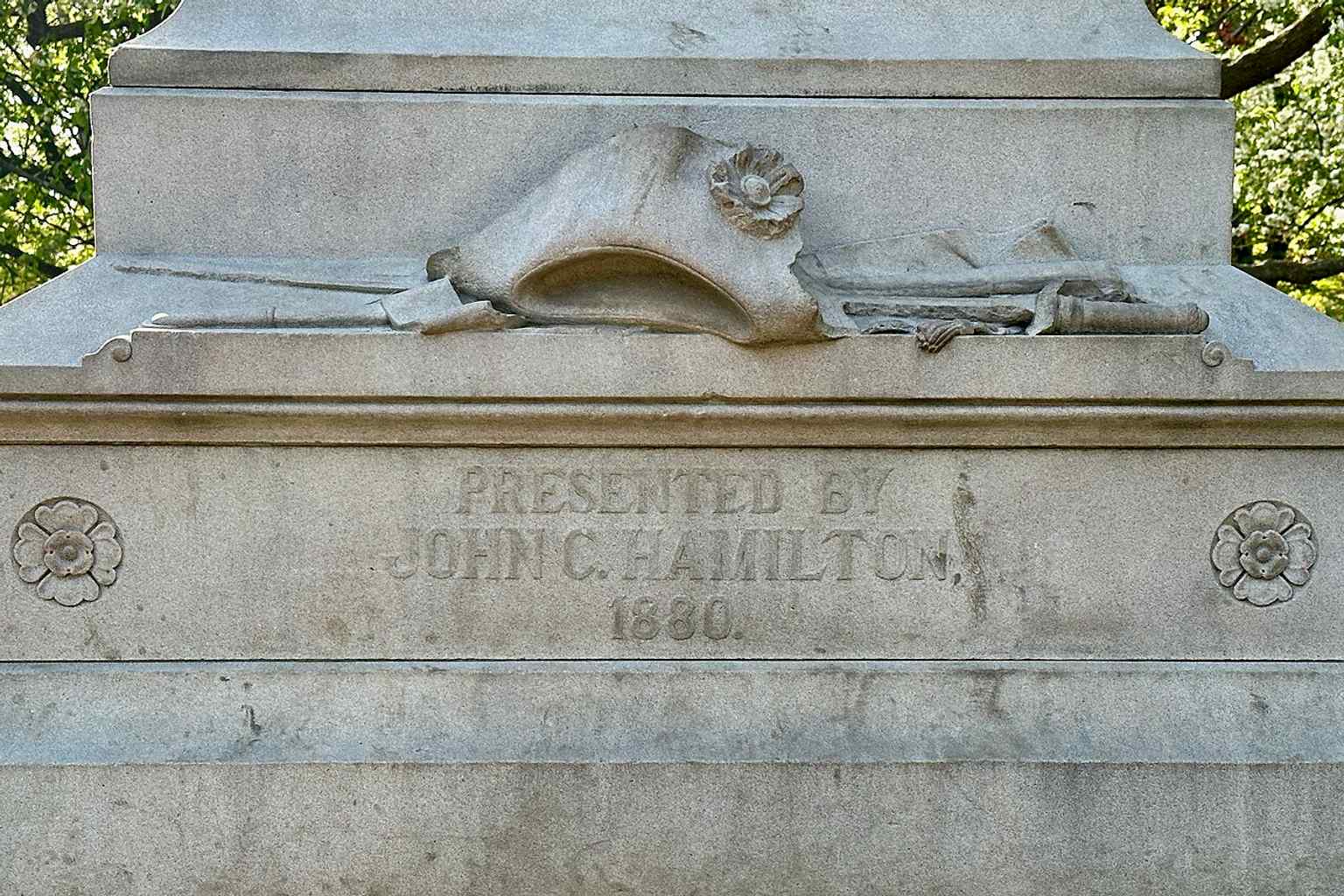
If you look at the image on your screen, the pose makes that effort legible. Hamilton’s right hand rests against his chest; his left holds that rolled document against a column, as if he is forever half statesman, half argument. Near the base, most people miss the sword, scabbard, and military hat, little reminders that his son did not want one version of Hamilton to win over the others. Soldier, financier, statesman... all of them stay in the frame.
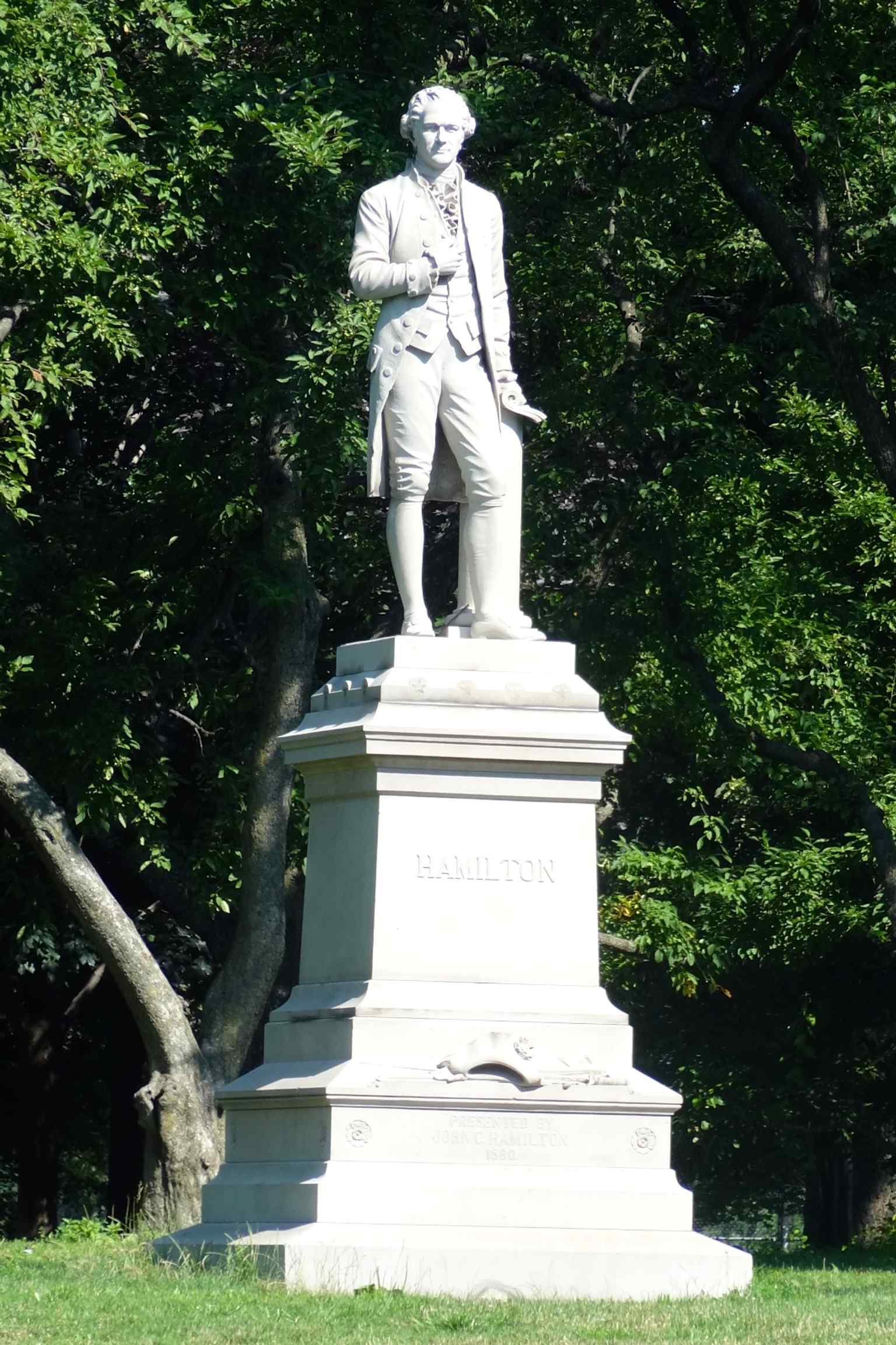
Carl Conrads carved the monument from Westerly granite, chosen for beauty and brute durability. He based Hamilton’s head on an earlier bust by Giuseppe Ceracchi, a sculptor whose own life ended under Napoleon’s guillotine. Even memory has a backstory.
The unveiling drew hundreds, but the ceremony itself had to move into the Metropolitan Museum of Art, where speakers praised Hamilton as a model for the city’s ambitions. So yes, this statue honors a founder. It also shows how families, institutions, and cities collaborate to polish a legacy until it looks inevitable.
Take one more glance, maybe at the full view in the app. Monuments look permanent, but they are often deeply personal interventions. Keep that in mind as you head toward the Sackler Wing, where names on walls become their own kind of contest.