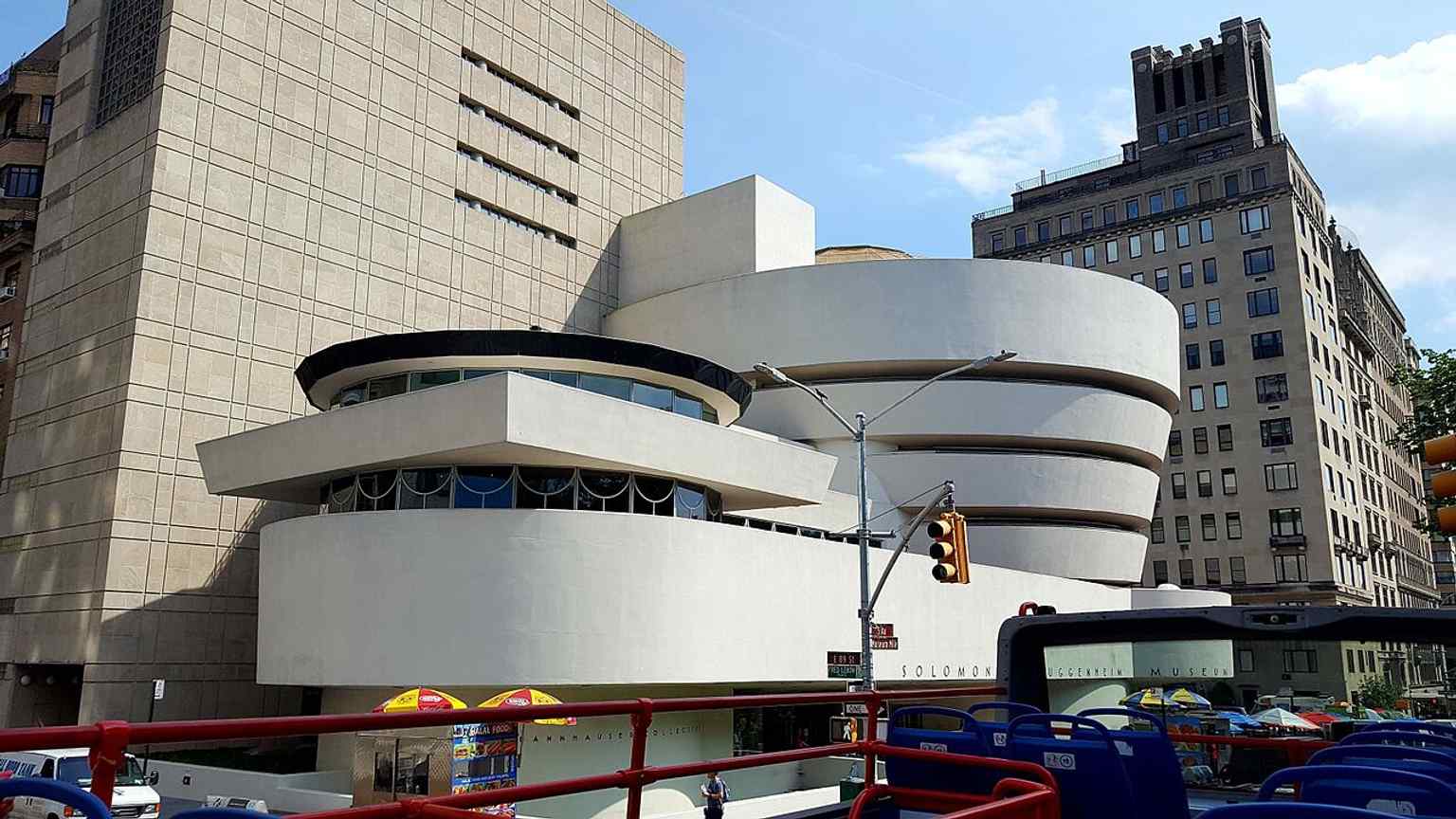
Look for the ivory concrete spiral, stacked like a widening ribbon, with a glass entrance tucked beneath a projecting bridge that carries the museum’s name.
If you know only two names here, Solomon Guggenheim and Frank Lloyd Wright, you are missing a crucial accomplice. Hilla von Rebay, the museum’s first director, persuaded Guggenheim in nineteen twenty-six to stop buying old masters and start collecting abstract, or “non-objective,” art... painting that did not try to depict the visible world at all.
That was not a small tweak. It was a wholesale rewiring of taste. Guggenheim, heir to mining money, began showing this new collection in his Plaza Hotel apartment, then turned a private obsession into a public foundation in nineteen thirty-seven. The first museum opened in Midtown in nineteen thirty-nine as the Museum of Non-Objective Painting. Rebay wanted more than wall space. She wanted a place that would teach people how to see differently.
So in nineteen forty-three, she and Guggenheim wrote to Frank Lloyd Wright and asked for what she called a temple of spirit. Rebay at first thought the seventy-six-year-old Wright might already be dead... awkward first assumption. He was very much alive, and delighted. Wright said he had never seen a museum that was “properly designed,” which sounds arrogant until you look at this building and realize he fully intended to prove it.
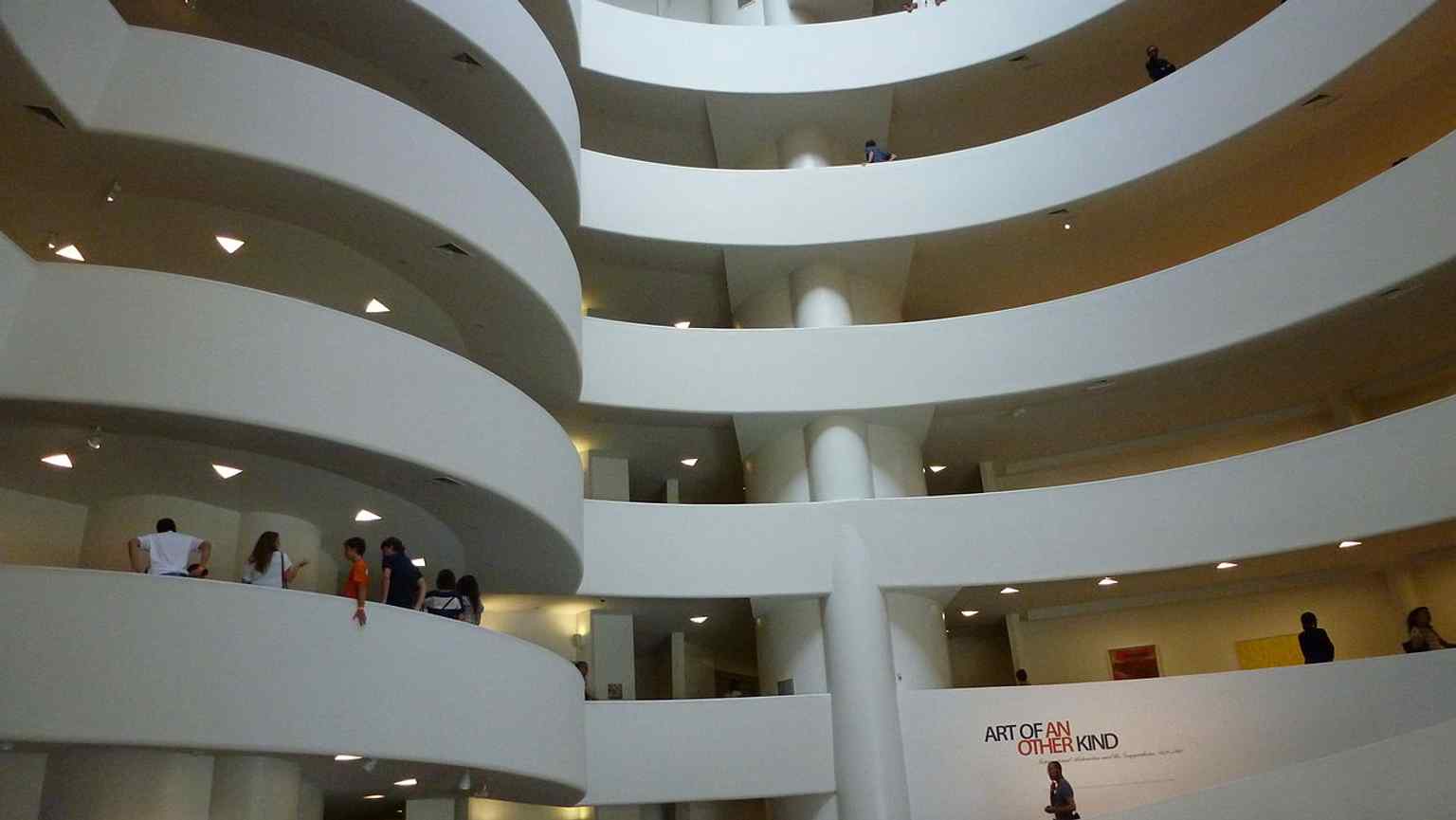
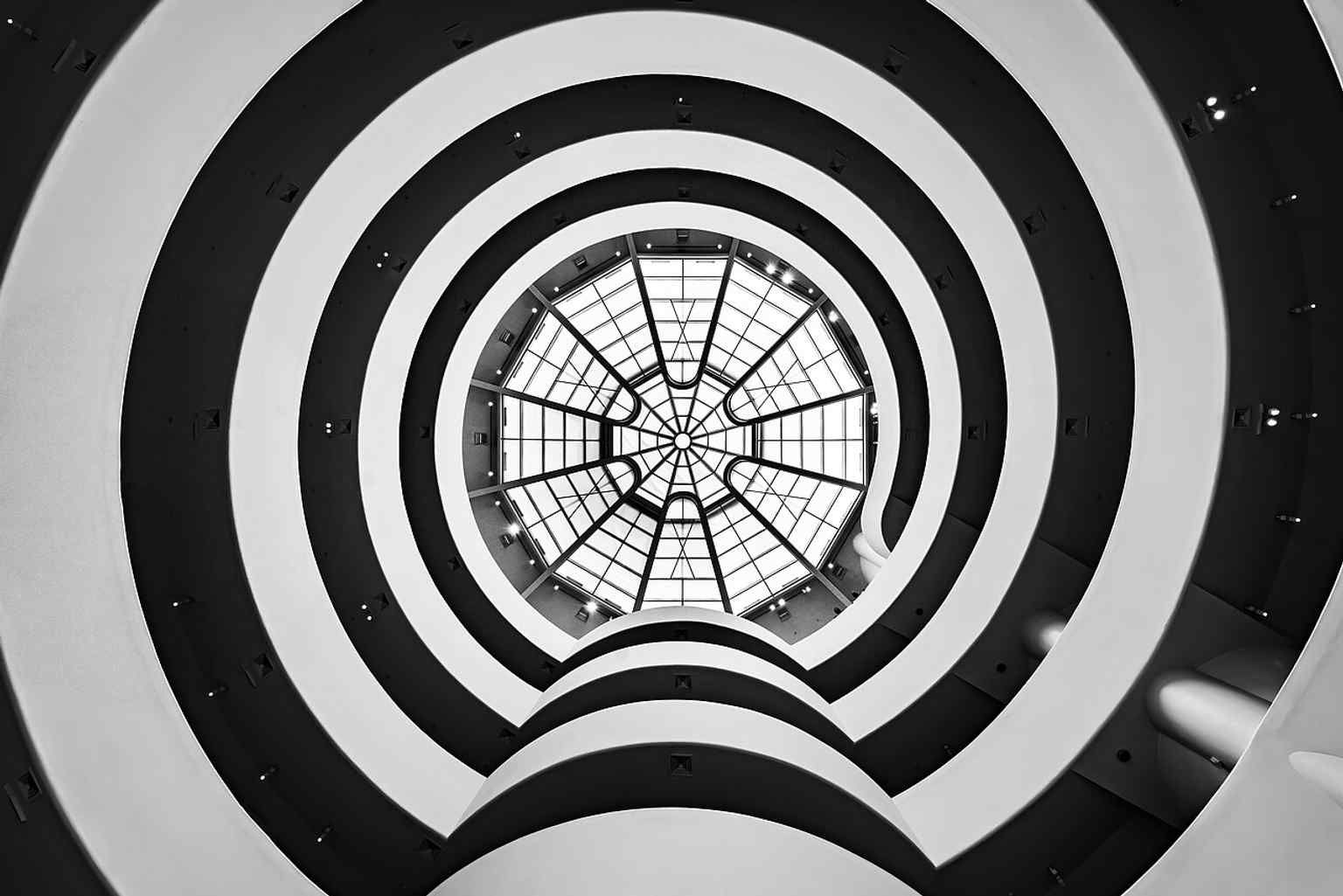
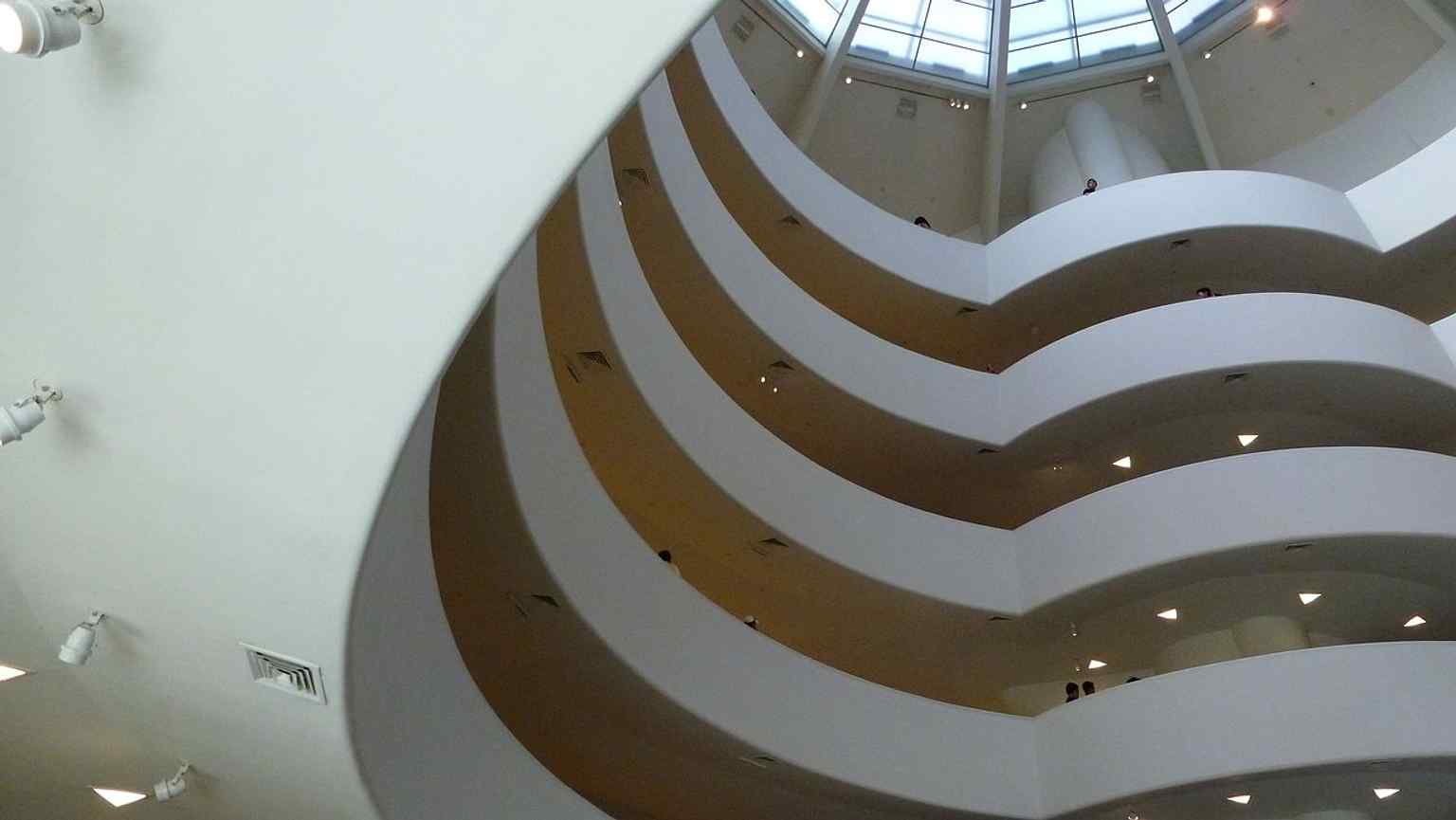
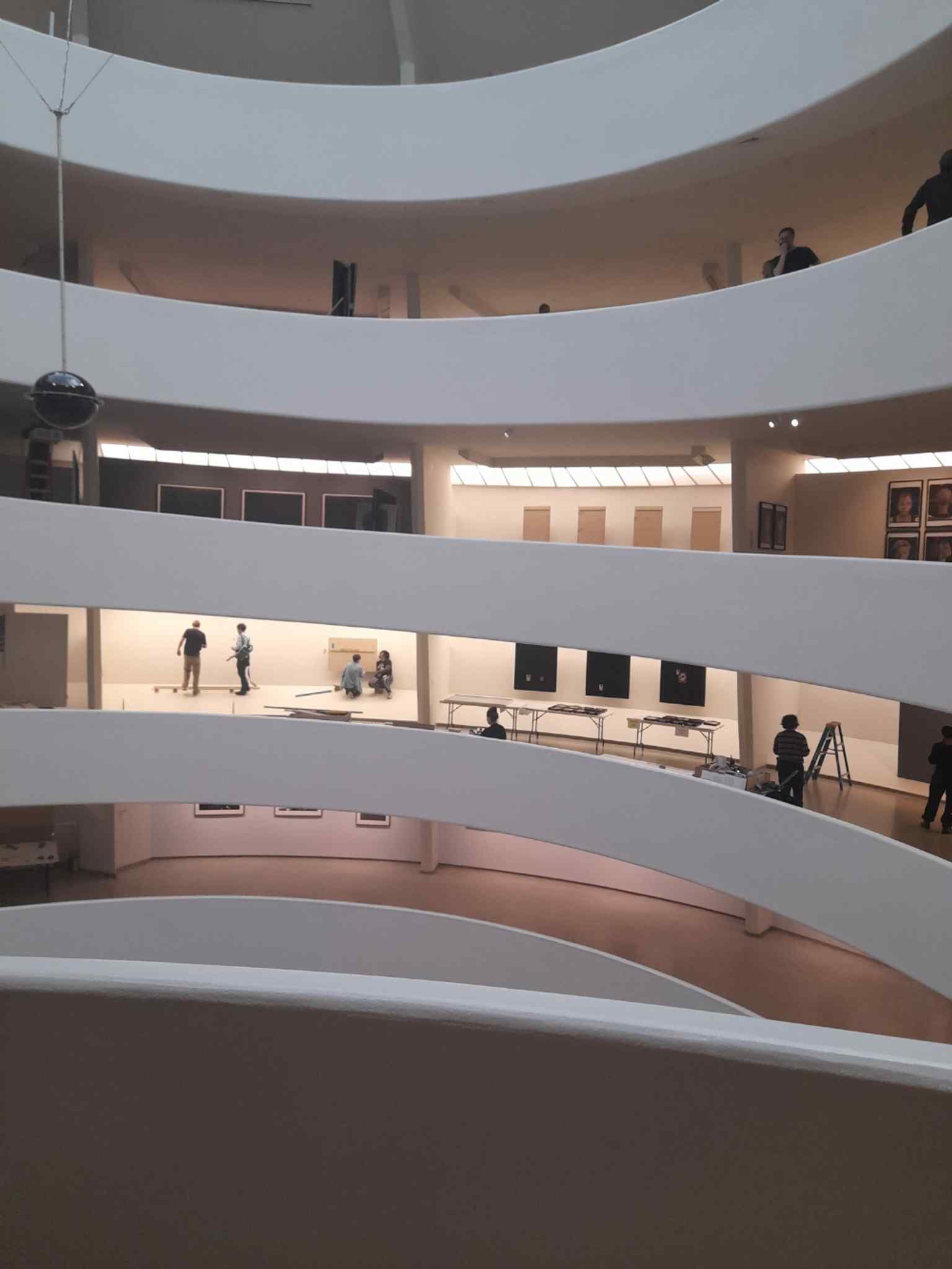
He spent fifteen years, more than seven hundred sketches, and six sets of working drawings doing exactly that. Costs rose from one million dollars, roughly eleven million today, to two million, about twenty-two million today. War shortages slowed construction. New York code officials objected. Later, director James Johnson Sweeney fought Wright over lighting, storage, and how art should hang. And still Wright pushed on with this six-story rotunda, its continuous spiral ramp curling under a great skylight.
If you want, take a quick look at the before-and-after image in the app; it neatly shows this place going from risky construction site to Fifth Avenue icon.
When the museum opened in nineteen fifty-nine, six months after Wright died, critics and artists pounced. Some called it a giant corkscrew, a washing machine, even a huge garage. Twenty-one artists protested the slanted walls and curved bays, worrying their work would be upstaged by the architecture. Fair complaint, honestly. Wright had not designed a neutral container. He designed a machine for changing the ritual of museum-going: take the elevator up, then descend in a slow spiral, with art and people visible across the open void.
If you glance at the interior image on your screen, you can see that rotunda in action beneath the skylight.
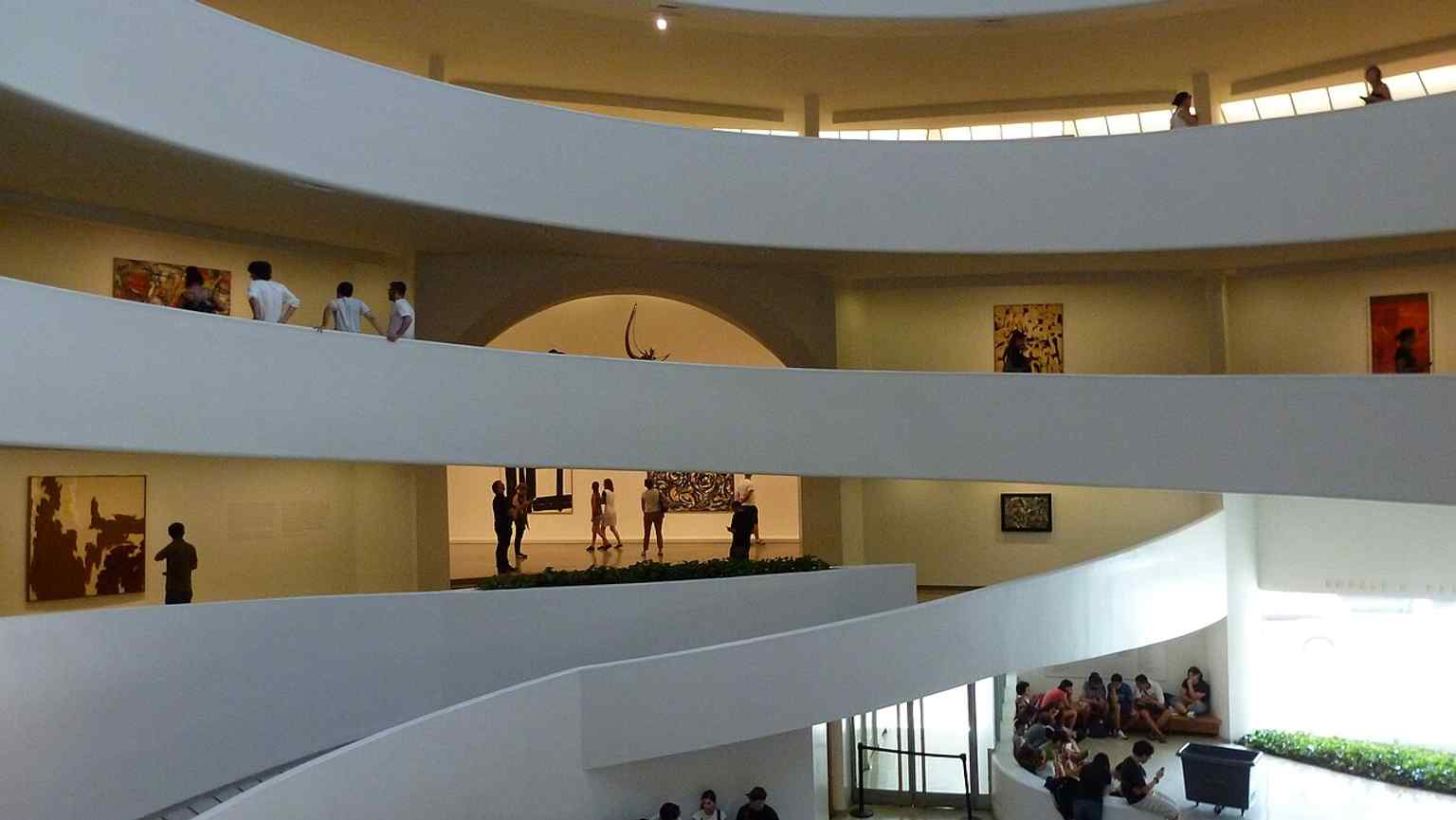
And that argument never really ended. This foundation now holds around eight thousand works, from Kandinsky and Klee to later contemporary art, but the building still steals a little attention for itself. So whose monument is it? Guggenheim paid for the dream, Wright cast it in concrete, but Rebay redirected the collection and the mission before either name became legend.
Take a moment and compare those curves to the stricter boxes along Fifth Avenue. Does this feel like a museum, a monument, or a building that simply refused to behave?
Ahead, the avenue changes register again, from modern art’s holy spiral to a church shaped by remembrance. Church of the Heavenly Rest is about a two-minute walk away. If you plan to return, the museum is open every day from ten thirty to five thirty.