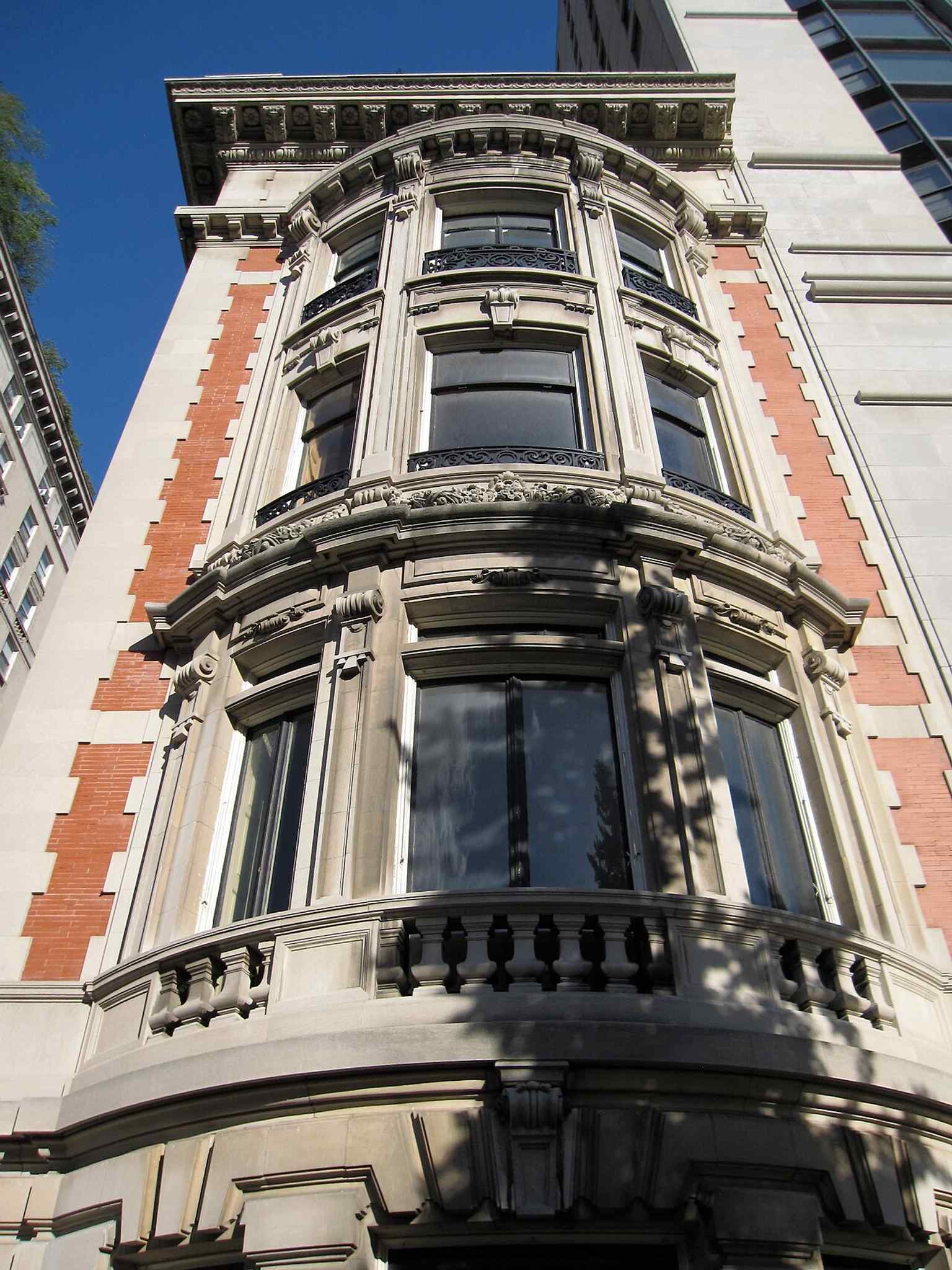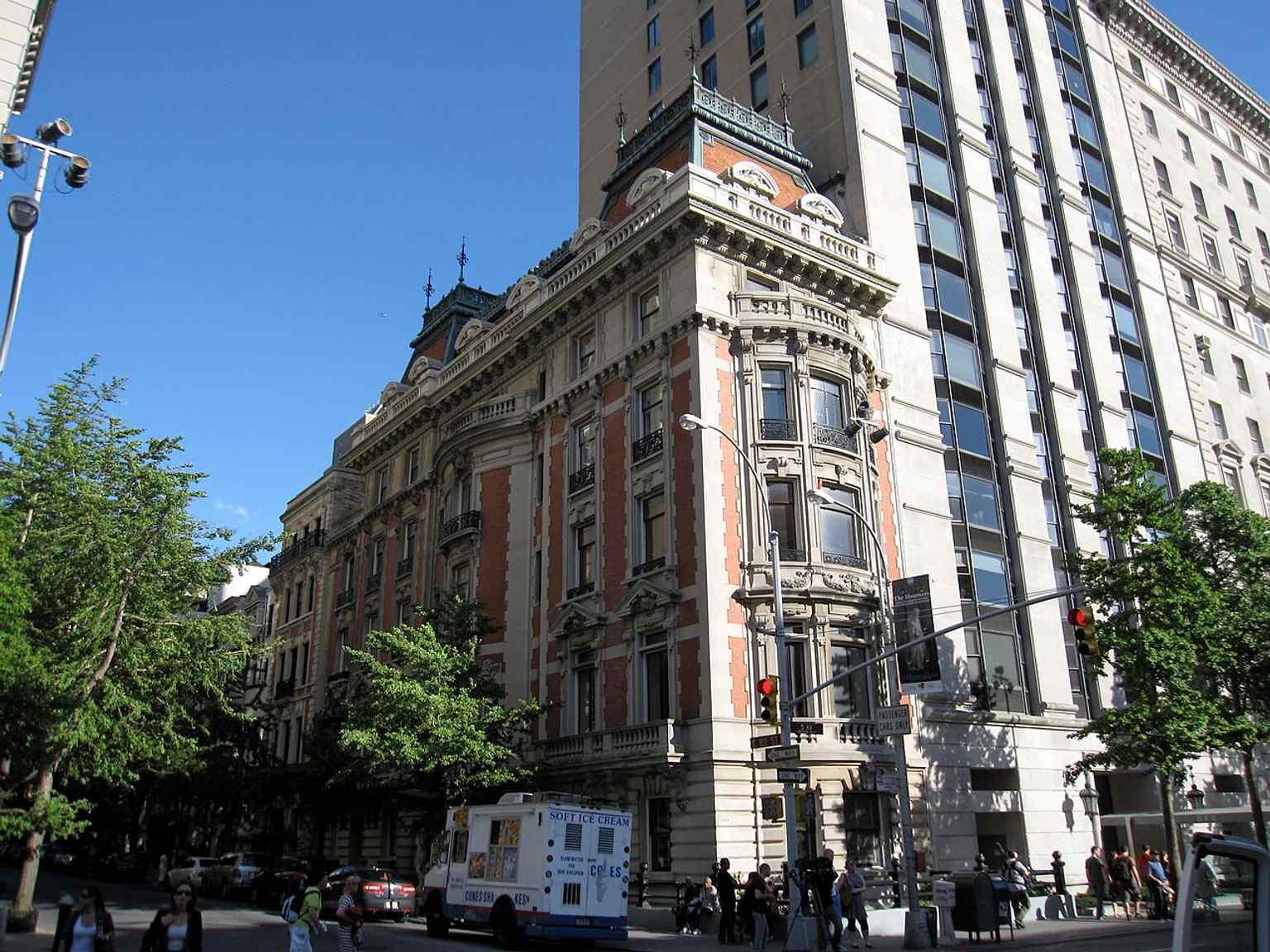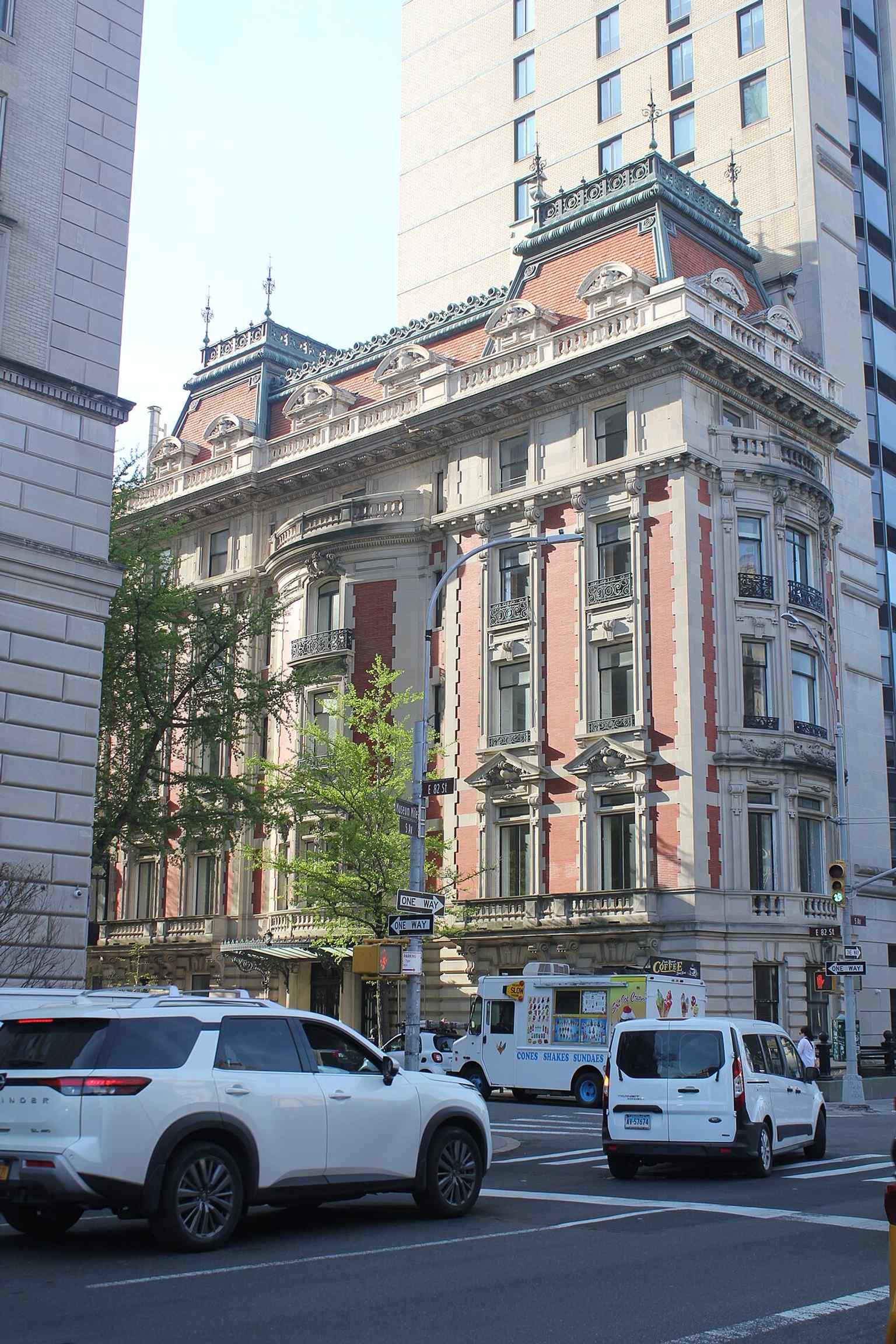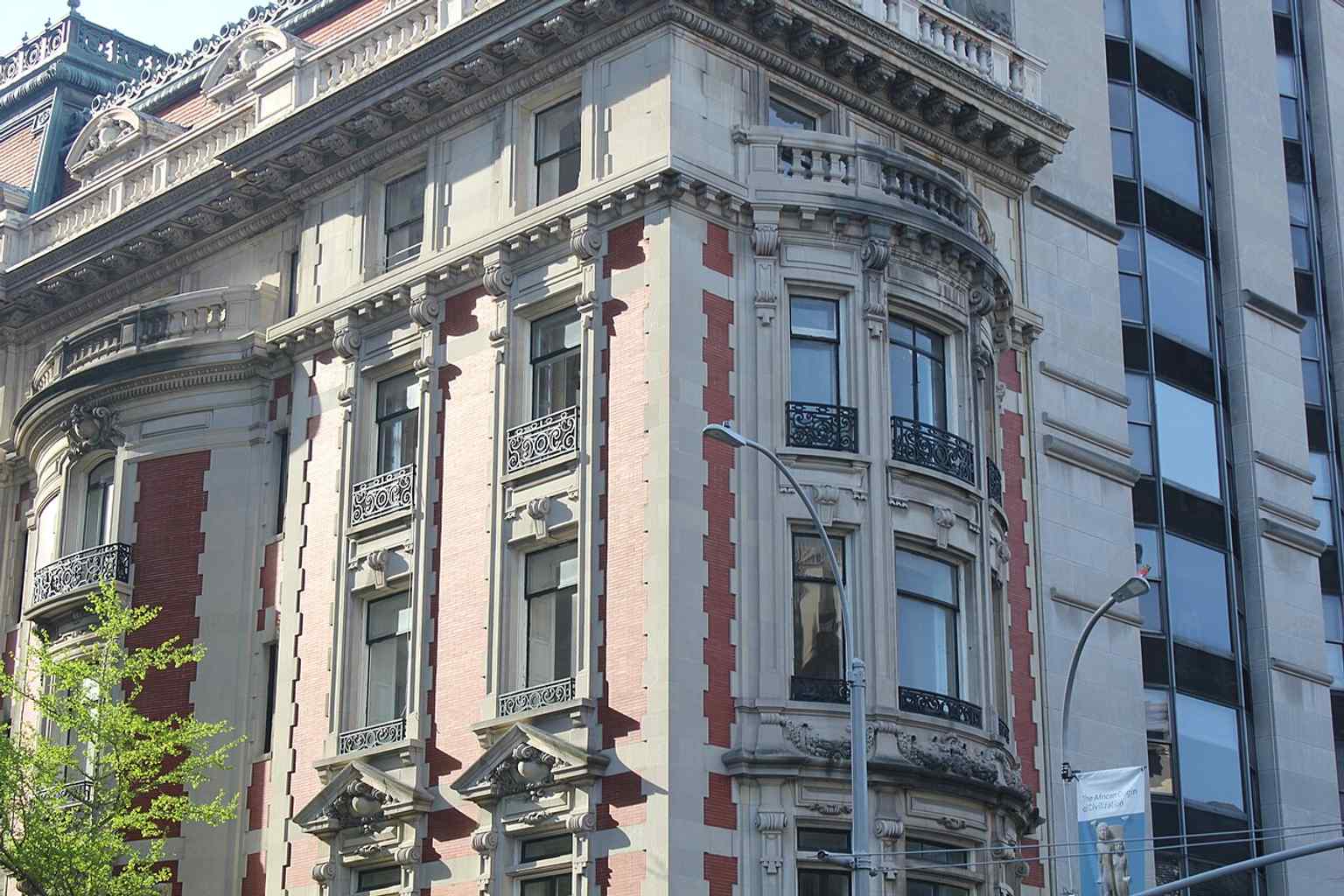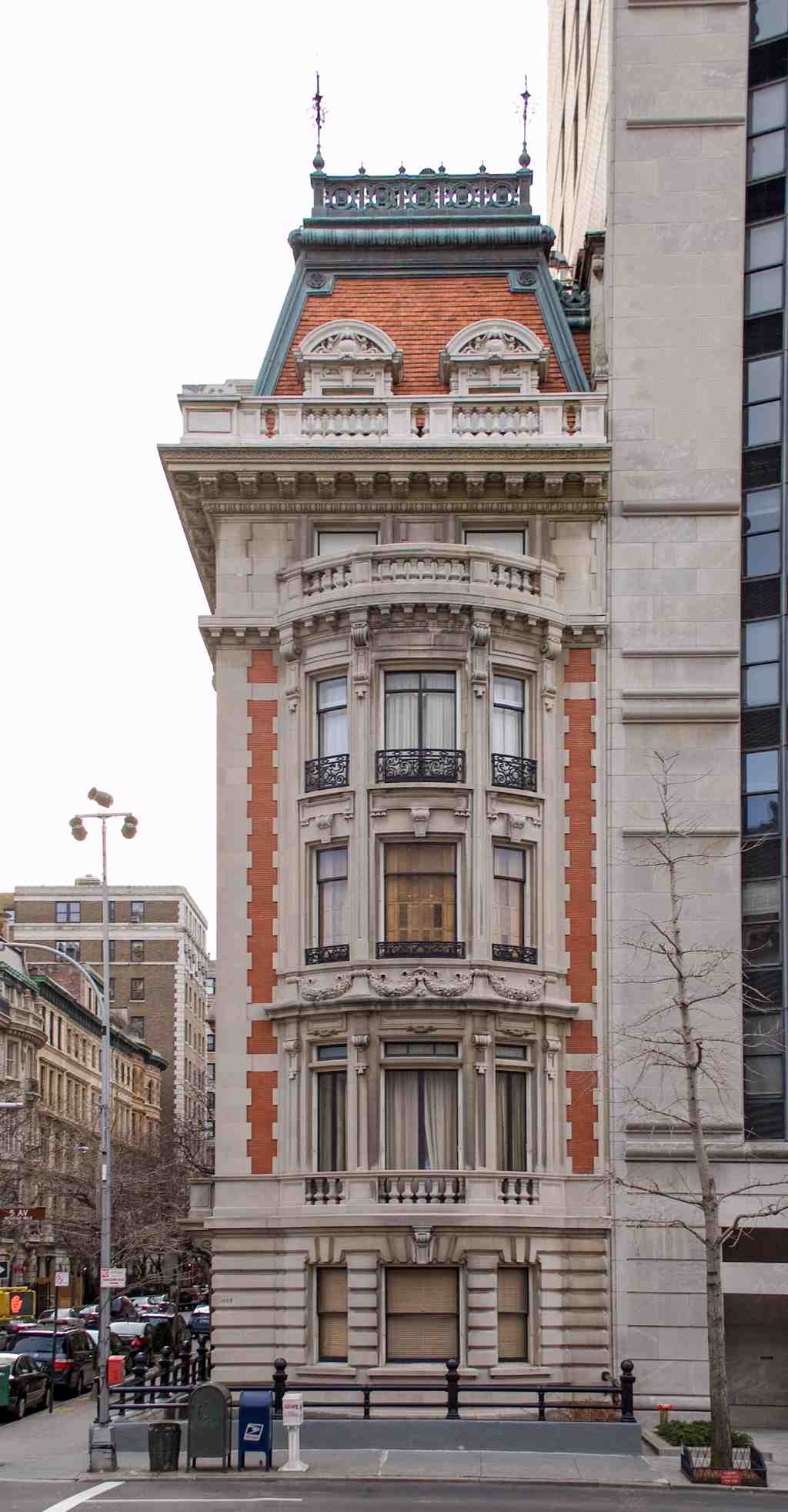
On your right, look for a red-brick and limestone corner mansion with a copper mansard roof and rounded bay windows that bulge toward Fifth Avenue.
This house is what happens when industrial wealth decides it would rather look ancestral. Tobacco heir Benjamin N. Duke made this mansion his own in the early nineteen hundreds, and the building announced exactly the right message: not “I made a fortune,” but “surely my family has always lived like this.” New money often likes an old accent.
Developers William and Thomas Hall understood that game perfectly. Between eighteen ninety-nine and nineteen oh-one, they put up four mansions on this block as speculative projects - meaning they built first and went shopping for millionaires second. Their trick was wonderfully shameless: they sometimes moved into their own new houses, furnished them lavishly, and entertained inside them so buyers could see the lifestyle on display. Real estate, dressed as theater.
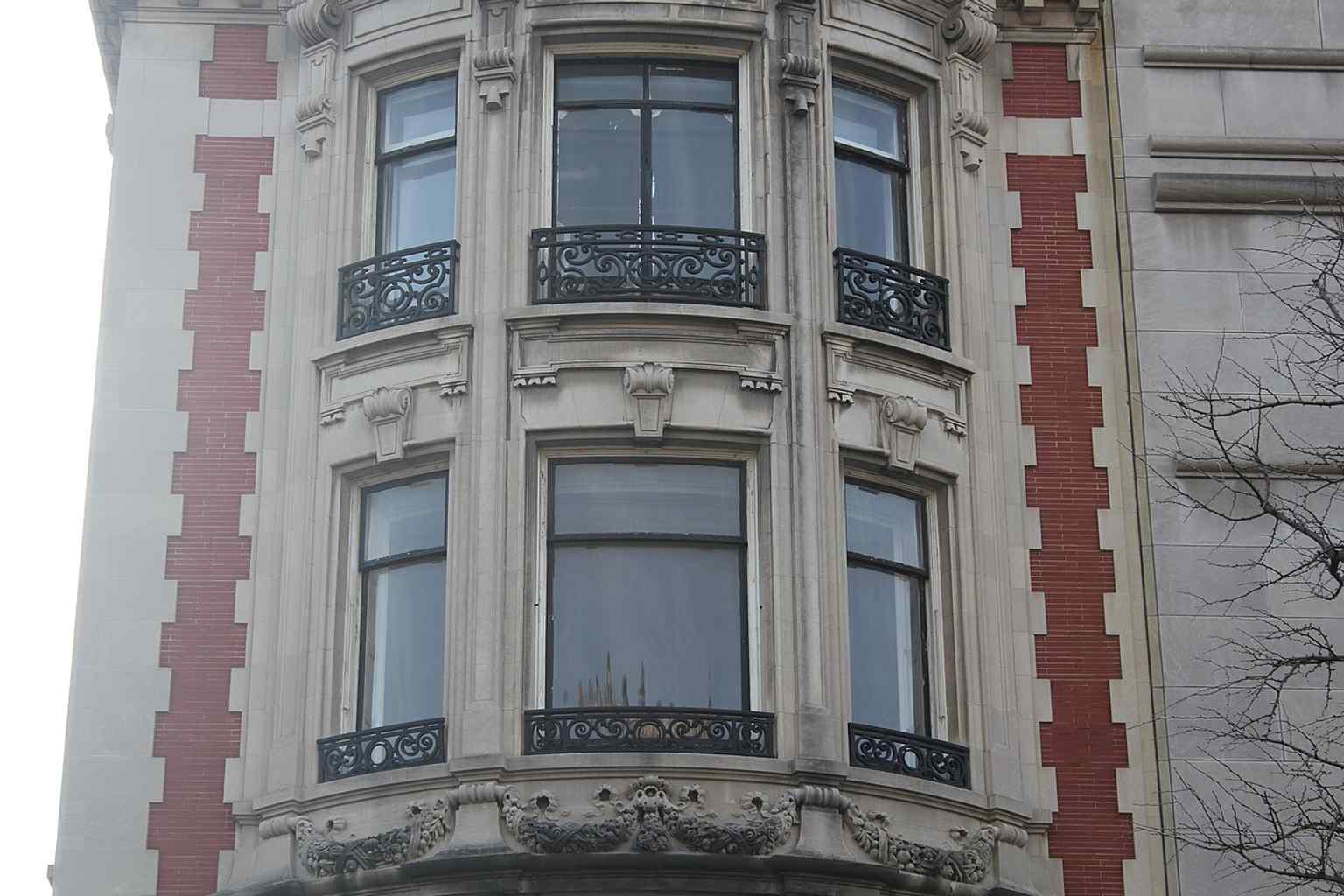
The architects, Welch, Smith and Provot, gave this place the full Beaux-Arts treatment. That style borrowed heavily from French grand architecture and loved symmetry, ornament, and a certain noble swagger. Down at street level you can see the rusticated limestone - stone cut in big blocks to look strong and expensive. Above that, red brick, limestone trim, iron window guards, and then the mansard roof, the steep French-style roofline that instantly says, “We are not a townhouse... we are a statement.”
If you glance at your screen, the corner view makes the strategy obvious: the house is angled like a performer catching the light, directly across from the Metropolitan Museum. That was not an accident. This stretch of Fifth Avenue used to be Millionaires’ Row, where private houses faced public prestige. You lived here not just to be comfortable, but to be seen in the right conversation with art, culture, and power.
The family story got suitably dramatic. James B. Duke, Benjamin’s brother, later lived here, and in nineteen oh-eight he gave antitrust testimony from his bedroom because inflammatory rheumatism left him stuck in bed. Federal lawyers came to him. Imagine defending a tobacco empire under your own silk coverlet. Manhattan does love efficiency.
Then the house took on another role. Mary Lillian Duke Biddle, a trained opera singer, filled the second-floor music room with professional-level concerts. Her daughter Mary Semans remembered her mother’s singing carrying through the central stair hall. So this place, for all its private grandeur, also performed culture from the inside out.
That mattered when the block began to vanish. The neighboring mansions were demolished in the nineteen seventies, but Mary Semans refused to sell this one to developers, even after offers of more than one million dollars - many millions in today’s money. She fought for landmark protection and won. In the nineteen eighties, restorers stripped off layers of gray paint to reveal the original red brick again, and the grandson of the original metalworker helped recreate the corroded roof details. Even preservation on Fifth Avenue comes with a family pedigree.
If you want a closer look at the ornament, the detail image in the app shows the iron guards, limestone trim, and those sculpted window surrounds doing their best impression of inherited elegance.
Ahead, we’ll meet a museum shaped by exile, friendship, and one very personal mission to save a world of art before it disappeared. The Neue Galerie is about a five-minute walk from here.