
Berlin Audio Tour: Journey Through Art, History, and Modern Marvels
Berlin hides its darkest secrets behind freshly painted facades and quiet street corners. Beneath the vibrant pulse of Kreuzberg lies a fractured map of betrayal, defiance, and ghosts that refuse to fade. This self guided audio tour navigates the shadows of the Cold War and beyond. Unlock narratives buried deep within the asphalt and explore the forbidden histories that guidebooks habitually ignore. What drove an ordinary citizen to vanish moments before the guards turned their heads at the checkpoint? Why does the scent of old ink and rebellion still linger inside the walls of Die Tageszeitung? Can you pinpoint the exact floor where a terrifying regime once plotted its next move? Trace the lines of political fire and human resilience. Experience the city not as a postcard, but as a living record of scandal and survival. Press play and begin uncovering the truth behind the silence.
Tour preview
About this tour
- scheduleDuration 90–110 minsGo at your own pace
- straighten4.2 km walking routeFollow the guided path
- location_on
- wifi_offWorks offlineDownload once, use anywhere
- all_inclusiveLifetime accessReplay anytime, forever
- location_onStarts at Checkpoint Charlie
Stops on this tour
lock_open 3 free previews · 9 unlock with purchase
Look for the small white guardhouse, a plain boxy cabin in the street, paired with the tall border sign and the line of cobblestones that cuts across the pavement where the Wall…Read moreShow less
Open dedicated page →Look for the small white guardhouse, a plain boxy cabin in the street, paired with the tall border sign and the line of cobblestones that cuts across the pavement where the Wall once ran.
This was Checkpoint Charlie, the most famous crossing in the Berlin Wall, and for a while one of the most dangerous addresses on earth. The name sounds almost jaunty... which is rude, really. It came from “C” in the N-A-T-O phonetic alphabet: Alpha, Bravo, Charlie. Here, that neat military code met a city being split apart in real time.
This is where control announced itself with full confidence: papers, barriers, armed men, and rules about who could pass. But Berlin has always been annoying that way for systems of control; people kept testing the seams, slipping through, arguing over authority, inventing routes, and refusing to stay in the boxes drawn for them.
The pressure behind all this was massive. Between nineteen forty-nine and nineteen sixty-one, about three and a half million East Germans left for the West, roughly one fifth of the East German population. Many were young professionals, engineers, teachers, doctors, skilled workers. East German leader Walter Ulbricht pushed the Soviets to let him stop that drain, and on the thirteenth of August, nineteen sixty-one, East Germany threw up barbed wire across Berlin. Within days, engineers turned it into a concrete border meant to freeze movement, and maybe history with it.
If a border cut through your daily routine overnight, what would vanish first... your commute, a family visit, the habit of crossing town without thinking?
Checkpoint Charlie was the only designated crossing here for foreign tourists, diplomats, and Allied military personnel. That technical detail mattered, because Berlin’s status after the war made every passport check a legal argument with engines attached. In October nineteen sixty-one, East German guards tried to inspect the papers of an American diplomat, Allan Lightner, on his way to East Berlin for the opera. The Americans refused to accept East German authority over Allied movement. That absurdly bureaucratic dispute produced ten Soviet tanks and ten American tanks facing each other about one hundred yards apart, right here. If you want the visual, glance at the tank photo on your screen.
A few years later, on the twenty-sixth of June, nineteen sixty-three, John F. Kennedy stood here, looked across the Wall into East Berlin, and then gave his “Ich bin ein Berliner” speech. So yes, this corner functioned as both traffic control and global theater.
But the human cost was not abstract. In August nineteen sixty-two, eighteen-year-old Peter Fechter tried to escape, was shot by East German guards, and bled to death near the border in public view. That death fixed this place in the world’s memory more brutally than any speech could.
Most tourists miss one important wrinkle: the famous American guard house here is not the original. The real one was removed in nineteen ninety and now sits at the Allied Museum in Dahlem. What you’re looking at is a reconstruction, which is very Berlin... even the icon of authenticity needed a stand-in.
You can compare the old frontier with the staged memorial on your phone; the before-and-after image is worth a quick look.
Today the crossing draws millions, and the site is open all day, every day. As you head to Ideal Insurance, about three minutes from here, keep one question in mind: if control can look this obvious at Checkpoint Charlie, where else in Kreuzberg is it hiding in plain sight?
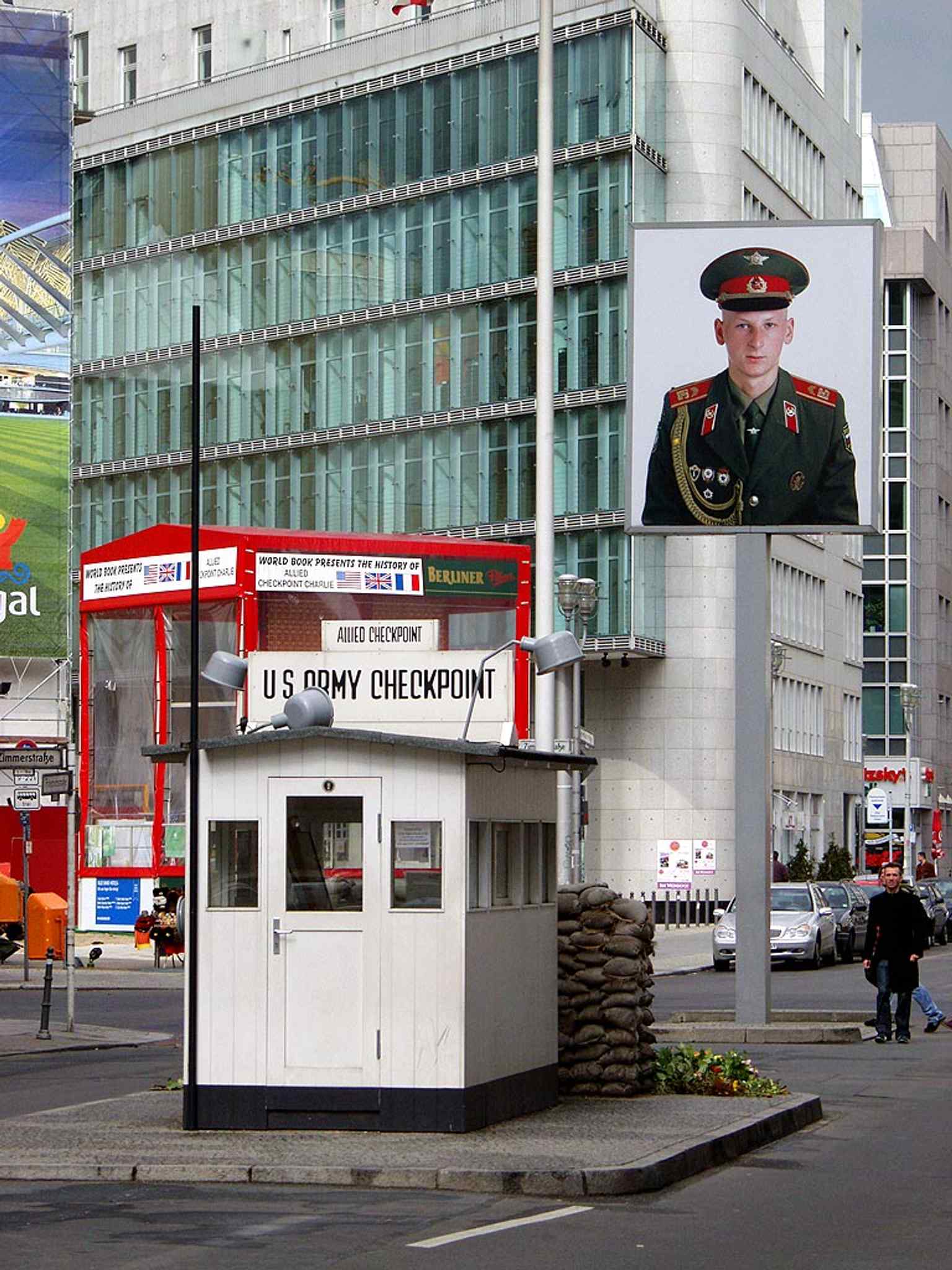
A 2004 memorial view at Checkpoint Charlie, tracing the former crossing line across Friedrichstraße with the border now marked for visitors.Photo: Raimond Spekking, Wikimedia Commons, CC BY-SA 4.0. Cropped & resized. On your right, look for a long glass-and-steel pavilion with a low horizontal roof and exposed brick foundations beside it, marking the former S-S and Gestapo headquarters…Read moreShow less
Open dedicated page →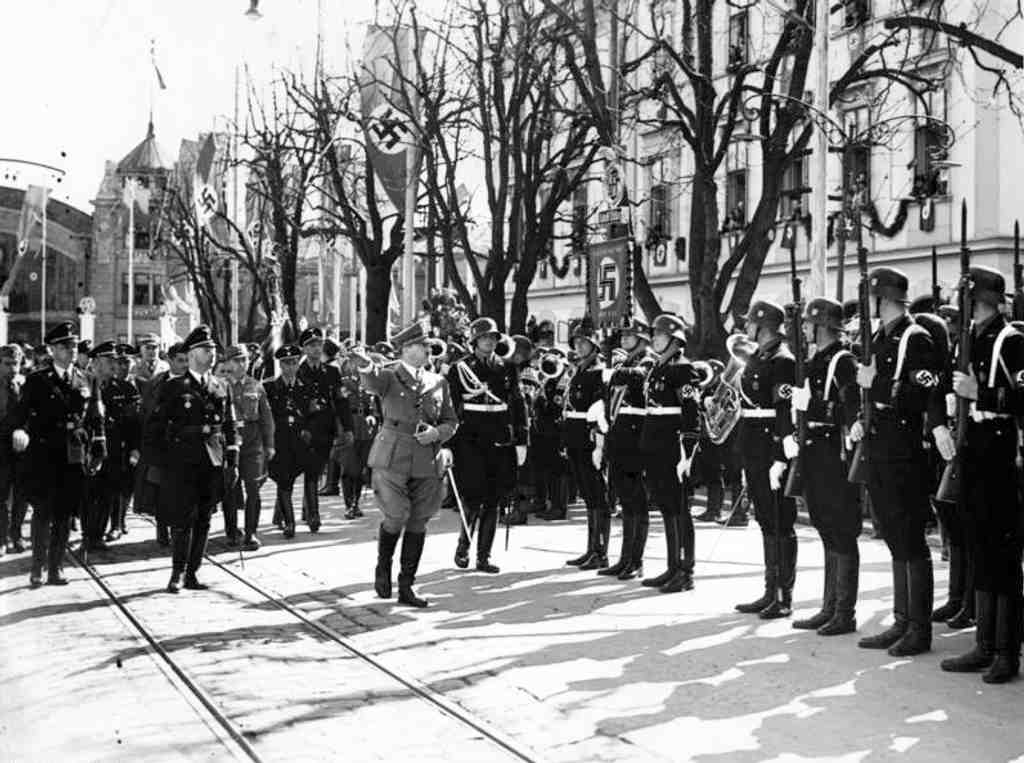
SchutzstaffelPhoto: Schutzstaffel, Wikimedia Commons, Public domain. Cropped & resized. On your right, look for a long glass-and-steel pavilion with a low horizontal roof and exposed brick foundations beside it, marking the former S-S and Gestapo headquarters site.
The Schutzstaffel, shortened to S-S, began as a small Nazi guard unit and grew into the regime’s central machine of persecution, surveillance, and genocide. What started as “protection” became organized terror with offices, forms, ranks, and a truly catastrophic talent for administration.
In the early nineteen twenties, Hitler first used small volunteer guards like the Saal-Schutz, literally “hall security,” to police party meetings in Munich. Then he wanted a more exclusive bodyguard, separate from the party’s own rougher paramilitary crowd. Even dictators, apparently, have standards. In nineteen twenty-five, the group took the final name Schutzstaffel, “protection squad.” Heinrich Himmler joined that same year and took command in nineteen twenty-nine. He turned a fading unit of a few hundred men into an elite order obsessed with racial purity, obedience, and loyalty to Hitler personally. By the end of nineteen thirty-three, S-S membership had exploded to about two hundred nine thousand.
That growth mattered because the S-S did not remain a bodyguard. It split into branches. The Allgemeine S-S handled ideology, policing, and racial policy. The Waffen-S-S became combat formations. The Totenkopfverbände, the “Death’s Head Units,” ran concentration and extermination camps. In nineteen thirty-four, Himmler took control of the Gestapo, the secret state police. In nineteen thirty-six, Hitler put all German police forces under Himmler and the S-S. In nineteen thirty-nine, security and intelligence offices merged into the Reich Security Main Office. Files, arrests, interrogation, deportation, murder... all increasingly linked.
If you glance at your screen, image eight reduces that system to neat boxes and arrows. That is the unpleasant lesson here. Bureaucracy does not arrive wearing horns. Sometimes it arrives with organizational charts.
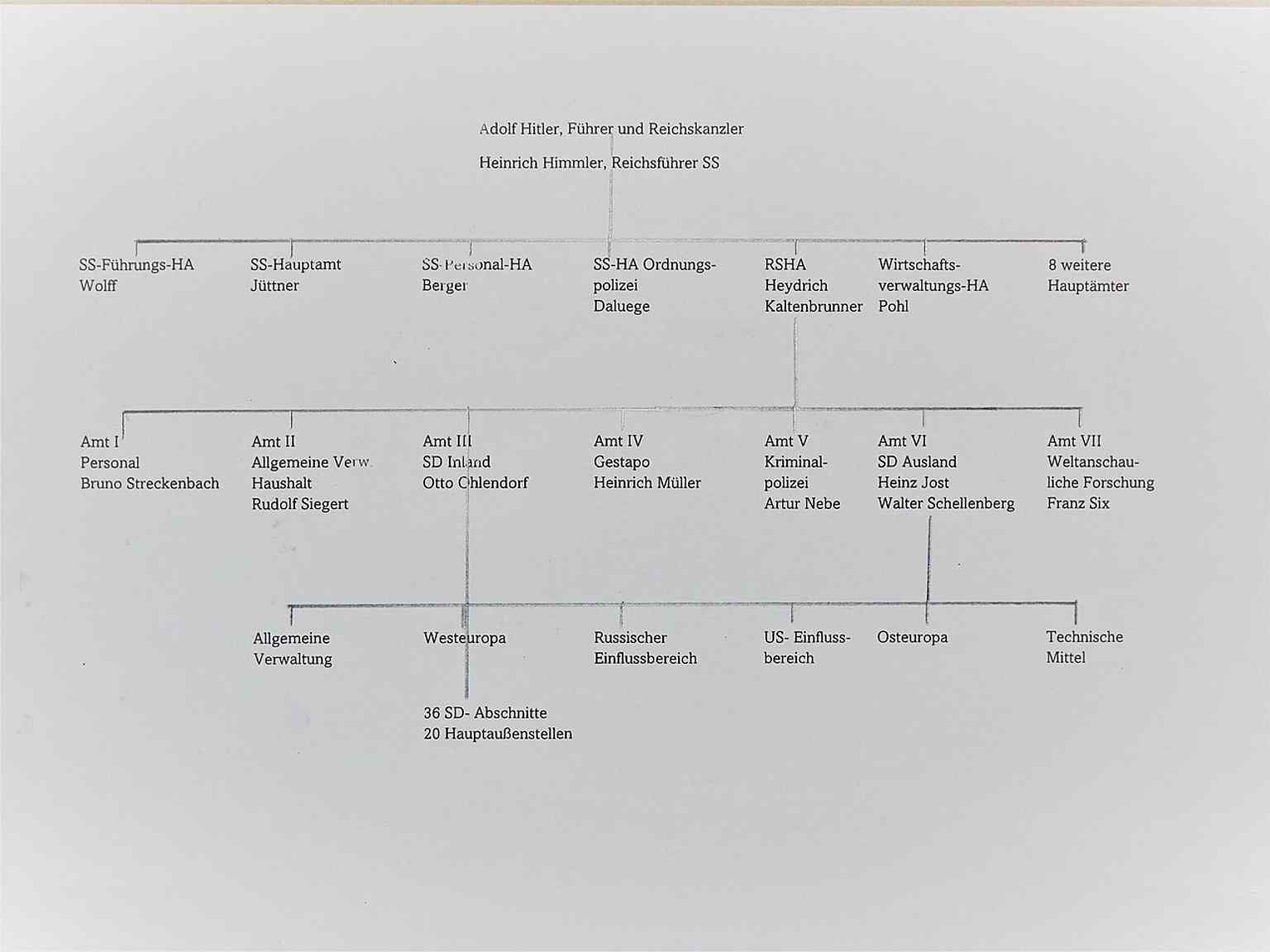
A simplified chart of SS domestic and foreign intelligence, showing how the SS networked the Gestapo, SD, and police.Photo: Loracco, Wikimedia Commons, CC BY-SA 4.0. Cropped & resized. From offices on this site and across occupied Europe, the S-S enforced a police state, crushed opposition, and drove genocide. Its units helped carry out Kristallnacht. Einsatzgruppen, mobile killing squads drawn from the S-S, police, and security service, followed the army into Poland and the Soviet Union and shot civilians in mass executions. In occupied Poland in nineteen thirty-nine, S-S units helped murder about fifty thousand Poles. Across the Holocaust, the S-S bore primary responsibility for the murder of about six million Jews and millions of other victims, including Roma, disabled people, homosexuals, political opponents, clergy, Jehovah’s Witnesses, and many more the regime marked for removal.
The camps turned murder into routine. Theodor Eicke made Dachau the model. In early nineteen forty-two, the S-S expanded Auschwitz with gas chambers using Zyklon B. On your phone, image fourteen shows Jews arriving at Auschwitz-Birkenau in nineteen forty-four. Many went through “selection” on the ramp, a calm administrative word for deciding who would be worked, and who would be killed within hours.
After the war, the Nuremberg tribunal declared the S-S a criminal organization. That was not symbolism. It was a factual summary.
In a moment, head toward Martin-Gropius-Bau, about a one-minute walk away, where the city starts showing how culture and rebuilding had to stand beside moral ruin, not erase it. If you want to return here later, the site is generally open daily from ten to six.
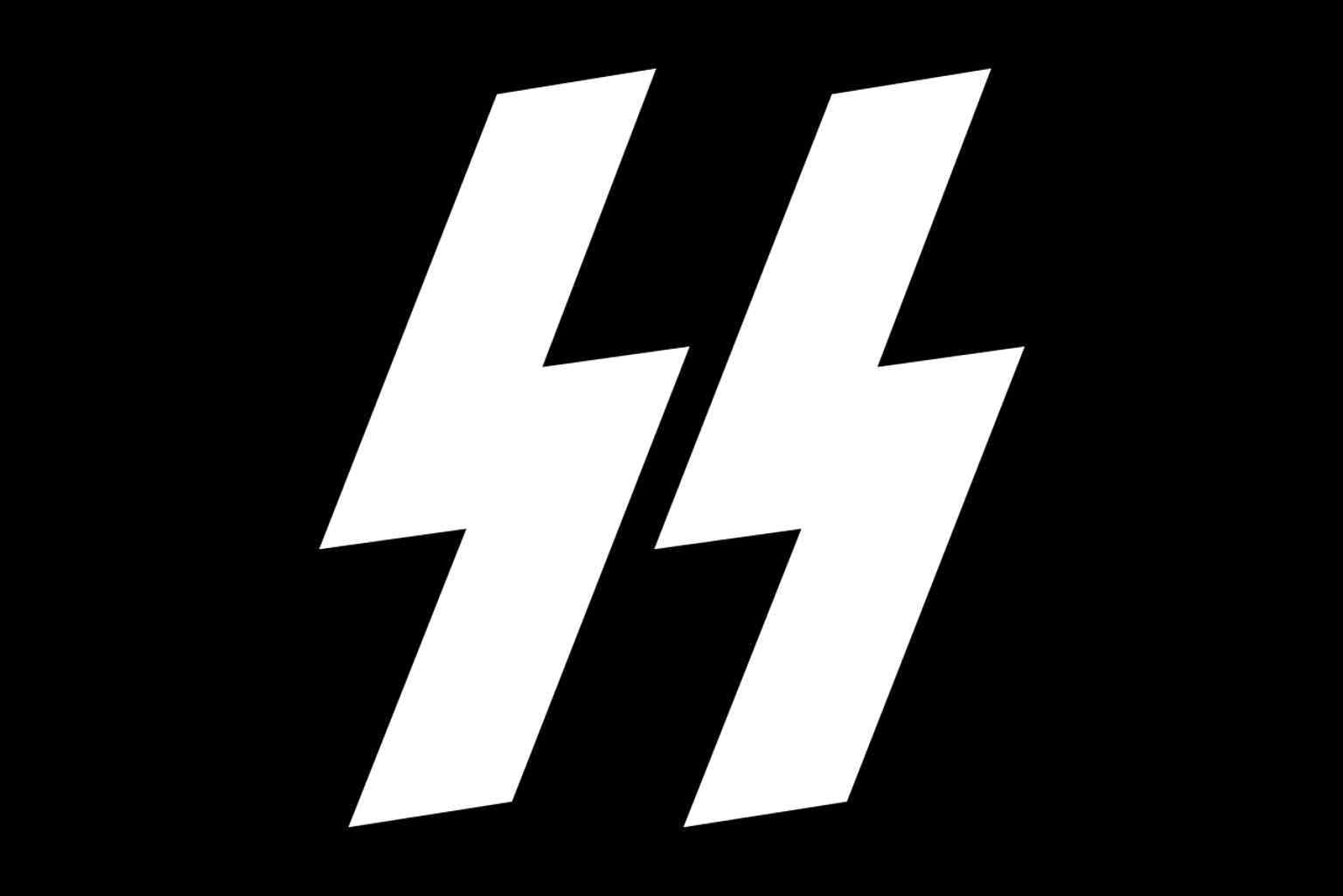
The SS runes flag, the organisation’s most recognisable symbol, designed to project elite loyalty to Hitler and Nazi ideology.Photo: Schutzstaffel, Wikimedia Commons, Public domain. Cropped & resized. 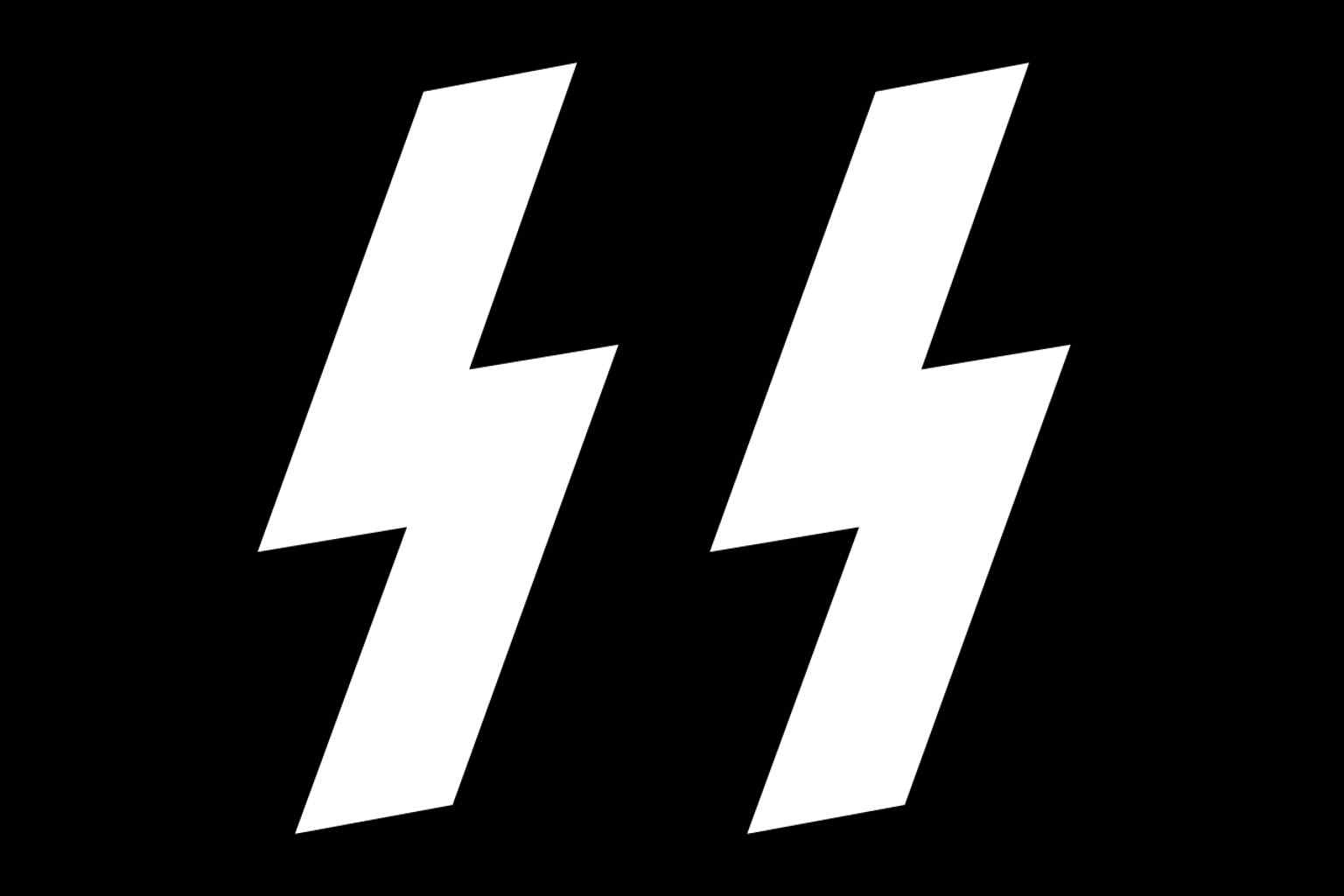
A variant of the Schutzstaffel flag, showing how the SS used stark black-and-white insignia to build its own identity.Photo: FDRMRZUSA, Wikimedia Commons, Public domain. Cropped & resized. 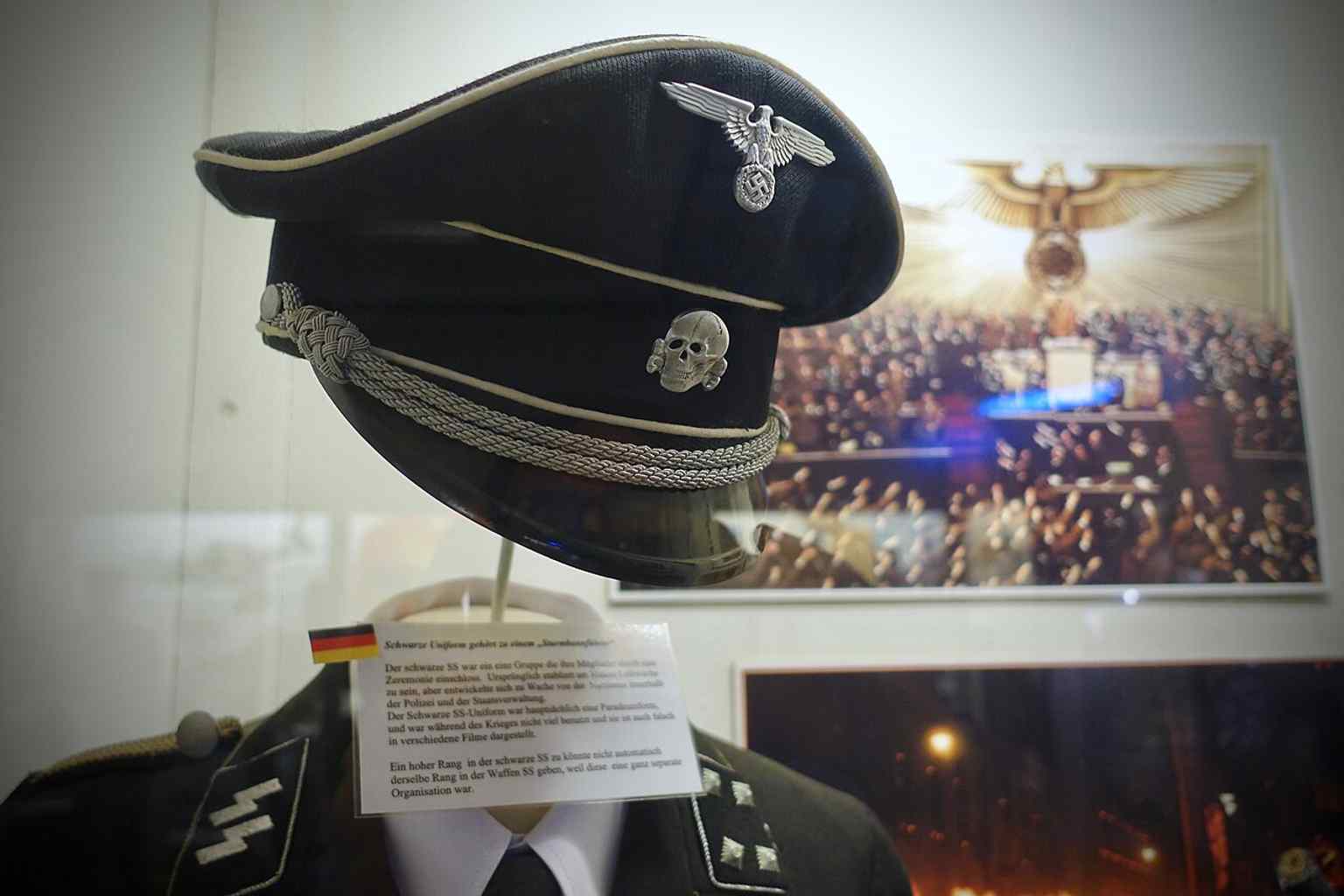
An Allgemeine SS black parade uniform on display, with the Totenkopf skull that signalled willingness to fight to the death.Photo: Wolfmann, Wikimedia Commons, CC BY-SA 4.0. Cropped & resized. 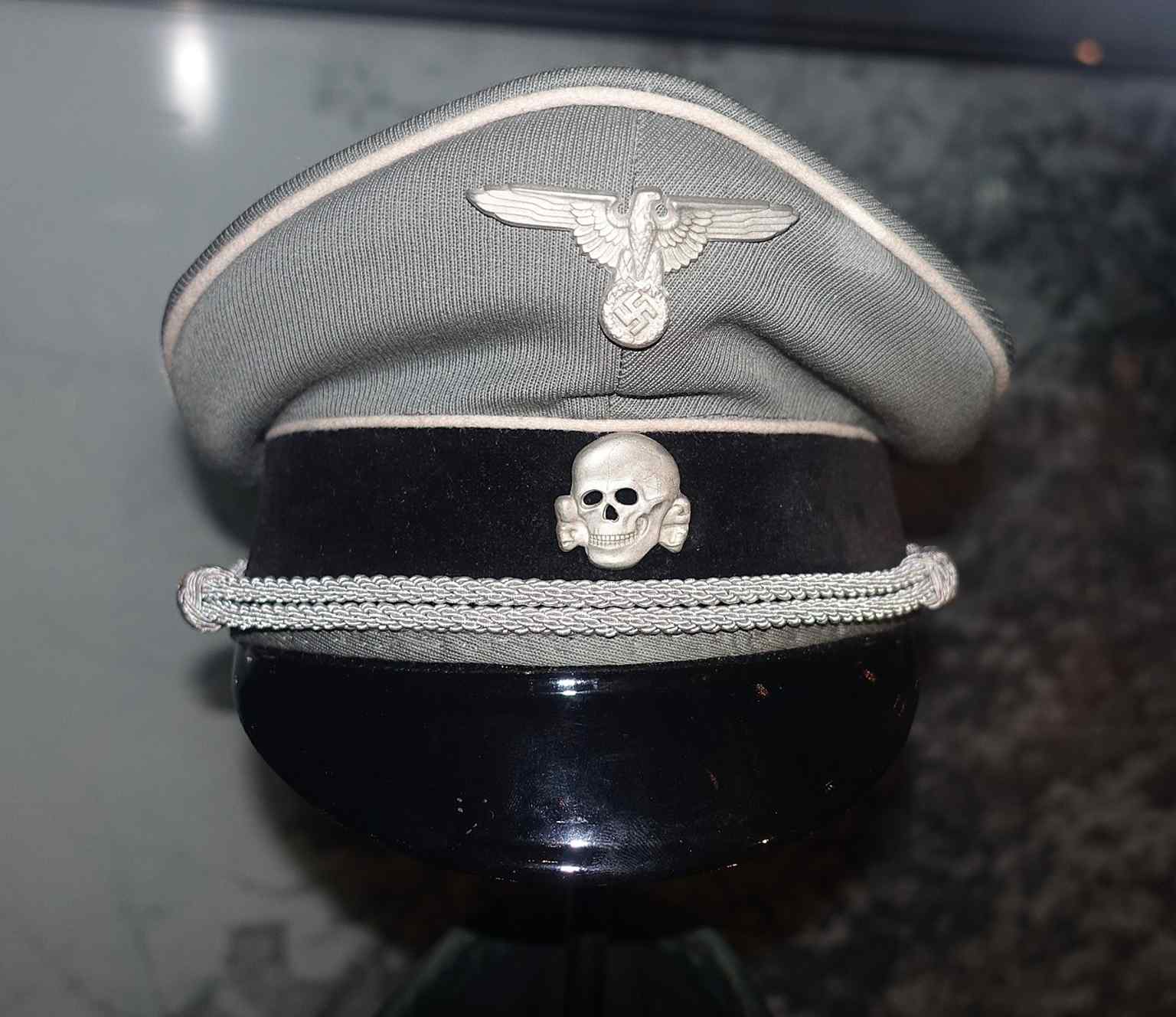
A close view of an SS visor cap, combining the eagle and death’s-head symbols that defined SS uniform design.Photo: Wolfmann, Wikimedia Commons, CC BY-SA 4.0. Cropped & resized. 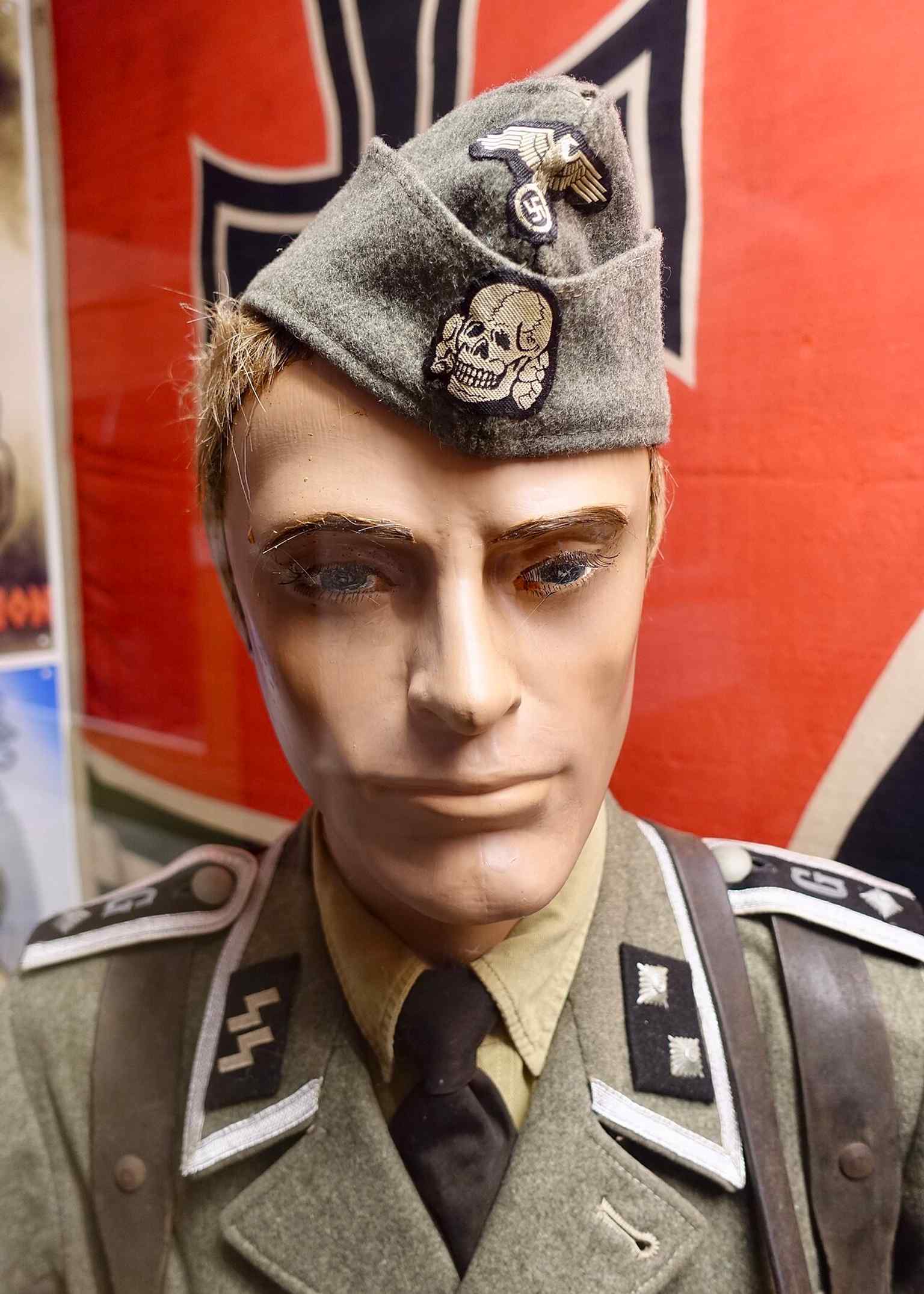
A Waffen-SS field uniform with SS runes and Totenkopf insignia, reflecting the branch’s military role on the Eastern Front.Photo: Wolfmann, Wikimedia Commons, CC BY-SA 4.0. Cropped & resized. 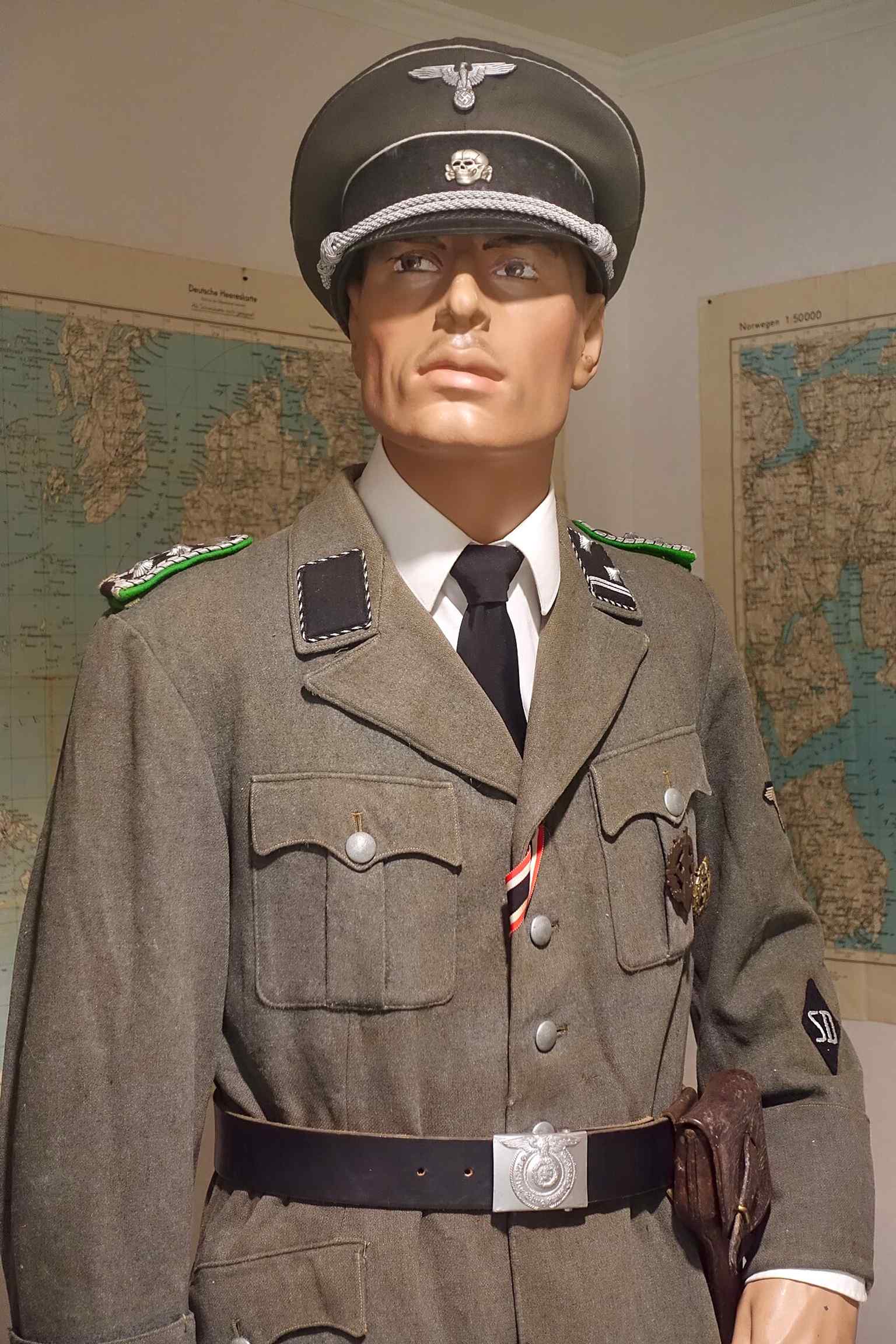
An SD officer’s uniform from occupied Norway, linking the SS to security policing, intelligence, and occupation rule.Photo: Wolfmann, Wikimedia Commons, CC BY-SA 4.0. Cropped & resized. 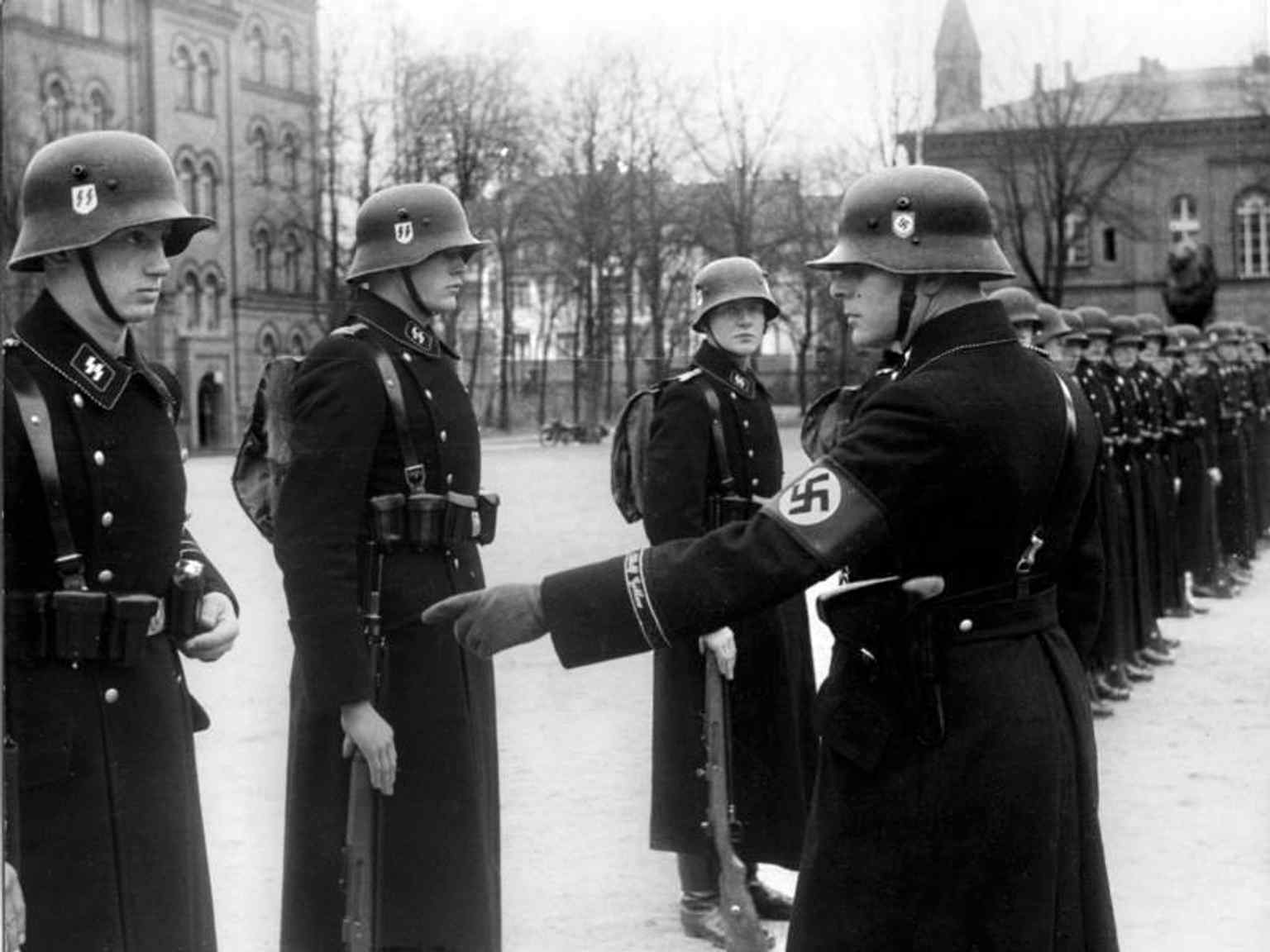
The Leibstandarte SS Adolf Hitler in Berlin, the SS bodyguard unit created to protect Hitler personally.Photo: UnknownUnknown, Wikimedia Commons, CC BY-SA 3.0 de. Cropped & resized. 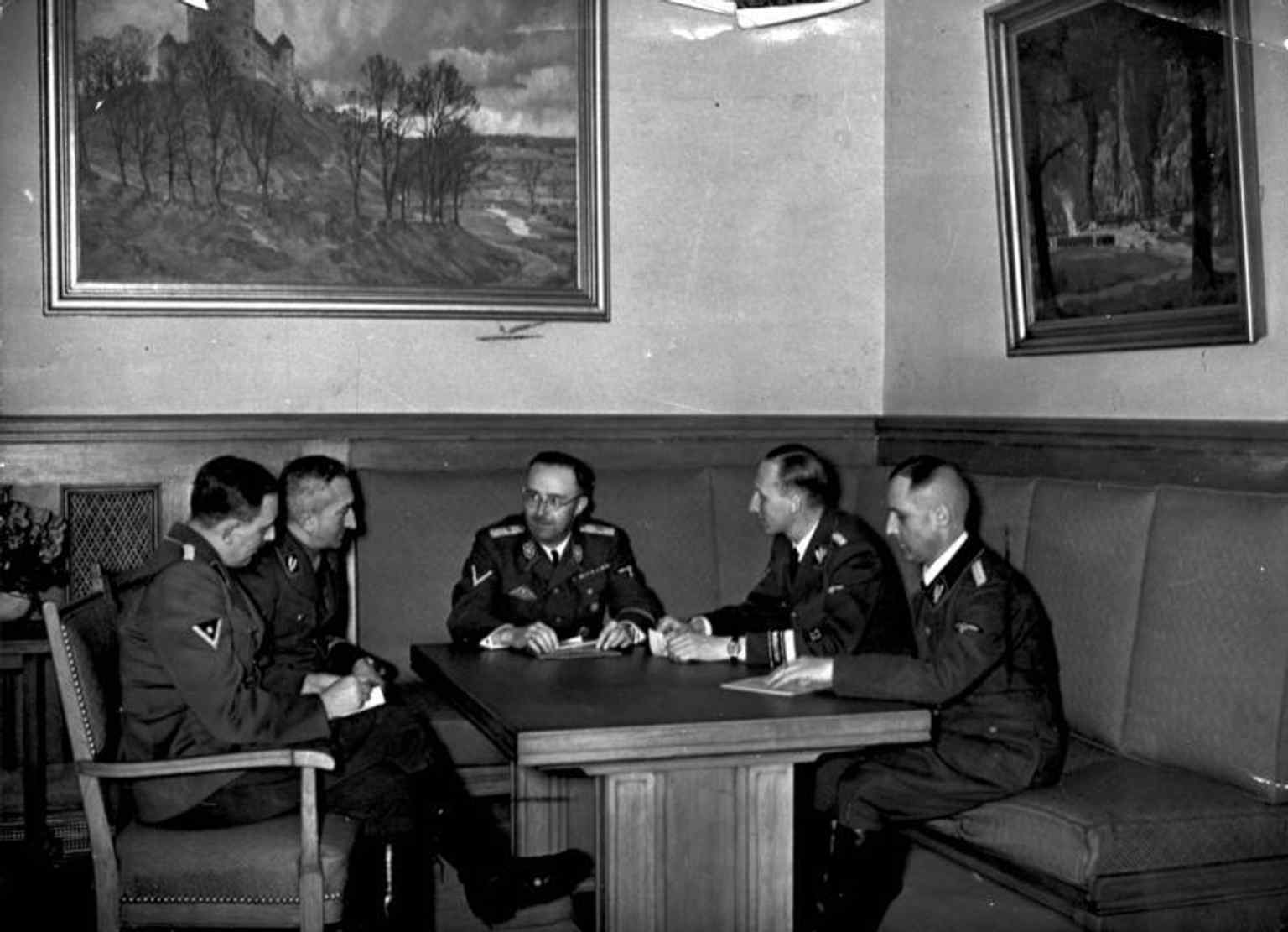
Himmler meeting Heydrich and Gestapo officials in Munich, illustrating the SS command circle behind state terror.Photo: UnknownUnknown, Wikimedia Commons, CC BY-SA 3.0 de. Cropped & resized. 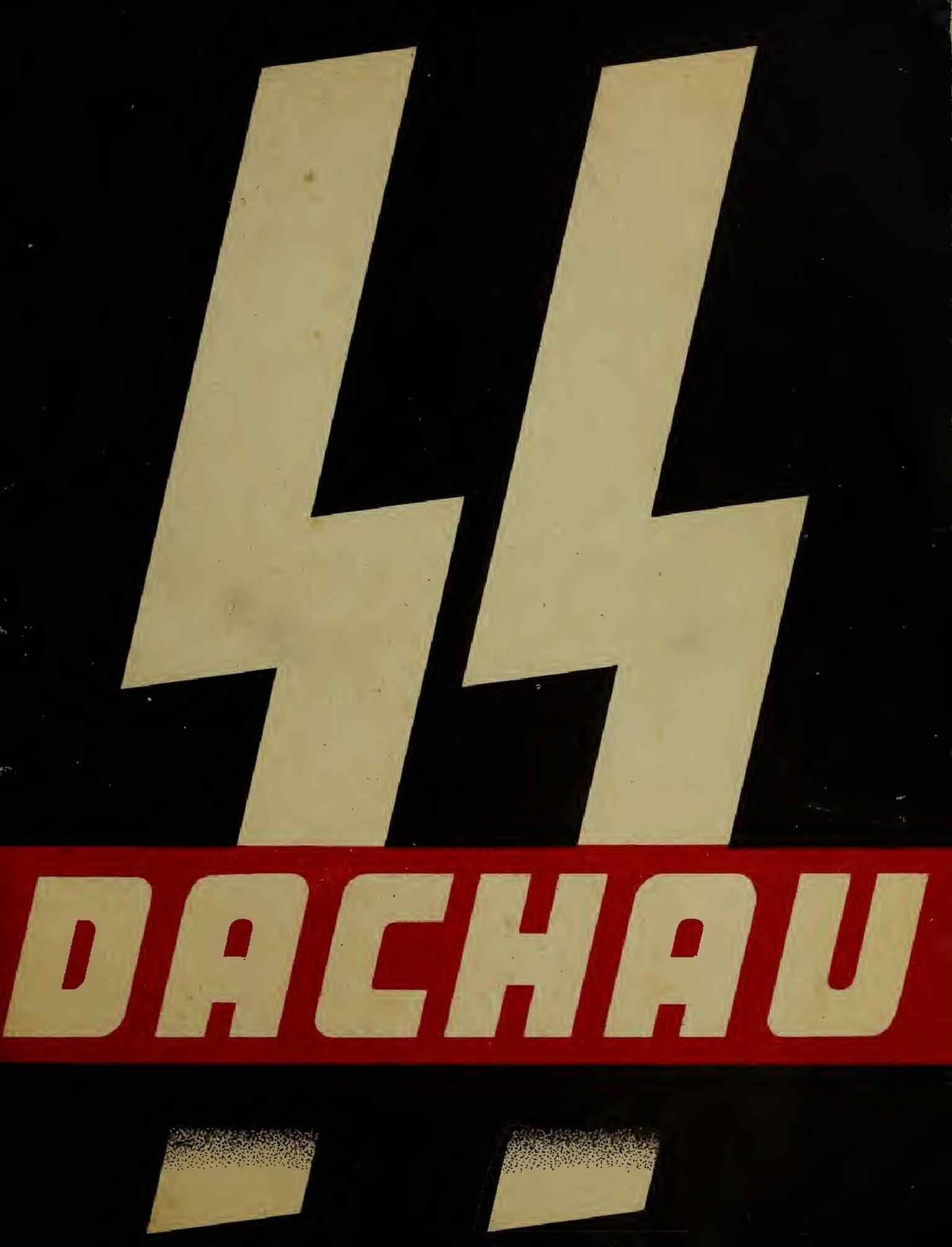
A 1945 Dachau intelligence report on the camp system, which the SS built into a model of organised repression and murder.Photo: Various anonymous authors from different US intelligence branches: 7th US Army military intelligence (G-2), Office of Strategic Services (OSS), Counter Intelligence Corps (CIC), and Psychological Warfare Branch (PWB), Wikimedia Commons, Public domain. Cropped & resized.
Show 9 more stopsShow fewer stopsexpand_moreexpand_less
On your right, look for a wide red-brick block edged in pale stone, with tall arched windows and a façade crowded with carved ornament. Kreuzberg stores memory in stone.…Read moreShow less
Open dedicated page →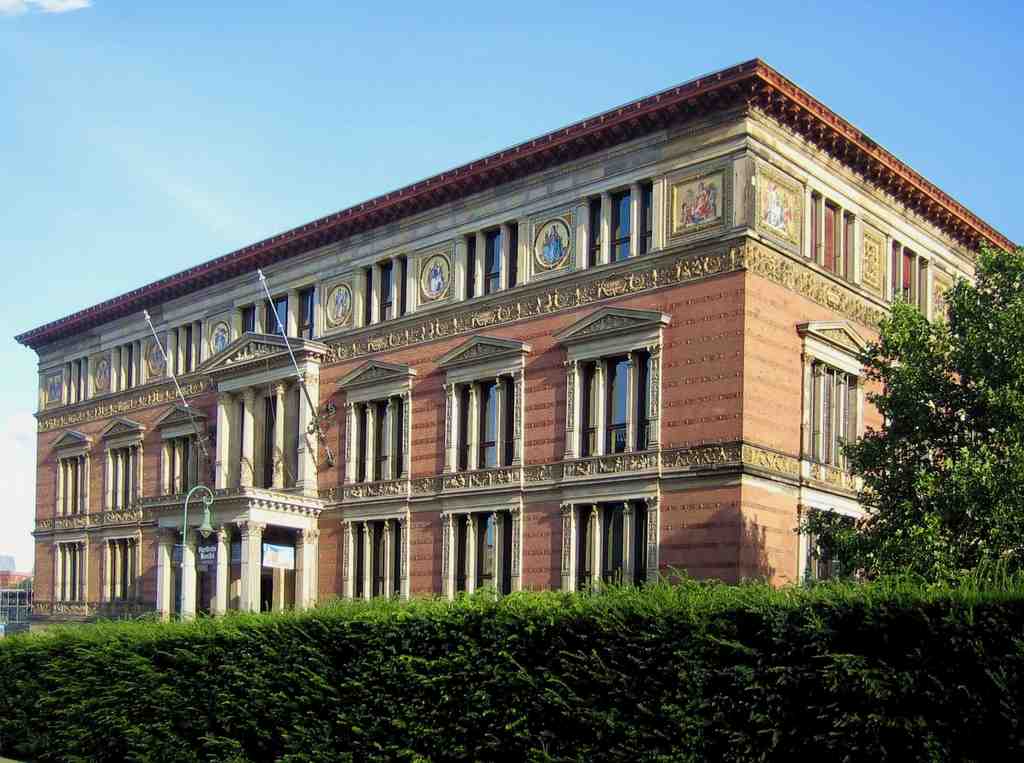
Martin-Gropius-BauPhoto: Manfred Brückels, Wikimedia Commons, CC BY-SA 3.0. Cropped & resized. On your right, look for a wide red-brick block edged in pale stone, with tall arched windows and a façade crowded with carved ornament.
Kreuzberg stores memory in stone. Buildings here collect new jobs, old damage, and reluctant repairs, as if the city decided that neat endings were for less interesting places. Martin-Gropius-Bau is a fine example: school, museum, ruin, and exhibition house, all layered into one address.
Martin Gropius and Heino Schmieden raised it between eighteen seventy-seven and eighteen eighty-one as a combined Museum and School of Decorative Arts, not just a gallery with good posture. Inside that square shell, about seventy meters on each side, they planned classrooms, studios, craft collections, an art library, and a grand central atrium. If you glance at the atrium image in the app, you can see that light-filled court, with rooms opening around it and coats of arms of the German states set into the decoration by Otto Lessing.
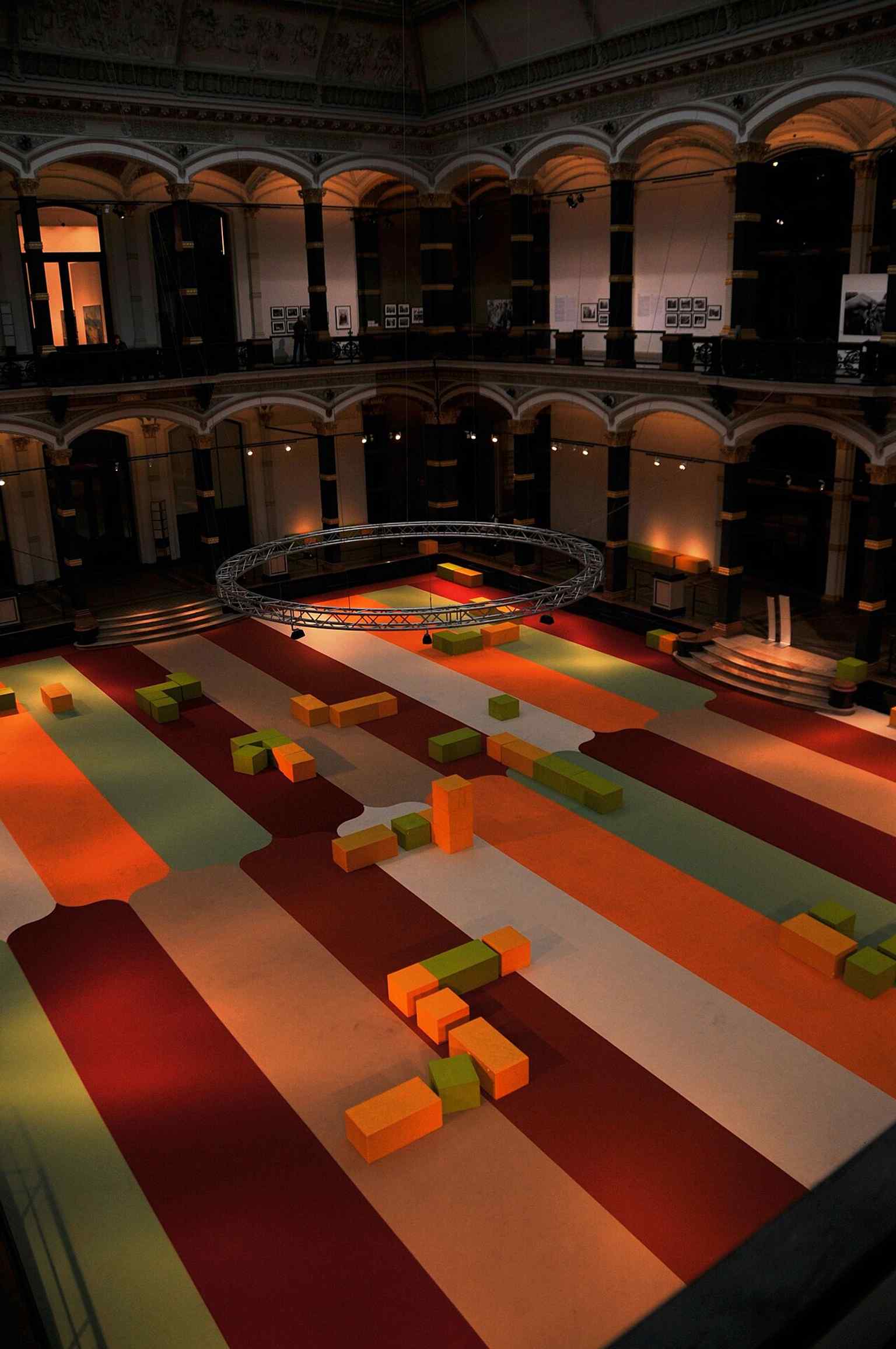
The luminous atrium and lightwell, echoing the building’s original museum-and-school layout around a central court.Photo: CTHOE, Wikimedia Commons, CC BY-SA 3.0 de. Cropped & resized. Take a second and study the window rhythm, the stone bands, the reliefs. It gives off nineteenth-century confidence with almost unreasonable certainty... and yet this building has outlived every system that tried to fix its role.
After the First World War, curators filled it with prehistory and East Asian art. In nineteen forty-five, the last weeks of war gutted it: the roof and basement collections burned, and the northern façade and upper floors were nearly destroyed. The ruin sat for years until planners considered demolition, and Walter Gropius, the Bauhaus founder and the architect’s great-nephew, stopped that tidy act of erasure.
Reconstruction began in the late nineteen seventies, and the building reopened in nineteen eighty-one. Berlin then added one more complication: the Wall stood beside it, so visitors had to enter from the south until the original Niederkirchnerstrasse entrance returned in nineteen ninety-nine. If you want, check the before-and-after image; it catches that shift from border-edge survivor to restored exhibition house. Restorers rebuilt mosaics, reliefs, and majolica, a glazed ceramic decoration, but left visible gaps inside so the bombing never disappeared completely.
Today Gropius Bau hosts major exhibitions, from Paul Klee to Ai Weiwei. The walls remember, even when the institution changes its script. From here, Hotel Excelsior is about a nine-minute walk, and if you plan to come back, it opens from noon to eight on Monday and Wednesday through Friday, stays closed on Tuesday, and opens from ten to eight on weekends.
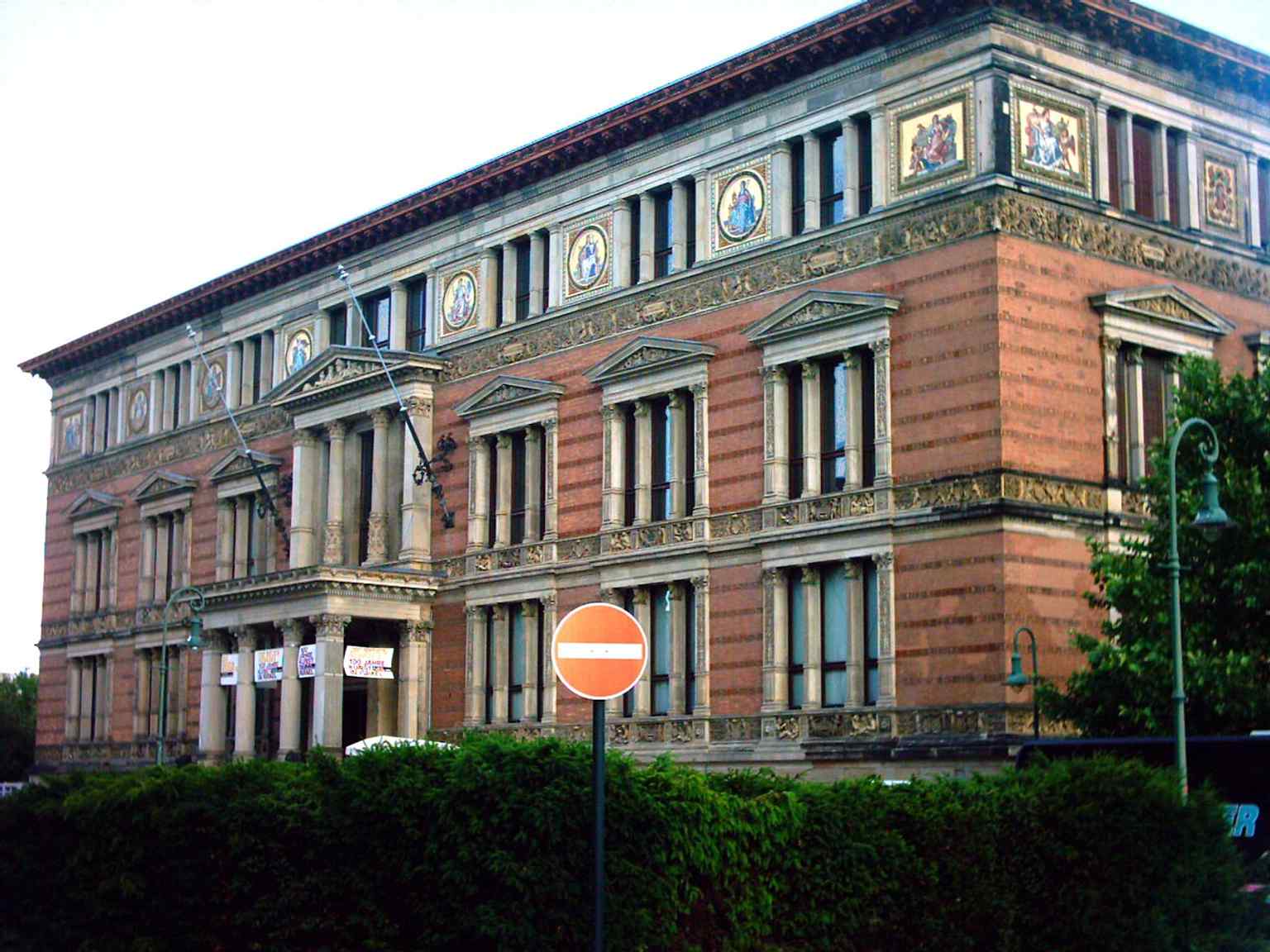
The main façade of Martin-Gropius-Bau, the neo-Renaissance exhibition building on Niederkirchnerstraße.Photo: Jensen at the German-language Wikipedia, the copyright holder of this work, hereby publishes it under the following license:, Wikimedia Commons, CC BY-SA 3.0. Cropped & resized. 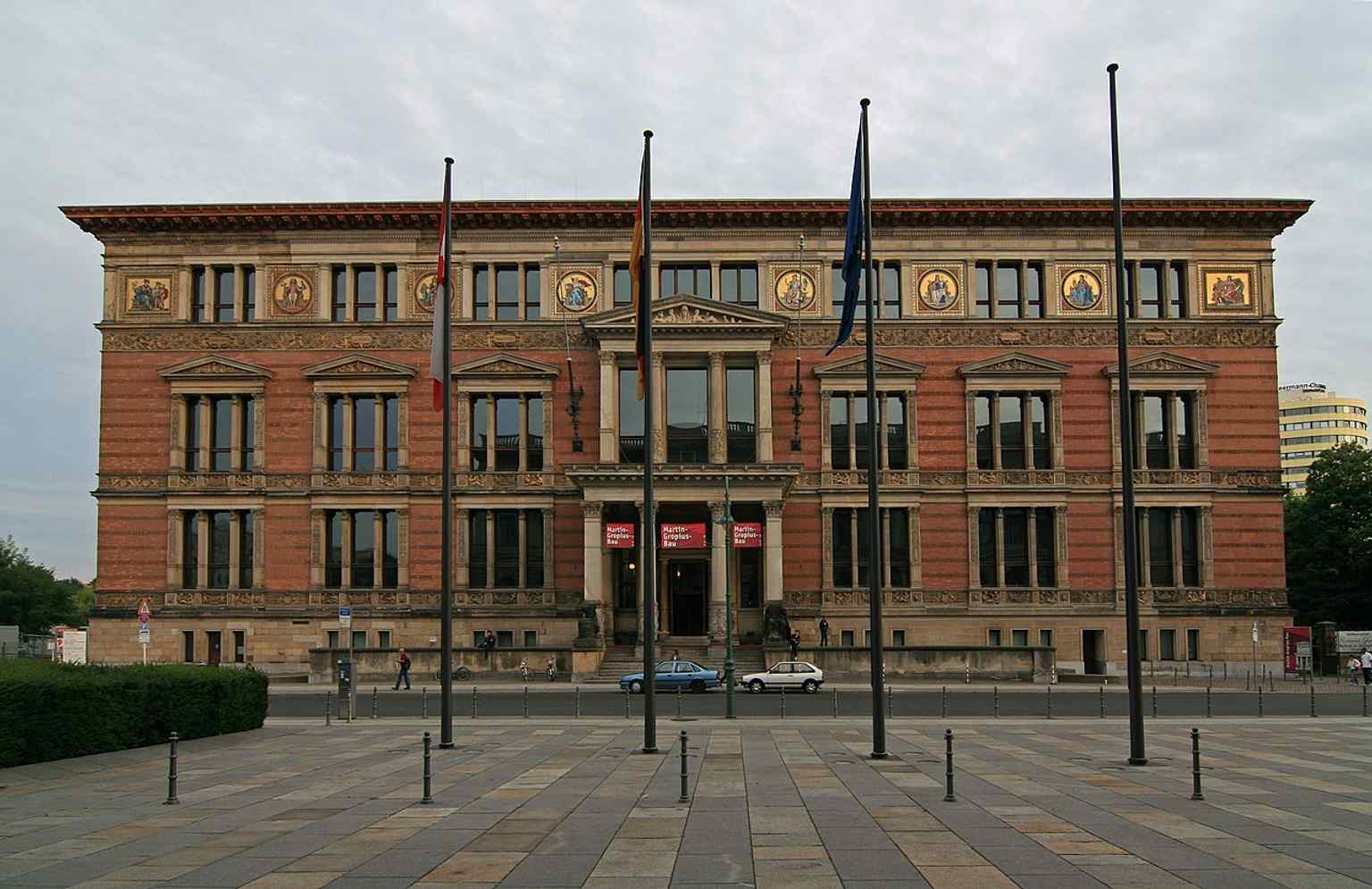
A crisp full-building view showing the monument’s grand scale and square plan, rebuilt as one of Berlin’s major exhibition houses.Photo: Jensens, Wikimedia Commons, Public domain. Cropped & resized. 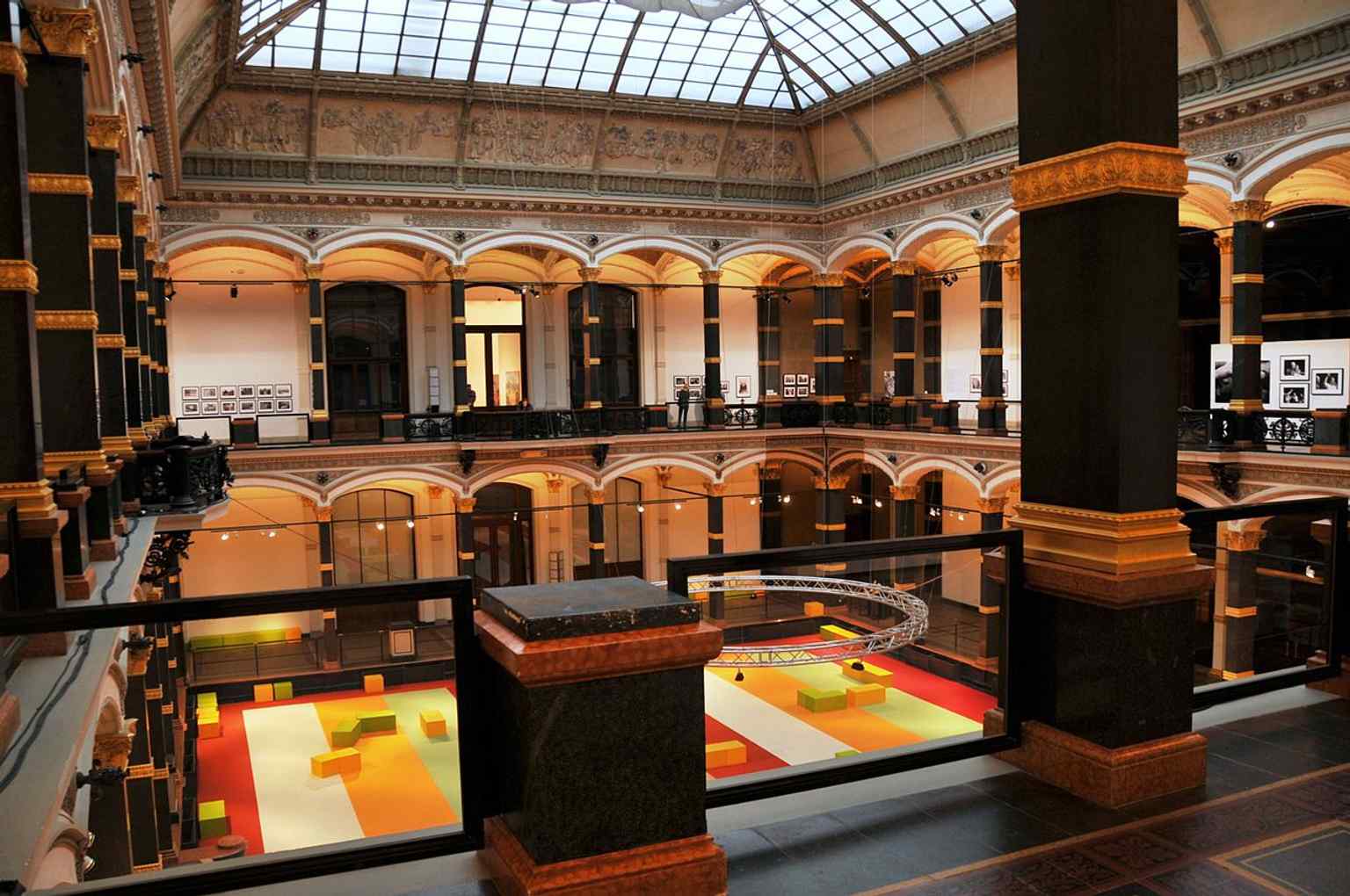
Inside the building’s exhibition hall, where the rooms open around the central atrium that defines Gropius Bau.Photo: CTHOE, Wikimedia Commons, CC BY-SA 3.0 de. Cropped & resized. 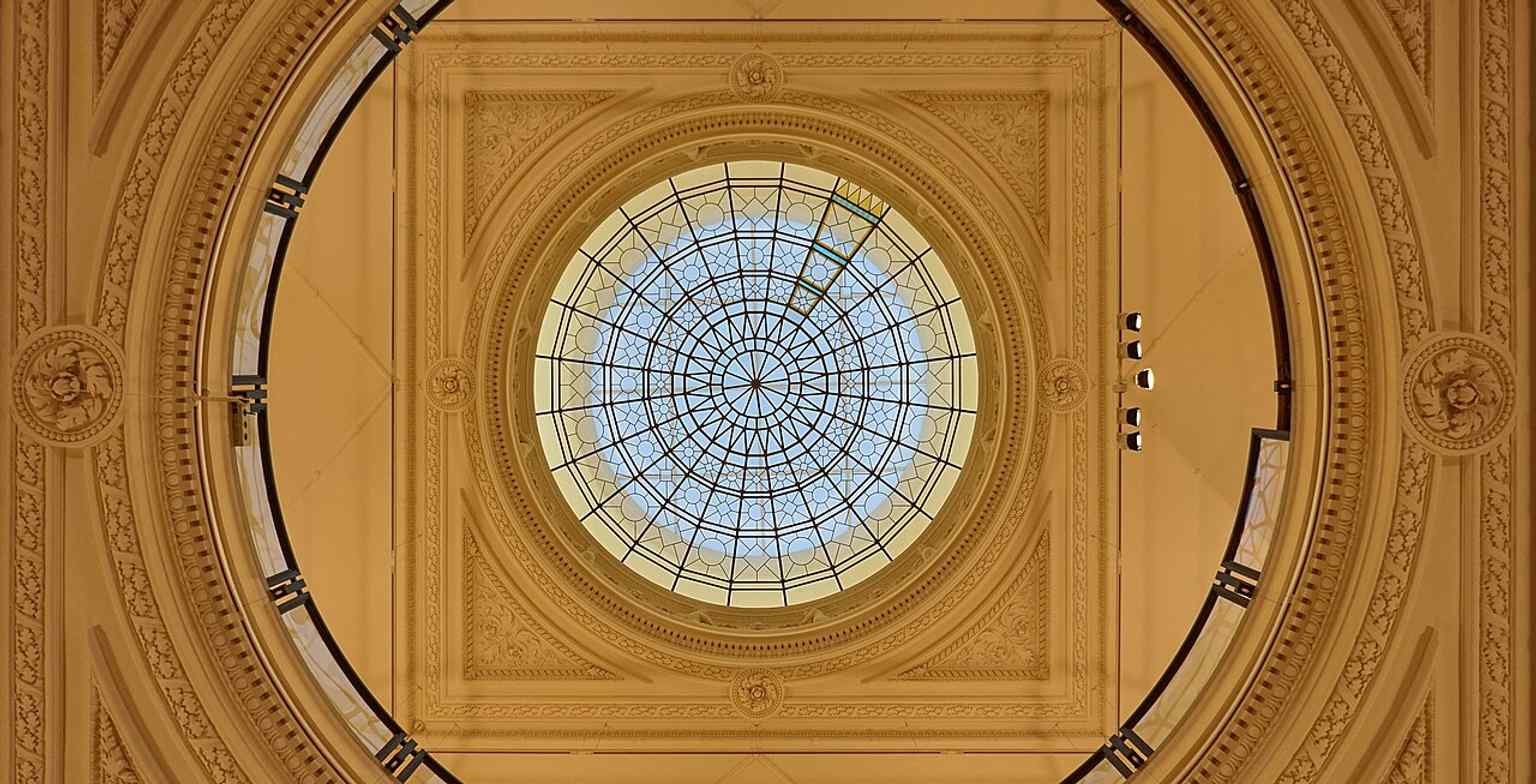
The skylight of the entrance hall, highlighting the elaborate roof structure above the historic exhibition space.Photo: Virtual-Pano, Wikimedia Commons, CC BY-SA 4.0. Cropped & resized. 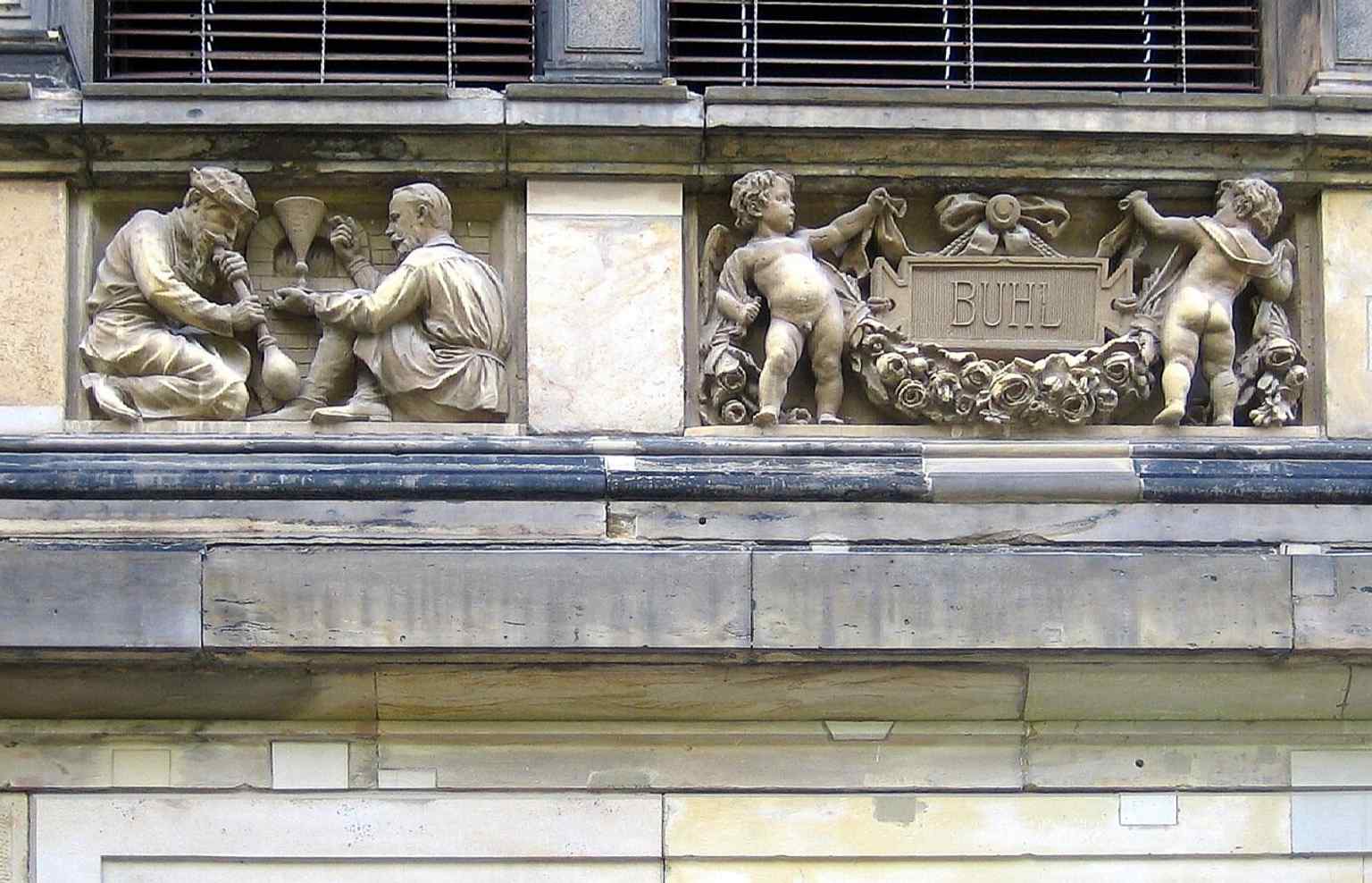
Decorative façade reliefs with putti, a reminder of the ornate sculptural program that survived and was reconstructed after wartime damage.Photo: Manfred Brückels, Wikimedia Commons, CC BY-SA 3.0. Cropped & resized. 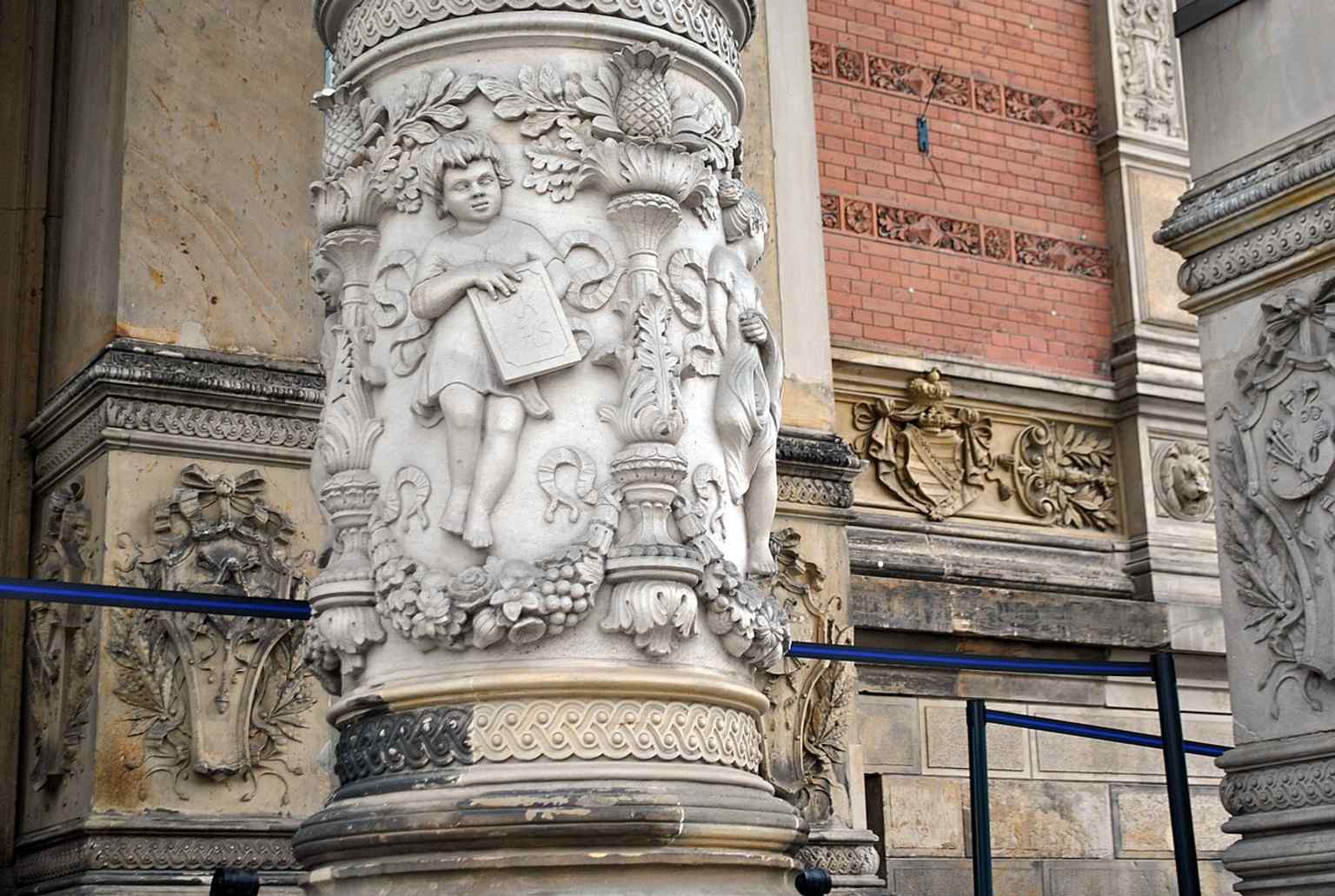
A close detail of the historic ornamentation, showing the richly decorated skin of the neo-Renaissance façade.Photo: ProtoplasmaKid, Wikimedia Commons, CC BY-SA 3.0. Cropped & resized. 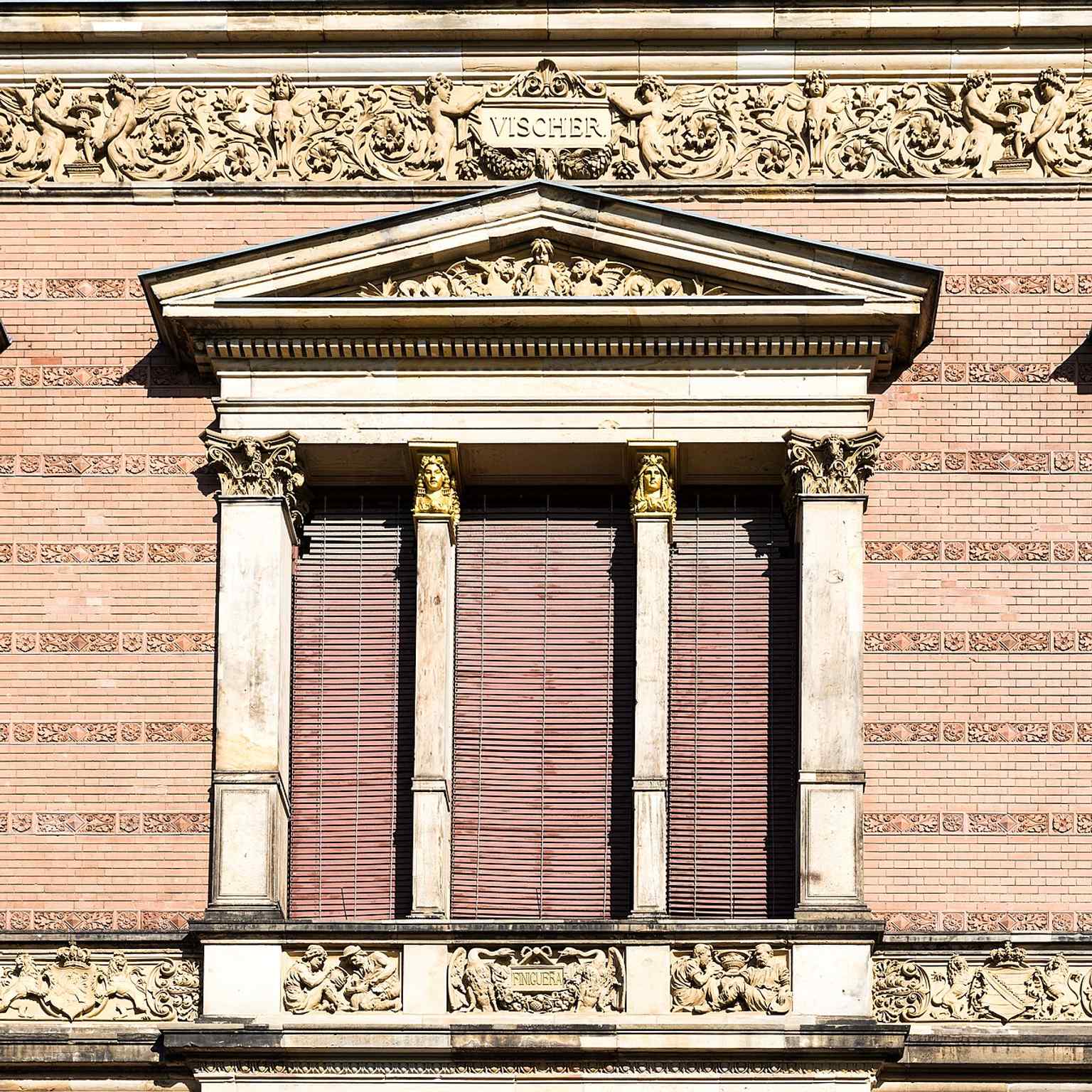
Window and relief detail from the monument’s exterior, capturing the craftsmanship of the 19th-century façade.Photo: Raimond Spekking, Wikimedia Commons, CC BY-SA 4.0. Cropped & resized. 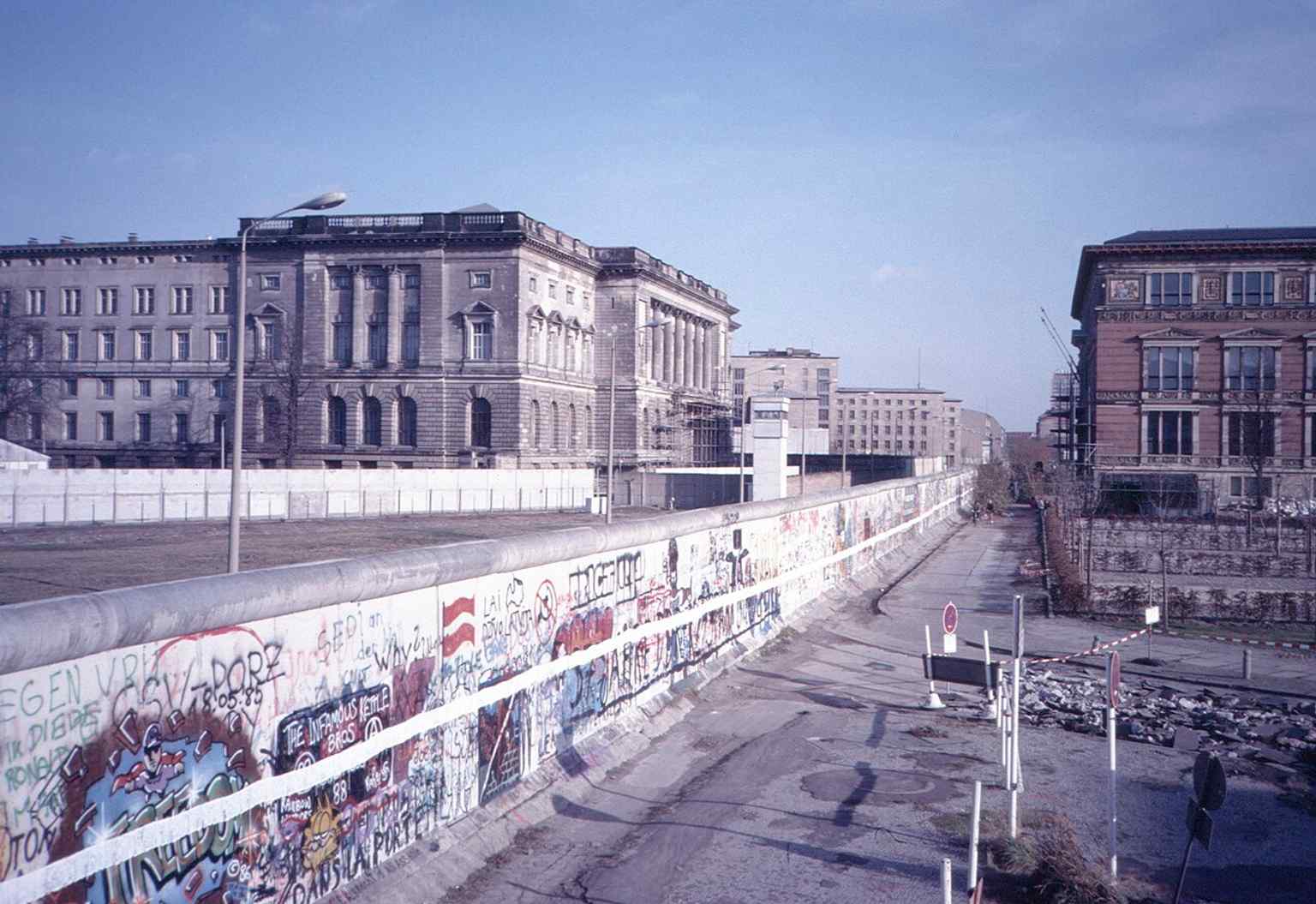
Niederkirchnerstraße in 1986, when the building stood beside the Berlin Wall and the former border still shaped access to the site.Photo: Roehrensee, Wikimedia Commons, CC BY-SA 4.0. Cropped & resized. 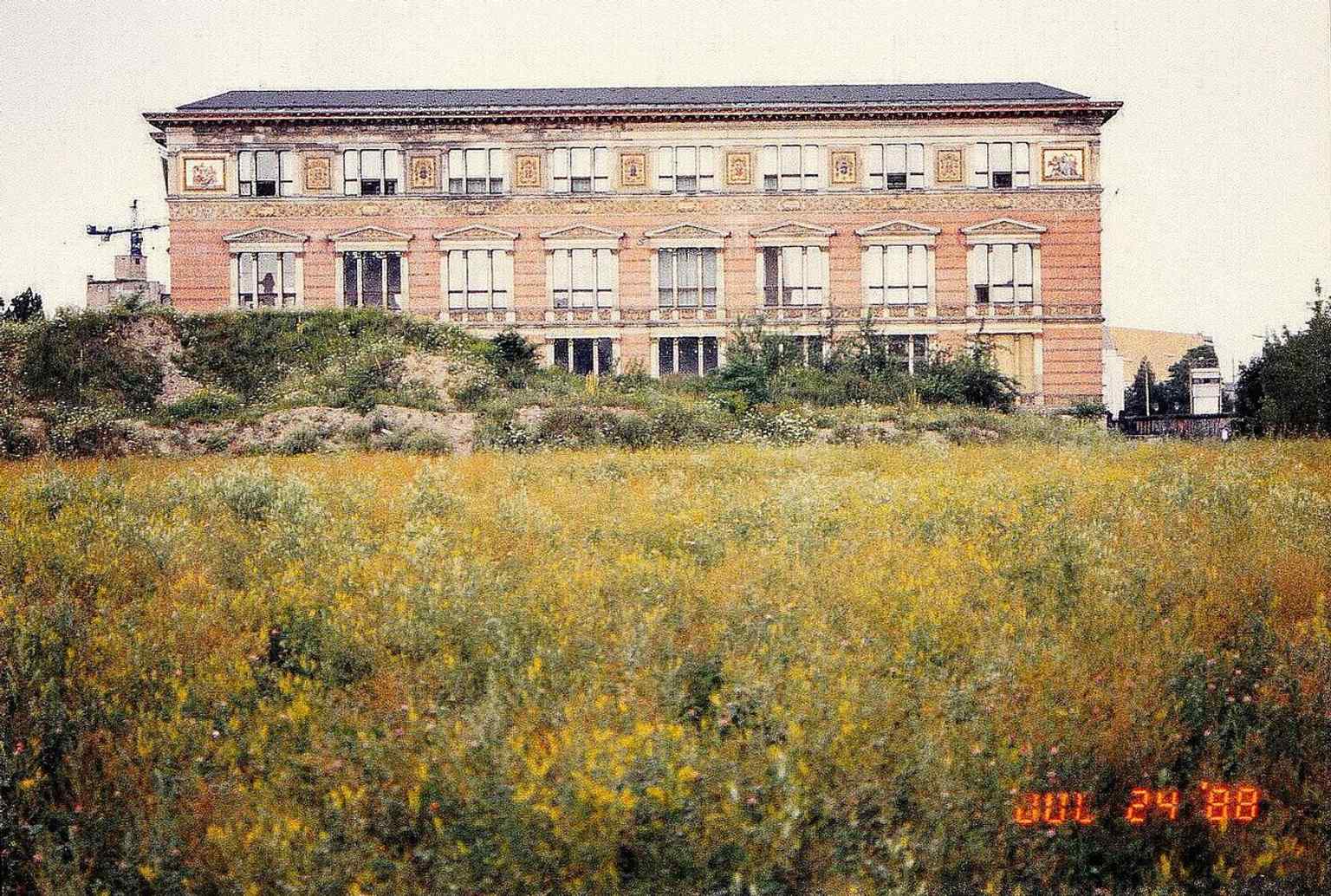
A 1988 view of the east side, reflecting the building’s location right on the divided Berlin border before reunification.Photo: pictures Jettcom, Wikimedia Commons, CC BY 3.0. Cropped & resized. 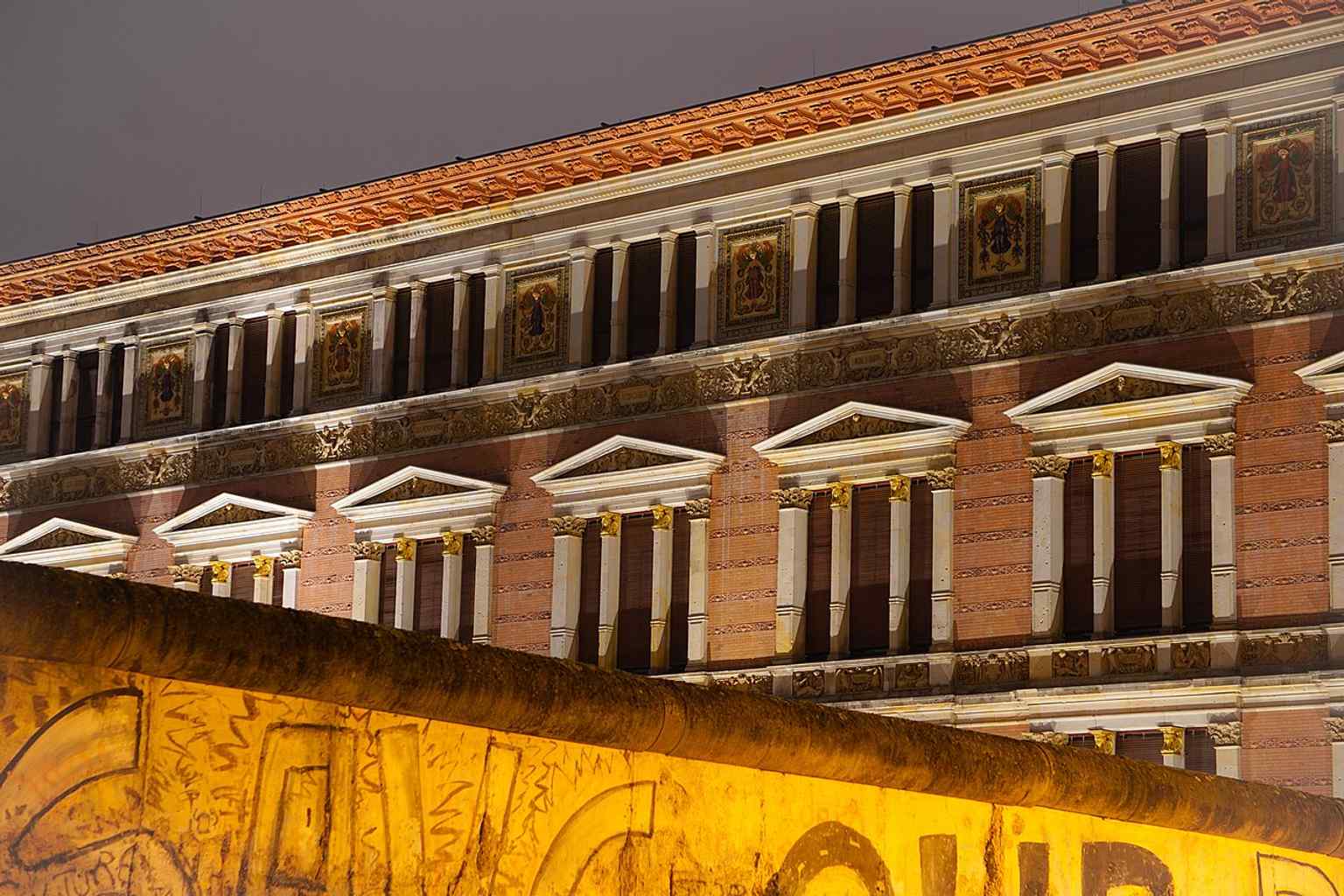
Martin-Gropius-Bau beside the Berlin Wall, a powerful reminder of how the border once cut directly past the museum.Photo: Michal Lichota, Wikimedia Commons, CC BY-SA 4.0. Cropped & resized. 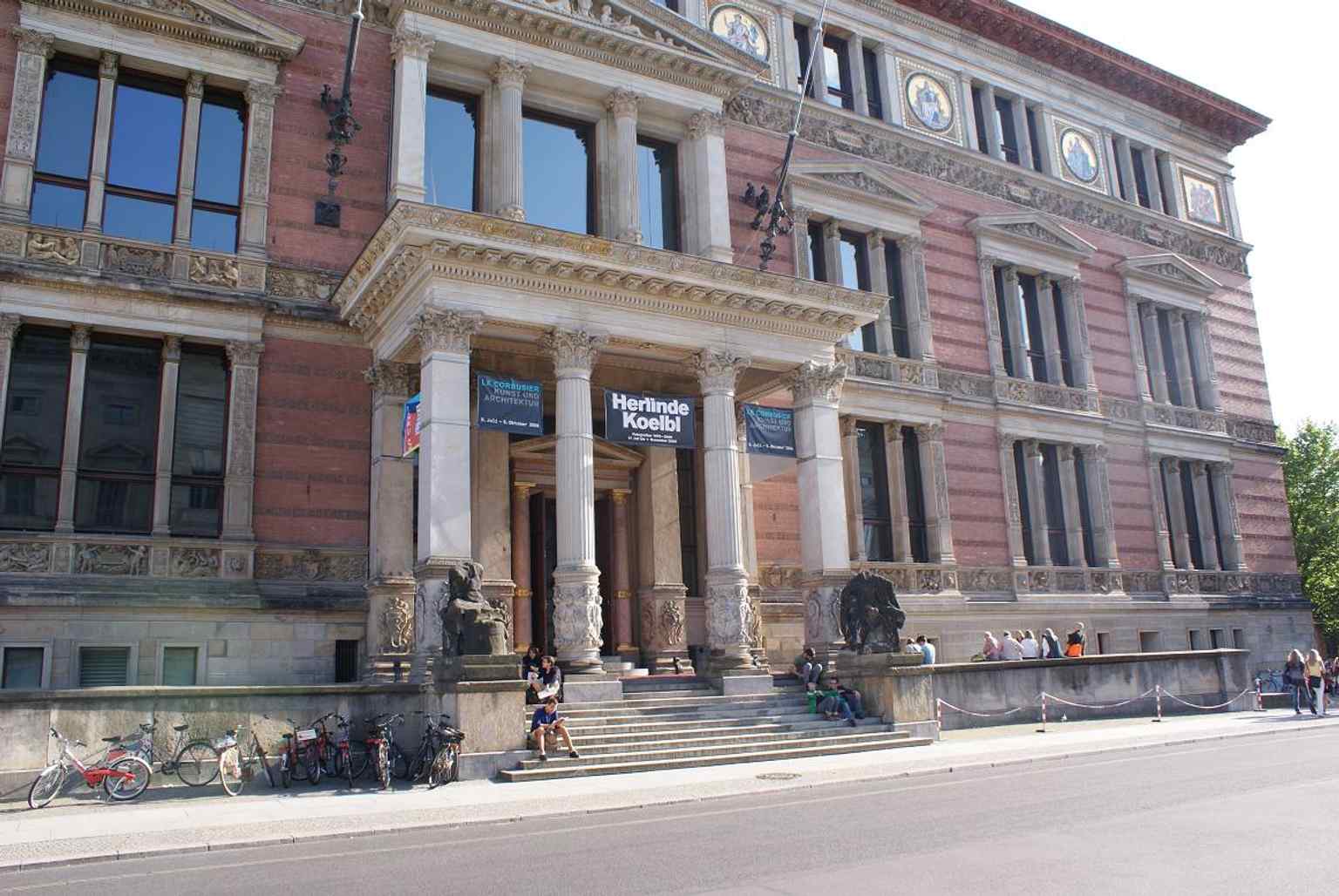
A wider streetscape with the neighboring parliament building, placing Gropius Bau in its dense political and cultural setting.Photo: Wiper México, Wikimedia Commons, CC BY-SA 3.0. Cropped & resized. In the old photos on your screen, the Excelsior appears as a long pale-stone facade with rigid rows of windows and a bulky corner block facing Anhalter Bahnhof. Right here stood…Read moreShow less
Open dedicated page →In the old photos on your screen, the Excelsior appears as a long pale-stone facade with rigid rows of windows and a bulky corner block facing Anhalter Bahnhof.
Right here stood one of Europe’s grandest hotels... a palace for people who intended to stay only briefly. Architect Otto Rehnig designed it for the surge of passengers pouring out of the station across the square. The Excelsior opened on the second of April, nineteen oh eight, with two hundred rooms, then nearly doubled after an expansion in nineteen twelve and nineteen thirteen.
If you check the app image, you can see how directly it faced the station, almost like a handshake between rail travel and expensive bedding. That was the whole business model.
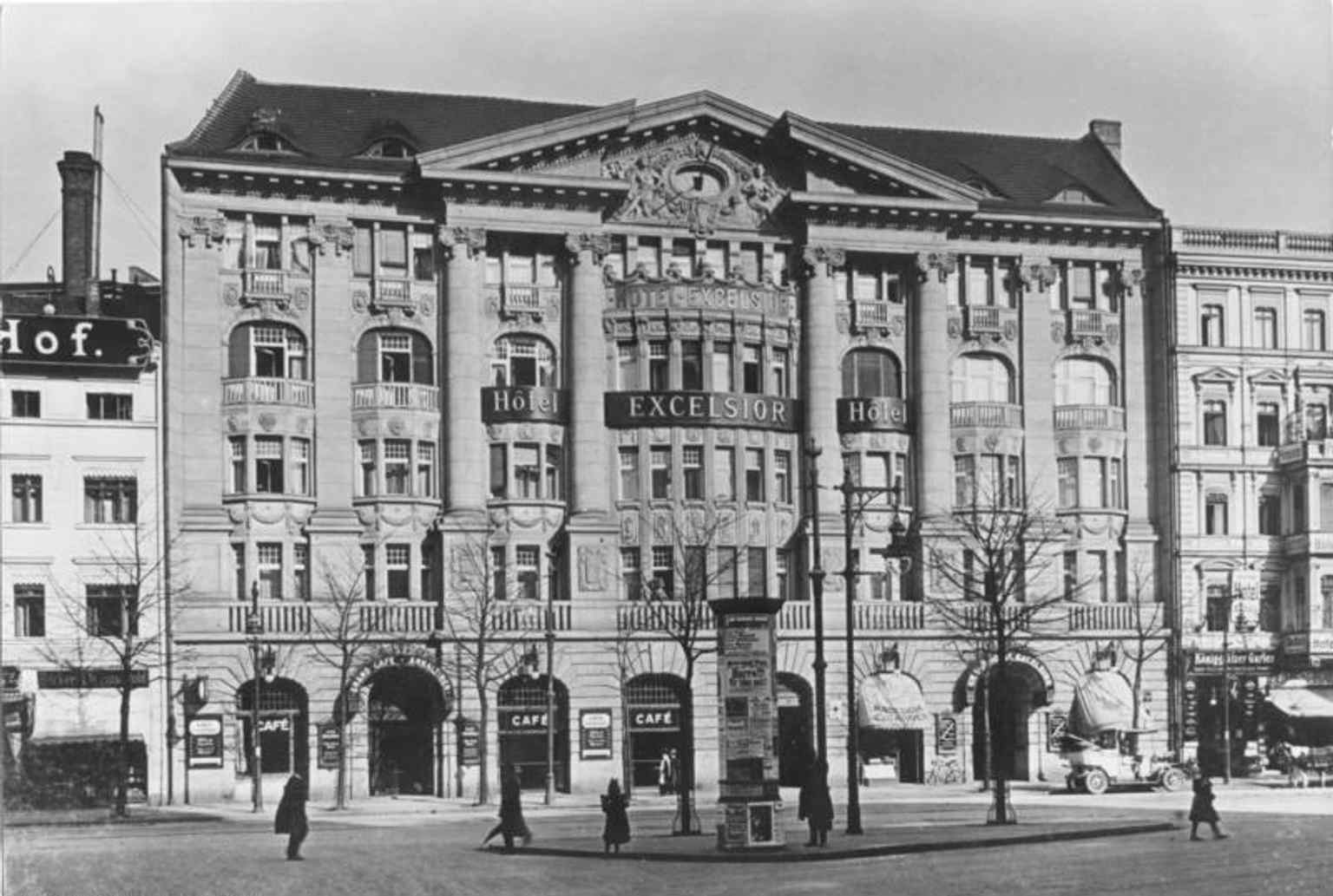
Hotel Excelsior beside Anhalter Bahnhof in 1924 — built to serve the flood of train passengers arriving just across the street.Photo: Hoffmann, Herbert, Wikimedia Commons, CC BY-SA 3.0 de. Cropped & resized. The man who truly made it famous, Curt Elschner, started as a waiter in Leipzig. Not a bad reminder that Berlin occasionally lets the staff rewrite the script. In the nineteen twenties he turned this place into a seven-thousand-five-hundred-square-meter hotel complex with six hundred rooms, seven hundred fifty beds, two hundred fifty bathrooms, nine restaurants, a library, and two hundred newspapers from around the world. He added telephones and radios in the rooms, modern power and water systems, electric kitchens, and even a spa in the cellar.
Then came the part most people standing here would never guess. On the eleventh of November, nineteen eighteen, in the chaos of a collapsing empire, Karl Liebknecht used this luxury hotel to re-found the Spartacus Group. Rosa Luxemburg’s program demanded workers’ and soldiers’ councils, the disarming of the ruling classes, and public control of major industries. So yes... one of Berlin’s fanciest addresses briefly served as revolutionary headquarters.
By the late nineteen twenties, Elschner pushed the transit idea even further. Look at the later photo on your phone. In nineteen twenty-eight and nineteen twenty-nine, he financed an underground passage to Anhalter Bahnhof: eighty meters long, three meters wide, three meters high, and costing one million two hundred thousand Reichsmarks, roughly eight million euros today. It even included five underground shops and a railway ticket office inside the hotel. Guests could go from train compartment to bedroom without stepping outside. Berlin solved inconvenience by digging a tunnel under it.
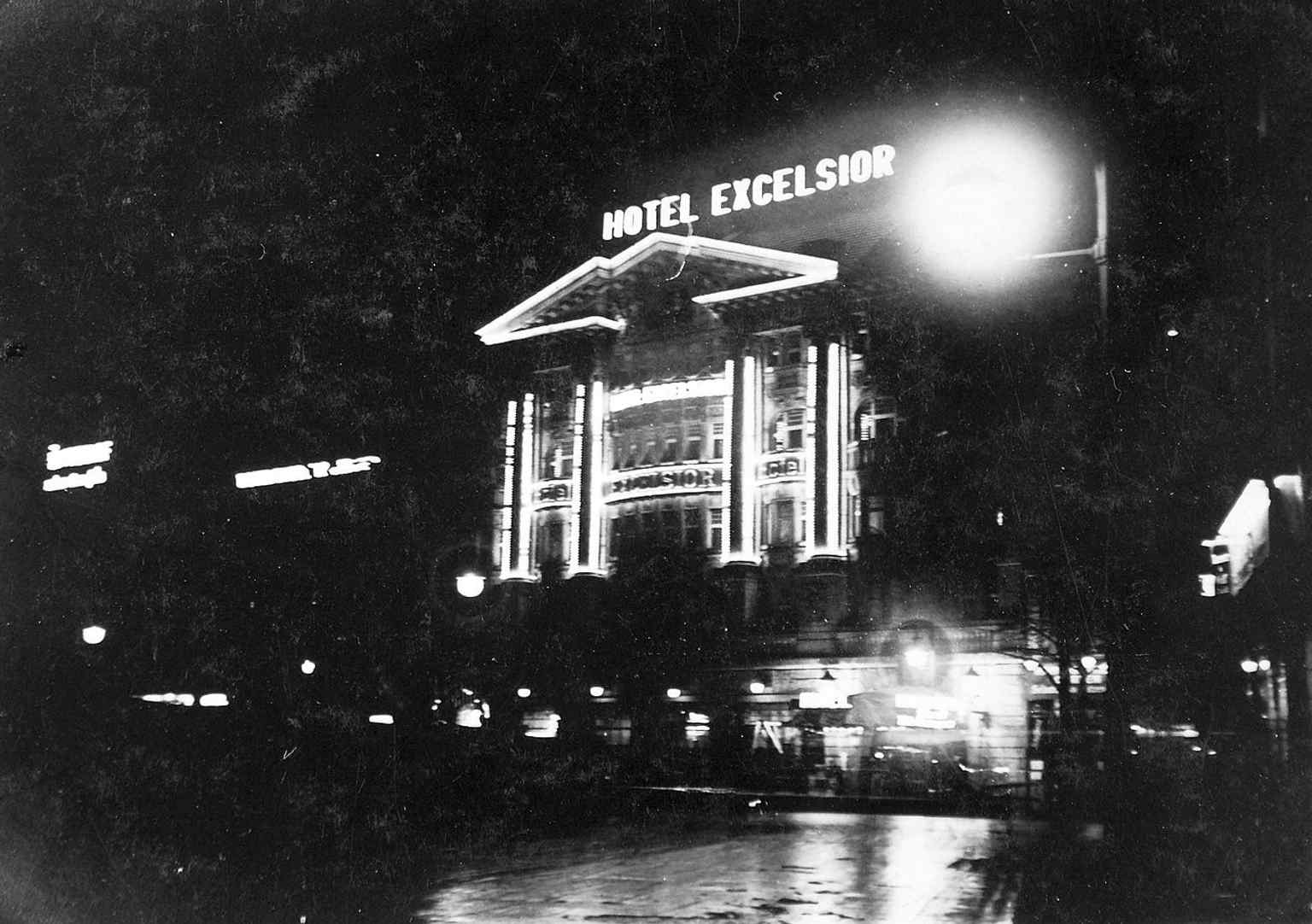
The Excelsior in 1929, when it had become a vast luxury hotel linked directly to the station by its famous underground passage.Photo: FOTO:Fortepan — ID 12127: Adományozó/Donor: Unknown., Wikimedia Commons, Public domain. Cropped & resized. Politics kept breaking through the velvet curtains. Nazi leaders wanted the Excelsior as Hitler’s Berlin base, but Elschner refused, forcing him to choose the Kaiserhof instead. The party punished the hotel anyway, stripping Jewish thinkers from the stained glass in its “Hall of Free Thought” and burning books from the library.
In April nineteen forty-five, bombing left the Excelsior a burning ruin. Demolition finished the job in nineteen fifty-four. Even the old tunnel may still survive somewhere below, which feels appropriately theatrical.
That is the Excelsior in one frame: marble, radios, baths, and seamless service... then revolution, censorship, and destruction barging through the lobby. Kreuzberg has a habit of turning ordinary urban functions into political theater. When you’re ready, continue about eleven minutes to Die Tageszeitung.
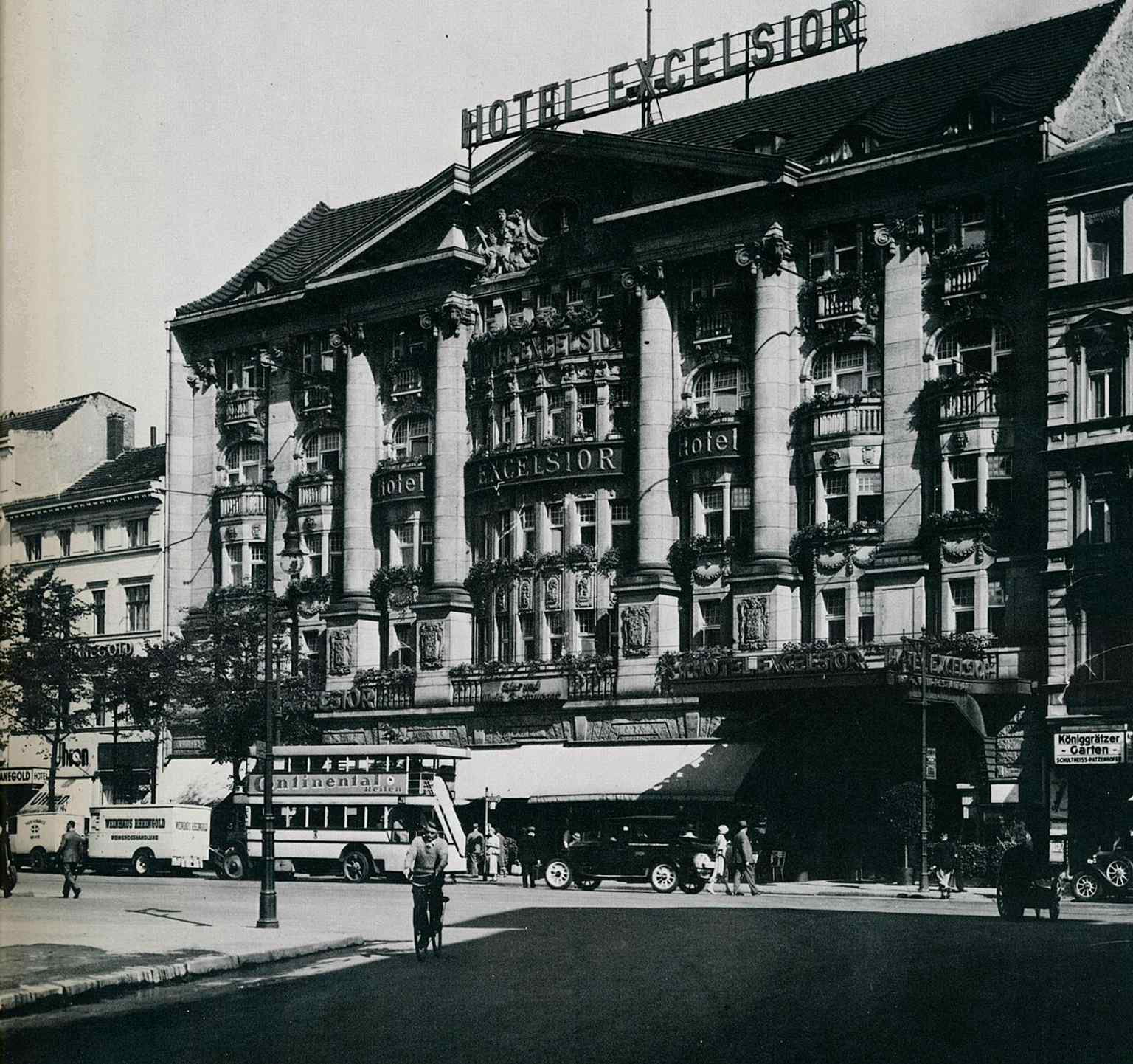
A rare early view of Hotel Excelsior in Kreuzberg around 1920, showing the grand prewar-era facade of one of Berlin’s biggest hotels.Photo: Unknown authorUnknown author, Wikimedia Commons, Public domain. Cropped & resized. On your left stands a sharp-edged glass-and-concrete building, folded into angular planes and stamped with the red taz logo high on the facade. This is the home of Die…Read moreShow less
Open dedicated page →
Die TageszeitungPhoto: Universalamateur, Wikimedia Commons, CC BY-SA 4.0. Cropped & resized. On your left stands a sharp-edged glass-and-concrete building, folded into angular planes and stamped with the red taz logo high on the facade.
This is the home of Die Tageszeitung, usually just taz. What began as the taz Collective started in nineteen seventy-eight after the Tunix Congress, when activists in a cold storefront decided that protest also needed deadlines, copy edits, and a printing schedule. Classic Berlin: rebellion, but with meeting minutes.
From the start, taz aimed to build a counter-public, meaning a place where official stories could be challenged, mocked, or dismantled in print. By nineteen eighty-seven, the paper pulled off one of its most famous stunts: the editors forged an edition of Neues Deutschland, the East German ruling party newspaper, and spread it in West Germany. Some of the fake predictions later proved eerily close to reality. Satire occasionally files its report early.
The unruliness did not stop at power outside. In nineteen eighty-eight, a so-called porno page triggered a women’s strike inside the paper, and two editors got suspended for a week. That same year, another internal fight exploded after a culture text used the word “gaskammervoll” for a disco; the membership then fired two cultural editors. taz was serious, funny, principled, and deeply argumentative. In other words, a newsroom.
Its survival took organization, not just attitude. In nineteen eighty-nine, with help from the Stiftung Umverteilen foundation, taz bought a protected old building on Kochstraße. When funding collapsed soon after, three thousand founding members put up three million Deutsche Marks and created a publishing cooperative to keep investors out and independence in. If you want dissent to last, eventually someone has to pay the electricity bill.
This newer headquarters shows what that stubbornness built; check the before-and-after image in the app and you’ll see how the modest older office gave way to this jagged contemporary shell. If you want the earlier face of the paper, look at the older exterior photo on your screen.
taz kept reinventing itself. In nineteen ninety-five, it became the first German daily newspaper you could read completely online. Then came the Seitenwende, literally the page-turn: after the seventeenth of October, twenty twenty-five, weekday print ended, the Saturday wochentaz stayed on paper, and the staff even ran a hotline in the building to help readers switch to the app and e-paper. Revolution, now with customer support.
So here’s the uncomfortable question... when a newspaper bends rules to puncture power, when does that serve democracy, and when does it start borrowing the methods it claims to resist?
Not every fight happens in the street. Some happen in layout meetings, strike votes, headline drafts, and the endless contest over who gets to define reality. Sea Level is about a two-minute walk from here. The offices generally keep weekday hours, roughly eight to six, and close on weekends.
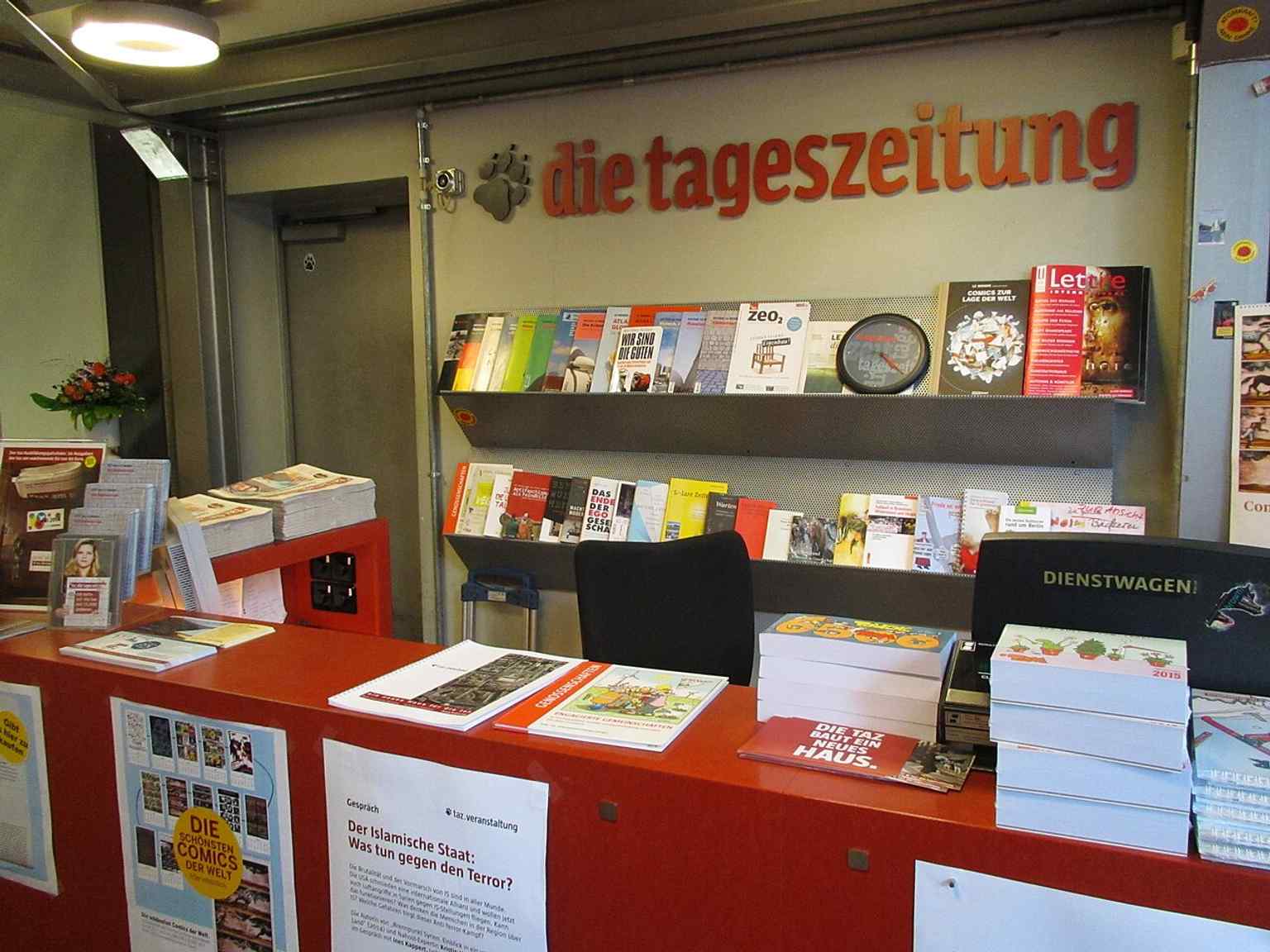
The taz shop inside the Rudi-Dutschke-Haus, the cooperative newspaper’s long-time home in Kreuzberg after it bought the historic building in 1989.Photo: Molgreen, Wikimedia Commons, CC BY-SA 4.0. Cropped & resized. 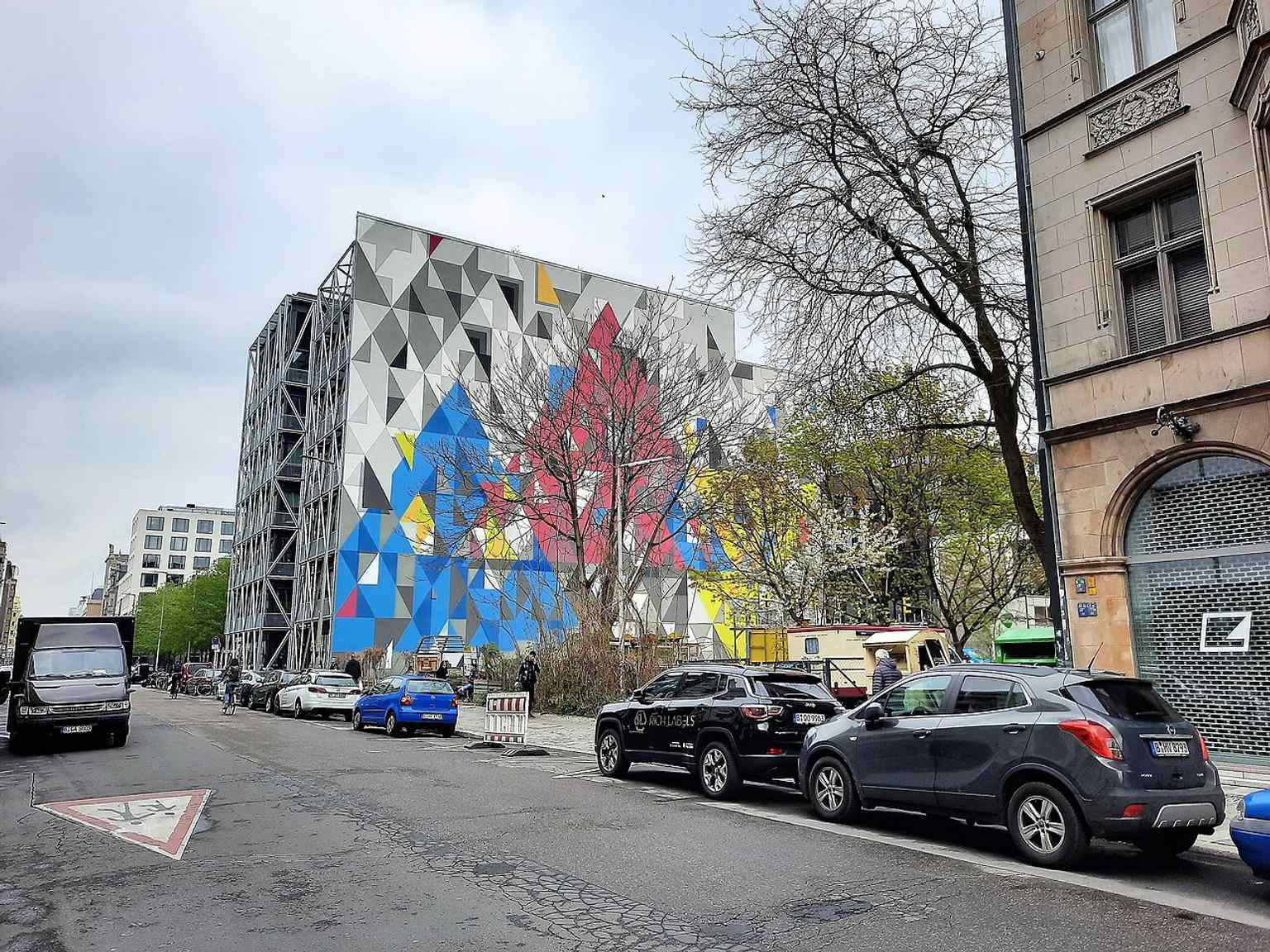
The taz headquarters in Kreuzberg, showing the newspaper’s modern Berlin base as it moved through its digital transformation.Photo: Fridolin freudenfett, Wikimedia Commons, CC BY-SA 4.0. Cropped & resized. 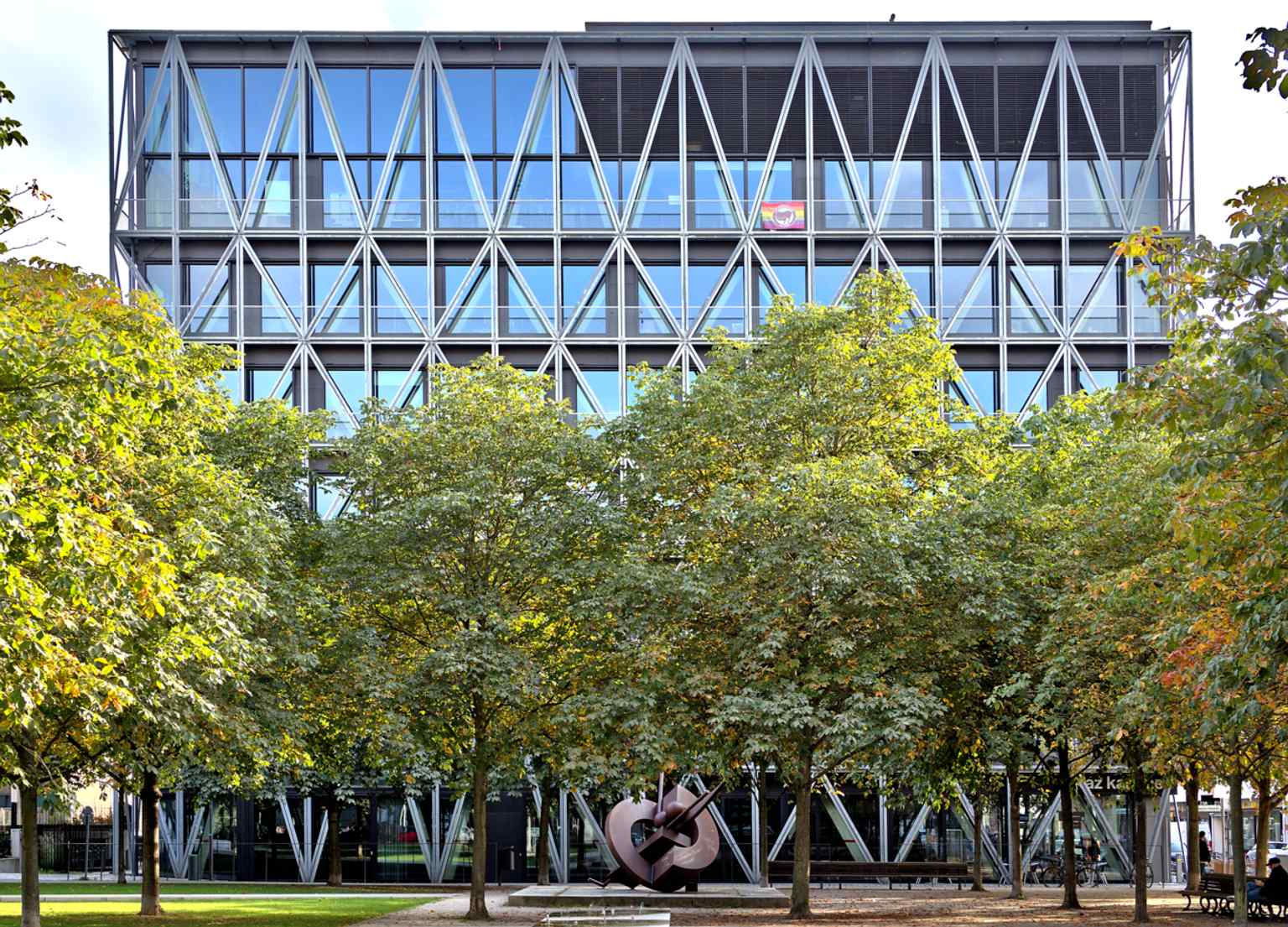
The taz publishing building seen from Besselpark, with public art in front of it — a contemporary view of the paper’s Berlin headquarters.Photo: Babewyn, Wikimedia Commons, CC BY-SA 4.0. Cropped & resized. On your right, look for a small metal plaque, rectangular and set flush into the wall, marked with a sea-level reference that turns an ordinary street face into a piece of…Read moreShow less
Open dedicated page →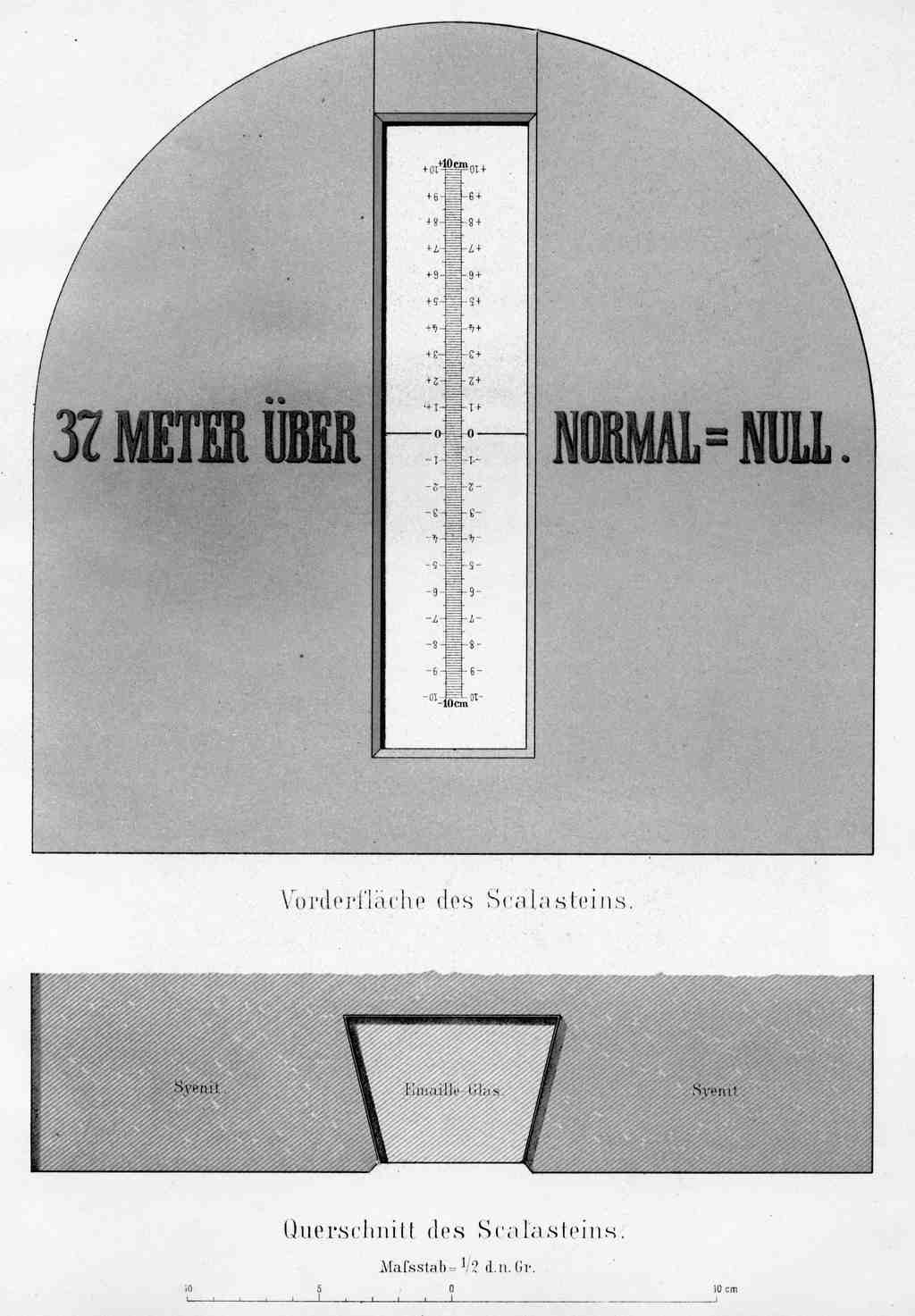
sea levelPhoto: Trigonometrische Abteilung der Landesaufnahme, Wikimedia Commons, Public domain. Cropped & resized. On your right, look for a small metal plaque, rectangular and set flush into the wall, marked with a sea-level reference that turns an ordinary street face into a piece of national infrastructure.
This is sea level, Berlin style: less crashing surf, more exact numbers. What you’re meeting here is the old German idea of Normalnull, the official zero for elevation from eighteen seventy-nine until nineteen ninety-two. In plain terms, it was the reference plane from which surveyors measured height. And in a city like Berlin, that matters more than it sounds. Measurement decides where streets drain, how rail lines align, how maps agree, and, quietly, what everyone accepts as solid and true.
The benchmark behind that system stood near the old Berlin Observatory. Surveyors transferred its height from the Amsterdam tide gauge by precision leveling, then fixed it on the twenty-second of March, eighteen seventy-eight. A year later, on Kaiser Wilhelm the First’s eighty-second birthday, officials formally presented it with ceremony. Because apparently even a datum needs a birthday party.
Wilhelm Foerster, the observatory director, pushed for this location because he wanted a central, geologically stable site, not a coastal gauge far from the capital. That choice tells you something important: standards are never just technical. They are political decisions wearing a lab coat.
And here’s the detail locals love because it makes the whole thing wonderfully strange: the famous zero was not actually here in any intuitive sense. Normalnull was defined through a theoretical point exactly thirty-seven meters below the Normalhöhenpunkt of eighteen seventy-nine. So Berlin’s “zero” was partly an invisible calculation... a shared fiction, just a very useful one.
If you glance at the image in the app, the Death Valley sign makes sea level look charmingly obvious. Berlin preferred a more Prussian approach: hide the concept inside mathematics and trust the paperwork.
The system did not stay still. When the New Berlin Observatory faced demolition in nineteen twelve, surveyors moved the key benchmark to Müncheberg-Hoppegarten, about forty-five kilometers east, and that replacement still belongs to Germany’s top leveling network. Then reunification forced another reset. In nineteen ninety-three, Germany replaced Normalnull with a new national height reference after merging eastern and western survey lines. In Berlin, the difference was only about one decimeter, but one decimeter is enough to make bureaucrats very emotional.
And the ground itself refused to cooperate. By two thousand, authorities reported yearly damage to several survey points, plus subsidence from mining. So crews remeasured the network with precision leveling, satellite positioning, and gravity observations. Even “fixed” ground, it turns out, has opinions.
Hold that thought as you look past the street and into the systems that let a whole city agree on up and down... then head on to the Berlin Observatory, about a two-minute walk away. If you want a pause first, this spot is moderately priced and usually stays open until around midnight, with later opening on weekends.
Look for a pale stone plaque, rectangular and flush to the wall, with engraved lettering that marks the former site of Berlin’s vanished observatory. This stop asks you to…Read moreShow less
Open dedicated page →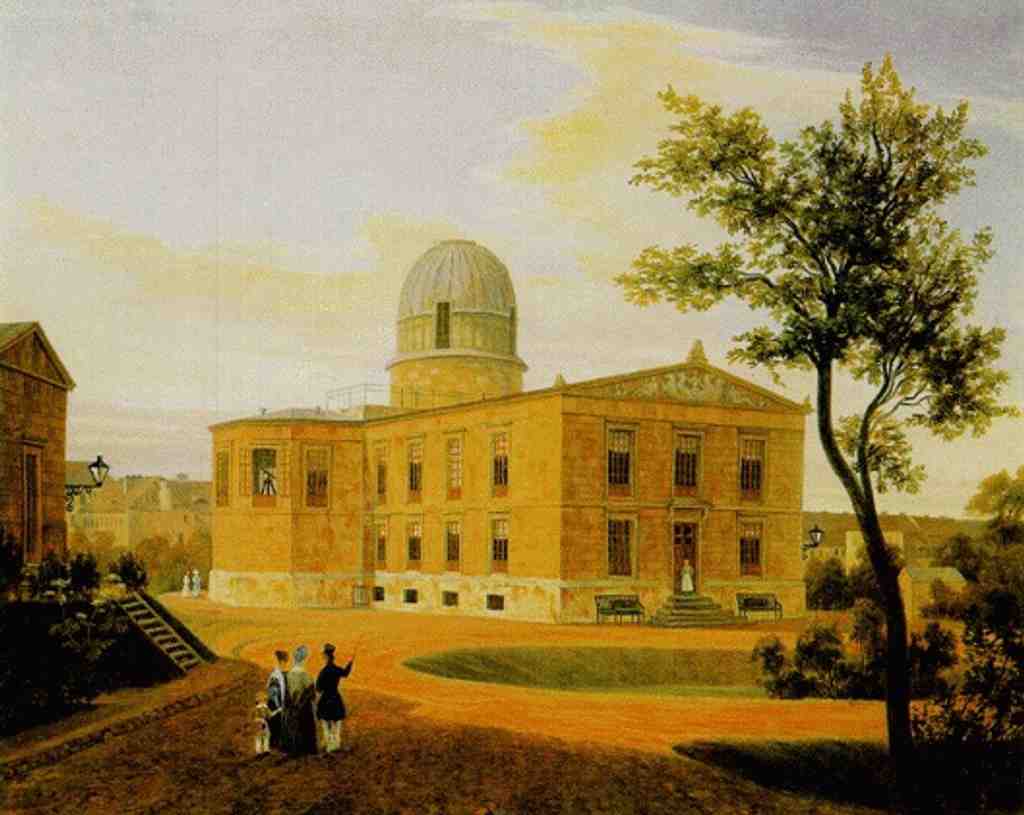
Berlin ObservatoryPhoto: Carl Daniel Freydanck, Wikimedia Commons, Public domain. Cropped & resized. Look for a pale stone plaque, rectangular and flush to the wall, with engraved lettering that marks the former site of Berlin’s vanished observatory.
This stop asks you to imagine a building that once tried to measure both Berlin and the universe... which is a modest ambition, really.
The story starts in seventeen hundred, when Gottfried Leibniz pushed for a Brandenburg society of science. It had no proper observatory yet, but it did have an astronomer, Gottfried Kirch, and a clever way to pay the bills: calendar calculations. In fact, Prussia’s “improved calendar” skipped straight from the eighteenth of February to the first of March in seventeen hundred. Astronomy and administration got along beautifully when money was involved.
And Maria Margarethe Kirch deserves to stand in this story at full height. She was not just helping her husband at the telescope. She made observations herself and discovered the comet of seventeen oh two, the first woman known to do that. The institution gladly used her work... but recognition came through doors built for men.
The first real Berlin observatory opened as a tower in seventeen eleven. Then, in eighteen twenty-five, Johann Franz Encke took over, with Alexander von Humboldt lobbying the king for something better. The king agreed to fund a true observatory on one condition: the public had to get access two nights a week. A fine idea - science, but with visiting hours.
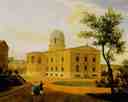
If you check the app, Schinkel’s design shows the new Kreuzberg building that opened in eighteen thirty-five: a plastered, cross-shaped structure in a restrained Greek style, with a rotating iron dome at its center. Its foundations stood separate from the rest of the building so vibrations would not spoil observations. Even then, precision needed engineering, not just genius.
This place did serious work. Encke identified the gap now called the Encke Division in Saturn’s rings. On the twenty-third of September, eighteen forty-six, Johann Gottfried Galle and the student Heinrich Louis d’Arrest found Neptune here, using calculations from Urbain Le Verrier and a Berlin star chart. Not a lone-hero tale, despite history’s bad habit of simplifying everything until it fits on a pedestal.
And this observatory also helped define the ground beneath your feet. Its north side carried Prussia’s official height reference, Normalnull - the agreed zero for measuring elevation. Surveying the earth and surveying the sky rely on the same fragile bargain: trusted observation.
Then Berlin grew. Streets, buildings, smoke, vibration, light... all the usual urban compliments to astronomy. By the late nineteenth century, the city had surrounded the observatory so thoroughly that serious observation became nearly impossible. In nineteen thirteen, the institution moved to Babelsberg.
So even the stars become part of a city’s story: who gets funded, who gets named, who gets forgotten, and what a growing capital allows people to see. In about a minute, we’ll continue to Jerusalem Church. If you want a practical note, the public hours listed in the app are fairly limited, which feels on brand for astronomy.
On your left, look for a low, angular church of concrete partly faced in red brick, grouped in stepped blocky volumes and paired with a separate bell tower. Jerusalem Church has…Read moreShow less
Open dedicated page →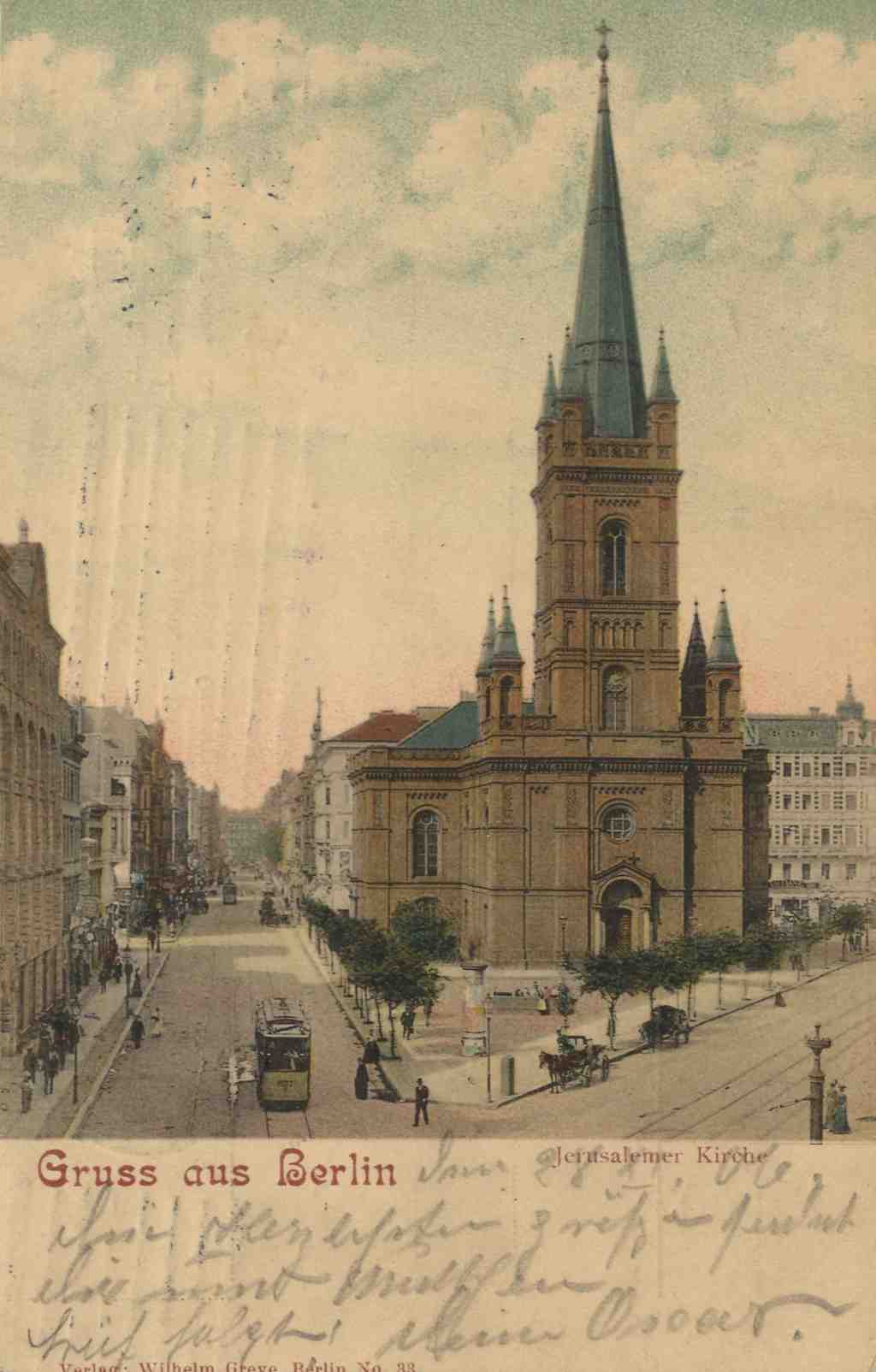
Jerusalem ChurchPhoto: Wilhelm Greve, Wikimedia Commons, Public domain. Cropped & resized. On your left, look for a low, angular church of concrete partly faced in red brick, grouped in stepped blocky volumes and paired with a separate bell tower.
Jerusalem Church has had more reinventions than most city agencies, and with better results. It began as a late medieval chapel with a hospital, shaped by pilgrimage, charity, and the steady traffic of people heading out of town.
The origin story is wonderfully specific. A Berlin burgher named Müller survived an attack during a pilgrimage to Jerusalem, then funded a chapel here in thanks. In fourteen eighty-four, a bishop offered an indulgence - a church promise of less time in purgatory - to anyone who helped restore it. Efficient fundraising, medieval edition. Inside stood a copy of the Holy Sepulchre, the tomb of Christ as people here imagined it. That imitation gave the place its name: Jerusalem.
A hermit-like caretaker collected alms from travelers for the attached hospital. So from the start, this was never just a church. It was devotion, theater, and social care folded into one small roadside stop.
Then Berlin changed, and the church changed with it. After the Reformation, it became Lutheran. Later, it served both Lutherans and Calvinists under one roof. In the early eighteenth century, Philipp Gerlach rebuilt it at a chaotic crossroads where streets came in from five directions, so the choir - the sacred end of the church - pointed north instead of east. Theology met traffic engineering... traffic won.
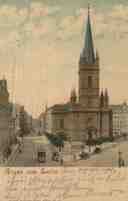
If you glance at the image on your screen, you can see the grander nineteenth-century version that followed, including the tall tower Karl Friedrich Schinkel crowned in the eighteen thirties. Later, Edmund Knoblauch refaced it in yellow brick and terracotta and fitted a hall for fourteen hundred worshippers.
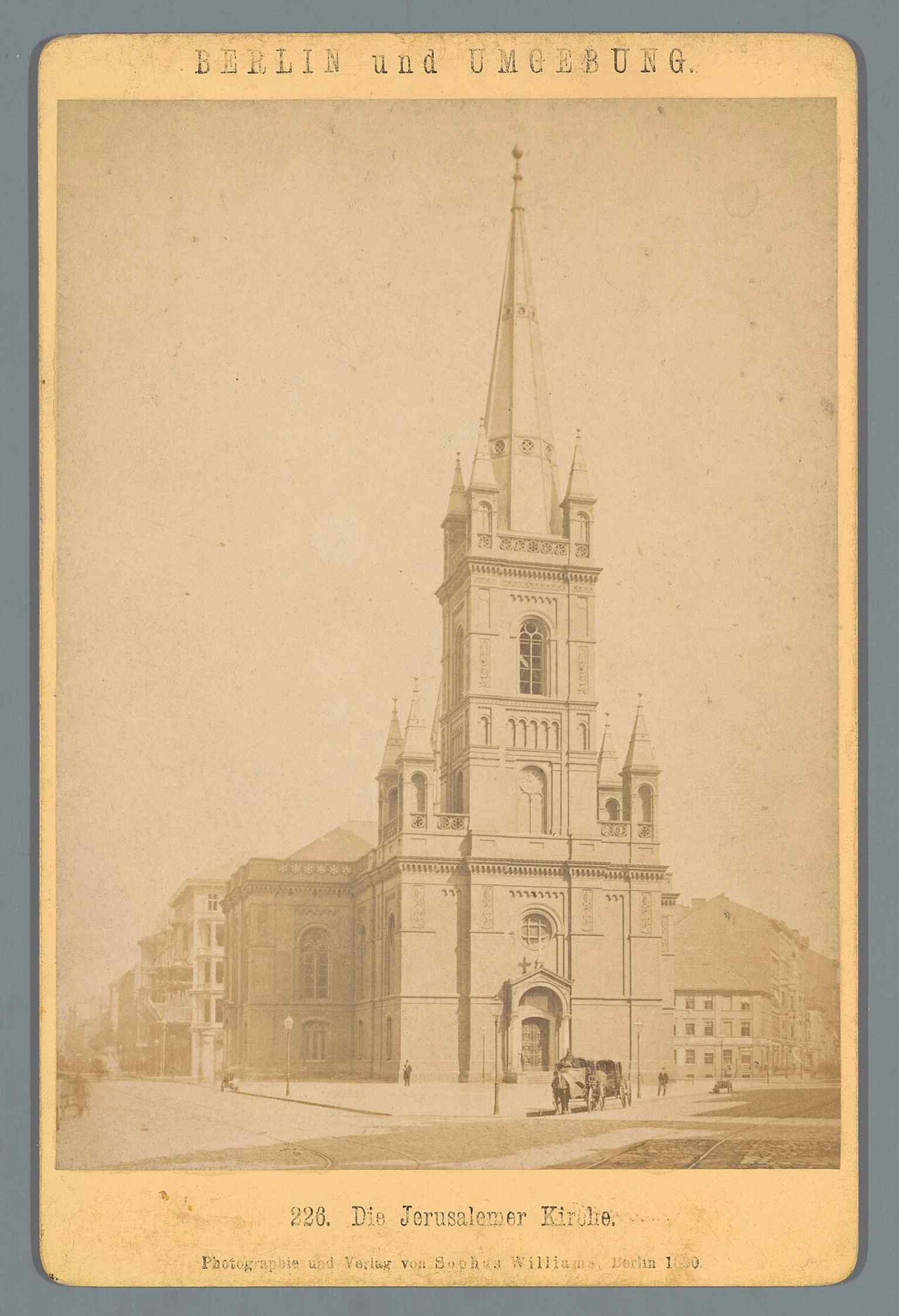
An 1880 view of Jerusalem Church, showing the older 19th-century building before later rebuilding and wartime destruction.Photo: Rijksmuseum, Wikimedia Commons, CC0. Cropped & resized. Then came a darker chapter. In the nineteen thirties, the congregation split bitterly under Nazi pressure. Pastor Alfred Fischer opposed the pro-Nazi German Christians inside his own church leadership. When they refused baptism to children with Jewish ancestry, Fischer quietly baptized them in a private apartment instead. That tells you what this place held onto when institutions around it were failing.
The old church closed in nineteen forty-one. Romanian Orthodox Christians briefly took it over in nineteen forty-four, and then an air raid in February nineteen forty-five destroyed it and the rectory within about a year of that new beginning.
This building is the next life. After the Wall split the parish, the western congregation built a new Jerusalem Church here in nineteen sixty-eight. Architect Sigrid Kressmann-Zschach designed this compact ensemble of worship space, offices, and living quarters - her only sacred building. If you check the foundation stone on your phone, you’re looking at the marker of that return.
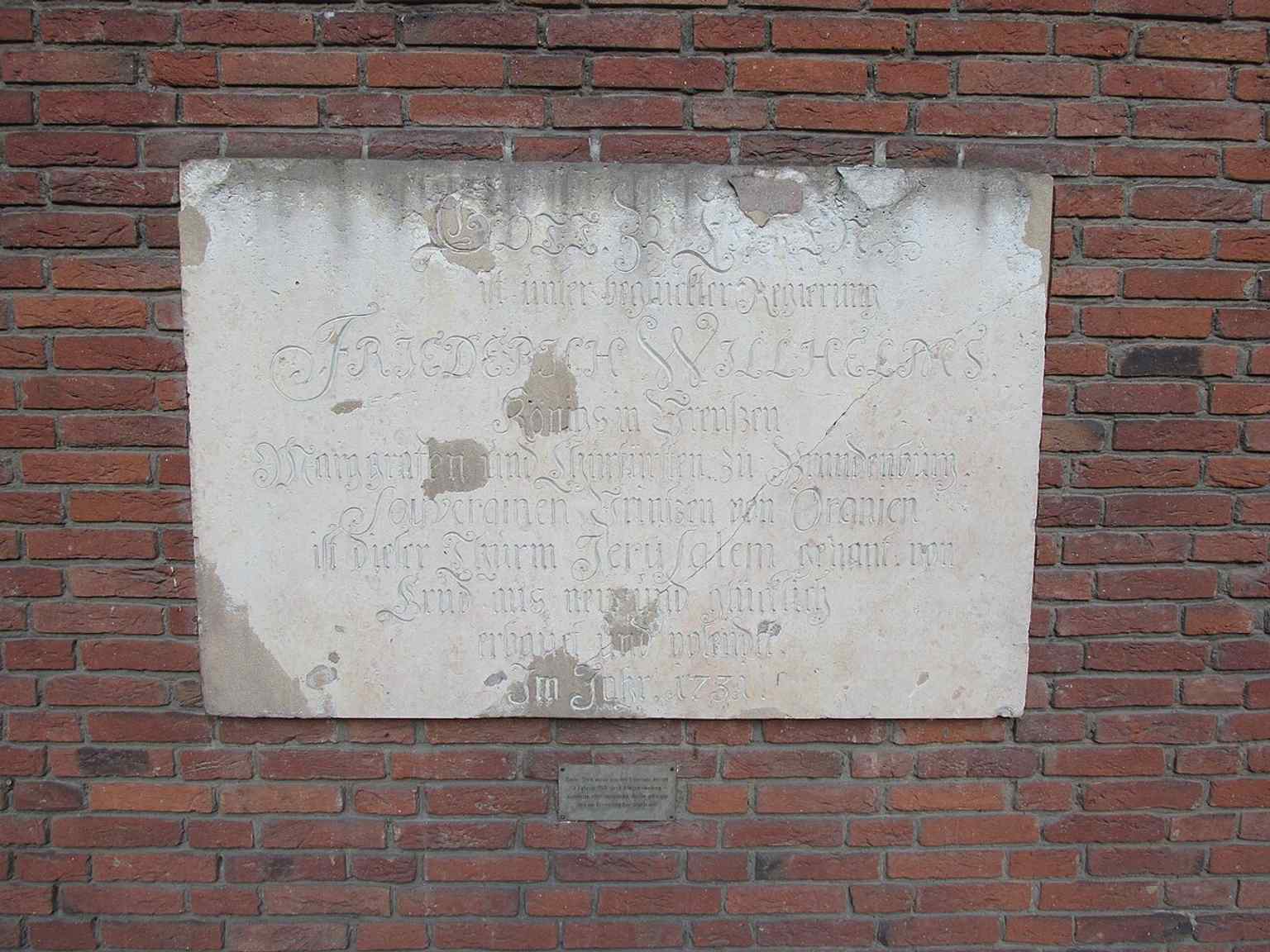
The foundation stone of the church’s 1968 rebuild, marking the postwar return of Jerusalem Church on Lindenstraße.Photo: Orderinchaos, Wikimedia Commons, CC BY-SA 4.0. Cropped & resized. Now the building hosts Christian-Jewish dialogue and shared Christian worship. Which feels right. Sacred places survive here by accepting new meanings without going blank. In about four minutes, the Jewish Museum Berlin continues that story in a sharper, more deliberate key.
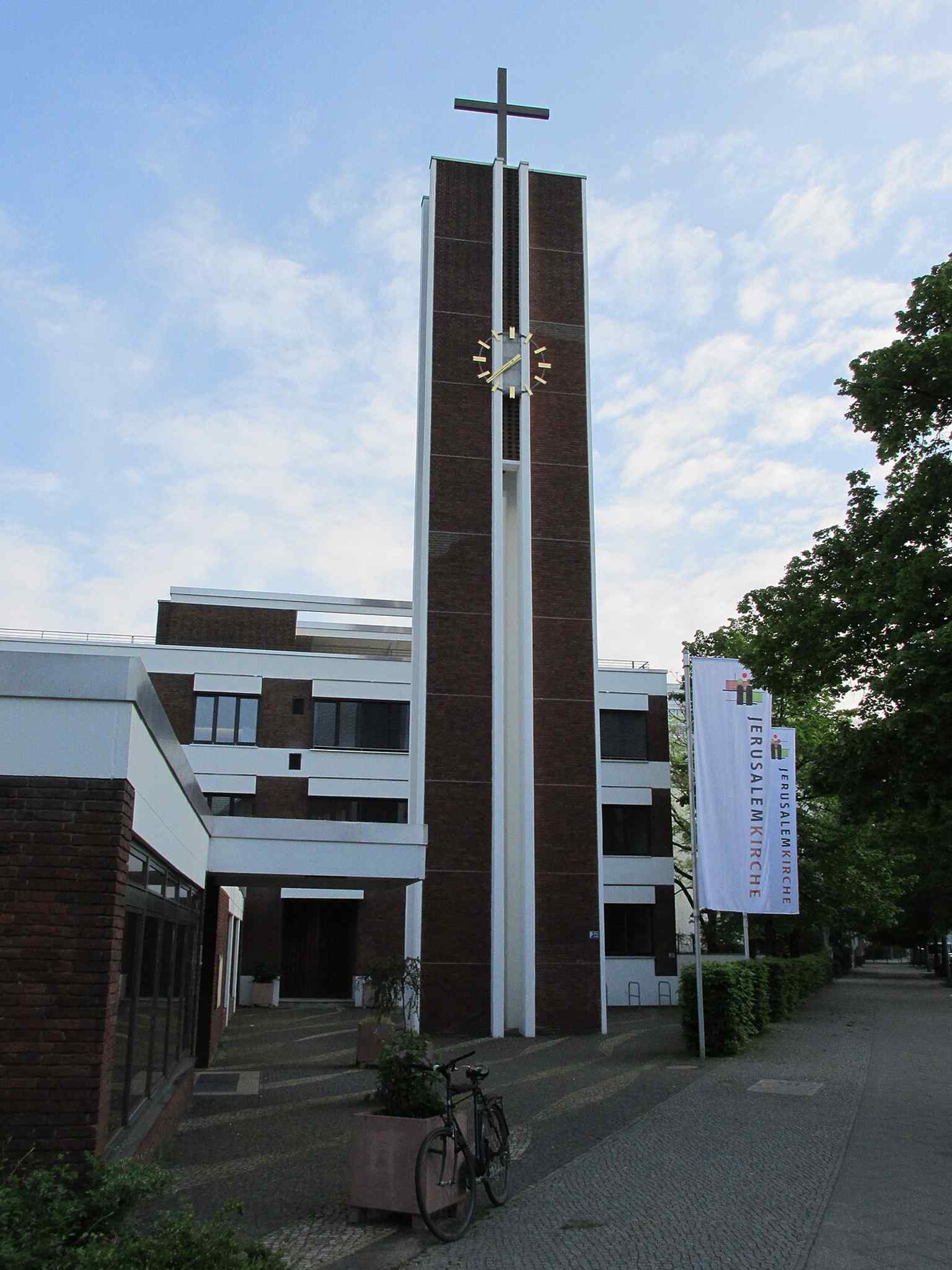
A clear exterior view of the present Jerusalem Church in Berlin-Kreuzberg, now used more as a meeting and dialogue space than a regular parish church.Photo: Orderinchaos, Wikimedia Commons, CC BY-SA 4.0. Cropped & resized. 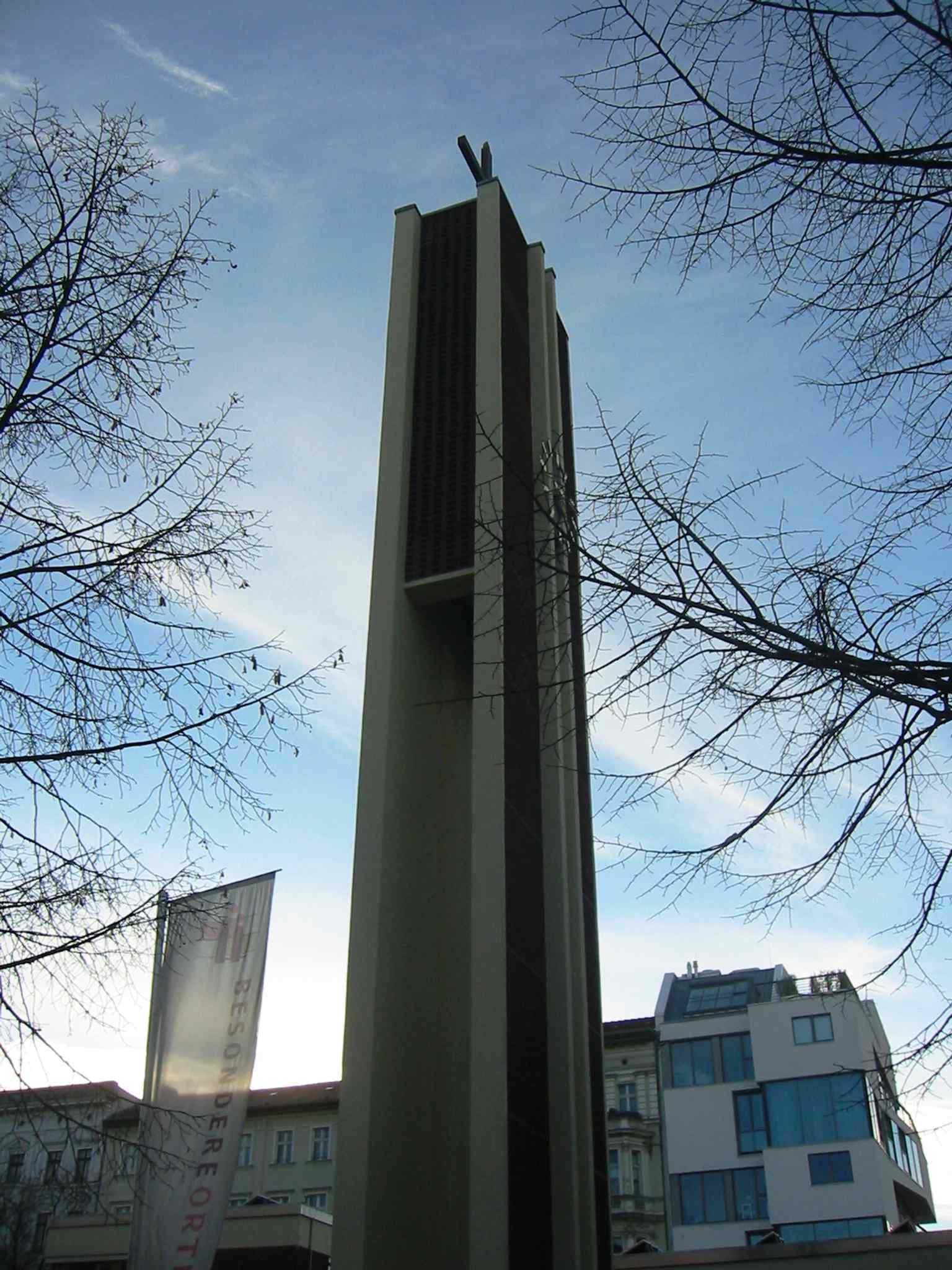
The separate bell tower of the 1968 church ensemble, reflecting Sigrid Kressmann-Zschach’s compact postwar design.Photo: Assenmacher, Wikimedia Commons, CC BY-SA 3.0. Cropped & resized. 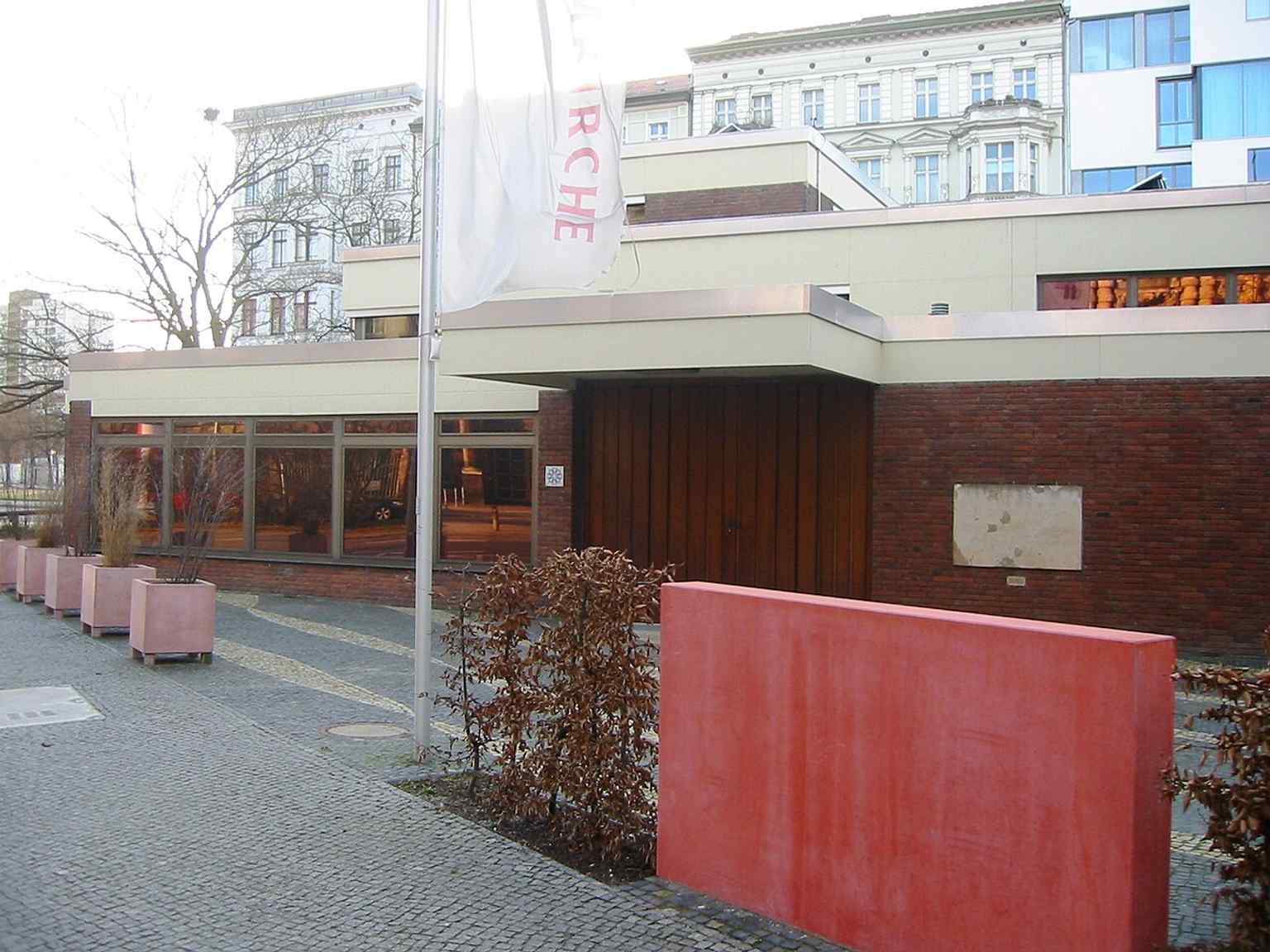
The entrance to Jerusalem Church on Lindenstraße, the site that shifted from historic parish church to a place for Christian-Jewish dialogue.Photo: Assenmacher, Wikimedia Commons, CC BY-SA 3.0. Cropped & resized. 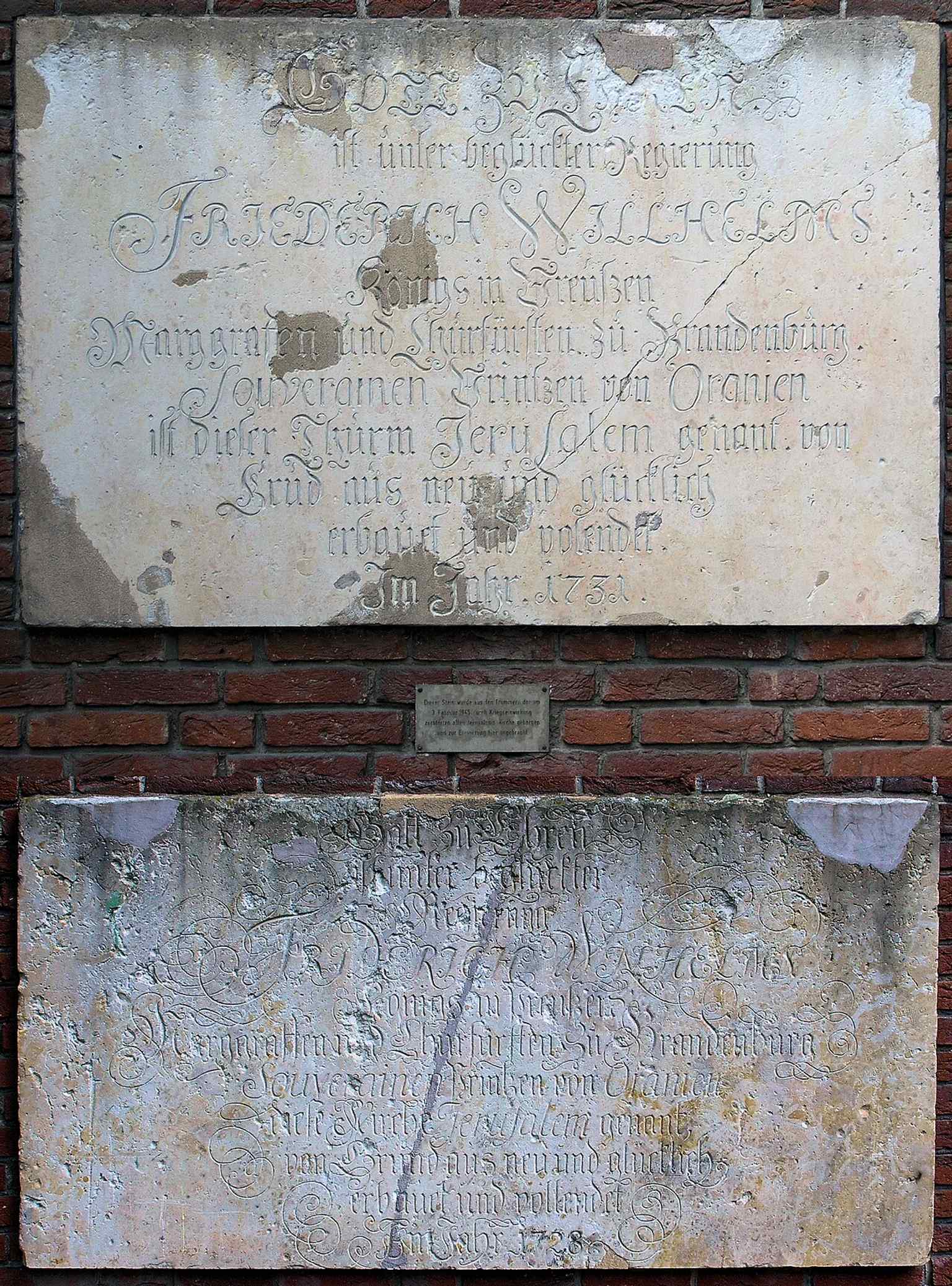
A memorial plaque on Lindenstraße recalling the church’s long history and its earlier location in the Friedrichstadt parish area.Photo: OTFW, Berlin, Wikimedia Commons, CC BY-SA 3.0. Cropped & resized. 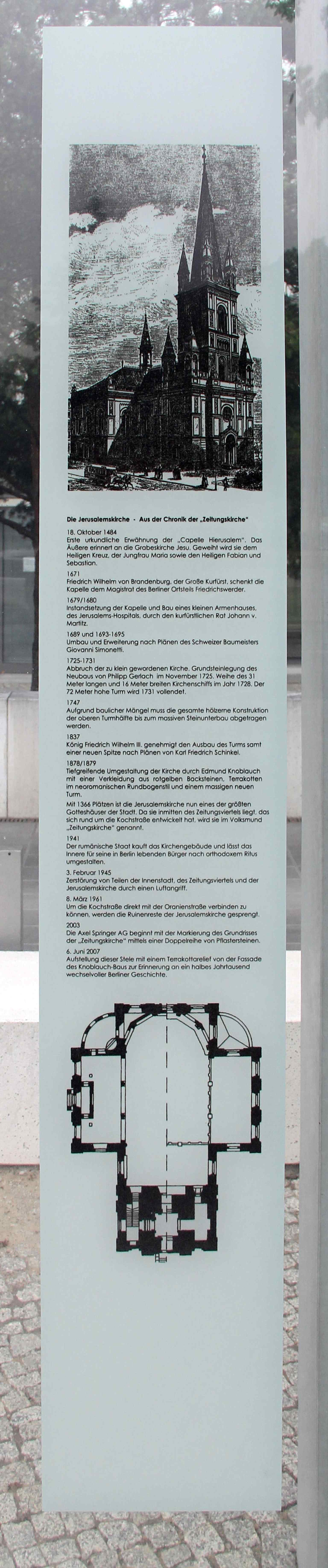
A commemorative plaque on Rudi-Dutschke-Straße marking the former church site, where ruins were cleared after the 1945 destruction.Photo: OTFW, Berlin, Wikimedia Commons, CC BY-SA 3.0. Cropped & resized. On your left, look for a jagged zinc-clad building shaped like a lightning bolt, cut by sharp diagonal window slits and set beside the calmer baroque Kollegienhaus. This is the…Read moreShow less
Open dedicated page →
Jewish Museum BerlinPhoto: Stan Hema Agentur, Wikimedia Commons, Public domain. Cropped & resized. On your left, look for a jagged zinc-clad building shaped like a lightning bolt, cut by sharp diagonal window slits and set beside the calmer baroque Kollegienhaus.
This is the Jewish Museum Berlin, the largest Jewish museum in Europe, and it exists because Berlin eventually chose not to let destruction have the last word. The first Jewish museum in the city opened on the twenty-fourth of January, nineteen thirty-three, led by Karl Schwartz, just six days before the Nazis officially took power. He meant it to show Jewish history as living history, not a sealed-off relic. Then, on the tenth of November, nineteen thirty-eight, after Kristallnacht, the Gestapo shut it down and confiscated its collection. Efficient, brutal, and entirely in character.
The museum you see now reopened in two thousand one, but its rebirth took decades of argument, planning, and moral nerve. In nineteen eighty-eight, Berlin announced a design competition for a new Jewish museum. Daniel Libeskind won with this fractured zigzag, a design people nicknamed Blitz, or Lightning. He did not offer a neutral container. He gave Berlin a building that behaves like a wound.
That was deliberate. The old Kollegienhaus, a surviving baroque building in Friedrichstadt, serves as the historical entrance. But there is no visible connection above ground to Libeskind’s building. Visitors pass underground from old Berlin into a structure that feels broken open. Subtle it is not.
What does a city owe the histories it once tried to erase... a memorial, a curriculum, an archive, a place for grief, all of it? This museum answers by making absence part of the architecture itself. Libeskind carved voids through the building, tall empty shafts that represent what can never be fully displayed: lives, communities, and human possibility reduced to ash. In the basement, three slanting corridors, called axes, force a choice of meanings: continuity, exile, and the Holocaust. One leads to the Garden of Exile, where forty-nine pillars stand on a tilted ground, with earth from Berlin in forty-eight and earth from Jerusalem in one. Another leads to the Holocaust Tower, a bare concrete chamber lit only by a narrow slit above.
If you look at the before-and-after image in the app, you can see how this once-raw statement became a settled part of the city without losing its edge.
Inside, the story refuses to stop in nineteen forty-five. The core exhibition, Jewish Life in Germany: Past and Present, stretches from the Middle Ages to now, through religion, family life, art, migration, persecution, repair, and debate. The museum holds more than objects; it keeps letters, passports, journals, and family papers that let descendants trace interrupted lives. In one void, Menashe Kadishman spread ten thousand steel faces across the floor. Visitors walk across them, and the metal clatters underfoot. Memory here does not sit quietly in a display case.
If you want a quick preview of the interior mood, glance at the museum image on your screen.
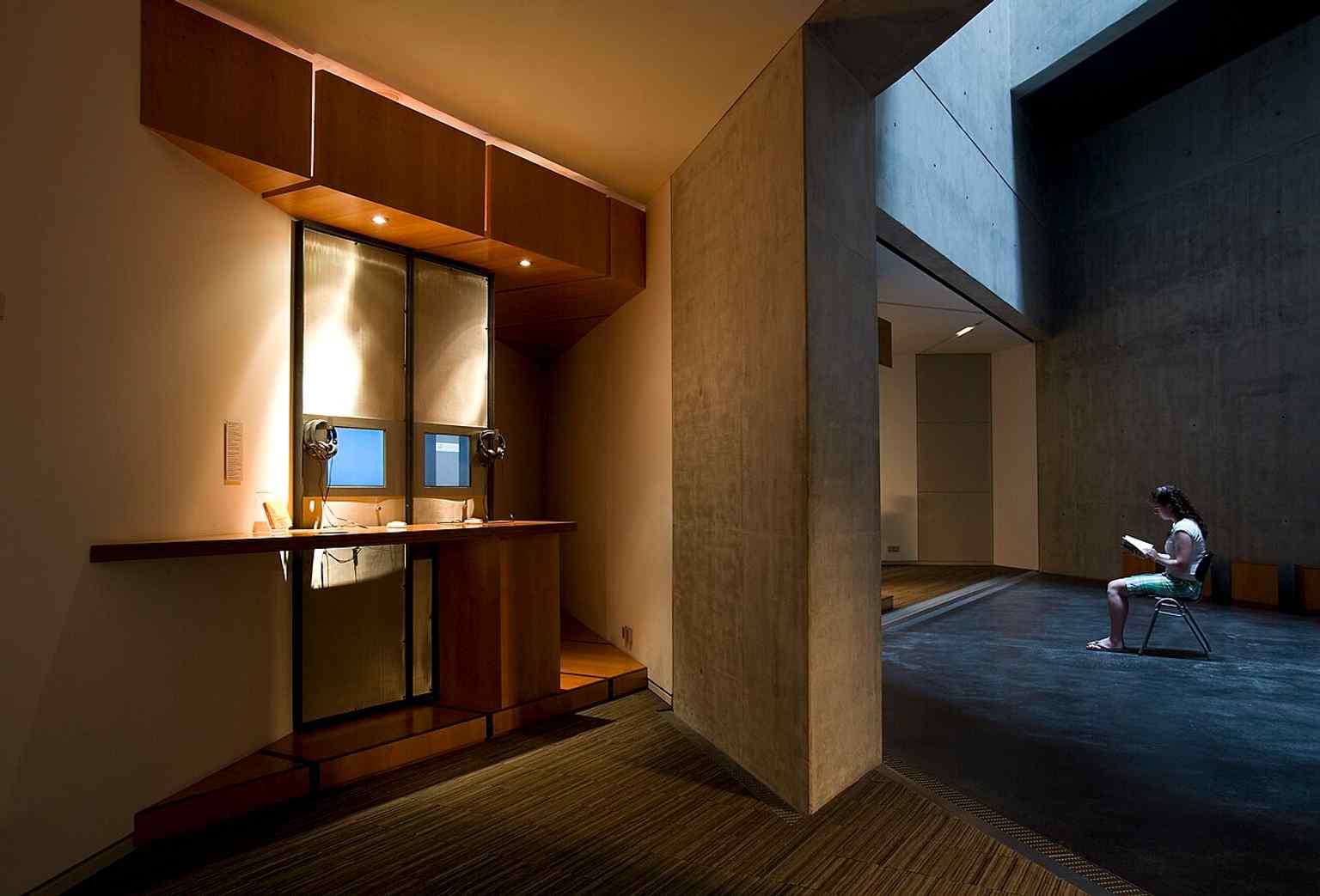
A modern exhibition space inside the museum, reflecting its multimedia approach to presenting Jewish life from the Middle Ages to today.Photo: Jorge Royan, Wikimedia Commons, CC BY-SA 3.0. Cropped & resized. Not far from Jerusalem Church, this place offers another kind of civic sacred space: not for worship, but for public reckoning. It stands here because the machinery of persecution, including the Schutzstaffel, the S-S, tried to reduce Jewish life to a file, a transport list, an absence. This museum insists on complexity instead.
Berlin confronts here what others meant to erase, and it does so in full public view. When you are ready, we’ll continue to the Berlinische Galerie, about a seven-minute walk from here. If you plan to go inside, the museum is usually open Tuesday through Sunday from ten to six, and closed on Mondays.
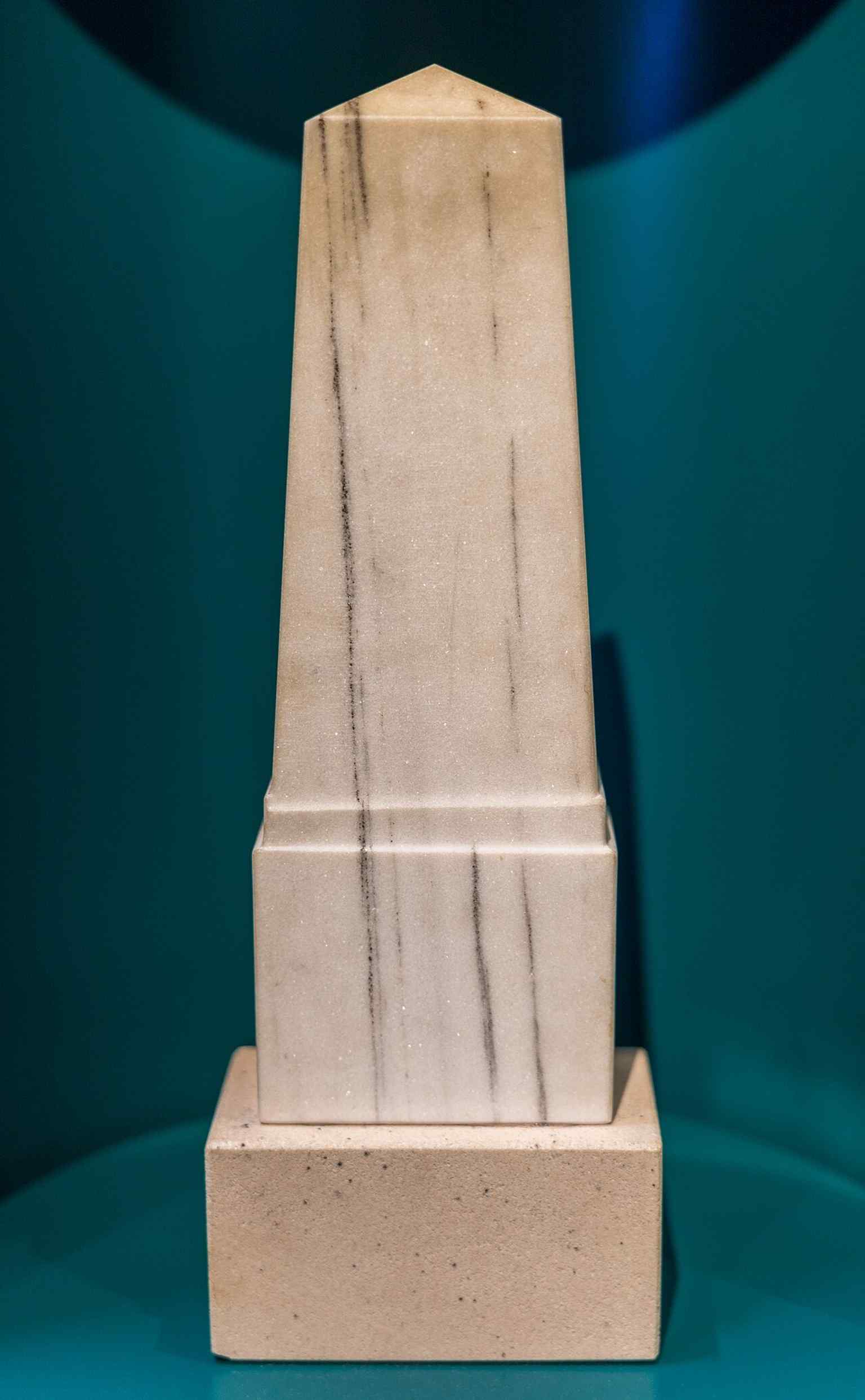
Jewish gravestones on display in the museum — an object-based way the collection connects everyday material culture with long German-Jewish history.Photo: GodeNehler, Wikimedia Commons, CC BY-SA 4.0. Cropped & resized. 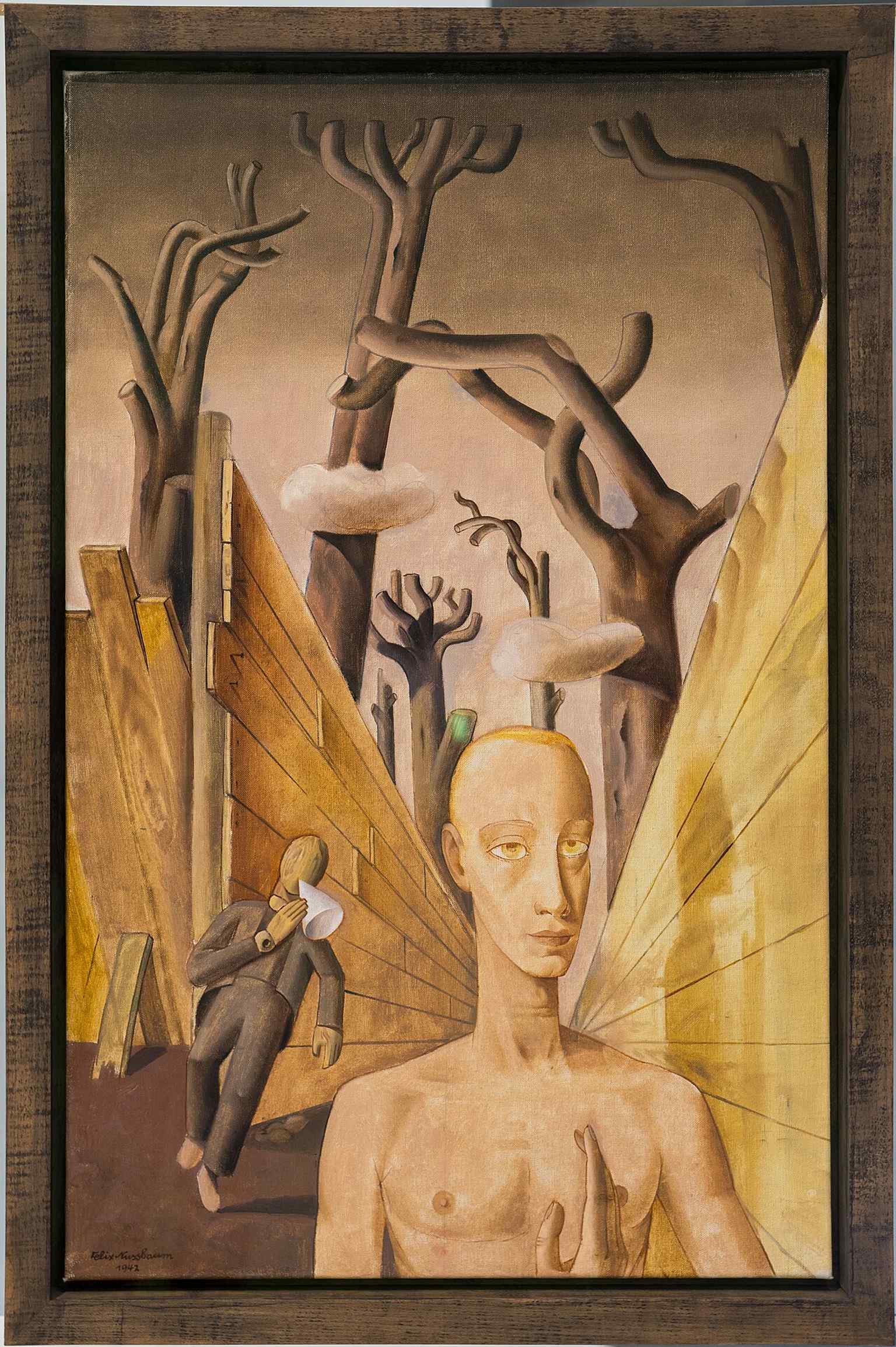
Felix Nussbaum’s haunting wartime painting, part of the museum’s art holdings that speak to Jewish life under persecution.Photo: GodeNehler, Wikimedia Commons, CC BY-SA 4.0. Cropped & resized. 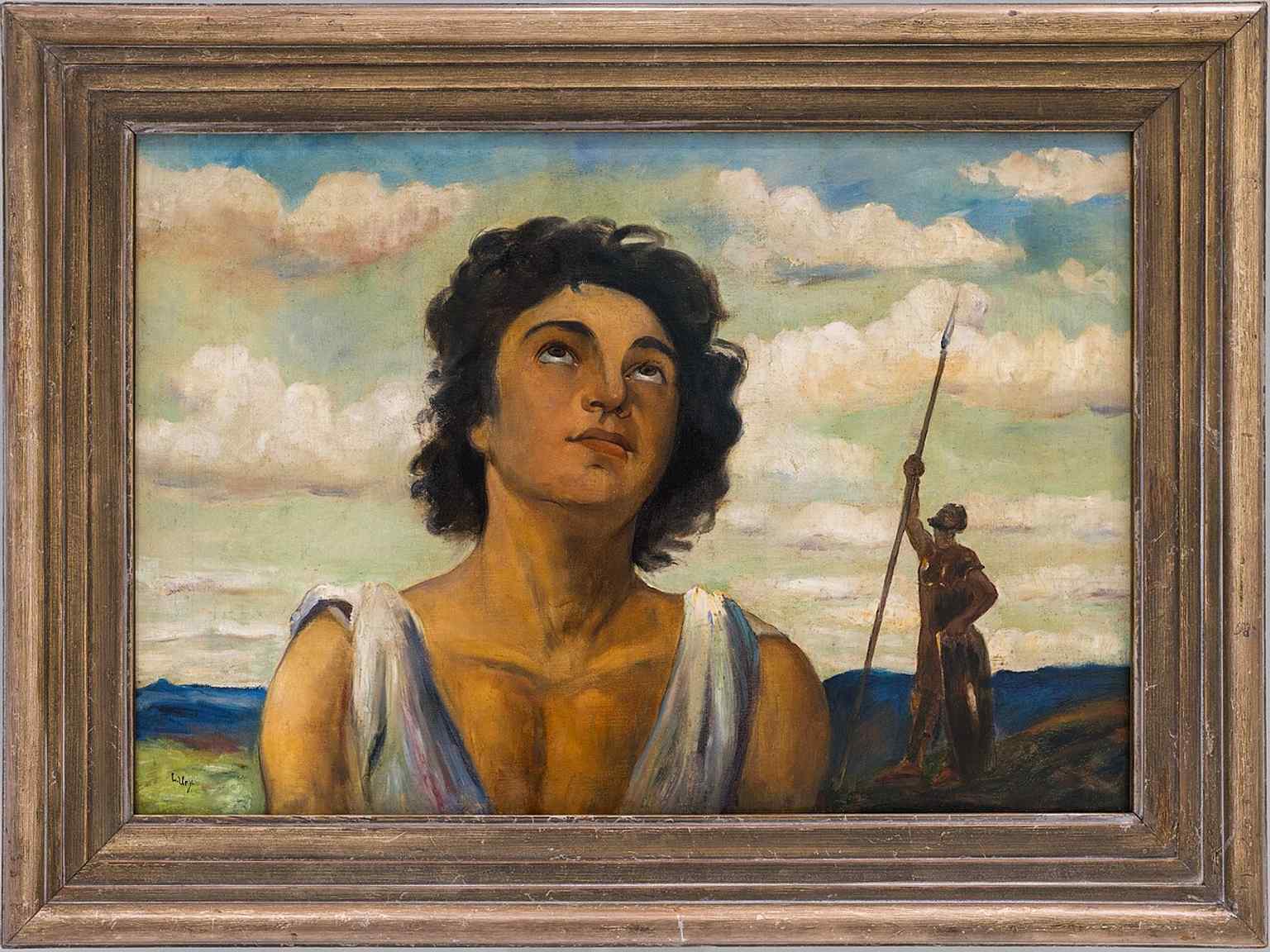
Lesser Ury’s devotional scene links the museum’s collection to modern Jewish art and the broader story of German-Jewish culture.Photo: GodeNehler, Wikimedia Commons, CC BY-SA 4.0. Cropped & resized. 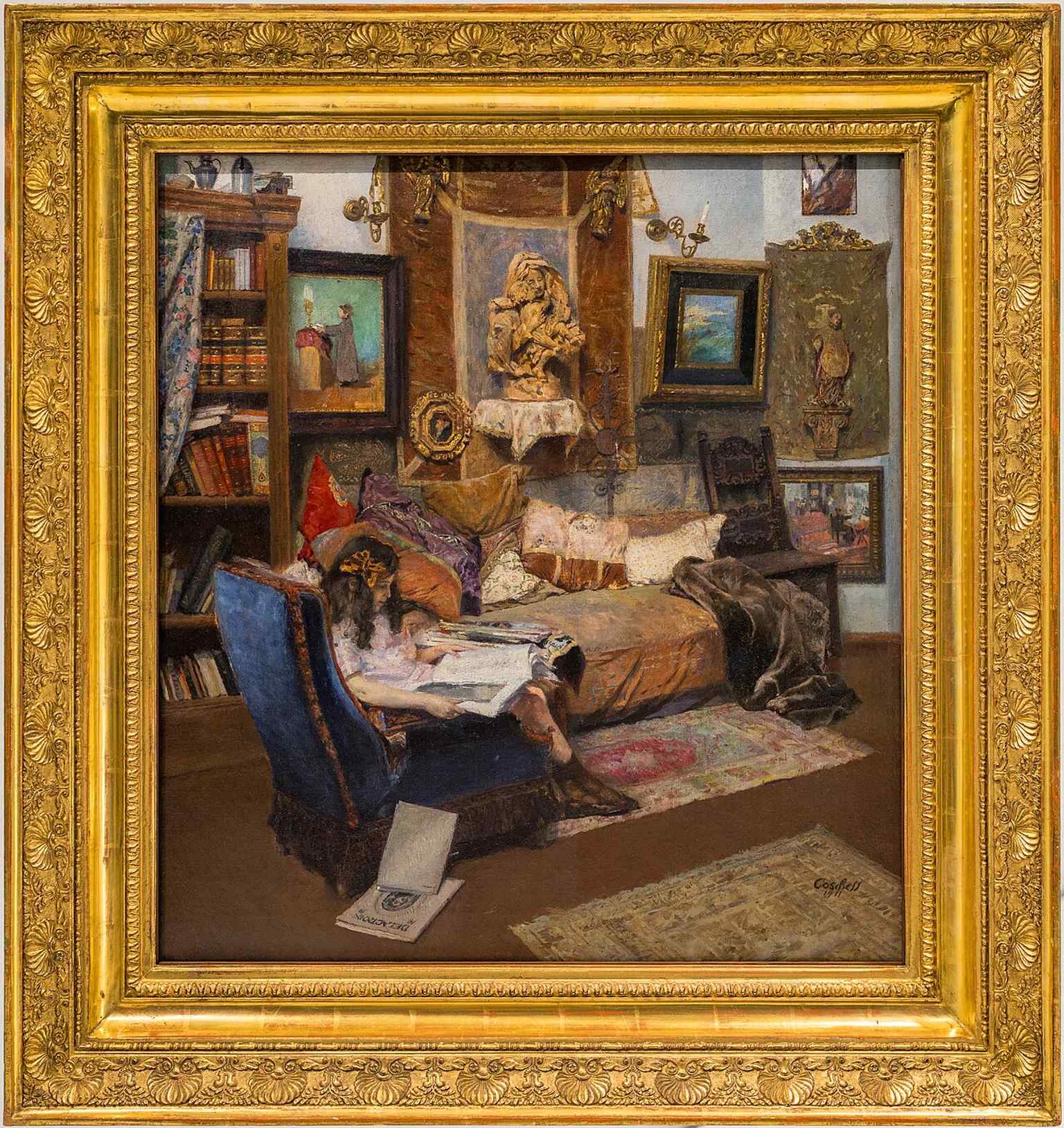
Moritz Coschell’s artist’s studio scene, representing the museum’s interest in Jewish artists and cultural life before rupture and exile.Photo: GodeNehler, Wikimedia Commons, CC BY-SA 4.0. Cropped & resized. On your left, look for a long white concrete-and-glass block, low and rectangular, with a jagged warehouse roofline that still admits its industrial past. This is the Berlinische…Read moreShow less
Open dedicated page →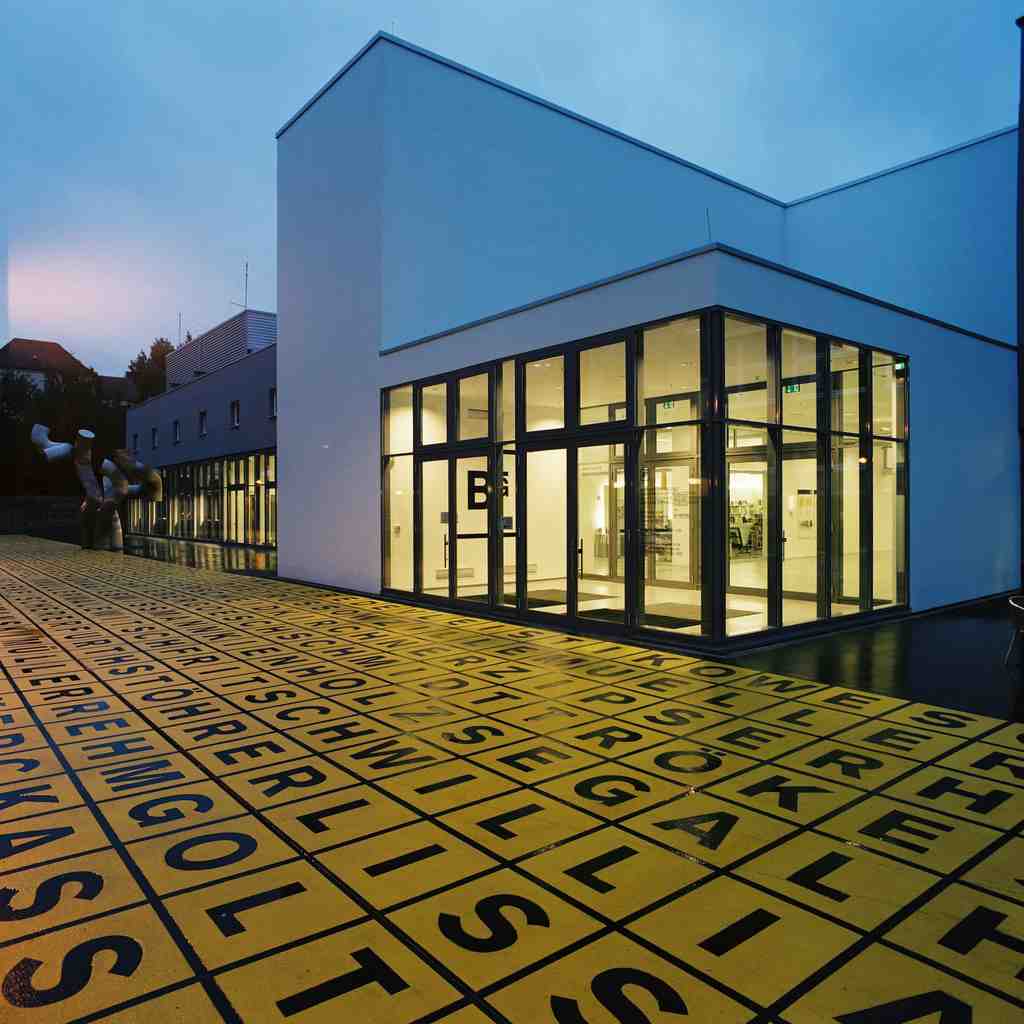
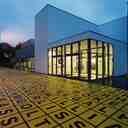
Berlinische GaleriePhoto: Foto Christoph Rehbach, Wikimedia Commons, CC BY-SA 3.0. Cropped & resized. On your left, look for a long white concrete-and-glass block, low and rectangular, with a jagged warehouse roofline that still admits its industrial past.
This is the Berlinische Galerie, Berlin’s museum for modern art, photography, and architecture... which sounds tidy now, but the institution spent decades behaving like the city itself: moving, adapting, refusing to stay in one box for long.
It began in nineteen seventy-five as a society devoted to art made in Berlin since eighteen seventy. At first it had an office in Charlottenburg and borrowed space from other institutions, including the Akademie der Künste and the New National Gallery. Then it moved near Zoo Station, into a former officers’ mess. In nineteen eighty-six, it landed in the Martin-Gropius-Bau. And then reconstruction pushed it out in nineteen ninety-eight. Six years without a permanent home... very Berlin, really.
This building solved that problem in two thousand and four. It started life in nineteen sixty-five as a glass warehouse. Architect Jörg Fricke turned the industrial shell into a museum, and the redesign treated the building almost like an exhibit in its own right. Fritz Balthaus added a building-wide intervention called marked space, unmarked space, and Kuehn Malvezzi created an eighty meter field of letters naming artists. In other words, even the old warehouse got a curatorial concept. No one escapes interpretation here.
If you glance at the image in the app, you can see how blunt and practical the exterior remains. That restraint matters. The building does not pretend it was always a museum. It remembers the labor it once held, and now it stores a different kind of production: Berlin thinking out loud.
Inside, the collection reaches across painting, sculpture, installation, prints, photography, architecture, and artists’ archives. It holds around five thousand fine art works, fifteen thousand prints and drawings, seventy-three thousand photographs, and about three hundred thousand architectural plans. The museum also guards Berlin Dada especially well. Hannah Höch’s archive alone contains around twelve thousand documents and works, a whole life preserved in fragments, arguments, friendships, and photomontage. That matters in a city where public memory often favors uniforms, ministries, and men with plaques.
The museum has had its own institutional melodrama. In two thousand and ten, after a record year of one hundred and eleven thousand, five hundred and forty-three visitors, director Jörn Merkert retired abruptly, the exhibition budget vanished, and a planned Kurt Schwitters show had to be canceled. Thomas Köhler took over and argued that the museum should lean harder on its own holdings, show its international weight, and sharpen its contemporary edge. Practical reinvention, again.
Then even this home had to pause. The museum closed in two thousand and fourteen for a six million euro technical overhaul, mostly fire safety and equipment, and reopened in two thousand and fifteen.
That is the pattern here: damage, displacement, repair, and then something new gets made anyway. In about ten minutes, we’ll continue to the Bundesdruckerei, where culture meets the machinery of the state. If you want to come back, the museum opens from ten to six every day except Tuesday.
On your left is a broad red-brick and glass complex, mostly rectangular, with a recessed entrance and the Bundesdruckerei name fixed across the facade. This is where the state…Read moreShow less
Open dedicated page →
BundesdruckereiPhoto: Unknown author, Wikimedia Commons, Public domain. Cropped & resized. On your left is a broad red-brick and glass complex, mostly rectangular, with a recessed entrance and the Bundesdruckerei name fixed across the facade.
This is where the state turns authority into objects you can hold: passports, I-D cards, banknotes, visas, stamps, even the little bits of security software that now decide whether a document is real or a very confident fake.
Locals tend to remember that this place began in eighteen seventy-nine as the Reichsdruckerei, the Imperial Printing House. And here is the detail most tourists miss: it earned fame not only for security, but for style. The hundred-mark note was so elegant, and so large, that people nicknamed it the “long hundred” or the “blue rag.” Because even bureaucracy likes good graphic design.
If you glance at the image in the app, you can see the headquarters as the calm face of a very nervous business. By nineteen eighteen, visitors praised its printing quality so highly that it could reproduce Egyptian hieroglyphs for museum work, along with Cyrillic, Georgian, Armenian, Arabic, Kurdish, and Syriac scripts. Power, after all, needs excellent typography.
Then came the ugly part. In nineteen thirty-three and nineteen thirty-eight, the Nazi regime forced the printworks into line, dismissed its Social Democratic director Franz Helmberger, and used these presses to produce identity cards stamped with a capital J for Jewish people, along with camp money for Oranienburg concentration camp. Near the Jewish Museum, that fact lands differently. A document can recognize a person... or help erase them.
Allied bombing left the plant largely destroyed in nineteen forty-five. Yet by May, it was already printing the first postwar stamps. Berlin has always had a disturbing talent for rebuilding systems at speed. In nineteen sixty-one, the Wall went up right behind the Kommandantenstraße entrance, and eighty-one employees suddenly could not reach work. Borders only function when paper tells them who may pass.
In the nineteen eighties, forged identity papers linked to the Red Army Faction were among the pressures that led Germany toward a new centralized I-D card, introduced in nineteen eighty-seven and produced here. After the Wall fell, Bundesdruckerei issued new documents for around sixteen million people in the former G-D-R. Reunification needed speeches, yes, but it also needed forms.
Look at the passport concept on your screen and you can see the next turn. Since two thousand ten, this place has made electronic identity cards, then pushed into biometrics, cryptography, and the global certificate system that verifies electronic passports. Same mission, newer machinery: deciding what counts as authentic.
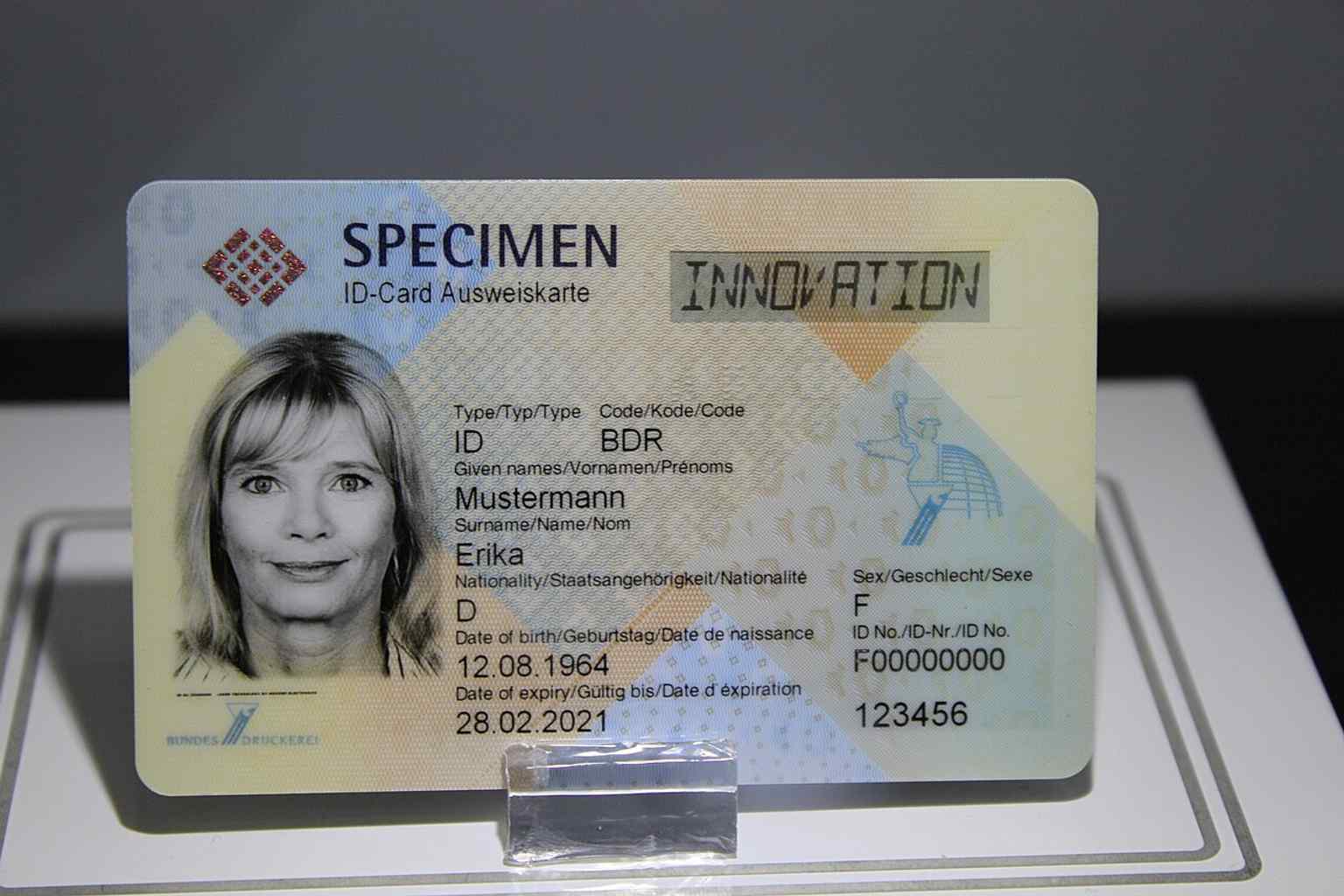
A Bundesdruckerei passport concept shown at CeBIT 2011, pointing to the company’s move from secure printing into modern identity technology.Photo: Bin im Garten, Wikimedia Commons, CC BY-SA 3.0. Cropped & resized. That is a fitting final stop. We began with visible borders and ended with the hidden machinery behind them. Kreuzberg teaches you to read both the wall and the watermark.
If you need it, the site keeps weekday business hours and closes on weekends... which feels exactly right for a place devoted to official documents.



Frequently asked questions
How do I start the tour?
After purchase, download the AudaTours app and enter your redemption code. The tour will be ready to start immediately - just tap play and follow the GPS-guided route.
Do I need internet during the tour?
No! Download the tour before you start and enjoy it fully offline. Only the chat feature requires internet. We recommend downloading on WiFi to save mobile data.
Is this a guided group tour?
No - this is a self-guided audio tour. You explore independently at your own pace, with audio narration playing through your phone. No tour guide, no group, no schedule.
How long does the tour take?
Most tours take 60–90 minutes to complete, but you control the pace entirely. Pause, skip stops, or take breaks whenever you want.
What if I can't finish the tour today?
No problem! Tours have lifetime access. Pause and resume whenever you like - tomorrow, next week, or next year. Your progress is saved.
What languages are available?
All tours are available in 50+ languages. Select your preferred language when redeeming your code. Note: language cannot be changed after tour generation.
Where do I access the tour after purchase?
Download the free AudaTours app from the App Store or Google Play. Enter your redemption code (sent via email) and the tour will appear in your library, ready to download and start.
If you don't enjoy the tour, we'll refund your purchase. Contact us at [email protected]
Checkout securely with 






.jpg)

.svg)
%3B%20Peaked%20visor%20skull%20cap.%20Lofoten%20Krigsminnemuseum%202019-05-08%20DSC00378.jpg)
.%20Norwegian%20Armed%20Forces%20Museum%20(Forsvarsmuseet)%20Oslo%2C%20Norway%202019-03-31%20DSC01645.jpg)


%20Berlin%20und%20Umgebung%20(serietitel%20op%20object)%2C%20RP-F-F19919.jpg)


%20Jerusalems%20Kirche.JPG)
%20Jerusalemskirche.jpg)


%20A54A6022.jpg)
%20A54A6004.jpg)
%20A54A5968.jpg)
