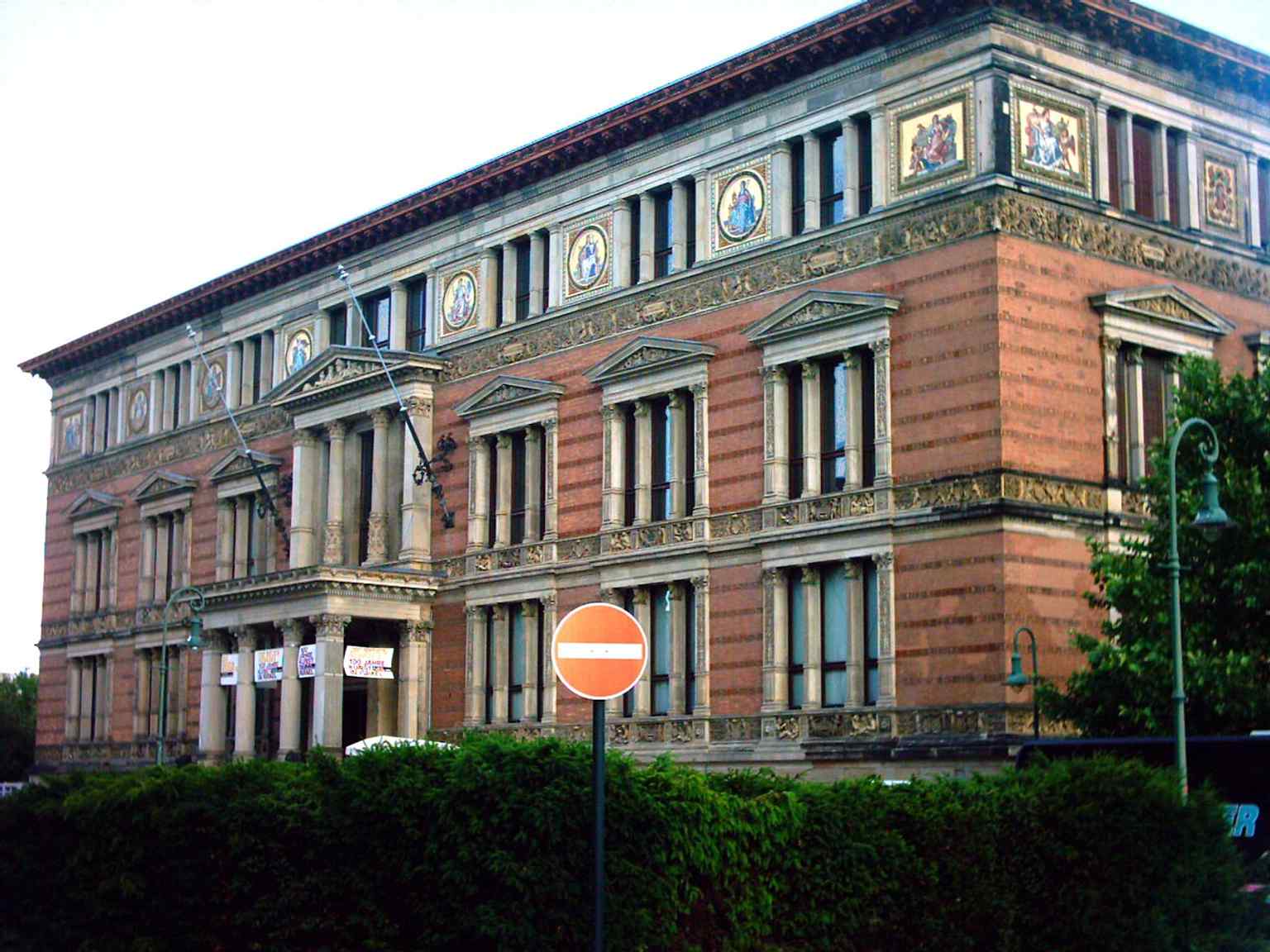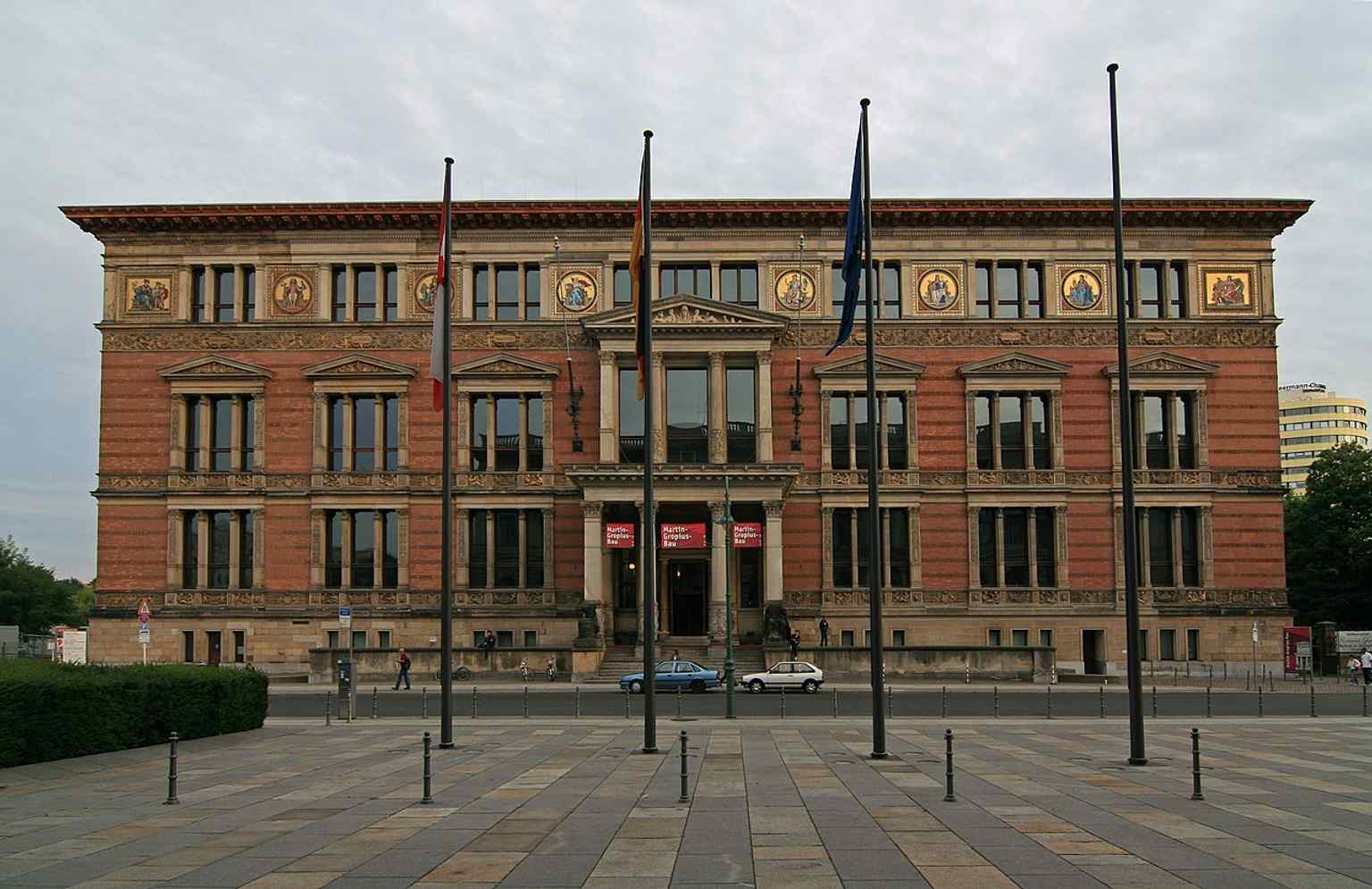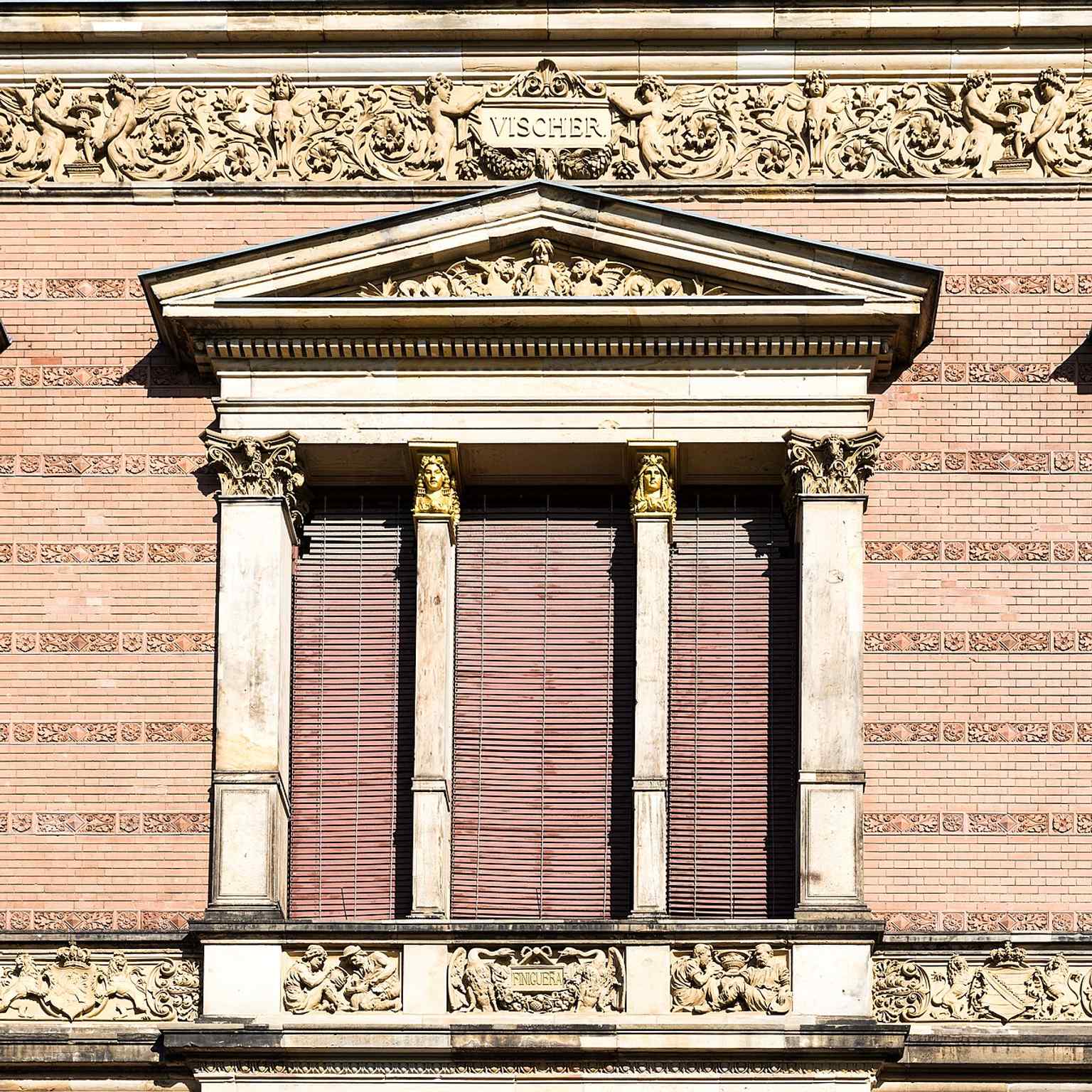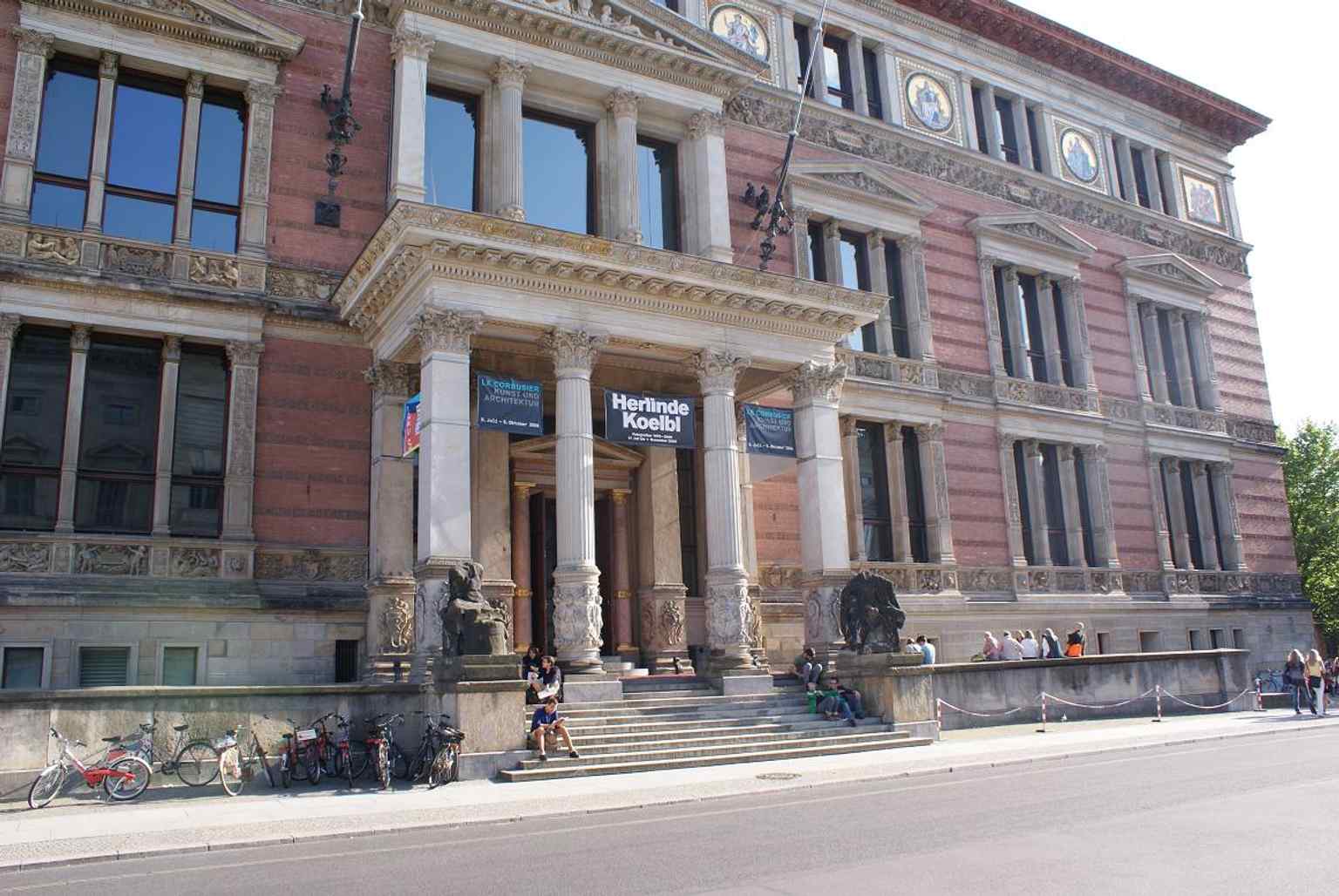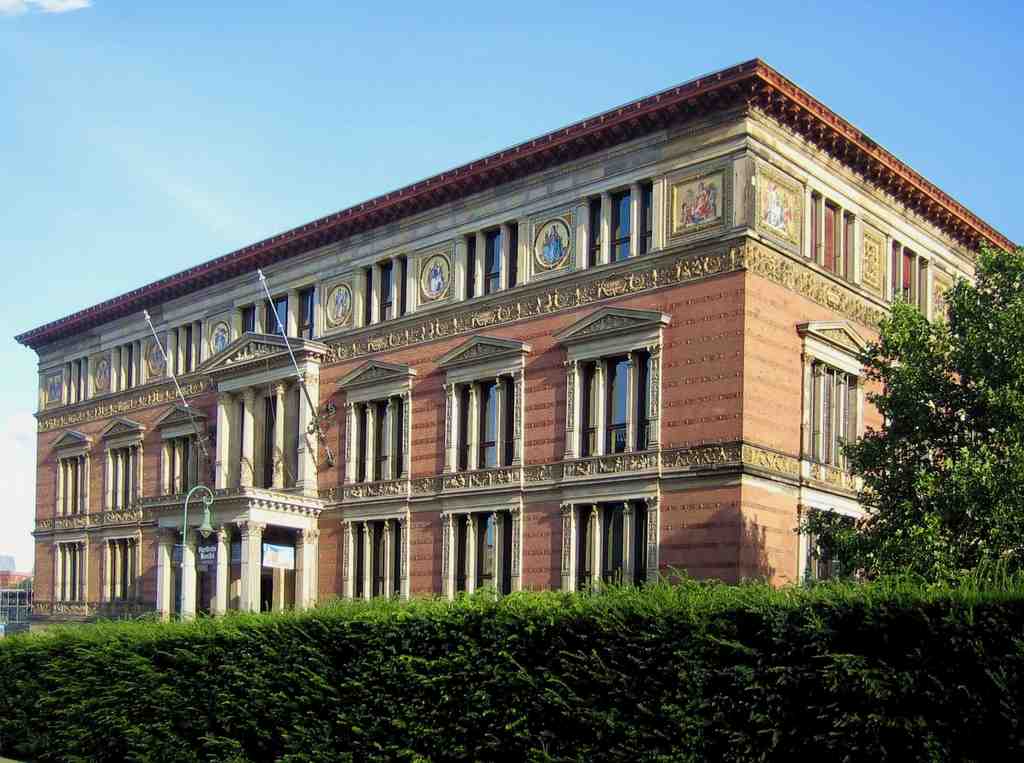
On your right, look for a wide red-brick block edged in pale stone, with tall arched windows and a façade crowded with carved ornament.
Kreuzberg stores memory in stone. Buildings here collect new jobs, old damage, and reluctant repairs, as if the city decided that neat endings were for less interesting places. Martin-Gropius-Bau is a fine example: school, museum, ruin, and exhibition house, all layered into one address.
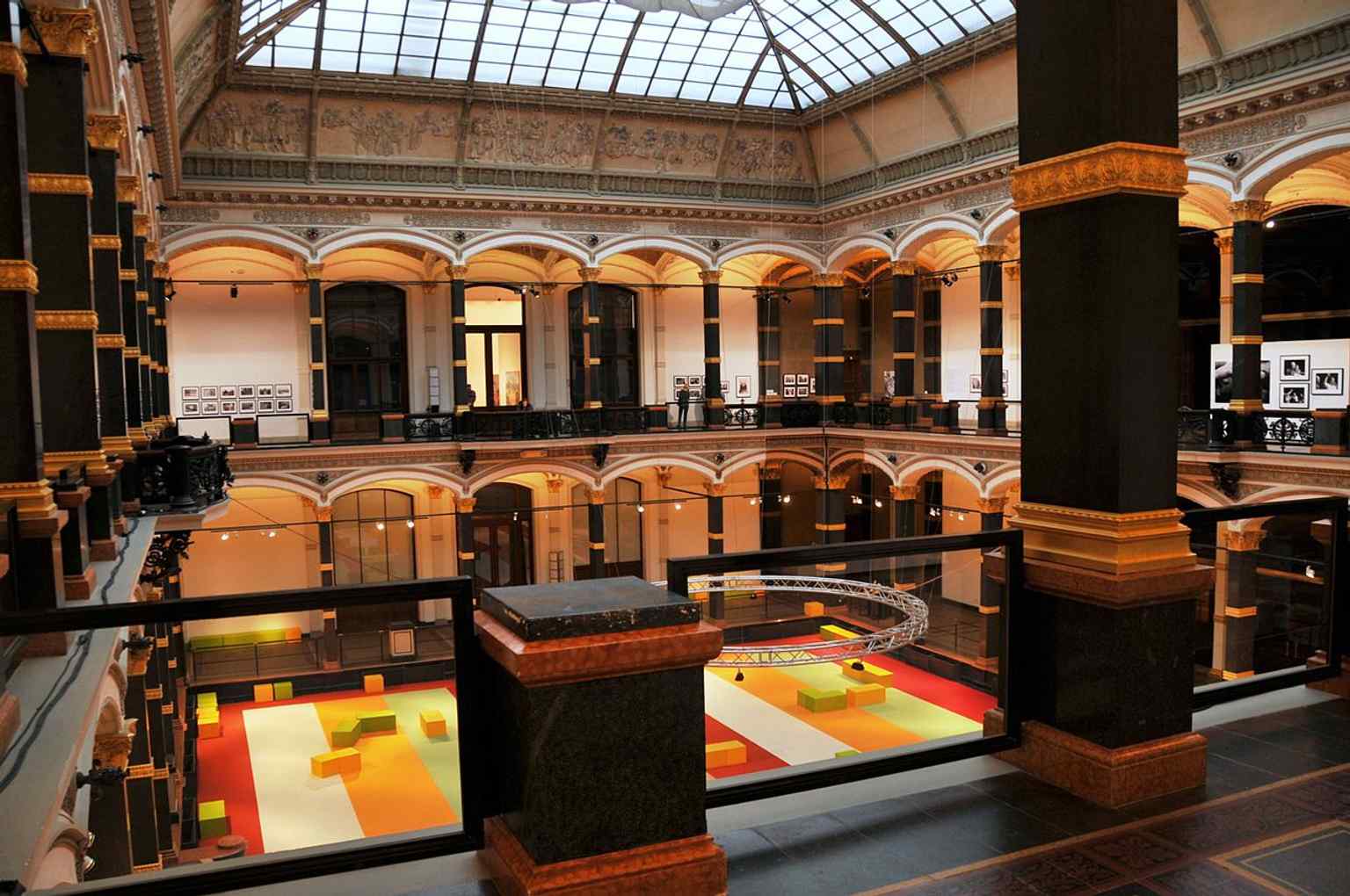
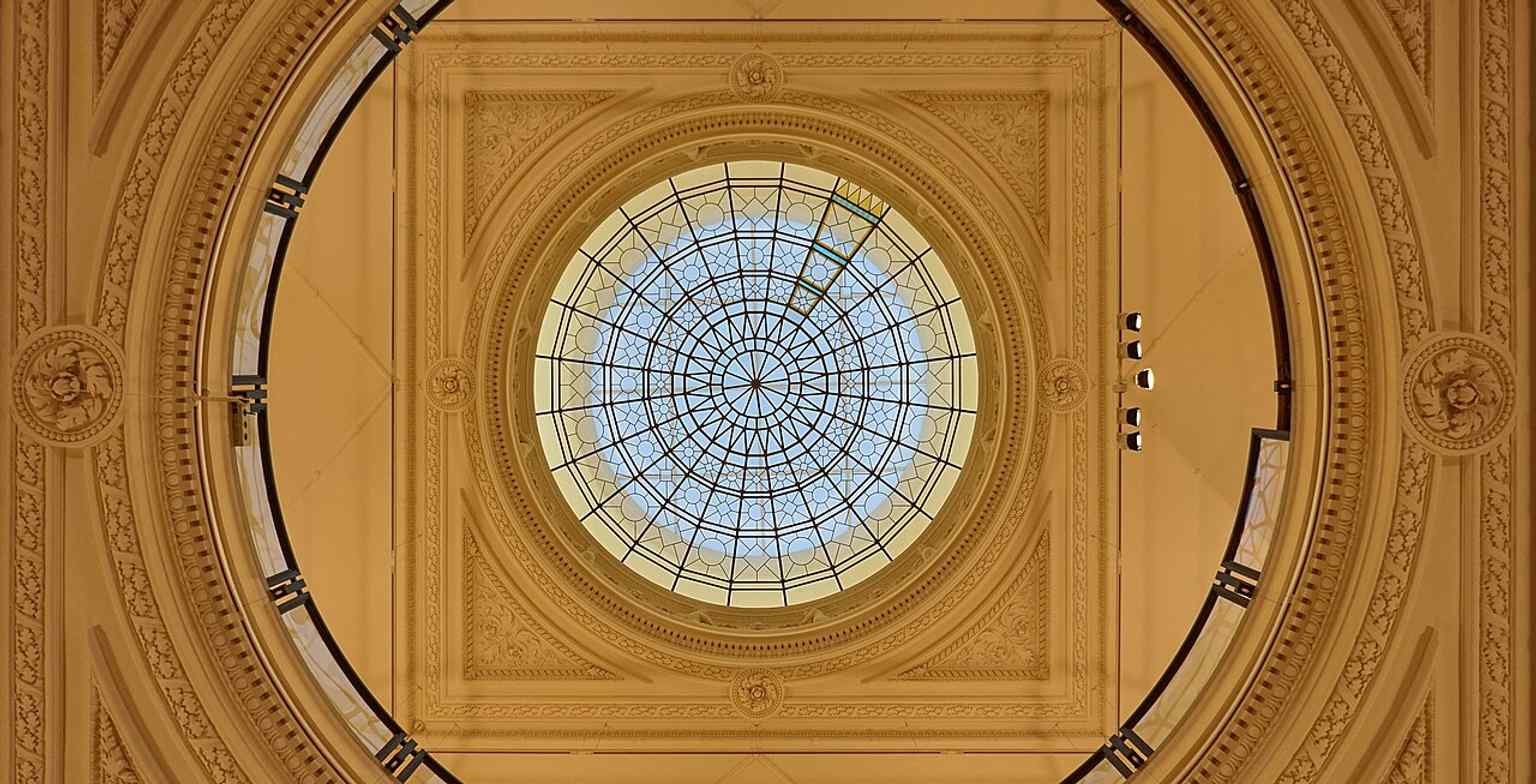
Martin Gropius and Heino Schmieden raised it between eighteen seventy-seven and eighteen eighty-one as a combined Museum and School of Decorative Arts, not just a gallery with good posture. Inside that square shell, about seventy meters on each side, they planned classrooms, studios, craft collections, an art library, and a grand central atrium. If you glance at the atrium image in the app, you can see that light-filled court, with rooms opening around it and coats of arms of the German states set into the decoration by Otto Lessing.
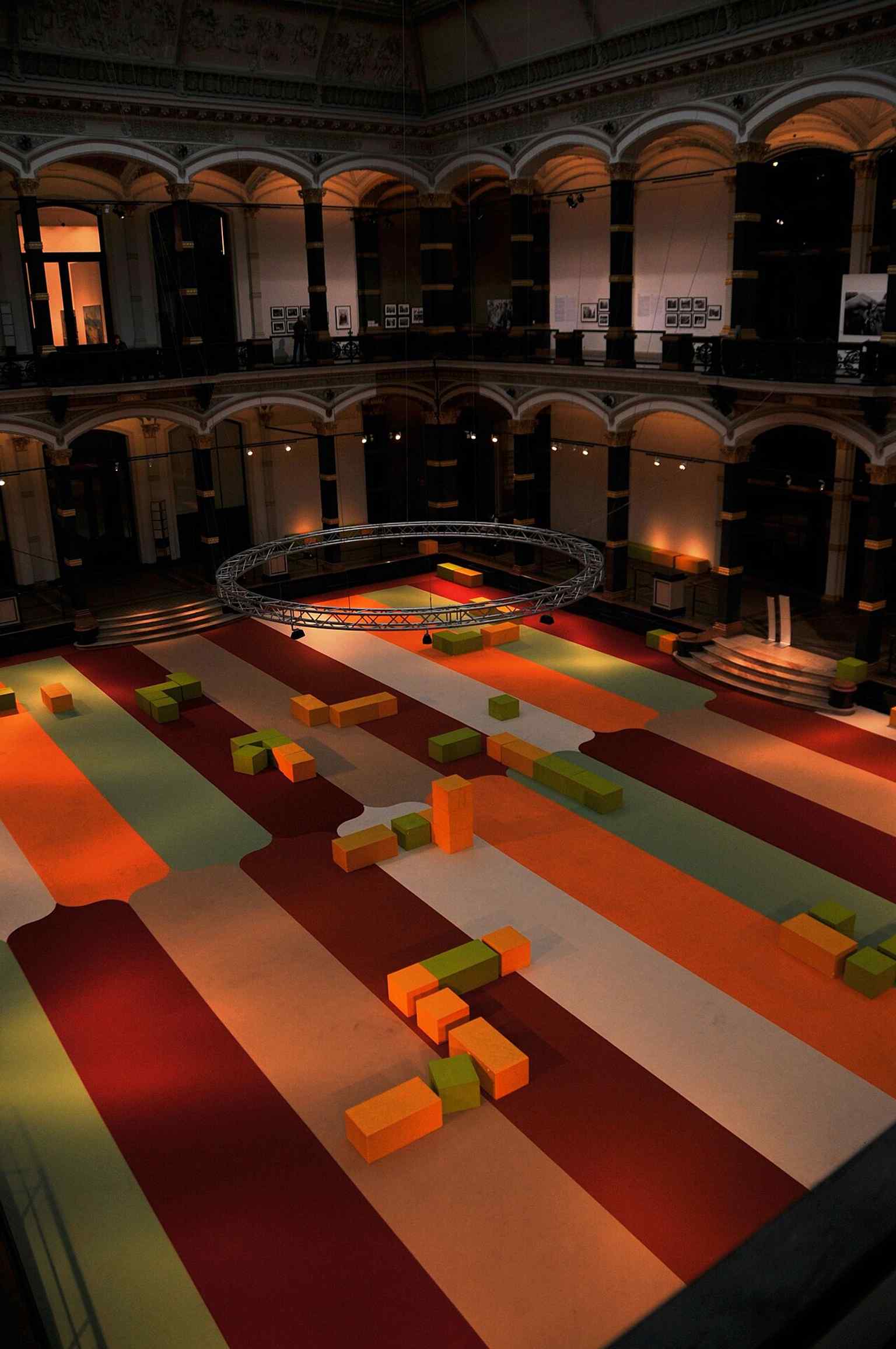
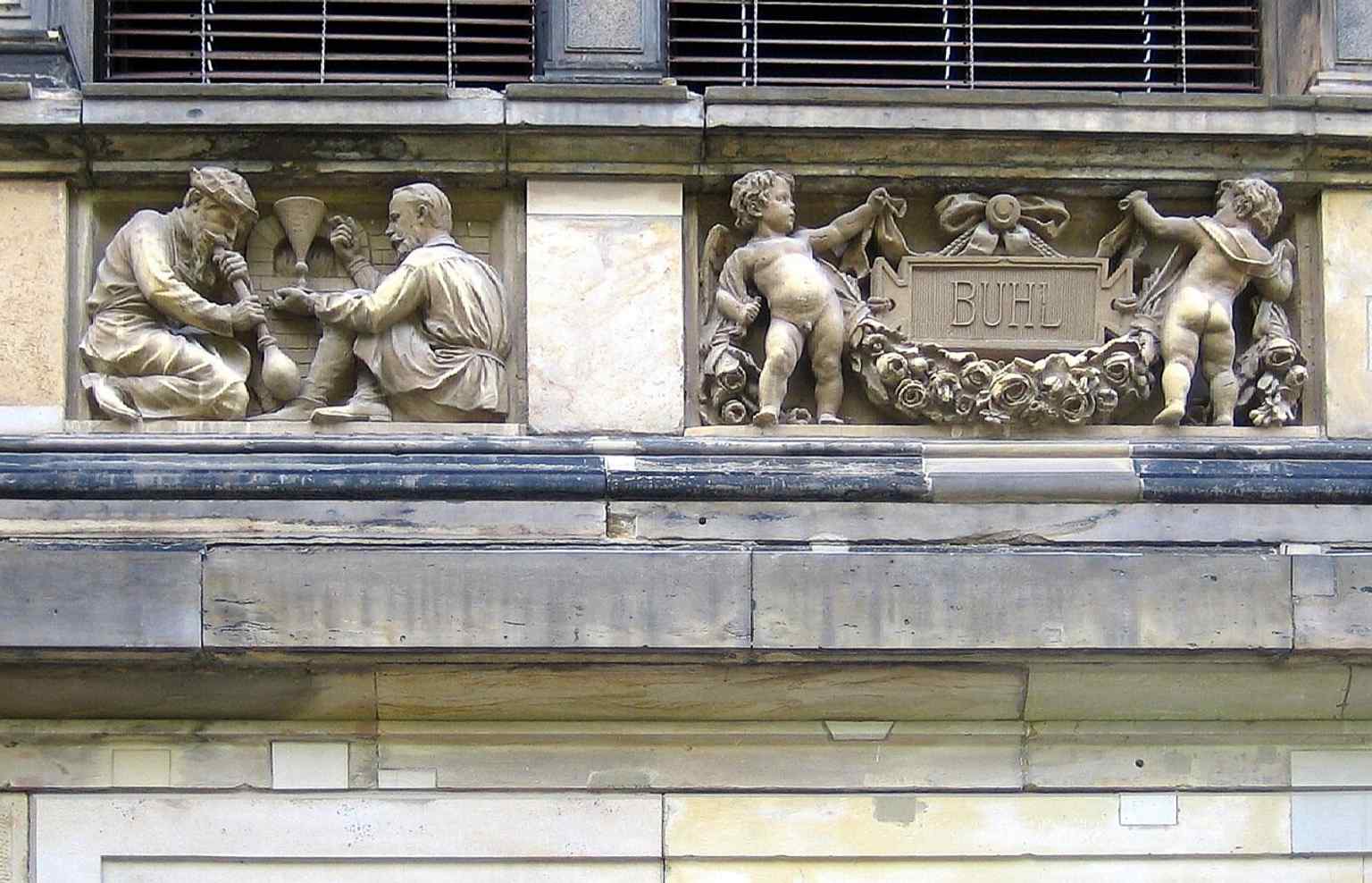
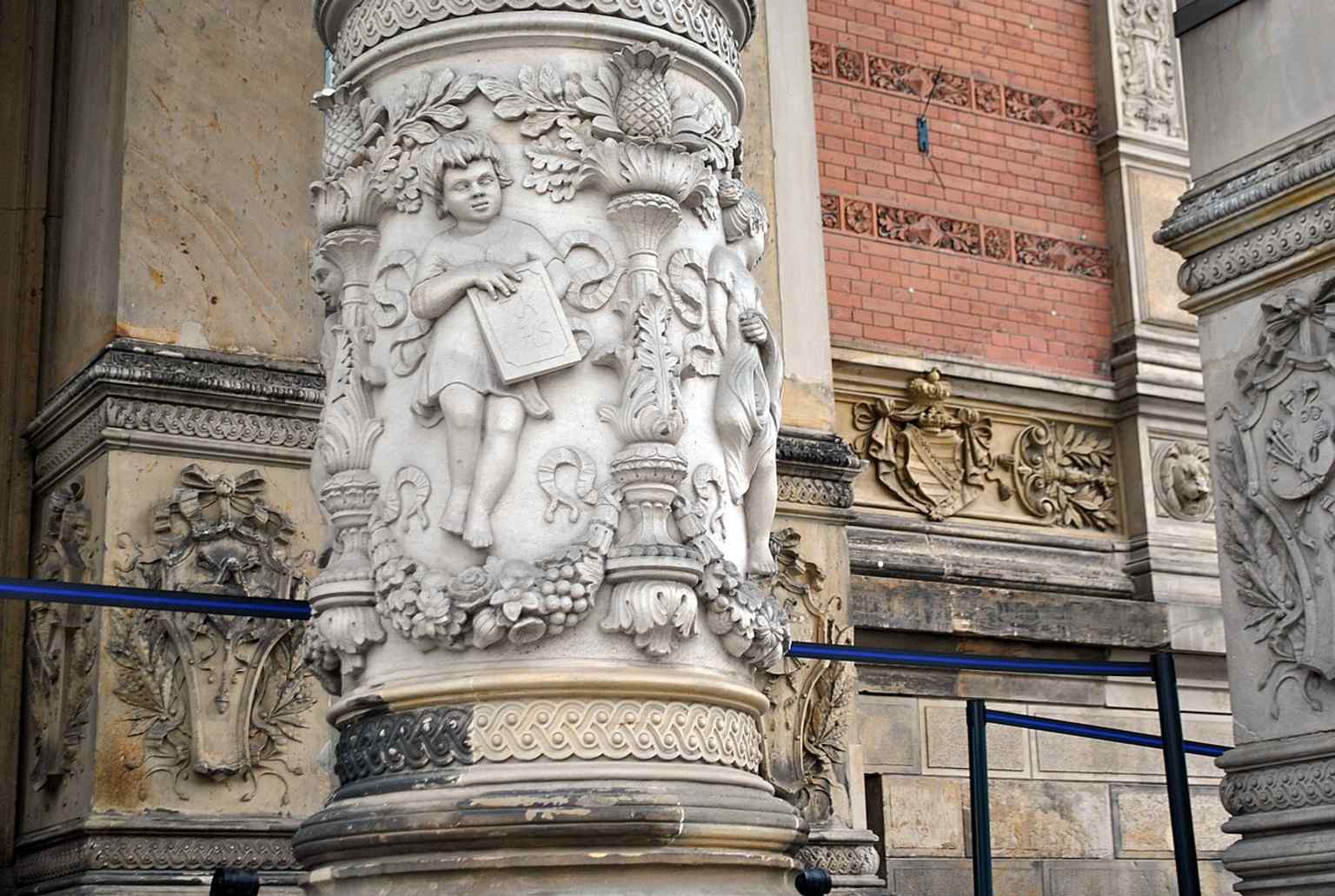
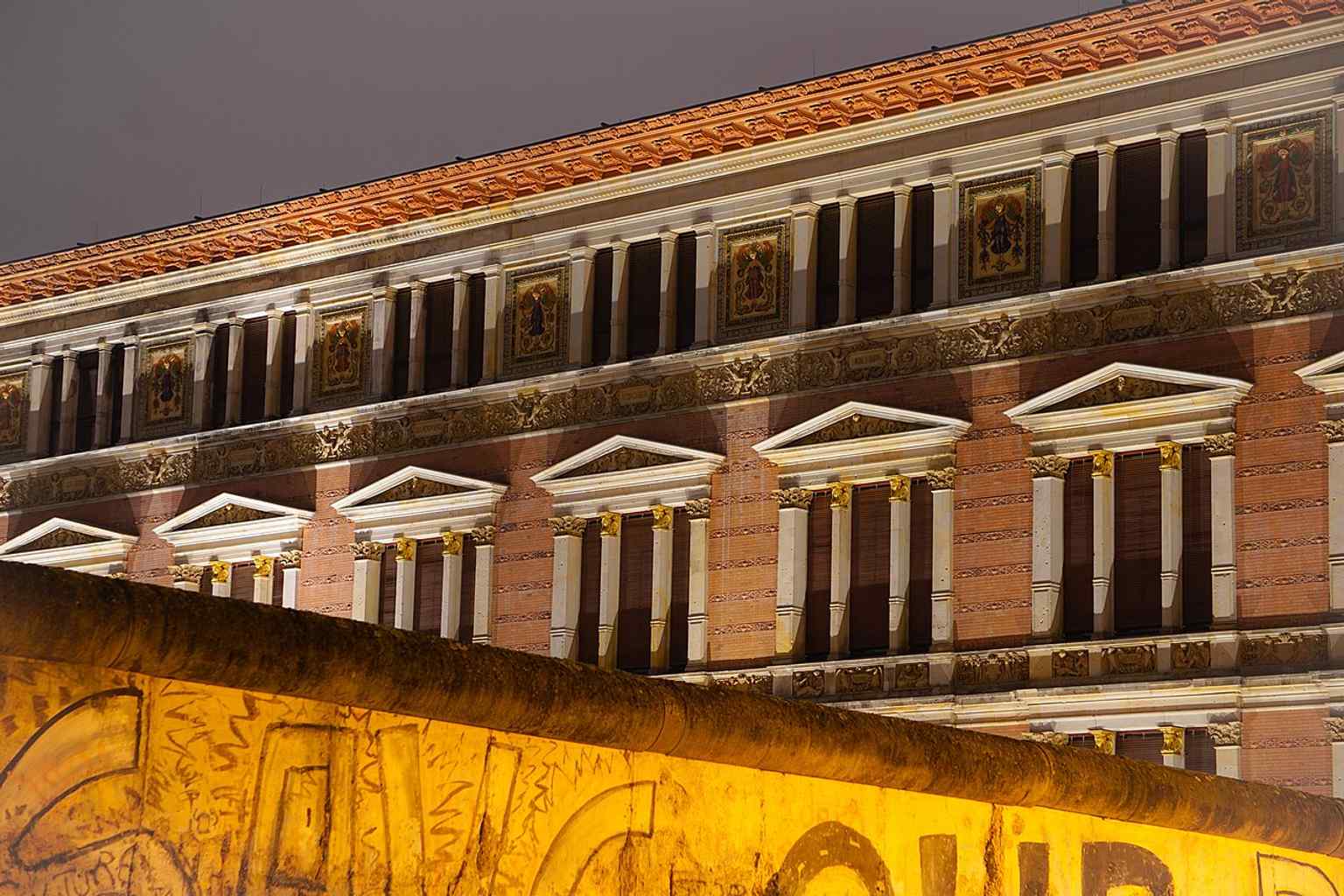
Take a second and study the window rhythm, the stone bands, the reliefs. It gives off nineteenth-century confidence with almost unreasonable certainty... and yet this building has outlived every system that tried to fix its role.
After the First World War, curators filled it with prehistory and East Asian art. In nineteen forty-five, the last weeks of war gutted it: the roof and basement collections burned, and the northern façade and upper floors were nearly destroyed. The ruin sat for years until planners considered demolition, and Walter Gropius, the Bauhaus founder and the architect’s great-nephew, stopped that tidy act of erasure.
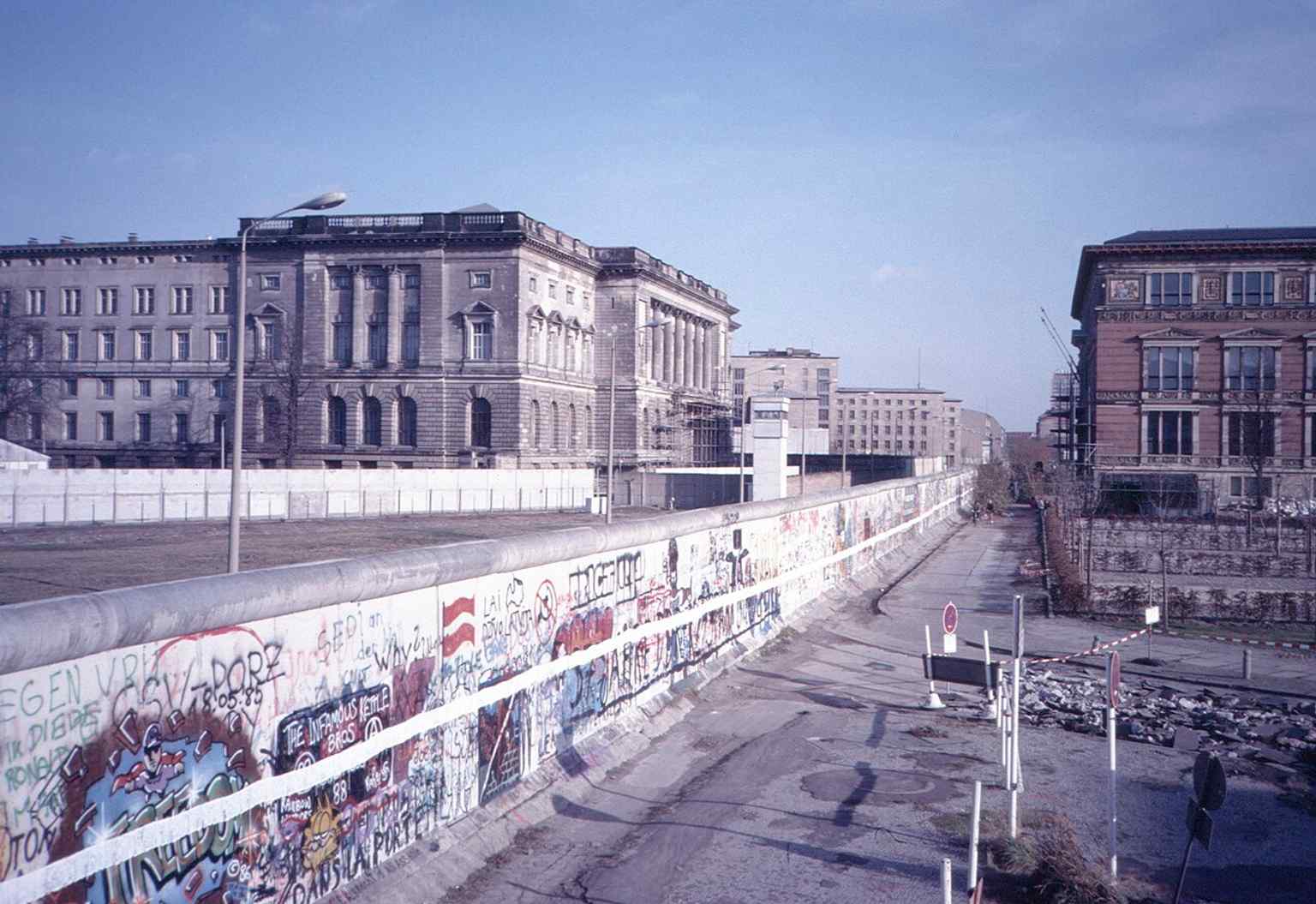
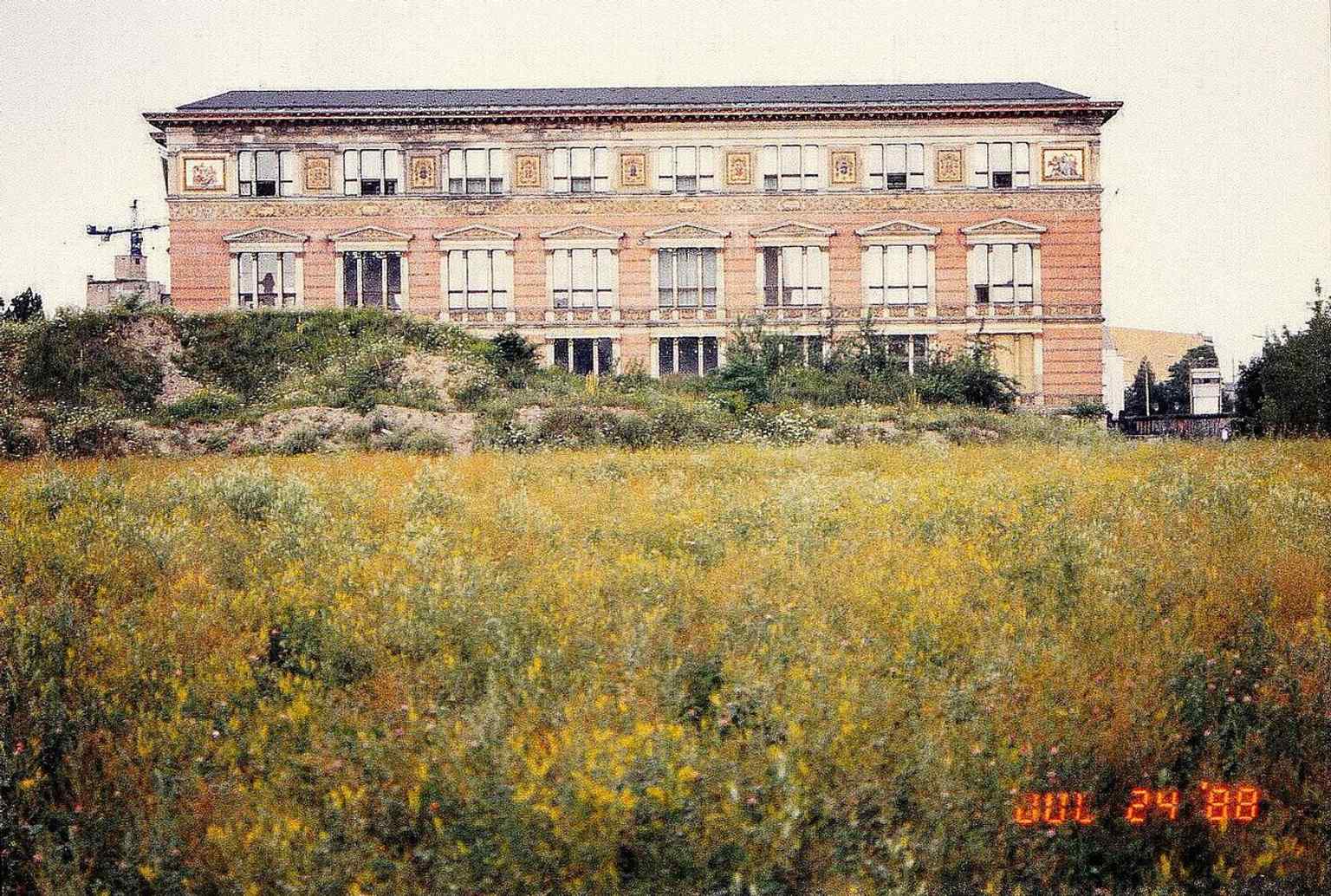
Reconstruction began in the late nineteen seventies, and the building reopened in nineteen eighty-one. Berlin then added one more complication: the Wall stood beside it, so visitors had to enter from the south until the original Niederkirchnerstrasse entrance returned in nineteen ninety-nine. If you want, check the before-and-after image; it catches that shift from border-edge survivor to restored exhibition house. Restorers rebuilt mosaics, reliefs, and majolica, a glazed ceramic decoration, but left visible gaps inside so the bombing never disappeared completely.
Today Gropius Bau hosts major exhibitions, from Paul Klee to Ai Weiwei. The walls remember, even when the institution changes its script. From here, Hotel Excelsior is about a nine-minute walk, and if you plan to come back, it opens from noon to eight on Monday and Wednesday through Friday, stays closed on Tuesday, and opens from ten to eight on weekends.