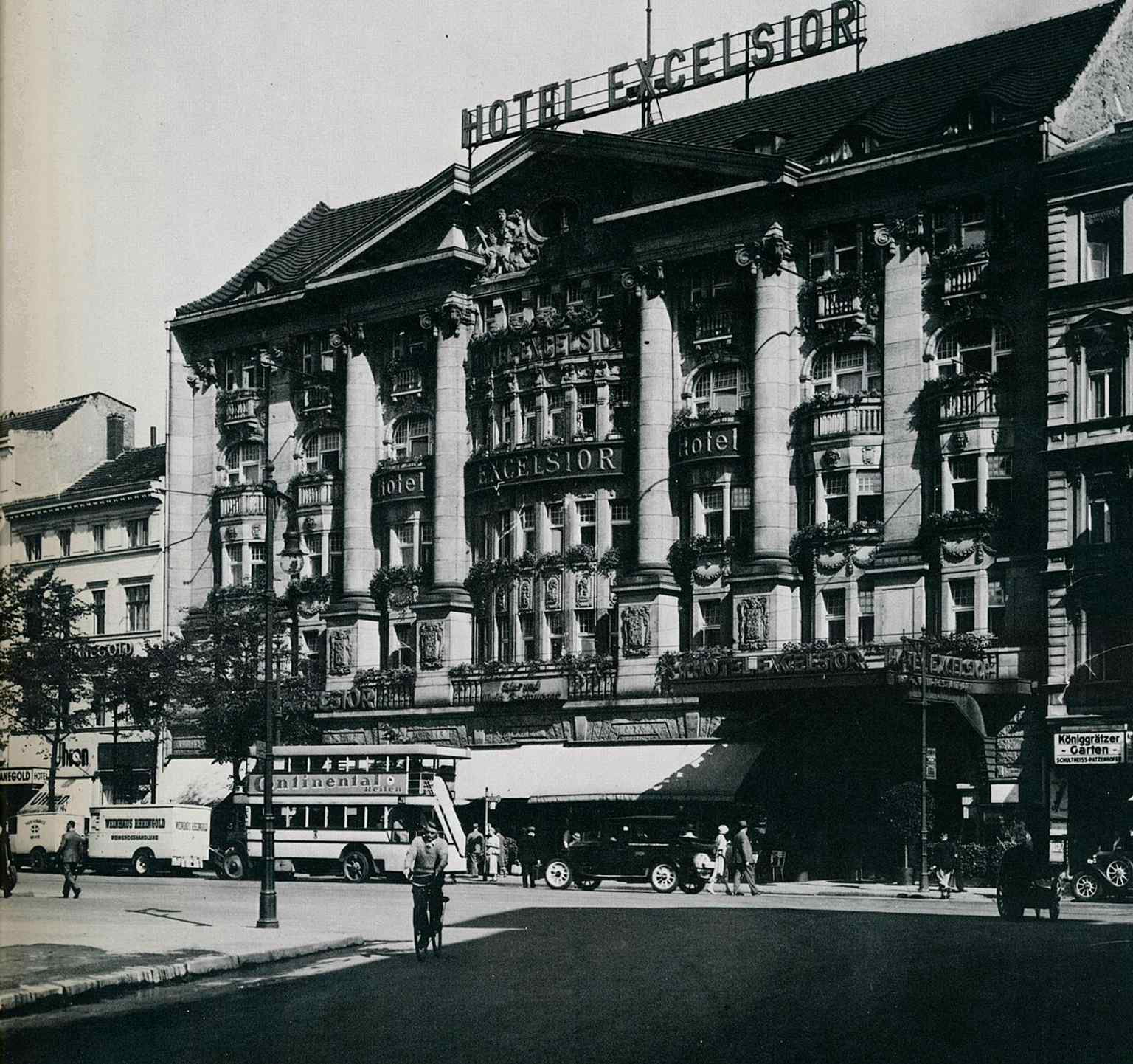
In the old photos on your screen, the Excelsior appears as a long pale-stone facade with rigid rows of windows and a bulky corner block facing Anhalter Bahnhof.
Right here stood one of Europe’s grandest hotels... a palace for people who intended to stay only briefly. Architect Otto Rehnig designed it for the surge of passengers pouring out of the station across the square. The Excelsior opened on the second of April, nineteen oh eight, with two hundred rooms, then nearly doubled after an expansion in nineteen twelve and nineteen thirteen.
If you check the app image, you can see how directly it faced the station, almost like a handshake between rail travel and expensive bedding. That was the whole business model.
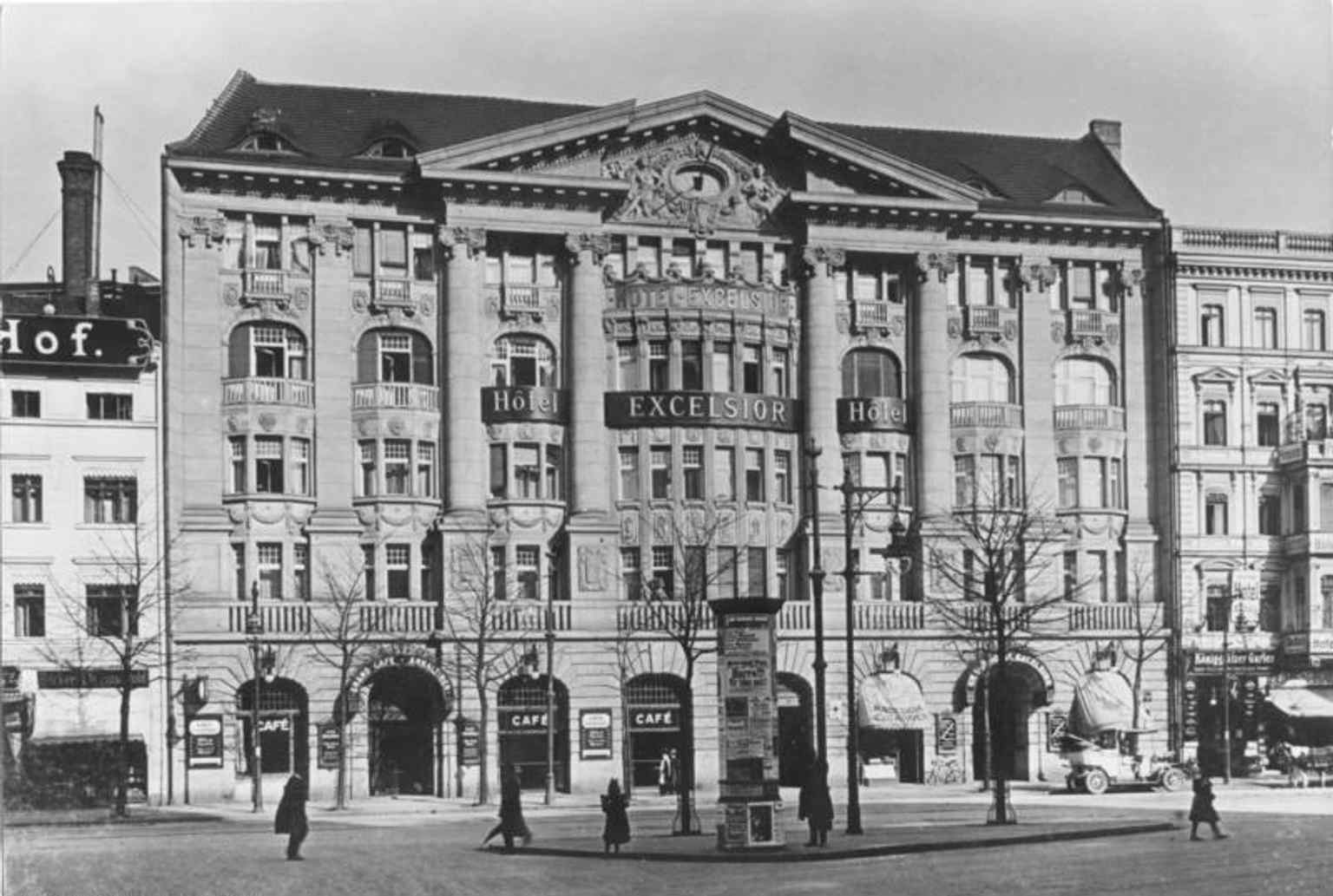
The man who truly made it famous, Curt Elschner, started as a waiter in Leipzig. Not a bad reminder that Berlin occasionally lets the staff rewrite the script. In the nineteen twenties he turned this place into a seven-thousand-five-hundred-square-meter hotel complex with six hundred rooms, seven hundred fifty beds, two hundred fifty bathrooms, nine restaurants, a library, and two hundred newspapers from around the world. He added telephones and radios in the rooms, modern power and water systems, electric kitchens, and even a spa in the cellar.
Then came the part most people standing here would never guess. On the eleventh of November, nineteen eighteen, in the chaos of a collapsing empire, Karl Liebknecht used this luxury hotel to re-found the Spartacus Group. Rosa Luxemburg’s program demanded workers’ and soldiers’ councils, the disarming of the ruling classes, and public control of major industries. So yes... one of Berlin’s fanciest addresses briefly served as revolutionary headquarters.
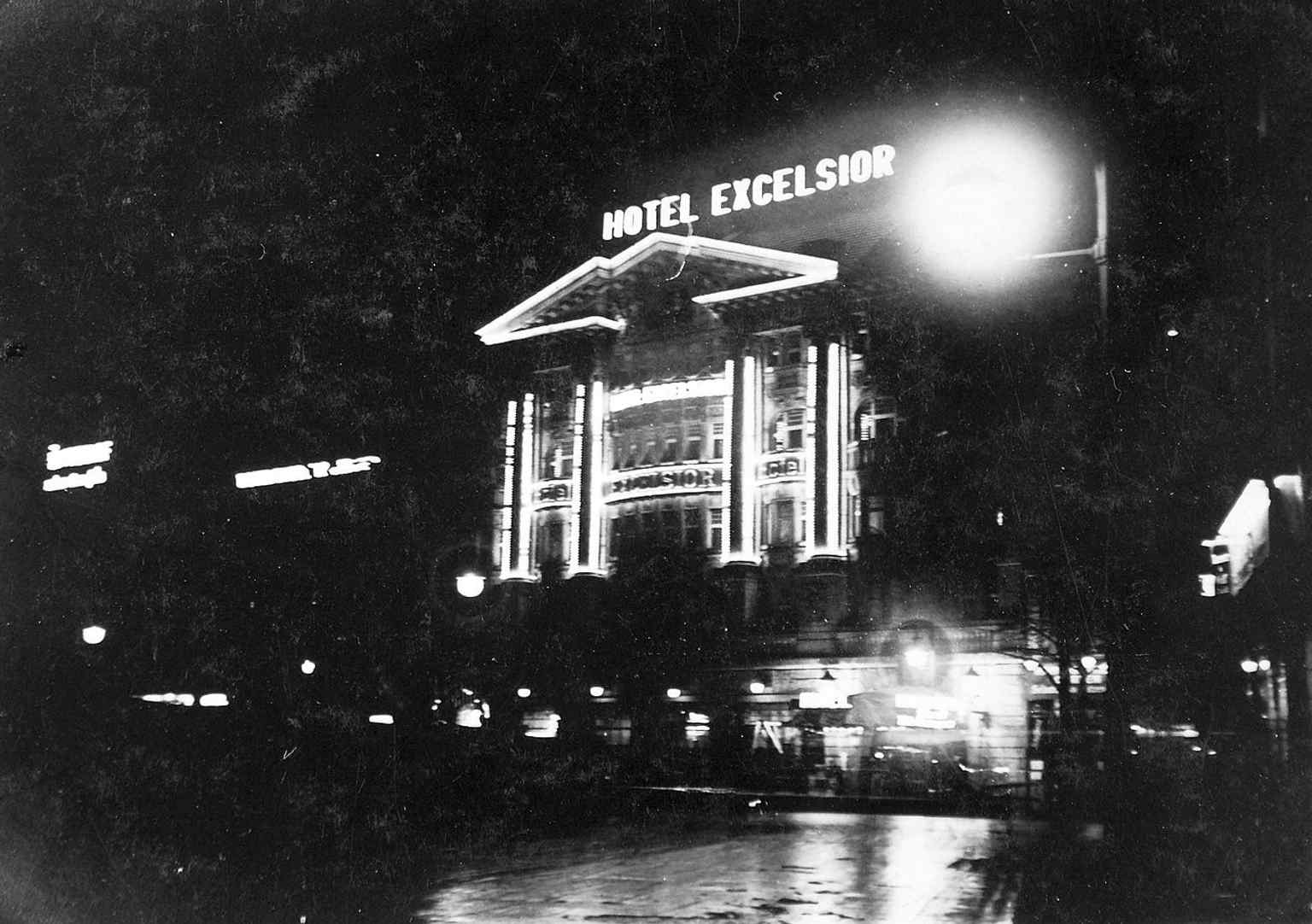
By the late nineteen twenties, Elschner pushed the transit idea even further. Look at the later photo on your phone. In nineteen twenty-eight and nineteen twenty-nine, he financed an underground passage to Anhalter Bahnhof: eighty meters long, three meters wide, three meters high, and costing one million two hundred thousand Reichsmarks, roughly eight million euros today. It even included five underground shops and a railway ticket office inside the hotel. Guests could go from train compartment to bedroom without stepping outside. Berlin solved inconvenience by digging a tunnel under it.
Politics kept breaking through the velvet curtains. Nazi leaders wanted the Excelsior as Hitler’s Berlin base, but Elschner refused, forcing him to choose the Kaiserhof instead. The party punished the hotel anyway, stripping Jewish thinkers from the stained glass in its “Hall of Free Thought” and burning books from the library.
In April nineteen forty-five, bombing left the Excelsior a burning ruin. Demolition finished the job in nineteen fifty-four. Even the old tunnel may still survive somewhere below, which feels appropriately theatrical.
That is the Excelsior in one frame: marble, radios, baths, and seamless service... then revolution, censorship, and destruction barging through the lobby. Kreuzberg has a habit of turning ordinary urban functions into political theater. When you’re ready, continue about eleven minutes to Die Tageszeitung.