

On your left is a broad red-brick and glass complex, mostly rectangular, with a recessed entrance and the Bundesdruckerei name fixed across the facade.
This is where the state turns authority into objects you can hold: passports, I-D cards, banknotes, visas, stamps, even the little bits of security software that now decide whether a document is real or a very confident fake.
Locals tend to remember that this place began in eighteen seventy-nine as the Reichsdruckerei, the Imperial Printing House. And here is the detail most tourists miss: it earned fame not only for security, but for style. The hundred-mark note was so elegant, and so large, that people nicknamed it the “long hundred” or the “blue rag.” Because even bureaucracy likes good graphic design.
If you glance at the image in the app, you can see the headquarters as the calm face of a very nervous business. By nineteen eighteen, visitors praised its printing quality so highly that it could reproduce Egyptian hieroglyphs for museum work, along with Cyrillic, Georgian, Armenian, Arabic, Kurdish, and Syriac scripts. Power, after all, needs excellent typography.
Then came the ugly part. In nineteen thirty-three and nineteen thirty-eight, the Nazi regime forced the printworks into line, dismissed its Social Democratic director Franz Helmberger, and used these presses to produce identity cards stamped with a capital J for Jewish people, along with camp money for Oranienburg concentration camp. Near the Jewish Museum, that fact lands differently. A document can recognize a person... or help erase them.
Allied bombing left the plant largely destroyed in nineteen forty-five. Yet by May, it was already printing the first postwar stamps. Berlin has always had a disturbing talent for rebuilding systems at speed. In nineteen sixty-one, the Wall went up right behind the Kommandantenstraße entrance, and eighty-one employees suddenly could not reach work. Borders only function when paper tells them who may pass.
In the nineteen eighties, forged identity papers linked to the Red Army Faction were among the pressures that led Germany toward a new centralized I-D card, introduced in nineteen eighty-seven and produced here. After the Wall fell, Bundesdruckerei issued new documents for around sixteen million people in the former G-D-R. Reunification needed speeches, yes, but it also needed forms.
Look at the passport concept on your screen and you can see the next turn. Since two thousand ten, this place has made electronic identity cards, then pushed into biometrics, cryptography, and the global certificate system that verifies electronic passports. Same mission, newer machinery: deciding what counts as authentic.
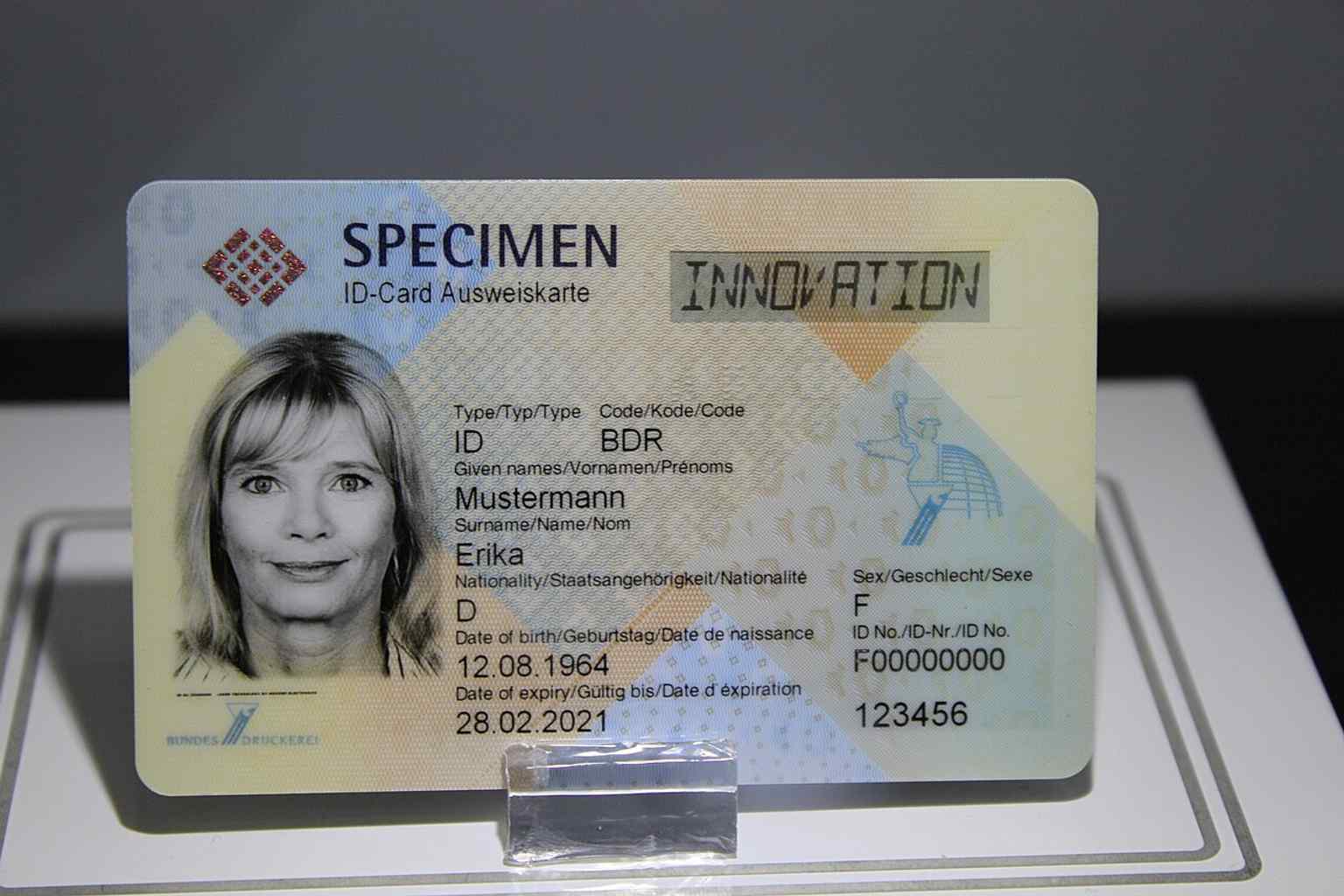
That is a fitting final stop. We began with visible borders and ended with the hidden machinery behind them. Kreuzberg teaches you to read both the wall and the watermark.
If you need it, the site keeps weekday business hours and closes on weekends... which feels exactly right for a place devoted to official documents.





