
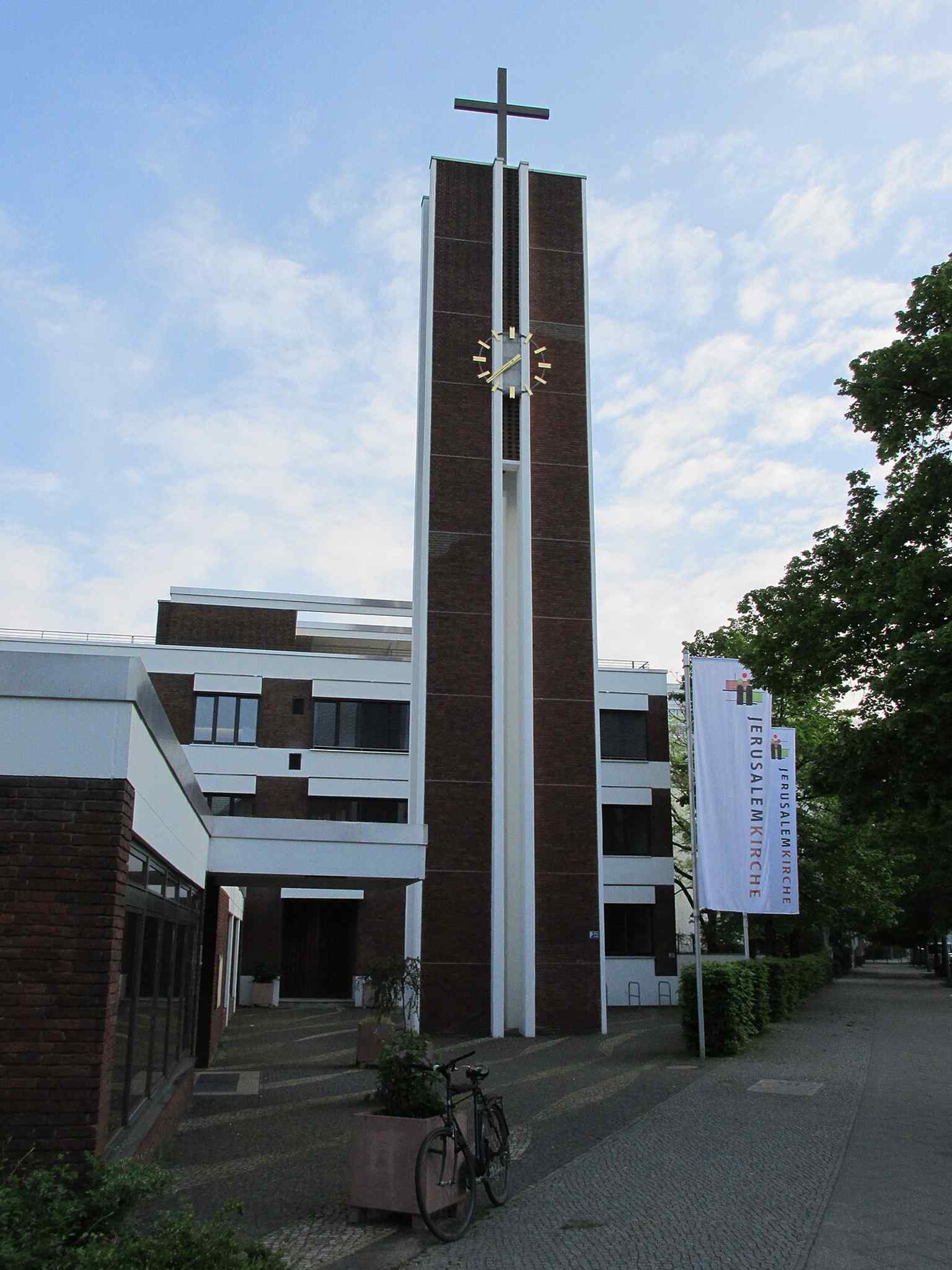
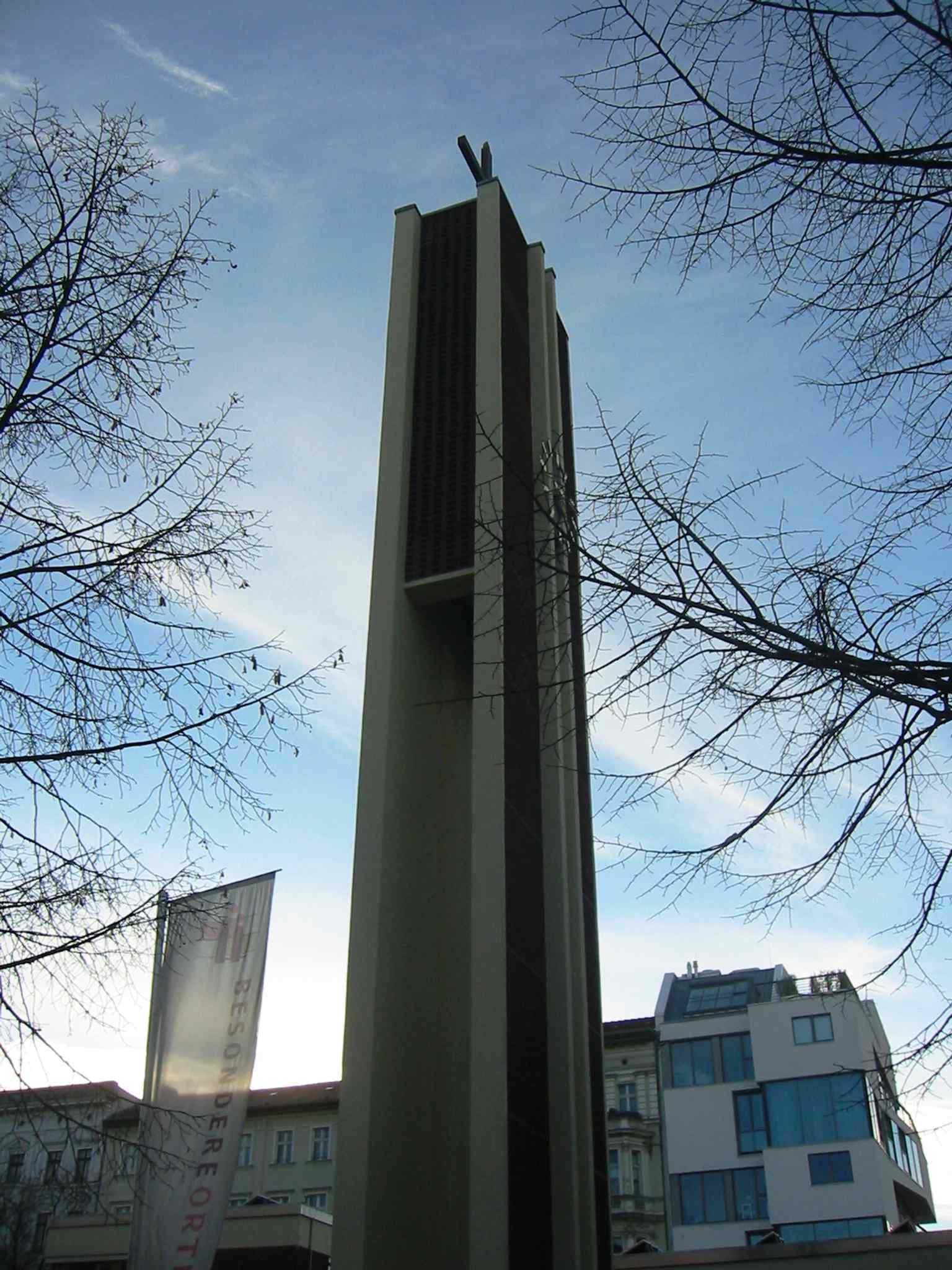
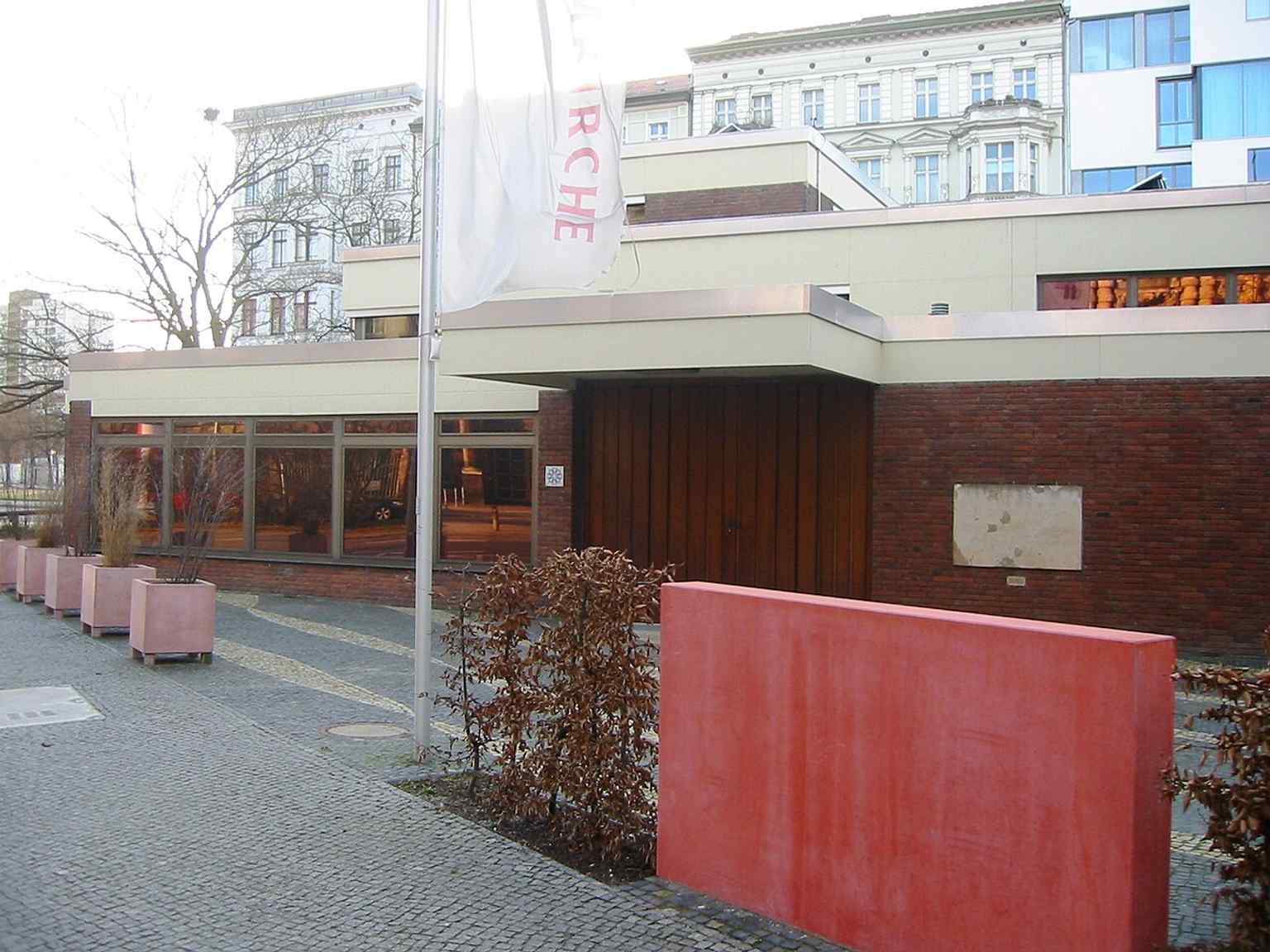
On your left, look for a low, angular church of concrete partly faced in red brick, grouped in stepped blocky volumes and paired with a separate bell tower.
Jerusalem Church has had more reinventions than most city agencies, and with better results. It began as a late medieval chapel with a hospital, shaped by pilgrimage, charity, and the steady traffic of people heading out of town.
The origin story is wonderfully specific. A Berlin burgher named Müller survived an attack during a pilgrimage to Jerusalem, then funded a chapel here in thanks. In fourteen eighty-four, a bishop offered an indulgence - a church promise of less time in purgatory - to anyone who helped restore it. Efficient fundraising, medieval edition. Inside stood a copy of the Holy Sepulchre, the tomb of Christ as people here imagined it. That imitation gave the place its name: Jerusalem.
A hermit-like caretaker collected alms from travelers for the attached hospital. So from the start, this was never just a church. It was devotion, theater, and social care folded into one small roadside stop.
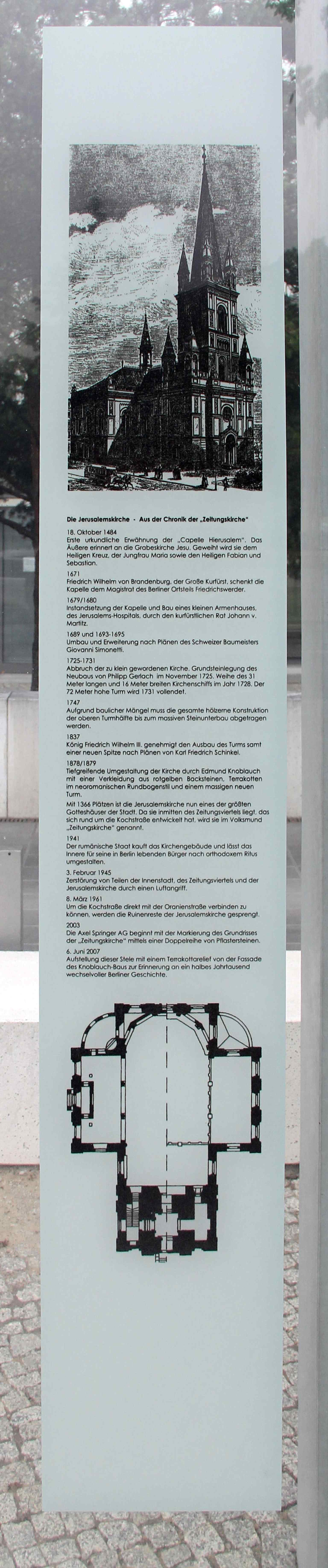
Then Berlin changed, and the church changed with it. After the Reformation, it became Lutheran. Later, it served both Lutherans and Calvinists under one roof. In the early eighteenth century, Philipp Gerlach rebuilt it at a chaotic crossroads where streets came in from five directions, so the choir - the sacred end of the church - pointed north instead of east. Theology met traffic engineering... traffic won.
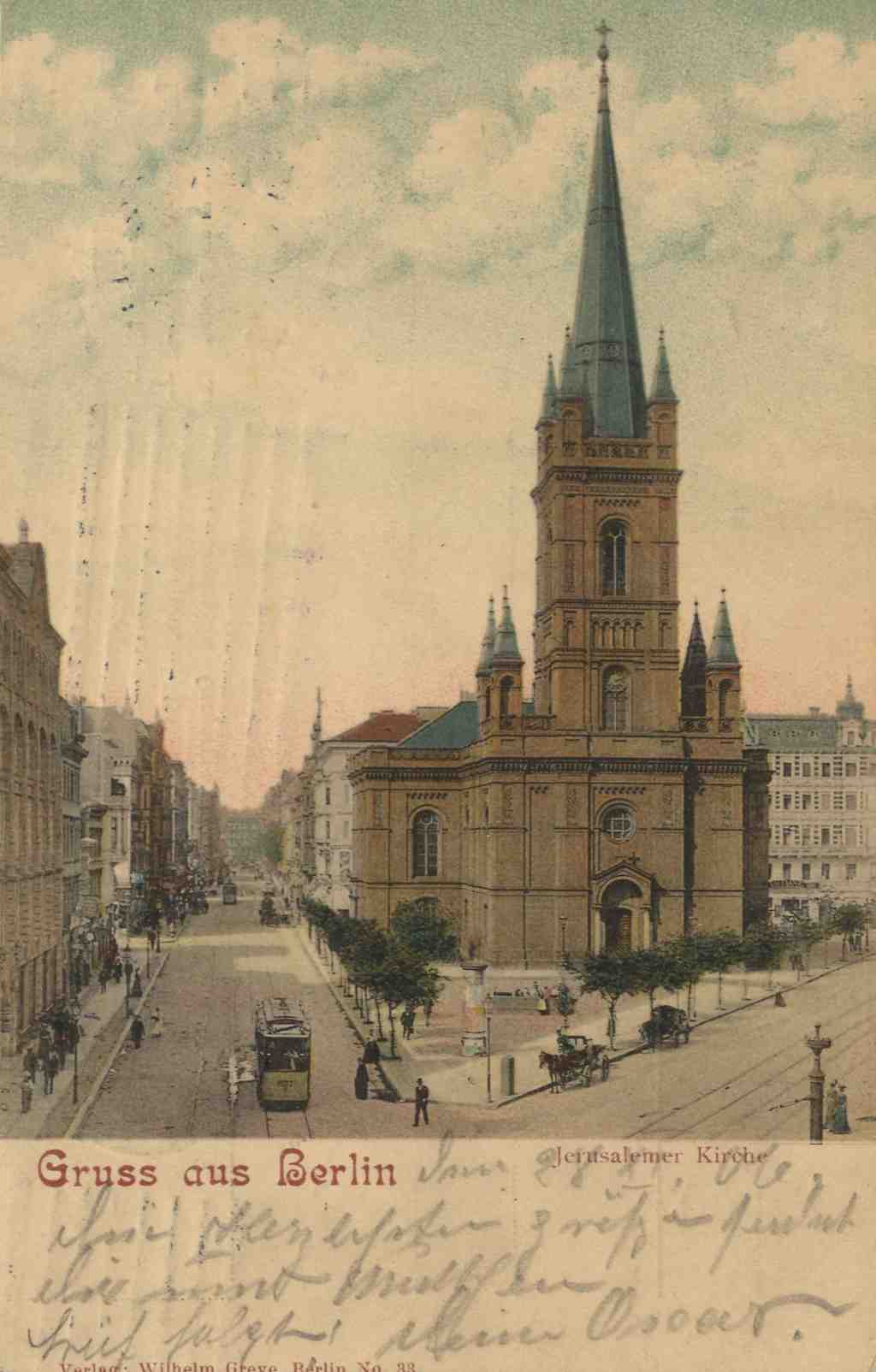
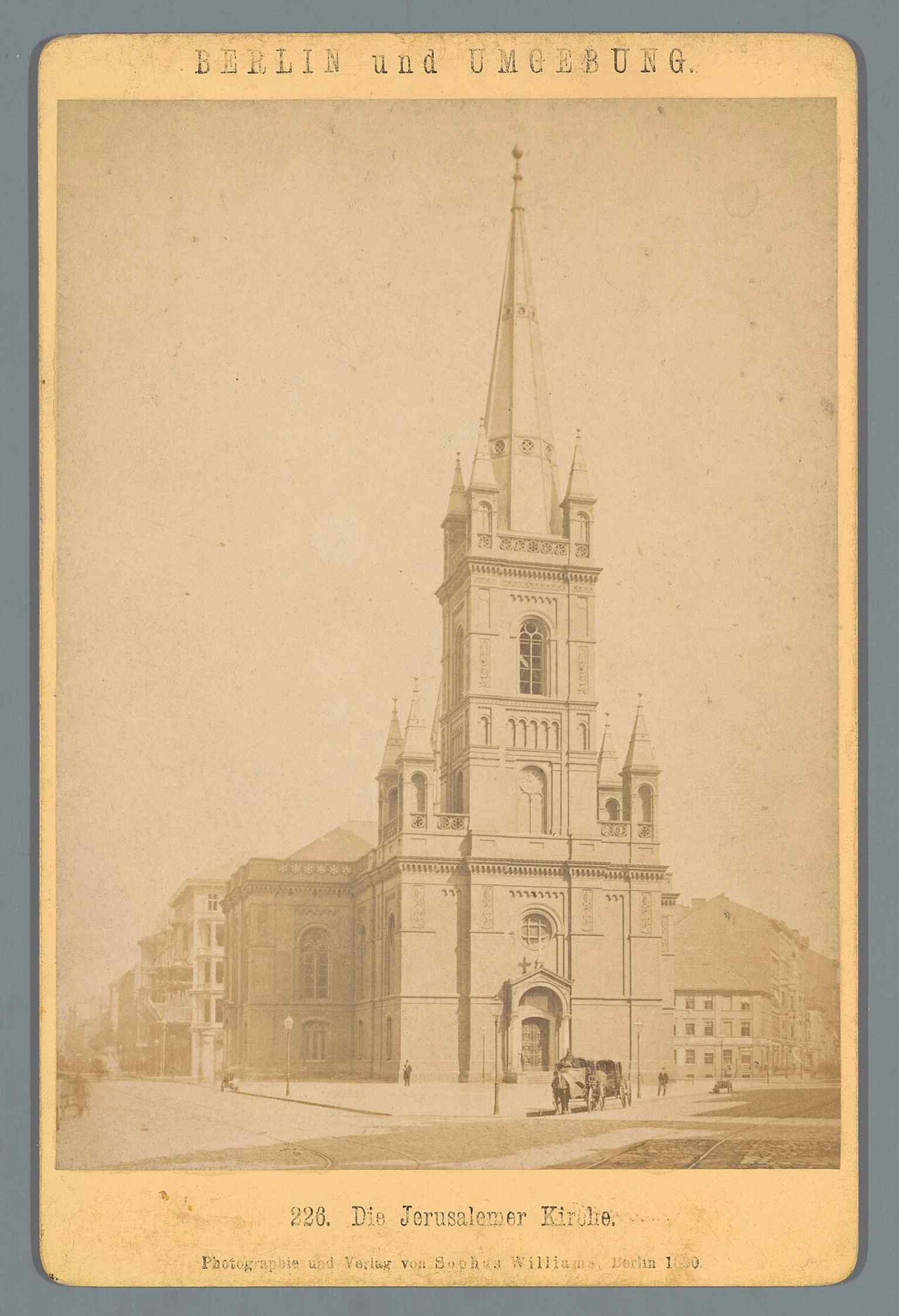
If you glance at the image on your screen, you can see the grander nineteenth-century version that followed, including the tall tower Karl Friedrich Schinkel crowned in the eighteen thirties. Later, Edmund Knoblauch refaced it in yellow brick and terracotta and fitted a hall for fourteen hundred worshippers.
Then came a darker chapter. In the nineteen thirties, the congregation split bitterly under Nazi pressure. Pastor Alfred Fischer opposed the pro-Nazi German Christians inside his own church leadership. When they refused baptism to children with Jewish ancestry, Fischer quietly baptized them in a private apartment instead. That tells you what this place held onto when institutions around it were failing.
The old church closed in nineteen forty-one. Romanian Orthodox Christians briefly took it over in nineteen forty-four, and then an air raid in February nineteen forty-five destroyed it and the rectory within about a year of that new beginning.
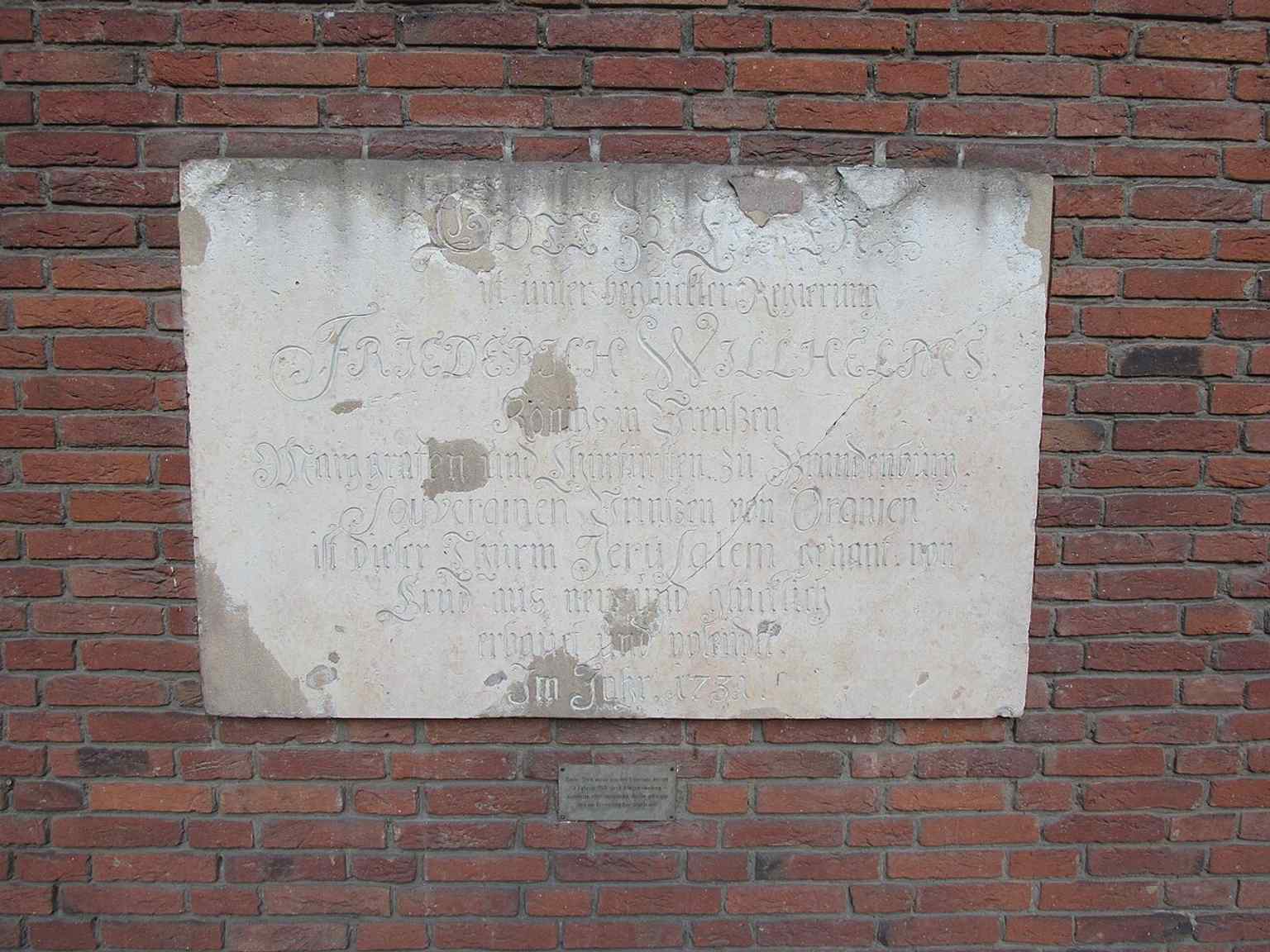
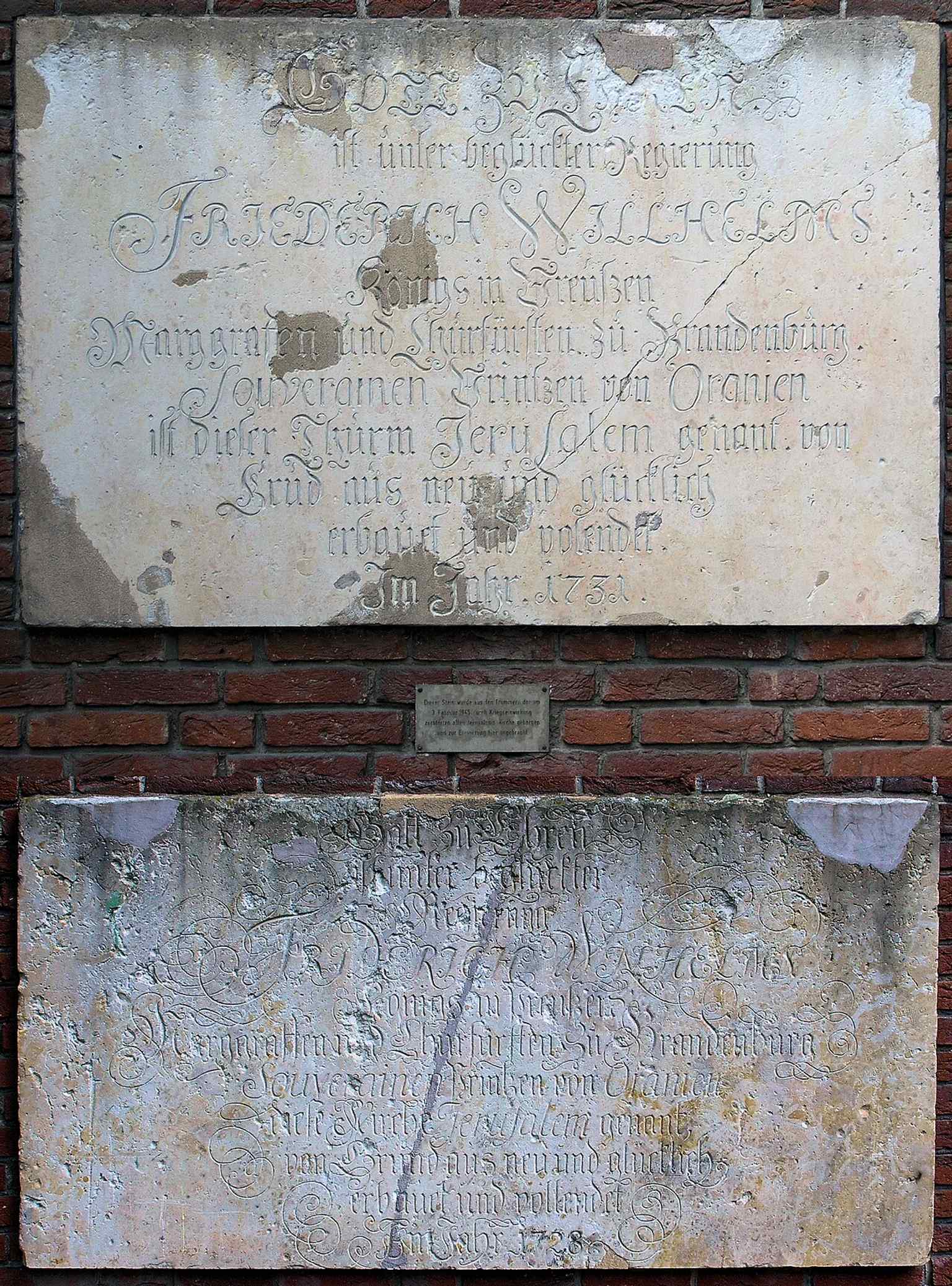
This building is the next life. After the Wall split the parish, the western congregation built a new Jerusalem Church here in nineteen sixty-eight. Architect Sigrid Kressmann-Zschach designed this compact ensemble of worship space, offices, and living quarters - her only sacred building. If you check the foundation stone on your phone, you’re looking at the marker of that return.
Now the building hosts Christian-Jewish dialogue and shared Christian worship. Which feels right. Sacred places survive here by accepting new meanings without going blank. In about four minutes, the Jewish Museum Berlin continues that story in a sharper, more deliberate key.





%20Berlin%20und%20Umgebung%20(serietitel%20op%20object)%2C%20RP-F-F19919.jpg)


%20Jerusalems%20Kirche.JPG)
%20Jerusalemskirche.jpg)