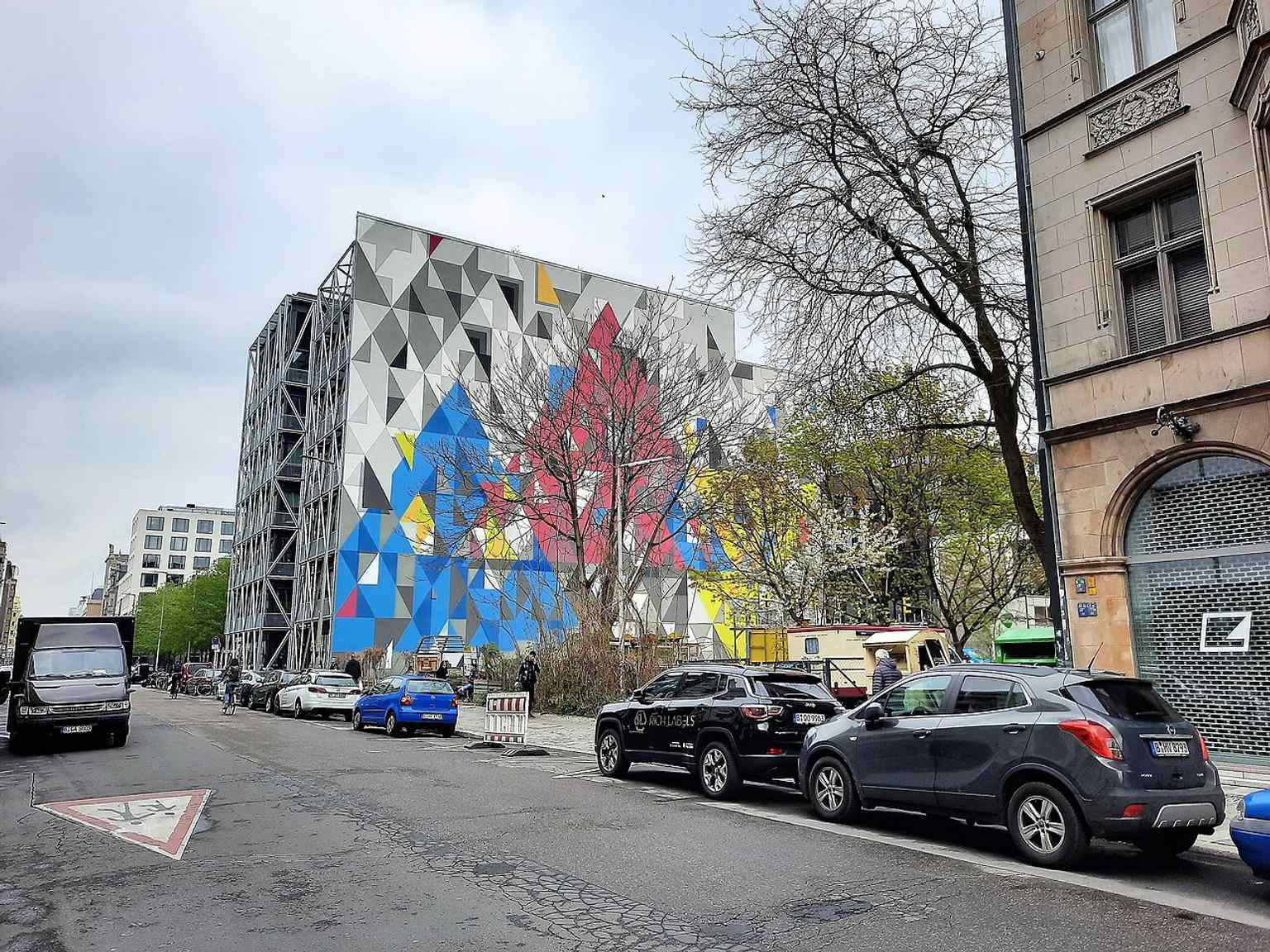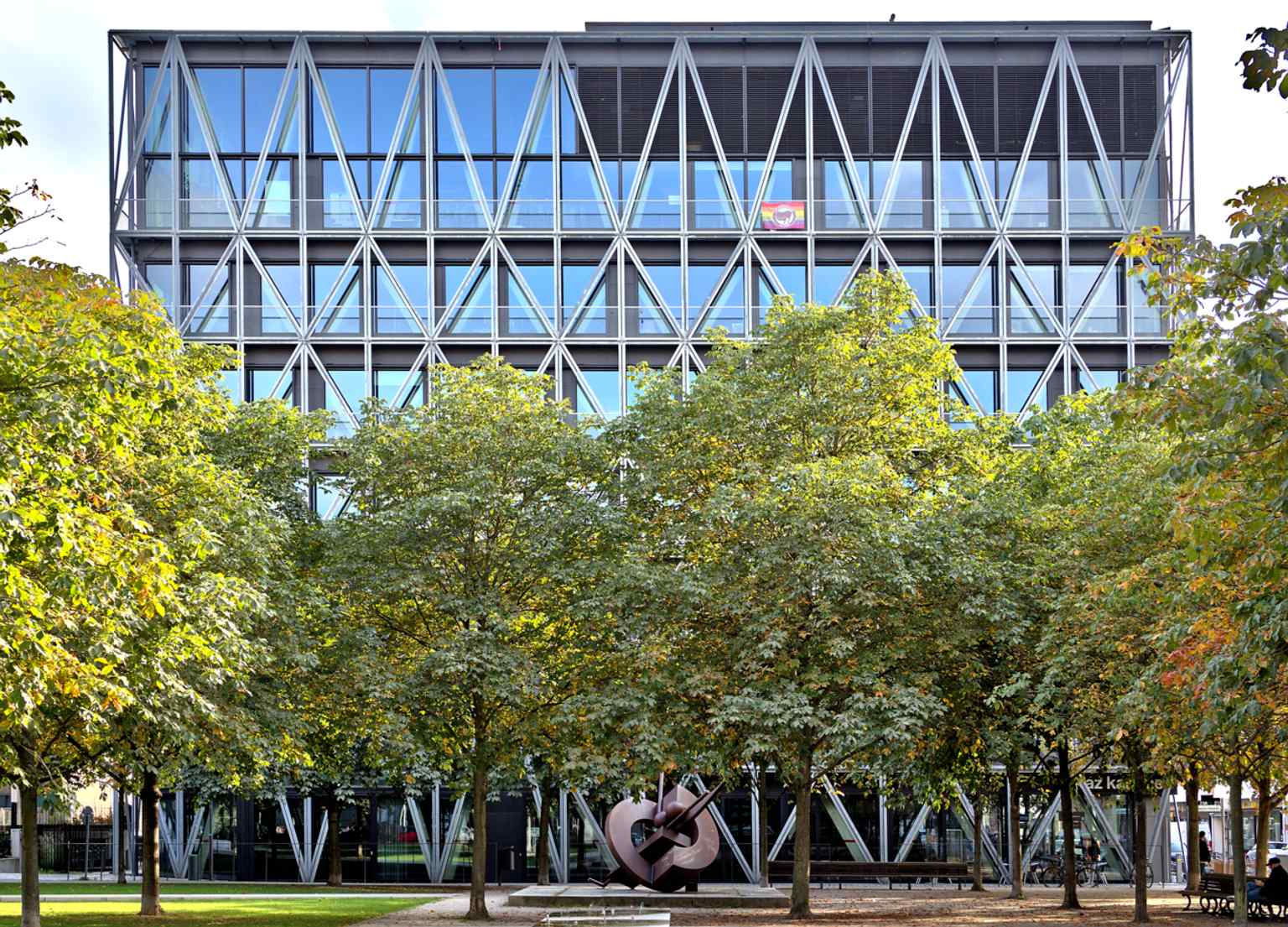
On your left stands a sharp-edged glass-and-concrete building, folded into angular planes and stamped with the red taz logo high on the facade.
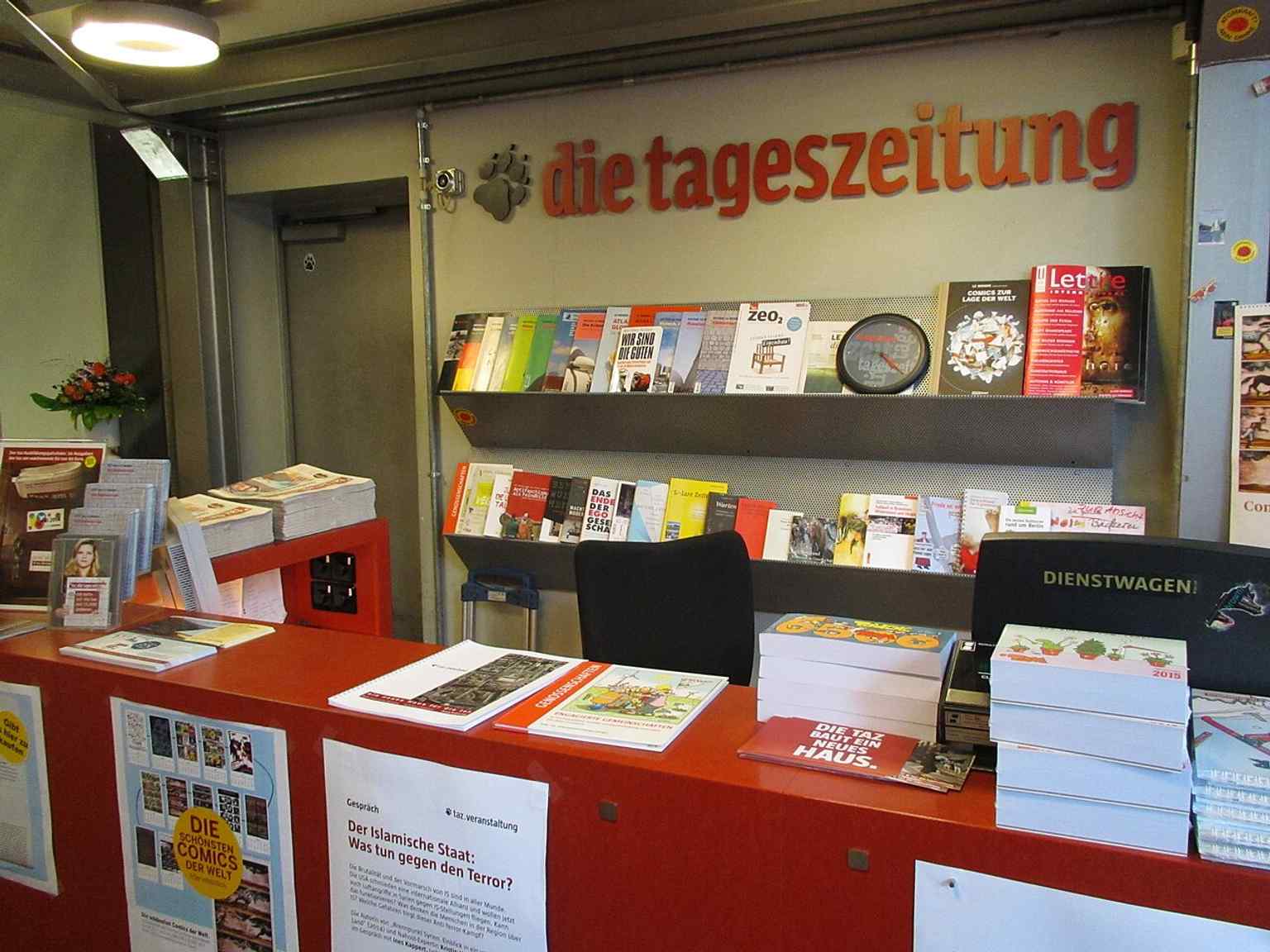
This is the home of Die Tageszeitung, usually just taz. What began as the taz Collective started in nineteen seventy-eight after the Tunix Congress, when activists in a cold storefront decided that protest also needed deadlines, copy edits, and a printing schedule. Classic Berlin: rebellion, but with meeting minutes.
From the start, taz aimed to build a counter-public, meaning a place where official stories could be challenged, mocked, or dismantled in print. By nineteen eighty-seven, the paper pulled off one of its most famous stunts: the editors forged an edition of Neues Deutschland, the East German ruling party newspaper, and spread it in West Germany. Some of the fake predictions later proved eerily close to reality. Satire occasionally files its report early.
The unruliness did not stop at power outside. In nineteen eighty-eight, a so-called porno page triggered a women’s strike inside the paper, and two editors got suspended for a week. That same year, another internal fight exploded after a culture text used the word “gaskammervoll” for a disco; the membership then fired two cultural editors. taz was serious, funny, principled, and deeply argumentative. In other words, a newsroom.
Its survival took organization, not just attitude. In nineteen eighty-nine, with help from the Stiftung Umverteilen foundation, taz bought a protected old building on Kochstraße. When funding collapsed soon after, three thousand founding members put up three million Deutsche Marks and created a publishing cooperative to keep investors out and independence in. If you want dissent to last, eventually someone has to pay the electricity bill.
This newer headquarters shows what that stubbornness built; check the before-and-after image in the app and you’ll see how the modest older office gave way to this jagged contemporary shell. If you want the earlier face of the paper, look at the older exterior photo on your screen.
taz kept reinventing itself. In nineteen ninety-five, it became the first German daily newspaper you could read completely online. Then came the Seitenwende, literally the page-turn: after the seventeenth of October, twenty twenty-five, weekday print ended, the Saturday wochentaz stayed on paper, and the staff even ran a hotline in the building to help readers switch to the app and e-paper. Revolution, now with customer support.
So here’s the uncomfortable question... when a newspaper bends rules to puncture power, when does that serve democracy, and when does it start borrowing the methods it claims to resist?
Not every fight happens in the street. Some happen in layout meetings, strike votes, headline drafts, and the endless contest over who gets to define reality. Sea Level is about a two-minute walk from here. The offices generally keep weekday hours, roughly eight to six, and close on weekends.