
On your left, look for a jagged zinc-clad building shaped like a lightning bolt, cut by sharp diagonal window slits and set beside the calmer baroque Kollegienhaus.
This is the Jewish Museum Berlin, the largest Jewish museum in Europe, and it exists because Berlin eventually chose not to let destruction have the last word. The first Jewish museum in the city opened on the twenty-fourth of January, nineteen thirty-three, led by Karl Schwartz, just six days before the Nazis officially took power. He meant it to show Jewish history as living history, not a sealed-off relic. Then, on the tenth of November, nineteen thirty-eight, after Kristallnacht, the Gestapo shut it down and confiscated its collection. Efficient, brutal, and entirely in character.
The museum you see now reopened in two thousand one, but its rebirth took decades of argument, planning, and moral nerve. In nineteen eighty-eight, Berlin announced a design competition for a new Jewish museum. Daniel Libeskind won with this fractured zigzag, a design people nicknamed Blitz, or Lightning. He did not offer a neutral container. He gave Berlin a building that behaves like a wound.
That was deliberate. The old Kollegienhaus, a surviving baroque building in Friedrichstadt, serves as the historical entrance. But there is no visible connection above ground to Libeskind’s building. Visitors pass underground from old Berlin into a structure that feels broken open. Subtle it is not.
What does a city owe the histories it once tried to erase... a memorial, a curriculum, an archive, a place for grief, all of it? This museum answers by making absence part of the architecture itself. Libeskind carved voids through the building, tall empty shafts that represent what can never be fully displayed: lives, communities, and human possibility reduced to ash. In the basement, three slanting corridors, called axes, force a choice of meanings: continuity, exile, and the Holocaust. One leads to the Garden of Exile, where forty-nine pillars stand on a tilted ground, with earth from Berlin in forty-eight and earth from Jerusalem in one. Another leads to the Holocaust Tower, a bare concrete chamber lit only by a narrow slit above.
If you look at the before-and-after image in the app, you can see how this once-raw statement became a settled part of the city without losing its edge.
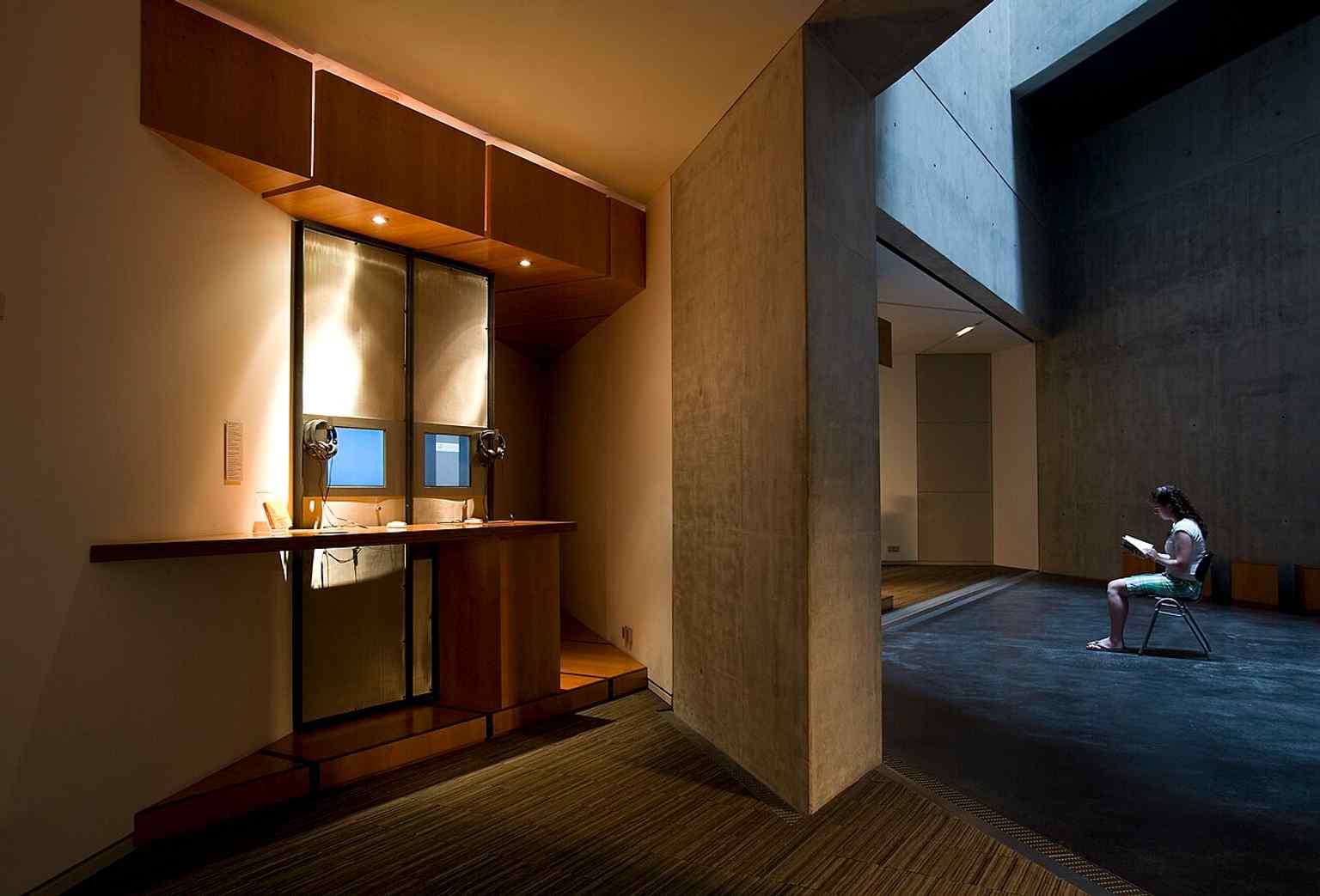
Inside, the story refuses to stop in nineteen forty-five. The core exhibition, Jewish Life in Germany: Past and Present, stretches from the Middle Ages to now, through religion, family life, art, migration, persecution, repair, and debate. The museum holds more than objects; it keeps letters, passports, journals, and family papers that let descendants trace interrupted lives. In one void, Menashe Kadishman spread ten thousand steel faces across the floor. Visitors walk across them, and the metal clatters underfoot. Memory here does not sit quietly in a display case.
If you want a quick preview of the interior mood, glance at the museum image on your screen.
Not far from Jerusalem Church, this place offers another kind of civic sacred space: not for worship, but for public reckoning. It stands here because the machinery of persecution, including the Schutzstaffel, the S-S, tried to reduce Jewish life to a file, a transport list, an absence. This museum insists on complexity instead.
Berlin confronts here what others meant to erase, and it does so in full public view. When you are ready, we’ll continue to the Berlinische Galerie, about a seven-minute walk from here. If you plan to go inside, the museum is usually open Tuesday through Sunday from ten to six, and closed on Mondays.






%20A54A6022.jpg)
%20A54A6004.jpg)
%20A54A5968.jpg)