
New York City Audio Tour: Chelsea Gems
Beneath the polished glass of Manhattan West lies a restless history of grit and defiance. Chelsea is more than just a gallery hub. It is a battlefield where bold visionaries and silent dissenters have rewritten the rules of the city. Grab your phone and prepare for an immersive self guided audio journey through the hidden corners of these streets. You will uncover secrets that remain invisible to the millions who walk past them daily. Why did a single photograph ignite a political firestorm that shook the very foundations of global media? What mysterious figure left an indelible mark on the walls of the School of Visual Arts during a night of unexplained chaos? And why does a forgotten office near the Committee to Protect Journalists still hold the key to a scandal that vanished from the headlines? Traverse the concrete veins of the city as history unfolds beneath your feet. Experience a pulse of discovery that turns every corner into a stage for drama. Begin your transformation of Chelsea now and witness the city as it truly is.
Tour preview
About this tour
- scheduleDuration 150–170 minsGo at your own pace
- straighten6.7 km walking routeFollow the guided path
- location_onLocationNew York, United States
- wifi_offWorks offlineDownload once, use anywhere
- all_inclusiveLifetime accessReplay anytime, forever
- location_onStarts at Manhattan West
Stops on this tour
lock_open 3 free previews · 17 unlock with purchase
Look for a cluster of glass towers rising from a broad stone plaza, anchored by One Manhattan West’s striking curved base that seems to pinch inward before soaring up. This place…Read moreShow less
Open dedicated page →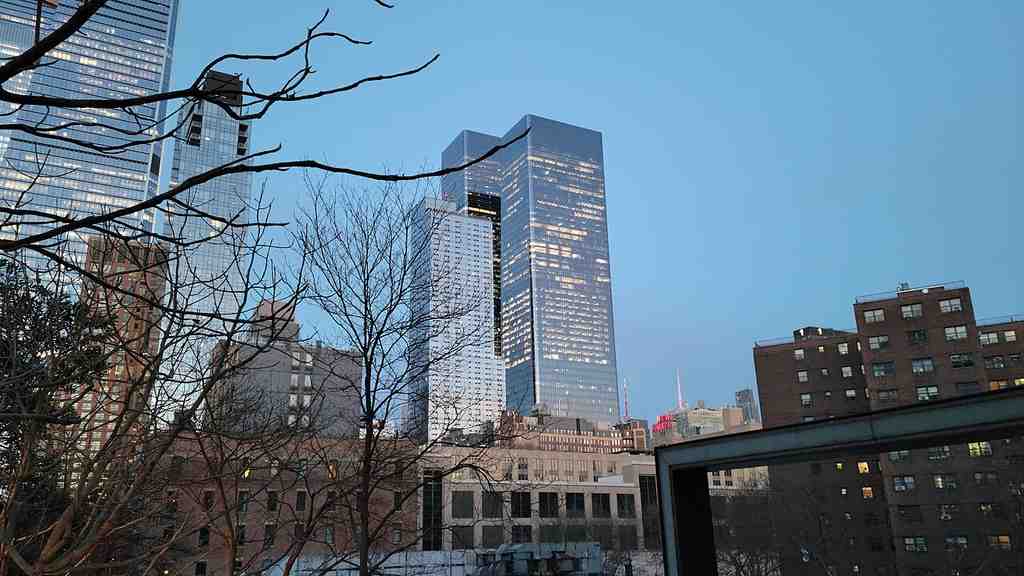
Manhattan WestPhoto: Tdorante10, Wikimedia Commons, CC BY-SA 4.0. Cropped & resized. Look for a cluster of glass towers rising from a broad stone plaza, anchored by One Manhattan West’s striking curved base that seems to pinch inward before soaring up.
This place is one of New York’s great acts of urban magic. You’re standing in Manhattan West, a massive mixed-use development spread across eight acres and roughly seven million square feet... but the real twist is under your feet. Brookfield Properties and its partners created this whole district on a platform laid over Penn Station’s storage tracks. So what feels calm and polished at street level is literally hovering above one of the busiest rail systems in the country.
That challenge shaped everything. One Manhattan West, the taller tower, climbs to nine hundred ninety-five feet, making it one of the city’s tallest buildings. Skidmore, Owings and Merrill designed it with a clever structural trick: some of the outer columns don’t come all the way down to the ground because the tracks below got in the way. Instead, the building transfers that weight back into a reinforced concrete core above the lobby. In other words, this tower is doing architectural gymnastics while pretending to look effortless.
Manhattan West first took shape as an idea in the nineteen nineties, but the big push came in the twenty-tens. Crews broke ground in two thousand thirteen, finished the platform over the tracks by the end of two thousand fourteen, and kept building through the long, noisy, steel-and-crane years until the public opening on the twenty-eighth of September, twenty twenty-one. If you want, pull up the before-and-after image in the app to see how a leftover rail edge turned into this glossy public square.
And this isn’t just office space. The full complex includes office towers, the Pendry hotel, shops, restaurants, and that residential tower you’ll visit next, The Eugene. There’s also Magnolia Court, the public plaza that gives the whole project its social heart. One critic even praised Manhattan West for feeling like a part of New York “conceived with actual human beings in mind”... which, in a city of megaprojects, is a pretty serious compliment. You can feel that ambition here: not just height, but texture, circulation, places to pause, eat, meet, and spill back into the city.
If you glance at your screen, there’s a great exterior shot of Two Manhattan West that helps show how this new skyline grew out of the rail yard footprint.
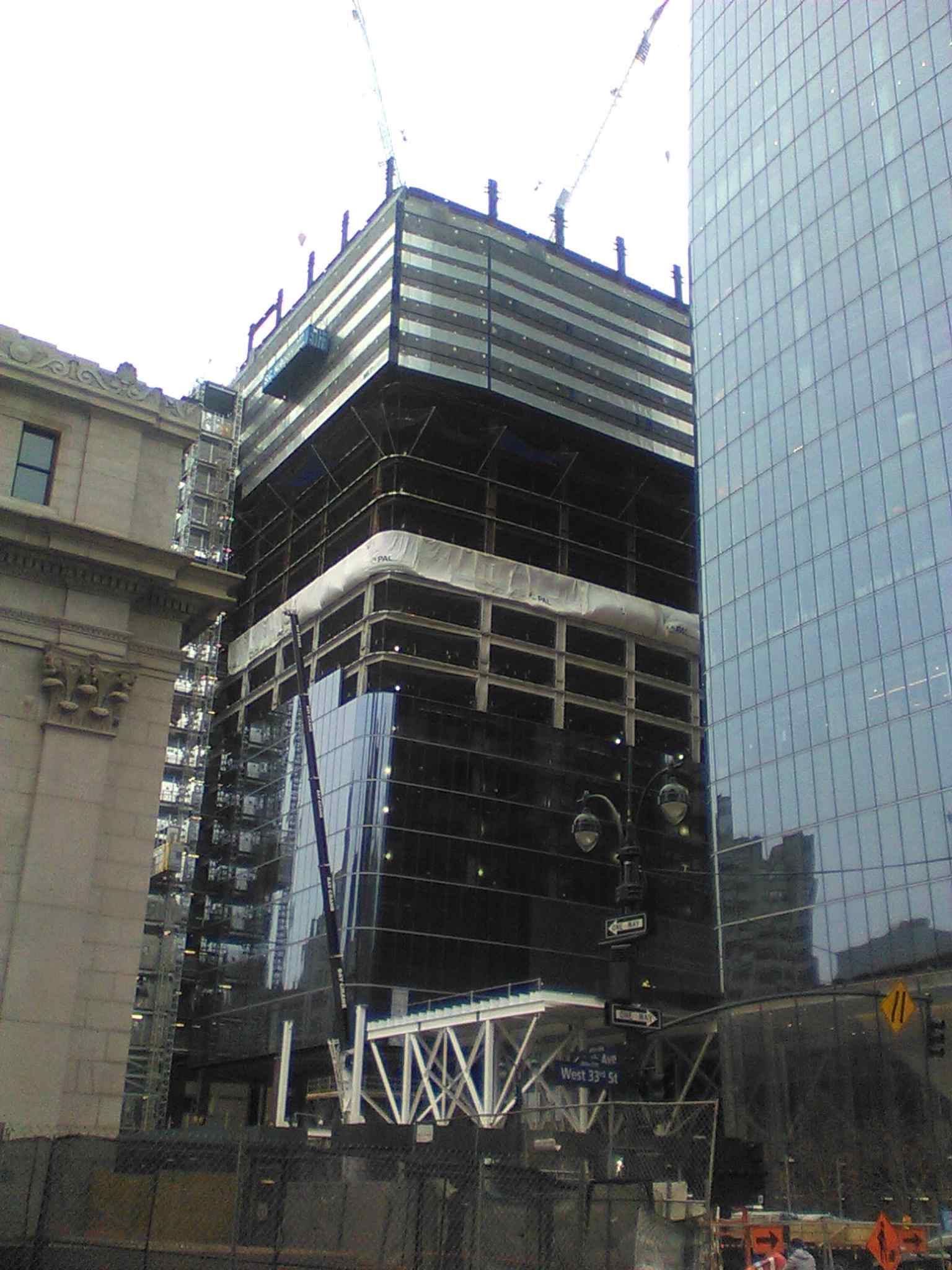
Two Manhattan West’s glass tower rising over 31st Street — part of the mixed-use Manhattan West complex built above Penn Station storage tracks.Photo: 句, Wikimedia Commons, CC BY-SA 4.0. Cropped & resized. There are some wonderful little cultural clues here too. Dining spots like Ci Siamo, Zou Zou’s, Casa Dani, and Daily Provisions turn the plaza into more than a business address; they make it feel like a crossroads of New York appetite, where global finance, commuter energy, and restaurant culture all share the same stage. Even the art joins in: outside One and Two Manhattan West, Charles Ray placed stainless steel figures called Adam and Eve, giving this sleek corporate landscape a strange, human pulse.
This is infrastructure dressed as a neighborhood.
Take one more look up at those towers. When you’re ready, we can head over to The Eugene.
Look to your left for a sleek glass tower with a slim rectangular shape and a tight grid of windows climbing high above West Thirty-first Street. This is The Eugene at four…Read moreShow less
Open dedicated page →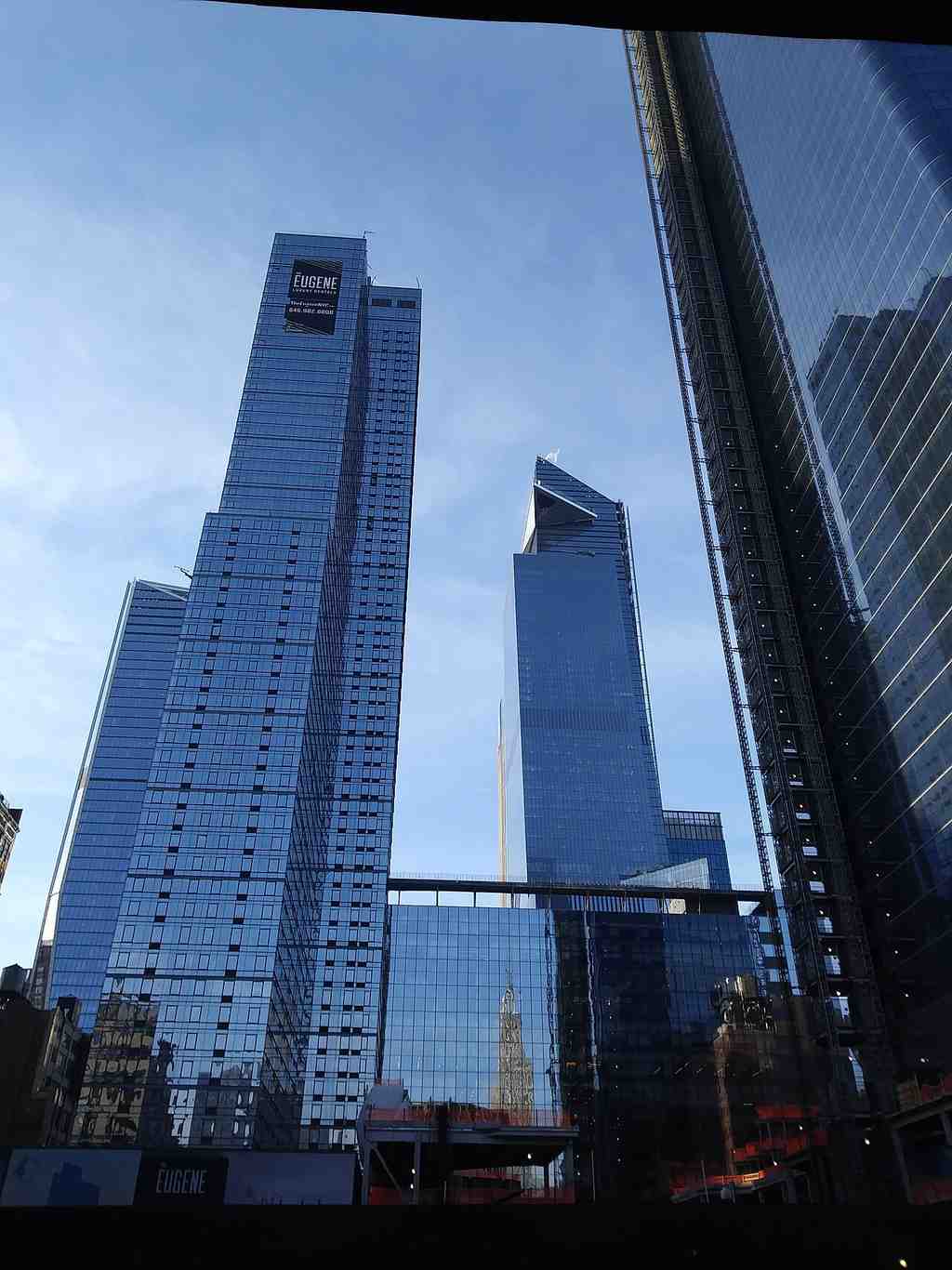
The EugenePhoto: Greaper37, Wikimedia Commons, CC BY-SA 4.0. Cropped & resized. Look to your left for a sleek glass tower with a slim rectangular shape and a tight grid of windows climbing high above West Thirty-first Street.
This is The Eugene at four hundred thirty-five West Thirty-first Street, and it really is New York stacked upward like a vertical neighborhood. Developers broke ground here in December twenty fourteen as part of Manhattan West, and by twenty seventeen, this sixty-four-story, seven-hundred-thirty-foot tower claimed the title of the city’s tallest rental skyscraper. Inside are eight hundred forty-four homes, split between six hundred seventy-five market-rate apartments and one hundred sixty-nine affordable ones... a modern reminder that luxury and access are part of the same city argument. And then there are the amenities: a La Palestra gym with a full basketball court and rock-climbing wall, piano rooms, a music studio, poker lounges, an arcade room, even a dog grooming station. Check your screen for the earlier skyline view of Manhattan West taking shape. If you need the building office, it generally keeps hours from nine to six on weekdays and ten to five on weekends.
The Eugene turns apartment living into a whole tiny metropolis.
When you’re ready, we can continue on to the Church of the Holy Apostles.
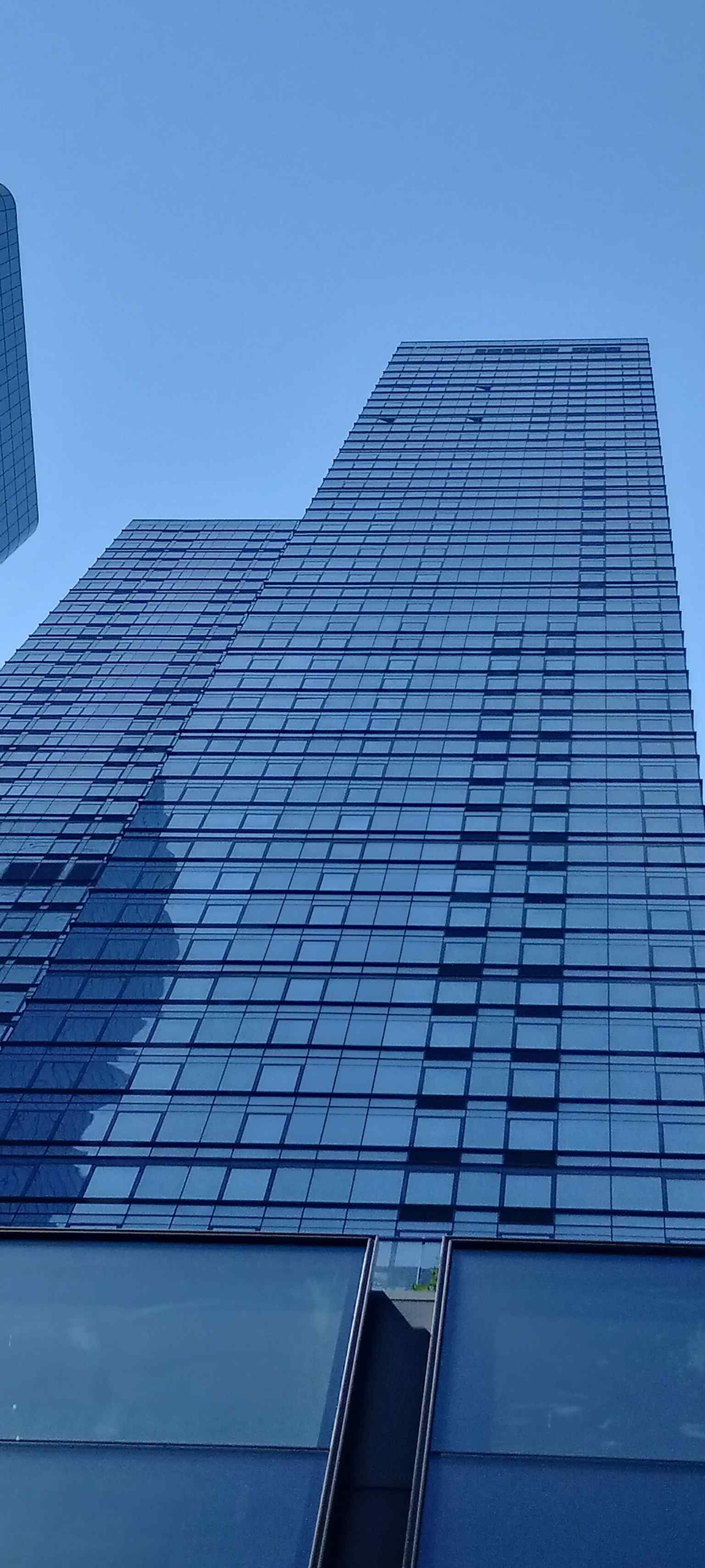
A crisp street-level view of The Eugene’s neighboring Manhattan West towers, showing the modern West Side development it belongs to.Photo: Kidfly182, Wikimedia Commons, CC BY 4.0. Cropped & resized. On your left, look for the brownstone church with broad round-arched windows, a low gabled roofline, and a square corner tower rising above the entrance. This church carries…Read moreShow less
Open dedicated page →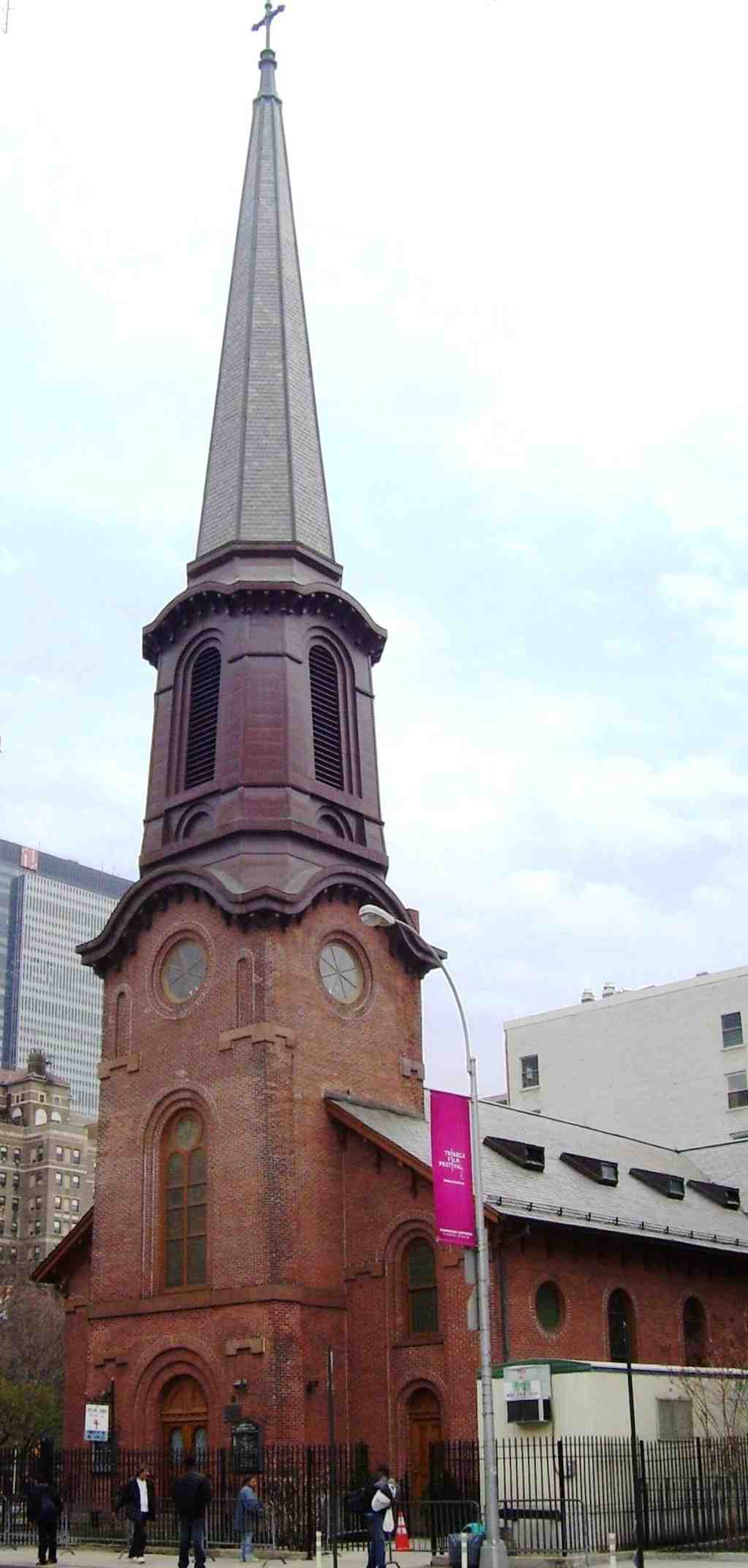
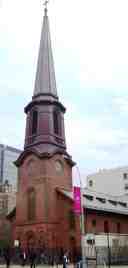
Church of the Holy ApostlesPhoto: Beyond My Ken, Wikimedia Commons, CC BY-SA 4.0. Cropped & resized. On your left, look for the brownstone church with broad round-arched windows, a low gabled roofline, and a square corner tower rising above the entrance.
This church carries nearly two centuries of Chelsea history in its stone. In eighteen forty-four, Trinity Church started the congregation to serve immigrants working the Hudson River waterfront, and that sense of outreach still defines this place. Architect Minard Lafever began the sanctuary in eighteen forty-five and finished it by eighteen forty-eight, then extended it with a chancel - the area around the altar - in the early eighteen fifties. A few years later, Charles Babcock added transepts, the side wings that turn a church into a cross-shaped plan.
Holy Apostles is a rare survivor. It’s the only Manhattan church Lafever designed that still stands, and one of the city’s very few Italianate churches, with a hint of early Romanesque Revival in those sturdy arches. If you peek at the image in the app, you can really see that weighty, grounded exterior facing Chelsea Park across Ninth Avenue. Inside, Lafever planned a basilica - a long central hall with side aisles - and William Jay Bolton designed geometric stained-glass windows that brought color and rhythm into the space.
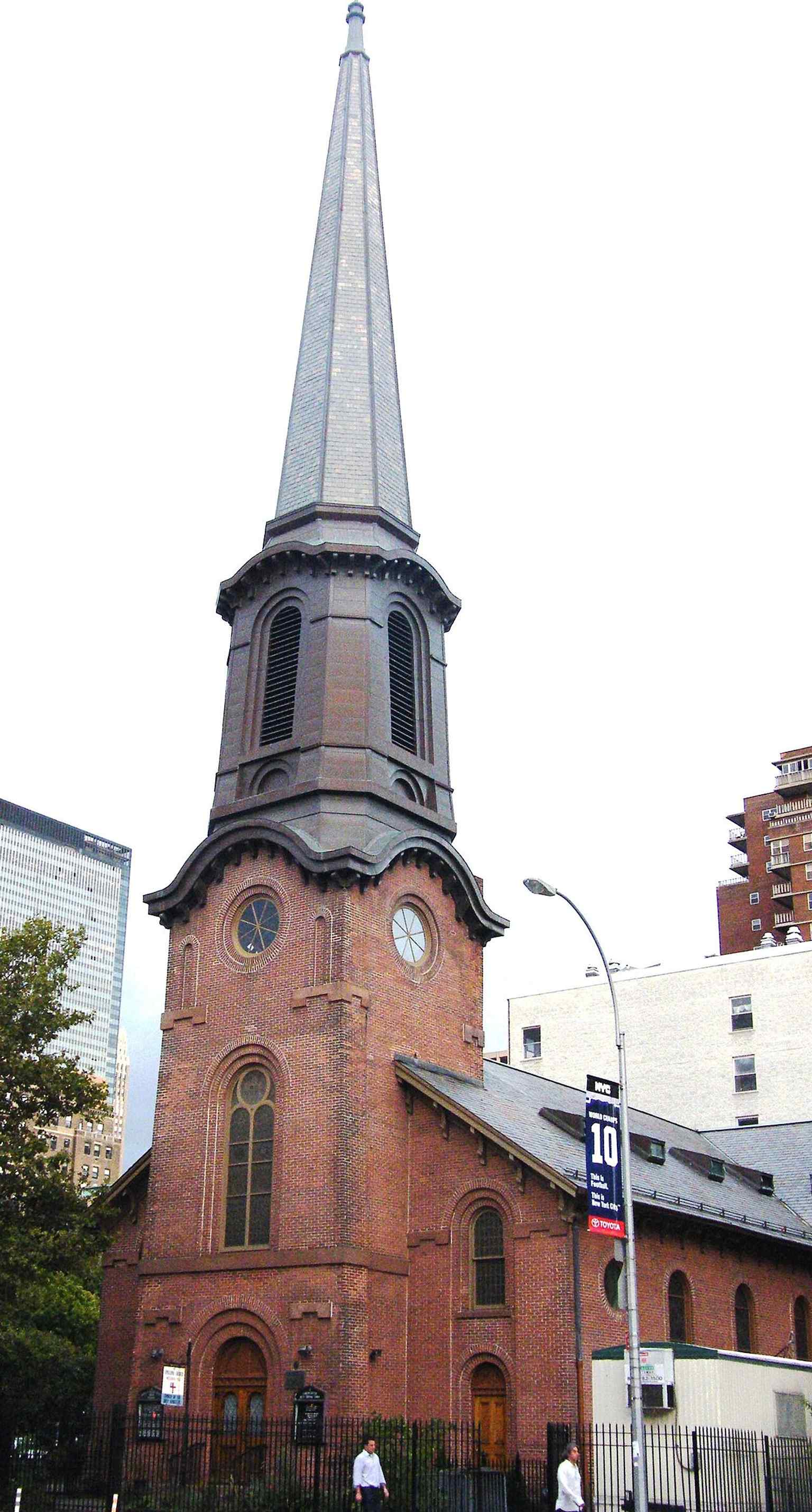
Street-level view of the Church of the Holy Apostles at 300 Ninth Avenue, the historic Chelsea landmark facing Chelsea Park.Photo: Americasroof (talk), Wikimedia Commons, CC BY-SA 3.0. Cropped & resized. But the architecture is only half the story. This congregation has a fierce social conscience. People have long rumored it served as a stop on the Underground Railroad during the Civil War. In the nineteen seventies, it helped launch Congregation Beit Simchat Torah, a synagogue created for gay and lesbian Jews, and it later welcomed that community back for years. It also hosted the ordination of the Reverend Ellen Barrett, the first woman priest and openly lesbian priest in the New York diocese. Then in nineteen eighty-two, Holy Apostles started a soup kitchen that still serves neighbors in need. Even after a fire in nineteen ninety damaged the sanctuary and destroyed some stained glass, restorers finished the work in nineteen ninety-four without interrupting those services.
This landmark matters because its doors have opened wider than its walls might suggest.
Take one more look, and when you’re ready, we can head on to the next stop.
Show 17 more stopsShow fewer stopsexpand_moreexpand_less
Right here on West Twenty-second Street, you’re standing outside one of New York’s boldest ideas about art: Dia. Not just a museum, not just a gallery... more like a giant support…Read moreShow less
Open dedicated page →Right here on West Twenty-second Street, you’re standing outside one of New York’s boldest ideas about art: Dia. Not just a museum, not just a gallery... more like a giant support system for artworks that other institutions once thought were too huge, too strange, too long-term, or too expensive to touch.
Dia began in nineteen seventy-four, when Philippa de Menil, her husband and German art dealer Heiner Friedrich, and Houston art historian Helen Winkler created a nonprofit with a radical mission. They wanted to back projects “whose nature or scale would preclude other funding sources”... in plain English, art so ambitious it needed a patron, almost like the Renaissance. Friedrich said the twentieth century deserved that kind of support too, and he made these gloriously grand comparisons: Andy Warhol as Titian, Dan Flavin as Michelangelo, Walter De Maria as Donatello. That is not modest museum talk.
Even the name tells you the dream. “Dia” comes from Greek and means “conduit” - a channel, a passageway. The founders wanted the institution to disappear behind the art, to let artists lead. So in the nineteen seventies, Dia gave selected artists stipends, studio space, and even archivists. It was pouring out serious money: in less than ten years, it spent more than thirty million dollars - well over a hundred million in today’s money - building a collection, buying real estate, and helping artists think on a monumental scale.
And monumental really means monumental. Dia supported Walter De Maria’s The Lightning Field in New Mexico, James Turrell’s Roden Crater in Arizona, and New York works like The New York Earth Room and The Broken Kilometer. If you glance at your app, you can see that incredible Earth Room interior: a full loft filled with soil, turning a city room into something almost sacred. And take a peek at Nancy Holt’s Sun Tunnels out in Utah - giant concrete cylinders framing sky and desert, now part of Dia’s expanded vision too.
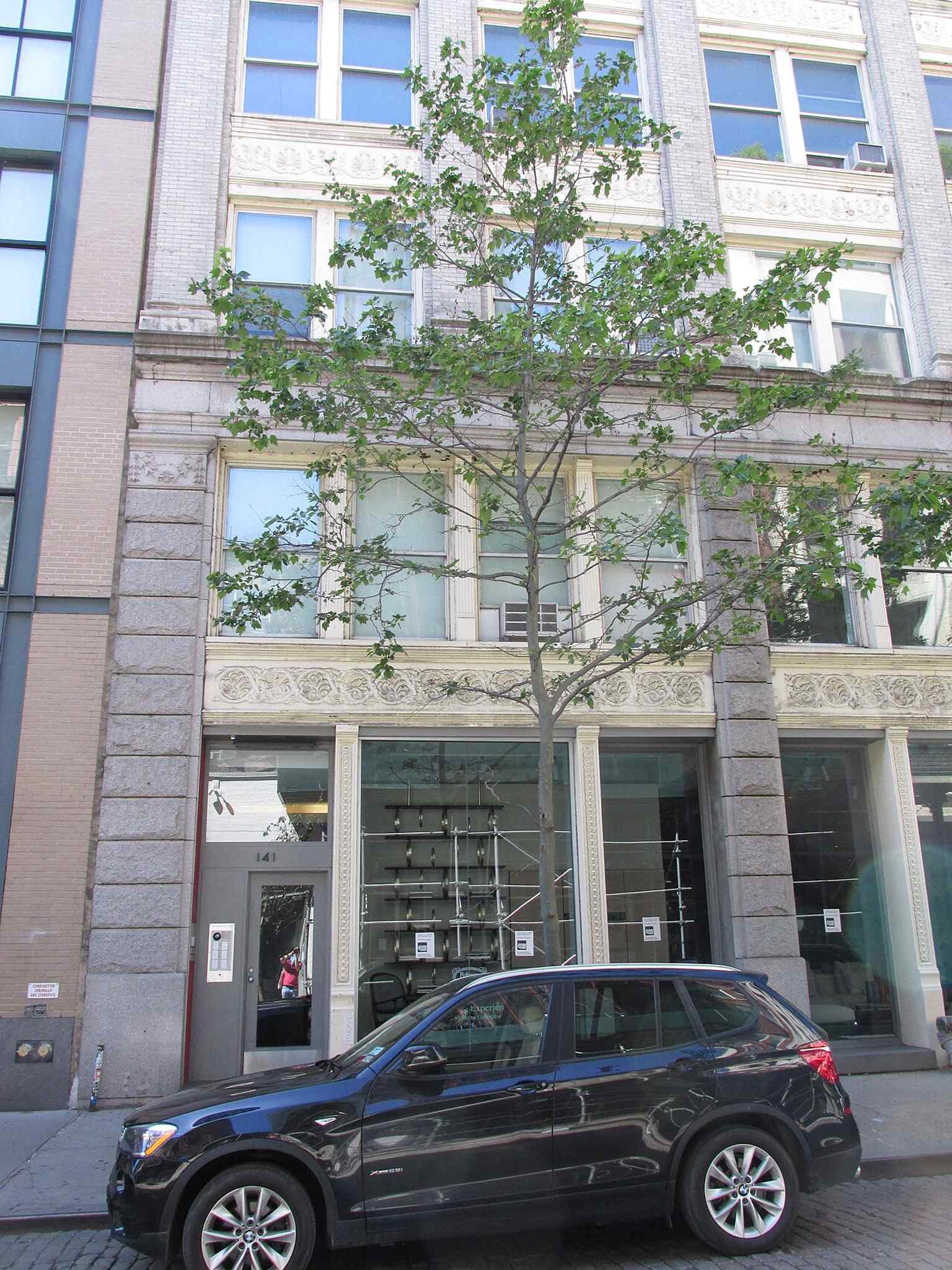
Inside the building that contains Walter De Maria’s The New York Earth Room, a landmark Dia installation first opened in 1977.Photo: Found5dollar, Wikimedia Commons, CC BY-SA 4.0. Cropped & resized. The early years had this aura of mystery. One magazine called Dia a “closely guarded secret,” and people joked it was “the art Mafia” because it avoided publicity so fiercely it didn’t even have letterhead. But the secrecy came with risk. When Schlumberger stock crashed in the early nineteen eighties, Philippa de Menil’s fortune shrank, Dia took on debt, artists panicked, and the foundation had to sell property, cut deals, and reinvent itself. Out of that crisis came a leaner public institution: the Dia Center for the Arts, and eventually the Chelsea presence you’re standing at now.
This Chelsea location carries that whole legacy forward. Dia still champions artists from the nineteen sixties and seventies - names like Joseph Beuys, Donald Judd, Agnes Martin, Dan Flavin, and Warhol - while also widening the story to include more women and international artists. That balance feels very Chelsea to me: industrial bones, huge ideas, and space for art to breathe.
If you want to come back inside, Dia Chelsea is generally open Wednesday through Saturday from noon to six, and closed Sunday through Tuesday.
This place proves that sometimes the most radical act is simply giving an artist enough room to think big.
Take a moment here, and when you’re ready, we can wander on to the next stop.
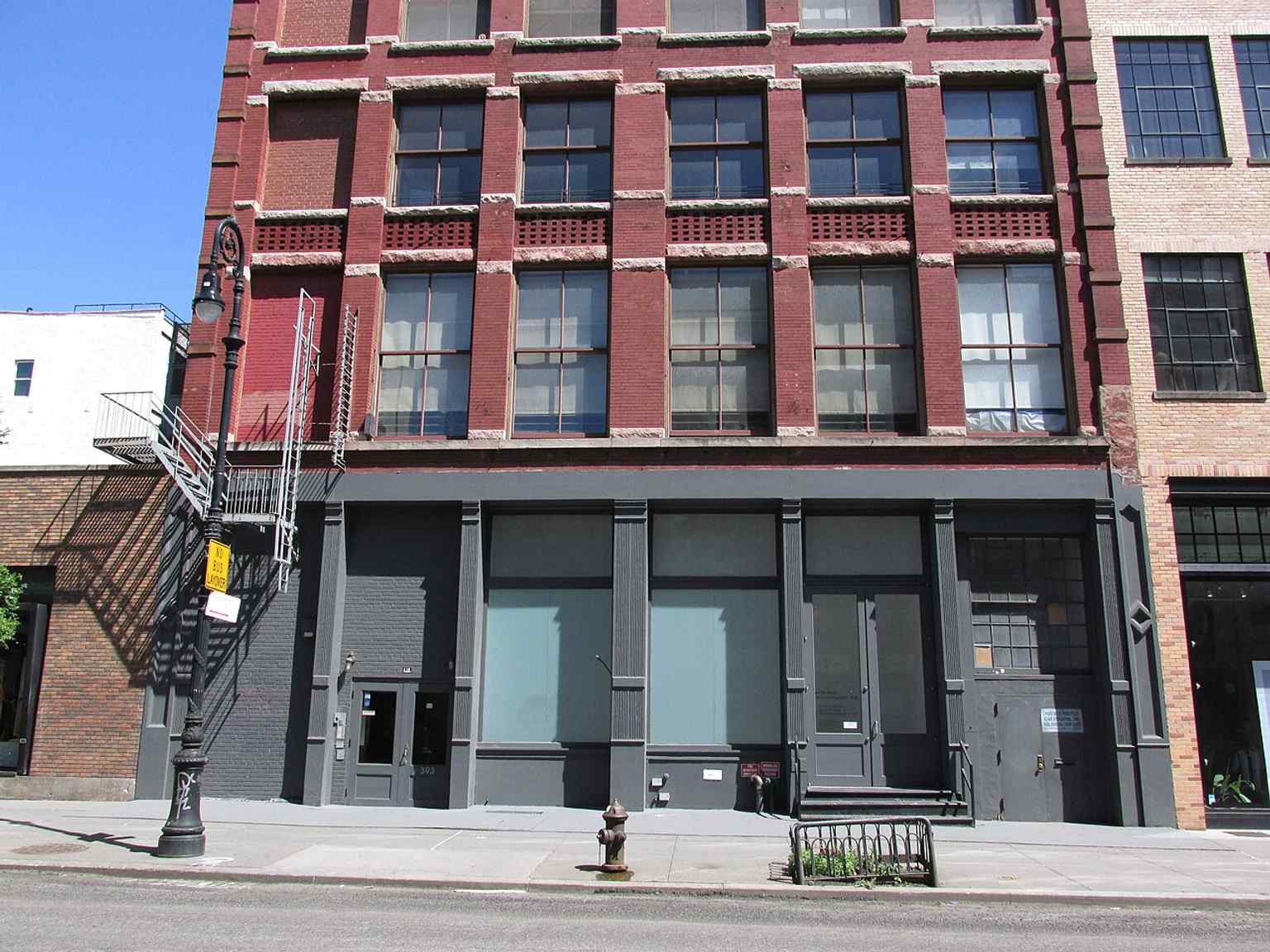
The building that houses Walter De Maria’s The Broken Kilometer, one of Dia’s long-term New York sites.Photo: Found5dollar, Wikimedia Commons, CC BY-SA 4.0. Cropped & resized. 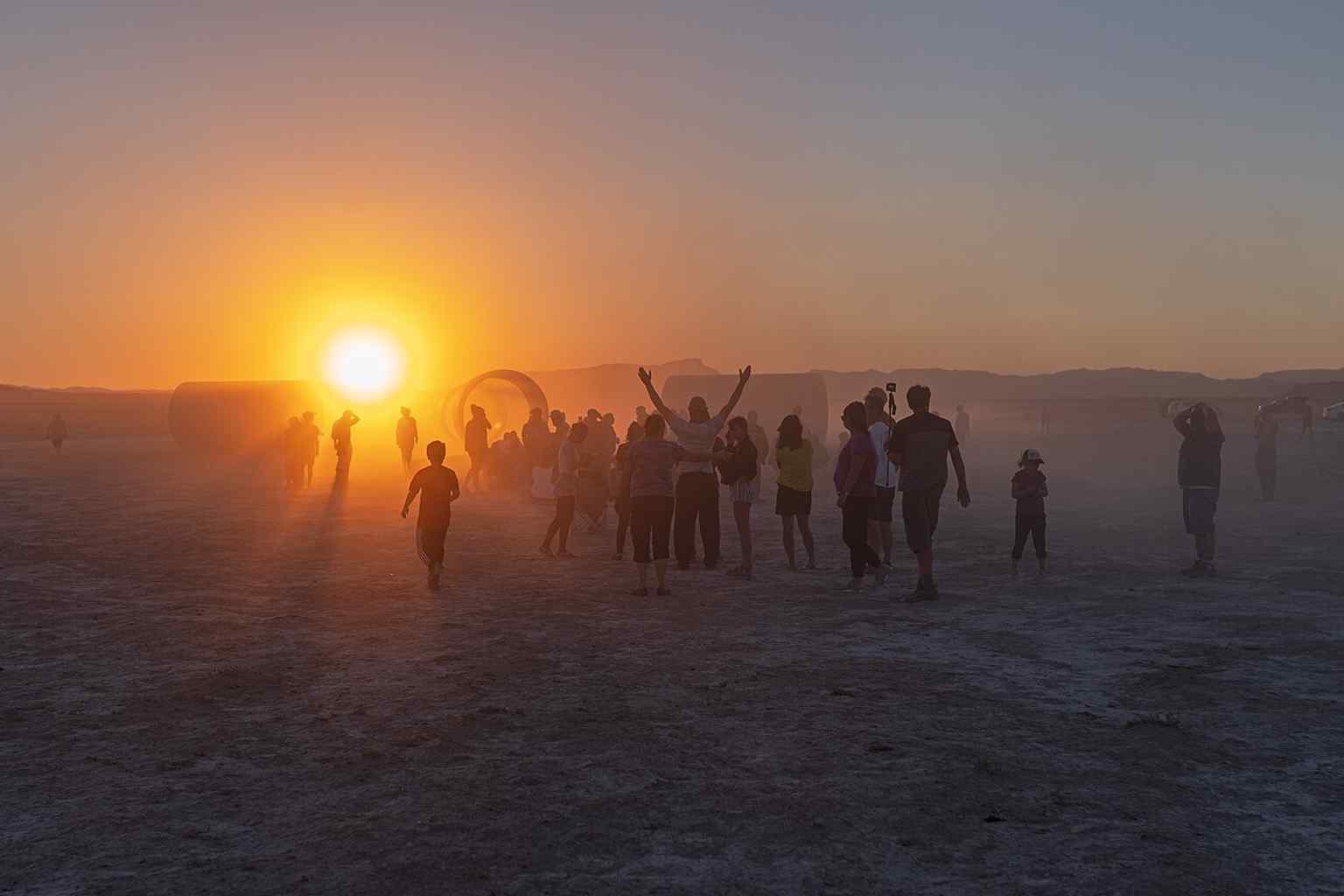
Nancy Holt’s Sun Tunnels in Utah, one of Dia’s major land art sites and a favorite for the summer solstice.Photo: Matthew.kowal, Wikimedia Commons, CC BY-SA 4.0. Cropped & resized. Look for the warm brick facade, the rounded Romanesque arches, and the distinctive scalloped roofline that gives this church a soft, almost rippling silhouette. This is the…Read moreShow less
Open dedicated page →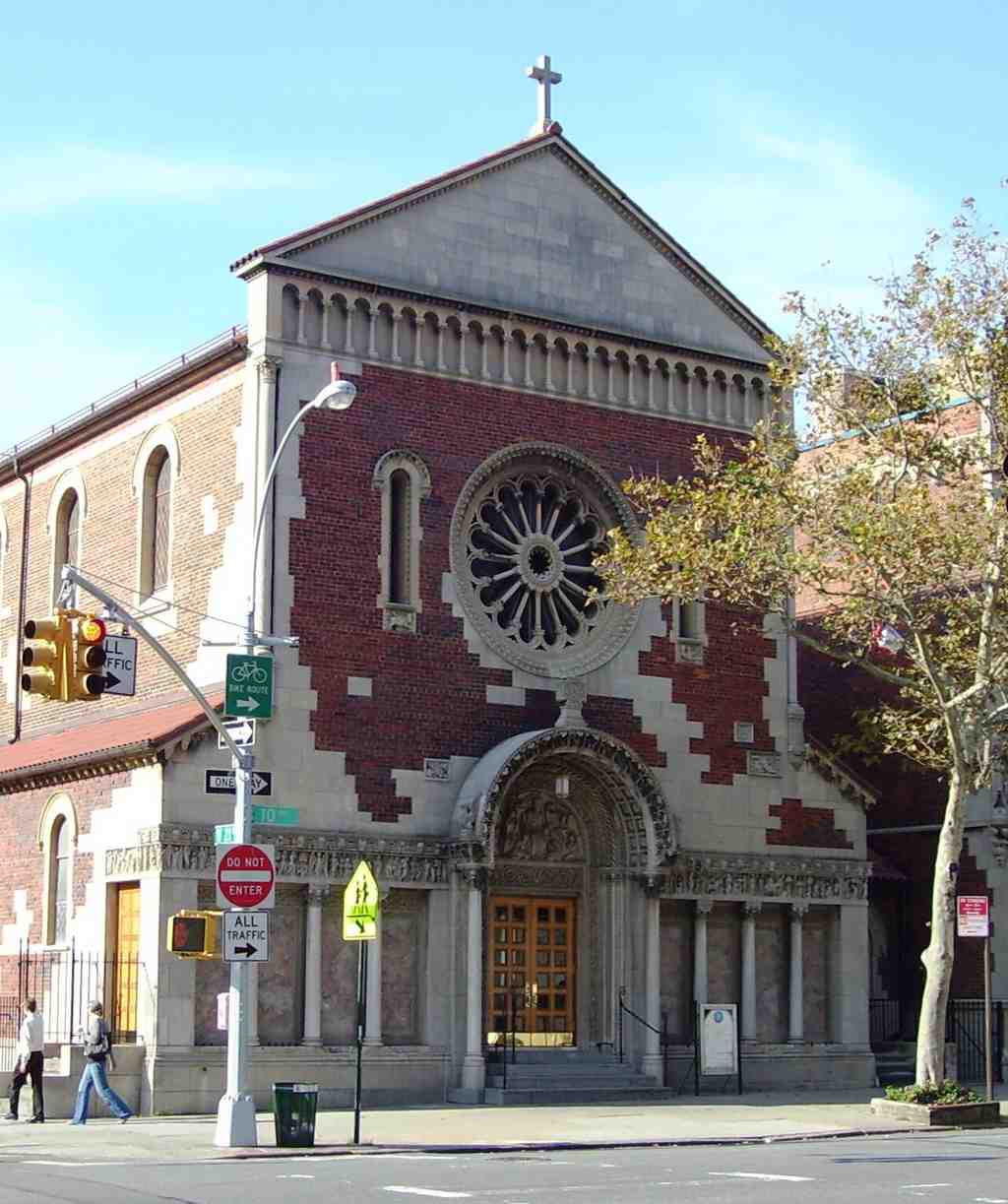
Church of the Guardian AngelPhoto: Beyond My Ken, Wikimedia Commons, CC BY-SA 4.0. Cropped & resized. Look for the warm brick facade, the rounded Romanesque arches, and the distinctive scalloped roofline that gives this church a soft, almost rippling silhouette.
This is the Church of the Guardian Angel, a Roman Catholic parish at one hundred ninety-three Tenth Avenue, and its story is pure Chelsea: labor, migration, faith, education, and reinvention all pressed into one block. The parish began in eighteen eighty-eight, when the Reverend William A. O’Neill created it for workers on the nearby Hudson River piers. Picture that neighborhood then... longshoremen, carts, freight, the smell of the river, and a church trying to hold a community together in the middle of all that motion.
The first church stood on West Twenty-third Street and Bishop Conroy dedicated it on the tenth of June, eighteen eighty-eight. By nineteen ten, George H. Streeton had designed a replacement on that same site, and a year later the parish opened a school. By nineteen fourteen, the parish counted about three thousand Catholics. Its property was valued at sixty thousand dollars, which is roughly one point nine million dollars today, and remarkably, it carried no debt. That is a neighborhood congregation pulling together in a big way.
Then came a Chelsea twist. In the nineteen thirties, the New York Central Railroad pushed through the elevated freight line we now know as the High Line, and the old church had to go. According to parish history, the railroad paid for the move. So this church rose here in nineteen thirty, with architect John Van Pelt giving it a Southern Sicilian Romanesque look. Romanesque means rounded arches and solid, weighty forms, a style that feels grounded and protective. Van Pelt added something extra too: that scalloped outline and decorative energy that critics compared to early sculpture at Moissac in France, with a touch of Moorish influence from the artistic traditions of Islamic Spain and North Africa.
And that tension is still deliciously visible. The American Institute of Architects guide praised how the church’s brick and limestone front works with the more Tuscan, village-like parish buildings beside it. But it also noted how snugly the church sits against the High Line. They were born around the same time, yet the church seems to stare back at that industrial structure like an old neighbor with a very long memory.
The school remained a major part of parish life for generations, later appearing in the documentary Class Divide and in the video We Are One, before the Archdiocese announced its closure in twenty twenty-three. Even after threats of closure, the parish itself survived; in two thousand seven, the Archdiocese said Guardian Angel would remain a parish.
If you want to come back later, the church is generally open daily from nine A-M to five P-M.
It’s a beautiful reminder that in Chelsea, even a church can carry the grit of the waterfront and the drama of the railroad age in its face.
Take a moment here, and when you’re ready, we can continue on to the General Theological Seminary.
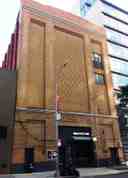
On your left, look for the red-brick industrial facade, the boxy warehouse shape, and the wide dark entry that still reads like a former loading bay. This is The Kitchen... one…Read moreShow less
Open dedicated page →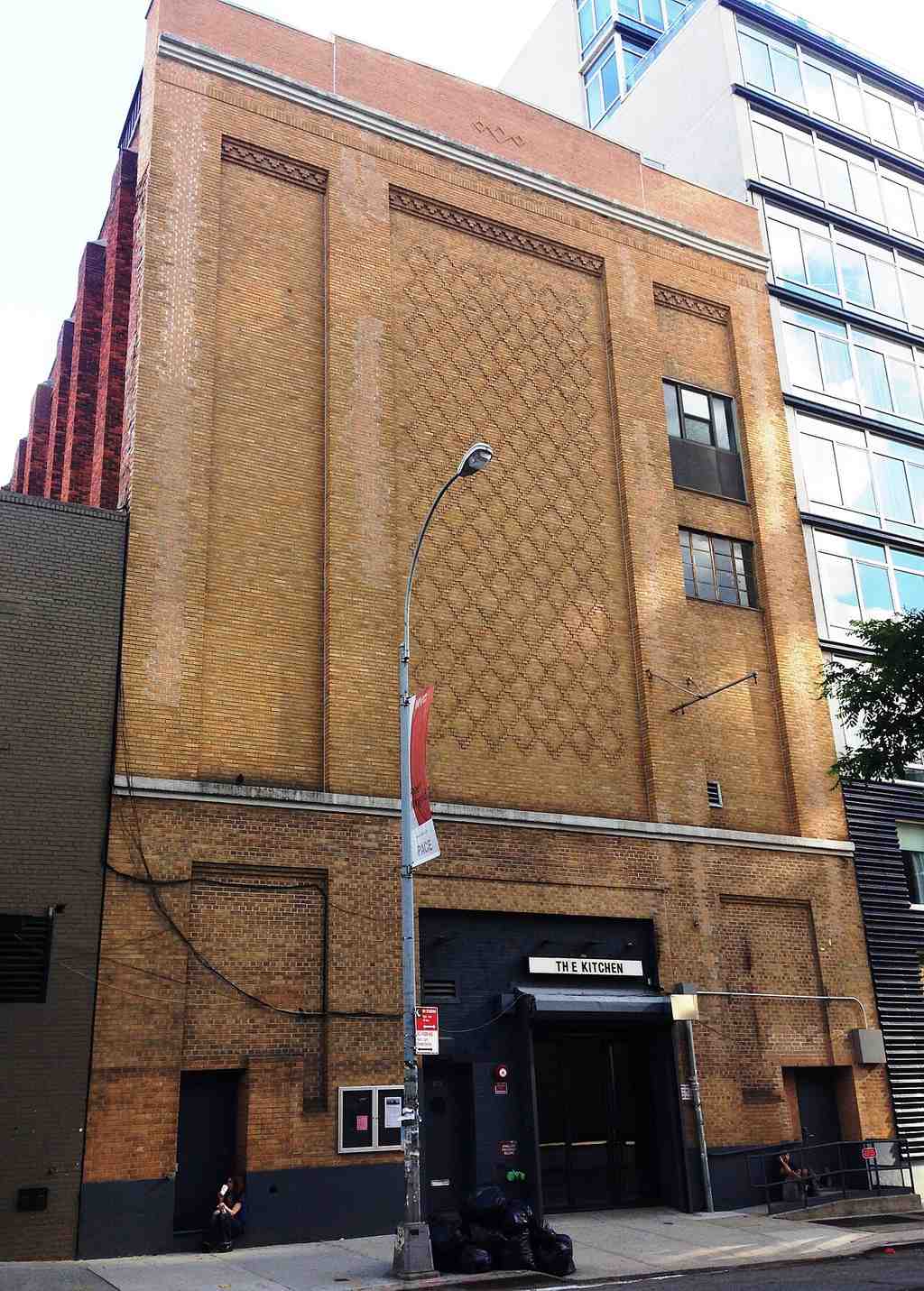
The KitchenPhoto: Beyond My Ken, Wikimedia Commons, CC BY-SA 4.0. Cropped & resized. On your left, look for the red-brick industrial facade, the boxy warehouse shape, and the wide dark entry that still reads like a former loading bay.
This is The Kitchen... one of New York’s great laboratories for weird, fearless, rule-breaking art. And I mean that literally: it started in an actual kitchen. In nineteen seventy-one, video artists Steina and Woody Vasulka were desperate for a place to show work in a world that barely took video art seriously, so they rented the kitchen at the Mercer Arts Center in Greenwich Village. That scrappy little room gave the whole institution its name, and suddenly a new kind of creative energy had a home.
At first, The Kitchen focused on video. Then it burst open. Music came in. Performance came in. Dance, film, visual art, literature... all of it. By nineteen seventy-three, it had incorporated as a nonprofit, and not long after, the building that housed the Mercer Arts Center collapsed. That disaster made the next move final, sending The Kitchen to SoHo, to Wooster and Broome, where it grew into one of the city’s premier avant-garde spaces. Avant-garde just means artists pushing past the usual boundaries, trying things before the rest of the world is ready for them.
And wow, did people try things here. The first music director, composer Rhys Chatham, helped shape a downtown scene that got loud, abrasive, and thrilling. The Kitchen became a key home for no wave - a raw, jagged art-and-music movement that rejected polish - with artists like Glenn Branca, Lydia Lunch, and James Chance. Before some names became legend, they were experimenting in rooms like this. Philip Glass worked here. Laurie Anderson did too. Meredith Monk, Brian Eno, Arthur Russell, Cindy Sherman, David Byrne and Talking Heads... the list feels almost unreal.
Some milestones still send chills through art history. In nineteen seventy-five, Steve Reich and Musicians performed a work in progress here that grew into Music for Eighteen Musicians, one of the landmark pieces of modern composition. In nineteen eighty-one, Julius Eastman premiered The Holy Presence of Joan d’Arc here. In nineteen eighty-three, the Beastie Boys played one of their early shows here. And yes... in nineteen ninety-two, Madonna filmed scenes for her EROTICA video here. The Kitchen has always loved a collision of high art, pop culture, noise, risk, and nerve.
This Chelsea building, a former ice house, became The Kitchen’s home in the spring of nineteen eighty-six. Its opening series was called New Ice Nights, a perfect wink to the building’s past. Inside, it has housed a one-hundred-fifty-five-seat black box theater - a flexible performance room with dark walls and minimal fixed scenery - plus gallery space for sound and visual exhibitions. Even the architecture suits the mission: sturdy, industrial, adaptable.
The place has survived real blows too. In two thousand twelve, Hurricane Sandy flooded The Kitchen with four feet of Hudson River water and caused about four hundred fifty thousand dollars in damage. Grants and donors helped it recover. And under leaders including Legacy Russell, who became executive director and chief curator in two thousand twenty-one, it keeps championing emerging artists and experimental work.
This place proves that some of New York’s boldest cultural revolutions started in the most unlikely room of all.
Take one more look, and when you’re ready, we can continue on to Venus.
On your left, look for a long red-brick factory block with broad rectangular windows and a metal bridge reaching over Tenth Avenue. This place is pure New York alchemy. Bakers…Read moreShow less
Open dedicated page →On your left, look for a long red-brick factory block with broad rectangular windows and a metal bridge reaching over Tenth Avenue.
This place is pure New York alchemy. Bakers and biscuit makers started building here in the eighteen nineties, and in eighteen ninety-eight several companies merged into the National Biscuit Company, better known as Nabisco. Inside this very complex, workers helped invent and produce the Oreo... which means one of America’s most famous cookies began life right here in Chelsea. That is such a wonderfully New York story: industry, ambition, and a sweet tooth all packed into one block.
And it really is one block. Chelsea Market fills the entire stretch between Ninth and Tenth Avenues and Fifteenth and Sixteenth Streets. What seems like one giant building is actually a patched-together family of nineteen separate structures, most of them built with heavy timber framing, which means thick wooden beams carrying the weight, and wrapped in sturdy brick facades. If you glance at the image on your screen, you can see that industrial scale and the long, muscular exterior that still reads like a working factory.
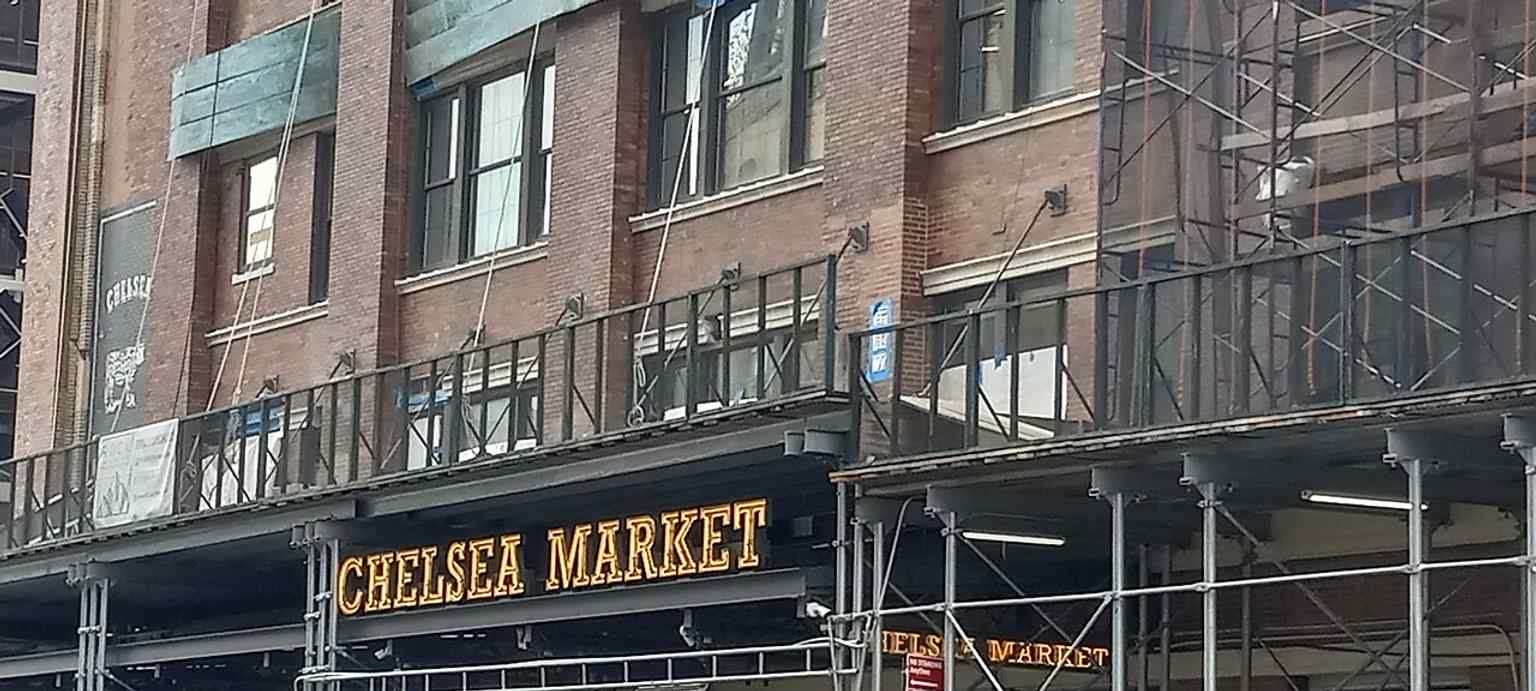
Chelsea Market’s long street-facing facade in Manhattan, reflecting the scale of the former factory complex.Photo: Kidfly182, Wikimedia Commons, CC BY 4.0. Cropped & resized. The building kept evolving. On the Tenth Avenue side, Nabisco architect Louis Wirsching Junior redesigned part of the complex in the nineteen thirties just as the High Line rail structure rose nearby. That timing mattered: freight trains could pull directly into the building on a rail siding, basically a train spur built for deliveries. Imagine flour, sugar, and packaged goods moving through here with mechanical precision, the whole place humming like a giant edible machine.
Then came the neighborhood’s downturn, Nabisco’s move to the suburbs in nineteen fifty-eight, and years of lighter industrial use. In the nineteen nineties, developer Irwin Cohen and architect Jeff Vandeberg gave the complex a brilliant second act. Instead of erasing the factory, they stitched its former back lots into a ground-floor concourse and kept the industrial bones. If you peek at the interior photo in the app, those reused brick arches tell the story beautifully.
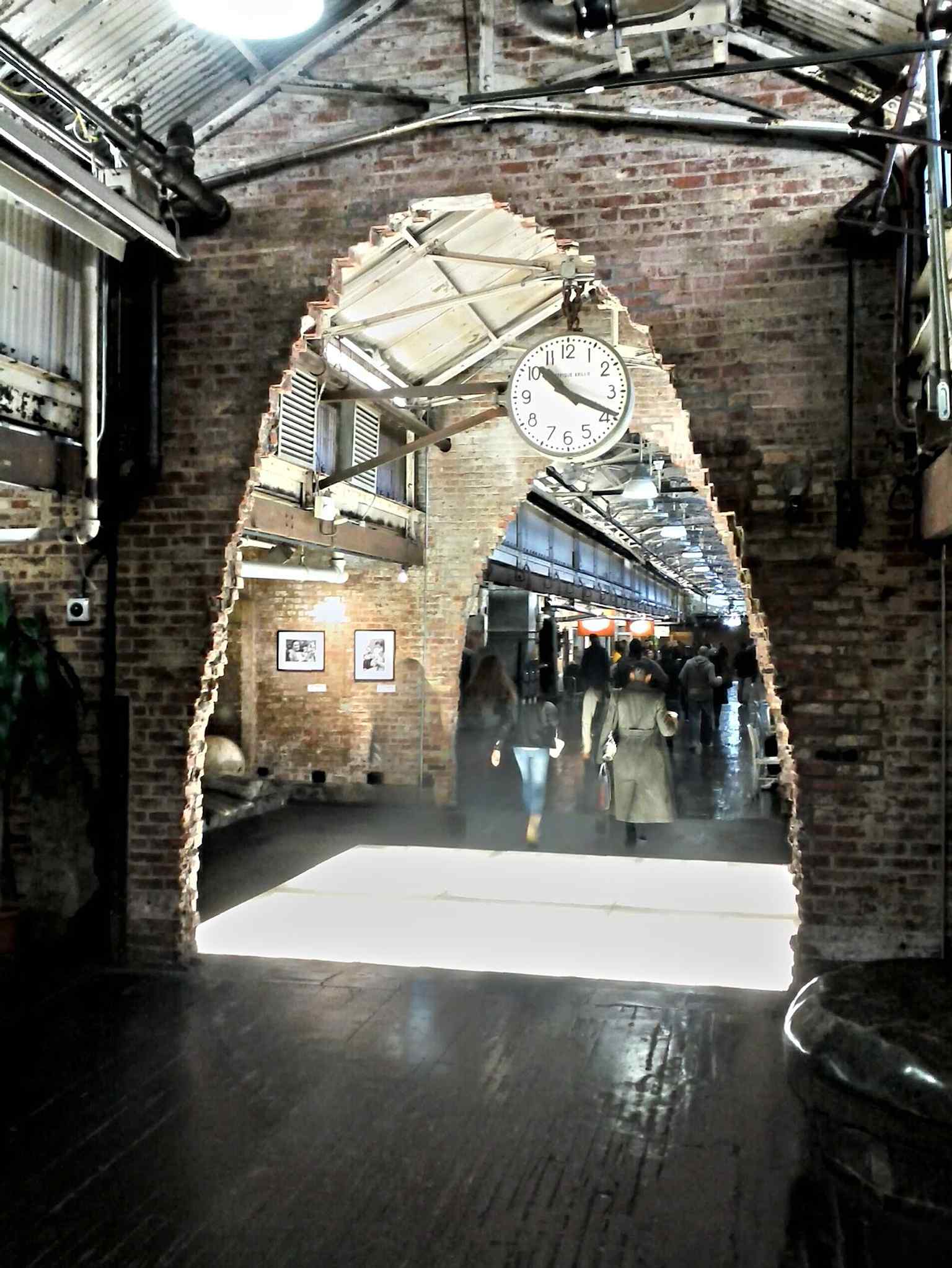
A brick archway inside the market’s main hall, part of the reused industrial architecture from the Nabisco era.Photo: Grendelkhan, Wikimedia Commons, CC BY-SA 3.0. Cropped & resized. Behind these walls now, food and media live side by side in a way that feels almost theatrical. Vendors sell seafood, produce, bread, cheese, olive oil, chocolate, and flowers, while restaurants turn those ingredients into meals under the same roof. That’s the market’s secret engine: a symbiotic relationship, meaning the shops and eateries help feed each other’s business. Upstairs, office tenants have included Food Network, YouTube, Google, Oxygen Network, and N-Y-1, and Food Network once filmed Iron Chef America and Emeril Live right here. In twenty eighteen, Alphabet, Google’s parent company, bought Chelsea Market for more than two point four billion dollars, one of the most expensive single-building real estate deals in New York history.
And threading through all of this is the High Line on the Tenth Avenue side, plus that bridge connection to Eighty-Five Tenth Avenue... old factory infrastructure turned into a new urban ecosystem. No wonder this block sits inside the Gansevoort Market Historic District.
If you want to step inside later, Chelsea Market is generally open every day from seven in the morning to ten at night. Chelsea Market turns a cookie factory into a living collage of food, media, and memory. When you’re ready, we’ll continue on to the Atlantic Theater Company.
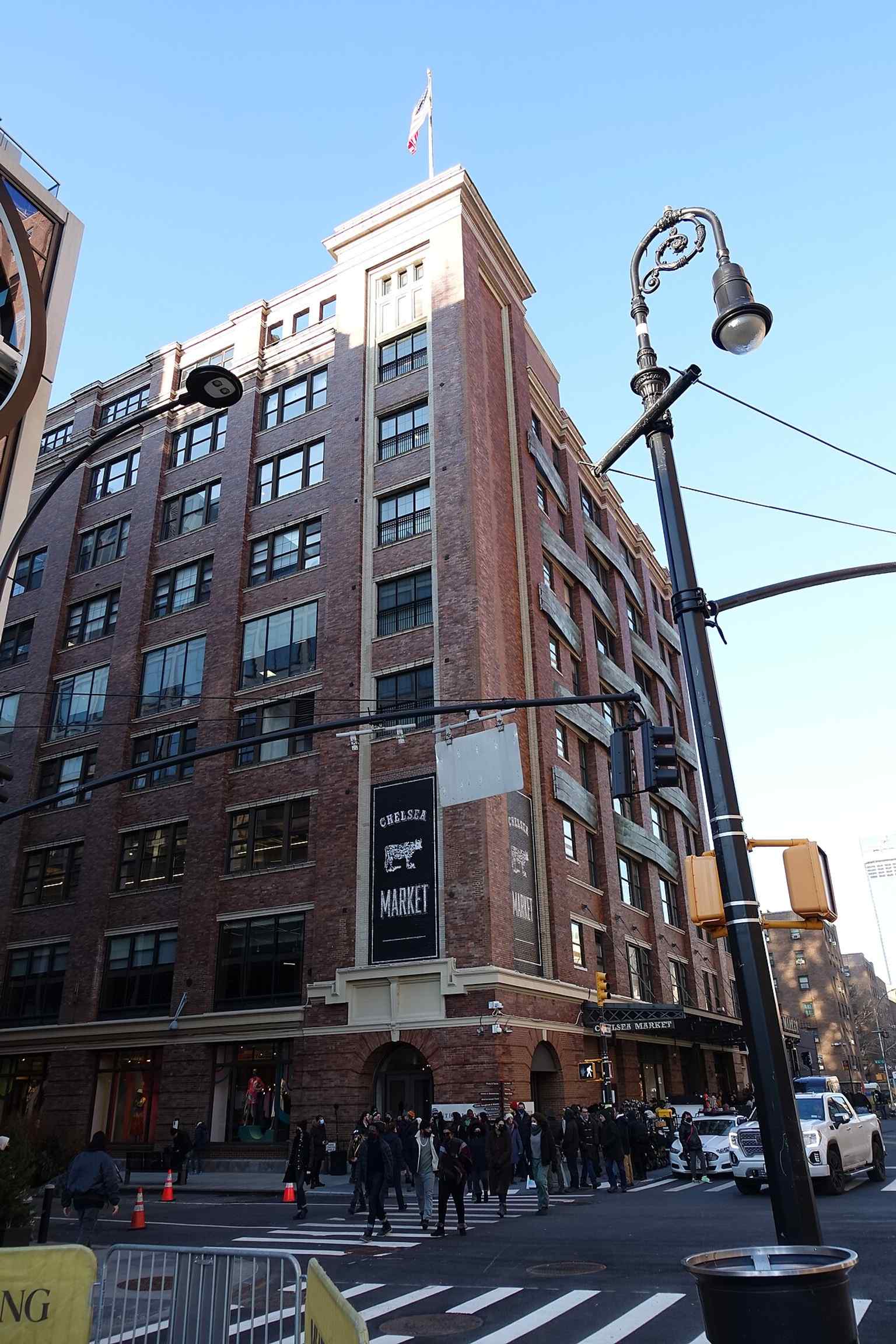
A clear view of the building’s east end at 9th Avenue and 15th Street, showing how Chelsea Market fills a whole city block.Photo: Tdorante10, Wikimedia Commons, CC BY-SA 4.0. Cropped & resized. Look for a red-brick church with a long rectangular body, a square side tower, and a spare facade marked by only a few windows. This stop tells a wonderful story of grit and…Read moreShow less
Open dedicated page →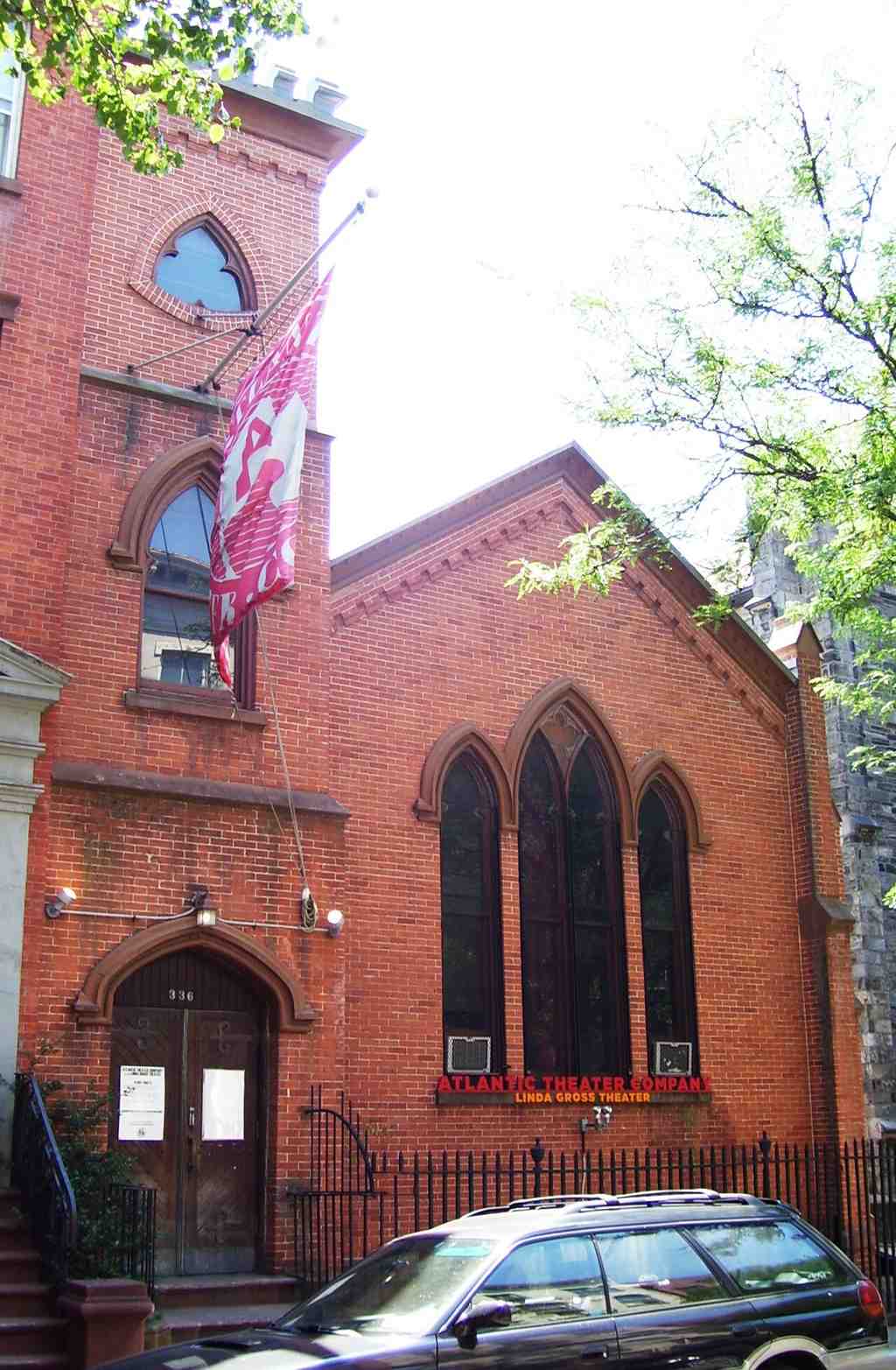
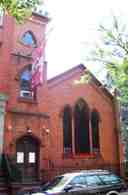
Atlantic Theater CompanyPhoto: Beyond My Ken, Wikimedia Commons, CC BY-SA 4.0. Cropped & resized. Look for a red-brick church with a long rectangular body, a square side tower, and a spare facade marked by only a few windows.
This stop tells a wonderful story of grit and reinvention. In the spring of nineteen twenty-seven, architects J. P. L. Hendriks and H. C. M. van Beers set out to create Saint Anna Church in Amstelveen, then still part of Nieuwer-Amstel. Even the contractor had to be a Catholic in good standing, so the job went to Doedens and Schilder from ’t Zand. And here is the human part I love: chaplain P. H. Meijnema spent five full years begging and fundraising inside the parish before Bishop Aengenent finally consecrated the church on the twenty-third of August, nineteen twenty-eight, with Mayor Arie Colijn there for the celebration.
A Dutch newspaper called De Tijd practically swooned over it, praising its fresh, sharp outlines in a flat open landscape. Inside, the church could hold seven hundred worshippers in an eighteen-by-thirty-five-meter hall with no columns interrupting the space. That mattered: everyone could see the three simple marble altars and the broad presbytery, the area around the main altar. The paper even singled out the electric lighting as a design feature, which in nineteen twenty-eight felt thrillingly modern. If you glance at the image on your screen, you can catch that bold red-brick confidence and the tower on the north side for yourself.
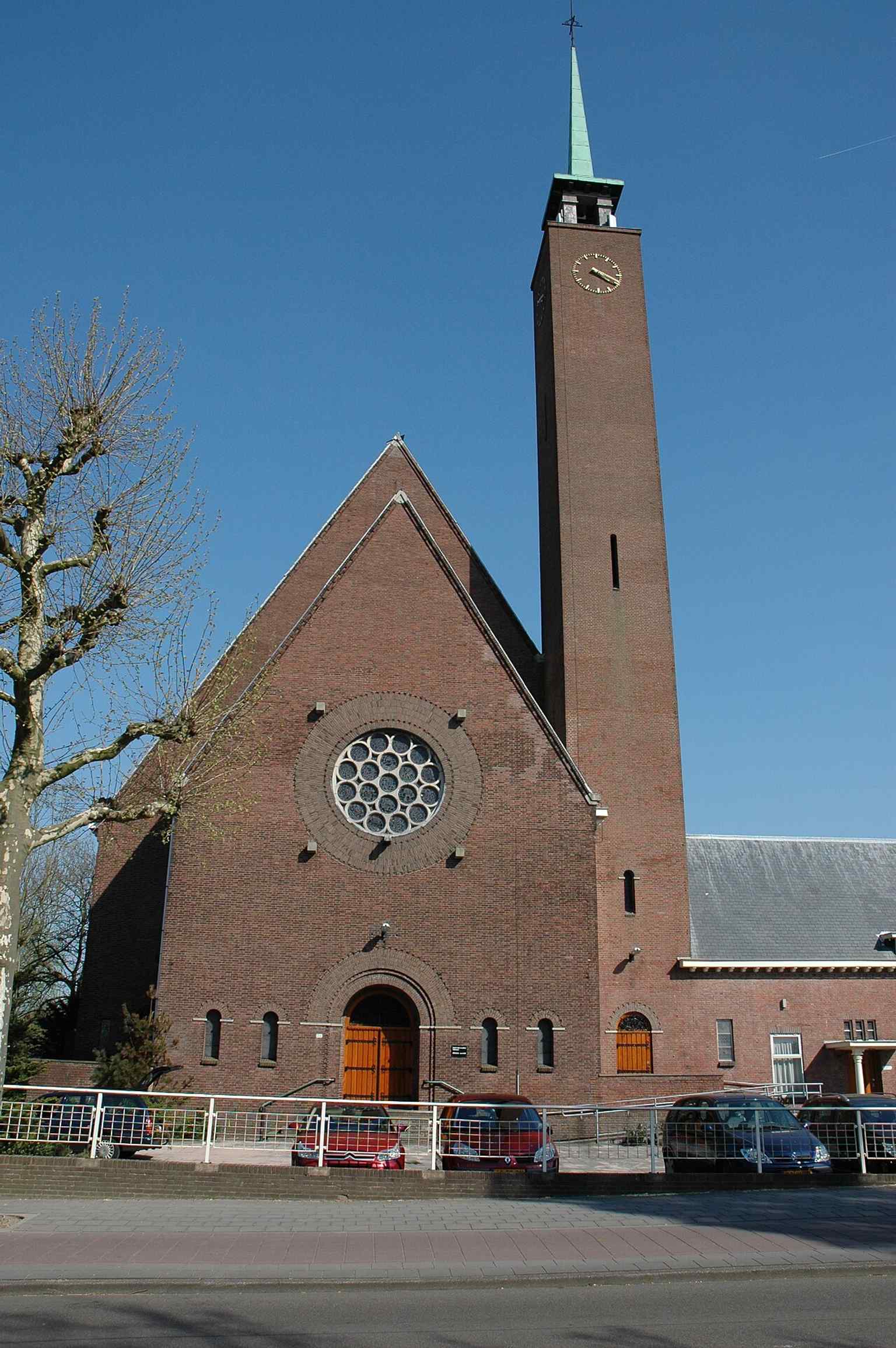
The St. Anna Church in Amstelveen, showing the red-brick exterior of the parish that was later caught between the A9 and the Amsterdamseweg.Photo: Rokus C, Wikimedia Commons, CC BY 3.0. Cropped & resized. Then came the drama. In January of nineteen seventy-six, a violent storm tore the roof right off. Church leaders blamed air currents created by the nearby A-nine highway. Repairs cost four hundred thousand guilders, roughly half a million euros in today’s money. Imagine that crash of slate and timber.
And still, the building endured. Amstelveen named it a municipal monument in two thousand ten. After the last Eucharist in two thousand eleven, demolition threatened it, but the fight slowed that down. By two thousand seventeen, it had a new life: brewery, tasting room, meeting spaces, even an event stage. That is a beautiful Chelsea kind of story, isn’t it... a sacred space learning a new rhythm.
If you ever want to return, it’s generally open daily from nine in the morning until ten at night.
Some buildings survive by changing their song. When you’re ready, let’s continue to the next stop.
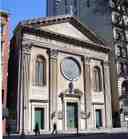
On your right, look for the pale stone church facade with its broad rectangular front, classical lines, and the distinctive round rose window set above the entrance. This church…Read moreShow less
Open dedicated page →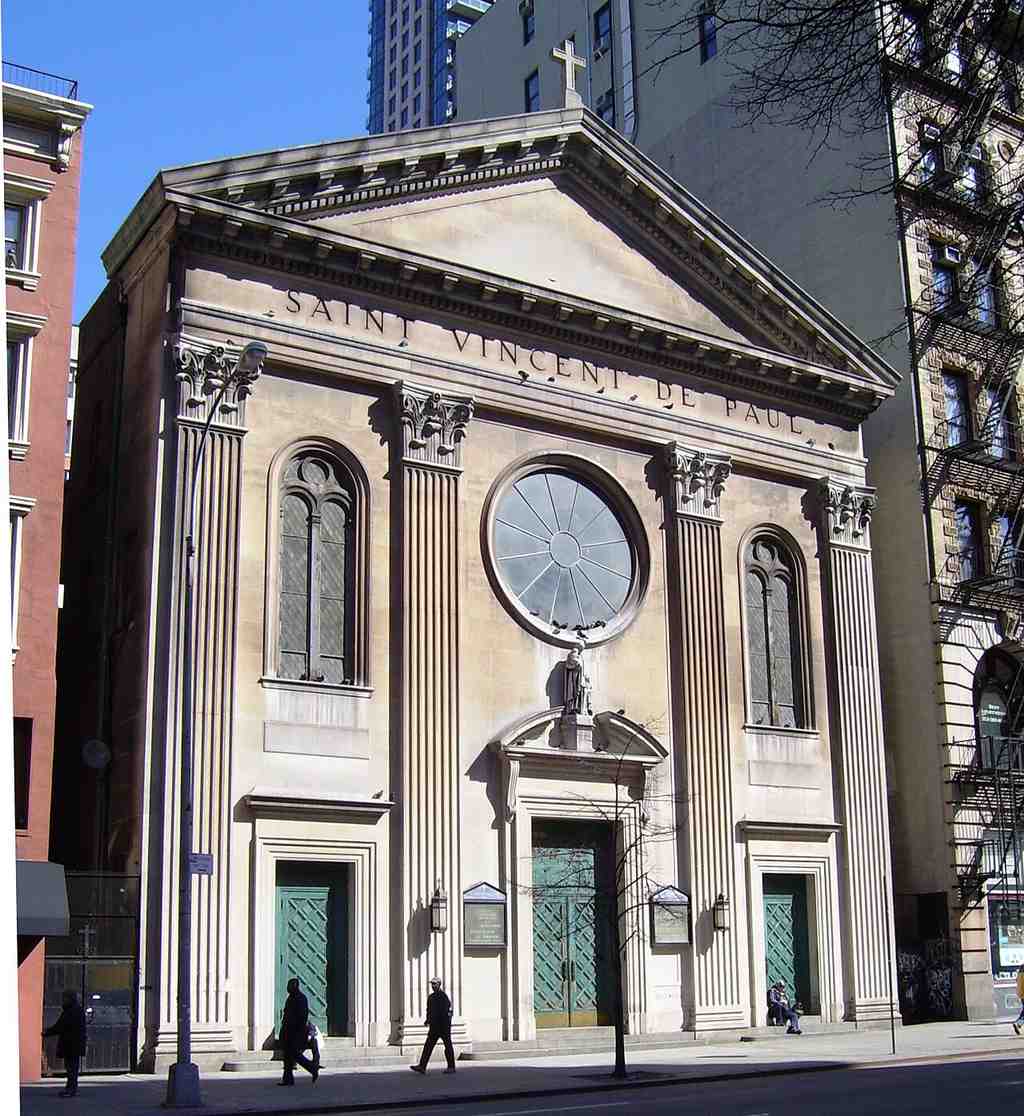
St. Vincent de Paul ChurchPhoto: Beyond My Ken, Wikimedia Commons, CC BY-SA 4.0. Cropped & resized. On your right, look for the pale stone church facade with its broad rectangular front, classical lines, and the distinctive round rose window set above the entrance.
This church held far more than Sunday worship... it became the beating French-speaking heart of Catholic New York. St. Vincent de Paul began in eighteen forty-one as a national parish, which means it served a language community rather than just the people living on one set of streets. Its story really starts in France, where the French Revolution had shattered church life. In response, a priest named Jean-Baptiste Rauzan founded the Fathers of Mercy in Lyon in eighteen oh eight. These priests went out mission-style, even door to door, trying to rebuild faith from the ground up.
Then came a dramatic New York chapter. In eighteen thirty-nine, Charles de Forbin-Janson, an exiled French bishop, arrived in the city and discovered something startling: many French-speaking Catholics had started attending Protestant Huguenot churches simply because the services were in French. So he threw down a challenge during Mass at St. Peter’s Church and urged the French Catholic community to create its own church. He backed that challenge with real money too... six thousand five hundred dollars from his own fortune, roughly more than two hundred thousand dollars today.
The first parish stood downtown, but by the eighteen fifties many French residents had moved here to Chelsea, drawn by industry and work. The congregation bought land here, and architect Henry Engelbert designed this new church. The Civil War interrupted construction, but the parish finished it in eighteen sixty-nine. And once this church arrived, Chelsea became a magnet for French life, helping pull in other institutions, including the old French Hospital.
One of the most moving figures here was Father Annet Lafont, the first pastor. He did not stop at sermons. He founded an orphanage, homes for the elderly, and residences for young women looking for work in the city. He also pushed for racial equality with extraordinary courage. From the beginning, this church and its school welcomed Black worshippers and students alongside everyone else. When white families threatened to pull their children out, Lafont personally taught Black children in his own residence. Pierre Toussaint, the Haitian-born former slave who became a celebrated hairdresser and philanthropist, helped support that work. He is now being considered for sainthood.
And the cultural life here... wow. Edith Piaf married here in nineteen fifty-two, with Marlene Dietrich as maid of honor. The great opera singer Armand Castelmary received his funeral Mass here after dying onstage at the Metropolitan Opera. After World War One, the church created a memorial for French and American veterans. Then on the sixth of June, nineteen forty-four, more than one thousand French exiles and French soldiers packed in for a noon Mass, praying as Allied troops began liberating France. Later, Charles de Gaulle himself attended the church’s rededication.
Even after the Fathers of Mercy left in nineteen sixty, weekly Mass in French continued, serving immigrants from about sixty-five nations, especially from West Africa in recent decades. The parish closed in twenty thirteen, and many former parishioners still feel that loss deeply.
Though the parish itself closed in twenty thirteen, the building still carries that living memory with it. When you’re ready, we can continue on to the next stop.
Take in this façade for a second... this is the former Church of the Holy Communion, and it has lived several New York lives without ever losing its dramatic presence. Richard…Read moreShow less
Open dedicated page →Take in this façade for a second... this is the former Church of the Holy Communion, and it has lived several New York lives without ever losing its dramatic presence. Richard Upjohn designed it in the Gothic Revival style - a nineteenth-century return to the pointed arches, rough stone textures, and vertical lift of medieval churches - and he raised it here between eighteen forty-four and eighteen forty-five. Reverend William Muhlenberg, the church’s founder, worked closely with him and believed Gothic architecture was the truest visual language of Christianity.
What made this place such a breakthrough was its attitude. Upjohn did not give New York a neat, symmetrical box. He gave it an asymmetrical church - meaning the parts do not mirror each other perfectly - inspired by a small medieval English parish church. Even the brownstone feels alive: those blocks were chosen for placement at random, so the surface has this wonderfully irregular, almost hand-laid rhythm. If you glance at your screen, image four helps that unusual stone pattern really pop.
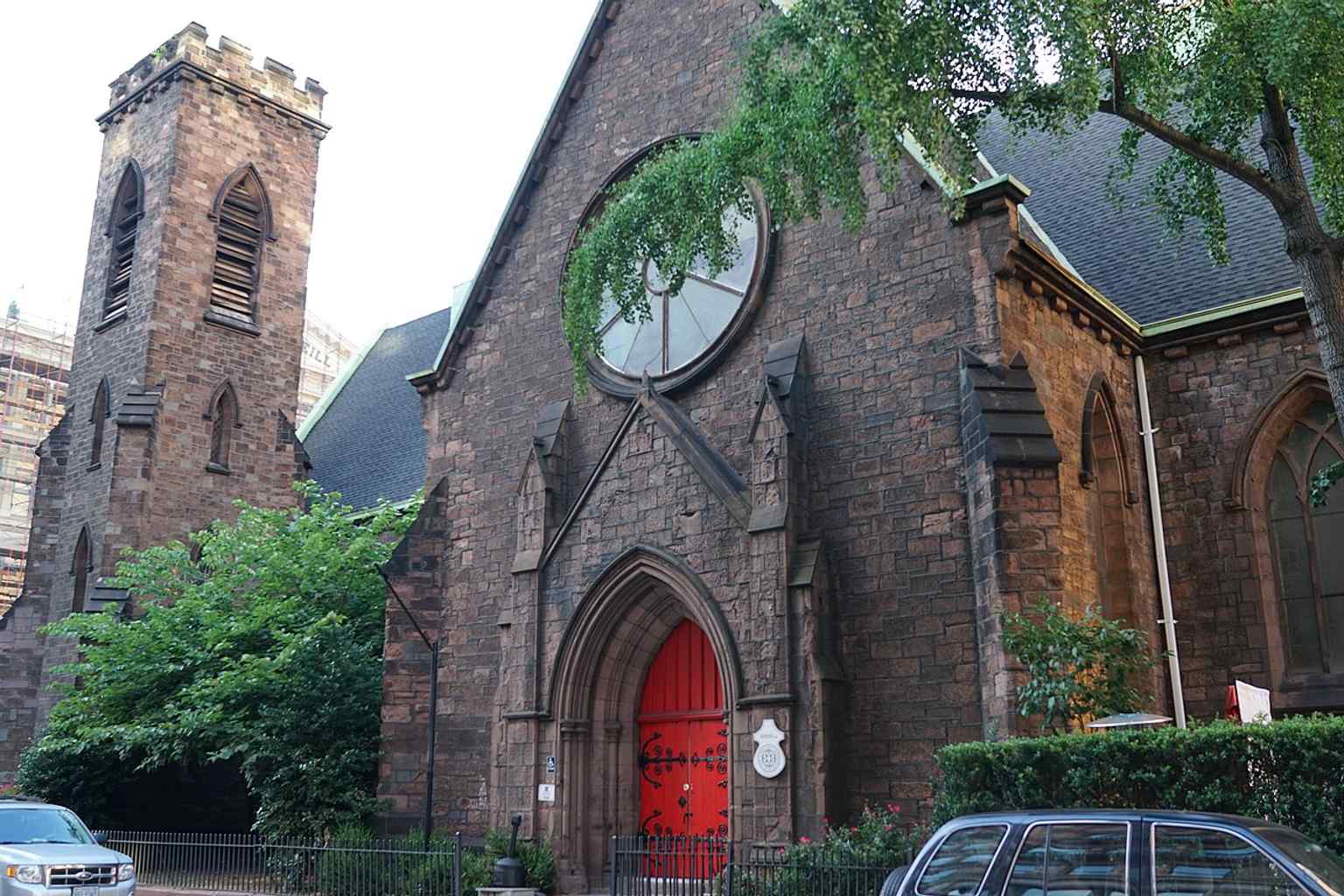
This side profile emphasizes the church’s asymmetrical massing and random brownstone patterning, two features that made it an influential 19th-century design.Photo: Paranoid123, Wikimedia Commons, CC BY-SA 4.0. Cropped & resized. When this church opened, sixth avenue still belonged to a fashionable residential neighborhood. Then Manhattan surged north, and this stretch turned into the Ladies’ Mile, packed with giant department stores and dry-goods emporia - those enormous shops that sold fabric, clothing, and household goods. If you want a quick visual of that transformation, check the before-and-after image in the app.
Inside, the church carried serious musical prestige too. Organists and choirmasters like Lynnwood Farnam and Carl Weinrich filled the building with sacred music in the early twentieth century. Then the story swerved. In nineteen seventy-five, the parish merged with others, and soon this church became home to the Lindisfarne Association, a cultural center where poets like Gary Snyder and Robert Bly read their work, Paul Winter and David Hykes performed concerts, theatre figures lectured, philosophers spoke, and teachers explored sacred architecture with audiences hungry for big ideas. Imagine that - a Gothic church becoming a crossroads for poetry, religion, philosophy, and experimental culture.
Then came the wildest reinvention. In nineteen eighty-three, entrepreneur Peter Gatien turned the church into the Limelight nightclub. Yes - stained-glass spirit, nightclub pulse. The building later inspired Steve Taylor’s song “This Disco (Used to be a Cute Cathedral),” which tells you New Yorkers absolutely noticed the irony. After police trouble and drug-abuse allegations, the club closed, reopened as Avalon, later became a retail marketplace, and then a gym. Through all of it, the landmark held its corner.
The city recognized that importance early: New York City designated it a landmark in nineteen sixty-six, and the National Register of Historic Places added it in nineteen eighty. The app lists hours here as eleven to six on Monday, nine to six Tuesday through Saturday, and eight to three on Sunday.
This place feels like Chelsea in one building: devotion, art, commerce, nightlife, and reinvention. When you’re ready, keep going and we’ll head toward the National Museum of Mathematics.
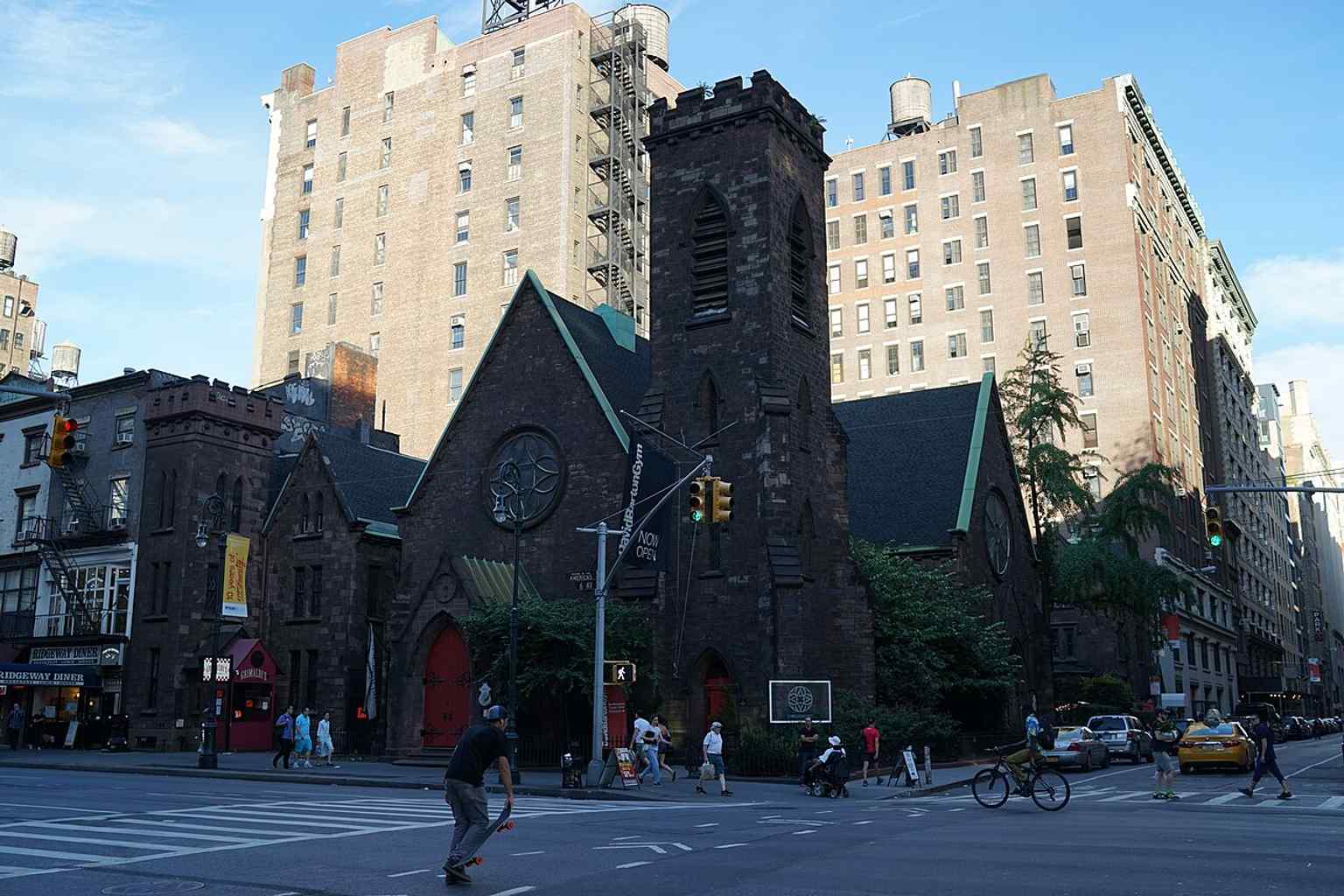
The corner view shows the church complex on Sixth Avenue and West 20th Street, where Richard Upjohn’s Gothic Revival design still anchors the Flatiron District.Photo: Paranoid123, Wikimedia Commons, CC BY-SA 4.0. Cropped & resized. 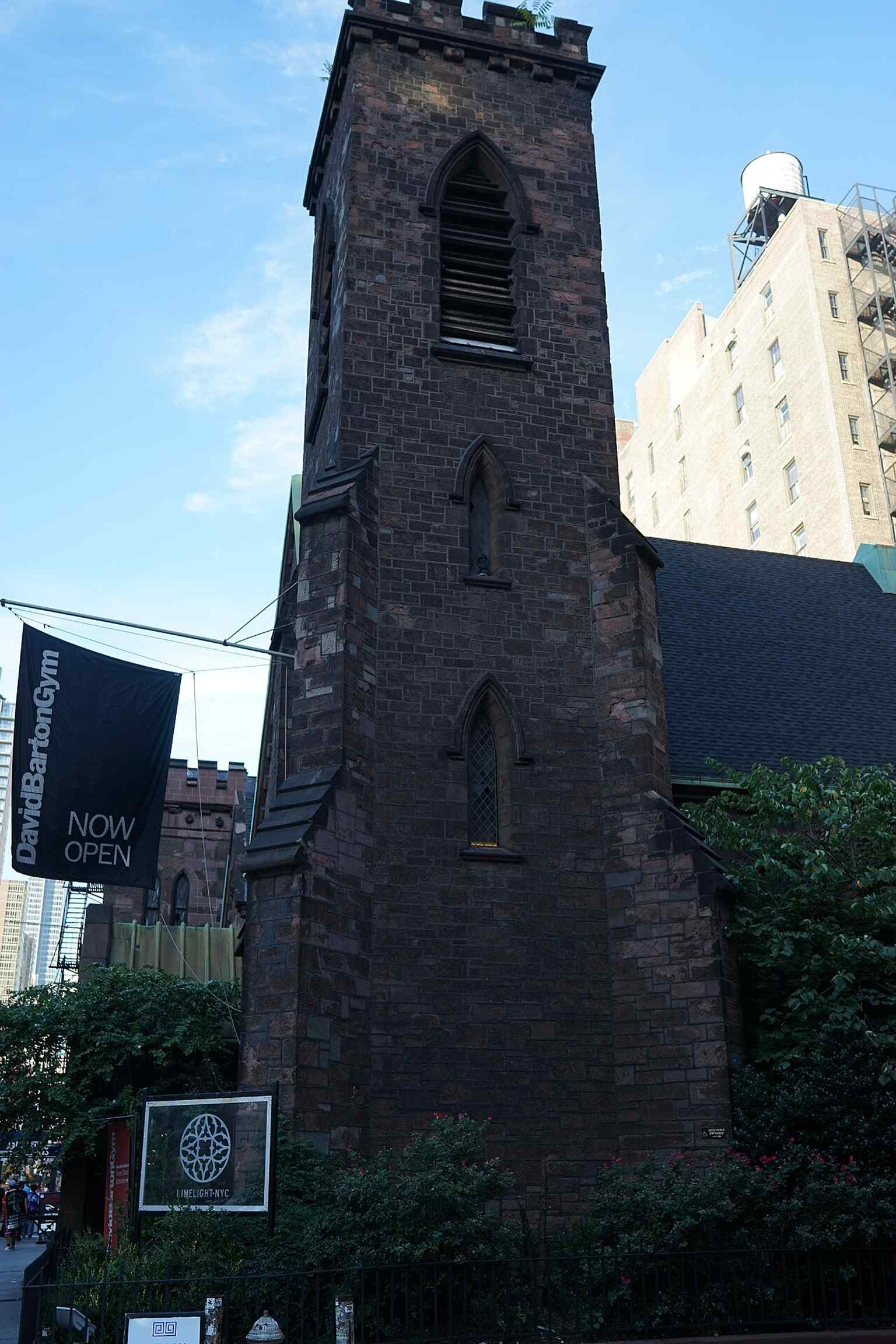
A front view of the former Church of the Holy Communion, the pioneering 1840s Gothic Revival landmark that was once an Episcopal parish church.Photo: Paranoid123, Wikimedia Commons, CC BY-SA 4.0. Cropped & resized. 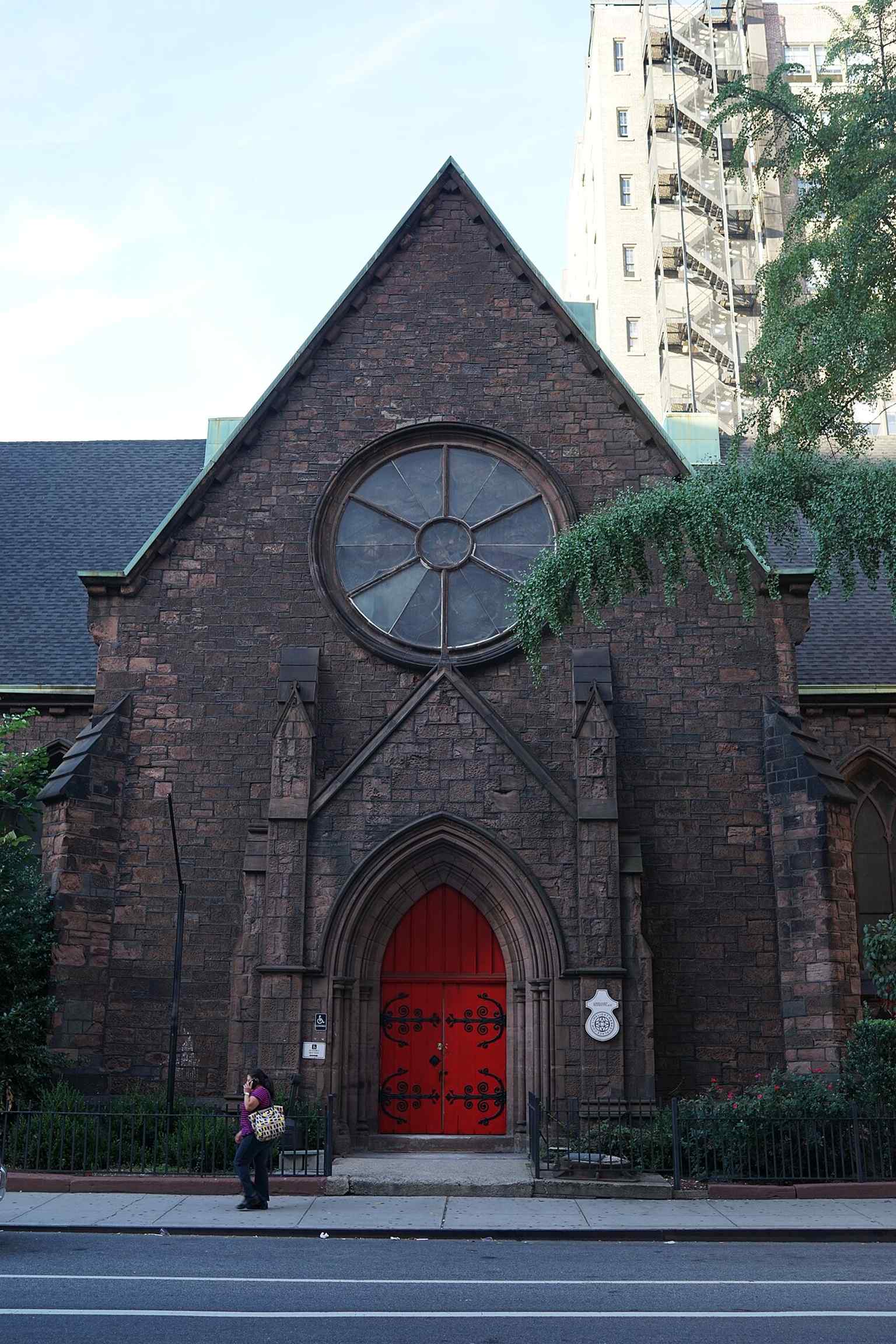
The pointed church portal highlights the medieval-inspired Gothic style William Muhlenberg and Richard Upjohn chose to express the building’s Christian identity.Photo: Paranoid123, Wikimedia Commons, CC BY-SA 4.0. Cropped & resized. Look for a modern glass entrance set into a broad street-level facade, with tall rectangular panes and the MoMath name marking the doorway. This is the National Museum of…Read moreShow less
Open dedicated page →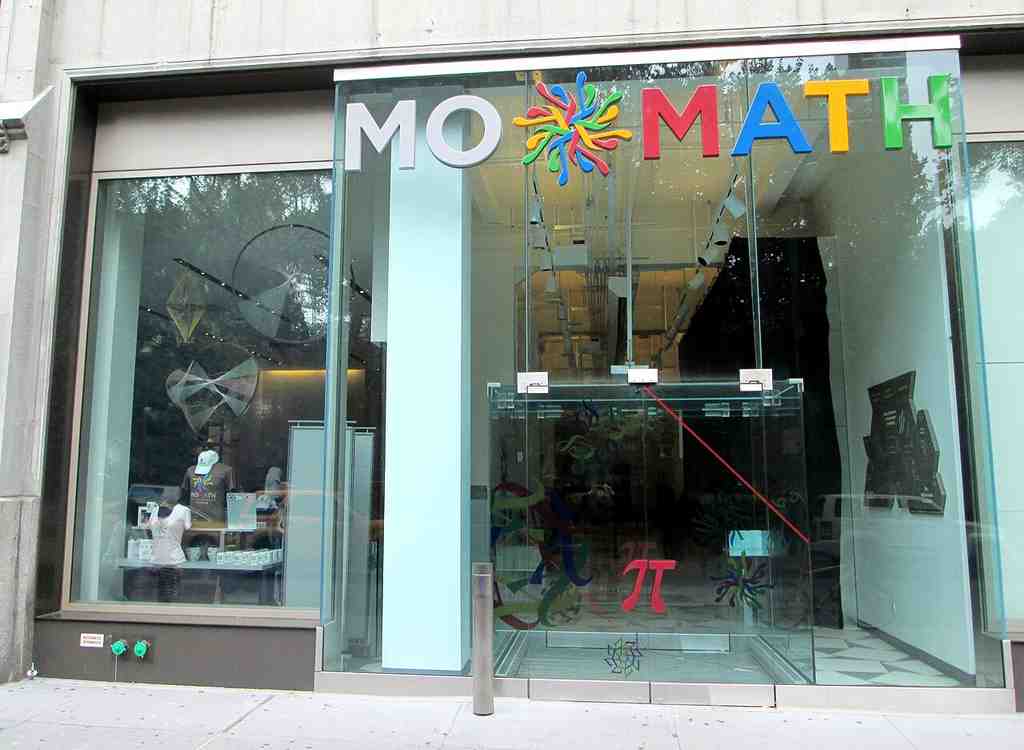
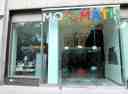
National Museum of MathematicsPhoto: Beyond My Ken, Wikimedia Commons, CC BY-SA 4.0. Cropped & resized. Look for a modern glass entrance set into a broad street-level facade, with tall rectangular panes and the MoMath name marking the doorway.
This is the National Museum of Mathematics, or MoMath, and it treats numbers less like homework and more like choreography. Right here in Chelsea, the museum carries a mission that sounds simple and radical at the same time: to enhance public understanding and perception of mathematics.
The story begins with a real loss. In two thousand and six, the Goudreau Museum on Long Island closed, and the United States lost its only museum devoted entirely to math. Glen Whitney and a group of supporters decided that could not be the end of the story. They secured a charter from the New York State Education Department in two thousand and nine, then raised more than twenty-two million dollars in under four years... which is pretty remarkable for a place built around equations, patterns, and ideas people often claim to fear. Their first home opened on the twelfth of December, two thousand and twelve, on East Twenty-Sixth Street, with more than thirty interactive exhibits. If you want to see that first chapter, take a peek at the image on your screen. At that point, MoMath stood alone as North America’s only museum dedicated to mathematics.
One of the key dreamers behind it was George W. Hart, a co-founder who served as chief of content. He spent five years designing exhibits and workshop activities, and you can feel that hands-on philosophy in everything MoMath does. This place does not ask you to admire math from a distance. It wants you to grab it, test it, and laugh with it.
Its most famous example is a tricycle with square wheels. Seriously. Have a look at that beauty on your phone. It rides smoothly because the track uses a catenary curve, which is the shape a hanging chain naturally makes before you flip it upside down. That single exhibit turns a visual joke into a lesson about geometry, motion, and the weird elegance of the physical world.
MoMath pushed that spirit far beyond its building through Math Midway, a traveling exhibition that debuted at the World Science Festival in two thousand and nine and reached more than half a million visitors across the country. Another program, Math Encounters, brought in speakers to make math feel alive through topics like origami, juggling, and even mathematical ideas in The Simpsons and Futurama. That is such a New York mix: scholarship, pop culture, and performance all in one room.
After the pandemic forced the closure of the old physical site, the museum regrouped, opened temporarily on Fifth Avenue in March of twenty twenty-four, and then announced this larger Chelsea home at six hundred thirty-five Avenue of the Americas that November. This location opened in February of twenty twenty-six. It already has over sixty interactive exhibits, and the museum plans to grow to seventy-two, including thirty-one brand-new ones. There is also an upper gallery for rotating shows inspired by mathematical art, and that same month the museum named Manjul Bhargava, a mathematician honored with one of the field’s highest prizes, as its first president.
If you want to go inside later, the museum is open every day from ten A-M to five P-M. Standing here, you can feel MoMath making a joyful case that math belongs to everyone. Take a moment here, and when you’re ready, we can continue on to the Rubin Museum of Himalayan Art.
Here it is... the Rubin Museum of Himalayan Art, once one of Chelsea’s most transporting cultural spaces. Standing out here on West Seventeenth Street, you’re looking at a place…Read moreShow less
Open dedicated page →Here it is... the Rubin Museum of Himalayan Art, once one of Chelsea’s most transporting cultural spaces. Standing out here on West Seventeenth Street, you’re looking at a place that invited New Yorkers into the worlds of Tibet, the Himalayas, the Indian subcontinent, and Central Asia through art, ritual, and storytelling. And that mission began with two collectors, Donald and Shelley Rubin, who started gathering Himalayan art in nineteen seventy-four because they didn’t just want to own these works... they wanted people to encounter them.
In nineteen ninety-eight, the Rubins paid twenty-two million dollars for this building after Barneys New York, the designer department store that had occupied it, went bankrupt. Then preservation architects Beyer Blinder Belle helped transform it into a museum, while keeping one glorious survivor from the old store: a six-story spiral staircase in steel and marble by Andree Putman. If you want a peek inside, glance at your screen now. That staircase curled right through the heart of the museum like a ceremonial path.
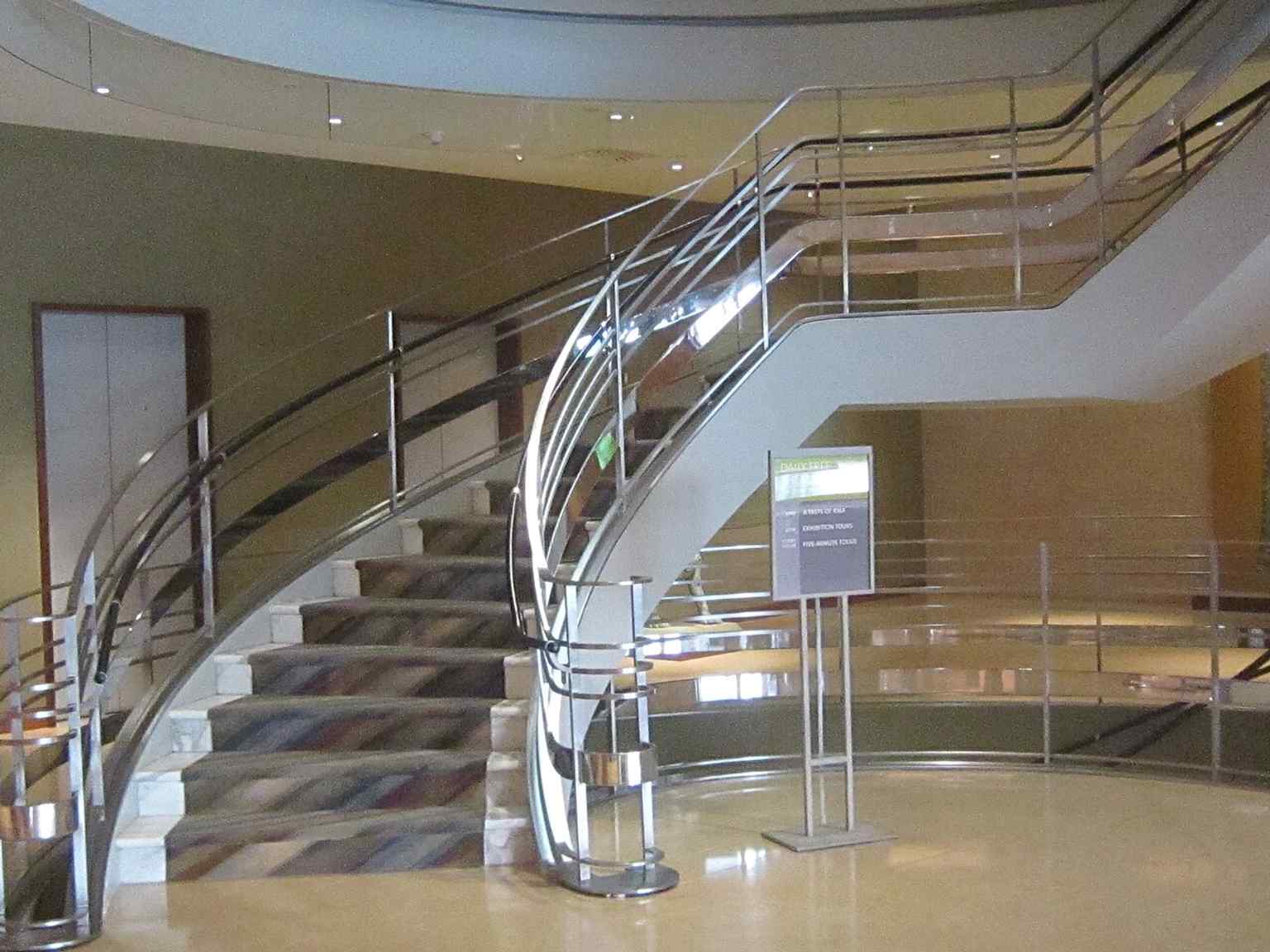
The museum’s signature spiral staircase, preserved from the former Barneys building, became the centerpiece of the six-story gallery tower.Photo: PrattJPE, Wikimedia Commons, CC BY-SA 3.0. Cropped & resized. The museum opened on the second of October, two thousand four, and it held more than one thousand objects: paintings, sculpture, textiles, and ritual objects dating from the second century to the twentieth. Ritual objects, by the way, are artworks made for spiritual practice, not just for display. That matters here, because the Rubin never treated these pieces like frozen antiques. It treated them like carriers of devotion, memory, and presence.
Its new facade on Seventeenth Street and its five gallery floors drew inspiration from Tibetan art, with museum designers Celia Imrey and Tim Culbert shaping the experience, and the legendary graphic designer Milton Glaser creating its visual identity. Inside, the museum also made room for photography, an art-making studio, a theater for multimedia performances, a café, a gift shop, and later a big Education Center. It even launched The Eighth Floor, another art project in the building.
The exhibitions could be wonderfully intense: Methods of Transcendence, The Demonic Divine in Himalayan Art, and Holy Madness, which explored siddhas - spiritual adepts in South Asian traditions, people believed to reach extraordinary insight through disciplined practice. Later shows connected art with living communities, like Living Shrines of Uyghur China.
Then came the harder chapter. Budget cuts in twenty nineteen shrank staff and programming, and the pandemic hit finances even harder. In early twenty twenty-four, the museum announced this building would close, and on the sixth of October, twenty twenty-four, it did. But listen to this... the Rubin didn’t choose disappearance. It chose motion: a global museum without walls, sending exhibitions outward through loans, partnerships, and digital work. You can see that turning point in one final image from the closing events.
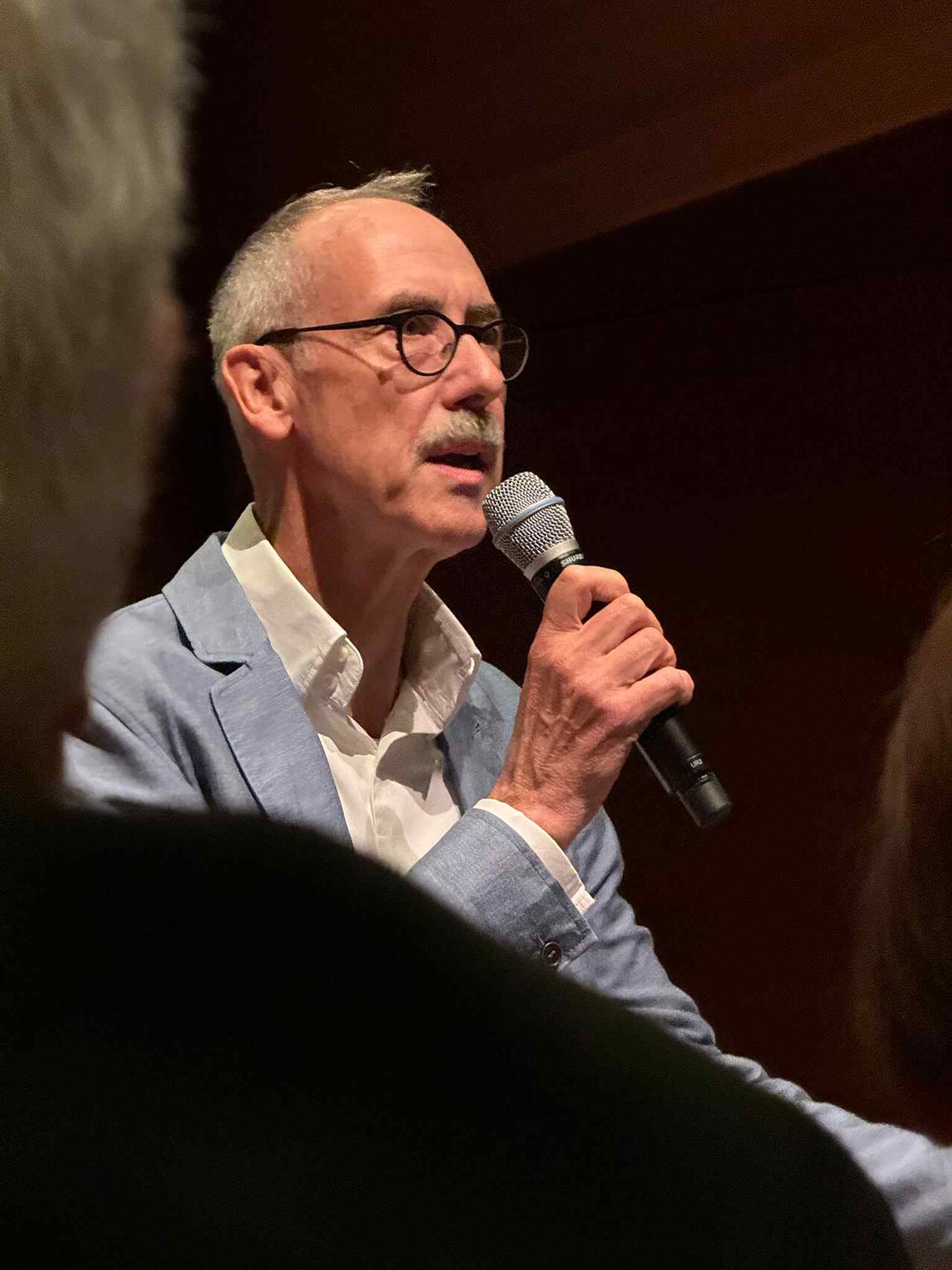
A closing-event talk from 2024, marking the end of the Rubin Museum’s physical New York home as it shifted to a museum without walls.Photo: Magpieturtle, Wikimedia Commons, CC BY 4.0. Cropped & resized. So even here, outside closed doors, the Rubin still feels alive - less like an ending, more like a prayer wheel still spinning.
Frequently asked questions
How do I start the tour?
After purchase, download the AudaTours app and enter your redemption code. The tour will be ready to start immediately - just tap play and follow the GPS-guided route.
Do I need internet during the tour?
No! Download the tour before you start and enjoy it fully offline. Only the chat feature requires internet. We recommend downloading on WiFi to save mobile data.
Is this a guided group tour?
No - this is a self-guided audio tour. You explore independently at your own pace, with audio narration playing through your phone. No tour guide, no group, no schedule.
How long does the tour take?
Most tours take 60–90 minutes to complete, but you control the pace entirely. Pause, skip stops, or take breaks whenever you want.
What if I can't finish the tour today?
No problem! Tours have lifetime access. Pause and resume whenever you like - tomorrow, next week, or next year. Your progress is saved.
What languages are available?
All tours are available in 50+ languages. Select your preferred language when redeeming your code. Note: language cannot be changed after tour generation.
Where do I access the tour after purchase?
Download the free AudaTours app from the App Store or Google Play. Enter your redemption code (sent via email) and the tour will appear in your library, ready to download and start.
If you don't enjoy the tour, we'll refund your purchase. Contact us at [email protected]
Checkout securely with 






%2013%20-%20Chelsea%20Market.jpg)


