
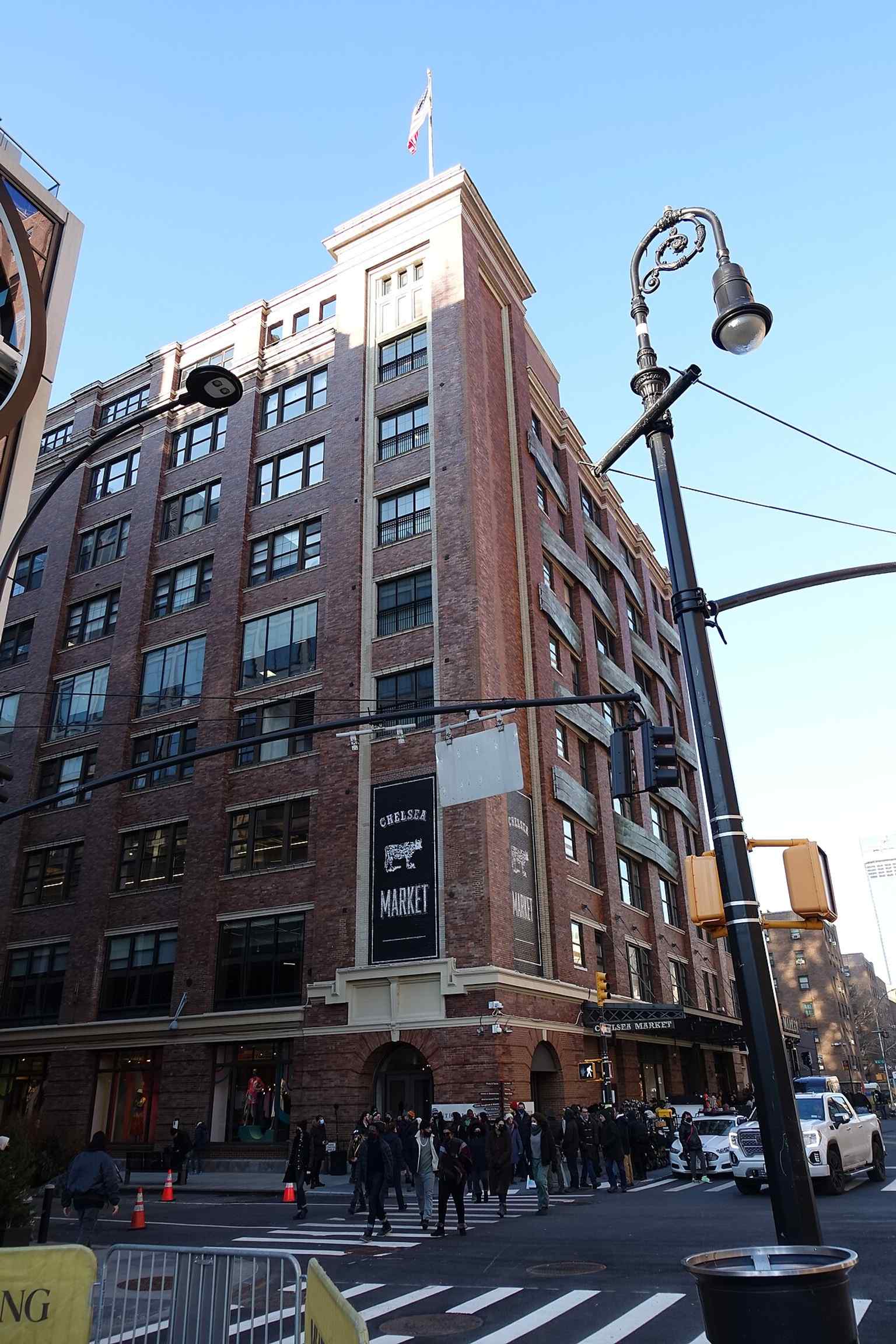
On your left, look for a long red-brick factory block with broad rectangular windows and a metal bridge reaching over Tenth Avenue.
This place is pure New York alchemy. Bakers and biscuit makers started building here in the eighteen nineties, and in eighteen ninety-eight several companies merged into the National Biscuit Company, better known as Nabisco. Inside this very complex, workers helped invent and produce the Oreo... which means one of America’s most famous cookies began life right here in Chelsea. That is such a wonderfully New York story: industry, ambition, and a sweet tooth all packed into one block.
And it really is one block. Chelsea Market fills the entire stretch between Ninth and Tenth Avenues and Fifteenth and Sixteenth Streets. What seems like one giant building is actually a patched-together family of nineteen separate structures, most of them built with heavy timber framing, which means thick wooden beams carrying the weight, and wrapped in sturdy brick facades. If you glance at the image on your screen, you can see that industrial scale and the long, muscular exterior that still reads like a working factory.
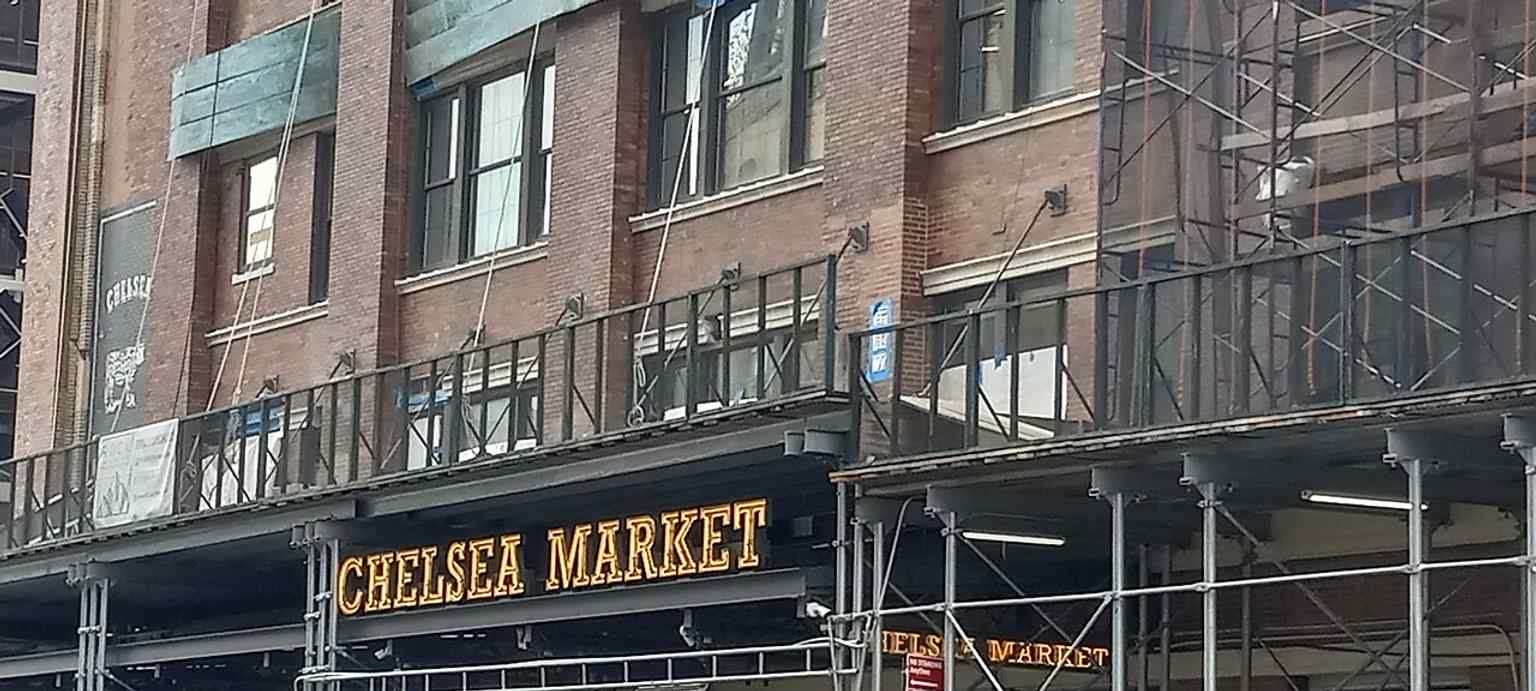
The building kept evolving. On the Tenth Avenue side, Nabisco architect Louis Wirsching Junior redesigned part of the complex in the nineteen thirties just as the High Line rail structure rose nearby. That timing mattered: freight trains could pull directly into the building on a rail siding, basically a train spur built for deliveries. Imagine flour, sugar, and packaged goods moving through here with mechanical precision, the whole place humming like a giant edible machine.
Then came the neighborhood’s downturn, Nabisco’s move to the suburbs in nineteen fifty-eight, and years of lighter industrial use. In the nineteen nineties, developer Irwin Cohen and architect Jeff Vandeberg gave the complex a brilliant second act. Instead of erasing the factory, they stitched its former back lots into a ground-floor concourse and kept the industrial bones. If you peek at the interior photo in the app, those reused brick arches tell the story beautifully.
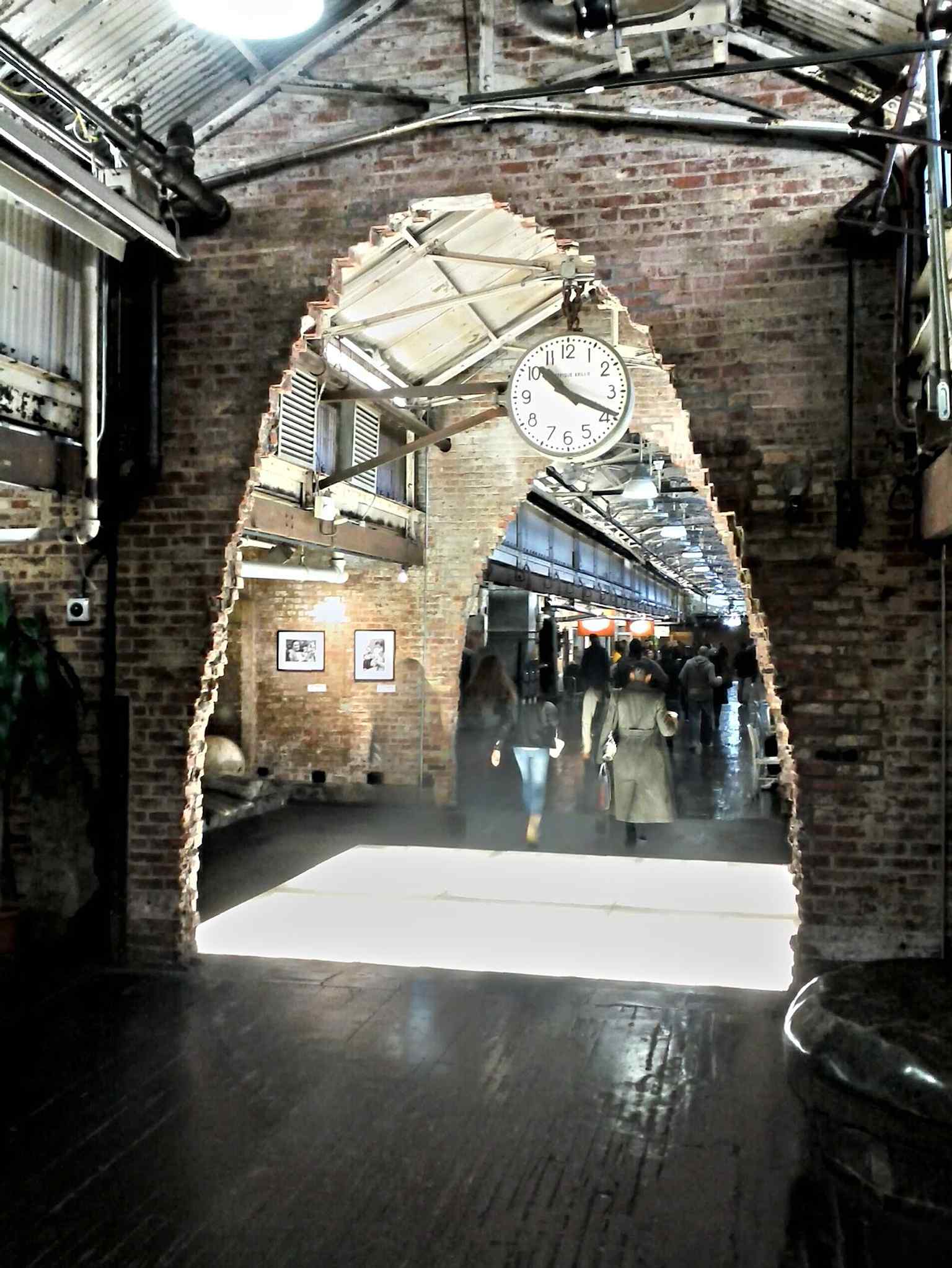
Behind these walls now, food and media live side by side in a way that feels almost theatrical. Vendors sell seafood, produce, bread, cheese, olive oil, chocolate, and flowers, while restaurants turn those ingredients into meals under the same roof. That’s the market’s secret engine: a symbiotic relationship, meaning the shops and eateries help feed each other’s business. Upstairs, office tenants have included Food Network, YouTube, Google, Oxygen Network, and N-Y-1, and Food Network once filmed Iron Chef America and Emeril Live right here. In twenty eighteen, Alphabet, Google’s parent company, bought Chelsea Market for more than two point four billion dollars, one of the most expensive single-building real estate deals in New York history.
And threading through all of this is the High Line on the Tenth Avenue side, plus that bridge connection to Eighty-Five Tenth Avenue... old factory infrastructure turned into a new urban ecosystem. No wonder this block sits inside the Gansevoort Market Historic District.
If you want to step inside later, Chelsea Market is generally open every day from seven in the morning to ten at night. Chelsea Market turns a cookie factory into a living collage of food, media, and memory. When you’re ready, we’ll continue on to the Atlantic Theater Company.






%2013%20-%20Chelsea%20Market.jpg)