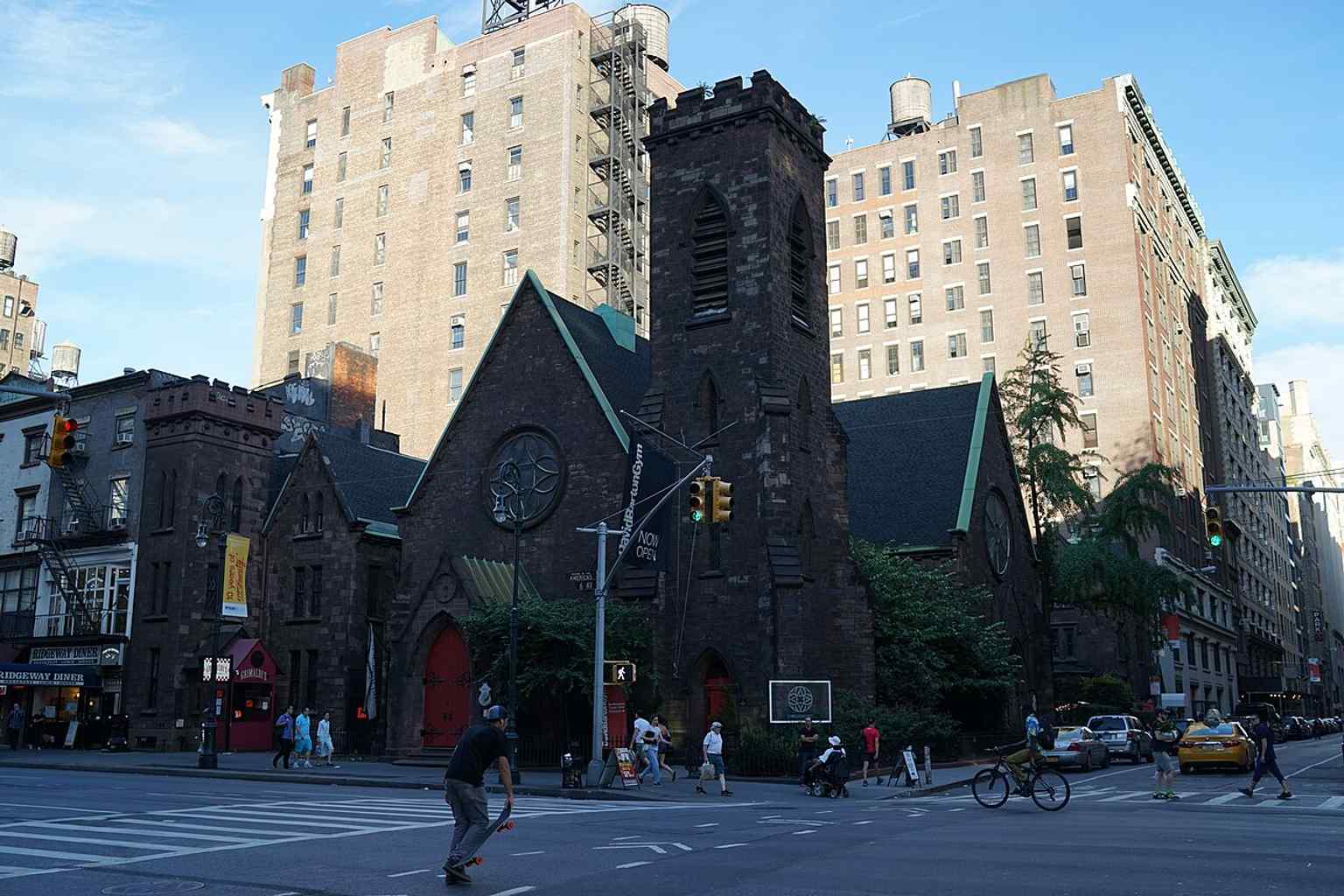
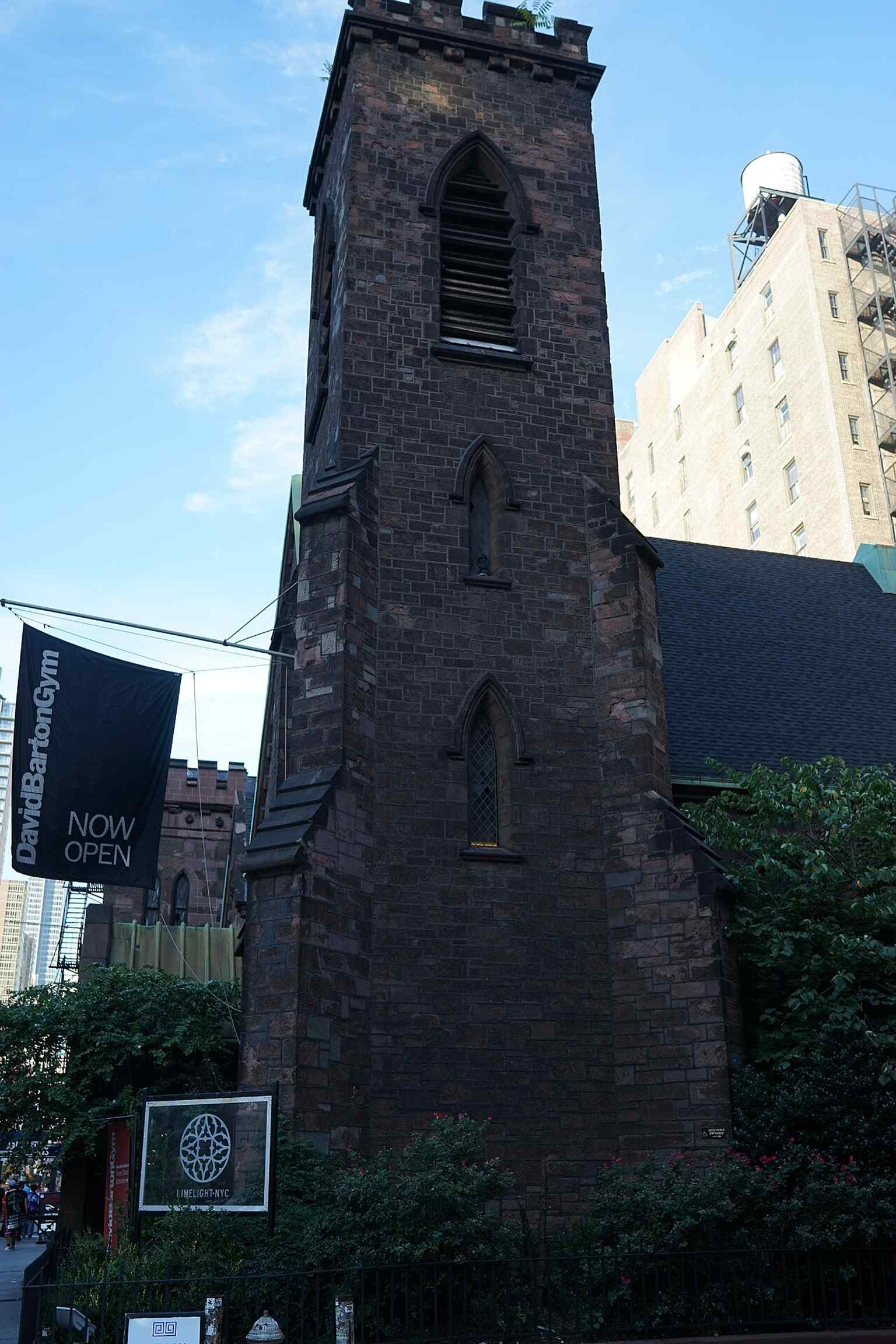
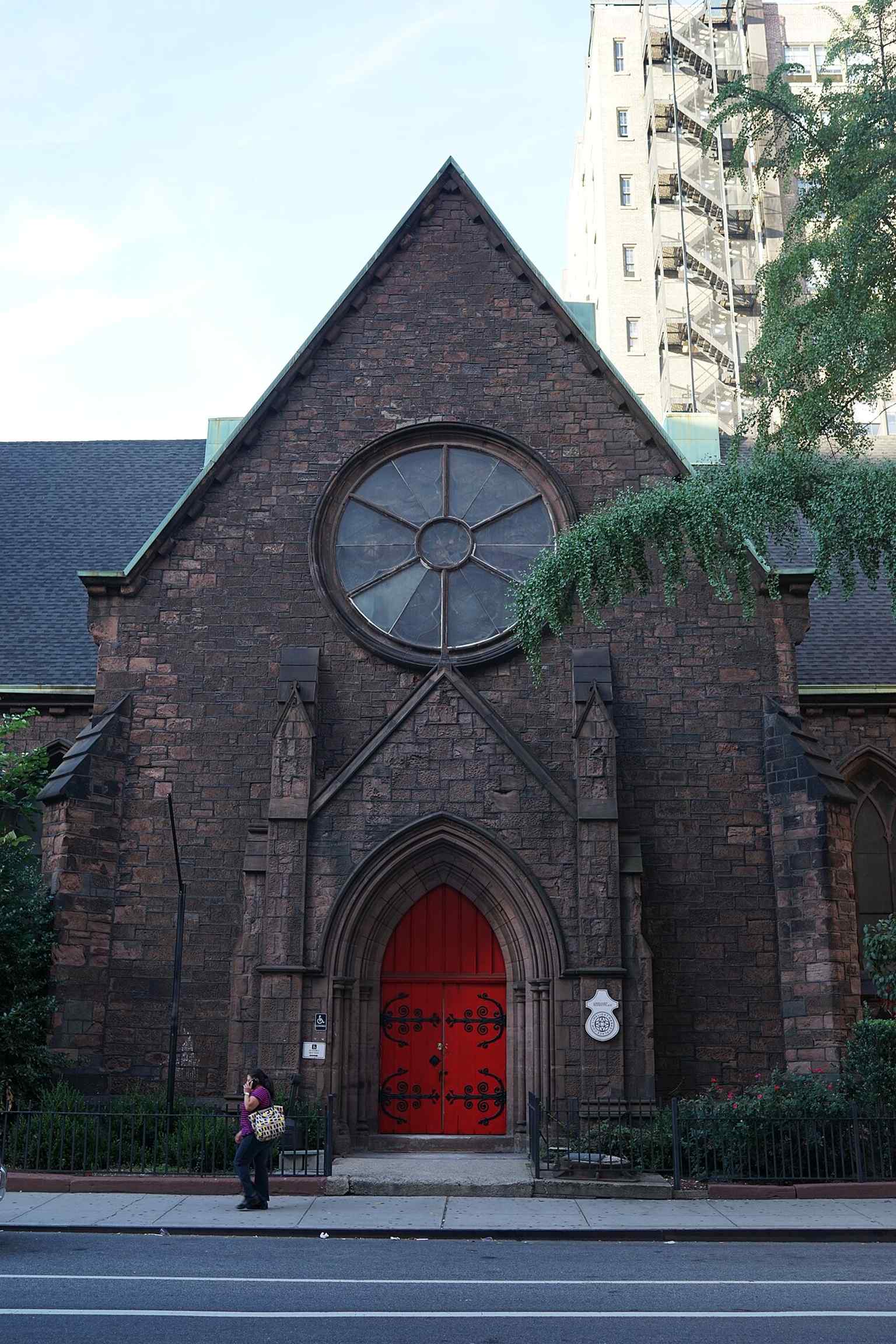
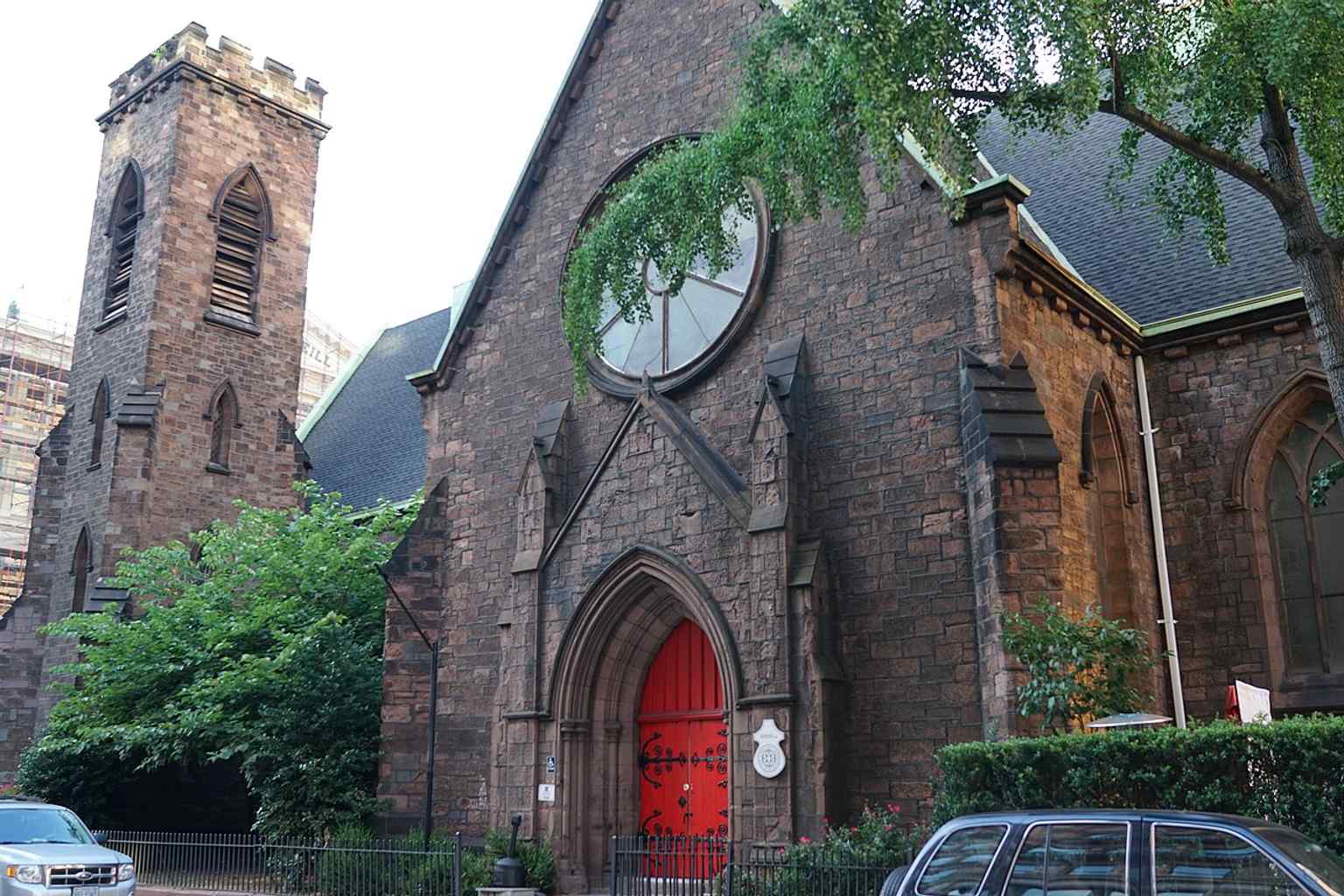
Take in this façade for a second... this is the former Church of the Holy Communion, and it has lived several New York lives without ever losing its dramatic presence. Richard Upjohn designed it in the Gothic Revival style - a nineteenth-century return to the pointed arches, rough stone textures, and vertical lift of medieval churches - and he raised it here between eighteen forty-four and eighteen forty-five. Reverend William Muhlenberg, the church’s founder, worked closely with him and believed Gothic architecture was the truest visual language of Christianity.
What made this place such a breakthrough was its attitude. Upjohn did not give New York a neat, symmetrical box. He gave it an asymmetrical church - meaning the parts do not mirror each other perfectly - inspired by a small medieval English parish church. Even the brownstone feels alive: those blocks were chosen for placement at random, so the surface has this wonderfully irregular, almost hand-laid rhythm. If you glance at your screen, image four helps that unusual stone pattern really pop.
When this church opened, sixth avenue still belonged to a fashionable residential neighborhood. Then Manhattan surged north, and this stretch turned into the Ladies’ Mile, packed with giant department stores and dry-goods emporia - those enormous shops that sold fabric, clothing, and household goods. If you want a quick visual of that transformation, check the before-and-after image in the app.
Inside, the church carried serious musical prestige too. Organists and choirmasters like Lynnwood Farnam and Carl Weinrich filled the building with sacred music in the early twentieth century. Then the story swerved. In nineteen seventy-five, the parish merged with others, and soon this church became home to the Lindisfarne Association, a cultural center where poets like Gary Snyder and Robert Bly read their work, Paul Winter and David Hykes performed concerts, theatre figures lectured, philosophers spoke, and teachers explored sacred architecture with audiences hungry for big ideas. Imagine that - a Gothic church becoming a crossroads for poetry, religion, philosophy, and experimental culture.
Then came the wildest reinvention. In nineteen eighty-three, entrepreneur Peter Gatien turned the church into the Limelight nightclub. Yes - stained-glass spirit, nightclub pulse. The building later inspired Steve Taylor’s song “This Disco (Used to be a Cute Cathedral),” which tells you New Yorkers absolutely noticed the irony. After police trouble and drug-abuse allegations, the club closed, reopened as Avalon, later became a retail marketplace, and then a gym. Through all of it, the landmark held its corner.
The city recognized that importance early: New York City designated it a landmark in nineteen sixty-six, and the National Register of Historic Places added it in nineteen eighty. The app lists hours here as eleven to six on Monday, nine to six Tuesday through Saturday, and eight to three on Sunday.
This place feels like Chelsea in one building: devotion, art, commerce, nightlife, and reinvention. When you’re ready, keep going and we’ll head toward the National Museum of Mathematics.