
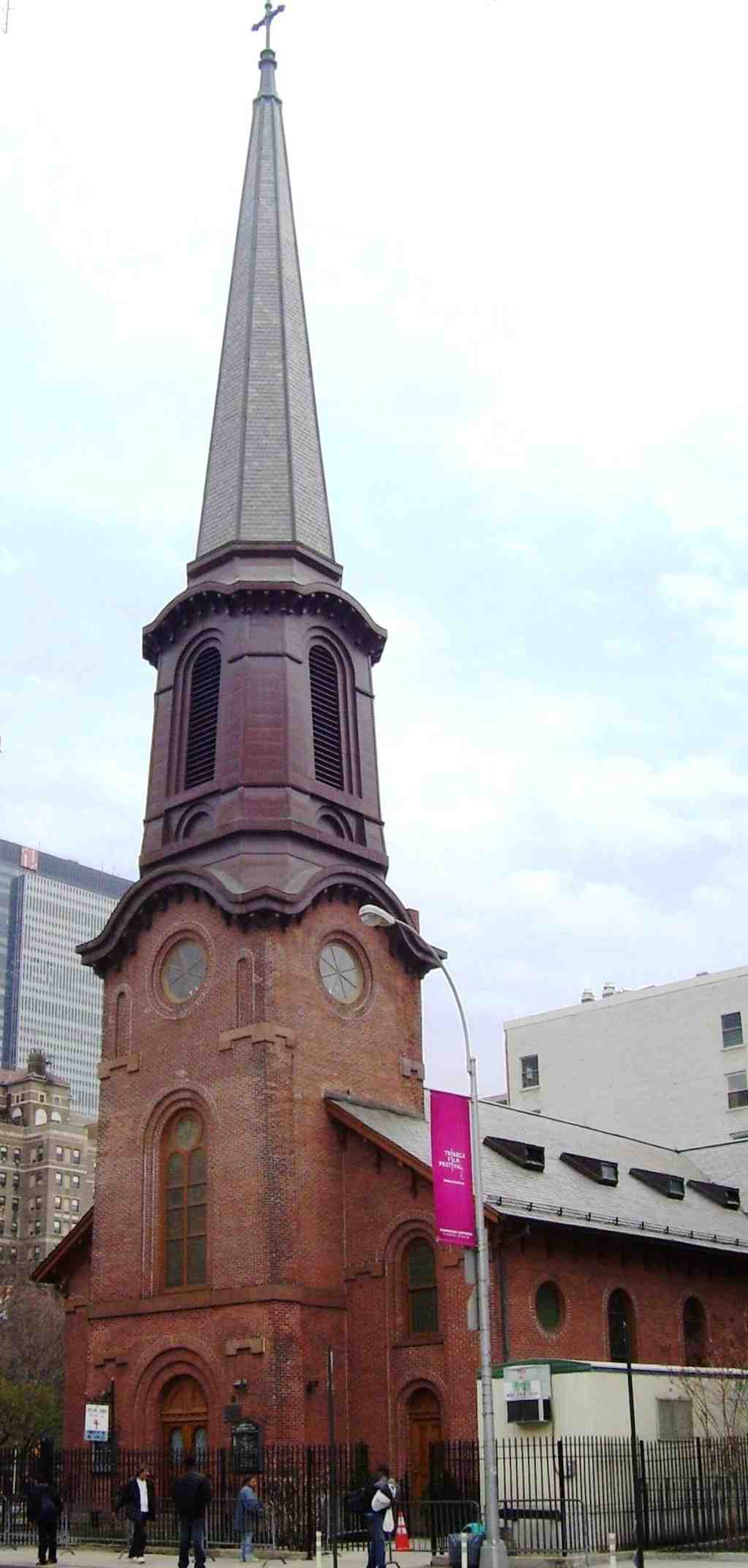
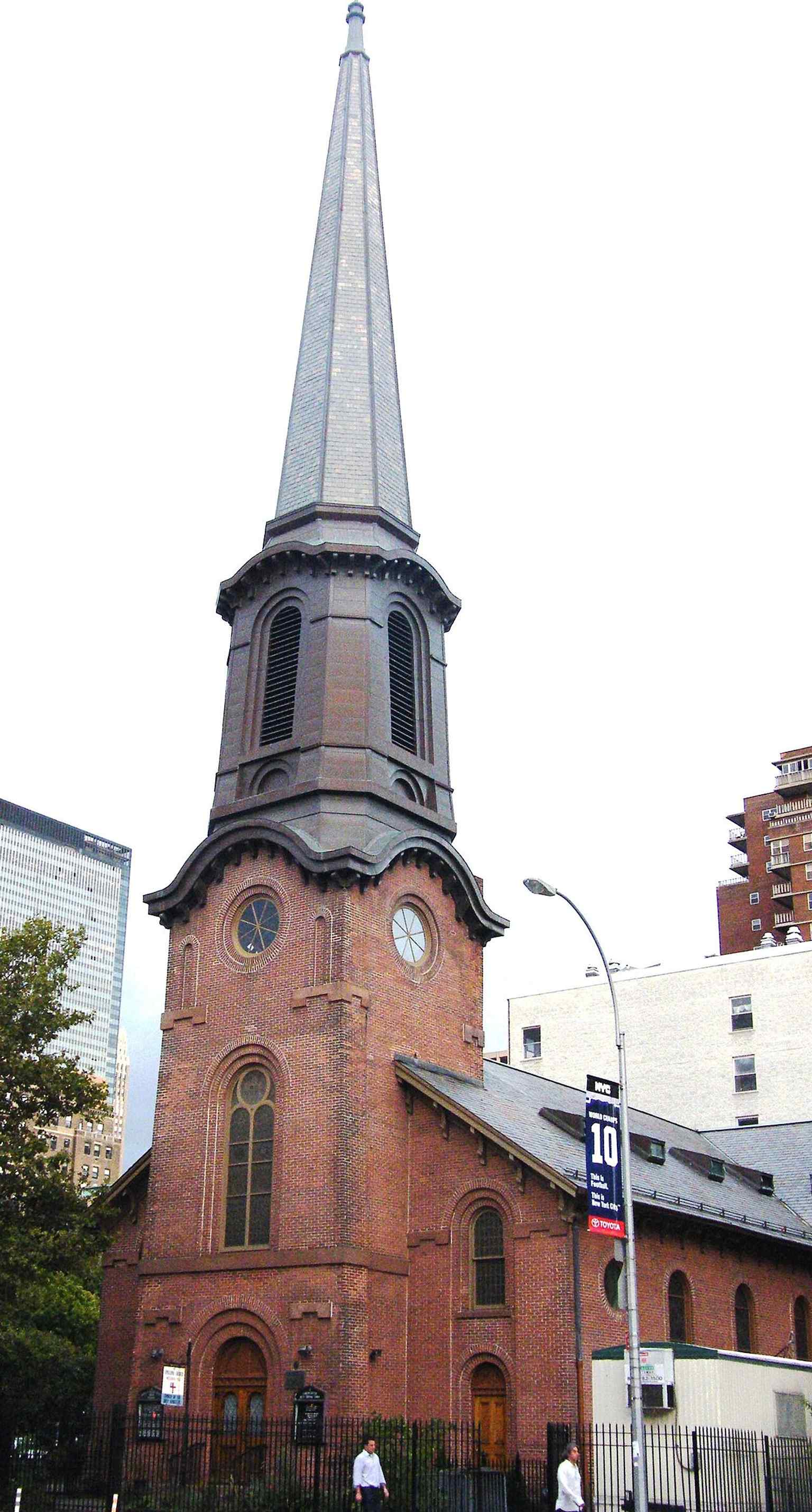
On your left, look for the brownstone church with broad round-arched windows, a low gabled roofline, and a square corner tower rising above the entrance.
This church carries nearly two centuries of Chelsea history in its stone. In eighteen forty-four, Trinity Church started the congregation to serve immigrants working the Hudson River waterfront, and that sense of outreach still defines this place. Architect Minard Lafever began the sanctuary in eighteen forty-five and finished it by eighteen forty-eight, then extended it with a chancel - the area around the altar - in the early eighteen fifties. A few years later, Charles Babcock added transepts, the side wings that turn a church into a cross-shaped plan.
Holy Apostles is a rare survivor. It’s the only Manhattan church Lafever designed that still stands, and one of the city’s very few Italianate churches, with a hint of early Romanesque Revival in those sturdy arches. If you peek at the image in the app, you can really see that weighty, grounded exterior facing Chelsea Park across Ninth Avenue. Inside, Lafever planned a basilica - a long central hall with side aisles - and William Jay Bolton designed geometric stained-glass windows that brought color and rhythm into the space.
But the architecture is only half the story. This congregation has a fierce social conscience. People have long rumored it served as a stop on the Underground Railroad during the Civil War. In the nineteen seventies, it helped launch Congregation Beit Simchat Torah, a synagogue created for gay and lesbian Jews, and it later welcomed that community back for years. It also hosted the ordination of the Reverend Ellen Barrett, the first woman priest and openly lesbian priest in the New York diocese. Then in nineteen eighty-two, Holy Apostles started a soup kitchen that still serves neighbors in need. Even after a fire in nineteen ninety damaged the sanctuary and destroyed some stained glass, restorers finished the work in nineteen ninety-four without interrupting those services.
This landmark matters because its doors have opened wider than its walls might suggest.
Take one more look, and when you’re ready, we can head on to the next stop.





