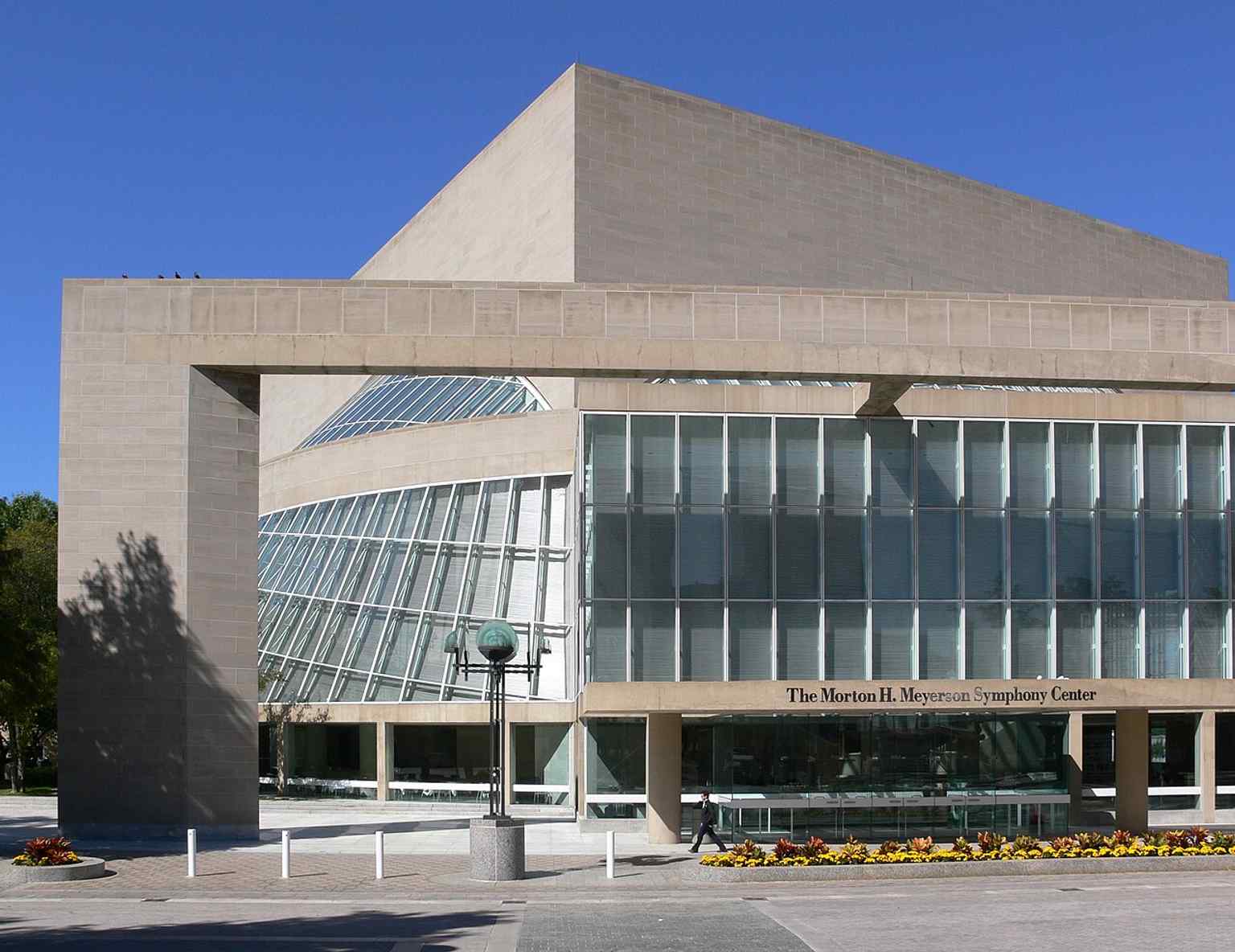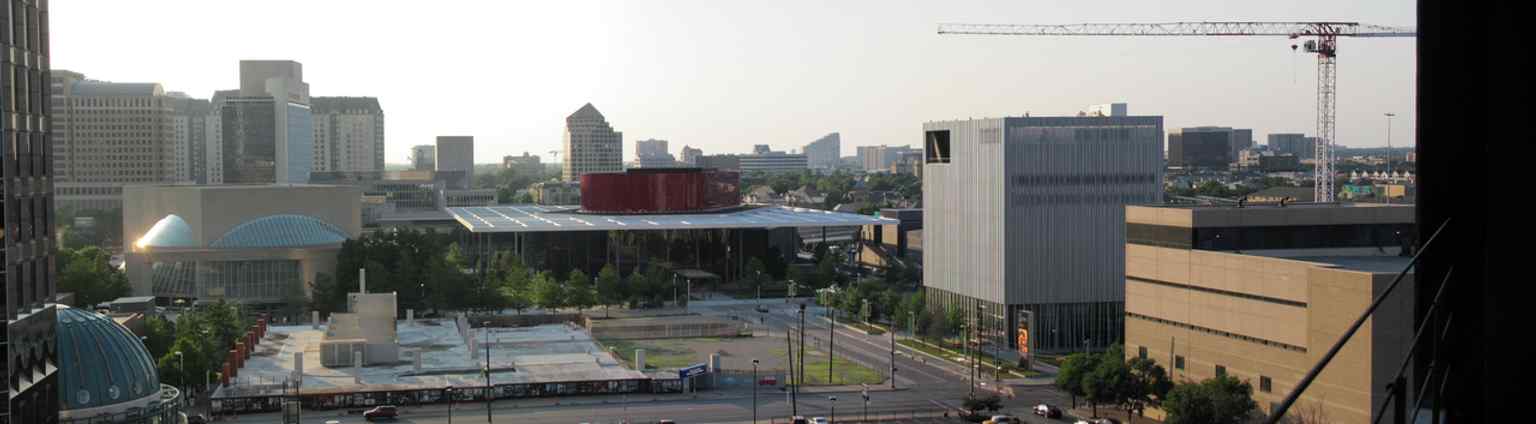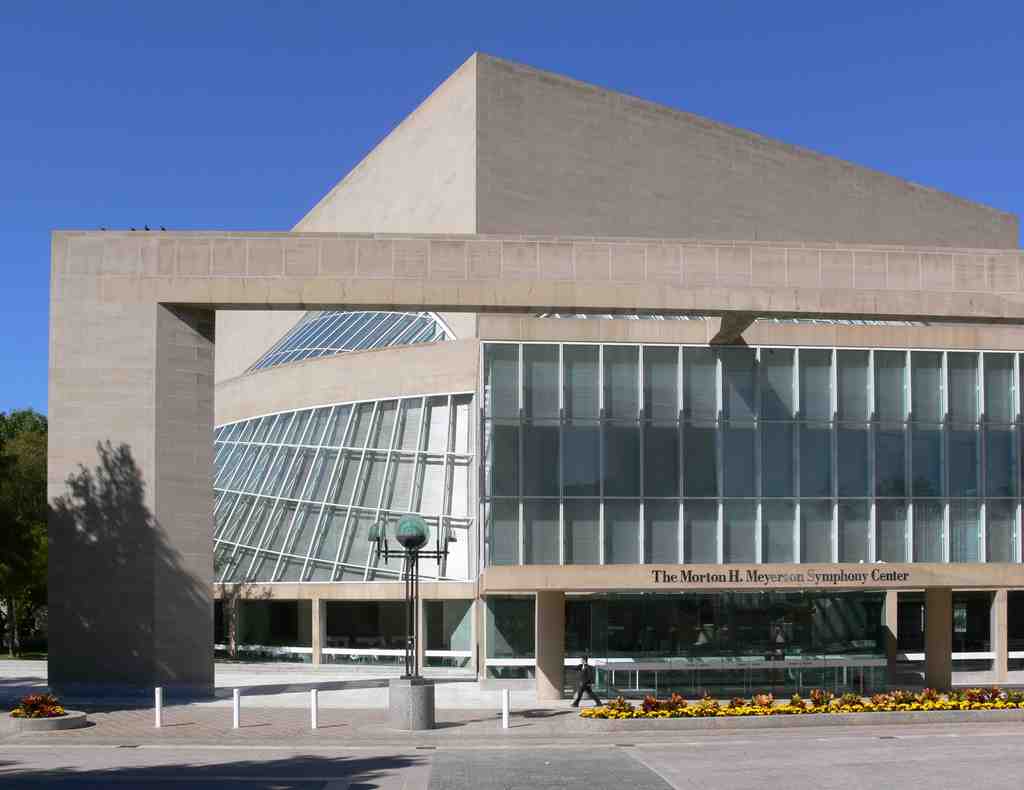
In front of you, the Meyerson reads as a pale limestone hall wrapped in a curved glass-and-metal shell, with a giant circular opening framing the entrance like a modern stage set.
For a building devoted to harmony, this place came together through a remarkable amount of argument. Dallas started planning a new symphony hall back in nineteen sixty-seven. Then the site dragged, shifted, and nearly slipped away more than once. A big push came in nineteen eighty-one, when city leaders tried to assemble the land, and Borden chairman Eugene Sullivan helped by donating part of it. Local memory turned that deal into a small legend: a land swap, a rushed breakfast pitch, and, somehow, a carton of milk helping save the day. Civic glory often arrives in grand language... and office-park bargaining.
Then architect I. M. Pei looked at the plan and said, in effect, nice try, but I need about twice the land. That triggered new swaps, a legal fight over the former Borden property, and even a second groundbreaking before construction could really move. Costs climbed too, thanks to the larger design, the limestone exterior, the marble lobby, and the relentless demands of acoustics.
One man kept pushing through much of that long middle stretch: Morton H. Meyerson. He led a ten-year effort for the Dallas Symphony Association, mostly without making himself the star of the show. Then Ross Perot phoned from Chicago and offered ten million dollars, asking only that the new hall carry Meyerson’s name. At the time, it was an exceptionally large gift for an American arts organization. So yes, public culture and private influence shook hands here very firmly.
What you see from the street is Pei’s compromise turned into elegance. The trustees had already chosen a “shoebox” hall inside - basically a plain rectangular room, the shape many great concert halls use because sound behaves beautifully in it. Pei thought that interior was conservative, so he wrapped it in something freer: curves, glass, metal, and a sense of motion. If you check the image on your screen, you can see how the interior balconies keep that simple, disciplined shape even while the outer building performs a little more drama.
And Dallas wanted the sound to match the ambition. Acoustician Russell Johnson and his team fine-tuned the room with seventy-four heavy concrete chamber doors, fifty-six acoustic curtains, and adjustable canopies above the stage. The goal was not “pretty good for Texas.” The goal was to stand with the great halls of Vienna and Amsterdam. Johnson had a favorite line for people obsessing over the mechanics: stop listening for the acoustics, and start listening to the music.
When the hall opened in September of nineteen eighty-nine, protesters marched outside over the cost, more than two hundred journalists toured it with Pei, and concertgoers lined the block for the first free performance. That feels right, honestly. This building was never just a venue. It was Dallas stepping into the spotlight and announcing, with polished marble and very expensive echoes, what kind of city it believed it had become. Take a look at the foyer on your screen and you’ll catch that confidence in stone and geometry.
From here, the next walk leads to Klyde Warren Park, where the city tries a different kind of statement: not a masterpiece contained by walls, but a public space meant to stitch separate pieces back together. If you want to come inside another time, the center is generally open from ten in the morning to six in the evening Monday through Saturday, and closed on Sunday.