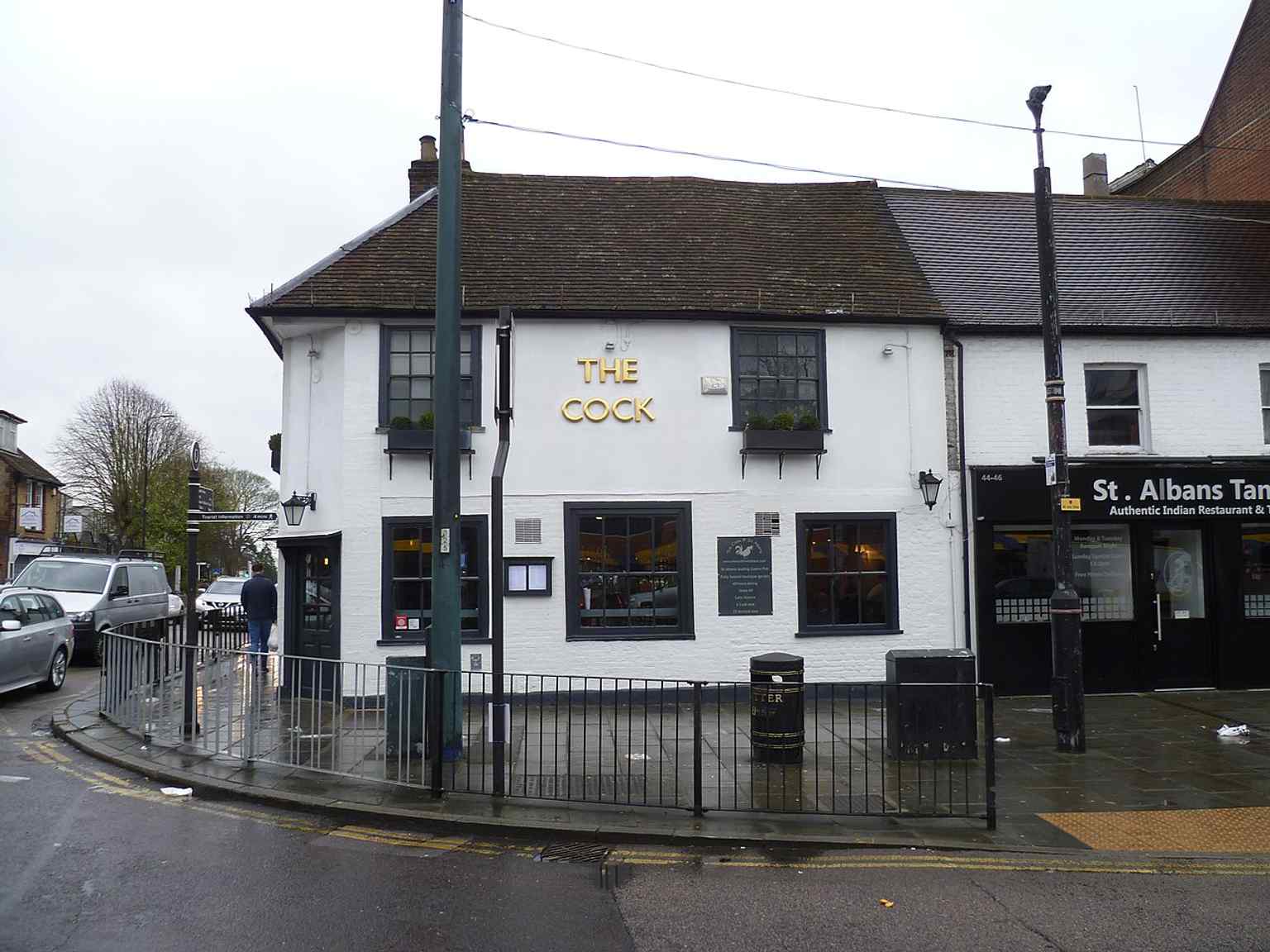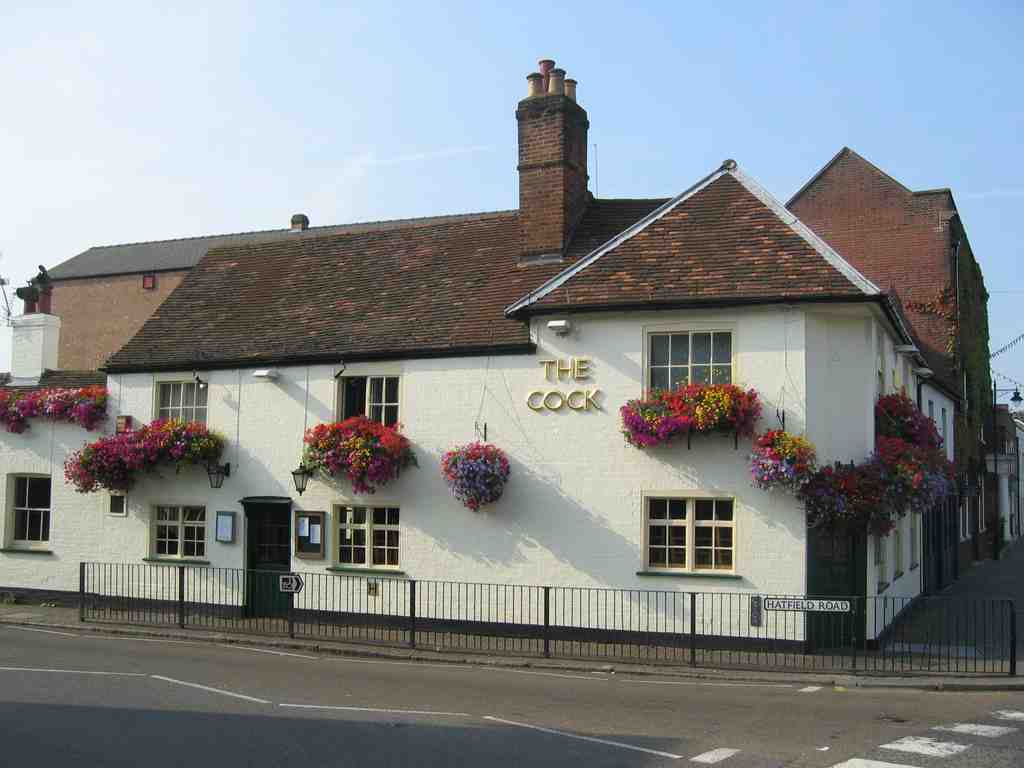
Look for the long, white-rendered building with dark timber framing, a sloping tiled roof, and a corner front that seems to turn and hold the street.
The Cock looks like an ordinary old pub... and that is exactly its power. Beneath this familiar frontage, the ground carries a harder memory. Local museum records suggest this site served as a field hospital during the Second Battle of St Albans, so before drinkers traded stories here, wounded men may have done the same with what strength they had left. Later, bones found in the cellar caused a flutter of excitement... only for investigators to discover they were animal bones from the kitchen, not fallen soldiers.
The house itself goes back to around sixteen hundred, and its original timber frame still shows. The first innkeeper the museum can pin down by name is George Barnes in sixteen sixty-three. That matters. With Barnes, this place steps out of rumor and into the record: a real man, keeping a real inn, at a threshold between town life and the road beyond.
If you check the image on your screen, you can see how firmly this pub commands the corner. It once shaped the map so strongly that Hatfield Road was originally called Cock Lane, and there was even a nearby Cock Pond. Not many buildings get a street to remember them.
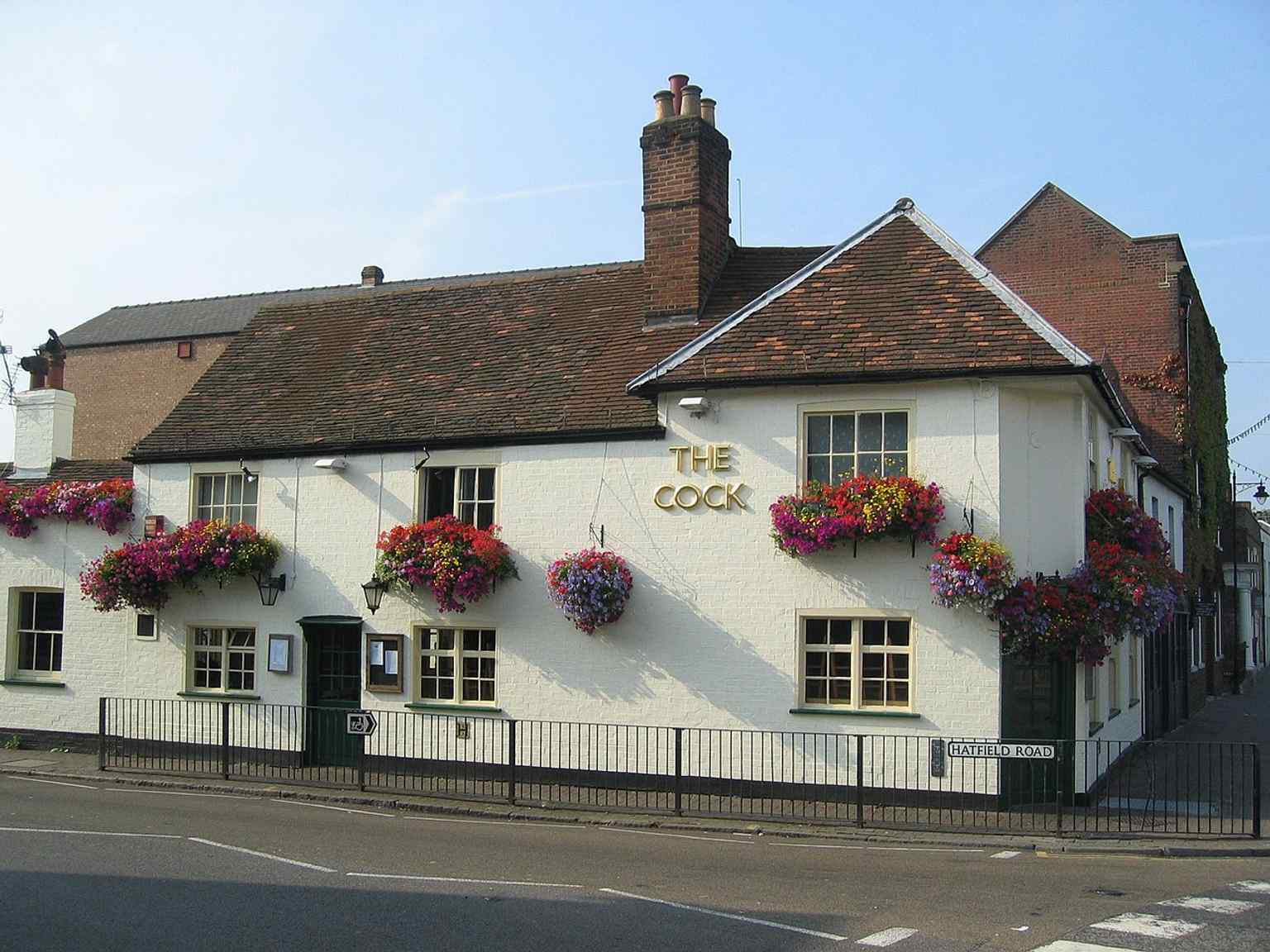
Several brewers came and went, but the job stayed the same: serving locals and market-goers. The tour began with hidden exits and ends with a street once named for a pub, proving that in St Albans the everyday map is also a record of conflict and continuity. If you want a final stop inside, it remains a moderately priced working pub, usually open from late morning until midnight, and later on Fridays and Saturdays.