
St Albans Audio Tour: Historic Pub Crawl
Beneath the polished cobblestones of St Albans lie the shattered bones of centuries of revolution and betrayal. This is not a city of quiet history but a fortress of secrets waiting to be unearthed. Take this self-guided audio tour to peel back the layers of a town that survived political purges and bloodthirsty rebellions. You will access hidden narratives that tourists walk past every single day. Why does the shadow of a local pub hide a secret pact forged in blood? What ghost still rattles the floorboards of The Old Kings Arms during the dead of night? Can you identify which tavern served as the unlikely planning room for a treasonous plot? Trace the footsteps of rebels and rogues as you navigate the narrow alleys between The Boot and The White Lion. Reclaim the city's dark legacy. Download the map and start your descent into the past.
Tour preview
About this tour
- scheduleDuration 40–60 minsGo at your own pace
- straighten1.4 km walking routeFollow the guided path
- location_onLocationSaint Albans, United Kingdom
- wifi_offWorks offlineDownload once, use anywhere
- all_inclusiveLifetime accessReplay anytime, forever
- location_onStarts at The White Lion, St Albans
Stops on this tour
lock_open 3 free previews · 3 unlock with purchase
Look for the low, plastered timber-framed building with its long pitched roof and a stout central brick chimney rising above the front. The Hare and Hounds keeps its age rather…Read moreShow less
Open dedicated page →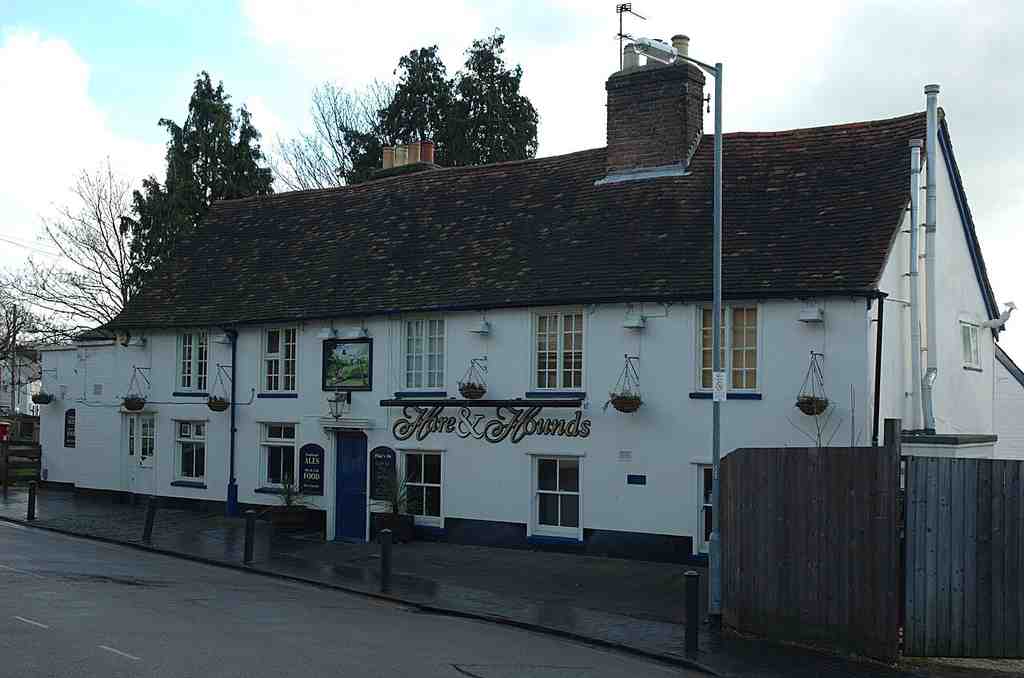
Hare and Hounds, St AlbansPhoto: Gary Houston, Wikimedia Commons, CC0. Cropped & resized. Look for the low, plastered timber-framed building with its long pitched roof and a stout central brick chimney rising above the front.
The Hare and Hounds keeps its age rather discreetly. Officially, Historic England lists it as Grade Two and dates it to the seventeenth century or earlier, but a closer archaeological look in two thousand and seventeen suggested something even more interesting: parts of the structure are older in feel than the basic listing lets on. Above the main block sits a queen-strut roof, a frame with two upright supports bracing the roof, typical of the seventeenth to early eighteenth century. That great chimney near the middle, especially across the western bays, likely belongs to the earliest house here.
And house is the right word, because this place seems to have grown by degrees rather than appearing all at once. Two bays stretched east in the late eighteenth or early nineteenth century, a southern extension arrived in the late nineteenth, and another single-storey addition followed between nineteen twenty-four and nineteen thirty-seven. You can sense those layers still stitched together in one lived-in whole.
There is even a small quarrel over its beginnings: one account places it on maps by sixteen fifty, while archaeology confirms it by seventeen twenty-one. Either way, by the early eighteenth century it was already an old, altered building, standing detached at the edge of Sopwell Lane where coaches entered St Albans and travellers paused before pressing on.
In recent years, locals crowned it a festive favourite, then welcomed it back after a six-figure refurbishment in two thousand and twenty-three; by autumn two thousand and twenty-four, repair plans reminded everyone that old timber buildings survive only because people keep caring for them. If you decide to return later, it generally opens from noon and prices are moderate.
So this is not merely a pub, but a threshold that has greeted strangers for centuries.
When you are ready, let us follow the road onward to the next chapter.
On your left, look for a dark timber-framed frontage with rectangular leaded windows and a projecting hanging sign: a crooked, storybook survivor set right on George Street. This…Read moreShow less
Open dedicated page →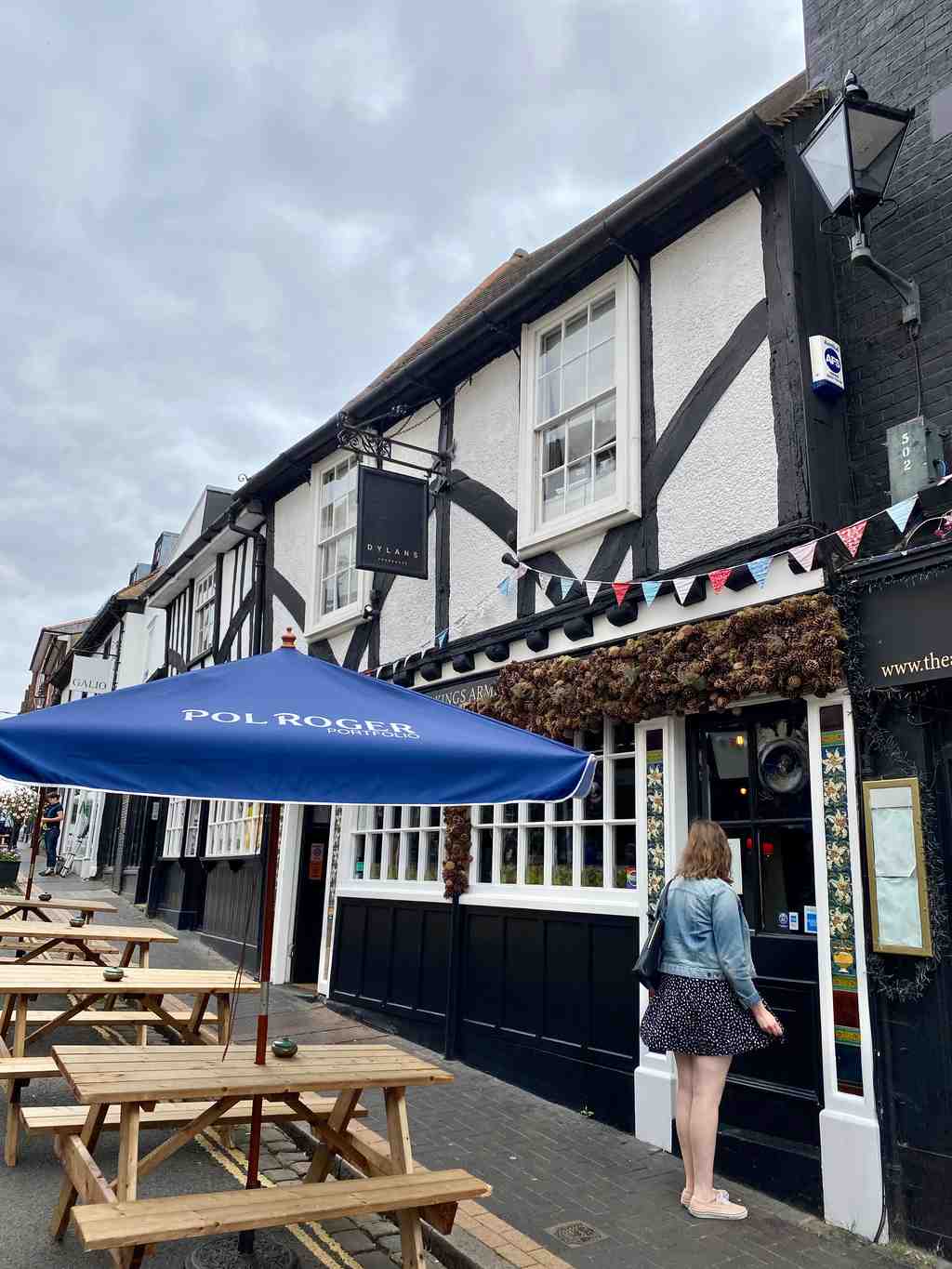
The Old Kings ArmsPhoto: No Swan So Fine, Wikimedia Commons, CC BY-SA 4.0. Cropped & resized. On your left, look for a dark timber-framed frontage with rectangular leaded windows and a projecting hanging sign: a crooked, storybook survivor set right on George Street.
This is the Old Kings Arms, a fifteenth-century building with Grade Two listed status, which means the state protects it for its special historic character. It has held local attention for decades, not simply as a pub, but as a puzzle of medieval fabric. Researchers from the St Albans Society kept returning to it, drawing floor plans in nineteen seventy-one and again in nineteen ninety-six, sketching its timber framework, even photographing the roof space, as if the building still had secrets tucked between the beams. You can see that slightly uneven, time-worn face for yourself.
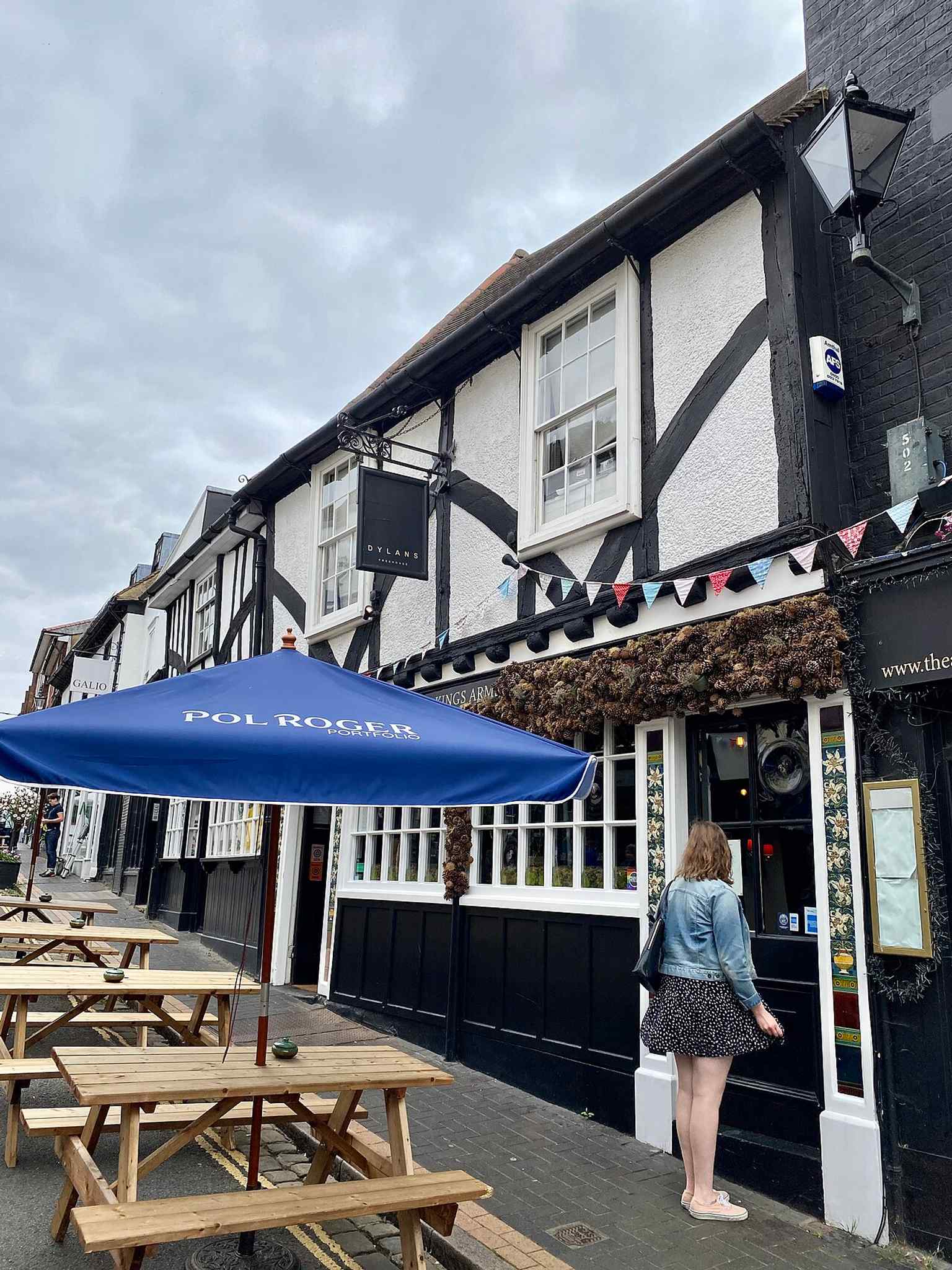
The Old Kings Arms on George Street, a 15th-century listed pub that reopened in 2015 after years out of use.Photo: No Swan So Fine, Wikimedia Commons, CC BY-SA 4.0. Cropped & resized. Then came the wrangles. In nineteen ninety-seven, someone complained about unauthorised internal works. The council stepped in, granted planning permission and listed-building consent, and later required rectification work to put matters right. Even the hanging sign caused a separate battle: complaints in nineteen ninety-seven, refusals in nineteen ninety-eight, the old sign removed in December nineteen ninety-nine, and a replacement put up in March two thousand. By two thousand and three, officials were still chasing more unauthorised signage.
After closing in the late nineteen nineties and lying dormant for roughly fifteen years, the place returned in twenty fifteen as Dylans at The Kings Arms. Sean Hughes and his family reopened it after the freehold became available, determined to create somewhere they themselves would want to eat and drink close to home. Before that, it had even drifted into life as a French restaurant, so this revival felt like the building reclaiming its own voice.
It stands here now as a rescued old character, still stubborn, still admired. If you fancy returning, it is moderately priced and usually opens from Tuesday, with Mondays closed.
When you are ready, continue on and let the next old inn pick up the thread.
Show 3 more stopsShow fewer stopsexpand_moreexpand_less
Look for the red-brick frontage with its neat rectangular windows and the broad carriage arch cut through one side. This place wears its age rather slyly. The face you see is…Read moreShow less
Open dedicated page →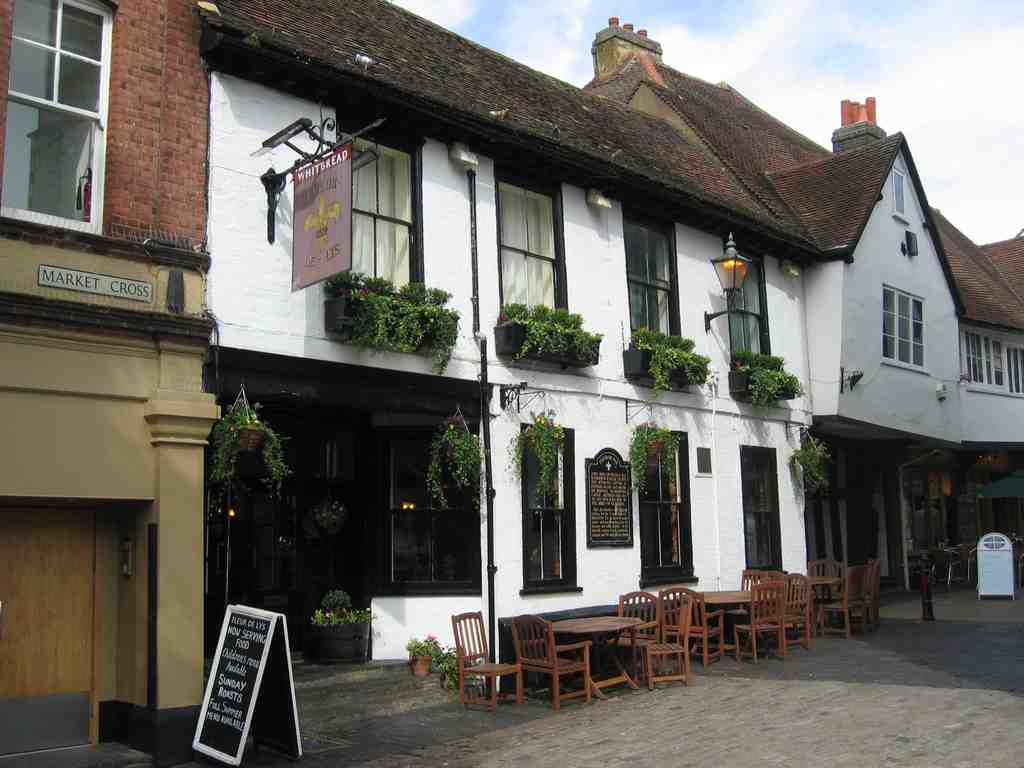
Fleur de Lys, St AlbansPhoto: Gary Houston, Wikimedia Commons, CC0. Cropped & resized. Look for the red-brick frontage with its neat rectangular windows and the broad carriage arch cut through one side.
This place wears its age rather slyly. The face you see is eighteenth century, but the story beneath it reaches back to the Middle Ages. In the fourteen hundreds, John and Matilda Pikebon left a house on this site, and soon after, between about fourteen twenty and fourteen forty, the abbot ordered an inn and brewery here. By the early sixteenth century, the building had much of its present shape.
In the older street view, that composed front still holds the line on French Row. Yet it never stood still for long. After the Reformation, people repaired it, altered it, and nearly rebuilt it. An old view from seventeen eighty-seven already shows a signboard jutting out over the archway, as if the inn were beckoning travellers in.
Then comes my favourite twist. Around seventeen forty-five, Thomas Dimsdale bought the Fleur de Lys. He was not just an inn owner. He became one of the bold early champions of smallpox variolation, an early form of inoculation using smallpox matter to provoke protection. In seventeen sixty-eight, Catherine the Great summoned him to Russia. He treated her, her son Grand Duke Paul, and about one hundred and forty courtiers, and returned with a fortune, a pension, and a Russian barony.
One famous tale claimed a captive French king lodged here, but historians found that story far too late to trust. Better evidence lies in the building itself: in eighteen ninety-six, when the neighbouring Great Red Lion came down, workers uncovered a carved medieval window fragment from this site.
The Fleur de Lys keeps its truest history in brick, timber, and survival. When you are ready, continue on for the next stop, which is almost at your shoulder.
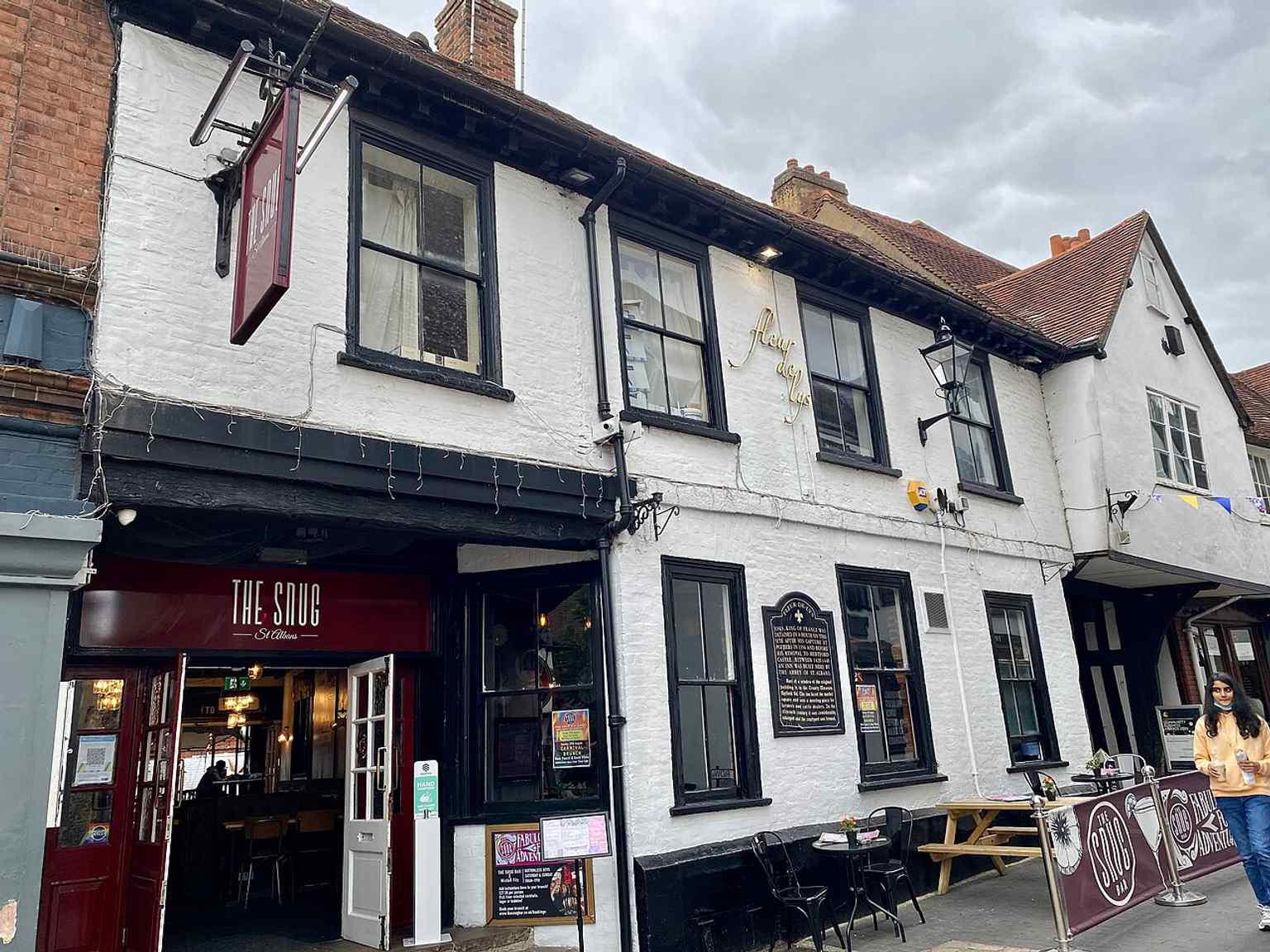
The modern front of the Fleur de Lys in French Row, a Grade II-listed building with medieval origins behind an 18th-century facade.Photo: No Swan So Fine, Wikimedia Commons, CC BY-SA 4.0. Cropped & resized. On your right, look for a low timber-framed corner house with pale plaster panels, a long tiled roof, and an angled street-facing front that turns neatly into Hatfield Road. The…Read moreShow less
Open dedicated page →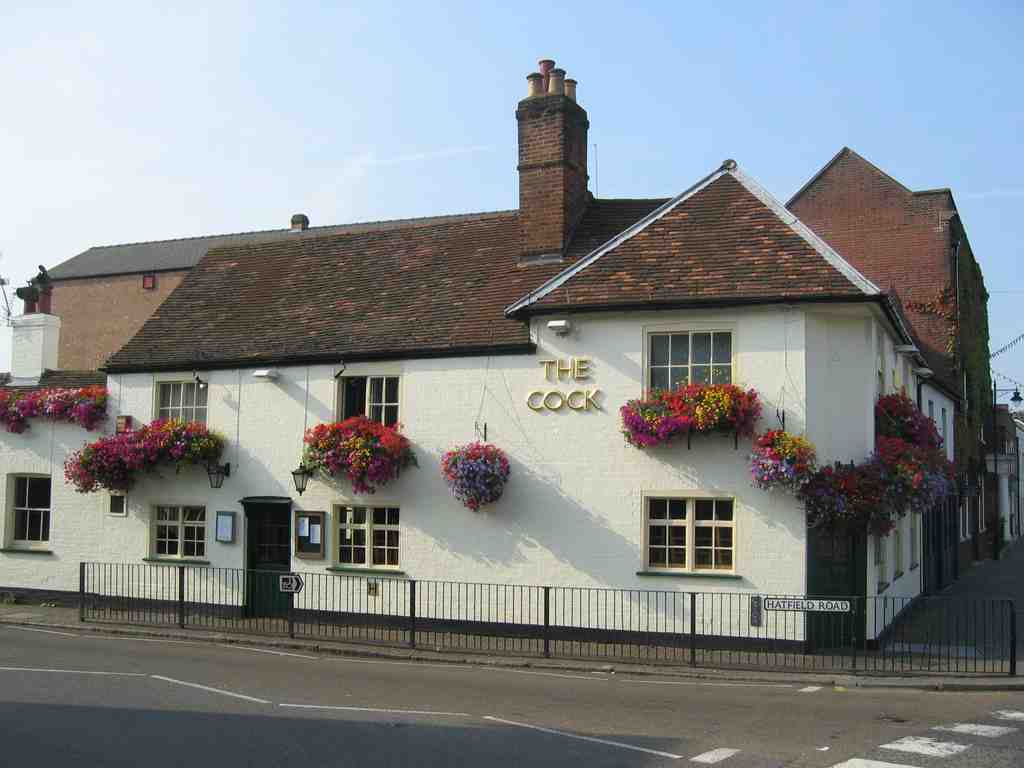
The Cock, St AlbansPhoto: Gary Houston, Wikimedia Commons, CC0. Cropped & resized. On your right, look for a low timber-framed corner house with pale plaster panels, a long tiled roof, and an angled street-facing front that turns neatly into Hatfield Road.
The Cock carries itself with the quiet assurance of a place that has seen more than most. This house dates from around sixteen hundred, and its original timber frame still shows through, which is one reason it earned Grade Two listed status, meaning the building is officially protected for its historic character. Yet the story here begins even earlier. Local museum records say this ground served as a field hospital during the Second Battle of St Albans, so before drink and conversation, there was blood, urgency, and fear.
Then came one of those delicious little false trails historians know so well. Bones turned up in the cellar, and people hoped they had found battle dead at last. The museum checked, and the truth proved far more domestic: they were animal bones, left from kitchen use.
By sixteen sixty-three, the first innkeeper we can name, George Barnes, appears in the record, and suddenly the pub steps out of rumour into firm history. It mattered enough that Hatfield Road originally took the name Cock Lane, and a nearby pond was known as Cock Pond. The picture in the app shows how this modest corner house still anchors the street plan around it.
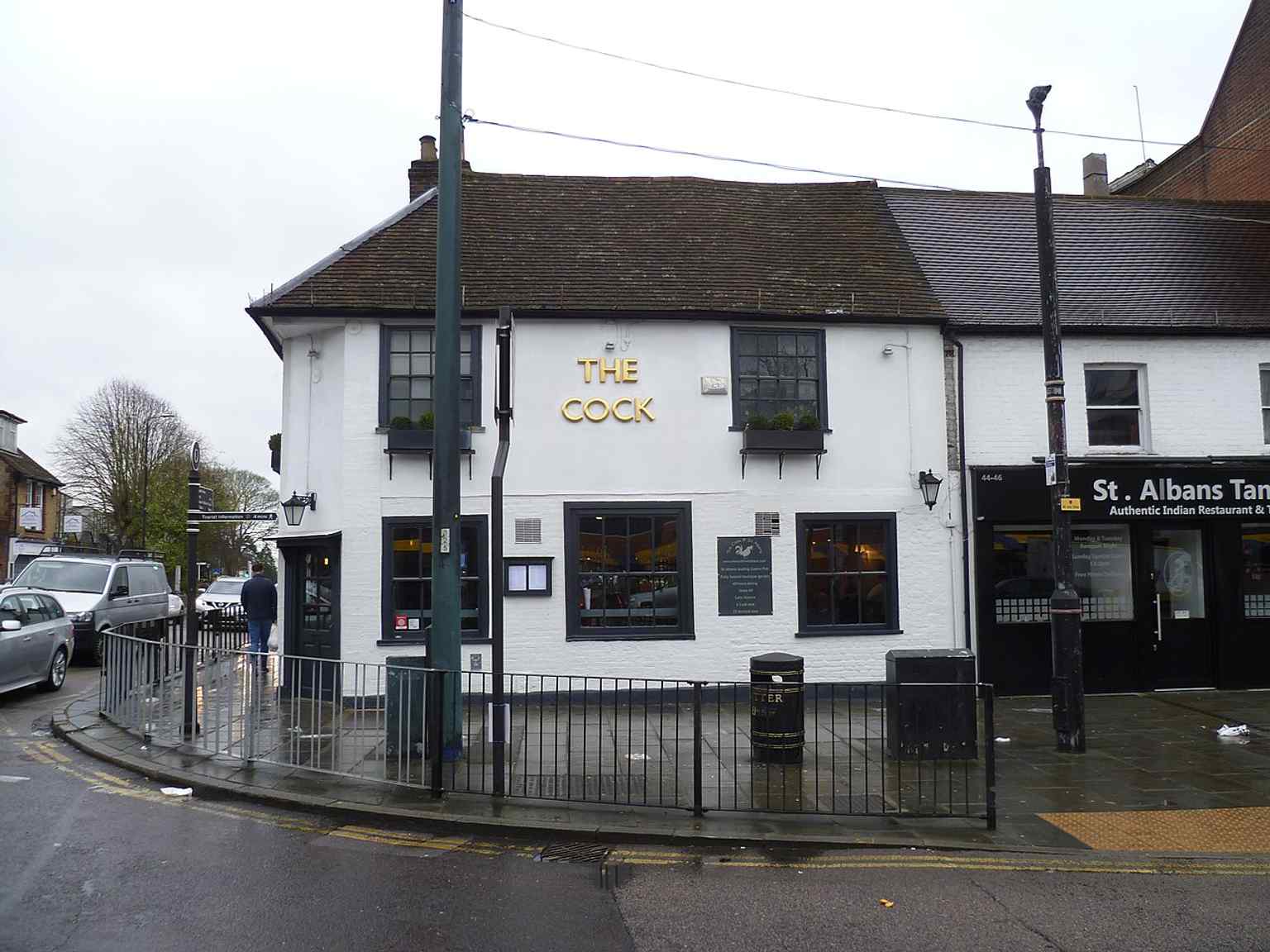
A clear modern view of the same listed pub, showing the timbered street-corner house that has served St Albans for centuries.Photo: Philafrenzy, Wikimedia Commons, CC BY-SA 4.0. Cropped & resized. The Campaign for Real Ale says The Cock remains very much alive today, with two bars, a restaurant, a heated courtyard garden, and cask ales; if you choose to finish here, it is moderately priced and usually open from eleven in the morning until midnight, later on Fridays and Saturdays.
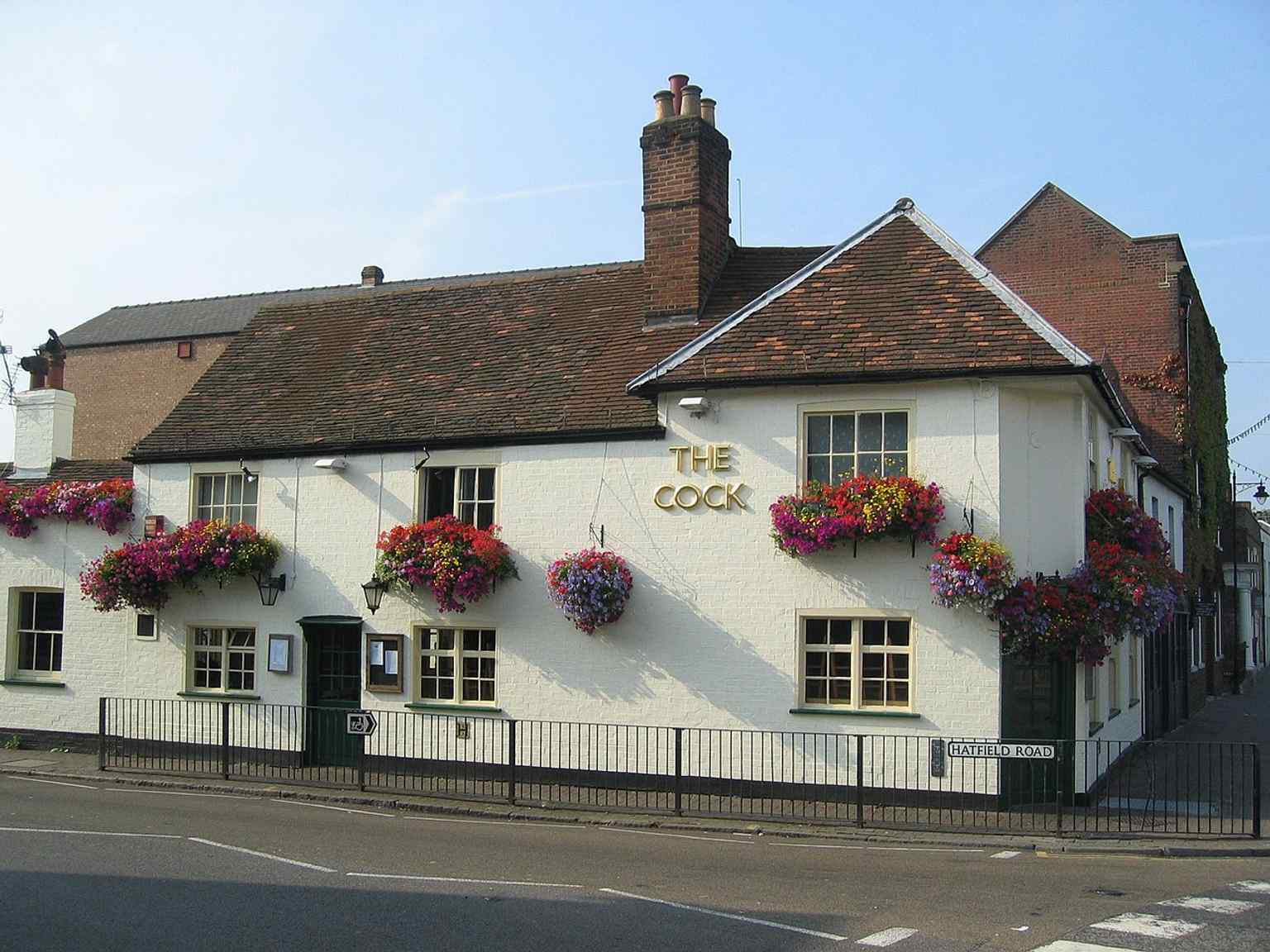
The Cock on the corner of St Peter’s Street and Hatfield Road, still standing as the pub that gave Cock Lane its name.Photo: Gary Houston, Wikimedia Commons, CC0. Cropped & resized.
Frequently asked questions
How do I start the tour?
After purchase, download the AudaTours app and enter your redemption code. The tour will be ready to start immediately - just tap play and follow the GPS-guided route.
Do I need internet during the tour?
No! Download the tour before you start and enjoy it fully offline. Only the chat feature requires internet. We recommend downloading on WiFi to save mobile data.
Is this a guided group tour?
No - this is a self-guided audio tour. You explore independently at your own pace, with audio narration playing through your phone. No tour guide, no group, no schedule.
How long does the tour take?
Most tours take 60–90 minutes to complete, but you control the pace entirely. Pause, skip stops, or take breaks whenever you want.
What if I can't finish the tour today?
No problem! Tours have lifetime access. Pause and resume whenever you like - tomorrow, next week, or next year. Your progress is saved.
What languages are available?
All tours are available in 50+ languages. Select your preferred language when redeeming your code. Note: language cannot be changed after tour generation.
Where do I access the tour after purchase?
Download the free AudaTours app from the App Store or Google Play. Enter your redemption code (sent via email) and the tour will appear in your library, ready to download and start.
If you don't enjoy the tour, we'll refund your purchase. Contact us at [email protected]
Checkout securely with 






