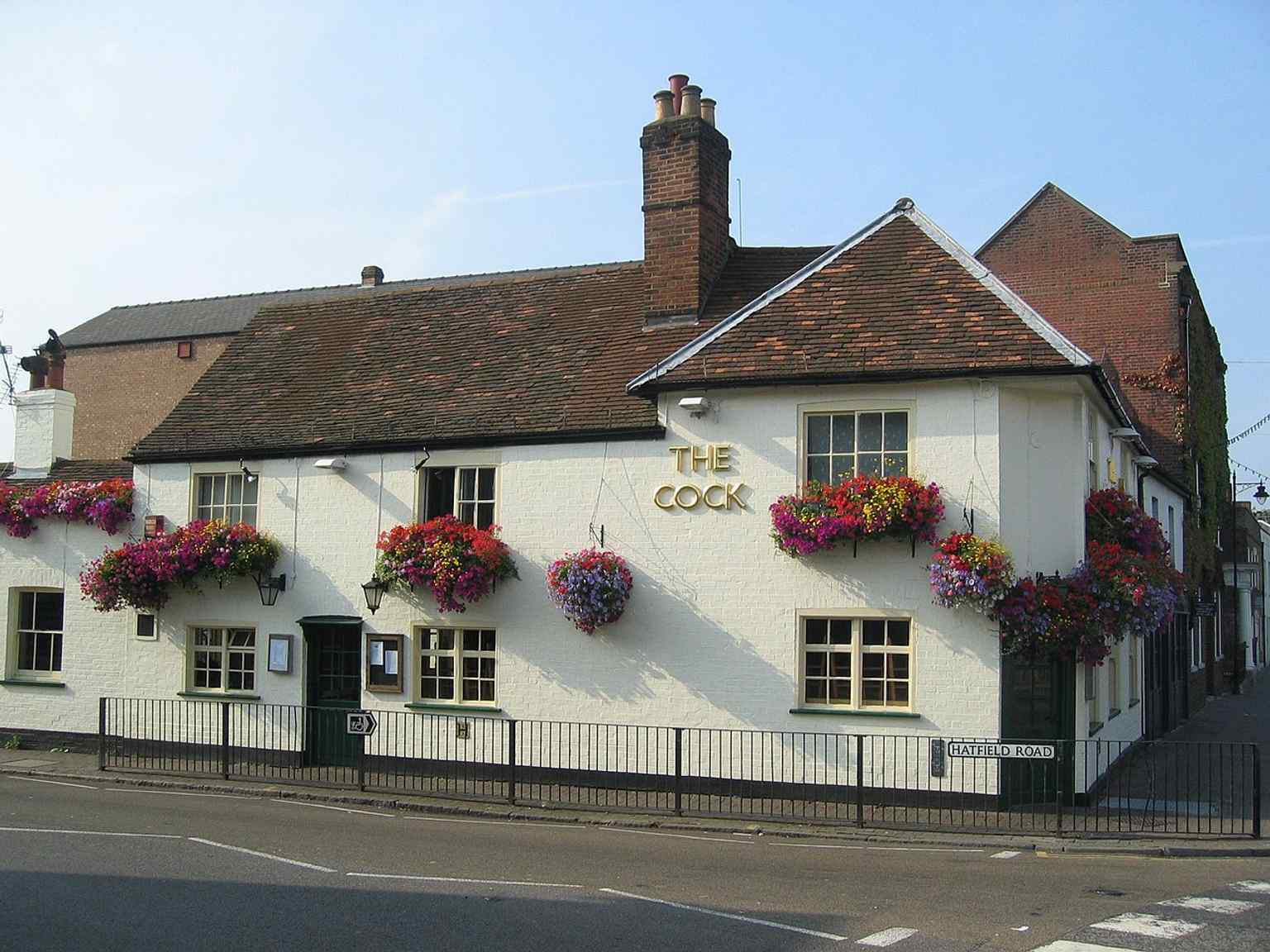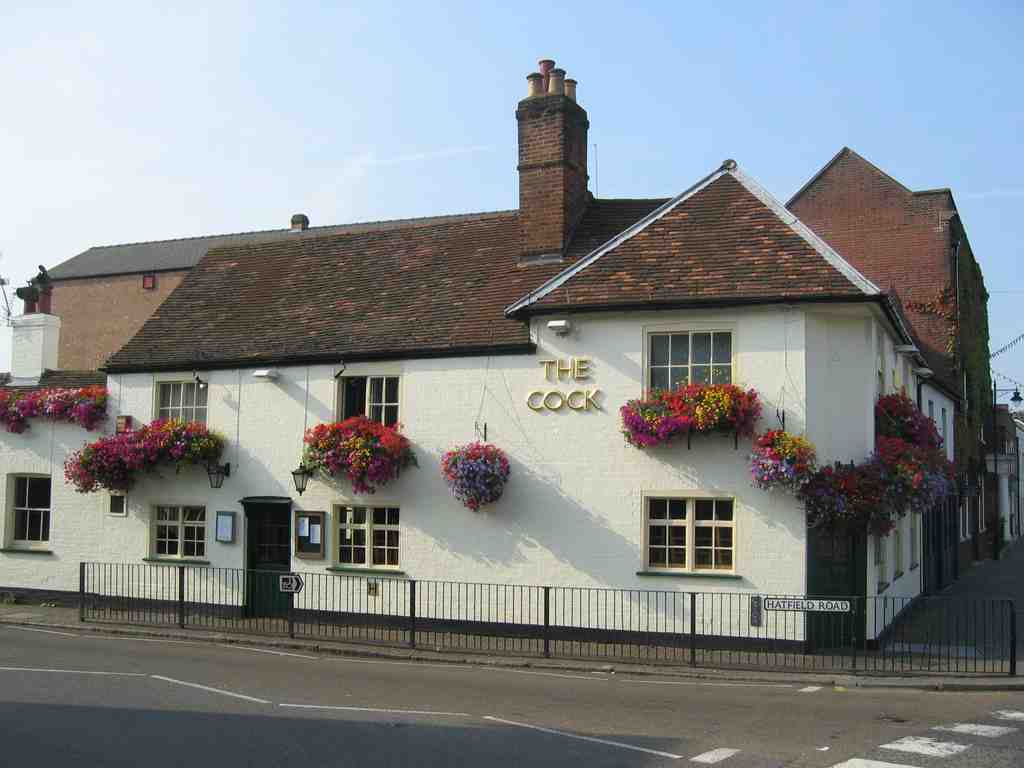
On your right, look for a low timber-framed corner house with pale plaster panels, a long tiled roof, and an angled street-facing front that turns neatly into Hatfield Road.
The Cock carries itself with the quiet assurance of a place that has seen more than most. This house dates from around sixteen hundred, and its original timber frame still shows through, which is one reason it earned Grade Two listed status, meaning the building is officially protected for its historic character. Yet the story here begins even earlier. Local museum records say this ground served as a field hospital during the Second Battle of St Albans, so before drink and conversation, there was blood, urgency, and fear.
Then came one of those delicious little false trails historians know so well. Bones turned up in the cellar, and people hoped they had found battle dead at last. The museum checked, and the truth proved far more domestic: they were animal bones, left from kitchen use.
By sixteen sixty-three, the first innkeeper we can name, George Barnes, appears in the record, and suddenly the pub steps out of rumour into firm history. It mattered enough that Hatfield Road originally took the name Cock Lane, and a nearby pond was known as Cock Pond. The picture in the app shows how this modest corner house still anchors the street plan around it.
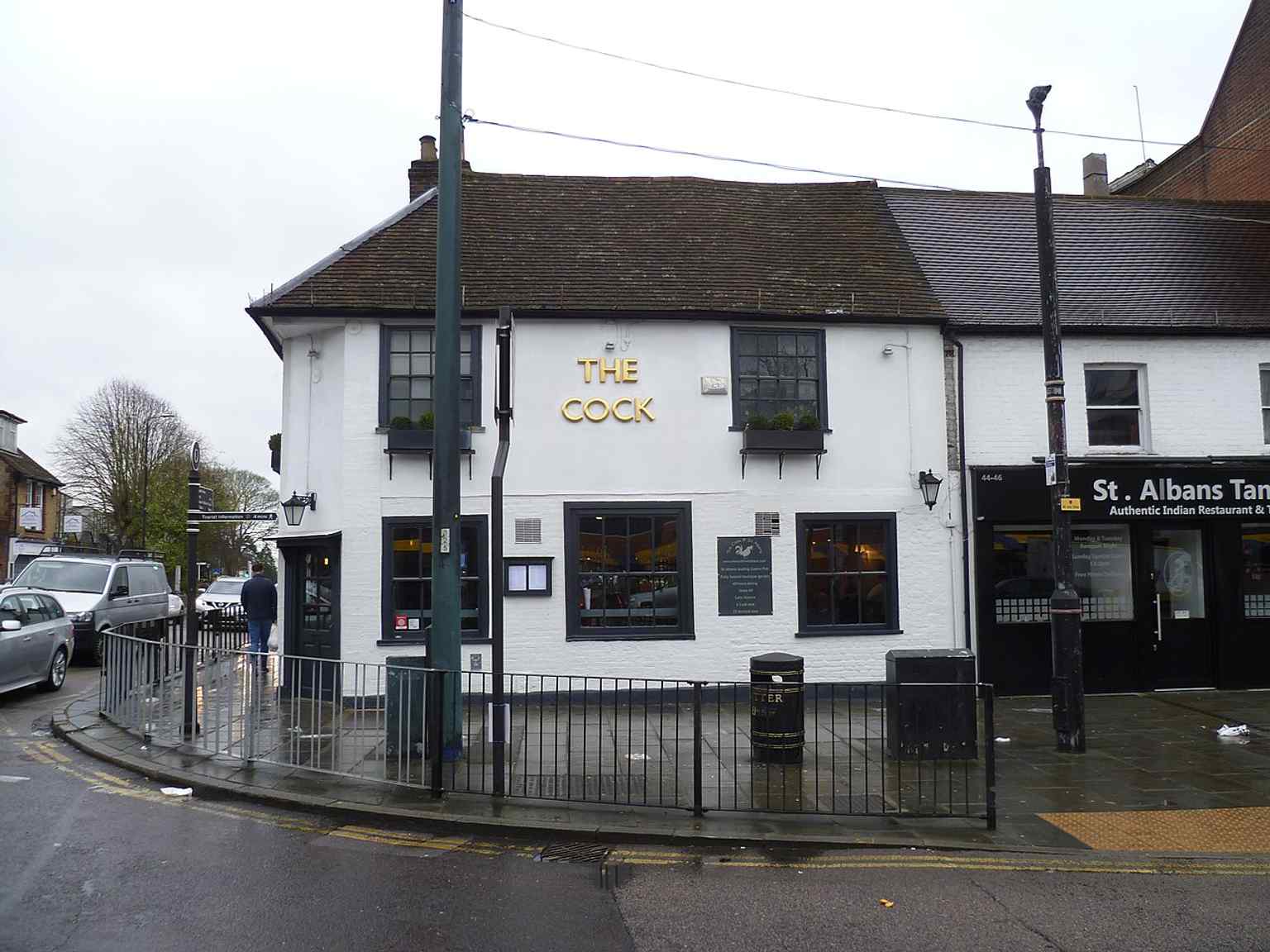
The Campaign for Real Ale says The Cock remains very much alive today, with two bars, a restaurant, a heated courtyard garden, and cask ales; if you choose to finish here, it is moderately priced and usually open from eleven in the morning until midnight, later on Fridays and Saturdays.