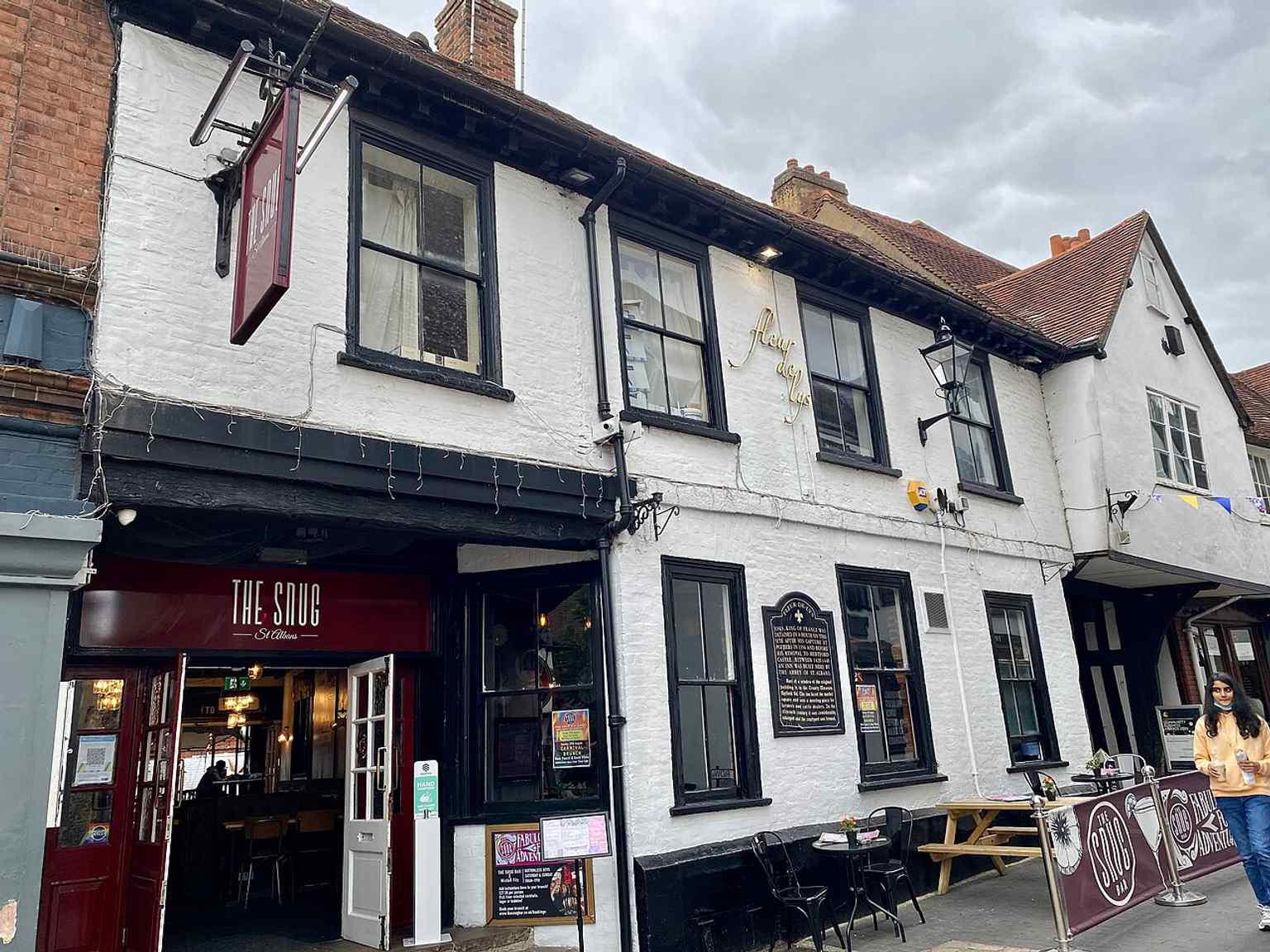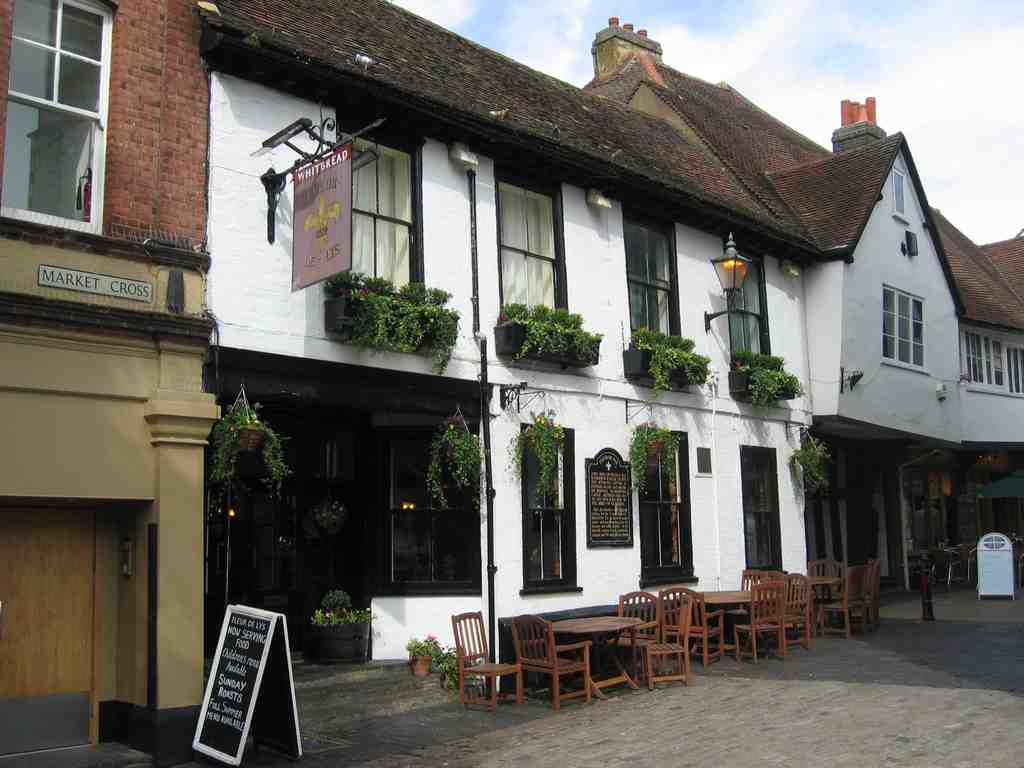
Look for the red-brick frontage with its neat rectangular windows and the broad carriage arch cut through one side.
This place wears its age rather slyly. The face you see is eighteenth century, but the story beneath it reaches back to the Middle Ages. In the fourteen hundreds, John and Matilda Pikebon left a house on this site, and soon after, between about fourteen twenty and fourteen forty, the abbot ordered an inn and brewery here. By the early sixteenth century, the building had much of its present shape.
In the older street view, that composed front still holds the line on French Row. Yet it never stood still for long. After the Reformation, people repaired it, altered it, and nearly rebuilt it. An old view from seventeen eighty-seven already shows a signboard jutting out over the archway, as if the inn were beckoning travellers in.
Then comes my favourite twist. Around seventeen forty-five, Thomas Dimsdale bought the Fleur de Lys. He was not just an inn owner. He became one of the bold early champions of smallpox variolation, an early form of inoculation using smallpox matter to provoke protection. In seventeen sixty-eight, Catherine the Great summoned him to Russia. He treated her, her son Grand Duke Paul, and about one hundred and forty courtiers, and returned with a fortune, a pension, and a Russian barony.
One famous tale claimed a captive French king lodged here, but historians found that story far too late to trust. Better evidence lies in the building itself: in eighteen ninety-six, when the neighbouring Great Red Lion came down, workers uncovered a carved medieval window fragment from this site.
The Fleur de Lys keeps its truest history in brick, timber, and survival. When you are ready, continue on for the next stop, which is almost at your shoulder.