
St Albans Audio Tour: Historic Pubs & Landmarks
Beneath the manicured lawns of St Albans lies the scorched earth of a Roman capital razed to the ground by vengeful warriors. This city is not merely a collection of medieval streets but a layered battlefield where power has shifted violently for two millennia. Unlock these secrets with an immersive self guided audio tour that pulls back the curtain on hidden landmarks and forgotten local legends. Did the rebels truly breach these walls to rewrite English history? Why does the Clock Tower hide a dark secret of imprisonment in its stone heart? What mysterious object was unearthed beneath the Cathedral floor that suggests a much older, darker faith? Navigate through centuries of political upheaval and scandalous betrayal. Let the echoes of rebellion guide your path as the past rises to meet your every stride. Return to the ghosts of the forum and start your journey today.
Tour preview
About this tour
- scheduleDuration 60–80 minsGo at your own pace
- straighten1.7 km walking routeFollow the guided path
- location_onLocationSaint Albans, United Kingdom
- wifi_offWorks offlineDownload once, use anywhere
- all_inclusiveLifetime accessReplay anytime, forever
- location_onStarts at The White Lion, St Albans
Stops on this tour
lock_open 3 free previews · 8 unlock with purchase
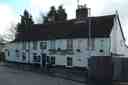
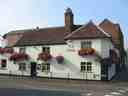
Look for the long, low pub with a plastered timber-framed front, a pitched roof, and a stout central brick chimney anchoring the building. The Hare and Hounds keeps its age…Read moreShow less
Open dedicated page →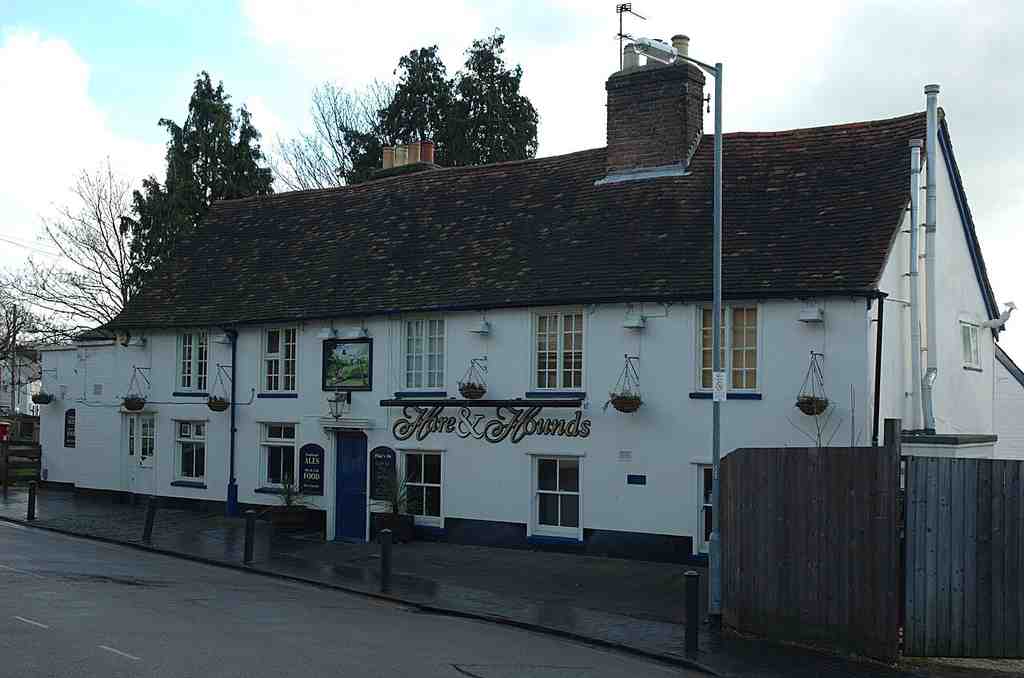
Hare and Hounds, St AlbansPhoto: Gary Houston, Wikimedia Commons, CC0. Cropped & resized. Look for the long, low pub with a plastered timber-framed front, a pitched roof, and a stout central brick chimney anchoring the building.
The Hare and Hounds keeps its age rather coyly. Officially, it is a Grade Two listed public house, dated to the seventeenth century or earlier, yet later research by Wessex Archaeology in twenty seventeen suggested something even more tantalising: parts of its fabric may be older than that modest listing admits. Above the main block sits a queen-strut roof, a timber roof frame with two upright braces supporting the ridge, a form common in the seventeenth and early eighteenth centuries. That great brick chimney through the western bays likely belongs to the earliest core of the house.
It did not arrive all at once. Builders added two bays to the east in the late eighteenth or early nineteenth century, pushed out a south extension in the late nineteenth, and then tucked on a single-storey extension between nineteen twenty-four and nineteen thirty-seven. In the picture, you can sense the long, accumulated shape for yourself.
Even its birth date carries a small argument. One account places it on St Albans maps by sixteen fifty; archaeology can only confirm it by seventeen twenty-one. Either way, this was already an old house by the early eighteenth century, standing detached on the edge of Sopwell Lane and marking the coach road into town, where travellers paused before pressing on.
More recently, it won a festive pub prize in twenty eighteen, reopened after a six-figure reinvention in twenty twenty-three, and by autumn twenty twenty-four it was seeking consent for careful repair work, which tells you something important: old buildings survive because people keep choosing them. If you fancy returning later, it is a moderately priced pub and opens daily from noon.
The Hare and Hounds feels less like a relic than a place still negotiating its next chapter.
When you are ready, let the road draw you onward into the heart of St Albans.
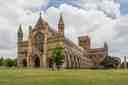
On your right, look for the immense red-brick and flint church with its broad west front and the great square tower rising from the middle like a watchful crown. This is St…Read moreShow less
Open dedicated page →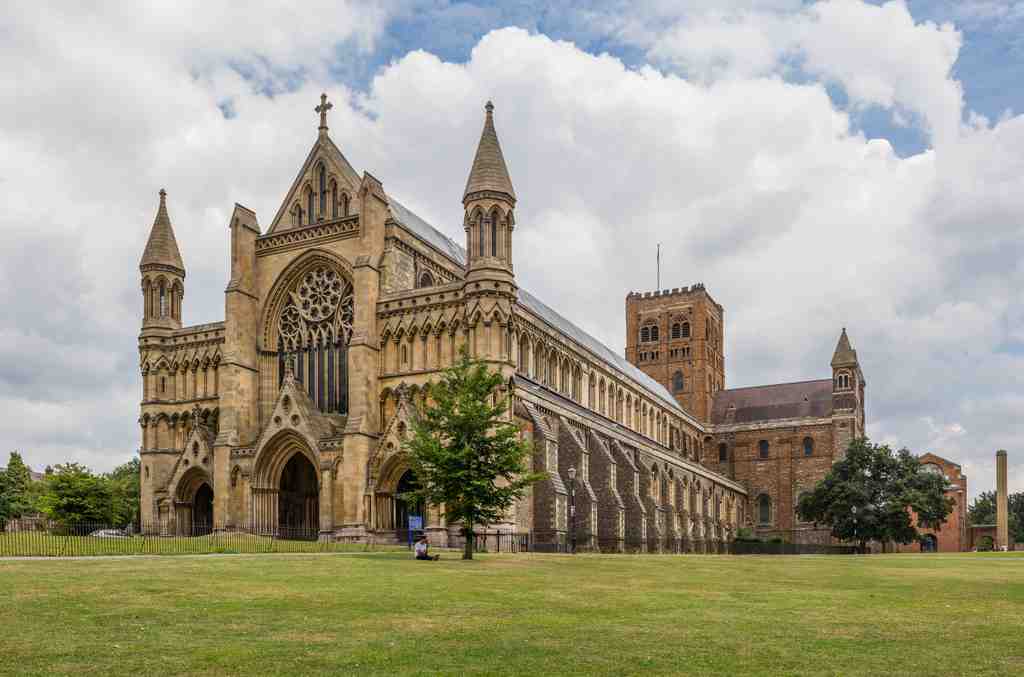
St Albans CathedralPhoto: Diliff, Wikimedia Commons, CC BY-SA 3.0. Cropped & resized. On your right, look for the immense red-brick and flint church with its broad west front and the great square tower rising from the middle like a watchful crown.
This is St Albans Cathedral, still often called simply the Abbey, and it keeps one of the oldest and most intimate legends in English Christianity. According to tradition, Alban lived here in Roman Verulamium in the third or fourth century, when Christians faced persecution. He sheltered a priest named Amphibalus, admired his courage, and quietly converted. When soldiers arrived, Alban put on the priest’s cloak and gave himself up in his place. He was led to execution on the hill nearby, and the story says that, parched with thirst, he prayed and a spring burst from the ground at his feet. Even the name Holywell Hill still carries an echo of that miracle.
A shrine stood here by the mid-fourth century, and pilgrims came in hope of healing long before this vast church took shape. Then, in the year seven hundred and ninety-three, King Offa of Mercia founded a monastery here. The building you see now owes much of its scale to the Normans. In ten seventy-seven, Abbot Paul of Caen arrived with a master mason named Robert and set about creating something astonishingly ambitious. They borrowed heavily from the ruined Roman city below, so Roman bricks and tiles found a second life in these walls. That is part of the cathedral’s quiet magic: one civilisation folded into another.
The plan was grand almost beyond reason. The nave, the main central hall of the church, runs for eighty-five metres, the longest of any cathedral in England. If you glance at the app, the interior view gives you a marvellous sense of that long, solemn reach. And above the crossing, where the long body of the church meets its side arms, rises the great central tower - the only surviving eleventh-century tower of its kind in England.
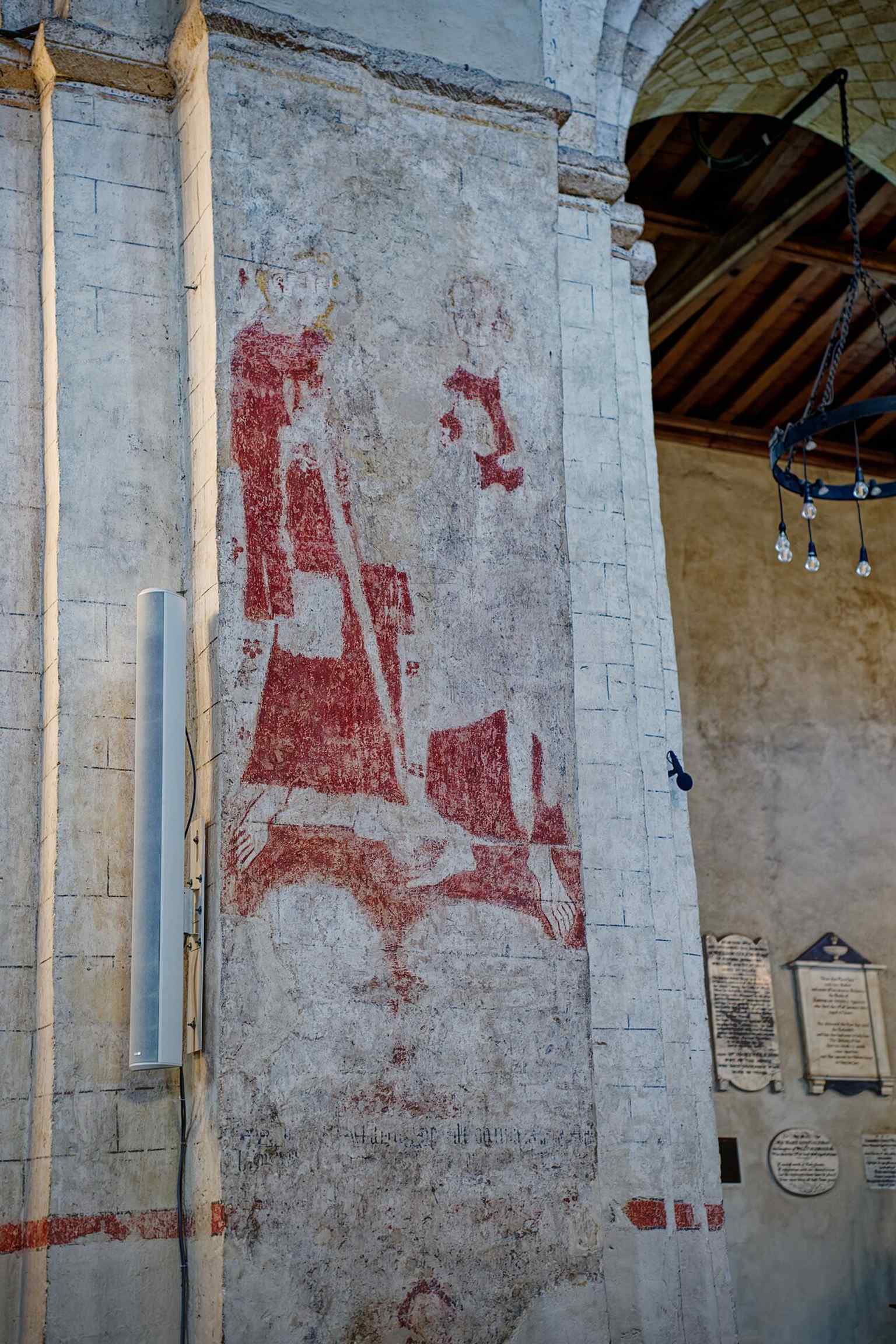
A long view down the nave, the longest in any English cathedral, echoing the Abbey’s huge Norman footprint.Photo: Tilman2007, Wikimedia Commons, CC BY-SA 4.0. Cropped & resized. But survival came dearly. In fifteen thirty-nine, Henry the Eighth’s dissolution of the monasteries ended the abbey. Monks left, shrines were broken apart, and the monastic library scattered. The church survived because the townspeople bought it and kept it alive as their parish church. That curious double life still remains: it is both cathedral and parish church, which is rather unusual in England.
Inside, the shrine of Saint Alban still draws people in, as it has for centuries; you can see it on your screen here. The tomb of Amphibalus is there as well, so the old story of host and guest still lingers at the building’s heart. The fabric itself nearly failed more than once - cracked walls, subsiding ground, storm damage, even serious talk of demolition - until Victorian restorers rescued it. George Gilbert Scott saved much; then Lord Grimthorpe, wealthy and forceful, reshaped the west front you see now, not always delicately, but decisively enough to secure the cathedral’s future. In eighteen seventy-seven, the church finally became a cathedral in law as well as stature.
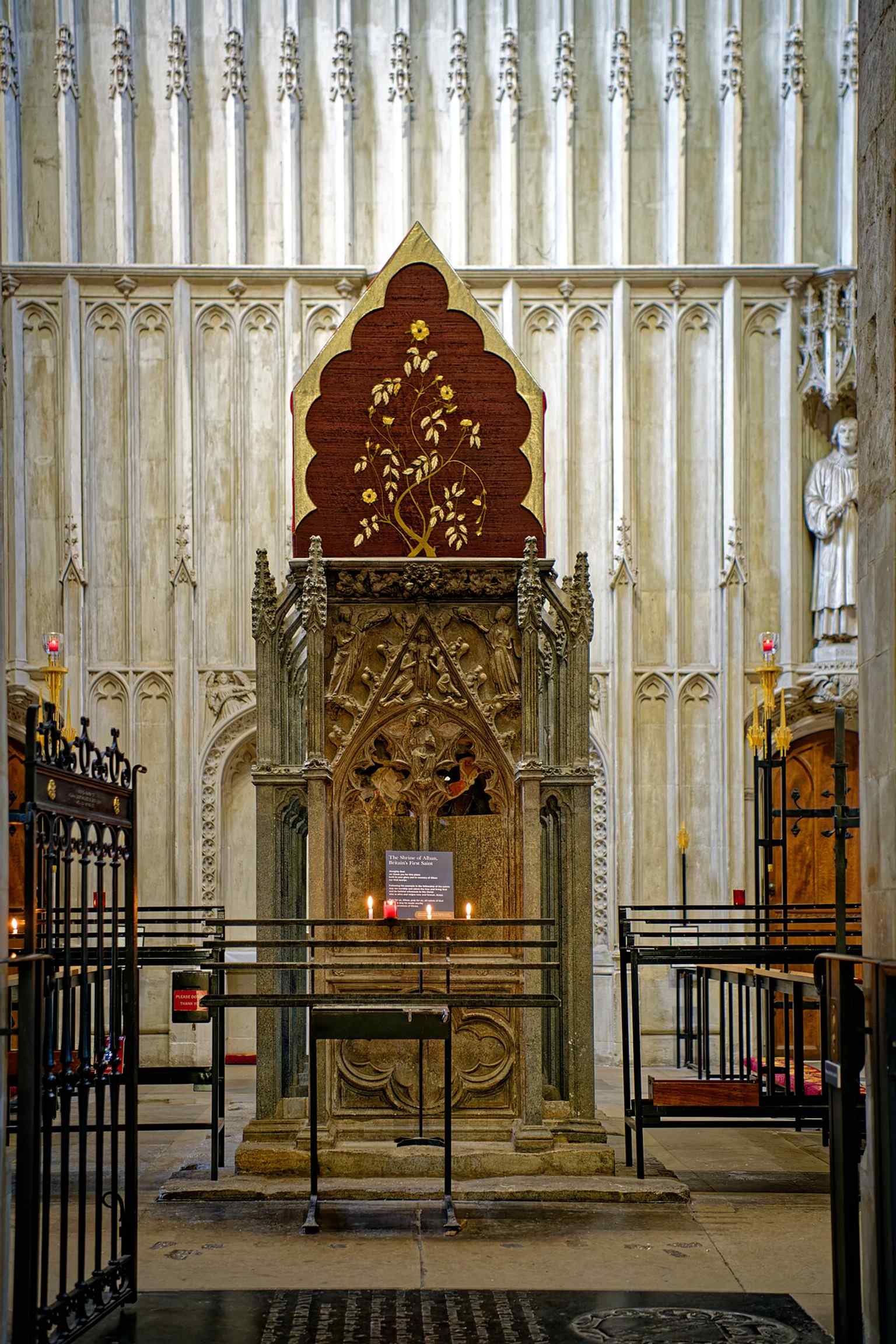
The shrine of St Alban, built beside the supposed martyrdom site and still the focus of pilgrimage today.Photo: Tilman2007, Wikimedia Commons, CC BY-SA 4.0. Cropped & resized. If you choose to go inside later, the cathedral is generally open every day from nine in the morning until five in the afternoon.
This is a place where martyrdom, monarchy, ruin and rescue all settle into one immense body of stone.
When you are ready, continue on and let the city unfold its next secret.
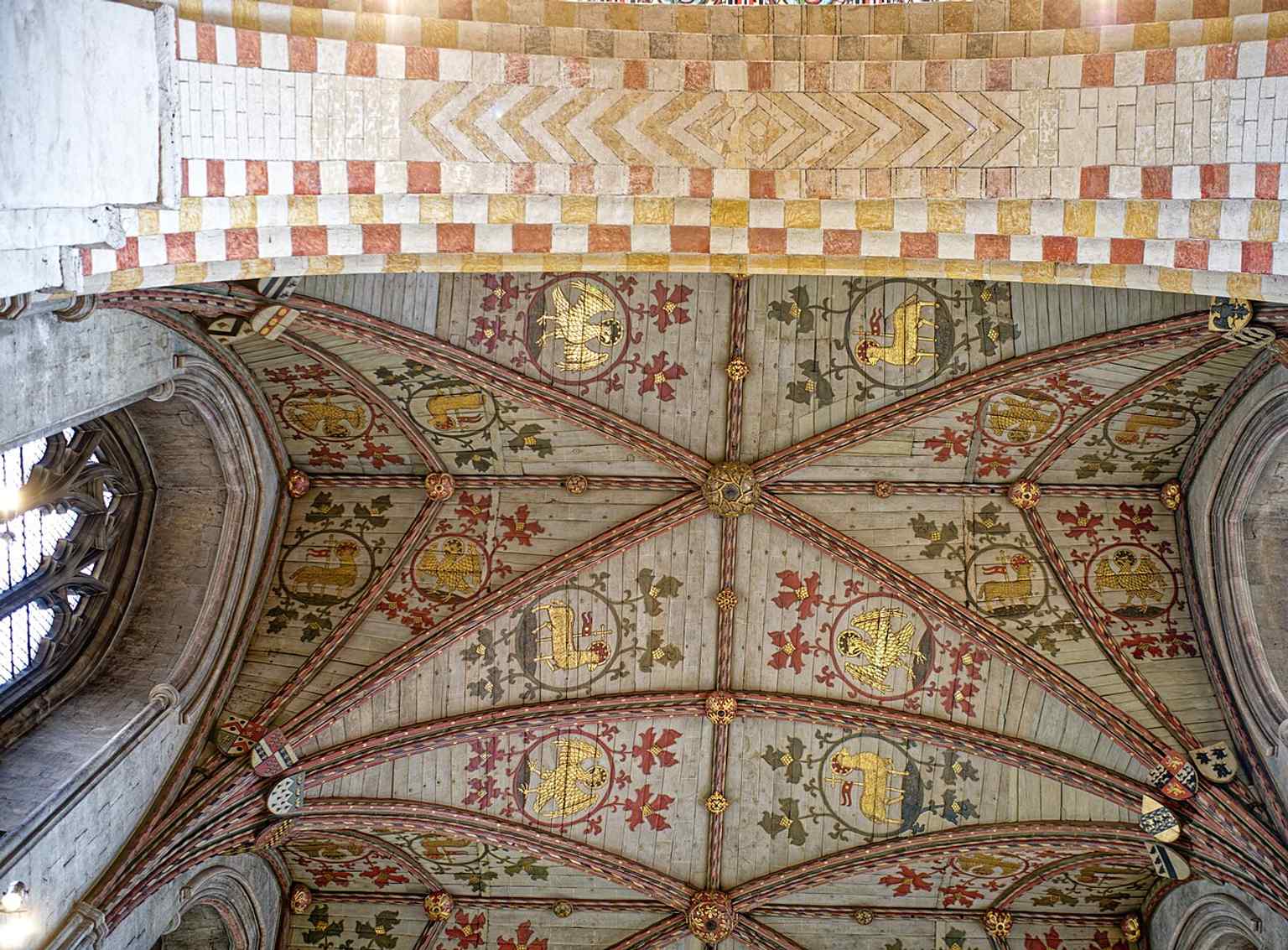
The chancel ceiling, part of the richly restored interior that contrasts with the Abbey’s original bare Norman church.Photo: Tilman2007, Wikimedia Commons, CC BY-SA 4.0. Cropped & resized. 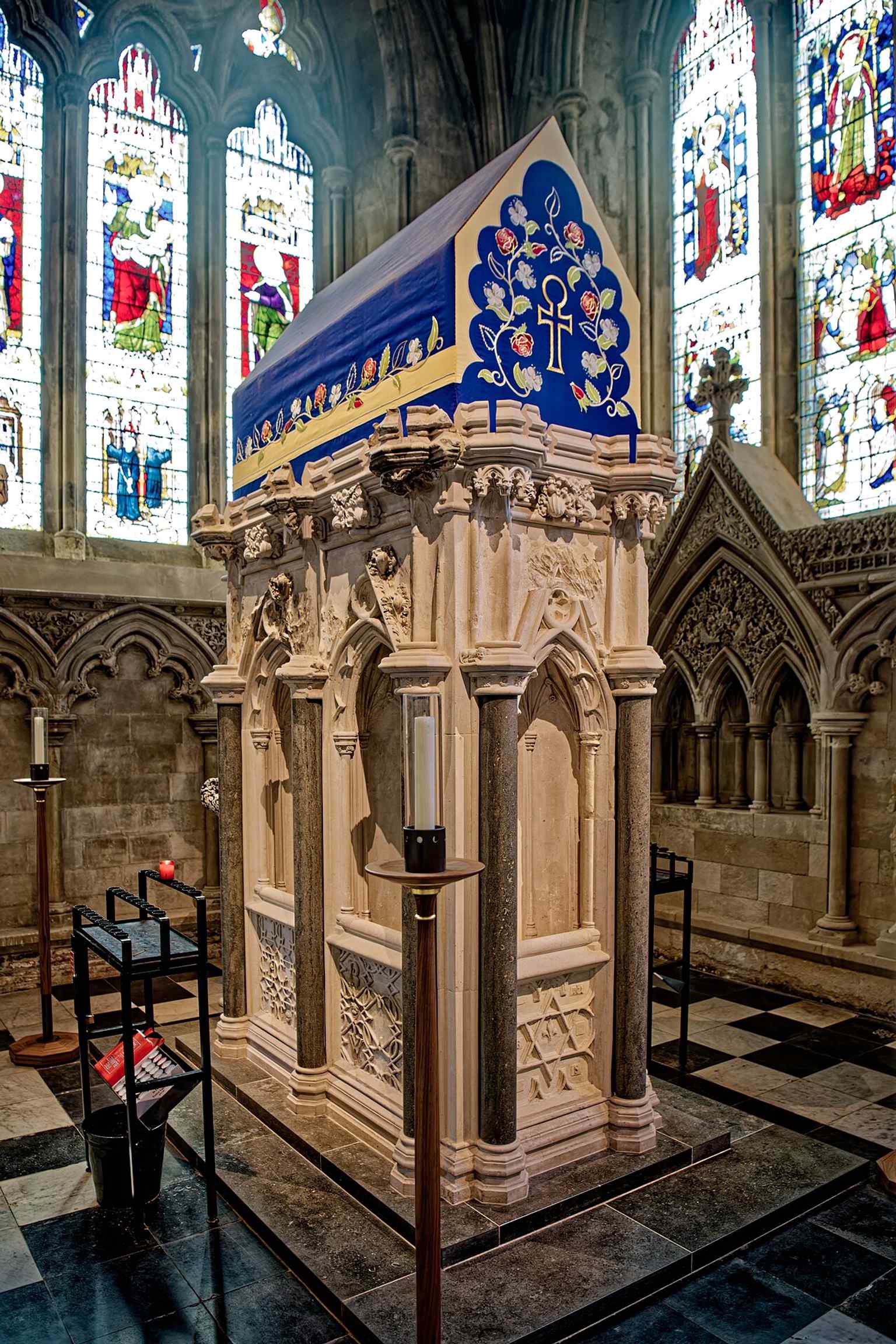
The shrine of St Amphibalus, another important medieval tomb connected to the cathedral’s martyr traditions.Photo: Tilman2007, Wikimedia Commons, CC BY-SA 4.0. Cropped & resized. 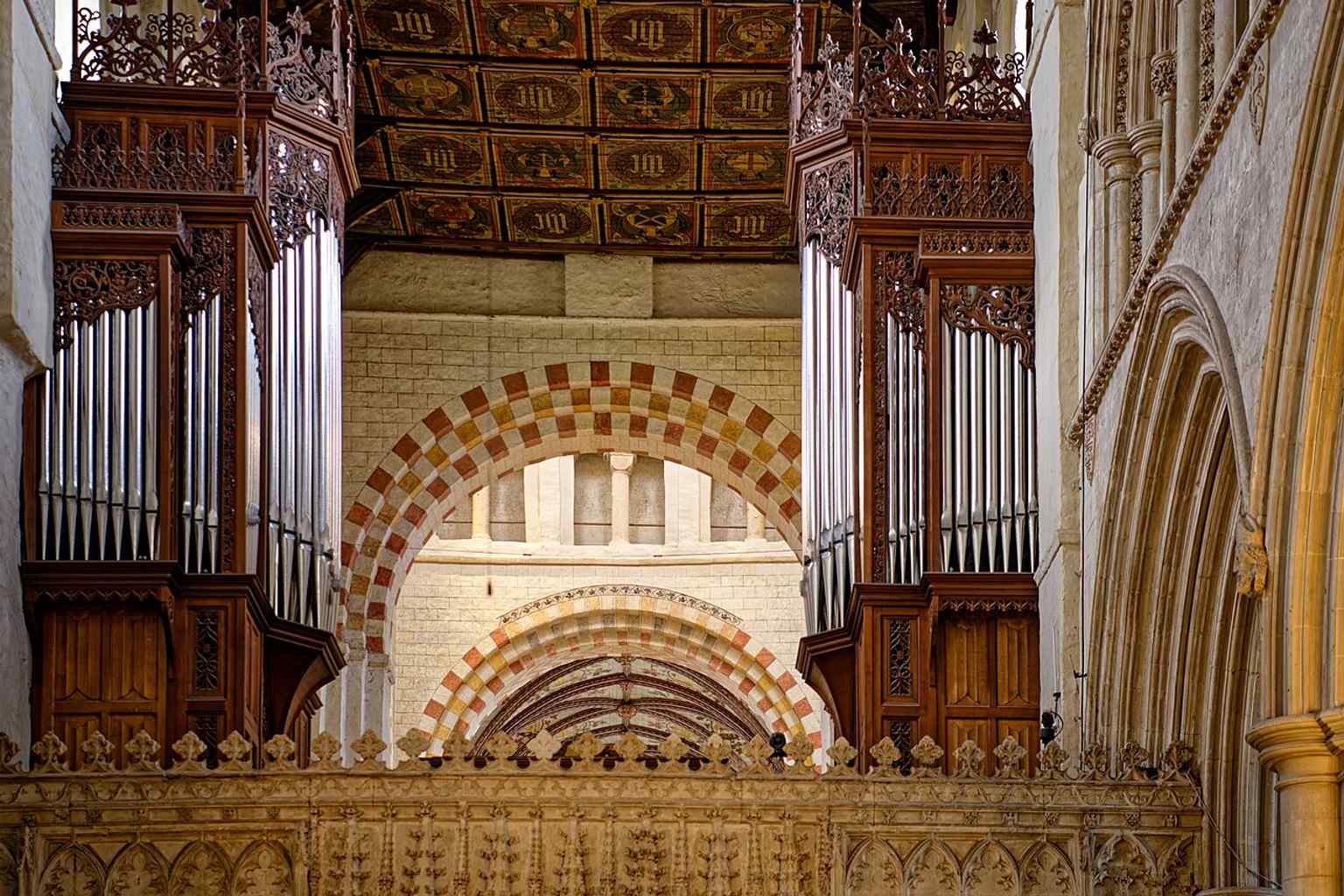
A view through the crossing aisle, where the great central tower rises above the oldest surviving Norman core.Photo: Tilman2007, Wikimedia Commons, CC BY-SA 4.0. Cropped & resized. 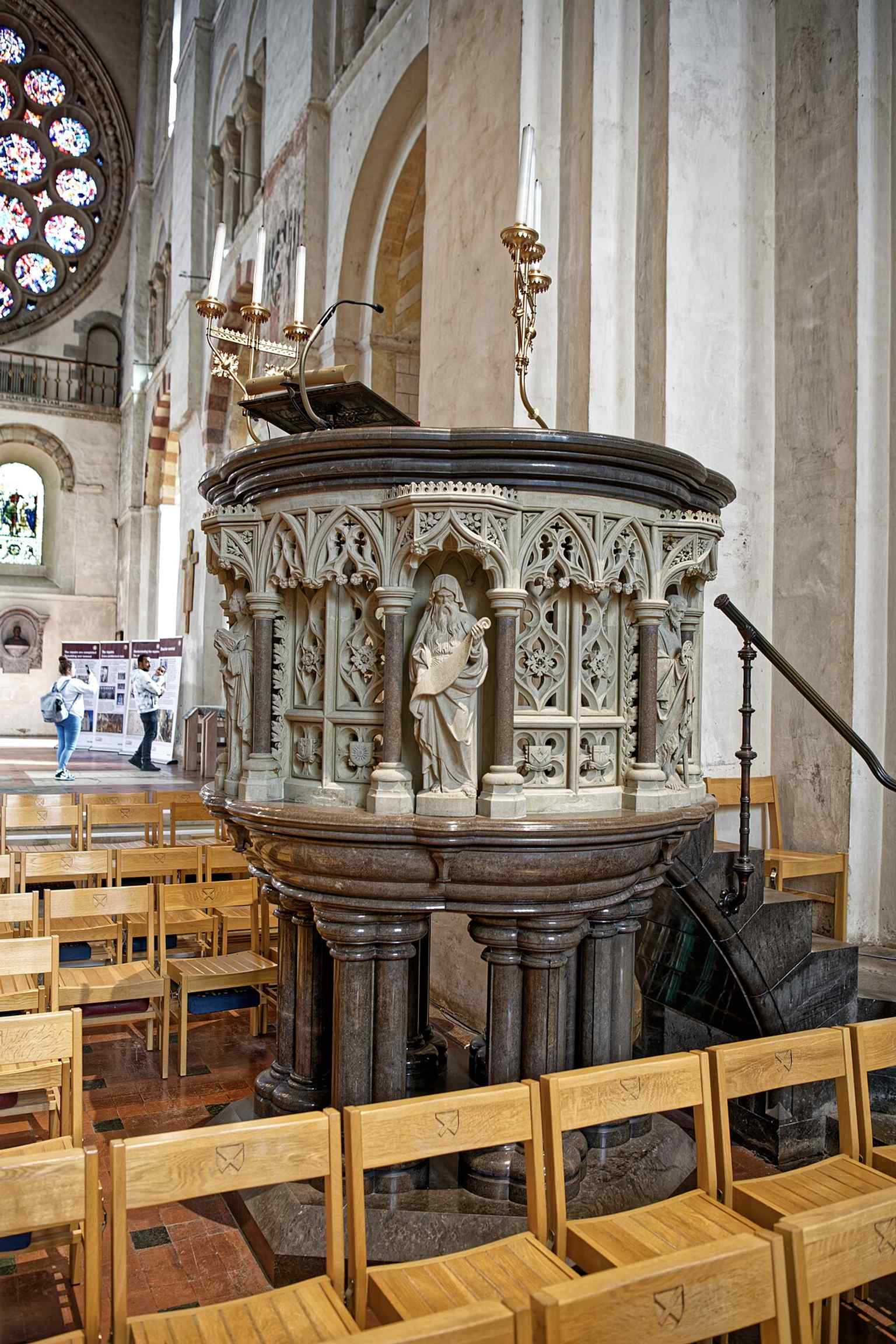
The pulpit in the nave, part of the church’s continuing life as both cathedral and parish church.Photo: Tilman2007, Wikimedia Commons, CC BY-SA 4.0. Cropped & resized.
Show 8 more stopsShow fewer stopsexpand_moreexpand_less
On your left, look for a dark timber-framed frontage with pale infill panels and an upper storey that projects slightly over George Street. This is the Old Kings Arms, a…Read moreShow less
Open dedicated page →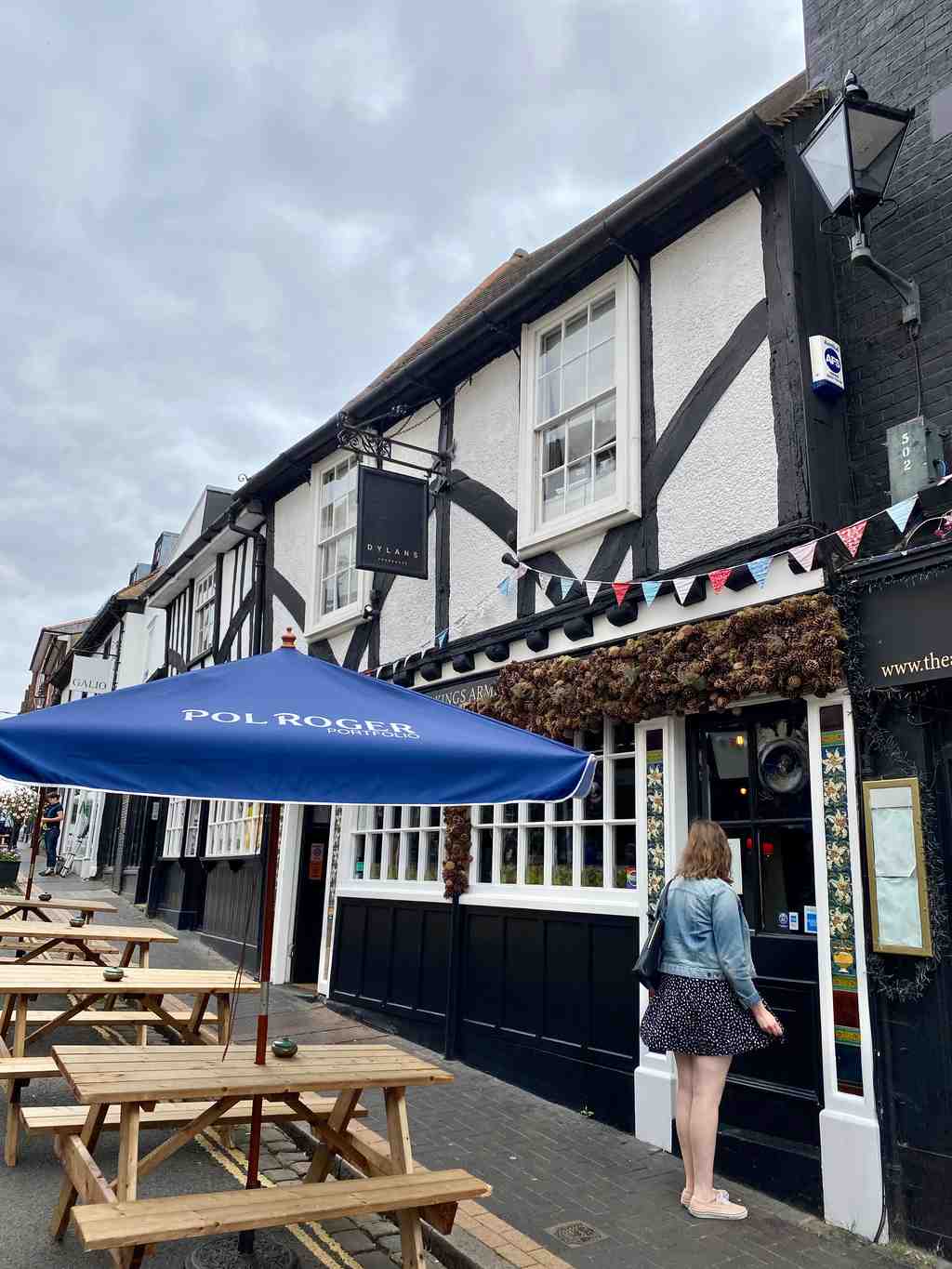
The Old Kings ArmsPhoto: No Swan So Fine, Wikimedia Commons, CC BY-SA 4.0. Cropped & resized. On your left, look for a dark timber-framed frontage with pale infill panels and an upper storey that projects slightly over George Street.
This is the Old Kings Arms, a fifteenth-century building that has inspired a quite remarkable amount of attention. It is Grade Two listed, meaning the law protects its special historic character, and local researchers treated it almost like a patient under careful observation. The St Albans Society kept floor plans from nineteen seventy-one and nineteen ninety-six, along with a sketch of the timber framework and photographs taken up in the roof space, all to record what still survived inside the medieval structure. If you glance at the picture in the app, you can see that strong lattice of timber for yourself. Its later life turned rather contentious. In nineteen ninety-seven, a complaint accused the owners of carrying out internal works without permission, so the council stepped in, approved the necessary changes to a protected building, and later required corrective work. Then the hanging sign started its own dispute: complaints arrived in nineteen ninety-seven, official applications failed in nineteen ninety-eight, the old sign came down in December nineteen ninety-nine, and a replacement went up in March two thousand. Even in two thousand and three, more unauthorised signage had to be removed.
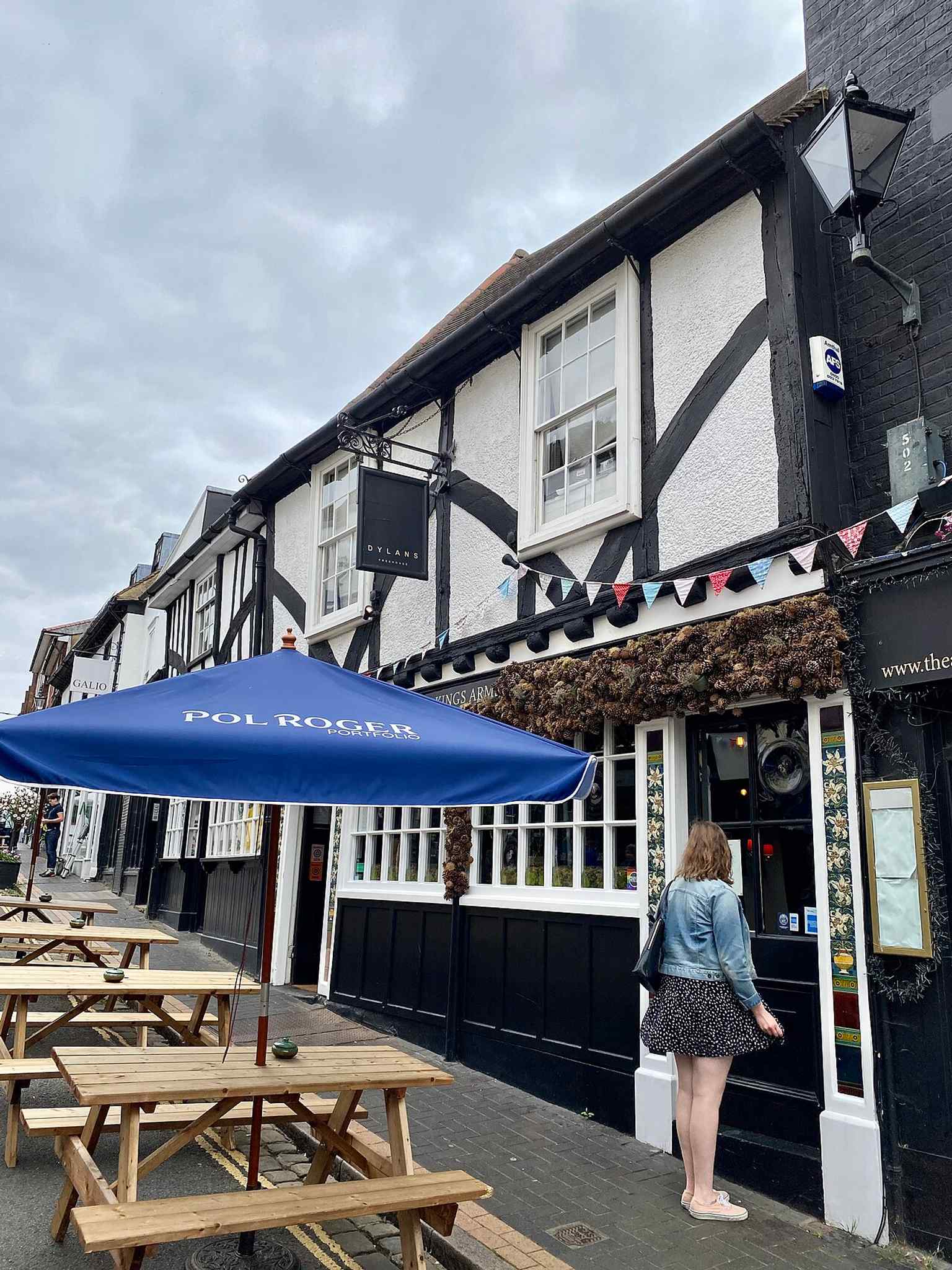
The timber-framed Old Kings Arms in George Street, photographed in 2021 — the historic pub that was later revived after years of closure as Dylans.Photo: No Swan So Fine, Wikimedia Commons, CC BY-SA 4.0. Cropped & resized. Then came a long hush. After closing in the late nineteen nineties, and even serving for a time as a French restaurant, the building stayed out of pub use for roughly fifteen years. In twenty fifteen, Sean Hughes and his family brought it back as Dylans at The Kings Arms, later winning national praise as a gastro pub, a pub valued as much for food as for drink.
If you plan to return, it is moderately priced, closed on Mondays, and otherwise opens from lunchtime or early evening into the night. This house endured because people kept fighting over what it should be, until someone chose to cherish it. When you are ready, carry on to the next stop.
On your left is a modest red-brick frontage with tidy sash windows and a broad carriage arch through the middle, an eighteenth-century face concealing a far older inn. The Fleur…Read moreShow less
Open dedicated page →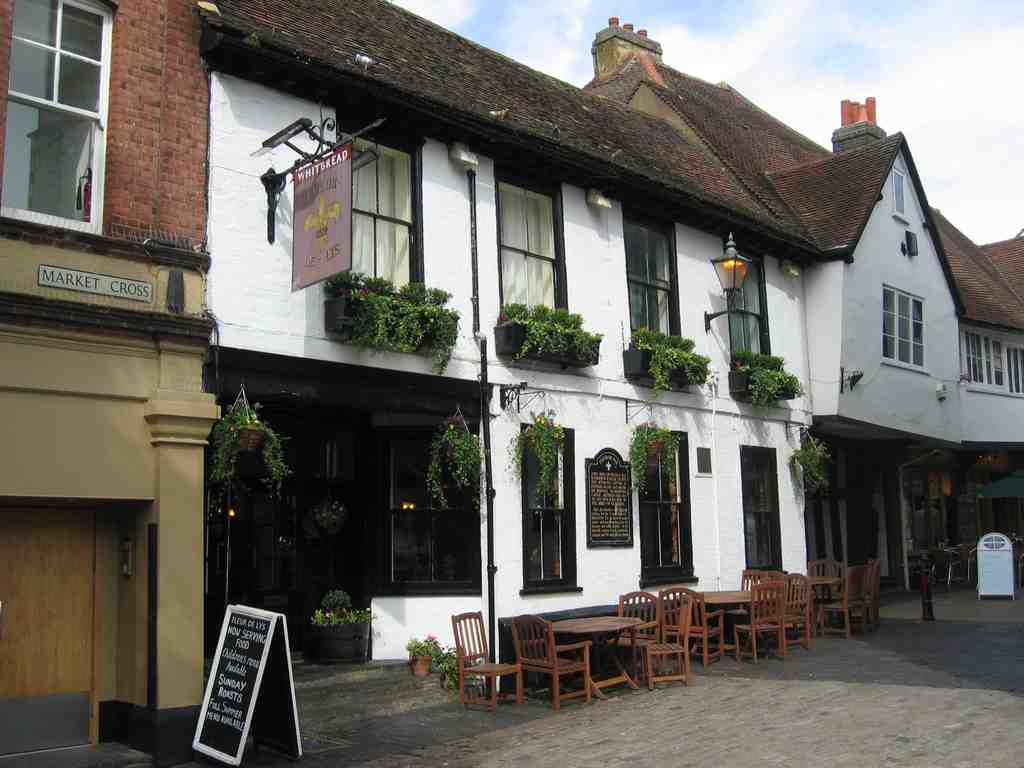
Fleur de Lys, St AlbansPhoto: Gary Houston, Wikimedia Commons, CC0. Cropped & resized. On your left is a modest red-brick frontage with tidy sash windows and a broad carriage arch through the middle, an eighteenth-century face concealing a far older inn.
The Fleur de Lys has always kept a little of itself in reserve. Long before this brick front appeared, John and Matilda Pikebon left a house on this site in the fourteenth century. Then, between fourteen twenty and fourteen forty, the abbot ordered an inn and brewery here, and by the early sixteenth century the building had settled into much of the shape it still holds.
It did not stay still. After the Reformation, owners repaired it, altered it, and very nearly rebuilt it, so what stands before you is a careful layering of centuries. The image shows that pleasing deception: a later frontage with a medieval survivor tucked behind it.
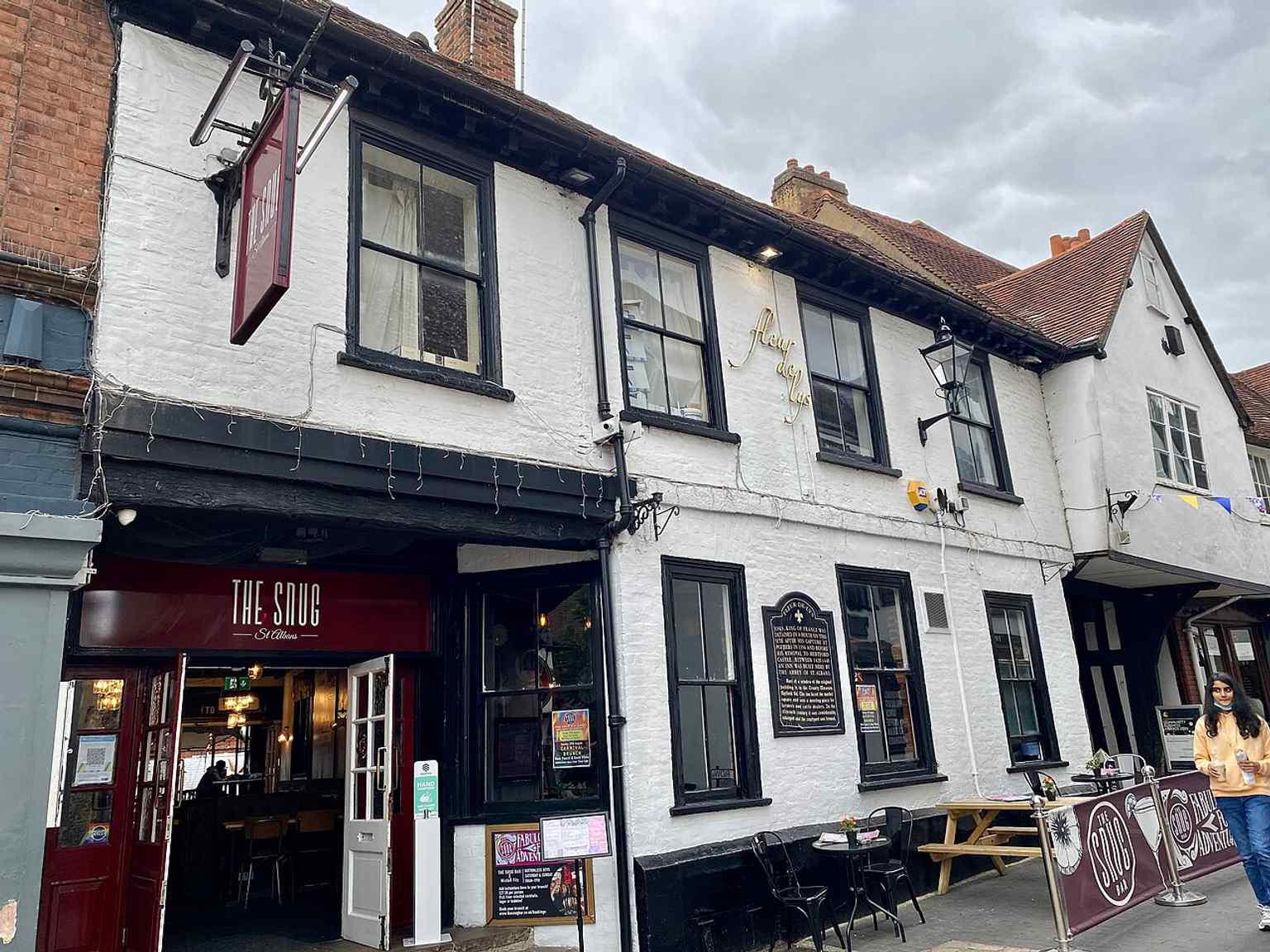
The surviving Fleur de Lys frontage on French Row, showing the later brick façade that still preserves a medieval inn beneath.Photo: No Swan So Fine, Wikimedia Commons, CC BY-SA 4.0. Cropped & resized. Then comes the deliciously unexpected turn. Around seventeen forty-five, Thomas Dimsdale bought this inn. He became one of the great champions of variolation, an early smallpox treatment that gave a patient a controlled infection to guard against a worse one later. In seventeen sixty-eight, Catherine the Great summoned him to Russia to treat her, her son Grand Duke Paul, and about one hundred and forty courtiers. She paid him richly, granted him a pension, and even made him a Russian baron.
In the nineteenth century, a coach left from here for London each day, and when the neighbouring Great Red Lion came down in eighteen ninety-six, workers uncovered a fragment of cusped, or scalloped, medieval window carving from this very building.
The Fleur de Lys wears its centuries with quiet confidence. When you are ready, continue on to the next stop.
On your right, look for the pale stone frontage with its crisp three-part symmetry, a porch of four Ionic columns, and a triangular pediment set high above the centre. From where…Read moreShow less
Open dedicated page →On your right, look for the pale stone frontage with its crisp three-part symmetry, a porch of four Ionic columns, and a triangular pediment set high above the centre.
From where you stand, St Albans Town Hall has the poise of a building that expects to be obeyed. It opened in eighteen twenty-six, when the town decided its old Moot Hall in the Market Place had become too shabby and too awkward to rescue. The architect, George Smith, a local man from Aldenham who trained in London before returning home, argued firmly against rebuilding on the old site. He reckoned repairs alone would cost five hundred to six hundred pounds, around fifty to sixty thousand pounds today, and a full rebuild about four thousand pounds, roughly four hundred thousand now. Worse, he thought the old position was poor for security. His report helped settle a lively civic quarrel, and St Peter’s Street won.
Smith gave the town a neoclassical design, which means it borrows the calm order of ancient Greek and Roman architecture. You can read that in the strict symmetry, the four-column portico, and the Ionic capitals, those neat curled tops on the columns. Historians later called Smith meticulous and dependable, and many consider this one of his finest surviving works.
Yet the building’s life was never only dignified. Almost at once, it opened its doors to anti-slavery lectures, so reform entered here alongside law and government. Then, in eighteen thirty-one, the town hall turned grand host for the first county ball. The Morning Post admired the occasion, noting the patronage of the Earl of Verulam and Lord Grimston, dancing that began at eleven, Weippert’s band, and a supper judged first-rate. Justice downstairs, elegance upstairs: that contrast suits this place rather well.
And then came scandal. In eighteen fifty-one, the Bribery Commission sat here to investigate Jacob Bell’s election campaign. The findings were astonishing. Bell’s side had spent about two thousand five hundred pounds, something like a quarter of a million pounds today, and voters were commonly paid five pounds each, around five hundred pounds in modern terms. Out of only four hundred and eighty-three eligible voters in a town of about seven thousand people, the commissioners found that three hundred and eight had taken money. The result was brutal: St Albans lost its parliamentary representation for a time. If you glance at the courtroom image on your screen, you can see the octagonal room, eight-sided, wood-panelled, and intimate enough to make every accusation land with force. This was also a working courthouse in the old sense, with quarter sessions, local criminal courts that met four times a year, and even cells below for prisoners awaiting trial. Civic ceremony and detention sat almost on top of each other here. Later, the council reshaped parts of the building again, including turning the Grand Jury room into a council chamber in eighteen ninety-nine, before civic government moved elsewhere in the twentieth century and the courts finally left for Bricket Road in nineteen ninety-two.
Its newest reinvention is the gentlest of all. After a major conversion by John McAslan and Partners, costing seven point seven five million pounds, the building reopened in twenty eighteen as the St Albans Museum and Gallery. If you fancy it, have a look at the before-and-after image in the app; it shows beautifully how a courthouse learned to present itself as a museum. If you want to go inside, the museum is open every day from ten in the morning until four in the afternoon.
For all its classical calm, this building has held reform, vanity, punishment and public pride in one remarkably composed shell.
When you are ready, continue on toward the market, where the town’s civic story turns back into trade.
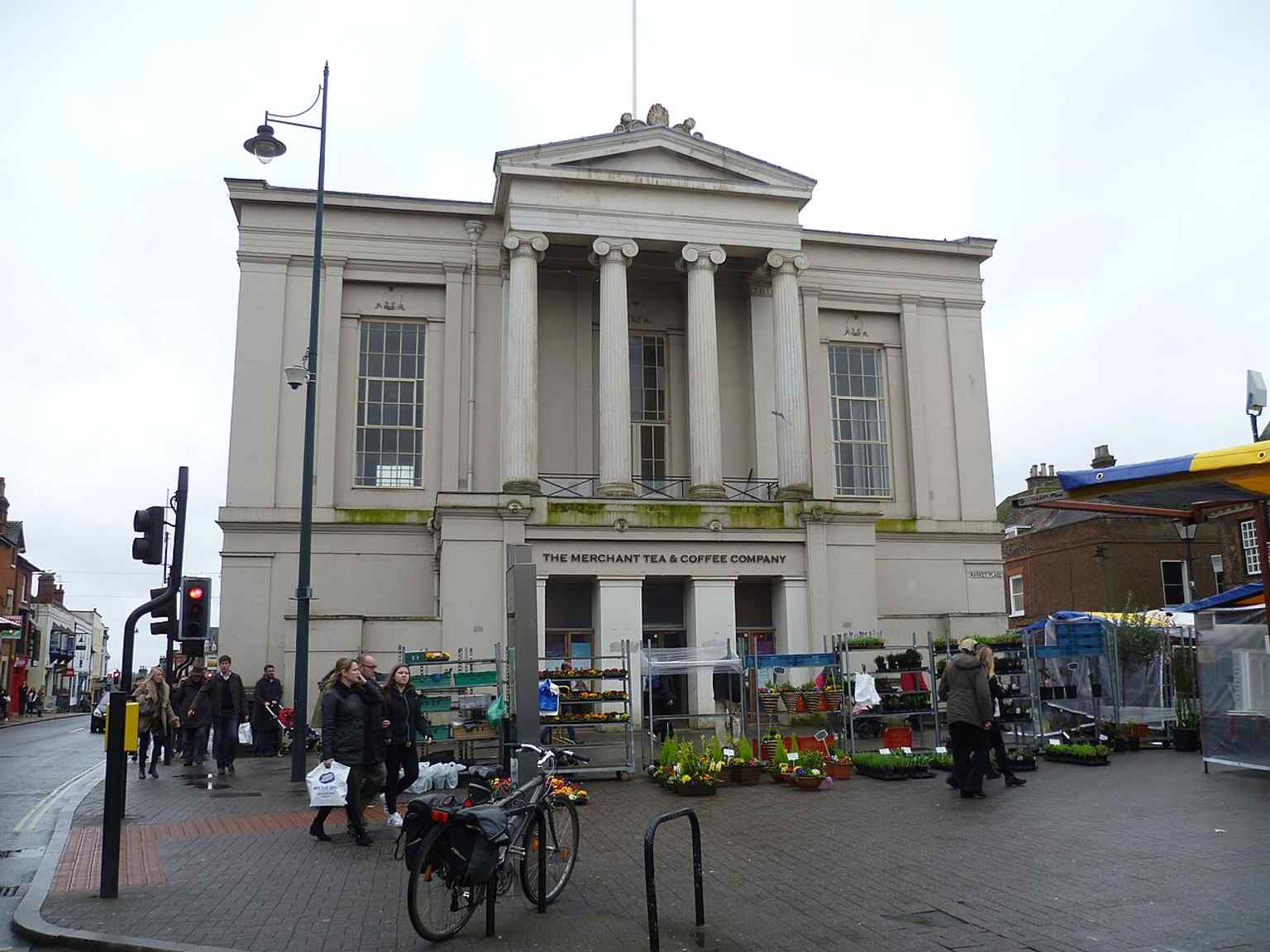
The Town Hall fronting Market Place, where St Albans’ civic life moved in 1826 when the new hall replaced the old Moot Hall.Photo: Philafrenzy, Wikimedia Commons, CC BY-SA 4.0. Cropped & resized. 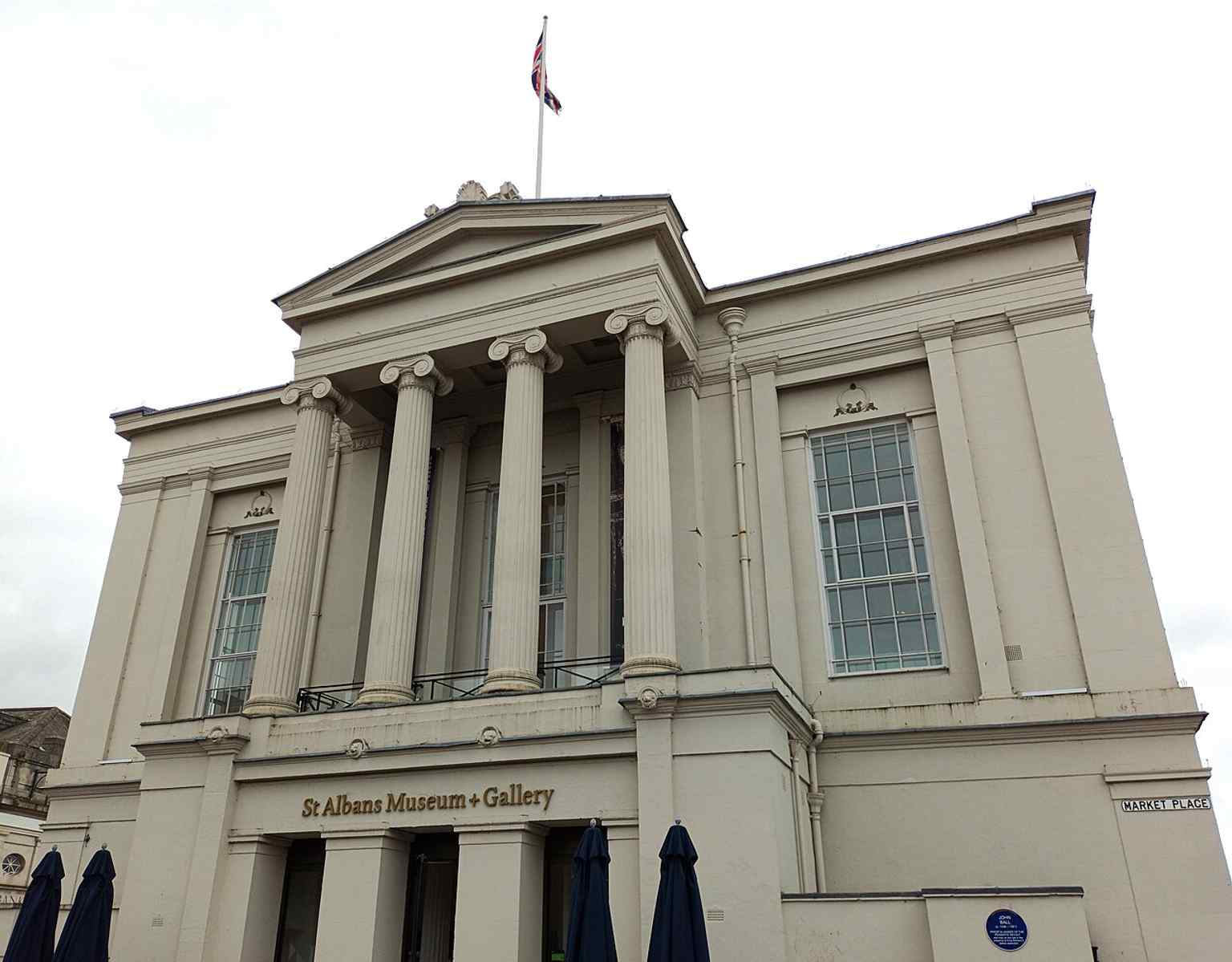
St Albans Museum and Gallery in the former Town Hall, showing the building’s modern life after its 2018 conversion from courthouse and council chambers.Photo: Acediscovery, Wikimedia Commons, CC BY 4.0. Cropped & resized. On your left, look for the broad paved sweep of Market Place and Saint Peter’s Street: a long, gently rising strip of open roadway whose widened shape still marks the market’s…Read moreShow less
Open dedicated page →On your left, look for the broad paved sweep of Market Place and Saint Peter’s Street: a long, gently rising strip of open roadway whose widened shape still marks the market’s ancient ground.
This is not simply where a market happens. This is the market: England’s oldest street market, and the oldest in the country still trading on its original site. After Canterbury’s market closed in twenty twenty-two, only York outranked Saint Albans by age, and in twenty twenty-four this one claimed a fresh title of its own, Best Large Outdoor Market from the National Association of British Market Authorities.
Its story begins with Wulsin, the sixth abbot of Saint Albans. He founded the market to bring money into the abbey and, just as importantly, to pull a new town into being beside the Waxhouse Gate. So commerce and urban planning began here together. By at least the late twelve hundreds, the trading days had settled into Wednesday and Saturday, the same rhythm the market still keeps.
Medieval markets liked order, even when people did not. Traders clustered by goods: meat in the Fleshambles, fish in the Fish Shambles, wheat in Wheat Cheping, leather in Leather Shambles, wool in its own section. “Shambles” simply meant rows or benches for selling. Kings protected the abbey’s rights here too. Henry the Second confirmed control of the town and market, and Richard the First did the same.
Yet this place never dealt only in buying and selling. It dealt in rules. The abbot’s court sat nearby, and the market even had a court of piepowders, a fast court for disputes among travelling traders; the name comes from “dusty feet”. Justice could be swift, and public. In fifteen forty-one, a man named Raynold Carte stood in the pillory here from an hour before the market opened until an hour after it closed. The square was a stage for shame as much as trade. Astonishingly, punishments lingered on so long that in eighteen twelve the last pillory use in Hertfordshire took place on a market day in Saint Albans.
If you glance at your screen, the old photograph in image one shows how naturally the market stretches along the street, as though the town grew around it because, in truth, it did. That feeling lasted well into later centuries. Women and girls once sold straw plait by the yard beside the Clock Tower, feeding a local hat-making trade. In the year from June eighteen oh eight, local tollgates counted more than forty-five thousand carts and carriages and about two hundred and sixty thousand animals heading for market. By eighteen ninety-three, one newspaper still described the place with oil lamps blazing and vendors crying out so fiercely that the scene felt more medieval than Victorian.
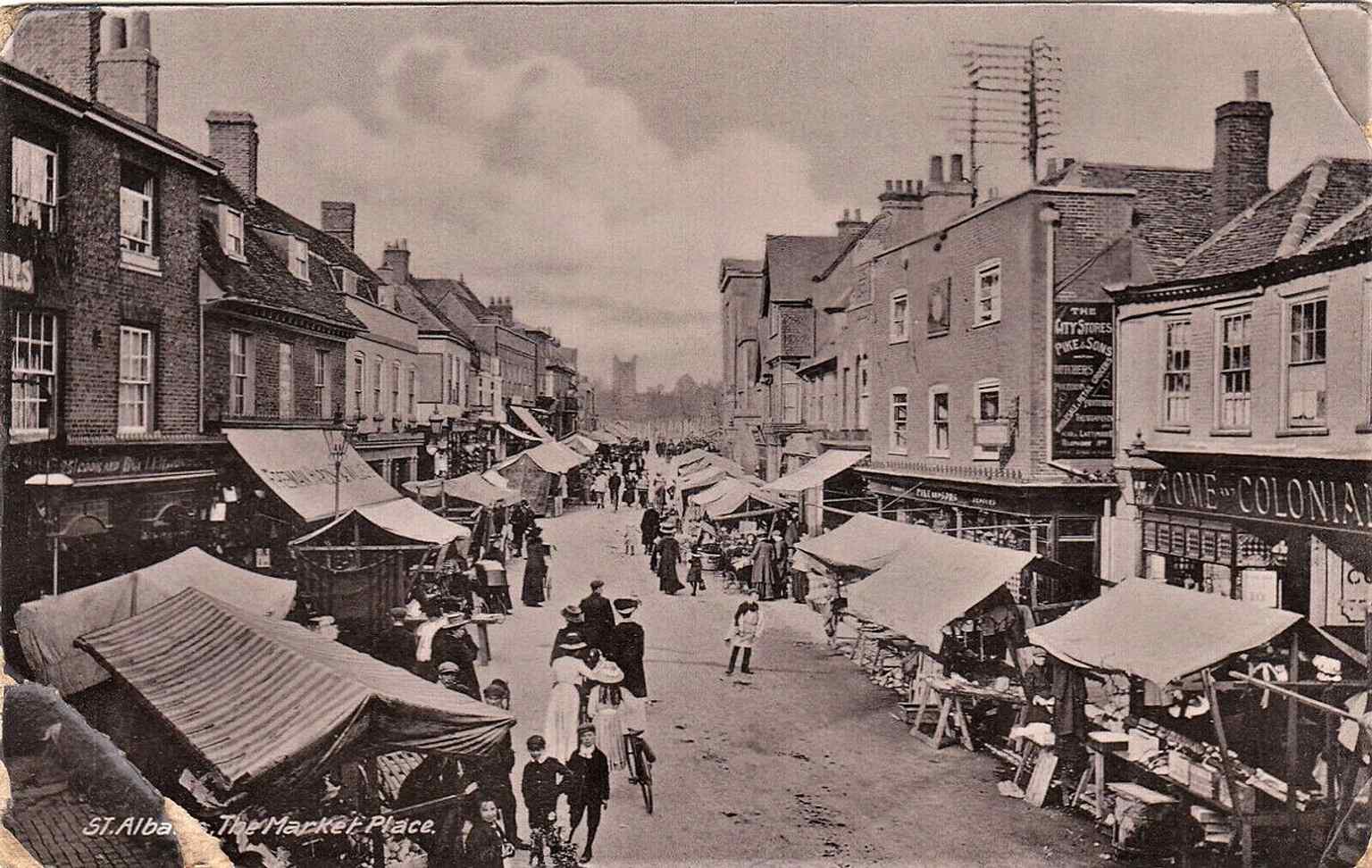
Market Place in 1915, showing the market stretching toward St Peter’s Street near the abbey side of town.Photo: Mark Crombie, Wikimedia Commons, Public domain. Cropped & resized. Even politics claimed a pitch here. In nineteen eleven, women’s suffrage campaigners chalked meeting notices onto the pavement and sold copies of The Vote on market day. Then came the long modern shifts: cattle moved away in nineteen twenty-six, the live-animal trade finally ended in nineteen seventy-six, and the pandemic closure in twenty twenty forced the market to reinvent itself yet again. It recovered, modernised its layout, and returned with surprising strength.
The charter market still trades here on Wednesdays and Saturdays, from nine o’clock until half past four.
For all its changes, this long street remains Saint Albans speaking in its own plain, persuasive voice.
When you are ready, continue on to The Cock.
On your right stands a low, white-plastered corner house with exposed dark timber framing, a sloping tiled roof, and the projecting Cock inn sign. The Cock keeps its secrets with…Read moreShow less
Open dedicated page →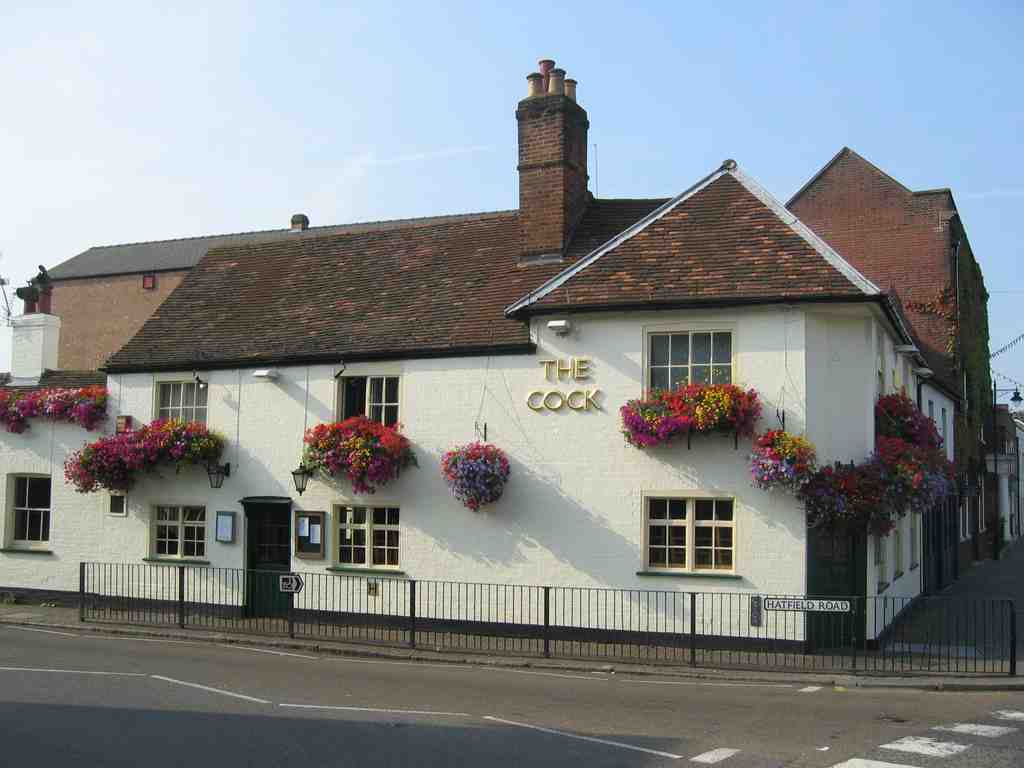
The Cock, St AlbansPhoto: Gary Houston, Wikimedia Commons, CC0. Cropped & resized. On your right stands a low, white-plastered corner house with exposed dark timber framing, a sloping tiled roof, and the projecting Cock inn sign.
The Cock keeps its secrets with rather good manners. Before any pub stood here, local museum records say this ground served as a field hospital during the Second Battle of St Albans. Centuries later, workers found bones in the cellar and briefly imagined they had uncovered battle casualties. The truth proved less dramatic, though no less human: they were animal bones, discarded from the kitchen.
The house itself reaches back to around sixteen hundred, and its original timber frame still shows through the later skin of the building. The image on your screen shows how stubbornly the old shape has held on at this street corner. The first innkeeper we can name with confidence is George Barnes, recorded here in sixteen sixty-three. That single name pins the place down beautifully, turning guesswork into documented life.
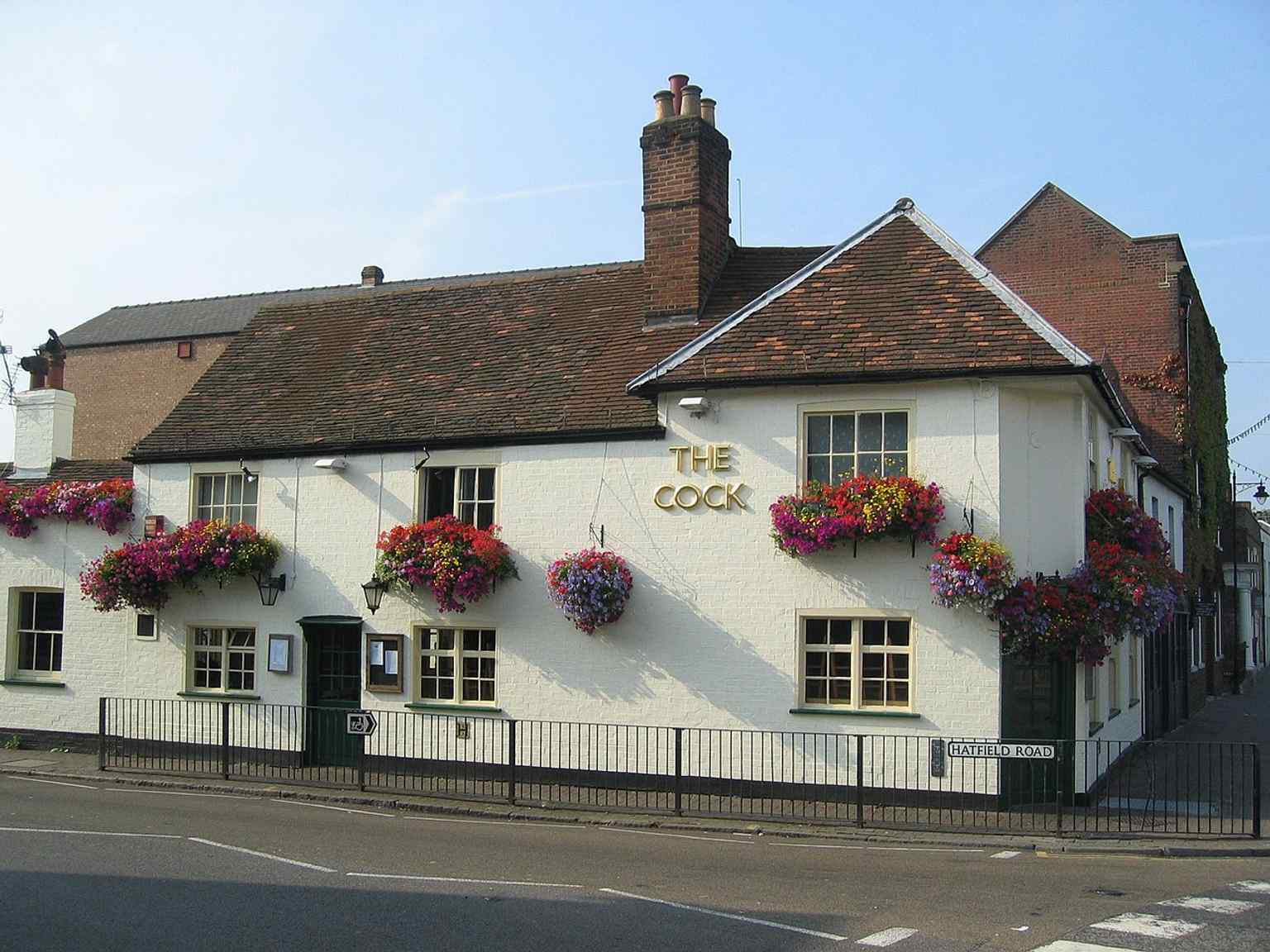
The Cock on the corner of St Peter’s Street and Hatfield Road, the pub whose name helped shape local street names like Cock Lane.Photo: Gary Houston, Wikimedia Commons, CC0. Cropped & resized. It mattered enough to lend its name to the neighbourhood. Hatfield Road began as Cock Lane, and there was even a nearby Cock pond on the green. This was never merely a roadside tavern. It served people at the northern edge of town and traders coming in for market day, which helps explain its long reputation. Later brewers came and went, but the house kept doing what it does now: welcoming people in. Another image shows that continuity rather nicely. Today, the Campaign for Real Ale notes two bars, a restaurant, a heated courtyard garden, and cask ales.
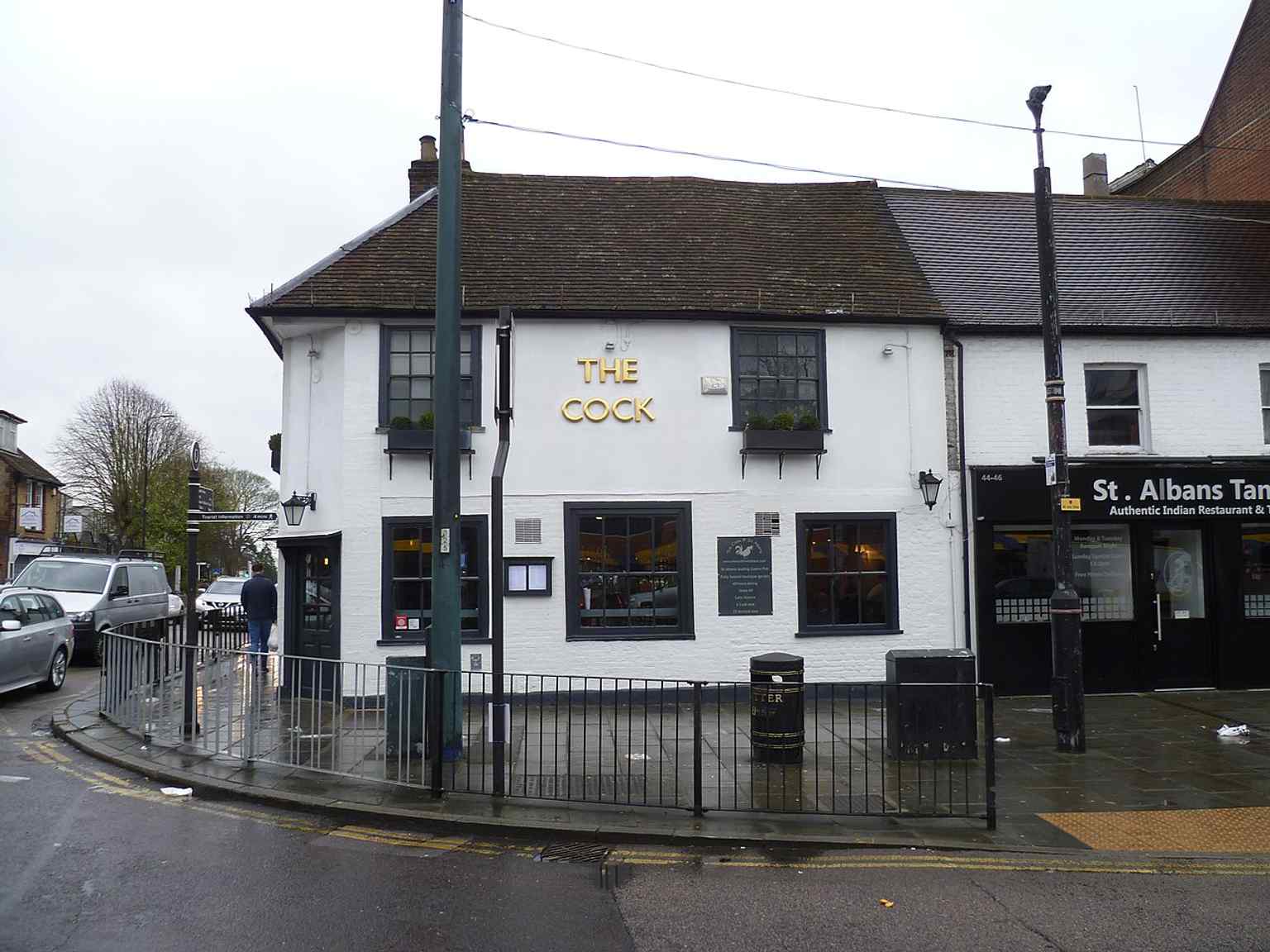
A later view of the same surviving pub, still serving as an active city-centre house rather than a preserved shell.Photo: Philafrenzy, Wikimedia Commons, CC BY-SA 4.0. Cropped & resized. If you fancy ending here, it keeps moderate prices and usually opens from eleven in the morning until midnight, with later closing on Fridays and Saturdays.
Frequently asked questions
How do I start the tour?
After purchase, download the AudaTours app and enter your redemption code. The tour will be ready to start immediately - just tap play and follow the GPS-guided route.
Do I need internet during the tour?
No! Download the tour before you start and enjoy it fully offline. Only the chat feature requires internet. We recommend downloading on WiFi to save mobile data.
Is this a guided group tour?
No - this is a self-guided audio tour. You explore independently at your own pace, with audio narration playing through your phone. No tour guide, no group, no schedule.
How long does the tour take?
Most tours take 60–90 minutes to complete, but you control the pace entirely. Pause, skip stops, or take breaks whenever you want.
What if I can't finish the tour today?
No problem! Tours have lifetime access. Pause and resume whenever you like - tomorrow, next week, or next year. Your progress is saved.
What languages are available?
All tours are available in 50+ languages. Select your preferred language when redeeming your code. Note: language cannot be changed after tour generation.
Where do I access the tour after purchase?
Download the free AudaTours app from the App Store or Google Play. Enter your redemption code (sent via email) and the tour will appear in your library, ready to download and start.
If you don't enjoy the tour, we'll refund your purchase. Contact us at [email protected]
Checkout securely with 






.jpg)

