
Birmingham Audio Tour: The Sparkling Stories of Birmingham’s Jewellery Quarter
Beneath Birmingham’s skyline, colossal towers and hidden exchanges pulse with secrets—stories of power, rivalry, and silent surveillance shaping the city’s soul. Set your own pace on this self-guided audio tour, diving deep into corners where few visitors tread. Hear echoes of political upheavals and technological marvels woven through everyday streets. Who slipped secret messages through the walls of the Anchor telephone exchange during a night that changed British history forever? What unexplained signal once pulsed from the BT Tower to send the city into panic? Why does Arena Birmingham hide a plaque commemorating an event officials tried to erase? Wander from soaring towers to obscure alleyways as every step lifts back a layer of history. Expect dramatic revelations, whispered legends, and a fresh perspective on landmarks you thought you knew. Ready to crack Birmingham’s coded past? The towers are watching—let curiosity lead you inside.
Tour preview
About this tour
- scheduleDuration 40–60 minsGo at your own pace
- straighten5.4 km walking routeFollow the guided path
- location_onLocationBirmingham, United Kingdom
- wifi_offWorks offlineDownload once, use anywhere
- all_inclusiveLifetime accessReplay anytime, forever
- location_onStarts at Anchor telephone exchange
Stops on this tour
Look for the squat brick ventilation shaft, a plain rectangular stack cut with metal grilles and topped by a simple concrete cap. What you are really standing beside is the…Read moreShow less
Open dedicated page →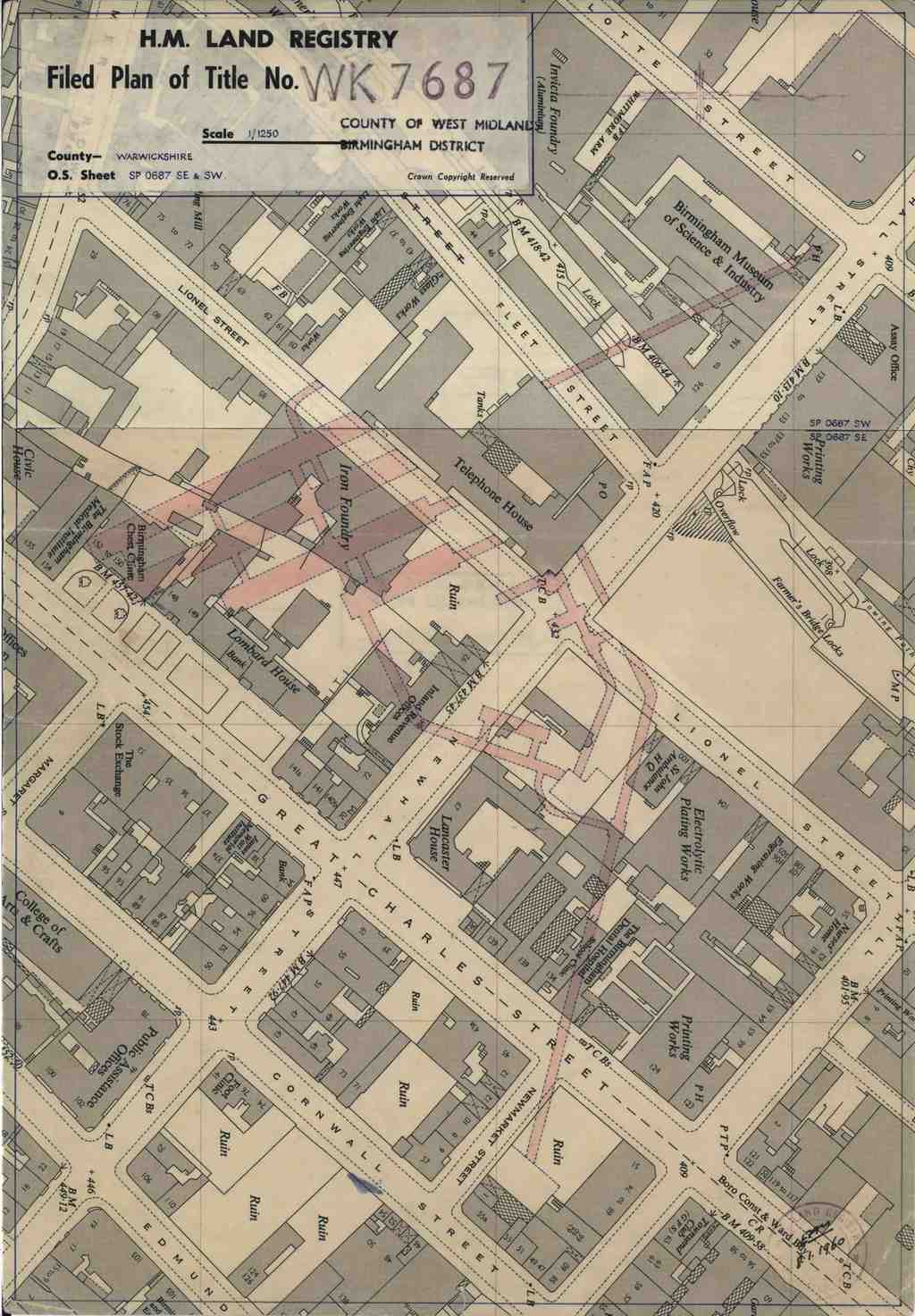
Anchor telephone exchangePhoto: UK Government, Wikimedia Commons, Public domain. Cropped & resized. Look for the squat brick ventilation shaft, a plain rectangular stack cut with metal grilles and topped by a simple concrete cap.
What you are really standing beside is the city’s buried nervous system. Birmingham likes to show off its handsome facades later on this walk, but places like this keep the whole performance running. The most important parts of a city are often the parts nobody was meant to notice... cables, tunnels, switchrooms, and the people trusted to keep them alive.
Anchor Exchange began in nineteen fifty-three under a cover story so brazen it almost becomes charming: officials said they were building a new underground railway. Perfectly ordinary, nothing to see here. In truth, they were digging a hardened telephone exchange for the Cold War, one of a small number in Britain built to keep communications going after an atomic attack, short of a direct hit. It opened in September nineteen fifty-seven and cost four million pounds, around a hundred million in today’s money.
If you glance at the image on your screen, you can see the ventilation shaft that gave almost nothing away above ground. Below it stretched a tunnel network linked nominally to Newhall Street, but running from at least the Jewellery Quarter to Southside. Inside, Anchor had its own substation, standby generators, kitchens, sleeping quarters, offices, and a canteen. It was practically a small underground town, with fluorescent lighting that may have been a first for a Post Office exchange in the U-K.
The routine down there was strict and eerie. Engineers reportedly worked in two-person teams on round-the-clock shifts, often by pencil torch because power failures were common. Smoking was banned everywhere except the mess room. And the fire officer’s warning was chillingly simple: if a serious fire took hold below ground, people inside would have about thirty seconds to live.
So here’s the thought that lingers... if a city depends on rooms designed not to be noticed, how many other essential places do we pass every day without really seeing them?
There was ritual in getting access, too. Some workers spent months on ordinary jobs nearby before managers suddenly handed them Ministry of Defence paperwork and passes. Behind one entrance sat a blast door weighing about two tons. During the Cuban Missile Crisis in nineteen sixty-two, the Post Office treated Anchor’s wartime role with absolute seriousness and tightened control even further.
Most tourists never clock that this secret bunker still matters. The tunnels still carry communications cables, they are pumped constantly because of Birmingham’s rising water table, and long after the nuclear role faded, Anchor still handled high-quality broadcast circuits, even for nationally carried Aston Villa matches. On your screen, the old map gives a hint of how carefully this place hid in plain sight.
And that is the trick of Birmingham: signals buried deep below, then lifted high above the rooftops. When you’re ready, head to the B-T Tower, about three minutes away, where this invisible world finally grows bold enough to show its face.
On your right, the B-T Tower is a tall blue concrete shaft with a square body, stacked aerial galleries near the top, and a small roof crane perched above like a practical little…Read moreShow less
Open dedicated page →On your right, the B-T Tower is a tall blue concrete shaft with a square body, stacked aerial galleries near the top, and a small roof crane perched above like a practical little signature.
This tower is a nice example of a machine that accidentally became a mascot. The General Post Office started building it in nineteen sixty-three, finished the structure in nineteen sixty-five, brought it into use in nineteen sixty-six, and then let the Lord Mayor, Alderman James S. Meadows, open it with civic ceremony in nineteen sixty-seven. So yes, it carried phone calls and television signals... but it also climbed into Birmingham’s imagination and never really left.
If the exchange you visited earlier handled messages down in the dark, this was its high-wire partner: a microwave relay tower, meaning radio links sent in straight lines from dish to dish across the country. At opening, the network here could handle up to one hundred and fifty thousand telephone conversations and forty television channels. Not bad for a building that also found room for workshops, archive storage, and a workers’ canteen. Even infrastructure likes lunch.
Take a moment and look up. The tower feels bluntly functional, but does it also seem a bit ceremonial... like the city gave engineering permission to dress as a monument?
Its shape tells part of that story. Early plans aimed for a circular tower like London’s, then designers changed course and chose the square version you see now for aesthetic reasons. That decision helped give Birmingham a sharper, more distinctive silhouette. The engineers also tucked wind channels into each corner to reduce sway, because those dishes needed a steady line of sight. Even lifting the original horn-shaped dishes was awkward: they were so heavy crews had to strip them down, haul them up rails on one wall, then swing them onto cables to reach the higher galleries. Simple, if you enjoy making life difficult on purpose.
The city around it changed dramatically. If you want, have a quick look at the before-and-after image in the app; it shows how the tower stayed recognizable while the skyline filled in around it.
Its look changed too. In two thousand and three, workers painted it ultramarine blue over the old brown finish, and in two thousand and four the Birmingham comedian Jasper Carrott switched on the night lighting. A year-round telecoms workhorse had somehow become civic theater. Later, in two thousand and twelve, the last big analogue dish came down as digital systems took over, and a refurbishment finished in two thousand and twenty-two trimmed the tower from one hundred and fifty-two meters to one hundred and forty. It is still active, still useful, and apparently still hospitable: peregrine falcons nest here on a ledge engineers roughened with pebbles to mimic a cliff.
From here, let your eye drop from skyline to street plan. We’re heading next to St Paul’s Square, about five minutes away, where Birmingham’s orderliness starts showing beneath all that later industry.
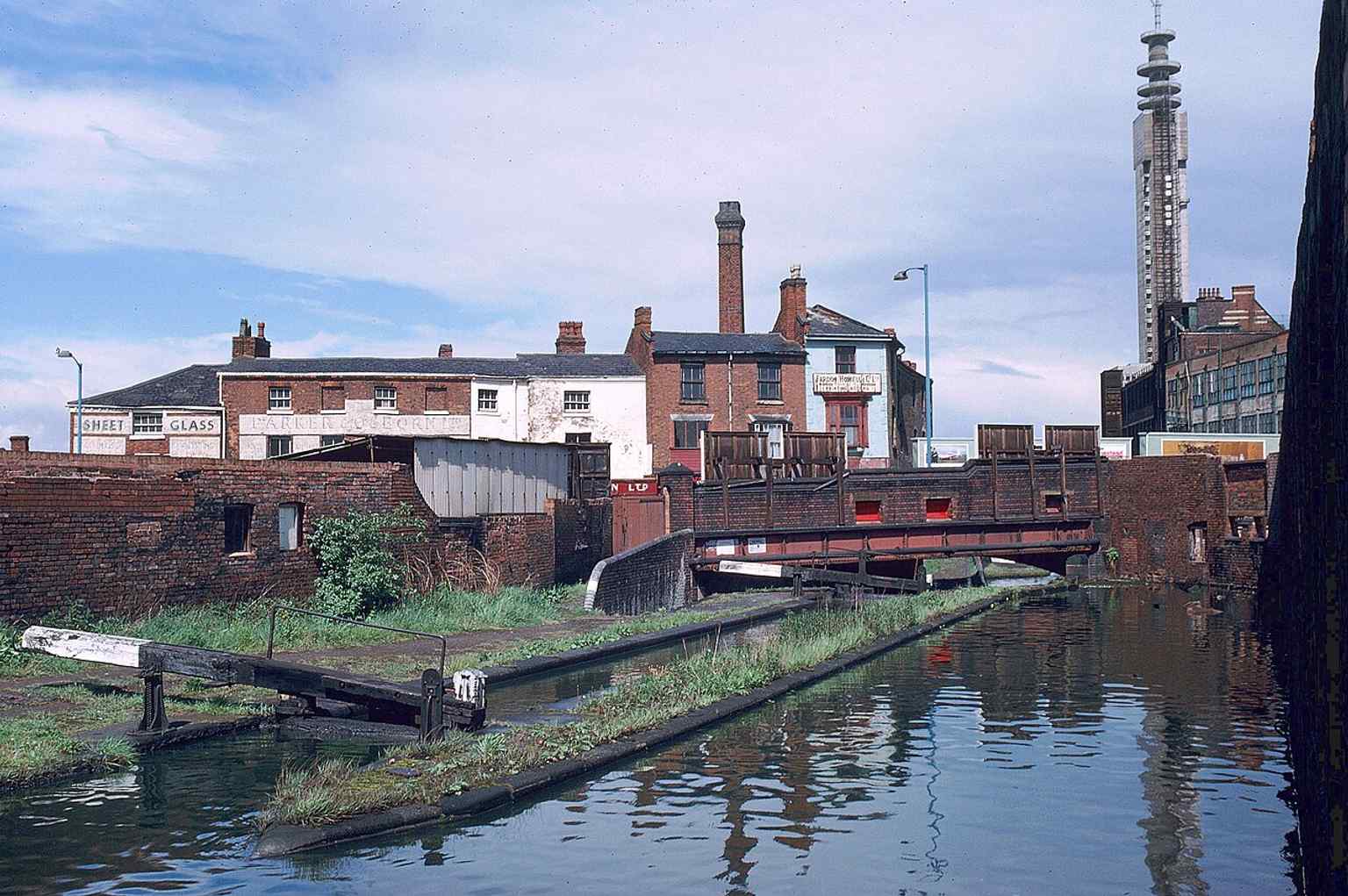
The BT Tower in 1966, freshly completed and still awaiting its communications equipment — a rare view from the canal just before it became operational.Photo: Tom Axford 1, Wikimedia Commons, CC BY-SA 4.0. Cropped & resized. Ahead of you is a calm Georgian square framed by red-brick terraces and centered on a pale stone church with a slender spire rising above its rectangular body. This is St Paul’s…Read moreShow less
Open dedicated page →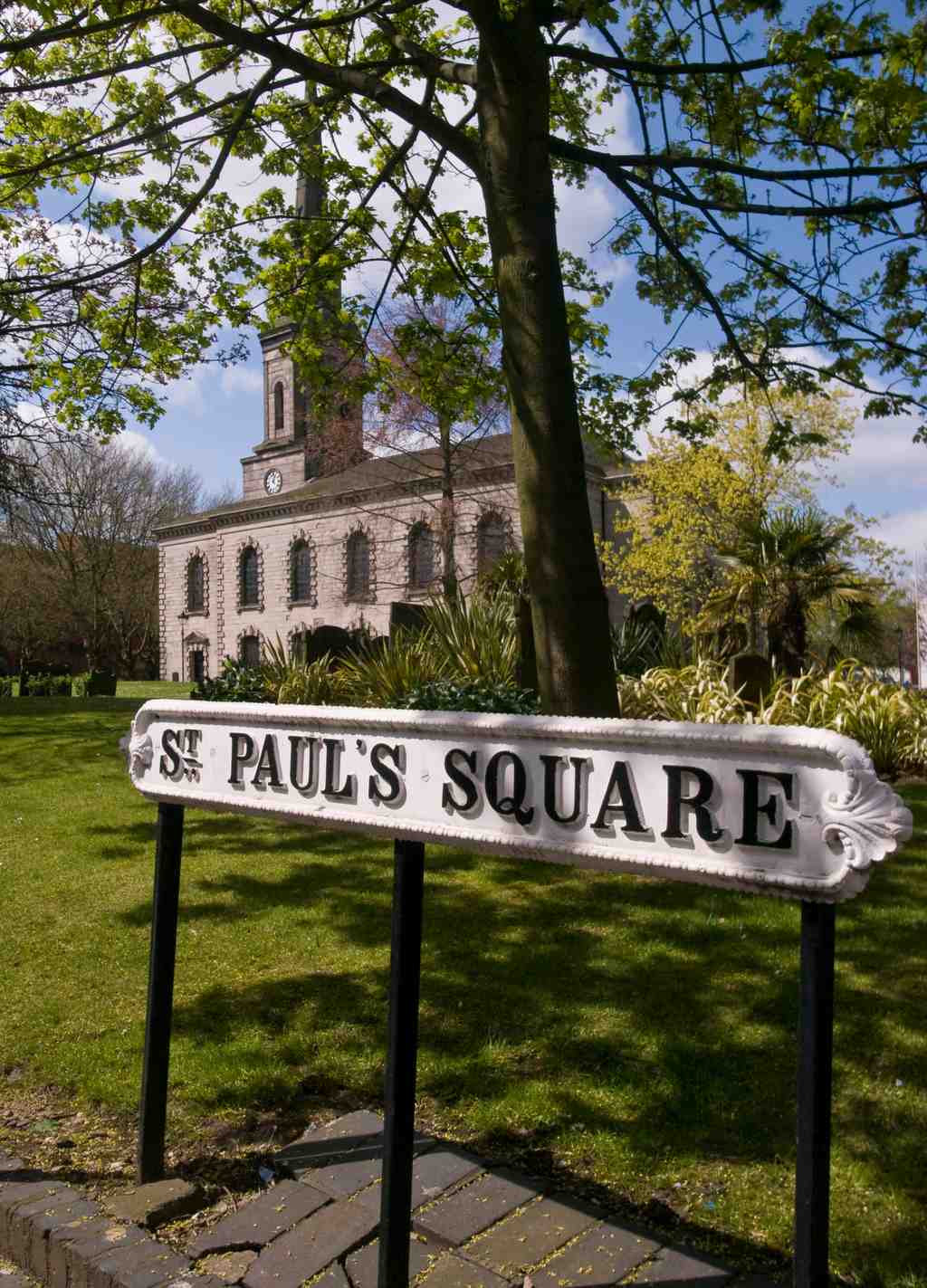
St Paul's Square, BirminghamPhoto: Oosoom, Wikimedia Commons, CC BY-SA 3.0. Cropped & resized. Ahead of you is a calm Georgian square framed by red-brick terraces and centered on a pale stone church with a slender spire rising above its rectangular body.
This is St Paul’s Square, the last surviving Georgian square in Birmingham, and it lets the Jewellery Quarter exhale for a moment. In the early seventeen seventies, the Colmore family’s Newhall estate laid out this district on a tidy grid. That Georgian framework shaped everything: straight streets created order, and plots nearest the church sold more easily and fetched higher rents. So this place was never just handsome. It was planned status... with a landlord’s eye for profit.
At the center stands St Paul’s Church. Roger Eykyn of Wolverhampton started it in seventeen seventy-seven on land Charles Colmore gave from the estate, and the church opened in seventeen seventy-nine as a chapel of ease, which simply means an extra church built to serve people too far from the main parish church, St Martin in the Bull Ring. It is the only survivor of Birmingham’s eighteenth-century churches. That gives the whole square a rare, slightly defiant grace.
The church itself is plainspoken and elegant, a rectangular design modeled on St Martin-in-the-Fields in London. The spire came later, in eighteen twenty-three, when Francis Goodwin added that upward flourish. If you glance at the image on your screen, you can see how the surrounding houses complete the composition: brick fronts, measured windows, and that carefully rationed Georgian elegance.
Inside, the church holds a small masterpiece most people outside never suspect. Its east window from seventeen ninety-one shows the Conversion of St Paul. Benjamin West designed it, and Francis Eginton made it here in Birmingham. Eginton helped revive enamel-painted stained glass in the city, so even this church window quietly advertises local craft skill. And the congregation had clout: Matthew Boulton and James Watt owned pews here, because pews could be bought and sold like property. Even worship had a seating market.
By the late nineteenth century, workshops and factories pressed hard against the square, and some elegant fronts were chopped about for industrial use. Ask a local who knows the area well, and they will often point to the nineteen seventies as the real rescue. That was the turning point, when restoration began to reclaim the square’s Georgian character after industry had nearly smothered it.
That rescue is still unfinished. Leaking parapet gutters, the drainage channels hidden behind the top of the walls, have damaged plaster and stone inside the church, and campaigners recently sought about six hundred and sixty thousand pounds for urgent roof repairs.
One small Birmingham squabble lingers here too: the road signs dropped the apostrophe, and not everyone took that calmly. You can spot the evidence on the app.
From here, ordered streets give way to organized creativity. Just off the square, the Royal Birmingham Society of Artists shows how Birmingham relied on trained eyes and practiced hands as much as elegant planning.

Show 12 more stopsShow fewer stopsexpand_moreexpand_less
 4
4RBSA Gallery
Buy tour to unlock all 19 tracksLook for the red-brick, warehouse-style front with tall rectangular windows and a pair of bronze plaques fixed to the facade. This is the Royal Birmingham Society of Artists...…Read moreShow less
Open dedicated page →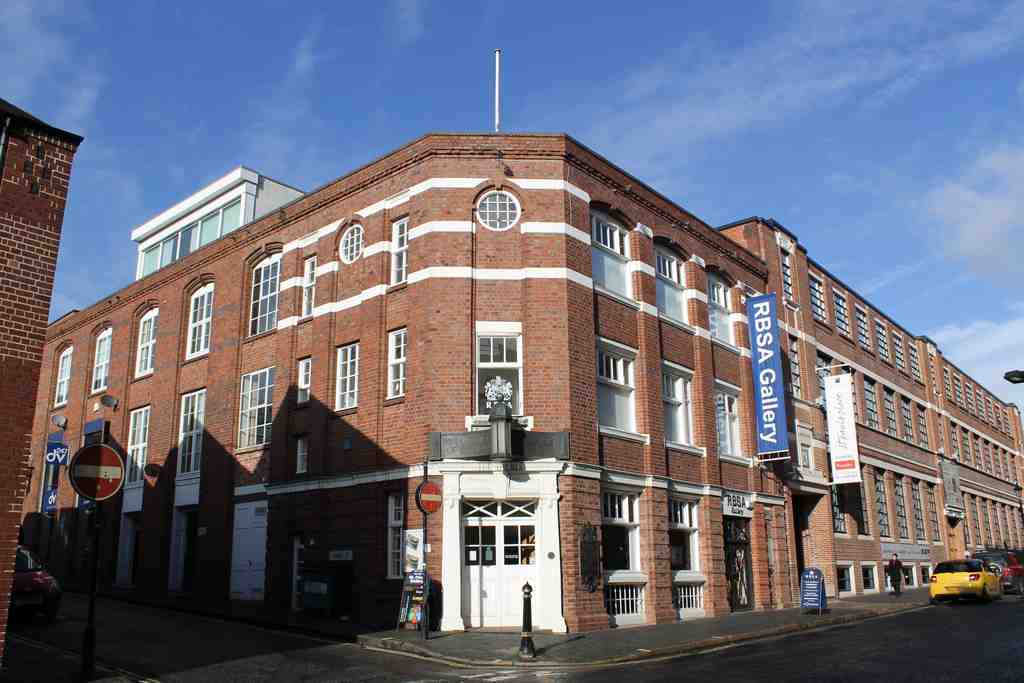
Royal Birmingham Society of ArtistsPhoto: Rock drum, Wikimedia Commons, CC BY-SA 3.0. Cropped & resized. Look for the red-brick, warehouse-style front with tall rectangular windows and a pair of bronze plaques fixed to the facade.
This is the Royal Birmingham Society of Artists... the city’s reminder that creativity here was never just a decorative extra. Birmingham trained it, organized it, argued about it, and gave it a proper institution. The story starts in eighteen oh nine, when Samuel Lines, Moses Haughton, Vincent Barber, and Charles Barber opened a life drawing academy in Peck Lane. That meant artists and designers learned by studying the human figure, line, proportion, and form... exactly the sort of disciplined seeing that would feed not only painting, but the city’s wider making culture as well.
By eighteen fourteen, that circle had grown into the Birmingham Academy of Arts. In eighteen twenty-one, the Birmingham Society of Artists took shape, and by eighteen sixty-eight it had a royal charter and the name you see today. In other words, this was Birmingham saying that art belonged in the machinery of civic life, not tucked away as a luxury.
One of the main ambitions from the start was education. The Society kept alive the teaching mission begun by Lines, and that eventually helped lead to the Birmingham School of Art in the eighteen forties. So when people talk about the Jewellery Quarter as a place of skilled hands, remember that hands need eyes... and eyes need training.
Locals tend to enjoy this next bit because it sounds almost absurdly grand. In eighteen thirty, the Society’s New Street gallery opened not with a modest handshake, but with Princess Victoria herself, still a child, escorted by the Duke of Wellington. For a supposedly provincial art society, that is a fairly confident way to enter the room.
And this was no minor club. In the later Victorian period, it became influential in the Pre-Raphaelite world, with its rich detail and moral seriousness, and in the Arts and Crafts movement, which championed skilled handmade work over dreary mass production. Presidents included Edward Burne-Jones, William Morris, John Everett Millais, and Lord Leighton... serious names, not polite filler.
The building in front of you marks a later chapter. Financial pressure and commercial redevelopment gradually pushed the Society out of its old New Street home, and in two thousand it moved here, into this converted warehouse near St Paul’s Square. Charles, Prince of Wales, opened the gallery on the twelfth of April that year. Then, in twenty seventeen, a legacy from painter Kate Fryer helped fund a full refurbishment, so a member’s devotion quite literally reshaped the place.
Now, take a second to notice those bronze plaques on the outside. They date from nineteen nineteen and are the earliest known Birmingham works by William Bloye, who later became the Society’s president and Professor of Sculpture. Nice little clue, that... the future leader announcing himself quietly on the wall.
Inside and behind the scenes, the Society keeps an archive of catalogues, minute books from the eighteen twenties, letters, records, the whole paper trail of ambition. Annual exhibitions have run since eighteen twenty-seven, missing only the years nineteen forty, nineteen forty-one, and twenty twenty. Even artists, it turns out, respect a stubborn tradition.
From here, the story shifts neatly. Art taught people what to imagine in metal, stone, and design... and at the next stop, the Assay Office will show you how Birmingham decided what that crafted beauty was officially worth. If you plan to come back, the gallery usually opens Tuesday through Saturday, from ten thirty to five.
 5
5Birmingham Assay Office
Buy tour to unlock all 19 tracksOn your right, the Birmingham Assay Office is a clean two-storey block of blue brick, with broad rectangular glazing and hallmark symbols built straight into the walls. This is…Read moreShow less
Open dedicated page →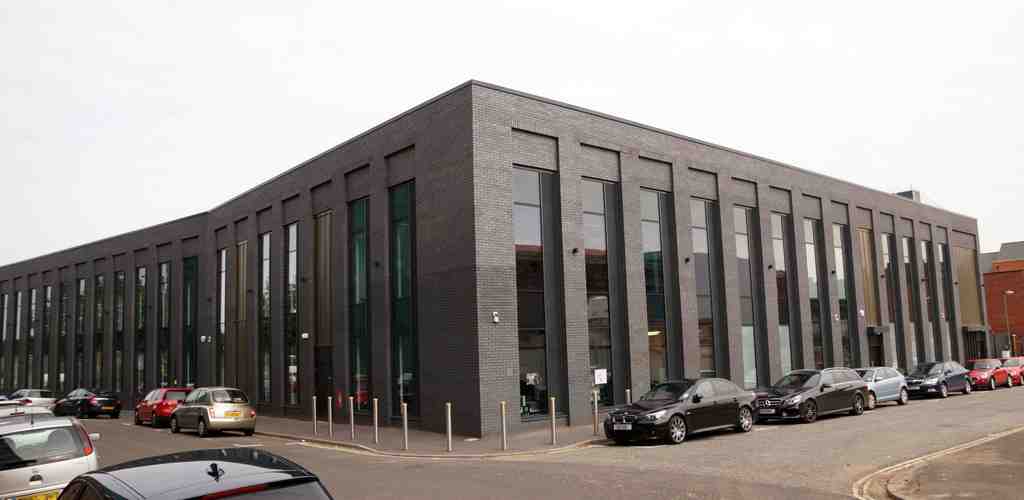
Birmingham Assay OfficePhoto: Oosoom, Wikimedia Commons, CC BY-SA 3.0. Cropped & resized. On your right, the Birmingham Assay Office is a clean two-storey block of blue brick, with broad rectangular glazing and hallmark symbols built straight into the walls.
This is one of only four assay offices in the United Kingdom, and it sits at the moral center of the Jewellery Quarter. To assay metal means to test its purity; to hallmark it means to stamp it with an official sign of trust. Cities run on hidden networks... not just cables and tunnels, but rules, inspections, and institutions like this one.
Birmingham fought hard for that right. In the eighteenth century, local silversmiths had to send work to Chester or London for testing, which was slow, expensive, and rather good at strangling ambition. So Matthew Boulton joined Birmingham makers and Sheffield silversmiths to petition Parliament. In March of seventeen seventy-three, just a month after that petition, Parliament approved new assay offices for both cities.
The Birmingham office opened on the thirty-first of August, seventeen seventy-three, in three rooms at the King’s Head Inn on New Street, with four staff, working only on Tuesdays. The first customer was Boulton himself. He did not receive special treatment. His pieces failed the standard, and the office sent them back smashed. Brutal, yes... but also the whole point.
Birmingham’s stamp became the Anchor Hallmark. According to a good local story, Birmingham and Sheffield chose their symbols after a coin toss at the Crown and Anchor Tavern in London: Birmingham took the anchor, Sheffield the crown. However the choice happened, the result mattered. That little anchor turned Birmingham’s name into a guarantee.
If you check the image on your screen, you can see how the modern building bakes those symbols into its brickwork, including marks for gold and silver alongside the anchor itself. By eighteen twenty-four, the office tested gold as well as silver, and in eighteen fifty-five Parliament made hallmarking compulsory for wedding rings, tying this place to ordinary lives, not just grand silver services.
The office later moved to a purpose-built home on Newhall Street, where it grew into the largest assay office in Europe. That building became too small as the trade kept booming, so in twenty fifteen the office moved here to Moreton Street. The older headquarters on your app shows how much authority this institution once carried in stone, before it carried it in blue brick.
It is still overseen by the Guardians of the Standard, a board charged with protecting the integrity of precious metal. Which raises a fair question: if no independent body stood behind every glittering claim, would Birmingham’s jewellery reputation mean quite the same?
From here, the story widens from tested metal to the routes that carried goods, workers, and wealth across the city... and toward the canalside world of the National Sea Life Centre, about a fifteen-minute walk away. If you want to return, the office generally opens on weekdays from half past eight, closing at four, or half past three on Fridays.
 6
6National SEA LIFE Centre Birmingham
Buy tour to unlock all 19 tracksLook for the low, curved building of pale stone and glass, with a rounded frontage beside the canal and the bold Sea Life Centre entrance built into its face. This is one of…Read moreShow less
Open dedicated page →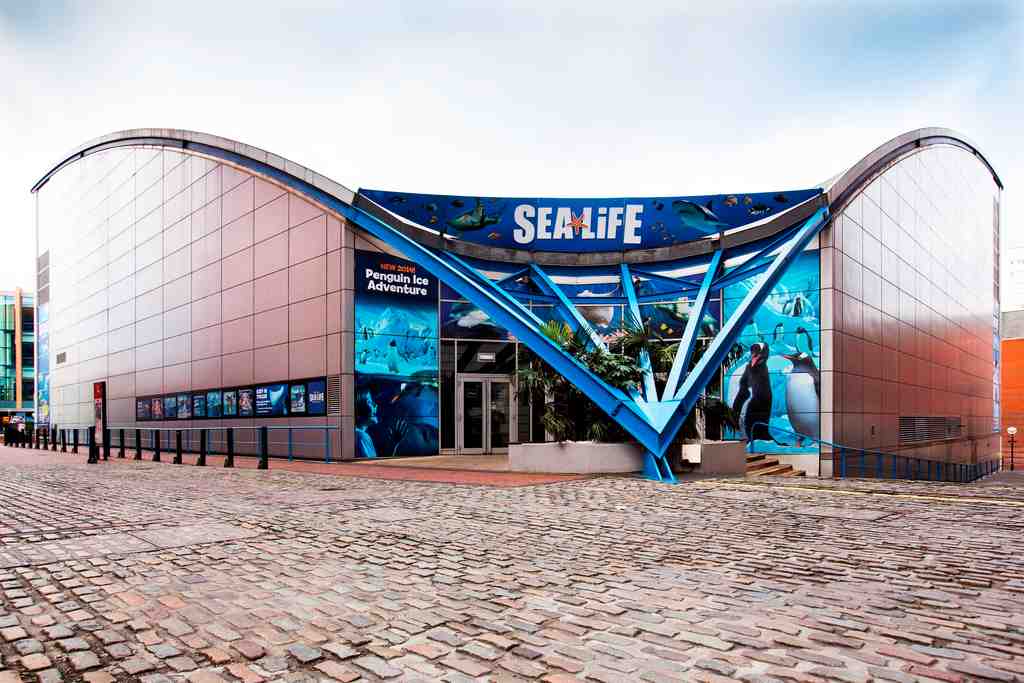
National Sea Life Centre, BirminghamPhoto: Gp258, Wikimedia Commons, CC BY-SA 4.0. Cropped & resized. Look for the low, curved building of pale stone and glass, with a rounded frontage beside the canal and the bold Sea Life Centre entrance built into its face.
This is one of Birmingham’s smartest little acts of reinvention. Long before sharks and penguins arrived, this patch of ground belonged to Oozells Street Wharf, where Victorian canal basins handled the steady, practical business of moving goods. Call it Waterways of Change: the same water that once served industry now carries reflections for an aquarium designed to entertain, educate, and, rather cheekily, bring the ocean to an inland city.
Sir Norman Foster designed the building, and it opened on the fifth of July, nineteen ninety-six, as the only inland sea life centre in the United Kingdom. That takes a certain confidence. Birmingham looked at the lack of coastline and said, fine, we’ll have turtles anyway.
Inside, the centre holds more than sixty displays and over two thousand creatures from around the world. Its big showpiece is an ocean tank holding one million litres of water, home to giant green sea turtles, blacktip reef sharks, and tropical reef fish. The real bragging rights come from a fully transparent three hundred and sixty degree underwater tunnel, a rare feature in the United Kingdom. If you check the app, the exterior view in image two helps place the building right on the canal edge, near Old Turn Junction and opposite the arena.
But this place is not just a family outing with gift-shop energy. Staff run conservation work under the banner “Breed, Rescue and Protect,” including a serious seahorse breeding program, with newly reared seahorses visible to visitors. Over the years, the centre kept expanding its cast: giant Japanese spider crabs with claws stretching more than a metre, a four-D cinema that added wind, salt spray, and even the smell of seaweed, and in twenty fourteen, Penguin Ice Adventure, a two million pound habitat for twelve endangered gentoo penguins. Have a glance at image three on your screen and you’ll see those gentoos looking faintly more organized than most committee meetings.
Then came Ozzy and Ola, the rescued northern sea otters who arrived from Alaska in twenty twenty after a five-thousand-mile journey. They became the first and only sea otters in any zoological collection in the United Kingdom, thanks to a new rescue facility here. Even Birmingham’s old anchor hallmark gets a quiet wink at a place like this: a city shaped by metal and canals, now caring for creatures that live by water.
From here, the story gets louder. Cross the water’s edge and head toward Arena Birmingham, where modern Birmingham trades reef life for applause, crowds, and performance. If you want to return, the centre usually opens from ten A-M to four P-M on weekdays, from nine thirty A-M to six P-M on Saturday, and from ten A-M to four thirty P-M on Sunday.
 7
7Utilita Arena Birmingham
Buy tour to unlock all 19 tracksLook to your left for a broad, low sweep of silver metal and glass, shaped like a long curved shell beside the canal, with slender needle-like masts marking its entrance. For a…Read moreShow less
Open dedicated page →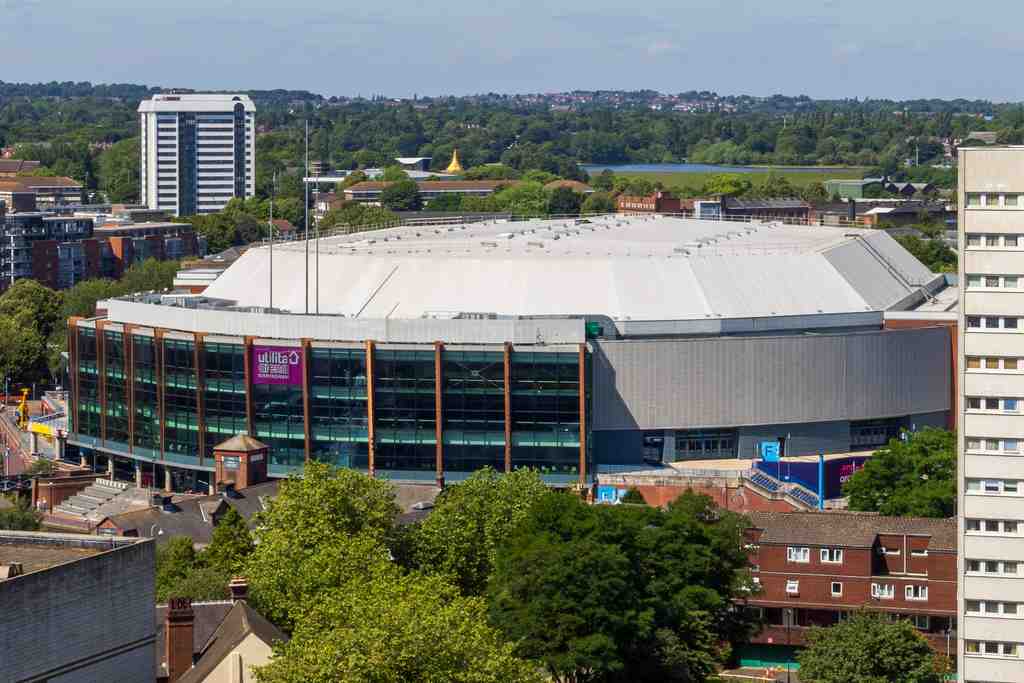
Arena BirminghamPhoto: The wub, Wikimedia Commons, CC BY-SA 4.0. Cropped & resized. Look to your left for a broad, low sweep of silver metal and glass, shaped like a long curved shell beside the canal, with slender needle-like masts marking its entrance.
For a city built on making and moving things, this building shows the newer trade. Birmingham became a City of Spectacle here: a place where the old energy of workshops, rail lines, and canal basins now gets concentrated into crowds, floodlights, scoreboards, and the roar that follows a big chorus or a winning point.
This is Arena Birmingham, though many people still call it the N-I-A, the National Indoor Arena. When athlete Linford Christie officially opened it on the fourth of October, nineteen ninety-one, it was the largest indoor arena in the U-K. The original plan sounded almost restrained: an indoor sports venue. Birmingham, naturally, had other ideas. Very soon the calendar filled with concerts, comedy, boxing, darts, gymnastics, and the kind of mass entertainment that turns a city into a regular stop on the international circuit.
And the setting matters. The arena sits beside Old Turn Junction, right where the Birmingham Canal Navigations knot together, and it actually straddles the main railway line to Wolverhampton. A building over a railway with no station of its own feels like a very Birmingham sort of practical joke. If you glance at the aerial image on your screen, you can see how tightly it fits between water, track, and city streets.
Inside, the place can hold up to fifteen thousand, eight hundred people, using permanent seating and temporary layouts. By twenty sixteen, the N-E-C Group, named for the National Exhibition Centre, said sixteen and a half million fans had passed through its doors. In twenty nineteen alone, ticket sales topped five hundred and thirty thousand, one of the highest totals in the country. So yes, this is a machine for gathering people... just a very loud one.
Its story also bends neatly with Birmingham’s wider shift. Goods once moved through the canal outside; now emotion moves through the hall. The arena hosted the All England Badminton Championships, world judo, world indoor athletics, Premier League darts year after year, the nineteen ninety-eight Eurovision Song Contest, and even the counting of eight constituencies during the nineteen ninety-two general election. Not every arena can claim both international pop acts and ballot boxes.
Then came the big refresh. In twenty twelve, Birmingham approved a major redevelopment, and a twenty-six million pound renovation began in June twenty thirteen. Architects at Broadway Malyan reworked the old N-I-A with a canal-side showpiece entrance, a new glazed frontage, hospitality spaces, and three so-called sky needles, tall illuminated markers meant to announce that this was no longer just a sports shed with ambitions. If you want, take a quick look at the before-and-after image in the app; the leap from the older exterior to the sleeker relaunch is pretty striking. Singer Michael Bublé reopened the revamped venue on the second of December, twenty fourteen, when it also took on the Barclaycard name before later becoming Arena Birmingham and then Utilita Arena Birmingham in twenty twenty.
But after all that scale and noise, our next stop changes the mood completely. In about eleven minutes, Birmingham Orthodox Cathedral offers a smaller, steadier kind of gathering place... one built not for applause, but for prayer, memory, and continuity.
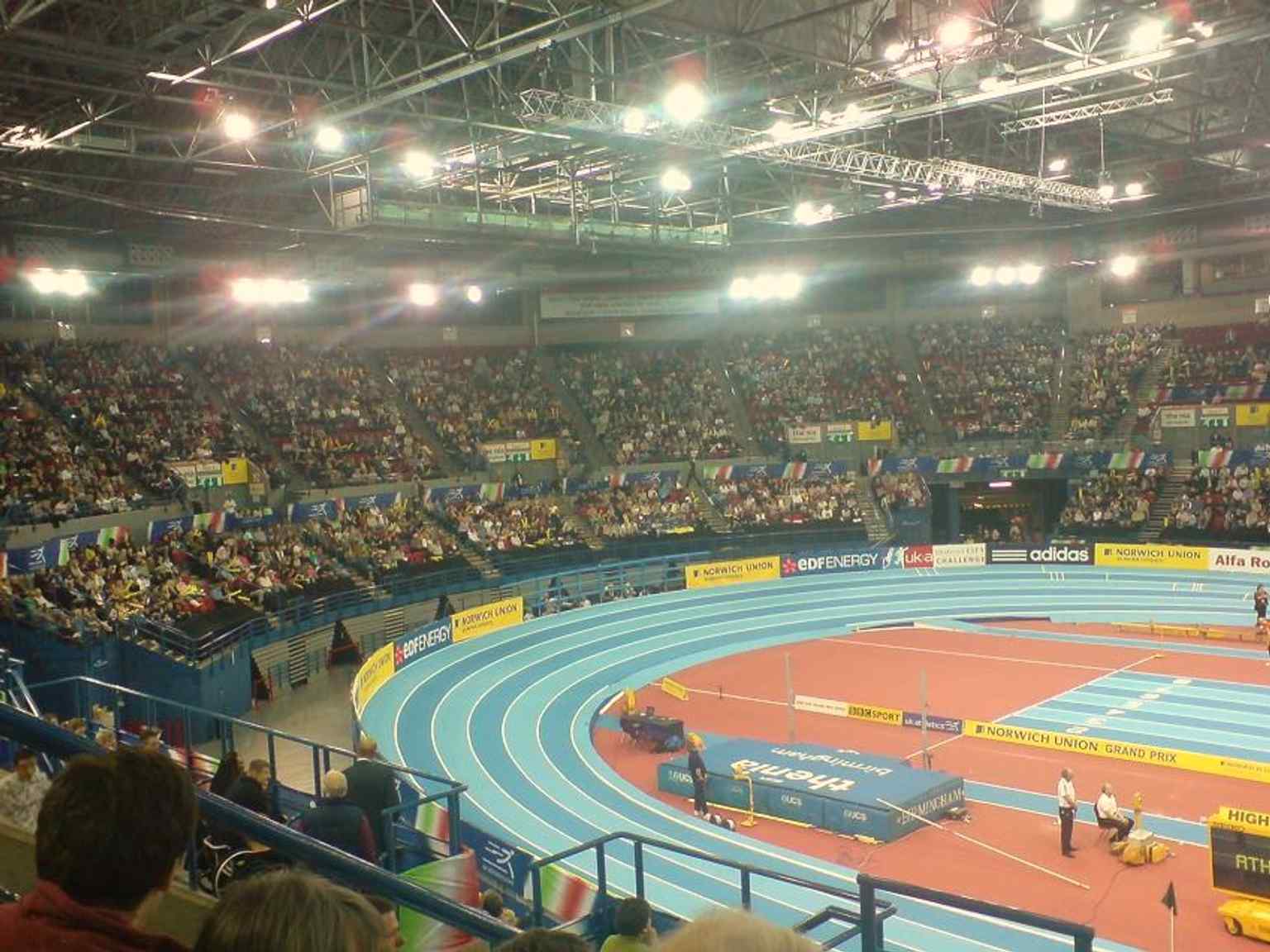
An athletics meeting inside the National Indoor Arena, showing the kind of world-class indoor competition the venue was built to host.Photo: Cls14 (talk), Wikimedia Commons, CC BY-SA 3.0. Cropped & resized. 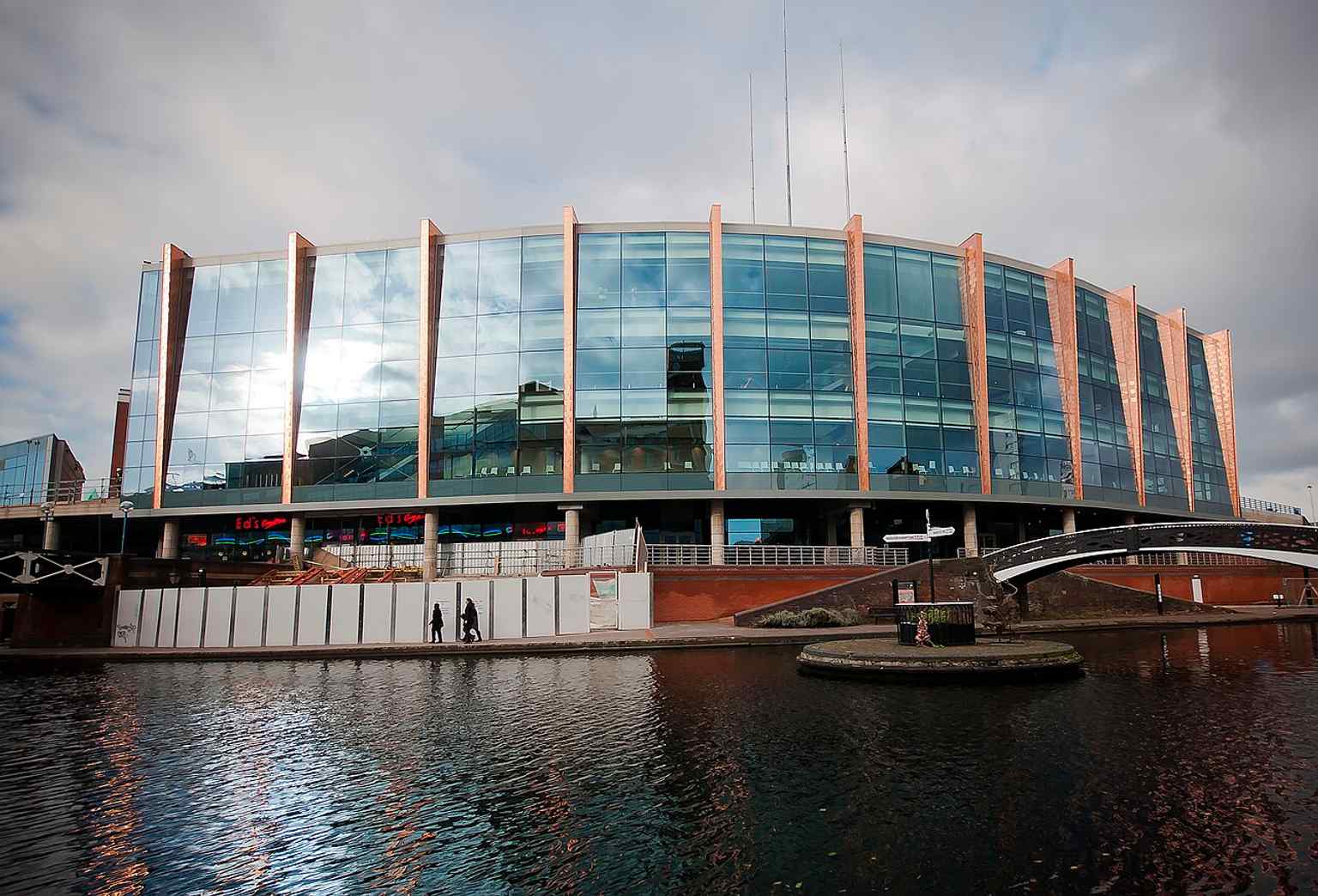
The arena after its 2014 refurbishment, when the old NIA was relaunched as the Barclaycard Arena with a modernized canal-side look.Photo: Bs0u10e01, Wikimedia Commons, CC BY-SA 4.0. Cropped & resized. 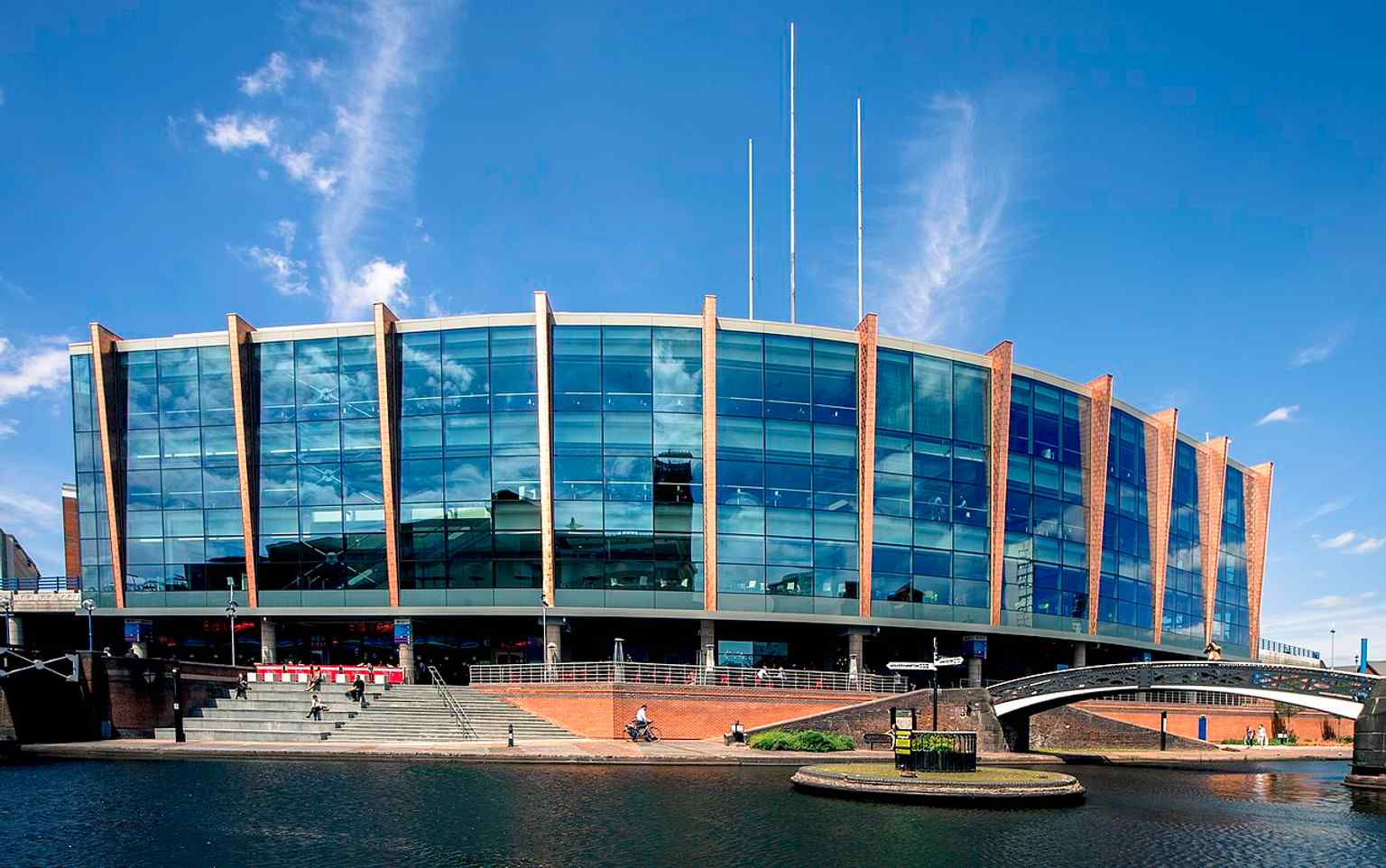
The Barclaycard Arena in 2015, a clear view of the renamed venue during its post-renovation era.Photo: Bs0u10e01, Wikimedia Commons, CC BY-SA 4.0. Cropped & resized. 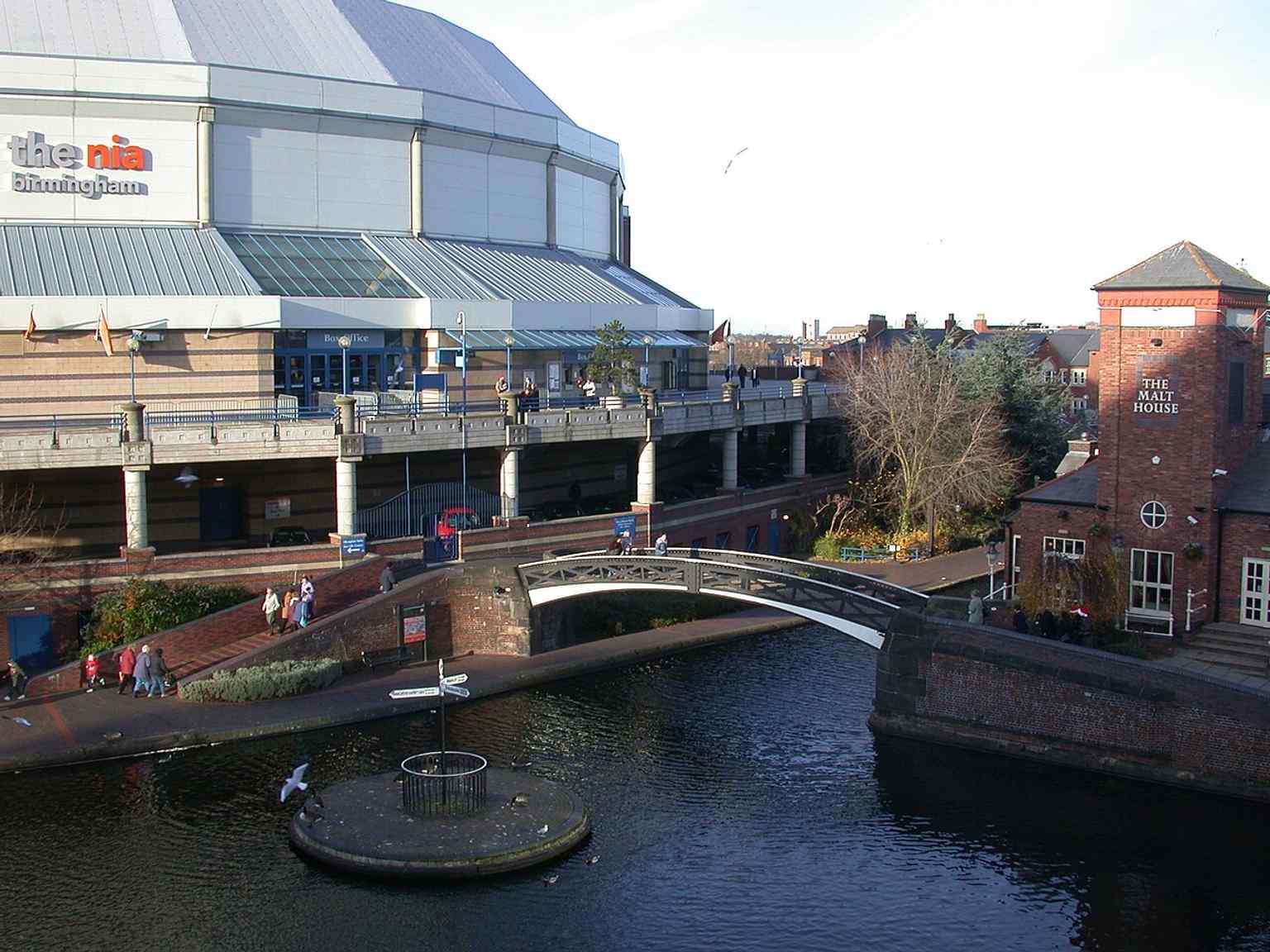
An elevated view showing the National Indoor Arena beside Old Turn Junction and the Sea Life Centre, exactly where the arena sits in Brindleyplace.Photo: Andy Mabbett, Wikimedia Commons, CC BY-SA 3.0. Cropped & resized. 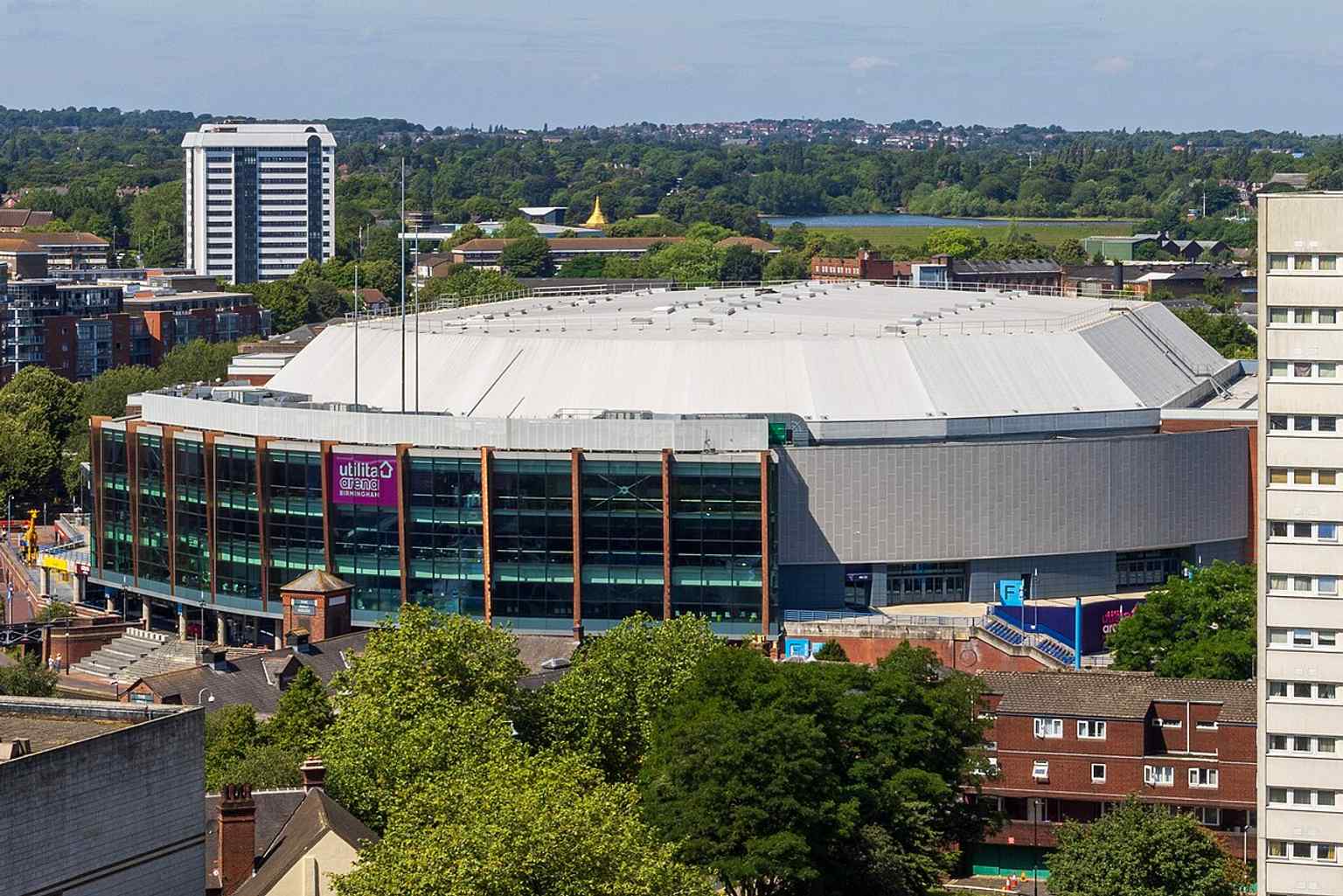
A recent high view from the Library of Birmingham, placing Arena Birmingham in the city skyline and showing its central location.Photo: The wub, Wikimedia Commons, CC BY-SA 4.0. Cropped & resized. 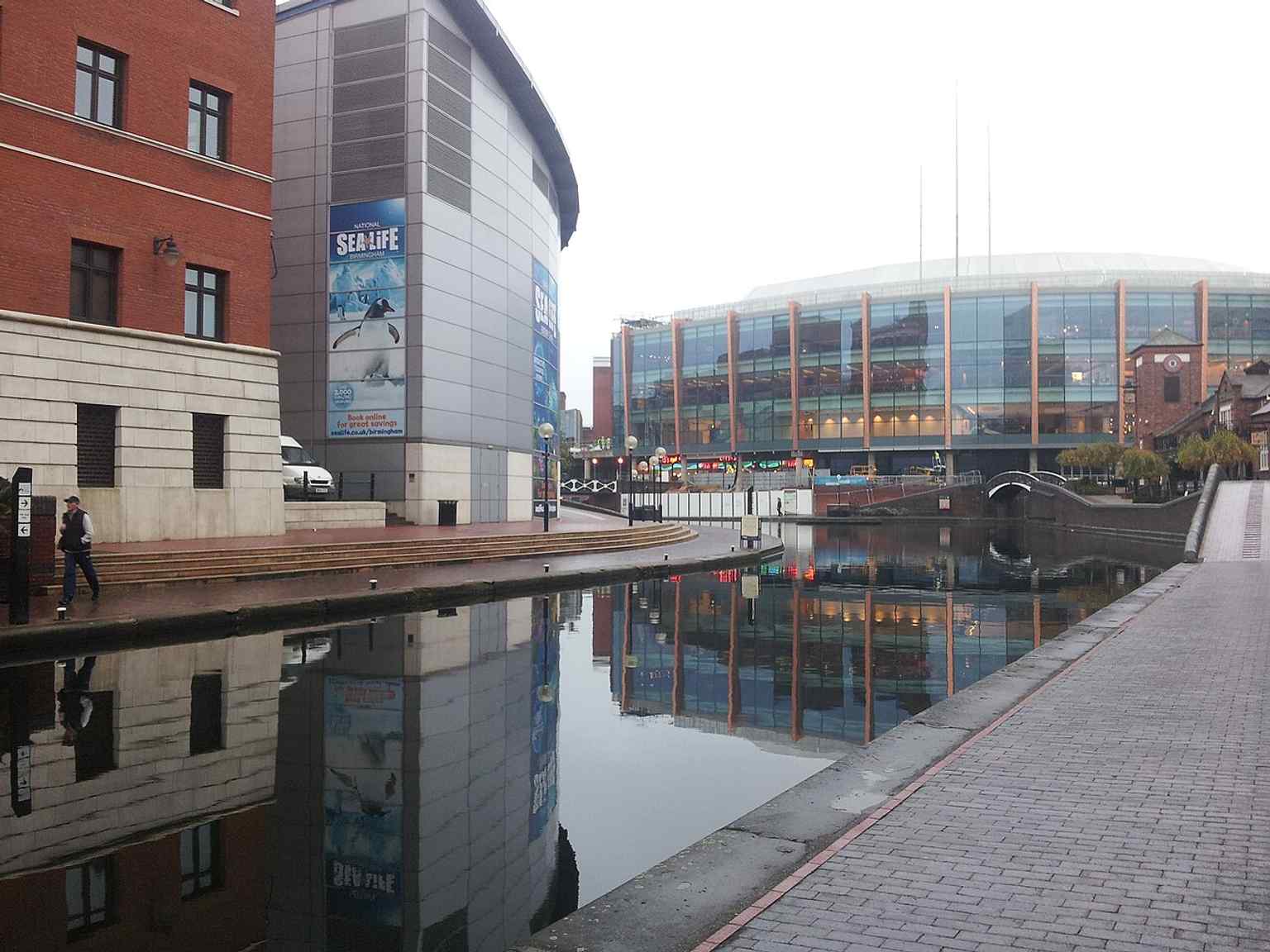
The National Indoor Arena in 2014, around the time the £26 million redevelopment was nearing completion.Photo: Chase me ladies, I'm the Cavalry, Wikimedia Commons, CC BY-SA 3.0. Cropped & resized.  8
8Greek Orthodox Cathedral of the Dormition of Theotokos and Saint Andrew
Buy tour to unlock all 19 tracksLook for the red-brick church with pointed Gothic windows, a broad rectangular body, and a deep arch framing the entrance. Standing here, you can feel Birmingham change key a…Read moreShow less
Open dedicated page →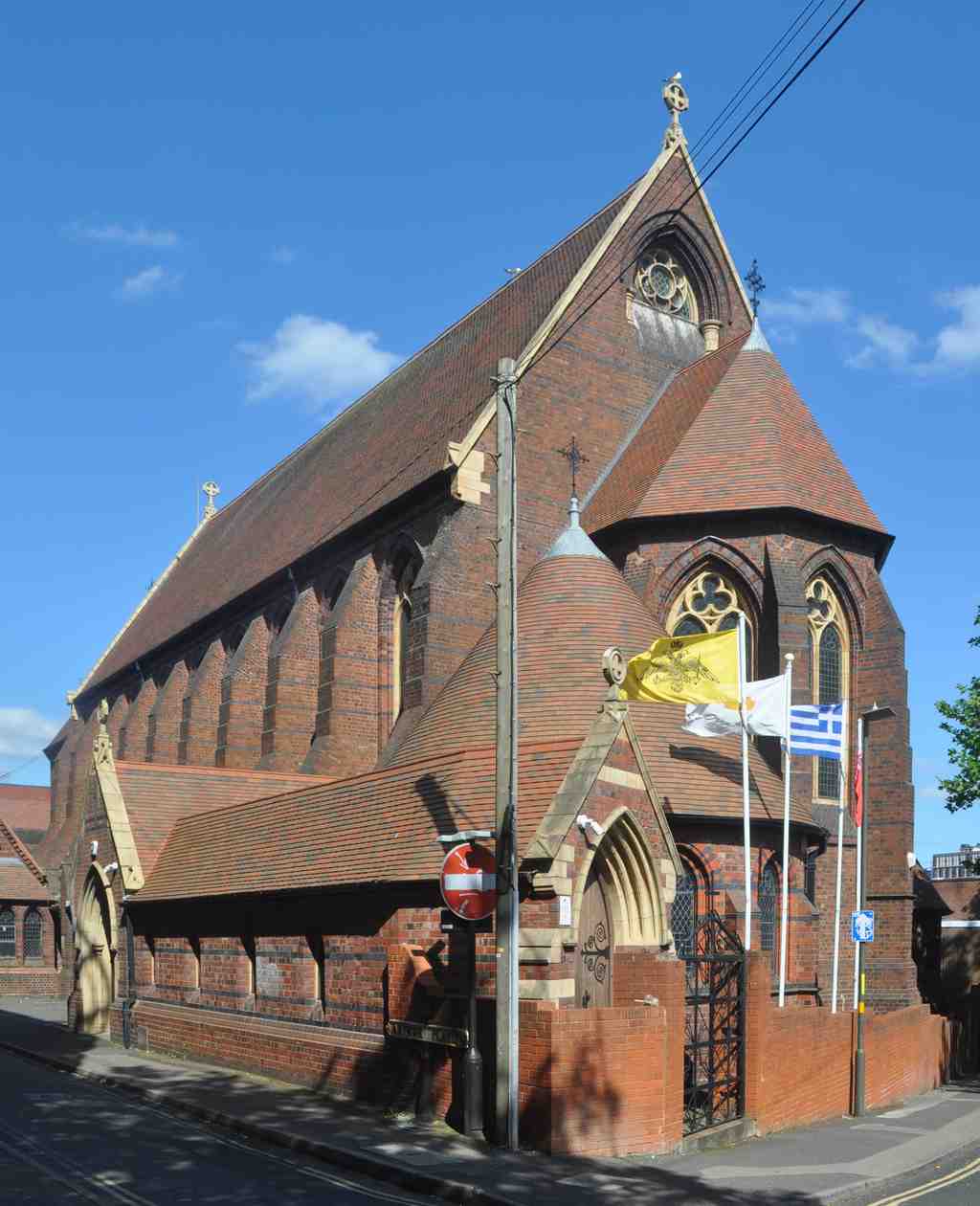
Birmingham Orthodox CathedralPhoto: User:Hassocks5489, Wikimedia Commons, CC0. Cropped & resized. Look for the red-brick church with pointed Gothic windows, a broad rectangular body, and a deep arch framing the entrance.
Standing here, you can feel Birmingham change key a little. Not every important building in this part of town deals in display. Some deal in belonging. This cathedral began life in eighteen seventy-three as a Catholic Apostolic church, and J. A. Chatwin, one of Birmingham’s busiest church architects, gave it a solid Gothic Revival shape in the Early English style: a wide central hall for worship, called the nave, with strong buttresses and a serious amount of brick. Birmingham does love a building that looks ready to outlast an argument.
What gives this place its real power, though, is what happened after the Second World War. As Greek Cypriots came to Britain looking for work and a better life, Birmingham’s Greek Orthodox Community began to grow. By nineteen forty-seven, there were enough Orthodox worshippers here that the Archbishop of Thyateira sent a priest once a month to lead the liturgy in a church hall on Pershore Road. On other Sundays, families travelled to London or Manchester just to pray in their own tradition. That tells you something: faith, language, and community were worth the train fare.
By nineteen fifty-one, they held weekly Orthodox services at Saint James in Edgbaston, after the Anglican service ended. Then a small group got organized properly. Andreas Constantinou, whose cafe became a gathering place, worked with John Efstathiades, a former village church warden from Cyprus who was already in his seventies, along with George Sergiou, Christos Christophorides, George Apeches, Michael Angelides, Michael Epifaniou, and others. They raised money for the essentials of Orthodox worship: icons, a Holy Bible, and an iconostasis, the screen covered with sacred images that separates the altar from the main body of the church.
Their persistence paid off. In nineteen fifty-eight, this church became Birmingham’s first Greek Orthodox church, dedicated to the Dormition of the Mother of God and Saint Andrew, and Father Nicodemos Anagnostou began regular liturgies here as its first permanent priest.
If you glance at the photo in the app, you can see how that older Victorian shell still shapes the place today. But locals know the real story is not only inside the sanctuary. This cathedral also houses the Apostolos Andreas Greek School. It began the same year as the church, first in a Greek coffee shop in Lozells, then in borrowed rooms, then finally in its own building beside the church in two thousand and two. So this is not just somewhere people come to worship. It is where children learn Greek poems, prayers, songs, dances, history, and the language of grandparents. That is how a migrant community turns borrowed architecture into home.
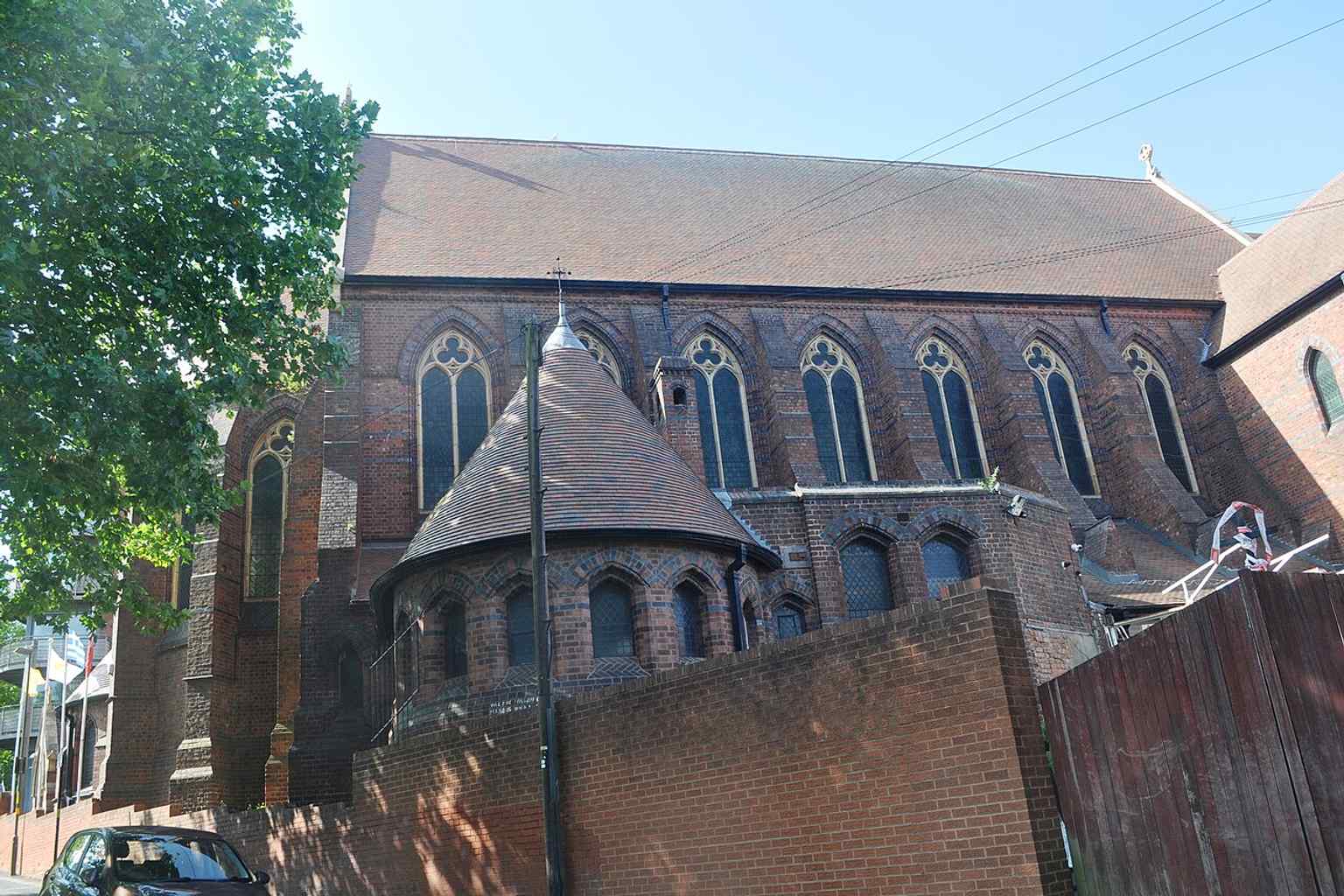
A clear view of the Greek Orthodox Cathedral in Summer Hill Terrace, the former 19th-century church that became the cathedral seat in 1980.Photo: User:Hassocks5489, Wikimedia Commons, CC0. Cropped & resized. In nineteen eighty, when Bishop Irinaios of Patara Birmingham took his place here, the church became a cathedral, the seat of a bishop. Later, one of the school’s great teachers, Christophoros Cartoudis, received his British Empire Medal here in two thousand and fourteen, surrounded by the community he had served for decades... a fitting choice, really. Awards are nicer when the people who taught you to read can see them.
From here, the story turns back toward the Quarter’s working bones, where buildings show you exactly how craft and trade were organized. Argent Centre is about a four-minute walk from here. If you want to catch this cathedral open, it generally welcomes visitors on Sunday mornings from half past nine to one.
 9
9Argent Centre
Buy tour to unlock all 19 tracksOn your right, the Argent Centre is a hefty red-and-cream brick block with corner turrets, tall arched windows, and little pyramidal roofs that give the whole place a faintly…Read moreShow less
Open dedicated page →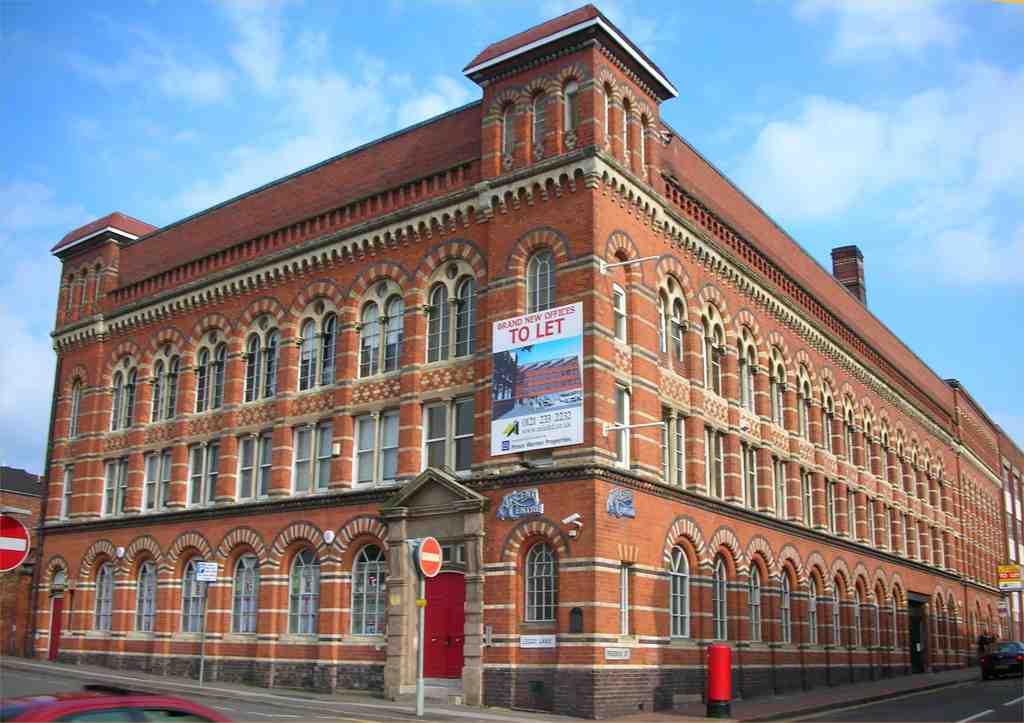
Argent CentrePhoto: Oosoom, Wikimedia Commons, CC BY-SA 3.0. Cropped & resized. On your right, the Argent Centre is a hefty red-and-cream brick block with corner turrets, tall arched windows, and little pyramidal roofs that give the whole place a faintly theatrical skyline.
This is the Argent Centre, a Grade II* listed building on the corner of Frederick Street and Legge Road. Architect Jay Gee Bland designed it in eighteen sixty-three for W. E. Wiley, a manufacturer of gold pens, and the place first carried the name Albert Works, possibly because it faced a Victoria Works across the way. Birmingham could be practical even in its royal references.
This building is a neat lesson in factory logic. It looks like one vast industrial lump, but the real trick is hidden in the plan: long, narrow, multi-storey workshops, only sixteen feet wide, wrapped around an open courtyard. That layout let daylight hit workbenches from two sides, which mattered when your business depended on precision, repetition, and eyes that hadn’t yet met electric task lighting. Even the flat roofs had a purpose. The designers meant them to take extra storeys later if business kept growing.
And grow it did. Wiley spent five thousand pounds on the factory, roughly half a million pounds in today’s money, employed about two hundred and fifty people here, and turned out gold pens, propelling pencils, withdrawing pencils, and other finely made small goods until the firm merged with other pen makers in eighteen seventy-six. The site itself had once held a pair of semi-detached houses, which tells you something about this district: domestic space didn’t so much disappear as get swallowed by industry, one plot at a time.
Take a moment and look at the scale of the frontage... then imagine the reality inside. Not one cavernous hall, but slim vertical workshops packed around a central void. That’s the bit most people miss, and once you know it, the whole building reads differently.
The structure was clever too. The floors used hollow bricks tied together with wrought iron, improving fire resistance and helping reduce insurance costs. Very Birmingham: elegant engineering with an eye on the bills. If you glance at the image on your screen, the older exterior view helps the multicolored brickwork stand out, and you can see how the design borrows a little swagger from Renaissance Florence.
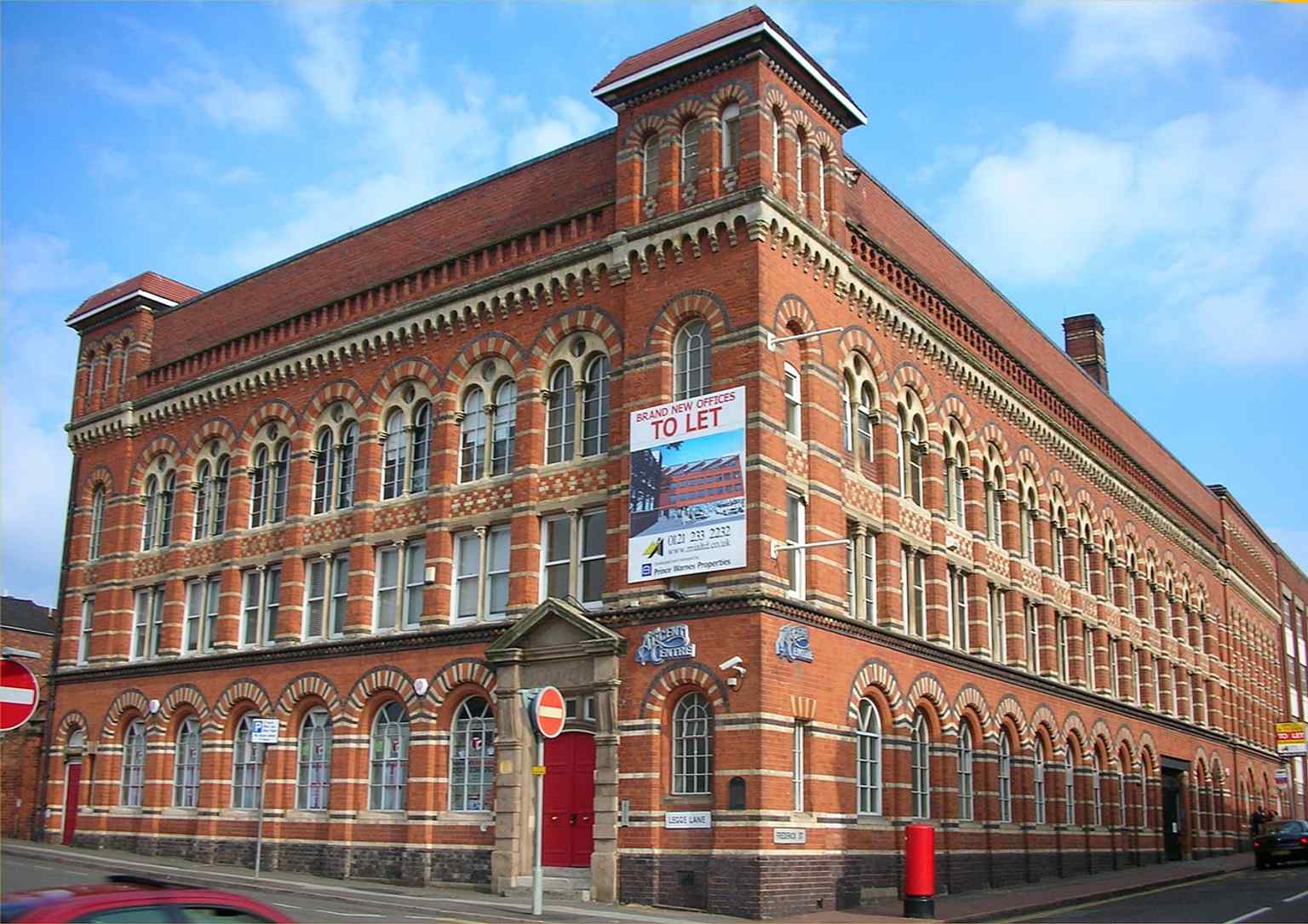
The Argent Centre’s ornate red-brick façade shows why this former pen factory was built to impress as well as work, designed in 1863 for W. E. Wiley.Photo: Oosoom at English Wikipedia, Wikimedia Commons, CC BY-SA 3.0. Cropped & resized. Then the building takes a delightful left turn. One wing housed Turkish baths, heated by recycled steam from the factory engines feeding dry warm air into the baths. Visitors didn’t just bathe, either. They played chess, fenced, and knocked billiard balls around. A pen factory with leisure facilities sounds oddly modern, until you remember Victorians loved efficiency almost as much as they loved improving other people.
The courtyard later caught a bomb during the Birmingham Blitz, and bent window frames lingered into the mid-nineteen eighties. In two thousand and twenty to two thousand and twenty-one, restorers brought back the missing pyramidal roofs on the corner turrets using old engravings and surviving tile fragments, right down to new stainless-steel finials.
After pen-making, scientific suppliers Griffin and George and Gallenkamp moved in, then offices followed in nineteen ninety-three. Today the building offers flexible workspace for small firms, and the Pen Museum inside keeps the original trade in the story.
From here, we leave workshop architecture and follow Birmingham’s obsession with exact making into an even more far-reaching product: money itself. The Birmingham Mint is about an eight-minute walk away.
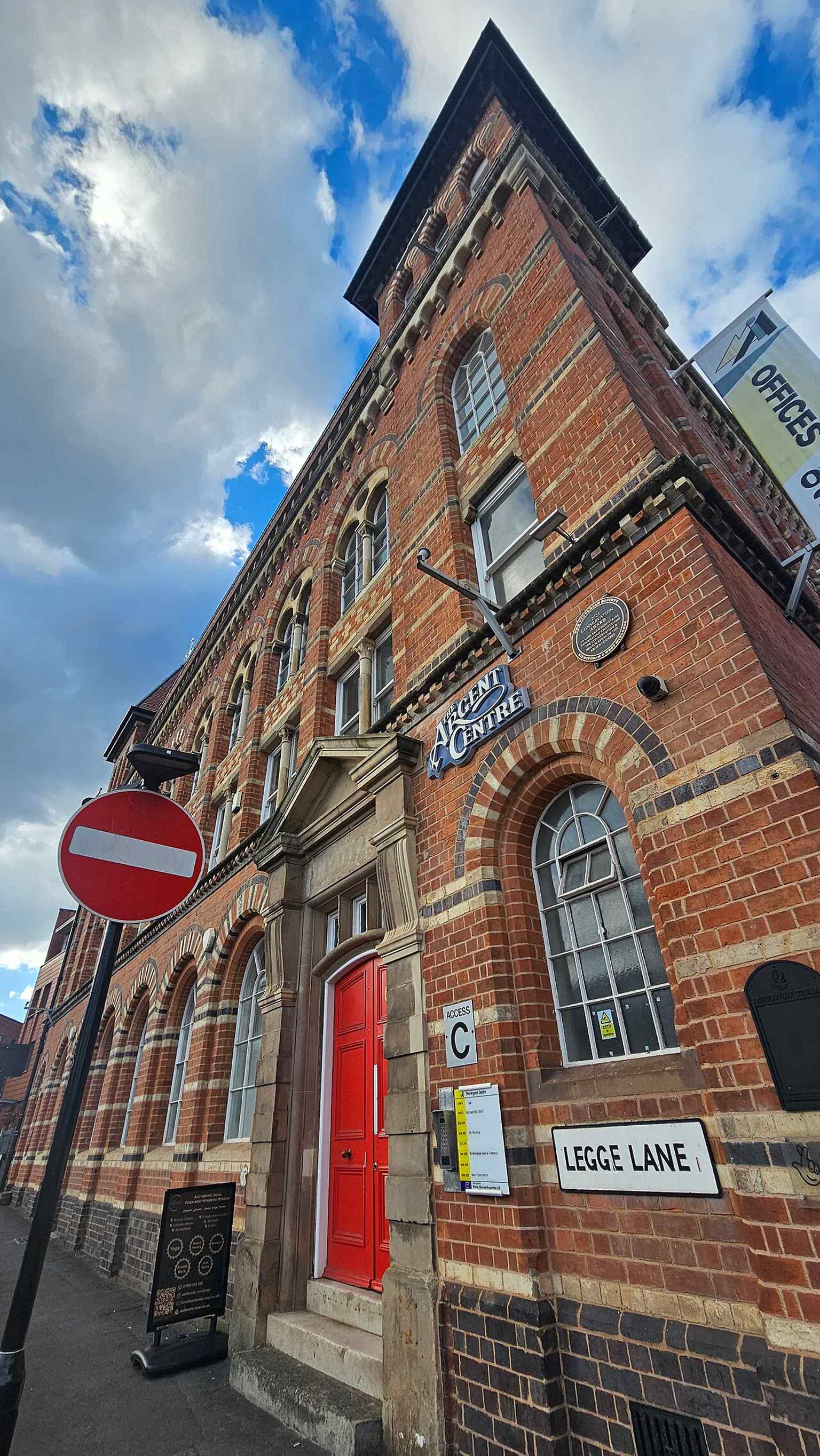
A modern street view of the Grade II* Argent Centre in the Jewellery Quarter, the building that later became home to offices and the Pen Museum.Photo: Brumbug, Wikimedia Commons, CC BY-SA 4.0. Cropped & resized. 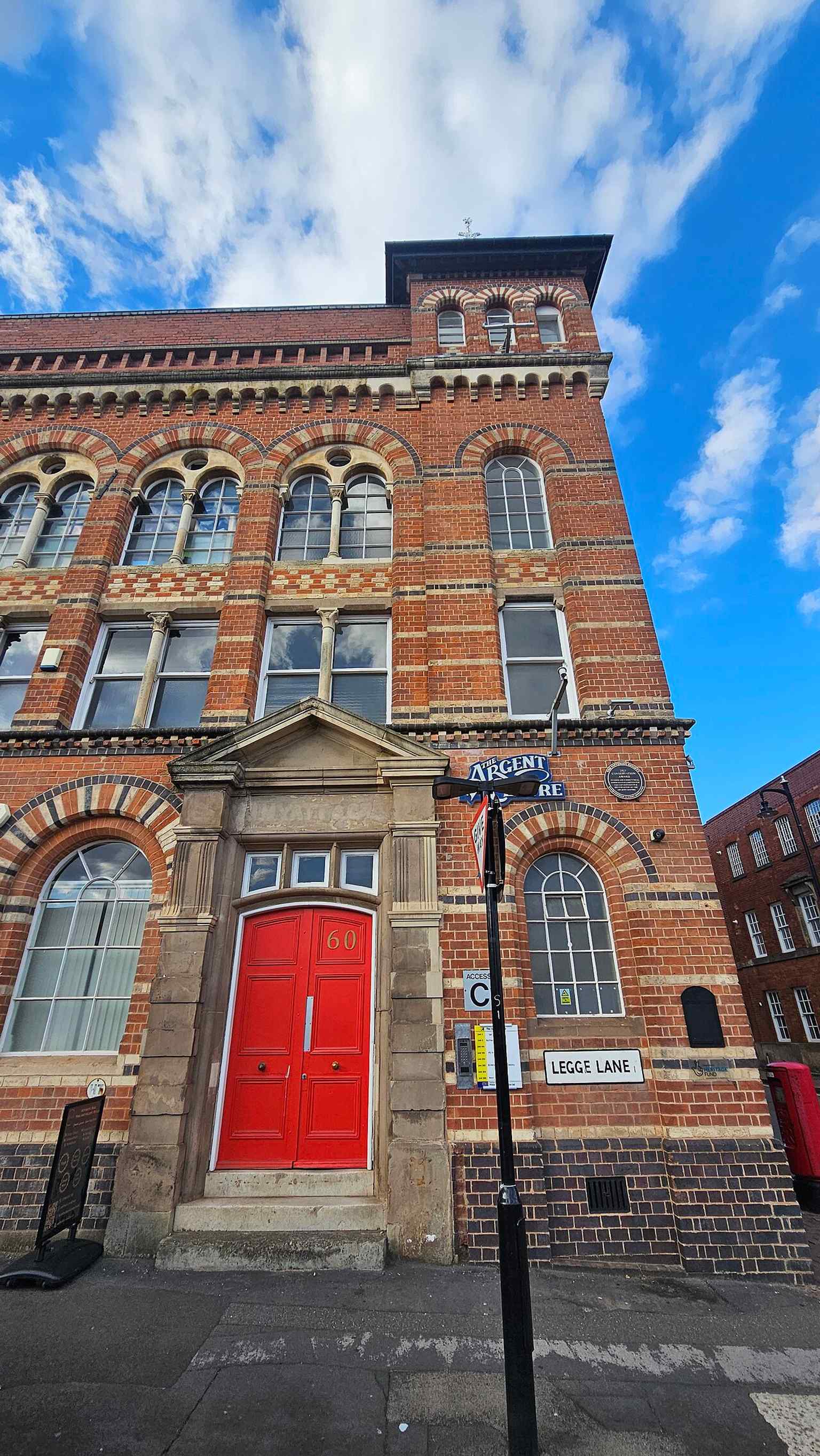
Another current exterior view of the Argent Centre, useful for showing the restored landmark on Frederick Street and Legge Road.Photo: Brumbug, Wikimedia Commons, CC BY-SA 4.0. Cropped & resized.  10
10The Mint Apartments | Shortmove
Buy tour to unlock all 19 tracksOn your right is a long red-brick factory block, three storeys high, with rows of round-arched windows and a grand central stone arch carrying a curved bow window above. This is…Read moreShow less
Open dedicated page →
Birmingham MintPhoto: Tsange, Wikimedia Commons, CC BY-SA 4.0. Cropped & resized. On your right is a long red-brick factory block, three storeys high, with rows of round-arched windows and a grand central stone arch carrying a curved bow window above.
This is the Birmingham Mint, and it tells a very Birmingham story: local skill, local machinery, and objects small enough to fit in your pocket... travelling farther than most people ever did. The turning point came in eighteen fifty, when Ralph Heaton bought coin presses, dies, and other equipment from the failed Soho Mint. That purchase gave this family metal business a passport into global minting.
The roots go back even earlier, to engineer Ralph Heaton’s brass foundry in the seventeen nineties. His son, Ralph Heaton the second, set up his own business in eighteen seventeen, making brass fittings and dies, which are the hardened tools that stamp a design into metal. Then he spotted an opportunity. The Royal Mint in London struggled to keep up with copper coinage for a growing empire, and private mints could take foreign contracts if the government approved them. Heaton got the license... and off he went.
The first orders included tokens for Australia, then more than nine million copper coins for Chile. Soon Birmingham was supplying coin blanks and striking currency for places far beyond the Midlands. In eighteen fifty-two, Heaton even went to Marseille himself to overhaul a French mint, finding broken presses and rusting machinery, then helping that site produce more than one hundred and one million coins. Not bad for a man who started with brass fittings.
By eighteen sixty, business had outgrown Shadwell Street, so the family built this purpose-made factory on Icknield Street. If you glance at the before-and-after image in the app, you can see how this same frontage held its ground while the city changed around it.
And the world kept opening. Birmingham made coins for Hong Kong, Romania, Italy, Burma, and China. The Chinese contract was extraordinary: in eighteen eighty-nine, the Canton Mint opened with Birmingham-made lever presses and the capacity to strike coins on an enormous scale, including the new Silver Dragon pieces. A Birmingham man named Edward Wyon stayed there for years, training Chinese workers and running operations. So this place did not just export machinery; it exported know-how.
There is a nice link here to the Assay Office. There, silver received an anchor to prove what it was. Here, metal received a monarch, a value, and the authority of a whole state. Same obsession with trust... just a larger stage.
If you look at the coin image on your screen, you’ll see one of the tidy proofs that hint at how far Birmingham’s reach extended through these little metal ambassadors.
The twentieth century brought competition from the Royal Mint, odd side-jobs like the nineteen twenty-nine Lundy Puffin coins for a self-styled island king... because apparently even sovereignty could be subcontracted... and then a harder decline. A dispute over overseas contracts helped drive the mint into administration in two thousand and three, ending almost two centuries of work here.
From here, the story darkens a little. All this industry, pride, and stamped authority leads naturally toward remembrance, and Warstone Lane Cemetery, about five minutes away, holds many of the people who built this world. And for practical purposes, the exterior here can be visited at any hour.
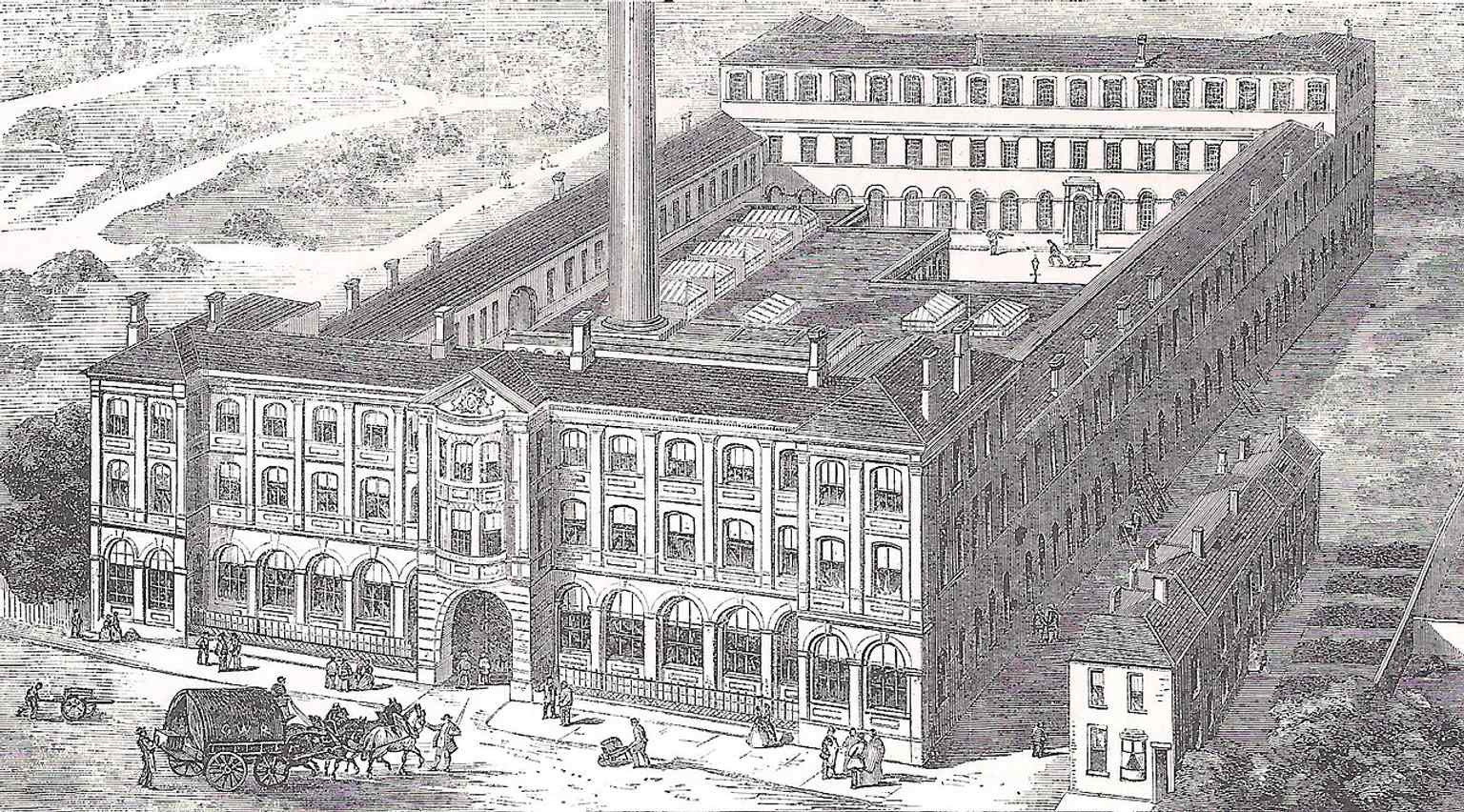
The Birmingham Mint as it appeared in 1862, when the firm had just moved into its purpose-built Icknield Street works during its rapid expansion.Photo: Illustrated Times, Wikimedia Commons, Public domain. Cropped & resized.  11
11Brookfields Cemetery
Buy tour to unlock all 19 tracksLook for the blue-brick gate lodge, the stepped stone catacombs cut into the slope, and the dark arched openings that give Warstone Lane Cemetery its unmistakable face. This is…Read moreShow less
Open dedicated page →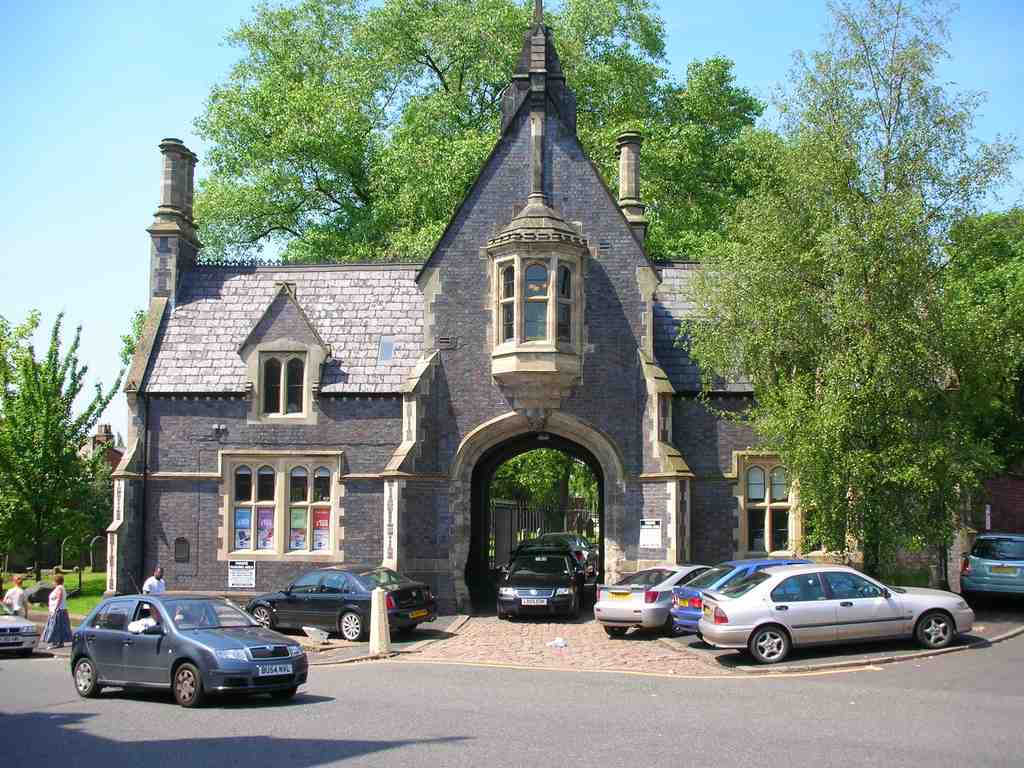
Warstone Lane CemeteryPhoto: Oosoom, Wikimedia Commons, CC BY-SA 3.0. Cropped & resized. Look for the blue-brick gate lodge, the stepped stone catacombs cut into the slope, and the dark arched openings that give Warstone Lane Cemetery its unmistakable face.
This is memory in stone... an archive of the Jewellery Quarter where industry, grief, war, and careful rescue all ended up sharing the same ground. Warstone Lane opened in eighteen forty-seven as the Church of England cemetery, while nearby Key Hill served the nonconformists, meaning people outside the established church. Even in death, Birmingham kept its filing system tidy.
Locals will point out something most visitors miss: those catacombs were not simply a grand Victorian flourish. Builders cut them into the side of an old sandpit or quarry, turning an awkward industrial scar into burial space. Practical, slightly eerie, and very Birmingham. If you check the image on your screen, you can see those tiers clearly, stacked into the slope like a stone ledger.
The catacombs also caused trouble. Coffins stored there but not buried in earth were considered a health risk, and they helped prompt rules requiring such coffins to be sealed with lead or pitch. So even the law here grew out of pressure, seepage, and the city trying to manage what it had already built.
The cemetery’s chapel began with a foundation stone laid on the sixth of April, eighteen forty-seven. The Blitz later damaged St Michaels and All Saints chapel beyond repair, and workers demolished it in nineteen fifty-four. War reshaped this place in other ways too. After German bombing wrecked St Thomas’s Church at Bath Row in December nineteen forty, the city eventually cleared its gravestones and reinterred the dead here. A burial ground became a refuge for other disturbed burial grounds... grim, but oddly compassionate.
If you glance at the first image, the blue-brick gate lodge survives from eighteen forty-seven to eighteen forty-eight, designed by J. R. Hamilton and J. M. Medland, and it still stands as one of the cemetery’s original Victorian markers. The whole site is now Grade II listed for its historic importance.
Some stories here cling hard. John Baskerville, the great printer and famous atheist, did not arrive until eighteen ninety-seven after a long and rather undignified posthumous shuffle across the city. Edward Warrulan, a young Aboriginal Australian brought to England in the colonial world’s cold machinery, died in Birmingham at about nineteen and lies here in an unmarked public grave. Fifty-one Commonwealth servicemen from the First World War and thirteen from the Second are also buried here; where headstones vanished, a screen wall memorial gathers the names in one place.
Since two thousand and four, the Friends of Key Hill and Warstone Lane Cemeteries have helped restore graves and care for plots that neglect nearly erased. And now, fittingly, we leave the stillness of the catacombs for another afterlife of the city: routes and tunnels carrying people onward. Head next to Jewellery Quarter station, about three minutes away. If you plan to return, the cemetery usually opens from half past eight, closing at four on weekdays and half past six on weekends.
 12
12Jewellery Quarter station
Buy tour to unlock all 19 tracksOn your left, look for a low red-brick station entrance with a flat rectangular frontage, metal railings, and stairs and a lift dropping from Vyse Street down toward the…Read moreShow less
Open dedicated page →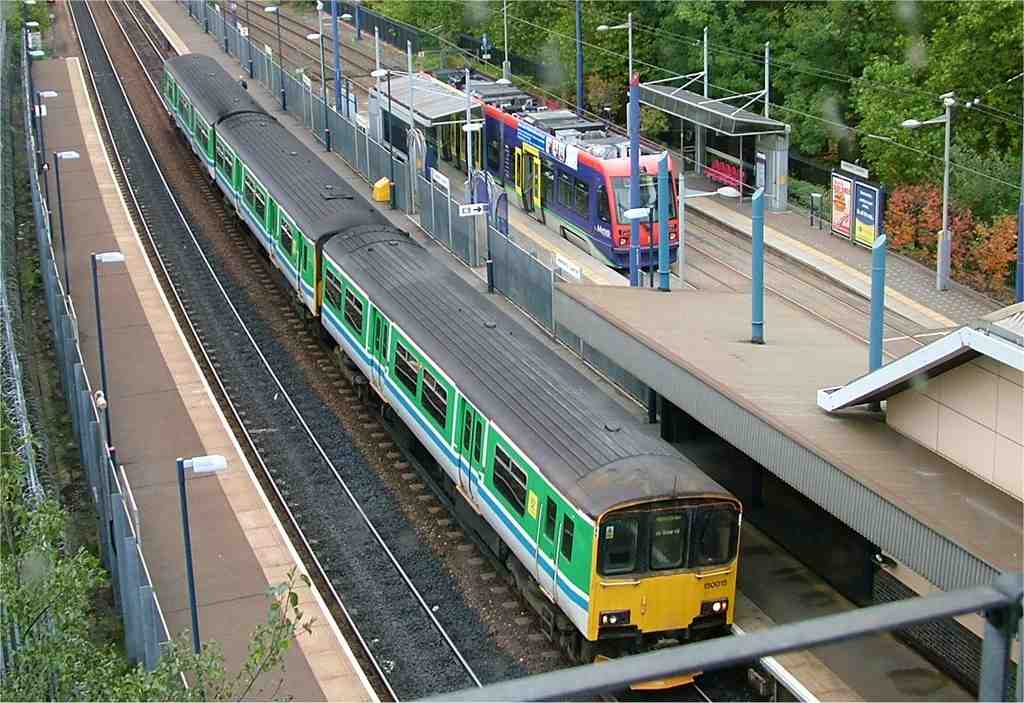
Jewellery Quarter stationPhoto: Tagishsimon, Wikimedia Commons, CC BY-SA 3.0. Cropped & resized. On your left, look for a low red-brick station entrance with a flat rectangular frontage, metal railings, and stairs and a lift dropping from Vyse Street down toward the tracks.
From the street, Jewellery Quarter station looks almost modest... and that is part of the point. This place is one of Birmingham’s quiet repair jobs. The area lost older rail links, including nearby Hockley station, which the Great Western Railway opened in eighteen fifty-four and closed when the line shut in nineteen seventy-two. Then, on the twenty-fourth of September, nineteen ninety-five, the city deliberately stitched the route back together. The restored Jewellery Line brought cross-city trains through Snow Hill again, and in nineteen ninety-nine the Midland Metro tram joined the site. Suddenly this was not just a local halt. It became one of those recovered lifelines a city needs when old links have been cut.
That is why the levels matter. You stand here on Vyse Street, but the platforms sit lower down at the mouth of Hockley Number Two Tunnel. Stairs and a lift carry passengers from the road into a narrow transport corridor of rails, signals and timetables. It is a neat bit of urban mending: land that once handled Hockley’s goods traffic turned back into a passenger gateway. No earlier station stood on this exact spot, but the new one reclaimed the job the area had lost.
If you glance at the before-and-after image in the app, you can see how little the station itself changed between two thousand and five and two thousand and eighteen; what changed was the confidence that this interchange belonged here.
And interchange is the key word. Rail on one side, tram on the other: a rare pairing, and a very practical one. Trains here run roughly every fifteen minutes off-peak, while West Midlands Metro trams pass through at short intervals toward Wolverhampton and Edgbaston Village. It is not glamorous, exactly... but neither is a heartbeat, and you tend to miss one when it stops.
If you want a quick look at that double act, the image on your screen shows a train and tram side by side here, which sums the place up nicely.
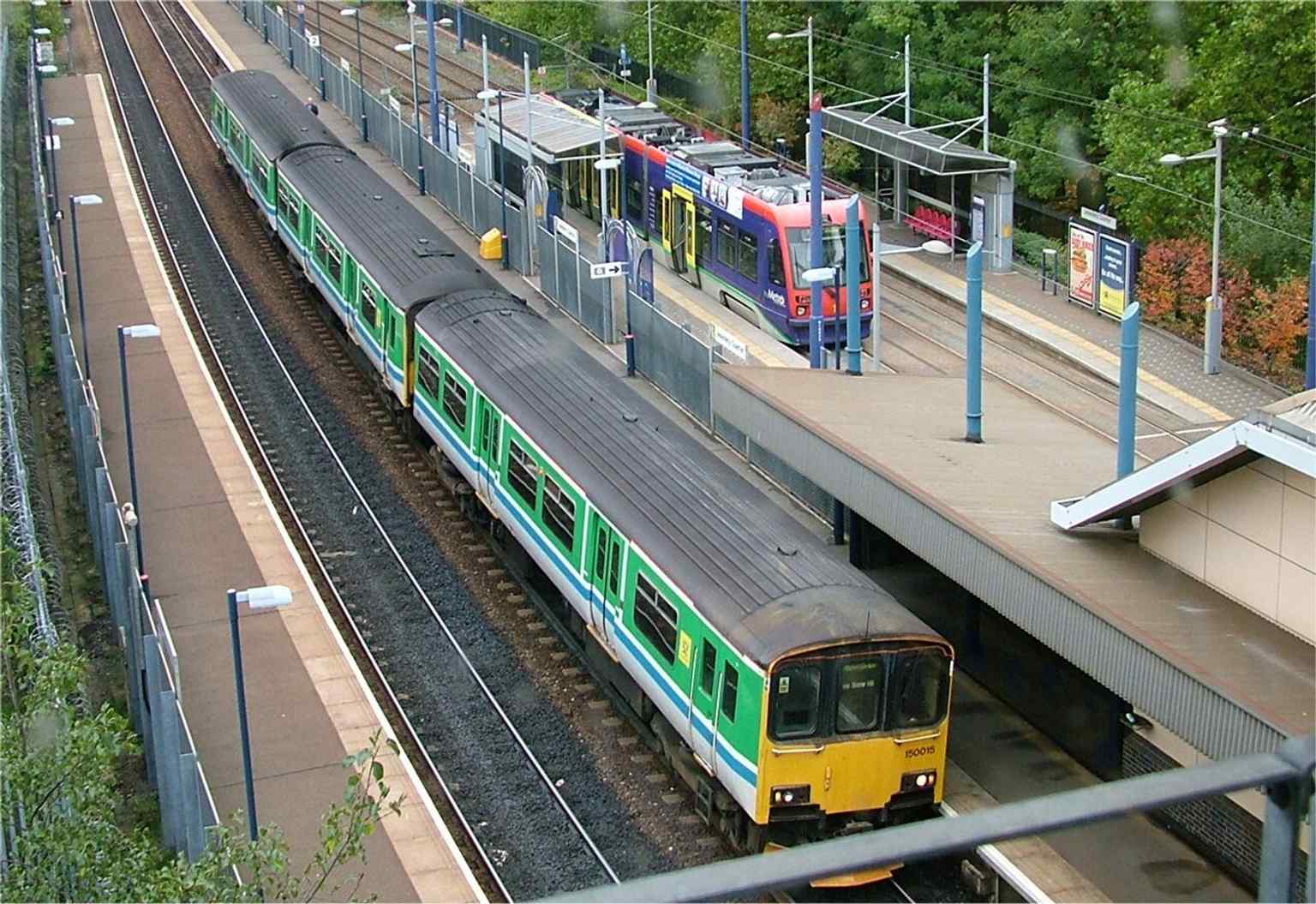
A rare rail-and-tram interchange in one view: Jewellery Quarter station with a train and a tram side by side, reflecting the 1999 addition of Midland Metro services.Photo: Tagishsimon, Wikimedia Commons, CC BY-SA 3.0. Cropped & resized. Even the details outside the entrance tell you this station belongs to a longer civic story. Mark Renn added the sculpture Clockwork in two thousand and four, part of a wider trail of artworks at transport sites around the region. And beside the entrance stands a Victorian cast-iron public urinal from around eighteen eighty, now disused and Grade Two listed, meaning the law protects it for its special historic interest. It earned that status after a rather awkward career: by the mid-nineteen eighties it was still in use, despite never having been connected to water, and later reopening plans collapsed because a proper connection cost too much.
From here, the story narrows beautifully. In a couple of minutes, at the Museum of the Jewellery Quarter, the scale shrinks from tunnels and routes to one preserved bench and one family firm, held almost exactly as working life left them.
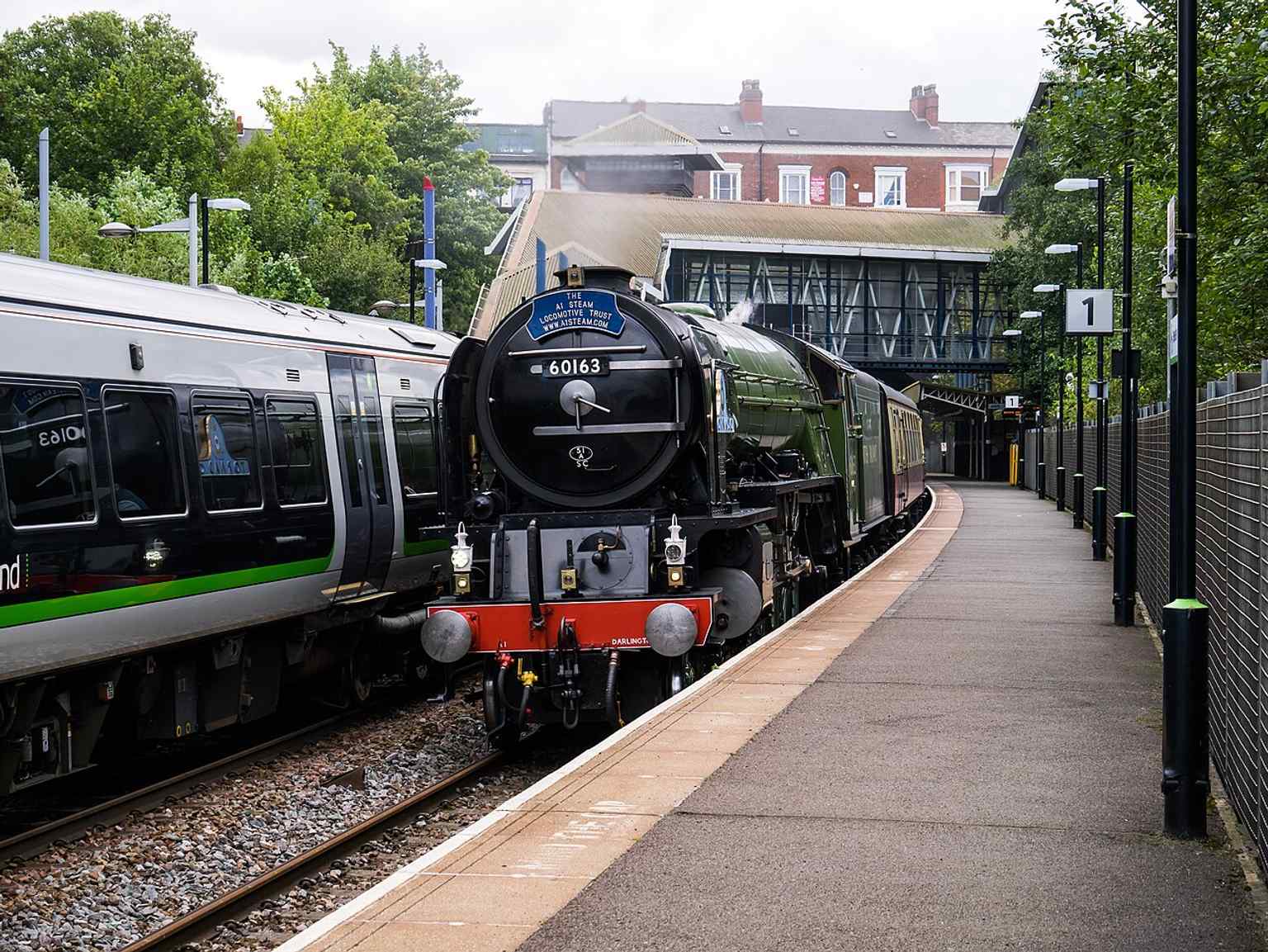
A passing London-bound steam special at the station platforms, showing the busy railway setting at this cross-city stop.Photo: Tom Axford 1, Wikimedia Commons, CC BY-SA 4.0. Cropped & resized.  13
13Museum of the Jewellery Quarter
Buy tour to unlock all 19 tracksThis red-brick workshop frontage, with its tall rectangular sash windows and plain central doorway, looks more like a place of steady work than public spectacle... which is…Read moreShow less
Open dedicated page →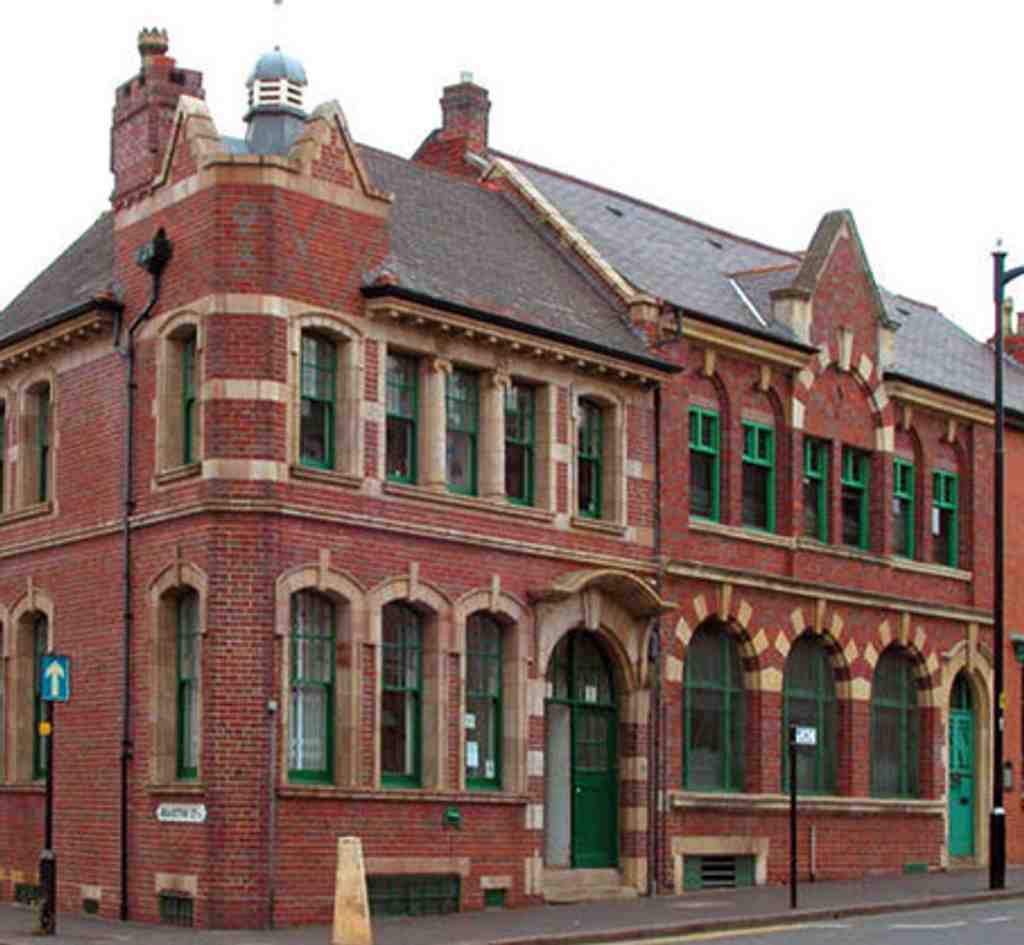
Museum of the Jewellery QuarterPhoto: Cams0ft, Wikimedia Commons, CC BY-SA 3.0. Cropped & resized. This red-brick workshop frontage, with its tall rectangular sash windows and plain central doorway, looks more like a place of steady work than public spectacle... which is exactly the point.
This is the Museum of the Jewellery Quarter, home to the Smith & Pepper Workshop, one of the most affecting little truths in Birmingham. For more than eighty years, one family firm made gold jewellery here with barely any change to its tools, routines, or layout. Then, in nineteen eighty-one, Tom Smith was seventy-four, his brother Eric was eighty-one, and their sister Olive was seventy-eight. The trade was declining, so they retired, locked the door, and left. That simple act created the museum. Most tourists miss the odd brilliance of that: this place survived because nobody tidied up.
Inside, benches, tools, overalls on hooks, cups of tea, even jars of jam and Marmite stayed where they were. Olive, known as Miss Olive, worked as the factory secretary, and that Marmite jar left in the office gives the whole place an almost unnerving intimacy. If you glance at the image on your screen, you can see the interior’s preserved bench layout... not a polished fantasy of craft, but the real grammar of repetitive skilled work.
Birmingham Museums says the main twelve-seater jewellers’ bench was used by workers including Joseph Gee, John Web, and Brian Ravenhill. To earn a place there, a seven-year apprenticeship was once normal. So yes, the Quarter made beautiful things, but beauty here depended on long training, sore backs, sharp eyes, and people whose names rarely made it onto the box.
The museum opened in nineteen ninety-two, originally as the Jewellery Quarter Discovery Centre, to preserve this time capsule and tell the wider two-hundred-year story of the district. It closed in twenty twenty for major repairs after roof damage and water ingress, then reopened in August twenty twenty-five. If a workplace is left almost exactly as it was, does that feel like preservation... or like a conversation cut off mid-sentence?
From this one workshop, the whole Quarter starts to make sense as a living system of benches, firms, skills, and families. In a moment, we’ll head on to Jewellery Quarter itself. If you want to come back inside, the museum usually opens Thursday to Saturday, from ten-thirty A-M to four P-M.
 15
15Key Hill Cemetery
Buy tour to unlock all 19 tracksLook for black iron gates and railings held between tall stone piers, forming a formal entrance to a broad cemetery beyond. This is Key Hill Cemetery, opened on the twenty-third…Read moreShow less
Open dedicated page →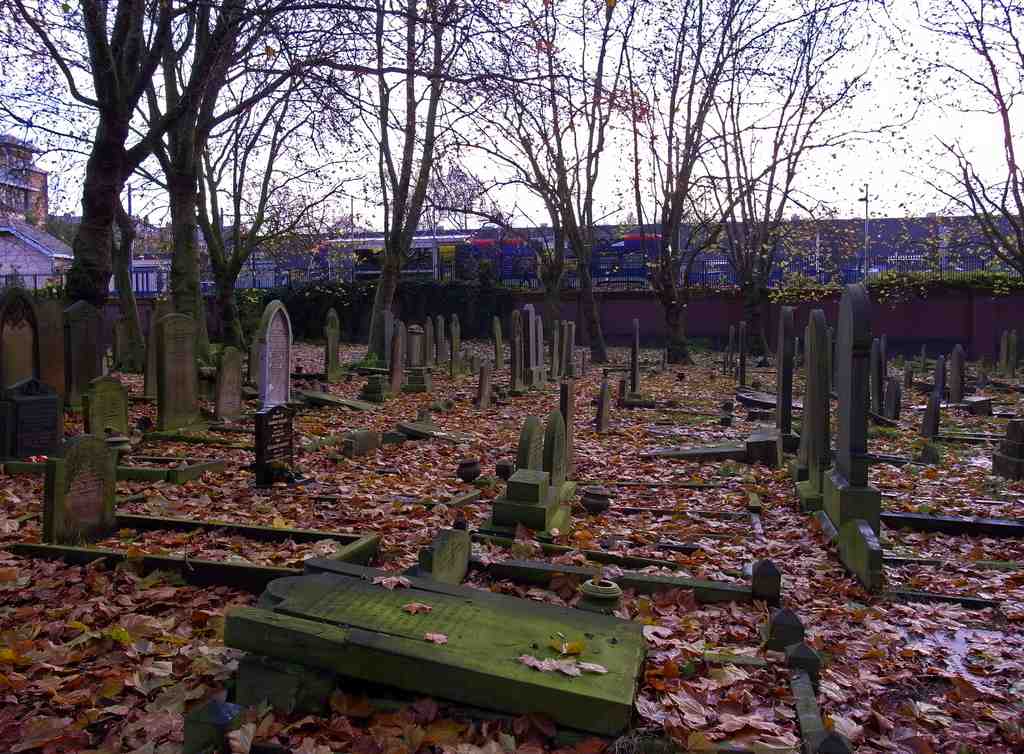
Key Hill CemeteryPhoto: Oosoom, Wikimedia Commons, CC BY-SA 3.0. Cropped & resized. Look for black iron gates and railings held between tall stone piers, forming a formal entrance to a broad cemetery beyond.
This is Key Hill Cemetery, opened on the twenty-third of May, eighteen thirty-six, and first known as Birmingham General Cemetery. It mattered because it gave Birmingham something new: a burial ground outside a churchyard, and one that welcomed nonconformists - Protestants outside the Church of England - in a city full of independent minds and equally independent opinions. In plain English, this was where a great many Brummies who helped build modern Birmingham could claim their place in death, even if they never quite fit the official mold in life.
Local architect Charles Edge laid it out, and he gave it these imposing gates and piers too, now restored and listed for their historic value. He also designed a Greek Doric chapel here - Greek Doric means the plain, sturdy classical style with simple columns - but that chapel has gone. That absence tells its own story. Cemeteries preserve memory, yes, but they also show you what cities let slip.
By nineteen fifteen, one writer felt confident enough to call Key Hill the Westminster Abbey of the Midlands. That sounds grand, but frankly he had a case. This ground holds politicians, reformers, manufacturers, journalists, scholars, and artists: Joseph Chamberlain and his family, George Dawson of the Civic Gospel, Harriet and Robert Martineau, pen maker Joseph Gillott, Alfred Bird of egg-free custard fame - proof that civic immortality can arrive by sermon, speech, or pudding.
Some graves carry whole dramas. Marie Bethell Beauclerc taught herself shorthand at twelve and became England’s first female shorthand newspaper reporter in eighteen sixty-three. Constance Naden, poet, philosopher, scientist, and artist, became famous in her lifetime, then much later drew supporters who helped rescue her memorial. Even here, reputation needed maintenance.
John Skirrow Wright’s funeral in eighteen eighty drew such enormous crowds that more than three hundred police had to control the procession. George Dawson’s followers raised a handsome monument decades after his death, refusing to let his influence fade quietly. And William Murphy’s memorial turns a grave into an argument, declaring that an attack in Whitehaven in eighteen seventy-one led to his death eleven months later - religious conflict carved into stone for strangers to read.
This place also carries Birmingham’s changing shape. Six rows of graves disappeared for the Metro. The old mortuary chapel vanished. If you like, check the before-and-after image in the app; it shows how Key Hill endured as the city around it changed almost beyond recognition.
What survives survives partly because local people fought for it. The Friends of Key Hill Cemetery formed in two thousand and four, later joining forces with Warstone Lane, and their work has literally uncovered the lost - including the buried grave of Robert Thomas, Jane Ward Earp, and their children.
So this is not just a cemetery. It is a stone archive of who made Birmingham: dissenters and industrialists, women who broke rules, men who filled streets, families who left glass, ink, sermons, science, and public argument behind them. Leave here with that in mind... the city’s glitter never came from ornament alone. It came from systems, labor, belief, and the stubborn human wish to be remembered with dignity.
And if you want to return, Key Hill is open all day, every day.
Frequently asked questions
How do I start the tour?
After purchase, download the AudaTours app and enter your redemption code. The tour will be ready to start immediately - just tap play and follow the GPS-guided route.
Do I need internet during the tour?
No! Download the tour before you start and enjoy it fully offline. Only the chat feature requires internet. We recommend downloading on WiFi to save mobile data.
Is this a guided group tour?
No - this is a self-guided audio tour. You explore independently at your own pace, with audio narration playing through your phone. No tour guide, no group, no schedule.
How long does the tour take?
Most tours take 60–90 minutes to complete, but you control the pace entirely. Pause, skip stops, or take breaks whenever you want.
What if I can't finish the tour today?
No problem! Tours have lifetime access. Pause and resume whenever you like - tomorrow, next week, or next year. Your progress is saved.
What languages are available?
All tours are available in 50+ languages. Select your preferred language when redeeming your code. Note: language cannot be changed after tour generation.
Where do I access the tour after purchase?
Download the free AudaTours app from the App Store or Google Play. Enter your redemption code (sent via email) and the tour will appear in your library, ready to download and start.
If you don't enjoy the tour, we'll refund your purchase. Contact us at [email protected]
Checkout securely with 


%20(August%202024)%20(1).jpg)


