
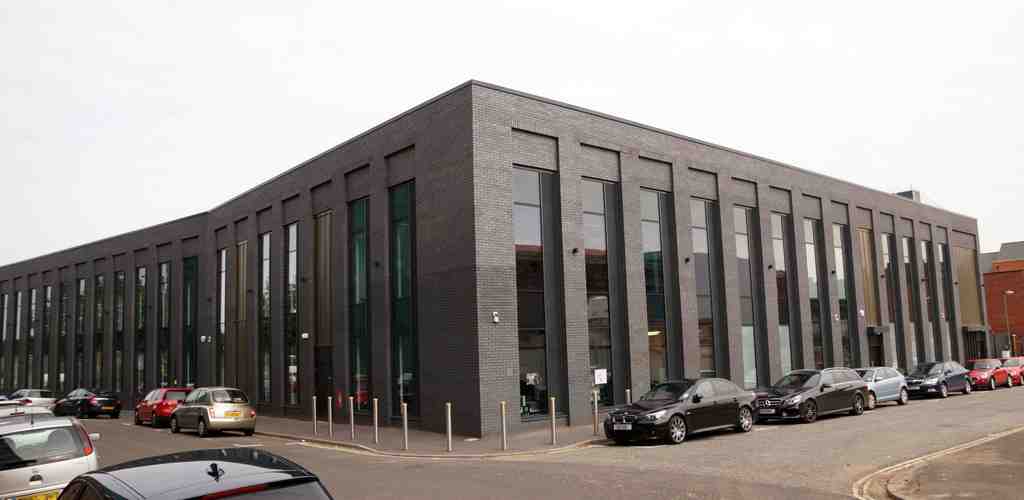
On your right, the Birmingham Assay Office is a clean two-storey block of blue brick, with broad rectangular glazing and hallmark symbols built straight into the walls.
This is one of only four assay offices in the United Kingdom, and it sits at the moral center of the Jewellery Quarter. To assay metal means to test its purity; to hallmark it means to stamp it with an official sign of trust. Cities run on hidden networks... not just cables and tunnels, but rules, inspections, and institutions like this one.
Birmingham fought hard for that right. In the eighteenth century, local silversmiths had to send work to Chester or London for testing, which was slow, expensive, and rather good at strangling ambition. So Matthew Boulton joined Birmingham makers and Sheffield silversmiths to petition Parliament. In March of seventeen seventy-three, just a month after that petition, Parliament approved new assay offices for both cities.
The Birmingham office opened on the thirty-first of August, seventeen seventy-three, in three rooms at the King’s Head Inn on New Street, with four staff, working only on Tuesdays. The first customer was Boulton himself. He did not receive special treatment. His pieces failed the standard, and the office sent them back smashed. Brutal, yes... but also the whole point.
Birmingham’s stamp became the Anchor Hallmark. According to a good local story, Birmingham and Sheffield chose their symbols after a coin toss at the Crown and Anchor Tavern in London: Birmingham took the anchor, Sheffield the crown. However the choice happened, the result mattered. That little anchor turned Birmingham’s name into a guarantee.
If you check the image on your screen, you can see how the modern building bakes those symbols into its brickwork, including marks for gold and silver alongside the anchor itself. By eighteen twenty-four, the office tested gold as well as silver, and in eighteen fifty-five Parliament made hallmarking compulsory for wedding rings, tying this place to ordinary lives, not just grand silver services.
The office later moved to a purpose-built home on Newhall Street, where it grew into the largest assay office in Europe. That building became too small as the trade kept booming, so in twenty fifteen the office moved here to Moreton Street. The older headquarters on your app shows how much authority this institution once carried in stone, before it carried it in blue brick.
It is still overseen by the Guardians of the Standard, a board charged with protecting the integrity of precious metal. Which raises a fair question: if no independent body stood behind every glittering claim, would Birmingham’s jewellery reputation mean quite the same?
From here, the story widens from tested metal to the routes that carried goods, workers, and wealth across the city... and toward the canalside world of the National Sea Life Centre, about a fifteen-minute walk away. If you want to return, the office generally opens on weekdays from half past eight, closing at four, or half past three on Fridays.


