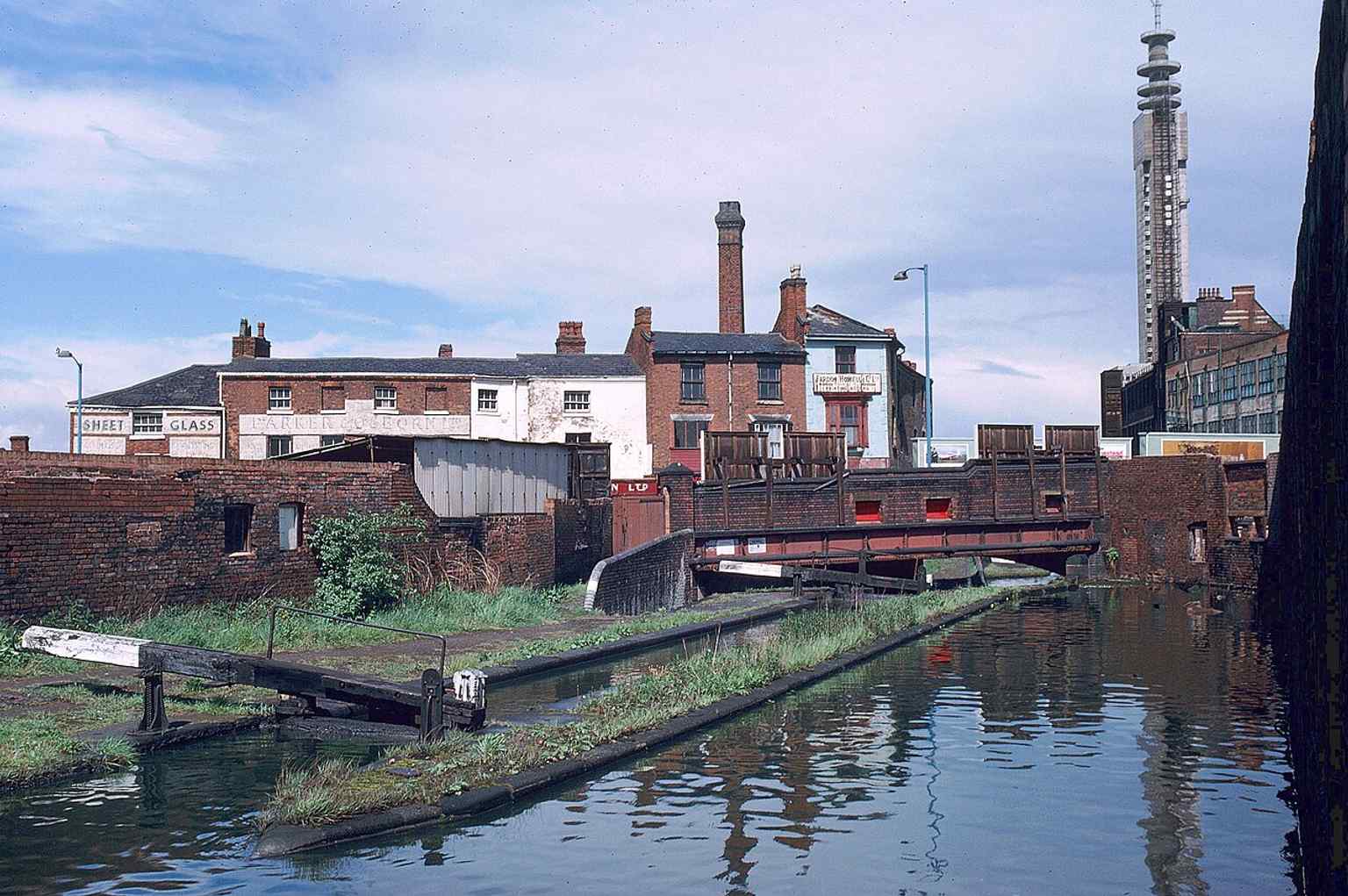
On your right, the B-T Tower is a tall blue concrete shaft with a square body, stacked aerial galleries near the top, and a small roof crane perched above like a practical little signature.
This tower is a nice example of a machine that accidentally became a mascot. The General Post Office started building it in nineteen sixty-three, finished the structure in nineteen sixty-five, brought it into use in nineteen sixty-six, and then let the Lord Mayor, Alderman James S. Meadows, open it with civic ceremony in nineteen sixty-seven. So yes, it carried phone calls and television signals... but it also climbed into Birmingham’s imagination and never really left.
If the exchange you visited earlier handled messages down in the dark, this was its high-wire partner: a microwave relay tower, meaning radio links sent in straight lines from dish to dish across the country. At opening, the network here could handle up to one hundred and fifty thousand telephone conversations and forty television channels. Not bad for a building that also found room for workshops, archive storage, and a workers’ canteen. Even infrastructure likes lunch.
Take a moment and look up. The tower feels bluntly functional, but does it also seem a bit ceremonial... like the city gave engineering permission to dress as a monument?
Its shape tells part of that story. Early plans aimed for a circular tower like London’s, then designers changed course and chose the square version you see now for aesthetic reasons. That decision helped give Birmingham a sharper, more distinctive silhouette. The engineers also tucked wind channels into each corner to reduce sway, because those dishes needed a steady line of sight. Even lifting the original horn-shaped dishes was awkward: they were so heavy crews had to strip them down, haul them up rails on one wall, then swing them onto cables to reach the higher galleries. Simple, if you enjoy making life difficult on purpose.
The city around it changed dramatically. If you want, have a quick look at the before-and-after image in the app; it shows how the tower stayed recognizable while the skyline filled in around it.
Its look changed too. In two thousand and three, workers painted it ultramarine blue over the old brown finish, and in two thousand and four the Birmingham comedian Jasper Carrott switched on the night lighting. A year-round telecoms workhorse had somehow become civic theater. Later, in two thousand and twelve, the last big analogue dish came down as digital systems took over, and a refurbishment finished in two thousand and twenty-two trimmed the tower from one hundred and fifty-two meters to one hundred and forty. It is still active, still useful, and apparently still hospitable: peregrine falcons nest here on a ledge engineers roughened with pebbles to mimic a cliff.
From here, let your eye drop from skyline to street plan. We’re heading next to St Paul’s Square, about five minutes away, where Birmingham’s orderliness starts showing beneath all that later industry.