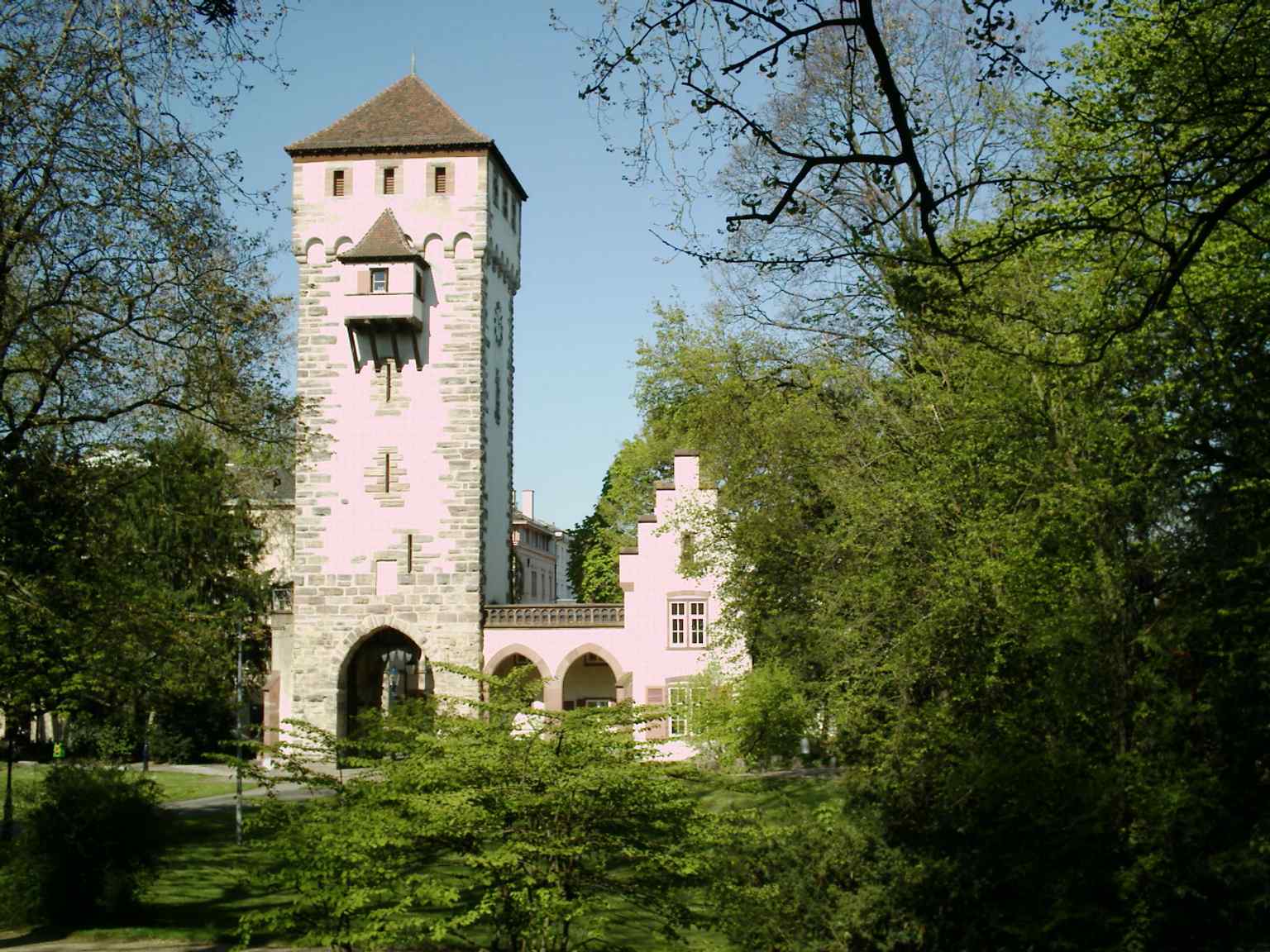
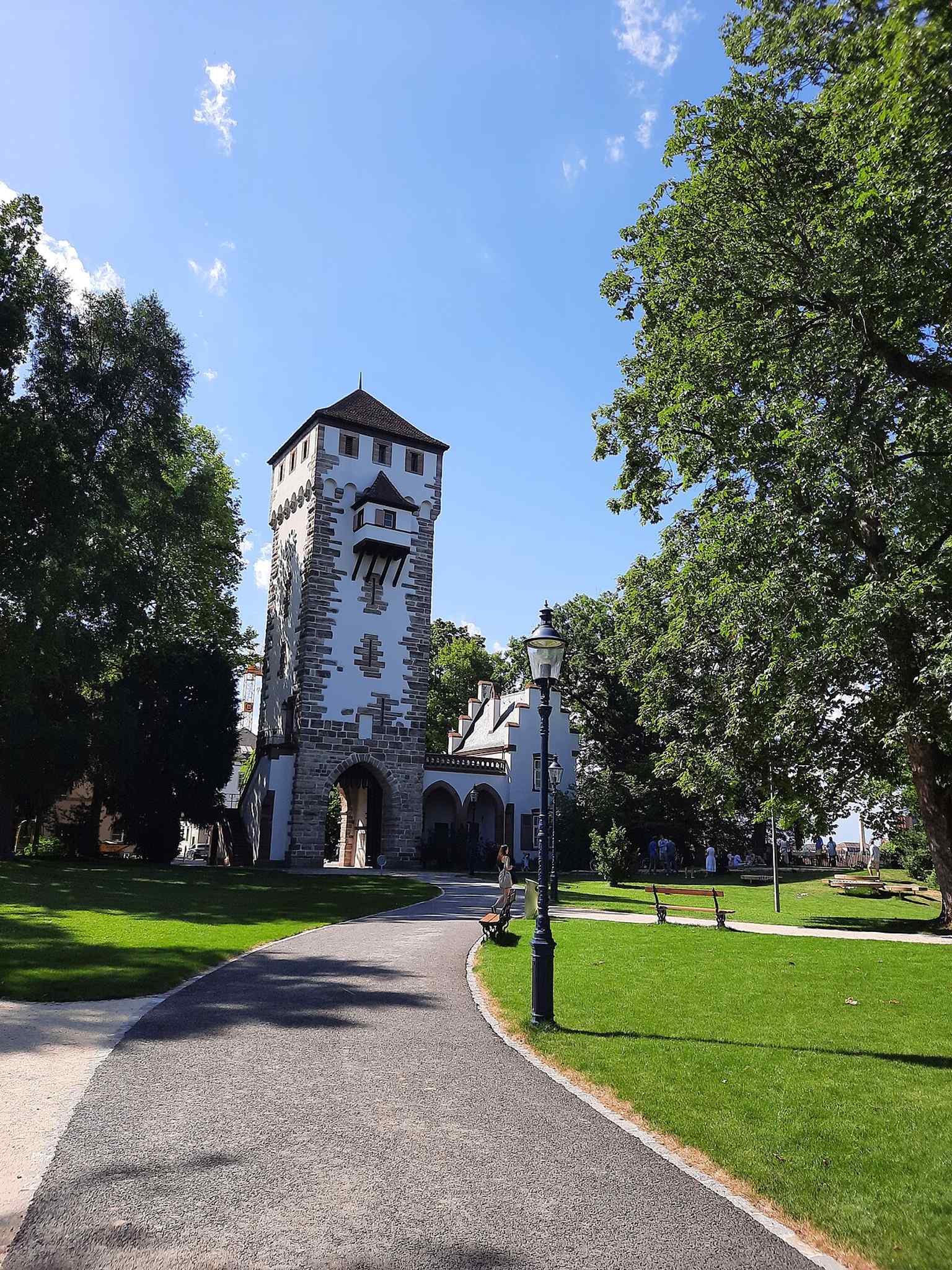
On your right stands a pale stone gate tower with a tall pointed arch, a flat pyramid roof, and small clock faces set high in the walls.
This is St. Alban Gate, one of only three surviving city gates in Basel, and it tells a sturdy little truth about the city: survival here usually comes with dents, arguments, and a bit of practical tinkering. The gate first shows up in records around twelve thirty. At that point, it may not even have worked as a proper gate yet. It seems to have started as a freestanding tower, set slightly behind the line of the wall, and only later did builders tie it into the city defenses with side structures. Basel did not always build in one grand plan. Sometimes it improvised... and then called that tradition.
Then came the Basel earthquake of thirteen fifty-six, the great rupture that damaged Basel on a citywide scale. This tower was partly destroyed too, and from thirteen sixty-two onward people rebuilt it. By thirteen seventy-four it appears again in a watch order, not as a gate, but as a tower that nearby residents had to guard.
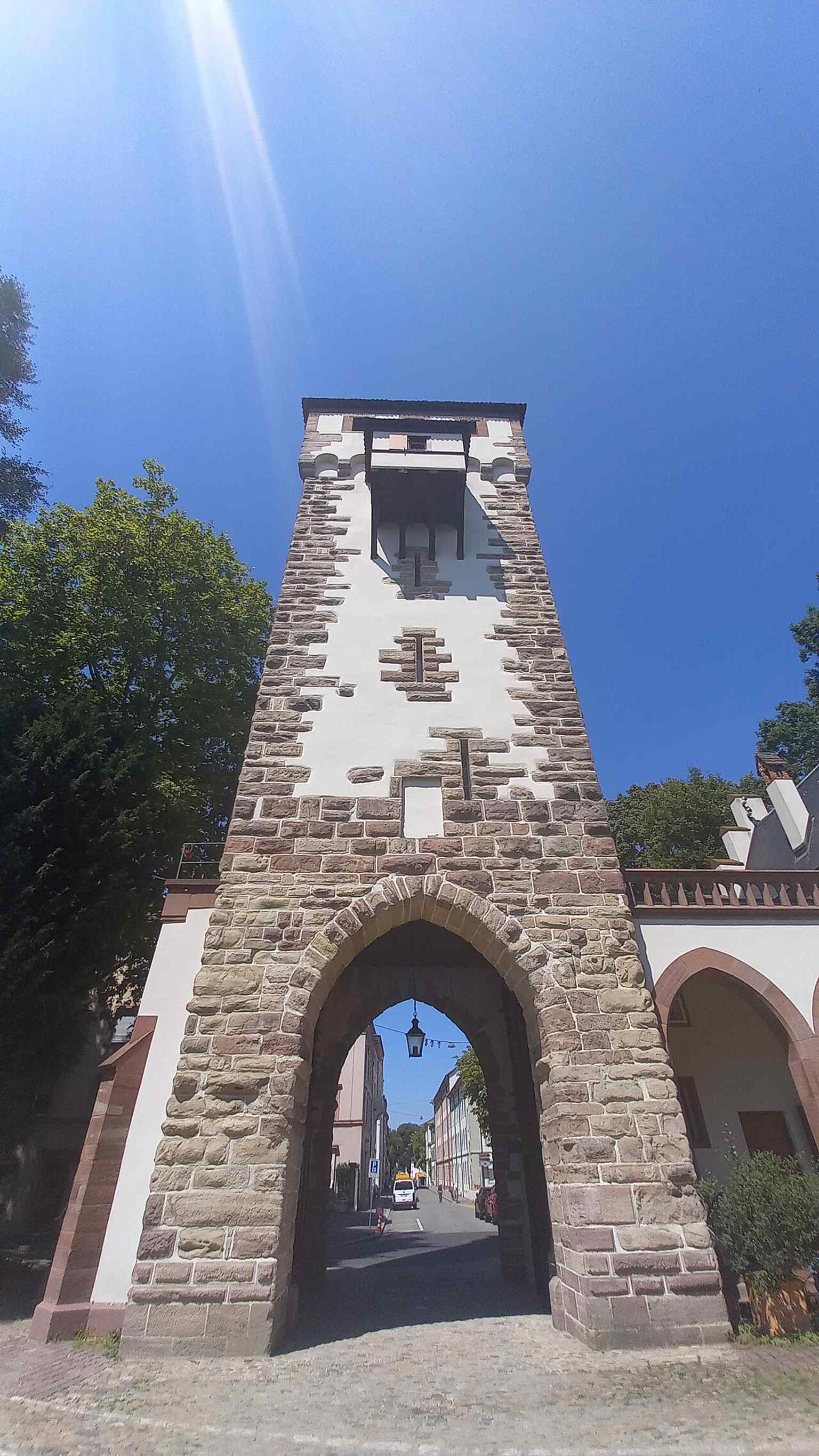
That defensive role hardened in fourteen seventy-three, when Basel expected trouble during the Burgundian Wars. Builders added a forework, meaning an extra fortified barrier in front of the main tower, plus a drawbridge across the ditch. If you glance at the image on your screen looking through the passage, you can see the point of it: this arch squeezed movement into a narrow, controllable throat.
Now for the local politics... because this place has plenty. In eighteen sixty-four, contractor Hollinger tore down the outer earthwork and used the rubble to fill the moat. A few years later, Amadeus Merian and the Basel Art Society fought to restore the gate gracefully, but the city chose a remake instead. Ground levels were lowered so the tower looked taller, a fussy high roof went on top, huge clock dials appeared, and a neo-Gothic police post got attached to the north side. One opponent even joked that if Basel insisted on keeping the old thing, they should decorate it with the carnival figure known as the Lällenkönig, so schoolboys would still have something to gawk at. Nothing says refined urban planning like designing for heckling.
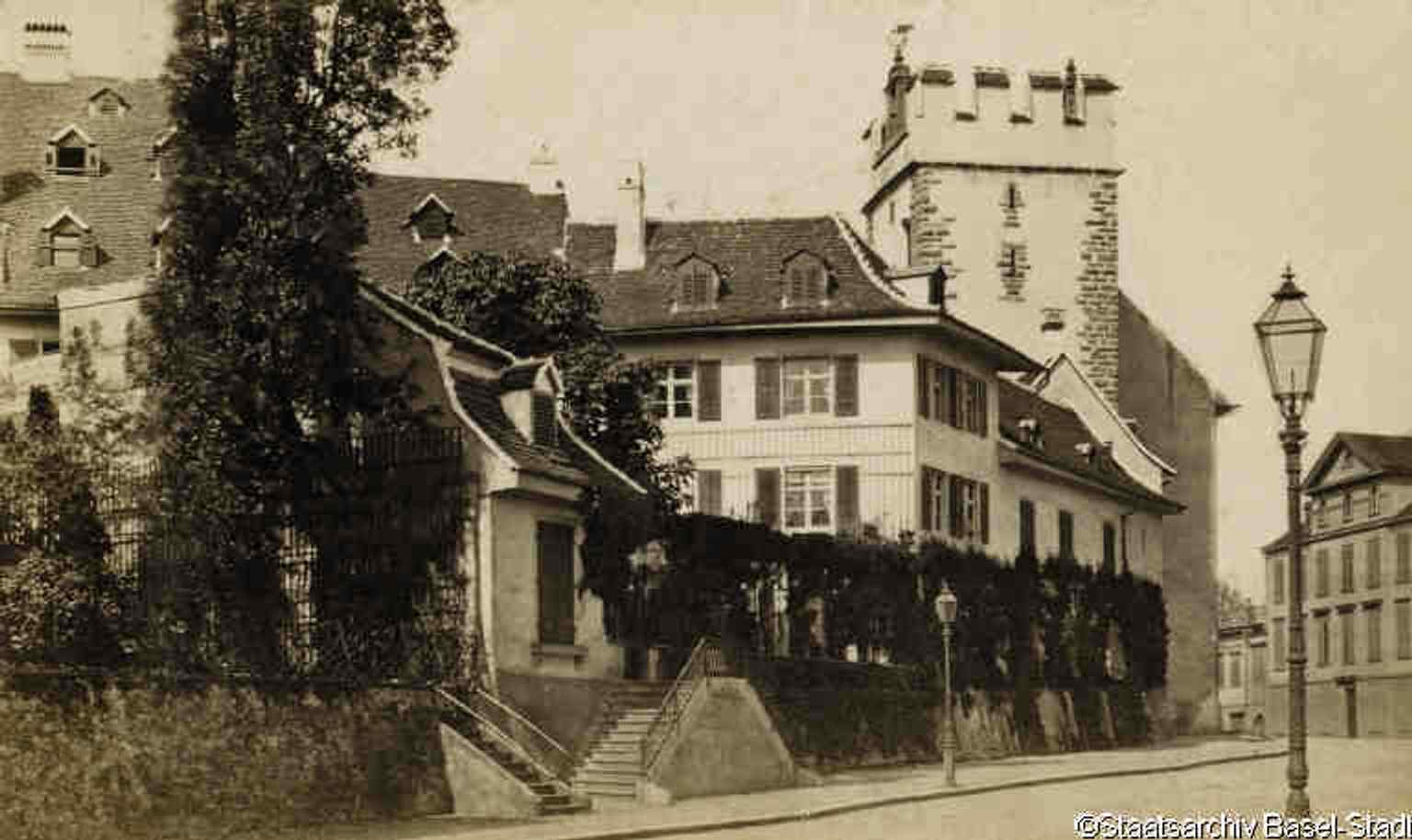
If you pull up the old photograph, you can catch that nineteenth-century version after the military edges had softened into a promenade. Then, in nineteen seventy-five, Basel corrected course again. With support from the Christoph Merian Foundation, the federal government, and public fundraising that brought in over three hundred thousand francs, roughly around a million today, the city restored the flatter roof and brought back key defensive details.
So this gate no longer guards Basel from armies. Instead, it marks the threshold to the city’s oldest historical ground uphill. From here, head on toward Münsterplatz, about fourteen minutes away, where power stops looking military and starts looking sacred.