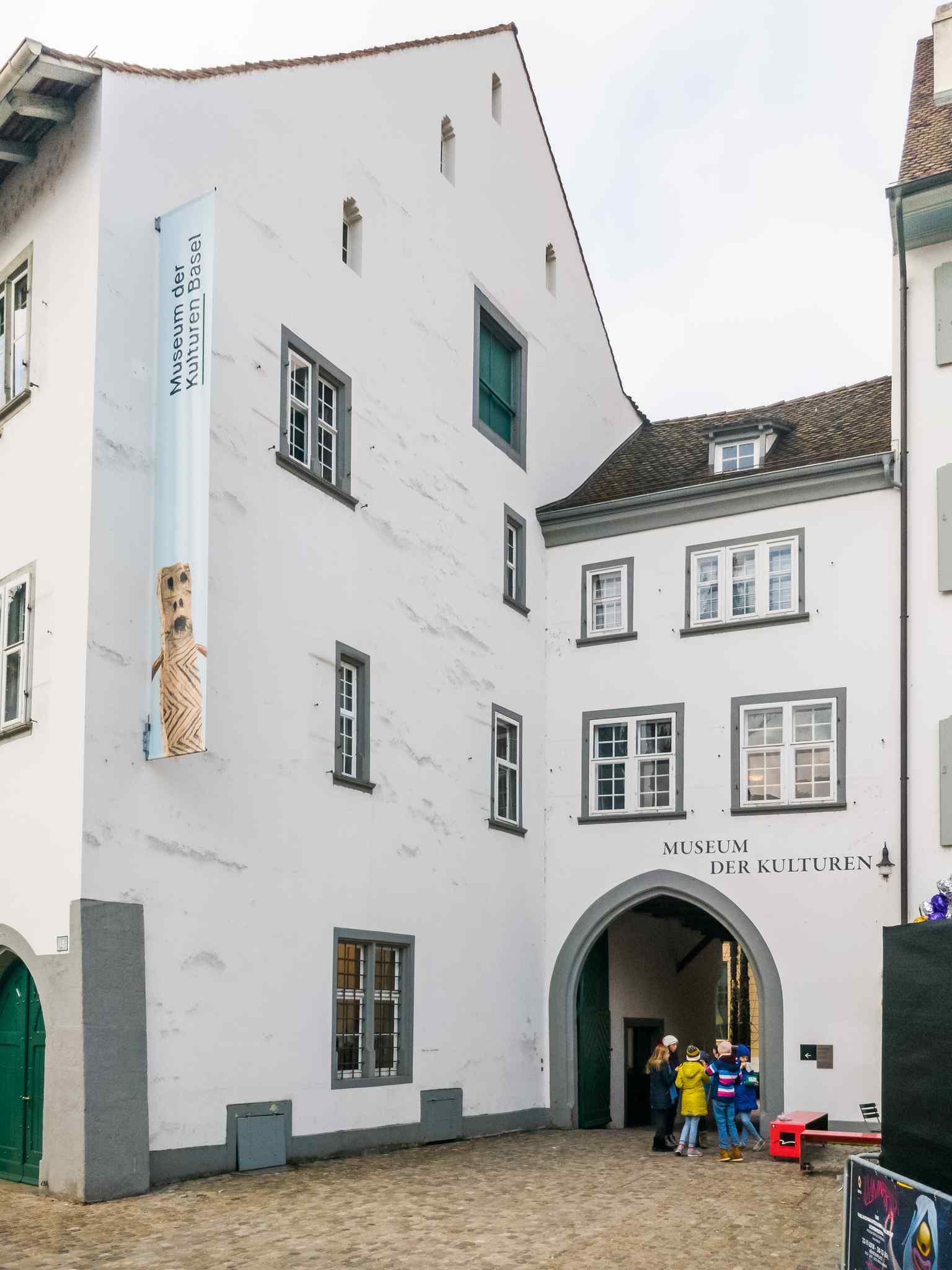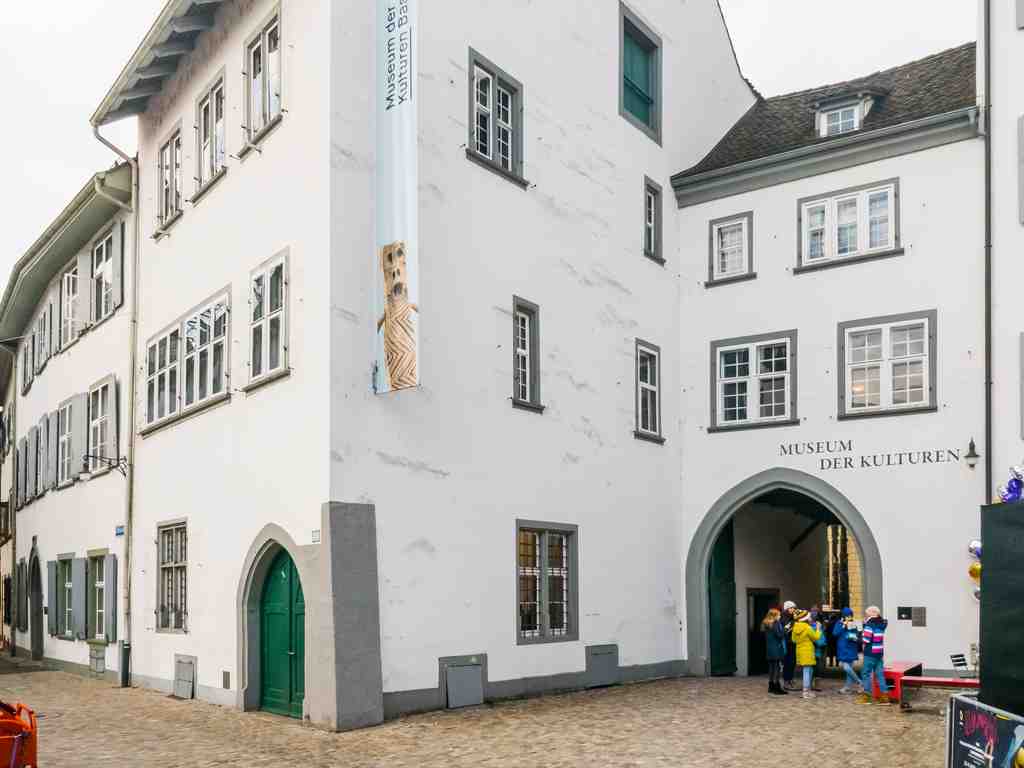
On your left, look for a pale stone building with a steep folded roof clad in dark green glazed tiles, its broad rectangular facade tucked behind the square and marked by that striking overhanging roofline.
This place tells a Basel story that suddenly opens onto the whole world. From the outside, it still belongs to the old hill of the Minster... but inside, the city has been gathering objects, images, and questions from far beyond Switzerland for well over a century. That world-facing curiosity gave Basel extraordinary knowledge, and, truth be told, it also shows how cities collect influence by collecting things.
The museum stands on the site of an Augustinian monastery. In eighteen forty-nine, architect Melchior Berri replaced the monastic complex with a grand public museum, a kind of all-purpose civic treasure house inspired by Berlin’s Bauakademie. So right here, one kind of authority gave way to another: prayer to study, cloister to collection. Basel has a habit of changing the use of a place without fully erasing its older ghost.
If you glance up, you can catch the newest layer. Herzog and de Meuron rebuilt and expanded the museum between two thousand eight and two thousand eleven, giving it that folded roof of black-green hexagonal ceramic tiles. The shape nods to the nearby Minster roof, like the old church and the museum quietly borrowing each other’s clothes. If you want a clearer look, peek at the image on your screen
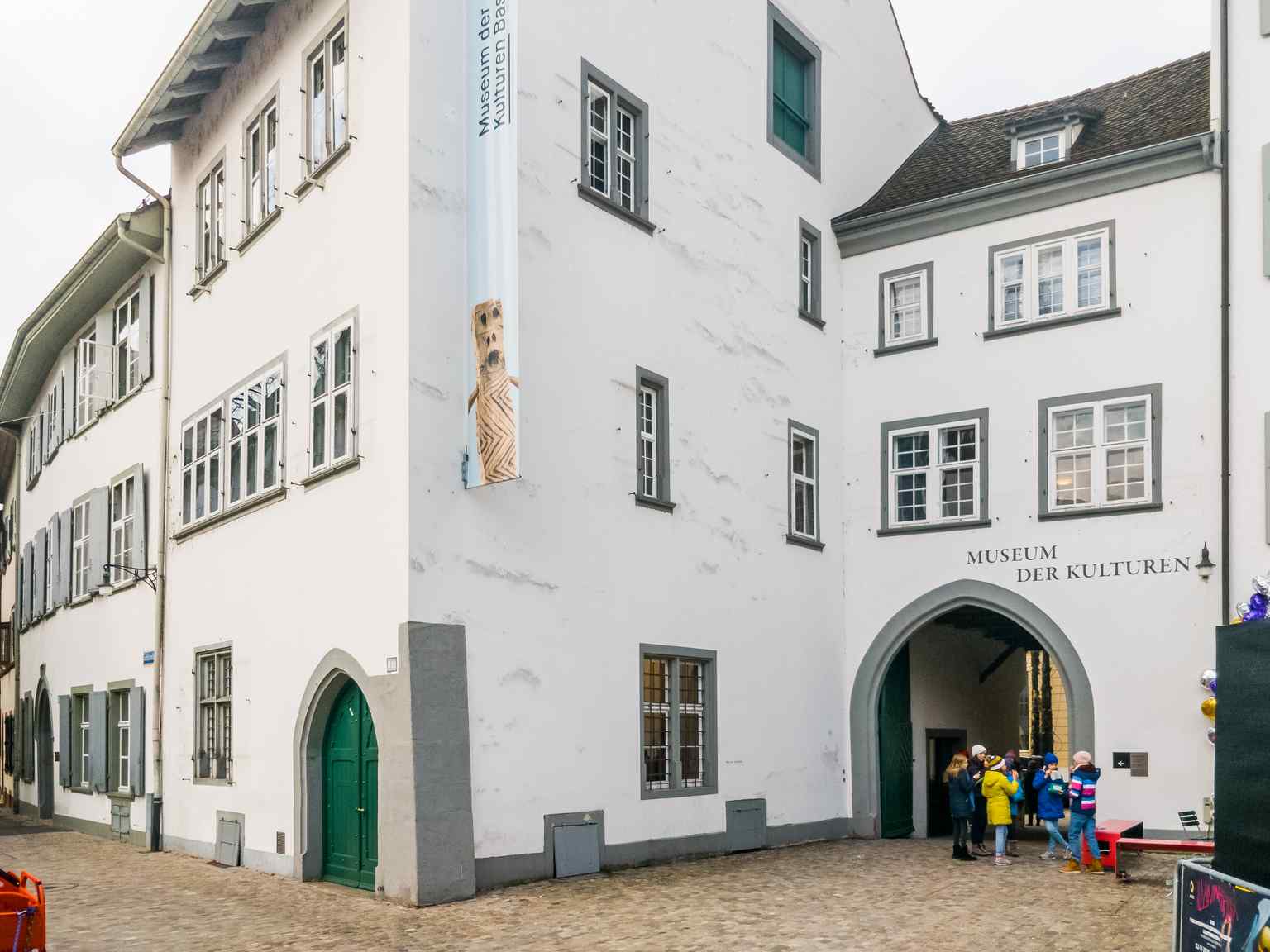
Now here’s the part most visitors miss. One of the museum’s foundational treasures came from a Basel entrepreneur named Lukas Vischer. He spent nine years in Mexico and, between eighteen twenty-eight and eighteen thirty-seven, assembled a remarkable collection of ancient Mexican sculpture and ceramics. In other words, Basel’s early global reach did not begin with some abstract institution. It began with one traveler, his eye, his money, and the power to bring a distant world home in crates. That is both impressive and a little unsettling... which is exactly why this museum matters now.
At first, wealthy Basel citizens brought objects back from their travels. Later, trained ethnologists - scholars who study how people live and make meaning - took over. Names like Fritz and Paul Sarasin, Felix Speiser, Alfred Bühler, and Paul Wirz expanded the collection through research journeys in Sri Lanka, Vanuatu, Indonesia, East Timor, and Cameroon. Today the holdings reach more than three hundred twenty thousand objects, plus around fifty thousand historical photographs. That scale is world-class. It also raises a fair question: under what conditions did all of this arrive here?
The museum no longer dodges that question. Its focus shifted from displaying “other cultures” to creating dialogue with them. Provenance research - tracing where objects came from, how they moved, and whether coercion played a role - now sits at the center of the work. In recent years, the museum joined research on objects from Benin City linked to the British punitive expedition of eighteen ninety-seven, and in twenty twenty-four it returned forty-seven objects to Veddah cultural centers in Dambana, Sri Lanka. Even Bruno Manser’s diaries entered the collection, bringing in a different Basel connection: not collecting from afar, but activism tied to rainforest people and questions of responsibility.
So this building widens the map, then asks who drew it.
Keep that question with you as we head to St. Martin’s Church, about a five-minute walk from here, where Basel’s local faith and reform story comes back into view. And if you plan to go inside later, the museum is open Tuesday through Sunday, from ten in the morning to five in the afternoon.