
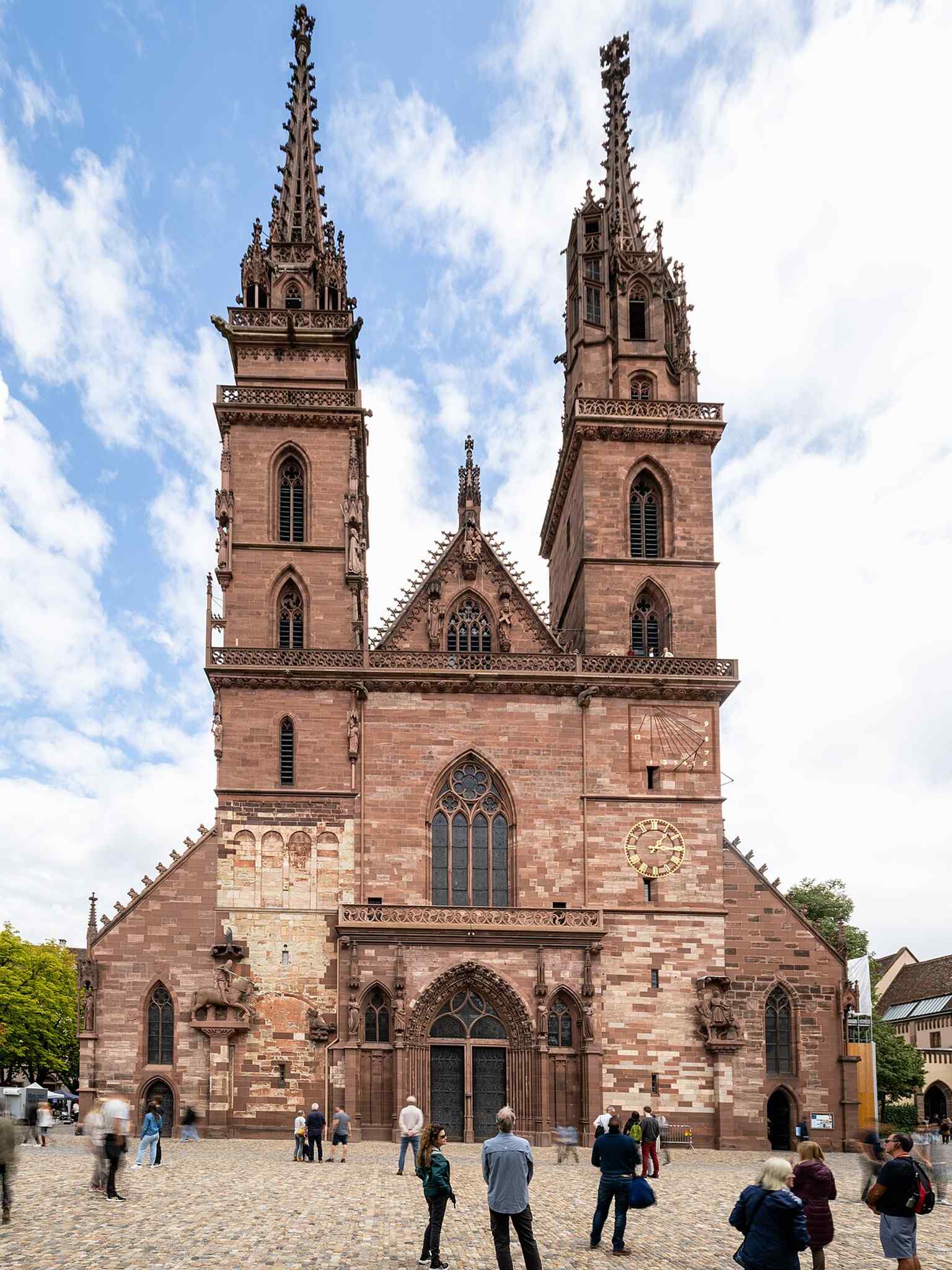
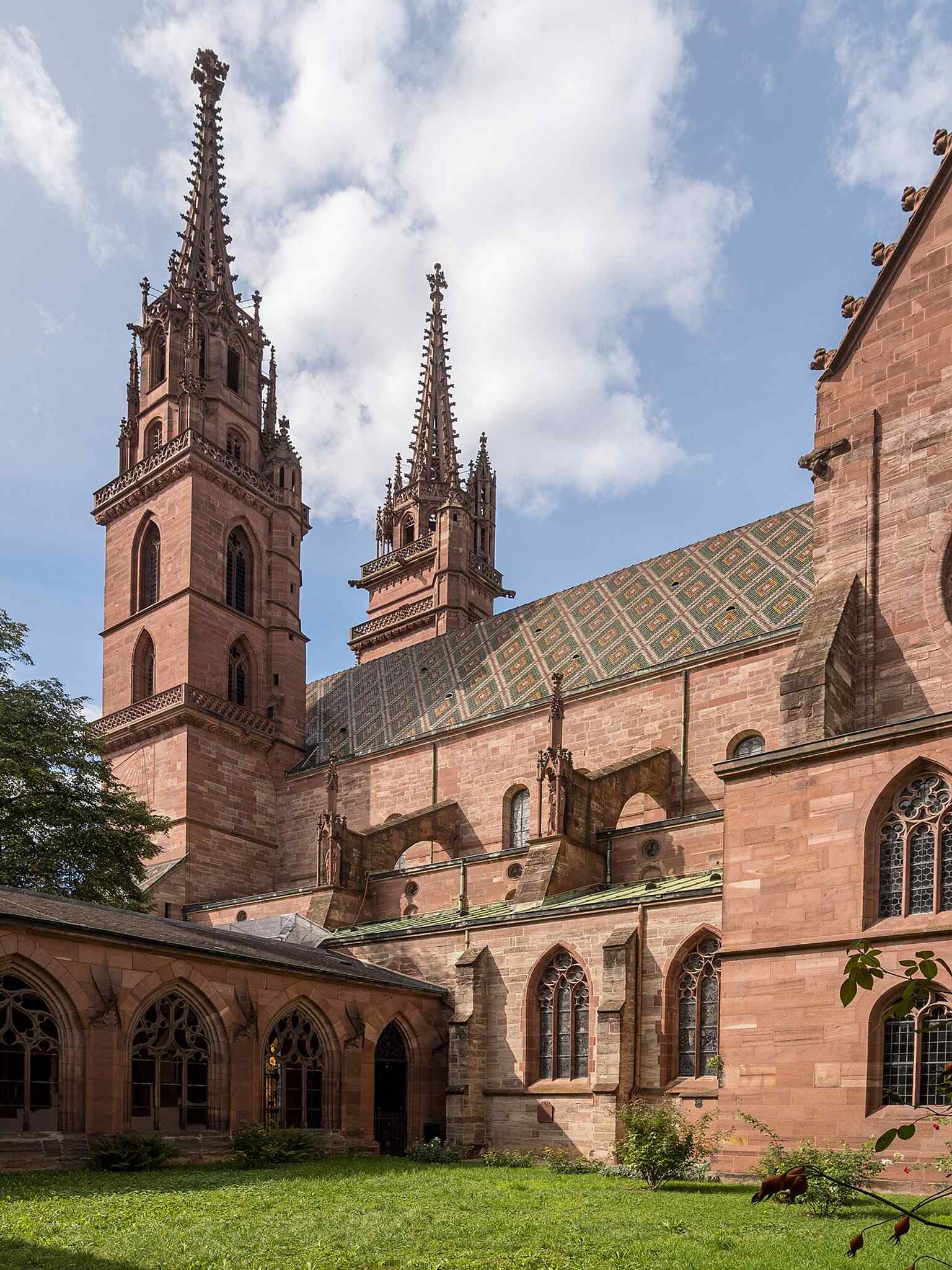
Look for the red sandstone church with steep patterned roofs, two slender pointed towers, and dense carved stonework climbing the facade.
At first glance, Basel Minster seems immovable... the kind of building that has always known exactly where it stands. But this hill has changed costumes for more than two thousand years. Before the church, people fortified this ridge in late Celtic times. Later, the Romans planted a stronghold here. Then, in the early Middle Ages, Bishop Haito raised an earlier church, and after that Emperor Henry the Second helped launch the great cathedral begun in the year ten nineteen. What you see now took shape in waves, from Romanesque solidity to Gothic height, all the way to the year fifteen hundred.
That is the surprise of this place: it looks permanent, but it is really a masterclass in repair, revision, and second chances.
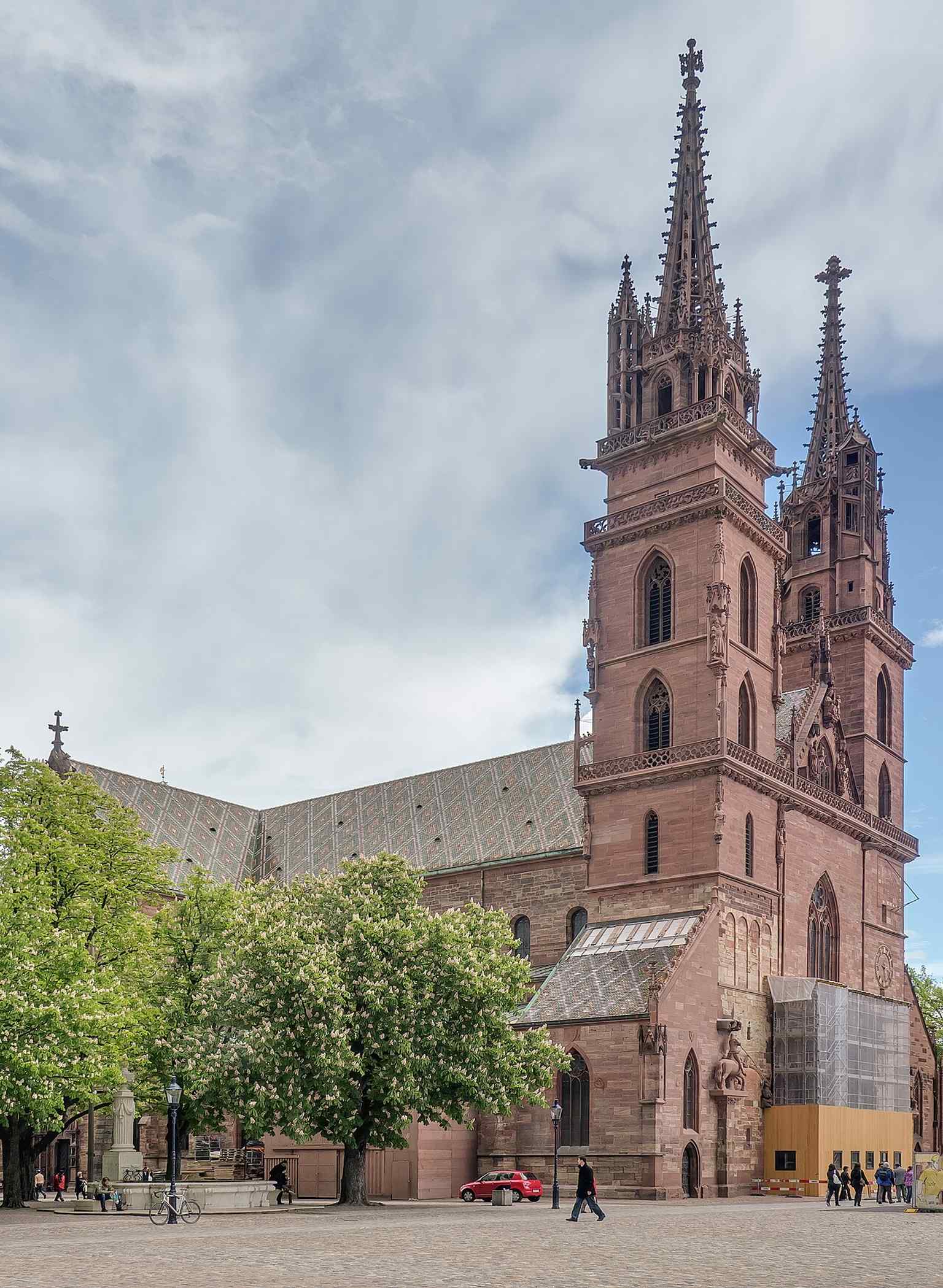
From where you are standing, the tower details tell that story nicely. The Minster’s two west towers did not rise together like twins in matching suits. Builders finished them at different times, so each has its own character. The south tower, the Martinsturm, reached completion in the year fifteen hundred under Hans von Nussdorf. He even left his name on the tower below the spire... a medieval version of signing your workbench. If you glance at the app image of the Martinsturm clock and sundial, you’ll catch one charming Basel quirk: the sundial still shows the city’s old local time.
Then came the earthquake of thirteen fifty-six.
It shattered all the towers, wrecked vaults, and damaged the crypts below. Master builder Johann Parler led the rebuilding, and by thirteen sixty-three the high altar stood ready again. So the church you’re facing is not just old; it is old and reassembled, like a family story patched together after a fire.
The deepest upheaval, though, came from people rather than stone. In fifteen twenty-nine, Basel’s Reformation, shaped locally by Johannes Oekolampad and energized by the wider ideas of Huldrych Zwingli, changed what sacred space meant in this city. Worship shifted away from richly adorned images toward preaching and scripture. On the ninth of February that year, armed townsmen forced their way into the Minster and smashed crosses, saints, and altar images. Permanence met argument... and argument won.
One witness makes that turn unforgettable. Erasmus of Rotterdam, the great humanist scholar, described the iconoclasm in a shocked letter. Yet after he died in fifteen thirty-six, this now Reformed church still gave him an honored burial place. That tells you something important about Basel: even when it overturns an old order, it rarely throws away every layer.
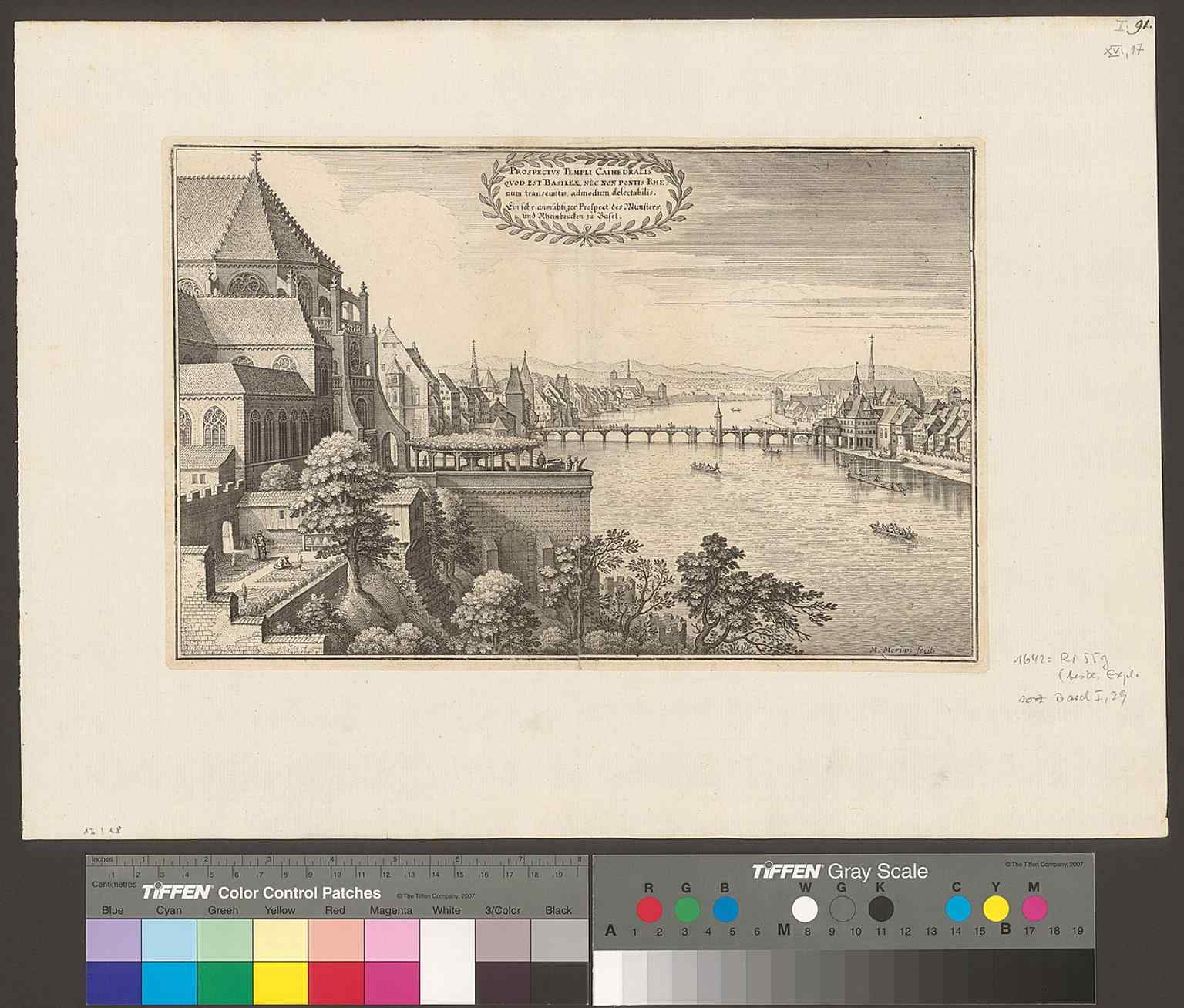
If you tap the before-and-after image, you can watch the Minster keep command of the skyline while the riverfront around it changes nearly everything else.
And not all of Basel’s important collections stayed inside church walls; many later faced outward toward the wider world. We’ll pick up that thread at the Museum of Cultures, about a two-minute walk from here. If you plan to go inside later, the Minster generally opens from ten to five, with shorter hours on Saturday and a later start on Sunday.





.jpg)

.jpg)


.jpg)
.jpg)