
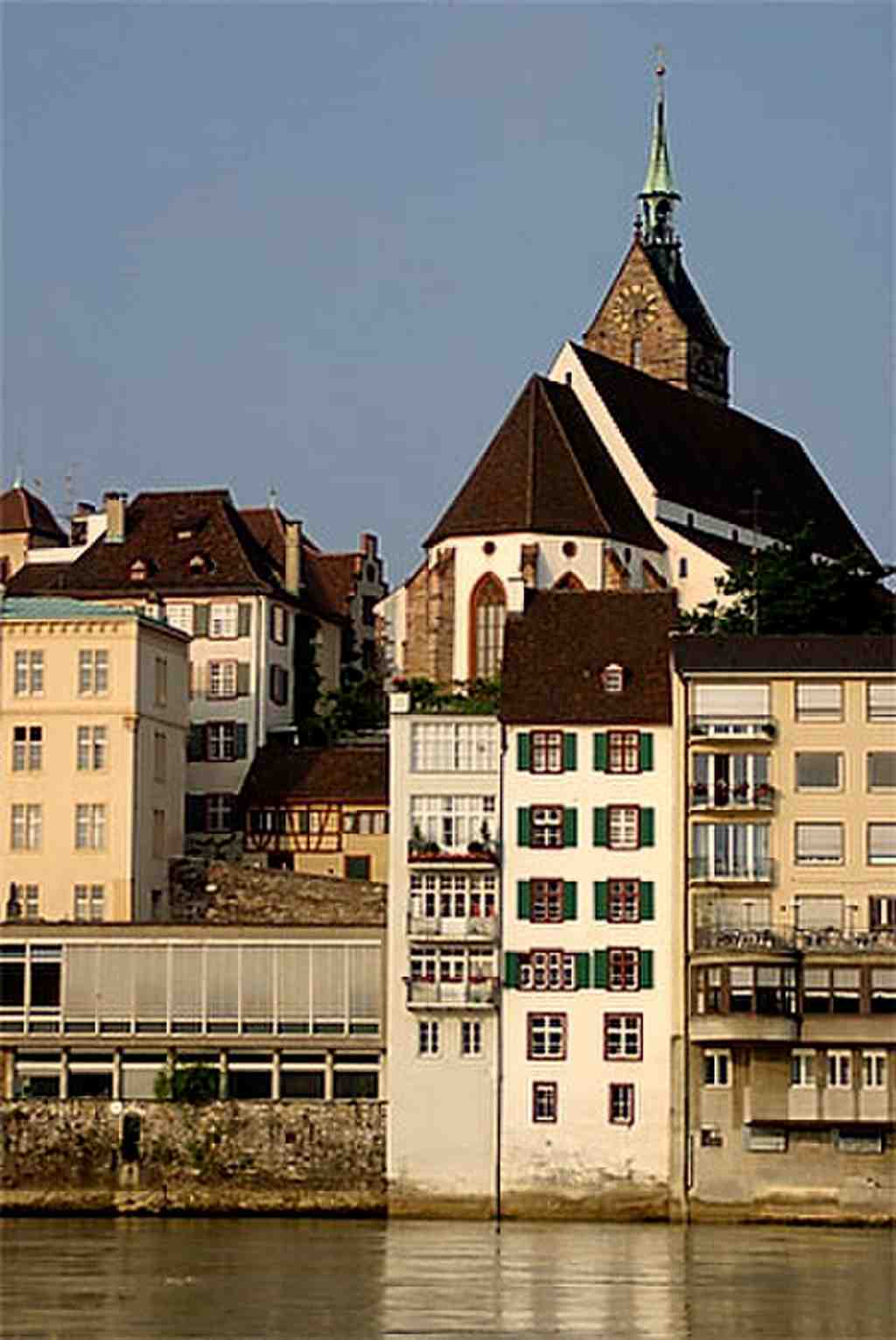
On your right, spot the pale stone church with its tall square tower, steep rooflines, and angular choir projecting from the hill above the river.
St. Martin’s is easy to mistake for just another old church in Basel... but this place changes the whole story. It is likely the city’s oldest parish church, first mentioned in the early twelve hundreds, yet the ground it claims is far older. Long before Christian Basel, people fortified this spur of the Münster hill in the Bronze Age with a ditch about ten meters wide. So this church did not begin on empty land; it inherited a place people had already decided mattered.
If you glance at your screen, you can see how it rises over Grossbasel like a lookout post. That feels right, because St. Martin’s has served faith, warning, and power all at once. Around fourteen hundred, its fire bell called out the city’s bucket brigades when flames broke loose. Practical religion, Basel style.
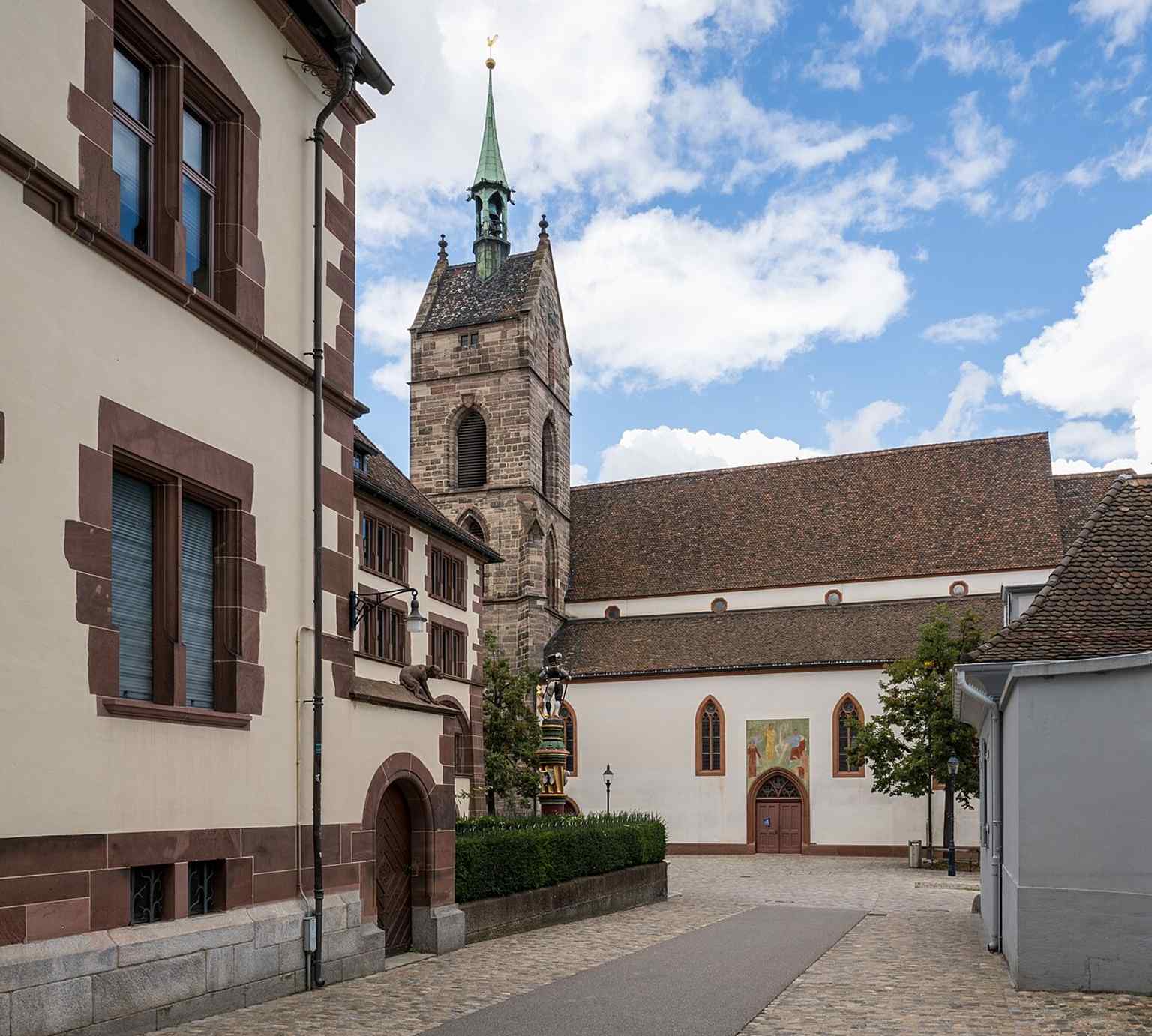
The human turning point here is Johannes Oekolampad. In fifteen twenty-nine, he preached here for the first time in the new Reformed style, and in German, not Latin. That choice brought doctrine down from the scholar’s desk to ordinary ears. But reform did not arrive as a tidy plan. Zealots stormed in without Oekolampad’s approval and threw out the church’s images. So even here, conviction came with a messier edge than the heroic version likes to admit.
Then the building changed again. In eighteen fifty-one, Basel turned part of the interior into a concert setting, replacing the old screen that separated clergy from congregation with tiered seating for singers. A church that once staged theological combat learned a second career as a music venue.
And one more life lingers nearby: Wibrandis Rosenblatt later lived at the parsonage here, surviving Oekolampad and then marrying other leading reformers, as if the upheaval of an age kept passing through one household.
How differently does a city sound when its biggest revolutions arrive through sermons, arguments, and bells instead of armies? Hold that thought as you head to City Hall, about three minutes from here, where belief soon turns into government.





-3.jpg)