
Look for a narrow stone-paved street lined with tall plaster-and-stone façades, with a long straight corridor and tight side alleys cut into the blocks.
This is one of the twin merchant streets of Gamla stan. Västerlånggatan held the western edge, and Österlånggatan held the eastern one. Both began as long roads outside the town wall, shaped first by shoreline and defense, then by trade, until the city slowly pulled them inward and made them essential.
What feels like an ordinary old street is, in fact, reclaimed ground layered over centuries. In the thirteenth century, this was little more than the eastern shoreline. Most visitors never realize that the original beaten track of Österlånggatan lies about three meters below the pavement under your feet, and that archaeologists found a late thirteenth- or early fourteenth-century landing stage nearby as well. In other words, ships once came right up to where people now window-shop.
The city changed this place by dumping gravel and rubbish into the water, pushing the shoreline farther east. By the fourteenth century, the path had become a proper street, paved and lined with workshops, shops, and dwellings. Swedish merchants from Bergslagen, the mining district to the north, settled along this street. German merchants clustered closer to Järntorget. Trade did not just enrich Stockholm; it physically remade the ground it stood on.
And yet this was never a polished commercial boulevard. It carried the rougher life that official power depended on but rarely acknowledged. Sailors, traders, travelers, taverns, arguments, smells from cargo and kitchens... this was the back side of the dock district. On your screen, the street can look calm and orderly now, but names from the seventeenth century tell a harsher story: Riga, Dutch Slough, Gilded Dragon, Three Kings, Swedish Arms, The Star. Romantic names, yes, though they concealed filth, stench, drinking, and misery behind the doors.
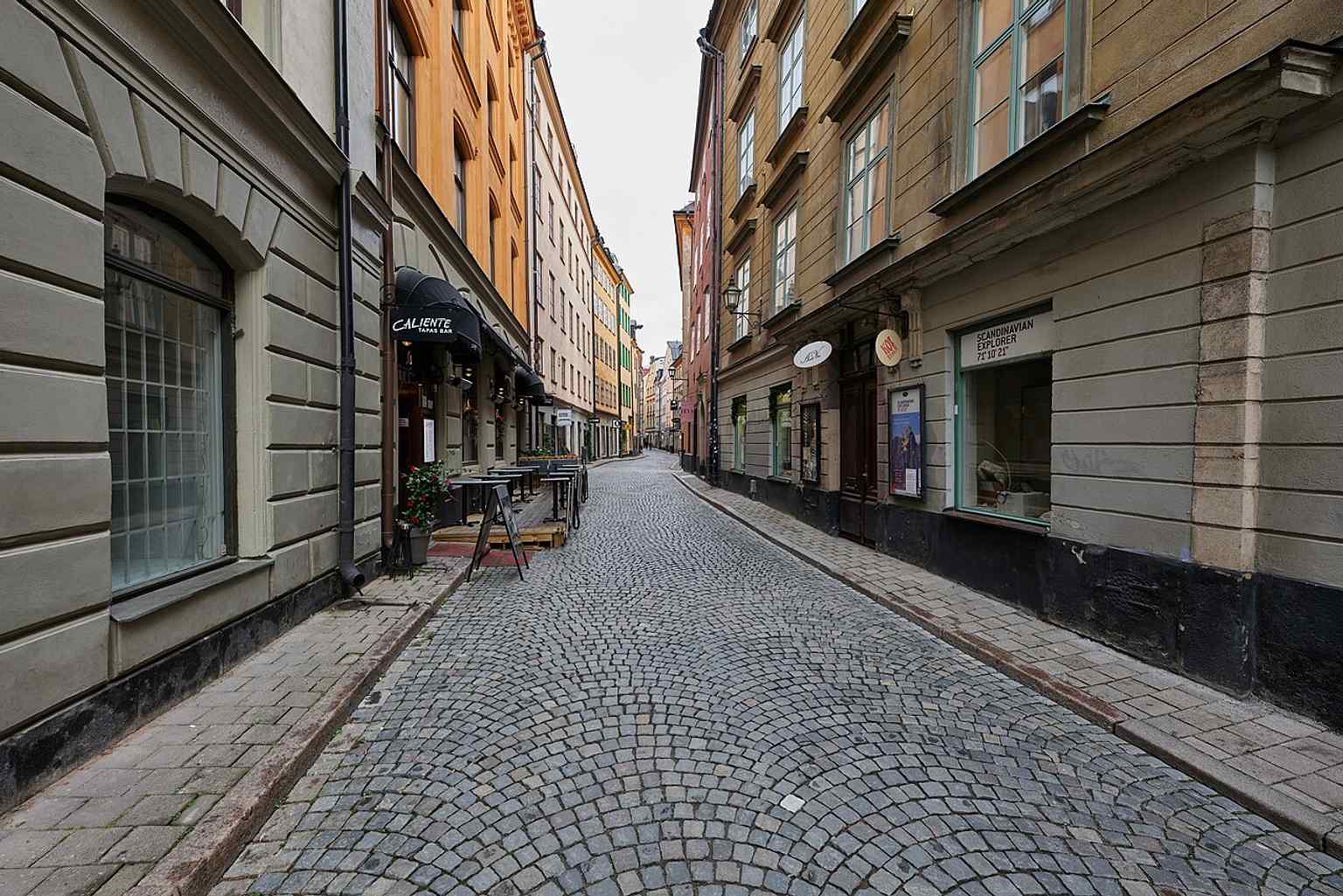
One person still lingers here in a more intimate way: Gunilla Johansdotter Bese, a noblewoman born in the late fifteenth century. She lived in the little passage still remembered as Fru Gunillas Gränd, between numbers forty-three and forty-five. Her name matters because it unsettles the easy picture of this as only a street of merchants and labor. Even here, in a place shaped by cargo and commerce, rank tried to secure its place.
Then the balance shifted again. When the broad quay at Skeppsbron took form in the seventeenth century, traffic and status moved outward, and Österlånggatan lost much of its old importance. The main artery became quieter. Power had found a newer frontage.
If you look at number thirty-seven on your phone, notice how tightly the alleys knot around it. That house stands on a medieval wall, carries a seventeenth-century portal, and still holds the compressed scale of the old merchant city. In a moment, we’ll turn toward Baggensgatan twenty-seven, where that older, more inward Stockholm becomes even easier to feel.





