AudaTours logoAudaTours

Stop 11 of 22

Skeppsbron

headphones 03:54 Buy tour to unlock all 24 tracks
Skeppsbron
Skeppsbron, Stockholm
Skeppsbron, StockholmPhoto: Holger.Ellgaard, Wikimedia Commons, CC BY-SA 3.0. Cropped & resized.

On your right, Skeppsbron looks like a broad stone quay edged by a long wall of tall, narrow plaster-and-masonry merchant houses, with richly framed portals repeating along the waterfront.

This is where Stockholm stopped merely announcing power and started handling it by the crate, the barrel, and the rope. Skeppsbron and the maritime economy belong together: long before it felt ceremonial, this edge of Gamla stan worked as a hard, noisy waterfront of cranes, fish, deep-draft ships, and royal ambition.

In the fifteen hundreds, a quay crane already stood here for heavy cargo, and just to the north lay a fishing harbor. Then the seventeenth century changed the scale of everything. Sweden’s wars brought wealth for a time, Stockholm became the official capital in sixteen thirty-four, and more than two thirds of the kingdom’s foreign trade passed through this city. The old eastern wall no longer defined the city’s future. Gustav the Second Adolf gave permission to tear that wall down in sixteen twenty-five and imagine something bolder: a harbor that still worked like a harbor, but also looked like a capital.

That decision remade the shoreline itself. Land rose from the sea, and people pushed the edge farther out with fill. In sixteen twenty-nine, the city began selling plots here. A merchant named Robert Rind received the first title deed on the sixth of November, sixteen thirty, and he built the house now known as Skeppsbron twenty-four. It still stands. I like that detail... one man placing his bet on a raw new waterfront where the city had only just decided to face the water instead of hiding behind stone.

Look at the row as a whole and you can read the plan. These were not simple homes. Lower floors held packhouses and offices; above them came living quarters and reception rooms. Wealth literally sat on top of labor. The facades advertised the trade: ship prows, globes, and Mercurius, the wing-hatted Roman protector of merchants. For travelers arriving by sea, this was Sweden’s shop window.

But the grand face depended on muscle. Men hauled sacks, rolled casks, guided horses, and later shifted goods straight from ship to railway when the tracks reached Skeppsbron in the eighteen seventies. If you open the harbor view in the app, you can catch something of that older crush of masts and cargo.
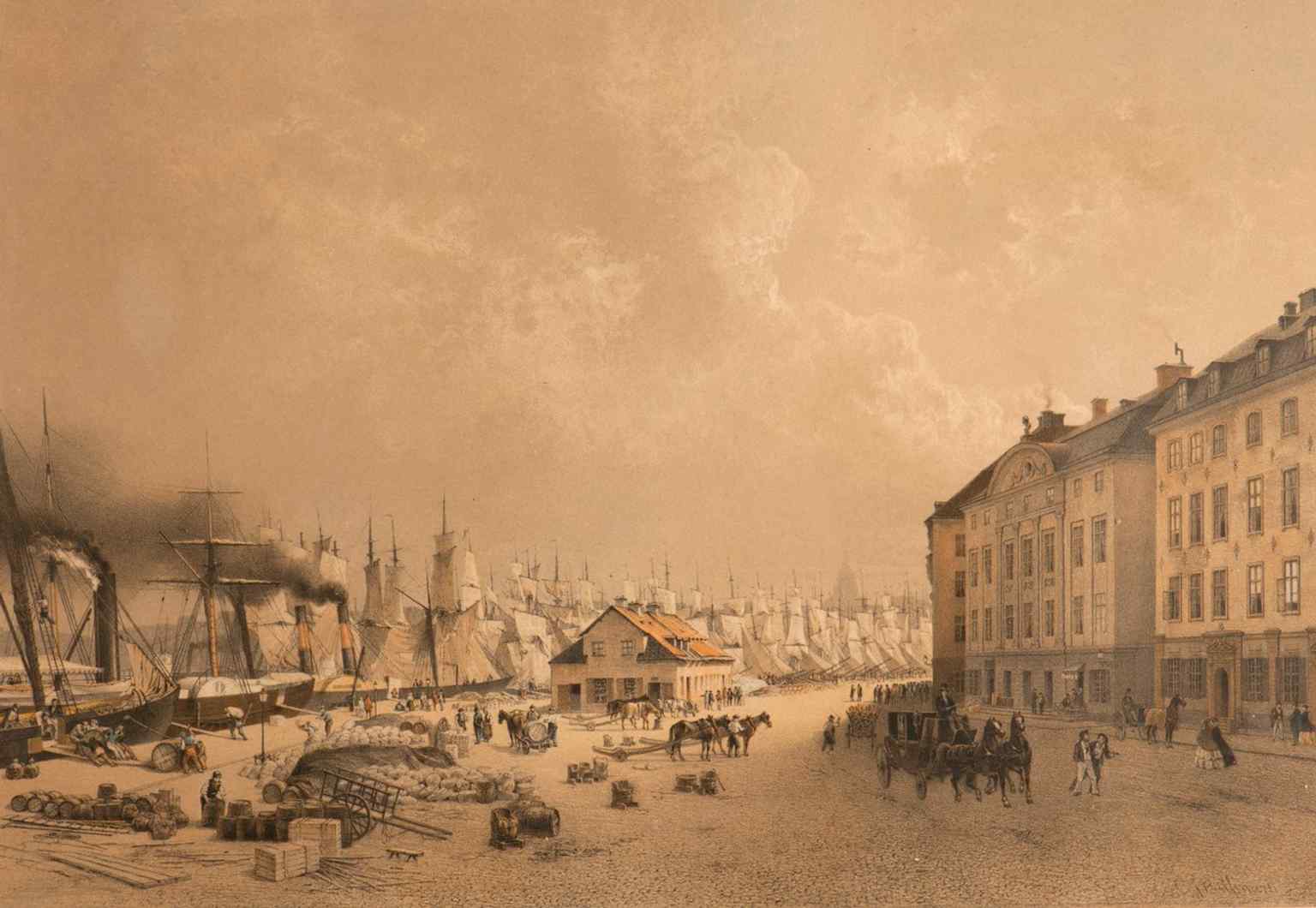
A 19th-century view of mid-Skeppsbron with ships at the quay, capturing the busy harbor scene that once made Stockholm’s east waterfront so important.
A 19th-century view of mid-Skeppsbron with ships at the quay, capturing the busy harbor scene that once made Stockholm’s east waterfront so important.Photo: Carl Johan Billmark, Wikimedia Commons, Public domain. Cropped & resized.

Even after the Bloodbath and all the shocks of power we’ve been tracing, daily exchange returned and kept returning. That is one of this city’s deepest patterns: rulers stage authority, but workers keep the place alive.

By the late nineteenth century, shipping changed again. Bigger motor vessels and the rising land made this quay too shallow for the largest freight ships. Passenger traffic lasted much longer, and the waterfront slowly shifted from working harbor to traffic corridor and public edge. If you glance at the before-and-after image, you can see that change in a single sweep of shoreline.

From here, goods and people streamed inland through the narrow lanes behind these facades. Follow that movement, and it leads us next to Österlånggatan, where the waterfront’s raw labor turned into bargaining, bookkeeping, and trade.
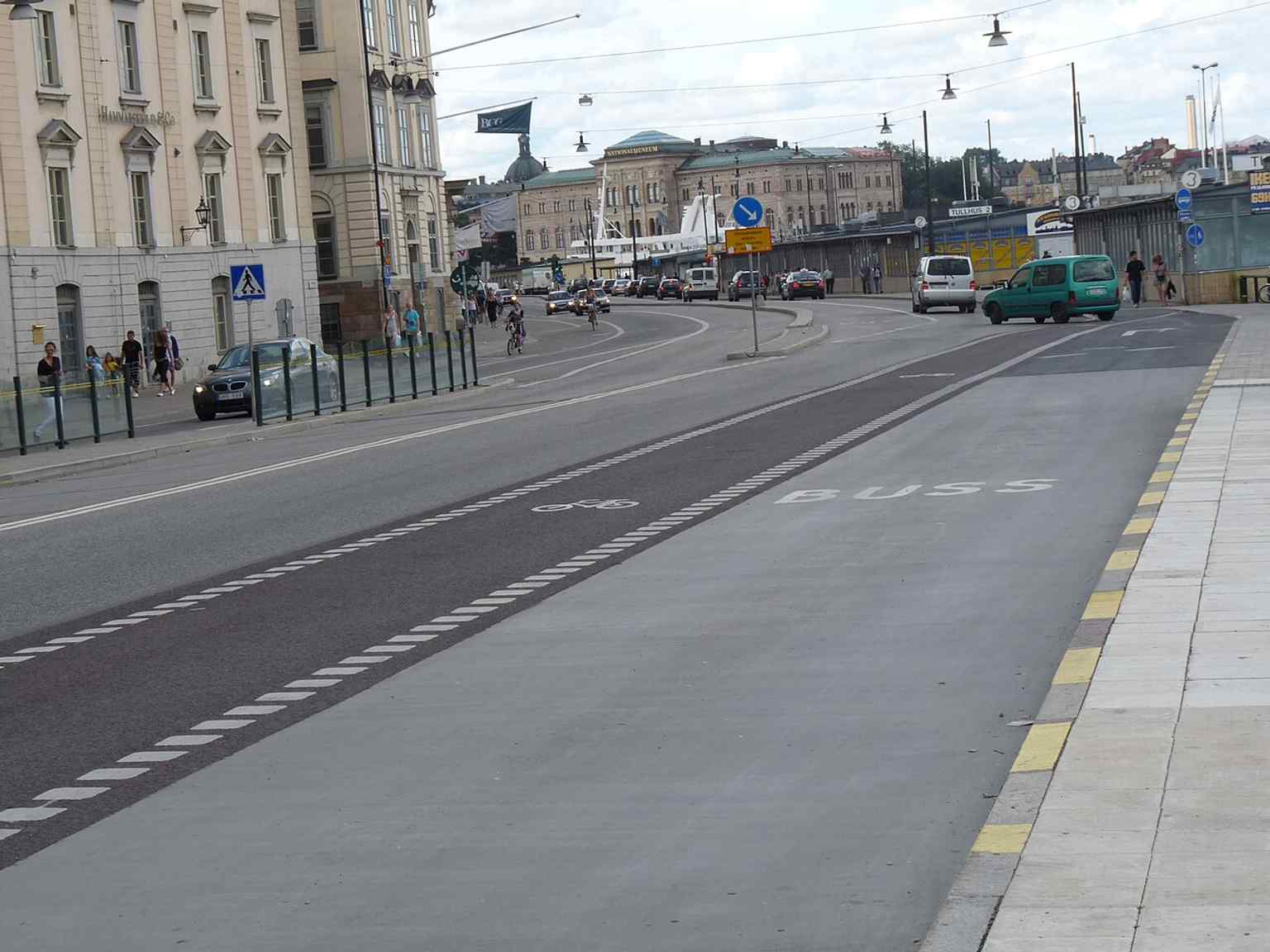
A clean street-level view of Skeppsbron, showing the broad waterfront boulevard that runs along the east side of Gamla stan.
A clean street-level view of Skeppsbron, showing the broad waterfront boulevard that runs along the east side of Gamla stan.Photo: Dmitry G, Wikimedia Commons, Public domain. Cropped & resized.
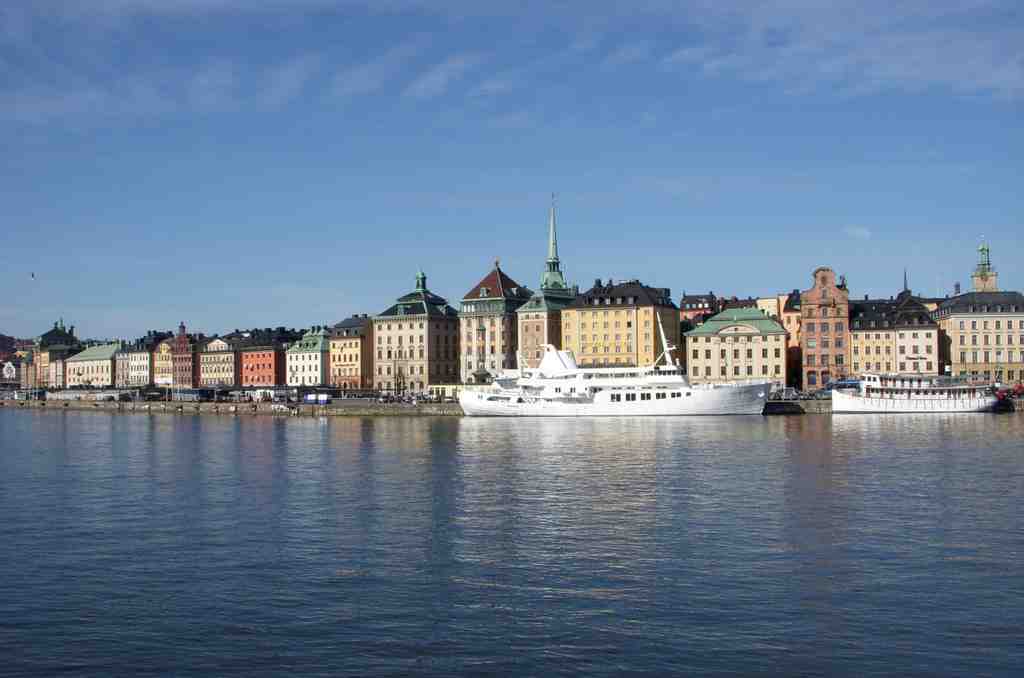
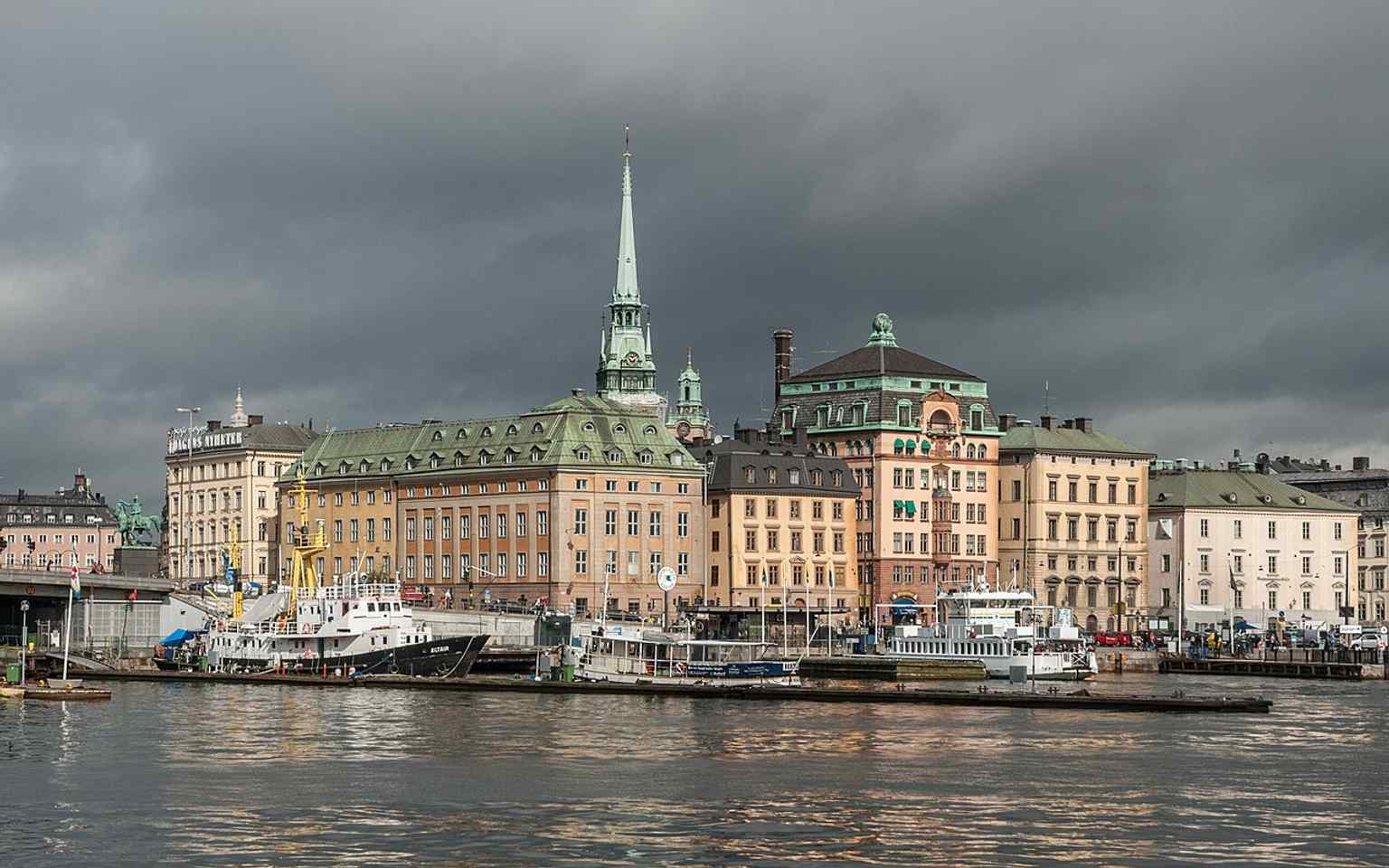
The south tip of Stadsholmen with the Skeppsbron waterfront buildings, including the grand merchant houses that formed the famous Skeppsbroraden.
The south tip of Stadsholmen with the Skeppsbron waterfront buildings, including the grand merchant houses that formed the famous Skeppsbroraden.Photo: DXR, Wikimedia Commons, CC BY-SA 4.0. Cropped & resized.
Skeppsbron crowded during the 2010 royal wedding, a vivid reminder that this old quay still serves as a ceremonial waterfront.
Skeppsbron crowded during the 2010 royal wedding, a vivid reminder that this old quay still serves as a ceremonial waterfront.Photo: Holger.Ellgaard, Wikimedia Commons, CC BY-SA 3.0. Cropped & resized.
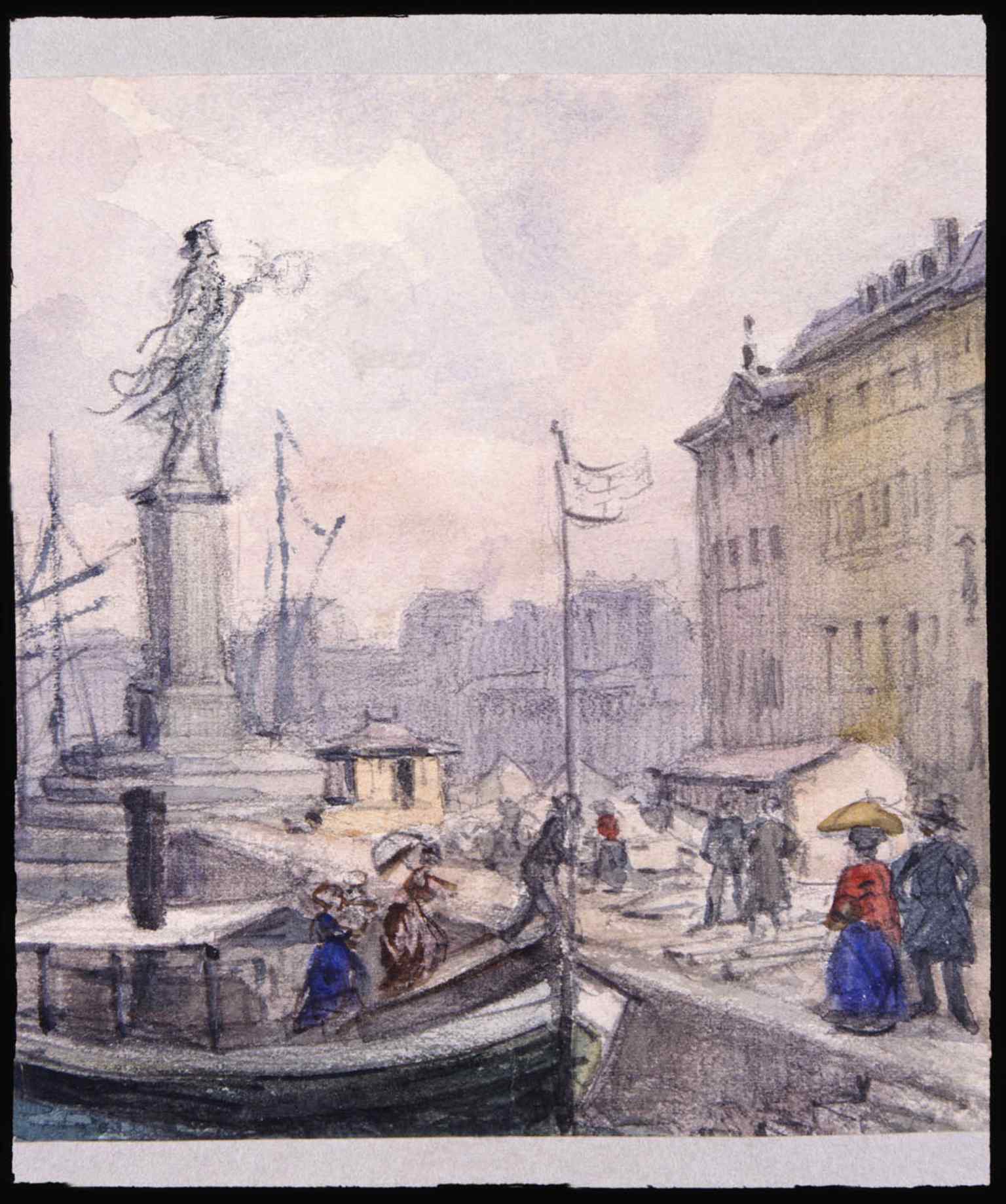
Fritz von Dardel’s watercolor shows fashionable pedestrians on Skeppsbron in the 1840s, when the quay was already both promenade and working harbor.
Fritz von Dardel’s watercolor shows fashionable pedestrians on Skeppsbron in the 1840s, when the quay was already both promenade and working harbor.Photo: Fritz von Dardel, Wikimedia Commons, Public domain. Cropped & resized.
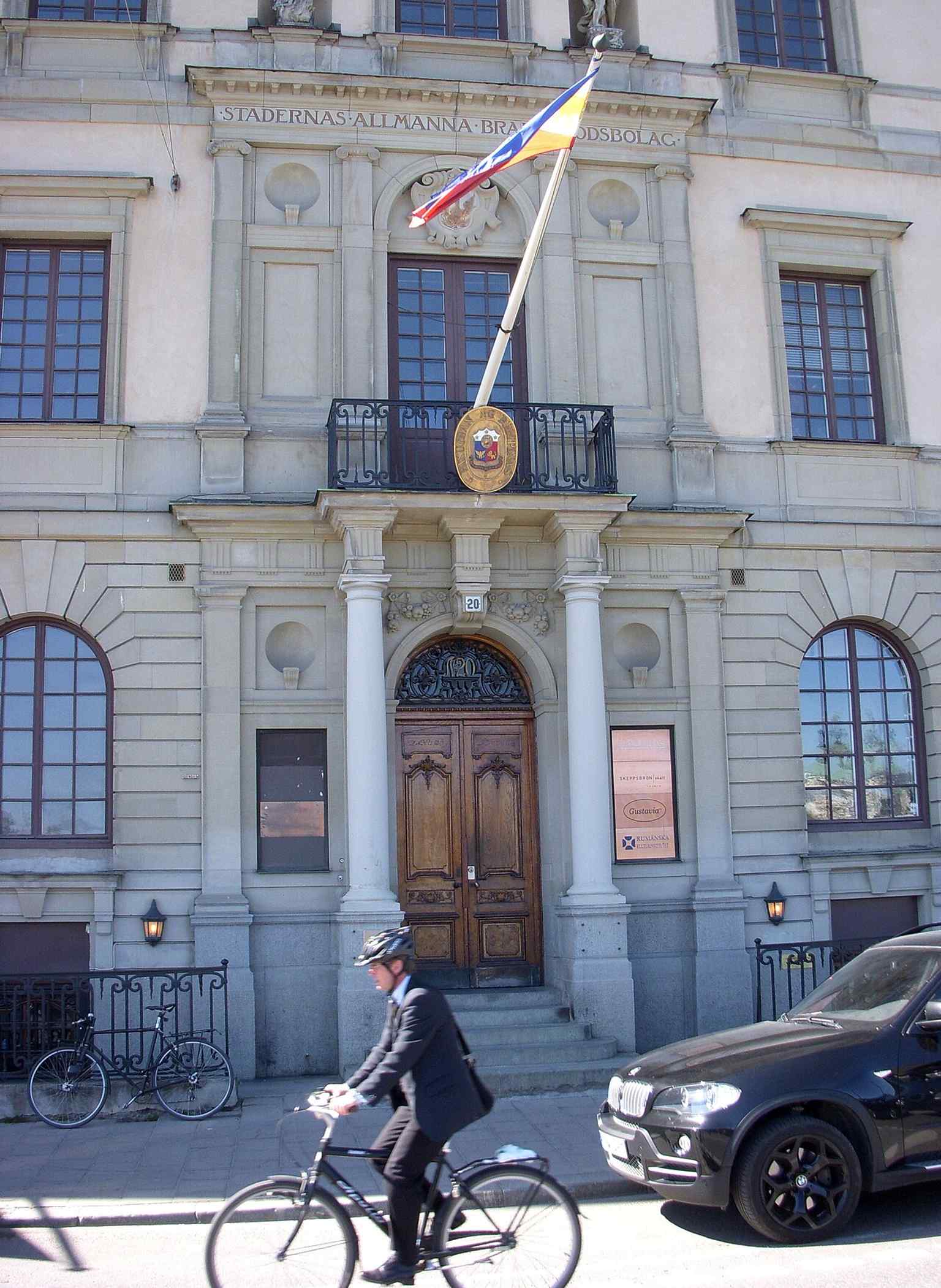
Skeppsbron 20, the Philippine Embassy in the former Brandstodsbolaget building, showing the ornate merchant architecture along the quay.
Skeppsbron 20, the Philippine Embassy in the former Brandstodsbolaget building, showing the ornate merchant architecture along the quay.Photo: Holger.Ellgaard, Wikimedia Commons, CC BY-SA 3.0. Cropped & resized.
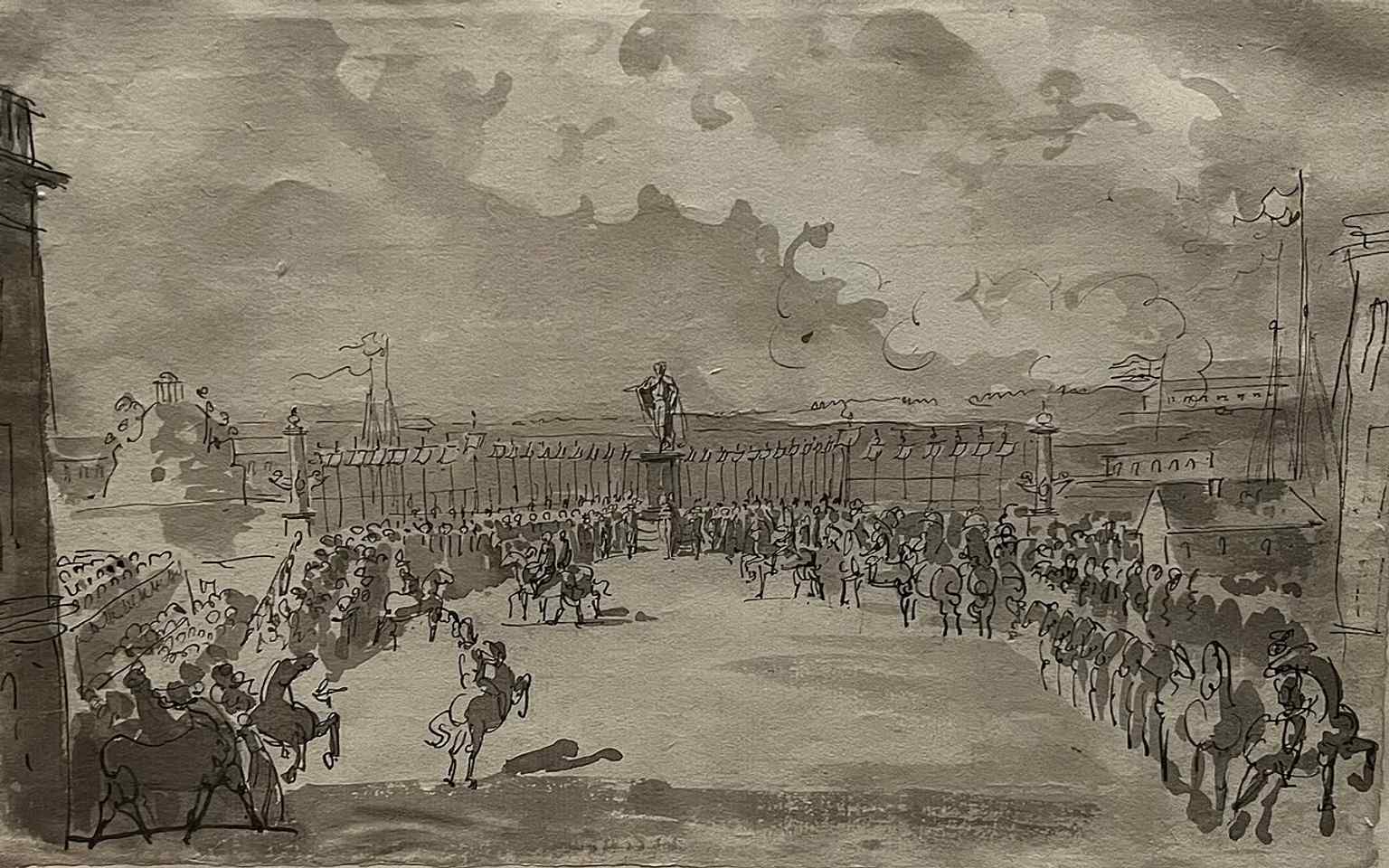
This 1808 drawing documents the unveiling of Sergel’s statue of Gustav III, the monument at Skeppsbrons northern end.
This 1808 drawing documents the unveiling of Sergel’s statue of Gustav III, the monument at Skeppsbrons northern end.Photo: Emanuel Limnell, Wikimedia Commons, Public domain. Cropped & resized.
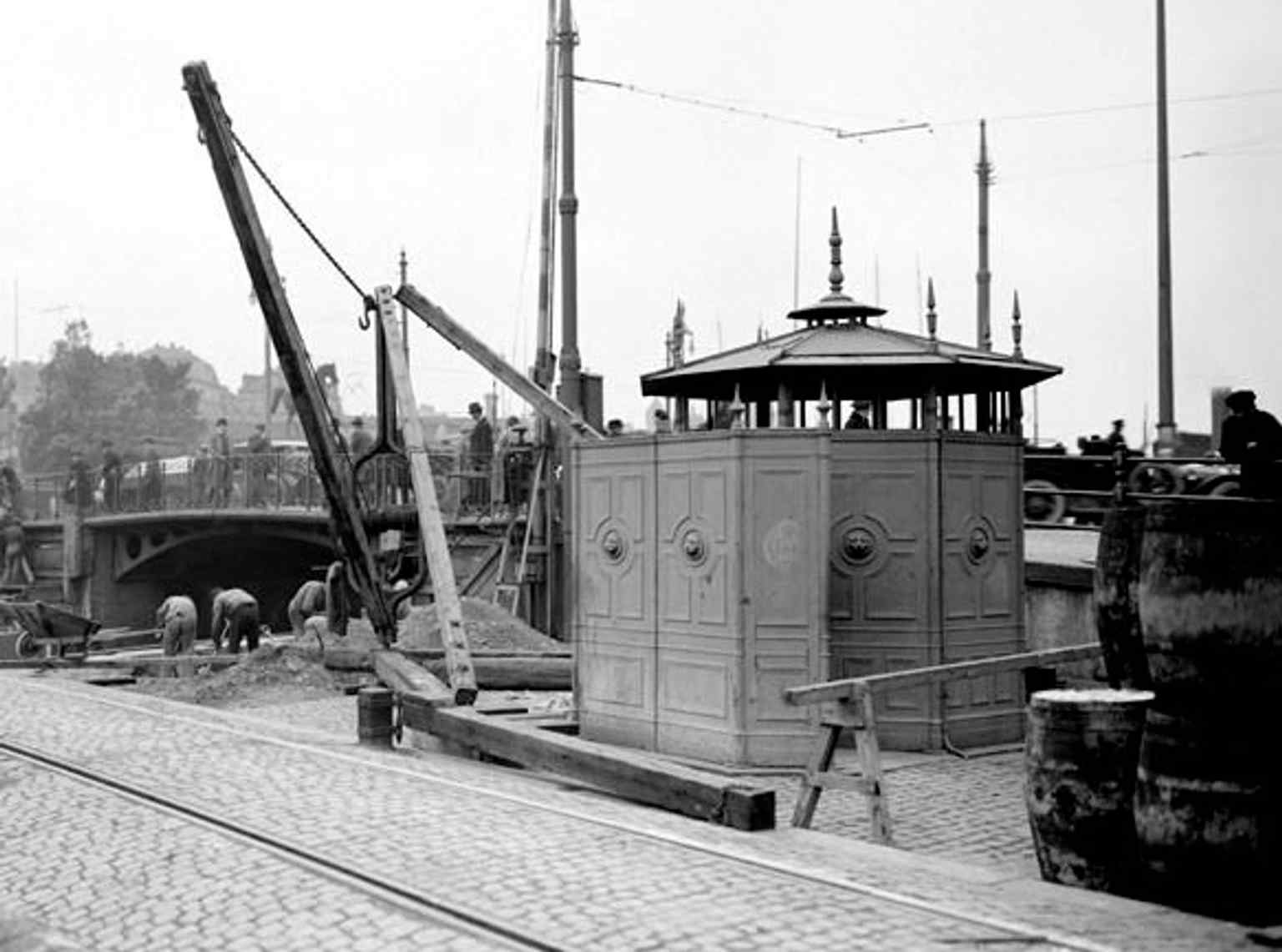
A rare detail from around 1900: one of Skeppsbrons public convenience buildings, part of the quay’s everyday working infrastructure.
A rare detail from around 1900: one of Skeppsbrons public convenience buildings, part of the quay’s everyday working infrastructure.Photo: ingen uppgift, Wikimedia Commons, Public domain. Cropped & resized.
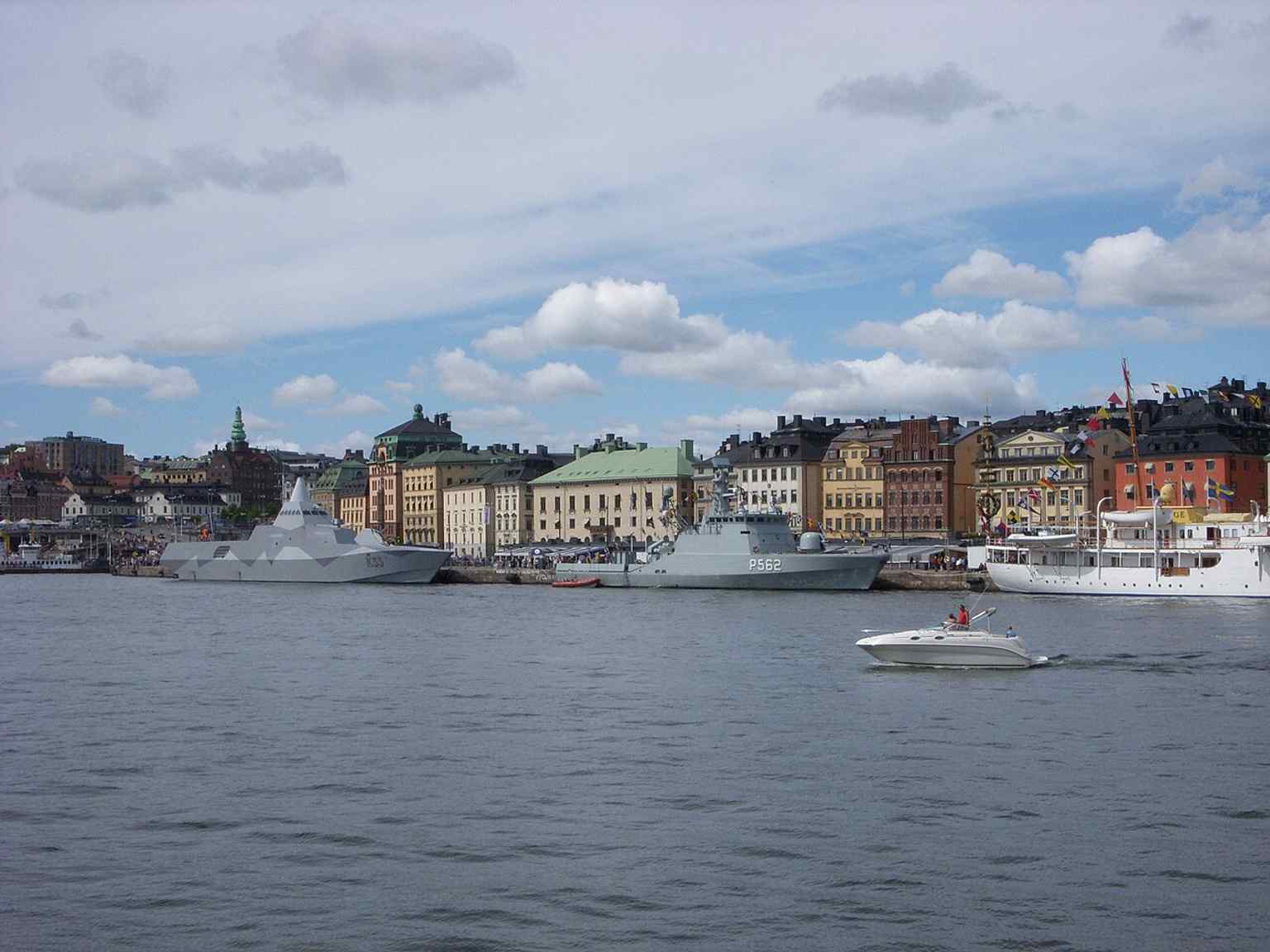
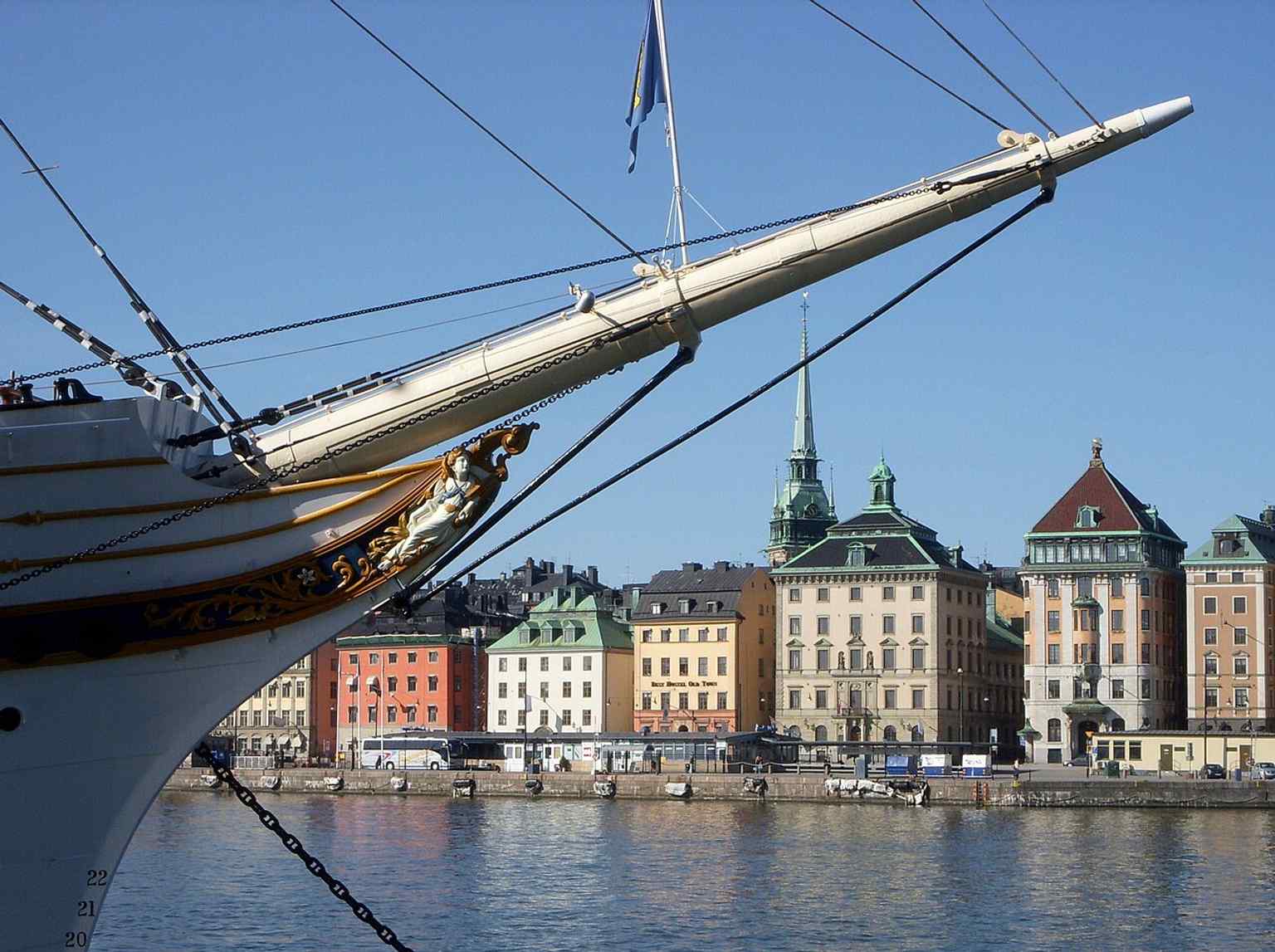
Af Chapman with Skeppsbron and Gamla stan in the background, a broad harbor view that places the quay in Stockholm’s central waterfront setting.
Af Chapman with Skeppsbron and Gamla stan in the background, a broad harbor view that places the quay in Stockholm’s central waterfront setting.Photo: Holger.Ellgaard, Wikimedia Commons, CC BY-SA 3.0. Cropped & resized.
arrow_back Back to Stockholm Audio Tour: Royal Heritage
Loved by travellers

Thousands of tours started.
Plenty of opinions.

4.8 across the App Store and Google Play. Here's a few we keep coming back to.

starstarstarstarstar
This was a solid way to get to know Brighton without feeling like a tourist. The narration had depth and context, but didn't overdo it.
Christoph
Christoph
Brighton Tour
starstarstarstarstar
Started this tour with a croissant in one hand and zero expectations. The app just vibes with you, no pressure, just you, your headphones, and some cool stories.
download Get the app

Pop your headphones in.
Step outside.

Free to download. Tours in every city. Start in 60 seconds — no account, no card.

Download on the App StoreGet it on Google Play
starstarstarstarstar_half
4.8
AudaTours app icon
headphones
~ 4 min until your first tour starts
public
1,000+ cities worldwide
all_inclusive
AudaTours
Unlimited

Every tour. Every city. One subscription.

3097 tours2273 cities138 countries50+ languages