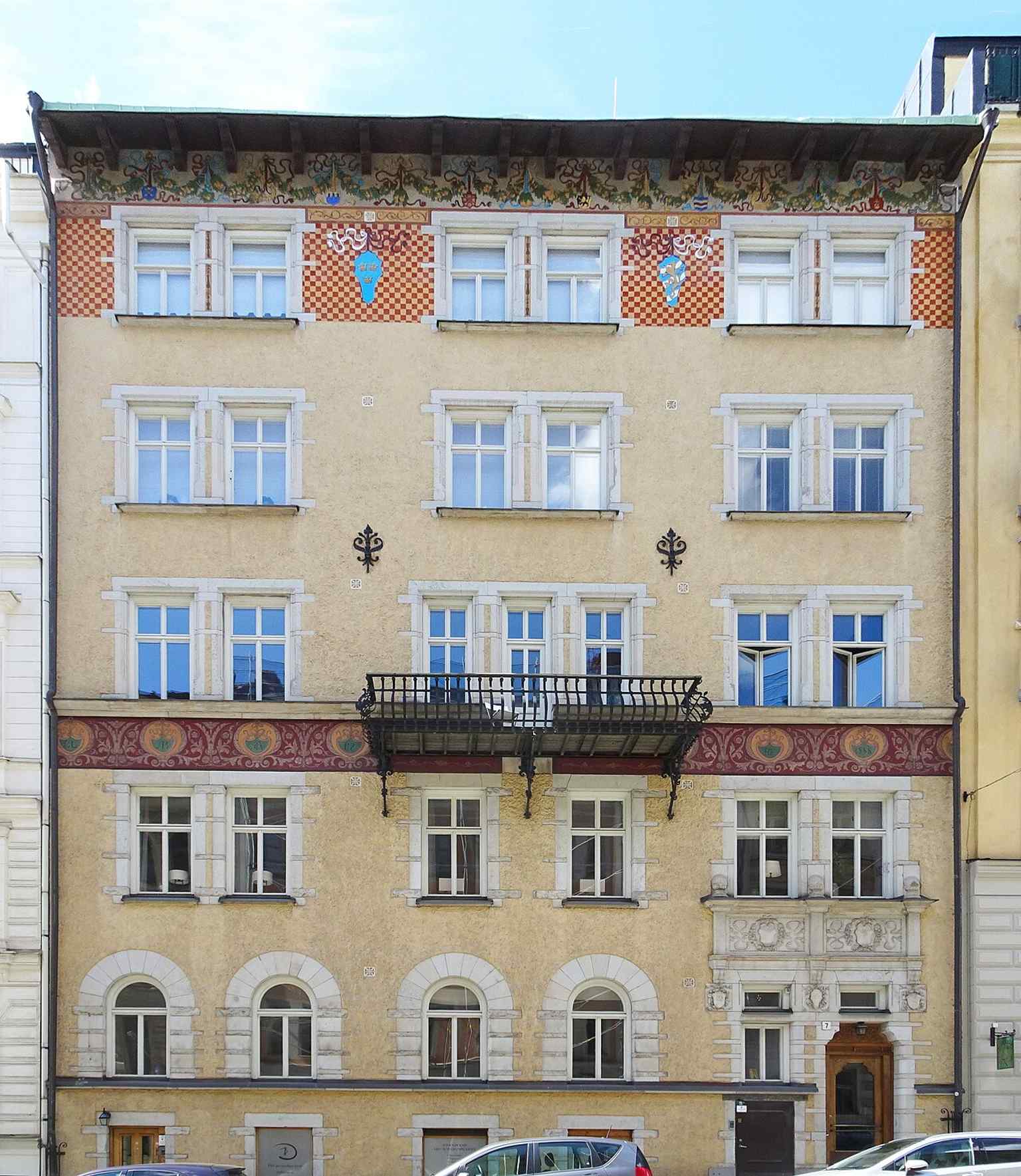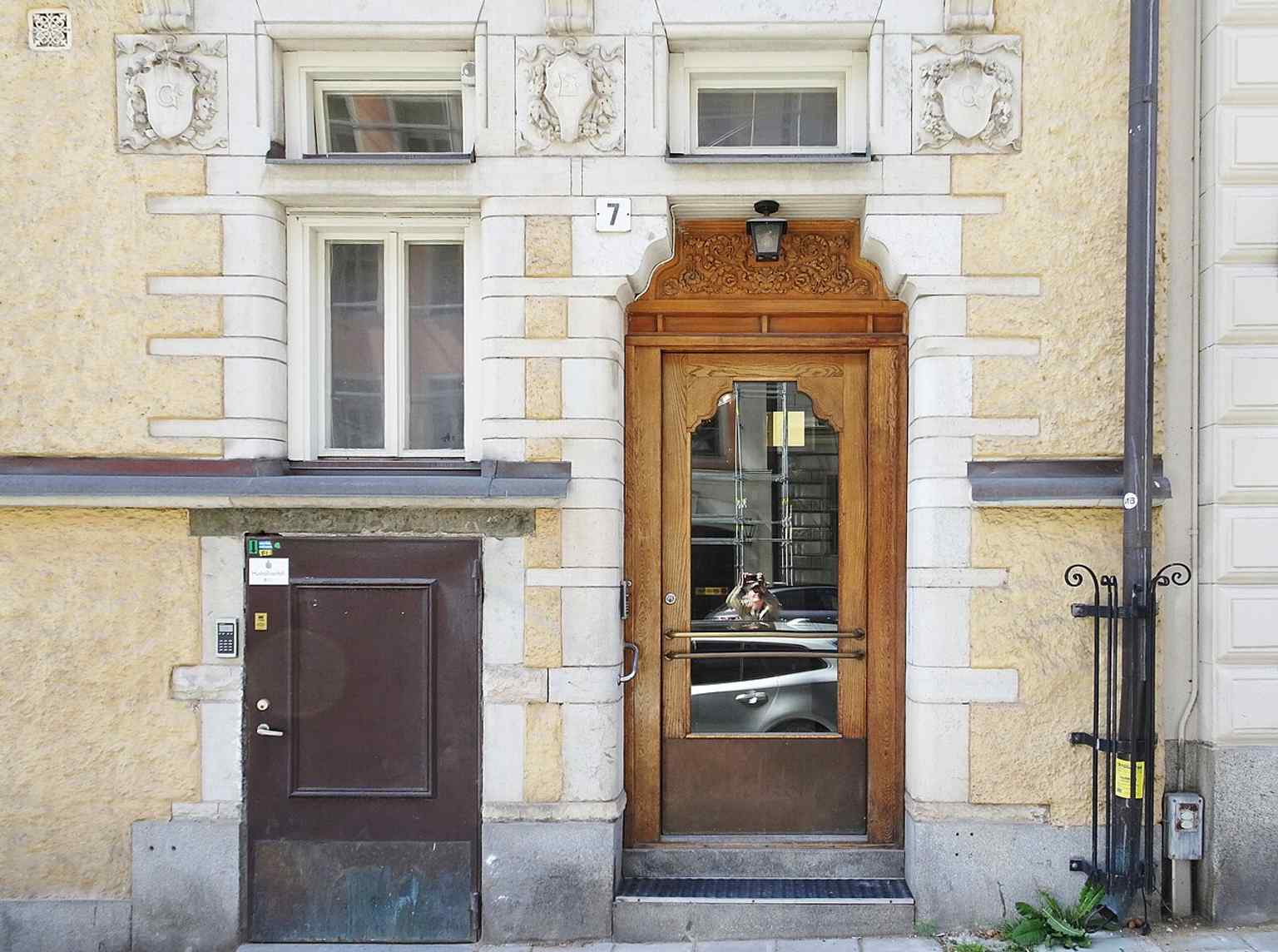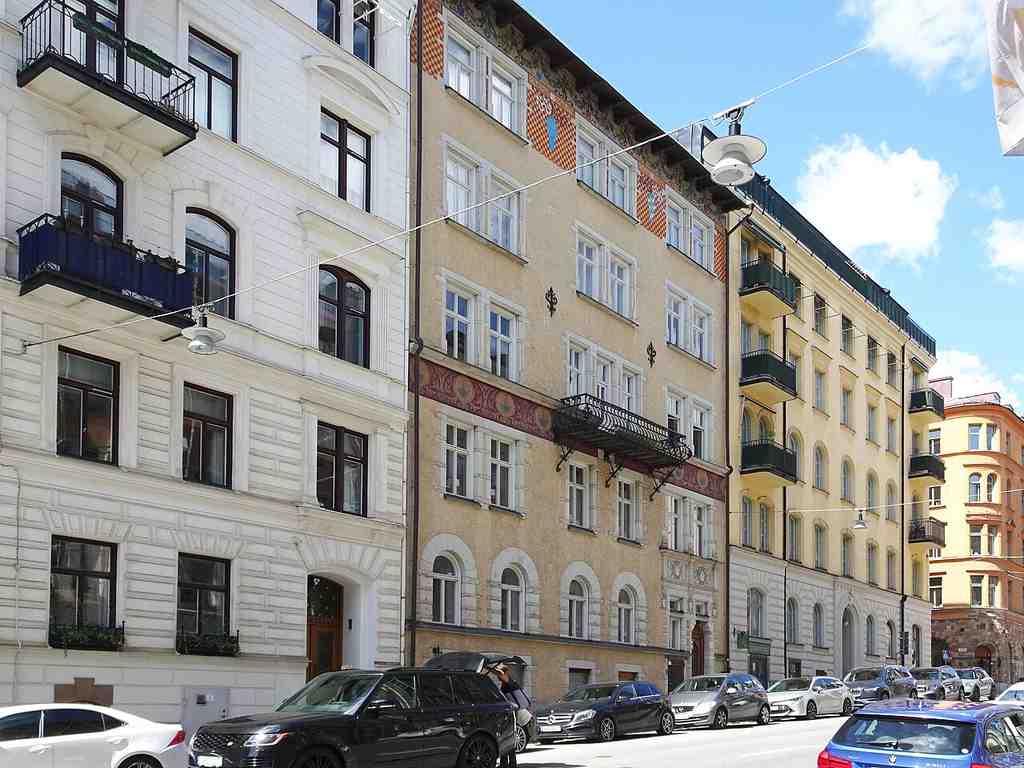
On your right, look for a five-story stucco apartment house with three grouped window bays, a round limestone portal, and a painted floral band just under the roof.
This is Ädelman mindre six, and it is such a great little lesson in how Stockholm reinvented itself in the late eighteen hundreds. In the eighteen eighties, this whole block changed as the city reshaped the area around Strandvägen. Older wooden and stone houses came down, plots were redrawn, and this new address rose in eighteen eighty-eight with real confidence.
Builder Gustaf Teodor Carlsson, a postal porter, bought the newly formed property in eighteen eighty-five, and the firm Göransson and Eriksson took charge of construction. Then architect Kasper Salin and building engineer Carl Widell gave the house its personality. They chose spritputs, a rough-cast stucco that catches light and shadow, then framed the windows and doors with smoother plaster and touches of limestone. If you glance at the image on your screen, you can spot that painted band below the roofline, with flower garlands and regional coats of arms... it’s wonderfully theatrical for an apartment building.
And that drama mattered. The approved design changed in late eighteen eighty-seven: the windows were pulled into three groups, the entrance stair moved to the right, and those painted decorations were added. That round portal beside you is part of the show too. Take a peek at the doorway detail in the app and you’ll see how carefully they dressed up everyday housing.
Inside, the social hierarchy was built right into the floor plan. Each level held one big five-room apartment facing the street and two smaller two-room homes in the courtyard wing. Only the large apartment had its own dry toilet at first; everyone else used privies in the yard until water and sewage arrived in the nineteen tens. An elevator came in the nineteen thirties, attic homes in the nineteen eighties, and today the building is protected with Stockholm’s blue classification for exceptional historic value.
This house turns ordinary domestic life into street-side art.
When you’re ready, continue on and let’s see how the neighborhood keeps layering elegance over everyday life.