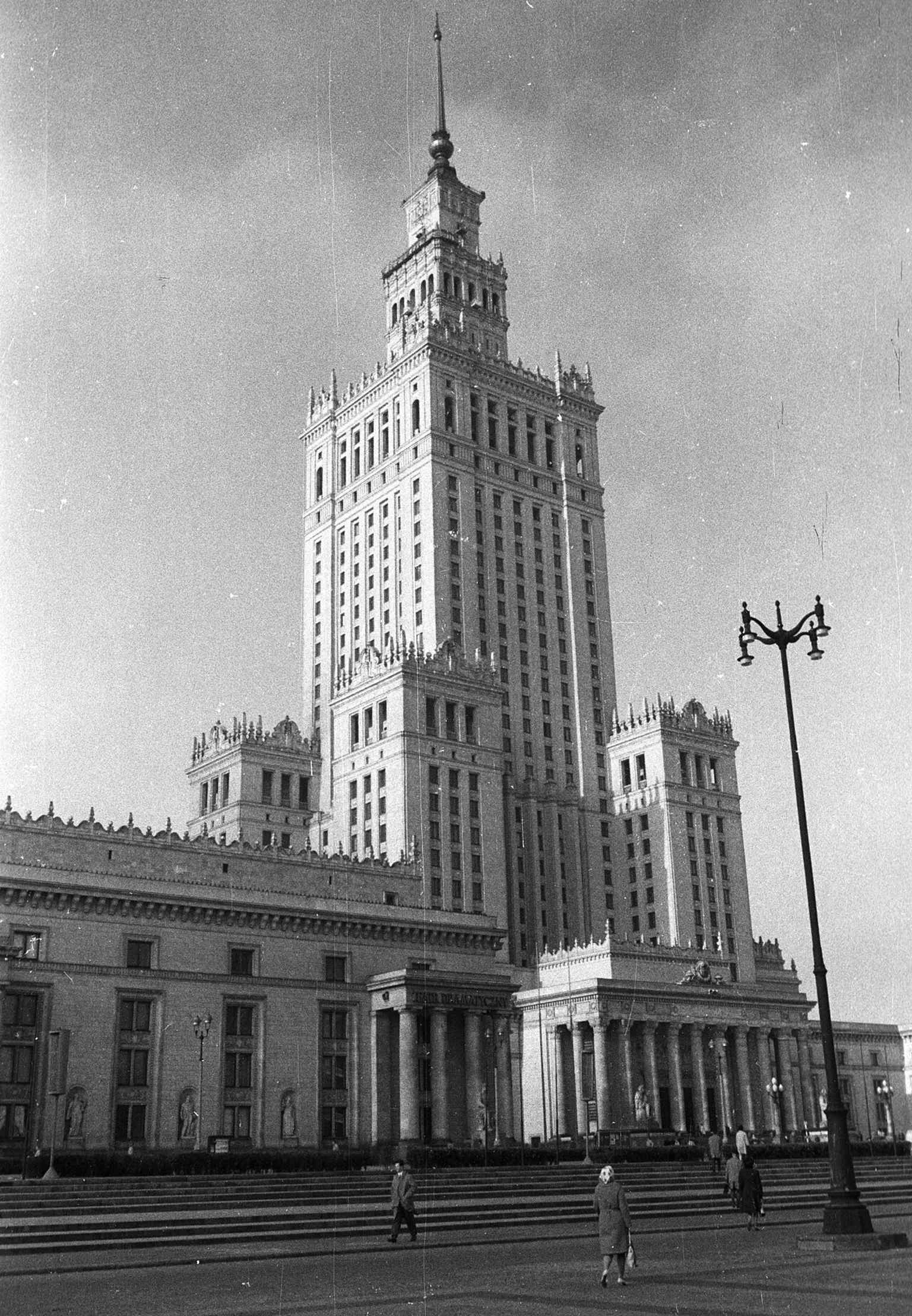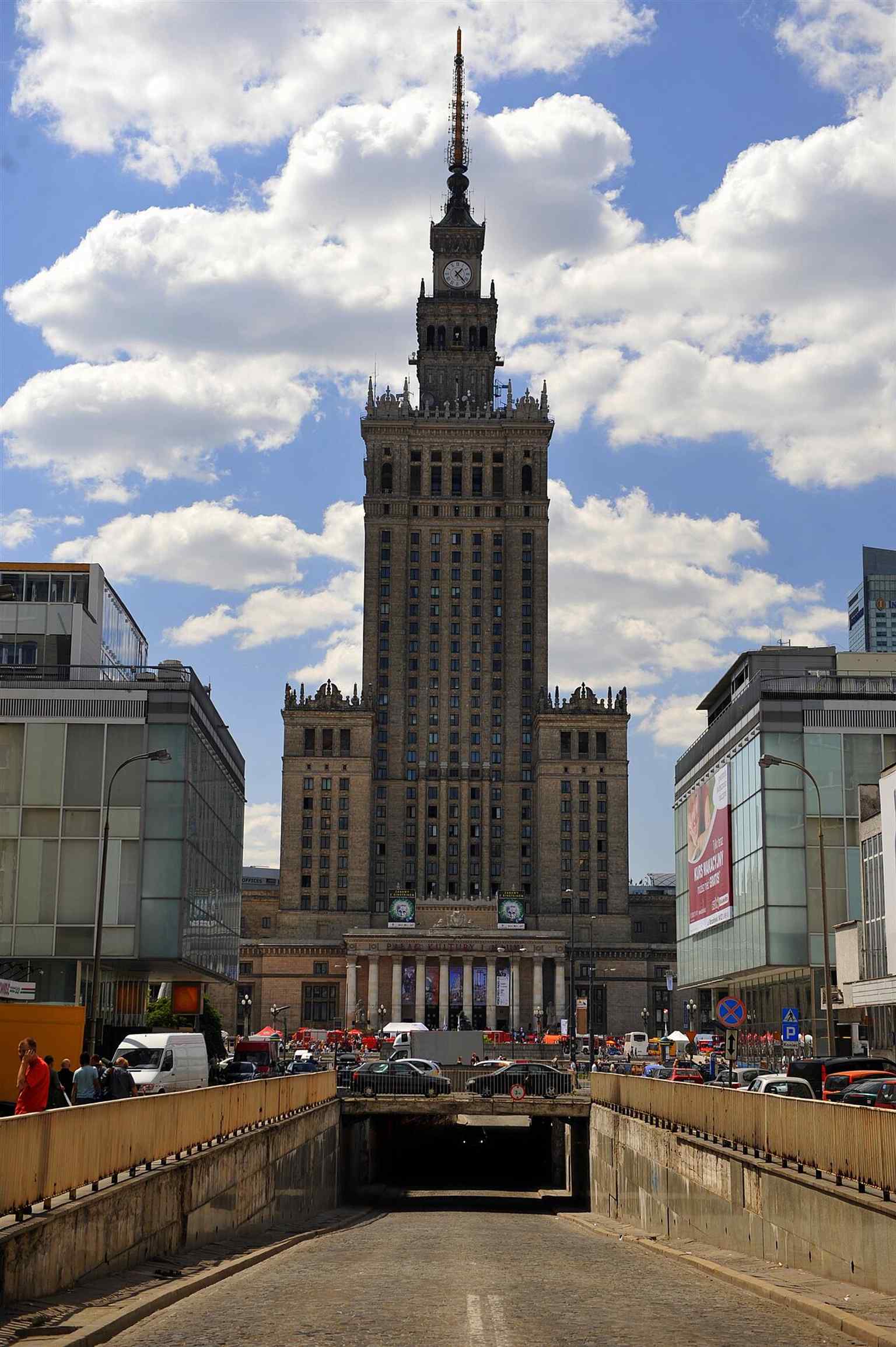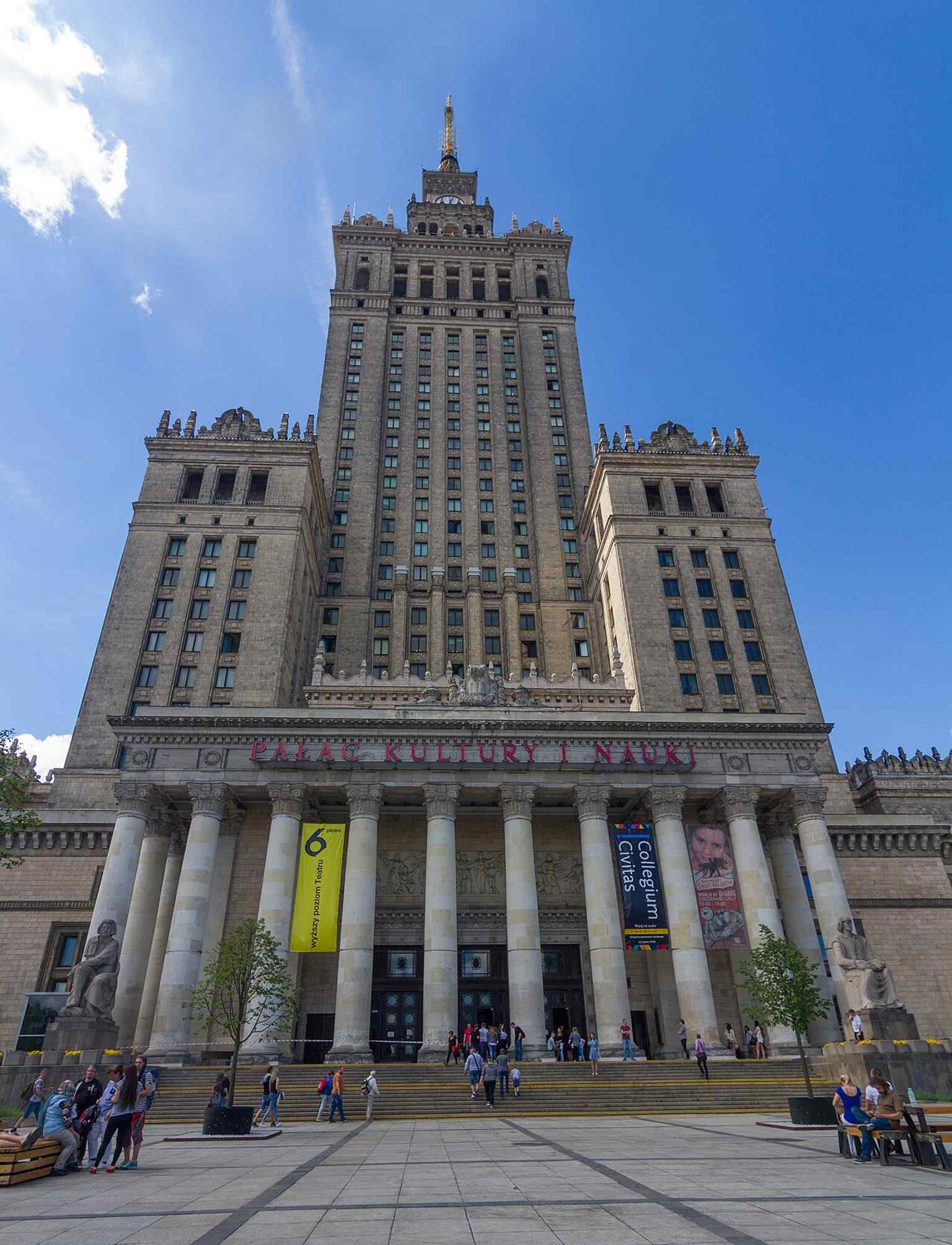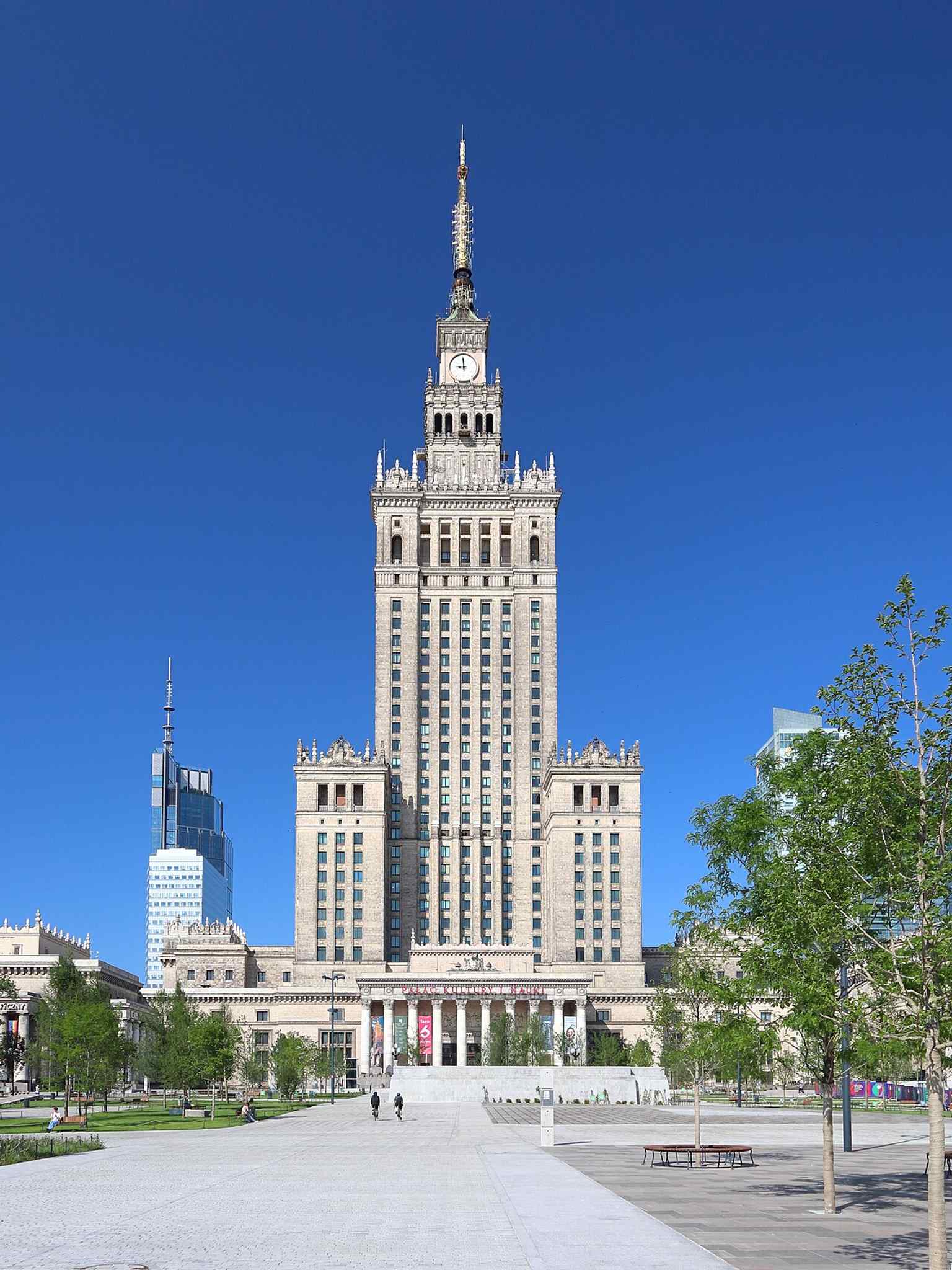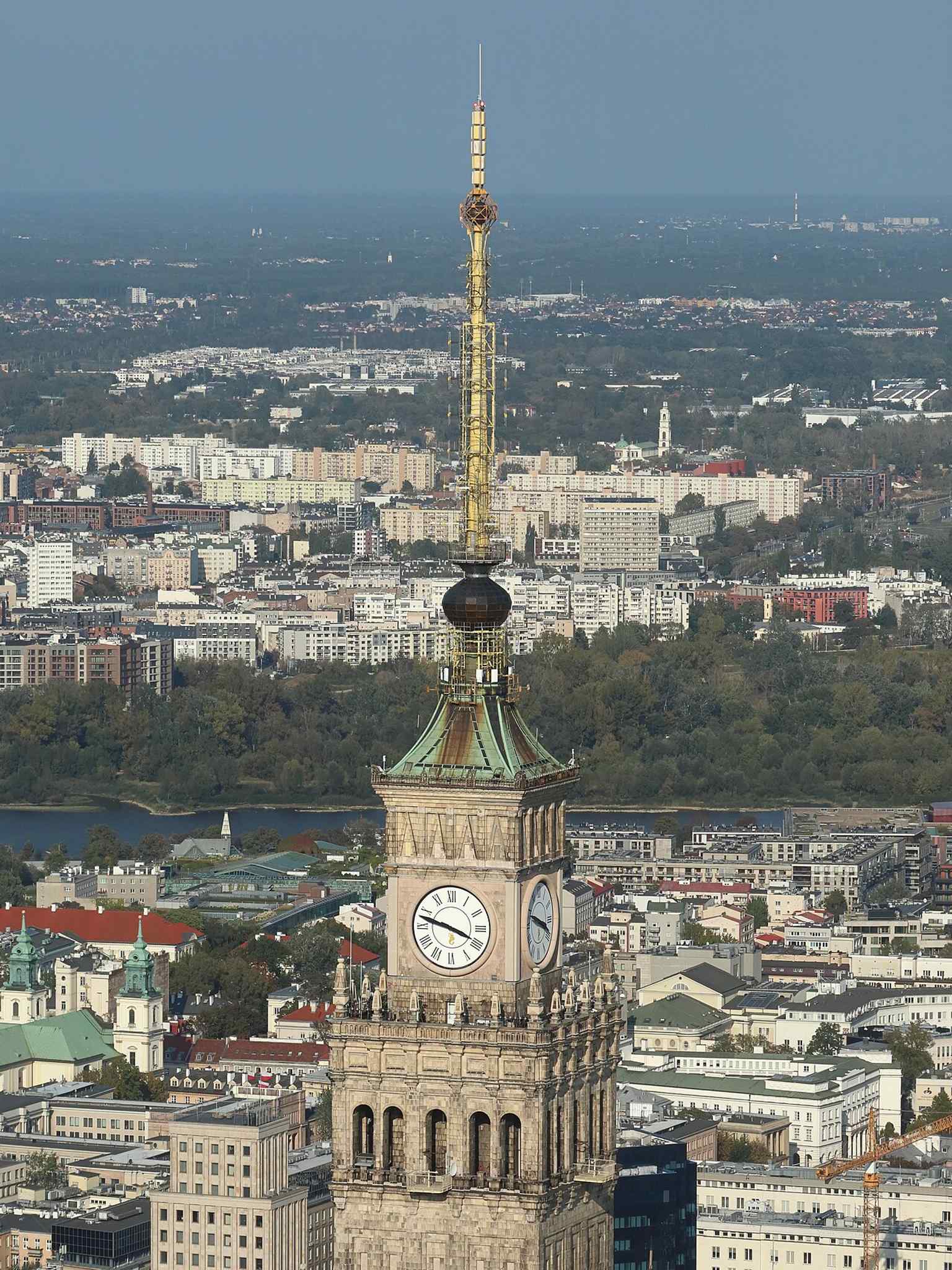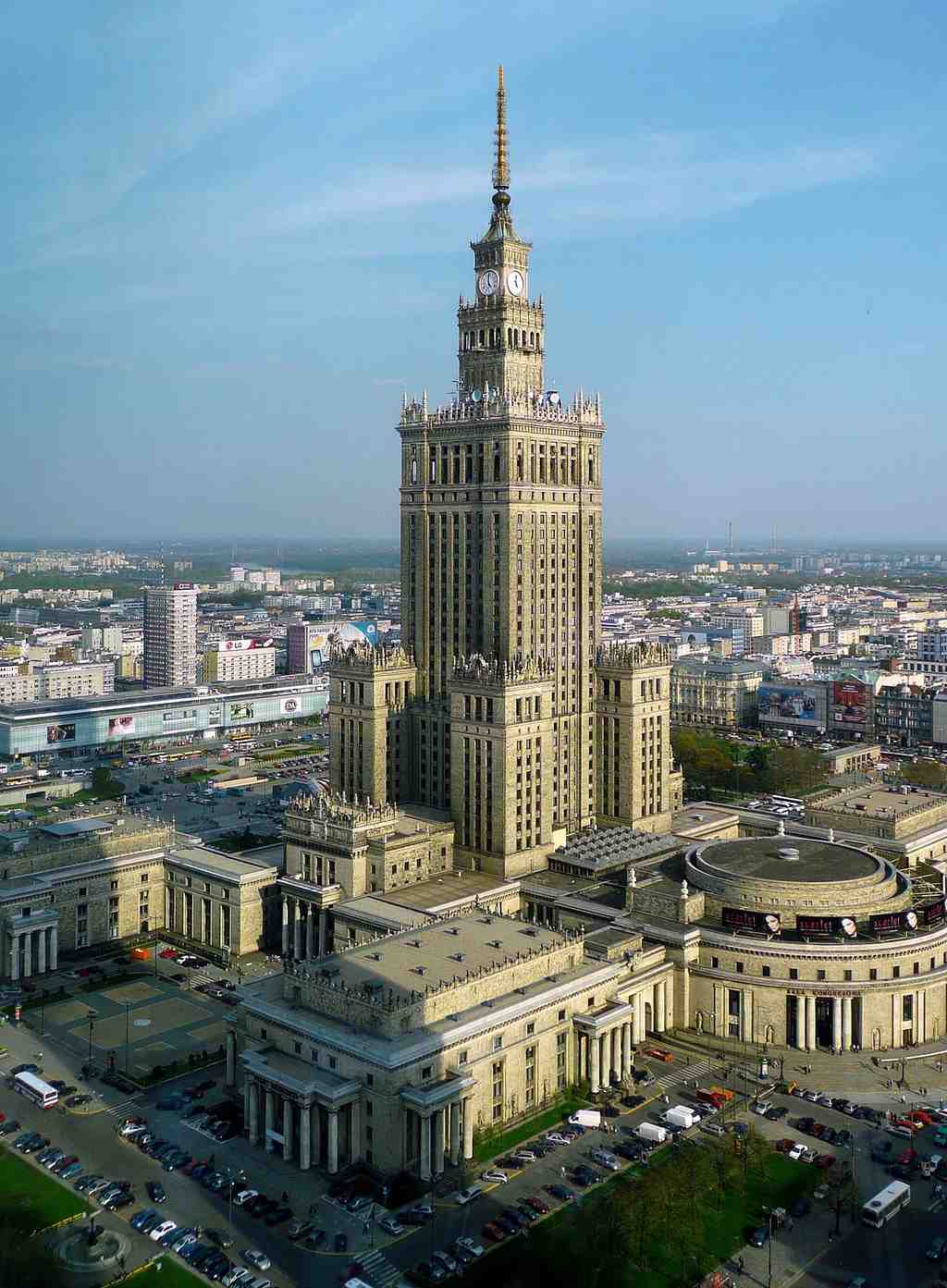
On your left rises a pale ceramic-clad tower with a broad stepped base, a crown of stone pinnacles, and a needle-like spire that pulls the whole building up to an unmistakable point.
This is Warsaw’s Palace of Culture and Science, and from close to its base it feels less like a building than an argument built vertically. If you want one structure that captures Warsaw’s contested modernity, this is it. Some people see a useful civic giant that has earned its place; others see a monument dropped here by force. Both sides have evidence, and that is exactly why the palace still matters.
Joseph Stalin proposed it as a “gift” from the Soviet people to Poland. Gifts, as you know, are more complicated when nobody gets to say no. Builders raised it between nineteen fifty-two and nineteen fifty-five, during the hardest Stalinist years, and they cleared a painful amount of surviving prewar Warsaw to make room for it: several streets disappeared, along with dozens upon dozens of old apartment houses.
The chief architect, Lev Rudnev, did something interesting. He did not simply copy Moscow. He traveled through Polish cities like Kraków, Chełmno, and Zamość, studying local architecture because he wanted the tower to look, in some fashion, Polish. What you see, then, is a strange hybrid: socialist realism, meaning an official style meant to project state power, mixed with historic Polish details and a dash of American art deco skyscraper swagger. It came to two hundred thirty-seven meters with the antenna, making it one of Europe’s giants when it opened.
There is a great story about the height. Architect Józef Sigalin and the design team stood across the river while a small plane dragged a balloon upward over the future site. At one hundred meters... then one hundred ten... then one hundred twenty, Rudnev thought that was enough. The Polish side kept shouting, “Higher!” Warsaw, apparently, has never suffered from modesty. The final answer was this tower, visible from just about everywhere.
And yet the human cost sits in the shadows. Between three thousand five hundred and five thousand Soviet workers and around four thousand Polish workers labored here. Sixteen people died during construction. Soviet crews lived in specially built housing estates on the edge of town, with their own canteen, cinema, and even a pool... a whole temporary world assembled to create this permanent one.
If you check the before-and-after image, you can see how the bare parade ground of the nineteen fifties has turned into today’s Plac Centralny around the same commanding tower. And if you glance at the aerial image in the app, it shows how this palace still shoulders its way through Warsaw’s skyline, even among newer high-rises.
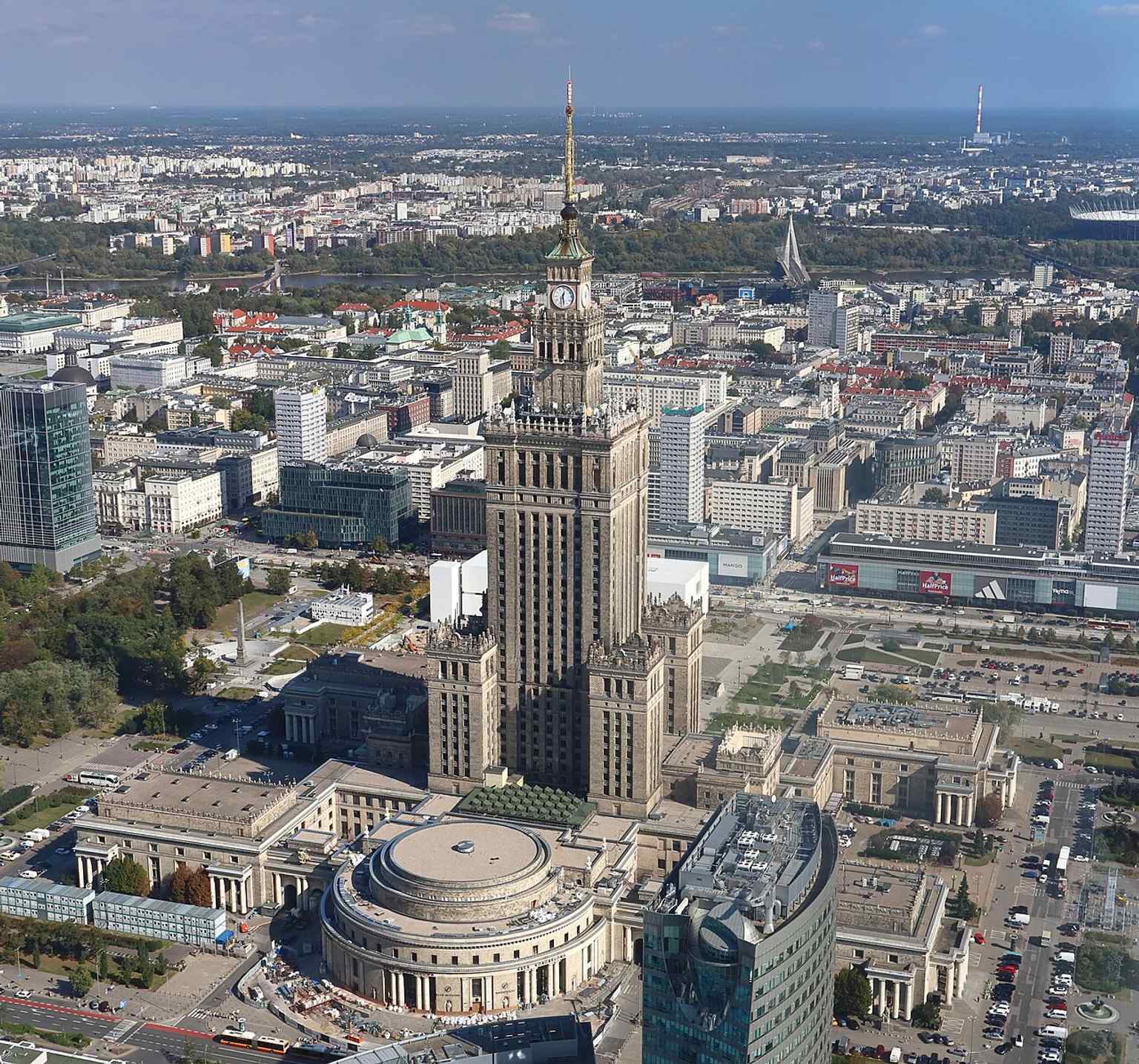
Inside, the city long ago stuffed the building with everyday life: four theaters, museums, a cinema, university spaces, the city council chamber, a youth center, and the famous viewing terrace. So the palace kept doing what cities do best: it got repurposed, argued over, and absorbed. In two thousand seven, Warsaw even protected it as a historic monument, which made some residents furious and others relieved.
That is the tension worth carrying forward. Some buildings become symbols by force... then stay because the city learns to live around them, use them, and never quite forgive them. From here, the National Museum is about a nineteen-minute walk away. If you want to step inside later, the palace is generally open every day from ten in the morning until eight in the evening.