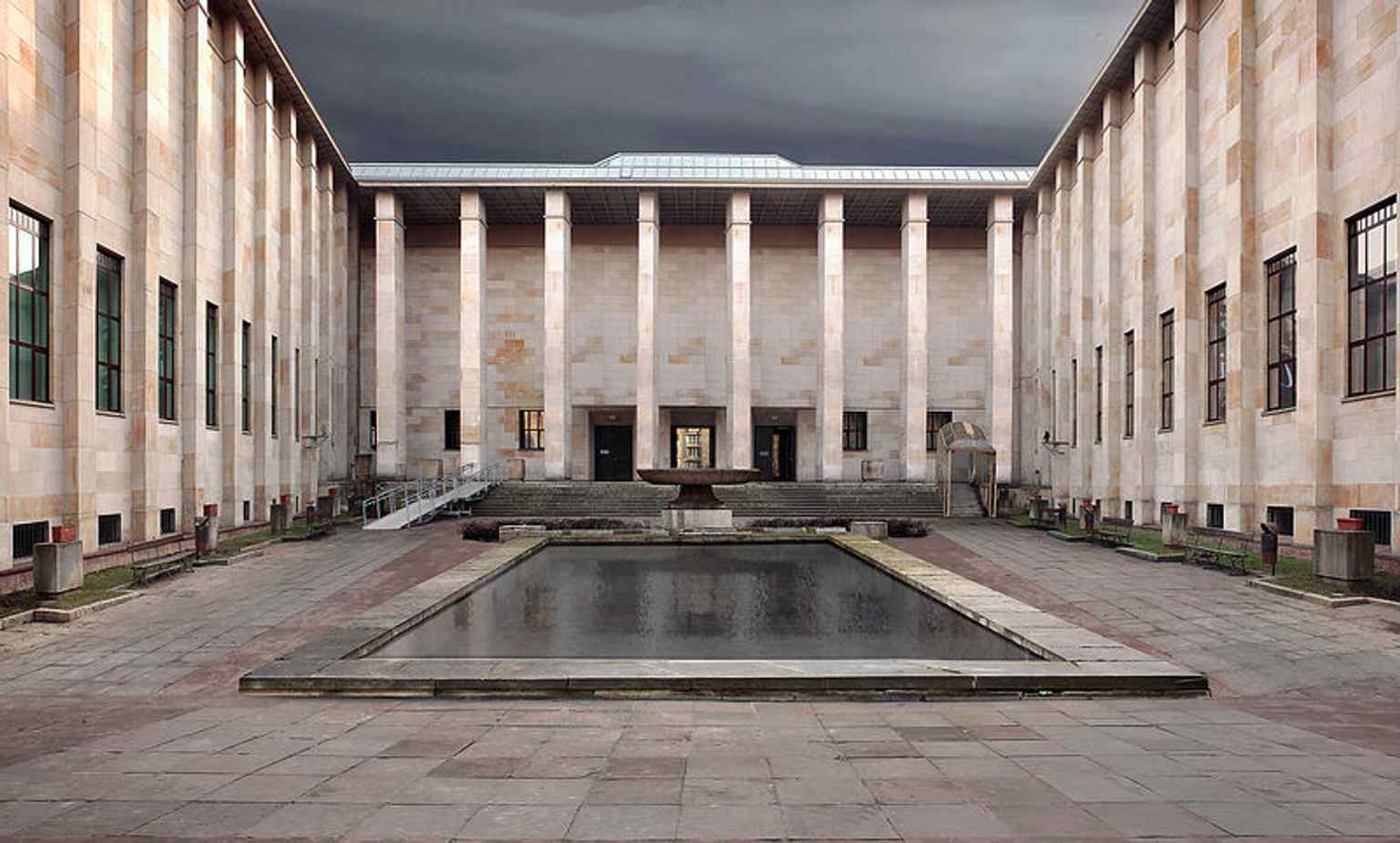
In front of you stands a long, pale stone modernist block with a flat roof, strong horizontal lines, and a deep central entrance cut into the facade like a calm, formal pause.
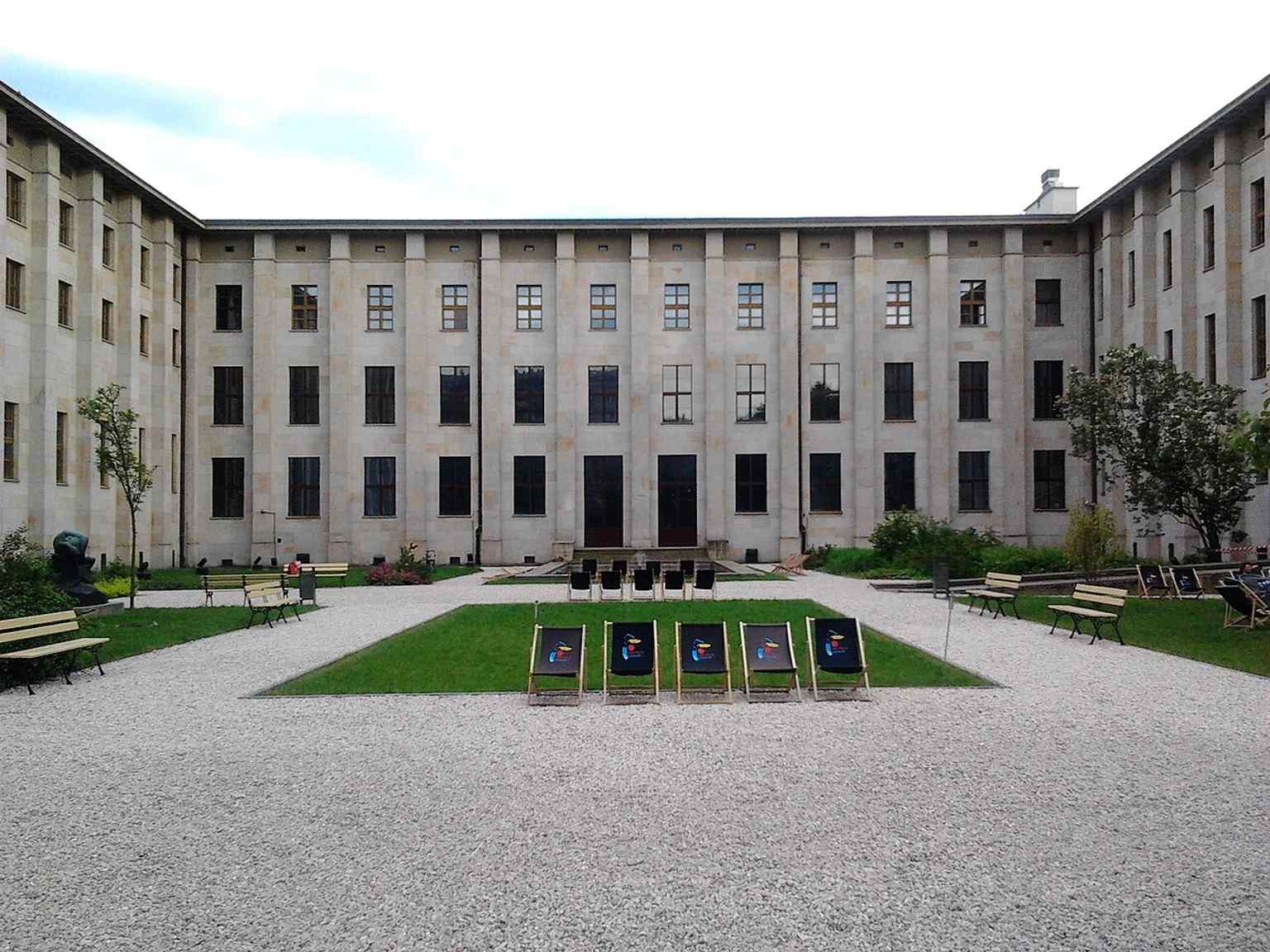
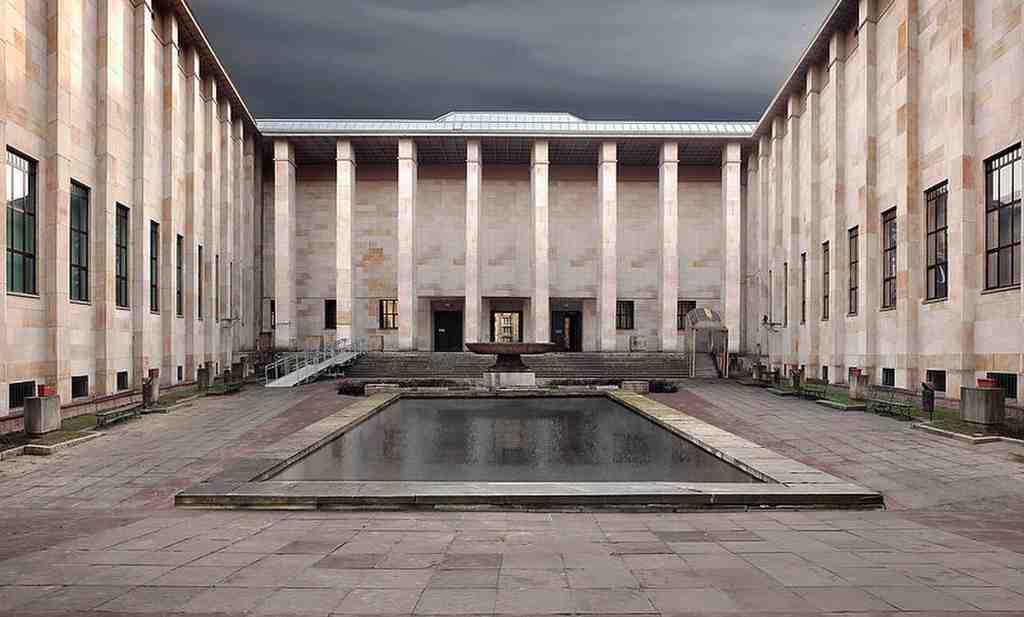
This is the National Museum in Warsaw, and from where you’re standing on the front-left, you can see how deliberately unflashy it is. No royal theatrics, no spires trying to out-sing the skyline. Tadeusz Tołwiński and Antoni Dygat gave Warsaw this building between the late nineteen twenties and nineteen thirty-eight, and they gave it a very modern kind of dignity... the sort that says, “We’re serious about culture,” without needing gold leaf to prove it.
The institution itself goes back much farther, to eighteen sixty-two, when it began as the Museum of Fine Arts. In nineteen sixteen, the city took it over and gave it a bigger mission and a bigger name: National Museum. That shift mattered. It stopped being just a place to hang paintings and became a place to gather a country’s memory, Polish and foreign alike.
And then war came for memory as hard as it came for masonry.
During the Second World War, German looting stripped this museum on a staggering scale: ninety-nine percent of its coins and medals disappeared, all of its clocks, about eighty percent of its goldsmith work and jewelry, more than half its furniture, textiles, and rare bindings. Missing objects matter as much as shattered buildings, because when a painting, coin, or manuscript vanishes, a piece of a people’s record vanishes with it. A city can rebuild a wall; it cannot easily rebuild an original.
If you glance at the image in the app showing crates and wartime damage, you’re seeing proof that the museum did not simply suffer passively; its staff documented thefts so the losses would have names and paper trails.
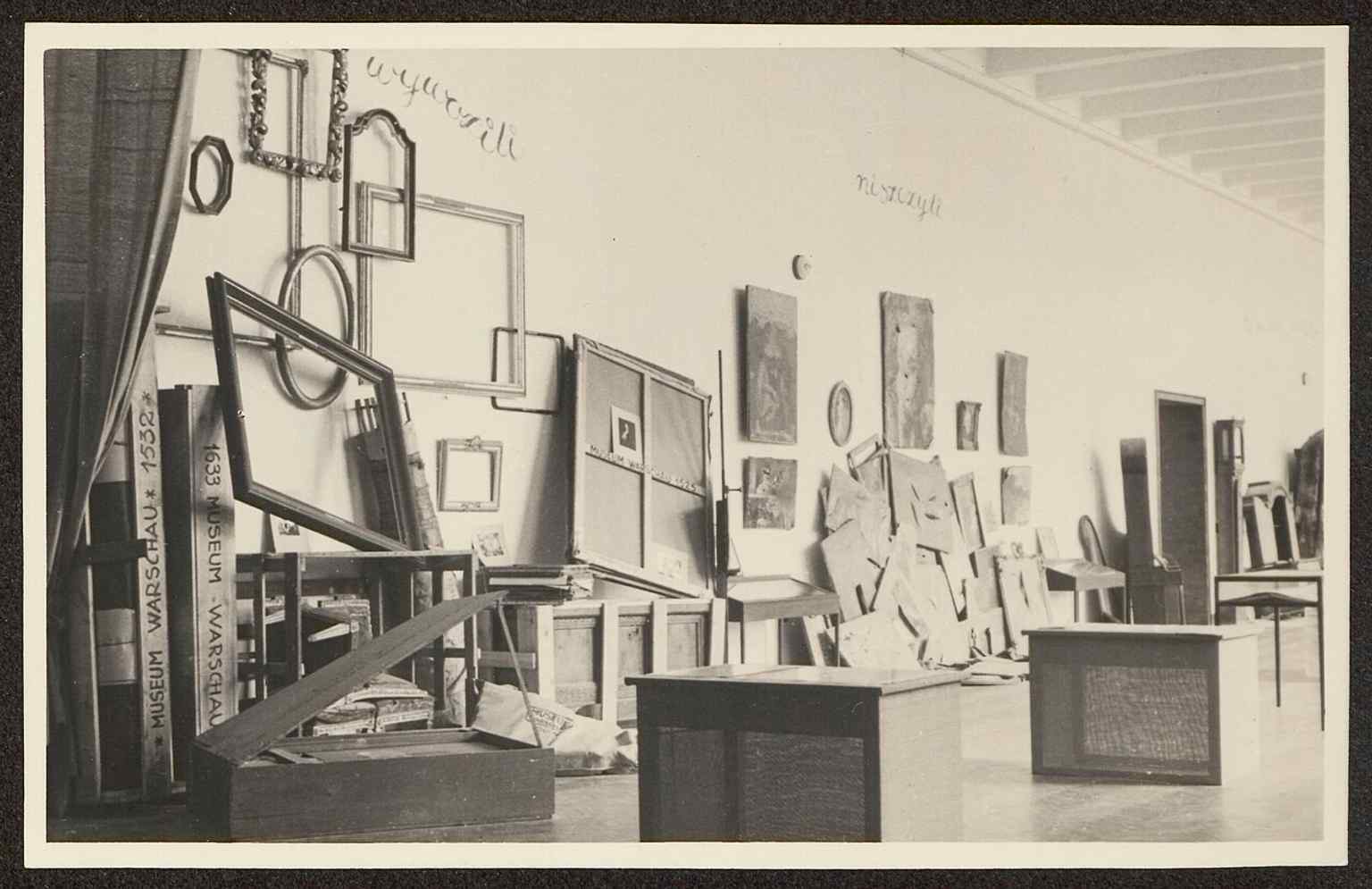
One man sits right at the heart of that story: Stanisław Lorentz, director here from the mid-nineteen thirties for decades after the war. During the occupation, he kept a daily chronicle in two versions, then hid the pages in wine bottles near the main entrance. That detail gets me every time... a museum man stuffing history into bottles like emergency messages from a sinking ship. He also persuaded the occupiers not to destroy the Jan Kiliński monument, but to store it here in the basement. And when Warsaw collapsed, he helped lead the “Pruszków action,” evacuating what remained of museum, library, and archive collections.
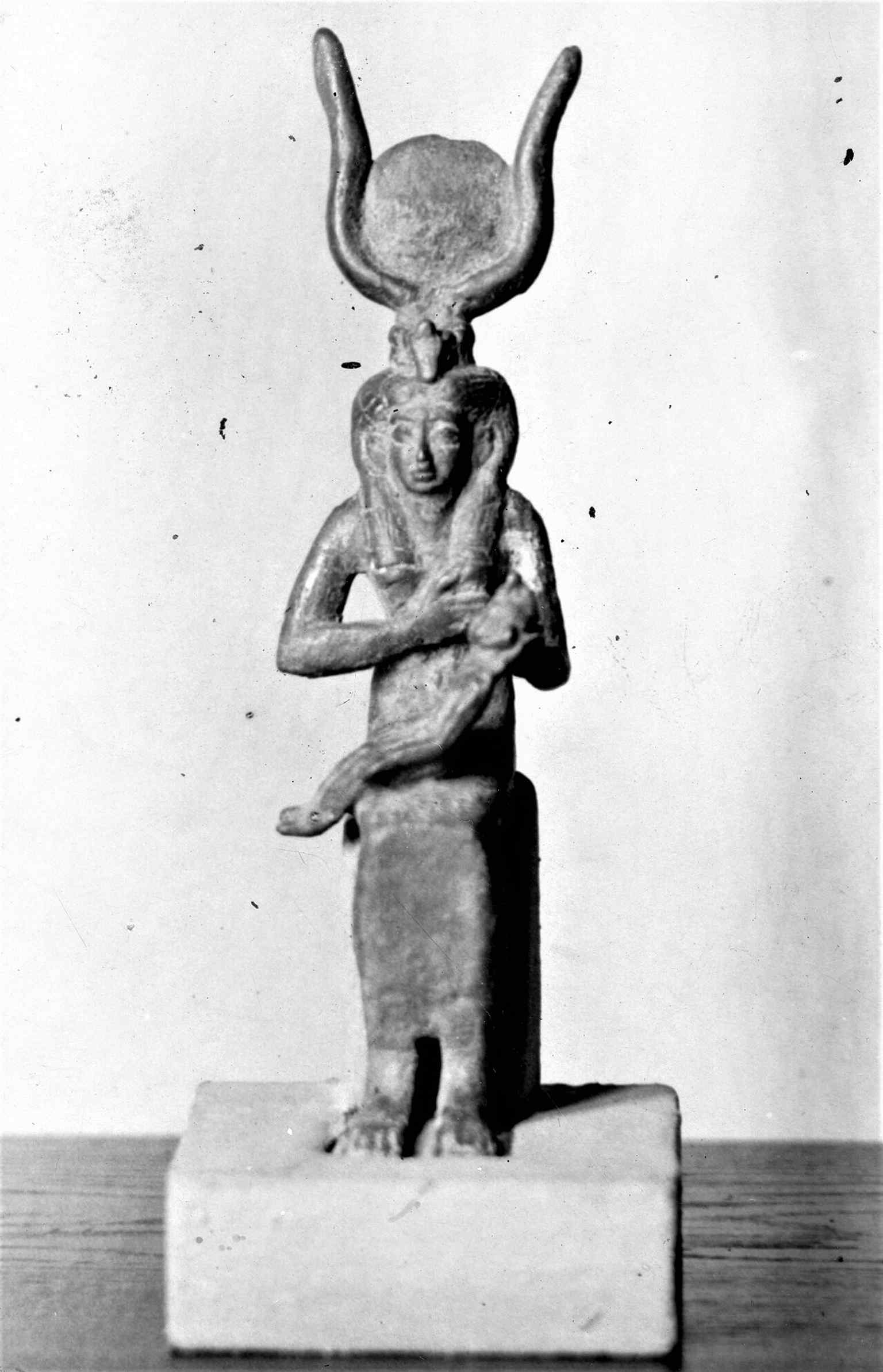
Some treasures inside tell the other half of the story: survival and rebuilding. This museum holds ancient Egyptian works, Old Masters like Botticelli and Cranach, and great Polish paintings by Matejko, Malczewski, Chełmoński, and Gierymski. In the Faras Gallery, born from Professor Kazimierz Michałowski’s excavations in Sudan, the museum even turned an archaeological rescue into one of Europe’s great Nubian collections. If you open the interior view on your screen, that gallery shows how Warsaw learned to rebuild not only walls, but meaning.
And there’s one more thread to keep in your pocket: workers here protected parts of the Royal Castle’s interiors too, long before that castle reappeared in full. So yes, museums carry scars you cannot see. Sometimes absence is the wound.
From here, the story moves back out to the street, where elegance and everyday hustle have always rubbed shoulders. We’re heading next to Nowy Świat, about a five-minute walk away. If you plan to come back inside, the museum is closed on Monday and usually open from ten in the morning, with a later closing on Friday.