
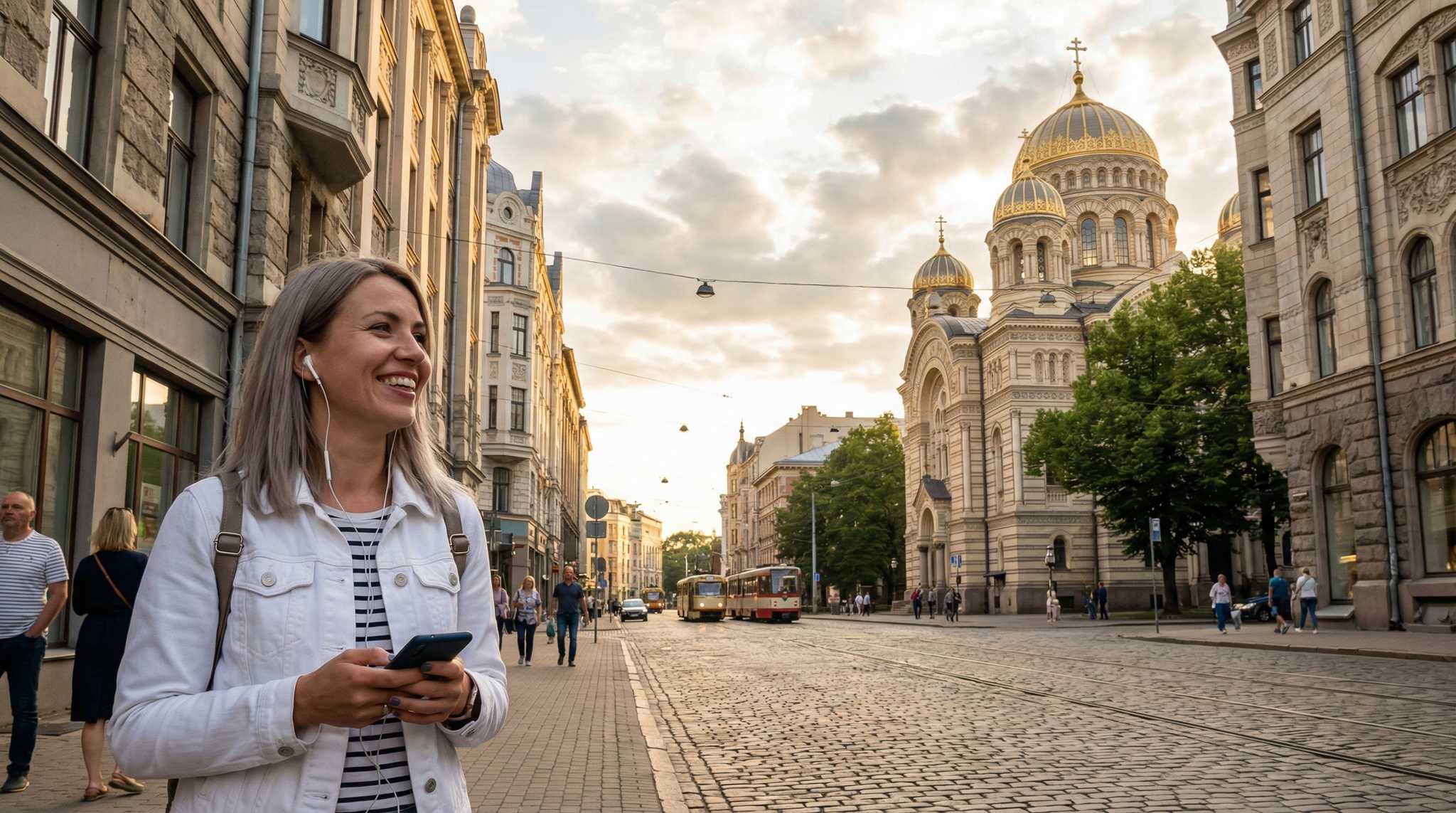
Riga Audio Tour: Echoes of Riga's Heartbeat
Above the bustling heart of Riga, the Freedom Monument watches as centuries of secrets unfold beneath its shadow. Hidden stories lurk in winding Old Town alleys and gold-domed churches where whispers of rebellion and revolution still linger. This self-guided audio tour pulls you off the beaten track, revealing the city’s past through tales most visitors never hear. Hear echoes of forgotten riots and intrigues etched into every cobblestone. What silent protest once threatened to shake Riga to its core? Why does the Cathedral of the Nativity of Christ shimmer with an imperial secret? Which time-worn gate holds a strange connection to a vanished crown? Move through Riga’s grandeur and grit. Step under ornate facades and looming monuments while discovering drama around every corner. Feel the pulse of independence, survival, and transformation as the real city comes alive around you. Unlock Riga’s true story now. Let curiosity lead you forward.
Tour preview
About this tour
- scheduleDuration 90–110 minsGo at your own pace
- straighten3.1 km walking routeFollow the guided path
- location_on
- wifi_offWorks offlineDownload once, use anywhere
- all_inclusiveLifetime accessReplay anytime, forever
- location_onStarts at Chapel of Alexander Nevsky
Stops on this tour
lock_open 3 free previews · 12 unlock with purchase
Picture a compact chapel of grey granite and white marble, shaped like a three-tiered pyramid and crowned by one gilded tented dome with eight smaller domes clustered around…Read moreShow less
Open dedicated page →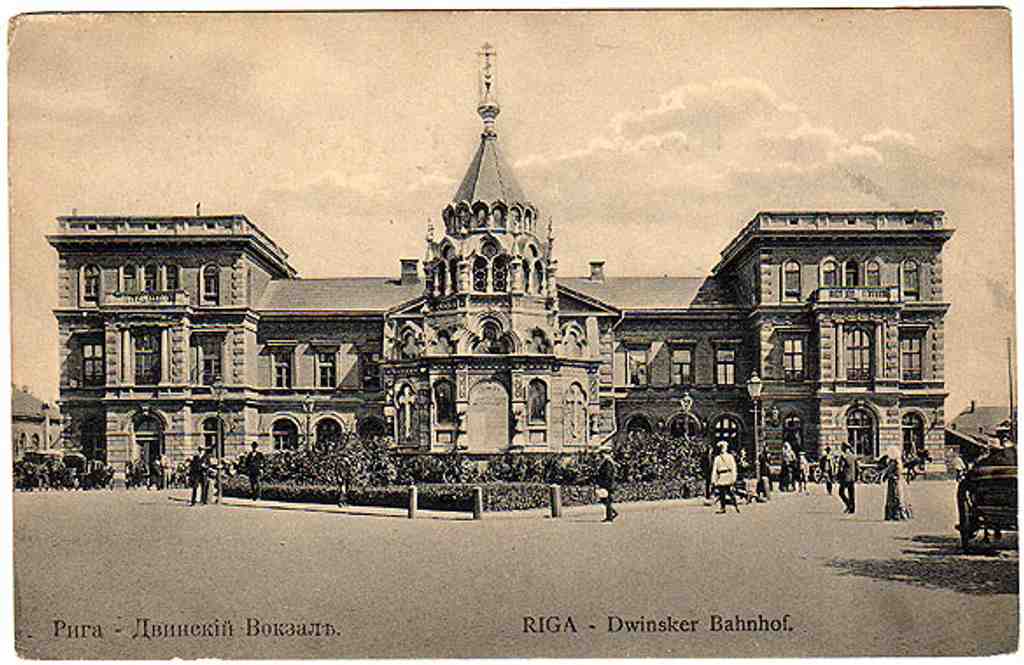
Chapel of Alexander NevskyPhoto: UnknownUnknown, Wikimedia Commons, Public domain. Cropped & resized. Picture a compact chapel of grey granite and white marble, shaped like a three-tiered pyramid and crowned by one gilded tented dome with eight smaller domes clustered around it.
You are standing at the site of a vanished landmark, and that absence is part of the story. Riga raised the Alexander Nevsky Chapel on the square before the Riga-Orlov railway station to commemorate the event of the seventeenth of October, eighteen eighty-eight. A year later, on the seventeenth of October, eighteen eighty-nine, Archbishop Arseny of Riga and Mitau consecrated it. What matters just as much is who paid for it: the whole city, the source says, without distinction of nation or faith. That is rather moving, especially in a place where identities often pulled in different directions.
The chapel looked like a tiny but very rich Orthodox church. Its lower level formed an equal-armed cross and ended in rows of kokoshniki, decorative gables shaped a bit like old ceremonial headdresses. In its four rounded niches, one became the entrance, two held coloured patterned glass, and the fourth carried a white Carrara marble plaque with a gilded inscription. Pairs of white marble and polished granite columns framed those openings. Above them rose an octagonal drum, the windowed section beneath the roof, ringed by eight columns and eight smaller gilded cupolas. Between them sat icons and mosaic glass. Higher still, sixteen more kokoshniki carried more icons, and all the metalwork, crosses, domes, coverings, even the icon panels, gleamed from gilded red copper.
Inside, visitors found a high dome, a hanging chandelier on a gilded chain, an iconostasis, a screen of sacred images before the altar, enamelled majolica tiles, and a mosaic floor. The builders used the strongest cement they could, because they meant this monument to endure for generations.
And yet, in late July and early August of nineteen twenty-five, the city demolished it as a reminder of tsarist rule.
So this stop asks you to imagine not only what stood here, but what a city chooses to remember and erase.
When you are ready, continue on toward the Palace of Culture of Railway Workers.
On your right, look for a pale stone mansion with a broad terrace, a stone-railed balcony, and two carved lions gripping shields on the front. This is Benjamin House, one of…Read moreShow less
Open dedicated page →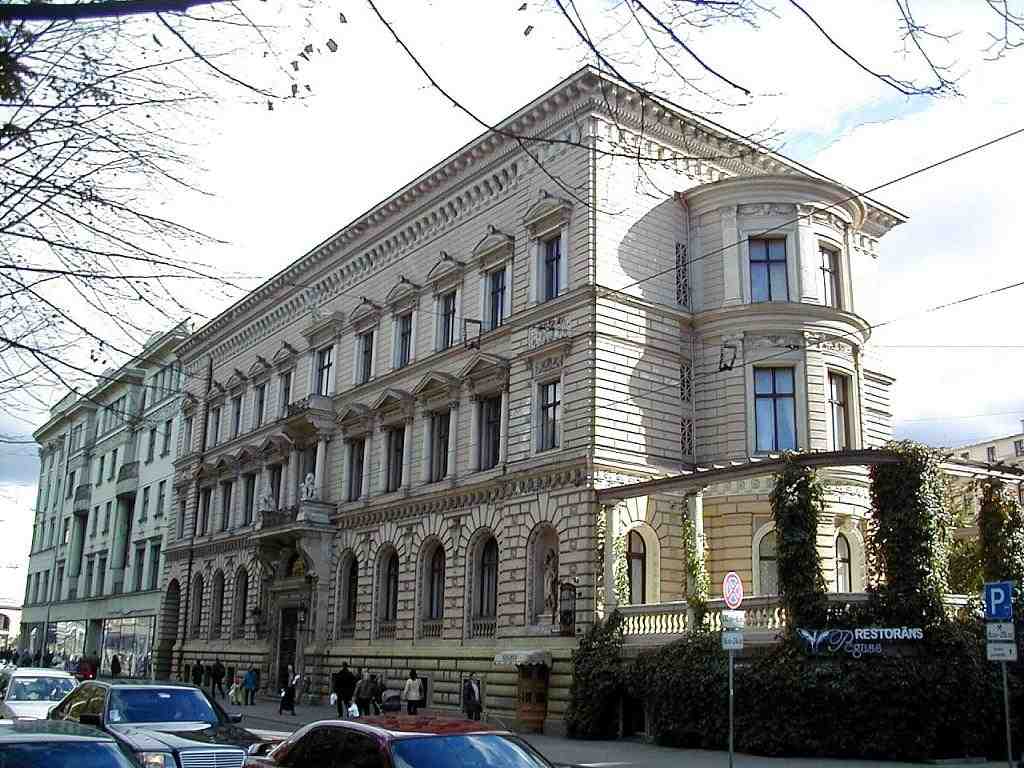
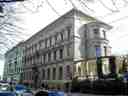
Benjamin HousePhoto: J. Sedols, Wikimedia Commons, CC BY 3.0. Cropped & resized. On your right, look for a pale stone mansion with a broad terrace, a stone-railed balcony, and two carved lions gripping shields on the front.
This is Benjamin House, one of Riga’s grandest private mansions. In eighteen seventy-six, merchant Nikolai Ehlert Pfab claimed this newly opened land, freed when the old fortifications came down, and he invited two Berlin architects, Wilhelm Beckmann and Gerhard Ende, to design something rather bold for Riga: a true city mansion in the centre, the first of its kind here.
The house speaks in symbols. Those lions on the balcony advertise noble ambition. Above the main entrance, two sculpted young women hold flax and a spinning wheel, quietly announcing the owner’s trade and prosperity. In a niche on the facade, a vestal - a guardian of the sacred household fire in ancient Rome - watches over the home. The sculptor August Volz created all this ornament, and the commission helped turn him into the fashionable sculptor of prosperous Riga.
Inside, Pfab spared little. Wilhelm Timm shaped the interiors, with help from his young nephew, the future architect Wilhelm Bockslaff, on the very first steps of his career. Later owners made the house even more famous. In nineteen twenty-eight, Anton and Emīlija Benjamin, powerful media publishers, bought it and turned it into a literary and artistic salon. Ministers, diplomats, journalists, and writers gathered here under a vast Venetian chandelier said to be the largest in the Baltics. Architect Eižens Laube reworked the interiors for them, though he admitted he often had to negotiate with their rather exacting tastes.
After nineteen forty, the Soviet state nationalised the house and deported Emīlija. From nineteen forty-five onward, writers, artists, and composers filled these rooms with exhibitions, lectures, poetry, and music. Even cinema moved in: director Janis Streics used the house in the film Theatre.
Few buildings in Riga carry wealth, taste, loss, and reinvention quite so gracefully.
When you are ready, continue on for the next chapter of the city’s story.
Show 12 more stopsShow fewer stopsexpand_moreexpand_less
On your right stands a glass-and-steel mountain of a building, its sharp stepped profile rising to a peak that gives Riga its unmistakable Castle of Light. That name is not…Read moreShow less
Open dedicated page →On your right stands a glass-and-steel mountain of a building, its sharp stepped profile rising to a peak that gives Riga its unmistakable Castle of Light.
That name is not merely poetic flourish. This is the National Library of Latvia, and its modern home deliberately borrows from Latvian legend: the Castle of Light and the Glass Mountain, places of wisdom, trial, and hard-won truth. The architect, Gunnar Birkerts, a Latvian-American who built his career in the United States, drew this design in nineteen eighty-nine, long before the building itself finally took shape. When it opened here in two thousand and fourteen, it looked less like a conventional library than an idea made solid.
The institution itself is older by nearly a century. Latvia proclaimed independence in nineteen eighteen, and on the twenty-ninth of August, nineteen nineteen, the new state founded its national library. Its first leader, Jānis Misiņš, did something wonderfully practical and rather noble: he gave his own private collection to form the library’s core. Within a year, the holdings had grown to two hundred and fifty thousand volumes. From nineteen twenty onward, publishers had to deposit a copy of everything they printed, which meant the library became not just a storehouse of books, but the memory of a nation in paper form.
The older building on Krišjāņa Barona Street gives a sense of the library’s previous life before this dramatic move. By the late twentieth century, the collection had outgrown building after building. Some books even ended up stored in a former Soviet missile bunker outside Riga, which is about as far from a romantic reading room as one can imagine.
The library’s history also mirrors Latvia’s own upheavals. Under German occupation in the Second World War, officials stripped away the word “state” and renamed it the Country Library, erasing the language of Latvian sovereignty. Under Soviet rule, it carried the name of the Latvian Soviet republic, and from nineteen forty-six onward, books judged dangerous by Soviet authorities were removed from open shelves. Until nineteen eighty-eight, readers needed special permission to see them. A library, you see, can reveal a great deal about freedom simply by showing which books are hidden.
Since renewed independence in nineteen ninety-one, the National Library has reclaimed its full role. Today it holds more than five million titles, including around eighteen thousand manuscripts ranging from the fourteenth century to modern times. It is also deeply involved in the digital age: Letonica and its other projects have digitised newspapers, maps, music, photographs, and records of Latvia’s great Song and Dance Festivals. On your phone, you might also peek at the People’s Bookshelf inside, a fitting symbol of the library’s promise to preserve national literature for everyone, not merely specialists.
One of the most moving moments in this building’s story came before the opening, when people formed a human chain across Riga and passed selected books hand to hand from the old library to this one. It was ceremonial, certainly, but not empty ceremony. It said, quite plainly, that knowledge belongs to the people who carry it forward.
If you plan to step inside another time, it is generally open from ten until eight Monday to Friday, from eleven until six on Saturday, and closed on Sunday.
This place guards Latvia’s memory while keeping it alive.
When you are ready, continue on and let the city tell you its next chapter.
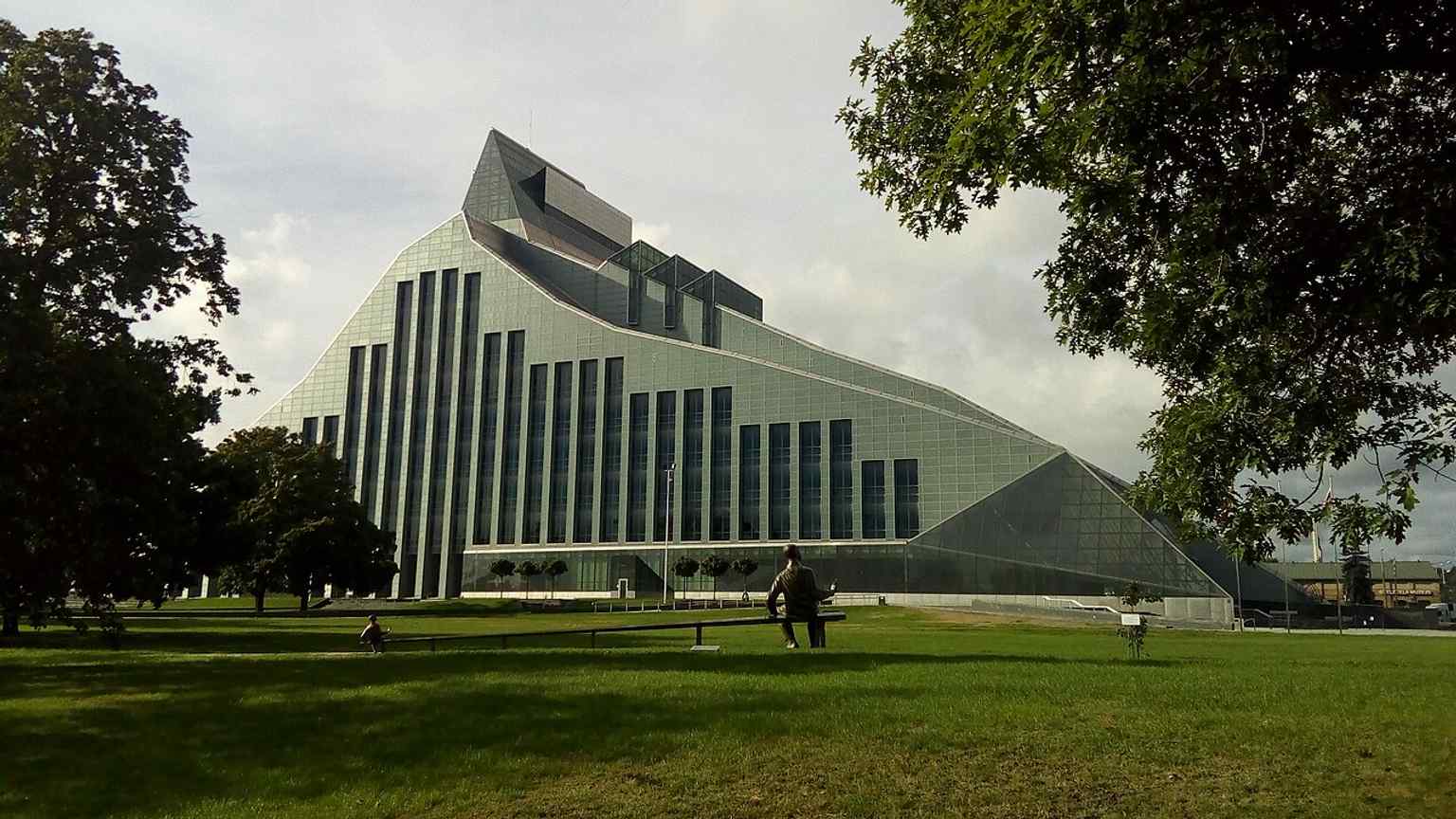
The Castle of Light’s sweeping glass façade, the National Library of Latvia’s modern home on the Daugava riverbank.Photo: Yeti-Hunter, Wikimedia Commons, CC BY-SA 4.0. Cropped & resized. Look for the formal entrance: black wrought-iron gates set between pale stone pillars, marking a broad opening into Riga’s oldest public garden. Vērmane Garden began in eighteen…Read moreShow less
Open dedicated page →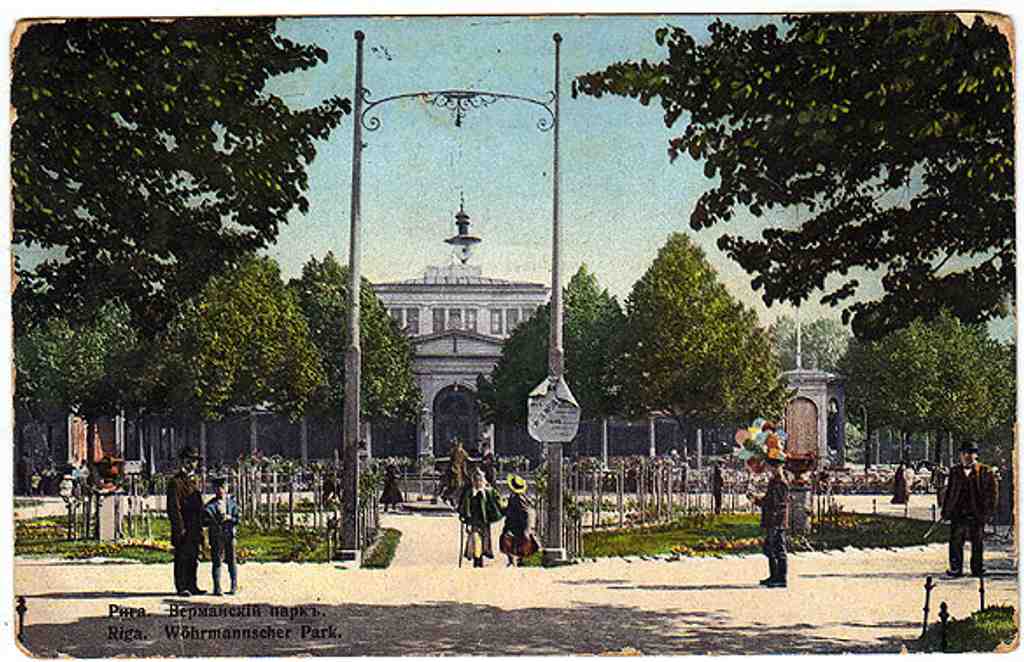
Vērmane GardenPhoto: UnknownUnknown, Wikimedia Commons, Public domain. Cropped & resized. Look for the formal entrance: black wrought-iron gates set between pale stone pillars, marking a broad opening into Riga’s oldest public garden.
Vērmane Garden began in eighteen fourteen as Wöhrmann Park, and it owes its existence to one of Riga’s most painful blunders. In eighteen twelve, Governor General Magnus Gustav von Essen feared Napoleon’s advance and ordered the city’s wooden suburbs burned in a scorched-earth defence - in other words, destroying your own outskirts so an enemy cannot use them. The French army never laid siege to Riga at all. Hundreds of homes disappeared for nothing. When Philip Paulucci replaced von Essen, he inherited ruin, ash, and a city badly in need of healing, so he answered with something unexpectedly humane: a public park.
The land and funding came from Johann Christoph Wöhrmann, the Prussian consul general, and from his mother, Anna Gertrud Wöhrmann. Their family name became Latvian over time, which is how Wöhrmann turned into Vērmane. Anna did more than pay for the garden. In her will, she legally protected this ground for the people of Riga forever, forbidding any private sale or change of purpose. That single act has defended this green space for more than two centuries.
The park opened in eighteen seventeen as a fenced garden of less than one hectare, with exotic trees, a rose garden, and a restaurant. In eighteen twenty-nine, the city raised a granite obelisk to Anna Wöhrmann. Soviet rule later swept it away, but independent Latvia restored it in two thousand.
In eighteen thirty-six, Riga’s chemists and pharmacists opened a mineral water shop in the restaurant. Rather marvellously, that grew into Vērmanītis, one of Riga’s great social venues, and much later the composer Raimonds Pauls reshaped the historic building into Vernisāža, a celebrated place for concerts and balls.
The garden expanded dramatically in eighteen eighty-one, when city parks director Georg Kuphaldt laid out flower parterres - formal patterned beds - and filled the grounds with unusual species, from magnolias and honey locusts to copper beeches. If you fancy a quick comparison, have a look at the before-and-after image in the app; the entrance still feels familiar, even though the city around it has entirely changed. These paths also carry the memory of Riga’s great minds. Wilhelm Ostwald, the Nobel Prize-winning chemist, relaxed here with mineral water; Krišjānis Barons walked here to clear his head while cataloguing Latvian folk songs; and Mikhail Tal, the magician of Riga, sharpened his daring chess style on these benches. In nineteen eighty-eight, this garden became something larger still, hosting mass rallies of the Singing Revolution as thousands demanded Latvia’s sovereignty.
Fittingly, the garden remains open at all hours.
Vērmane Garden shows how a wounded city taught itself to breathe again.
When you are ready, continue on toward the bust of Mikhail Keldysh.
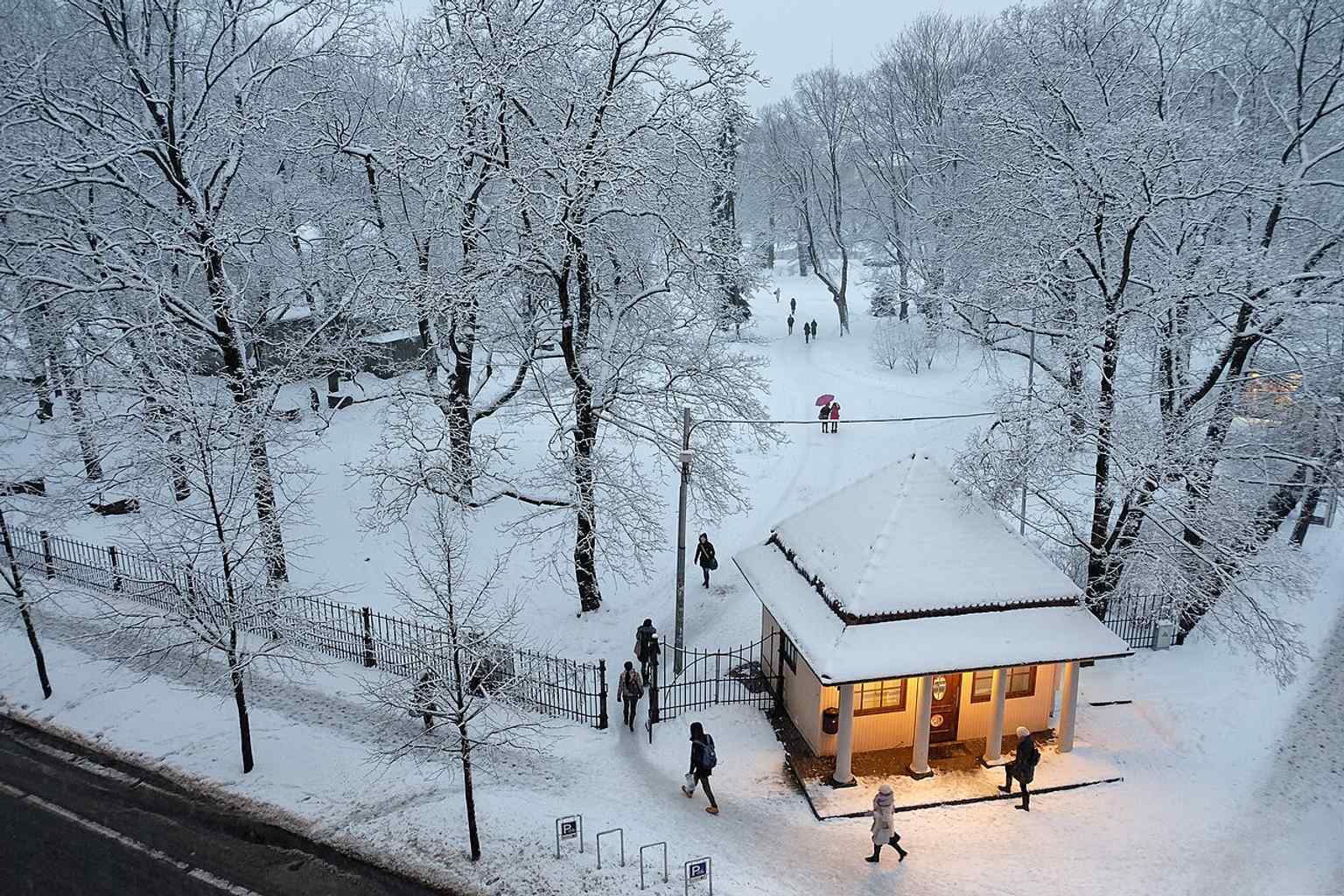
A winter overview of Vērmane Garden shows how the old city park still anchors central Riga, even under snow.Photo: Mārtiņš Bruņenieks, Wikimedia Commons, CC BY-SA 4.0. Cropped & resized. 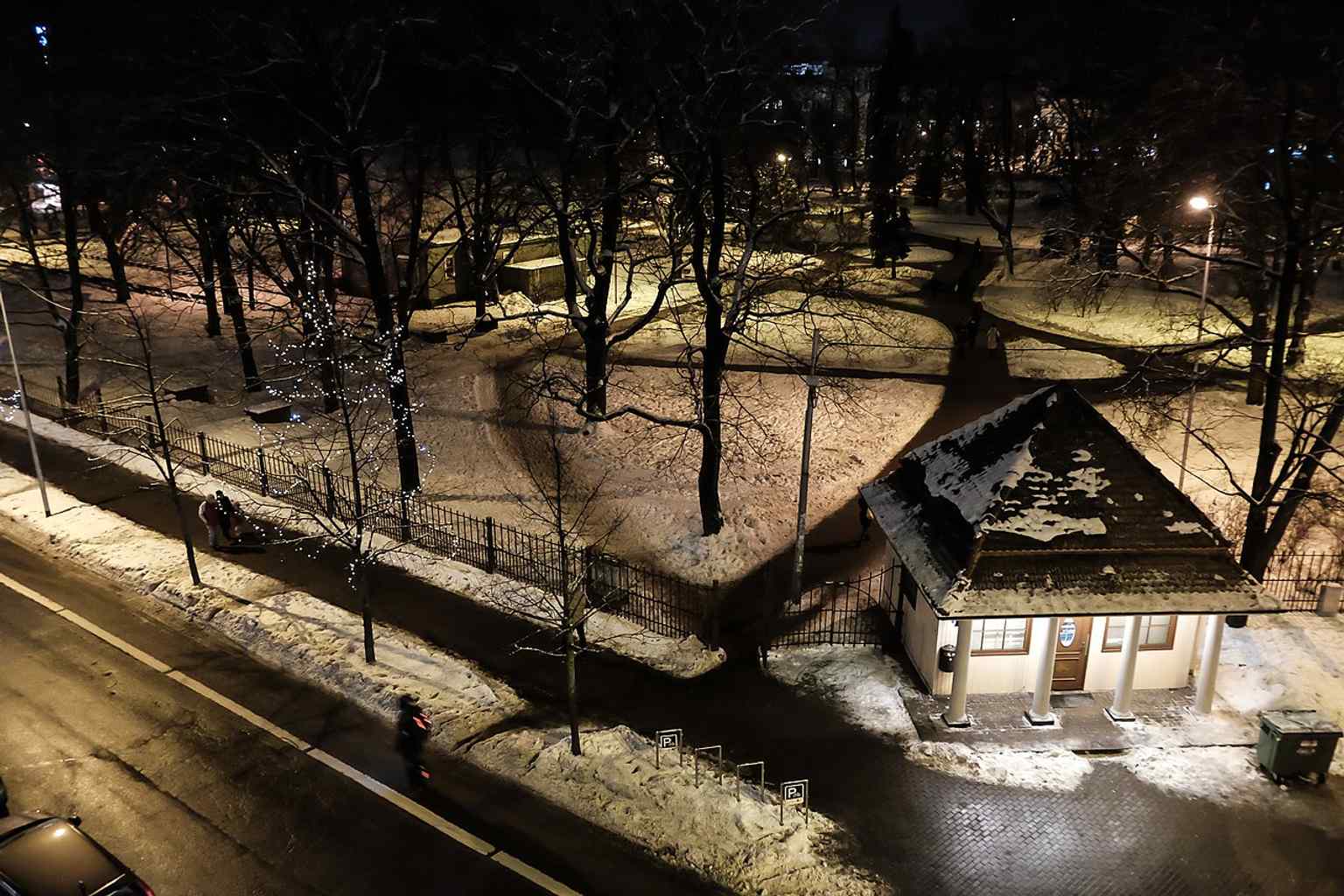
The garden at night, showing the illuminated public park that grew from Wöhrmann Park into a lasting city landmark.Photo: Mārtiņš Bruņenieks, Wikimedia Commons, CC BY-SA 4.0. Cropped & resized. 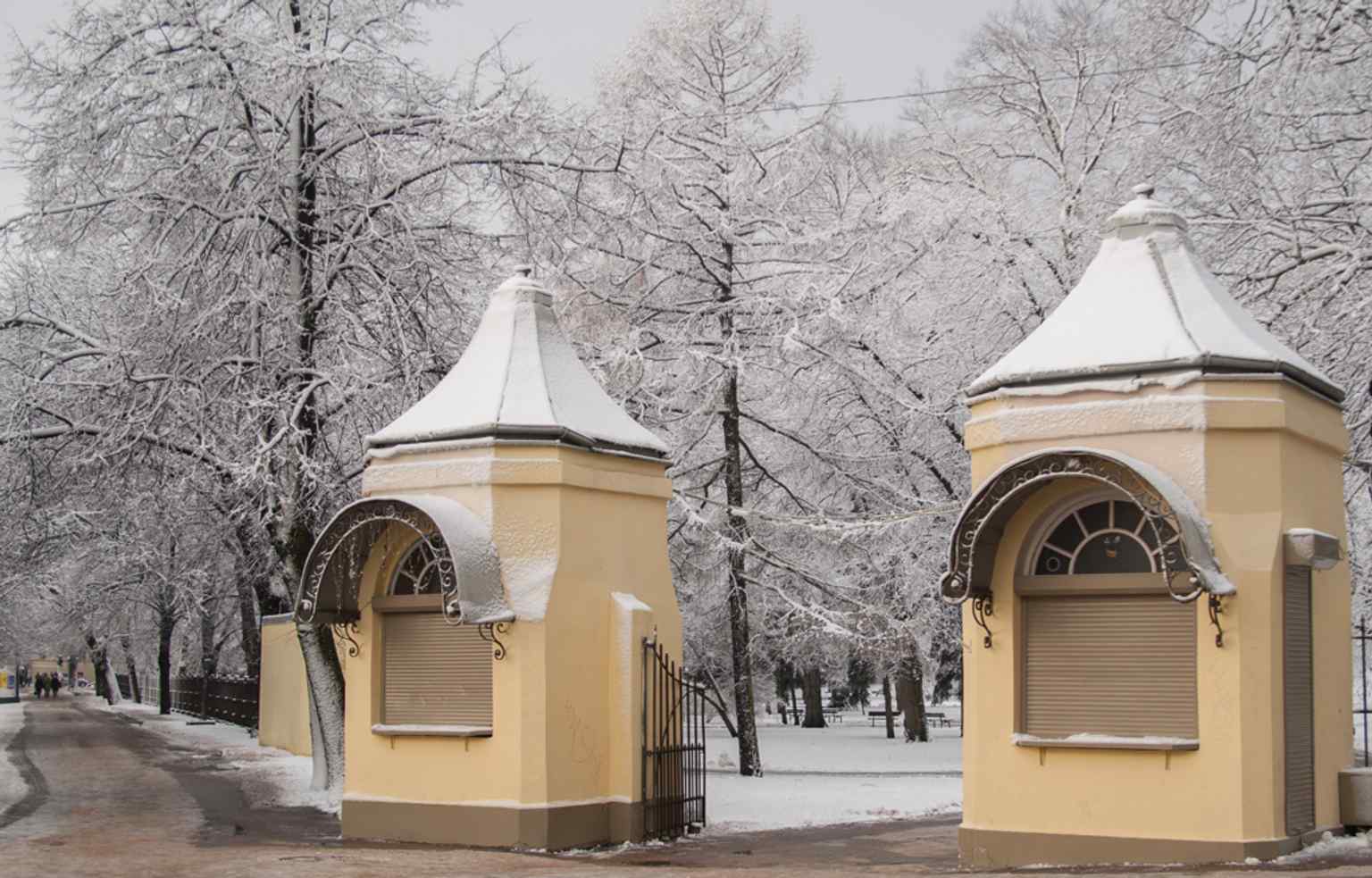
The main entrance in winter, a fitting gateway to Riga’s oldest public garden, founded in 1814.Photo: Zhagatasligzda, Wikimedia Commons, CC BY-SA 4.0. Cropped & resized. 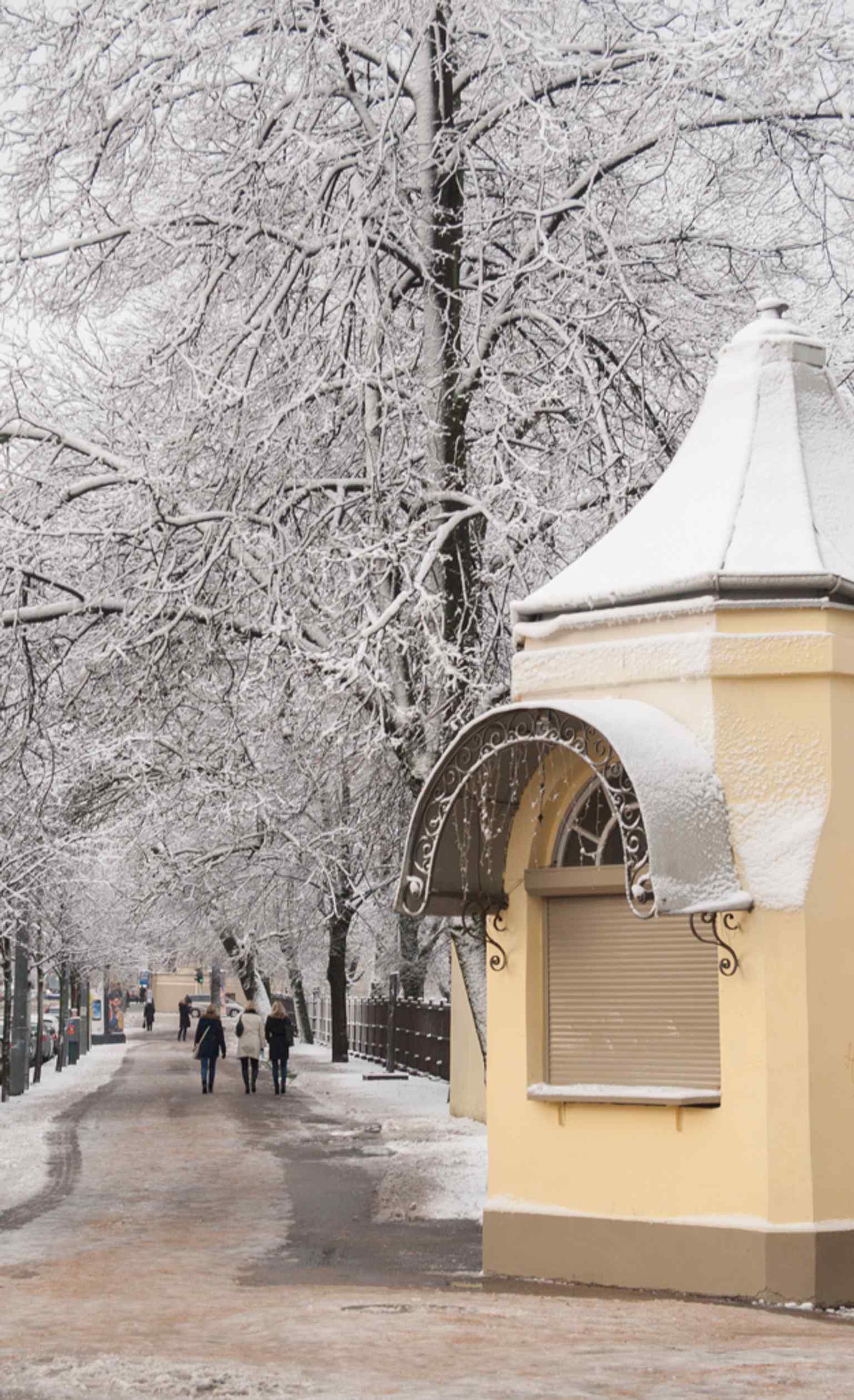
The entrance kiosk gives a close look at the park’s public-facing features and everyday life at Vērmane Garden.Photo: Zhagatasligzda, Wikimedia Commons, CC BY-SA 4.0. Cropped & resized. 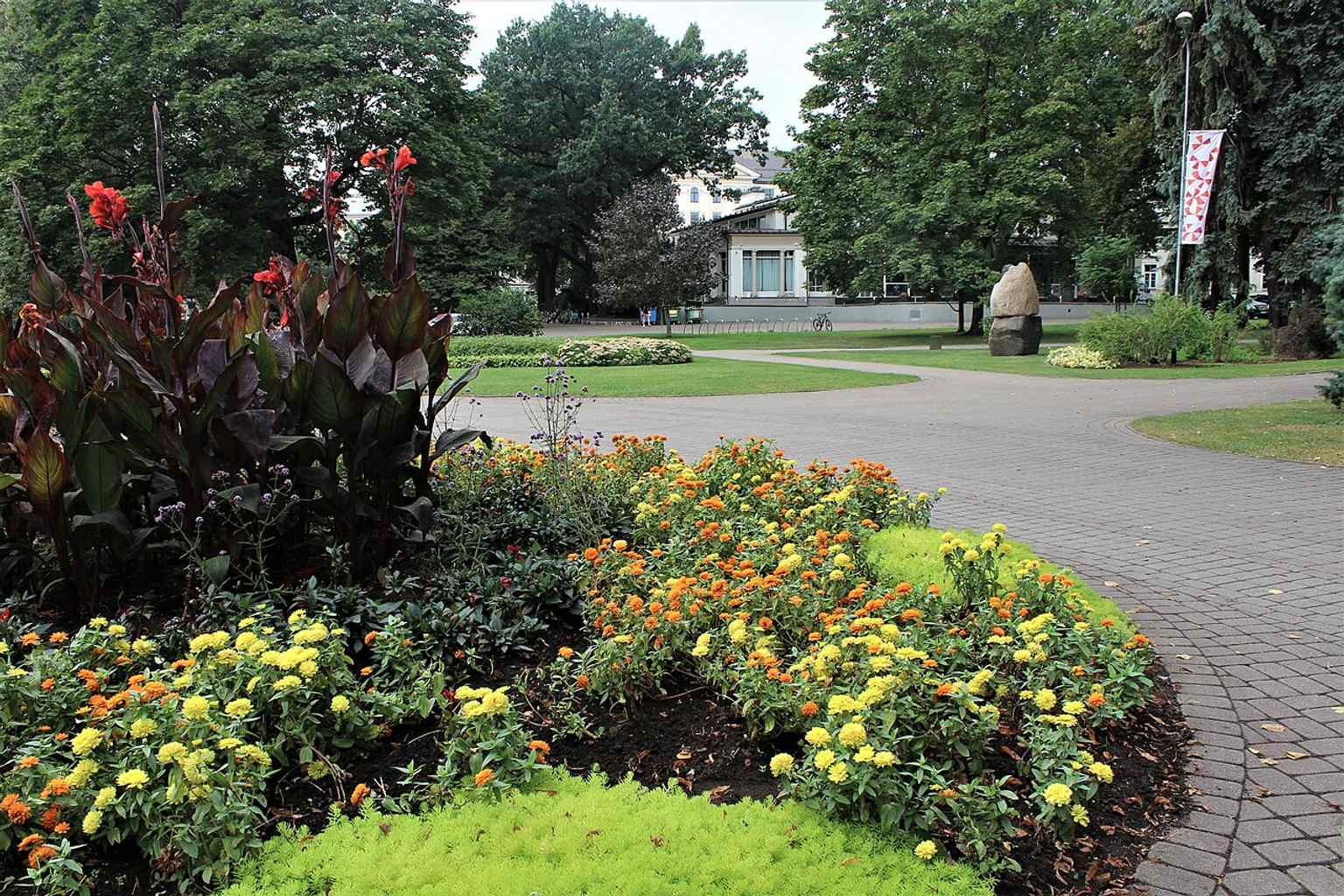
Northern part of the garden with broad paths and mature greenery, reflecting the expanded 19th-century layout.Photo: Egilus, Wikimedia Commons, CC BY-SA 4.0. Cropped & resized. 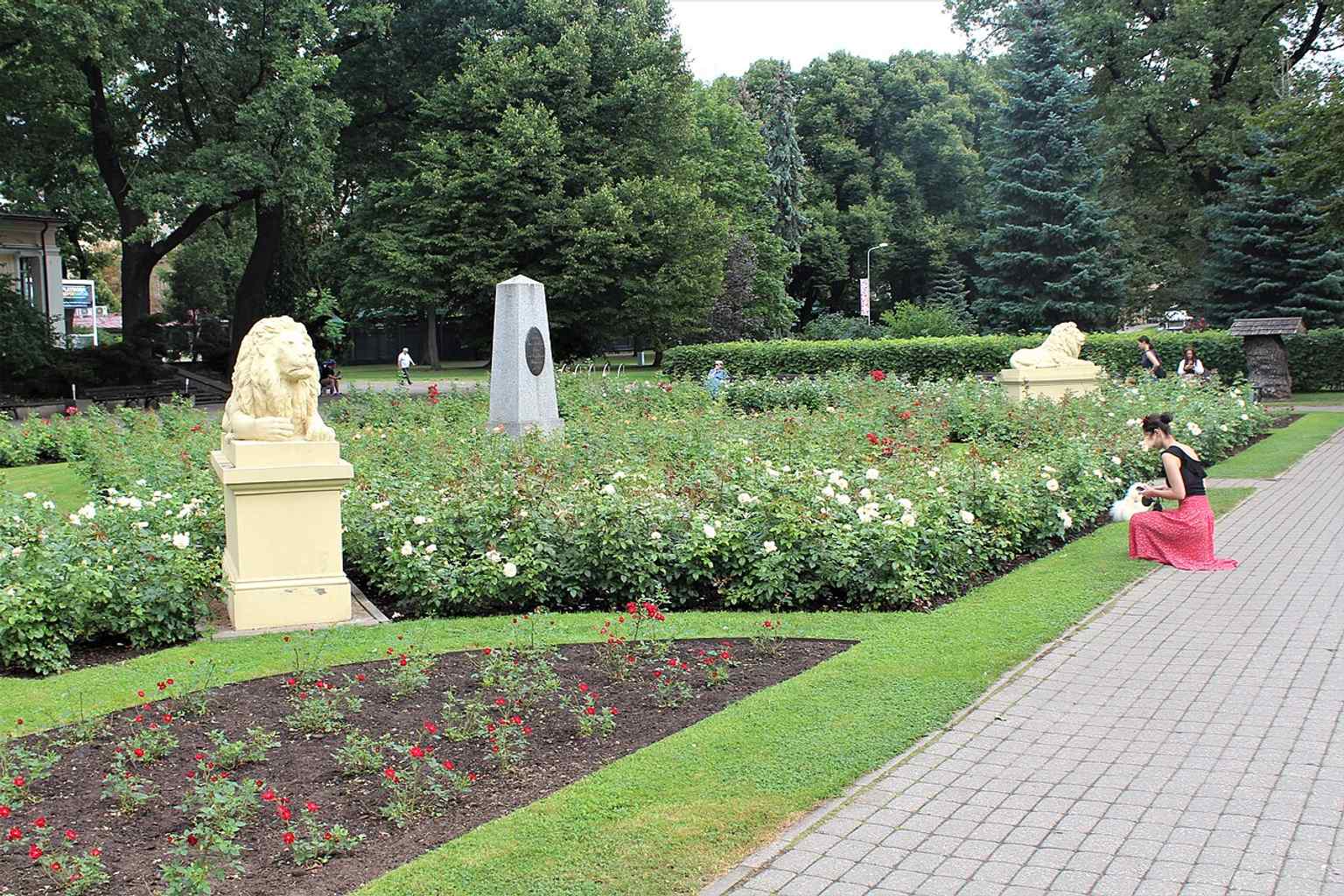
Western part of the garden, where the famous lion sculptures add a historic decorative touch to the promenade.Photo: Egilus, Wikimedia Commons, CC BY-SA 4.0. Cropped & resized. 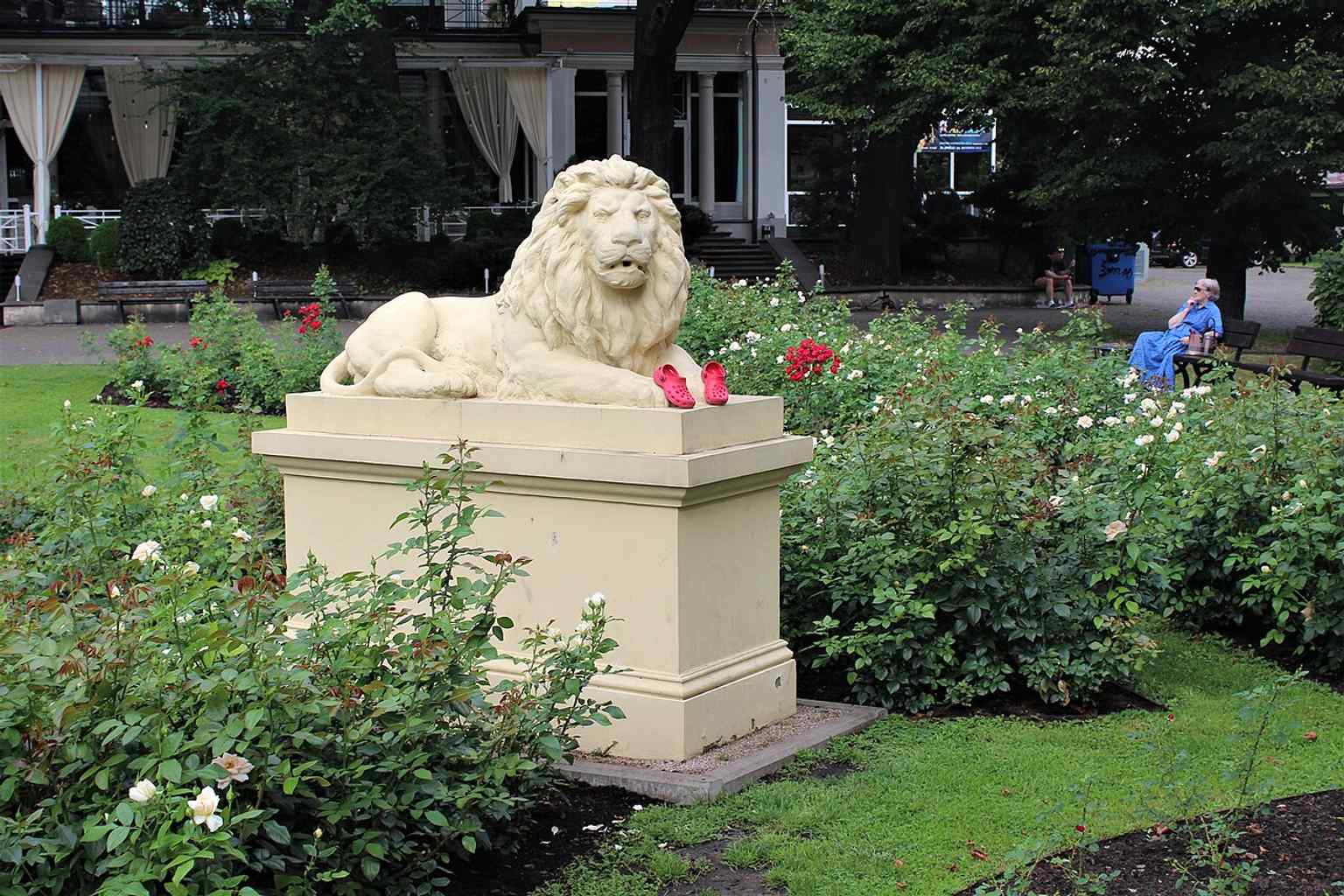
One of the 1884 lion sculptures in the western part, part of the garden’s historic ornamentation.Photo: Egilus, Wikimedia Commons, CC BY-SA 4.0. Cropped & resized. 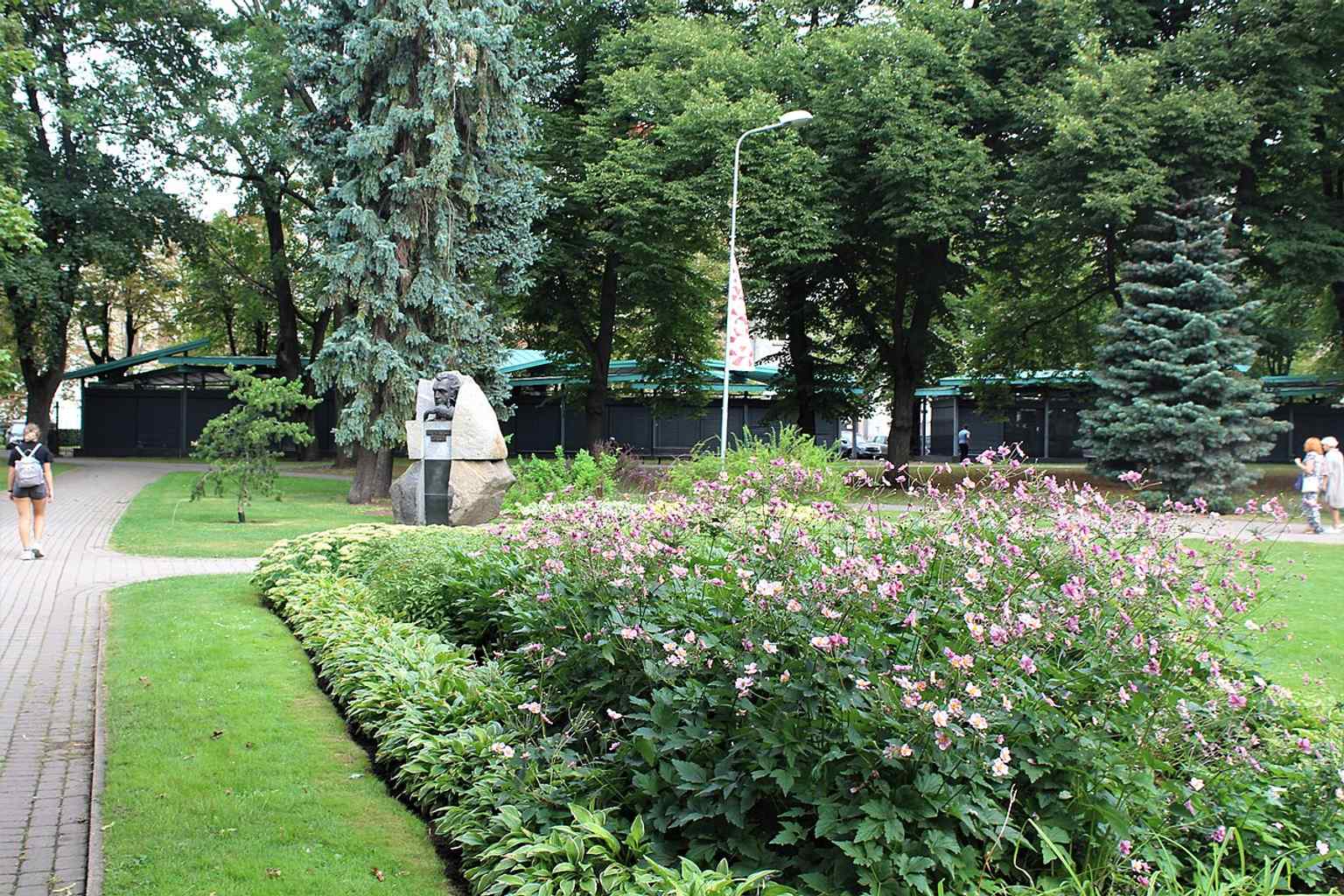
The Mikhail Tal monument appears here, recalling the chess legend who played blitz games in the park.Photo: Egilus, Wikimedia Commons, CC BY-SA 4.0. Cropped & resized. 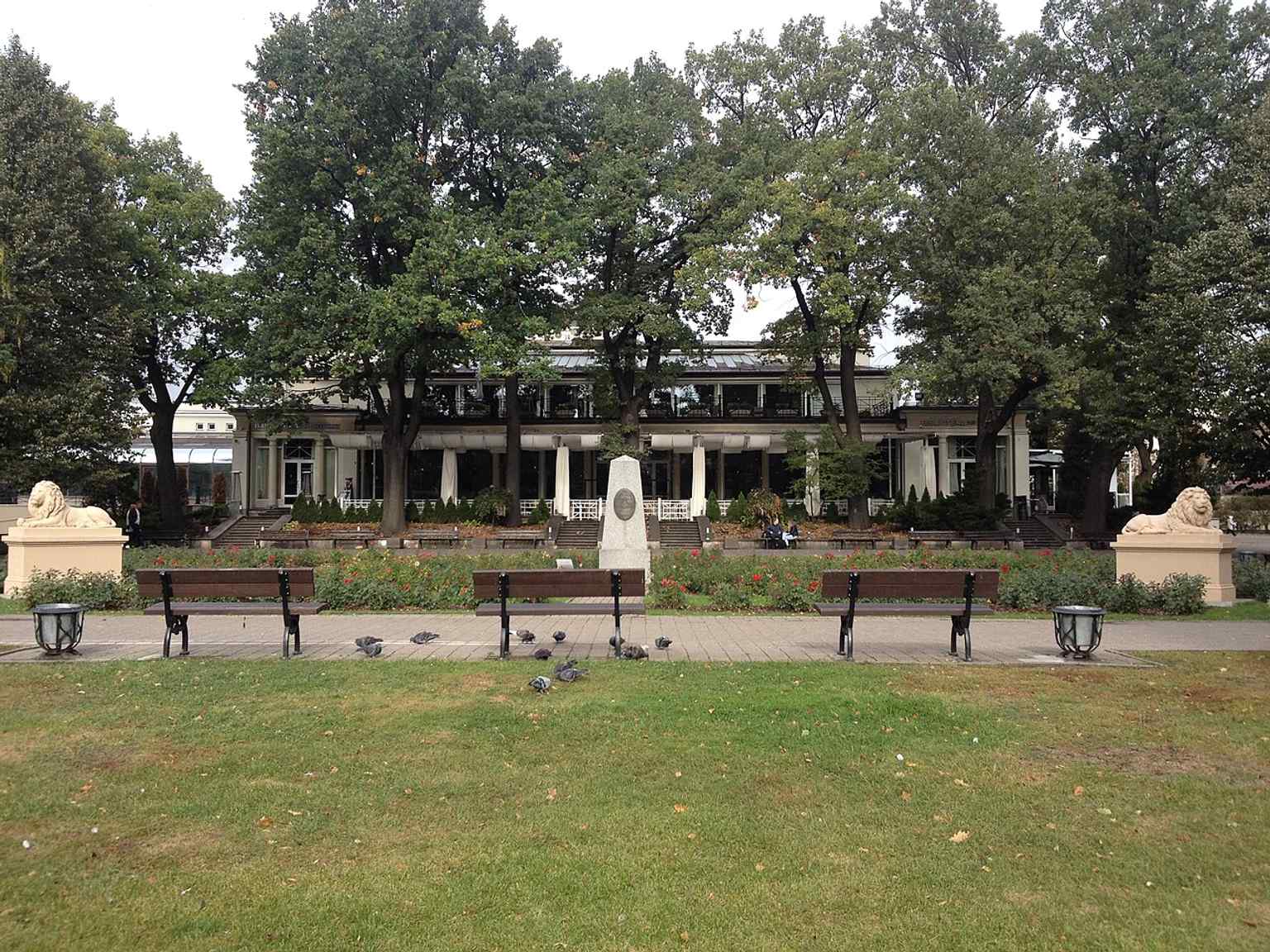
A memorial feature from the park’s monument landscape, echoing the garden’s role as a place of public memory.Photo: Pitadzi, Wikimedia Commons, CC BY-SA 4.0. Cropped & resized. On your left rises a pale travertine column above a stepped red granite base, crowned by a copper woman holding three gilded stars high over Riga. This is the Freedom Monument,…Read moreShow less
Open dedicated page →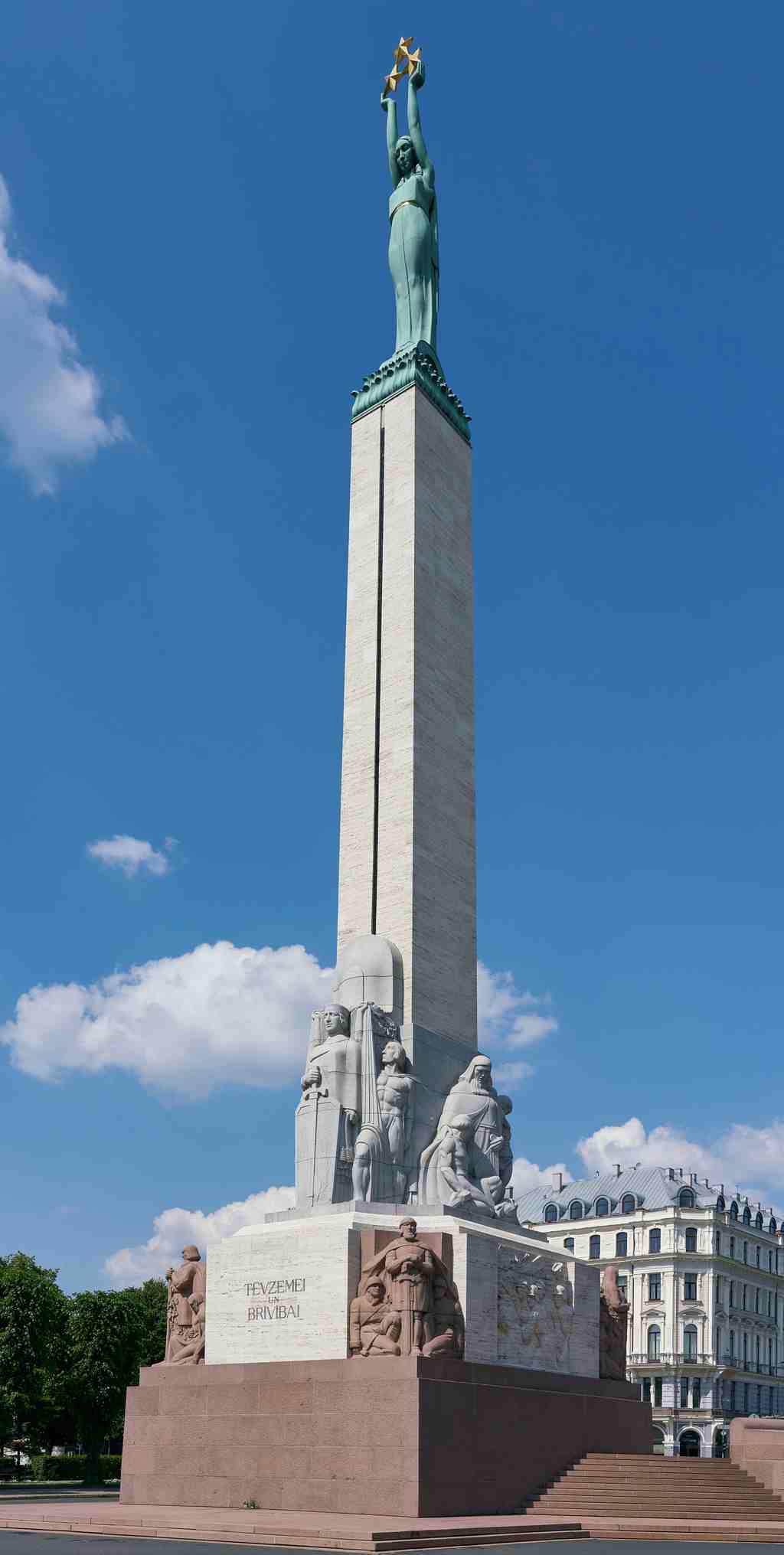
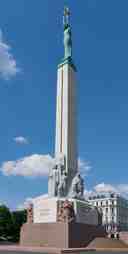
Freedom MonumentPhoto: Virtual-Pano, Wikimedia Commons, CC BY-SA 4.0. Cropped & resized. On your left rises a pale travertine column above a stepped red granite base, crowned by a copper woman holding three gilded stars high over Riga.
This is the Freedom Monument, Latvia’s great civic altar, unveiled in nineteen thirty-five to honour those killed in the War of Independence after the First World War. At forty-two metres tall, it is not merely a memorial; it is a statement of survival. The sculptor Kārlis Zāle designed it after years of competitions and arguments, under the stirring title “Shine like a star.” Latvians paid for it themselves through private donations, which tells you rather a lot about how deeply they wanted this place.
If you look at the monument as a whole, you can see how carefully Zāle built its message. The stacked forms grow narrower as they climb, drawing your eye upward to Liberty herself. Around the base are thirteen groups of sculptures and shallow relief carvings telling the Latvian story through workers, soldiers, family, learning, myth and struggle. On the front, the central inscription reads, “For Fatherland and Freedom.” Nearby, one group shows labour: a fisherman, a craftsman, and a farmer with a scythe. Another brings ancient and modern defenders together. Elsewhere you find Chain Breakers straining against oppression, and Lāčplēsis, the legendary Bear-Slayer of Latvian folklore.
The figure at the top is affectionately called Milda. She lifts three stars for Latvia’s historic regions: Vidzeme, Latgale, and Courland. If you’d like a closer look at her face and the stars, glance at the app image now. There is even a persistent story that a Lithuanian woman living in Riga served as her model, though historians have never found firm proof. The nickname stayed anyway, and sometimes that is how national symbols work: fact steps aside, affection takes over.
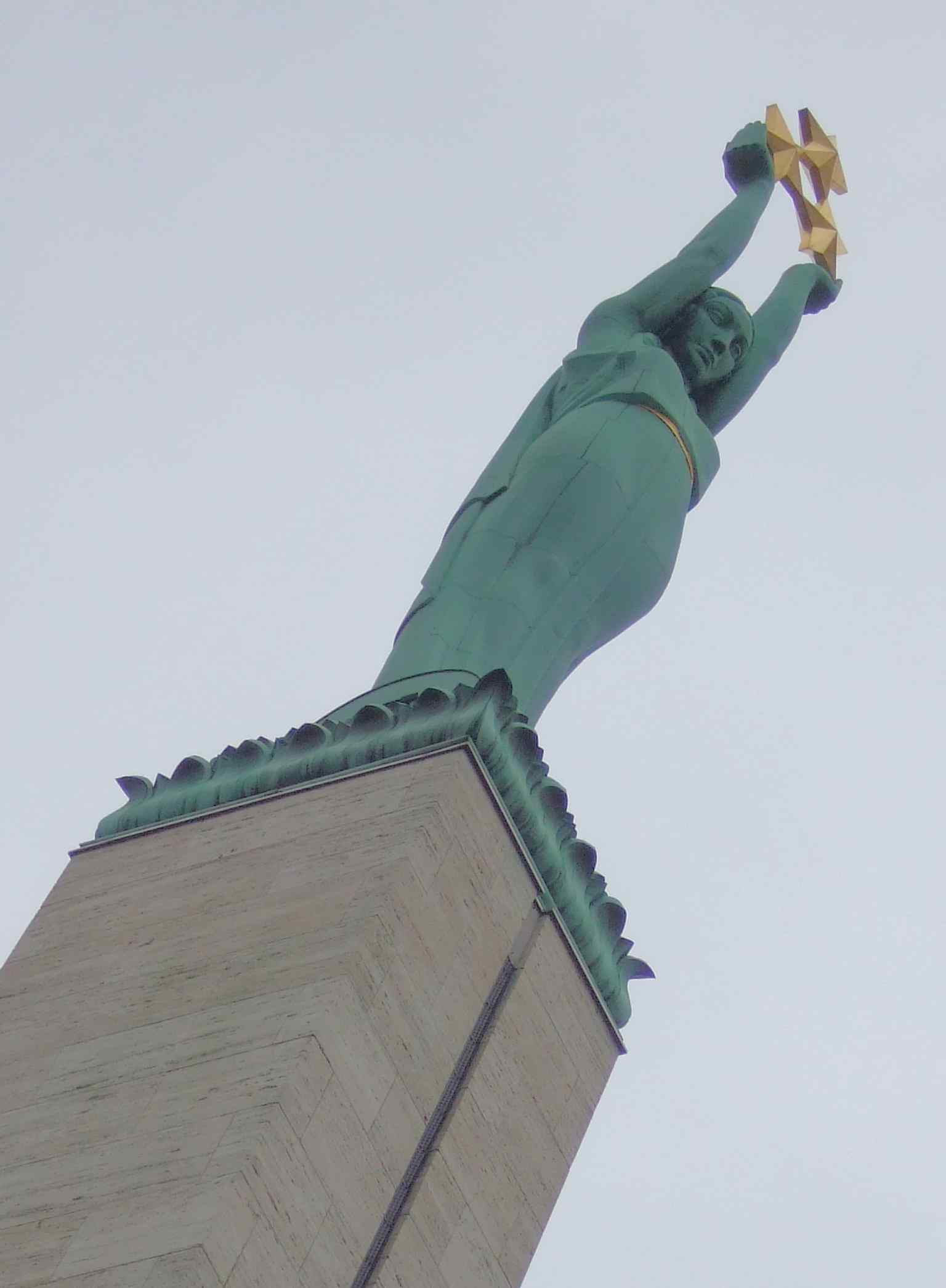
The copper figure of Liberty, affectionately called Milda, holding the three gilded stars that symbolize Latvia’s historic regions.Photo: Peters J. Vecrumba, Wikimedia Commons, CC BY 3.0. Cropped & resized. This monument stood through the Soviet occupation when it might easily have vanished. Officials discussed demolition more than once. One account credits the sculptor Vera Mukhina, herself born in Riga, with arguing that the monument had exceptional artistic value and that destroying it would wound the Latvian people. The authorities left it standing, but tried to twist its meaning. Locals were not fooled. Laying flowers here became an act of quiet defiance, so risky that people joked this was a “travel agency” offering a one-way ticket to Siberia.
Then, on the fourteenth of June, nineteen eighty-seven, about five thousand people gathered here to lay flowers for victims of Soviet deportations. That act helped revive Latvia’s independence movement. If you like, check the before-and-after image in the app; it captures how this place changed from a wartime backdrop in nineteen forty-one into the restored heart of an independent capital. So this monument is not frozen stone at all; it is memory standing upright. You can return whenever you wish.
When you are ready, continue on toward the Monument to Rūdolfs Blaumanis.
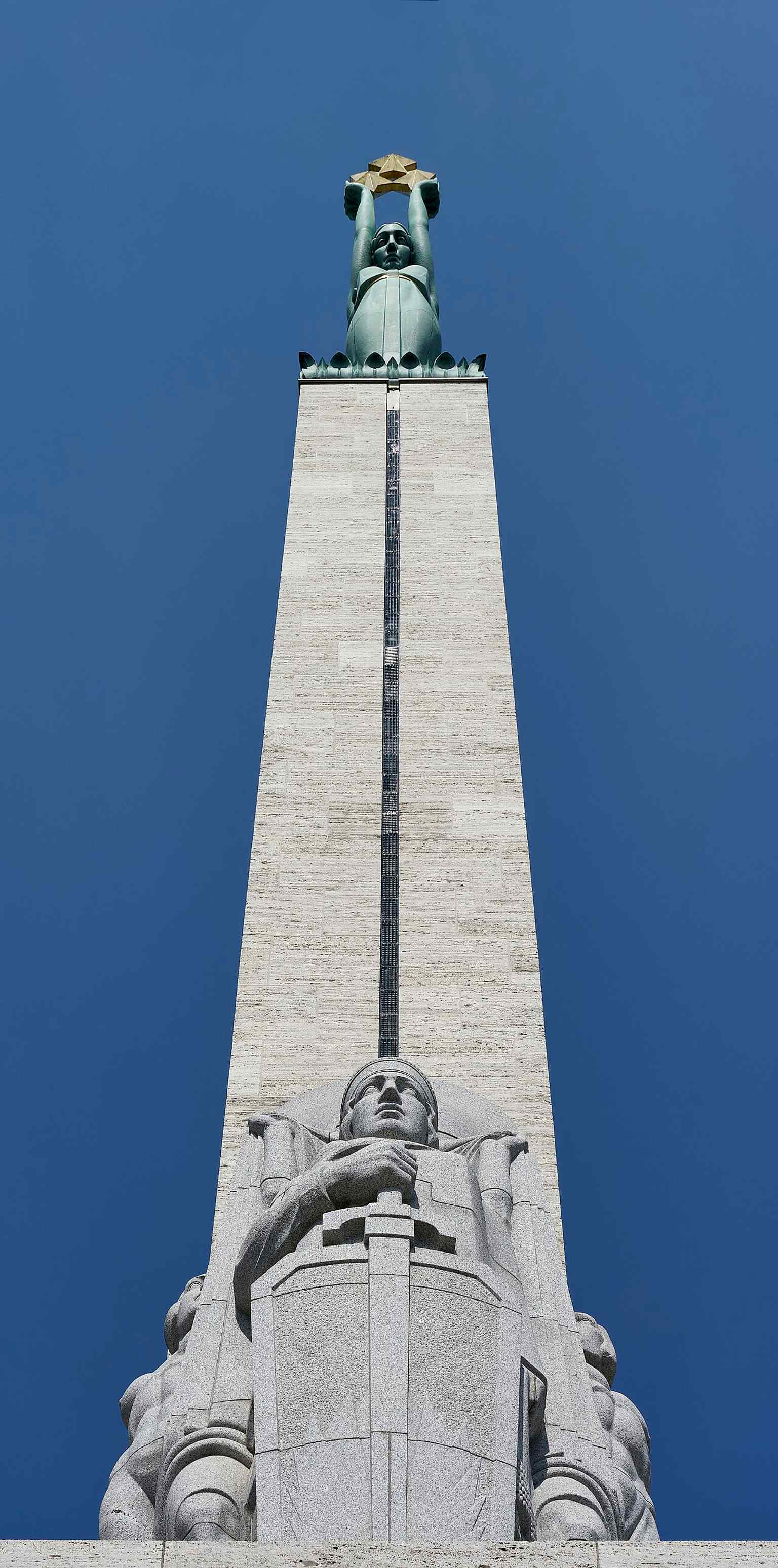
Full frontal view of the Freedom Monument, the 42-meter symbol of Latvian independence and a focal point for national ceremonies in central Riga.Photo: Virtual-Pano, Wikimedia Commons, CC BY-SA 4.0. Cropped & resized. 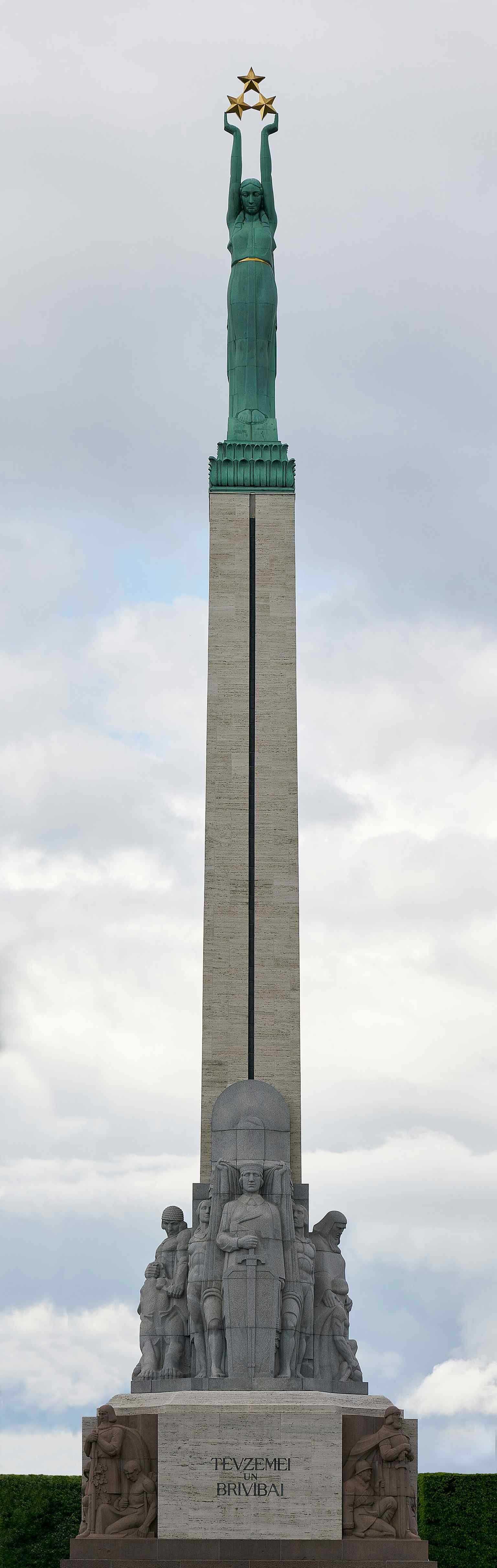
A full-height side view showing the monument’s stepped granite base and tall travertine column topped by Liberty and the three stars.Photo: Virtual-Pano, Wikimedia Commons, CC BY-SA 4.0. Cropped & resized. 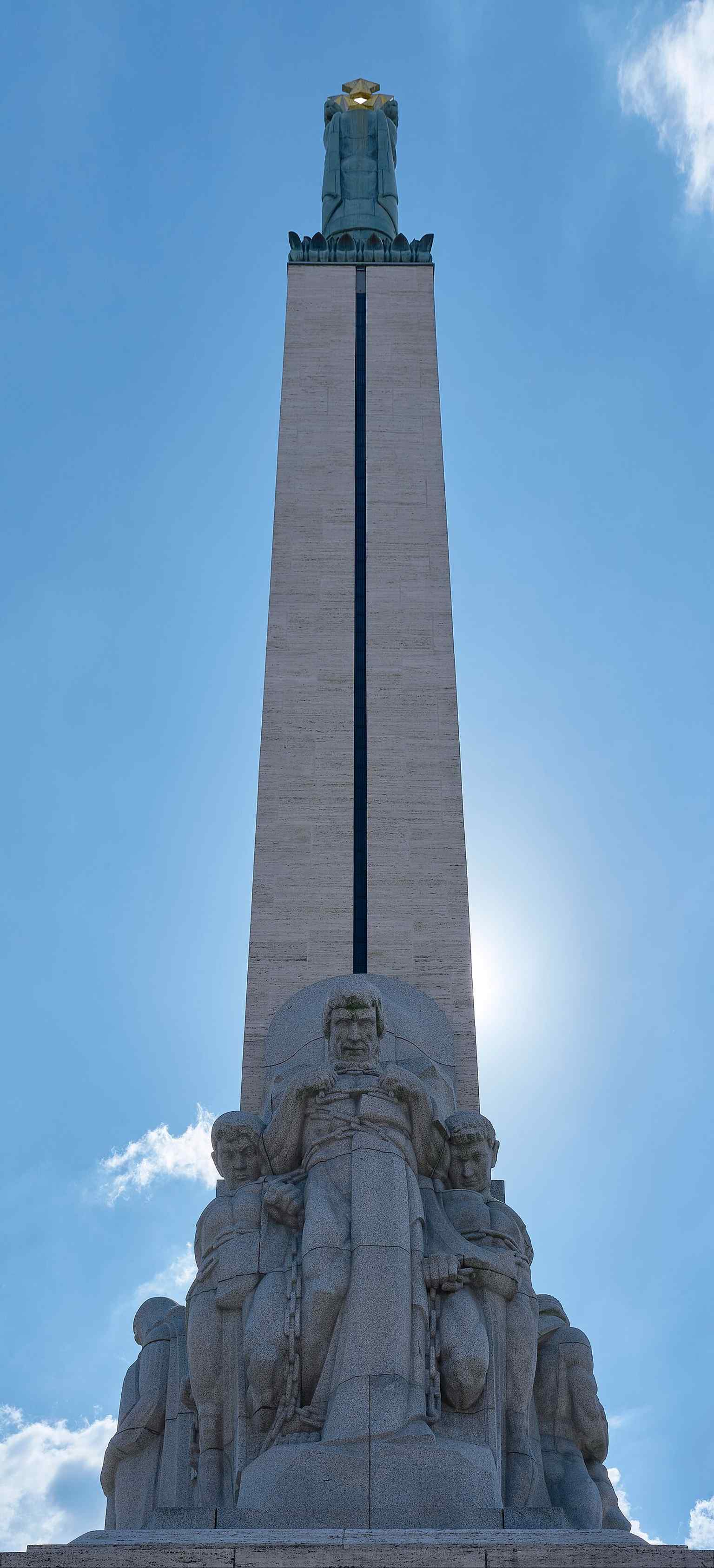
A back-side view that helps show the monument’s layered structure and the sculptural groups that surround its base.Photo: Virtual-Pano, Wikimedia Commons, CC BY-SA 4.0. Cropped & resized. 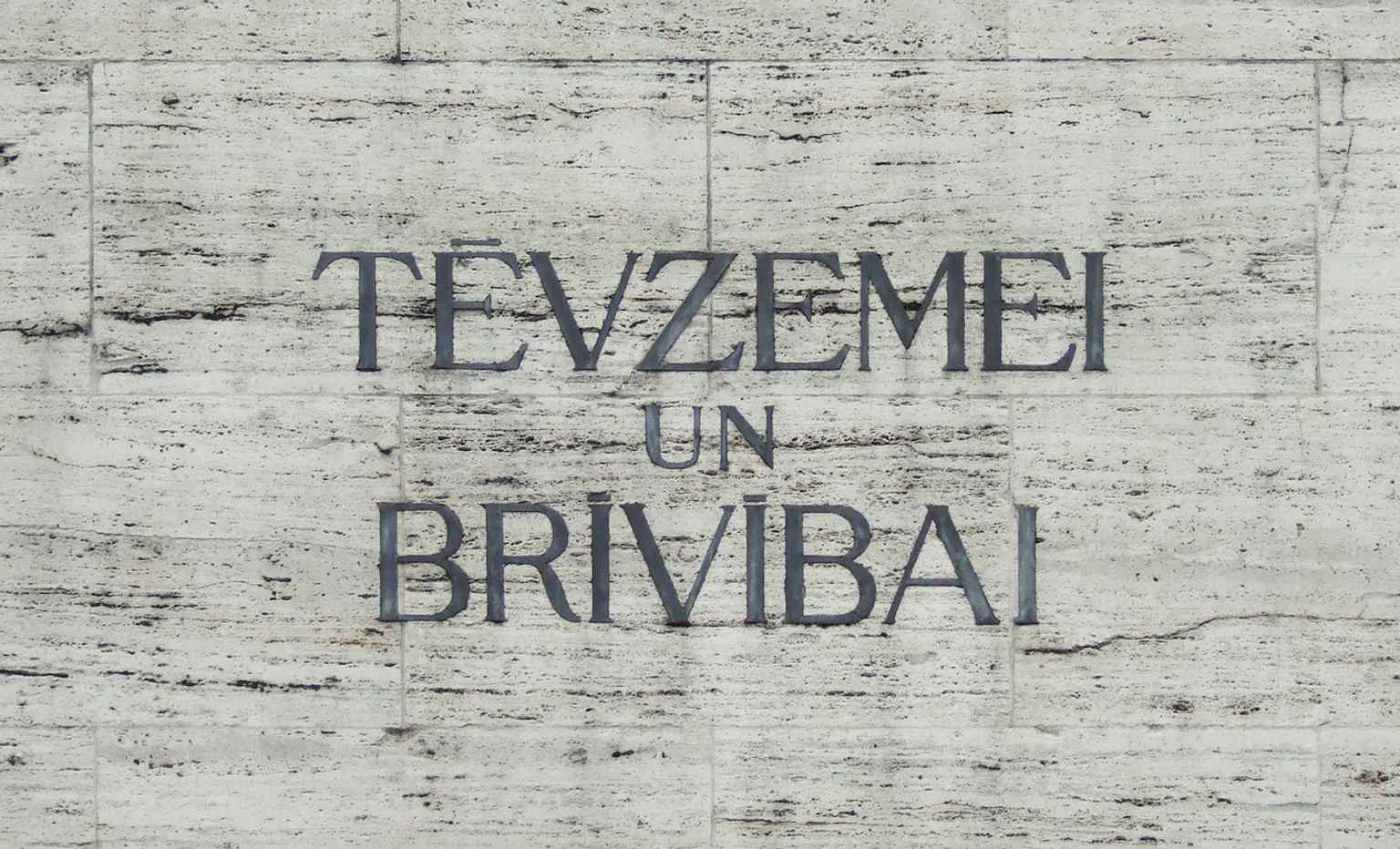
The inscription ‘For Fatherland and Freedom’ by Kārlis Skalbe, placed on the front of the monument as its core dedication.Photo: Peters J. Vecrumba, Wikimedia Commons, CC BY 3.0. Cropped & resized. 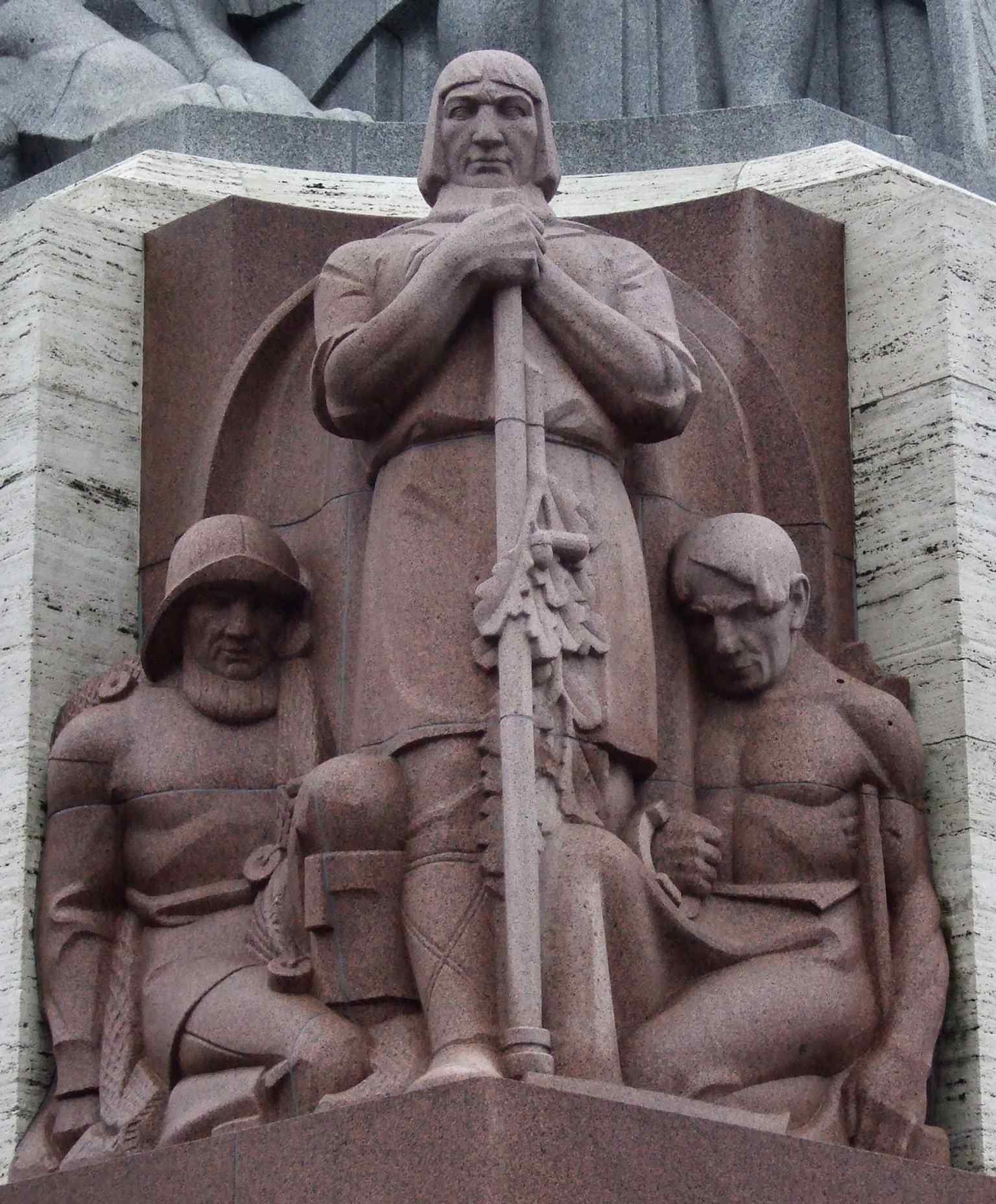
The ‘Work’ sculptural group, one of the monument’s 13 groups, representing Latvian labor and rural strength.Photo: Peters J. Vecrumba, Wikimedia Commons, CC BY 3.0. Cropped & resized. 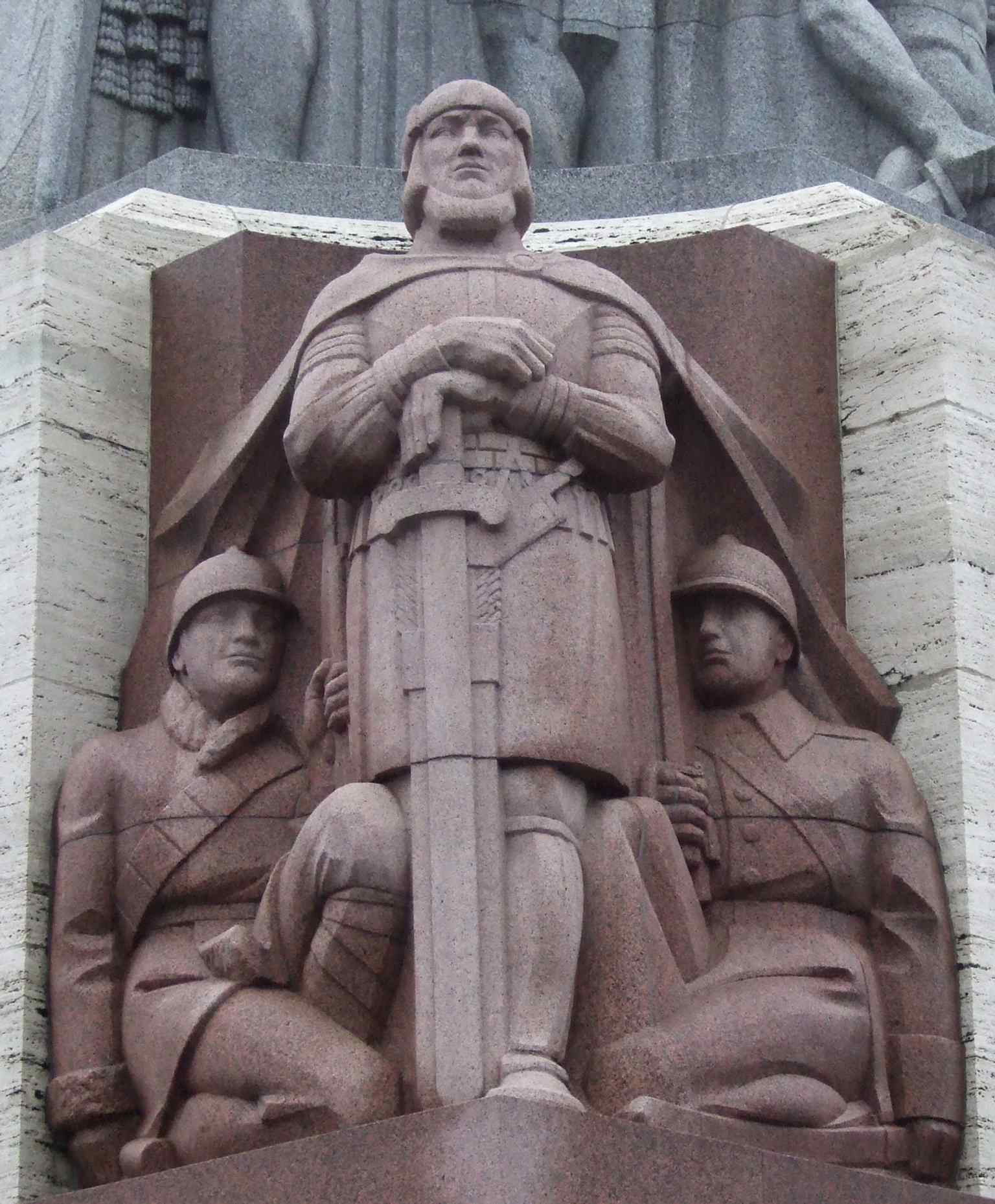
‘Guards of the Fatherland’ depicts ancient and modern defenders together, linking Latvian history to the monument’s war memorial purpose.Photo: Peters J. Vecrumba, Wikimedia Commons, CC BY 3.0. Cropped & resized. 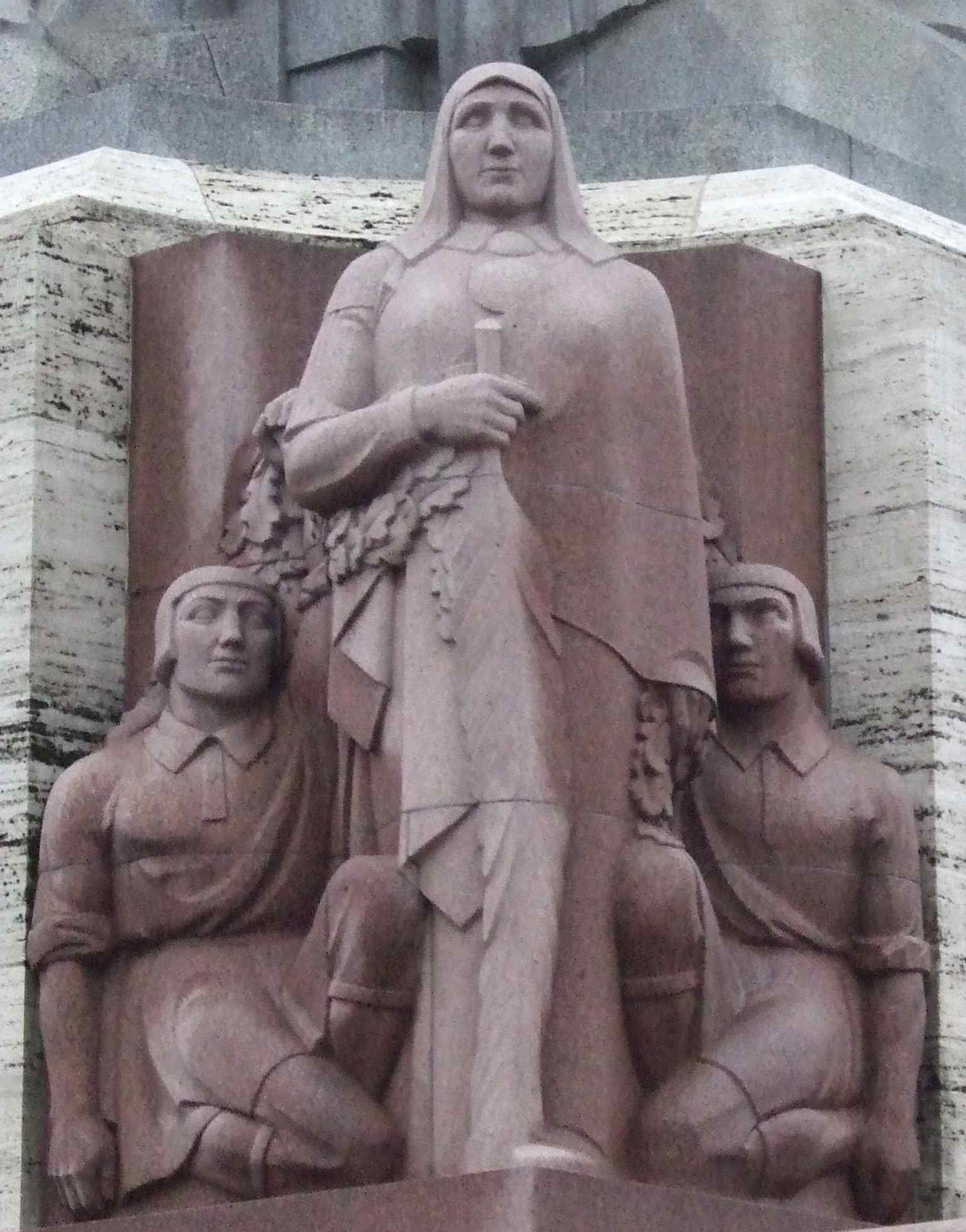
The ‘Family’ group shows a mother with her children, part of the monument’s wider story about Latvian people and culture.Photo: Peters J. Vecrumba, Wikimedia Commons, CC BY 3.0. Cropped & resized. 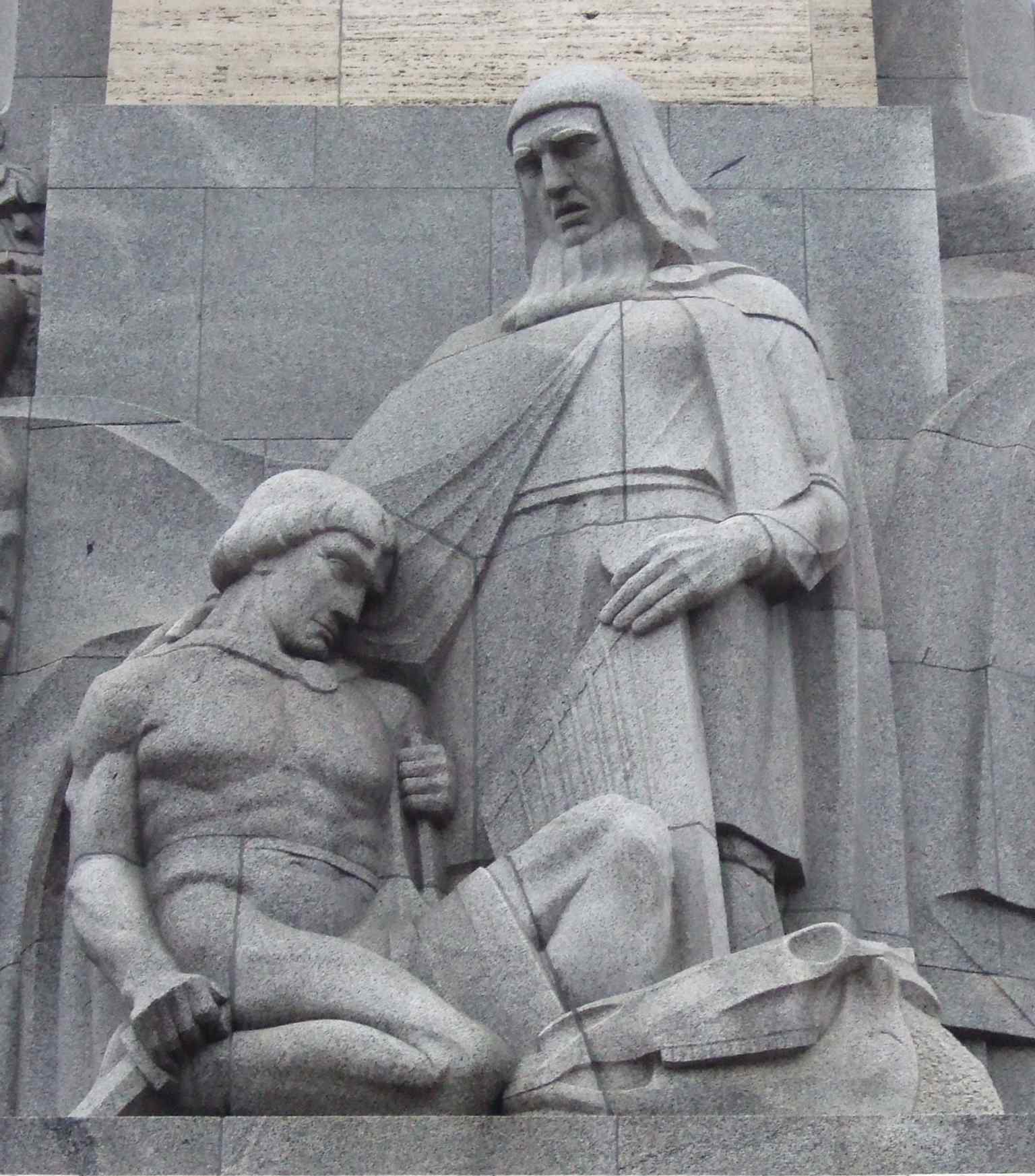
The ‘Vaidelotis’ figure group, reflecting the monument’s use of historical and mythic imagery drawn from Latvian identity.Photo: Peters J. Vecrumba, Wikimedia Commons, CC BY 3.0. Cropped & resized. 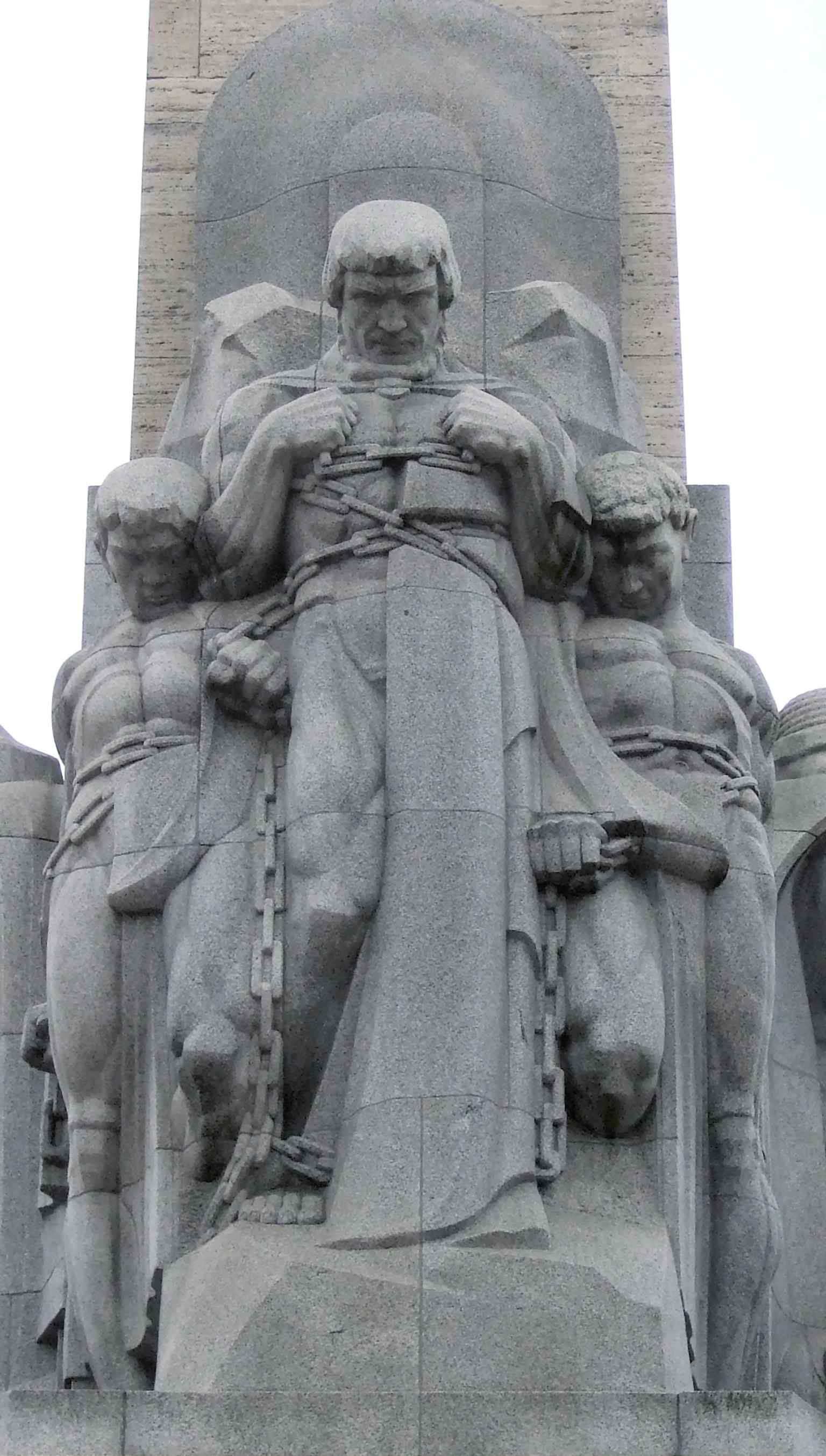
The ‘Chain Breakers’ sculpture captures the theme of breaking free from oppression, central to the monument’s symbolism.Photo: Peters J. Vecrumba, Wikimedia Commons, CC BY 3.0. Cropped & resized. 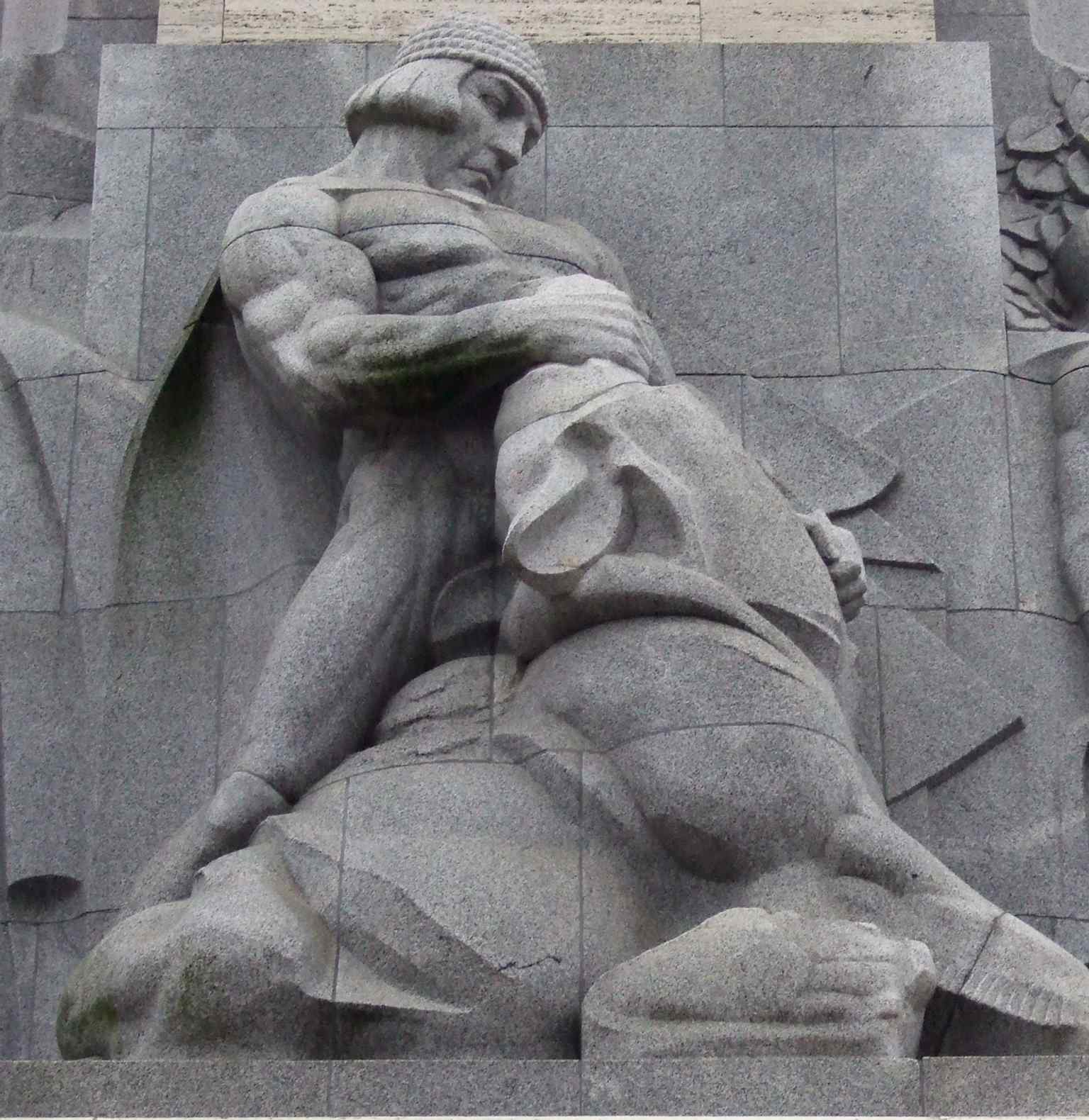
Lāčplēsis, the legendary Bear-Slayer, appears as one of the monument’s grey sculpture groups honoring Latvian heroic tradition.Photo: Peters J. Vecrumba, Wikimedia Commons, CC BY 3.0. Cropped & resized. 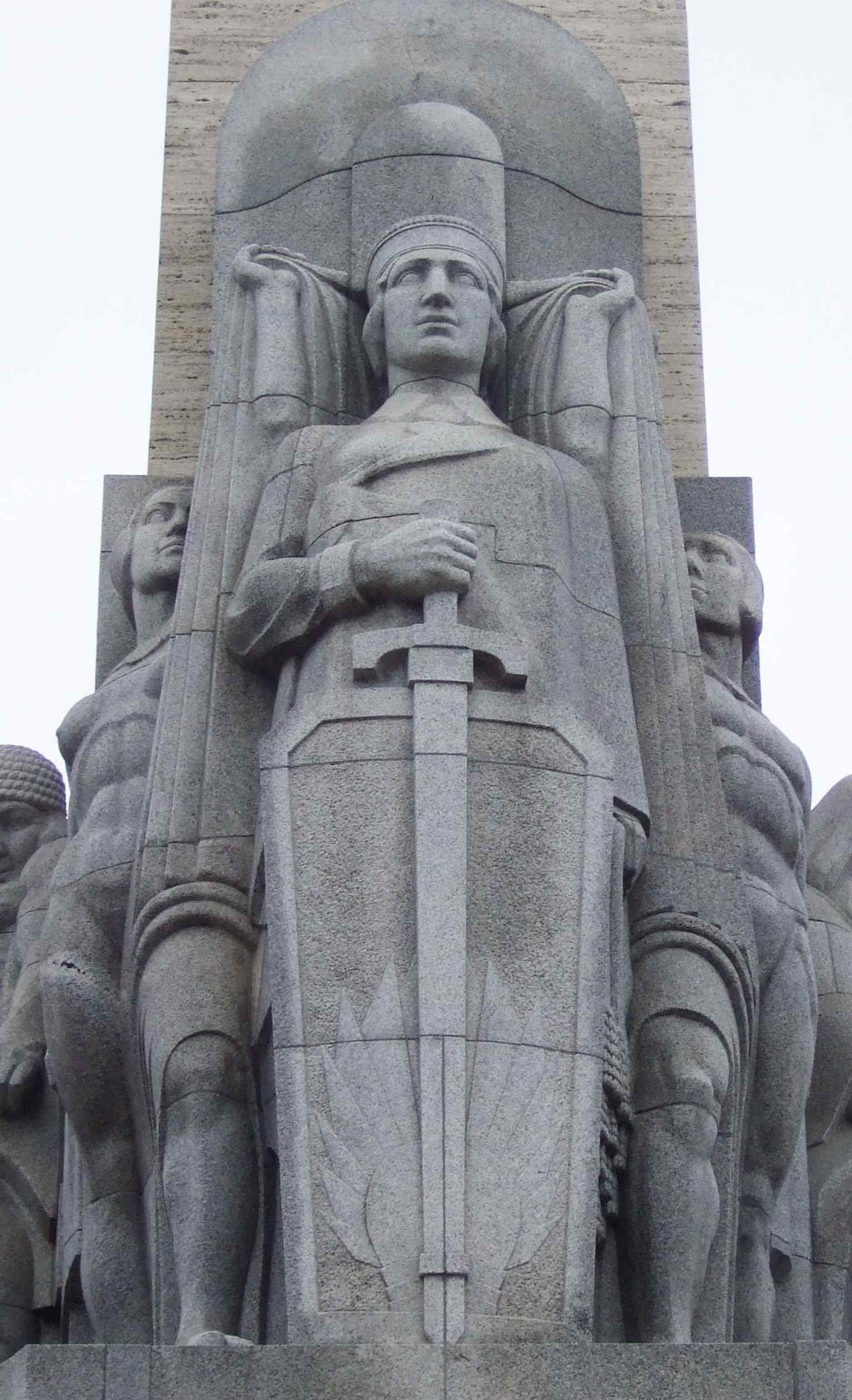
The ‘Latvia’ figure group at the base ties the monument to the nation itself and its post-independence identity.Photo: Peters J. Vecrumba, Wikimedia Commons, CC BY 3.0. Cropped & resized. 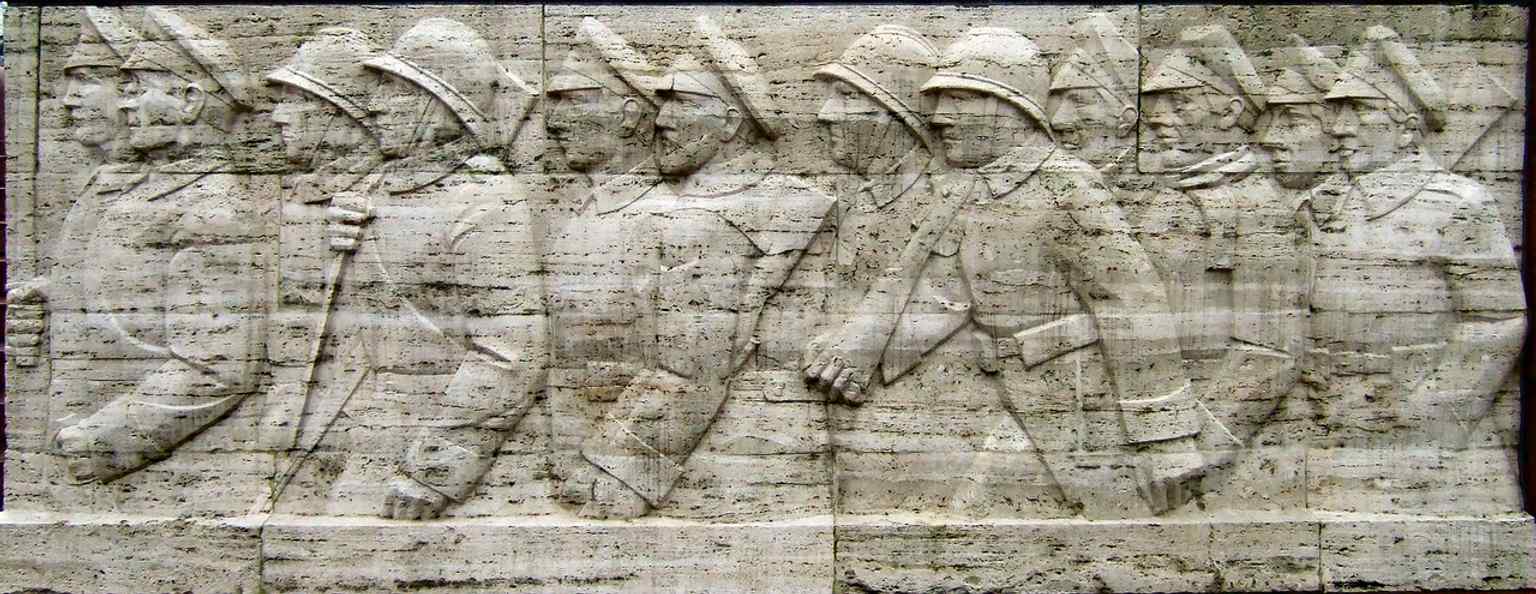
The ‘Latvian Riflemen’ relief is one of the monument’s key historical panels, commemorating the struggle that led to independence.Photo: Peters J. Vecrumba, Wikimedia Commons, CC BY 3.0. Cropped & resized. 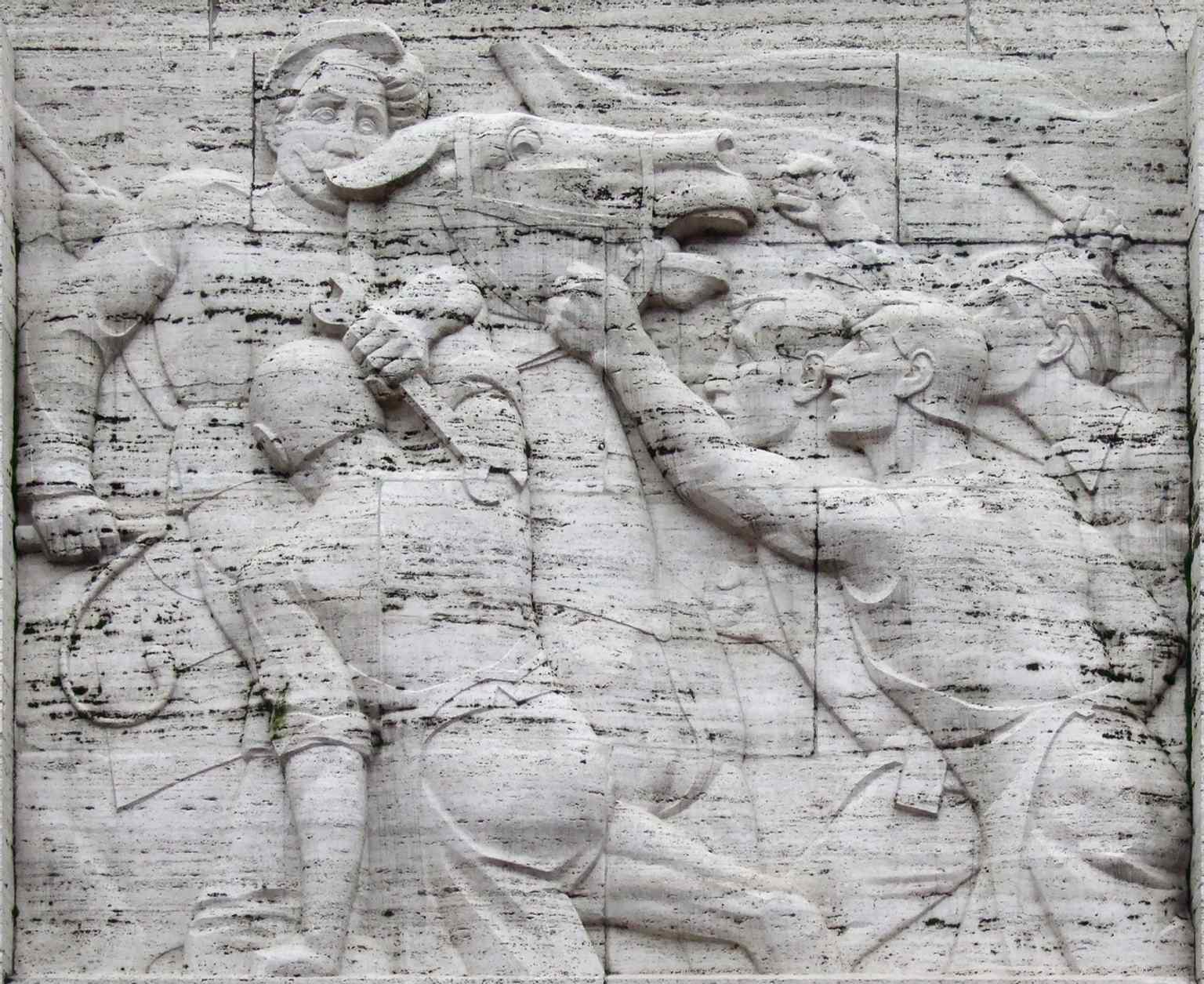
The ‘1905’ relief connects the monument to Latvia’s earlier revolutionary history and long fight for self-determination.Photo: Peters J. Vecrumba, Wikimedia Commons, CC BY 3.0. Cropped & resized. 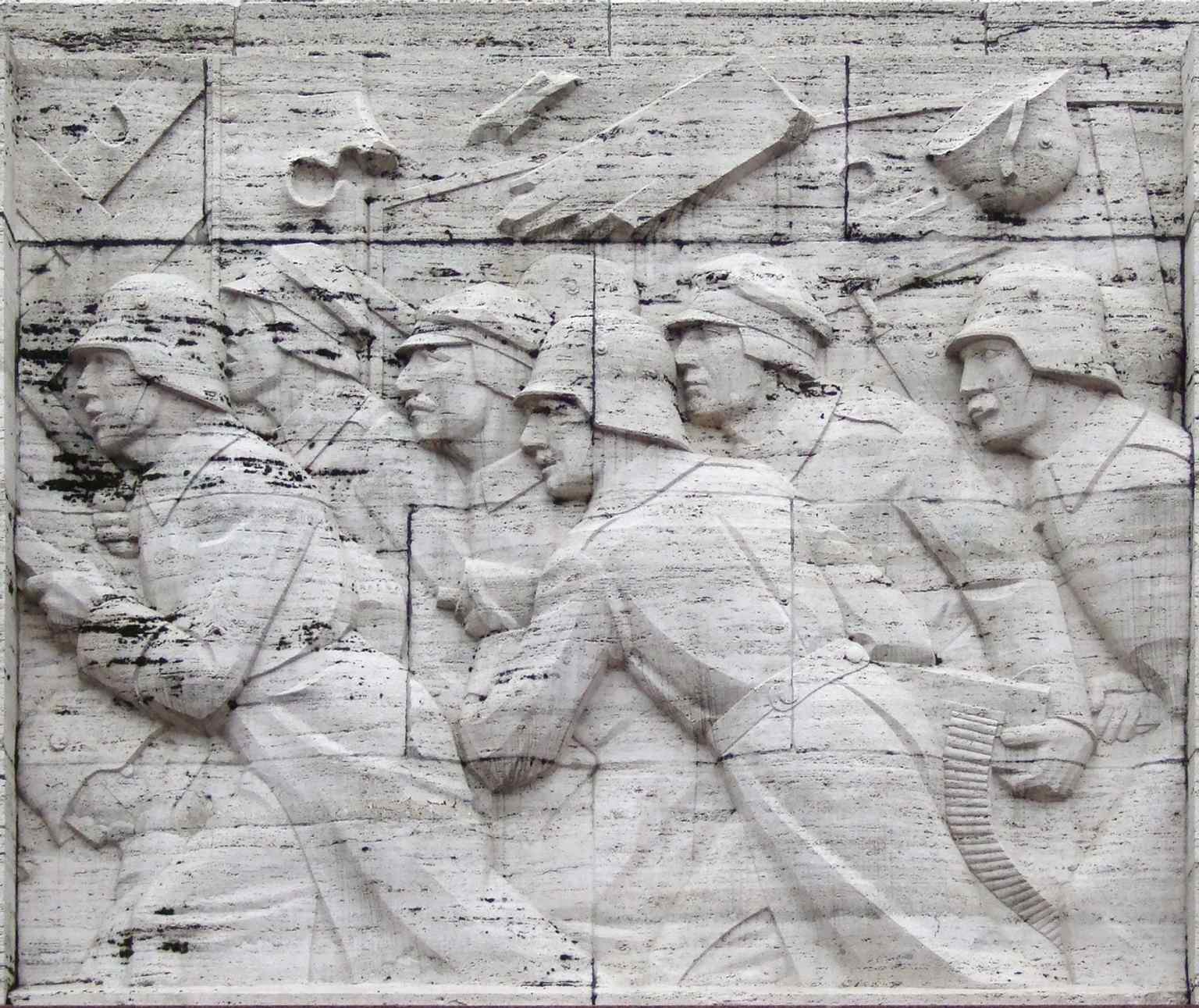
The relief showing the battle against Bermont’s forces recalls a decisive moment in the Latvian War of Independence.Photo: Peters J. Vecrumba, Wikimedia Commons, CC BY 3.0. Cropped & resized. 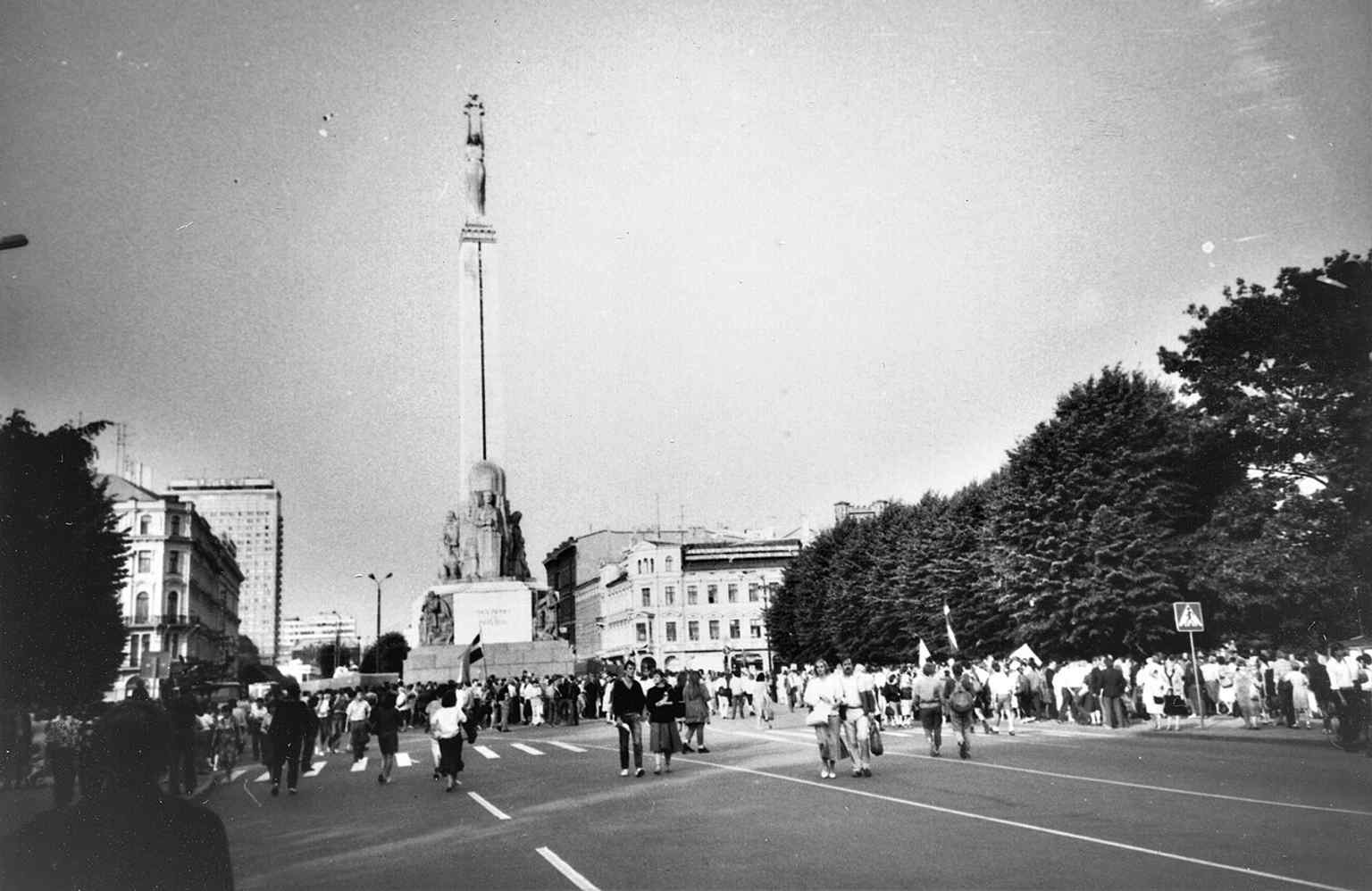
The Baltic Way gathering near the monument in 1989, when crowds turned this site into a powerful symbol of the independence movement.Photo: Unknown authorUnknown author, Wikimedia Commons, CC BY-SA 4.0. Cropped & resized. 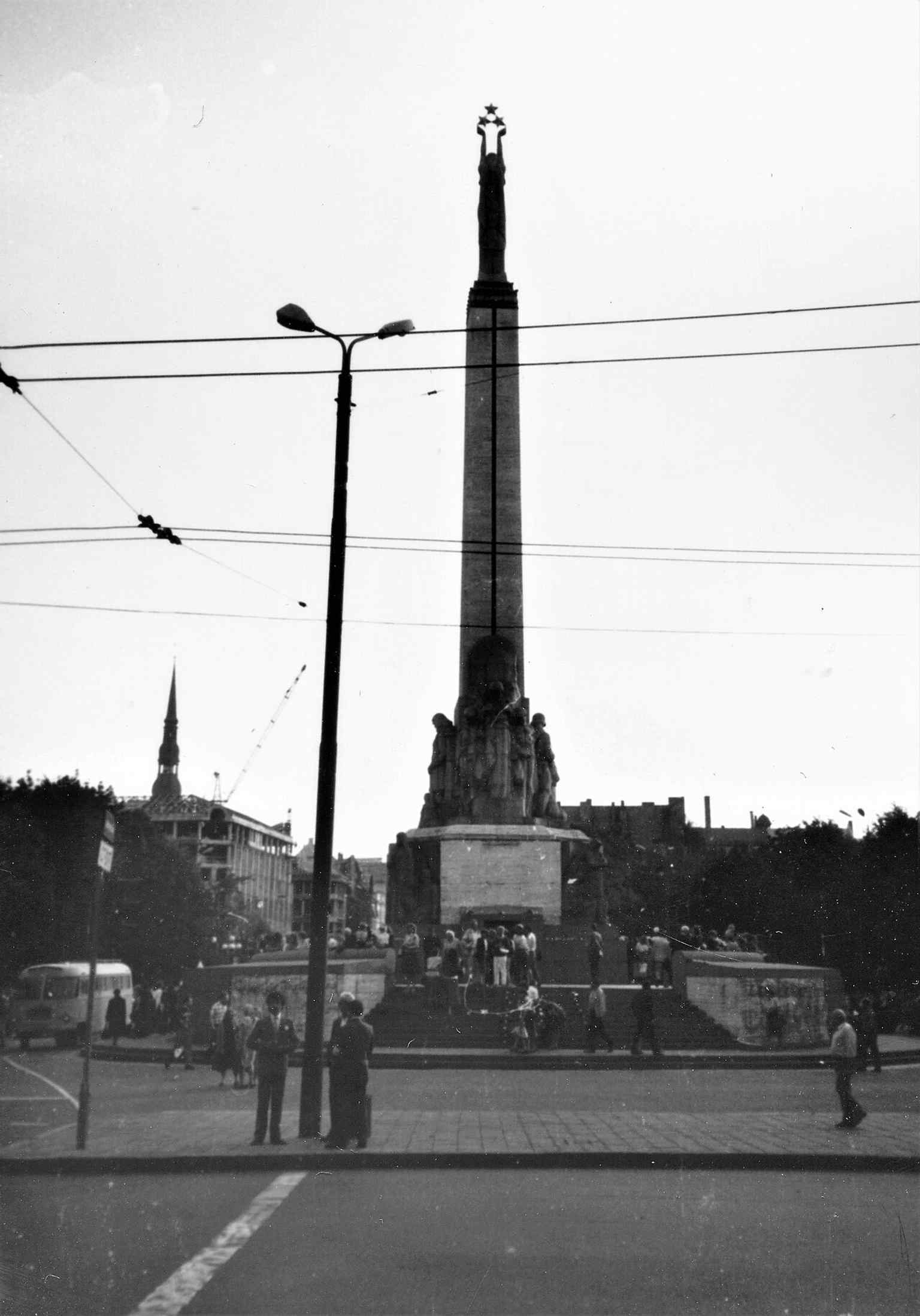
Crowds at the foot of the Freedom Monument in August 1989, showing how the site became a rallying point before independence was restored.Photo: Unknown authorUnknown author, Wikimedia Commons, CC BY-SA 4.0. Cropped & resized. 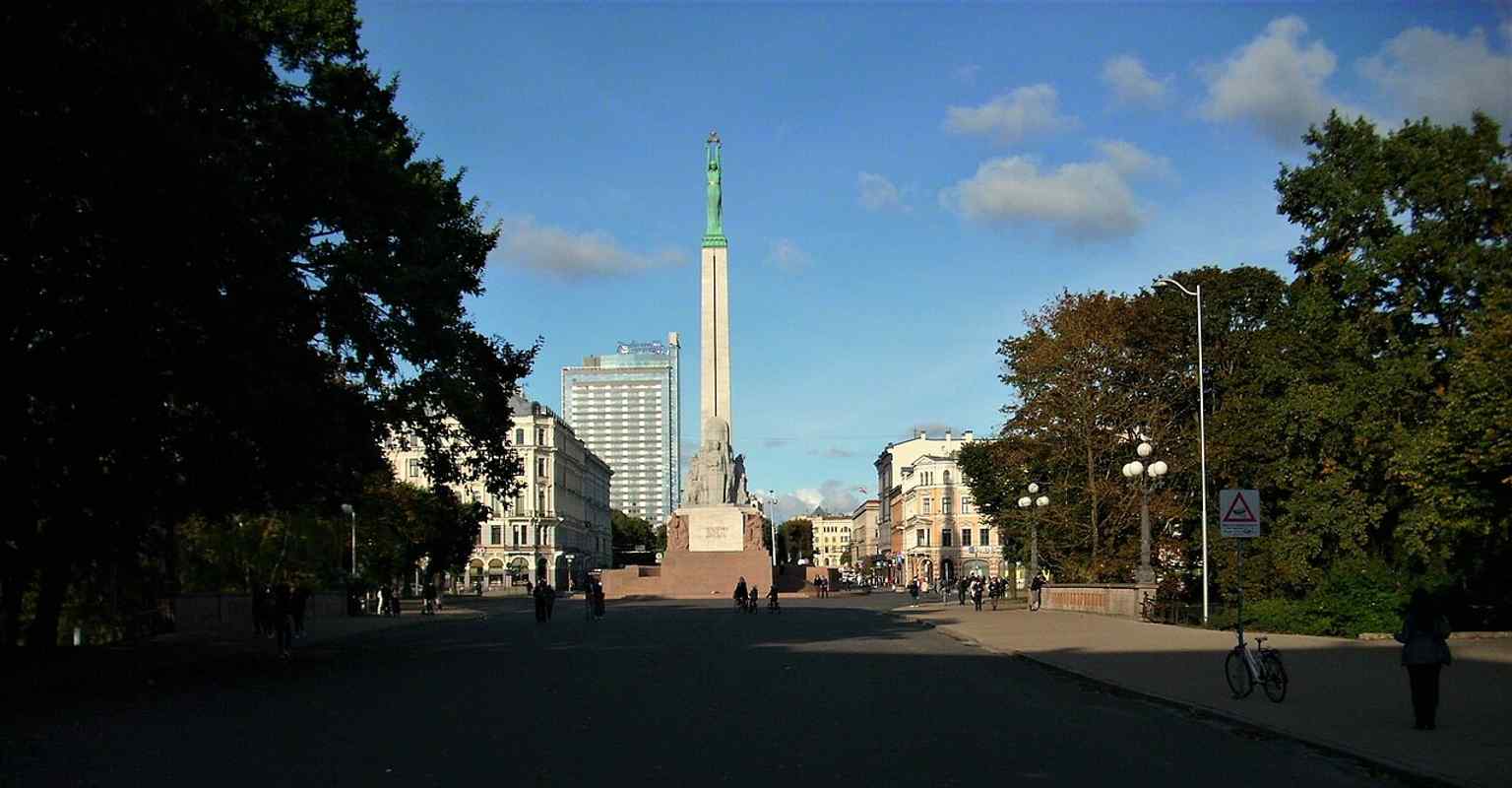
Freedom Square beside the monument, illustrating the open urban setting created around it in the heart of Riga.Photo: DaceX, Wikimedia Commons, CC BY-SA 4.0. Cropped & resized. Ahead is a broad rectangular park cut by pale gravel paths and formal lawns, with long straight avenues that still give the Esplanade the disciplined shape of a former parade…Read moreShow less
Open dedicated page →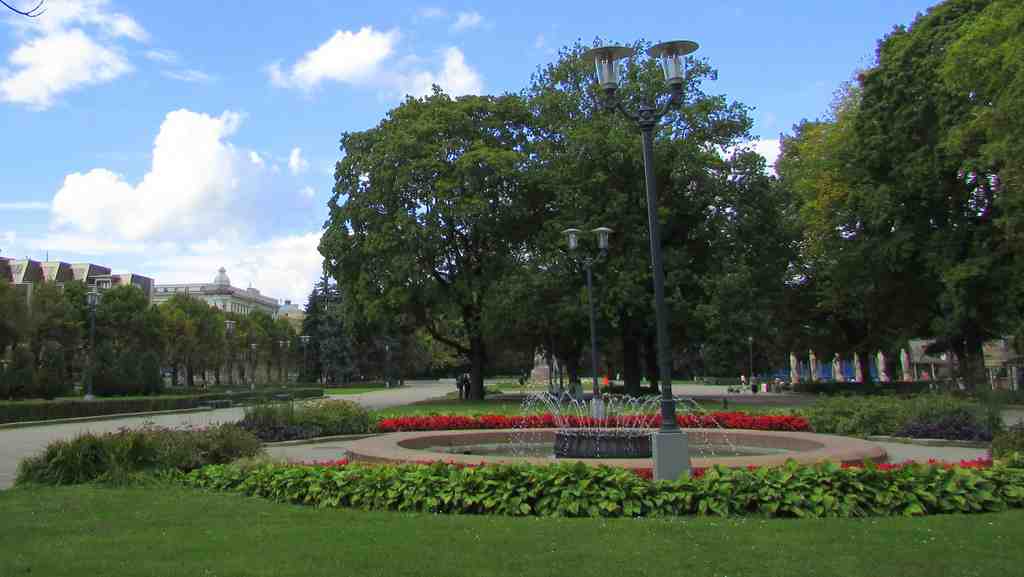
EsplanadePhoto: Evita wiki, Wikimedia Commons, CC BY-SA 4.0. Cropped & resized. Ahead is a broad rectangular park cut by pale gravel paths and formal lawns, with long straight avenues that still give the Esplanade the disciplined shape of a former parade ground.
The Esplanade began, rather improbably, as a military precaution. In fortress language, an esplanade meant an open strip of land kept clear between defensive walls and the first suburban houses, so that attackers had nowhere to hide. Long before this became a city park, this ground lay outside Riga’s walls as sandy, uneven terrain, marked by low hills. One of them, Kubbe Hill, stood roughly where the Art Academy rises now. Its name may reach back to Kaupo, the Liv leader who allied himself with the German crusaders and accepted Christianity.
That hill worried generals. In sixteen twenty-one, Gustavus Adolphus of Sweden attacked Riga from advantageous high ground, and the lesson lingered. Under Catherine the Great, the inspector of Riga’s fortifications, Major General Ivan Golenishchev-Kutuzov, finally oversaw the leveling of Kubbe Hill in the seventeen eighties. Archaeologists still regret it, because whatever traces of the earliest settlement lay there were carted away with the sand.
This open ground also attracted people the city preferred not to see. Expelled residents built huts near the gates and traded directly with peasants, bypassing the town’s merchants. The magistrates sent in house-breakers in fifteen forty-three to flatten the settlement, and in seventeen seventy-two they demolished the wooden houses again in a single day, this time forbidding any rebuilding. That stern act gave Riga the clear strip that later became one of its best-known public spaces.
After the panic of eighteen twelve, when a false alarm linked to Napoleon’s campaign led Riga to burn seven hundred and eighty-two buildings and leave six thousand five hundred people homeless, the Esplanade lost some military value but gained a new role as a drill ground. Cavalry trained here, parades thundered across it, and fairs took over when soldiers stood aside. There were even folk celebrations around the old hill, including a greased pole with prizes at the top, which is an admirably honest way of testing ambition.
If you glance at the image on your screen, you can see how strongly the cathedral shaped the park’s later identity. In eighteen seventy-five, the city made a rare exception to the no-building rule and allowed the Cathedral of the Nativity of Christ here. Then came the great turning point: the nineteen oh-one exhibition for Riga’s seven hundredth anniversary, spread across forty Art Nouveau pavilions. A visiting imperial minister approved what he saw, and in nineteen oh-two the ban on building here ended. Landscape architect Georg Kuphaldt laid out a formal park, fountains appeared, Mayor George Armitstead approved the school building nearby, and architect Wilhelm Neumann completed the art museum.
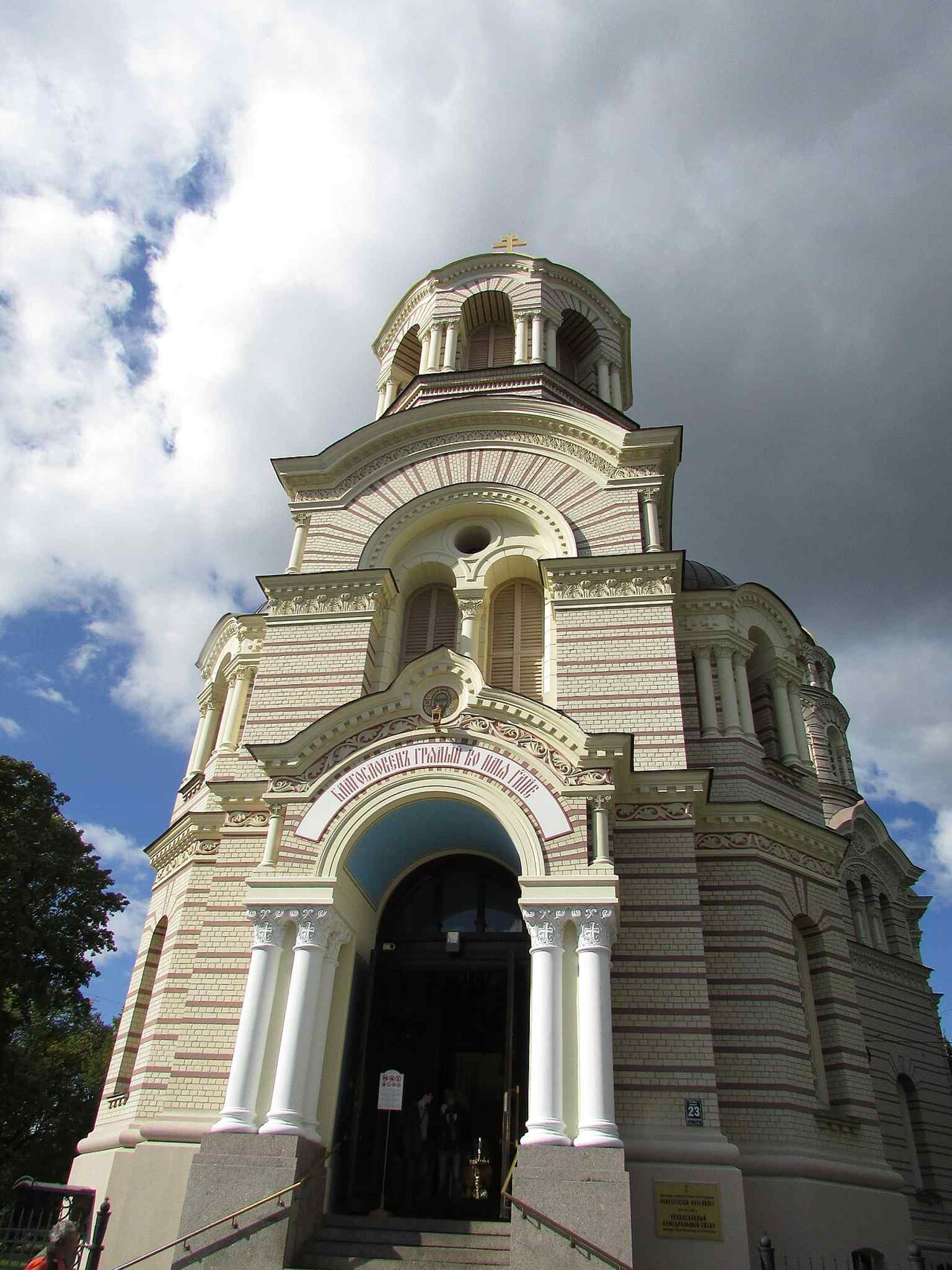
The Nativity of Christ Cathedral anchors Esplanade’s history — the square was reshaped around this major Orthodox landmark in the early 20th century.Photo: Evita wiki, Wikimedia Commons, CC BY-SA 4.0. Cropped & resized. The Esplanade kept changing names as politics changed uniforms. It became Communards Park in nineteen nineteen, after twenty-seven Latvian communards were buried behind the cathedral. It returned to Esplanade in nineteen twenty, later became Unity Square, then Communards Park again in the Soviet years, when architect Karlis Pluksne and garden master Alfred Kapaklis gave it a more regular plan and introduced dozens of unusual tree species, including a rare beech variety and Amur velvet. A Stalin monument was even planned here in the nineteen fifties; after the cult of personality collapsed, the foundation turned into a rose garden instead. In nineteen sixty-five, the granite monument to the poet Rainis took its place in the park’s symbolic life; you can spot it in the app image here.
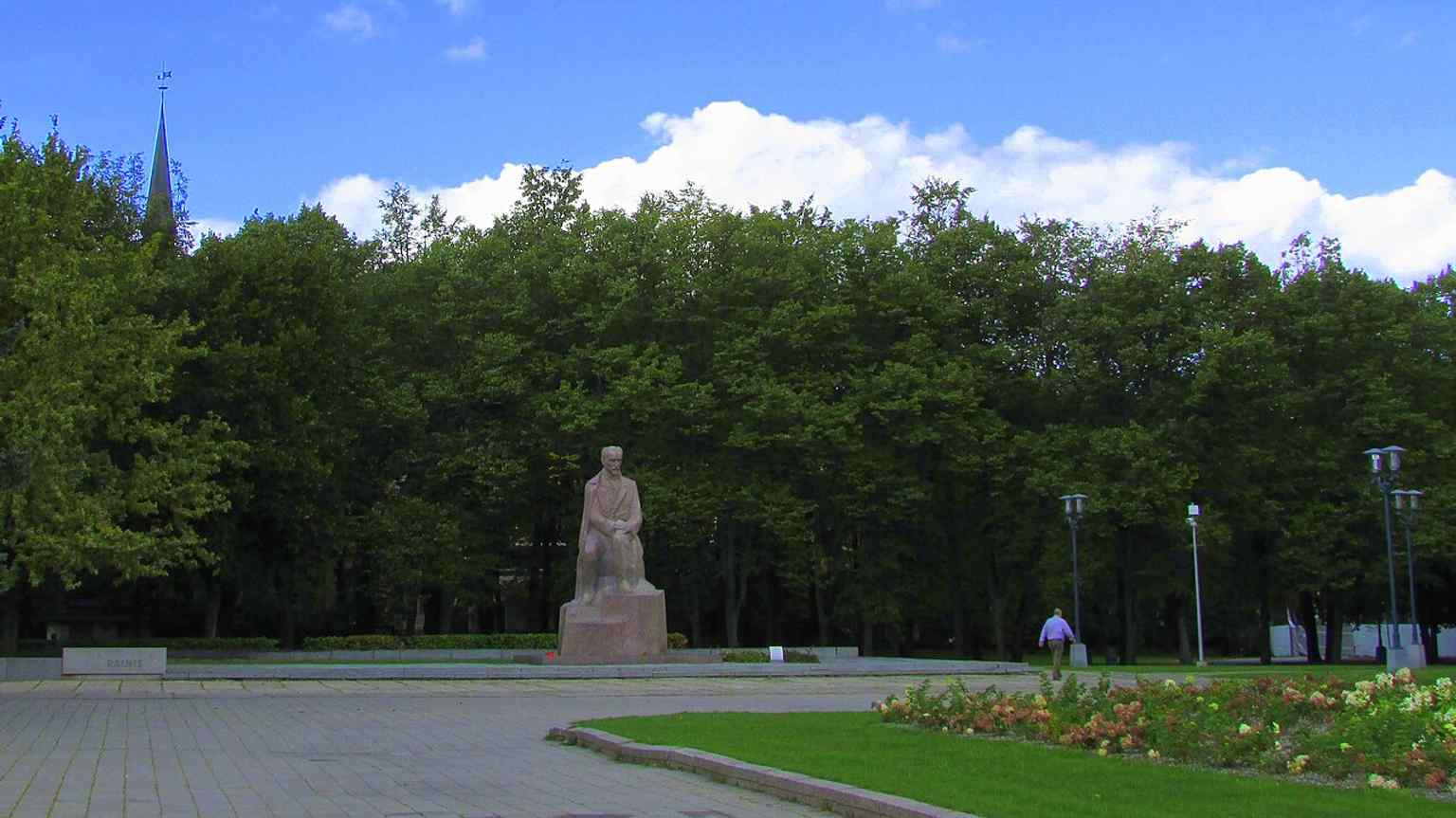
Rainis Monument in Esplanade, honoring the poet whose granite memorial was unveiled here in 1965.Photo: Evita wiki, Wikimedia Commons, CC BY-SA 4.0. Cropped & resized. So this calm green space is really a record of Riga learning, again and again, what public ground should be for.
Fittingly, the Esplanade never really closes; it remains open all day and all night. When you are ready, continue toward the Cathedral of the Nativity of Christ at the park’s edge.
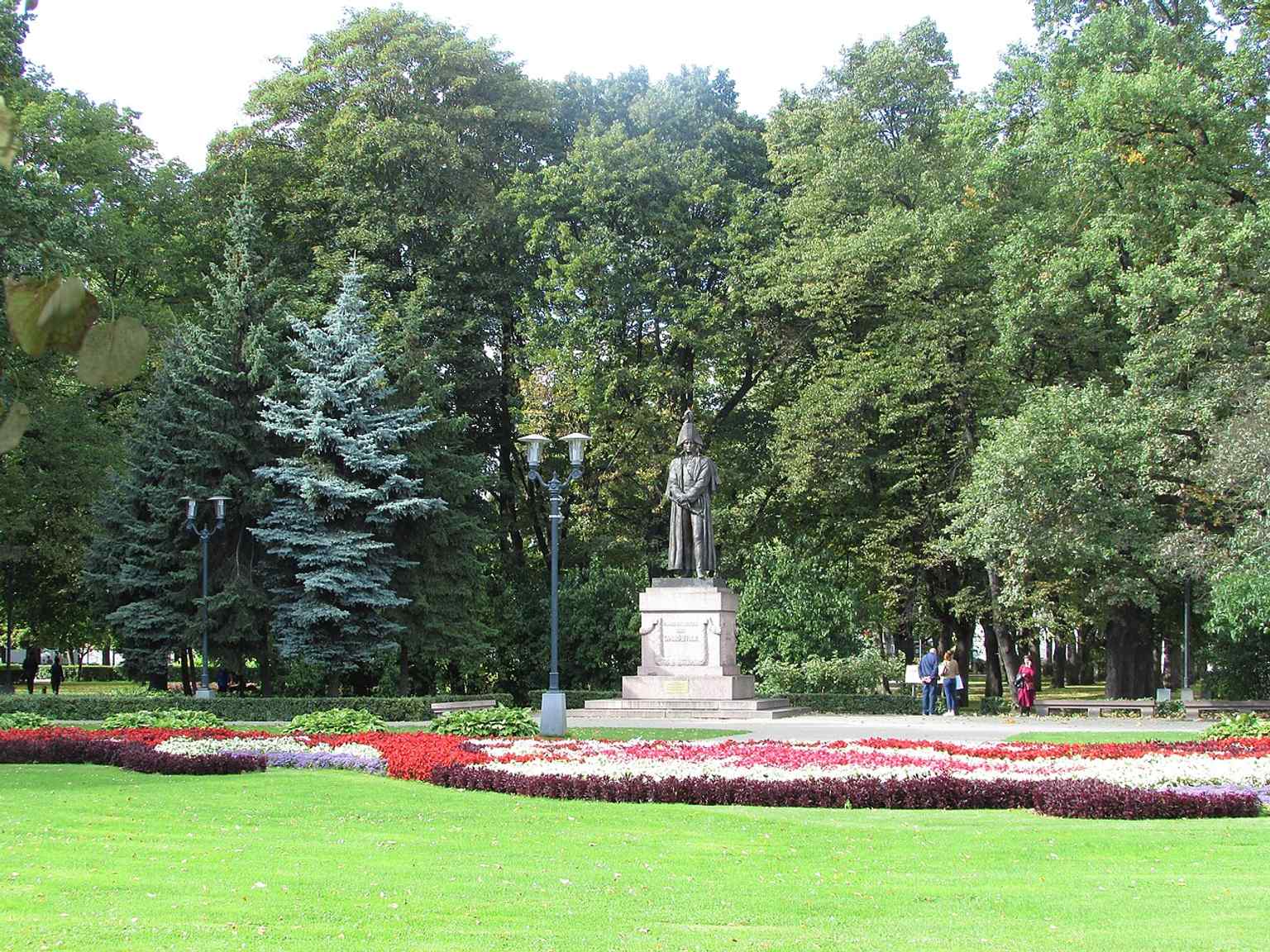
Barclay de Tolly’s monument on Esplanade, recalling the square’s long life as a ceremonial and memorial space.Photo: Evita wiki, Wikimedia Commons, CC BY-SA 4.0. Cropped & resized. 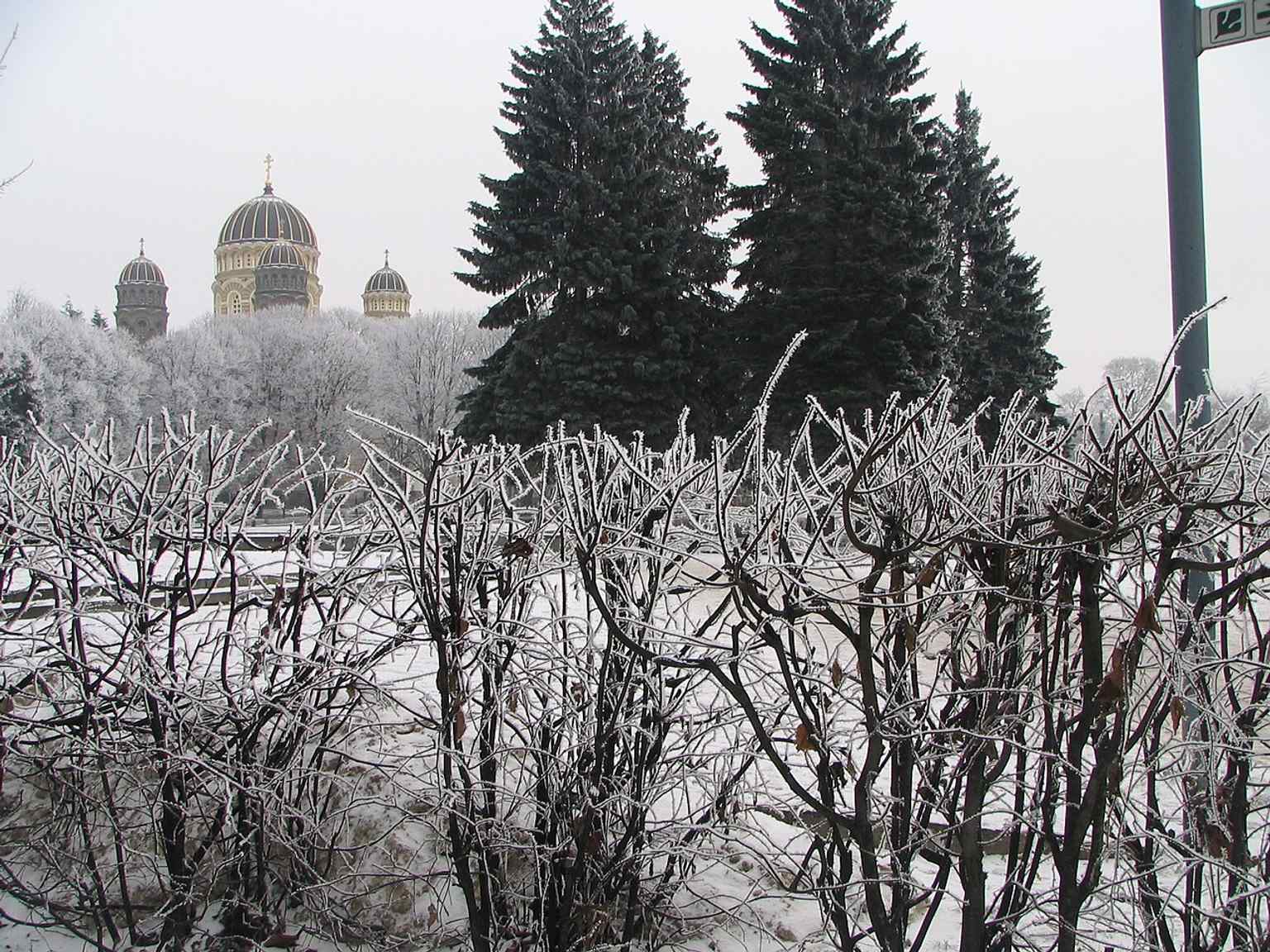
A 2005 view of Esplanade that captures the park before its most recent seasonal events and installations.Photo: VardeCe, Wikimedia Commons, CC BY-SA 4.0. Cropped & resized. 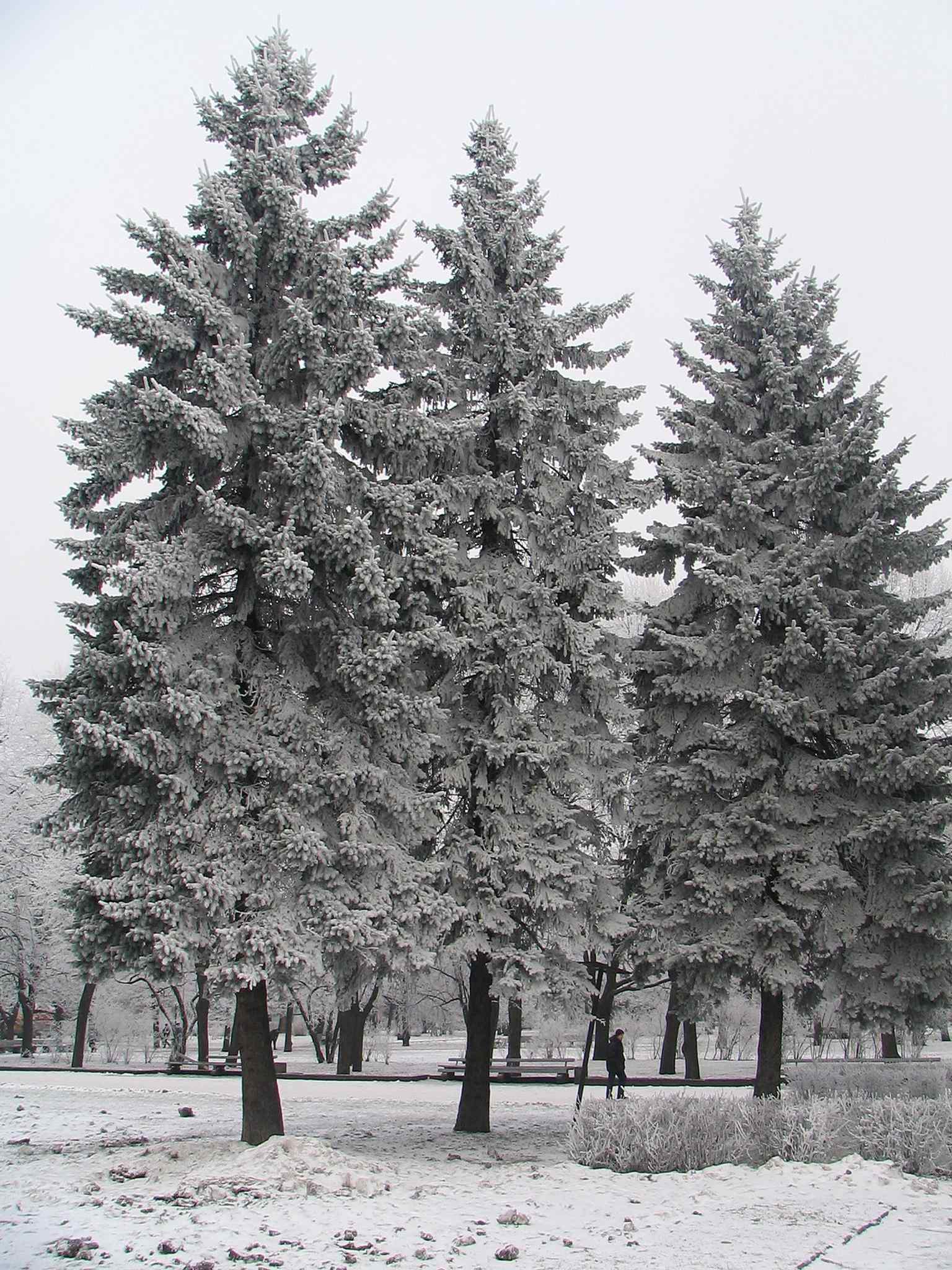
Another early-2000s Esplanade view, showing the mature park landscape that replaced the former parade ground.Photo: VardeCe, Wikimedia Commons, CC BY-SA 4.0. Cropped & resized. 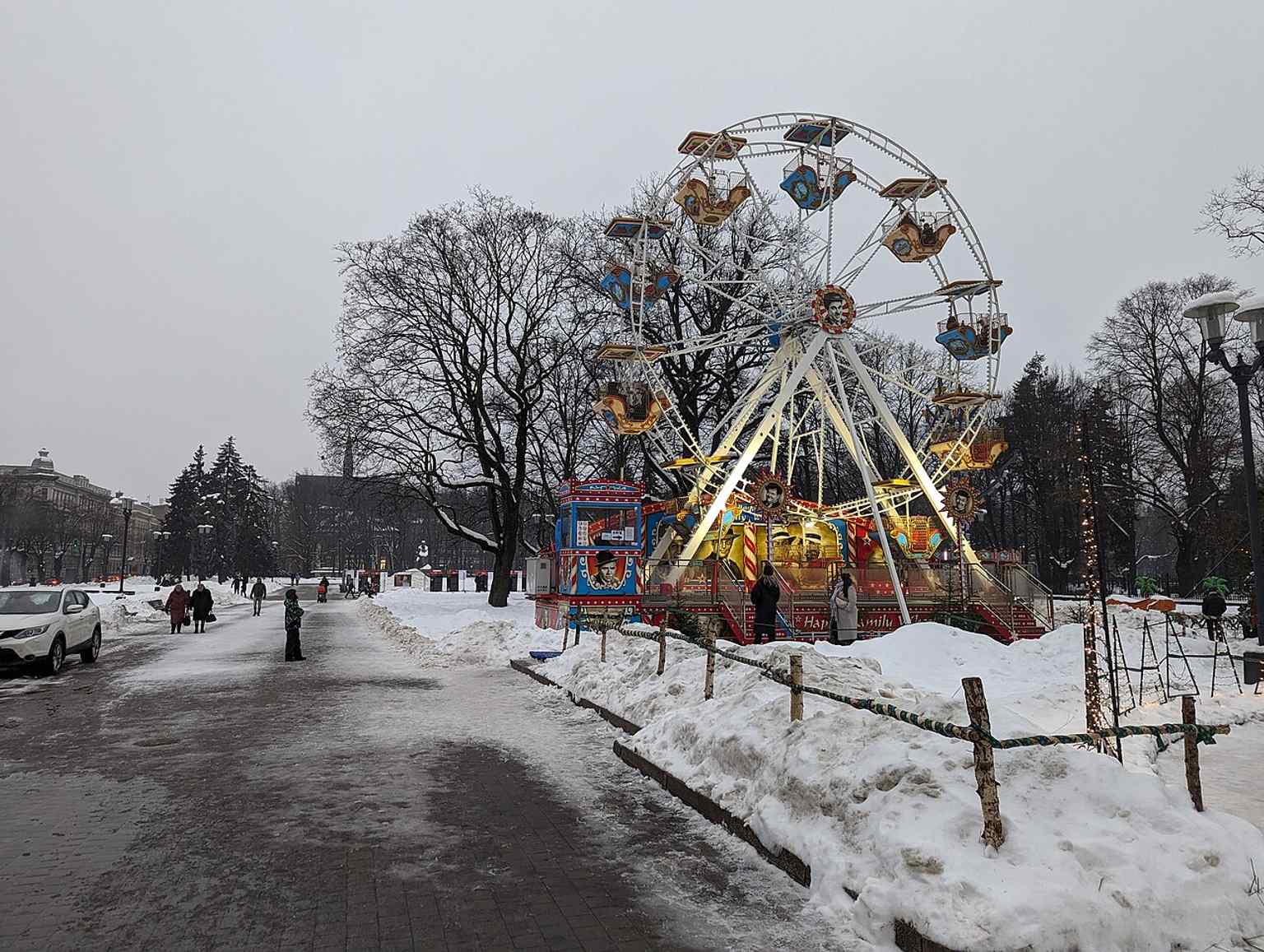
A modern seasonal fair at Esplanade, echoing the site’s long tradition of markets, festivities, and public gatherings.Photo: Андрей Романенко, Wikimedia Commons, CC BY-SA 4.0. Cropped & resized. 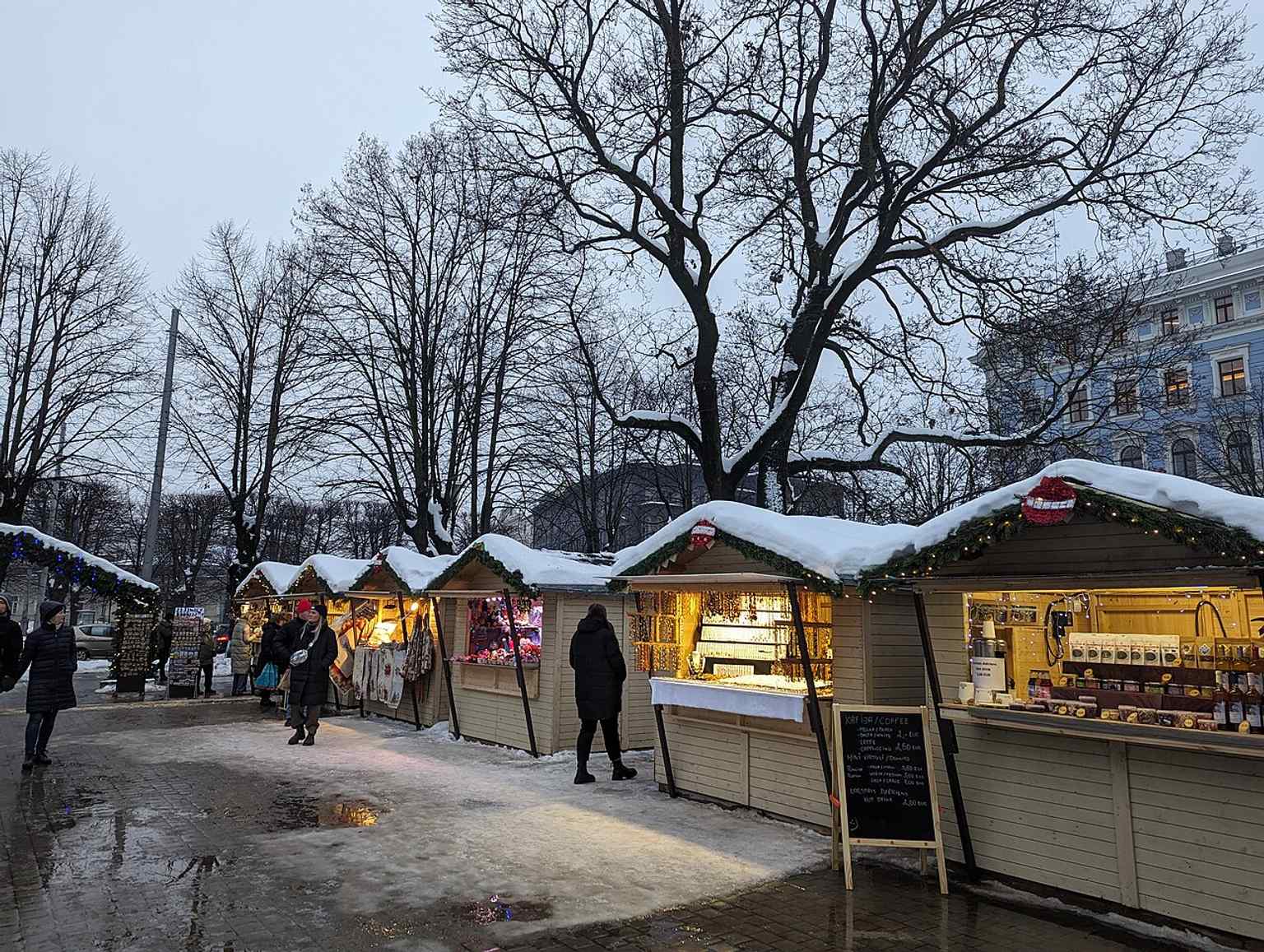
The Christmas market brings Esplanade’s winter life to the foreground, matching its history of holiday bazaars and ice skating.Photo: Андрей Романенко, Wikimedia Commons, CC BY-SA 4.0. Cropped & resized. On your left rises a pale masonry cathedral with rounded gilded domes and a tall bell-tower dome, marked by dark arched windows and Orthodox crosses. This is the Cathedral of the…Read moreShow less
Open dedicated page →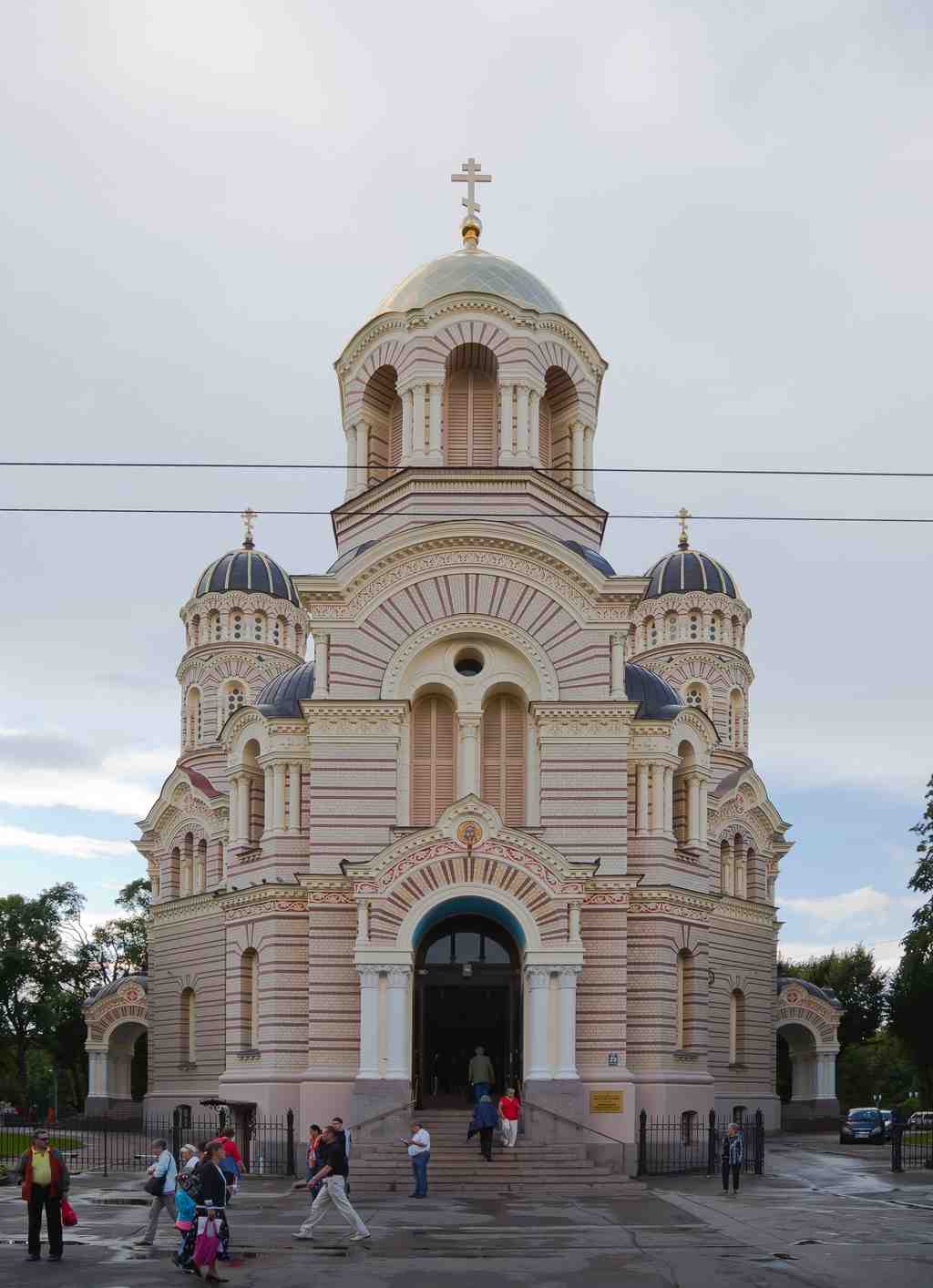
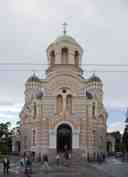
Cathedral of the Nativity of Christ, RigaPhoto: Diego Delso, Wikimedia Commons, CC BY-SA 3.0. Cropped & resized. On your left rises a pale masonry cathedral with rounded gilded domes and a tall bell-tower dome, marked by dark arched windows and Orthodox crosses.
This is the Cathedral of the Nativity of Christ, and it carries Riga’s harder histories with remarkable calm. Nikolai Chagin and Robert Pflug designed it in a Neo-Byzantine style - that is, a nineteenth-century revival of the great domed church architecture of the eastern Christian world - and they raised it here between eighteen seventy-six and eighteen eighty-three. With the blessing of Tsar Alexander the Second, and the backing of governor-general Pyotr Bagration and Bishop Veniamin Karelin, Riga gained the largest Orthodox cathedral in the Baltic provinces. August Volz’s firm supplied much of the decoration, and inside, some of the icons - sacred painted images used in prayer - came from the hand of Vasili Vereshchagin.
Its final shape owed a good deal to imperial surprise. The architects had not planned a separate belfry, but then the Tsar unexpectedly sent twelve bells. One does not lightly decline such a gift, so the design had to change, and an extra dome rose to house them. A look at the image on your screen shows how those domes command the whole setting around the Esplanade. Then the twentieth century got to work. During the First World War, German troops occupied Riga and turned this Orthodox cathedral into a Lutheran church. Kaiser Wilhelm the Second even stood on these steps to award Iron Crosses to his soldiers, using the building as a bit of imperial theatre. In nineteen twenty-one, independent Latvia returned it to the Orthodox Church, and Archbishop Jānis Pommers fought fiercely to keep it. He lived here in a cramped basement room he called “my cave,” refusing comfort while he defended the cathedral from a government deeply suspicious of Orthodoxy. His murder in nineteen thirty-four remains unsolved.
The Soviets were even more thorough. In the early nineteen sixties they closed the cathedral, renamed it the Republic House of Knowledge, cut off the crosses, destroyed the bells, and installed a planetarium under the central dome. Saints disappeared behind partitions and murals of cosmonauts and socialist heroes. Yet one side chapel became a café nicknamed “God’s Ear,” where artists and dissidents gathered in the half-dark to speak a little more freely than elsewhere. The historical image in the app rather suits that long, unsettled life. Since nineteen ninety-one, the cathedral has been restored; new bells arrived in two thousand and two from Moscow’s Z-I-L factory, famous for trucks and Soviet leaders’ armoured limousines, and in two thousand and ten the bell tower and dome were gilded again. Through the Svet, or Light, project, twelve original Vereshchagin icons returned to the iconostasis, the screen of icons before the sanctuary.
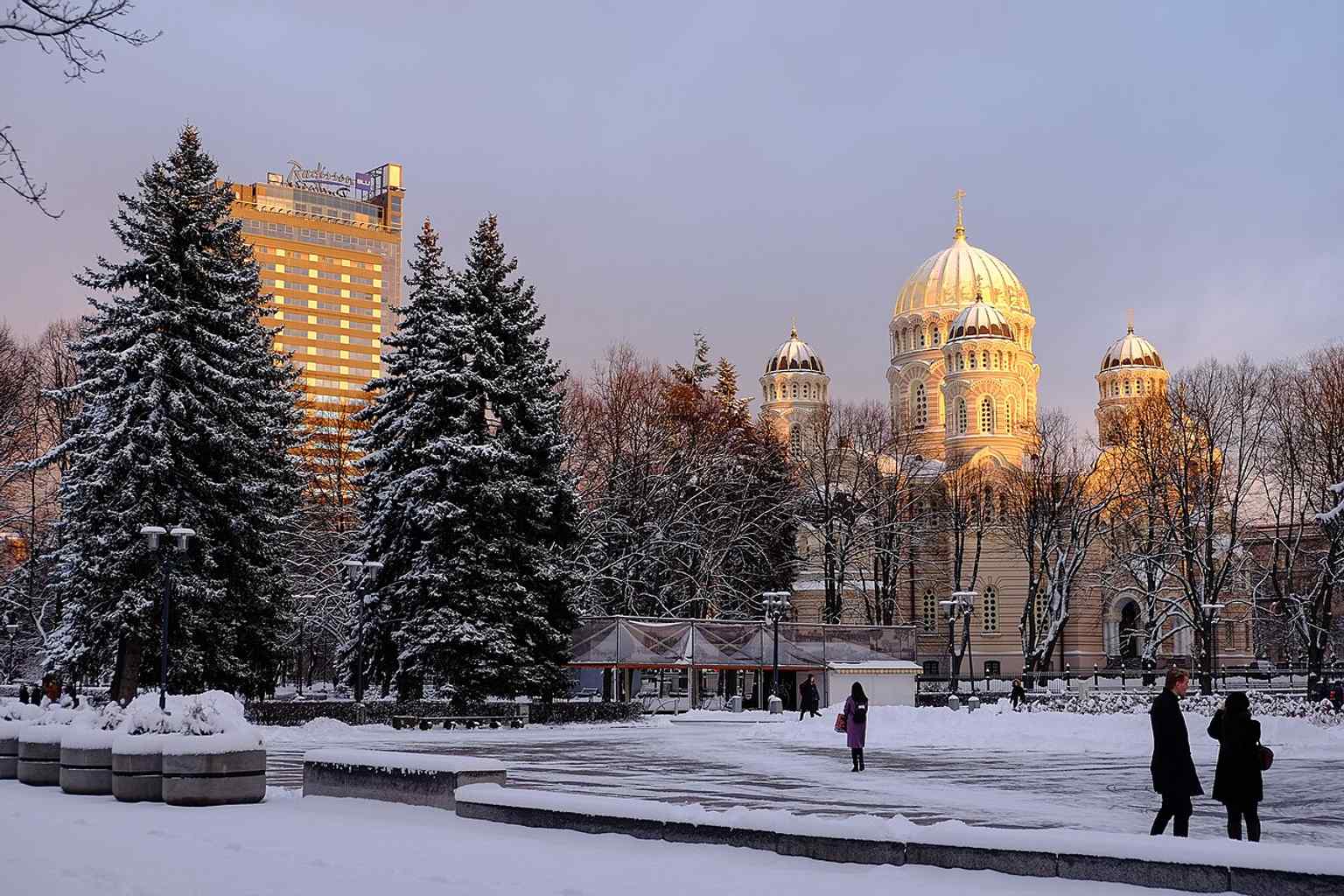
Winter view of the cathedral in Riga’s Esplanāde, evoking the building’s long life through empire, occupation, Soviet atheism, and restoration.Photo: Mārtiņš Bruņenieks, Wikimedia Commons, CC BY-SA 4.0. Cropped & resized. If you wish to step inside, it generally opens from early morning until early evening, with slightly longer hours on Saturday and an earlier start on Sunday.
Few places in Riga show so plainly how power can occupy a building, and faith quietly reclaim it. When you are ready, continue on toward the Old Town.
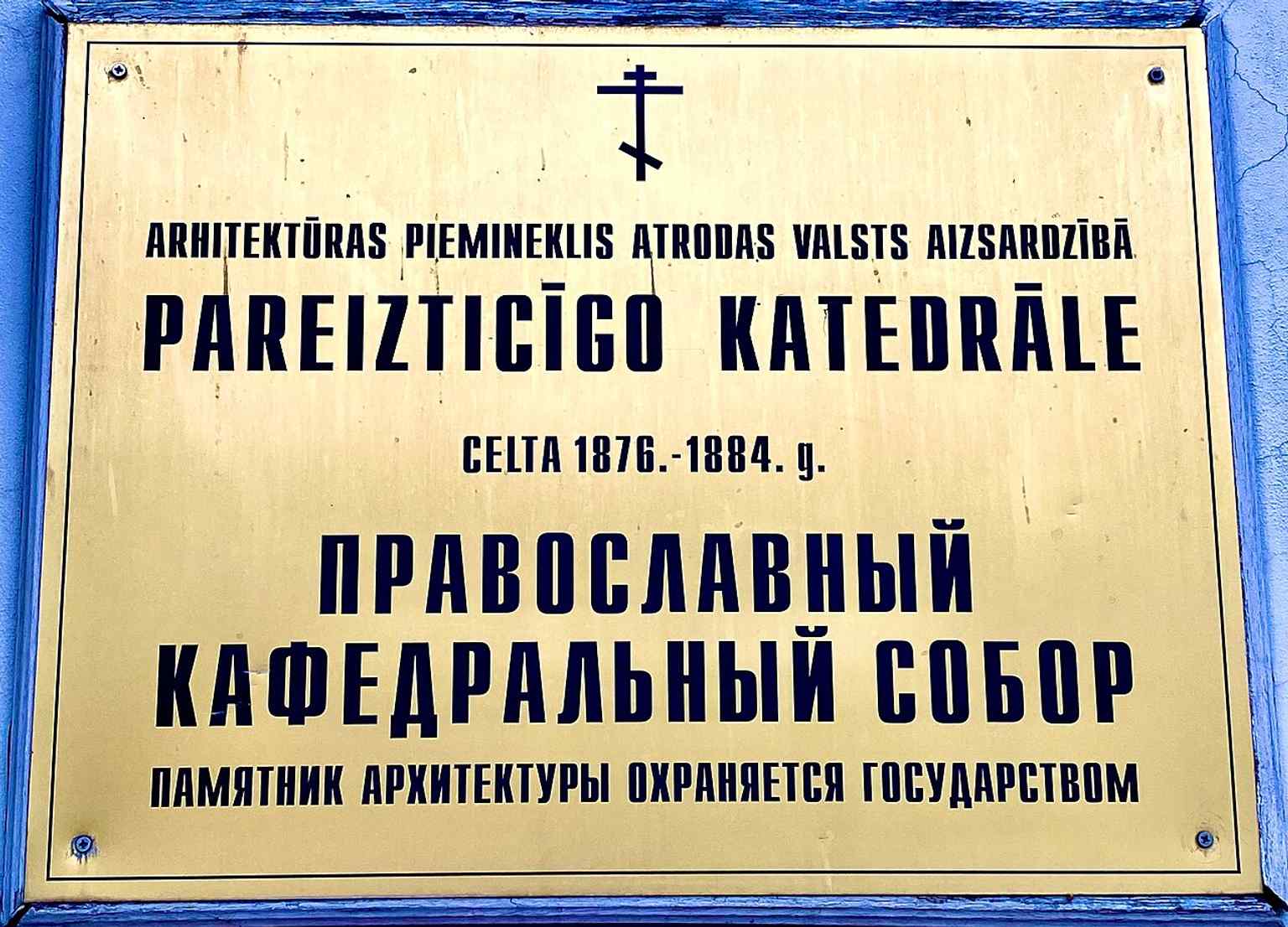
The nameplate identifies the Cathedral of the Nativity of Christ in Riga, Latvia—helpful context for a landmark with a complex imperial and Soviet history.Photo: Steven1991, Wikimedia Commons, CC BY-SA 4.0. Cropped & resized. 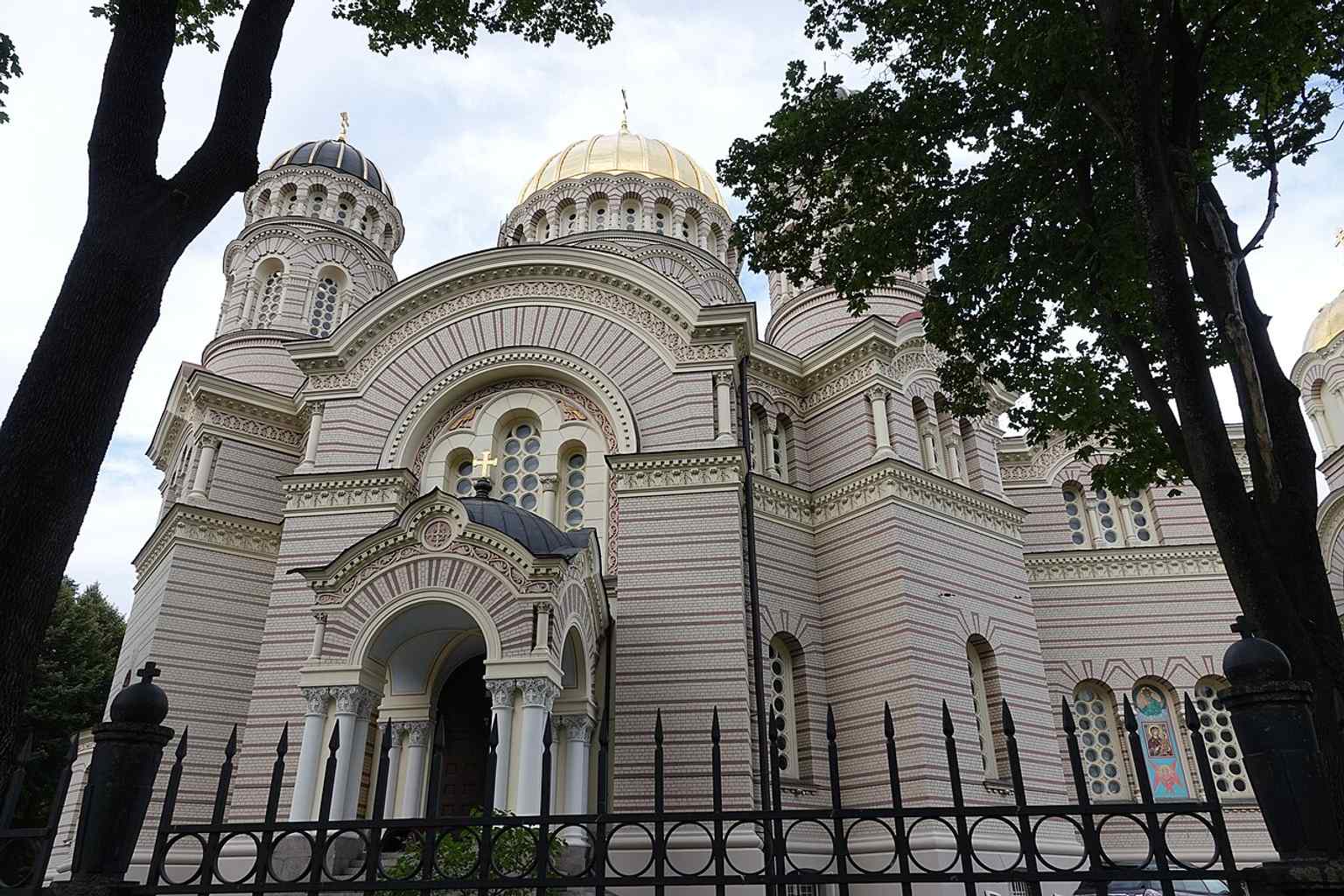
This view adds variety by showing the cathedral from another side, reflecting its rebuilt and renewed status after decades of upheaval.Photo: Nenea hartia, Wikimedia Commons, CC BY-SA 4.0. Cropped & resized. 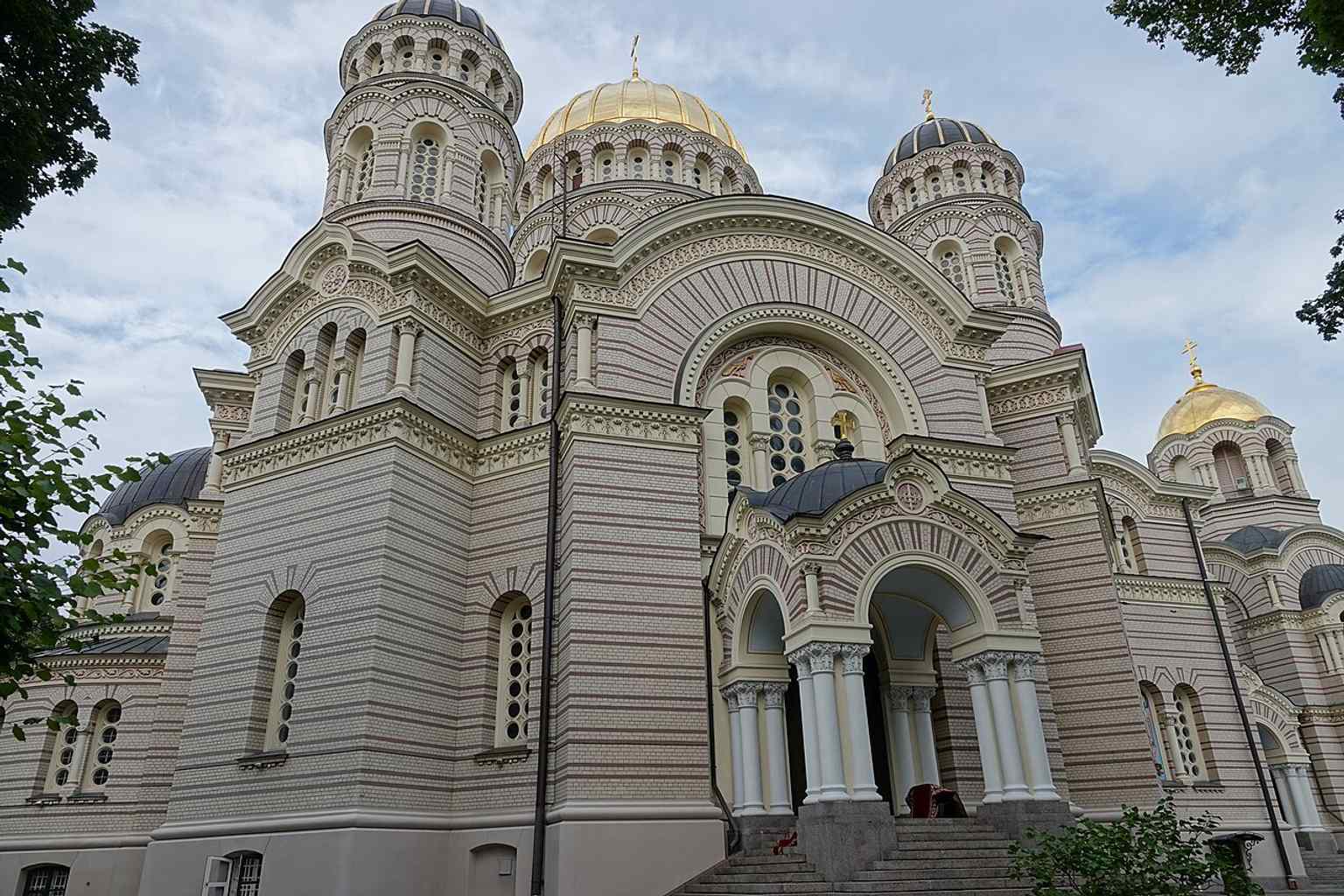
A close exterior composition that captures the cathedral’s domes and masonry, connecting the building to its late-19th-century origins.Photo: Nenea hartia, Wikimedia Commons, CC BY-SA 4.0. Cropped & resized. Look for a tight weave of stone lanes and steep gabled houses gathered beneath tall brick church spires, especially the needle-like tower of Saint Peter’s rising above the…Read moreShow less
Open dedicated page →Look for a tight weave of stone lanes and steep gabled houses gathered beneath tall brick church spires, especially the needle-like tower of Saint Peter’s rising above the roofs.
This is Vecrīga, Old Riga: the city’s oldest heart, pressed against the right bank of the Daugava and layered, quite literally, over eight centuries of argument, trade, fire, repair, and ambition. Historians still debate its very first centre, but one strong tradition places the earliest Riga, founded by Bishop Albert in twelve oh one, around the crossing of today’s Šķūņu and Kaļķu streets. By the end of the thirteenth century, the growing town had enclosed itself within defensive walls, and a proper medieval city had taken shape.
It learned hard lessons early. In twelve fifteen, a devastating fire tore through Riga and destroyed much of the town, including the old bishop’s residence and the cathedral. So the city authorities turned strict. In twelve ninety-three, they issued a building code that fixed houses neatly along the street, allowed them to stand wall to wall, limited their size, and, most importantly, banned timber construction. Medieval Riga had decided that stone was safer than optimism.
Old Riga also knew how to fight when trade was threatened. In twelve ninety-seven, the Livonian Order tried to remove a bridge over the Daugava because it blocked the passage of knights’ ships. Unfortunately for the knights, that bridge mattered rather more to Riga’s merchants. The quarrel exploded into open revolt. During the siege of the Order’s castle, the townspeople did something magnificently unchurchlike: they stripped the roofs from Saint Peter’s and Saint John’s churches, hauled heavy catapults onto them, and bombarded the castle with stone shot until they smashed it to pieces.
Trade, though, always returned as the main business of the place. In the thirteen thirties, the market moved closer to the Daugava, the town hall rose nearby, and opposite it stood the New House, later famous as the House of the Blackheads. From there, decrees were read out, oaths were taken, ceremonies staged, and the city conducted the noisy theatre of public life. By the fifteenth century, Riga had become a classic Hanseatic city, one of those northern trading ports where warehouse, home, shop, and stable often shared the same plot with admirable efficiency and, I suspect, rather mixed aromas.
Beneath all this once ran the Rīdzene, the little river that gave Riga its name and served as its first harbour. People were repeatedly forbidden to dump rubbish into it, which is usually a reliable sign that people were dumping rubbish into it. Over time it clogged, shrank, and finally disappeared underground. Its lost course survives today in the wavy paving of Livu Square.
An aerial image on your screen shows how Saint Peter’s, the Dome Cathedral, and Saint James still compose the skyline of Old Riga. And yet that skyline is also a reconstruction. The fighting of nineteen forty-one and nineteen forty-four destroyed about a third of the Old Town’s buildings. If you like, take a quick look at the before-and-after image; the leap from wartime ruin to the restored cityscape is quietly extraordinary. That long recovery helped earn Riga’s historic centre a place on the UNESCO, the United Nations Educational, Scientific and Cultural Organization, World Heritage list in nineteen ninety-seven.
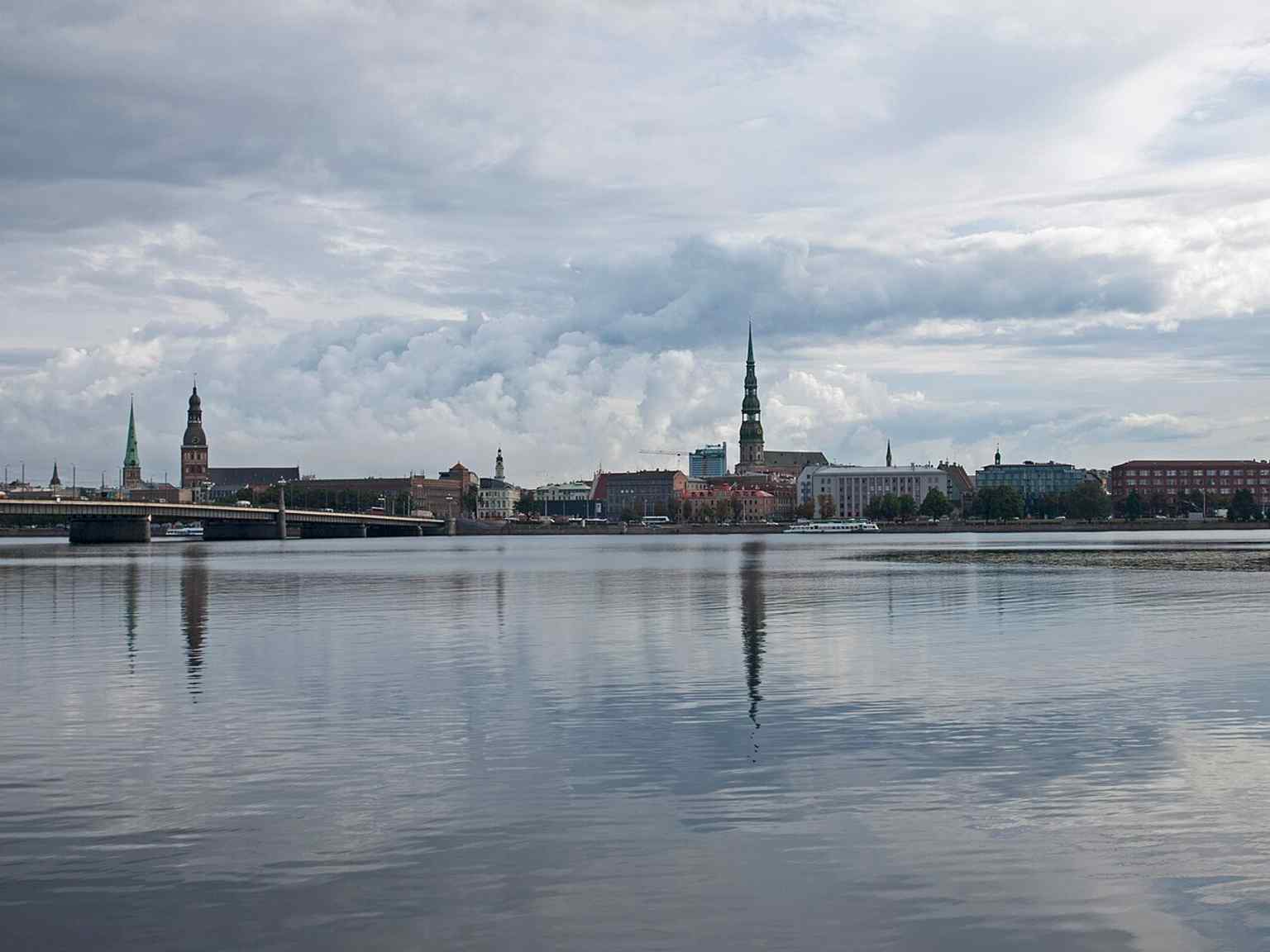
A sweeping view of Old Riga with St. Peter’s Church, the Dome Cathedral, and St. James’s Cathedral — the historic skyline that defines Vecrīga.Photo: Ymblanter, Wikimedia Commons, CC BY-SA 4.0. Cropped & resized. Old Town itself never really closes, so you can wander these streets at any hour.
Old Riga endures because each century left scars here, and the city chose to keep reading them rather than erase them. When you’re ready, continue on to the monument to Barclay de Tolly, where Riga tells a rather more imperial tale.
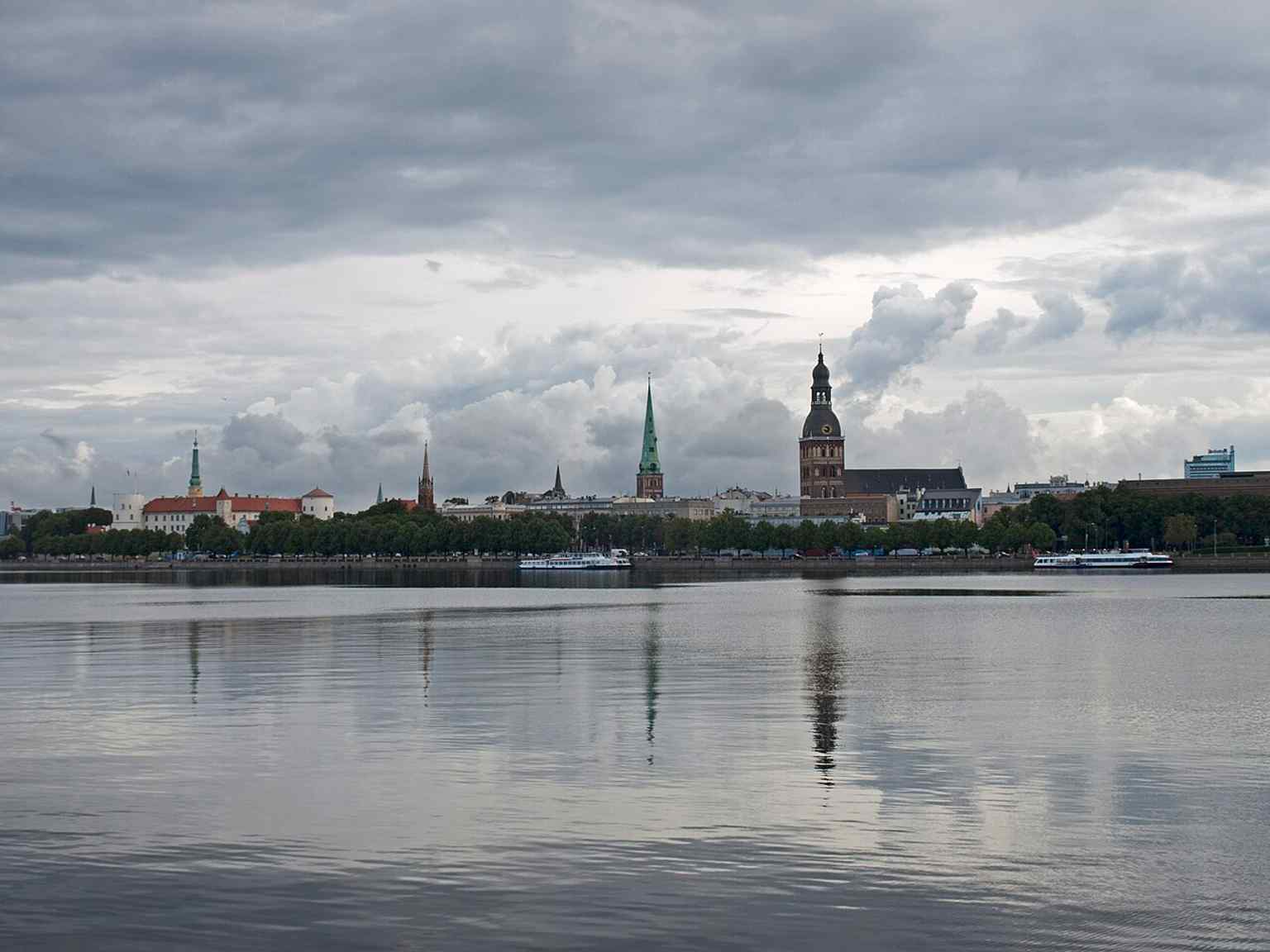
Panorama from the Stone Bridge showing the Dome Cathedral and Riga Castle, linking the Old Town to the Daugava riverfront it grew along.Photo: Ymblanter, Wikimedia Commons, CC BY-SA 4.0. Cropped & resized. 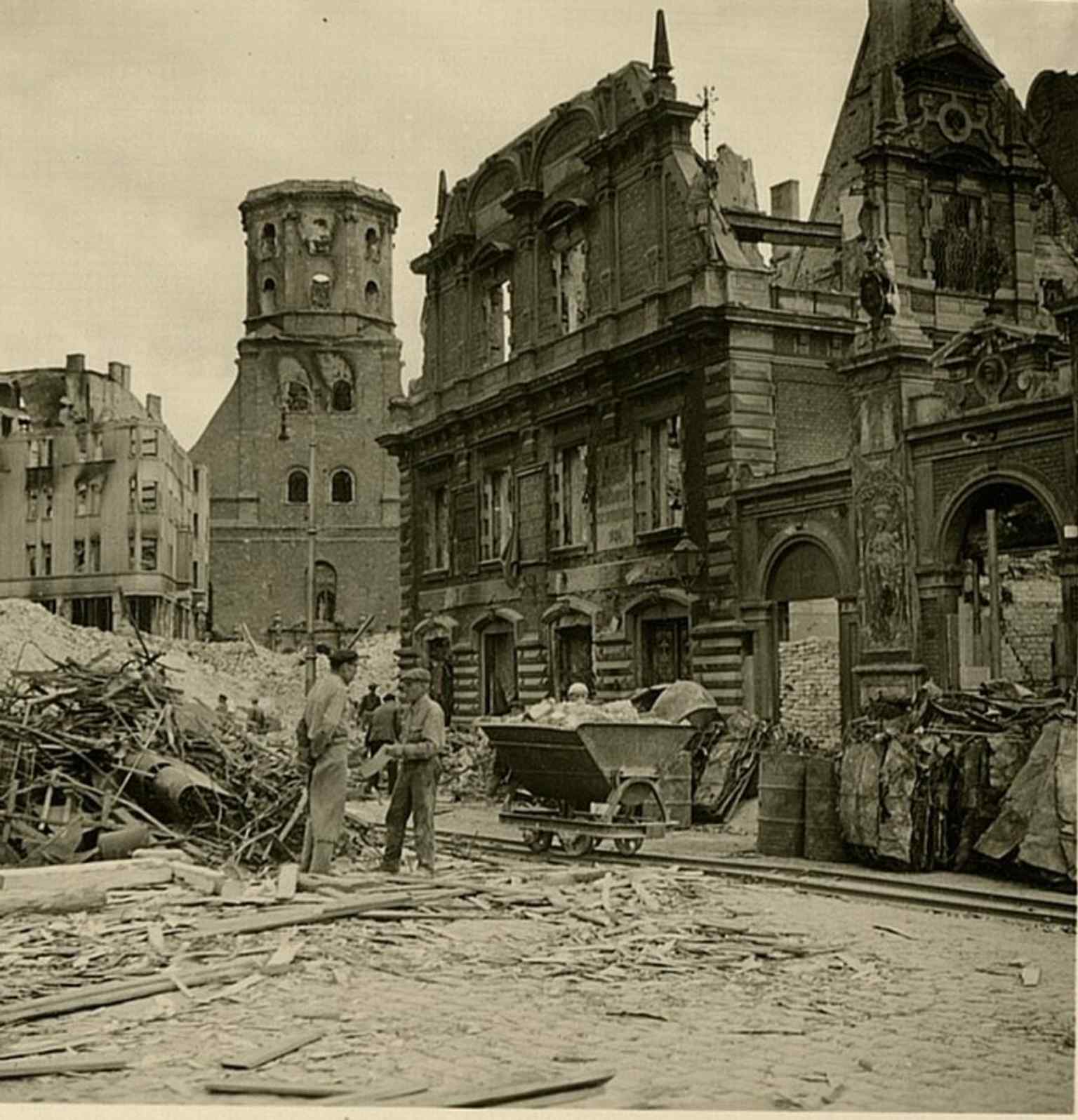
World War II damage in Riga’s Old Town, including St. Peter’s Church and the House of the Blackheads, recalling how much of Vecrīga was destroyed and later rebuilt.Photo: Carl Kadelke, National Library of Latvia, Wikimedia Commons, CC BY 4.0. Cropped & resized. 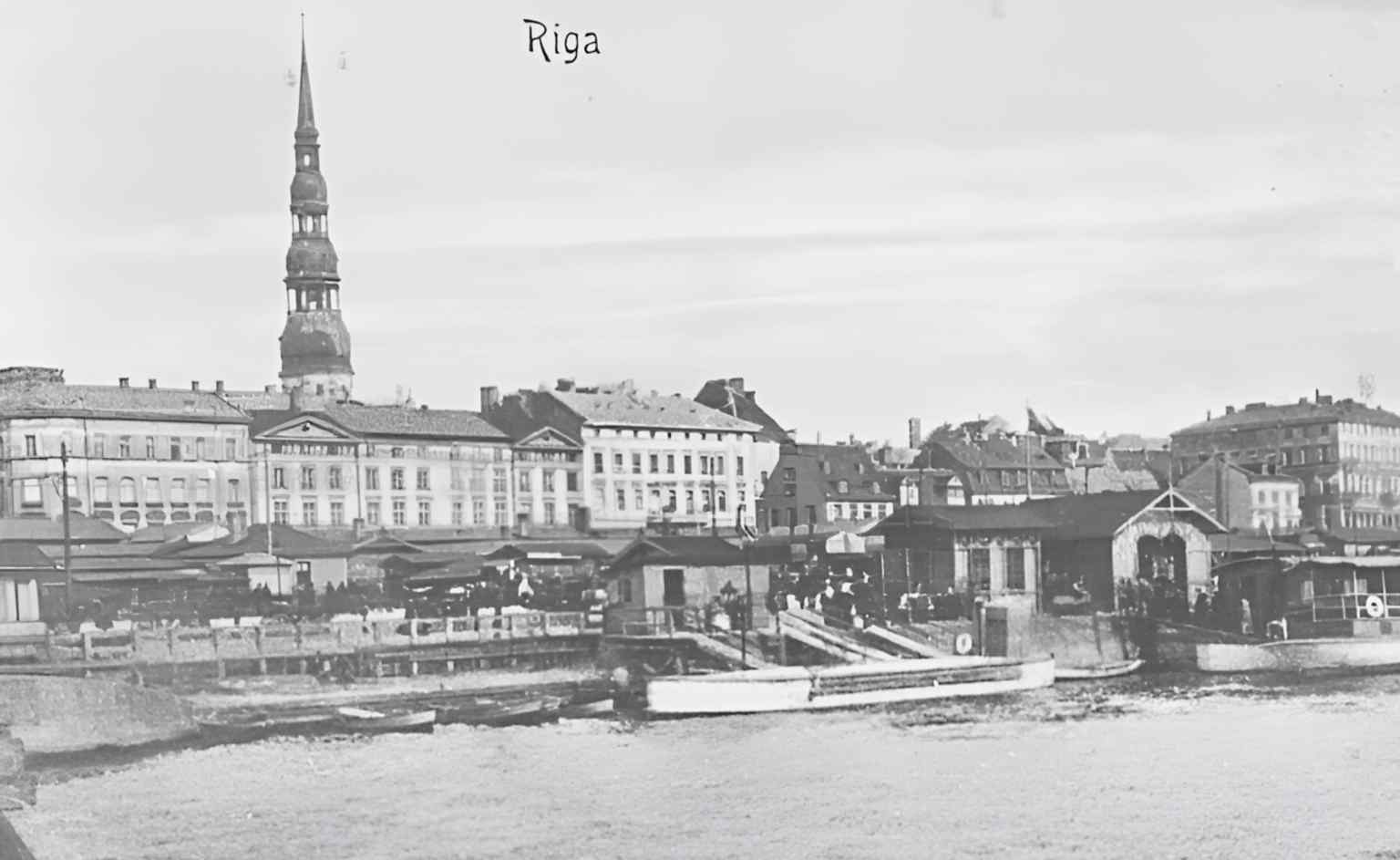
The Riga port and Daugavmala market around 1900–1910, evoking the commercial riverfront that helped make the Old Town a Hanseatic centre.Photo: Unknown authorUnknown author, Wikimedia Commons, Public domain. Cropped & resized. On your left, look for the light-grey granite pedestal that once carried a full-length bronze field marshal, recognisable in older views by his plumed tricorne hat and the baton…Read moreShow less
Open dedicated page →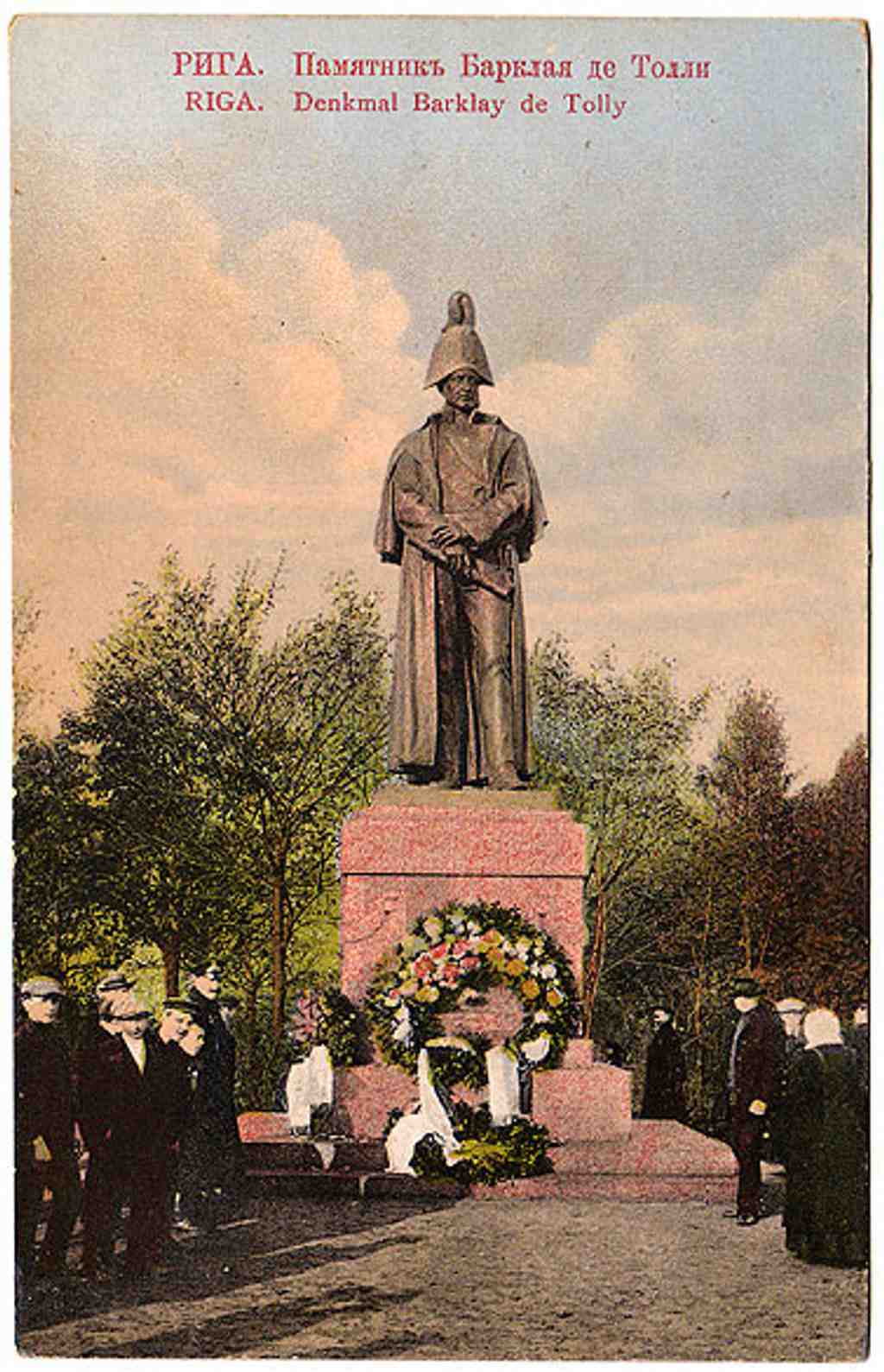
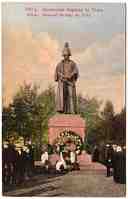
Monument to Barclay de TollyPhoto: UnknownUnknown, Wikimedia Commons, Public domain. Cropped & resized. On your left, look for the light-grey granite pedestal that once carried a full-length bronze field marshal, recognisable in older views by his plumed tricorne hat and the baton in his right hand.
If you cannot see the figure itself, there is a reason: Riga removed the statue in late October twenty twenty-four. That absence is now part of the story.
This monument honoured Mikhail Barclay de Tolly, the Russian field marshal and war minister who helped break Napoleon’s advance. Riga chose him very deliberately. City leaders argued that Barclay belonged, in part, to this place: his family had deep ties to Riga and Livland. One cousin, August, served the city and later became burgomaster. His grandfather worked as a legal officer for the magistrate. Barclay himself even wrote, more than once, that he came from Riga, though historians still debate the exact place of his birth.
The idea for a monument took shape under Mayor George Armitstead, whom we met earlier in bronze. The city gave twenty-five thousand rubles, and public donations matched it, together a sum roughly equal to several hundred thousand euros today. Then Riga held an international competition. Forty-three designs arrived from Saint Petersburg, Moscow, Paris, Riga, and several German cities. The jury, led by city architect Reinhold Schmeling, chose the Berlin sculptor Wilhelm Wandschneider.
His Barclay stood upright, calm, and thoughtful. Experts at the Saint Petersburg Academy of Arts suggested one crucial change: replace the sword with a marshal’s baton, a ceremonial staff that signals command and authority rather than combat. It softened the message. Not conquest, but control. Not fury, but duty. The monument opened in October nineteen thirteen, one hundred years after the end of the war against Napoleon. The granite pedestal came from Finland; the bronze figure came from a German foundry.
The image on your screen shows that original nineteen thirteen monument before history swallowed it. In July nineteen fifteen, as the First World War pressed toward Livland, officials evacuated monuments, factories, schools, and archives. They sent Barclay away by rail, intending to store him in Moscow. He never arrived, or if he did, no record survived. The statue vanished somewhere in war, revolution, or the confusion between the two.
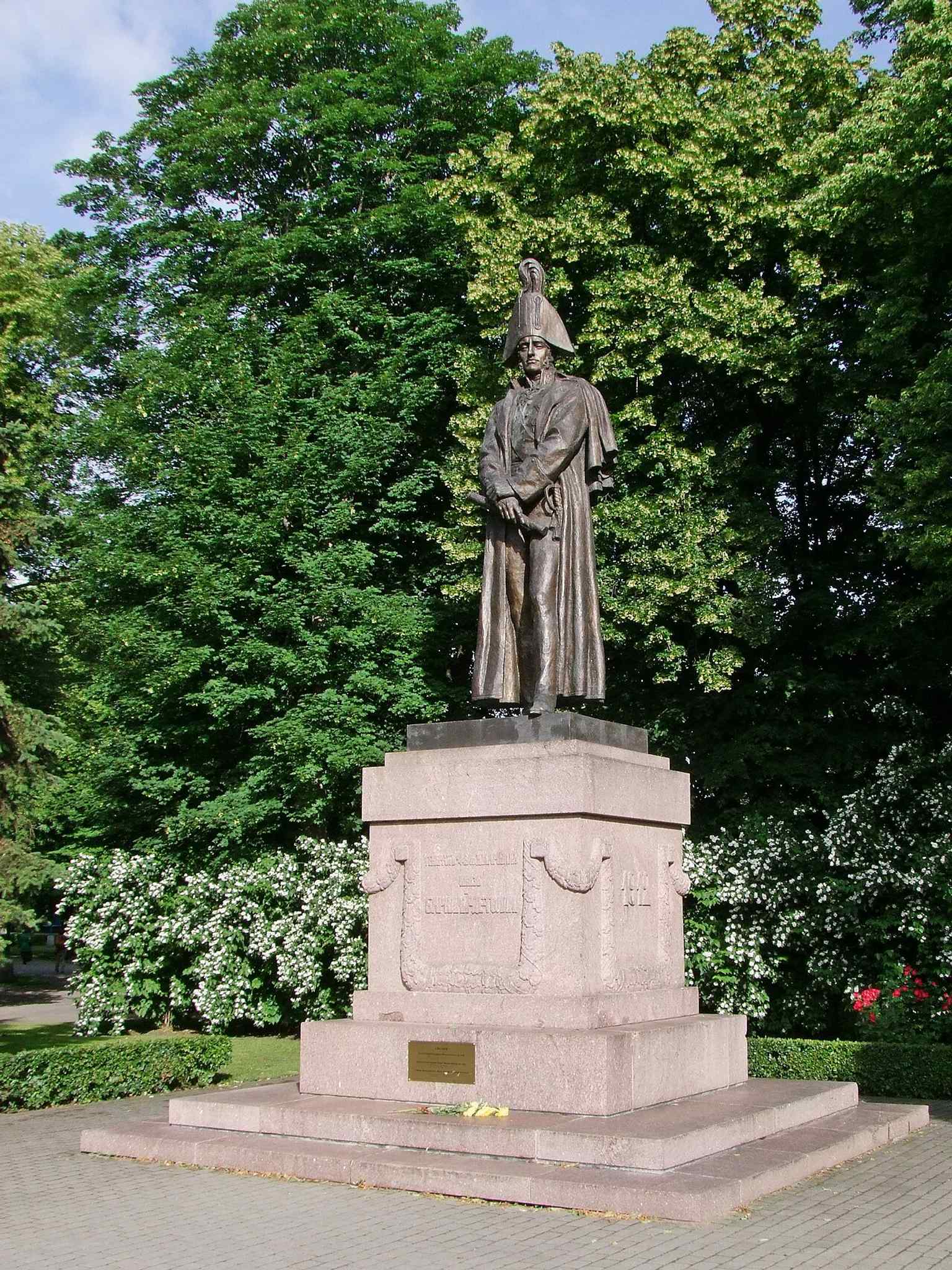
The original 1913 monument shown in Riga — the memorial that was later evacuated in 1915 and lost during the turmoil of World War I.Photo: Alta Falisa, Wikimedia Commons, CC BY-SA 4.0. Cropped & resized. For decades, only the pedestal and the memory remained. Then, in two thousand and one, the entrepreneur and patron Yevgeny Gomberg paid for a precise reconstruction. A small plaster model preserved in the Museum of the History of Riga and Navigation gave sculptor Alexei Murzin extraordinary detail. Murzin did not simply copy the old bronze. He made Barclay younger, and gave the surface a more living texture, with subtle marks of the sculptor’s hand. You can compare that revived version on your screen as well. The replica went up in July two thousand and two as a temporary installation, but public support kept it in place for more than two decades. Then politics shifted. In October twenty twenty-four, after protests, committee votes, and sharp public argument about empire and memory, the city ordered its removal. Overnight, the statue disappeared once again.
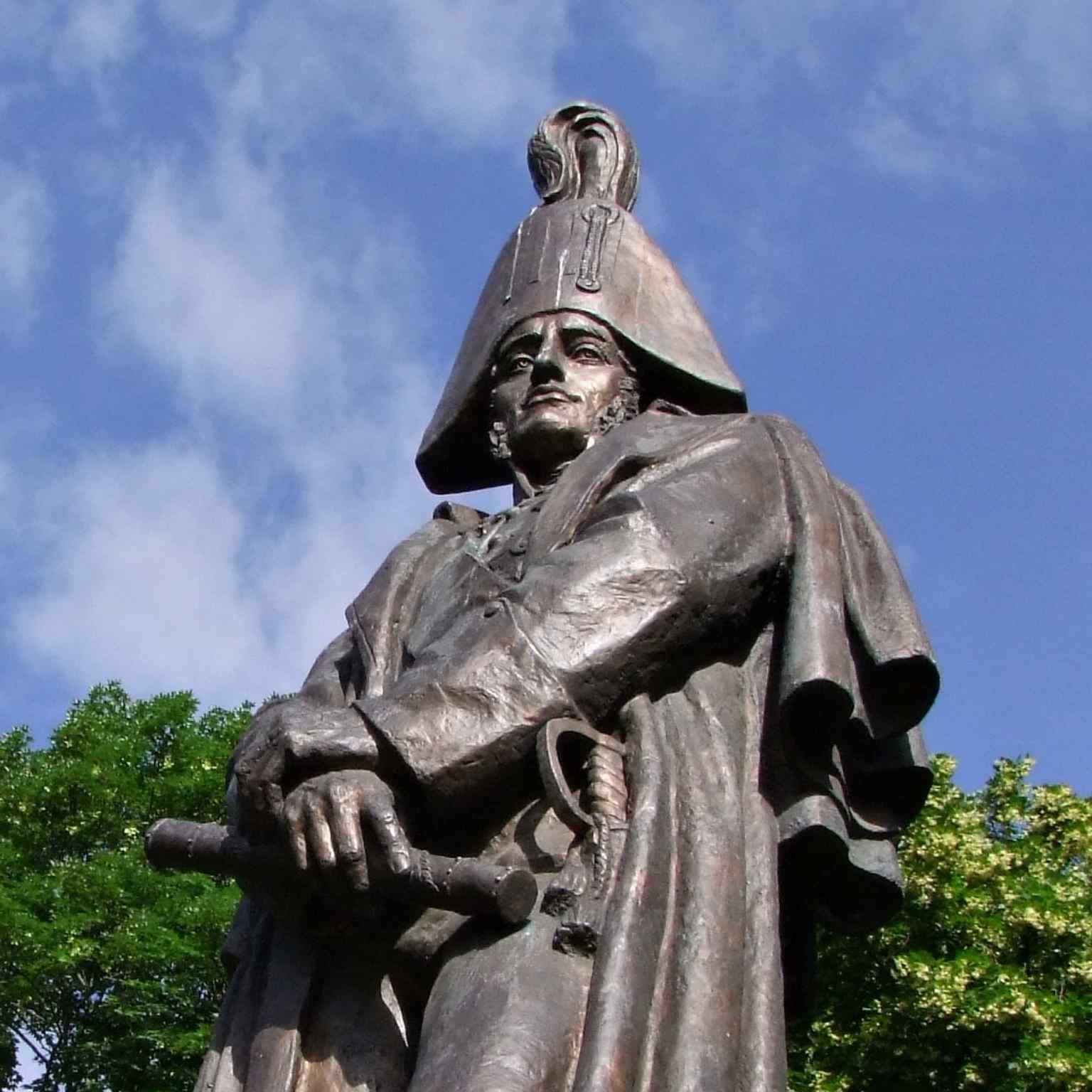
The 2002 reconstructed statue on its historic pedestal, a modern replacement for the vanished 1913 bronze original.Photo: Alta Falisa, Wikimedia Commons, CC BY-SA 4.0. Cropped & resized. As part of the Esplanade, you can visit this site at any time.
So this is no longer only a monument to Barclay de Tolly, but a monument to how cities argue with their own past.
When you are ready, continue toward the Art Academy, where stone and imagination take up the conversation anew.
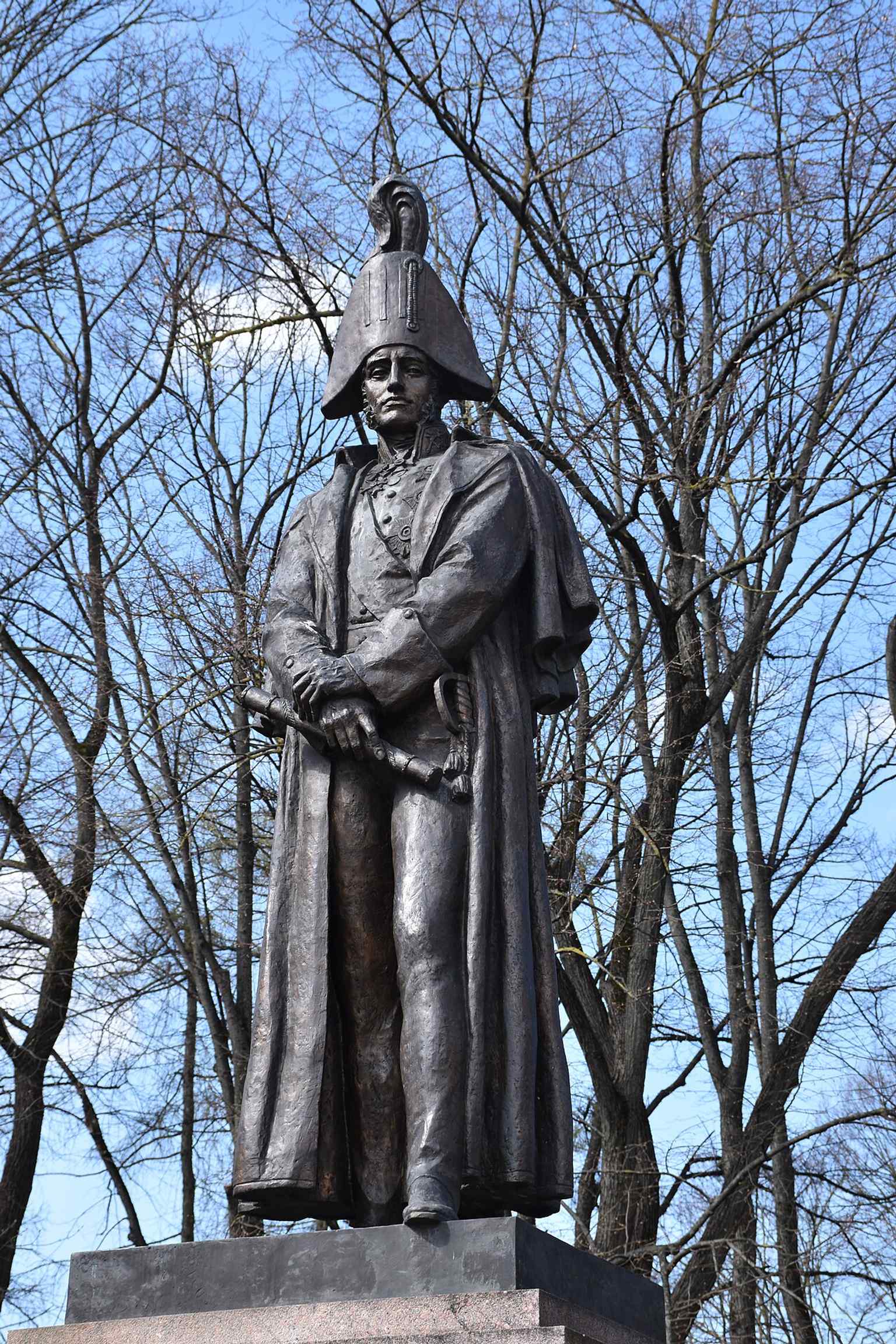
A later view of the monument in its Esplanade setting, where the 2002 copy stood for more than two decades before its 2024 removal.Photo: Vasyatka1, Wikimedia Commons, CC BY-SA 4.0. Cropped & resized. On your left stands a red-brick neo-Gothic building with steep gables, pointed spires, and a row of small turret-like shafts pricking the roofline. It has the air of a small…Read moreShow less
Open dedicated page →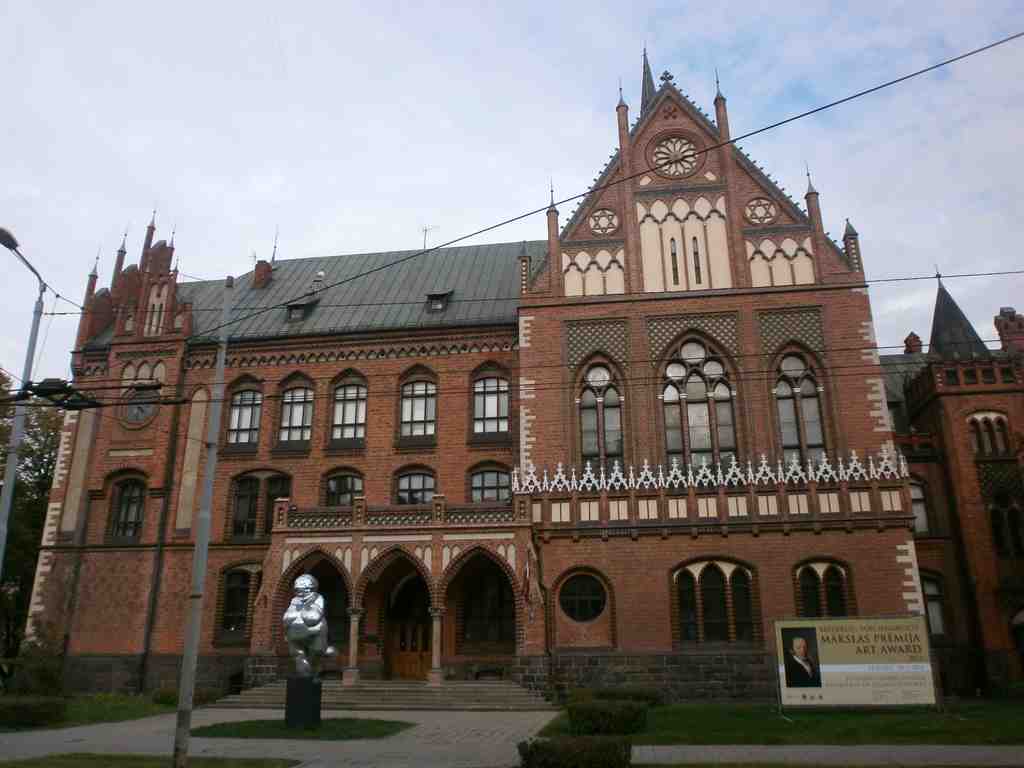
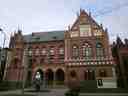
Art Academy of LatviaPhoto: Edgars2007, Wikimedia Commons, CC BY-SA 3.0. Cropped & resized. On your left stands a red-brick neo-Gothic building with steep gables, pointed spires, and a row of small turret-like shafts pricking the roofline.
It has the air of a small castle, and Riga locals often say so, sometimes with a grin and a comparison to Hogwarts. The picture in the app shows exactly why. But this fantasy in brick hides a rather practical mind. Architect Wilhelm Bokslaff designed the building in nineteen hundred and two, and builders finished it in nineteen hundred and five, not as an art school, but as the Commercial School of the Stock Exchange. He chose neo-Gothic, a revival style that borrowed the pointed shapes and upward sweep of medieval buildings, and August Voltz added the sandstone column capitals and sculptural details.
Now for the clever bit. The soil beneath this part of Riga is sandy, so Bokslaff had to support the whole structure on a foundation only about two and a half metres deep. That is a rather delicate footing for so weighty a building. He also wanted to avoid the indignity of exposed utility pipes spoiling the design, so he disguised the ventilation shafts as decorative roof turrets. Those little peaks above you are not just romantic decoration; they are engineering in costume.
The building found its true purpose after Latvia's first independence. In nineteen nineteen, the painter Vilhelms Purvitis became the founding force and first rector of the Art Academy of Latvia. The institution formally took shape that year, opened ceremonially in nineteen twenty-one, and moved into this building in nineteen twenty-two. Purvitis was famous for a teacher's challenge that sounds almost biblical in its simplicity. He would draw a charcoal line on the wall and tell his students, many will get this far, but only a few will go beyond it. Beyond this line, the artist begins.
That line grew harder to cross as the century darkened. Under Soviet occupation, the Academy changed names and endured purges against what officials called formalism, a vague charge used against artists whose work did not fit approved Socialist Realism, the state's preferred style of heroic workers and obedient optimism. Some students and teachers fled west, some were deported, and some survived by painting safer subjects. Purvitis himself escaped in nineteen forty-four as the Red Army approached. He carried hundreds of his paintings into exile, and most were lost in the chaos of war. He died in Germany in nineteen forty-five, never returning here.
And still the place endured. It continued to train painters, sculptors, designers, restorers, and makers of moving image and sound. It also kept its unruly student spirit. The Academy Carnival became legendary, turning these stern corridors into a wildly inventive maze of costumes, sets, and artistic mischief. One image in the app hints at that habit of letting art spill beyond the walls and into public space. If you ever want to step inside on another visit, the Academy is generally open from eight in the morning until eight in the evening, and it closes on Sundays. This is a building where discipline and imagination have negotiated with one another for more than a century. When you are ready, continue on to the museum nearby, where that imagination steps into the public eye.
On your left, look for a pale plaster-and-sandstone building with a rounded dome and a sculpted pediment crowned by Athena. This is the Latvian National Museum of Art, keeper of…Read moreShow less
Open dedicated page →
Latvian National Museum of ArtPhoto: AS LNMM, Wikimedia Commons, Public domain. Cropped & resized. On your left, look for a pale plaster-and-sandstone building with a rounded dome and a sculpted pediment crowned by Athena.
This is the Latvian National Museum of Art, keeper of the country’s largest art collection, with more than sixty-five thousand works tracing Baltic and Latvian art from the middle of the eighteenth century to the present. It opened in the first years of the twentieth century, when the Baltic German architect Wilhelm Neumann gave Riga something rather bold: the first building in the Baltics created specifically as a museum.
Neumann also became the museum’s first director, serving from nineteen hundred and five to nineteen nineteen, and he imagined this place as a true Temple of Art. The city budget restrained him, as budgets so often do, but he still managed to dress the building in real ceremony: Baroque-style curves, granite and sandstone, a grand marble staircase, and a vestibule touched with gold leaf. If you glance at the front above the entrance, that theatrical sculpture group is by August Volz. Athena, the goddess of wisdom, presides there, surrounded by figures representing painting, sculpture, and architecture, as if the building itself is announcing its mission before you even cross the threshold.
Inside, Neumann made the museum part gallery, part statement of confidence. He invited leading local painters, including Vilhelms Purvītis and Gerhard von Rosen, to create monumental works for the upper lobby. There’s a detail image on your screen if you want a closer sense of that craftsmanship and ceremonial design. Purvītis later became the museum’s most important director, guiding it from nineteen nineteen until the Soviet occupation in nineteen forty. He did not merely manage the collection; he built a national one, gathering Latvian modernist works to help define a young country’s cultural identity. That vision survived war by a whisker more than once. In nineteen fifteen, as the front approached Riga, Neumann sent fifty-nine of the museum’s most valuable works to Moscow for safety. They eventually returned. Later, Soviet officials condemned modernist art as “formalist,” meaning too experimental and too independent, and hid many of Purvītis’s acquisitions in storage for decades.
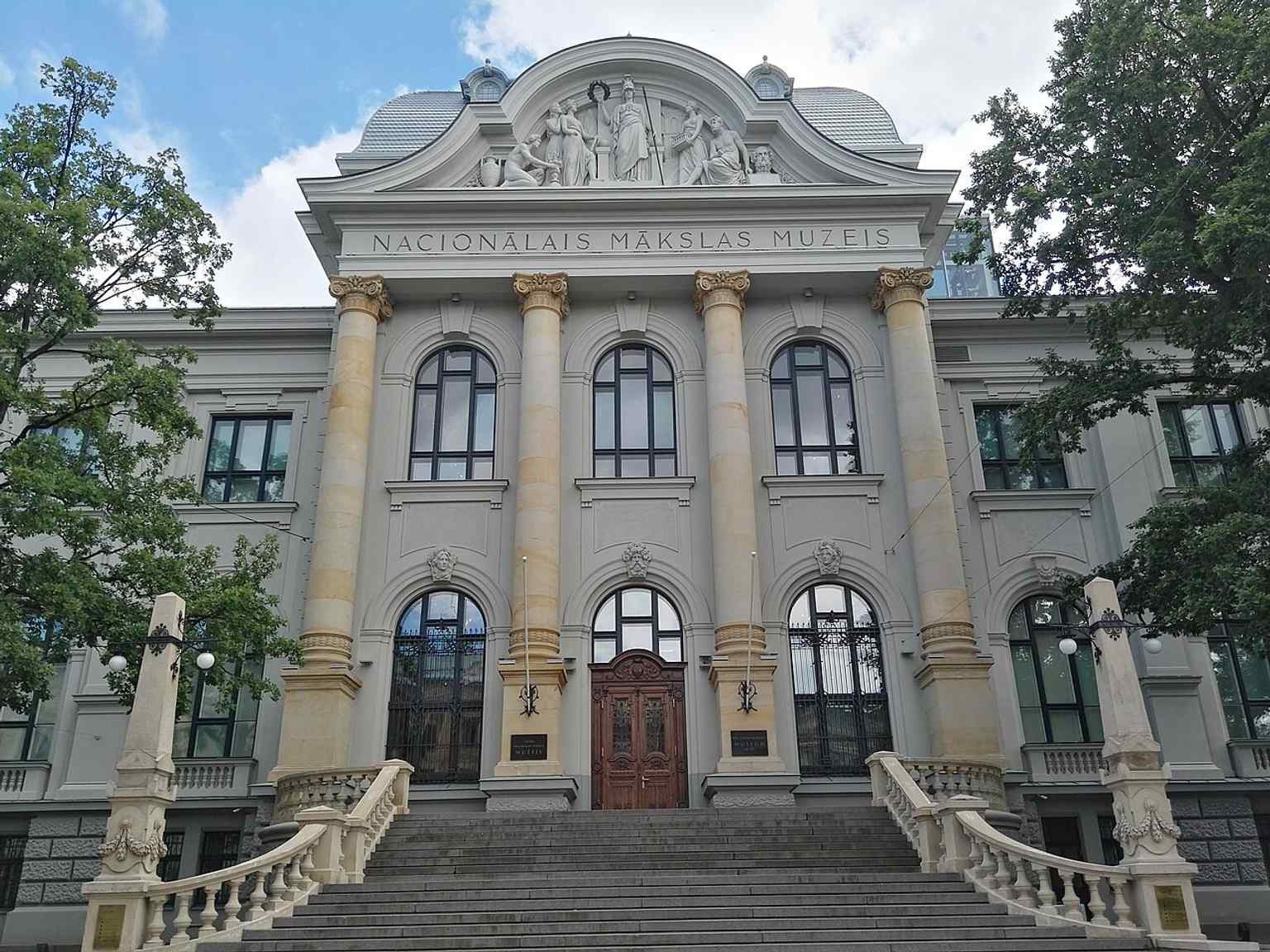
A close view of the museum’s stone stair and balustrade, echoing the lavish craftsmanship added to Neumann’s “Temple of Art.”Photo: Trogain, Wikimedia Commons, CC BY-SA 4.0. Cropped & resized. The building itself changed dramatically in the twenty-tens, when Lithuanian architects from Processoffice doubled its size by excavating beneath it while keeping the old structure standing. If you like, have a look at the before-and-after image in the app; it shows just how much was added beneath this stately exterior. They created a new underground wing, a glass floor in the courtyard amphitheatre, and a new “Gold Stair” linking the historic museum to its modern depths.
Even now, this old Temple of Art remains alive to the present: in twenty twenty-five, the Golden Globe and Oscar won by the animated film Flow drew enormous crowds here, turning the museum into a place of national celebration all over again.
If you plan to step inside, it is closed on Mondays and Thursdays, opens at ten on the other days, closes at six on Tuesdays and Wednesdays, stays open until eight on Fridays, and shuts at five on weekends.
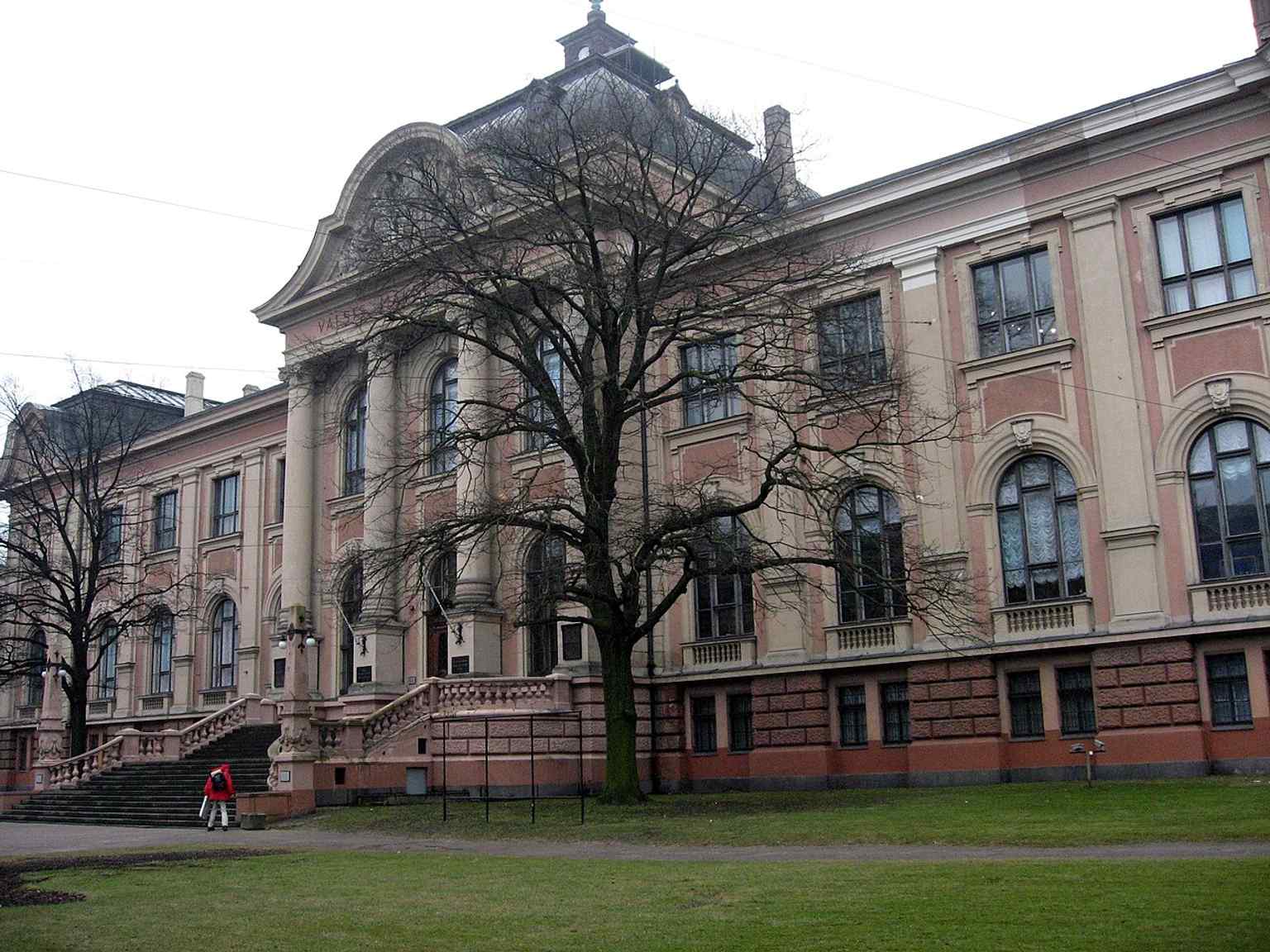
The museum’s grand historicist façade, built in 1903–1905 as one of the Baltics’ first purpose-built museum buildings.Photo: Dezidor, Wikimedia Commons, CC BY 3.0. Cropped & resized. 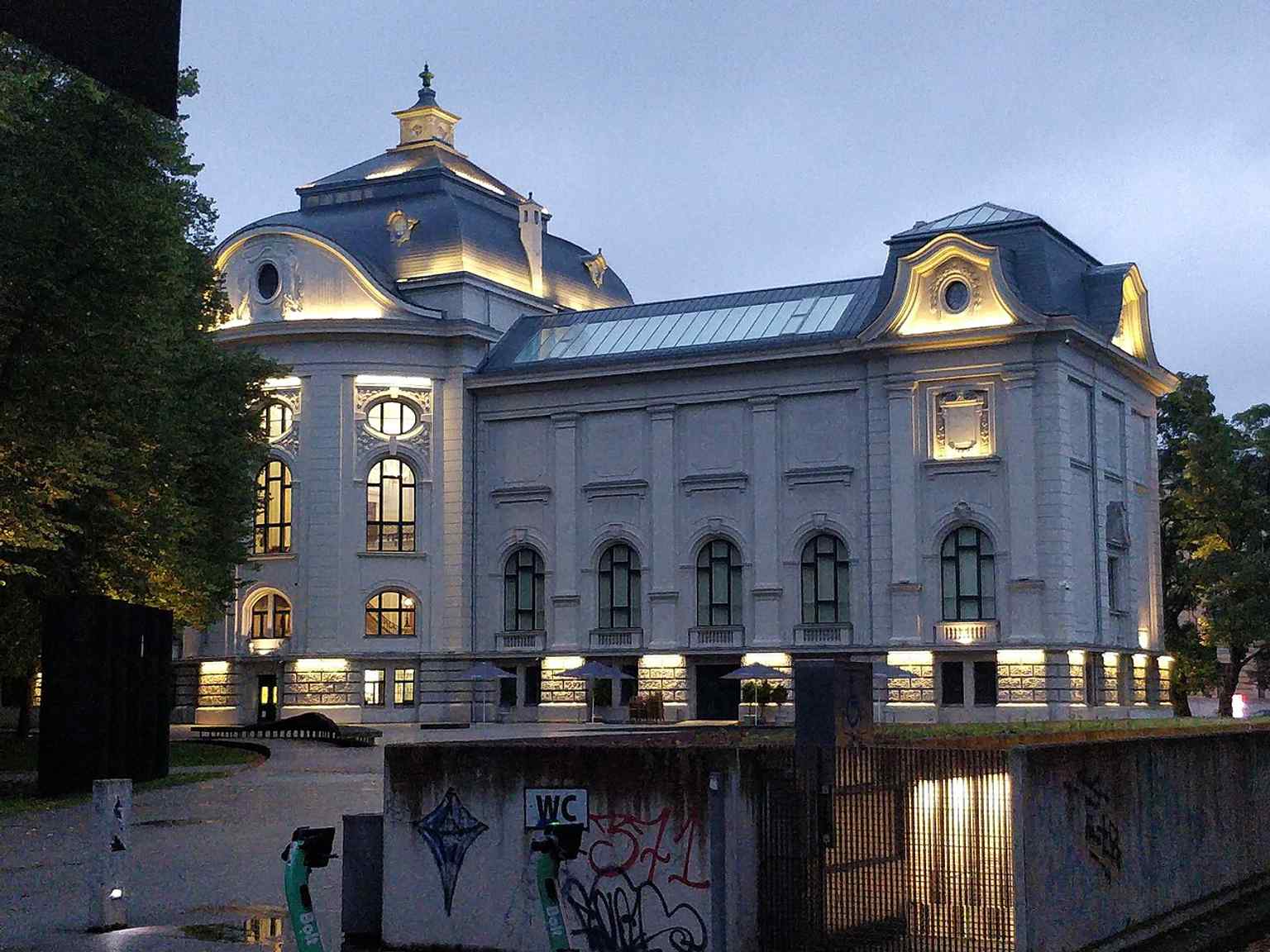
Seen from the park, this exterior shows the Latvian National Museum of Art next to Riga’s greenery, matching its landmark setting in Janis Rozentāls Square.Photo: Jaakko Luttinen, Wikimedia Commons, CC BY-SA 4.0. Cropped & resized.

Frequently asked questions
How do I start the tour?
After purchase, download the AudaTours app and enter your redemption code. The tour will be ready to start immediately - just tap play and follow the GPS-guided route.
Do I need internet during the tour?
No! Download the tour before you start and enjoy it fully offline. Only the chat feature requires internet. We recommend downloading on WiFi to save mobile data.
Is this a guided group tour?
No - this is a self-guided audio tour. You explore independently at your own pace, with audio narration playing through your phone. No tour guide, no group, no schedule.
How long does the tour take?
Most tours take 60–90 minutes to complete, but you control the pace entirely. Pause, skip stops, or take breaks whenever you want.
What if I can't finish the tour today?
No problem! Tours have lifetime access. Pause and resume whenever you like - tomorrow, next week, or next year. Your progress is saved.
What languages are available?
All tours are available in 50+ languages. Select your preferred language when redeeming your code. Note: language cannot be changed after tour generation.
Where do I access the tour after purchase?
Download the free AudaTours app from the App Store or Google Play. Enter your redemption code (sent via email) and the tour will appear in your library, ready to download and start.
If you don't enjoy the tour, we'll refund your purchase. Contact us at [email protected]
Checkout securely with 






.jpg)


.jpg)
.jpg)


.jpg)
.jpg)


.png)


.jpg)


.jpg)