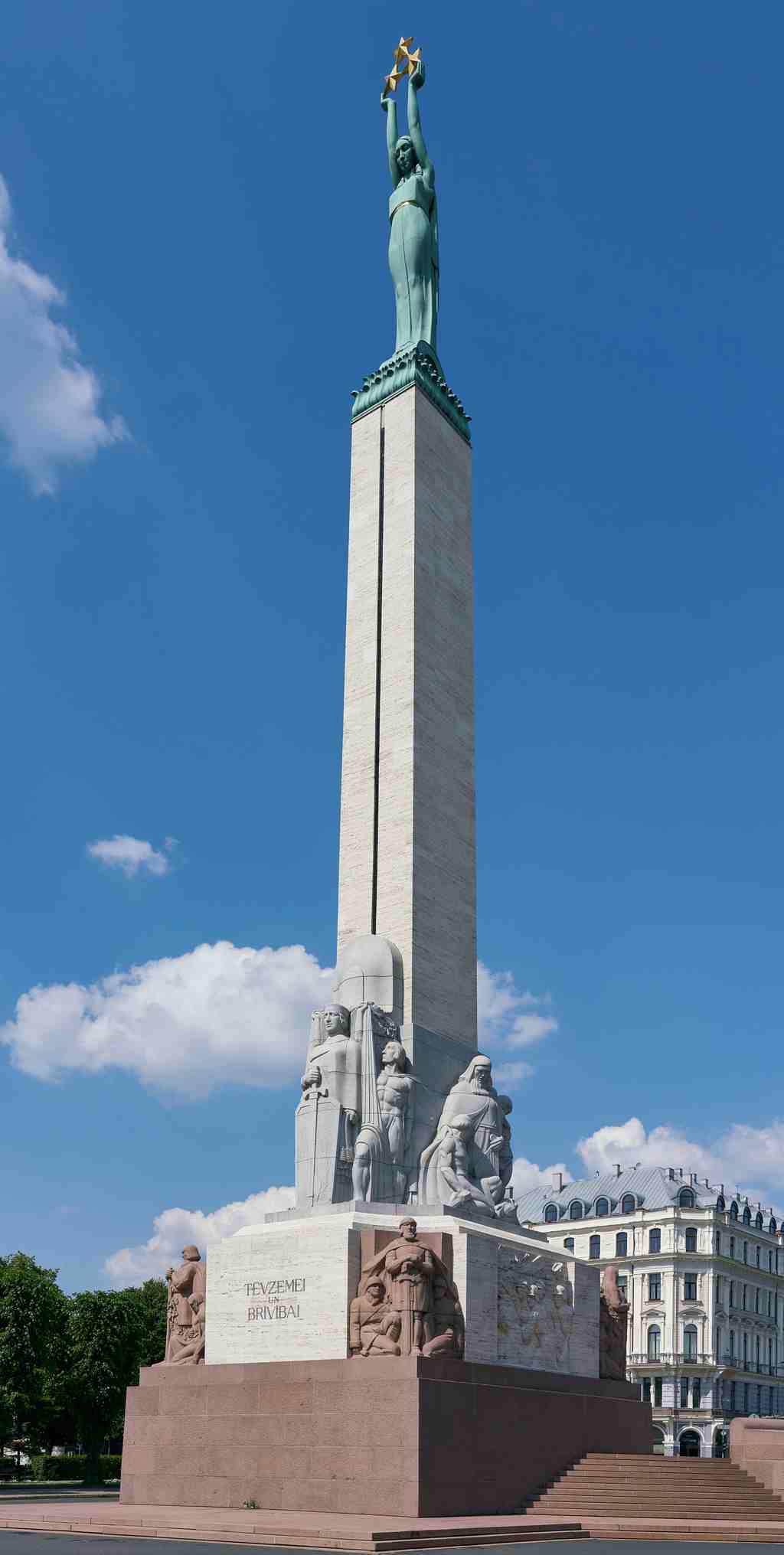
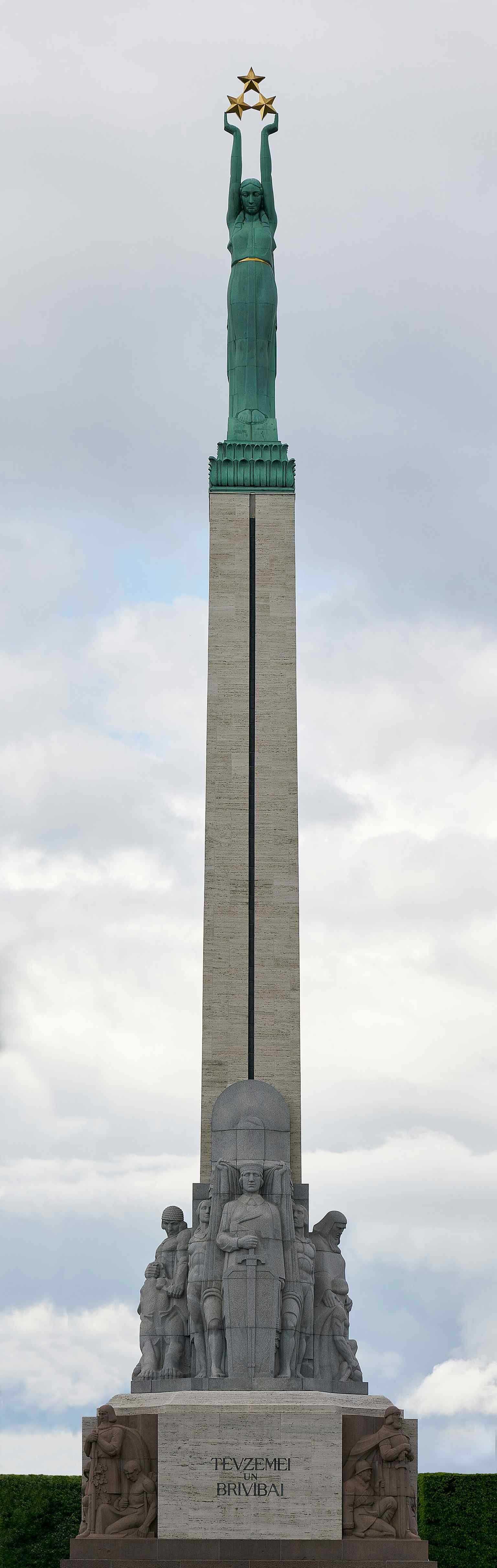
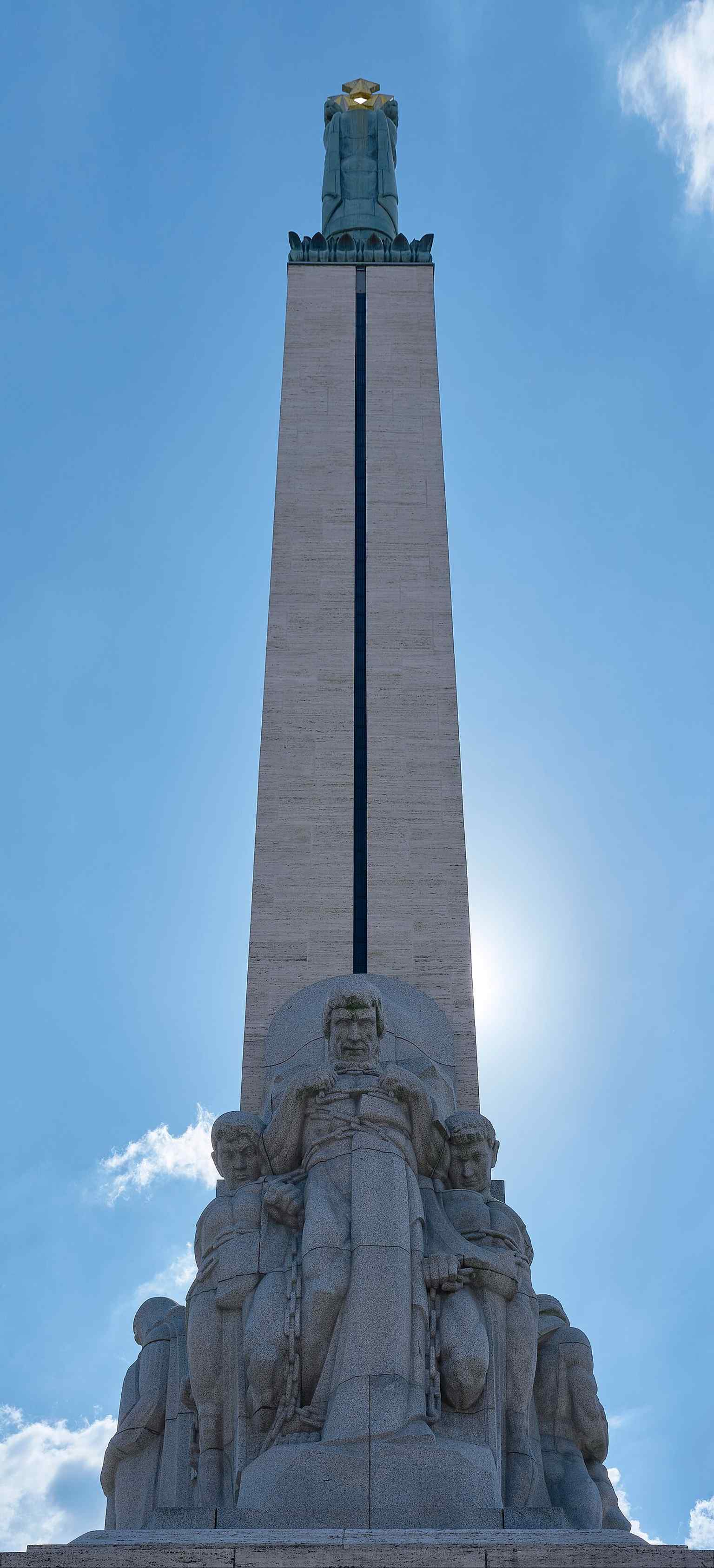
On your left rises a pale travertine column above a stepped red granite base, crowned by a copper woman holding three gilded stars high over Riga.
This is the Freedom Monument, Latvia’s great civic altar, unveiled in nineteen thirty-five to honour those killed in the War of Independence after the First World War. At forty-two metres tall, it is not merely a memorial; it is a statement of survival. The sculptor Kārlis Zāle designed it after years of competitions and arguments, under the stirring title “Shine like a star.” Latvians paid for it themselves through private donations, which tells you rather a lot about how deeply they wanted this place.
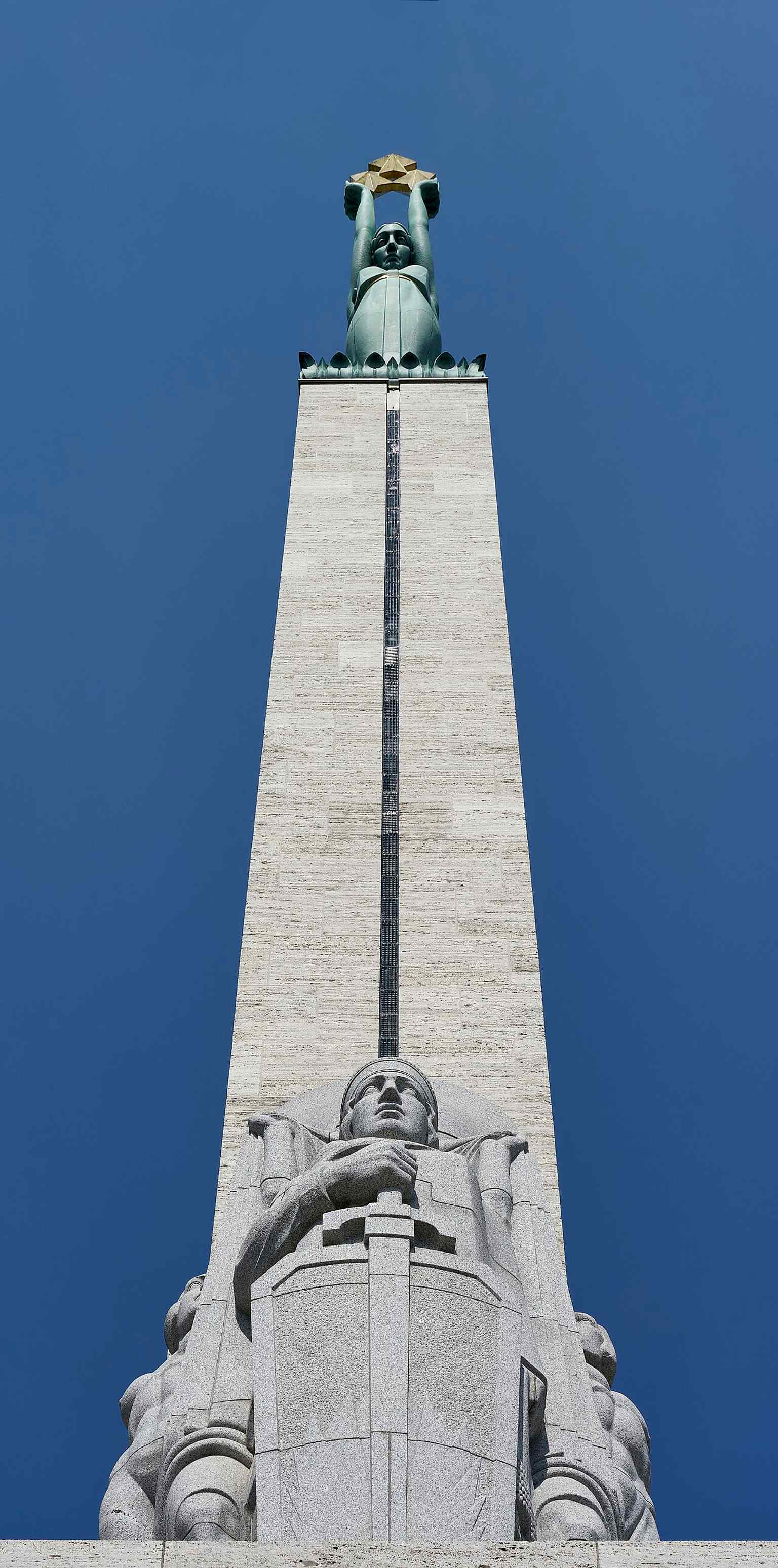
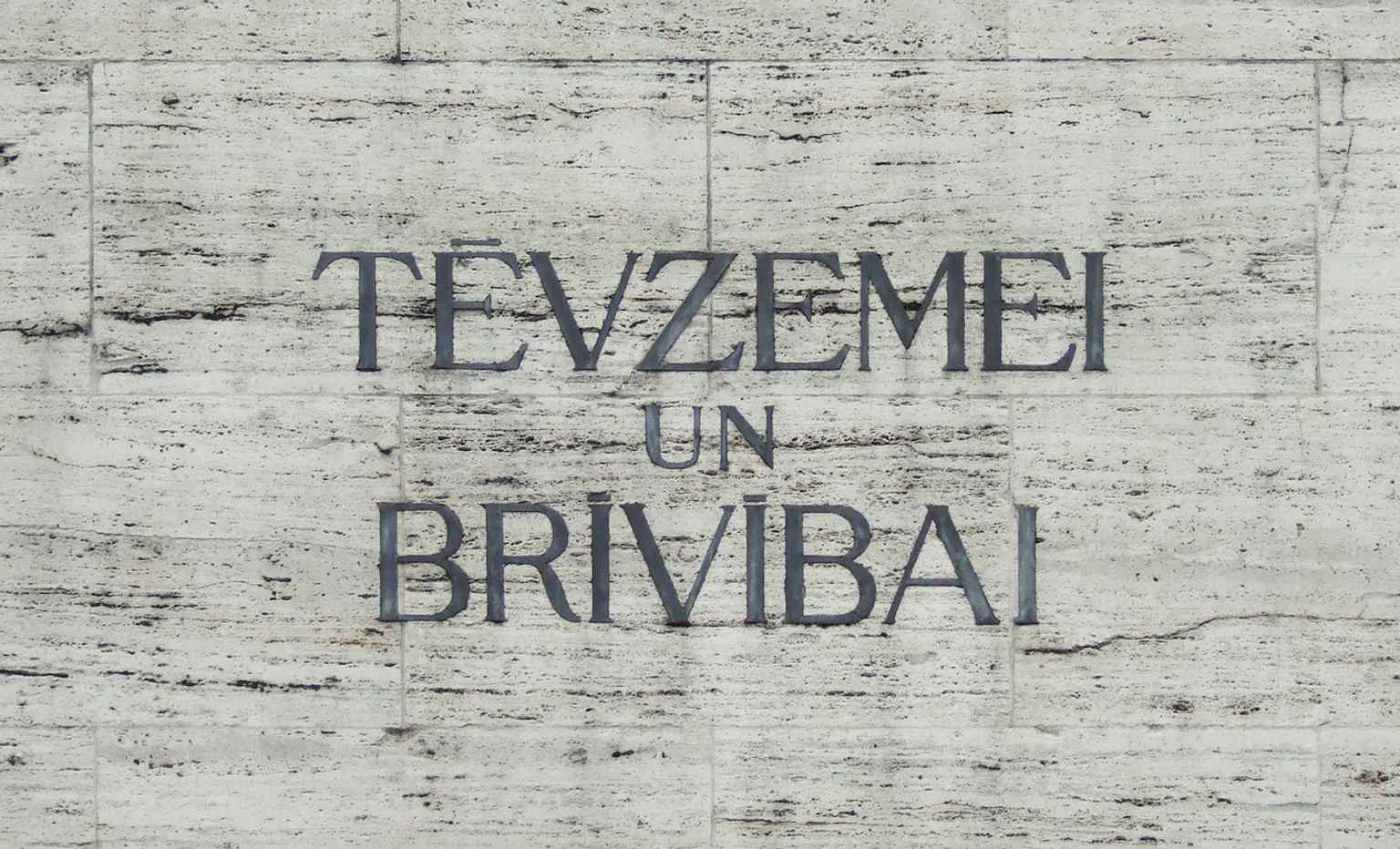
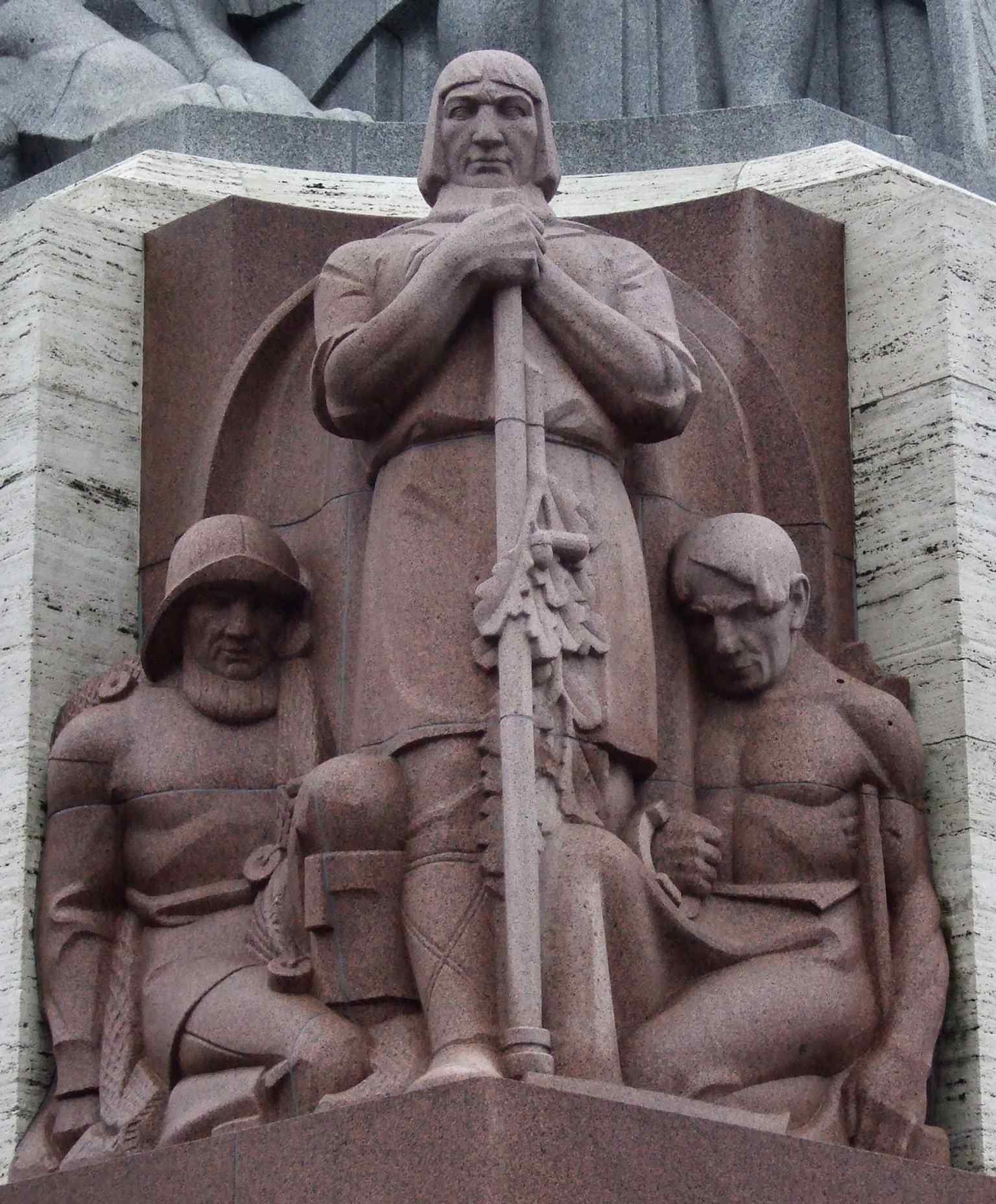
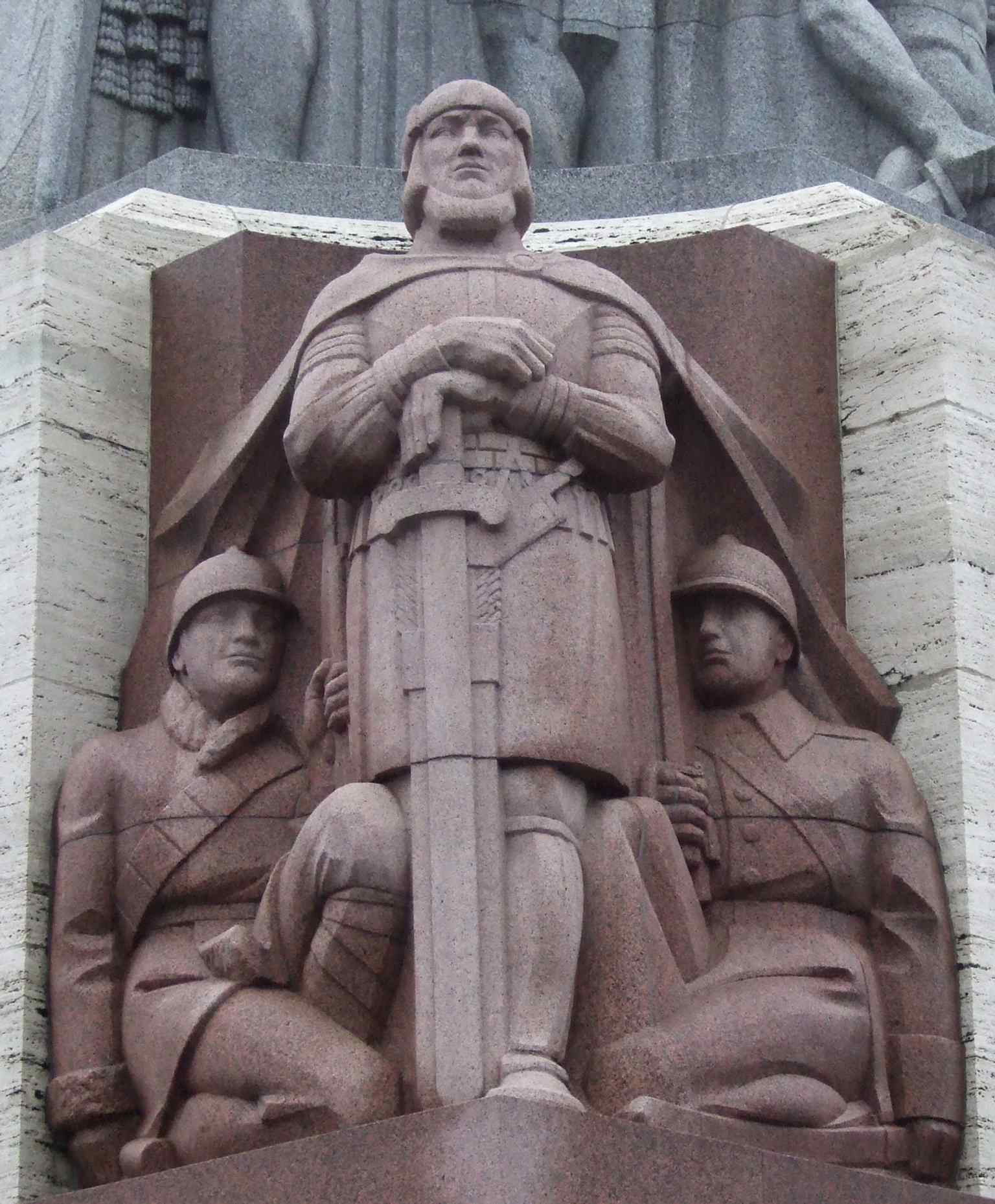
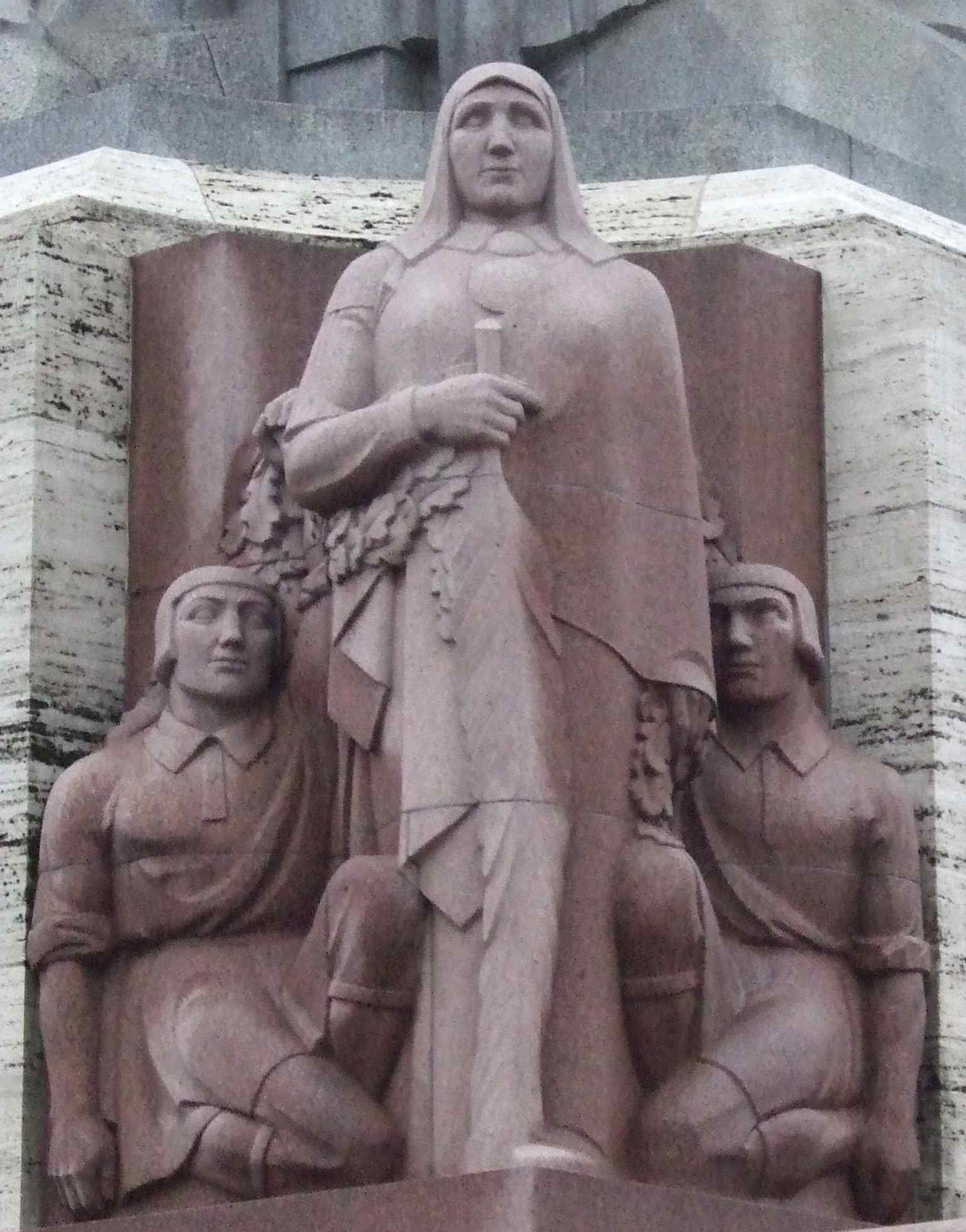
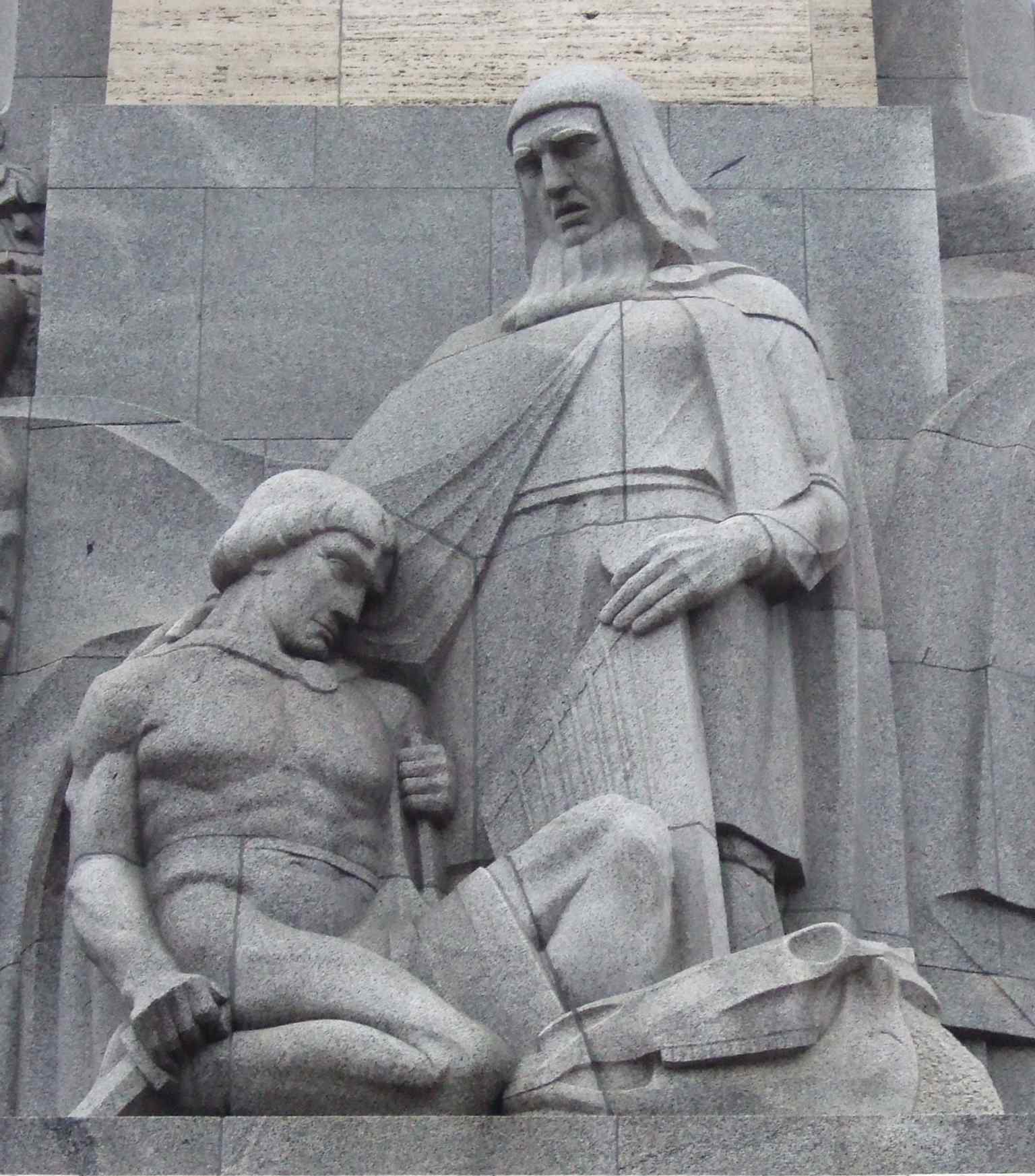
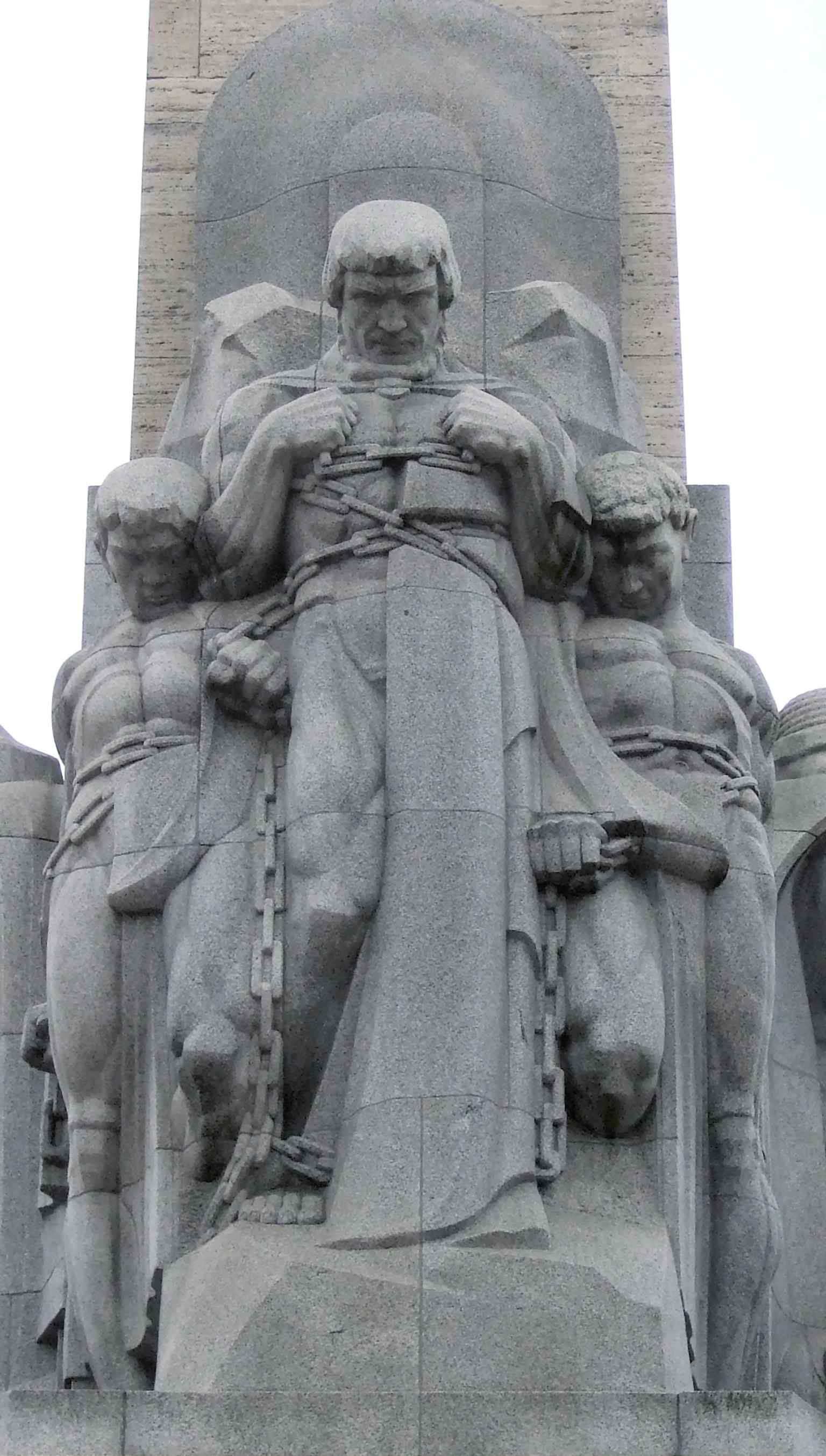
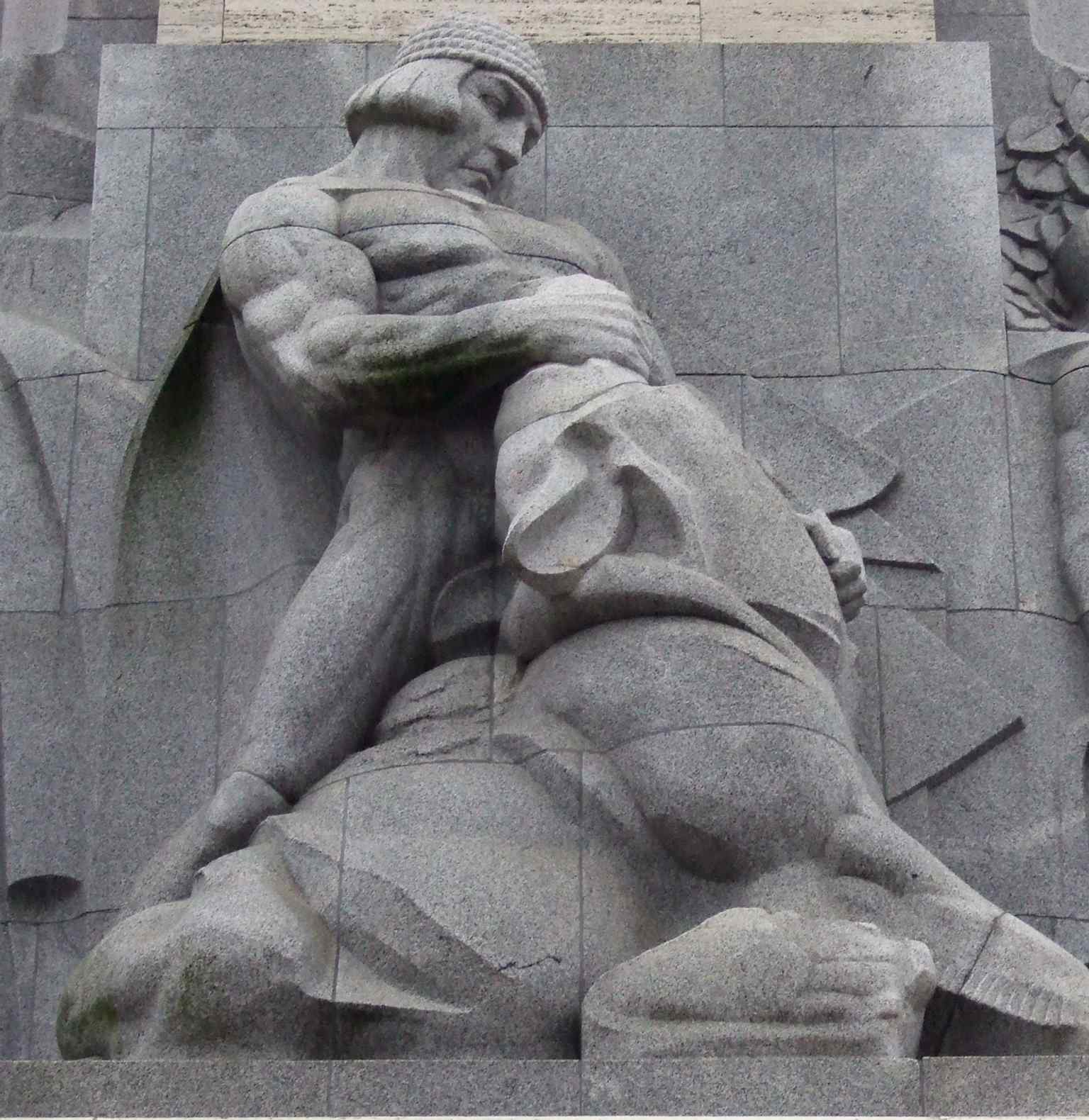
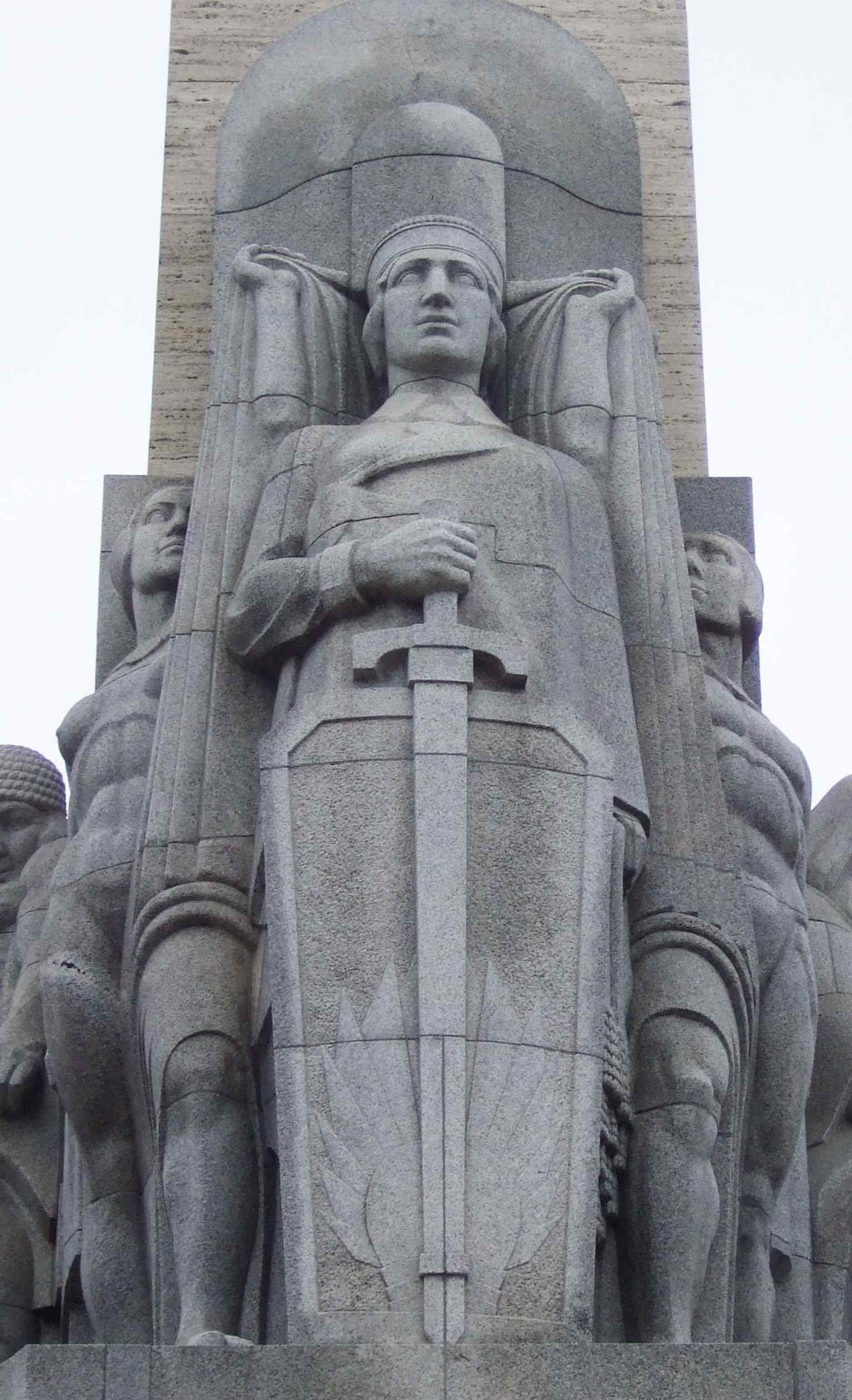
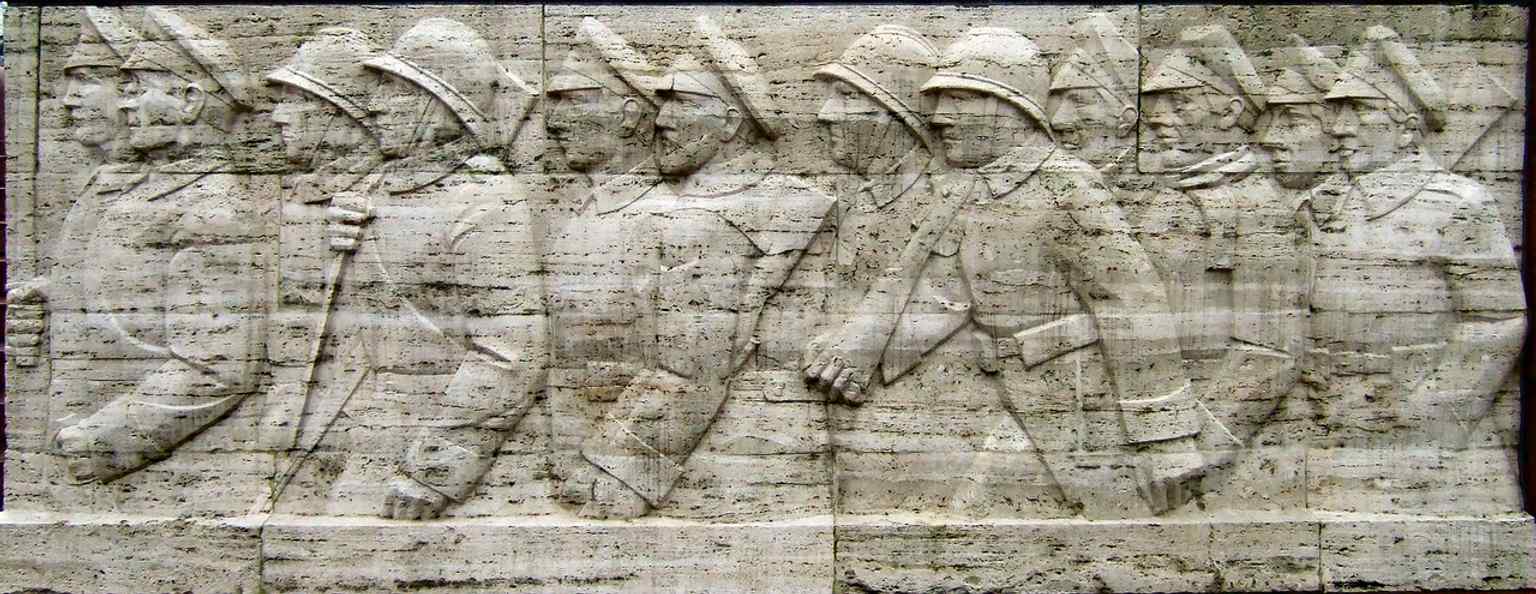
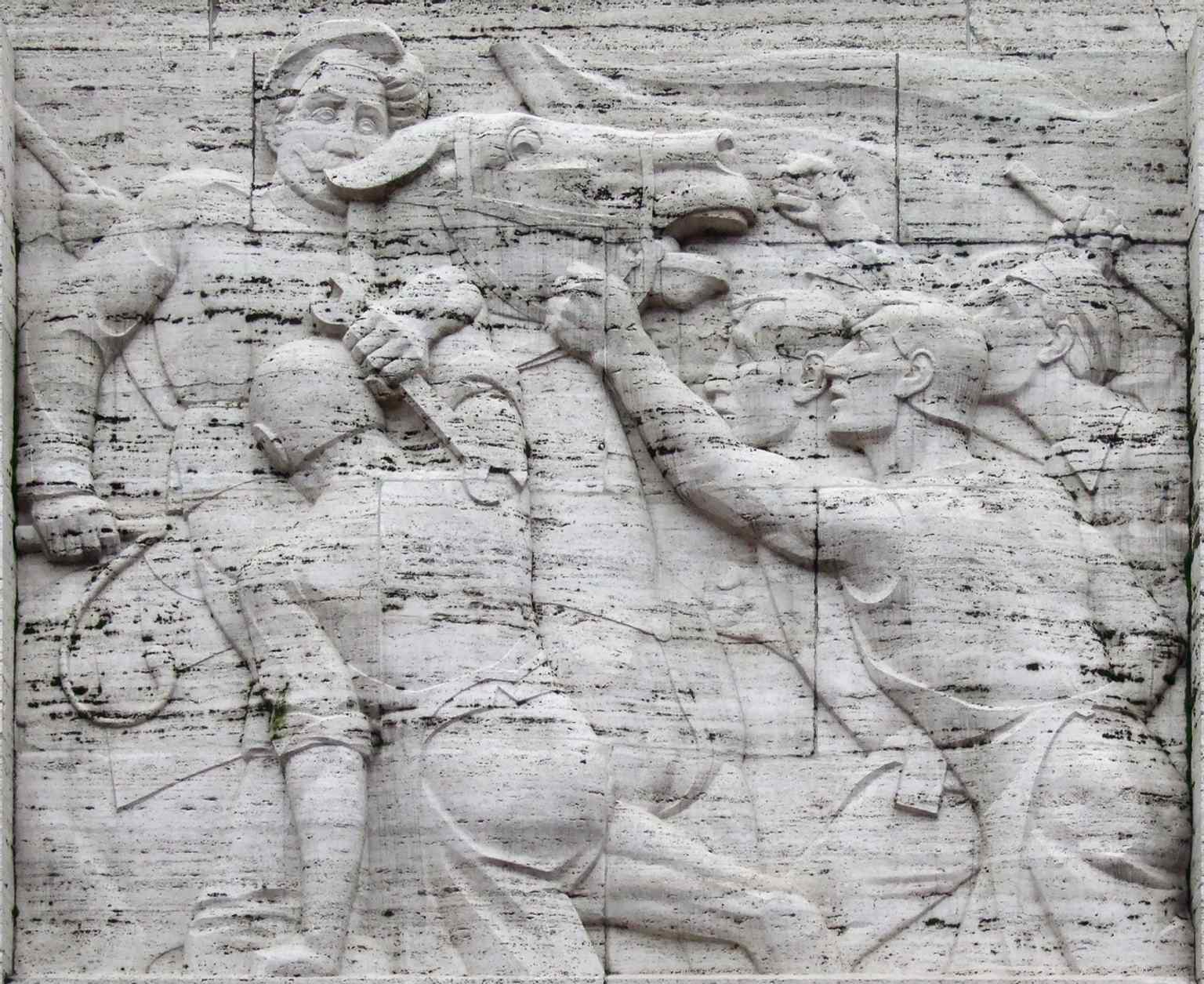
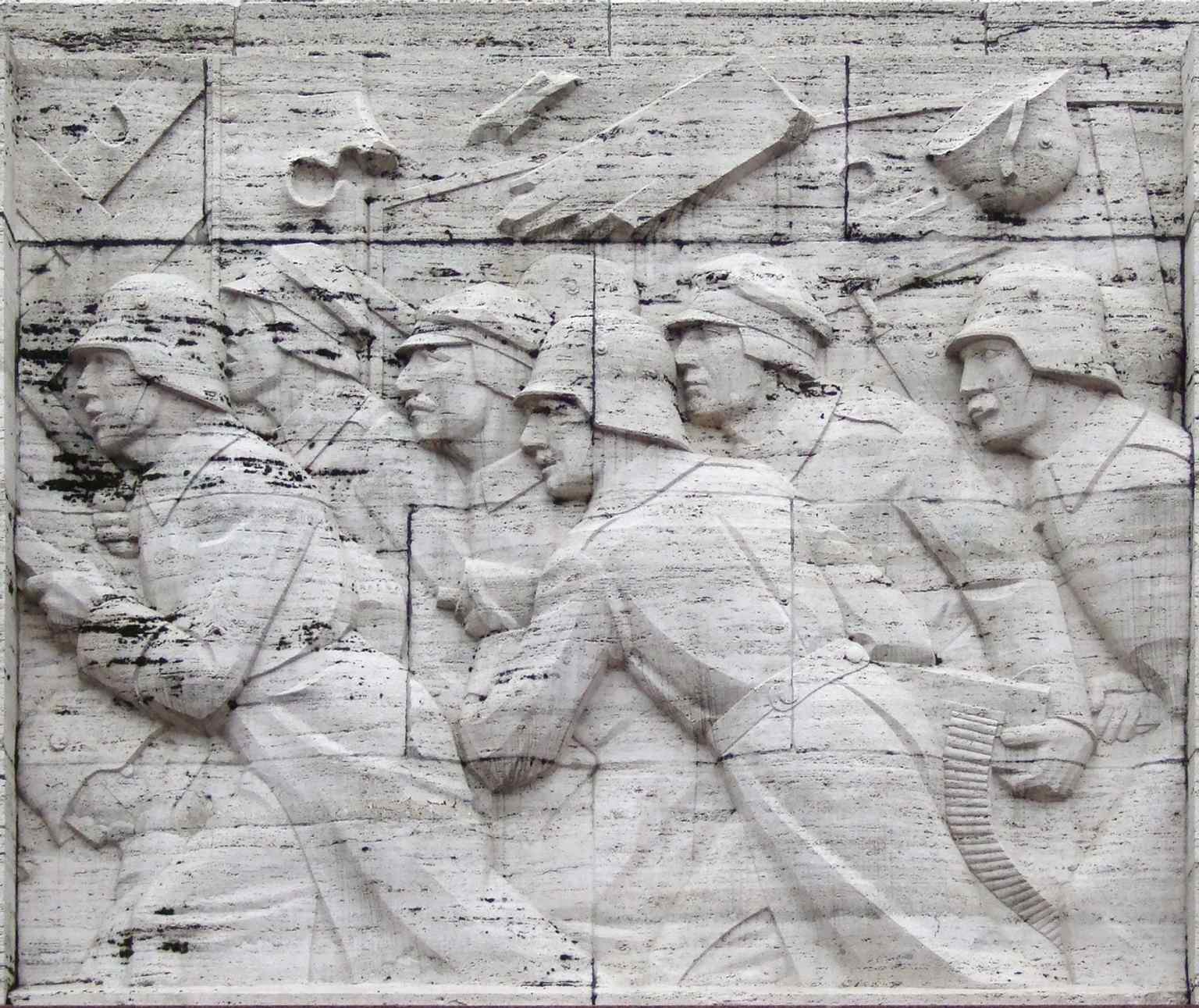
If you look at the monument as a whole, you can see how carefully Zāle built its message. The stacked forms grow narrower as they climb, drawing your eye upward to Liberty herself. Around the base are thirteen groups of sculptures and shallow relief carvings telling the Latvian story through workers, soldiers, family, learning, myth and struggle. On the front, the central inscription reads, “For Fatherland and Freedom.” Nearby, one group shows labour: a fisherman, a craftsman, and a farmer with a scythe. Another brings ancient and modern defenders together. Elsewhere you find Chain Breakers straining against oppression, and Lāčplēsis, the legendary Bear-Slayer of Latvian folklore.
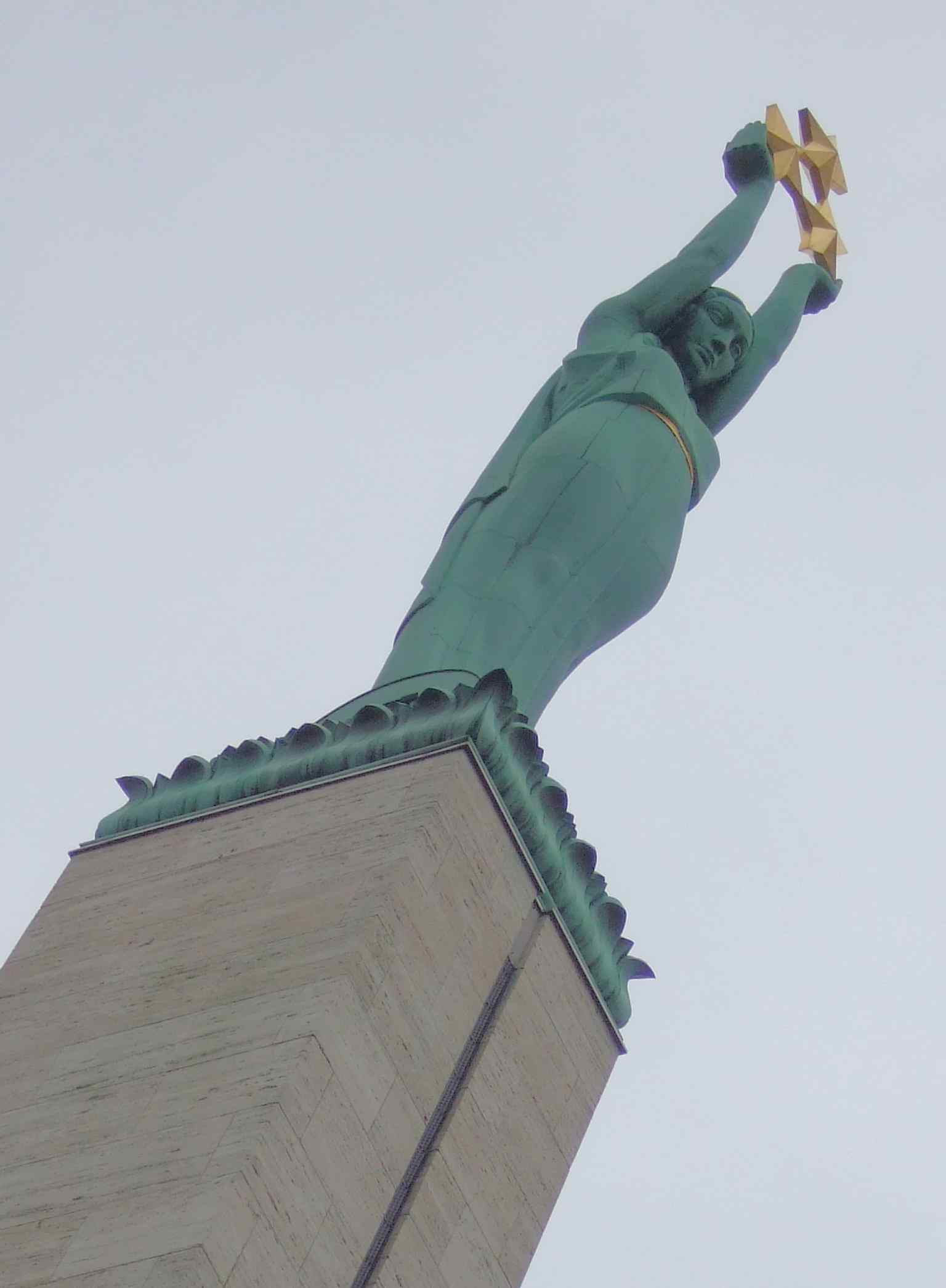
The figure at the top is affectionately called Milda. She lifts three stars for Latvia’s historic regions: Vidzeme, Latgale, and Courland. If you’d like a closer look at her face and the stars, glance at the app image now. There is even a persistent story that a Lithuanian woman living in Riga served as her model, though historians have never found firm proof. The nickname stayed anyway, and sometimes that is how national symbols work: fact steps aside, affection takes over.
The copper figure of Liberty, affectionately called Milda, holding the three gilded stars that symbolize Latvia’s historic regions.Photo: Peters J. Vecrumba, Wikimedia Commons, CC BY 3.0. Cropped & resized.
This monument stood through the Soviet occupation when it might easily have vanished. Officials discussed demolition more than once. One account credits the sculptor Vera Mukhina, herself born in Riga, with arguing that the monument had exceptional artistic value and that destroying it would wound the Latvian people. The authorities left it standing, but tried to twist its meaning. Locals were not fooled. Laying flowers here became an act of quiet defiance, so risky that people joked this was a “travel agency” offering a one-way ticket to Siberia.
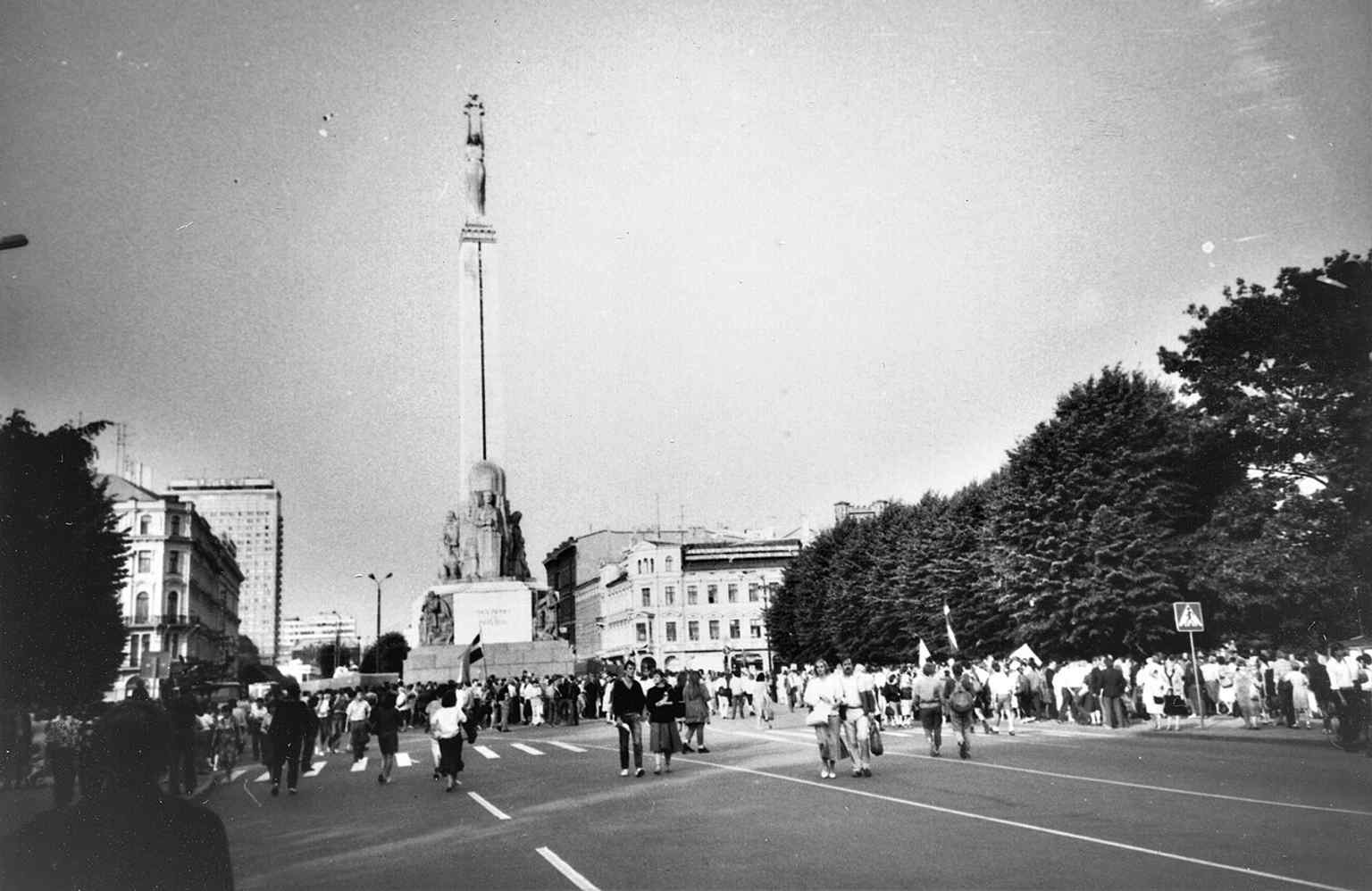
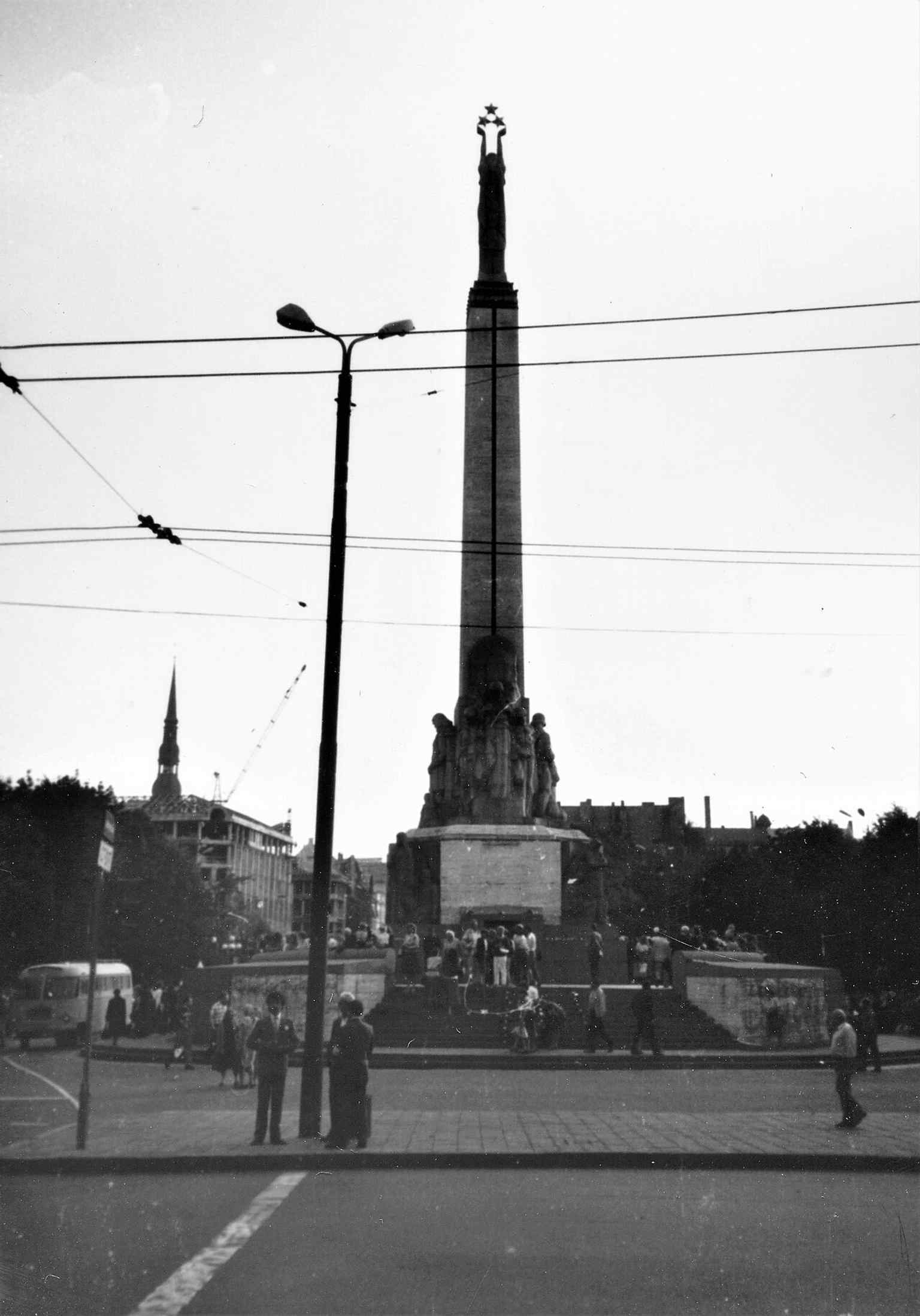
Then, on the fourteenth of June, nineteen eighty-seven, about five thousand people gathered here to lay flowers for victims of Soviet deportations. That act helped revive Latvia’s independence movement. If you like, check the before-and-after image in the app; it captures how this place changed from a wartime backdrop in nineteen forty-one into the restored heart of an independent capital. So this monument is not frozen stone at all; it is memory standing upright. You can return whenever you wish.
When you are ready, continue on toward the Monument to Rūdolfs Blaumanis.
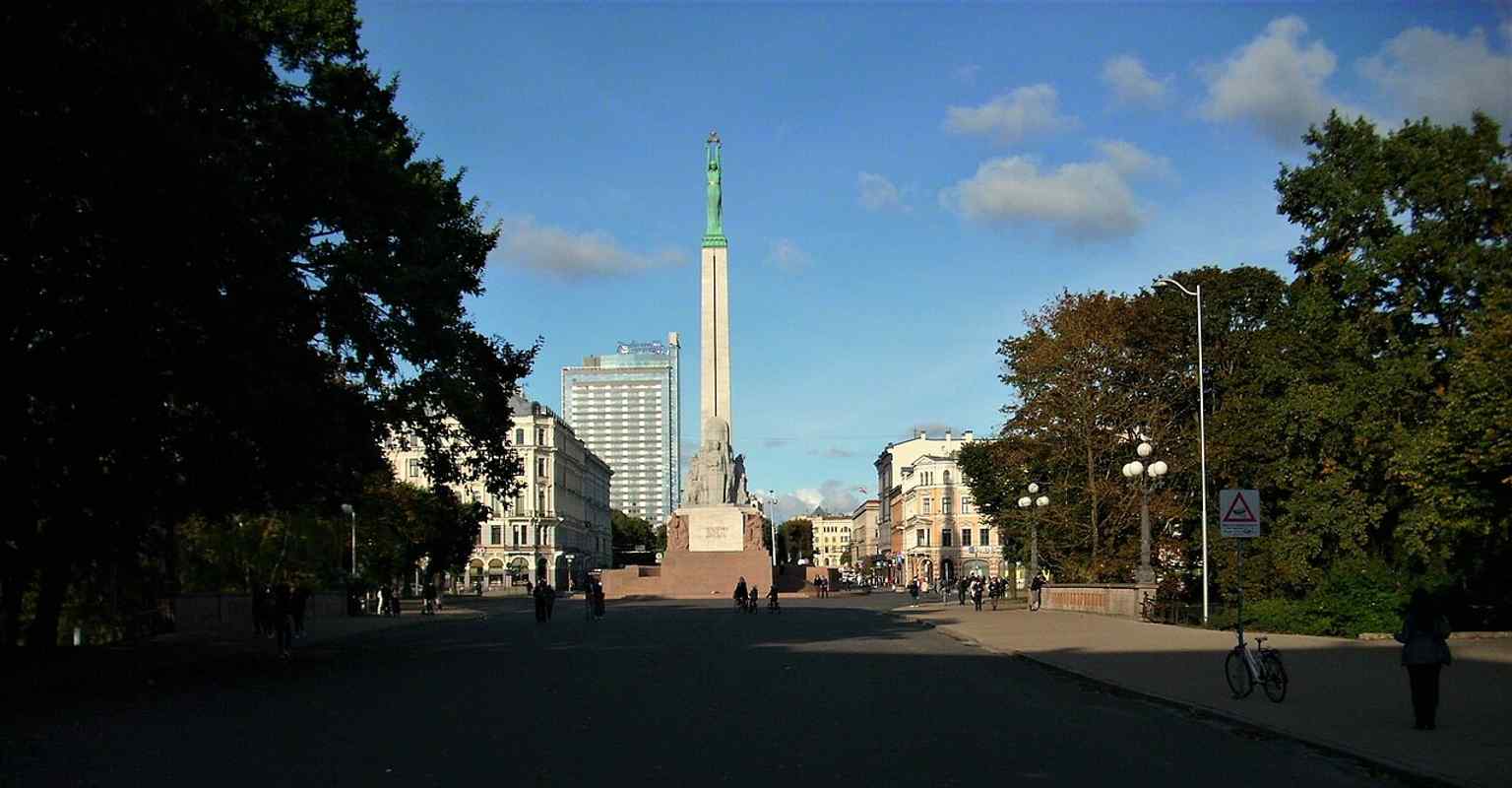
Full frontal view of the Freedom Monument, the 42-meter symbol of Latvian independence and a focal point for national ceremonies in central Riga.Photo: Virtual-Pano, Wikimedia Commons, CC BY-SA 4.0. Cropped & resized.A full-height side view showing the monument’s stepped granite base and tall travertine column topped by Liberty and the three stars.Photo: Virtual-Pano, Wikimedia Commons, CC BY-SA 4.0. Cropped & resized.A back-side view that helps show the monument’s layered structure and the sculptural groups that surround its base.Photo: Virtual-Pano, Wikimedia Commons, CC BY-SA 4.0. Cropped & resized.The inscription ‘For Fatherland and Freedom’ by Kārlis Skalbe, placed on the front of the monument as its core dedication.Photo: Peters J. Vecrumba, Wikimedia Commons, CC BY 3.0. Cropped & resized.The ‘Work’ sculptural group, one of the monument’s 13 groups, representing Latvian labor and rural strength.Photo: Peters J. Vecrumba, Wikimedia Commons, CC BY 3.0. Cropped & resized.‘Guards of the Fatherland’ depicts ancient and modern defenders together, linking Latvian history to the monument’s war memorial purpose.Photo: Peters J. Vecrumba, Wikimedia Commons, CC BY 3.0. Cropped & resized.The ‘Family’ group shows a mother with her children, part of the monument’s wider story about Latvian people and culture.Photo: Peters J. Vecrumba, Wikimedia Commons, CC BY 3.0. Cropped & resized.The ‘Vaidelotis’ figure group, reflecting the monument’s use of historical and mythic imagery drawn from Latvian identity.Photo: Peters J. Vecrumba, Wikimedia Commons, CC BY 3.0. Cropped & resized.The ‘Chain Breakers’ sculpture captures the theme of breaking free from oppression, central to the monument’s symbolism.Photo: Peters J. Vecrumba, Wikimedia Commons, CC BY 3.0. Cropped & resized.Lāčplēsis, the legendary Bear-Slayer, appears as one of the monument’s grey sculpture groups honoring Latvian heroic tradition.Photo: Peters J. Vecrumba, Wikimedia Commons, CC BY 3.0. Cropped & resized.The ‘Latvia’ figure group at the base ties the monument to the nation itself and its post-independence identity.Photo: Peters J. Vecrumba, Wikimedia Commons, CC BY 3.0. Cropped & resized.The ‘Latvian Riflemen’ relief is one of the monument’s key historical panels, commemorating the struggle that led to independence.Photo: Peters J. Vecrumba, Wikimedia Commons, CC BY 3.0. Cropped & resized.The ‘1905’ relief connects the monument to Latvia’s earlier revolutionary history and long fight for self-determination.Photo: Peters J. Vecrumba, Wikimedia Commons, CC BY 3.0. Cropped & resized.The relief showing the battle against Bermont’s forces recalls a decisive moment in the Latvian War of Independence.Photo: Peters J. Vecrumba, Wikimedia Commons, CC BY 3.0. Cropped & resized.The Baltic Way gathering near the monument in 1989, when crowds turned this site into a powerful symbol of the independence movement.Photo: Unknown authorUnknown author, Wikimedia Commons, CC BY-SA 4.0. Cropped & resized.Crowds at the foot of the Freedom Monument in August 1989, showing how the site became a rallying point before independence was restored.Photo: Unknown authorUnknown author, Wikimedia Commons, CC BY-SA 4.0. Cropped & resized.Freedom Square beside the monument, illustrating the open urban setting created around it in the heart of Riga.Photo: DaceX, Wikimedia Commons, CC BY-SA 4.0. Cropped & resized.arrow_back Back to Riga Audio Tour: Echoes of Riga's Heartbeat
Loved by travellers
Thousands of tours started. Plenty of opinions.
4.8 across the App Store and Google Play. Here's a few we keep coming back to.
starstarstarstarstar
This tour was such a great way to see the city. The stories were interesting without feeling too scripted, and I loved being able to explore at my own pace.
Started this tour with a croissant in one hand and zero expectations. The app just vibes with you, no pressure, just you, your headphones, and some cool stories.







.jpg)
.jpg)
