
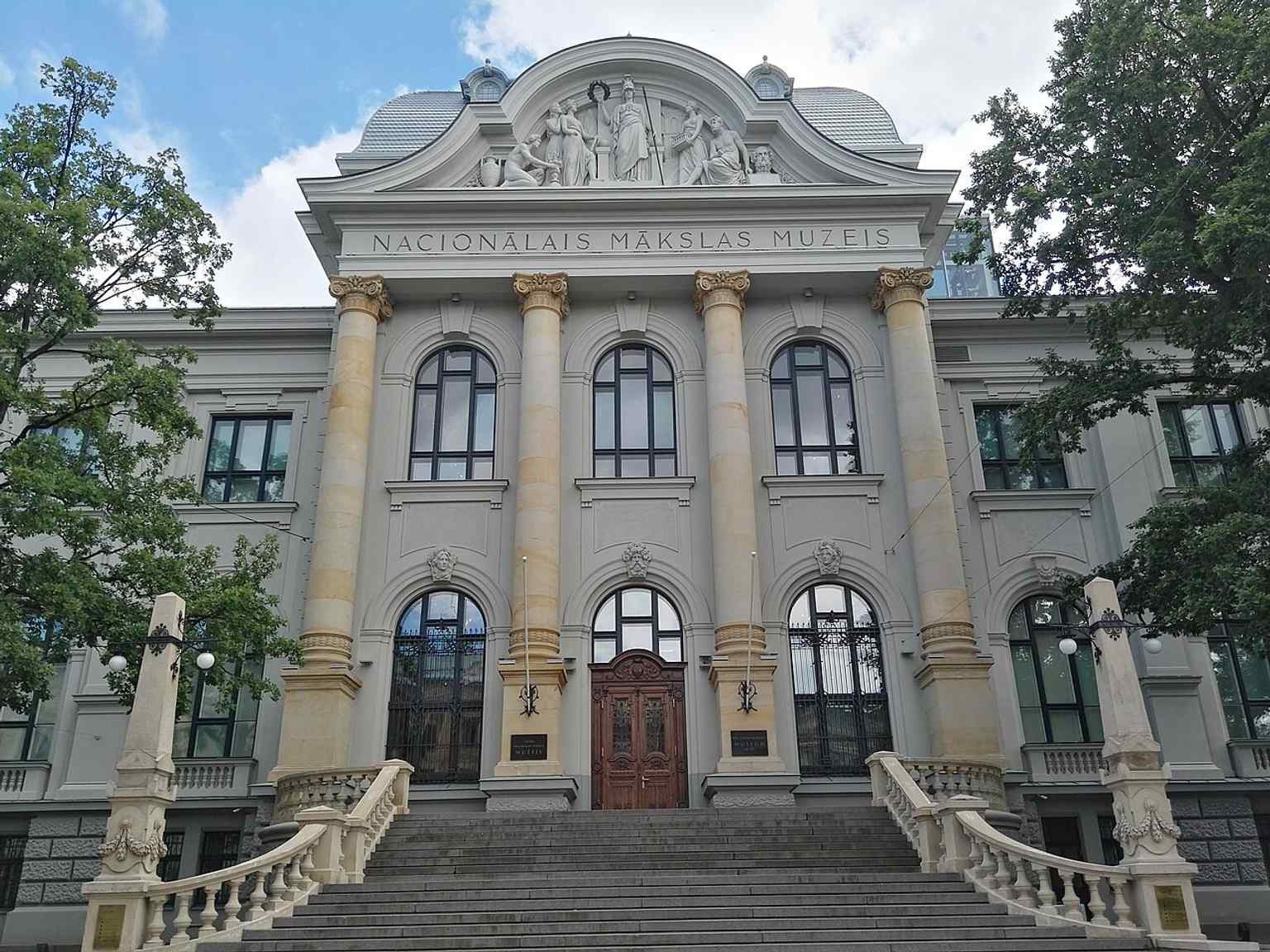
On your left, look for a pale plaster-and-sandstone building with a rounded dome and a sculpted pediment crowned by Athena.
This is the Latvian National Museum of Art, keeper of the country’s largest art collection, with more than sixty-five thousand works tracing Baltic and Latvian art from the middle of the eighteenth century to the present. It opened in the first years of the twentieth century, when the Baltic German architect Wilhelm Neumann gave Riga something rather bold: the first building in the Baltics created specifically as a museum.
Neumann also became the museum’s first director, serving from nineteen hundred and five to nineteen nineteen, and he imagined this place as a true Temple of Art. The city budget restrained him, as budgets so often do, but he still managed to dress the building in real ceremony: Baroque-style curves, granite and sandstone, a grand marble staircase, and a vestibule touched with gold leaf. If you glance at the front above the entrance, that theatrical sculpture group is by August Volz. Athena, the goddess of wisdom, presides there, surrounded by figures representing painting, sculpture, and architecture, as if the building itself is announcing its mission before you even cross the threshold.
Inside, Neumann made the museum part gallery, part statement of confidence. He invited leading local painters, including Vilhelms Purvītis and Gerhard von Rosen, to create monumental works for the upper lobby. There’s a detail image on your screen if you want a closer sense of that craftsmanship and ceremonial design. Purvītis later became the museum’s most important director, guiding it from nineteen nineteen until the Soviet occupation in nineteen forty. He did not merely manage the collection; he built a national one, gathering Latvian modernist works to help define a young country’s cultural identity. That vision survived war by a whisker more than once. In nineteen fifteen, as the front approached Riga, Neumann sent fifty-nine of the museum’s most valuable works to Moscow for safety. They eventually returned. Later, Soviet officials condemned modernist art as “formalist,” meaning too experimental and too independent, and hid many of Purvītis’s acquisitions in storage for decades.
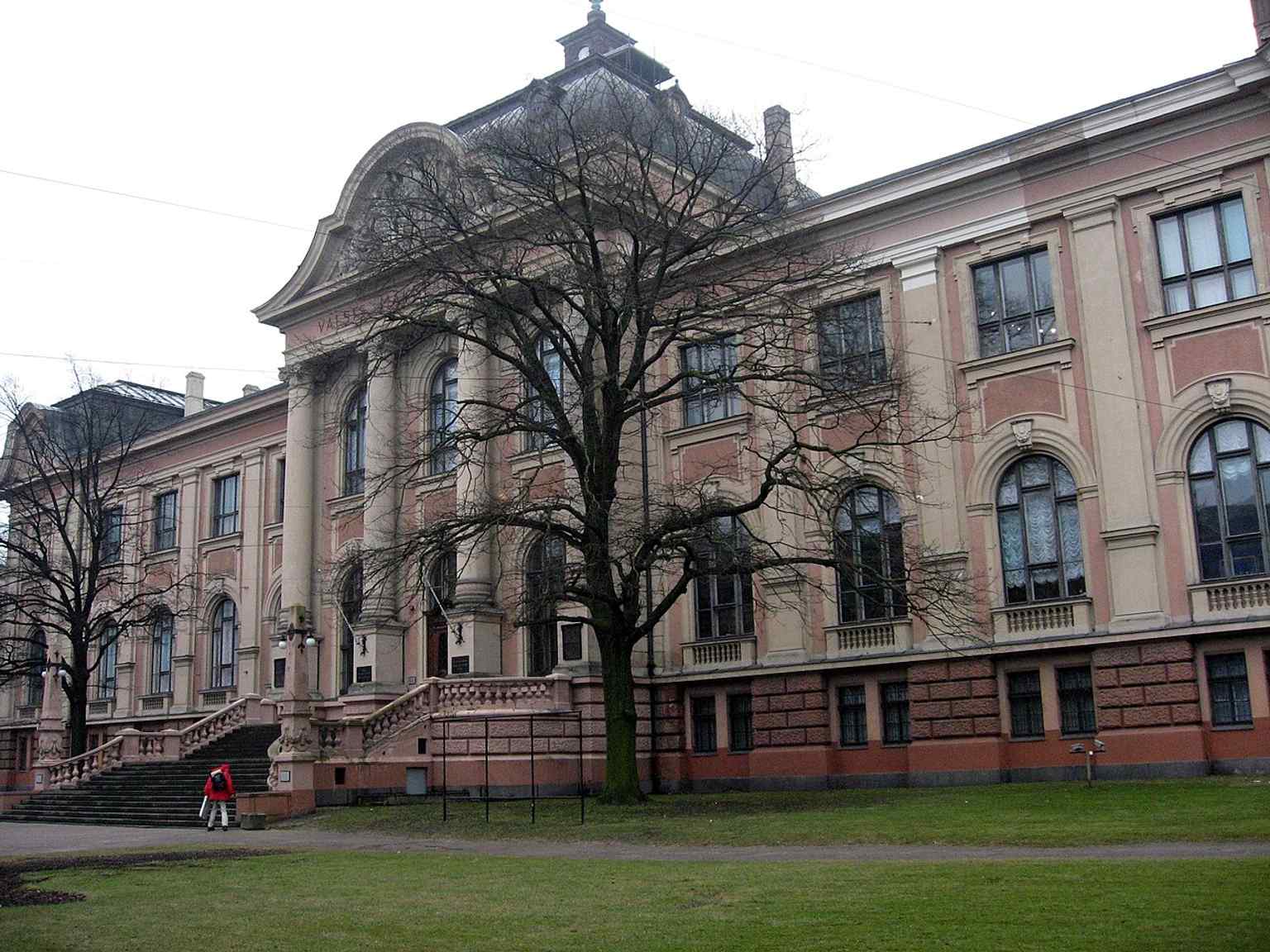
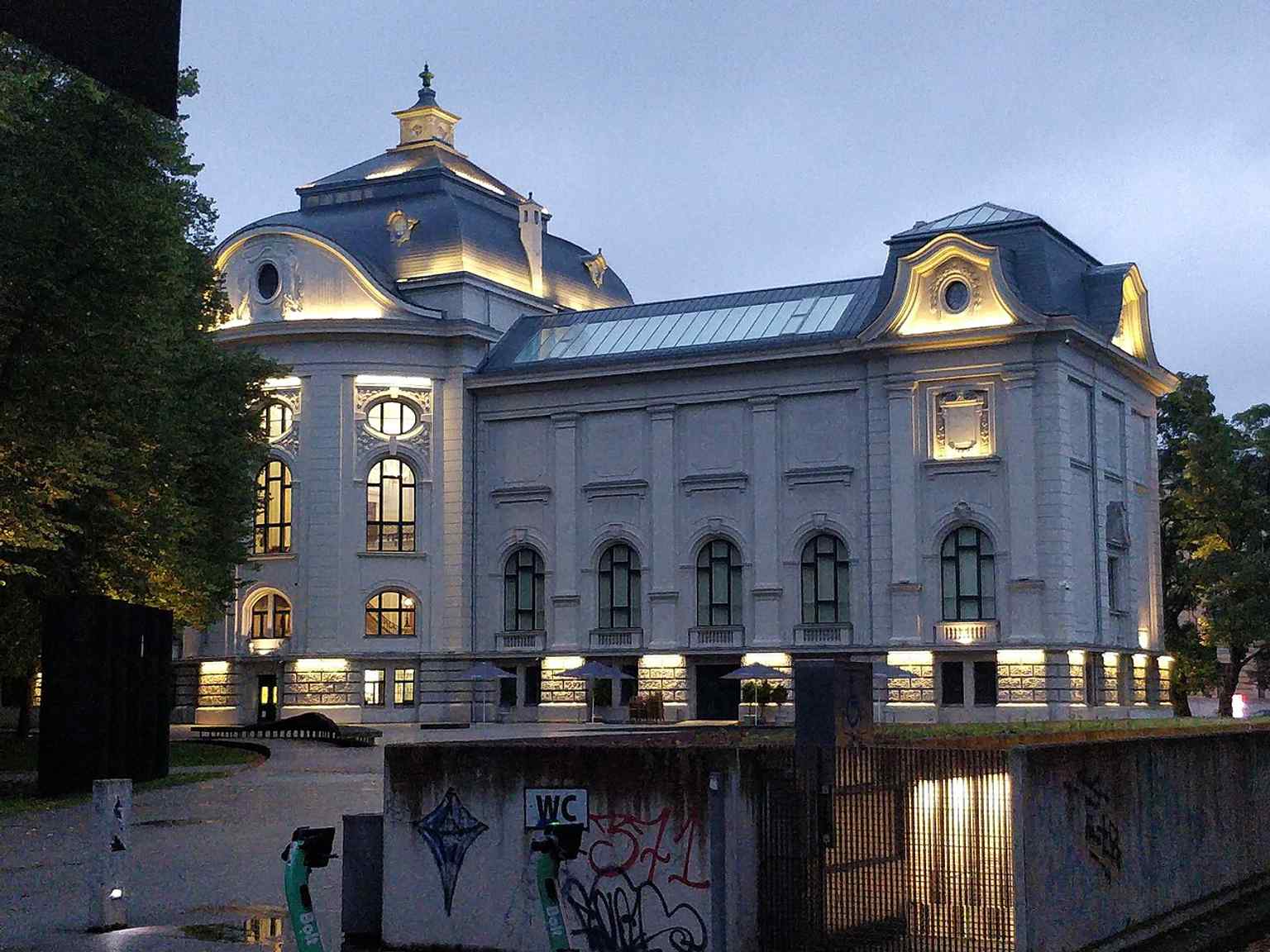
The building itself changed dramatically in the twenty-tens, when Lithuanian architects from Processoffice doubled its size by excavating beneath it while keeping the old structure standing. If you like, have a look at the before-and-after image in the app; it shows just how much was added beneath this stately exterior. They created a new underground wing, a glass floor in the courtyard amphitheatre, and a new “Gold Stair” linking the historic museum to its modern depths.
Even now, this old Temple of Art remains alive to the present: in twenty twenty-five, the Golden Globe and Oscar won by the animated film Flow drew enormous crowds here, turning the museum into a place of national celebration all over again.
If you plan to step inside, it is closed on Mondays and Thursdays, opens at ten on the other days, closes at six on Tuesdays and Wednesdays, stays open until eight on Fridays, and shuts at five on weekends.






.jpg)