

Scafati Audio Tour: Echoes of Legends from Scafati to the Soul of the Ancient City
A city once silenced in a single afternoon, Scafati and the buried ruins of Pompeii still pulse with secrets beneath layers of ash and centuries. Trace forbidden stories on this self-guided audio tour as you move from erotic mosaics hidden in the Suburban Baths to the battered elegance of the Temple of Apollo and the enigmatic House of the Tragic Poet. Which whispered conspiracy shattered lives behind those mosaic-clad walls? Who left strange warnings etched in stone for unwelcome guests? What mysterious trades took place high above the port, where only the boldest dared climb? Step through crumbling corridors, past mythic gods and scandalous art, piecing together tales of power struggles, lost fortunes, and passions never meant for daylight. There is another Pompeii waiting behind every weathered column. Begin your journey where fire once stopped time—and let buried voices lead you forward.
Tour preview
About this tour
- scheduleDuration 40–60 minsGo at your own pace
- straighten4.5 km walking routeFollow the guided path
- location_on
- wifi_offWorks offlineDownload once, use anywhere
- all_inclusiveLifetime accessReplay anytime, forever
- location_onStarts at Suburban Baths
Stops on this tour
Discovered in 1824 by archaeologist Antonio Bonucci, this house has fascinated scholars and writers for generations. Although the size of the house itself may not be…Read moreShow less
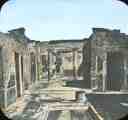
Discovered in 1824 by archaeologist Antonio Bonucci, this house has fascinated scholars and writers for generations. Although the size of the house itself may not be extraordinary, its interior decorations are of the highest quality, surpassing many other frescoes and mosaics found in ancient Pompeii. This has led to much speculation about the lives of the homeowners. Unfortunately, little is known about the family who once resided here, as they were likely victims of the devastating eruption of Mount Vesuvius in 79 AD. The House of the Tragic Poet is located in Regio VI, Insula 8, which is the far-western part of Pompeii. It faced Via di Nola, one of Pompeii's largest streets, linking the forum and the Street of the Tombs. Just across from the house, you can still see the Forum Baths of Pompeii. Similar to many Roman homes of that time, the House of the Tragic Poet is divided into two main sections. The front part facing south is a public space, possibly used as shops or servants' quarters. Two large rooms with outward-opening walls flank a narrow vestibule, leading to the atrium. The atrium is the most decorated room in the house and features a rectangular impluvium, a sunken water basin that collected water for household use. At the end of the hall stands the tablinum, another open space. From these central areas, smaller private rooms branch out, marking the second section of the house. Along the western wall of the atrium, you'll find several bedrooms called cubicula. There is also an ala, a service area for a dining room, and an oecus, a small dining area. The northern end of the tablinum opens onto a spacious peristyle, a garden courtyard. To the right of the peristyle is the drawing room, believed to have served as the main dining salon, and nearby, a small kitchen area. On the left side of the peristyle, you'll find a back door that opens onto another street. At the northwestern corner of the peristyle, a small shrine known as the lararium was dedicated to the family gods and contained a marble statuette of a satyr carrying fruit. Although an upper story was once part of the House of the Tragic Poet, it was most likely destroyed by the eruption of Mount Vesuvius. Fortunately, more than twenty painted and mosaic panels were originally present in this house. Six of them have been relocated to the National Archaeological Museum in Naples, Italy. These panels were chosen because they relate to the Iliad, which led to the house being called the Homeric House or Iliadic House. As you explore, you'll notice that the vestibule floor features a mosaic depicting a domesticated dog leashed and chained to a point, accompanied by the words "CAVE CANEM," meaning "Beware of the dog." This served as a warning that visitors should proceed with caution and respected the privacy of the more intimate areas of the home. The rest of the vestibule floor showcases a checker-like pattern with black and white tiles. The House of the Tragic Poet is truly a sight to behold, with its remarkable art and fascinating history. Let's continue our journey through Pompeii and discover more of its wonders!
Open dedicated page →
Show 12 more stopsShow fewer stopsexpand_moreexpand_less
 4
4Villa of the Mysteries
Buy tour to unlock all 19 tracksLike the rest of Pompeii, the Villa of the Mysteries was buried by the eruption of Mount Vesuvius in 79 AD and was only rediscovered and excavated from 1909 onwards. Now, it…Read moreShow less
Like the rest of Pompeii, the Villa of the Mysteries was buried by the eruption of Mount Vesuvius in 79 AD and was only rediscovered and excavated from 1909 onwards. Now, it stands as an important part of the UNESCO World Heritage Site at Pompeii. Situated around 400 meters northwest of the town walls, between the roads Via Delle Tombe and Via Superiore, this villa is in close proximity to other notable sites such as the Villa of Diomedes and the Villa of Cicero. It sits on a hill, offering a stunning view of the current Gulf of Naples. The villa is partly supported by a cryptoporticus, a covered walkway with arches. The construction of the villa was believed to have begun in the 2nd century BC, but recent research suggests it was built in the early 1st century BC. During the Augustan age, the villa underwent significant expansions and embellishments, reaching its peak in grandeur. However, after the earthquake of 62 AD, like much of the city, it fell into disrepair and was transformed into a vineyard with the addition of wine-making equipment. The ownership of the villa remains unknown, but a bronze seal found on-site suggests it may have belonged to L. Istacidius Zosimus, a freedman of the Istacidii family. Some historians speculate that it may have even been owned by Livia, the wife of Augustus. The excavation of the Villa of the Mysteries began in 1909 and continued in 1929-1930, uncovering its remarkable treasures. Restoration work was conducted on the frescoes between 2013 and 2015, ensuring their continued preservation. In 2018, archaeologists discovered the remains of harnessed horses, providing a unique glimpse into the villa's history. Despite being covered by layers of volcanic ash and pumice, the villa sustained minimal damage during the eruption. Its walls, ceilings, and frescoes miraculously survived intact. As you explore the villa, you'll see the ancient entrance, which leads to service rooms, a courtyard, and even a restored wine press. Step into the peristyle, where you'll find the bathing and kitchen quarters, as well as the main atrium with an impluvium. From there, you can access the triclinium and portico, where you'll be treated to a breathtaking view of the Gulf of Naples. The Villa of the Mysteries is truly a testament to the grandeur of ancient Roman life and the rich historical and artistic legacy of Pompeii. So, let's continue our journey and explore more of this incredible city!
Open dedicated page →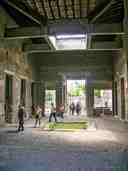 5
5House of Sallust
Buy tour to unlock all 19 tracksDating back to the 4th century BCE, the House of Sallust underwent major expansions during the 2nd century BCE. Located in Regio VI, Insula 2, 4 on the east side of the Via…Read moreShow less
Dating back to the 4th century BCE, the House of Sallust underwent major expansions during the 2nd century BCE. Located in Regio VI, Insula 2, 4 on the east side of the Via Consolare, the house derived its name from an election notice endorsing Gaius Sallustius for office, which was displayed on its facade. Another name associated with this grand dwelling is the House of A. Cossus Libanus, named after a seal discovered in the ruins. Originally, the house was a symmetrical atrium house made of tufa blocks during the Samnite Period. It featured a central fauces, leading to an atrium with compluvium and impluvium, surrounded by three cubicula and alae on each side. The rear of the atrium housed a tablinum, with an oecus on the left and an andron on the right. Beyond the tablinum was an outdoor garden enclosed by the property wall, beautifully decorated in the Pompeian First Style. In subsequent phases, the House of Sallust saw the addition of shops on its west side and a peristyle, a colonnaded porticus, in the garden. During the late Augustan period, the house was transformed into a hospitium, a grand-scale hotel. A counter accessible from the street and the atrium was built to attract potential guests passing by, and the rooms were grouped into suites around the atrium. To cater to guests' dining needs, indoor dining spaces were created, along with an outdoor masonry triclinium covered by a pergola in the peristyle garden. A hearth was built nearby for hot food preparation, ensuring that guests received the utmost comfort. The tablinum, elevated three steps above the atrium floor, featured a large window offering a picturesque view of the garden. The back wall of the tablinum was adorned with a garden scene, seamlessly connecting the real garden with the painted one, incorporating garlanded columns, fountains, and birds. Even with the introduction of new features, such as the peristyle garden and the second atrium that gained popularity during this period, the House of Sallust retained its First Style decoration in some public areas. This mimicked the continued use of the First Style in other prominent structures in Pompeii, including temples, basilicas, and gymnasia. Over time, the structure expanded to fully utilize the garden space. When excavations initially began, the house became known as the House of Actaeon, named after a fresco depicting the mythological figure. Queen Maria Caroline of Bourbon, who sponsored and observed the excavations, received artistic finds as gifts. Once the finds were removed from a room, work would cease in that area. The house was considered fully cleared in 1809, and efforts turned to reproducing and preserving the remains and surviving frescoes through paintings and drawings. The House of Sallust is a testament to the luxurious living of Pompeii's elite residents. As you explore this remarkable ancient dwelling, take in the intricate details and imagine the grandeur that once filled its halls.
Open dedicated page →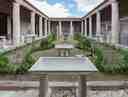 6
6Casa dei Vettii
Buy tour to unlock all 19 tracksAs we explore this magnificent site, you'll notice that the careful excavation of the House of the Vettii has allowed us to admire almost all of its original wall frescoes. These…Read moreShow less
As we explore this magnificent site, you'll notice that the careful excavation of the House of the Vettii has allowed us to admire almost all of its original wall frescoes. These vibrant artworks were completed after the destructive earthquake of 62 AD and are considered prime examples of the Pompeiian Fourth Style, as described by art historians. Situated in region VI of Pompeii, near the Vesuvian Gate, the House of the Vettii stretches across the entire southern section of block 15. Its layout adheres to the typical Roman domus design, with one fascinating exception-the absence of a tablinum, a central reception room found in most homes of this period. The house can be divided into five major sections: the large atrium, the small atrium, the large peristyle, the small peristyle, and the shop. Along with its spacious garden, the House of the Vettii boasts main living quarters and servant quarters, each carefully organized around their designated areas. To enter the grand atrium, we can access the house through the main entrance located on the east facade, from the Vicolo dei Vettii. Alternatively, the southern facade offers a second entrance from the Vicolo di Mercurio. Marvel at the five small windows on the east side, two narrow vertical windows on the south side, and a single small window on the west side, allowing a play of light and shadow throughout the house. The large atrium, surrounded by four cubicula (or bedrooms), was likely occupied by the main residents of this opulent dwelling. Alae, or smaller rooms, and a winter triclinium, or dining area, also encircle the atrium. Passing through the fauces and vestibulum, we can immerse ourselves in the splendor of the atrium. On the north section of the house, we find the small atrium, which was likely used by servants and for storage purposes. Nearby, a kitchen contains a cubiculum designated for the cook, while an impluvium efficiently collects rainwater through an opening in the roof. Although the second floor no longer remains, a staircase once stood in the southeast corner of the small atrium. The second service area of the house connects to the main atrium and the second southern entrance. Here, a grand gate leads to the shop, also known as the taberna. This space was used to accommodate draft animals, which arrived through the gate, and was adjoined by an additional chamber and a latrine. From the main entrance, the large atrium provides a splendid view of the rear garden, surrounded by the grand peristyle. Within this area, two triclinia, an oecus (a formal room), and two storage rooms overlook the peristyle. Many of the rooms in the House of the Vettii open directly to either the front hall or the serene rear garden. Located to the north of the house, the small peristyle is accompanied by a triclinium and a cubiculum. One striking feature of the House of the Vettii is the absence of a tablinum, making it quite unique among its contemporaries. As we wander through this extraordinary house, take in the breathtaking frescoes that adorn the walls. The House of the Vettii boasts twelve surviving panels depicting enchanting mythological scenes. These frescoes provide a glimpse into the remarkable blending of previous Pompeiian artistic styles. On the lower section of the walls, you'll notice a ring of faux colored marble reminiscent of the First Pompeian style. Moving upward, illusionistic scenes are depicted in the top ring, alongside the mythological imagery borrowed from the Second style. Finally, observe the slender columns supporting the upper ring, which derive from the Third style, known for its architectural trompe l'oeil.
Open dedicated page →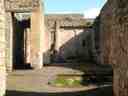 7
7House of Octavius Quartio
Buy tour to unlock all 19 tracksThis house is actually the result of merging at least two earlier dwellings dating back to the second half of the second century BCE. The merger likely took place around the third…Read moreShow less
This house is actually the result of merging at least two earlier dwellings dating back to the second half of the second century BCE. The merger likely took place around the third quarter of the first century BCE. And can you believe it? Further alterations occurred in the second half of the first century CE. It's amazing to see how this home evolved over time! One interesting feature of this house is the remains of a staircase found at one of its entrances. It suggests that there was once an upper floor, possibly used as an apartment rental. Another staircase was discovered in the south end of the west portico of the peristyle, which seems to be connected to the service areas on the lower level. It's incredible how these architectural elements give us insight into the different functions of the house. The House of the Greek Epigrams was initially discovered in April 1748, during the very first days of the excavation of Pompeii. More rooms were unearthed in the late 19th century, and additional excavations took place in 1908. Sadly, like many other structures in this area, the house suffered significant damage during the Allied bombing of Pompeii in 1943 and the earthquake of 1980. Can you imagine the stories these damaged walls could tell if they could talk? Fortunately, efforts have been made to preserve and repair this historical site. In 2010-2011, extensive modern repairs were done to ensure its longevity. The house's main entrance is tucked between two shops on Via del Vesuvio, a bustling street full of merchants and artisans' workshops. It must have been a vibrant and lively place to live! As you explore the neighborhood, you'll notice other notable residences like Casa del Torello di Bronzo, Casa di Cecilio Giocondo, House of Orpheus, and House of Laocoon. Imagine the lives of the people who once inhabited these neighboring homes! Also nearby, there is a confectionary shop, as evident from the discovery of bronze cake molds. I can only imagine the delicious treats that were made here in ancient times. But wait, there's more! Just a short distance away, you'll find the Inn of Salvius, a two-story establishment that once catered to travelers. Inside, a man's body was discovered, surrounded by valuable jewelry and coins. It's believed he may have been a looter, possibly plundering from this house and other luxurious homes in the area. Can you imagine stumbling upon such riches? Across the street, you'll see the remains of the Fullonica of Marcus Vesonius Primus. This laundry and residence must have been a busy place, and I have to warn you, the collection and use of human urine for cleaning clothes may have produced some unpleasant odors. Can you imagine doing laundry with that technique? So, my friend, take a moment to envision the vibrant past of the House of the Greek Epigrams. Picture the bustling streets, the grandeur of the peristyle, and the daily lives of the people who once called this place home. It's a fascinating glimpse into the ancient world of Pompeii.
Open dedicated page →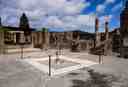 9
9House of the Faun
Buy tour to unlock all 19 tracksOne of the most remarkable aspects of this estate is the wealth of beautifully preserved artwork discovered here after the devastating eruption of Mount Vesuvius in 79 AD. These…Read moreShow less
One of the most remarkable aspects of this estate is the wealth of beautifully preserved artwork discovered here after the devastating eruption of Mount Vesuvius in 79 AD. These exquisite pieces provide valuable insights into the Roman Republic, surpassing even the archaeological evidence found in Rome itself. The House of the Faun, along with other prestigious houses like the House of Pansa and the House of the Silver Wedding, exemplifies the opulence of the higher class during this period. More than 190 years after its excavation, the craftsmanship and quality of materials found in this house continue to impress archaeologists. Despite suffering damage from the AD 62 Pompeii earthquake, the House of the Faun was meticulously rebuilt and repaired, as evidenced by the excavation beneath its floors. However, its use was cut short by the eruption of Mount Vesuvius in 79 AD, which rendered it uninhabitable. Fortunately, the layers of ash that covered Pompeii preserved the incredible artworks, including the renowned bronze statue of a dancing faun. This statue, which depicts a satyr with the lower body of a man, gave the house its name. Although the original statue now resides in the National Archaeological Museum in Naples, a faithful replica can still be admired within the ruins of the house. Fauns, such as the one depicted in the statue, were spiritual creatures associated with untamed woodlands. The literate and Hellenized Romans often connected fauns with Pan and Greek satyrs, the wild followers of Dionysus, the Greek god of wine and drama. The sculpture itself is a masterpiece of decorative art, demonstrating a light and graceful pose. Archaeologists also discovered an inscription bearing the name Saturninus, indicating that the house belonged to the esteemed gens Satria family. The presence of a ring inscribed with the Cassii family name suggests that someone from the Cassii family married into the gens Satria and lived in the House of the Faun. The House of the Faun is also famous for housing the remarkable Alexander Mosaic. This mosaic, originally depicting the Battle of Issus between Alexander the Great and Darius III of Persia in 333 BC, is thought to have been inspired by or copied from a Greek painting created by the artist Philoxenus of Eretria. Although the original mosaic now resides in the National Archaeological Museum, a reconstructed version can still be admired in the ruins of the house. In addition to the Alexander Mosaic, other notable artworks found here include an erotic Satyr and Nymph, as well as a fish mosaic resembling others found in Pompeii. So take your time exploring this fascinating house, marvel at the exceptional craftsmanship, and imagine the grandeur of Roman life that once flourished within its walls.
Open dedicated page →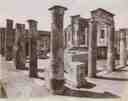 11
11Temple of Isis
Buy tour to unlock all 19 tracksInterestingly, the preserved temple you see today is actually the second structure. The original building, constructed during the reign of Augustus, was damaged in an earlier…Read moreShow less
Interestingly, the preserved temple you see today is actually the second structure. The original building, constructed during the reign of Augustus, was damaged in an earlier earthquake in 62 AD. Despite attempts by the Roman senate to demolish the cult of Isis and her temples, the popularity of the cult continued to grow. In fact, the Temple of Isis was one of the few buildings that was fully rebuilt after the earthquake. Situated along the Via del Tempio di Iside, this small and almost intact temple received significant foot traffic from theater-goers at the Large Theater, businessmen in the Triangular Forum, and other passersby near the Stabian Gate. It was particularly revered by women, freedmen, and slaves, who were drawn to the compassionate goddess Isis. As initiates of her mystery cult, they believed in her promise of salvation and a perpetual relationship in life and after death. The temple itself was reconstructed as a tribute to a young boy named Numerius Popidius Celsinus, by his father Numerius Popidius Ampliatus and mother Corelia Celsa, in hopes to gain entry into the elite society of Pompeii. However, scenes from the temple are also found in the dining rooms of Pompeians, suggesting that many individuals visited for political, economic, or social reasons. It's fascinating to note that the cult of Isis originated in Ancient Egypt but spread widely throughout the Greco-Roman world. The Greeks and Romans held great admiration for Egyptian culture, and after Alexander the Great's conquest of Egypt, there was a fusion between the Greek and Egyptian cultures. Isis, with her similarities to the Greek goddess Demeter, easily found her place in Greek religion. In Rome, she was introduced as a replacement deity for Venus and was sought after for guidance. Isis, also known as the ideal image of a queen, wife, and mother, was associated with fertility and motherhood. She was admired for her powers in healing and magic, making her an influential figure among the people. Her worshippers ranged from slaves and sinners to artisans and the downtrodden, but also included the prayers of the wealthy, maidens, aristocrats, and rulers. Today, original paintings and sculptures from the Temple of Isis can be seen at the Museo Archaeologico in Naples, while the site itself allows us to appreciate the historical significance of this captivating temple. Now, let's continue our journey through Pompeii and discover more hidden gems of ancient Roman civilization!
Open dedicated page → 12
12House of Menander
Buy tour to unlock all 19 tracksThe excavation of the House of Menander took place between November 1926 and June 1932. It is located in Region I, Insula 10, Entrance 4 of the city. The oldest part of the house…Read moreShow less
The excavation of the House of Menander took place between November 1926 and June 1932. It is located in Region I, Insula 10, Entrance 4 of the city. The oldest part of the house dates back to 250 BC and comprises a relatively modest atrium and nearby rooms. However, about a hundred years later, the house underwent a renovation, evident in the use of tuff capitals for the entrance door and the tablinum, showcasing the owner's desire for modernity. During the Augustan period, further modifications were made to the house. A peristyle, surrounded by the remains of adjacent residential buildings, was added. To the west, an exquisitely adorned thermal bath was built, featuring a charming little atrium supported by eight columns. Interestingly, the absence of a bath in the caldarium suggests that it was not in use during the time of the catastrophic eruption of Mount Vesuvius in 79 AD. Moving to the east side of the house, we find the business section, indicating the multifaceted nature of this property. Just before the eruption, additional modernization works were carried out, evidenced by amphorae filled with stucco and an improvised oven. Curiously, everyday objects related to food were not found, leading experts to believe that the house was sparsely occupied at the time. Tragically, the house became a tomb for eighteen victims of the eruption. Two men and a woman were found in room 19, ten more in the corridor, two in room 43 (one on a bed), and three others in the courtyard. The presence of lamps, pickaxes, and shovels with the bodies in the corridor suggests that they may have been looting the house after the initial pumice eruptions, but were eventually caught by the final volcanic outbursts. Some fascinating clues have been discovered within the house, leading to intriguing speculations about its ownership. The seal and graffiti mentioning 'Quintus' in the entrance corridor have led some to believe that the owner could be Quintus Poppaeus Sabinus, possibly a local magistrate. Furthermore, a ring seal found in the servant's quarters hints that the property might have belonged to Quintus Poppaeus, a potential relative of Poppaea Sabina, the second wife of Emperor Nero. The debate about the owner's nationality is still ongoing. Since Pompeii's Mediterranean climate lured many Romans to invest in holiday villas here, it is possible that the owner at the time of Vesuvius' eruption in 79 AD was a wealthy tourist, rather than a local resident. Nonetheless, the estate came to be known as "The House of Menander" due to the discovery of a remarkably well-preserved fresco depicting the ancient Greek dramatist Menander in a small chamber off the peristyle. Some experts even speculate whether the painting truly represents Menander or actually portrays the house's owner or someone engrossed in reading Menander's works. Aside from the Menander fresco, the House of Menander boasts other captivating frescoes. One notable example depicts the death of Laocoön. In addition to the striking visual elements, the large columns in the peristyle showcase the Doric style of architecture, an offshoot of the classical style prevalent in ancient Greece. It is not surprising to see this influence, considering that Greek sailors had been trading in the nearby port long before the establishment of Pompeii in the 6th century BC. As you explore the exterior walls of the house, take note of the numerous Roman graffiti, offering glimpses into the daily lives and thoughts of its inhabitants. These inscriptions provide a fascinating insight into the city's vibrant past.
Open dedicated page →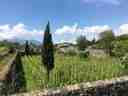 13
13Garden of the Fugitives
Buy tour to unlock all 19 tracksAs you stroll through this archaeological site, you'll find yourself surrounded by the remnants of a once bustling neighborhood. The insula, or city block, where the garden is…Read moreShow less
As you stroll through this archaeological site, you'll find yourself surrounded by the remnants of a once bustling neighborhood. The insula, or city block, where the garden is located, once housed more town houses than the two that remain standing today. The area had been transformed into a beautiful garden and vineyard with a triclinium, or dining area, covered by a pergola for lavish outdoor banquets. But this serene setting took a tragic turn on that fateful day. The victims discovered in this garden were adults and children, both close together and scattered across the area. It is believed that they were desperately trying to escape through the Nocera Gate, unaware that the layer of pumice had already risen to a height of 3.5 meters. Sadly, they were overcome by the pyroclastic flow, which ultimately claimed their lives. The discovery of these unfortunate souls was made by Amedeo Maiuri, the superintendent of Pompeii, in 1961. When the bodies were first uncovered, they appeared as hollow cavities where the flesh had long decayed. To preserve their final moments, plaster of paris was carefully poured into these cavities, revealing the hauntingly accurate casts of each victim. Originally found in three separate groups, they are now displayed in a solemn line. Maiuri, in his November 1961 edition of National Geographic, wrote narratives for each of the bodies, giving them names and stories. However, these tales are now recognized as mostly fictional. One of the victims, belonging to a merchant family, is depicted rising up on his hands. Interestingly, a metal nail was discovered holding his head and arm in place, indicating he might have suffered from severe osteoarthritis during his life. There are also signs of breaks in his upper arm bone, which may have occurred during or after his demise, possibly from a tragic fall onto his arm. Another poignant cast represents a mother and her children. Maiuri described the mother's body as weakened from childbirth. She lies beside her youngest child while two other young children, said to have fallen together while holding hands, rest nearby. Forensic dentistry examination revealed that these two boys were between the ages of two and five at the time of their death. The third group is described as a young couple and their daughter, affectionately dubbed "The Farmer's Daughter." Based on the condition of her teeth, it is estimated that she was around 12 to 14 months old, making her the youngest victim found in Pompeii. Maiuri also depicted a servant carrying a bag over his shoulder, leading the final family to safety. However, further examination revealed that the presumed bag was just an artifact of the plaster casting process. The servant, aged in his mid-teens based on bone analysis, showcases the diverse range of people affected by this tragic event. As you observe these casts, take a moment to reflect on the lives cut short and the stories lost to time. The Garden of the Fugitives serves as a powerful reminder of the fragile nature of human existence and the forces of nature that can shape our destinies. Now, as we continue our journey through Pompeii, let us proceed to the House of Loreius Tiburtinus, our next stop on this captivating tour.
Open dedicated page →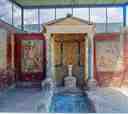 14
14House of Octavius Quartio
Buy tour to unlock all 19 tracksLocated on the Via dell'Abbondanza, a bustling street in Pompeii, this house holds a prime position for both the nearby palaestra and amphitheater. In fact, the section of Via…Read moreShow less
Located on the Via dell'Abbondanza, a bustling street in Pompeii, this house holds a prime position for both the nearby palaestra and amphitheater. In fact, the section of Via dell'Abbondanza where the house stands was closed off to cart traffic in ancient times, emphasizing its significance. Interestingly, the naming of this house was based on electoral graffiti found on its outer façade. Some of these graffiti urged people to vote for "Loreius," while others advocated for "Tiburtinus." However, it was later discovered that the true owner of the house was a man named Octavius Quartio, as his bronze seal was found during excavation. So, some historians prefer to refer to this house as the House of Octavius Quartio. Excavations of the House of Loreius Tiburtinus took place between 1916 and 1921, led by the renowned Pompeii superintendent Vittorio Spinazzola. Further archaeological campaigns were conducted in the 1930s, and the last excavation in 1971 was supervised by Alfonso De Francisci. The house itself is a combination of two original structures that were built during the Samnite Period around the 3rd century BCE. Before the earthquake of 62 AD, the domus covered an entire insula and boasted two atriums and two entrances. However, after the earthquake, part of the house was sold to another owner and became independent. It is believed that following the earthquake, the house underwent further expansion. A magnificent arcaded terrace, or loggia, was added, along with a vast garden, enlarging the total area to approximately 1,800 square meters. Art historian John R. Clarke suggests that this expanded garden space may have been used for commercial purposes, similar to the neighboring Praedia of Julia Felix. The exterior walls of the house feature opus incertum, a construction technique using stone rubble embedded in concrete, along with ashlar piers. The easternmost corner of the complex, however, was constructed using opus vittatum mixtum, which combines brick and stone blocks. As you enter the house, you will step into the fauces, the entrance leading to a rectangular atrium. In the center of the atrium, you will notice an impluvium, a basin used to collect rainwater through a hole in the roof. Originally serving a practical purpose, the impluvium was later transformed into a fountain surrounded by lush plants. Moving towards the back of the atrium, you will find the tablinum, a room that has been replaced with a small columned pseudo-peristyle. The columns are painted in red and white, creating a visually striking effect. Despite the passage of time, you can still see remnants of the Fourth style of painting on the walls. Black panels separated by yellow columns rest above a red dado. Although the house suffered some damage before the eruption of Mount Vesuvius in 79 AD and during Allied bombing raids in 1943 during World War II, its unique features and vibrant history continue to captivate visitors. Now, let's move on to our next stop, the grand Amphitheatre of Pompeii!
Open dedicated page → 15
15Amphitheatre of Pompeii
Buy tour to unlock all 19 tracksDating back to around 70 BC, the Amphitheatre of Pompeii is one of the oldest surviving Roman amphitheatres. Can you believe it's been standing for over 2000 years? It's located…Read moreShow less
Dating back to around 70 BC, the Amphitheatre of Pompeii is one of the oldest surviving Roman amphitheatres. Can you believe it's been standing for over 2000 years? It's located in the ancient city of Pompeii, near Naples, and was buried by the catastrophic eruption of Mount Vesuvius in 79 AD, along with the entire city of Pompeii and the neighboring town of Herculaneum. During excavations, six bodies were discovered within the amphitheatre, reminding us of the tragic events that unfolded here. But let's focus on the awe-inspiring history instead! Back in its glory days, this amphitheatre was known as a spectacula rather than an amphitheatrum, as the latter term wasn't widely used at the time. It was built with the private funds of two generous donors, Gaius Quinctius Valgus and Marcus Porcius. They had a noble motive, "to demonstrate the honor of the colony," possibly indicating the role of this grand structure in establishing Roman influence in Pompeii. Now get ready for some astonishing numbers! The Amphitheatre of Pompeii was designed to accommodate upwards of 20,000 spectators. The layout was considered near-optimal by modern crowd control specialists. And the design of the lower entrances for higher-class citizens was truly exceptional. As they entered the amphitheatre, they would be struck by both the beams of light flooding through the dark tunnel and the deafening roar of the crowd, creating an electrifying and unforgettable experience. One unique feature of this amphitheatre is that it was one of the earliest built entirely of stone, as previous versions were constructed with wood. This meant that, unlike later amphitheatres, there were no underground areas for the gladiators. Instead, the quadriporticus (a colonnaded courtyard) was built above ground and close to the arena. After events concluded, the dead would be taken through a large door named the Porta Libitinensis for proper disposal. Can you believe that even the washroom facilities of the amphitheatre had an impact on modern stadium design? The nearby palaestra's washroom has been cited as an inspiration for better bathroom arrangements in today's stadiums. The amphitheatre measures an impressive 135 meters long and 104 meters wide, with the arena (or pit) located 6 meters below ground level. Inside, you'll find a corridor that runs along the circumference of the amphitheatre, providing access to the arena. This architectural detail has helped us gain valuable insights into the gladiatorial culture and events that took place here. Imagine walking through the corridors and witnessing the vibrant frescoes on the walls. These painted posters depict gladiators with accompanying slogans and nicknames, reminiscent of our present-day posters and billboards of sports stars and celebrities. Some of these posters would even be repainted to announce the outcomes of major events. Can you imagine the excitement that filled the air? The amphitheatre has had its fair share of dramatic moments too. In 59 AD, a deadly brawl erupted between Pompeiians and residents of Nuceria during a game here, leading to a 10-year ban on such events. However, beast hunting and athletic competitions were still allowed as a compromise. It's believed that the intervention of a prominent citizen and a local magistrate played a role in these exceptions. The amphitheatre suffered damage from an earthquake in 62 AD, but thanks to the efforts of magistrate Cuspius Pansa and his son, it was restored to its former glory. The 10-year ban on events was lifted, and the amphitheatre continued to be a hub of entertainment once again. In more recent times, in October 1971, the Amphitheatre of Pompeii served as a stunning backdrop for a concert film by the legendary band Pink Floyd, titled "Pink Floyd: Live at Pompeii.
Open dedicated page →
Frequently asked questions
How do I start the tour?
After purchase, download the AudaTours app and enter your redemption code. The tour will be ready to start immediately - just tap play and follow the GPS-guided route.
Do I need internet during the tour?
No! Download the tour before you start and enjoy it fully offline. Only the chat feature requires internet. We recommend downloading on WiFi to save mobile data.
Is this a guided group tour?
No - this is a self-guided audio tour. You explore independently at your own pace, with audio narration playing through your phone. No tour guide, no group, no schedule.
How long does the tour take?
Most tours take 60–90 minutes to complete, but you control the pace entirely. Pause, skip stops, or take breaks whenever you want.
What if I can't finish the tour today?
No problem! Tours have lifetime access. Pause and resume whenever you like - tomorrow, next week, or next year. Your progress is saved.
What languages are available?
All tours are available in 50+ languages. Select your preferred language when redeeming your code. Note: language cannot be changed after tour generation.
Where do I access the tour after purchase?
Download the free AudaTours app from the App Store or Google Play. Enter your redemption code (sent via email) and the tour will appear in your library, ready to download and start.
If you don't enjoy the tour, we'll refund your purchase. Contact us at [email protected]
Checkout securely with 


