
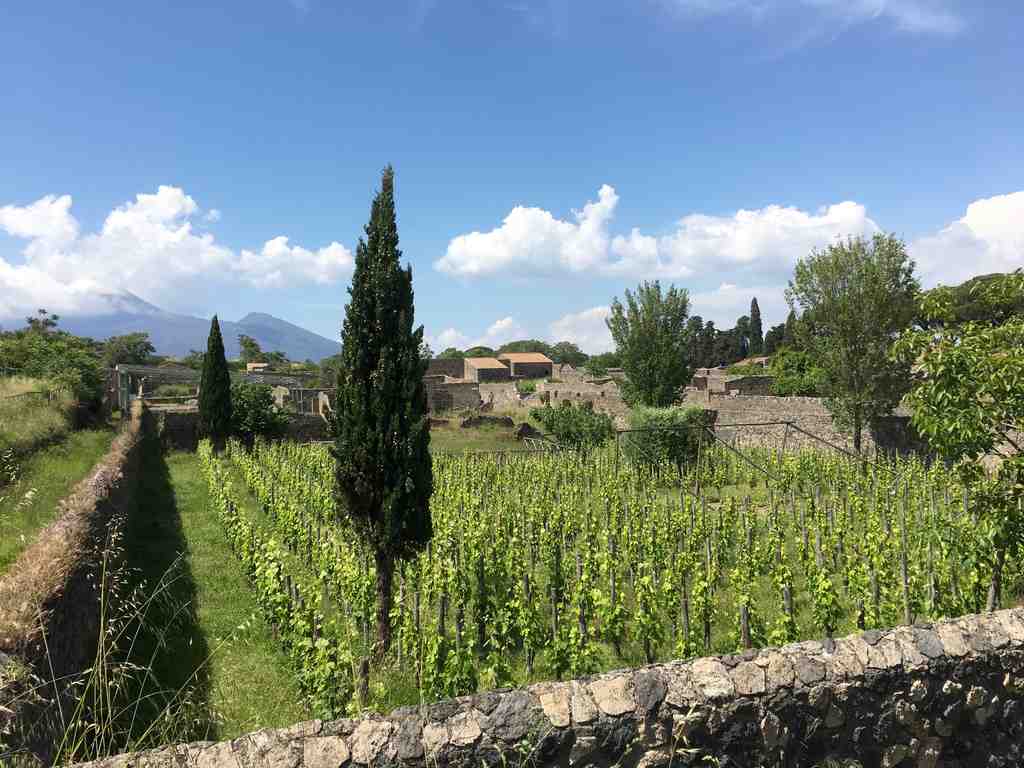
As you stroll through this archaeological site, you'll find yourself surrounded by the remnants of a once bustling neighborhood. The insula, or city block, where the garden is located, once housed more town houses than the two that remain standing today. The area had been transformed into a beautiful garden and vineyard with a triclinium, or dining area, covered by a pergola for lavish outdoor banquets.
But this serene setting took a tragic turn on that fateful day. The victims discovered in this garden were adults and children, both close together and scattered across the area. It is believed that they were desperately trying to escape through the Nocera Gate, unaware that the layer of pumice had already risen to a height of 3.5 meters. Sadly, they were overcome by the pyroclastic flow, which ultimately claimed their lives.
The discovery of these unfortunate souls was made by Amedeo Maiuri, the superintendent of Pompeii, in 1961. When the bodies were first uncovered, they appeared as hollow cavities where the flesh had long decayed. To preserve their final moments, plaster of paris was carefully poured into these cavities, revealing the hauntingly accurate casts of each victim. Originally found in three separate groups, they are now displayed in a solemn line.
Maiuri, in his November 1961 edition of National Geographic, wrote narratives for each of the bodies, giving them names and stories. However, these tales are now recognized as mostly fictional. One of the victims, belonging to a merchant family, is depicted rising up on his hands. Interestingly, a metal nail was discovered holding his head and arm in place, indicating he might have suffered from severe osteoarthritis during his life. There are also signs of breaks in his upper arm bone, which may have occurred during or after his demise, possibly from a tragic fall onto his arm.
Another poignant cast represents a mother and her children. Maiuri described the mother's body as weakened from childbirth. She lies beside her youngest child while two other young children, said to have fallen together while holding hands, rest nearby. Forensic dentistry examination revealed that these two boys were between the ages of two and five at the time of their death.
The third group is described as a young couple and their daughter, affectionately dubbed "The Farmer's Daughter." Based on the condition of her teeth, it is estimated that she was around 12 to 14 months old, making her the youngest victim found in Pompeii. Maiuri also depicted a servant carrying a bag over his shoulder, leading the final family to safety. However, further examination revealed that the presumed bag was just an artifact of the plaster casting process. The servant, aged in his mid-teens based on bone analysis, showcases the diverse range of people affected by this tragic event.
As you observe these casts, take a moment to reflect on the lives cut short and the stories lost to time. The Garden of the Fugitives serves as a powerful reminder of the fragile nature of human existence and the forces of nature that can shape our destinies.
Now, as we continue our journey through Pompeii, let us proceed to the House of Loreius Tiburtinus, our next stop on this captivating tour.


