
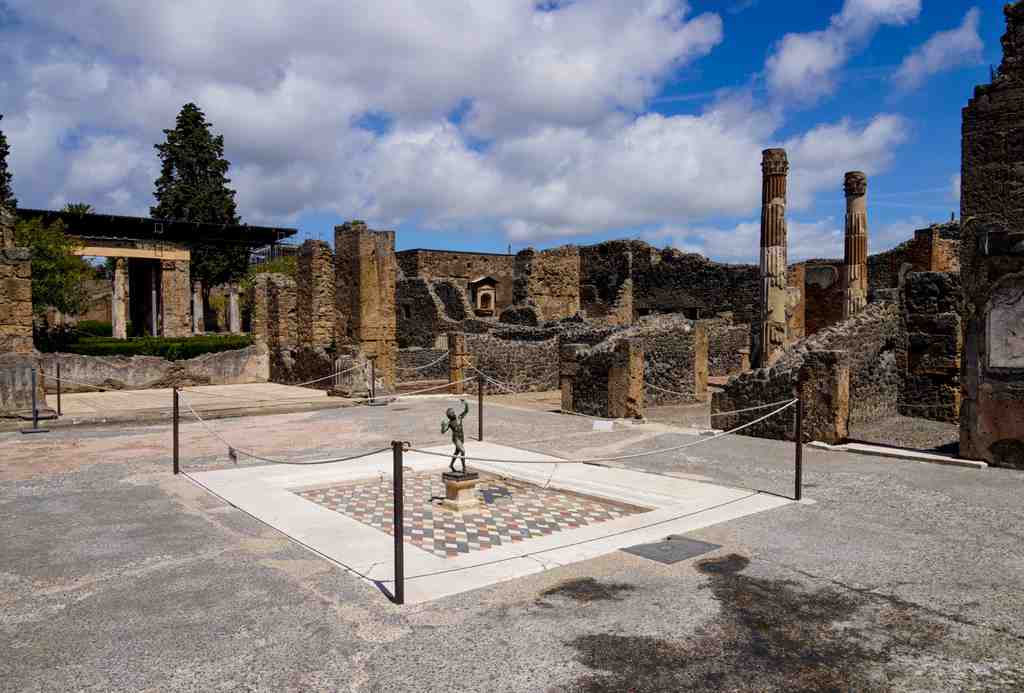
One of the most remarkable aspects of this estate is the wealth of beautifully preserved artwork discovered here after the devastating eruption of Mount Vesuvius in 79 AD. These exquisite pieces provide valuable insights into the Roman Republic, surpassing even the archaeological evidence found in Rome itself. The House of the Faun, along with other prestigious houses like the House of Pansa and the House of the Silver Wedding, exemplifies the opulence of the higher class during this period.
More than 190 years after its excavation, the craftsmanship and quality of materials found in this house continue to impress archaeologists. Despite suffering damage from the AD 62 Pompeii earthquake, the House of the Faun was meticulously rebuilt and repaired, as evidenced by the excavation beneath its floors. However, its use was cut short by the eruption of Mount Vesuvius in 79 AD, which rendered it uninhabitable.
Fortunately, the layers of ash that covered Pompeii preserved the incredible artworks, including the renowned bronze statue of a dancing faun. This statue, which depicts a satyr with the lower body of a man, gave the house its name. Although the original statue now resides in the National Archaeological Museum in Naples, a faithful replica can still be admired within the ruins of the house.
Fauns, such as the one depicted in the statue, were spiritual creatures associated with untamed woodlands. The literate and Hellenized Romans often connected fauns with Pan and Greek satyrs, the wild followers of Dionysus, the Greek god of wine and drama. The sculpture itself is a masterpiece of decorative art, demonstrating a light and graceful pose.
Archaeologists also discovered an inscription bearing the name Saturninus, indicating that the house belonged to the esteemed gens Satria family. The presence of a ring inscribed with the Cassii family name suggests that someone from the Cassii family married into the gens Satria and lived in the House of the Faun.
The House of the Faun is also famous for housing the remarkable Alexander Mosaic. This mosaic, originally depicting the Battle of Issus between Alexander the Great and Darius III of Persia in 333 BC, is thought to have been inspired by or copied from a Greek painting created by the artist Philoxenus of Eretria. Although the original mosaic now resides in the National Archaeological Museum, a reconstructed version can still be admired in the ruins of the house.
In addition to the Alexander Mosaic, other notable artworks found here include an erotic Satyr and Nymph, as well as a fish mosaic resembling others found in Pompeii.
So take your time exploring this fascinating house, marvel at the exceptional craftsmanship, and imagine the grandeur of Roman life that once flourished within its walls.


