
Rome Audio Tour: An Odyssey Through Rome's Historic Heart
Marble whispers echo through the heart of Rome where shadows of emperors and senators linger beneath ancient arches. This self-guided audio tour invites you to follow hidden paths from the grandeur of Palazzo Nuovo to the imposing Senatorial Palace and beyond. Hear stories left behind in cracked stone and forgotten corridors. Unlock secrets that most visitors never hear. What led to a violent power struggle right where you stand? Why did desperate conspirators gather beneath the Arch of Septimius Severus at midnight? Which priceless statue vanished without a trace from the Capitoline halls, leaving only rumors? Trace routes of revolt and glory across sunlit piazzas and silent alleyways. Each step reveals fierce ambition, faded scandals, lost treasures, and echoes of rebellion. Feel Rome alive beneath your feet and see its legacy as something urgent and new. Press play now and let the city’s ancient secrets unfold around you.
Tour preview
About this tour
- scheduleDuration 40–60 minsGo at your own pace
- straighten4.4 km walking routeFollow the guided path
- location_on
- wifi_offWorks offlineDownload once, use anywhere
- all_inclusiveLifetime accessReplay anytime, forever
- location_onStarts at Arch of Titus
Stops on this tour
To spot the Temple of Castor and Pollux, look ahead for three towering, elegant columns standing side by side, topped with ornate stonework-they rise dramatically from a brick…Read moreShow less
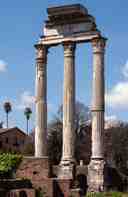
To spot the Temple of Castor and Pollux, look ahead for three towering, elegant columns standing side by side, topped with ornate stonework-they rise dramatically from a brick podium in the Roman Forum, like ancient fingers pointing straight up to the sky. Alright, traveler, park yourself right here and let’s step back in time-back before Instagram, gladiators, or even Julius Caesar had made their mark. You’re now staring at what’s left of the Temple of Castor and Pollux, but believe me, the story still packs a punch, even if the building’s down to only three tall columns. Imagine these columns as survivors from a wild party-everyone else left ages ago, but these three just won’t quit! Picture the year 495 BC: Rome is young, scrappy, and under threat by its wicked last king, Tarquinius Superbus, and a bunch of angry Latins. Right before a crucial battle at Lake Regillus, the Romans are feeling desperate. Their top leader, Aulus Postumius, makes a wild promise: “Hey, gods Castor and Pollux-if you help us beat these baddies, I’ll build you the finest temple smack in the Forum!” Never underestimate the motivating power of real estate. Now, legend says Castor and Pollux, the original superstar twins of Greek mythology-sons of Zeus (or Jupiter if you’re keeping it Roman) and the famously beautiful Leda-magically appeared in the heat of battle, riding white horses, stirring up dust and courage in the Roman lines. The Romans win, and before you could say, “Did you just see that?” the twins pop up again, this time in the Forum, right on the spot where you’re standing. They water their horses at the spring of Juturna like two regular folks, cool as cucumbers, and announce the victory. The crowd goes wild, and Rome’s love affair with these horse-riding heroes kicks into high gear. Fast forward to the temple’s dedication on July 15, 484 BC, a public holiday full of celebration and promise. But this place isn’t just a grand monument to two handsome gods-it’s got civic swagger, too! This temple becomes a hot spot for senate meetings, official speeches, and storage for the state’s all-important weights, measures, and even treasury. Under the temple, tucked away between foundation stones, someone set up a dentist’s office-I guess even senators had toothaches. But Rome is nothing if not a city of do-overs. Time after time, the temple burned or was battered, then built back up, larger and fancier each time. The most grand version came courtesy of Emperor Tiberius, who rebuilt the temple in 6 AD after a raging fire. The remains you see-the three stoic columns-mostly date from his era, except for the podium, which hails from the days of Metellus, a victorious general before Rome had emperors. This was no ordinary spot. Every July 15, the Forum shook to the thunder of thousands of hooves-a massive parade of 5,000 young men, glinting with shields and spears, led by two on white horses (guess who they represent?). Romans never missed a chance for a good show, and that cavalry parade was the blockbuster event of the summer. As Rome evolved into empire, the cult of Castor and Pollux got a royal upgrade. At one point, Augustus flirted with comparing his own chosen heirs to these twin demi-gods-talk about pressure to live up to your PR! When those heirs sadly died, the torch passed to Tiberius and his brother Drusus, who stepped into the divine twins’ golden sandals (well, metaphorically). Through it all, the temple stood as a witness to senate intrigues, moments of rebellion, and probably a fair share of late-night debates about tax collection-history isn’t always heroic. Even Edward Gibbon, the famous historian, whispered about secret schemes unfolding right here as the Roman elite plotted who would rule next. But, of course, nothing lasts forever. With the passing centuries, the temple fell to ruin. By the 1400s, only these three columns remained, famous enough to lend their name to the street: via Trium Columnarum. In the 1700s, even these veterans wobbled, so scaffolding went up, and curious architects climbed for a better look-one even called them the finest model of Corinthian style in the world. So, as you gaze up at them now, imagine all the drama-victories, legends, royal ambitions, and the steady march of time-passing beneath their silent, watchful gaze. Not bad for three columns, right? And to think, once upon a time, all you needed to get a temple built was to promise it to a couple of heroic twins-and actually deliver! Alright, onward, let’s trot to our next stop-but perhaps we’ll walk, not ride horses. Ready to delve deeper into the founding, architecture or the archaeology? Join me in the chat section for an enriching discussion.
Open dedicated page →To spot the Arch of Septimius Severus, just look straight ahead for a massive, pale marble arch looming over the ancient Forum-with three passageways, richly carved reliefs, and…Read moreShow less
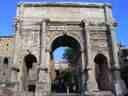
To spot the Arch of Septimius Severus, just look straight ahead for a massive, pale marble arch looming over the ancient Forum-with three passageways, richly carved reliefs, and columns, topped by a long band of large, ancient Latin letters that practically shout “I’m important!” at everyone walking by. Now that you’re standing in front of this epic stone gateway, let’s travel back nearly two thousand years. Imagine the year is 203 AD. Rome is buzzing, and a brand new monument just popped up at the northwestern edge of the Forum-a glistening white marble arch, so tall it nearly brushes the clouds! This is the Arch of Septimius Severus, triumphal in every sense. It was built to celebrate one of Rome’s “mic drop” moments: the smashing victories of Emperor Septimius Severus and his two sons, Caracalla and Geta, over the Parthians in not one, but two epic campaigns. Back then, the arch was raised a bit above the street level with grand stone steps leading up to a central archway-an entrance so elegant that even a Roman emperor might’ve tripped on purpose just so he could soak up the applause. The core of this arch is about as sturdy as Roman ambition, with three archways resting on enormous piers. Flanking each pier are columns-Corinthian and impressively carved-while flying winged Victories swoop down from the upper corners, almost as if they're carrying Rome’s reputation on their feathery backs. Look for four large sculpted panels above-the “attic” part of the arch-where sculptors worked day and night to carve scenes of brutal battles and proud moments. Down each passageway, there are panels showing the glory of war: Romans fighting foes in distant Mesopotamia, cities under siege, emperors handing out rewards, and maybe even a king on his knees begging for mercy. Underneath the Victories, you’ll spot the four seasons personified, and scattered at ground level, the gloomy, shackled faces of defeated enemies-just in case any visitor forgot who ruled the world. Here’s an ancient twist worthy of the best Roman soap operas: Septimius Severus’ sons, Caracalla and Geta, started as partners in power. But after dear old dad died, Caracalla decided to turn “brotherly love” into “brotherly shove”-straight to Geta’s doom. As if murder wasn’t enough, Caracalla then made sure to erase Geta’s very memory. All inscriptions mentioning Geta? Chiseled out. His face in marble? Gone. It’s the ancient Roman version of blocking someone on social media-except a lot more permanent! Back to the arch itself: it wasn’t just for show. It was a proud announcement-an imperial propaganda billboard, if you will. The Severan dynasty just loved building arches, and this beauty, along with others like it in Libya, shouted their victories to every Roman who passed through. Not only that, the original top of the arch sparkled with bronze statues-imagine Severus and his sons, larger than life, riding a four-horse chariot, with bronze soldiers at their sides, glinting in the sun. You could see the whole scene reflected on local coins, spreading their fame to every corner of the Empire. Close your eyes and listen-can you imagine the sound of boots on ancient stone, the rumble as a triumphal procession passes beneath this very arch, the cheers echoing off marble and travertine? With its blend of marble types, precise cuts, and artistic teamwork (it was a real sculptor relay race!), this arch was meant to last through the ages. Even the letters of the main inscription were once covered in gold, and on the brightest afternoons, they would glint so brilliantly you could barely read them. The words dedicate the arch to Severus and his sons-well, one son, at least, after Caracalla’s edits-with a line that essentially says: “Hey Romans, your empire just got bigger, thanks to us!” Over the centuries, the arch suffered-the fires, pollution, even a medieval tower slapped right on top! At one point, almost the whole arch was buried, only the top visible above centuries of mud and debris. But that just kept it safe, and today, here it stands, battered but unbroken, with the story of Rome’s ambition, rivalry, and, let’s face it, a bit of ancient family drama, carved into every corner. Interested in a deeper dive into the description, materials or the decoration? Join me in the chat section for an insightful conversation.
Open dedicated page →
Show 10 more stopsShow fewer stopsexpand_moreexpand_less
 4
4Temple of Divus Julius
Buy tour to unlock all 17 tracksStraight ahead, you’ll spot the Temple of Caesar by looking for a raised marble platform with grand white columns, intricate golden accents, and statues perched above the…Read moreShow less
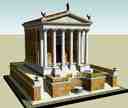
Straight ahead, you’ll spot the Temple of Caesar by looking for a raised marble platform with grand white columns, intricate golden accents, and statues perched above the roofline-standing out right in the center of the Forum. Alright, let’s take you back to one of the most dramatic days in Roman history-right here, at the Temple of Caesar, also known as the Temple of the Comet Star. The air would have been buzzing with tension in 44 BC, soon after Julius Caesar’s assassination. Picture yourself in a sea of anxious Romans as Caesar’s supporters swept his body through these ancient streets, not to the planned, quiet burial in the Campus Martius, but right into the very heart of the city-the Forum. The old Regia, once the royal headquarters of the Pontifex Maximus, loomed nearby, hinting at Caesar’s almost kingly status. As crowds gathered, a rousing speech by Mark Antony lit the crowd like a spark to dry leaves. Suddenly, all plans fell apart and, in a sudden, feverish moment, the body was laid out here on an ivory couch, flames flickering as two mysterious figures appeared, swords drawn, setting it alight with torches. The mob joined in, tossing branches, benches, even actors’ robes and soldiers’ weapons into the surging fire. Women threw in children’s amulets and their own precious jewels-Rome had never seen anything quite like this! But the drama didn’t stop there. A comet unusually bright, streaked across the Roman sky for seven days-daylight visible, even! It was soon known as Caesar’s Comet, or the Sidus Iulium. Romans saw this as a sign that their beloved Julius had joined the gods, and coins soon carried a star to cement his divine status. You could say Octavian, Caesar’s heir (and future Augustus), got some excellent publicity-like a cosmic thumbs up from Grandpa. In the following months, crowds refused to let Caesar’s memory die. The first makeshift monument appeared here. Soldiers, politicians, and even ordinary Romans swore oaths of loyalty facing the spot where these flames had burned, gathering to remember, to mourn, and sometimes, to rally in political unity. Within a couple years, Octavian, Antony, and Lepidus-an odd trio if there ever was one-decreed a proper temple for the now "Divine Julius." But as it turned out, politics on a Roman scale is slower than building a modern Italian motorway. The work dragged on until Octavian alone finished the job in 29 BC-he celebrated with a monstrous parade after his victories over Antony and Cleopatra. Give him points for timing, right? The temple’s design was just as bold. Resting on this high podium, it became the perfect platform for fiery speeches and public gatherings. Imagine the sounds of politics echoing under the Roman sun as orators boomed from the rostra, which was decorated with the beaks of ships taken from the famous naval victory at Actium. Later, emperors and their families would use it for festivals, funeral orations, and to show off spoils from their campaigns. Talk about multitasking-divinity, memory, and a bit of showmanship all packed into one spot. Inside, the temple held treasures to rival any museum: marble columns-maybe Corinthian, maybe Ionic, as the scholars still bicker about it-a famous painting of Venus rising from the sea, lush floral decorations, and a colossal veiled statue of Caesar himself, lituus in hand and a shining star crowning his head. With an open door, the statue gazed directly onto the Forum, keeping an eternal and perhaps judgmental eye on the Roman people. Decades and centuries rolled by. Fire nearly destroyed the temple under Septimius Severus, but it rose again, Phoenix-like, restored and shining. When late medieval Rome came calling for building material, much of the temple was carted off for fresh construction, leaving only the cement core that you see today. Still, this bit of ancient stone remains a magnetic place-every March 15th, visitors lay flowers here to mark the anniversary of Caesar’s death, honoring a story that somehow manages to combine mystery, tragedy, political theater, and just a touch of celestial magic all in one historic square. If you find yourself inspired, just remember-no need to leave your jewelry in the fire!
Open dedicated page →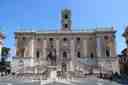 5
5Senatorial Palace
Buy tour to unlock all 17 tracksTo spot the Senatorial Palace, look for the grand ochre-colored building with a dramatic double staircase and a tall clocktower in the center of Piazza del Campidoglio-just ahead…Read moreShow less
To spot the Senatorial Palace, look for the grand ochre-colored building with a dramatic double staircase and a tall clocktower in the center of Piazza del Campidoglio-just ahead of you. Now, let’s step back in time to when this hill was not crowned by fancy Renaissance architecture, but by ancient Roman ruins and legends. Imagine the echo of footsteps of those who came before, trampling over the remnants of the Tabularium and the ancient temple of Veiove, where this impressive palace now stands. After the chaos that came with the fall of the Western Roman Empire, the hill turned from Imperial hands to Papal control-until, get this, a dramatic local uprising in 1144 handed the keys to the people and gave birth to the city’s new government. So, the Palazzo Senatorio isn’t just your average historic building-it's the oldest city hall still in use anywhere on Earth! Construction began in the 1100s and 1200s, using the sturdy bones of old Roman buildings like a giant architectural sandwich. The uneven hills were such a headache, they had to use the ancient foundations just to keep the whole palace from sliding down into the Forum. Every stone here could probably tell a story, if it weren’t too busy holding everything up! Over the centuries, trouble brewed and battles raged; at one point, a powerful Corsi family fortress was knocked down by the pope himself, clearing the way for the city’s new leadership to shine. The halls of this palace have witnessed political wrangling, secret deals, and the rise and fall of powerful families, including the mighty Colonna-imagine medieval intrigue echoing off these walls. Skip forward to the 1500s and imagine a voice echoing through the piazza: “Michelangelo, we need you!” That’s right-the legendary artist, sculptor, and, let’s face it, probable overachiever, was called in to remake the square and the palace under Pope Paul III. Michelangelo’s genius is right before your eyes: the double staircase elegantly sweeps up to the entrance like a marble red carpet, and he designed the monumental setting for both the humble city clerk and the grandees of Rome. The façade you see, completed after Michelangelo by Giacomo Della Porta, is a masterpiece in its own right, with elegant proportions and powerful symmetry. Don’t forget to gaze upward! The tower crowning the top is called the Torre della Patarina-built between 1578 and 1582 on the ruins of a previous, lightning-blasted medieval tower. There’s even an old war trophy up there: a giant bell known as the Patarina, hauled here all the way from Viterbo. They say the bells still ring out for special occasions-mayor elections, city anniversaries, even the historic abdication of a pope. Approach the double staircase and you’ll see a trio of monumental statues. At the summit, the goddess Roma holds court, with two ancient river gods seated on either side-one representing the Nile, the other the Tiber, both recycled from a temple dedicated to Serapis on the Quirinale. Forget recycling bins; Rome’s been upcycling statues since before it was cool! Inside, things only get grander. Imagine sweeping into the Giulio Cesare Hall, where once (and still!) vital decisions for Rome’s future are hammered out. High on the walls, the banners of Rome’s ancient districts line up like a parade of colorful history, and in the center stands a giant marble statue of Julius Caesar, the city’s ancient superstar. These echoing halls have seen emperors, popes, senators, and revolutionaries-rumor has it, you could feel history breathing down your neck if you stood there alone at night. Galleries and meeting rooms are filled with treasures-a 16th-century Flemish tapestry here, the busts of Republican heroes there, flags that have survived battles and centuries. There’s a secretive feel to the mayor’s study in the tower of Niccolò V, with views sweeping over the city and paintings of fortune, battle, and even a mysterious draped statue of an unknown queen or goddess, uncovered only in the 1950s. And don’t miss the Protomoteca-a collection that packed too many celebrity busts into the Pantheon before they found their forever home here, alongside conference rooms where Rome’s leaders still gather to shape the city’s fate. So as you stand here, surrounded by centuries of power, rebellion, and Renaissance flourishes, remember: you’re not just looking at a palace, you’re witnessing the living, beating heart of Rome’s story. And hey-if you hear a bell overhead, know it might just be history itself, chiming in to say hello!
Open dedicated page →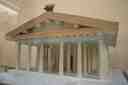 6
6Temple of Jupiter Optimus Maximus
Buy tour to unlock all 17 tracksTo spot the Temple of Jupiter Optimus Maximus, look for a huge rectangular base crowned by chunky columns and a steep, decorated roof, perched just above eye-level; if you squint,…Read moreShow less
To spot the Temple of Jupiter Optimus Maximus, look for a huge rectangular base crowned by chunky columns and a steep, decorated roof, perched just above eye-level; if you squint, you might even spot a statue of four horses pulling a chariot across the roofline. Welcome to the spot where ancient Rome shouted its own grandeur from the rooftops-literally! The Temple of Jupiter Optimus Maximus once towered above you on the Capitoline Hill. Imagine standing here 2,500 years ago, on a brand-new terrace carved right out of this hill. Workers are bustling, Etruscan specialists are fussing over terracotta decorations, and everyone’s marveling at the massive foundations dug into the tufa stone right beneath your feet. This wasn't just any temple-it was the crown jewel of Rome, dedicated to Jupiter “the Best and Greatest,” with his pals Juno and Minerva flanking either side. The priests believed the gods themselves refused to budge when asked politely to move their little shrines out of the way for this construction project. You have to wonder: what kind of lease agreement do you sign with immortals? When Terminus, the god of boundaries, decided to stay put, it was seen as a sign: Rome was here to stay, destined to rule the world! Now, picture the scene in 509 BC-the year Rome cast out its last king and started the Republic. Trumpets ring, crowds cheer, and the grand steps of the temple lead up to a dazzling colonnade wrapping all the way along the front and sides. The temple’s roof bristles with statues, with Jupiter himself at the peak, riding a four-horse chariot-Etruscan art at its flashiest. The cult statue inside showed Jupiter standing tall, thunderbolt in hand, draped in a gown embroidered with palms and a royal purple toga dotted with gold. Roman generals who triumphed in battle wore copies of his robes and posed just as dramatically-fashion tips straight from the gods! The temple didn’t just look impressive; it was an archive of Rome’s greatest moments. Victorious generals brought their trophies here, and statues filled every nook, so much so that they had to clear some out just to see the walls. Hidden below the precinct, deep “favissae”-sacred chambers-held offerings and broken treasures. And don’t forget the sacred geese of Juno, kept here to sound the alarm in times of siege. If you listen closely, you might still hear a faint honk or two in the air! But being an ancient landmark means living dangerously. The temple burned down not once, but four separate times-fate, thunderbolts, and Roman politics all had a hand in the destruction. Each rebuilding was bigger and more extravagant. Imagine craftsmen from Greece hurrying up the hill with precious marble, Augustus fussing over decorations, and Domitian laying enough gold on the roof tiles to make your dentist jealous. In 69 AD, after a night of civil war, flames again ravaged the temple. Not to be outdone, Emperor Domitian rebuilt it even grander-with a golden roof, glittering statues everywhere, and Jupiter commanding the center with Juno and Minerva at his sides. Even after pagan worship faded, looters stripped away bronze and gold, and a 15th-century humanist wandered through the overgrown ruins, still in awe. Eventually, in the Renaissance, some fellow named Caffarelli decided the ruins made the perfect spot for his palace (so much for respecting the neighbors). Even today, if you peek behind the Palazzo dei Conservatori, you can still see solemn chunks of those foundations-heavy with memory and myth. So as you stand here, feel the rumble of history beneath your feet-the cheers of triumph, the crackle of fire, and maybe, just maybe, a whisper from Jupiter himself reminding you that Rome always comes back stronger. And remember: every stone you see is only the tip of a story piled deep beneath your shoes, just waiting for someone like you to uncover it!
Open dedicated page →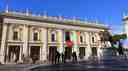 7
7Palazzo Nuovo
Buy tour to unlock all 17 tracksTo spot the Palazzo Nuovo, just look straight ahead for a grand, light-colored building with tall columns and statues standing along the roof-it's right on the edge of Piazza del…Read moreShow less
To spot the Palazzo Nuovo, just look straight ahead for a grand, light-colored building with tall columns and statues standing along the roof-it's right on the edge of Piazza del Campidoglio, facing the famous equestrian statue in the center. Alright, imagine yourself standing in the heart of Rome’s grandest piazza, the sun glinting off the marble statues above you as you gaze at the elegant Palazzo Nuovo. If these statues could talk, they’d surely be trading stories after centuries of watching visitors below! Now, let’s step back in time together. Not so long ago-well, in Roman terms-the space in front of you was transformed forever in the 1600s. Rome decided it was time for a little architectural glow-up, so along came Girolamo Rainaldi, the architect, and his son Carlo to see things through. But the real rockstar behind the show was none other than Michelangelo, whose plans were dusted off to guide the look of this façade. Michelangelo wasn’t just content to beautify a building; he wanted the Piazza del Campidoglio itself to stand out, so he gave the Palazzo Nuovo a slightly off-kilter orientation. Why? To complete a perfectly dramatic, trapezoidal piazza-because, in Renaissance Rome, even your geometry had to have style. As the construction rolled on, workmen chipped away, knocking down old earth banks and shuffling around the huge fountain of Marforio, a jaw-dropping ancient statue they’d just unearthed. Now, Marforio lounges with the swagger of a Roman god in the courtyard, where you can still hear the gentle. The statue is massive, looking like he’s halfway between taking a nap and solving a riddle, his beard flowing, his face noble. Romans even used him in the Renaissance as a kind of public gossip post, sticking cheeky messages or government critiques on his back-ancient social media, you could say. Step inside the courtyard and you’ll find a hidden stage where stone satyrs-those playful, pointy-eared friends of Pan-stand on guard, and columns from a long-vanished Temple of Isis bear witness to centuries of rituals. Each granite column is a little work of art, carved with garland-wearing priests making offerings, their robes frozen mid-swing. It’s no wonder the place always feels like something’s about to happen-like someone in a toga could dash through looking for their misplaced laurel wreath. Now, the Palazzo Nuovo isn’t just a pretty façade! From the beginning of the 19th century, it became a home for the city’s ancient treasures. Consider the “Room of the Doves”-no, you won’t actually see flocks flutter by, but you will spot a famous Roman mosaic of doves, uncovered from Emperor Hadrian’s villa in Tivoli. And then there’s the “Cabinet of Venus,” where the dazzling, marble Venus Capitolina presides-she’s been wooing crowds since she was brought here in the 1700s. People say if she ever winked, half of Rome would faint on the spot. But our legendary cast doesn’t end there. The “Hall of the Emperors” gathers together sixty-seven stone heads of Rome’s top rulers-Augustus, Nero, even old Honorius-all peering at you with expressions that range from noble to “Did I leave the oven on in Byzantium?” Follow the line of their eyes, and you’ll see the artistic evolution, from simple buzzcuts to the wildest imperial beards. And right next to them, the “Hall of Philosophers” is crowded with busts of thinkers and poets: Homer (don’t try to outstare him), Socrates, and Cicero, rubbing marble shoulders and no doubt critiquing passersby. As you move up the elegant double staircase and enter the grand gallery, imagine the echo of footsteps as visitors have done for centuries, gazing at heroic statues collected from all over ancient Rome. There's a hall for wounded warriors, gentle gods, and even a mischievous faun stolen from an ancient villa-each with stories as tangled as a Roman soap opera. And to top it off, the main hall’s ceiling is a baroque wonderland, with twisting shapes and golden flourishes glinting in the afternoon light. If you listen closely, you might almost hear a Roman emperor issuing decrees-or maybe just the next group of tourists marveling, “Wow, Rome really knew how to decorate!” So, while the outside is all symmetry and pride, step inside and you’ll discover a carnival of marble faces, ancient legends, and a whisper of timeless drama. You might just leave here expecting statues to follow you home. But don’t worry-they only come alive after midnight. Or is that just another Roman legend?
Open dedicated page →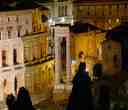 8
8Temples of Apollo Sosiano & Bellona
Buy tour to unlock all 17 tracksLook ahead for three tall, marble columns standing proudly together, almost like ancient sentinels illuminated near the Teatro di Marcello-spot them just beside the taller ruins…Read moreShow less
Look ahead for three tall, marble columns standing proudly together, almost like ancient sentinels illuminated near the Teatro di Marcello-spot them just beside the taller ruins and you’ll know you’re in the right place! Welcome to a spot where the spirit of Apollo, the god of music and healing, seems to hum through the air! You're now standing before the Temple of Apollo Sosianus, where stories stretch back, not just centuries, but literally millennia. Take a deep breath-you’re about to travel through time (no time machine needed, just imagination). Let’s rewind to the middle of the fifth century BC. Picture a patch of green outside ancient Rome’s early walls-the prata Flaminia. It’s here, around 431 BC, that Romans, shaken by a devastating plague, decided they needed some divine intervention. With all sincerity, they built a sacred area (known as the Apollinar) and dedicated the very first temple to Apollo as a healer. And hey, when you’re desperate to banish a plague, you’ll try anything-even a little divine housewarming! But like any real estate in Rome, this prime spot got makeovers through the centuries. By the third century BC, the temple had taken its first facelift-restored and restored again, keeping up with the ever-changing city. They say ancient Rome never stopped building, and that certainly seems true right here! Now, fast-forward to the second century BC. Imagine statues everywhere-Apollo maybe looking a bit smug, his mom Latona beside him, his twin sister Artemis, and even the nine Muses thrown in for inspiration. Pliny the Elder himself tells us that these statues were crafted by Philiscus of Rhodes. You know your temple is fancy when people are writing about the art centuries later! Then came the age of Julius Caesar. Nearby stood the Temple of Diana until it was demolished to make room for the grand Theatre of Marcellus. Maybe Apollo was lonely, so Romans probably rededicated this spot to include Diana as well. After all, what’s better than one god? Two, obviously-especially if they’re siblings. And now for a bit of drama! Around 34 BC, a certain Gaius Sosius decided the temple needed another extreme makeover-think of it as the ‘Augustan Edition,’ all marble and magnificence. But, wouldn’t you know it, history loves to throw a plot twist. Political trouble erupted between Octavian (later Augustus) and Mark Antony. With Gaius Sosius stuck on Antony’s team, all renovations screeched to a halt-imagine construction stopped mid-project, columns half up, architects tearing their hair out. Once Augustus and Sosius patched things up (thanks to a good old-fashioned bit of political arm twisting), the work resumed. Augustus, now emperor, made sure Sosius paid for the rest-and demanded that it be done in truly lavish style. When the emperor tells you to splash out, you don’t skimp! The result? The temple, as you see the remains today, faced nearly due south and boasted a marble façade so dazzling, it made neighbors jealous. Six colossal columns lined the front, crafted from Carrara marble bright enough to strike awe even in the blinding Roman sun. Intricate capitals (sort of like leafy crowns for the columns) sported a riot of plant motifs and laurel-symbol of victory and a not-so-subtle nod to Augustus. Inside, African marble columns glistened, and the decorated frieze above showed off epic battle scenes, marking Octavian’s triple triumph in 29 BC. (Nothing like turning your greatest hits into wall art!) And you, lucky visitor, are gazing at something extra special-the original three columns were discovered nearly flat on their faces in the 1930s and then re-erected in 1940. So the trio before you aren’t quite in their ancient spots, but they’re standing tall, showing off thousands of years of history and resilience-even after medieval buildings swallowed the ruins and centuries hid them from sight. The decorative details here are quirky too-some flutes on the columns are wider, some are narrower, in a playful experimentation that shows Roman architects were testing out new styles, like designers on the edge of a trend. Nearby, the grand Portico Trionfale once stretched for a mile, with its arches passing just behind this temple. In the shadows, there used to be a sacred circular fountain for purification ceremonies-proof this area buzzed with both spiritual and social energy. So, as you look at those three steadfast, marble columns, imagine priests in white, musicians playing lyres, the murmur of prayers, crowds celebrating festivals, artists admiring the statues, and even the clatter of builders nervously working under Augustus’s ever-watchful gaze. If these stones could talk, oh, the tales they’d tell-and thankfully, you’ve just heard a few! Interested in knowing more about the description, other buildings in the area or the image gallery
Open dedicated page →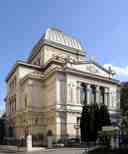 9
9Great Synagogue of Rome
Buy tour to unlock all 17 tracksLook for a grand, cream-colored building with a unique, boxy aluminum dome-the only one like it in Rome-standing tall by the riverbank, its decorated façade topped by a shining…Read moreShow less
Look for a grand, cream-colored building with a unique, boxy aluminum dome-the only one like it in Rome-standing tall by the riverbank, its decorated façade topped by a shining menorah. Take a good look at this splendid landmark! The Great Synagogue of Rome isn’t just big-it’s a showstopper, wearing a dazzling mix of architectural fancy-dress: a bit Assyrian-Babylonian here, a touch Egyptian there, and you can even spot some Greco-Roman flair, all crowned by a dome so square that even Romans scratch their heads. You might wonder, why go for a dome that’s more “box” than “ball”? Well, the answer is as bold as the building itself: after centuries of being hidden or pushed aside, Rome’s Jewish community wanted to announce, “We’re here, and we’re not going anywhere!” And thanks to this aluminum crown, their synagogue can be seen from all over the city-a true symbol of pride. But let’s rewind the story a bit. Rome’s Jewish community is the oldest in Europe, arriving all the way back in the 2nd century B.C., when their ancestors crossed the Mediterranean, sometimes in search of new trade, sometimes as exiles or, sadly, slaves after hard-fought wars with Rome. They were here well before spaghetti and gladiators became Italy’s top exports! For centuries, they lived in a tight, bustling area known as the Roman Ghetto, often facing harsh restrictions and walls-now, if those streets could talk, they’d have some stories to tell. All that changed in the late 1800s, when Italy unified and decided that having a pope as your landlord was so last-century. The ghetto was demolished, and Jewish Romans were finally made citizens. You could almost hear the plans being drawn up for this very building: “Let’s build something so gorgeous, even Caesar would’ve been jealous!” And so, between 1901 and 1904, architects Vincenzo Costa and Osvaldo Armanni set to work, mixing styles and decorating every inch of the interior with swirling, colorful Art Nouveau touches that are still breathtaking today. But what’s a building without stories? This synagogue holds centuries of joy and sorrow. Plaques outside honor the memory of local Jews lost during the terror of Nazi Germany, and a much more recent tragedy in 1982, when it was attacked by terrorists. Yet, out of sadness has also come hope and bridges between faiths. In 1986, something happened here that would have stunned both rabbis and popes of old: Pope John Paul II walked through these doors, prayed with Rabbi Elio Toaff, and called Jews the “elder brothers” of Christians-an amazing first in nearly two thousand years! Since then, more popes, Jewish and Christian leaders, and even cantors from around the world have gathered here in music, prayer, and dialogue. There’s more than worship within these walls. You’ll find the Jewish Museum of Rome, packed with treasures and tales from across the centuries. Every pillar and mosaic you see isn’t just decoration, it’s a monument to freedom, resilience, and celebration-proof that even in the heart of Imperial Rome, the oldest community can shine on, boxy dome and all. So take a breath, look up, and imagine the echoes of ancient footsteps, whispered prayers, and unstoppable hope that have brought this spot to life. And don’t worry-I promise not to quiz you on all the architectural styles before we head to the next stop!
Open dedicated page →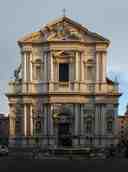 10
10Basilica di Sant'Andrea della Valle
Buy tour to unlock all 17 tracksTake a look just ahead-you’ll see an enormous, cream-colored Baroque church with a stunning dome rising up above the traffic, looking like it’s ready to burst into song right here…Read moreShow less
Take a look just ahead-you’ll see an enormous, cream-colored Baroque church with a stunning dome rising up above the traffic, looking like it’s ready to burst into song right here on Piazza Vidoni. If you’re facing the busy Corso Vittorio Emanuele, that impressive facade with its sculpted saints and grand staircase is your target: Sant’Andrea della Valle. Let me set the scene, my friend: imagine it’s late 16th-century Rome, a time when big ideas and even bigger egos collided to shape the city’s spiritual skyline. The Theatines, a brand-new religious order determined to dazzle the world with their devotion, were handed this spot by Donna Costanza Piccolomini d’Aragona-a woman with a name as long as her family tree, tracing all the way to Pope Pius II. Her palace and a humble church sat here, just waiting for a makeover. Why dedicate it to Saint Andrew? Well, Amalfi’s patron saint and Donna Costanza’s hometown hero sounded like the perfect figurehead for such an ambitious new sanctuary. So in 1582, Rome’s architects and artists got to work. First, Giacomo della Porta, famed designer of fountains and domes, and then Pier Paolo Olivieri, left their mark. But Rome’s real specialty? Delays. After Donna Costanza’s death, work slowed to a crawl until Cardinal Alessandro Peretti di Montalto-let’s call him Cardinal Saint Deep Pockets-swooped in with a huge endowment, equivalent to winning the 17th-century lottery. Imagine spending 150,000 gold coins on a church-today, you’d probably get a penthouse in central Rome, but back then you got soaring domes and gilded chapels. Speaking of domes, step closer and gaze upwards. Lanfranco’s masterpiece (completed in 1627) shimmers with illusionistic frescoes high above you. This dome was, for centuries, third only to St. Peter’s and the Pantheon-a little sibling with big aspirations to the dome world. The story of this dome reads like a Renaissance soap opera: Giovanni Lanfranco versus Domenichino, two star pupils of Carracci. Cardinal Alessandro wanted Lanfranco, but Pope Gregory XV’s family wanted Domenichino. The solution? Why not both! And the result is a sky crowded with saints, swirling clouds, and angels so lively they seem about to swing down and join you on the piazza for a quick espresso. There’s more waiting inside. On the right, chapels like jeweled boxes, starting with the Ginetti Chapel: white marble, a dramatic angel (inspired by Bernini) hustling the Holy Family out of Egypt faster than you can say “Roman holiday.” A little further down, the Strozzi Chapel holds bronze copies of Michelangelo’s statues-the originals too famous to leave Florence, of course. If you peer carefully, the Strozzi family cenotaphs rest under shadowy black marble-Rome’s equivalent of a family photo wall, but with more togas. The left side offers its own mix of art and drama: the Madonna della Purità, angel-laden cupolas painted in 1912, and the tomb of another illustrious cardinal-proof that this church was, and still is, a high society address. Wander to the left transept and meet Saint Cajetan, founder of the Theatines, immortalized in painting, while allegorical statues at his altar stand for Abundance and Wisdom-qualities every tour guide aspires to bring. The side chapels overflow with stories: Saint Sebastian was immortalized by Giovanni de’ Vecchi after surviving, well, more than one round of arrows, and the Rucellai Chapel celebrates three Blessed Theatines with paintings by Pomarancio and a ceiling fresco that looks like a celestial choir rehearsal. Don’t miss Saint Martha on the far left-sculpted so energetically by Francesco Mochi she seems about to step right out into the nave, perhaps to get a better view of the next Mass. Don’t leave without looking up into the apse. Here, Alessandro Algardi’s decorations and Domenichino’s frescoes tell the history of Saint Andrew: his crucifixion, his martyrdom, and his final rest, all beneath scenes of Virtue and triumph. Mattia Preti supplied drama with his own frescoes, no doubt hoping no one would ever outdo him in any Roman church ever again. If you’re lucky, as you stand here, you might catch faint music echoing-Sant’Andrea della Valle hides a majestic pipe organ built in 1845, still played on afternoons by a modern organist who, rumor has it, scares away pigeons with perfectly pitched notes. Puccini was so inspired by this place, he set the first act of his opera ‘Tosca’ here-albeit with a little dramatic license. You won’t find the famous Cappella Attavanti, but you will find inspiration, the spirits of popes Pius II and III resting in peaceful grandeur, and art that’s leaped from centuries past straight into your afternoon walk. So, take a long look. Time, money, rivalry, and devotion have all carved their stories into these stones. And if you ever want to upstage your local church back home, just mention the dome-third biggest in Rome! That’s one giant leap for Saint Andrew and one small step for Roman architectural flair. Curious about the overview, pipe organ or the varia? Don't hesitate to reach out in the chat section for additional details.
Open dedicated page →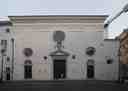 11
11Basilica of Saint Mary of Minerva
Buy tour to unlock all 17 tracksYou’re looking for a large, pale building with an almost flat, simple Renaissance-style façade marked by three round windows and a tall central door, right at the heart of the…Read moreShow less
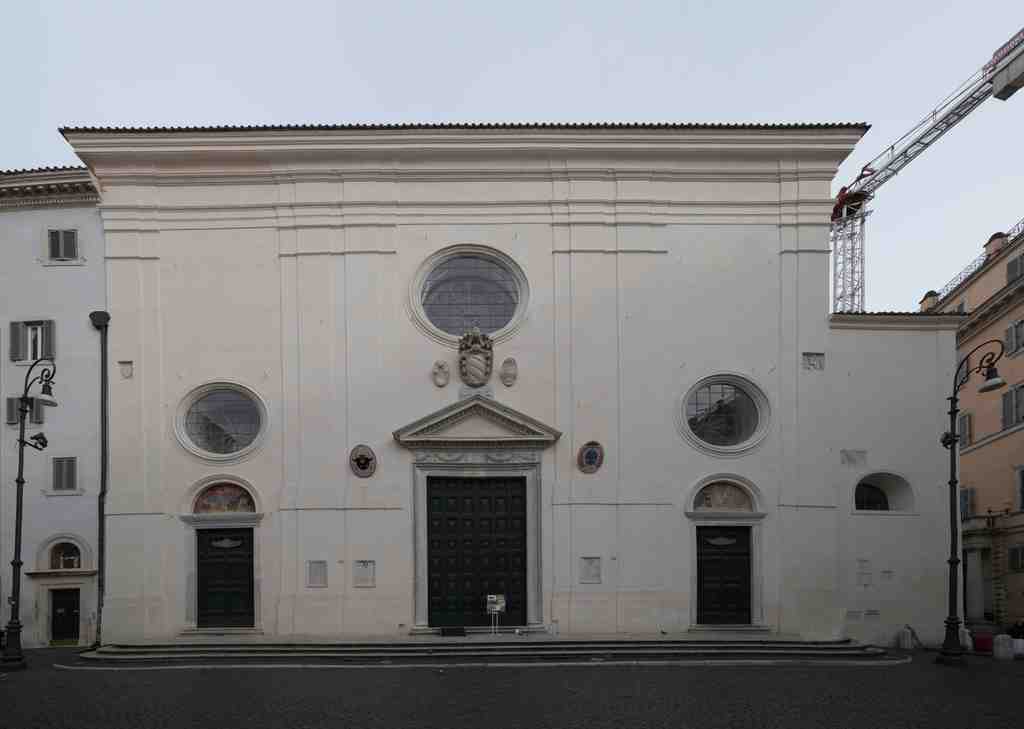
You’re looking for a large, pale building with an almost flat, simple Renaissance-style façade marked by three round windows and a tall central door, right at the heart of the small piazza-if you see a charming little elephant statue balancing an obelisk nearby, you’re in the right spot! Alright, let’s step back for a moment and let the magic of Santa Maria sopra Minerva sweep you through centuries of Roman twists and turns. Close your eyes for a second and imagine-beneath your very feet, the ground once trembled with footsteps of ancient Romans who came not to worship the Virgin Mary, but to pray at a grand temple dedicated not to Minerva, as legend had it, but actually to the Egyptian goddess Isis. Confusing the Romans is practically a historical tradition here! They named the spot 'sopra Minerva'-meaning 'above Minerva'-which, if you ask any goddess, is a pretty lofty claim to fame. Now, you may have noticed that while every other medieval church in Rome seems to have gone through the Baroque equivalent of a 17th-century game show makeover, this one is unique; It’s the only major church in Rome where you’ll still find original Gothic architecture-just walk inside and look up: blue arched vaults sprinkle you with golden stars and fiery red ribbing, all thanks to a romantic 19th-century revival that wanted to honor its true colors. Back outside, there’s an elephant in the piazza-no, I haven’t lost my marbles. Take a look: Gian Lorenzo Bernini, the master of marble drama, designed this unforgettable little elephant in 1667. He’s carrying a much older Egyptian obelisk on his back, snatched from the Dominicans’ own garden and once a proud marker at the temple of Isis. Legend says the composition was inspired by a strange old novel where elephants stroll around with obelisks on their backs-no wonder Romans first nicknamed it “Piggy,” but eventually “Pulcino della Minerva” stuck, which means “the Chick.” Yes, even the mighty can end up with a cute nickname. Let’s glide back in time to the Middle Ages-by the 8th century, the ancient temples had mostly crumbled. Pope Zachary, a clever sort with a knack for re-inventing real estate, gave this land to nuns from Constantinople, who dedicated it to the 'Virgin of Minervum.' Flash forward to 1255: women’s convent out, Dominicans in! These tireless friars made this their headquarters and built the soaring, starry nave you see now, modeling their church after another Gothic marvel in Florence. But history here loves a bit of drama: in 1431 and again in 1447, with Rome swirling in chaos and rival families turning the streets upside down, this church doubled as Conclave Central. Cardinals were locked inside for days, tensions high, as they argued and prayed over who would become the next Pope. And let’s not forget: the Dominican convent here became the seat of the infamous Holy Office-the Inquisition-where even Galileo was made to recant his “heretical” belief that the Earth revolved around the Sun. Talk about a tense staff meeting! The Minerva has witnessed everything from secret conclaves to fierce floods (look very closely at the façade for little marks showing how high the waters once rose-65 feet above the nearby Tiber!). Inside awaits a treasure trove: a brilliant marble statue of Christ by Michelangelo to the left of the altar-he must have had a “chisel in one hand, genius in the other” kind of day-glistens in the soft light. Keep exploring and you’ll find masterpieces like Filippino Lippi’s colorful frescoes and the resting places of giants: St. Catherine of Siena, whose body is here (well, most of her), the painter Fra Angelico, and even two Medici popes. The story keeps going: in the Renaissance, the Dominicans ran a prestigious college here-later to become the world-famous Angelicum University. Through revolutions and occupations, suppressions and returns, the Minerva and her Dominican friars have never given up their spot at the crossroads of faith and learning. So, whether you’re marveling at Bernini’s whimsical elephant, feeling the hush of history behind these sturdy walls, or imagining the brilliant blue-and-gold Gothic ceiling overhead, Santa Maria sopra Minerva is much more than a quiet church. It’s a living time machine-a place where gods, popes, scientists, and humble friars have all left their mark. And if you hear an echo of hushed voices, or maybe a clever elephant’s triumphant trumpet as you wander-well, don’t worry, it’s all part of the magic of Rome. Wondering about the interior, list of cardinal-priests from santa maria sopra minerva or the gallery? Feel free to discuss it further in the chat section below.
Open dedicated page →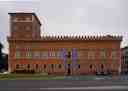 12
12National Museum of the Palazzo di Venezia
Buy tour to unlock all 17 tracksTo spot the Palazzo Venezia, just look for a huge, almost fortress-like building of reddish-brown brick stretching out along the side of Piazza Venezia, with rows of arched…Read moreShow less
To spot the Palazzo Venezia, just look for a huge, almost fortress-like building of reddish-brown brick stretching out along the side of Piazza Venezia, with rows of arched windows, a tall square tower at one end, and its big, forbidding main entrance looking right at the square. Before you, the Palazzo Venezia stands in all its massive, Renaissance glory-but if you think it looks more like a medieval fortress ready for a siege than a delicate Italian palace, well, you’re right on track! Take a deep breath and imagine the past echoing around you-horse hooves, flag bearers, shouts from the square. Now add a little drama, because this palace has hosted popes, emperors, ambassadors, and even a notorious dictator who liked to keep the lights on at night just to seem busy. I guess you could call it history’s first “I’m still working” notification! It all started with a cardinal named Pietro Barbo-Venetian by birth, lover of art and antiquities, and future Pope Paul II. Back in the 1450s, Rome was still shaking off its medieval look, and Barbo wanted to make a statement. So, he transformed a rather humble cardinal’s house into the mighty Palazzo di San Marco, layering on the Renaissance style, but let’s be honest, the place still looks ready to repel invaders. Just picture piles of stone being hauled from the Colosseum-not for gladiator games, but to build up these thick walls. That’s recycling, ancient Roman style! But this was no ordinary palace. Barbo decided he didn’t need Venice’s carnival when he could throw a cultural festival right here, amassing statues, tapestries, and a treasure trove of art. When he became Pope Paul II, the palace got another serious upgrade-fortifications, gardens to stroll in, and the famous Biscia Tower, whose name may come from a snake-like sculpture hidden in its walls. On the west, it snuggles up to the ancient Basilica of Saint Mark, as if keeping an old friend close by. If you had arrived here in 1536, you might have witnessed the Holy Roman Emperor Charles V strutting through a triumphal arch, greeted by Pope Paul III himself. The atmosphere would have buzzed with intrigue as they discussed how to respond to the Reformation, holding a secretive, high-stakes meeting behind these stone walls. The popes clearly loved a grand entrance-carving out the Palazzetto, a lush, three-tiered garden cloister at the southeast corner (which was later moved down the road to make way for your next stop, the Victor Emmanuel II Monument). And let’s not forget the Venetians! In 1564, Pope Pius IV, trying to charm the Republic of Venice-because who doesn’t want Venetian friends?-gave them a huge chunk of this place for their embassy, as long as they promised to let the local churchmen crash here, too, and maybe fix up a wall or two. There’s even a whole wing named after the Cibo family, which you can spot off Via del Plebiscito, if you’re keen to venture further. Fast forward to the 20th century, and the grandeur of Renaissance art had given way to something entirely different-fascist footfalls and political theater. Benito Mussolini moved in, dragging his family, his favorite mistress, and a chestful of ambitions. He made this palace his personal HQ, and from the iconic balcony above you, he delivered thundering speeches while thousands of people crammed the square below, waving flags and hanging on every word. Imagine the roar: Mussolini liked to project the image that he never slept-so he left the lights blazing in his office all through the night, a beacon of political drama. Yet, the palace witnessed not just triumphs, but drama’s final curtain: in 1943, in the grand Hall of the Parrot, Mussolini’s own party voted him out. Talk about a plot twist! The palace’s halls, which had echoed with power for centuries, suddenly fell silent as the regime ended. Even after the fall, this place kept secrets. As recently as 2010, workers uncovered a “most secret” unfinished bunker beneath the building-Mussolini’s very own escape plan, left hidden and unfinished. Who knows what else lurks in these shadowy halls? Today, Palazzo Venezia is a museum filled with Renaissance art and ancient artifacts, its rooms heavy with stories and memories-each whispering a different tale. So as you stand before its imposing walls, picture emperors, popes, Venetian ambassadors, and a dictator pacing late into the night. Every stone here has a story, and every story, a twist. That’s Rome-where history loves to throw a surprise party!
Open dedicated page →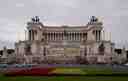 13
13Monument to Victor Emmanuel II
Buy tour to unlock all 17 tracksLook straight ahead for a massive, brilliant white marble structure rising above the city, with sweeping staircases, towering columns, bronze horse-drawn chariots on the roof, and…Read moreShow less
Look straight ahead for a massive, brilliant white marble structure rising above the city, with sweeping staircases, towering columns, bronze horse-drawn chariots on the roof, and the enormous statue of a man on horseback right in the center-if you feel like you’ve been invited to Rome’s fanciest wedding, you’ve spotted the Victor Emmanuel II Monument! Congratulations, you’ve reached the final and perhaps flashiest stop on our Roman adventure: the Victor Emmanuel II National Monument, or, as the locals like to jokingly call it, “the Wedding Cake”. If you’re feeling a little underdressed, don’t worry-this monument does have a habit of outshining everyone! Imagine yourself standing amidst the grandeur of the early 1900s. Men in uniforms and women in lace stroll around, the whole city buzzing about the latest symbol of Italian pride being built right here, layer by extravagant layer. Designed by Giuseppe Sacconi and constructed between 1885 and 1935, this colossal structure honors Victor Emmanuel II, Italy’s very first king-the man who stitched the country together like a tailor fitting a patchwork quilt, uniting all the different “states” into one proud nation. But building this wonder wasn’t just a matter of putting up marble and calling it a day. Sacconi wanted to say, “Hey, we’re Italy, and we’re here to stay!”-with the kind of confidence that only 243 steps and a finishing touch of chariots can provide. Right now, as you look up, picture crowds gathering, soldiers marching, and an orchestra playing a patriotic tune to dedicate this new heart of the city. Where you see those huge curved stairways, that’s not just architecture-it’s a modern Roman forum! On three magnificent levels, you’re invited to climb, discover, and relive the drama of unification. Each tier, each column whispers stories of valor, hope, and strength. Here’s a fun tidbit for you: the Romans nicknamed it “The Typewriter” for its shape-or, my personal favorite, “The Wedding Cake”, because let’s face it, nothing says ‘commitment’ like 17,000 square meters of white marble, tons of gilded bronze statues, fountains, and enough stairs to make even the fittest gladiator sweat. It’s as if all the styles of Ancient Rome, Greece, and a pinch of modern panache got together for an all-you-can-build marble buffet! The marble glows bright in the sunlight, almost blindingly white, so don’t forget your metaphorical sunglasses-no refunds on eyes gently dazzled by Italian pride. Walk up the steps and on either side, you’ll spot fountains representing Italy’s two coasts-the Adriatic and Tyrrhenian seas. Straight ahead is the Altar of the Fatherland, guarded by eternal flames and a pair of respectful soldiers. Just beneath the imposing statue of the goddess Roma, the Unknown Soldier rests-a young man lost to war, chosen by a grieving mother so his sacrifice could stand for all those Italians whose names were taken by history. This simple tomb, always watched over, is the heart of so many powerful moments-every Republic Day, Liberation Day, or Armed Forces Day, presidents and families pause here to lay laurel wreaths and remember the costs of freedom. Now, if you’re curious about the man of the hour, Victor Emmanuel II himself rides above on a gigantic bronze horse. Italian artists from all over the country contributed to this statue-so huge, rumor has it that they once hosted a celebratory lunch inside the horse’s belly before sealing it up. Talk about a king-sized picnic! Behind King Victor, the colonnade stretches out, curving like a theater for the city below. Each column stands for one of Italy’s regions, and atop each wing sit bronze chariots racing into the sky, celebrating “unity of the homeland” and “liberty of the citizens.” Just think: when the monument was first conceived, Italy wanted to show off its new place among Europe’s great capitals-Berlin had its Brandenburg Gate, Paris its Opéra Garnier, but only Rome could deliver this breathtaking marble mountain topped by winged victories charging into the clouds. During Fascist times, this spot was the stage for grand military parades and passionate speeches. But after World War II, the monument reclaimed its original, hopeful spirit-transforming again into a place for every Italian, every visitor, to remember and celebrate what it means to come together as one. And don’t forget the views: climb the stairs or take the glass elevator added in 2007, and 196 steps (or a quick ride) will reward you with a 360-degree panorama of Rome. Below, the city throbs with traffic and stories, but up here, you stand between the past and the present, on marble dedicated not just to a king, but to the very idea of Italy. So, as the breeze stirs and crowds murmur around you, take a moment to let it all soak in: the glory and complexity, the losses remembered, the victories celebrated. The Victor Emmanuel II Monument isn’t just Rome’s gleaming wedding cake-it’s the altar, the stage, and the heart of a nation still telling its grand story. To expand your understanding of the general description, tomb of the unknown soldier or the names, feel free to engage with me in the chat section below.
Open dedicated page →
Frequently asked questions
How do I start the tour?
After purchase, download the AudaTours app and enter your redemption code. The tour will be ready to start immediately - just tap play and follow the GPS-guided route.
Do I need internet during the tour?
No! Download the tour before you start and enjoy it fully offline. Only the chat feature requires internet. We recommend downloading on WiFi to save mobile data.
Is this a guided group tour?
No - this is a self-guided audio tour. You explore independently at your own pace, with audio narration playing through your phone. No tour guide, no group, no schedule.
How long does the tour take?
Most tours take 60–90 minutes to complete, but you control the pace entirely. Pause, skip stops, or take breaks whenever you want.
What if I can't finish the tour today?
No problem! Tours have lifetime access. Pause and resume whenever you like - tomorrow, next week, or next year. Your progress is saved.
What languages are available?
All tours are available in 50+ languages. Select your preferred language when redeeming your code. Note: language cannot be changed after tour generation.
Where do I access the tour after purchase?
Download the free AudaTours app from the App Store or Google Play. Enter your redemption code (sent via email) and the tour will appear in your library, ready to download and start.
If you don't enjoy the tour, we'll refund your purchase. Contact us at [email protected]
Checkout securely with 


